Reported road casualties Great Britain: e-scooter factsheet, 2025
Published 30 July 2026

© Crown copyright 2026
This publication is licensed under the terms of the Open Government Licence v3.0 except where otherwise stated. To view this licence, visit nationalarchives.gov.uk/doc/open-government-licence/version/3 or write to the Information Policy Team, The National Archives, Kew, London TW9 4DU, or email: psi@nationalarchives.gov.uk.
Where we have identified any third party copyright information you will need to obtain permission from the copyright holders concerned.
This publication is available at https://www.gov.uk/government/statistics/reported-road-casualties-great-britain-vulnerable-road-user-factsheets/reported-road-casualties-great-britain-e-scooter-factsheet-2025
About this factsheet
This factsheet examines the main trends in collisions involving e-scooters and the casualties involved, collected in STATS19 reportable collisions.
E-scooter users are one of the vulnerable user groups. They are not protected by a vehicle body in the same way car users are, and tend to be harder for drivers to see on the road. They are, therefore, particularly susceptible to injuries.
Please refer to the background notes for further details of how the data are collected including caveats.
1. Things you need to know
1.1 Final figures
This factsheet is based on final data for 2025, as supplied by police forces up to end June 2026.
1.2 Severity adjustment
This factsheet provides an estimate of the number of personal injury road traffic collisions involving e-scooters, in Great Britain, in 2025 using the STATS19 reporting system. The figures are based on adjusting figures reported by the police for slight and serious injuries to take account of changes in the reporting of injury severity by some police forces in recent years. These adjusted figures can reliably be used to compare trends over time across the country. They are based on what we estimate the totals would be if all police forces were using injury-based severity reporting systems. More information on the change and adjustment process is available in the severity adjustments guidance.
2. Main points
Based on final data, in 2025:
- there were 1,377 collisions involving e-scooters, compared to 1,312 in 2024
- of all collisions involving e-scooters, 384 included only one e-scooter with no other vehicles involved in the collision (single vehicle collision), compared to 306 in 2024
- there were 1,477 casualties in collisions involving e-scooters, compared to 1,390 in 2024
- of all casualties in collisions involving e-scooters, 1,162 were e-scooter users, compared to 1,096 in 2024
- there were 10 people killed in collisions involving e-scooters (10 of whom were e-scooter riders) compared to 6 in 2024
- our best estimate, after adjusting for changes in reporting by police, is that there were 484 seriously injured and 983 slightly injured casualties in collisions involving e-scooters, this compares to 428 and 956 respectively in 2024
3. Reported collisions and casualties involving e-scooters
Table 1 shows the number of reported road casualties in collisions involving e-scooters in Great Britain in 2025, by road user type. Excluding e-scooter casualties themselves, the main types of other road users involved in collisions involving e-scooters are pedestrians and cyclists.
Table 1: Number of reported casualties in collisions involving e-scooters, by road user type, Great Britain, 2025
| Road user type | Killed | Serious (adjusted) | Slight (adjusted) | Total |
|---|---|---|---|---|
| E-scooter user | 10 | 410 | 742 | 1,162 |
| Pedestrian | 0 | 54 | 181 | 235 |
| Pedal Cyclist | 0 | 16 | 31 | 47 |
| Motor Cyclist | 0 | 1 | 11 | 12 |
| Car Occupant | 0 | 0 | 15 | 15 |
| Bus Occupant | 0 | 1 | 3 | 4 |
| Other Vehicle Occupant | 0 | 2 | 0 | 2 |
| Total | 10 | 484 | 983 | 1,477 |
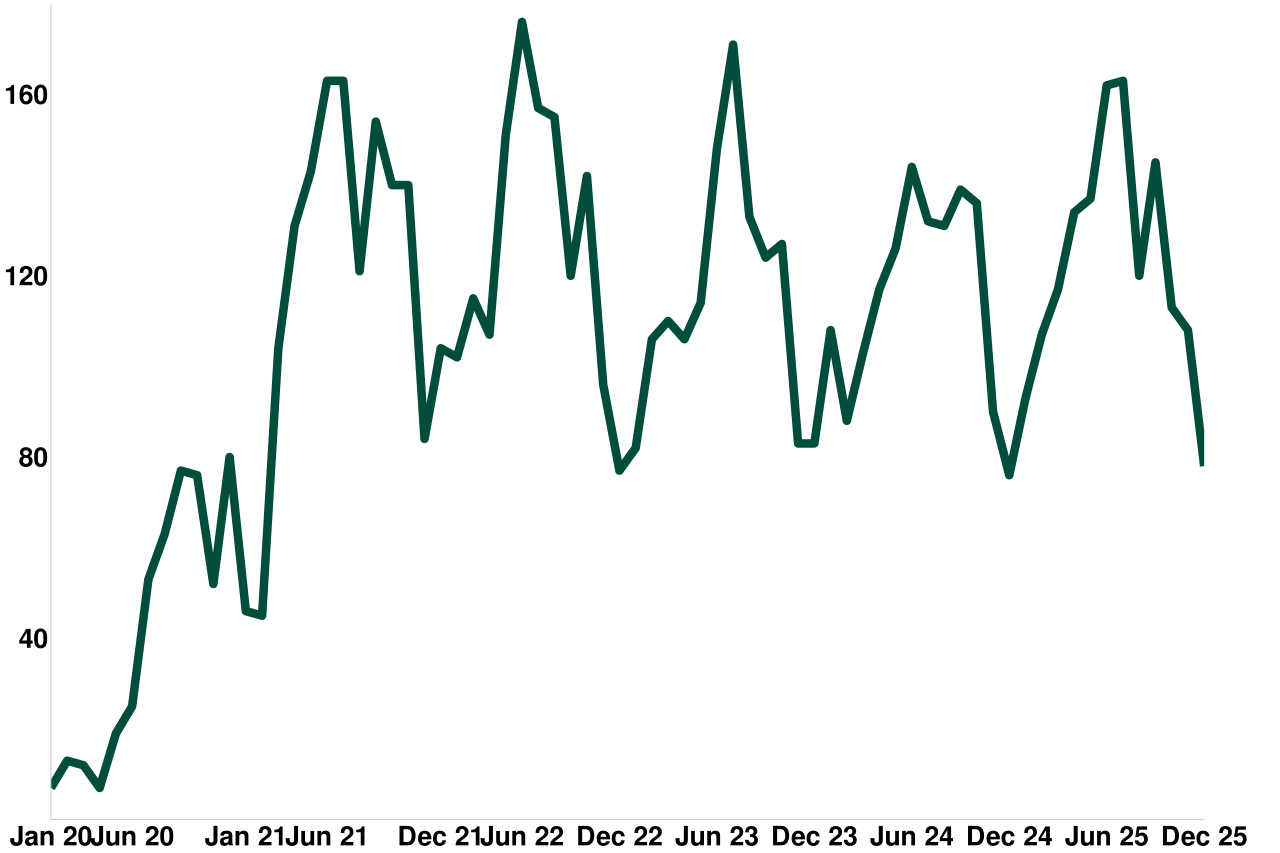
Chart 1 shows the number of reported casualties in collisions involving e-scooters from 2020 when they were first recorded in STATS19 up to 2025. There was a broadly upward trend until 2022, with dips during the coronavirus lockdowns. The number of casualties has followed a similar pattern in 2024 and 2025, with a higher number of casualties in the summer months, though the underlying trend in the number of casualties recorded appears to be broadly stable.
Chart 1: Reported casualties in collisions involving e-scooters by month, Great Britain from January 2020
4. Casualties by age and sex
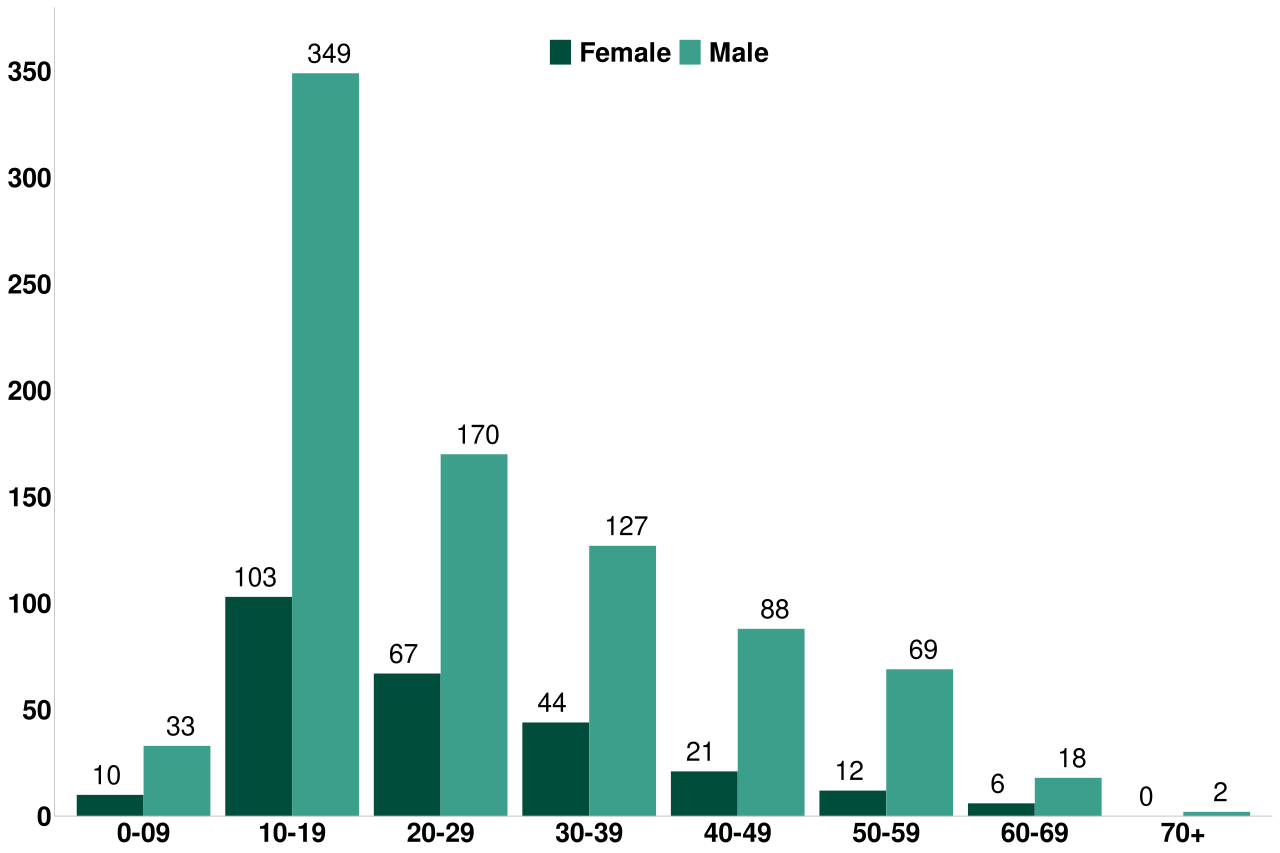
Chart 2 shows the number of reported e-scooter user casualties, by age and sex in Great Britain in 2025. There are more male than female e-scooter user casualties, especially amongst those aged between 10 and 39.
Chart 2: Reported e-scooter user casualties, by sex and age, Great Britain, 2025
Note: Cases where the casualty age and sex are unknown have been removed from chart 2
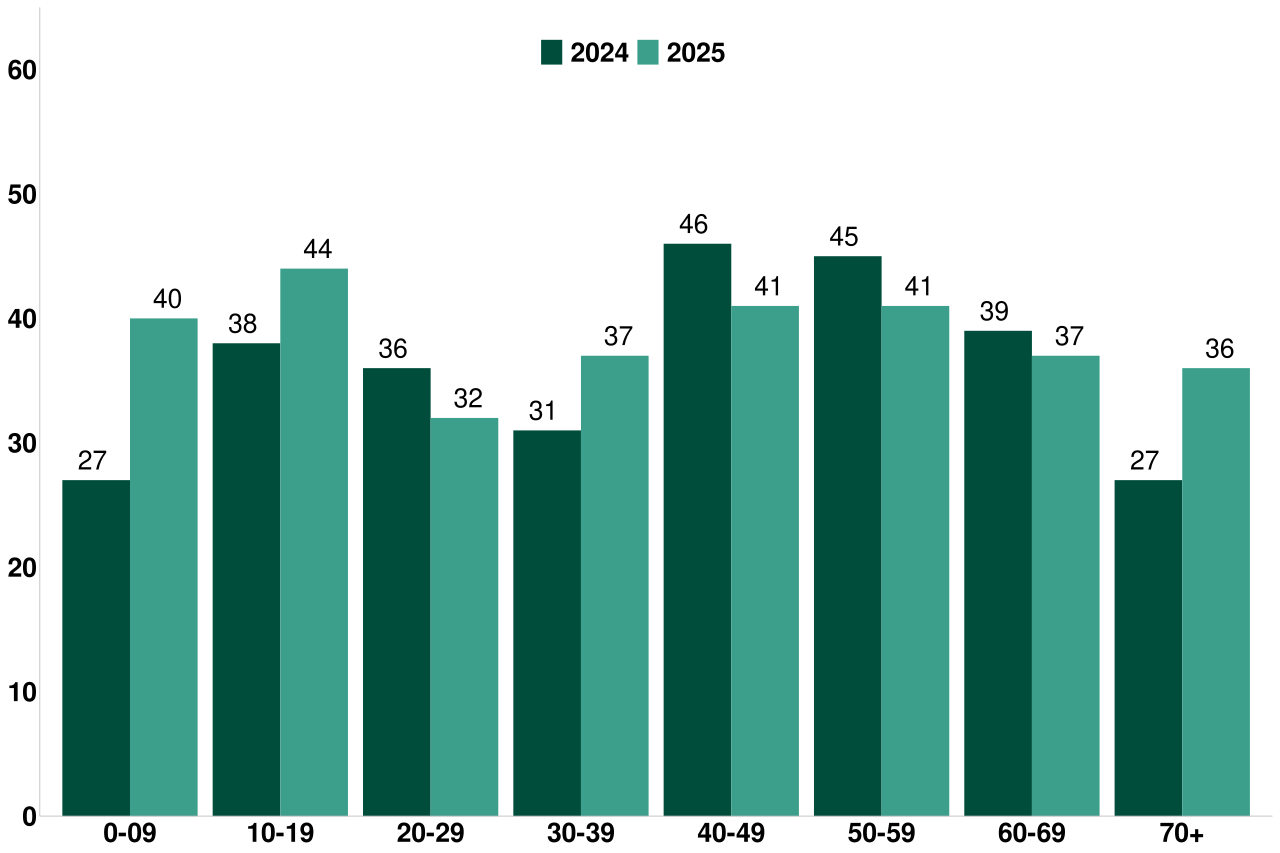
Chart 3 shows the number of reported casualties other than e-scooter users in collisions involving e-scooters by age in 2024 and 2025. Casualties are spread across all age groups with patterns by age group are broadly similar when comparing 2025 to 2024.
Chart 3: Reported casualties other than e-scooter user involved in e-scooter collisions, by age, Great Britain, 2024 and 2025
Note: Cases where the casualty age is unknown have been removed from chart 3
5. Casualties by time of day
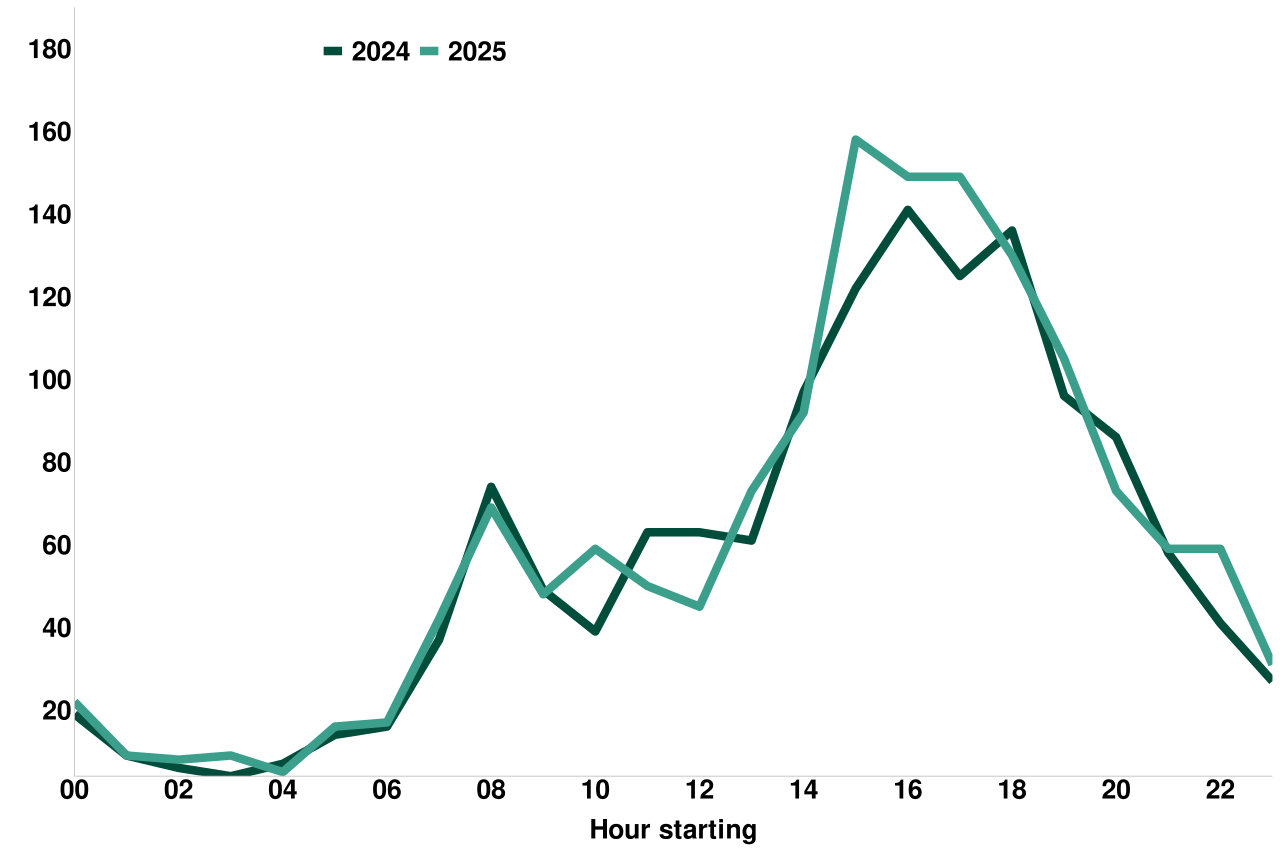
Chart 4 shows the number of casualties involved in e-scooter collisions by time of the day, in 2024 and 2025. The trend is broadly the same for both years, an upward trend starting at 6am and ending at around 4pm to 5pm with a dip around 10am, followed by a downward trend from around 5pm to 10pm. There are two peaks, the first one at 8am and the second one at around 4pm to 5pm.
Chart 4: Casualties in collisions involving e-scooters by time of the day, Great Britain, 2024 and 2025
6. Casualties by police force area
Table 2 shows the number of reported collisions involving e-scooters by police force in Great Britain, in 2025. The Metropolitan police reported around a fifth of all casualties involving e-scooters in Great Britain, as well as around a fifth of all casualties involving any vehicle. The remaining e-scooter casualties were spread across the other police forces, with higher numbers in areas where there is an ongoing trial (see below).
Table 2: Reported casualties in collisions involving e-scooters by police force, Great Britain, 2025
| Police force | Involving e-scooters | Involving e-scooters (% of GB) | Involving any vehicle | Involving any vehicle (% of GB) |
|---|---|---|---|---|
| Avon and Somerset | 74 | 5% | 3,138 | 2% |
| Bedfordshire | 31 | 2% | 1,523 | 1% |
| Cambridgeshire | 31 | 2% | 1,952 | 2% |
| Cheshire | 0 | 0% | 1,943 | 2% |
| City of London | 1 | 0% | 215 | 0% |
| Cleveland | 15 | 1% | 622 | 0% |
| Cumbria | 1 | 0% | 980 | 1% |
| Derbyshire | 16 | 1% | 2,249 | 2% |
| Devon and Cornwall | 5 | 0% | 3,680 | 3% |
| Dorset | 23 | 2% | 1,657 | 1% |
| Durham | 5 | 0% | 722 | 1% |
| Dyfed-Powys | 1 | 0% | 1,518 | 1% |
| Essex | 42 | 3% | 3,637 | 3% |
| Gloucestershire | 9 | 1% | 1,144 | 1% |
| Greater Manchester | 24 | 2% | 3,353 | 3% |
| Gwent | 11 | 1% | 715 | 1% |
| Hampshire | 154 | 10% | 4,304 | 3% |
| Hertfordshire | 15 | 1% | 2,092 | 2% |
| Humberside | 59 | 4% | 2,431 | 2% |
| Kent | 38 | 3% | 4,452 | 3% |
| Lancashire | 34 | 2% | 3,778 | 3% |
| Leicestershire | 25 | 2% | 1,546 | 1% |
| Lincolnshire | 0 | 0% | 2,257 | 2% |
| Merseyside | 69 | 5% | 2,436 | 2% |
| Metropolitan Police | 266 | 18% | 23,616 | 18% |
| Norfolk | 15 | 1% | 2,255 | 2% |
| North Wales | 1 | 0% | 776 | 1% |
| North Yorkshire | 2 | 0% | 1,898 | 1% |
| Northamptonshire | 59 | 4% | 1,726 | 1% |
| Northumbria | 39 | 3% | 2,162 | 2% |
| Nottinghamshire | 69 | 5% | 2,633 | 2% |
| Police Scotland | 31 | 2% | 5,535 | 4% |
| South Wales | 8 | 1% | 1,068 | 1% |
| South Yorkshire | 44 | 3% | 2,741 | 2% |
| Staffordshire | 11 | 1% | 2,179 | 2% |
| Suffolk | 6 | 0% | 1,578 | 1% |
| Surrey | 13 | 1% | 3,180 | 2% |
| Sussex | 36 | 2% | 4,222 | 3% |
| Thames Valley | 80 | 5% | 3,705 | 3% |
| Warwickshire | 6 | 0% | 1,393 | 1% |
| West Mercia | 6 | 0% | 1,907 | 1% |
| West Midlands | 63 | 4% | 6,061 | 5% |
| West Yorkshire | 30 | 2% | 4,930 | 4% |
| Wiltshire | 9 | 1% | 1,974 | 2% |
| Total | 1,477 | 100% | 127,883 | 100% |
7. Estimated trial and private e-scooters in collisions
Data on e-scooter trial trips, used in estimating the figures in this section, is published to May 2024. As a result, the figures in this section are to 2023 only. Figures for later years will be added when further trip data has been published alongside the second national evaluation of the e-scooter trials.
The government is running trials of e-scooters, which are currently taking place in around 20 areas.
It is not straightforward to estimate the number of casualties among users of trial e-scooters. This is because of inconsistent recording of the distinction between trial and privately-owned e-scooters involved in collisions. This information is recorded by the police as part of a free text field and police forces often do not identify the type of e-scooter involved.
However, the Department for Transport collects detailed information on the location of e-scooter trial trips. We can use this information, such as on the proximity to recorded trial trips in terms of distance and timings to estimate the likelihood that an e-scooter involved in a collision was a trial e-scooter, rather than a privately-owned one. Essentially, where there is a trial e-scooter trip in the same place and time that a collision occurred, it is assumed that the vehicle in the collision was more likely a trial e-scooter. Conversely, where an e-scooter collision occurred far from any trial trip, it is assumed that the vehicle in the collision was a private e-scooter
The best estimate of the number of trial and private e-scooters involved in STATS19-reported collisions on this basis is shown in table 3, which illustrates that the majority of e-scooters involved in are illegal private vehicles.
Table 3: E-scooters involved in reported road collisions by estimated scooter type, Great Britain, 2020 to 2023
| Year | Trial | Private | Total |
|---|---|---|---|
| 2020 | 7 | 454 | 461 |
| 2021 | 294 | 1,071 | 1,365 |
| 2022 | 408 | 1,006 | 1,414 |
| 2023 | 350 | 949 | 1,299 |
For London, operator data including numbers of more seriously injured casualties is published by Transport for London though is not directly comparable with the STATS19 data.
8. Injuries in collisions involving e-scooters
For police forces using injury-based reporting systems, information on the most severe injury sustained is available within STATS19. While coverage is not complete, this provides further detail on the outcomes of road collisions. Further details of what is collected are covered in our factsheet on injuries in road collisions.
Table 4 shows that the 3 most common type of injuries sustained in collisions involving e-scooters (to the e-scooter users or others) are all of slight severity. However, the fourth, fifth and sixth most common type of injuries are different type of fractures and head injures which are considered as serious injuries.
Table 4: Reported casualties in collisions involving e-scooters by injury type, Great Britain, 2025
| Injury type | Severity | Number of casualties |
|---|---|---|
| Shallow cuts or lacerations or abrasions or dental injuries (loss of tooth) | Slight | 366 |
| Bruising | Slight | 237 |
| Sprains or strains or dislocation | Slight | 132 |
| Other head injury (not bruising or shallow cut or dental injuries) | Serious | 73 |
| Fractured arm or collarbone or hand | Serious | 71 |
| Severe head injury and unconscious | Serious | 67 |
| Fractured lower leg or ankle or foot | Serious | 62 |
| Deep cuts or lacerations | Serious | 57 |
| Whiplash or neck pain | Slight | 39 |
| Fractured pelvis or upper leg | Serious | 30 |
| Shock (Requiring roadside attention) | Slight | 16 |
| Internal injuries | Serious | 12 |
| Broken neck or back | Serious | 9 |
| Other chest injury (not bruising or shallow cut) | Serious | 9 |
| Severe chest injury with any difficulty breathing | Serious | 6 |
| Multiple severe injuries and conscious | Serious | 5 |
| Deep penetrating or puncture wound | Serious | 4 |
Note: The table includes only casualties reported by police forces using the injury-based reporting system ‘CRASH’, this is around 81% of all casualties in collisions involving e-scooters.
A list of all police forces and system they use can be found in severity adjustments section.
9. Background information
“E-scooters” are not one of the designated vehicle types collected in a STATS19 reportable collisions, as such they would be classed as other vehicle and can only be identified using a free text field.
The “Other vehicle” category was introduced in 2011 to replace the previously collected vehicle types Other motor vehicle and Other non-motor vehicle. A free text field was introduced at the same time to provide insight into what other vehicles were being recorded.
The description is mainly used by the department to assess whether new vehicle types need to be captured and to reclassify existing “Other vehicles” into one of the defined vehicle types. For example, even though mobility scooters have their own category, a number of these end up in the other category each year and are reclassified by DfT.
The free text field cannot be automatically validated in the same way as the designated vehicle type data, and therefore not as robust as published vehicle statistics. Therefore, using this text does require some investigation and validation. Unfortunately, the word scooter is not exclusive to one type of vehicle and depending on the context used, it could be used to describe a variety of vehicles including some motorcycles (those that have a step-through frame and a platform for the rider’s feet to rest on), mobility scooters and traditional stand on scooters. Stand on scooters can also have different methods of propulsion (petrol, electric or physical effort). Guidance has been issued to all forces to ensure they capture more than just the word ‘scooter’ in the free text description when recording this.
It should be noted that a considerable percentage of non-fatal casualties are not reported to the police. Non-fatal casualties for e-scooter users are amongst the most likely to be under-reported in road casualty data since they have no obligation to inform the police of collisions. This should be borne in mind when analysing and interpreting the data.
More information about the strength and weaknesses and definitions can be found in the reported road casualties guidance.
10. Feedback
We welcome further feedback on any aspects of the department’s road safety statistics including content, timing, and format, via email to the road safety statistics team.
11. Instructions for printing and saving
Depending on which browser you use and the type of device you use (such as a mobile or laptop) these instructions may vary.
Tablets and mobile devices normally have the option to “find in text” and “print or save” in their sharing or quick options menu of their browser, but this will vary by device model.
12. How to search
Select Ctrl and F on a Windows laptop or Command and F on a Mac
This will open a search box in the top right-hand corner of the page. Type the word you are looking for in the search bar and press enter.
Your browser will highlight the word, usually in yellow, wherever it appears on the page. Press enter to move to the next place it appears.
13. Contact details
Road safety statistics
Email roadacc.stats@dft.gov.uk