Renewable Transport Fuel Obligation (RTFO) statistics 2024: Final report
Updated 12 February 2026

© Crown copyright 2026
This publication is licensed under the terms of the Open Government Licence v3.0 except where otherwise stated. To view this licence, visit nationalarchives.gov.uk/doc/open-government-licence/version/3 or write to the Information Policy Team, The National Archives, Kew, London TW9 4DU, or email: psi@nationalarchives.gov.uk.
Where we have identified any third party copyright information you will need to obtain permission from the copyright holders concerned.
This publication is available at https://www.gov.uk/government/statistics/renewable-transport-fuel-obligation-rtfo-statistics-2024-final-report/renewable-transport-fuel-obligation-rtfo-statistics-2024-final-report
Revision
This statistical release has been revised to correct an error in the volume of renewable fuel supplied under the RTFO in the original HTML report. In 2024, renewable fuels accounted for 8% (3,809 million litres equivalent) of all road and non-road mobile machinery fuel supplied to the UK. This was previously reported at 3,808 million litres. The related data tables which were published with the report were not impacted by this error.
About this release
This final release covers the supply of renewable fuel in 2024, based on data available on 26 September 2025, which has been reported under the Renewable Transport Fuel Obligation (RTFO).
The RTFO scheme reduces greenhouse gas emissions from transport fuels by setting annual obligations on fuel suppliers to supply sustainable renewable fuels.
Renewable fuels are often blended with conventional fuels such as petrol or diesel, but as they come from renewable feedstocks including waste products and residues, their overall greenhouse gas emissions are lower when we consider the entire life cycle of the fuel.
These are official statistics. For more information, see the About these statistics section.
Impact of the coronavirus (COVID-19) pandemic
The timeline of this publication series includes periods of coronavirus (COVID-19) related restrictions. As such, figures in this release may be affected and should be interpreted with caution.
In 2024:
-
renewable fuels accounted for 8% (3,809 million litres equivalent (eq.)) of all road and non-road mobile machinery fuel supplied to the UK
-
certificates have been issued to 3,779 litres eq. (99% of all renewable fuel) under the Renewable Transport Fuel Obligation (see Background Information)
-
of these 3,779 litres eq., an average greenhouse gas (GHG) saving of 80% was achieved when compared to fossil fuel use. This drops to 77% when indirect land-use change (ILUC) is accounted for
-
7% of all verified renewable fuel supplied to the UK in this period was produced from UK-origin feedstocks
-
biodiesel made up 22% of verified renewable fuel, of which 81% of was produced from used cooking oil (UCO)
-
bioethanol made up 39% of verified renewable fuel, of which 45% was produced from corn
-
waste feedstocks made up 77% of verified renewable fuel
Figure 1: Proportion of renewable fuel use for all transport fuel, financial year ending 2014 to 2024 (table RF 0101)
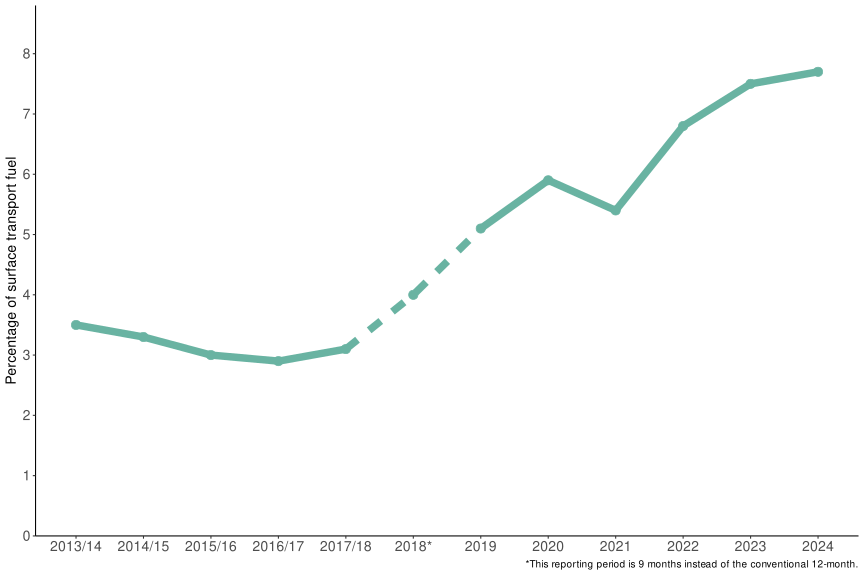
Description of Figure 1 is a line chart which shows the use of renewable fuel as a proportion of all transport fuel, from the financial year ending 2014 to 2024. The proportion of renewable fuel remained at around 3% from financial year ending 2014, until financial year ending 2018. In 2024, this proportion was 8%, slightly higher than the 2023 reporting period.
Notes on time series
Initial reporting periods were presented as financial years, until the financial year ending 2018 (2017 to 2018), after which the data periods were presented as calendar years. To enable this transition, the first 3 months of 2018 are included in the financial year ending 2018 (2017 to 2018) and the last 9 months in a standalone 9 month reporting period, which is shown as 2018[footnote 1] in the publication, tables, and charts. From 2019 onwards, figures are reported on a 12 month calendar basis. Care should be taken when comparing data across these periods.
Verified renewable fuel
Verified renewable fuel refers to fuel that has received Renewable Transport Fuel Certificates (RTFCs) for having met the Sustainability Criteria. For more information, see the notes and definitions.
The biodiesel category includes biodiesel methyl ester (ME) and off-road biodiesel. These fuels were presented separately in reports prior to 2022.
Overview
Figure 2: What is a renewable fuel?
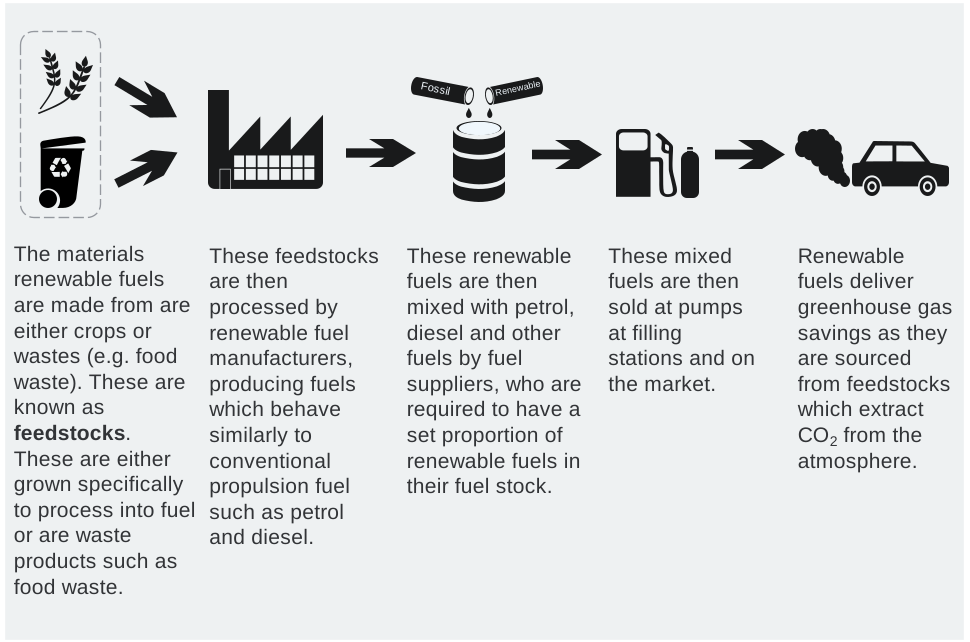
Description of Figure 2 is a graphical illustration and explanation of what is a renewable fuel, how it is made and how it is used for transport. The text in this figure can be found in Annex B of this report.
Greenhouse Gas (GHG) savings
GHG savings represent the difference in GHG emissions between using renewable fuel as opposed to the conventional fuel they replace. The Motor Fuel GHG Emissions Reporting Regulations set obligations for fuel suppliers to reduce their average GHG intensity.
Indirect Land Use Change (ILUC)
Relates to the unintended consequences of changing land use for renewable fuel production. For example, the expansion of crop land for feedstocks driving deforestation elsewhere. This reduces the GHG savings from the renewable fuel produced.
Long-term trends
The levels of GHG savings from the financial year ending 2014 until the financial year ending 2018 remained relatively stable above 3,000 kt CO2e every year (excluding ILUC). In 2019 GHG savings excluding ILUC rose to 6,168 kt CO2e, followed by a two-year fall, before beginning to rise again in 2022. In 2024, GHG savings excluding ILUC were 7,893 kt CO2e and including ILUC 7,645 kt CO2e. This is a reduction from 7,972 kt CO2e in 2023, which is primarily due to, on average, the renewable fuel supplied in 2024 providing less GHG savings per litre.
Excluding ILUC, average GHG savings per litre in 2024 were 80% when compared to fossil fuels, two percentage points lower than in 2023. Accounting for ILUC, the 2024 GHG saving was 77%.
Suppliers are required to supply carbon and sustainability data for the renewable fuel they supply to the UK, and this information can be seen in Table RF_0110.
Figure 3: Greenhouse gas saving delivered by renewable fuel supplied to the UK, financial year ending 2014 to 2024 (table RF 0114)
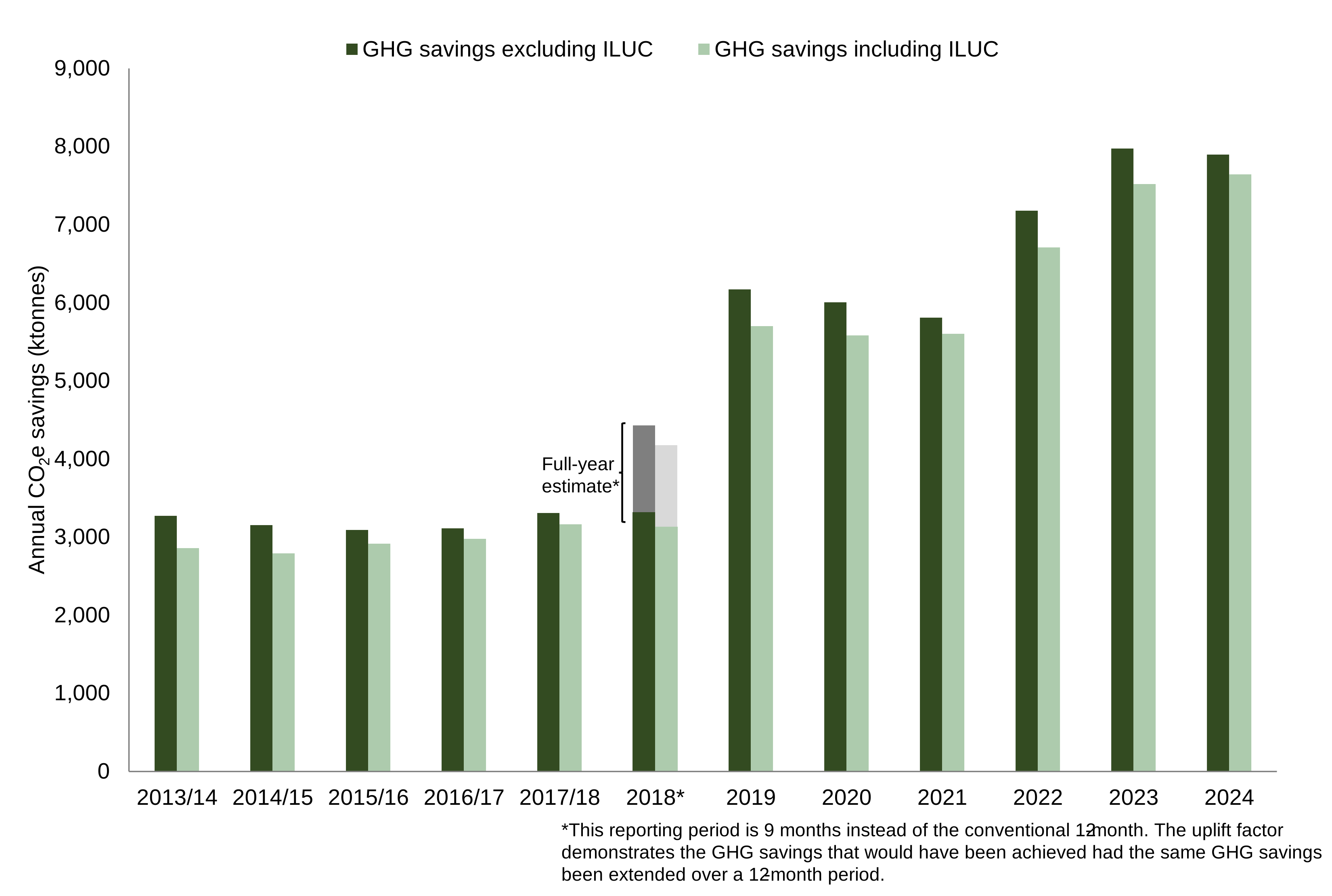
Description of figure 3 is a clustered bar chart showing annual GHG savings with ILUC and without ILUC for the financial year ending 2014 to the year 2024.
Renewable fuel as a proportion of all fuel remained at around 3% from financial year ending 2014, until financial year ending 2018. In 2024 this proportion was 8%, slightly higher than the 2023 reporting period.
The percentage of waste feedstocks for renewable fuel, as opposed to non-waste feedstocks, has steadily increased over time, from 50% at the start of the time series. The percentage of waste feedstocks rose between 2023 and 2024, from 72% to 77% respectively. This may be partially due to the increased supply of bioethanol from unrefined liquid dextrose ultrafiltration retentate (ULDUR), a waste product from the processing of corn, and the supply of UCO increasing from 2023 to 2024.
The proportion of biodiesel has decreased from 49% in the financial year ending 2014 to 22% in 2024. In recent years, proportions have gone from 52% in 2021 to 45% in 2022, to 39% in 2023.
The proportion of bioethanol fell between the financial year ending 2014 to the year 2020, from 48% to 22%. Since 2021, after the introduction of E10 fuel, the share of bioethanol has continued to grow, reaching 39% of renewable fuel supply in 2024.
Fuel type
Figure 4: Volume of verified renewable fuel in 2024, by fuel type (table RF 0105a)
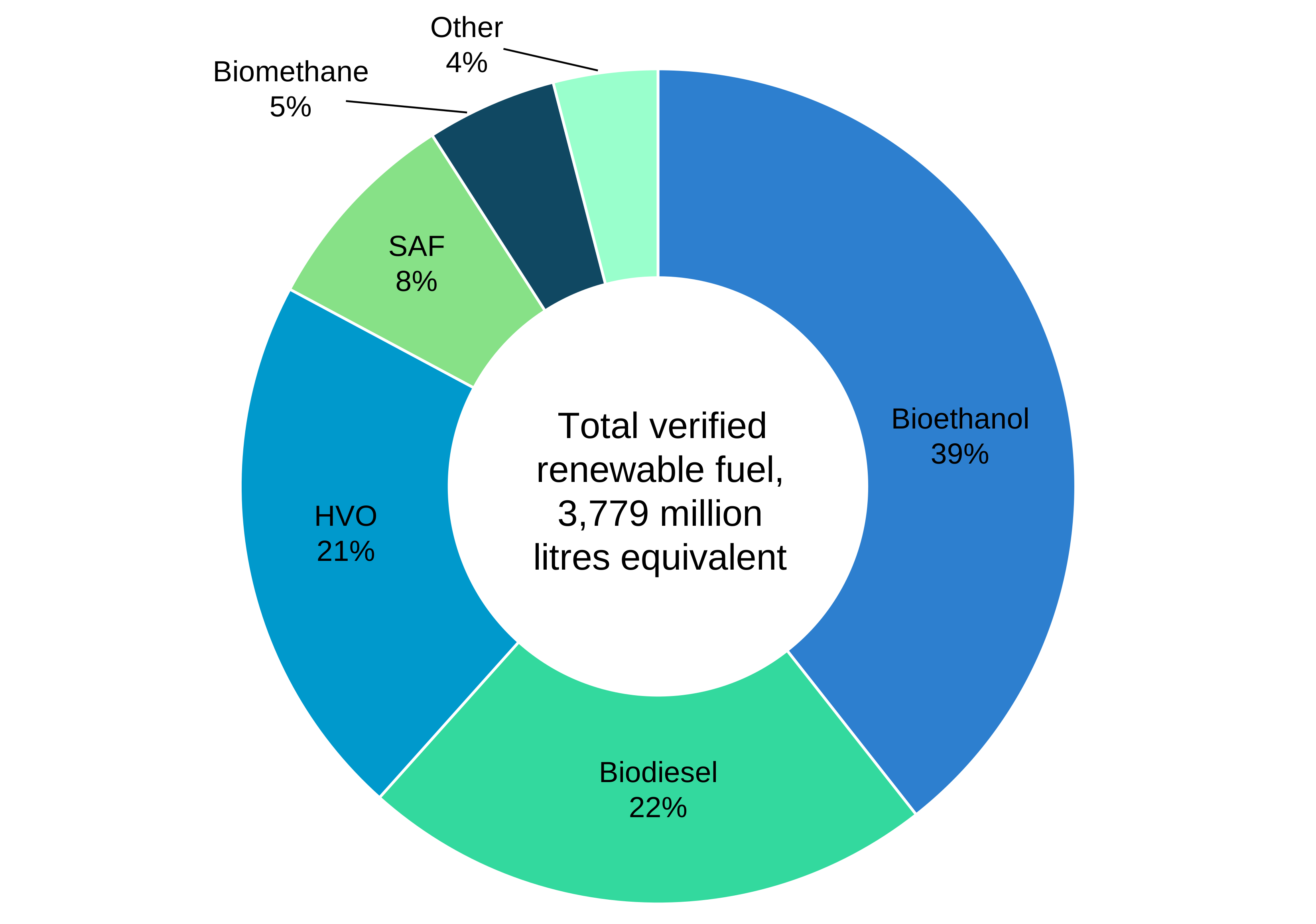
The overall volume of verified renewable fuel supplied to the UK in 2024 (3,779 million litres eq.) was 2% higher than the volume in 2023 (3,689 million litres eq.). 2024 also saw a 1% increase in total fossil fuel supplied, compared to 2023.
Description of Figure 4 is a pie chart which represents the proportions of fuel types in 2024. Of the 3,779 million litres eq. of renewable fuel;
-
bioethanol made up 39%
-
biodiesel made up 22%
-
Hydrogenated Vegetable Oil (HVO) made up 21%
-
Sustainable aviation fuel (SAF) made up 8%
-
biomethane made up 5%
-
other fuels made up 4%
Figure 5: Supply of selected renewable fuels to the UK by fuel type, financial year ending 2014 to 2024 (table RF 0105b)
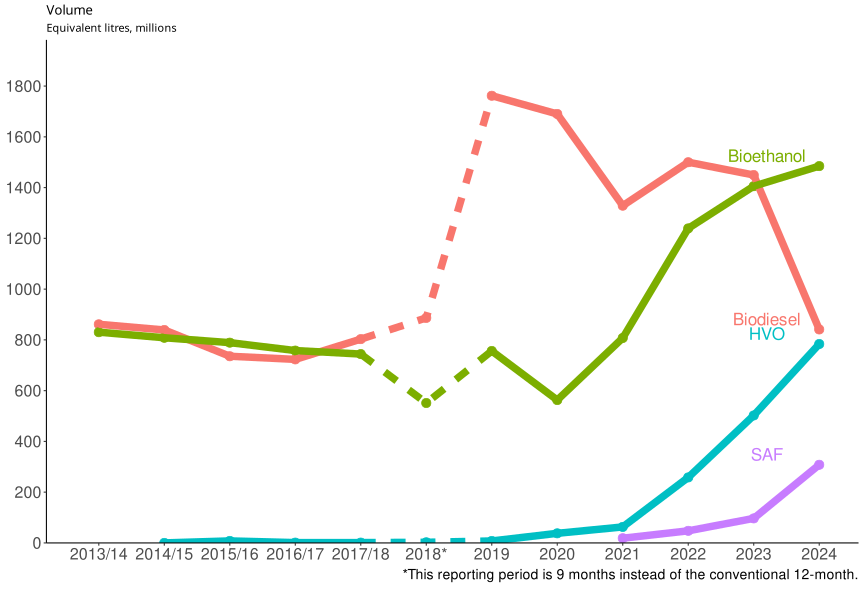
Description of Figure 5 is a line chart showing fuel type trends, from financial year ending 2014 to 2024, specifically of biodiesel, bioethanol, HVO, and SAF.
Bioethanol
Volumes of bioethanol saw a slow decline from the financial year ending 2014 to 2019. This was followed by an increase from 2021 onwards, likely due to the introduction of E10 towards the end of 2021. In 2024, verified bioethanol was 1,485 million litres, an increase of 79 million litres since 2023.
Biodiesel
Biodiesel supply saw a steep increase from 326 million litres eq. in financial year ending 2012 to 861 million litres eq. in financial year ending 2014. Supply remained at a relatively constant level of under 900 million litres eq. until 2018 and then increased greatly to 1,762 million litres eq. in 2019.
In 2024 biodiesel supply stands at 841 million litres eq., a sharp fall from 1,450 million litres eq. in 2023. The decline in biodiesel is offset by increases in HVO and SAF, which represent a broader spread of fuel types used to comply with overall obligations.
HVO
HVO supply has been present under the RTFO since the financial year ending 2015. Volumes gradually increased for the first few years up to 2020 (38 million litres eq.). From 2021 onwards, HVO supply has seen significant increases year on year, with verified volumes reaching 784 million litres eq. in 2024. This was over a 50% increase from 2023 (502 million litres eq.) verified volumes.
SAF
SAF was first supplied to the UK under the RTFO in 2021 (19 million litres eq.). Since then, verified volumes have increased more than 100% year on year including 2024. In 2024, 308 million litres of SAF was supplied to the UK, up from 97 million litres in 2023.
Feedstock
Feedstocks
Any sustainable and renewable resource (biomass or renewable energy source) that can be converted into, or used directly, as a transport fuel or other energy product.
Figure 6: Supply of verified renewable fuel to the UK in 2024, by feedstock and fuel type (table RF_0105a)
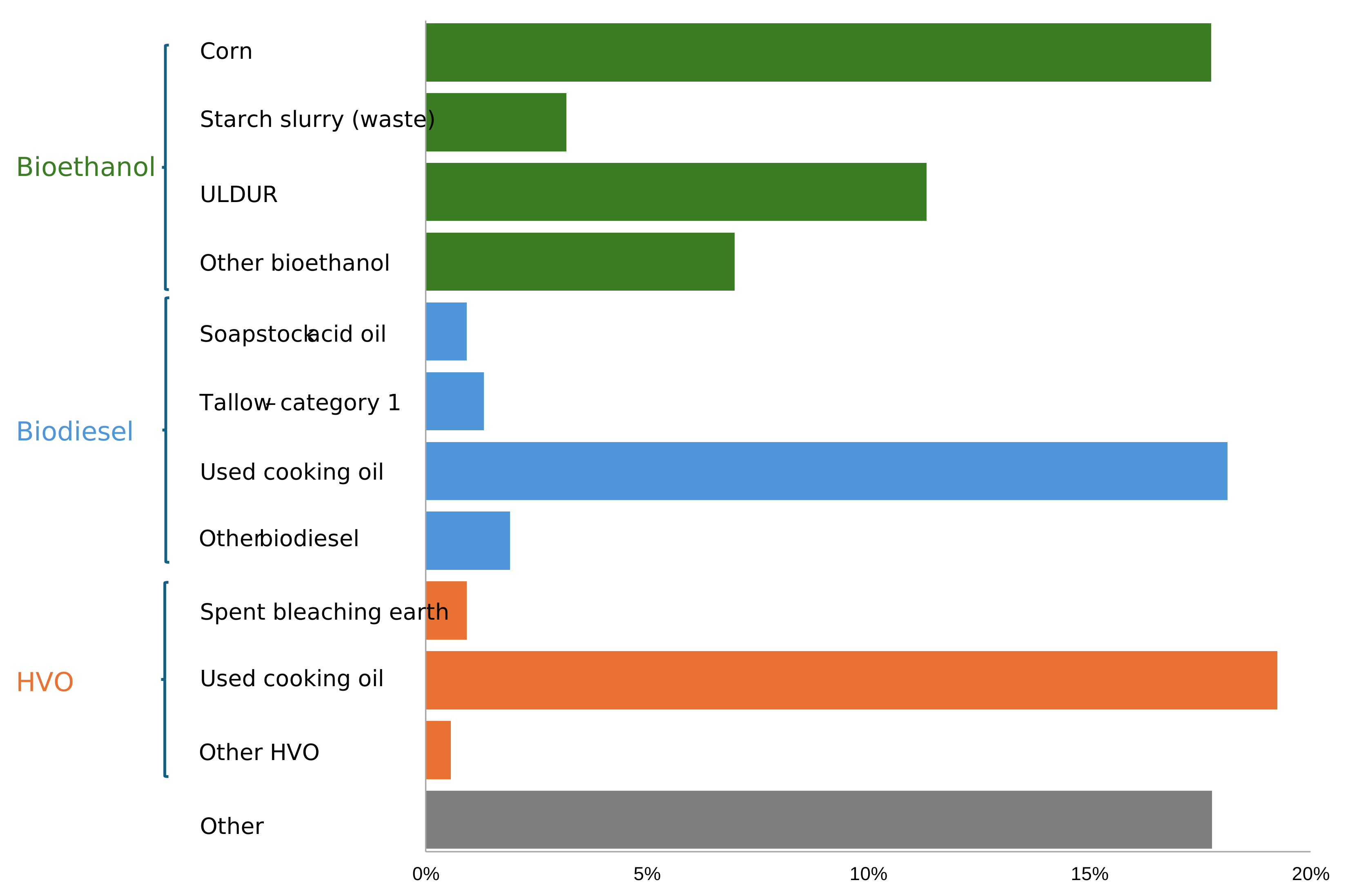
Description of Figure 6 is a bar chart showing feedstock proportions in 2024.
A large portion (46%) of all verified renewable fuel was produced from UCO, which is used in several different types of renewable fuel, such as biodiesel, HVO and renewable aviation fuel. UCO comprised 81% of biodiesel. For bioethanol, the most common feedstock was corn (45%). Corn-based bioethanol comprised 18% of total verified renewable fuel.
Figure 7: Supply of verified renewable fuel to the UK by feedstock, financial year ending 2014 to 2024 (table RF_0105a)
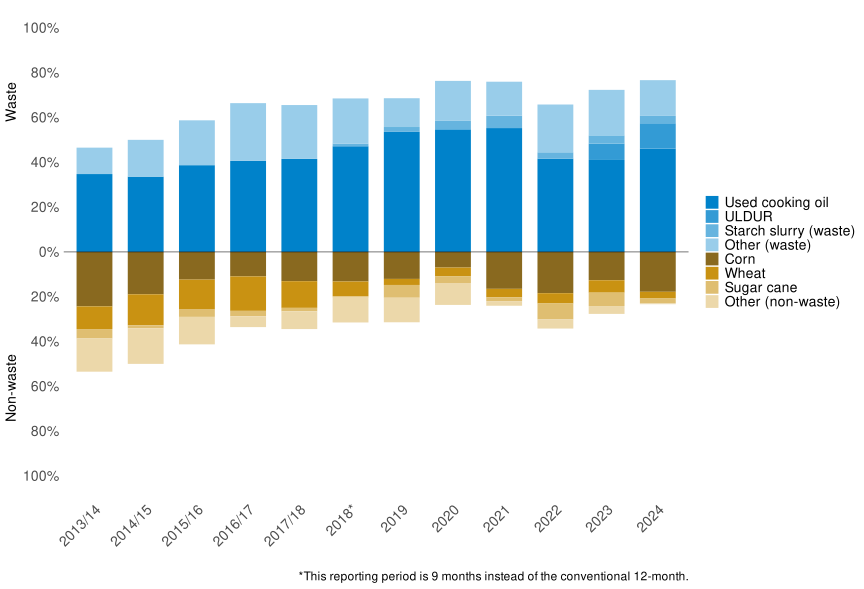
Description of Figure 7 is a bar chart which shows proportions of feedstocks, divided by waste and non-waste categories, from financial year ending 2014 to 2024.
The most common waste feedstock has been UCO throughout the entire reporting period. The most common non-waste feedstock has mostly been corn through the reporting period.
UK feedstock
Figure 8: UK origin verified renewable fuel in 2024, by feedstock (table RF_0105a)
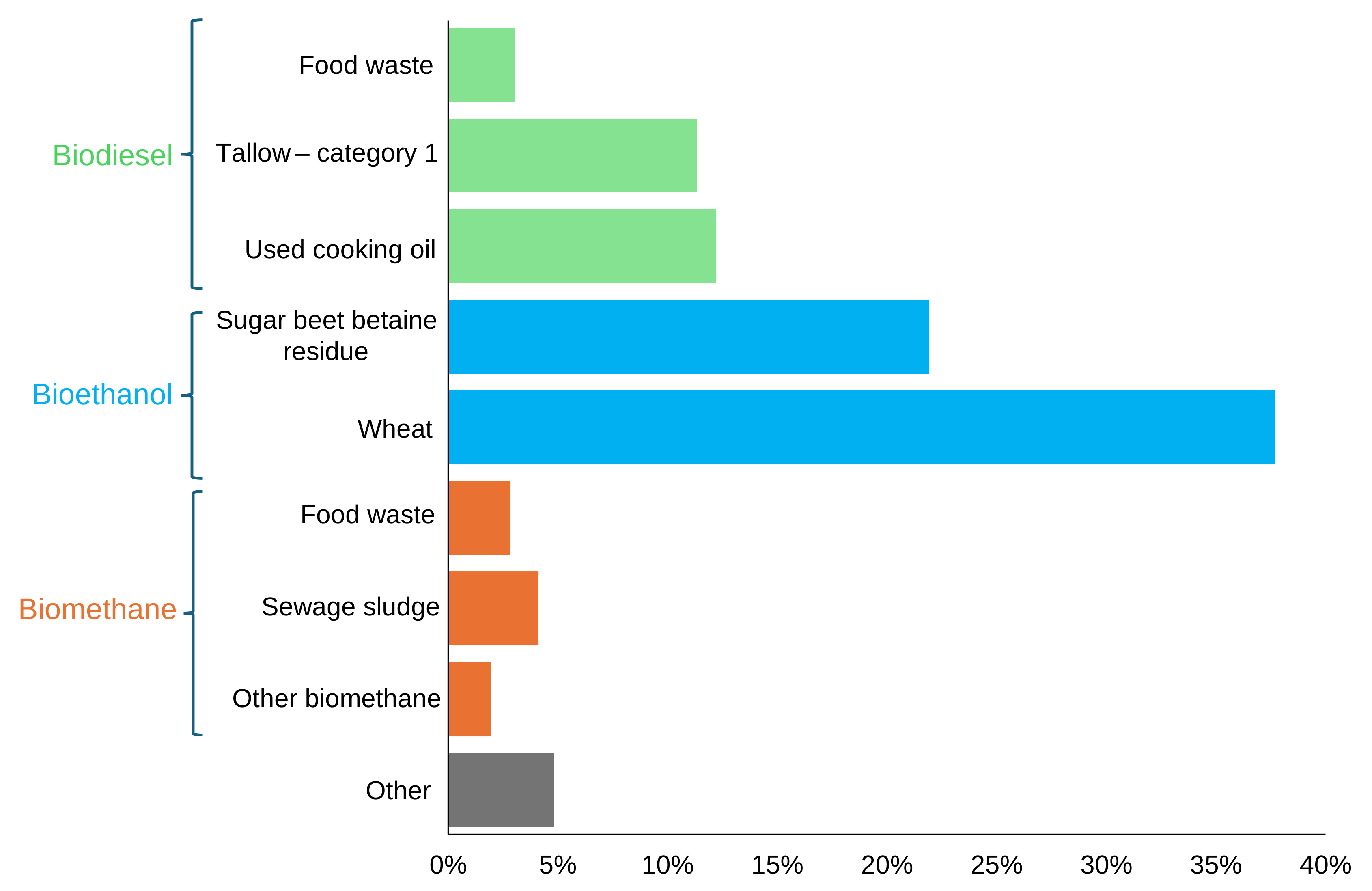
Description of Figure 8 is a bar chart which shows the proportions of UK origin feedstocks.
Of the 248 million litres eq. of verified renewable fuel produced from UK-origin feedstock, the most common by feedstock and fuel type combination was bioethanol from wheat (93.3 million litres, 38% of renewable fuel from UK origin feedstock). The most common source of biodiesel from UK origin feedstock was UCO (30.2 million litres, 12% of renewable fuel from UK origin feedstock).
Renewable fuels from UK feedstocks made up 7% of total renewable fuels in 2024.
Figure 9: UK origin verified renewable fuel by feedstock, financial year ending 2014 to 2024 (table RF_0105a)
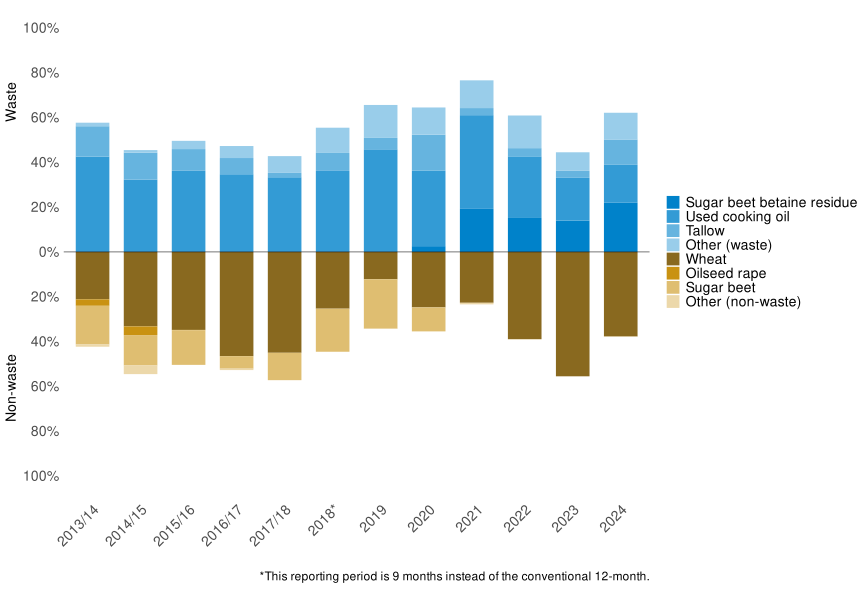
Description of Figure 9 is a bar chart which shows proportions of UK origin feedstocks, divided by waste and non-waste categories, from financial year ending 2014 to 2024. 62% of UK origin renewable fuel was produced from a waste feedstock, up from 44% in 2023.
The most common UK origin waste feedstock has been UCO throughout the entire reporting period. The most common non-waste UK origin feedstock has mostly been wheat through the reporting period.
Waste feedstock and origin
Waste feedstocks
Renewable fuel produced from waste feedstocks typically delivers greater greenhouse gas savings than fuel derived from feedstocks produced specifically to be made into renewable fuel. Therefore, these are encouraged under the RTFO and are typically awarded double certificates. For simplicity, both wastes and residues are included as waste feedstocks in this report and include used cooking oil, municipal organic waste, waste agricultural products such as corn husks, and sewage sludge.
Figure 10: Proportion of waste and non-waste feedstock amongst verified renewable fuel in 2024 (table RF_0105a)
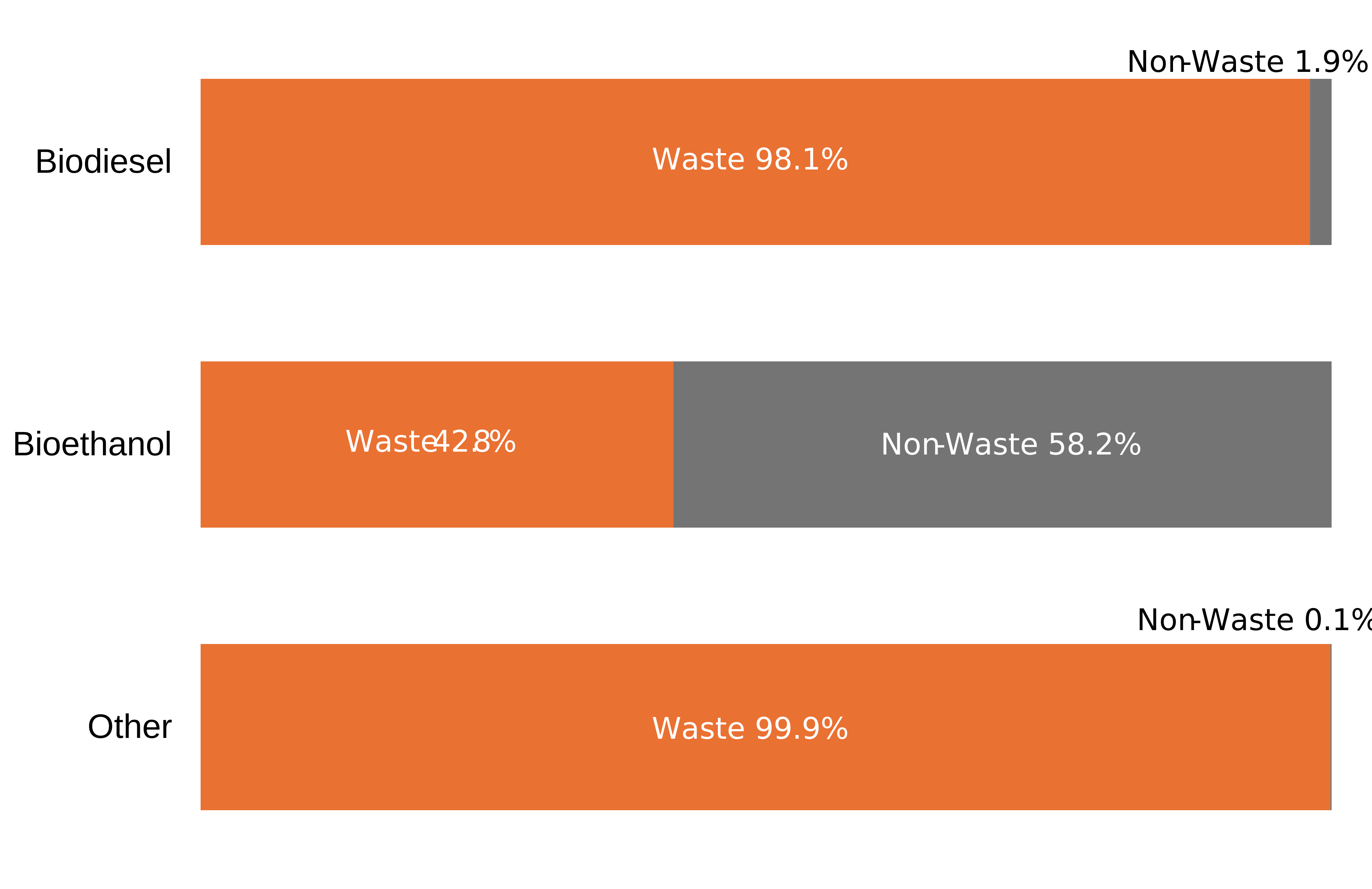
Description of Figure 10 is a bar chart showing waste and non-waste proportions of biodiesel, bioethanol and other types of fuel.
Waste feedstocks are further incentivised under the RTFO, with the awarding of double-counting certificates for renewable fuel derived from them. Renewable fuel from waste feedstocks totalled 2,897 million litres eq. in 2024, making up 77% of all verified renewable fuel. Waste feedstocks made up more than 95% of biodiesel and other types of fuel in 2024. Whilst, waste feedstocks made up 42% of bioethanol production, 621 million litres eq., an increase from 36% in 2023 (509 million litres eq.).
Figure 11: Renewable fuels from waste and non-waste feedstock, financial year ending 2014 to 2024 (table RF_0105a)
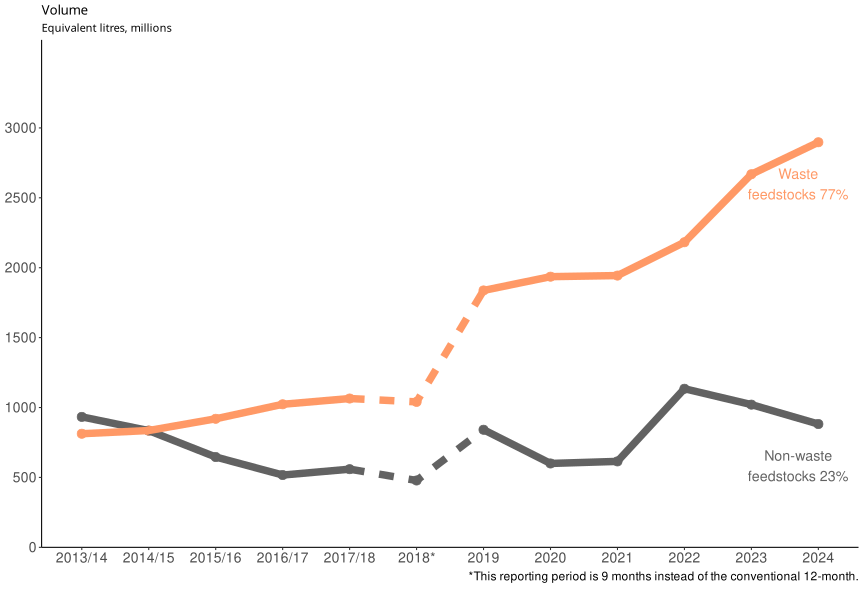
Description of Figure 11 is a line chart showing the amount of waste and non-waste litres of renewable fuel, from financial year ending 2014 to 2024.
Waste-derived fuels have been increasing over time. At 77%, the proportion of fuel from waste feedstocks was higher than the previous reporting period (72% in 2023), increasing from 2,669 to 2,897 million litres eq. Use of non-waste feedstocks has decreased both absolutely and relative to waste feedstocks, and since financial year ending 2015 they have made up the minority of overall renewable fuel supply to the UK.
Country of origin
Figure 12: Top 5 countries of origin for feedstocks which were used in UK renewable fuels in 2024 (table RF_0105a)
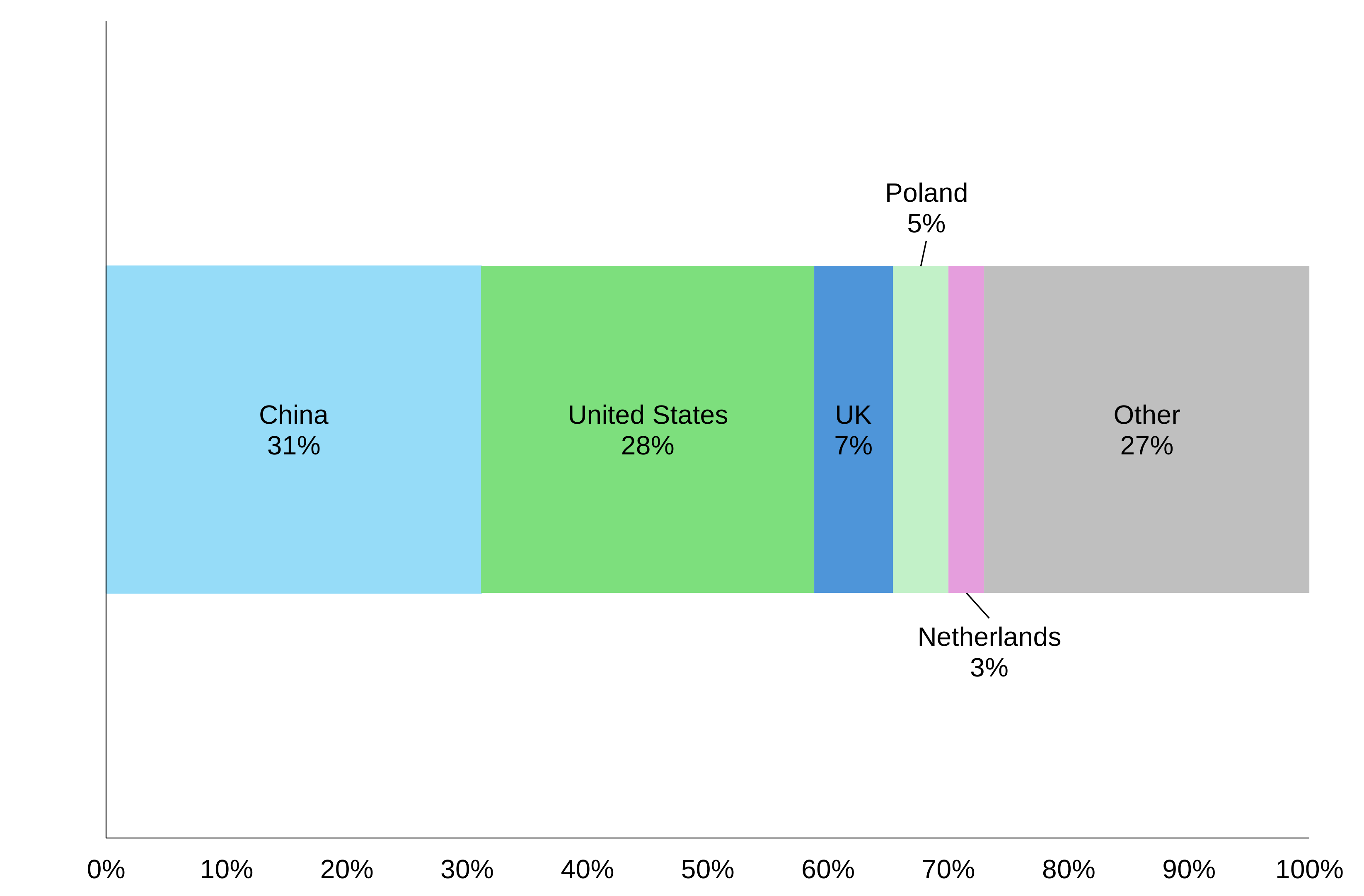
Description of Figure 12 is a bar chart which shows the top 5 countries supplying renewable fuel to the UK.
7% of verified renewable fuel supplied to the UK this year was derived from UK feedstocks. The top 5 feedstock origin countries together account for 73% of renewable fuel.
Of the 3,779 million litres eq. of verified renewable fuel supplied in 2024, the most widely reported feedstock for biodiesel supplied for use in the UK (by feedstock and country of origin) was UCO from China (221 million litres, 6% of renewable fuel supplied, 26% of total biodiesel supplied).
Chinese UCO feedstock accounted for 31% (1,165 million litres) of all verified fuel supplied to the UK in 2024, with over half being used to produce HVO.
In previous reporting years, a high proportion of the UK’s bioethanol came from feedstocks from Ukraine and the United States like corn. The most widely reported source for bioethanol supplied to the UK in 2024 (by feedstock and country of origin) was corn from the United States (428 million litres, 11% of renewable fuel supplied, 29% of total bioethanol supplied), followed by unrefined liquid dextrose ultrafiltration retentate (ULDUR) from the United States (428 million litres, 11% of renewable fuel, 29% of total bioethanol supplied).
Bioethanol produced from ULDUR has increased sharply since the feedstock was approved under the RTFO in late 2022. All ULDUR based bioethanol supplied in 2023 was of United States origin, whilst in 2024 there were small volumes coming from other countries like Hungary and Bulgaria.
Figure 13: Proportion of renewable fuel supplied to the UK by region, financial year ending 2014 to 2024 (table RF_0105b)
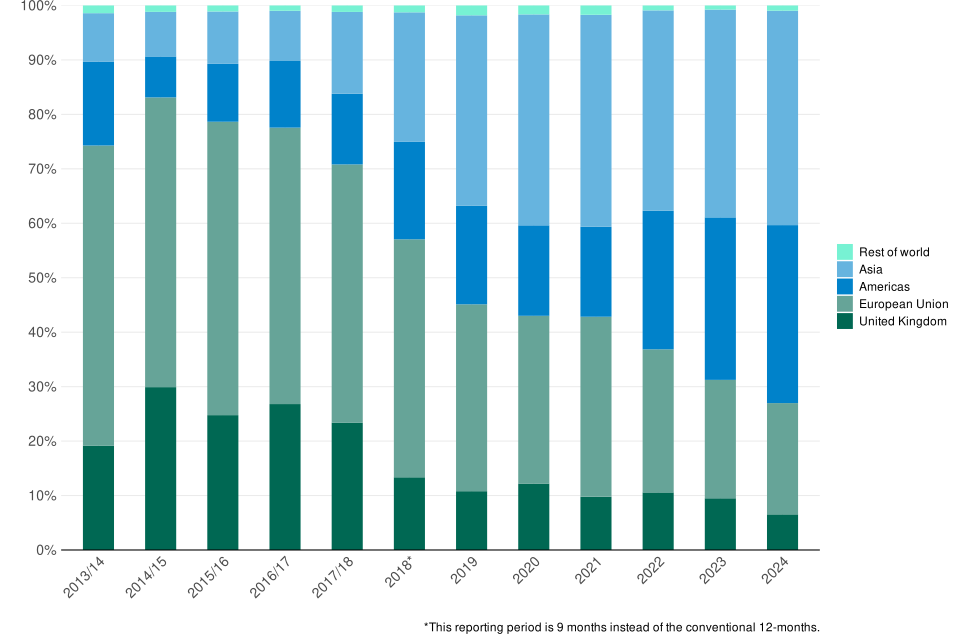
Description of Figure 13 is a bar chart which shows the proportions of renewable fuel origin from different parts of the world, from the financial year ending 2014 to 2024. The proportion of UK-origin renewable fuel peaked in the financial year ending 2015, and in recent years has seen a slow decline. Proportions of renewable fuel from the European Union and the rest of the world (which comprises Africa and Oceania) have decreased, whilst the proportion of renewable fuel from Asia has increased and the proportion from the Americas has varied.
The proportion of verified renewable fuel from Asia increased from 2023, standing at 39% in 2024. The proportion of verified renewable fuel from the UK decreased slightly from 9% in 2023 to 7% in 2024, and verified renewable fuel from the Americas increased from 2023, standing at 33% in 2024.
Figure 14: Average greenhouse gas saving by country supplying fuel, 2024 (table RF_0105a)
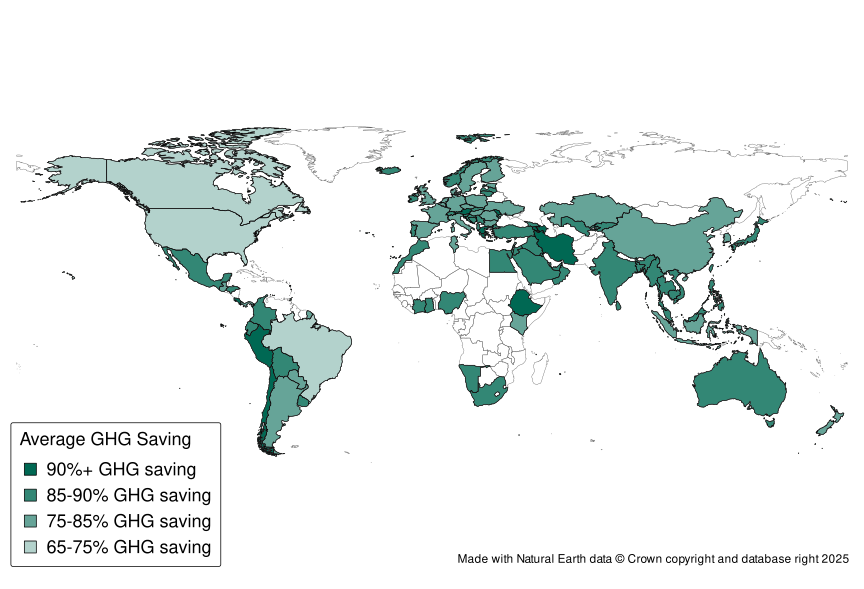
Figure 15: Country of origin of all biodiesel feedstocks, 2024 (table RF_0105a)
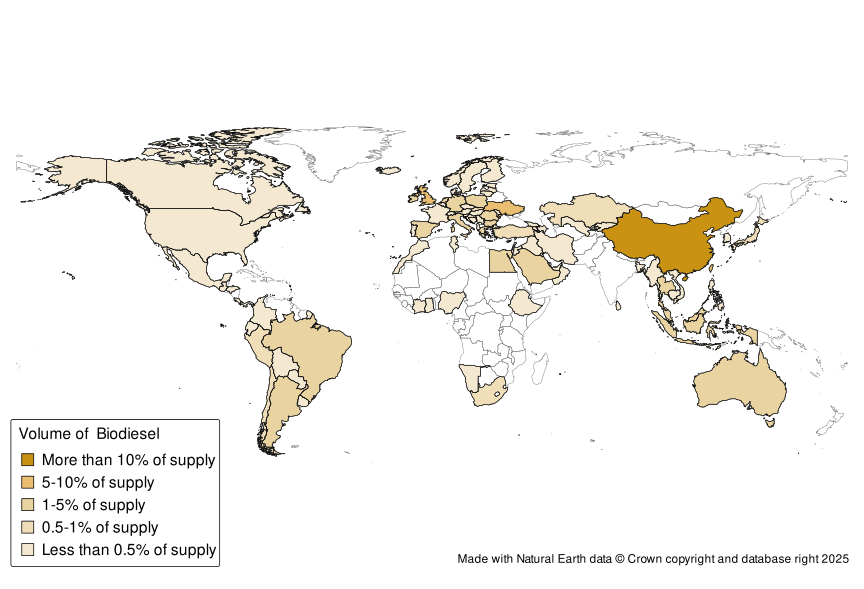
Figure 16: Country of origin of all bioethanol feedstocks, 2024 (table RF_0105a)
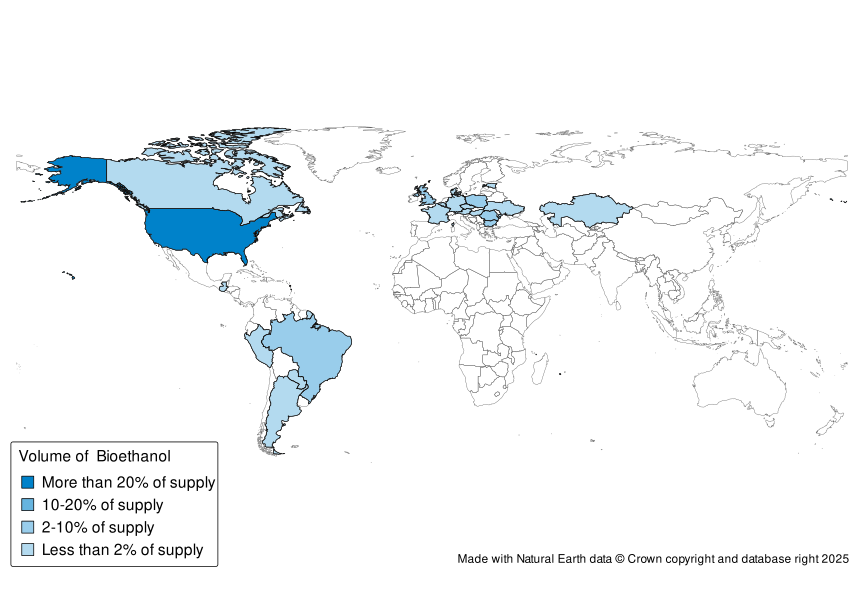
Descriptions of Figures 14, 15 and 16
-
Figure 14 is a world map showing average GHG savings by country supplying renewable fuel, in 2024
-
Figure 15 is a world map showing imports of biodiesel by country in 2024
-
Figure 16 is a world map showing imports of bioethanol by country in 2024. All data for these figures can be found in table RF_0105a. These maps are made with Natural Earth data Crown copyright and database right 2025
Supplier information
The market for renewable fuel was diverse in 2024, with 42 different suppliers supplying renewable fuel to the UK market in this reporting period. This is a decrease on the 45 companies that supplied renewable fuel to the UK in the previous reporting period.
Figure 17: Average GHG savings of top 10 suppliers for 2024, in alphabetical order (table RF_0110)
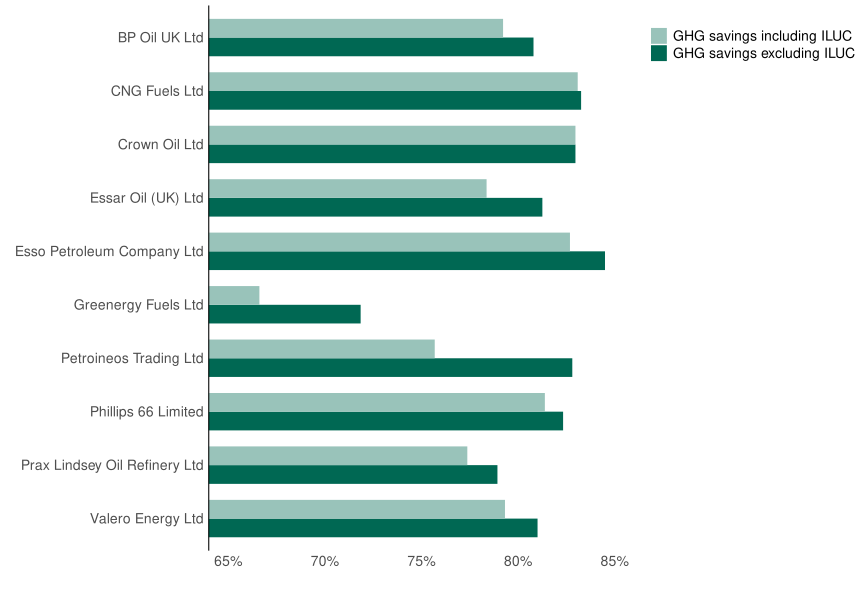
Description of Figure 17 is a bar chart showing average GHG savings of the top 10 suppliers of 2024 (in order of average GHG savings), distinguished by GHG savings excluding and including ILUC. Data can be found in table RF_0110.
The top ten suppliers of renewable fuel supplied 85% of the UK’s supply of renewable fuel in this period. In 2024, 18 of the 20 obligated suppliers met their main obligation entirely through supply of fuel, whilst two suppliers failed to meet their main obligation and consequently the buy out obligation was applied.
Figure 18: Feedstock mix of top 10 suppliers for 2024 (table RF_0108a)
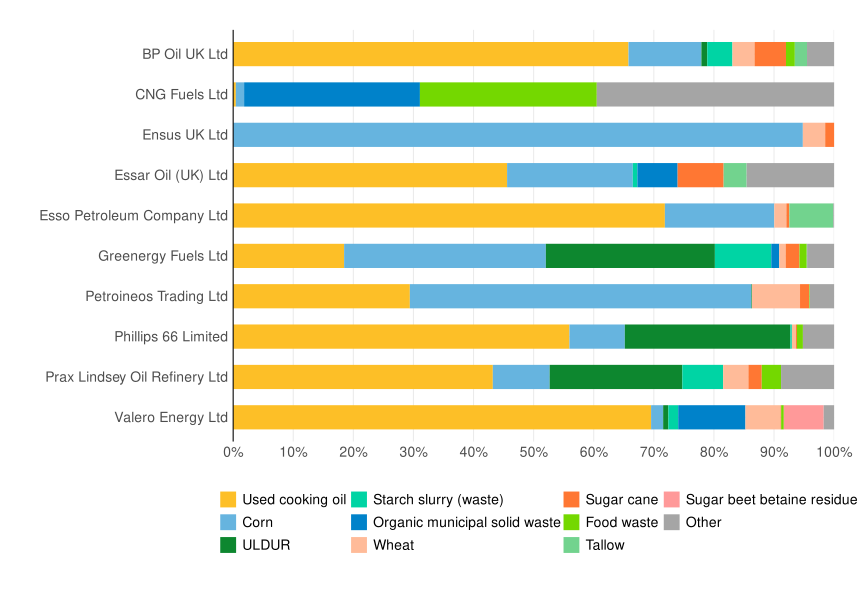
Description of Figure 18 is a bar chart showing the feedstock mix of the top 10 suppliers of renewable fuel in 2024, in alphabetical order. Data can be found in table RF_0110.
Development fuel
Development fuel
Specific fuels made from sustainable wastes or residues (excluding segregated oils and fats such as used cooking oils and tallow) or renewable fuels of non-biological origin (RFNBOs). These fuels are awarded two development fuel certificates per litre eq. of eligible fuel supplied.
A specific target for ‘development fuels’ was introduced from 1 January 2019. This target takes into account the fuel types and the feedstock. Eligible fuels include aviation fuel, drop-in fuels, substitute natural gas and hydrogen (see notes and definitions).
In 2024, the RTFO Administrator has verified 49 million litres eq. of development diesel and 19.8 million litres eq. of development petrol, which are renewable fuels and also qualify as development fuels. Together, this fuel was awarded 142 million development fuel RTFCs, which is an increase from the 105 million development fuel RTFCs awarded in 2023. In 2024, 115,118 litres eq. of hydrogen were verified. All obligated suppliers met their development fuel target, however 19 suppliers achieved this through buying out at least some amount of their obligation.
88% of development diesel came from organic municipal solid waste from the United States. 77% of development petrol came from organic municipal solid waste, also from the United States, whilst 10% came from end of life tyres from Poland and the remaining 14% came from food waste from Poland and end of life tyres from Sweden.
Certificates awarded under the RTFO
Renewable Transport Fuel Certificates (RTFCs)
RTFCs are awarded to transport fuel suppliers whose renewable fuel meets the sustainability criteria. In 2024, 6,676 million RTFCs have been issued to 3,779 million litres eq. of verified renewable fuel. This is out of a total of 3,809 million litres eq. supplied in 2024.
Double counting feedstock
Double counting
Fuel produced from certain wastes or residues, fuel from dedicated energy crops, and renewable fuels of non-biological origin (RFNBOs) are incentivised by awarding double the RTFCs per litre or kilogram supplied. This means that each litre eq. of eligible fuel supplied counts double towards meeting suppliers’ obligations.
Of the 6,676 million RTFCs awarded to renewable fuel that met the sustainability criteria, 5,793 million were issued to fuel from a ‘Double Counting’ feedstock. 30 million litres eq. of renewable fuel went unverified (0.8% of total renewable fuel) and did not receive RTFCs in this period.
Figure 19: Renewable fuel to which RTFCs have been issued in 2024 (table RF_0102)
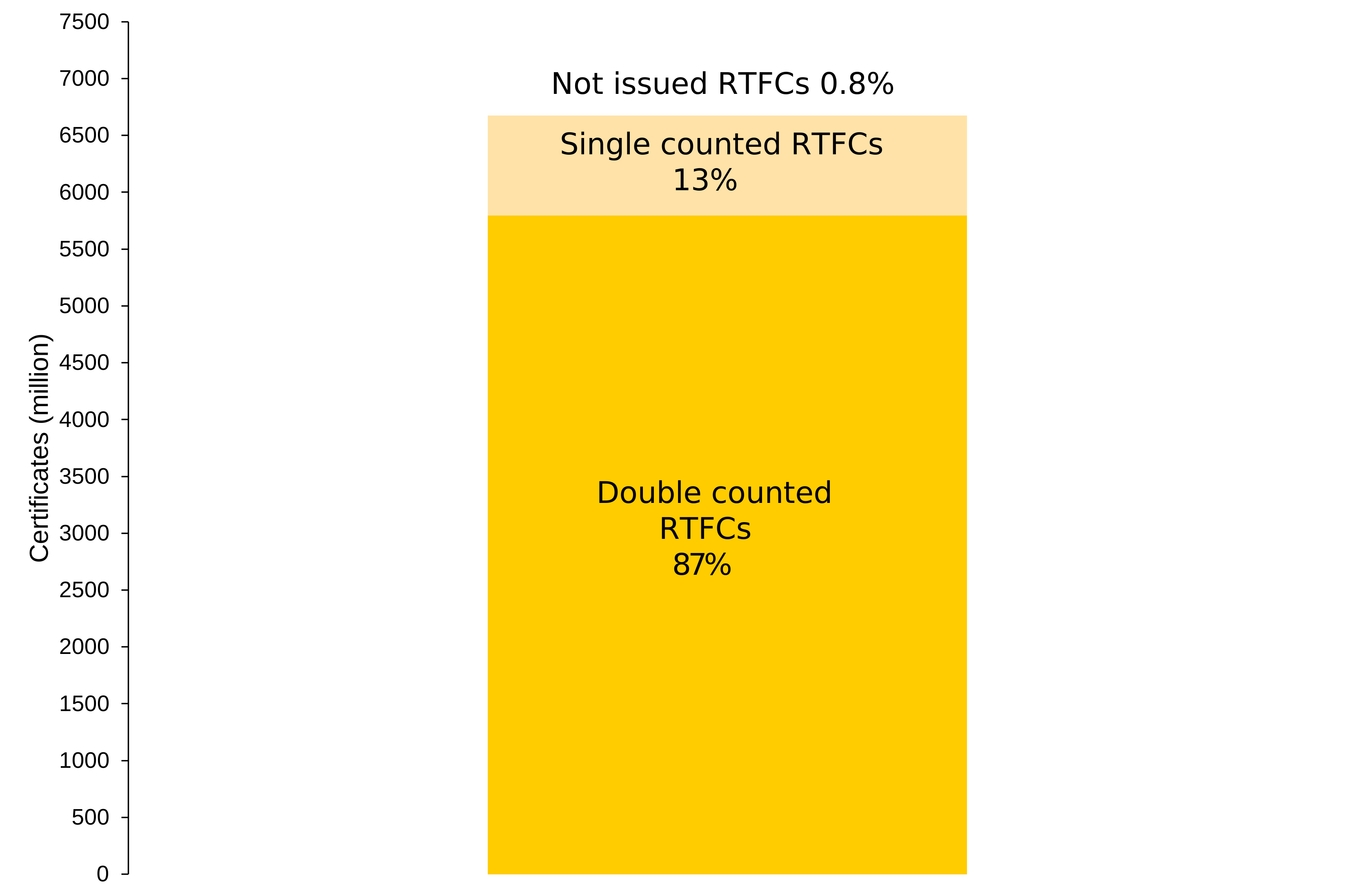
Description of Figure 19 is a stacked bar chart showing different types of RTFCs issued in 2024. Data can be found in table RF_0102.
Voluntary schemes
Voluntary schemes can be used to verify that renewable fuel supplied to the UK complies with the sustainability criteria of the RTFO, which is a prerequisite for RTFCs to be issued.
Schemes for certification and traceability
-
Almost all (98%) of renewable fuel feedstocks that have met the sustainability criteria have been certified by a voluntary scheme
-
Of the current voluntary schemes listed, the International Sustainability and Carbon Certification scheme (ISCC) certified 94% of all UK renewable fuel in 2024
-
The uptake of voluntary schemes has remained above 98% for the past eight years, compared to 20% in the first year of the RTFO
Figure 20: Proportion of renewable fuel reported via voluntary scheme, 2024 (table RF_0106)
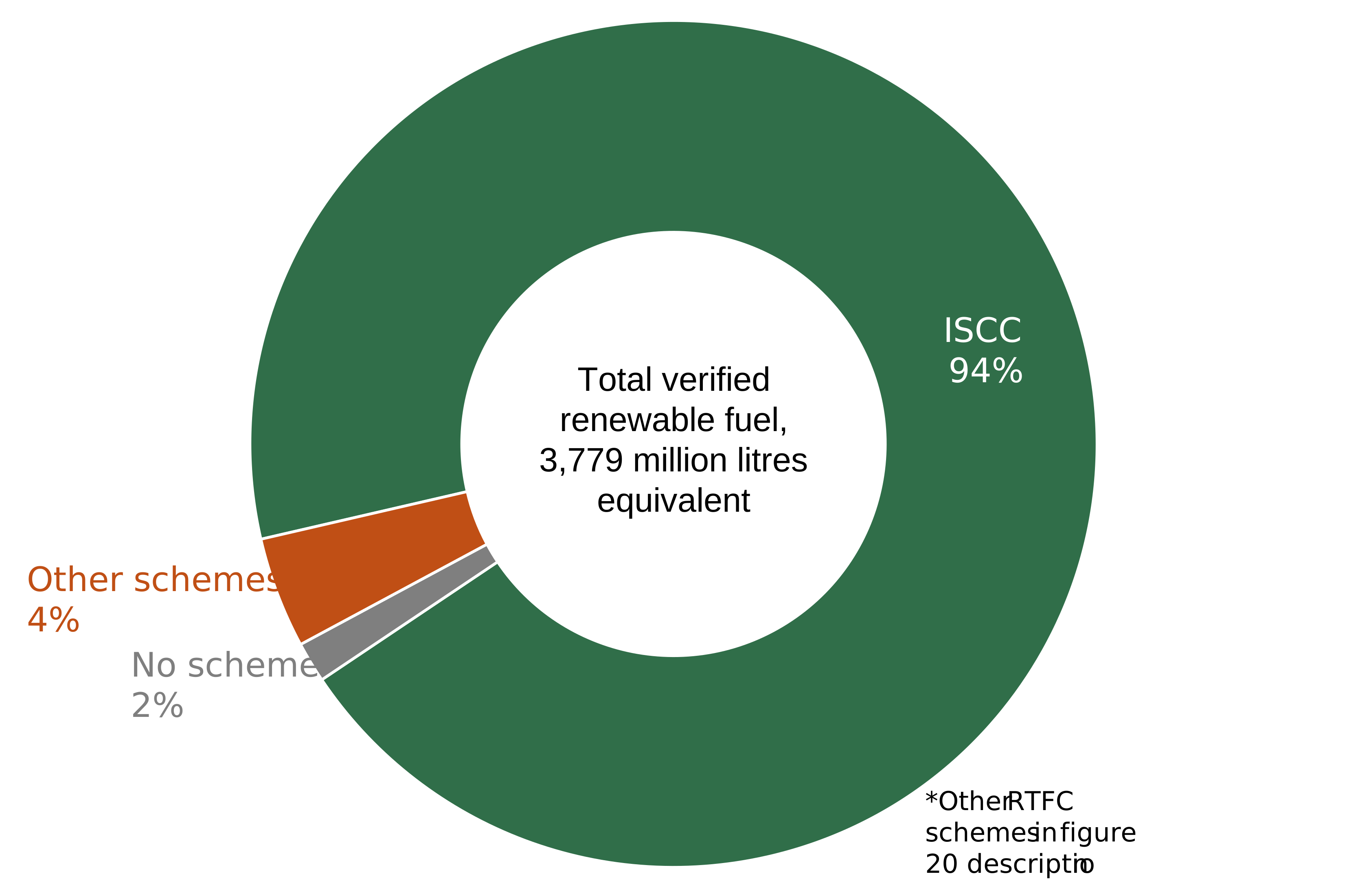
Description of Figure 20 is a pie chart showing the different types of RTFC schemes supplied volumes were reported via in 2024. Of the 3,779 million litres eq. verified in 2024 94% reported their volumes through ISCC, 4% via other schemes (including Roundtable on Sustainable Biomaterials EU RED, REDcert EU, Better biomass, and Biomass biofuels), and 2% of the supplied litres weren’t reported via any scheme.
Background information
Sources of data in this report
Data on volumes of fuel, Renewable Transport Fuel Certificates (RTFCs) (issues, redemptions, surrenders, transfers) and Carbon & Sustainability (C&S) are held by the Renewable Transport Fuel Obligation (RTFO) Administrator on the RTFO Operating System (ROS). Fuel volume data is submitted on a monthly basis by fuel suppliers to the RTFO Administrator and validated against HM Revenue and Customs (HMRC) duty payment data.
C&S data is only reported once RTFCs have been issued. There will therefore be a difference between the volume of renewable fuel supplied and the number of RTFCs issued or C&S data available. The final report for an obligation period will show the final position.
Related information
Previously published reports can be found on the DfT website.
Renewable fuel mix reporting
The data reported by fuel suppliers under the RTFO is in line with mass balance rules. A mass balance system requires suppliers throughout the supply chain to account for their product on a units in - units out basis, but does not require physical separation of certified feedstock or fuel from uncertified material. It ensures that for every unit of sustainable renewable fuel sold, the corresponding amount of sustainable feedstock has been produced. This can mean the actual feedstock mix might differ from that reported. Nonetheless, the feedstocks and renewable fuels reported in this document represent those that are incentivised and rewarded under the RTFO.
Obligations Under the RTFO
Verified renewable fuel
Verified renewable fuel refers to fuel that has received RTFCs for having met the Sustainability Criteria. For more, see the notes and definitions.
Sustainability criteria
To receive Renewable Fuel Certificates, fuels supplied must meet the sustainability criteria set out in the amended Renewable Transport Fuel Obligations Order 2007 and the RTFO Compliance Guidance. Renewable fuel must deliver minimum GHG savings and must not originate from land with high biodiversity value or carbon stock unless stringent criteria are met.
Suppliers of fuel for road and non-road mobile machinery (for example, tractors) that supply 450,000 litres equivalent or more per year have an obligation under the RTFO Order. Obligated suppliers may meet their obligation by redeeming Renewable Transport Fuel Certificates (RTFCs) or by paying a fixed sum for each litre of fuel for which they wish to ‘buy-out’ of their obligation. RTFCs are gained by supplying sustainable renewable fuels. In 2024, such suppliers must redeem RTFCs and development fuel RTFCs (dRFTCs) equivalent to 13.6% and 1.4%, respectively, of the volume of fossil and unsustainable renewable fuel supplied.
One certificate may be claimed for every litre or equivalent (notes and definitions) of sustainable renewable fuel supplied. Fuel produced from certain wastes or residues, fuel from dedicated energy crops, and renewable fuels of non-biological origin (RFNBOs) are incentivised by awarding double the RTFCs per litre or kilogram supplied.
Strengths and weaknesses of the data
C&S data is verified by independent verifiers and checked against the RTFO Guidance by the Administrator.
The Administrator validates volume data submitted by fuel suppliers against that held by the HMRC regarding fuel duty liabilities. Whilst the Administrator validates volume data against HMRC data at a company level, there is not an exact match between the volume of fuel reported in this report and the volume of fuel reported in HMRCs Hydrocarbon Oils bulletin. For further information see the notes and definitions.
Further details
Further information on the data can be found in the notes and definitions.
About these statistics
These statistics are official statistics. They comply with the standards of trustworthiness, quality, and value in the Code of Practice for Statistics.
Details of ministers and officials who received pre-release access to these statistics up to 24 hours before release can be found in the pre-release access list.
Annex A: RTFO statistics content of tables
Statistics are published as tables every 3 months providing the latest data on the scheme. Over 18 months, six releases of data are published for each annual obligation period (one year). The 6th report serves as the final dataset and includes a full report summarising the key data.
This is the sixth and final report of 2024, of 6 in total. After the fourth quarterly report of 2022, we stopped publishing provisional reports and now only publish provisional data tables. The final report for 2025 is scheduled for release in November 2026 and will report on the carbon and sustainability performance of individual suppliers. All reports are made available online.
Table 1: Typical content of renewable fuel statistics tables
| Table | Description | Provisional report | Final report |
|---|---|---|---|
| RF_0101 | Volume of fuel supplied | Yes | Yes |
| RF_0102 | Fuels issued with RTFCs and number of RTFCs issued | Yes | Yes |
| RF_0103 | RTFC balance by obligation period | Yes | Yes |
| RF_0104 | RTFC trades to date by company type | Yes | Yes |
| RF_0105a | RTFO wide carbon and sustainability data | Yes | Yes |
| RF_0105b | Feedstock and country of origin over time | No | Yes |
| RF_0106 | RTFO wide voluntary scheme data | Yes | Yes |
| RF_0107 | Performance against obligation by supplier | No | Yes |
| RF_0108a | Feedstock by supplier as a % of their supply | No | Yes |
| RF_0108b | Country of origin by supplier as a % of their supply | No | Yes |
| RF_0109 | % of renewable fuel that was sustainable by supplier | No | Yes |
| RF_0110 | Carbon and sustainability data by supplier | No | Yes |
| RF_0111 | RTFO wide fuel supply by volume and energy | No | Yes |
| RF_0112 | Civil penalties and other non-compliance | No | Yes |
| RF_0114 | Total greenhouse gas savings over time | No | Yes |
Annex B: Figure 2 written description
The materials renewable fuels are made from are either crops or wastes (e.g. food waste). These are known as feedstocks. These are either grown specifically to process into fuel or are waste products such as food waste.
These feedstocks are then processed by renewable fuel manufacturers, producing fuels which behave similarly to conventional propulsion fuel such as petrol and diesel.
These renewable fuels are then mixed with petrol, diesel and other fuels by fuel suppliers, who are required to have a set proportion of renewable fuels in their fuel stock.
These mixed fuels are then sold at pumps at filling stations and on the market.
Renewable fuels deliver greenhouse gas savings as they are sourced from feedstocks which extract CO2 from the atmosphere.
Instructions for printing and saving
Depending on which browser you use and the type of device you use (such as a mobile or laptop) these instructions may vary.
You will find your print and save options in your browser’s menu. You may also have other options available on your device. Tablets and mobile device instructions will be specific to the make and model of the device.
How to search
Select Ctrl and F on a Windows laptop or a Command and F on a Mac.
This will open a search box in the top right-hand corner of the page. Type the word you are looking for in the search bar and press enter.
Your browser will highlight the word, usually in yellow, wherever it appears on the page. Press enter to move to the next place it appears.
Contact details
Renewable fuel statistics
To hear more about DfT statistical publications, follow us on X at DfTstats.
-
The 2018 reporting period is 9 months instead of the conventional 12-month. ↩