Public Health Outcomes Framework: commentary, May 2026
Published 6 May 2026
Applies to England

© Crown copyright 2026
This publication is licensed under the terms of the Open Government Licence v3.0 except where otherwise stated. To view this licence, visit nationalarchives.gov.uk/doc/open-government-licence/version/3 or write to the Information Policy Team, The National Archives, Kew, London TW9 4DU, or email: psi@nationalarchives.gov.uk.
Where we have identified any third party copyright information you will need to obtain permission from the copyright holders concerned.
This publication is available at https://www.gov.uk/government/statistics/public-health-outcomes-framework-may-2026-data-update/public-health-outcomes-framework-commentary-may-2026
Background
The Public Health Outcomes Framework (PHOF) gives an overview of public health outcomes at national and local level, supported by a broader set of more detailed indicators. Local authorities can use the PHOF interactive web tool in Fingertips to access the data and assess progress in comparison to national averages and their peers.
New in this update
This update includes new data for 24 indicators. The commentary concentrates on inequalities in life expectancy and healthy life expectancy, and hospital admissions for selected causes. A complete list of indicators which have been updated is included in the PHOF indicator details table.
Summary of selected updated indicators
Inequality in life expectancy and healthy life expectancy
Inequality in life expectancy and healthy life expectancy is estimated using a summary measure called the slope index of inequality (SII). The SII represents the range in years of life expectancy or healthy life expectancy across the social gradient from most to least deprived small areas (lower super output areas). The higher the value of the SII, the greater is the inequality within an area. The calculation of the SII is described in an accompanying technical guide.
Life expectancy, A02a
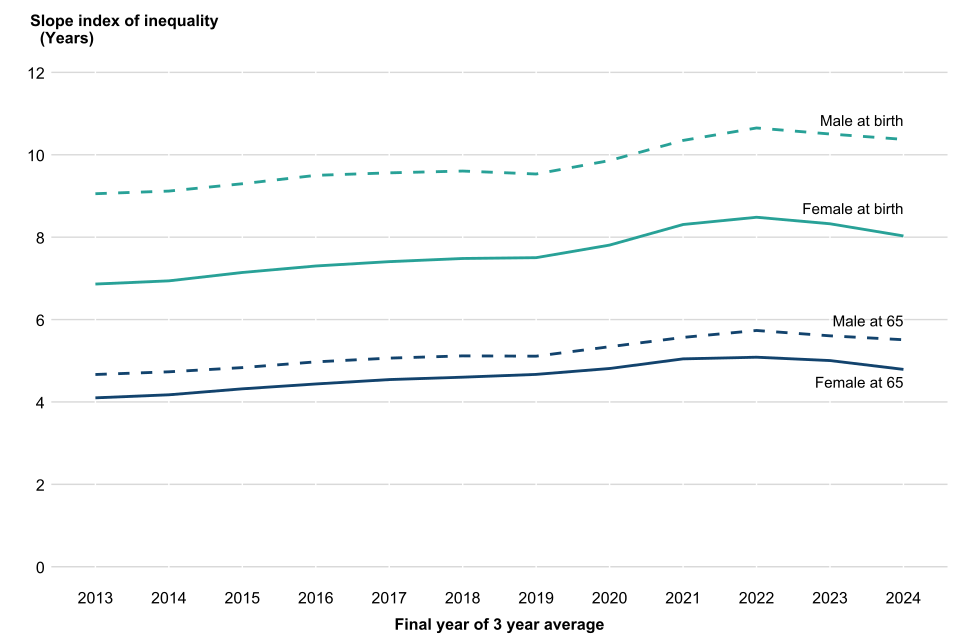
In 2022 to 2024, male life expectancy at birth in England was 79.5 years, but there was a gap of 10.4 years between the most and least deprived, as measured by the SII. Female life expectancy was 83.3 years in 2022 to 2024, and the gap was 8.0 years. For life expectancy at 65 in 2022 to 2024, the SII was 5.5 years for men and 4.8 years for women.
Inequality in life expectancy has generally increased since 2011 to 2013 (see figure 1) but there was a more pronounced increase during the COVID-19 pandemic. Across the whole of the time series, inequality was highest in 2020 to 2022. Although the SII estimates for life expectancy at birth in 2022 to 2024 were significantly lower than in 2020 to 2022, they remain significantly higher than the pre-pandemic estimates for 2017 to 2019 (male SII of 9.5 years, female SII of 7.5 years).
Figure 1: trends in inequality in life expectancy, England, 2011 to 2013 to 2022 to 2024
Source: OHID, based on Office for National Statistics (ONS) data
Healthy life expectancy, A02b
In 2022 to 2024, male and female healthy life expectancy at birth in England was 60.9 and 61.3 years respectively. This is 2.3 years (male) and 2.4 years (female) lower than estimates for the pre-pandemic period of 2017 to 2019.
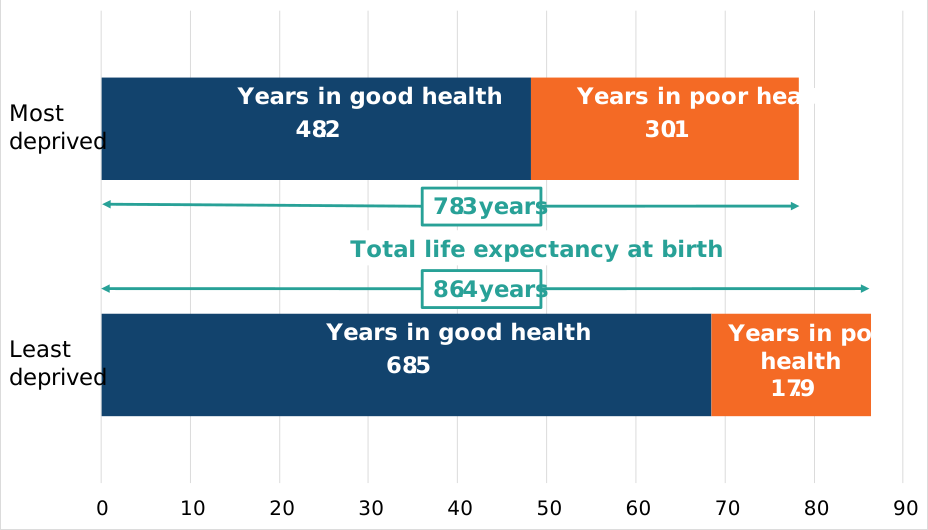
In the most deprived areas in 2022 to 2024, male healthy life expectancy was 49.8 years (68% of life) and female healthy life expectancy was 48.2 years (62% of life). In the least deprived areas, male healthy life expectancy was 69.2 years (83% of life) and female healthy life expectancy was 68.5 years (79% of life) (see figures 2a and 2b).
Between 2019 to 2021 and 2022 to 2024 healthy life expectancy fell in all deprivation deciles for both sexes. In the most deprived decile, male healthy life expectancy fell by 2.2 years and female healthy life expectancy by 3.2 years. In the least deprived decile, male healthy life expectancy fell by 1.2 years and female healthy life expectancy by 1.8 years. Falls in other deciles varied, with no clear gradient between the most and least deprived.
Figure 2a: male healthy life expectancy: years spent in good or poor health in the most and least deprived deciles, England 2022 to 2024
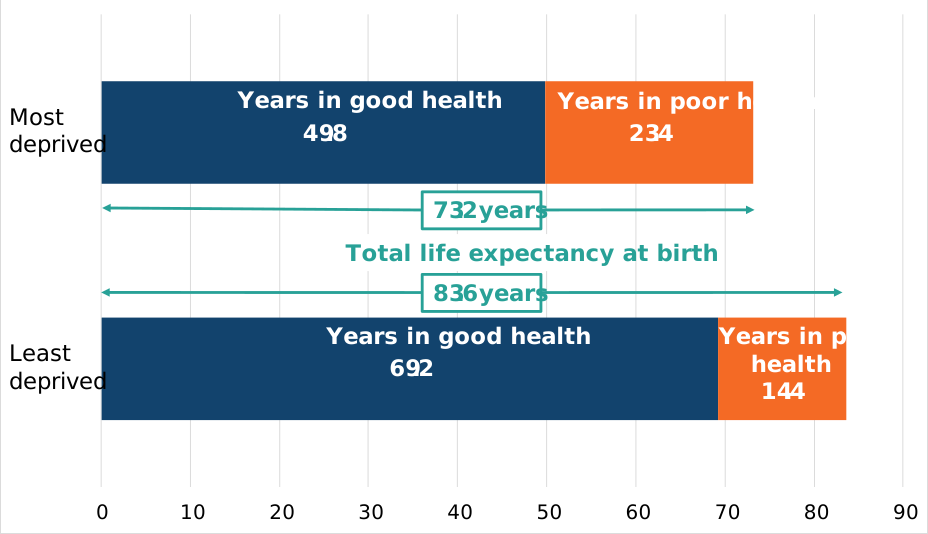
Figure 2b: female healthy life expectancy: years spent in good or poor health in the most and least deprived deciles, England 2022 to 2024
Source: OHID, based on ONS data
The gap in healthy life expectancy between the most and least deprived in England (as measured by the SII) was 19.3 years (male) and 20.1 years (female) in 2022 to 2024. These gaps are wider than estimates for the pre-pandemic period of 2017 to 2019 (male 18.5 years, female 19.3 years) but there were no statistically significant changes in the SII for either sex since the time series began in 2013 to 2015.
Hospital admissions
Hospital admissions for violence, including sexual violence, B12a
This indicator measures the number of emergency hospital admissions for violence, including sexual violence. It accounts for a small proportion of total cases as it only includes those severe enough to warrant admission to hospital.
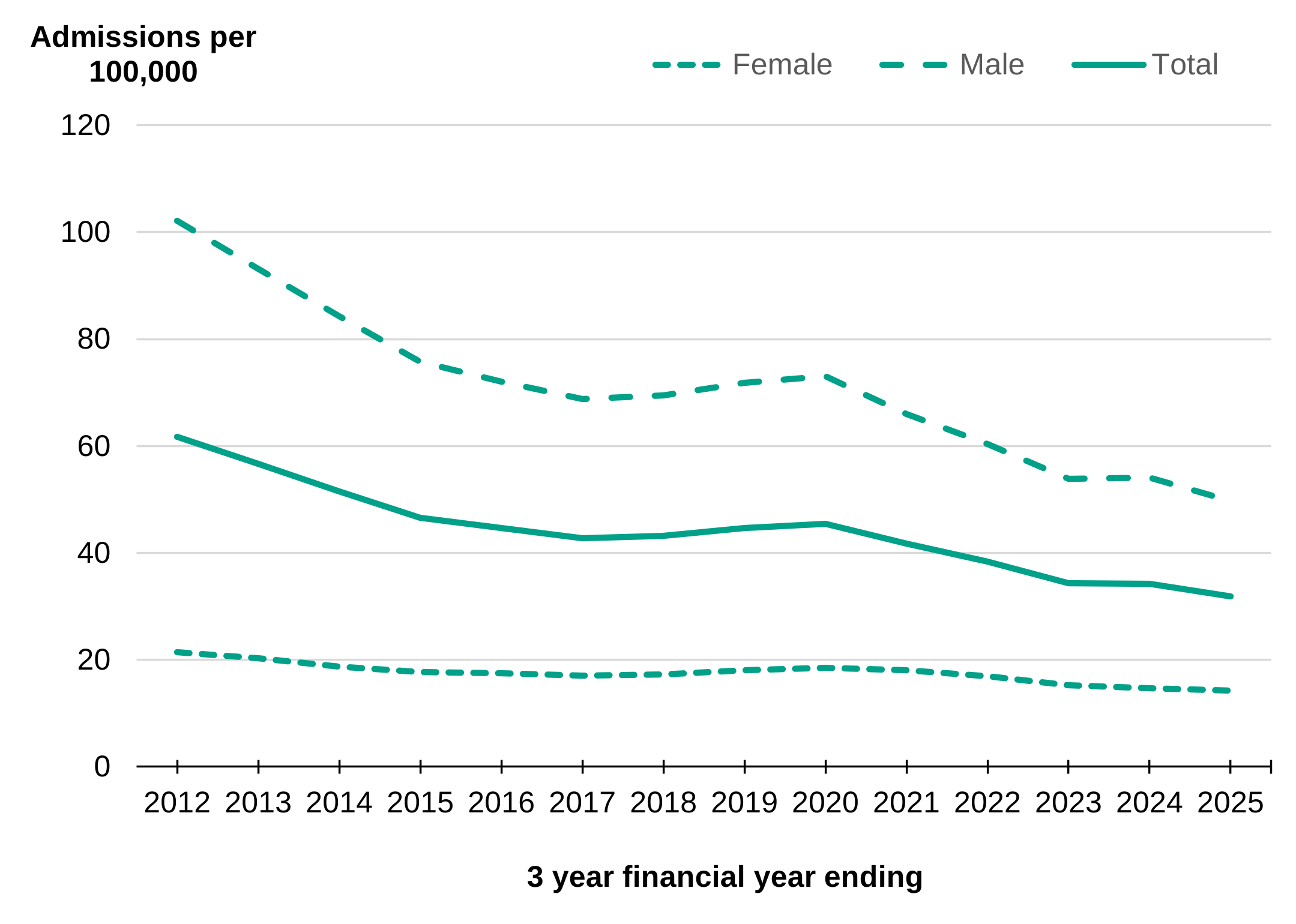
The overall admission rate for violence including sexual violence in England has shown a downward trend over the last decade. However, male admission rates continue to be higher than female rates. In the latest period (financial year ending 2023 to year ending 2025), the male rate was 49.7 admissions per 100,000 population compared with the female rate of 14.2 (see figure 3).
Figure 3: age-standardised hospital admission rate for violence, including sexual violence, England, 3 year financial year ending 2012 to 2025
Source: OHID, based on NHS England and ONS data
The admission rates for violence including sexual violence were 3 times higher in the most deprived areas compared with the least deprived (see figure 4).
Figure 4: age-standardised hospital admissions for violence, including sexual violence, by deprivation decile, England, 3 year financial years ending 2025
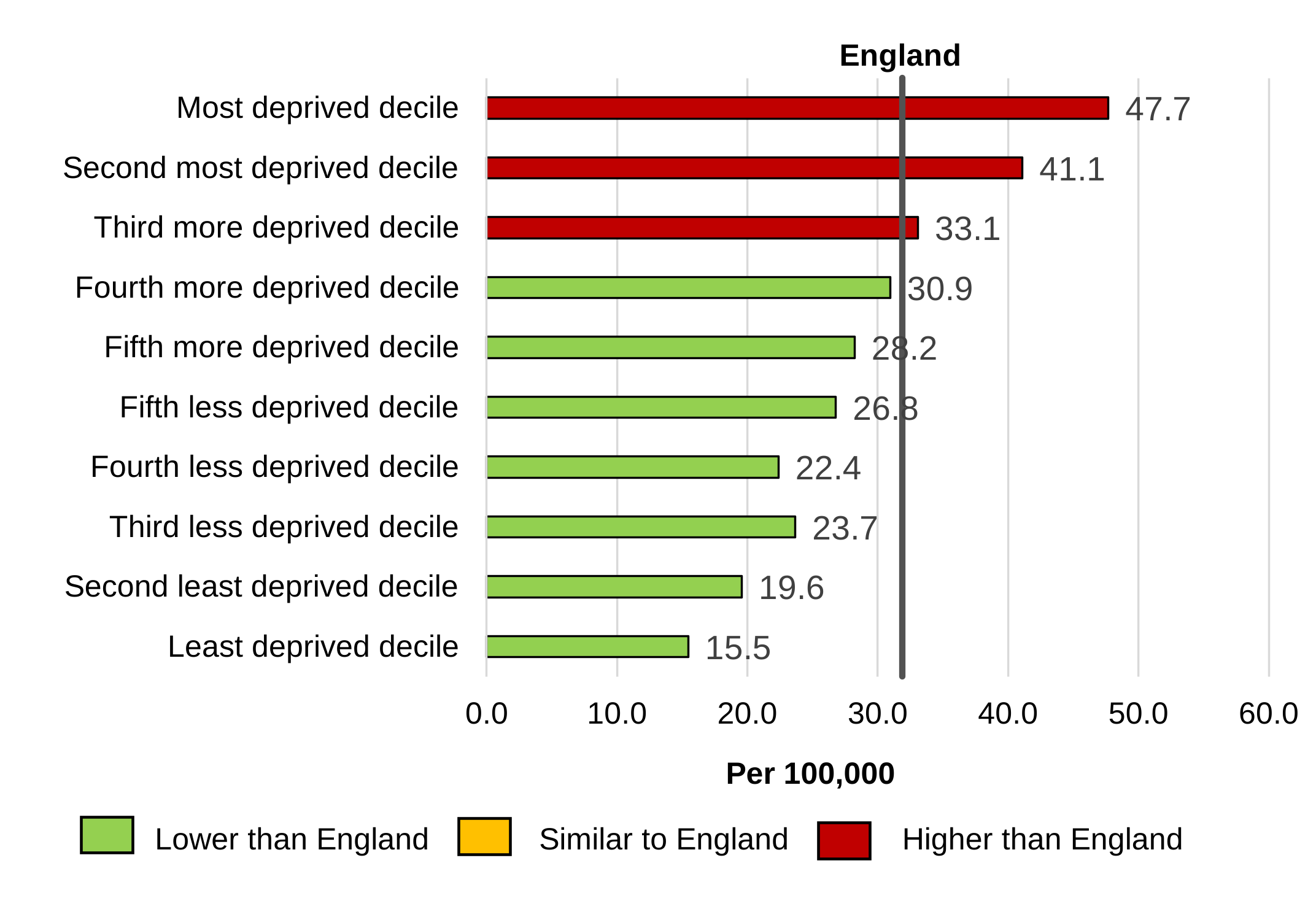
Source: OHID, based on NHS England, ONS and Ministry of Housing, Communities and Local Government data. Deciles are based on groups of local authority district and unitary authorities
Emergency hospital admissions for falls and hip fractures, C29 and E13
Falls have a significant effect on long-term outcomes for older people. Hip fracture is a debilitating condition and can have an immediate effect on someone’s independence. Both these causes of hospital admission can lead to people moving from their own homes to nursing or residential care.
The rate of emergency hospital admission due to falls in people aged 65 years and over showed a small decrease in 2024 to 2025 compared with 2023 to 2024 and remained lower than the rate in 2010 to 2011 (see figure 5).
Figure 5: age-standardised emergency admission rate for falls in people aged 65 years and over, England, financial years ending 2011 to 2025
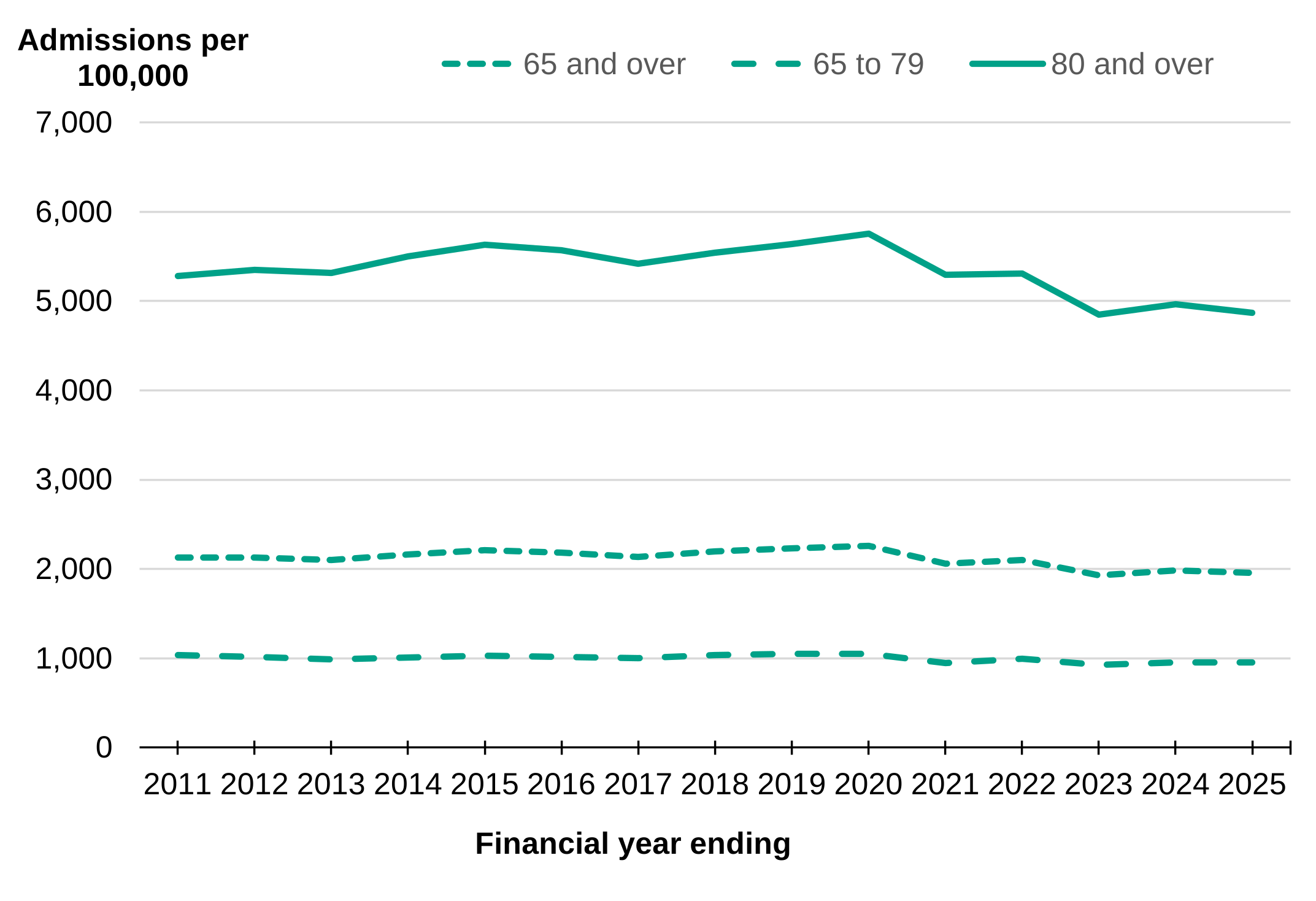
Source: OHID, based on NHS England and ONS data
Emergency admission rates for hip fractures have generally decreased since 2010 to 2011 for those aged 65 and over (see figure 6).
Figure 6: age-standardised emergency admission rate for hip fractures in people aged 65 years and over, England, financial years ending 2011 to 2025
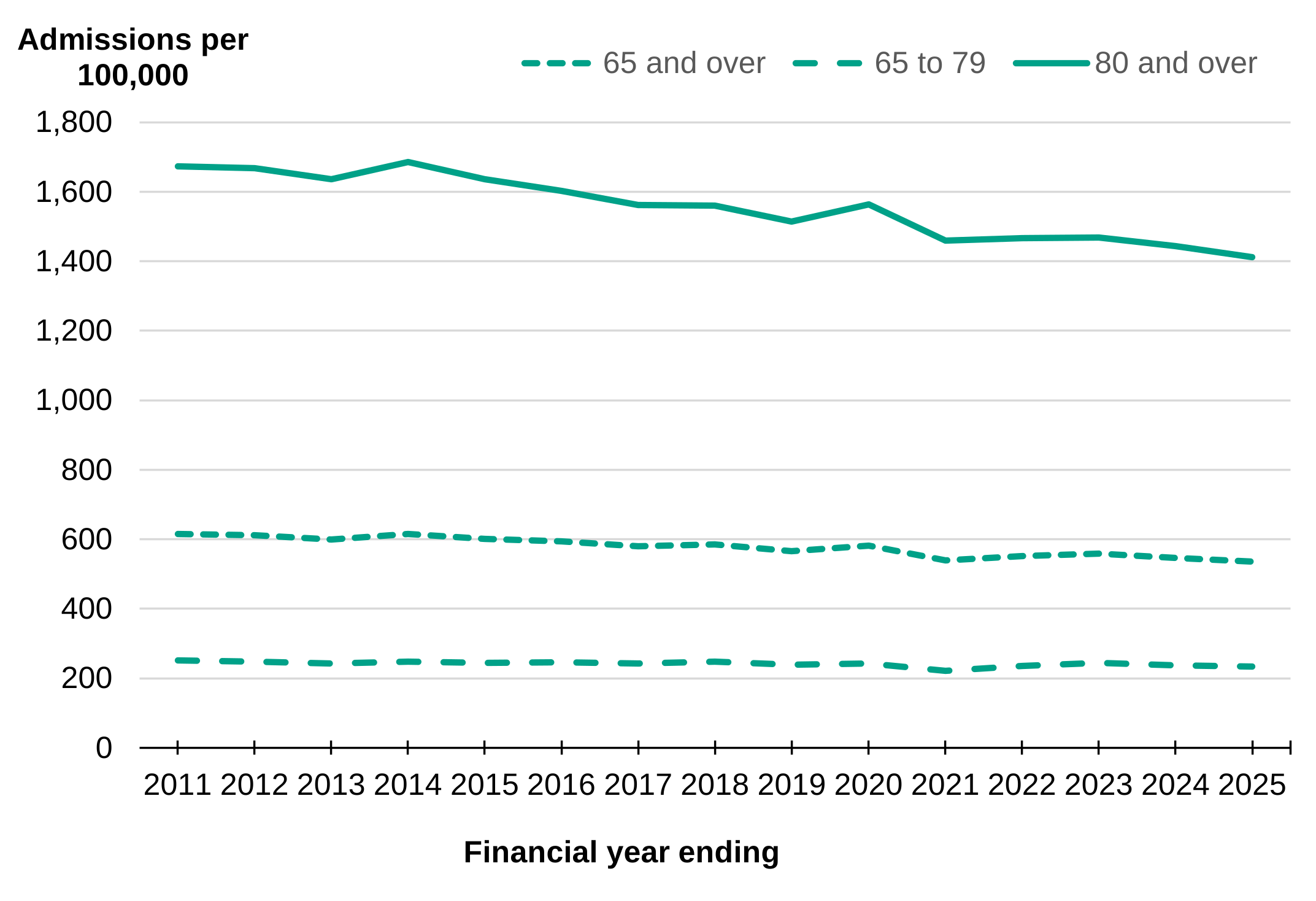
Source: OHID, based on NHS England and ONS data
Further information
The PHOF includes data for all indicators which have been updated.
Provisional life expectancy estimates for 2025 and the 3-year period 2023 to 2025 have been added to the PHOF, but lower layer super output areas (LSOA) based deprivation deciles and SII estimates are not yet available for these periods. The Mortality profile: May 2026 update includes a commentary with further details about the updated PHOF indicators for mortality and inequalities and life expectancy, including provisional life expectancy estimates and mortality rates for 2025.
Indicator C14b - Emergency hospital admissions for intentional self-harm has not been updated in this release. Its purpose is to indicate the level of mental health need in an area. Recent trends and levels of variation between regions and areas suggest that this indicator may no longer offer meaningful information about need and increasingly reflect differences in service provision. We recognise the importance of mental health and so we will review this indicator alongside 2 related indicators in the child and maternal health profile with stakeholders to consider if it remains a good indicator for this topic.
PHOF indicators have been updated where applicable to reflect revisions to population estimates.
If you have any queries about this publication, email pha-ohid@dhsc.gov.uk.