Public Health Outcomes Framework: commentary, February 2026
Published 3 February 2026
Applies to England

© Crown copyright 2026
This publication is licensed under the terms of the Open Government Licence v3.0 except where otherwise stated. To view this licence, visit nationalarchives.gov.uk/doc/open-government-licence/version/3 or write to the Information Policy Team, The National Archives, Kew, London TW9 4DU, or email: psi@nationalarchives.gov.uk.
Where we have identified any third party copyright information you will need to obtain permission from the copyright holders concerned.
This publication is available at https://www.gov.uk/government/statistics/public-health-outcomes-framework-february-2026-data-update/public-health-outcomes-framework-commentary-february-2026
Background
The Public Health Outcomes Framework (PHOF) gives an overview of public health outcomes at national and local level, supported by a broader set of more detailed indicators. Local authorities can use the PHOF interactive web tool in Fingertips to access the data and assess progress in comparison to national averages and their peers, and develop their work plans.
New in this update
This update includes new data for 35 indicators. The commentary concentrates on substance misuse treatment indicators, deaths from drug misuse and eye health. A complete list of indicators which have been updated is included in the PHOF indicator details table.
Summary of selected updated indicators
Successful completion of substance misuse treatment programmes, C19a to c
C19 includes 3 indicators on the successful completion of substance misuse treatment programmes for adults aged 18 and over in England. Successful completion is defined as people who successfully complete treatment and do not seek to return to treatment again within 6 months. The indicators cover:
- opiate users
- non-opiate users
- alcohol users
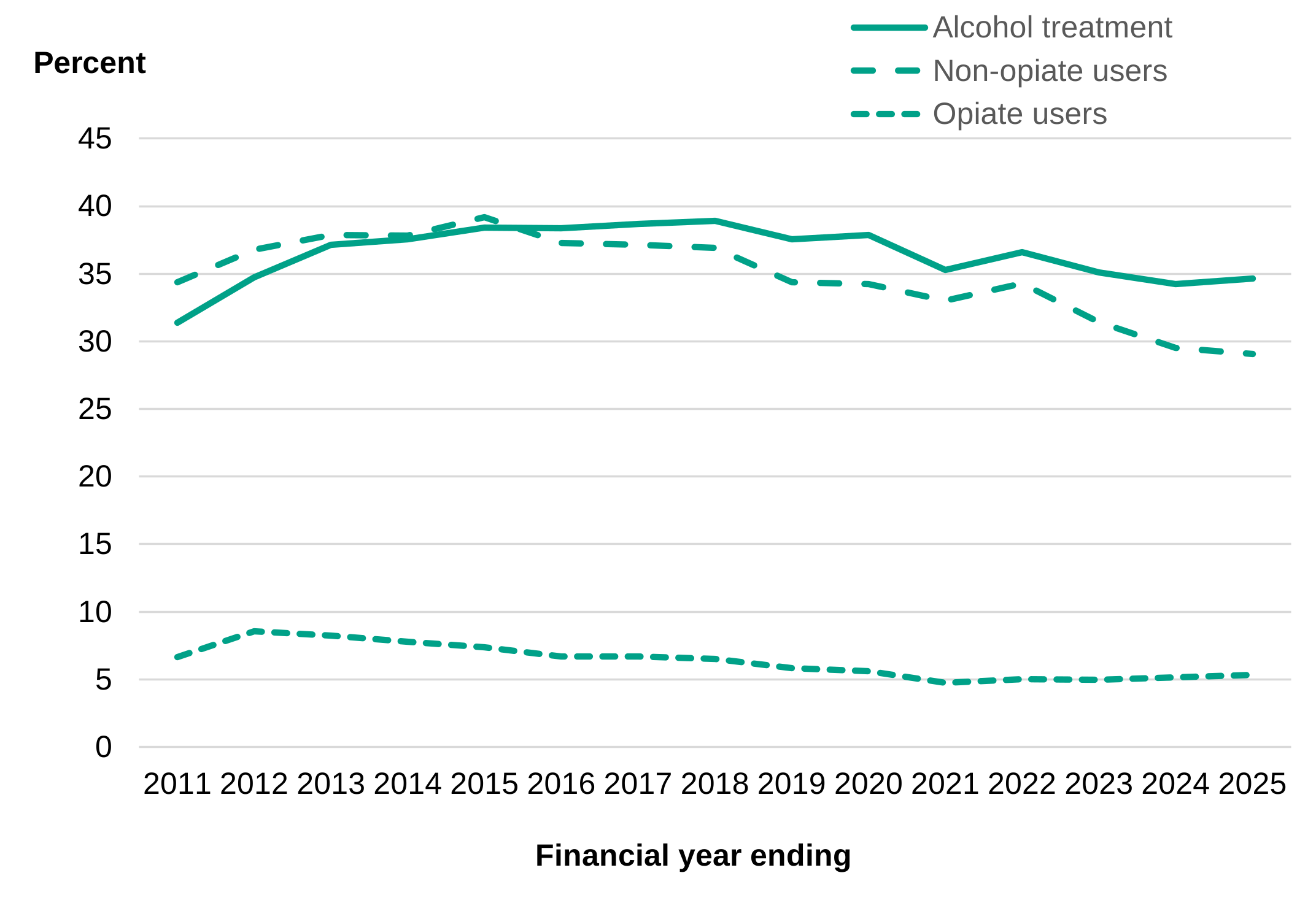
In 2024 to 2025, successful completion of drug treatment for opiate users was 5.3%, for non-opiate users was 29.1% and for alcohol users was 34.6%. The percentage for all 3 treatment programmes has remained stable compared to 2023 to 2024 and remains lower than pre-pandemic levels (see figure 1).
Figure 1: percentage of people who successfully complete substance misuse treatment programmes, England, financial years, April 2010 to March 2025
Source: OHID, based on National Drug Treatment Monitoring System data.
Deaths from drug misuse, C19d
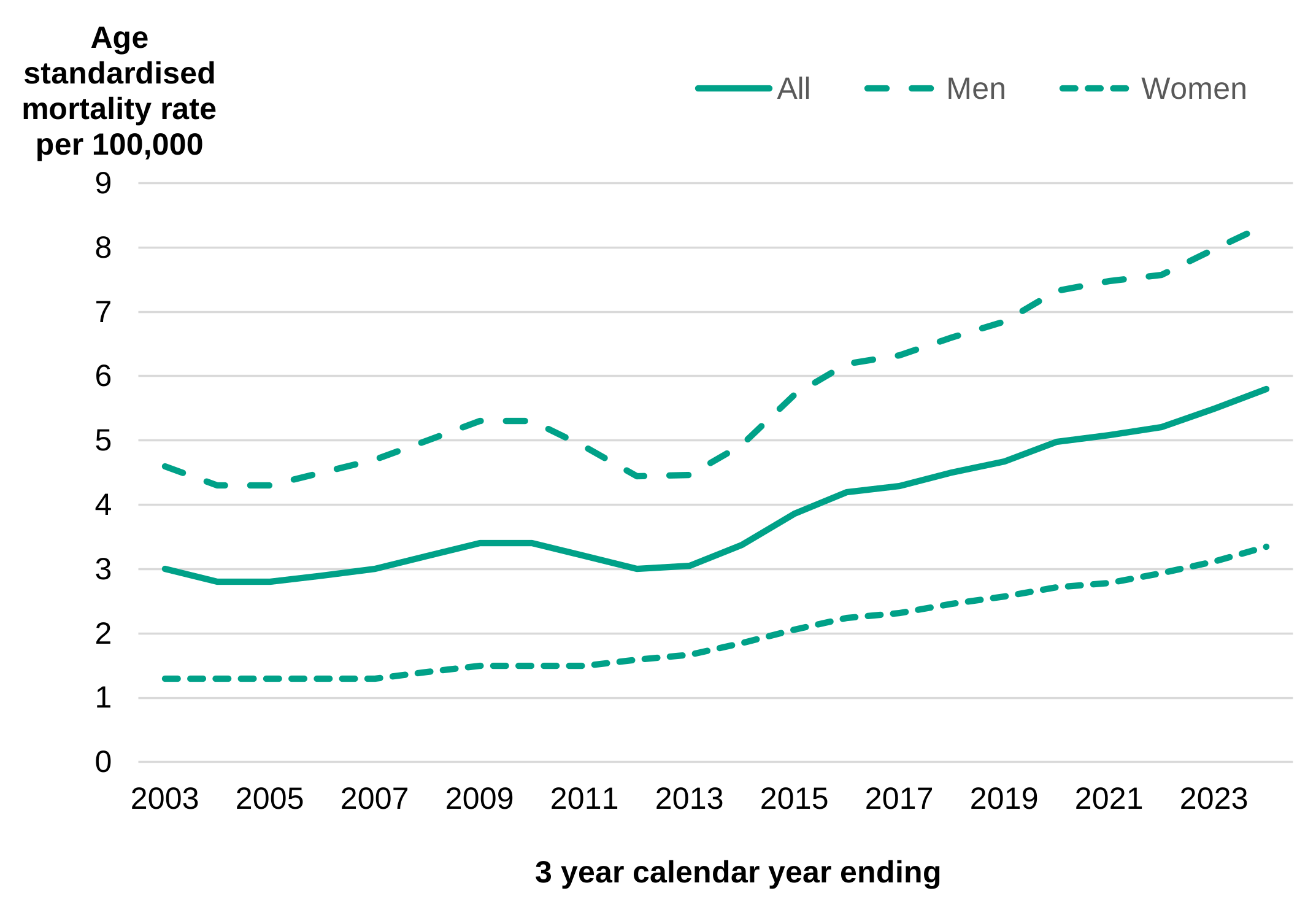
Drug misuse is a significant cause of premature mortality in England. Deaths from drug misuse have been steadily increasing since 2011 to 2013. In 2022 to 2024, the rate increased to a high of 5.8 deaths per 100,000 population. Deaths from drug misuse are higher in men than in women. In 2022 to 2024, deaths from drug misuse in men were 8.4 per 100,000 compared with 3.3 in women (see figure 2).
Figure 2: age standardised mortality rate for deaths from drug misuse, England, 2001 to 2024
Source: OHID, based on Office for National Statistics data.
Preventable sight loss, E12a to d
These indicators are included in the framework to recognise avoidable sight loss as an important and modifiable public health issue. Preventing sight loss helps people live independently and reduces the need for social care support.
These indicators measure new certifications of vision impairment. This means that the values can be affected by the availability of treatment and the number of people with sight impairment who do not seek treatment or diagnosis. The 4 indicators cover sight loss certifications from all causes (preventable and non-preventable) and the 3 most common causes of preventable sight loss, which are:
- age-related macular degeneration (AMD) (aged 65 and over)
- glaucoma (aged 40 and over)
- diabetic eye disease (aged 12 and over)
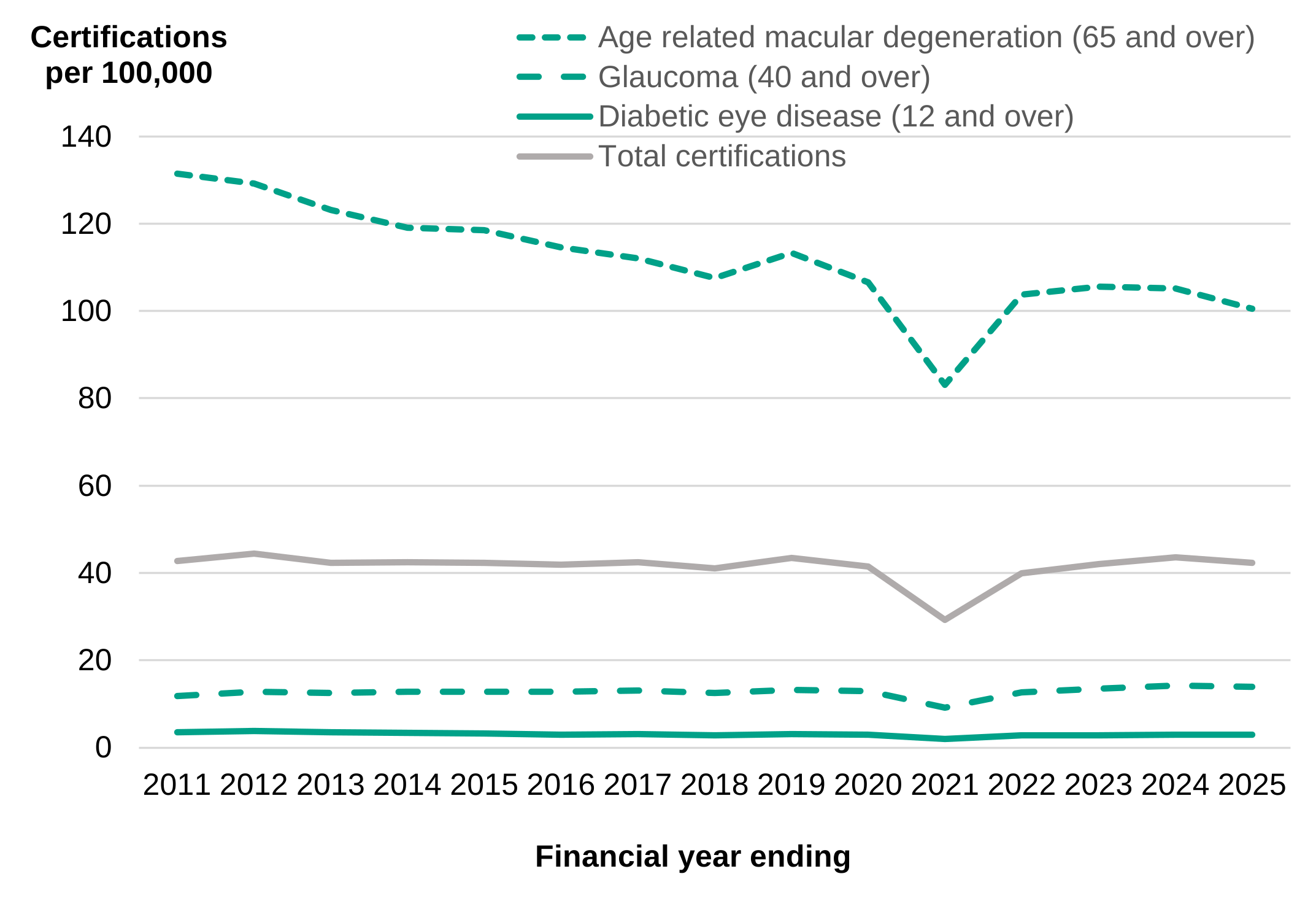
In 2024 to 2025, there were 42.3 total sight loss certifications per 100,000 population in England. This is similar to the rate in 2023 to 2024 of 43.3 per 100,000. Certification rates for glaucoma and diabetic eye disease in 2024 to 2025 have also remained similar to 2023 to 2024. Rates for certifications for age-related macular degeneration have, however, significantly decreased to 100.5 certifications per 100,000 compared with 105.1 in 2023 to 2024.
Total sight loss certifications decreased during the COVID-19 pandemic but have returned to pre-pandemic levels. A similar trend was seen for age-related macular degeneration, glaucoma and diabetic eye disease, with an overall increase in certification rates since 2020 to 2021 (see figure 3).
Figure 3: age-specific crude rates of sight loss certifications by condition, England, financial years, April 2010 to March 2025
Source: OHID, based on Moorfields Eye Hospital and Office for National Statistics data.
Further information
The PHOF includes data for all indicators which have been updated.
The Sexual and reproductive health profile: February 2026 update includes a commentary with further details about the updated PHOF indicator on total prescribed long-acting reversible contraception (LARC) excluding injections.
PHOF indicators have been updated where applicable to reflect revisions to population estimates.
There will be an update of indicators based on Hospital Episode Statistics with data for 2024 to 2025 as part of the next release of the PHOF.
If you have any queries about this publication, email pha-ohid@dhsc.gov.uk.