
Provisional entries for GCSE, AS and A level: summer 2026 exam series
Published 9 June 2026
Applies to England

© Crown copyright 2026
This publication is licensed under the terms of the Open Government Licence v3.0 except where otherwise stated. To view this licence, visit nationalarchives.gov.uk/doc/open-government-licence/version/3 or write to the Information Policy Team, The National Archives, Kew, London TW9 4DU, or email: psi@nationalarchives.gov.uk.
Where we have identified any third party copyright information you will need to obtain permission from the copyright holders concerned.
This publication is available at https://www.gov.uk/government/statistics/provisional-entries-for-gcse-as-and-a-level-summer-2026-exam-series/provisional-entries-for-gcse-as-and-a-level-summer-2026-exam-series
This report presents provisional figures for the number of entries for GCSEs, AS and A levels submitted by schools and colleges in England to exam boards ahead of the summer exam series.
For the 2026 summer exam series, figures represent the number of entries submitted by schools and colleges to exam boards by 15 April 2026.
Entries data is collected at the same time every year, at a point when it should be reasonably complete, although final entries are always expected to vary to some degree. These figures are therefore provisional. Our statistics on entries and late entries give final numbers, which are published later in the year.
Key headlines
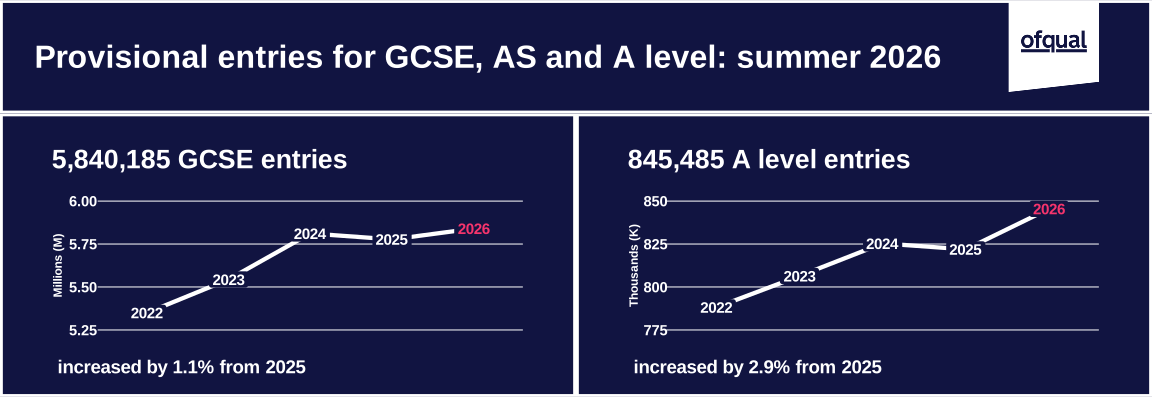
The key headlines in provisional entries for GCSEs, AS and A levels for the summer 2026 series are:
- GCSE entries have increased by 1.1% from 5,777,020 in summer 2025 to 5,840,185 in summer 2026.
- The proportion of entries by tier was broadly similar in summer 2026 compared with summer 2025 across majority of tiered GCSE subjects.
- A level entries have increased by 2.9% from 821,875 in summer 2025 to 845,485 in summer 2026.
- AS entries have decreased by 3.2% from 52,295 in summer 2025 to 50,645 in summer 2026.
Provide your feedback
We welcome your feedback on our publications. If you have any comments on this statistical release, or how to improve it to meet your needs, please complete this short survey or data.analytics@ofqual.gov.uk. You can also register as a user to stay informed and involved in the future development of these statistics.
GCSE entries
The overall entry for GCSEs has increased by 1.1% from 5,777,020 in summer 2025 to 5,840,185 in summer 2026. This represents a reversal from last year’s decrease and a continuation of the longer‑term upward trend in entries for GCSEs.
GCSE entries have increased by 1.1% in summer 2026 compared with summer 2025
Figure 1: Provisional GCSE entries (millions) by exam series, summer 2022 to summer 2026
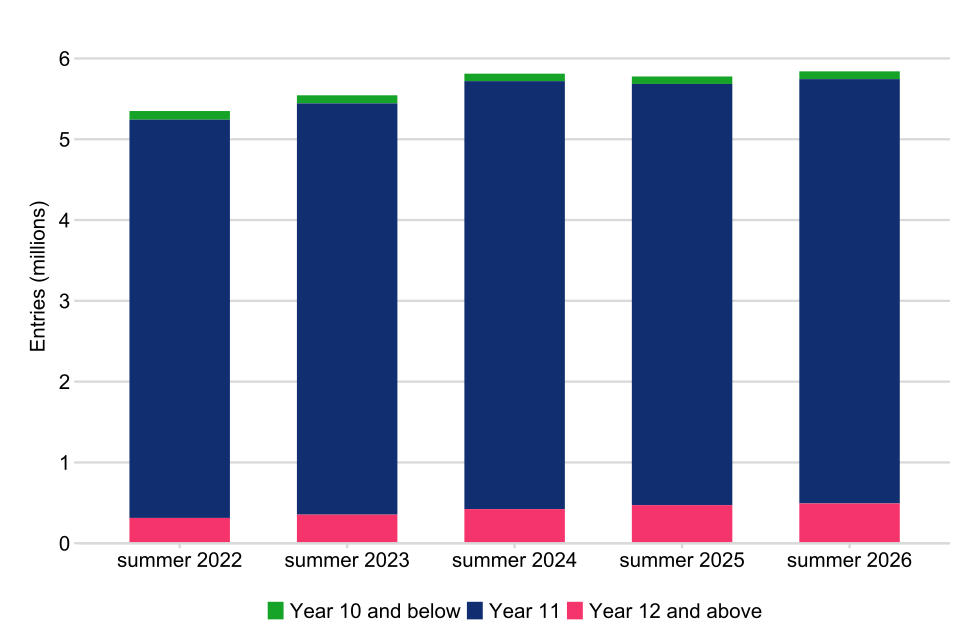
Table 1: Provisional GCSE entries by exam series, summer 2022 to summer 2026
| Year group | Summer 2022 | Summer 2023 | Summer 2024 | Summer 2025 | Summer 2026 |
|---|---|---|---|---|---|
| Year 10 and below | 107,400 | 99,780 | 92,405 | 92,435 | 96,195 |
| Year 11 | 4,928,640 | 5,090,115 | 5,296,815 | 5,212,910 | 5,251,660 |
| Year 12 and above | 313,210 | 353,940 | 422,380 | 471,675 | 492,330 |
| All year groups | 5,349,250 | 5,543,840 | 5,811,595 | 5,777,020 | 5,840,185 |
The majority of GCSE entries are from year 11 students. Entries from year 11 students have increased in summer 2026 compared with summer 2025 (an increase of 0.7%). This increase should be considered in the context of a 1.2% increase in the size of the population of those aged 16 in England, from 709,586 in 2025 to 718,143 in 2026 (according to Office for National Statistics (ONS)). You can find more detail on how these figures were retrieved in the background information accompanying this release.
The increase of 1.1% for GCSE entries in summer 2026 is due to a rise in entries for both EBacc subjects and non-EBacc subjects.
The majority of GCSE entries are in EBacc subjects between summer 2022 and summer 2026
Figure 2: Percentage of provisional GCSE entries in EBacc and non‑EBacc subjects, summer 2022 to summer 2026
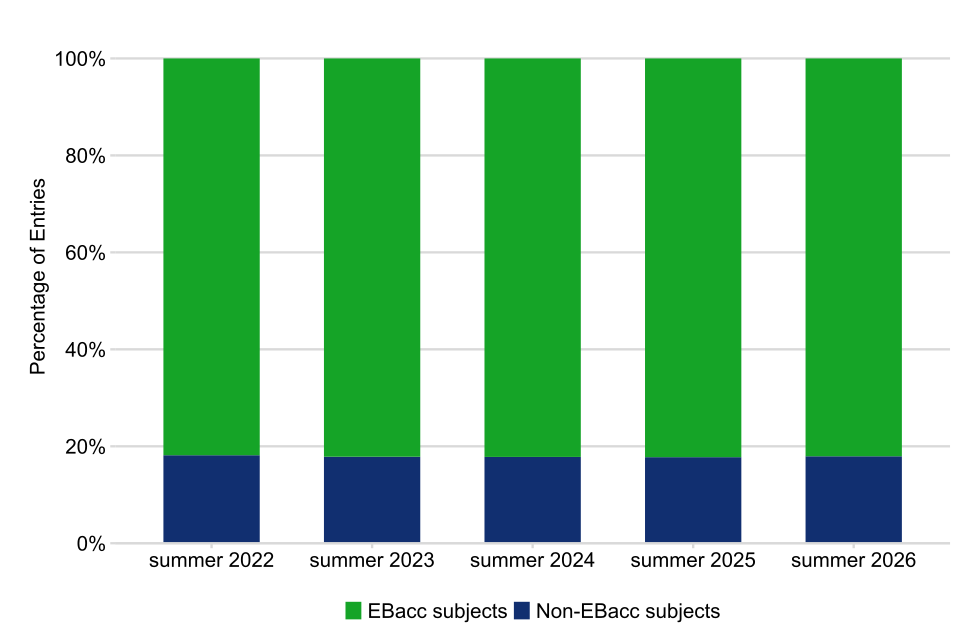
Table 2: Percentage of provisional GCSE entries in EBacc and non‑EBacc subjects, summer 2022 to summer 2026
| Subject category | Summer 2022 | Summer 2023 | Summer 2024 | Summer 2025 | Summer 2026 |
|---|---|---|---|---|---|
| EBacc entries | 4,378,110 | 4,554,415 | 4,776,805 | 4,751,520 | 4,792,500 |
| Non-EBacc entries | 971,140 | 989,430 | 1,034,790 | 1,025,500 | 1,047,685 |
| Percentage of EBacc entries | 81.8% | 82.2% | 82.2% | 82.2% | 82.1% |
| Percentage of non-EBacc entries | 18.2% | 17.8% | 17.8% | 17.8% | 17.9% |
Change from previous year in GCSE entries for EBacc subjects
The overall entry for all EBacc subjects in summer 2026 has increased by 0.9% from 4,751,520 in summer 2025 to 4,792,500 in summer 2026. Despite this overall growth, 8 of the 15 EBacc subjects saw a decreases in entries, with the largest percentage fall in computing (down 7.0%). Mathematics saw the largest increase in entries this year, up by 2.4%.
GCSE entries increased in some EBacc subjects and decreased in others
Figure 3: Percentage change in provisional GCSE entries for EBacc subjects in summer 2026 compared with summer 2025
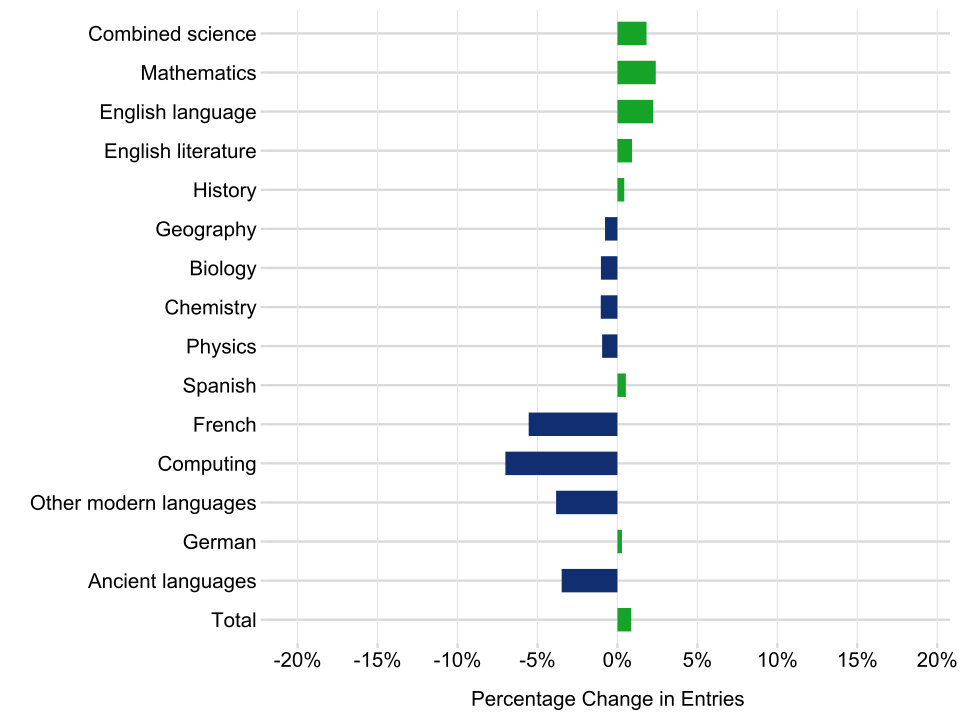
Table 3: Percentage change in provisional GCSE entries for EBacc subjects in summer 2026 compared with summer 2025
| Subject grouping | Entries in summer 2025 | Entries in summer 2026 | Percentage change in entries |
|---|---|---|---|
| Combined science | 934,500 | 951,510 | 1.8% |
| Mathematics | 856,430 | 876,955 | 2.4% |
| English language | 825,940 | 844,455 | 2.2% |
| English literature | 614,800 | 620,420 | 0.9% |
| History | 293,835 | 295,095 | 0.4% |
| Geography | 291,880 | 289,615 | -0.8% |
| Biology | 171,690 | 169,915 | -1.0% |
| Chemistry | 163,100 | 161,400 | -1.0% |
| Physics | 162,865 | 161,305 | -1.0% |
| Spanish | 131,985 | 132,680 | 0.5% |
| French | 128,155 | 121,040 | -5.5% |
| Computing | 89,610 | 83,330 | -7.0% |
| Other modern languages | 42,945 | 41,300 | -3.8% |
| German | 32,430 | 32,525 | 0.3% |
| Ancient languages | 11,360 | 10,960 | -3.5% |
| Total | 4,751,520 | 4,792,500 | 0.9% |
Note 1: Entry in combined science is double counted throughout this release because combined science is the equivalent of 2 GCSE grades.
Note 2: Ancient languages entries include ancient history as well as ancient languages entries.
Note 3: The number of entries in each subject also corresponds to the number of students entered, except for combined science, other modern languages and ancient languages, where students may enter more than one qualification in the same subject group.
Entries in EBacc subjects over time and by year group
While GCSE entries overall have risen, entries for some EBacc subjects (biology, chemistry, physics, computing and French) showed a further decline compared with last year.
Entries for Combined Science, English Language, Mathematics, and Spanish have continued to increase this year as in recent years.
While entries for some EBacc subjects continued to rise in 2026, others declined following earlier peaks
Figure 4: Provisional entries in EBacc subjects from summer 2022 to summer 2026
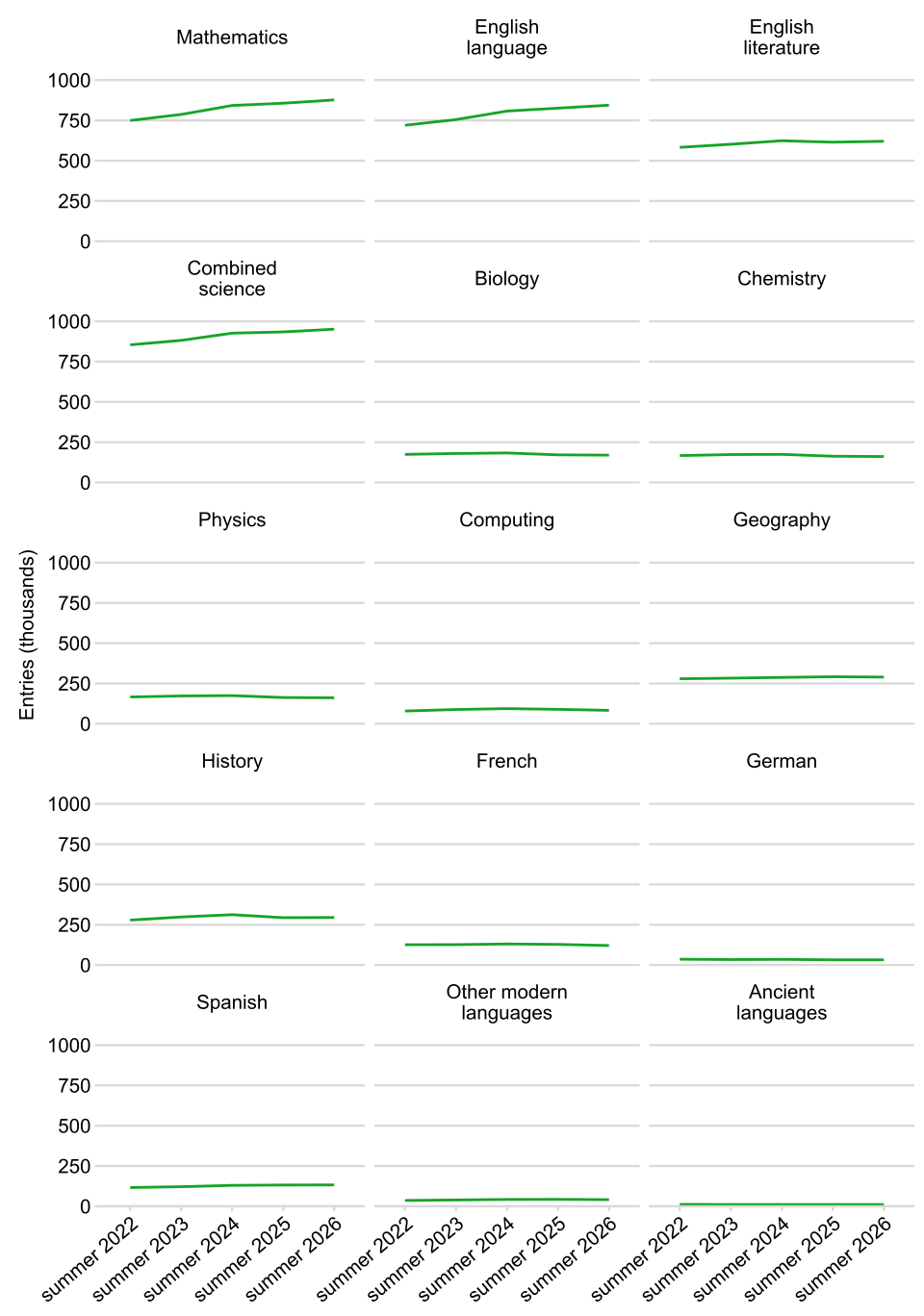
Table 4: Provisional entries in EBacc subjects from summer 2022 to summer 2026
| Subject | Summer 2022 | Summer 2023 | Summer 2024 | Summer 2025 | Summer 2026 |
|---|---|---|---|---|---|
| Mathematics | 749,390 | 786,815 | 842,575 | 856,430 | 876,955 |
| English language | 719,790 | 754,910 | 807,725 | 825,940 | 844,455 |
| English literature | 582,680 | 601,945 | 623,590 | 614,800 | 620,420 |
| Combined science | 854,450 | 881,925 | 926,750 | 934,500 | 951,510 |
| Biology | 174,605 | 180,125 | 183,360 | 171,690 | 169,915 |
| Chemistry | 167,190 | 173,530 | 174,745 | 163,100 | 161,400 |
| Physics | 166,550 | 172,725 | 174,735 | 162,865 | 161,305 |
| Computing | 79,135 | 88,530 | 93,980 | 89,610 | 83,330 |
| Geography | 279,205 | 283,020 | 287,600 | 291,880 | 289,615 |
| History | 278,750 | 298,155 | 312,410 | 293,835 | 295,095 |
| French | 126,185 | 126,560 | 130,650 | 128,155 | 121,040 |
| German | 36,000 | 33,945 | 35,110 | 32,430 | 32,525 |
| Spanish | 116,355 | 121,670 | 129,935 | 131,985 | 132,680 |
| Other modern languages | 36,310 | 39,270 | 42,460 | 42,945 | 41,300 |
| Ancient languages | 11,510 | 11,290 | 11,175 | 11,360 | 10,960 |
Note: The number of entries in each subject also corresponds to the number of students entered, except for combined science, other modern languages and ancient languages, where students may enter more than one qualification in the same subject group.
There are some slight changes to entries by year group across subjects in 2026 compared with previous years. In all subjects, most entries are from students in year 11, but the proportion of entries from students in year 10 and below (“early entries”) in other modern languages is consistently higher than in other subjects. The percentage of entries for mathematics and English language from students in year 12 and above has increased in summer 2026 when compared with summer 2025.
The majority of entries are from year 11 students for EBacc subjects
Figure 5: Percentage of entries by student year group in EBacc subjects
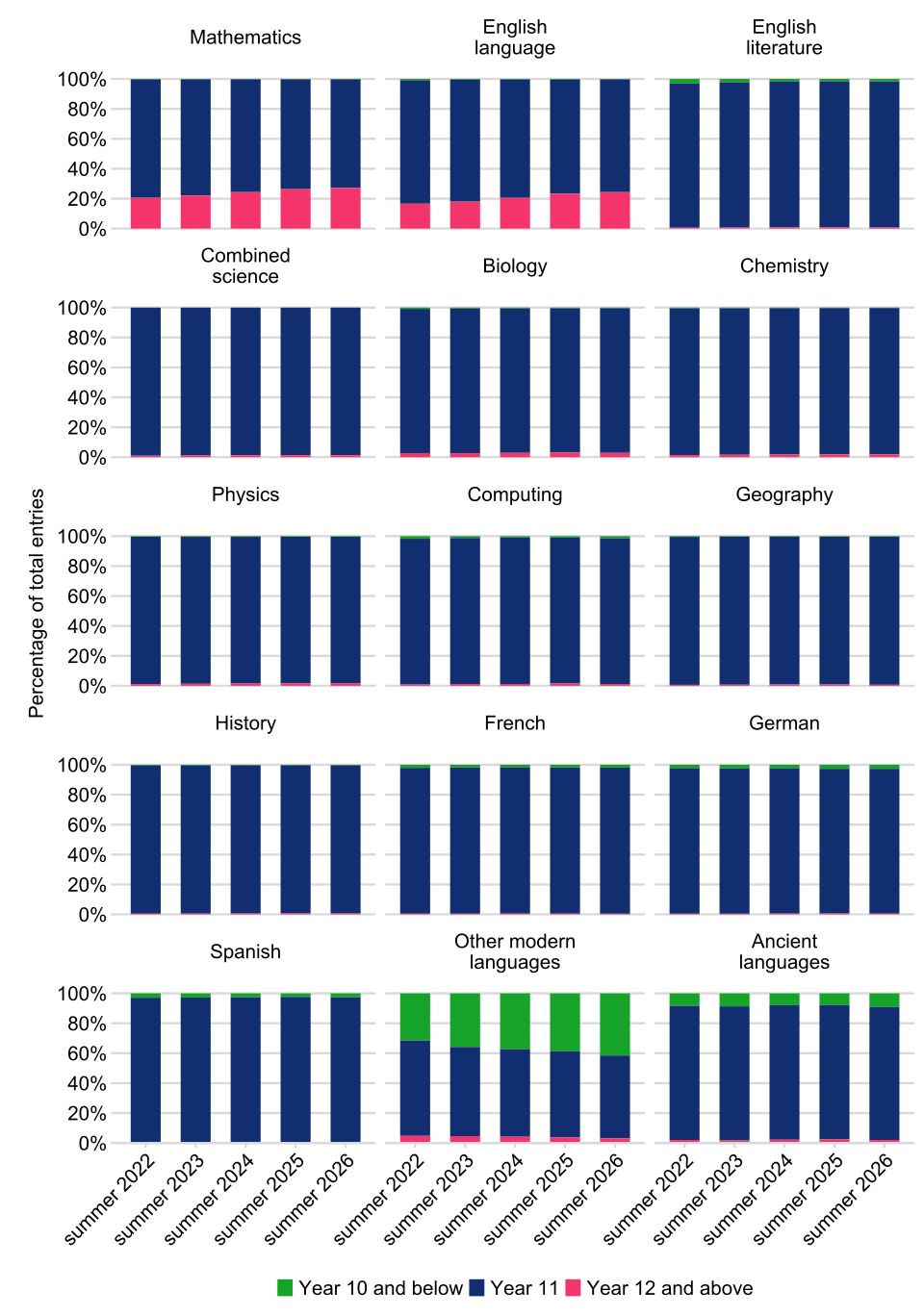
Table 5. Percentage of entries by student year group in EBacc subjects from summer 2022 to summer 2026
| Subject | Year group | Summer 2022 | Summer 2023 | Summer 2024 | Summer 2025 | Summer 2026 |
|---|---|---|---|---|---|---|
| Ancient languages | Year 10 and below | 8.3% | 8.7% | 7.9% | 7.8% | 9.1% |
| Ancient languages | Year 11 | 89.7% | 89.6% | 89.9% | 89.8% | 88.8% |
| Ancient languages | Year 12 and above | 2.0% | 1.7% | 2.2% | 2.4% | 2.0% |
| Biology | Year 10 and below | 0.9% | 0.7% | 0.6% | 0.5% | 0.5% |
| Biology | Year 11 | 96.3% | 96.6% | 96.5% | 96.4% | 96.6% |
| Biology | Year 12 and above | 2.8% | 2.7% | 2.9% | 3.1% | 2.9% |
| Chemistry | Year 10 and below | 0.6% | 0.5% | 0.5% | 0.4% | 0.4% |
| Chemistry | Year 11 | 98.0% | 97.8% | 97.8% | 97.7% | 97.8% |
| Chemistry | Year 12 and above | 1.4% | 1.6% | 1.8% | 1.9% | 1.8% |
| Combined science | Year 10 and below | 0.1% | 0.1% | 0.1% | 0.1% | 0.1% |
| Combined science | Year 11 | 98.9% | 98.8% | 98.7% | 98.6% | 98.7% |
| Combined science | Year 12 and above | 1.0% | 1.1% | 1.3% | 1.4% | 1.3% |
| Computing | Year 10 and below | 1.7% | 1.3% | 0.9% | 1.0% | 1.4% |
| Computing | Year 11 | 97.4% | 97.6% | 97.8% | 97.4% | 97.4% |
| Computing | Year 12 and above | 0.9% | 1.2% | 1.2% | 1.5% | 1.2% |
| English language | Year 10 and below | 0.8% | 0.6% | 0.4% | 0.4% | 0.3% |
| English language | Year 11 | 82.5% | 81.4% | 79.1% | 76.4% | 75.3% |
| English language | Year 12 and above | 16.6% | 18.0% | 20.5% | 23.3% | 24.4% |
| English literature | Year 10 and below | 2.9% | 2.2% | 1.6% | 1.5% | 1.7% |
| English literature | Year 11 | 96.5% | 97.1% | 97.6% | 97.6% | 97.6% |
| English literature | Year 12 and above | 0.6% | 0.7% | 0.8% | 0.8% | 0.7% |
| French | Year 10 and below | 2.1% | 1.8% | 1.7% | 1.8% | 1.9% |
| French | Year 11 | 97.4% | 97.7% | 97.8% | 97.7% | 97.7% |
| French | Year 12 and above | 0.5% | 0.5% | 0.5% | 0.5% | 0.5% |
| Geography | Year 10 and below | 0.5% | 0.4% | 0.3% | 0.4% | 0.4% |
| Geography | Year 11 | 98.9% | 98.9% | 98.8% | 98.7% | 98.9% |
| Geography | Year 12 and above | 0.6% | 0.8% | 0.9% | 0.9% | 0.7% |
| German | Year 10 and below | 2.2% | 2.4% | 2.3% | 2.7% | 2.7% |
| German | Year 11 | 97.3% | 97.2% | 97.1% | 96.7% | 96.7% |
| German | Year 12 and above | 0.5% | 0.5% | 0.6% | 0.6% | 0.5% |
| History | Year 10 and below | 0.5% | 0.5% | 0.4% | 0.4% | 0.5% |
| History | Year 11 | 99.0% | 99.0% | 99.0% | 98.9% | 98.9% |
| History | Year 12 and above | 0.5% | 0.6% | 0.6% | 0.7% | 0.6% |
| Mathematics | Year 10 and below | 0.3% | 0.3% | 0.3% | 0.3% | 0.3% |
| Mathematics | Year 11 | 79.1% | 77.6% | 75.3% | 73.4% | 72.6% |
| Mathematics | Year 12 and above | 20.6% | 22.1% | 24.4% | 26.4% | 27.1% |
| Other modern languages | Year 10 and below | 31.5% | 35.8% | 37.2% | 38.7% | 41.5% |
| Other modern languages | Year 11 | 63.7% | 59.6% | 58.6% | 57.5% | 55.3% |
| Other modern languages | Year 12 and above | 4.8% | 4.6% | 4.2% | 3.8% | 3.2% |
| Physics | Year 10 and below | 0.4% | 0.5% | 0.5% | 0.4% | 0.4% |
| Physics | Year 11 | 98.5% | 98.2% | 98.0% | 98.0% | 98.0% |
| Physics | Year 12 and above | 1.1% | 1.4% | 1.5% | 1.6% | 1.5% |
| Spanish | Year 10 and below | 2.9% | 2.8% | 2.6% | 2.4% | 2.6% |
| Spanish | Year 11 | 96.5% | 96.6% | 96.8% | 97.1% | 96.9% |
| Spanish | Year 12 and above | 0.6% | 0.6% | 0.6% | 0.6% | 0.5% |
Note: The proportion of entries in each subject also corresponds to the proportion of students entered, except for combined science, other modern languages and ancient languages, where students may enter more than one qualification in the same subject group.
Change from previous year in GCSE entries for non-EBacc subjects
The overall entry for non-EBacc subjects has increased by 2.2% from 1,025,500 in summer 2025 to 1,047,685 in summer 2026.
Nine out 17 non-EBacc subjects had an increase in entries. The largest percentage increase was in statistics (up by 11.9%). There was a decrease in entries in other sciences (down by 17.3%), classical subjects (down by 8.9%), and engineering (down by 8.3%).
Entries increased in some non-EBacc subjects and decreased in others between summer 2025 and summer 2026
Figure 6: Percentage change in non-EBacc entries in summer 2026 compared with summer 2025
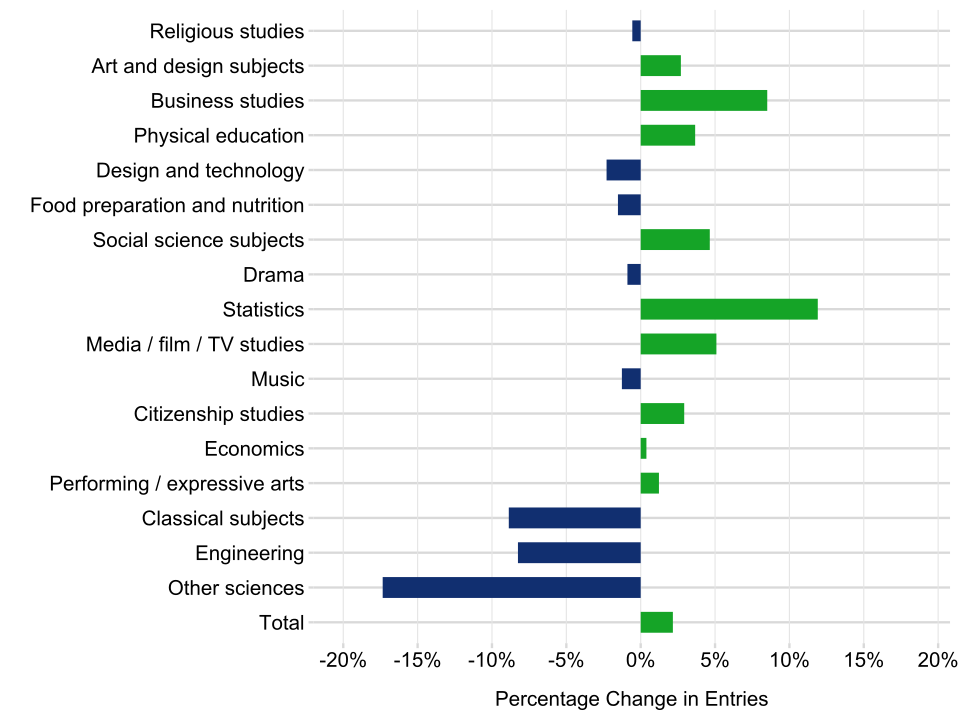
Table 6. Percentage change in non-EBacc entries in summer 2026 compared with summer 2025
| Subject grouping | Entries in summer 2025 | Entries in summer 2026 | Percentage change in entries |
|---|---|---|---|
| Religious studies | 242,310 | 240,945 | -0.6% |
| Art and design subjects | 194,190 | 199,435 | 2.7% |
| Business studies | 130,065 | 141,135 | 8.5% |
| Physical education | 79,285 | 82,185 | 3.7% |
| Design and technology | 77,770 | 75,985 | -2.3% |
| Food preparation and nutrition | 55,035 | 54,190 | -1.5% |
| Social science subjects | 50,025 | 52,350 | 4.6% |
| Drama | 48,650 | 48,220 | -0.9% |
| Statistics | 35,175 | 39,360 | 11.9% |
| Media / film / TV studies | 32,555 | 34,210 | 5.1% |
| Music | 34,555 | 34,120 | -1.3% |
| Citizenship studies | 21,500 | 22,130 | 2.9% |
| Economics | 7,290 | 7,315 | 0.4% |
| Performing / expressive arts | 7,175 | 7,265 | 1.2% |
| Classical subjects | 5,085 | 4,635 | -8.9% |
| Engineering | 2,300 | 2,110 | -8.3% |
| Other sciences | 2,540 | 2,100 | -17.3% |
| Total | 1,025,500 | 1,047,685 | 2.2% |
Note: The number of entries in each subject also corresponds to the number of students entered, except for art and design subjects, social science subjects, media/film/tv studies and other science, where students may enter more than one qualification in the same subject group.
Entries for tiered GCSEs
In some subjects, there are 2 tiers of entry: foundation and higher. Entry by tier has remained broadly similar in most tiered subjects in summer 2026 compared with summer 2025. For French, German and Spanish, there has been an increase in the percentage of higher tier entries compared with the previous year.
Percentage entry by tier has remained broadly similar across most subjects between summer 2025 and summer 2026
Figure 7: Percentage of entries to foundation and higher tiers from summer 2022 to summer 2026
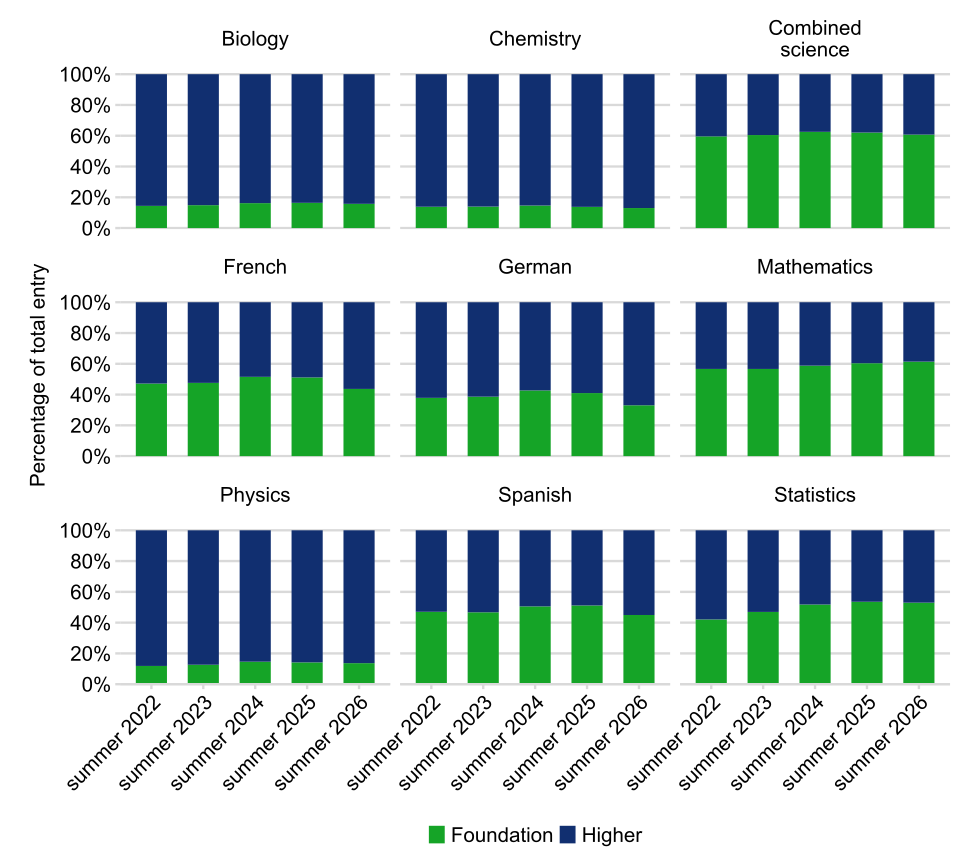
Table 7. Percentage of entries for higher tier from summer 2022 to summer 2026
| Subject | Summer 2022 | Summer 2023 | Summer 2024 | Summer 2025 | Summer 2026 |
|---|---|---|---|---|---|
| Biology | 86% | 85% | 84% | 84% | 84% |
| Chemistry | 86% | 86% | 85% | 86% | 87% |
| Combined science | 40% | 40% | 37% | 38% | 39% |
| French | 53% | 52% | 48% | 49% | 56% |
| German | 62% | 61% | 57% | 59% | 67% |
| Mathematics | 43% | 43% | 41% | 40% | 39% |
| Physics | 88% | 87% | 85% | 86% | 86% |
| Spanish | 53% | 53% | 49% | 49% | 55% |
| Statistics | 58% | 53% | 48% | 46% | 47% |
Note: The proportion of entries for higher tier in each subject also corresponds to the proportion of students entered, except for combined science, where students may enter more than one qualification in the same subject group.
AS and A level entries
The overall entries for AS have decreased by 3.2% from 52,295 in summer 2025 to 50,645 in summer 2026. AS level entries have seen continuous decrease over years following the decoupling of AS and A levels.
The overall entries for A level have increased by 2.9% from 821,875 in summer 2025 to 845,485 in summer 2026. This is likely to be partially explained by a 4.3% increase in the size of the population of those aged 18, which increased from 702,050 in 2025 to 732,335 in 2026 (according to Office for National Statistics (ONS)). You can find more detail on how these figures were retrieved in the background information accompanying this release.
AS entries have decreased and A level entries have increased in summer 2026 compared with summer 2025
Figure 8: AS and A level entries from summer 2022 to summer 2026
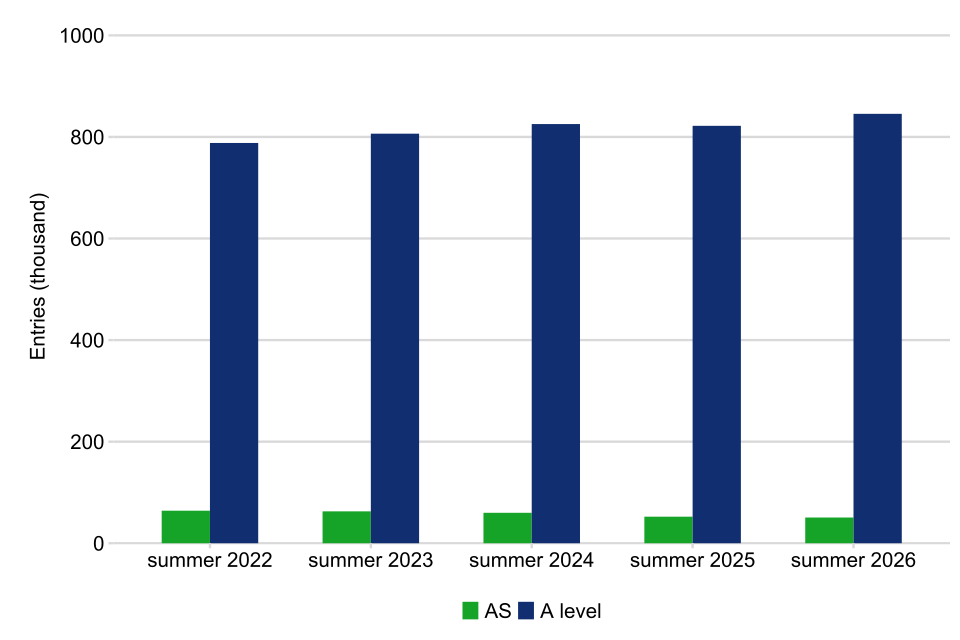
Table 8: AS and A level entries from summer 2022 to summer 2026
| Qualification | Summer 2022 | Summer 2023 | Summer 2024 | Summer 2025 | Summer 2026 |
|---|---|---|---|---|---|
| AS | 64,080 | 62,785 | 59,935 | 52,295 | 50,645 |
| A level | 788,125 | 806,410 | 825,355 | 821,875 | 845,485 |
| Total | 852,200 | 869,195 | 885,290 | 874,170 | 896,130 |
AS entries by subject
AS entries in most subjects decreased in summer 2026 compared with summer 2025, although entries increased in further mathematics (up by 11.4%) and economics (up by 3.3%). The biggest decrease in entries from summer 2025 to summer 2026 is in physics (down by 9.9%).
Entries decreased in many AS subjects
Figure 9: Percentage change in AS entries in summer 2026 compared with summer 2025
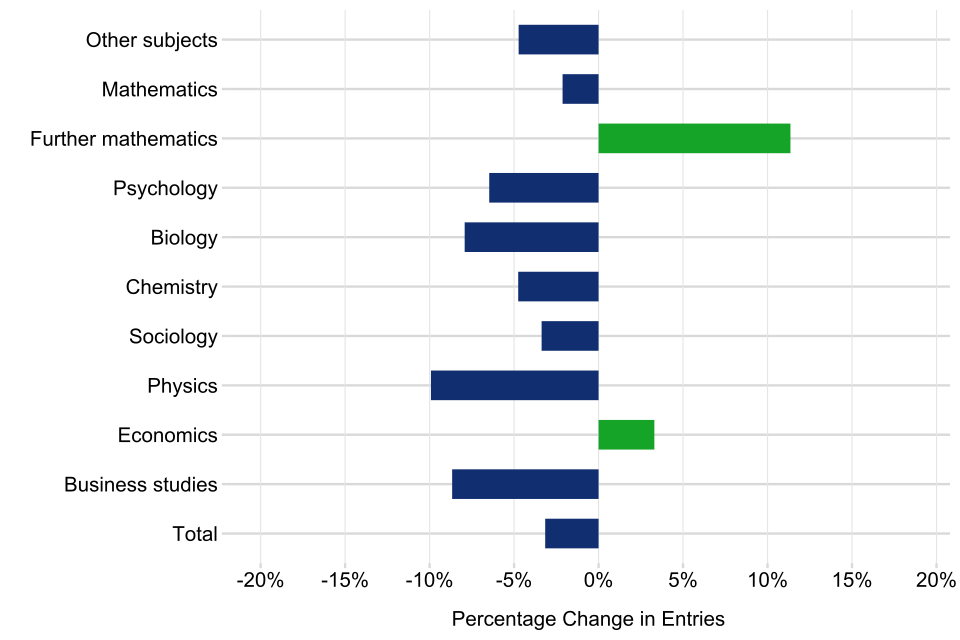
Table 9: Percentage change in AS entries in summer 2026 compared with summer 2025
| Subject grouping | Entries in summer 2025 | Entries in summer 2026 | Percentage change in entries |
|---|---|---|---|
| Other subjects | 15,535 | 14,800 | -4.7% |
| Mathematics | 7,320 | 7,165 | -2.1% |
| Further mathematics | 5,370 | 5,980 | 11.4% |
| Psychology | 4,530 | 4,235 | -6.5% |
| Biology | 4,305 | 3,960 | -7.9% |
| Chemistry | 4,015 | 3,825 | -4.8% |
| Sociology | 3,350 | 3,240 | -3.4% |
| Physics | 3,015 | 2,715 | -9.9% |
| Economics | 2,395 | 2,470 | 3.3% |
| Business studies | 2,460 | 2,245 | -8.7% |
| Total | 52,295 | 50,645 | -3.2% |
Note 1: Entries in ‘other subjects’ is the combination of subjects with fewer than 2,000 entries as well as those grouped as ‘all other subjects’ by the Joint Council for Qualifications (JCQ) for the purposes of results reporting.
Note 2: The number of entries in each subject also corresponds to the number of students entered, except for ‘other subjects’ group, where students may enter more than one qualification in the same subject group.
A level entries by subject
The majority of A level subjects increased in entry size in summer 2026 compared with summer 2025. Political studies showed the biggest overall percentage increase (up by 13.1%) in summer 2026 compared with summer 2025. The subjects with the largest percentage decrease in summer 2026 when compared with summer 2025 are classical subjects (down by 9.6%) and drama (down by 9.5%).
A level entries increased for many subjects in summer 2026 compared with summer 2025
Figure 10: Percentage change in A level entries in summer 2026 compared with summer 2025
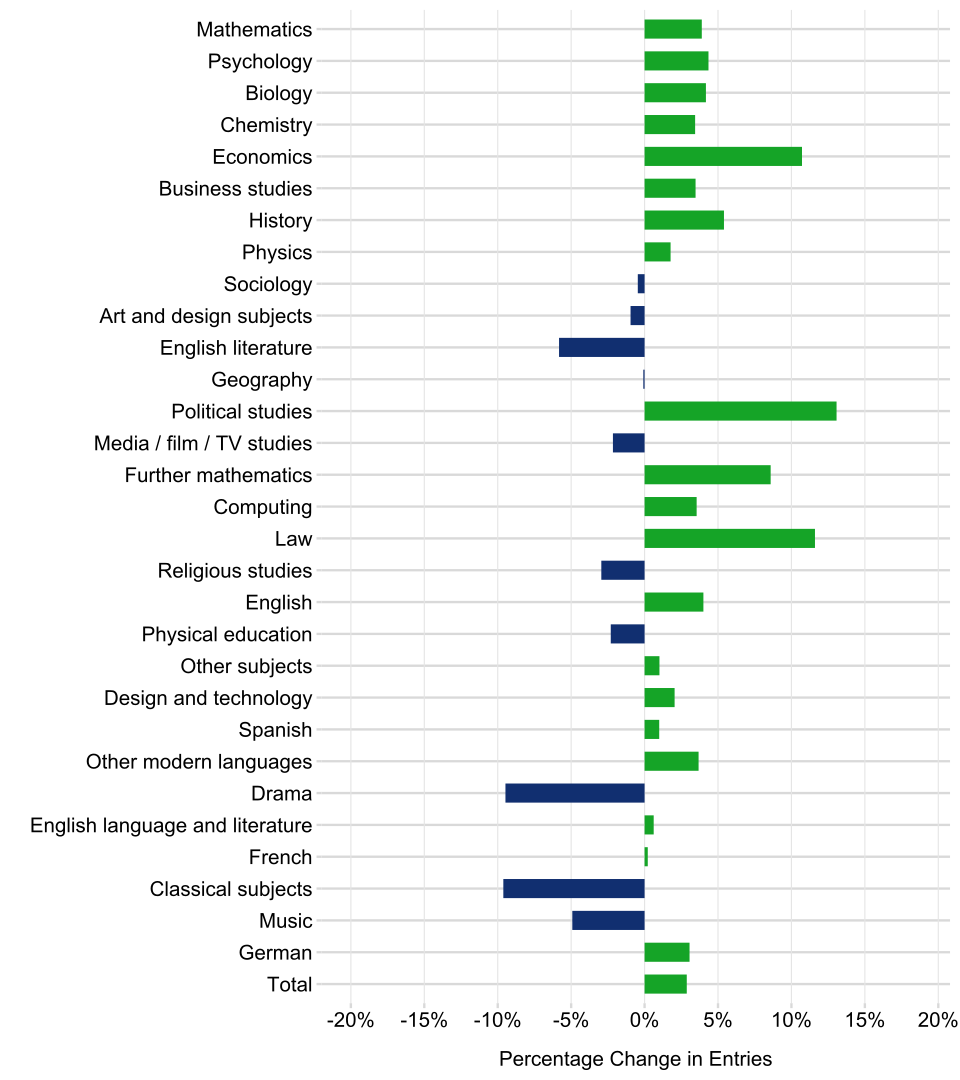
Table 10: Percentage change in A level entries in summer 2026 compared with summer 2025
| Subject grouping | Entries in summer 2025 | Entries in summer 2026 | Percentage change in entries |
|---|---|---|---|
| Mathematics | 105,755 | 109,875 | 3.9% |
| Psychology | 73,565 | 76,765 | 4.4% |
| Biology | 66,100 | 68,860 | 4.2% |
| Chemistry | 59,850 | 61,910 | 3.4% |
| Economics | 41,880 | 46,365 | 10.7% |
| Business studies | 41,940 | 43,395 | 3.5% |
| History | 40,940 | 43,150 | 5.4% |
| Physics | 42,025 | 42,765 | 1.8% |
| Sociology | 42,035 | 41,840 | -0.5% |
| Art and design subjects | 40,400 | 40,015 | -1.0% |
| English literature | 34,920 | 32,890 | -5.8% |
| Geography | 31,395 | 31,370 | -0.1% |
| Political studies | 20,835 | 23,560 | 13.1% |
| Media / film / TV studies | 21,435 | 20,975 | -2.2% |
| Further mathematics | 18,730 | 20,340 | 8.6% |
| Computing | 19,010 | 19,685 | 3.5% |
| Law | 14,420 | 16,090 | 11.6% |
| Religious studies | 14,395 | 13,970 | -2.9% |
| English | 12,460 | 12,955 | 4.0% |
| Physical education | 11,815 | 11,540 | -2.3% |
| Other subjects | 10,770 | 10,875 | 1.0% |
| Design and technology | 9,095 | 9,285 | 2.0% |
| Spanish | 7,830 | 7,905 | 1.0% |
| Other modern languages | 6,555 | 6,795 | 3.7% |
| Drama | 7,410 | 6,710 | -9.5% |
| English language and literature | 6,605 | 6,650 | 0.6% |
| French | 6,450 | 6,465 | 0.2% |
| Classical subjects | 6,260 | 5,655 | -9.6% |
| Music | 4,875 | 4,635 | -4.9% |
| German | 2,125 | 2,190 | 3.1% |
| Total | 821,875 | 845,485 | 2.9% |
Note 1: Entries in ‘other subjects’ is the combination of subjects with fewer than 2,000 entries as well as those grouped as ‘all other subjects’ by the Joint Council for Qualifications (JCQ) for the purposes of results reporting.
Note 2: The number of entries in each subject also corresponds to the number of students entered, except for mathematics, art and design subjects, media/film/tv studies, other modern languages and classical subjects, where students may enter more than one qualification in the same subject group.
Change in A level entries by subject over time
Entries for chemistry, further mathematics and mathematics showed consistent growth across the summer 2022 to summer 2026 examination series. Entries in other high entry subjects have had slight fluctuations each year.
Please note that according to the JCQ subject classifications, English includes English language, English literature, and English language and literature specifications. Also note that modern foreign languages contain French, German, and Spanish as they have been grouped together to allow any trends in entries to be shown.
Entries in high entry subjects have had slight fluctuations each year
Figure 11: Entries in selected A level subjects from summer 2022 to summer 2026
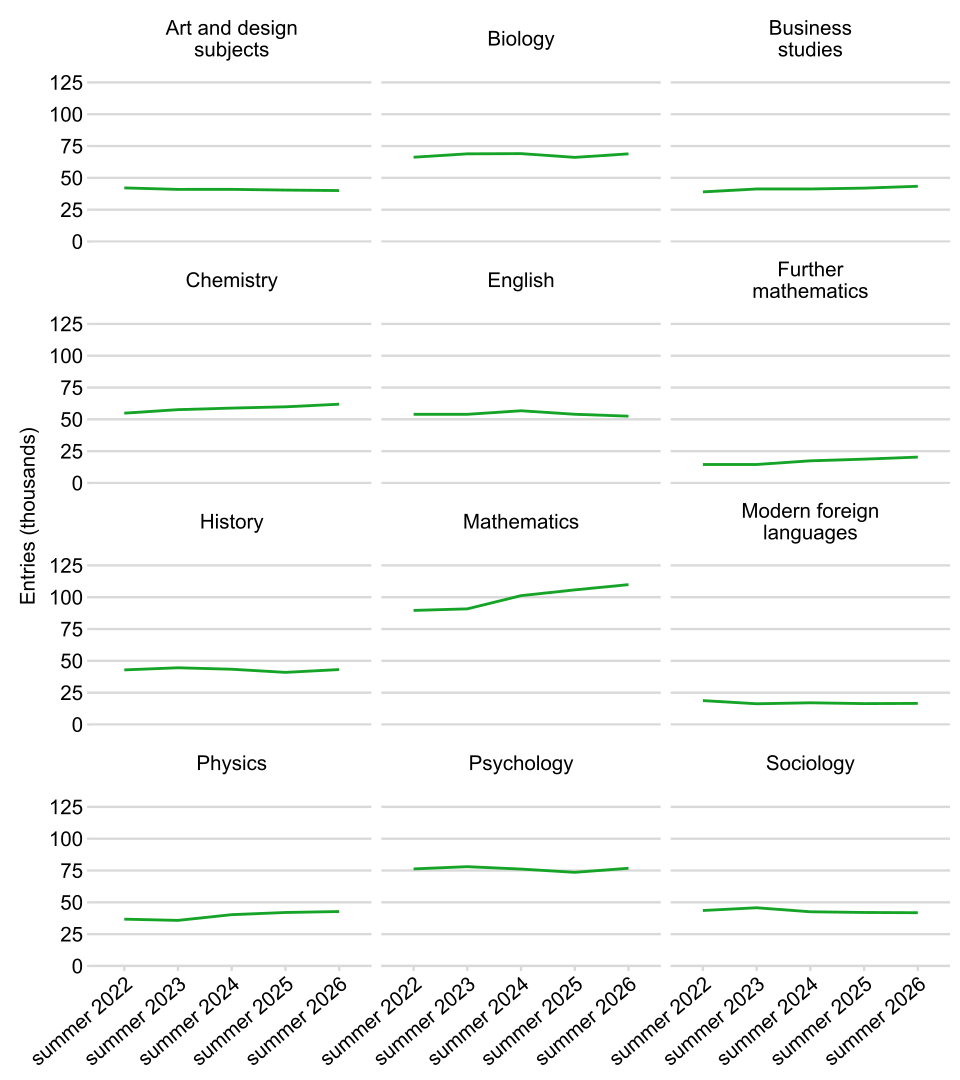
Table 11: Entries in selected A level subjects from summer 2022 to summer 2026
| Subject | Summer 2022 | Summer 2023 | Summer 2024 | Summer 2025 | Summer 2026 |
|---|---|---|---|---|---|
| Art and design subjects | 42,100 | 40,930 | 40,965 | 40,400 | 40,015 |
| Biology | 66,220 | 68,870 | 69,040 | 66,100 | 68,860 |
| Business studies | 38,980 | 41,265 | 41,260 | 41,940 | 43,395 |
| Chemistry | 54,865 | 57,620 | 58,845 | 59,850 | 61,910 |
| English | 53,965 | 53,960 | 56,745 | 53,985 | 52,495 |
| Further mathematics | 14,520 | 14,535 | 17,420 | 18,730 | 20,340 |
| History | 42,885 | 44,545 | 43,405 | 40,940 | 43,150 |
| Mathematics | 89,605 | 90,845 | 101,230 | 105,755 | 109,875 |
| Modern foreign languages | 18,750 | 16,265 | 17,035 | 16,400 | 16,555 |
| Physics | 36,770 | 35,815 | 40,315 | 42,025 | 42,765 |
| Psychology | 76,265 | 78,015 | 76,125 | 73,565 | 76,765 |
| Sociology | 43,590 | 45,730 | 42,570 | 42,035 | 41,840 |
Note: The number of entries in each subject also corresponds to the number of students entered, except for art and design subjects, mathematics and modern foreign languages subjects, where students may enter more than one qualification in the same subject group.
Entries by centre type
In previous releases of this report, we have included figures on the number of entries broken down by centre type. We have taken the decision from summer 2025 not to publish these figures as we are unable to validate the categorisation of entries into centre types carried out by the awarding organisations for this data, and therefore would have limited assurance of the accuracy of these figures. We are currently working on securing a more reliable data source and hope to resume the publication of centre type breakdowns in subsequent releases of this report.
Contextual information
In this report, Ofqual presents data on the number of provisional entries for GCSEs, AS and A levels in England received by exam boards ahead of the summer exam series.
Schools and colleges enter students with exam boards to take these qualifications in the summer. The figures for entries can normally change up to the day of the exams. We collect provisional data at around the same time every year, at a point when it should be reasonably complete. The figures presented here relating to summer 2026 are the provisional figures as received by exam boards by 15 April 2026. Final entry numbers are always expected to vary slightly from these.
In this report, all figures for the number of entries are rounded to the nearest 5.
Background information accompanying this report includes factors that may have an impact upon the entries in summer 2026, as well as information on data collected for this release and definitions of important terms used in the report.
Data tables published along with this report give provisional entry data (rounded to the nearest 5) for different subjects broken down by year group for GCSEs, AS and A levels.
Note that we publish final figures on entries later in the year. Please see our statistics on entries and late entries.