Police misconduct, England and Wales: year ending 31 March 2025
Published 22 January 2026
Applies to England and Wales

© Crown copyright 2026
This publication is licensed under the terms of the Open Government Licence v3.0 except where otherwise stated. To view this licence, visit nationalarchives.gov.uk/doc/open-government-licence/version/3 or write to the Information Policy Team, The National Archives, Kew, London TW9 4DU, or email: psi@nationalarchives.gov.uk.
Where we have identified any third party copyright information you will need to obtain permission from the copyright holders concerned.
This publication is available at https://www.gov.uk/government/statistics/police-misconduct-england-and-wales-year-ending-31-march-2025/police-misconduct-england-and-wales-year-ending-31-march-2025
Frequency of release: Annual
Forthcoming releases: Home Office statistics release calendar
Home Office responsible statistician: Jodie Hargreaves
Press enquiries: 0300 123 3535
Public enquiries: policingstatistics@homeoffice.gov.uk
Key findings
These statistics cover 3 distinct categories of misconduct allegations, where there is an indication that an individual may have committed a criminal offence or behaved in a manner that would justify the bringing of disciplinary proceedings.
This includes:
- allegations raised by the public through police complaints, where the allegation has been investigated subject to Special Procedures
- all internally raised conduct matters
- all recordable conduct matters
| Cases finalised in the year ending 31 March 2025: | Comparison to year ending 31 March 2024: |
|---|---|
| A total of 15,843 misconduct allegations involving police officers were finalised | The number of misconduct allegations finalised has increased by 20% (from 13,208) |
| A total of 8,031 distinct identifiable officers were involved in a misconduct allegation, equivalent to 5.2% of the overall police officer workforce | The number of distinct identifiable officers involved in a misconduct allegation has increased from 6,950, equivalent to 4.4% of the police officer workforce |
| Of all misconduct allegations, 31% (4,928 allegations) were determined to have sufficient evidence upon which a disciplinary panel could make a finding of misconduct or gross misconduct (known as a “case to answer”) | The proportion of allegations with a case to answer is similar to that in the year ending 31 March 2024 (32%) |
| Where a case to answer has been determined 81% of allegations were referred to formal misconduct proceedings | The proportion of allegations with a case to answer that were subsequently referred to misconduct proceedings has increased from 71% |
| A total of 1,687 police officers were referred to misconduct proceedings, equivalent to 1.1% of the overall police officer workforce | The number of police officers referred to misconduct proceedings has increased by 29% (from 1,312) |
| Of these individuals referred to proceedings, 1,369 (81%) resulted in a finding of misconduct or gross misconduct | The number of officers found to have committed misconduct (including gross) increased from 1,106. Of those referred to proceedings in the year ending 31 March 2024, 84% were found to have committed misconduct (including gross) |
| Following a proceeding, 695 police officers were dismissed, equivalent to 0.4% of the police officer workforce | In the year ending 31 March 2024, police officer dismissals (563 dismissals) represented a similar proportion (0.4%) of the police officer workforce |
Notes:
- The Home Office publishes biannual statistics on the size of the police workforce, which are used to contextualise the volume of allegations, proceedings, and individuals throughout this publication. Comparisons of volumes of misconduct cases finalised are made with the number of police officers at the start of that financial year. Therefore, comparisons for the current publication are made with the workforce figures as at 31 March 2024, reflecting the start of the financial year ending March 2025. As allegations may span multiple years and involve officers no longer serving in the police, these comparisons should be interpreted with caution. Further information is included in section 3.2 of the user guide accompanying this publication.
Contextual insights
In the year ending 31 March 2025, a total of 7,108 cases involving 8,031 officers and 15,843 allegations were finalised across police forces in England and Wales. This marks an increase of 16% in cases, 16% in officers, and 20% in allegations compared to the previous year.
Comparable data is available from the year ending 31 March 2023 onwards, and this represents the second consecutive year in which the volume of allegations finalised by forces has increased.
Growth in the workforce
Throughout this publication, comparisons with workforce figures are provided to help contextualise allegation volumes.
Some forces have highlighted the impact of a larger workforce on volumes of allegations. Owing to the Police Uplift Programme, the number of police officers (including special constables) grew by 15% in headcount terms between 31 March 2019 and 31 March 2023.
While the overall police officer workforce has since declined slightly (by 0.3%) between 31 March 2023 and 31 March 2024, as misconduct cases are counted at the point they are finalised, the impact of the Police Uplift Programme and a larger workforce, may continue for some time.
Increased level of public scrutiny of the police and willingness to report allegations
Some forces reported that national and local events leading up to the end of 31 March 2025 have influenced both the level of scrutiny on policing, and the willingness of individuals – whether members of the public or within the police workforce – to report allegations.
Some key examples include the Angiolini Inquiry and Baroness Casey report, cited by forces as affecting not only reporting behaviour, but also the culture surrounding how police forces address and handle misconduct allegations within their ranks.
The increase in number of finalised cases (16% increase) and allegations (20% increase) of Special Procedures complaints (raised by members of the public) is consistent with reports from the IOPC’s annual complaints data reporting. The IOPC’s 2024 to 2025 statistics revealed an 11% increase in overall complaints, with many forces continuing efforts in centralising and formalising recording.
The IOPC’s Public perceptions tracker summary report 2024/2025 indicates that public confidence that the police would deal fairly with complaints has risen in the latest year and shows a consistent upward trend from April 2023 (from 32% reporting being confident to 42% in March 2025). Additionally, the proportion of the public who report being likely to complain about a police’s officer behaviour (if there is a reason to do so) stands at 63%.
Increased police focus on professional standards and integrity
Efforts both at a national level and police force level have been made to strengthen police standards and facilitate reporting.
In March 2024, the NPCC and Police and Crime Commissioners (PCCs) together with the independent charity Crimestoppers launched a national, independent service that enables any member of the public to anonymously report police misconduct, such as corruption, abuse of power, or discriminatory conduct. Information received by this service is passed on to the relevant force’s specialist unit, such as Professional Standards or anti-corruption departments, for assessment. It may then be used as intelligence or to initiate an investigation. Initially based at MPS, this service received 2,878 online reports and calls between November 2022 and February 2024.
Between January 2023 and January 2024, policing also undertook a major integrity screening exercise, with over 300,000 officers, staff, and volunteers checked against the Police National Database (PND), triggering further criminal investigations, misconduct investigations and reviews of vetting clearances.
In response to the growing police workforce and increased focus on police integrity, Professional Standards Departments (PSDs) within forces have expanded – not only during the Police Uplift Programme (2019 to 2023), but also in the year following. Between 31 March 2019 and 31 March 2023, staffing within Professional Standards functions increased[footnote 1] by 54%, and has since grown by a further 8%.
As this publication focuses on cases that have been finalised, trends may be impacted not only by the number of cases received and the duration of processing these cases, but also by the resource available within PSDs. Forces reported that this additional resource has facilitated the investigation and finalisation of a greater number of cases.
A total of 5,625 misconduct cases were reported as awaiting conclusion as at 31 March 2025. Some forces reported a focused effort on resolving older cases, with the number of outstanding cases falling by 7% compared to 31 March 2024. These forces noted that this focus has increased the number of cases finalised, whilst negatively impacted the timeliness of cases finalised. Further information regarding case timeliness can be found in chapter 7 of this publication.
1. About this release
This release contains information on the number of police complaints, conduct matters, and recordable conduct matters finalised by the 43 territorial police forces in England and Wales in the year ending 31 March 2025.
The publication primarily focuses on cases where there is an indication that a member of a police force may have committed a criminal offence or behaved in a manner that would justify disciplinary proceedings.
Data is presented on the number of misconduct allegations by case type, nature of the allegation, whether there is a case to answer for misconduct, and subsequent action taken. See chapter 3 for information on misconduct allegations.
Where a case handler has found sufficient evidence for a case to answer for misconduct, the case may be referred to a misconduct proceeding. Data for all misconduct proceedings is presented by case type, proceeding type, outcome, level of misconduct found proven, and disciplinary action imposed. See chapter 4 for information on misconduct proceedings.
Further chapters include information on Police Appeals Tribunals (chapter 5), criminal proceedings (chapter 6) and case timeliness (chapter 7).
These statistics include cases raised under the Police (Conduct) Regulations 2020 only, for cases which came to the force’s attention on or after 1 February 2020. For further information regarding the impact of this, see section 3.1 of the user guide.
The Police (Conduct) Regulations 2020 do not apply to members of police staff, and forces may adopt different local processes. As such, this publication primarily focuses on cases involving police officers (including special constables). Data on police staff can be found in a high-level summary in chapter 10.
The data in this release can be found in the accompanying ‘Police misconduct, England and Wales: year ending 31 March 2025’ data tables. This statistical release is also accompanied by ‘Police misconduct, England and Wales open data tables’.
1.1 Changes in this release
New content added to this release includes:
- information on the volume and duration of suspensions, available in chapter 8
- timeliness measures for complaint cases investigated subject to Special Procedures, available in chapter 7
- breakdowns of case timeliness by whether the case involved a proceeding and whether misconduct was proven, available in chapter 7
- simplified presentation of misconduct allegations, combining allegations across the 3 case types (breakdowns by case type remain available in the accompanying data tables)
1.2 Official Statistics in Development status
The statistics in this publication are designated as ‘Official Statistics in Development’ to indicate that they remain subject to ongoing development. Users should interpret the data with caution due to potential uncertainty in figures while processes are being established and validated. More information can be found in the OSR’s guidance on producing official statistics in development.
Once development has concluded, this designation will be removed, and the statistics will be published as ‘Official Statistics’, with a clear explanation of their strengths and limitations.
The Home Office continues to collaborate with Professional Standards Departments (PSDs) within police forces to enhance data quality and increase the level of detail. More information can be found in chapter 3 of the accompanying user guide.
1.3 User engagement
As these statistics are classified as Official Statistics in Development, the Home Office is committed to improve their completeness and quality, to enable more detailed future publications. To support this, the Home Office continues to engage with key users to ensure the statistics are developed to meet user needs.
To expand our user reach we have provided a user engagement survey to help shape future releases. This will identify current users and uses of the data, and provide a chance for users to feedback on how the publication can better meet their needs. More information on user engagement can be found in chapter 4 of the user guide.
1.4 Additional notes on these statistics
User guide
While explanations are provided throughout this release, the user guide to the Police misconduct statistical series contains further information about the Police Conduct Regulations and includes a glossary with definitions of key terms used in this publication. It contains further information on the quality and limitations of the data and the ways in which the Home Office engages with users of these statistics.
The Centurion system and data quality considerations
The data in this release is obtained from Centurion, the operational tool for the recording and processing of police professional standards data. While the data has undergone quality assurance checks, as with all administrative data used to produce statistics, there are known limitations and data quality considerations. Data in this report is a reflection of cases as recorded on the Centurion system, and users should bear in mind the limitations associated with the data as highlighted in chapter 3 of the accompanying user guide when interpreting the data.
Counting conventions
A single complaint, conduct or recordable conduct case may involve multiple individuals and relate to multiple allegations (each of which may receive different outcomes). For different measures in this series, it may be more appropriate to count the number of distinct cases, distinct individuals or distinct allegations. Section 3.2 of the user guide accompanying this release contains further information on the counting conventions used throughout this statistical series and examples of how cases, allegations and individuals are counted.
Comparisons with previous years
There have been no changes in counting methodology used since the previous publication (covering the year ending 31 March 2024). As such, figures are comparable to those previously published for the years ending the 31 March 2023 and 31 March 2024. Figures are not comparable with publications covering periods prior to this. For more information on making comparisons between years see section 3.3 of the user guide.
2. The police misconduct and complaints systems
The police complaints and misconduct systems are key for maintaining confidence in policing, upholding high standards in policing and protecting the public. The systems facilitate the public and those serving within the police to raise concerns about the behaviour of an individual serving with the police.
Misconduct is a breach of the Police Standards of Professional Behaviour that is so serious as to justify disciplinary action. Where the breach would justify dismissal, the behaviour is considered gross misconduct.
Figure 2.1 provides a simplified overview of the police misconduct system and its interaction with the police complaints system, as described in this chapter.
Figure 2.1: Flow diagram demonstrating the police misconduct system (simplified)
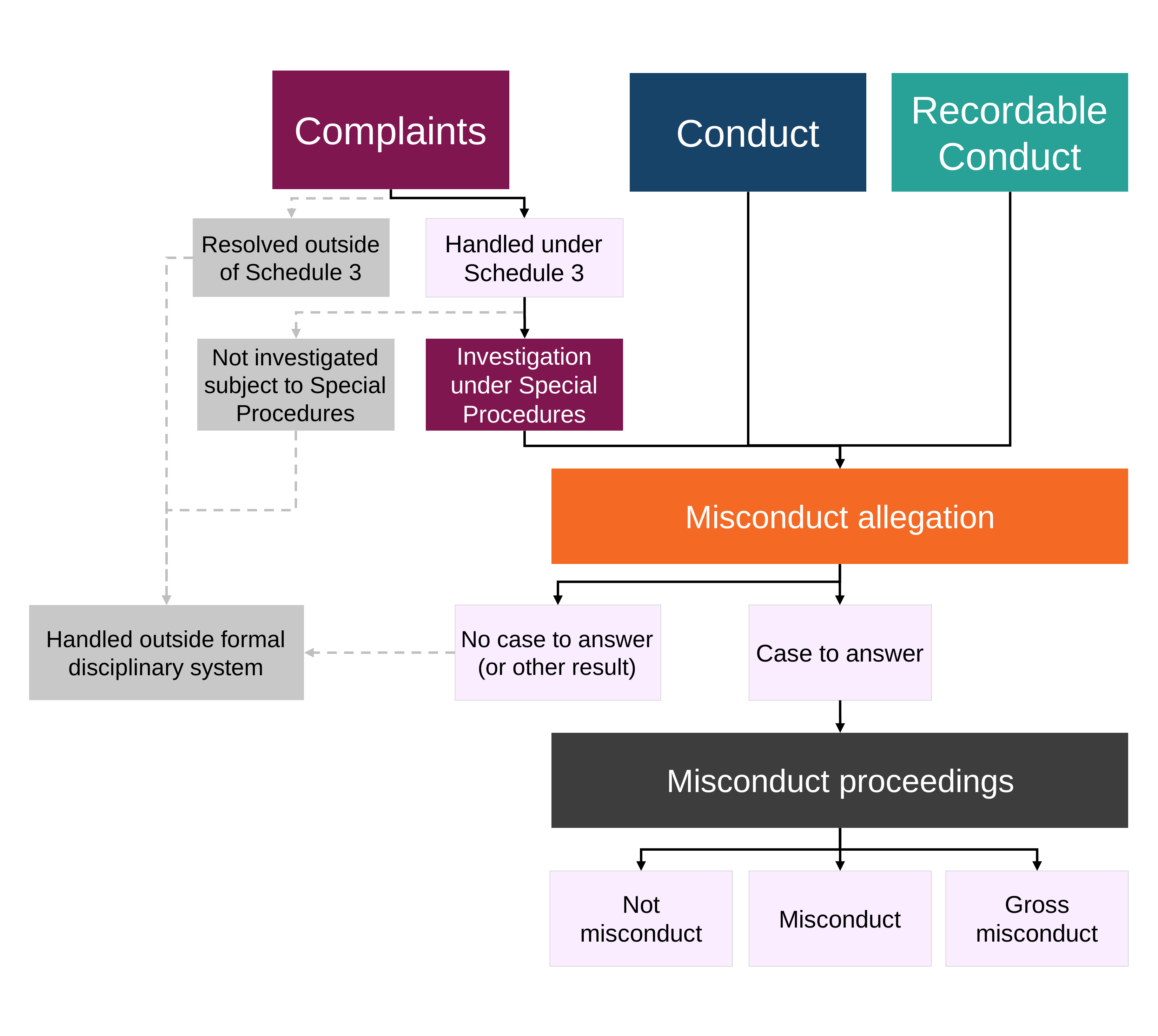
There are 3 main routes through which an allegation of misconduct can be raised: internally raised conduct matters and recordable conduct matters, and complaints raised by the public.
Although complaints are one route into the misconduct system, the police misconduct system and the police public complaints systems are fundamentally distinct. Police complaints can cover a broad variety of reasons for complaint, including about policing practice and service issues as well as complaints about the conduct of police officers and staff.
Where there is an indication that a member of a police force may have committed a criminal offence or behaved in a manner that would justify disciplinary proceedings, complaints must be investigated subject to Special Procedures. Only complaints investigated subject to Special Procedures - alongside conduct and recordable conduct matters - can be assessed for a case to answer for misconduct.
Police complaints from members of the public, recordable conduct matters, and death or serious injury (DSI) matters are handled under the Police Reform Act 2002 and the Police (Complaints and Misconduct) Regulations 2020 (the ‘Complaints Regulations’), whereas internal conduct matters are currently handled under the Police (Conduct) Regulations 2020 (the ‘Conduct Regulations’).
Allegations that have been determined to have no case to answer for misconduct, and complaint allegations not investigated subject to Special Procedures, are resolved outside of the formal disciplinary system.
Where a case to answer for misconduct has been determined, an allegation may be referred to misconduct proceedings to determine whether, on the balance of probabilities, misconduct or gross misconduct has occurred.
Although there are differences in how complaints, conduct matters, and recordable conduct matters are initially handled, once an allegation is referred to misconduct proceedings, all cases are handled under the same processes (described in the Conduct Regulations).
Comparisons with statistics published by the Independent Office for Police Conduct (IOPC)
As mentioned in the above section, the police misconduct system and the police public complaints systems are fundamentally distinct.
This publication focusses on cases where there is an indication that a member of a police force may have committed a criminal offence or behaved in a manner that would justify disciplinary proceedings. Limited high-level information on all complaints handled under Schedule 3 to the Police Reform Act 2002 are presented to demonstrate that only a small proportion of these meet the threshold to be investigated subject to Special Procedures (and therefore assessed for misconduct).
The Independent Office for Police Conduct (IOPC) collects and publishes data on all complaints against the police in England and Wales.
Users interested in measuring the overall volume of complaints should use the IOPC’s complaint statistics rather than the Home Office’s Police misconduct statistics.
Some counting conventions differ between the 2 publications, for more information see section 6.1 of the user guide accompanying these statistics.
3. Misconduct allegations
3.1 What is a “misconduct allegation”?
As outlined in chapter 2, there are 3 main routes through which allegation of misconduct may be raised – public complaints, conduct matters, and recordable conduct matters.
A police complaint is any expression of dissatisfaction with a police force by, or on behalf of, a member of the public.
This can cover complaints about policing practice and service issues as well as complaints about the conduct of police officers and staff.
When a police complaint is first made, a decision on whether to record and handle the complaint under Schedule 3 to the Police Reform Act 2002 is taken by the appropriate authority. Where it is feasible to resolve a complaint promptly and to the satisfaction of the complainant, such matters will be addressed outside of Schedule 3. The mandatory criteria for recording a complaint under Schedule 3 can be found in section 5.1 of our user guide.
Complaints must be investigated subject to Special Procedures when there is an indication that a member of a police force may have committed a criminal offence or behaved in a manner that would justify disciplinary proceedings. However, most complaints handled under Schedule 3 do not meet this threshold. As a result, only 2% of Schedule 3 complaint allegations involving police officers are investigated subject to Special Procedures. Allegations not subject to Special Procedures cannot progress to misconduct proceedings.
Where complaints data is referenced in this commentary, it refers exclusively to Special Procedures (unless otherwise specified). Additional information on complaints outside of Special Procedures can be found in the accompanying data tables and open data tables.
A conduct matter is any matter that is not, and has not been, the subject of a complaint, where there is an indication that the person serving with the police force may have committed a criminal offence, or behaved in a manner that would justify the bringing of disciplinary proceedings.
This includes allegations raised through internal reporting routes (such as those made by another officer) or intelligence gathering (such as evidence collected through a criminal investigation).
A recordable conduct matter is a conduct matter that appears to have resulted in the death or serious injury of any person; has had an adverse effect on a member of the public; or, meets any of the criteria set out in regulation 7 of the Complaints Regulations, this includes serious assaults, sexual offences and corruption.
Throughout these statistics, recordable conduct matters are counted as a distinct category and not a subset of conduct matters.
A single allegation can be raised against multiple people, and a person may be involved in multiple allegations across the same or multiple cases. For more information on counting conventions used, see section 3.2 of the user guide accompanying these statistics.
Some differences may exist in how police forces record allegations, meaning similar incidents may be counted as one allegation in some forces and multiple allegations in others. For further information see section 3.3 of the user guide accompanying these statistics.
3.2 How many allegations were there?
A combined total of 15,843 allegations, recorded across 7,108 cases, were finalised in the year ending 31 March 2025 in the 43 territorial police forces in England and Wales. This equates to an average of 2.2 allegations per case. The figures in Table 3.1 below show the breakdown by case type, with comparative data for year ending 31 March 2024.
Allegations arising from conduct matters make up the largest proportion (61%) of total allegations finalised, whereas those arising from complaints (Special Procedures) and recordable conduct matters make up 14% and 25% respectively.
Table 3.1: Number of allegations finalised, by case type, involving police officers in England and Wales, for years ending 31 March 2024 and 2025
| Case type | 2024 | 2025 | % change |
|---|---|---|---|
| Complaint (Special Procedures) | 1,884 | 2,190 | 16% |
| Conduct Matters | 7,630 | 9,660 | 27% |
| Recordable Conduct Matters | 3,694 | 3,993 | 8% |
| Total | 13,208 | 15,843 | 20% |
Notes:
- An allegation can involve multiple individuals, and an individual can be linked to multiple allegations. Since outcomes may differ by individual, each individual-allegation pairing is counted separately. For more information on counting conventions used, see section 3.2 of the user guide.
The total number of allegations finalised has increased by 20% compared with the year ending 31 March 2024, with the largest increase seen in conduct matter allegations at 27%. Recordable conduct matter allegations saw the smallest change at 8%, and allegations arising from complaints (Special Procedures) increased by 16%.
As of 31 March 2024, the police workforce totalled 155,886 officers (including special constables) in headcount terms[footnote 2]. Based on the total number of allegations finalised reported above, this equates to 102 allegations per 1,000 officers.
3.3 What were allegations about?
When a police complaint, conduct matter, or recordable conduct matter arises, IOPC allegation categories are applied to classify the nature of the conduct. A full description of these categories and their sub-categories is provided in Appendix A of the IOPC guidance on capturing police complaint data.
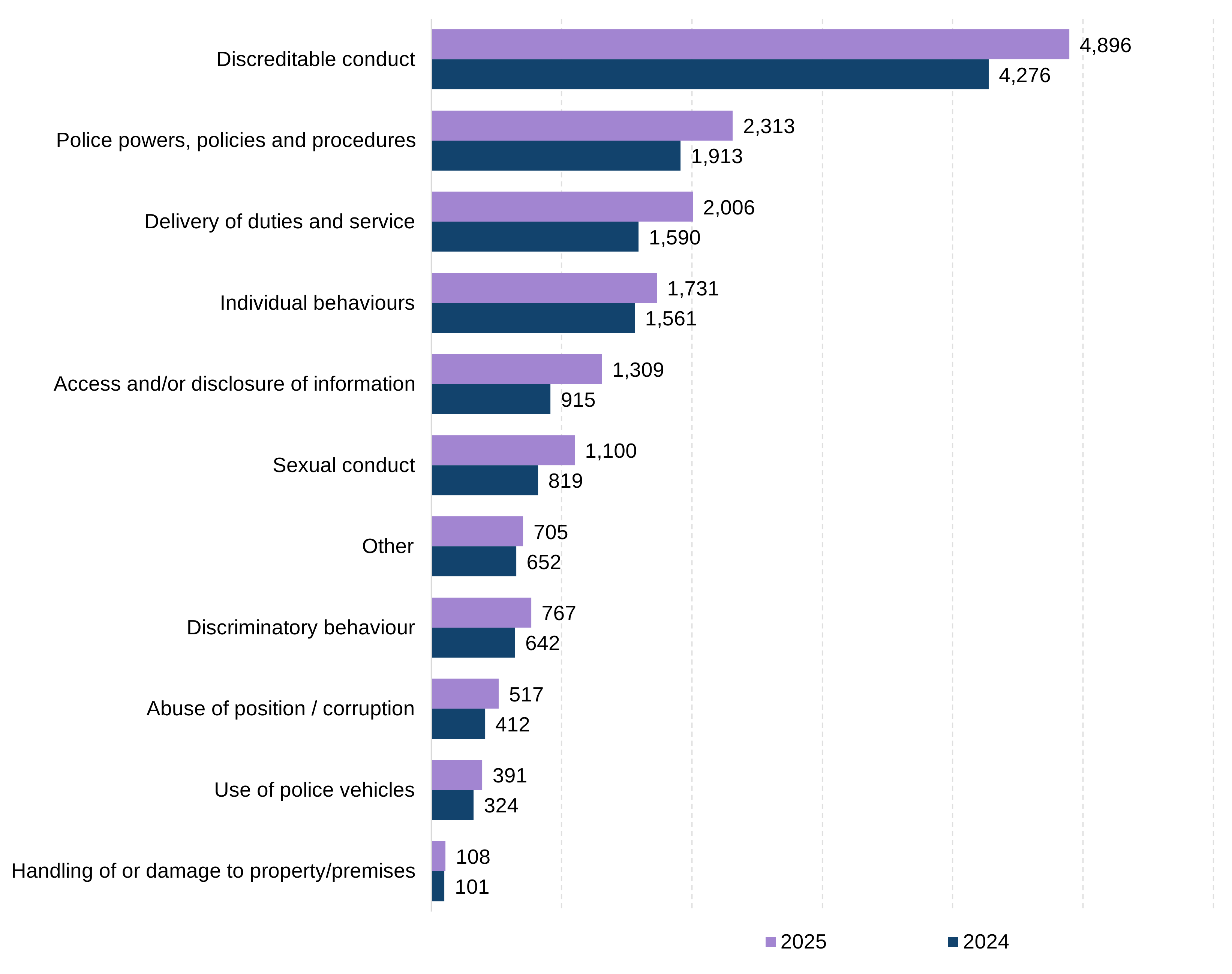
Despite an overall increase in the number of allegations finalised as compared to year ending 31 March 2024, the number of allegations finalised for both years is distributed similarly across the different allegation categories.
For example, ‘discreditable conduct’ accounted for 31% of all allegations finalised in year ending March 2025, as shown in Figure 3.1. In year ending March 2024, ‘discreditable conduct’ accounted for 32% of all allegations finalised. Discreditable conduct refers to behaviour outside official duties but still reflecting on an officer’s conduct. It includes criminal offences, arrests, or actions while on duty that are unrelated to their role, such as theft without abuse of position (see Appendix A of the IOPC guidance on capturing police complaint data for further details).
Allegations also vary across case types for each allegation category. For example, conduct matters and recordable conduct matters saw the highest proportion of allegations in the ‘discreditable conduct’ category, at 33% and 37% respectively (similarly to overall allegations finalised). However, for complaints (Special Procedures), the largest proportion of allegations finalised was part of the ‘police powers, policies, and procedures’ allegation category, with this allegation category making up 36% of allegations for this case type.
For more information on allegations data, broken down by allegation category and sub-categories, and by case type, refer to the accompanying data tables PC3b, CM2, and RC2, and the misconduct allegations by type open data table.
Figure 3.1: Number of allegations finalised, by IOPC allegation type, involving police officers in England and Wales, for years ending 31 March 2024 and 2025
Notes:
- Appendix A of the IOPC’s guidance on capturing data about police complaints contains a full description of allegation categories.
The magnitude of year-on-year change varies for different allegation types, although every category has seen an increase in number of allegations finalised for that category, ranging between 7% and 43%. The ‘access and/or disclosure of information’ allegation category has seen the largest increase in percentage terms (43%) in allegations finalised under that category from 915 allegations for year ending March 2024, to 1,309 allegations for year ending March 2025.
In carrying out their duties, police officers are expected to maintain the highest standards of professional behaviour as set out in Schedule 2 of the Conduct Regulations. Allegations can also be grouped based on the standard of professional behaviour which they may breach. For information on the number of allegations categorised by (standard of professional behaviour) breach type, please refer to tables CM3 and RC3 of the data tables.
3.4 How many allegations had a case to answer for misconduct?
Following an investigation, a decision is made as to whether there is a case to answer for misconduct or gross misconduct. This is called a subject allegation result.
A case to answer decision is a determination as to whether there is sufficient evidence upon which a reasonable misconduct meeting or hearing panel could make a finding of misconduct or gross misconduct, on the balance of probabilities.
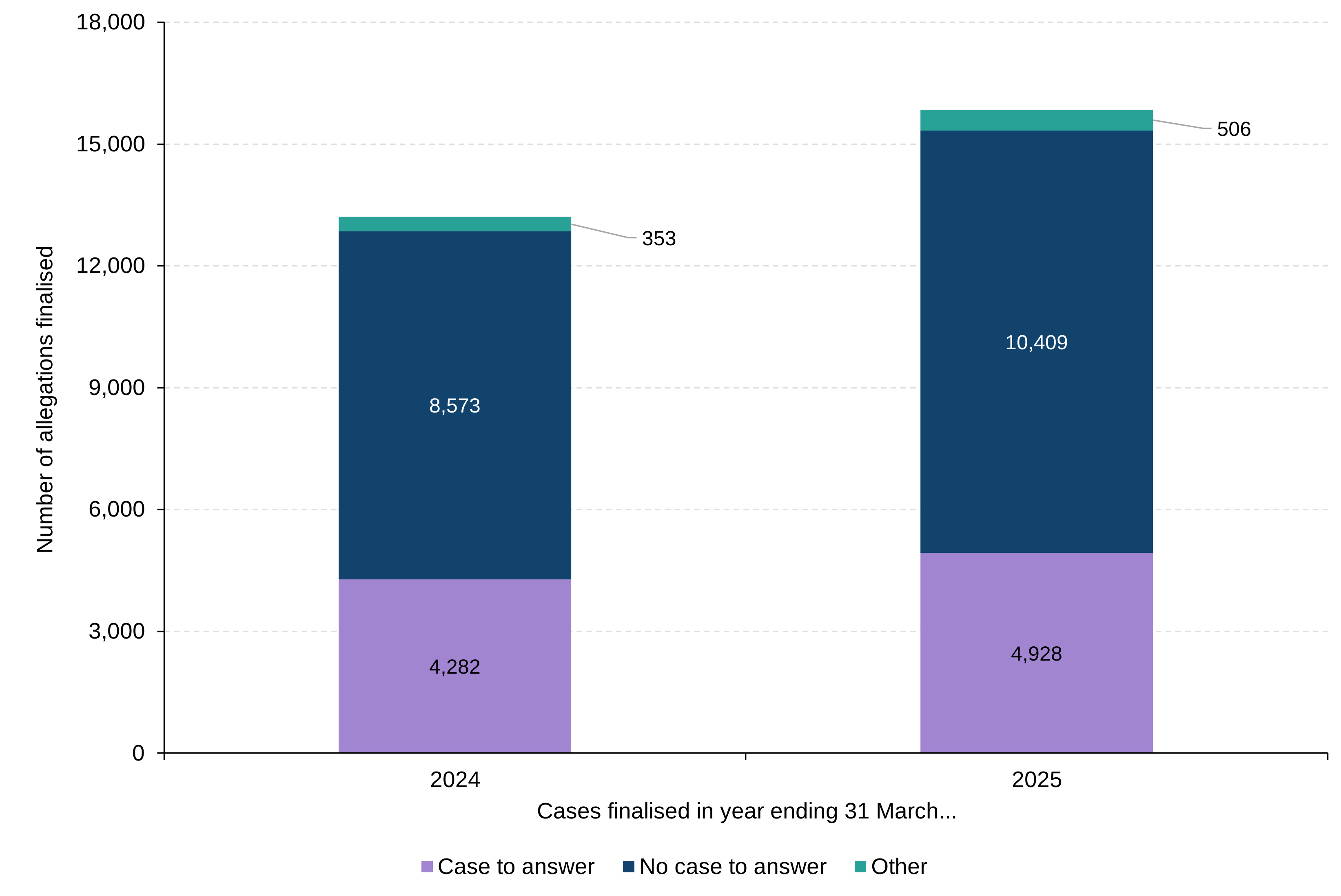
Figure 3.2 shows that of the 15,843 allegations finalised in year ending 31 March 2025, for all 3 case types combined, and concerning police officers, a total of 4,928 (31%) had a case to answer, and 10,409 (66%) had no case to answer. A further 506 (3%) allegations had ‘other’ subject allegation results, such as discontinuance. For further details see tables PC5a, CM4, and RC4 accompanying this release.
Although the absolute numbers of allegations finalised have increased, the relative proportions of case to answer have remained largely unchanged compared to the previous year, with 32% of overall allegations having a case to answer in the year ending 31 March 2024 (compared with 31% for the year ending 2025).
Figure 3.2: Subject allegation result (case to answer decision), allegations finalised years ending 31 March 2024 and 31 March 2025, involving police officers in England and Wales
Notes:
- Other includes where the conduct allegation was discontinued, the complaint is withdrawn, or where ‘Regulation 41’ applies (where an investigation has previously been suspended to avoid prejudice of any criminal case), and upon resuming investigation the complainant either fails to indicate that they want to resume investigation, or they no longer wish to pursue their complaint.
Case to answer proportions vary across case type. For example, for year ending 31 March 2025, 44% of all recordable conduct matter allegations were found to have a case to answer, as compared to 24% of all complaint (Special Procedures) allegations, and 27% of all conduct matter allegations. For more details on case to answer by case type for the current and previous years, see the ‘Misconduct allegations by type’ open data table. As mentioned in section 3.3 of this publication, the nature of allegations (defined by IOPC allegation type) varies across case type. This variation impacts case to answer proportions, which as shown in section 3.6 of this publication, can vary by IOPC allegation type.
3.5 What action was taken following a misconduct allegation?
Following a case to answer decision, the appropriate authority must determine what action should be taken. The Conduct Regulations, supported by the Statutory Guidance on Professional Standards and Integrity in Policing issued by the Home Office, sets out the process for decision makers to determine the most appropriate action.
The action available to be taken differs based on whether an allegation is determined to have a case to answer for misconduct or not. Where a case to answer has been determined, the appropriate authority must decide whether disciplinary proceedings should be brought against the individual.
A misconduct proceeding is the formal process to hear cases, initiated when it is determined that an officer has a case to answer for misconduct or gross misconduct.
The statutory guidance sets an expectation that it is in the public interest that cases which could result in disciplinary action (a minimum of ‘written warning’ or above) are referred to proceedings unless there are exceptional circumstances not to do so. Exceptional circumstances include where the individual is suffering from serious physical or mental ill-health, or situations where pursuing historic cases may be considered disproportionate.
Furthermore, for allegations where the officer has since left the service (such as through retirement or resignation), the appropriate authority can only refer to proceedings for cases of gross misconduct and require a special determination for cases where the individual left more than 12 months prior.
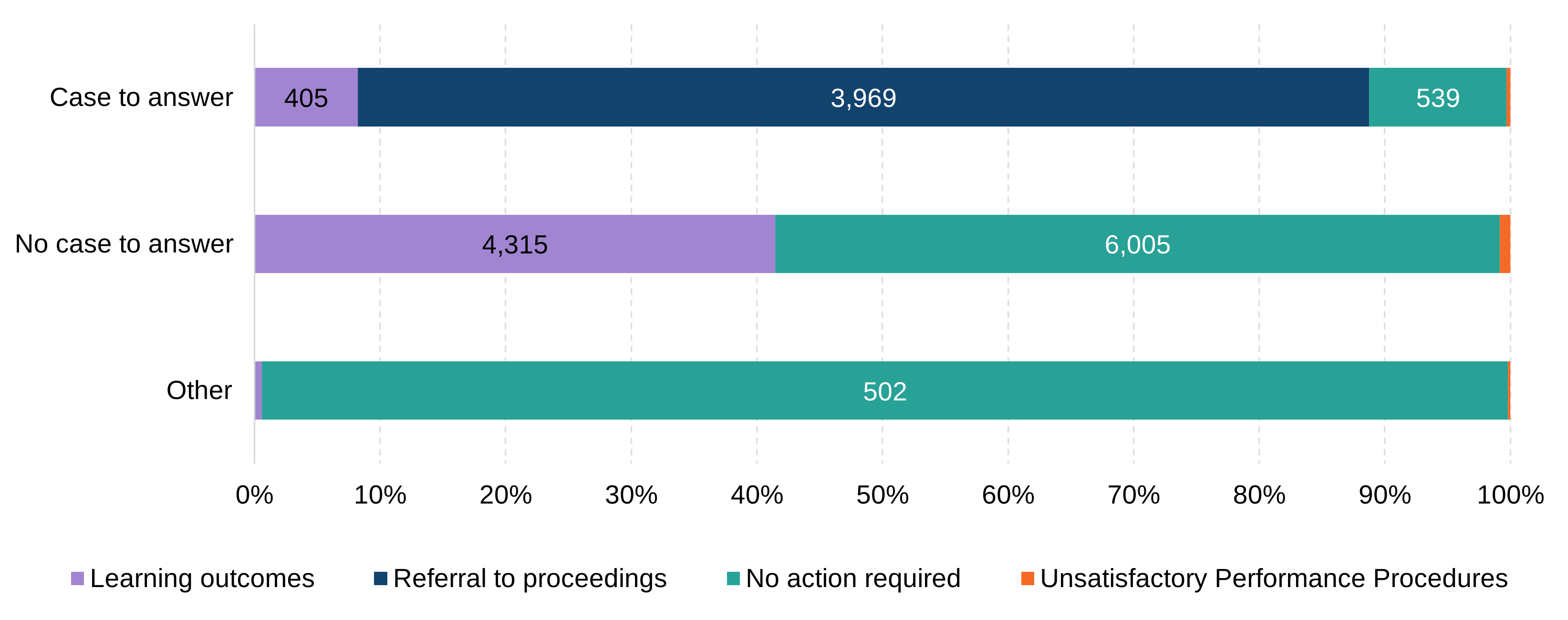
In the year ending 31 March 2025, a total of 3,969 allegations were referred to proceedings. This accounts for 81% of all allegations that were deemed to have a case to answer and represents a 10-percentage point increase compared to the previous year (ending 31 March 2024), where 71% of allegations with a case to answer were referred to proceedings.
Not all instances of behaviour that falls short of professional standards are referred to misconduct proceedings. For situations with no case to answer, or cases where the behaviour does not amount to misconduct, or where an individual’s performance is deemed unsatisfactory, other processes, such as the Reflective Practice Review Process (RPRP), or Unsatisfactory Performance Procedures (UPP), may be initiated.
Figure 3.3 illustrates the action taken following a subject allegation result (such as case to answer) across all case types combined, for year ending 31 March 2025.
A total of 4,723 allegations were referred to learning outcomes. Of these, 4,315 were previously deemed to have no case to answer, representing 41% of all allegations with no case to answer. A further 405 that were referred to learning outcomes were previously deemed to have a case to answer, and 3 had an ‘other’ allegation action (such as discontinuance).
Figure 3.3: Number and proportion of allegation actions following a subject allegation result (case to answer decision), for allegations involving police officers, finalised in year ending 31 March 2025 in England and Wales
Notes:
- Excludes 1 allegation, where the action taken was unknown.
- ‘Learning outcomes’ includes ‘learning from reflection’, ‘reflective practice’ and ‘RPRP’.
The number of allegations resulting in officers being referred to learning outcomes has increased by 5% compared to the previous year, rising from 4,505 allegations referred to learning outcomes in the year ending 31 March 2024, to 4,723 in the current year (ending 31 March 2025).
However, the proportion of learning outcomes relative to total allegation outcomes decreased by 4 percentage points, from 34% in the previous year to 30% in the current year. This reduction is consistent with the increase in the proportion of allegations deemed to have a case to answer and referred to proceedings, as compared to the previous year.
In addition to cases that met the threshold to be investigated for misconduct, complaint cases handled under Schedule 3 but not investigated subject to Special Procedures may also result in learning outcomes. In addition to the 4,723 allegations investigated for misconduct that resulted in learning outcomes, a further 11,497 complaint allegations not investigated subject to Special Procedures also resulted in learning outcomes. Information on these allegations can be found in table PC6b of the data tables accompanying this release.
3.6 How do results and outcomes differ by allegation type?
Allegation result (case to answer decision)
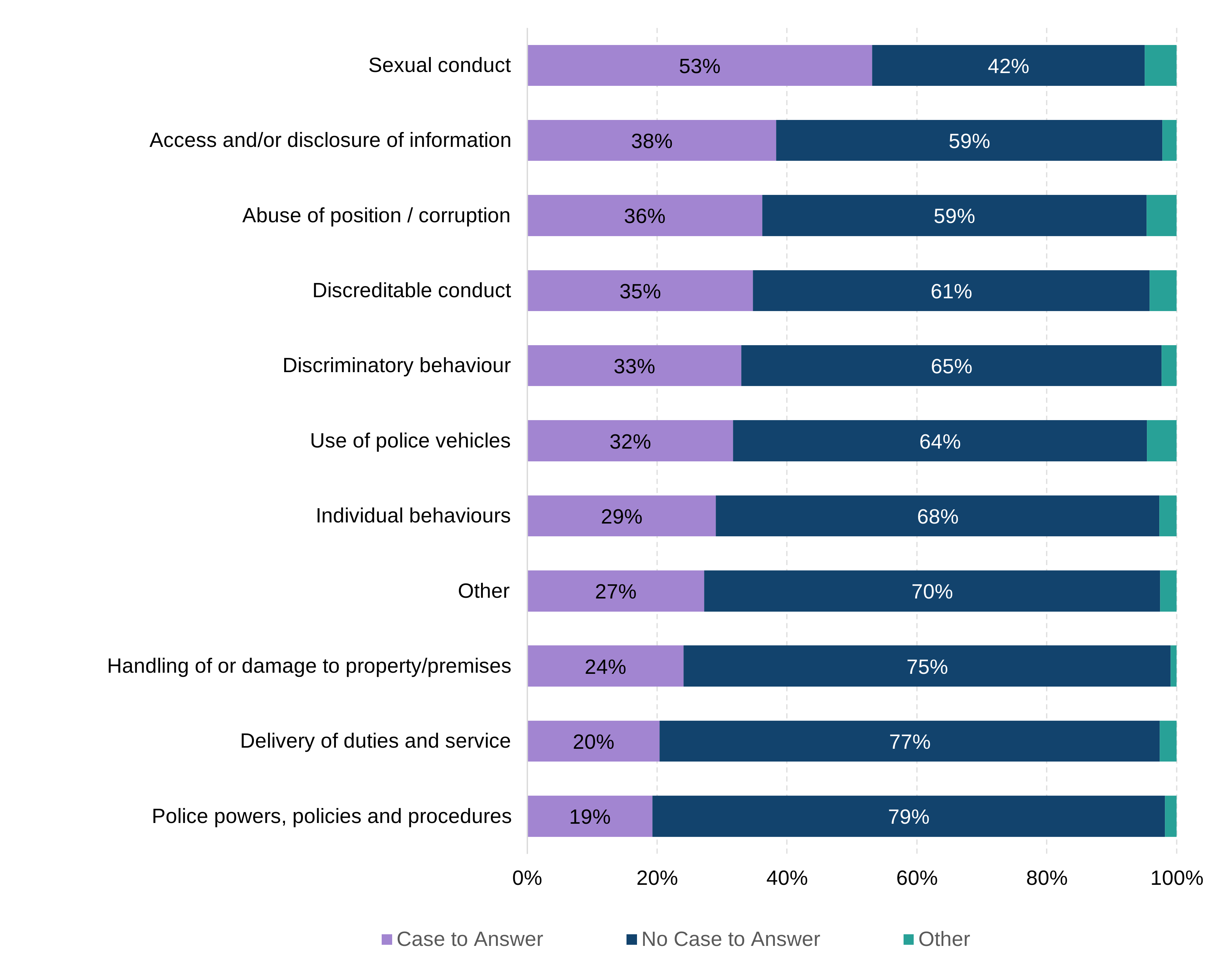
As noted above, among the 15,843 allegations involving police officers, and finalised in the year ending 31 March 2025, 4,928 (31%) across all 3 case types were deemed to have a case to answer. However, the case to answer proportions vary by allegation category, as shown in Figure 3.4 below, with certain IOPC categories more likely to be deemed to result in a case to answer.
For example, the allegation category with the largest number of allegations, ‘discreditable conduct’, was found to have a case to answer for 35% of all allegations finalised in that category. For the allegation category ‘sexual conduct’, 53% of all allegations in that category were deemed to have a case to answer, whereas ‘police powers, policies and procedures’ saw a case to answer proportion of 19%.
Figure 3.4: Case to answer decision by IOPC allegation category, for allegations finalised in year ending 31 March 2025, involving police officers in England and Wales
Notes:
- Appendix A of the IOPC’s guidance on capturing data about police complaints contains a full description of allegation categories.
- ‘Other’ includes situations where the conduct allegation was discontinued, the complaint is withdrawn, or where ‘Regulation 41’ applies (where an investigation has previously been suspended to avoid prejudice of any criminal case), and upon resuming investigation the complainant either fails to indicate that they want to resume investigation, or they no longer wish to pursue their complaint.
Compared to the previous year (ending 31 March 2024), proportions of allegations with a case to answer have increased for ‘discreditable conduct’ and ‘sexual conduct’ by one percentage point and 6 percentage points respectively, whereas the case to answer proportion for ‘police powers, policies and procedures’ has decreased by 5 percentage points. For more details on case to answer by allegation category for the current and previous years, see the ‘Misconduct allegations by type’ open data table.
Allegation action
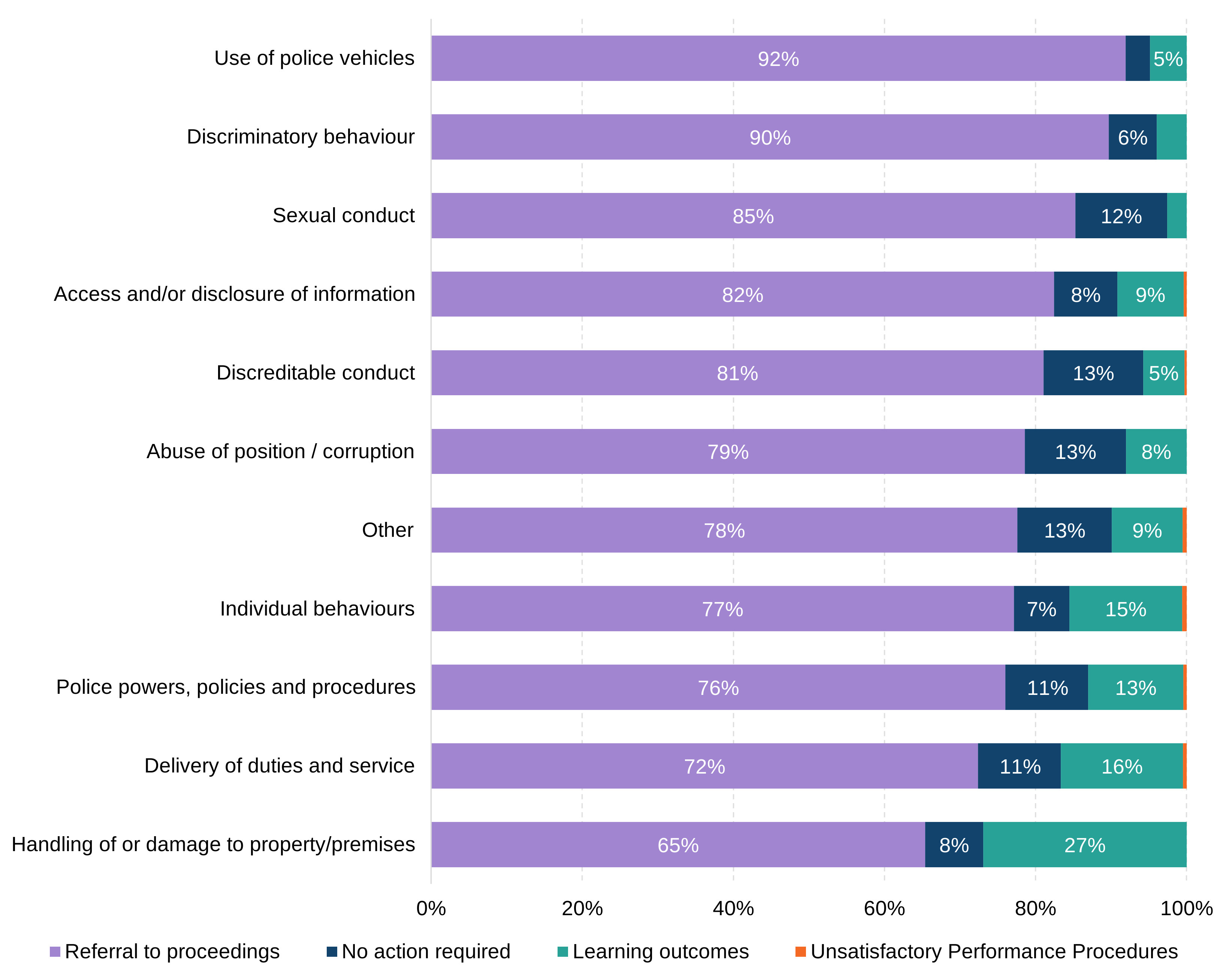
Of the 4,928 allegations deemed to have a case to answer, 3,969 (81%) were referred to misconduct proceedings. This proportion differed by IOPC allegation category, as shown in Figure 3.5 below. Allegations in the ‘use of police vehicles’ saw the highest proportion, with 92% of allegations referred to proceedings. This is followed by ‘discriminatory behaviour’ and ‘sexual conduct’, with 90% and 85% respectively referred to proceedings. Allegations in the ‘handling of or damage to property or premises’ category had the lowest proportion of referral to proceedings (at 65%), but saw the highest proportion of referral to learning outcomes (27%).
Figure 3.5: Action taken for allegations deemed to have a case to answer, by IOPC allegation category, for allegations finalised years ending 31 March 2025, involving police officers in England and Wales
Notes:
- Appendix A of the IOPC’s guidance on capturing data about police complaints contains a full description of allegation categories.
- ‘Learning outcomes’ includes ‘learning from reflection’, ‘reflective practice’ and ‘RPRP’.
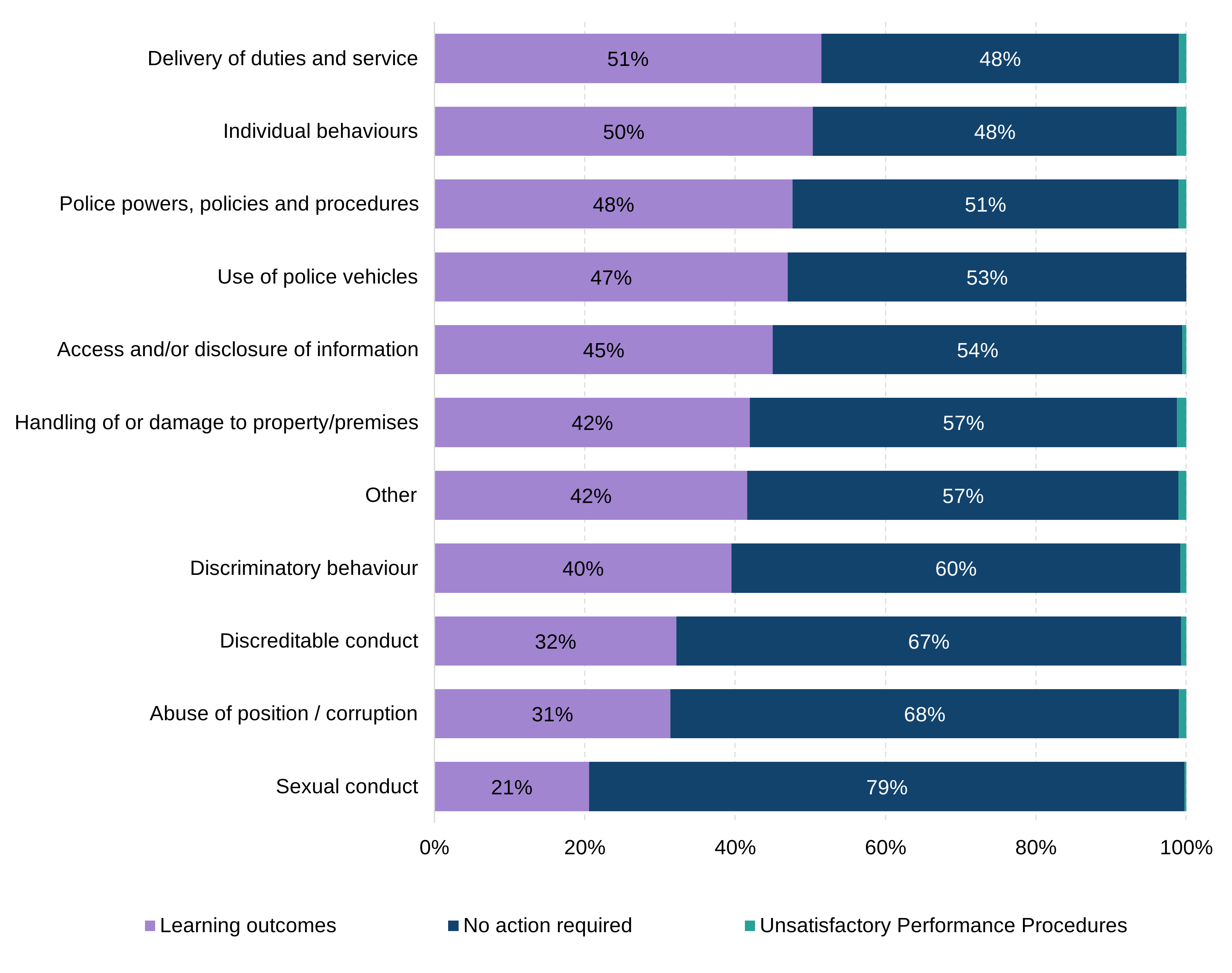
If there is no case to answer, the appropriate authority may still refer the matter to a learning outcome if it amounts to practice requiring improvement[footnote 3]. Of the 10,409 allegations deemed to have no case to answer, 41% were referred to learning outcomes, while 58% required no further action.
However, learning outcomes tend to be more appropriate for some allegation types than others. As illustrated in Figure 3.6 below, the proportion referred to learning outcomes varies by IOPC allegation category. Allegations in the ‘delivery of duties and service’ category saw the highest proportion referred to learning outcomes, with just over half (51%) of allegations with no case to answer in this category being directed to learning outcomes. This is followed by ‘individual behaviours’ and ‘police powers, policies and procedures’ with 50% and 48% respectively referred to learning outcomes.
Allegations concerning ‘sexual conduct’ had the smallest share of cases with no case to answer being referred to learning outcomes (21%). However, this should be considered in the context that this category also recorded the highest proportion of allegations with a case to answer, and the third highest proportion of allegations subsequently referred to proceedings where there was a case to answer.
Figure 3.6: Action taken for allegations deemed to have no case to answer, by IOPC allegation category, for allegations finalised years ending 31 March 2025, involving police officers in England and Wales
Notes:
- Appendix A of the IOPC’s guidance on capturing data about police complaints contains a full description of allegation categories.
- Excludes 1 allegation, where the action taken was unknown.
- ‘Learning outcomes’ includes ‘learning from reflection’, ‘reflective practice’ and ‘RPRP’.
Data broken down by IOPC allegation type, case type, action taken, and worker type can be found in the Police Misconduct, England and Wales, 31 March 2025: misconduct allegations by type open data table accompanying this publication.
4. Misconduct proceedings
4.1 What is a misconduct proceeding?
Misconduct proceedings are the formal processes to hear cases, initiated when it is determined that an officer has a case to answer for misconduct or gross misconduct (see chapter 2 of this publication for definitions).
There are 3 types of proceeding (meeting, hearing, or accelerated hearing) and the type of proceeding chosen will depend on the severity of the allegations for which the officer has a case to answer. Misconduct finding levels (misconduct or gross misconduct) and outcomes available differ depending on the proceeding type.
A misconduct meeting is used to determine whether the conduct of an individual amounts to misconduct or not and whether disciplinary action should be imposed.
Gross misconduct cannot be found at a misconduct meeting and the outcomes are limited to written warnings, final written warnings, and referrals to reflective practice.
A misconduct hearing is used to determine whether the conduct of an individual amounts to misconduct or gross misconduct (or neither) and whether disciplinary action should be imposed.
In addition to the outcomes available at a misconduct meeting, a misconduct hearing can impose outcomes of dismissal and reduction in rank, where gross misconduct has been determined.
An accelerated misconduct hearing is brought when there is sufficient evidence (on the balance of probabilities) that the conduct of an individual constitutes gross misconduct and that it is in the public interest that the officer concerned ceases to be a member of a police force without delay.
The same outcomes are available at an accelerated misconduct hearing as at a misconduct hearing.
An individual may appear in multiple proceedings and is counted once per proceeding. If a proceeding involves multiple allegations against the same person, the proceedings are counted once, with the most severe outcome recorded where outcomes differ for different allegations. The number of individuals may differ from the number of proceedings that took place, as multiple individuals can attend the same proceeding, and each person’s misconduct finding and outcome are counted separately. Section 3.2 of the user guide accompanying this release contains further information on the counting conventions used including examples.
4.2 How many police officers were referred to misconduct proceedings?
Across the 43 territorial police forces in England and Wales, a total of 1,687 individual police officers were referred to formal misconduct proceedings as a result of a police complaint, conduct or recordable conduct matter case finalised in the year ending 31 March 2025.
This is an increase of 29% compared with the year ending 31 March 2024, when 1,312 officers were referred to proceedings.
Of the 1,687 misconduct proceedings, 11% stemmed from police complaints, 53% from conduct matters and 37% from recordable conduct matters.
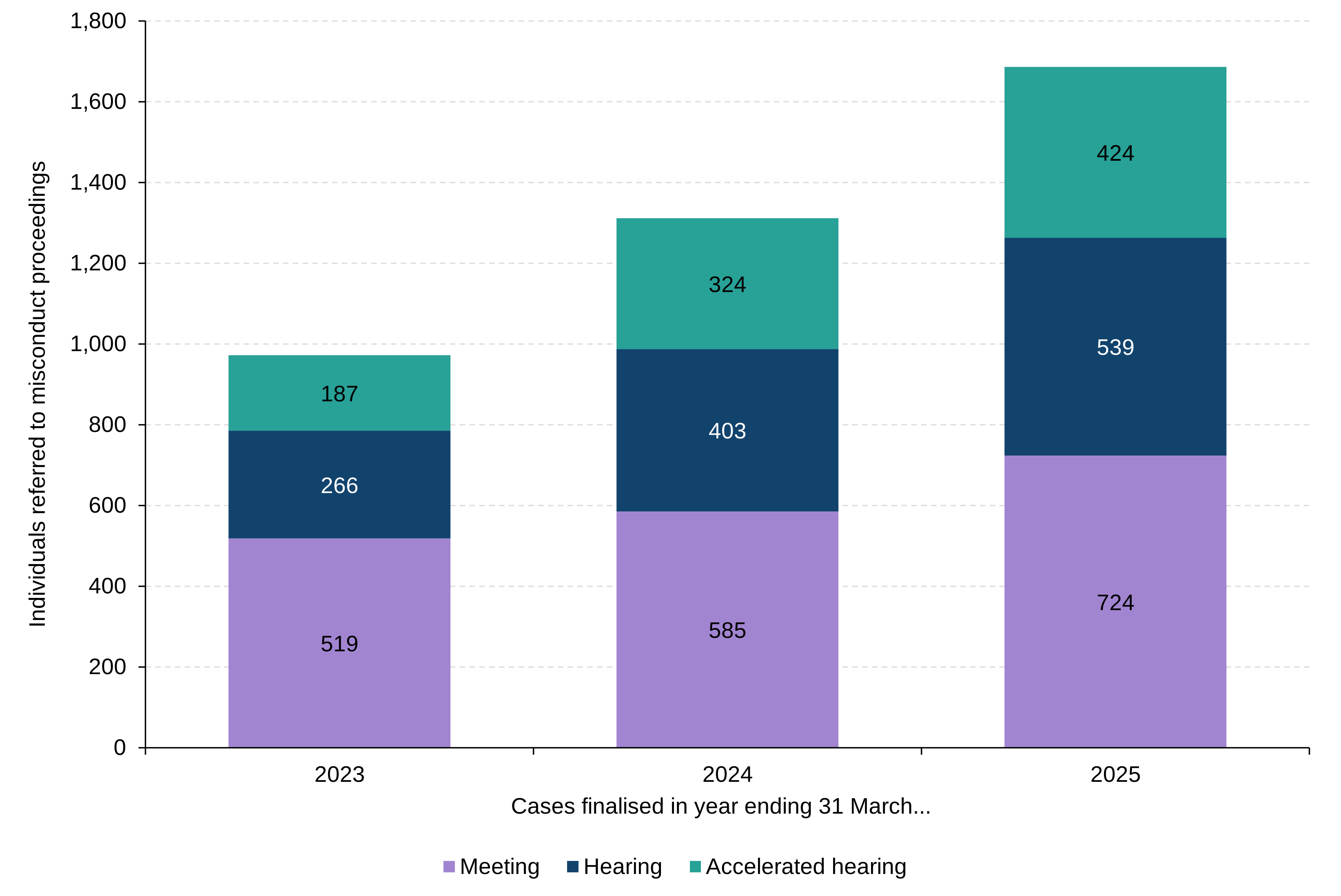
Figure 4.1 shows the number of police officers referred to proceedings, by type of proceeding (see section 4.1 of this publication for definitions).
As a result of cases finalised in the year ending 31 March 2025, 724 police officers faced misconduct meetings, 539 faced misconduct hearings and 424 faced accelerated hearings.
Figure 4.1: Number of police officers referred to misconduct proceedings, by proceeding type, and year, cases finalised in England and Wales
Notes:
- An individual may be subject to multiple proceedings on different dates. Where this is the case, the individual will be counted per proceeding. For more information on how proceedings are counted see section 4.1 of this publication.
Compared with cases finalised in the year ending 31 March 2024, the number of officers facing misconduct meetings, hearings, and accelerated hearings has increased by 24%, 34% and 31% respectively.
Although the number of officers referred to proceedings has increased compared to the previous 2 years, as a proportion of the overall workforce[footnote 4] this remains relatively small. The number of officers who faced misconduct proceedings is equivalent to 1.1% of the 155,886 police officers (including special constables) in post as at 31 March 2024, similar to the 0.8% in the previous year.
4.3 How many police officers were found to have committed misconduct?
Decision-makers conducting the misconduct proceedings will consider the facts of the case and decide (on the balance of probabilities) whether the officer’s conduct amounts to gross misconduct, misconduct, or no misconduct. This is known as the ‘misconduct level finding’.
Of the 1,687 officers referred to misconduct proceedings as a result of cases finalised in the year ending 31 March 2025:
- 47% (790 officers) were found to have committed gross misconduct
- 34% (579 officers) were found to have committed misconduct
- 16% (267 officers) were not found to have committed misconduct or gross misconduct.
For a small number of individuals (3%), proceedings were discontinued.
As a proportion of the overall workforce[footnote 5], this equates to 0.5% of all officers in post as at 31 March 2024 being found to have committed gross misconduct and a further 0.4% being found to have committed misconduct. This is a slight increase compared with 0.4% and 0.3% respectively for cases finalised in the previous year.
The number of officers found to have committed gross misconduct has increased by 28% (from 619) and the number found to have committed misconduct has increased by 19% (from 487) compared with cases finalised in the year ending 31 March 2024.
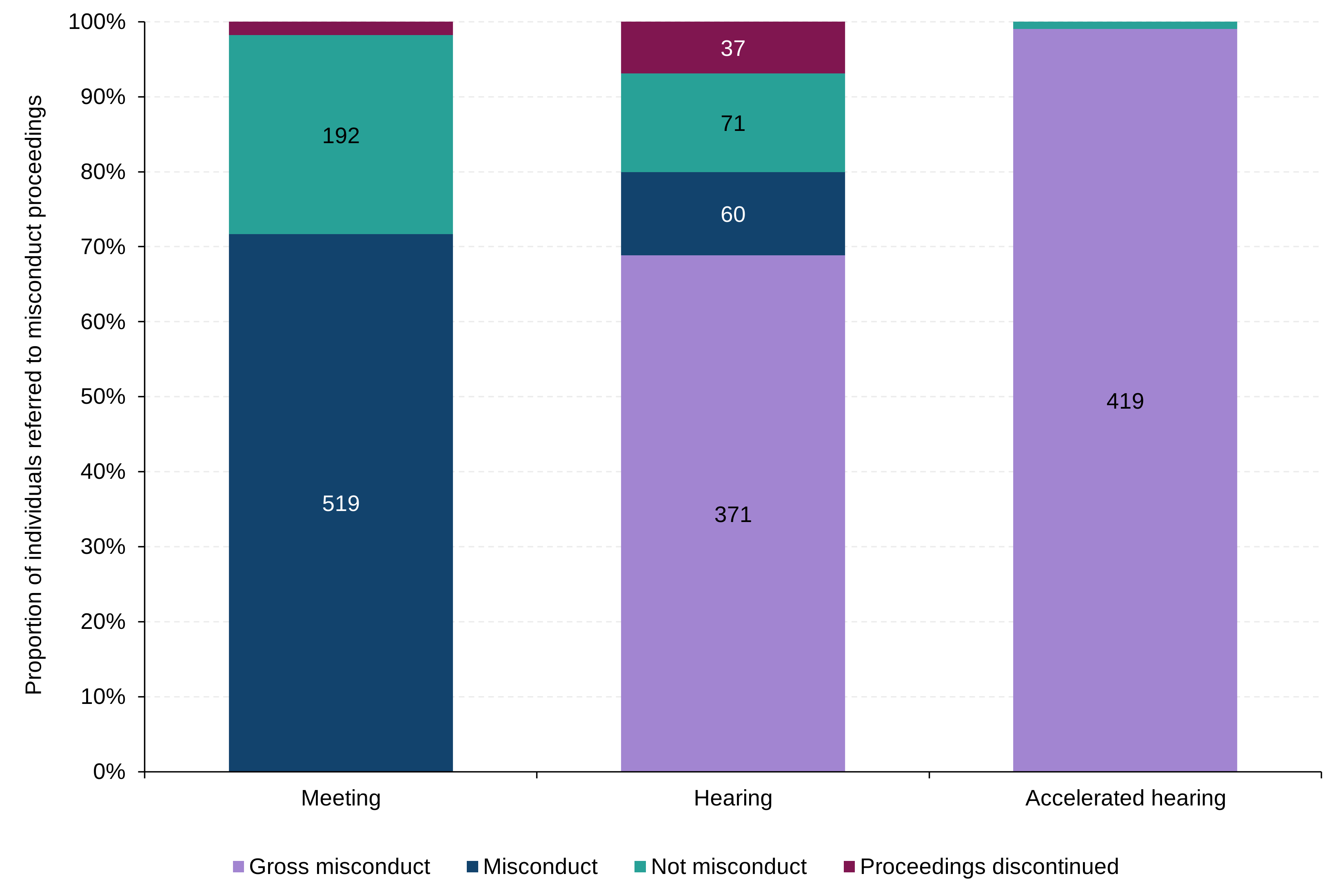
The proportion of individuals found to have committed misconduct or gross misconduct differs by proceeding type, as shown in figure 4.2.
Figure 4.2: Misconduct level finding at misconduct proceedings involving police officers, England and Wales, cases finalised year ending 31 March 2025
Notes:
- An individual may be subject to multiple proceedings on different dates. Where this is the case, the individual will be counted per proceeding. For more information on how proceedings are counted see section 4.1 of this publication.
- An officer cannot be found to have committed gross misconduct at a misconduct meeting.
- Excludes one individual where the misconduct finding level was unknown.
Although the volume of officers found to have committed misconduct and gross misconduct has increased, the proportion of proceedings resulting in a finding of misconduct or gross misconduct has fallen across both meetings and hearings.
Of officers who faced misconduct meetings, 72% were found to have committed misconduct, a decrease of 5 percentage points compared with 77% for cases finalised in the year ending 31 March 2024.
Of officers who faced misconduct hearings, 69% were found to have committed gross misconduct and a further 11% found to have committed misconduct. This compares with 74% and 9% respectively for cases finalised in the year ending 31 March 2024.
Of officers who faced accelerated hearings, 99% were found to have committed gross misconduct, the same proportion as for cases finalised in the year ending 31 March 2024.
4.4 What disciplinary action was taken following misconduct proceedings?
After the misconduct level finding is given, the appropriate outcome is decided.
For cases finalised in the year ending 31 March 2025, a total of 695 police officers were dismissed following a misconduct proceeding, including officers who have previously left the service and received an outcome of ‘would have been dismissed’[footnote 6].
As a proportion of all officers in post as at 31 March 2024[footnote 7], dismissals equate to 0.4% of the overall workforce, a similar proportion to the previous year (also 0.4%).
Table 4.1 shows the breakdown of outcomes received by police officers at misconduct proceedings.
Compared with the equivalent previous year, use of all outcomes has seen an increase, with the number of officers dismissed following a proceeding increasing from 563 to 695 (23%) and the number of written warnings increasing from 473 to 584 (23%).
Table 4.1: Outcome for police officers referred to misconduct proceedings, cases finalised year ending 31 March 2025, England and Wales
| Outcome | Meeting | Hearing | Accelerated hearing |
Total |
|---|---|---|---|---|
| Dismissal | N/A | 303 | 392 | 695 |
| Reduction in Rank | N/A | 7 | 3 | 10 |
| Written warning | 454 | 106 | 24 | 584 |
| Learning outcomes | 174 | 8 | 0 | 182 |
| Referred back to appropriate authority | 0 | 0 | 2 | 2 |
| No action | 83 | 78 | 3 | 164 |
| Proceedings discontinued | 13 | 37 | 0 | 50 |
| Total | 724 | 539 | 424 | 1,687 |
Notes:
- An individual may be subject to multiple proceedings on different dates. Where this is the case, the individual will be counted per proceeding. For more information on how proceedings are counted see section 4.1 of this publication.
- ‘N/A’ indicates where an outcome is not applicable for the misconduct proceeding type.
- Some outcomes have been grouped. ‘Dismissal’ includes proceedings involving officers who were no longer in service, who, had they still been in service, ‘would have been dismissed’. ‘Written warning’ includes ‘final written warning’. ‘Learning outcomes’ includes ‘learning from reflection’, ‘reflective practice’ and ‘RPRP’. Full breakdowns are available in the accompanying data tables.
Outcomes at misconduct meetings, cases finalised year ending 31 March 2025
The most common outcome at a meeting was a written warning (including final warnings), with 454 officers receiving this outcome. As a proportion of all officers facing meetings, 63% received written warnings, compared with 67% in the year ending 31 March 2024.
Over the same period, the proportion of officers facing meetings who received learning outcomes increased from 17% to 24% and those for whom no action was deemed necessary fell from 14% to 11%.
Outcomes at misconduct hearings, cases finalised year ending 31 March 2025
The most common outcome at a hearing was dismissal (including ‘would have been dismissed’), with 303 officers receiving this outcome.
As a proportion of all officers facing hearings, 56% were dismissed, compared with 64% in the year ending 31 March 2024. This follows a 5 percentage point decrease in the proportion of hearings where gross misconduct was found.
Over this period, the proportion of officers facing hearings receiving a written warning (including final warnings) increased from 16% to 20% and those for whom no action was deemed necessary increased from 10% to 14%.
Outcomes at accelerated hearings, cases finalised year ending 31 March 2025
The most common outcome at an accelerated hearing was dismissal (including ‘would have been dismissed’), with 392 officers receiving this outcome.
As a proportion of all officers facing accelerated hearings, 92% were dismissed, compared with 94% in the year ending 31 March 2024.
Over this period, the proportion of officers facing accelerated hearings who received a written warning (including final warnings) increased from 4% to 6%, while those for whom no action was deemed necessary remained similar (1%).
Outcomes by misconduct finding level, cases finalised year ending 31 March 2025
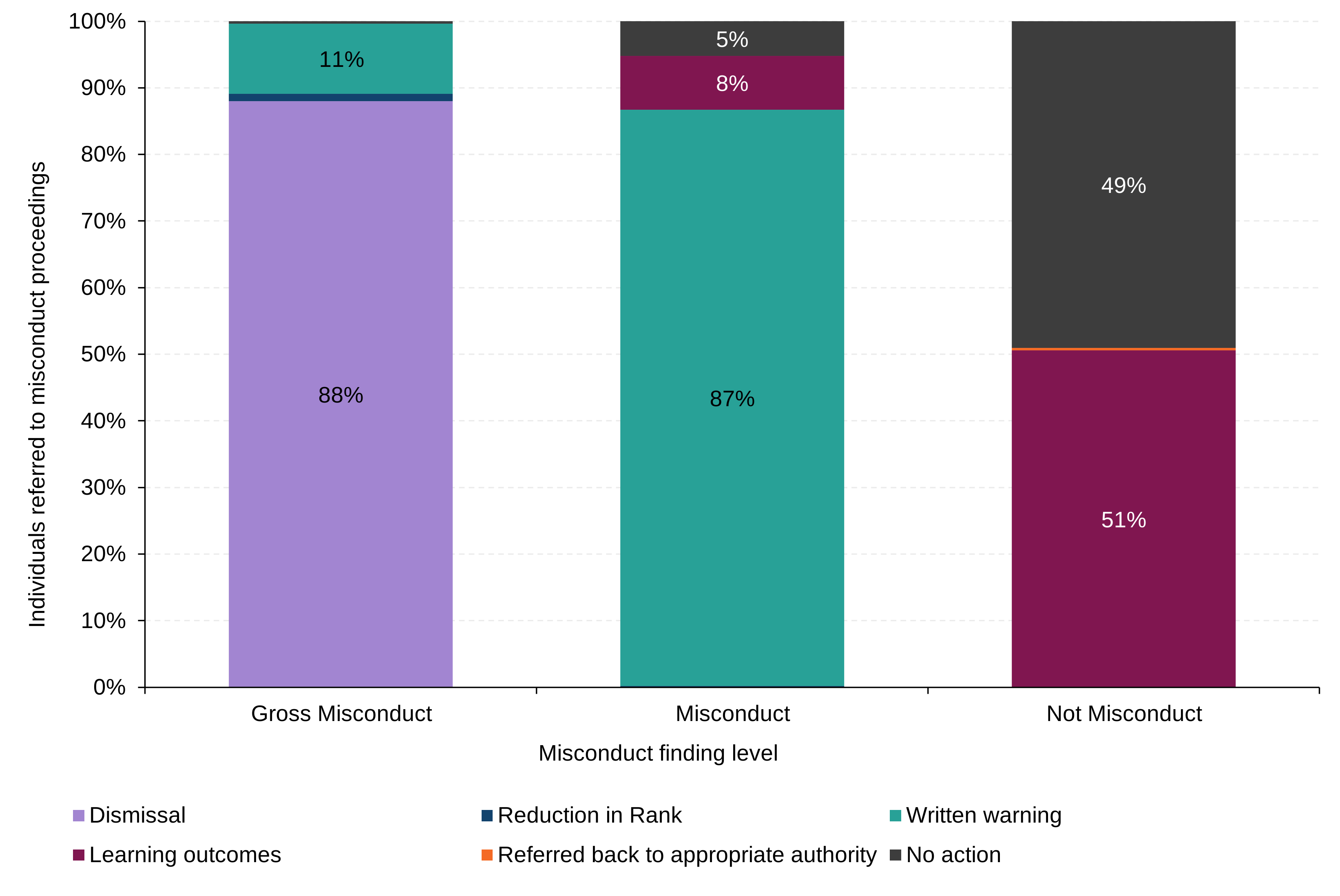
Figure 4.3 shows a breakdown of outcomes given to police officers at proceedings, broken down by misconduct finding level.
Figure 4.3: Outcomes at misconduct proceedings involving police officers, by misconduct finding level, England and Wales, cases finalised year ending 31 March 2025
Notes:
- An individual may be subject to multiple proceedings on different dates. Where this is the case, the individual will be counted per proceeding. For more information on how proceedings are counted see section 4.1 of this publication.
- Some outcomes have been grouped. ‘Dismissal’ includes proceedings involving officers who were no longer in service, who, had they still been in service, ‘would have been dismissed’. ‘Written warning’ includes ‘final written warning’. ‘Learning outcomes’ includes ‘learning from reflection’, ‘reflective practice’ and ‘RPRP’. Full breakdowns are available in the accompanying data tables.
Of officers found to have committed gross misconduct at a hearing or accelerated hearing, 88% were subsequently dismissed (82% for hearings and 94% for accelerated hearings). This is a decrease compared with 91% (86% for hearings and 95% for accelerated hearings) in the year ending 31 March 2024.
The proportion of officers given a written warning following a finding of gross misconduct increased from 8% to 11% over this same period.
Changes to the Police (Conduct) Regulations 2020 came into effect in May 2025. These changes introduced a presumption that an officer should be dismissed where gross misconduct has been proven, unless exceptional circumstances apply. As these changes came into force after 31 March 2025, they do not affect the trends in this bulletin.
Of officers found to have committed misconduct, 87% were given a written warning, the same proportion as the previous year. The proportion referred to learning outcomes increased from 4% to 8%, while the proportion where no action was deemed necessary fell from 8% to 5% over this period.
Where a proceeding does not find an officer has committed misconduct or gross misconduct, appropriate action may still be taken. Around half (51%) of officers not found to have committed misconduct at proceedings received a learning outcome such as the Reflective Practice Review Process. This is similar to the year ending 31 March 2024, when 48% received a learning outcome.
5. Police Appeals Tribunals
5.1 Who can appeal to the Police Appeals Tribunal?
All officers have the right to appeal to the Police Appeals Tribunal (PAT), against any disciplinary finding or disciplinary outcome imposed at a hearing or accelerated hearing. Officers above the rank of chief superintendent may also appeal to the PAT following a misconduct meeting.
Where an officer of chief superintendent rank or below appeals a disciplinary finding or outcome following a misconduct meeting, this is handled under Regulation 45 of the Police (Conduct) Regulations 2020, and is not included in these statistics.
An officer may only appeal on the grounds that:
- the disciplinary finding or outcome was unreasonable
- there is evidence that could not reasonably have been considered at the original hearing which could have affected the finding or outcome, or
- that there was a breach of the regulatory procedures or unfairness which could have affected the finding or outcome
An officer may also make an appeal to the PAT following proceedings held under the Police (Performance) Regulations 2020, however, such appeals are not included in these statistics.
Further guidance about PATs can be found in the section 5.5 of the user guide accompanying this release and the non-statutory section of the statutory guidance issued by the Home Office.
5.2 How many appeals were made to the PAT?
Some differences in how forces record appeals to the PAT on Centurion may exist, leading to potential double-counting and under-counting. This data should therefore be interpreted with caution. The Home Office will continue to work with police forces to understand and improve data quality. For further information see section 3.3 of our user guide.
There were 55 appeals to the PAT for cases finalised in the year ending 31 March 2025. These appeals followed either a misconduct hearing or an accelerated hearing.
Of these, 36 followed a misconduct hearing and 19 followed an accelerated hearing. This equates to 7% of all hearings conducted receiving an appeal, and 4% of all accelerated hearings conducted (excluding cases where the original proceeding was discontinued).
The number of appeals stemming from hearings and accelerated hearings increased from the year ending 31 March 2024 (when there were 38 appeals), however, as a proportion of hearings and accelerated hearings, this remains similar (up slightly from 5.5% to 5.9%).
When an appeal is received, the PAT chair must decide if there are sufficient grounds for appeal. They can dismiss an appeal if they believe it has no real prospect of success, unless there is a compelling reason for it to proceed.
Of the 55 appeals to the PAT, 23 were dismissed by the chair, while 28 were heard by the PAT[footnote 8]. Where the appeal was heard, the majority (22 out of 28) were not upheld, with the remaining 6 appeals upheld.
When an appeal is upheld, the PAT may impose a lesser misconduct finding or outcome or send the case back to the police force for a new proceeding. It may also impose a more severe finding or outcome. However, even if the grounds for an appeal are upheld, the PAT may still decide that the original finding or outcome was appropriate for different reasons to those given during the original proceeding.
Of the 6 upheld appeals, 4 officers were reinstated with less severe action than dismissal, one was referred to a new hearing and for one officer, dismissal was still considered appropriate.
6. Criminal proceedings
6.1 When are allegations referred to criminal proceedings?
Where there is an indication that an officer may have committed a criminal offence, a police force may carry out a criminal investigation. Where there is sufficient evidence, the officer may be subject to criminal proceedings.
Criminal proceedings are separate from misconduct proceedings, as they serve a different purpose and different thresholds apply.
A criminal proceeding determines whether an individual has committed a criminal offence and relies on a burden of proof beyond all reasonable doubt. A misconduct proceeding may determine whether the individual remains suitable to continue as a police officer and relies on the balance of probabilities.
This means that for criminal cases not resulting in conviction or unsuitable for criminal prosecution, the individual can still be subject to misconduct proceedings. Similarly, where cases result in a criminal conviction, the individual can also be subject to misconduct proceedings.
6.2 How many officers faced criminal proceedings?
Data by Police Force Area can be found in the accompanying data tables. Caution should be taken when interpreting these figures, particularly when making comparisons between forces due to differences in recording practices when recording timeliness. For further information about the quality and limitations of timeliness data can be found in section 3.3 of the accompanying user guide.
In the year ending 31 March 2025, there were 323 criminal court charges, involving 189 unique police officers (accounting for 0.1% of the police officer workforce[footnote 9] as at 31 March 2024 ). This represents an increase in proceedings of 42% (from 227) compared to year ending 31 March 2024.
The offence type with the largest number of court charges in year ending 31 March 2025 was ‘sexual offence’, accounting for 26% of all court charges. This is followed by ‘other’ and ‘traffic’ offences, making up 24%, and 17% respectively of total criminal court charges. For further details, see table CR1 of the data tables accompanying this release.
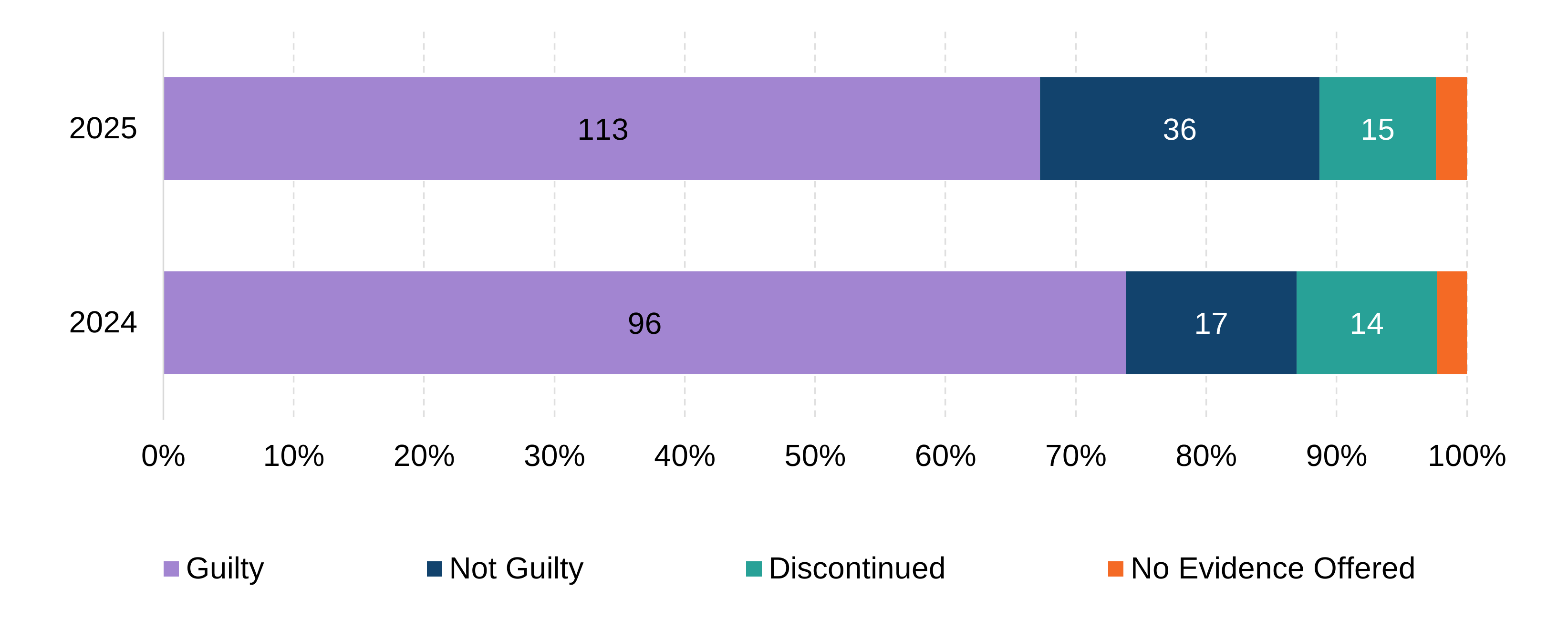
Figure 6.1 shows that among the 168 officers subject to criminal proceedings where the outcome was known, 113 (67%) were found (or pleaded) guilty, and 36 (21%) were found ‘not guilty’. A further 15 (9%) had their proceedings discontinued, and 4 (2%) had no evidence offered.
Although the number of individuals found (or pleading) guilty has risen by 18% compared to the previous year (ending 31 March 2024), their share as a proportion of all outcomes in year ending 31 March 2025 has declined by 7 percentage points compared to the previous year.
Figure 6.1: Number and proportion of outcomes for officers subject to criminal proceedings for cases finalised in years ending 31 March 2024 and 2025, England and Wales
Source: Home Office, ‘Police misconduct, England and Wales, year ending 31 March 2025: data tables’, Table CR1 and Home Office, ‘Police misconduct, England and Wales, year ending 31 March 2024: data tables’, Table CR1
Notes:
- Criminal proceedings involving police officers can occur independently of complaints, conduct matters, or recordable conduct matters. Such cases may not be captured in this data.
- For 21 officers, the outcome was unknown.
7. Timeliness
7.1 How is timeliness measured?
Timeliness measures are calculated by comparing the date a case was received with either the finalisation date (if concluded) or 31 March 2025 (if ongoing). These measures include all calendar days and do not exclude non-working days such as weekends or public holidays.
The metrics reflect the overall duration of each case. A range of factors can influence timeliness, some within, and others outside of, a police force’s control. For example, some cases may be referred for independent investigation and are therefore dependent on processes undertaken by the IOPC, and cases involving criminal charges may depend on action taken by the Crown Prosecution Service (CPS).
In line with the rest of this bulletin, these metrics focus on the timeliness of conduct matters, recordable conduct matters and public complaints investigated subject to Special Procedures only. The IOPC publish information regarding timeliness in the broader public complaints system as a part of their Police Complaints Statistics.
Data by Police Force Area can be found in the accompanying data tables. Caution should be taken when interpreting these figures, particularly when making comparisons between forces due to differences in recording practices when recording timeliness. For further information about the quality and limitations of timeliness data can be found in section 3.3 of the accompanying user guide.
7.2 How long does it take to finalise a misconduct case?
Across the 3 misconduct case types (conduct matters, recordable conduct matters, and complaints investigated subject to Special Procedures) a total of 7,108 misconduct cases involving police officers were finalised in the year ending 31 March 2025.
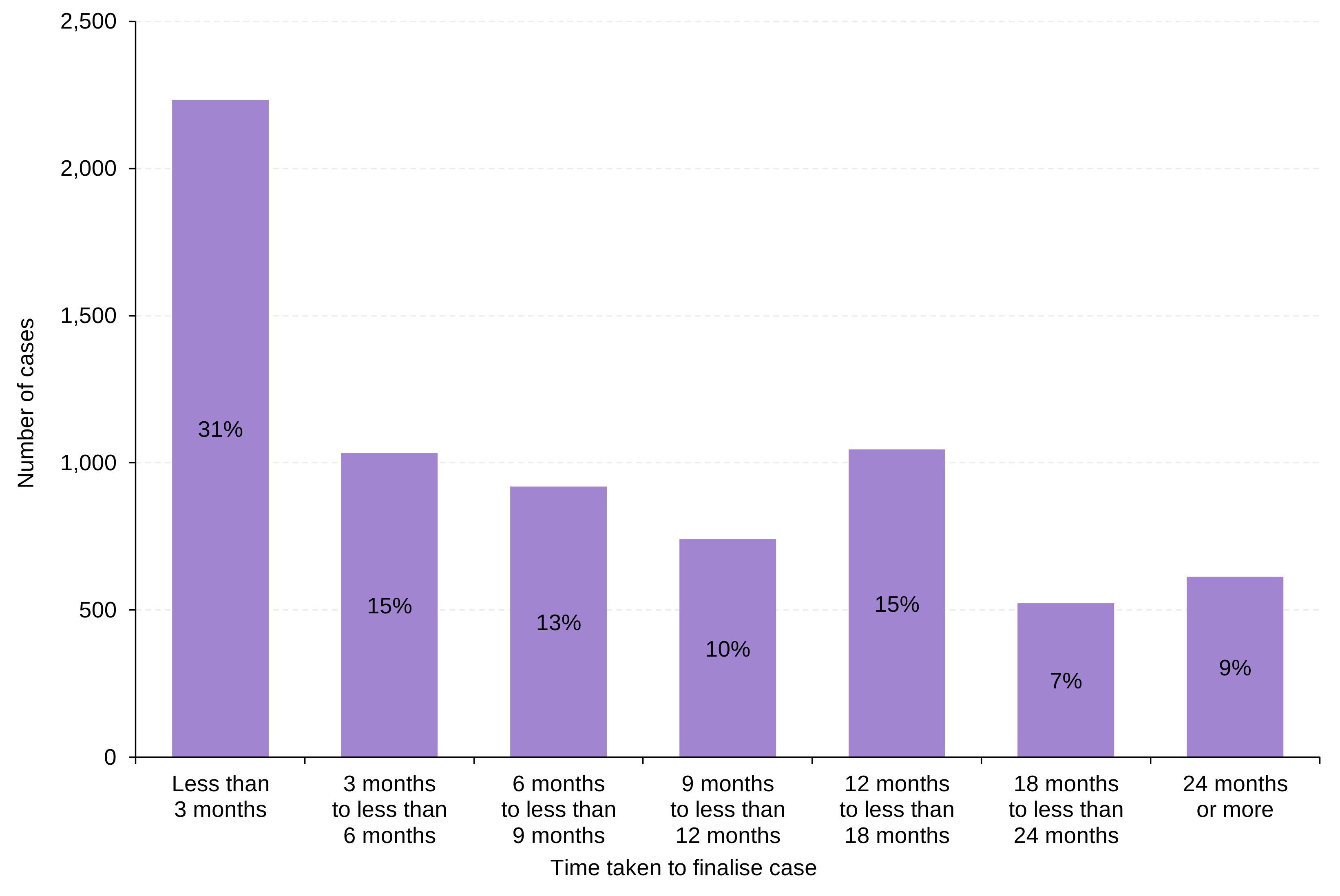
Figure 7.1 shows the amount of time taken to finalise misconduct cases (conduct, recordable conduct, and Special Procedures complaint cases, combined).
Of these 7,108 misconduct cases, 2,233 cases, or almost a third (31%), were finalised within 3 months of being received.
Cumulatively, 46% (3,266 cases) were finalised within 6 months and 69% (4,927 cases) were finalised within 12 months of being received. The remaining 31% took over 12 months to finalise, with 9% taking more than 24 months.
Figure 7.1: Timeliness to finalise misconduct cases involving police officers, cases finalised year ending 31 March 2025, England and Wales
Notes:
- Includes conduct matters, recordable conduct matters and complaints investigated subject to Special Procedures.
The time taken to finalise cases varied by case type and Table 7.1 shows the median number of days to finalise a case, for each case type.
Of the 3 case types, complaints handled subject to Special Procedures took the longest to finalise, taking on average (median) 428 days.
On average, conduct matters took the shortest length of time to finalise, with the median case taking 130 days, while recordable conduct matters took an average of 405 days.
Table 7.1: Median days taken to finalise misconduct cases involving police officers, cases finalised year ending 31 March 2024 and 2025, England and Wales
| Case type | 2024 | 2025 |
|---|---|---|
| Conduct matter | 111 | 130 |
| Recordable conduct matter | 311 | 405 |
| Complaints (Special Procedures) | 413 | 428 |
| All cases | 187 | 210 |
Notes:
- Based on calendar days.
Compared with cases finalised in the year ending 31 March 2024, the average (median) time taken to finalise a case has increased for all 3 case types. Recordable conduct matters saw the largest increase with the median number of days taken to finalise increasing from 311 to 405 days.
Several forces reported that this increase in time taken to finalise cases has been driven by increased attention on closing outstanding historic cases, leading to an increase in the number of cases finalised but a decrease in timeliness. Data on the number of misconduct cases outstanding as at 31 March 2025 shows that 5,625 cases were outstanding, with the number of outstanding cases falling by 7% compared with as at the 31 March 2024. The number of recordable conduct cases outstanding has fallen by 18% over this period, coinciding with this decrease in timeliness.
7.3 How does timeliness differ based on case outcomes?
The average (median) time taken to finalise a misconduct case varied based on action taken and misconduct finding.
Time taken to finalise by whether the case was referred to proceedings
While a misconduct case involving a police officer took an average of 210 days to finalise, cases which did not involve a misconduct proceeding were, on average, finalised quicker (a median of 140 days to finalise). Cases involving at least one misconduct proceeding on the other hand took longer to finalise, a median average of 478 days.
Of the 1,598 cases finalised which involved a proceeding, 8% (125 cases) were finalised within 6 months, 34% (542 cases) were finalised within 12 months and 24% (376 cases) took over 24 months to finalise.
By comparison, of the 5,510 cases which did not include a misconduct proceeding, over half (57%, or 3,141 cases) were finalised within 6 months, 80% (4,385 cases) were finalised within 12 months and 4% (237 cases) took over 24 months to finalise.
Time taken to finalise by whether misconduct was found
Cases in which no individuals were found to have committed misconduct (including gross misconduct), were also on average finalised more quickly than those resulting in at least one finding of gross misconduct.
For the 1,330 cases where at least one finding of misconduct was given at a proceeding, the median number of days to finalise the case was 473, compared with 154 days for the 5,778 cases in which no misconduct was proven.
Of cases where at least one allegation of misconduct was proven at a proceeding, 9% (117 cases) were finalised within 6 months and 35% (469 cases) within 12 months, while 24% (315 cases) took over 24 months. This compares with 54% (3,149 cases), 77% (4,458 cases), and 5% (298 cases) respectively for cases in which no individuals were found to have committed misconduct or gross misconduct.
7.4 How long have outstanding misconduct cases been open?
Across the 3 case types, a total of 5,625 outstanding misconduct cases were open as at 31 March 2025.
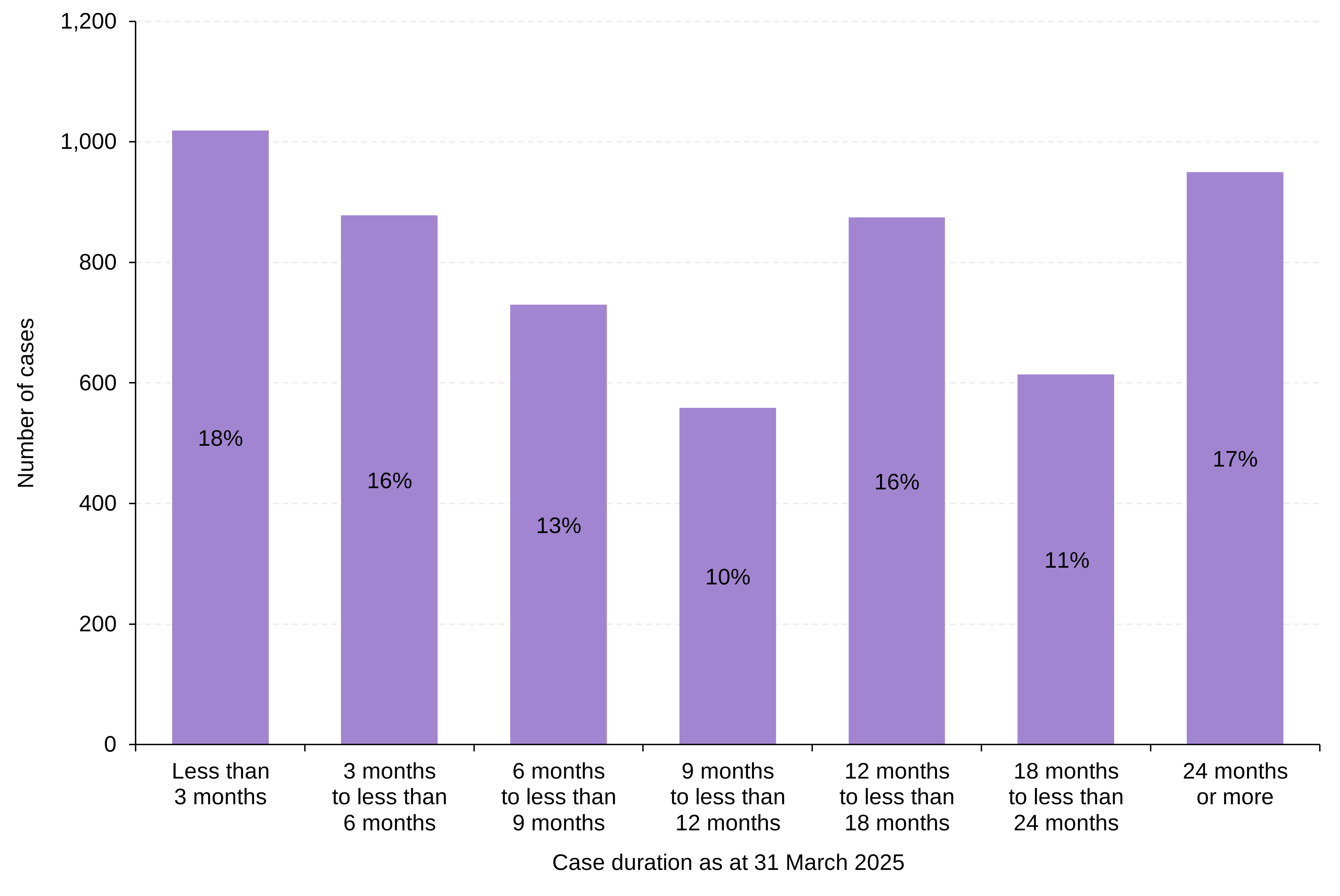
Figure 7.2 shows the duration that these cases have been open for as at 31 March 2025.
Around one third (34% or 1,897 cases) of outstanding cases had been open for less than 6 months as at 31 March 2025, and a further 23% had been open between 6 and 12 months.
A total of 950 outstanding cases had been open for more than 2 years as at 31 March 2025, equivalent to 17%.
Figure 7.2: Case duration of misconduct cases involving police officers, cases outstanding as at 31 March 2025, England and Wales
Notes:
- Includes conduct matters, recordable conduct matters and complaints investigated subject to Special Procedures.
Although the volume of outstanding cases has fallen by 7% compared with a year previous, the average (median) case duration of outstanding cases has increased from 262 to 302 days.
Increases in the average case duration can be seen across all 3 case types, as shown in table 7.2.
Table 7.2: Average (median) case duration (days), misconduct cases involving police officers, cases outstanding as at 31 March 2024 and 2025, England and Wales
| Case type | 31 March 2024 | 31 March 2025 |
|---|---|---|
| Conduct matter | 188 | 224 |
| Recordable conduct matter | 334 | 426 |
| Complaints (Special Procedures) | 347 | 417 |
| All cases | 262 | 302 |
Notes:
- Based on calendar days.
8. Suspensions
8.1 When may an officer be suspended?
Under the Police (Conduct) Regulations 2020, an officer may be suspended, with pay, while subject to either conduct matters, recordable conduct matters, or complaints handled under Schedule 3.
An officer can be suspended when either: a) an investigation may be prejudiced unless the officer is suspended; or b) it is within the public interest given the nature of the allegation and any other relevant considerations. The police force can only suspend an officer if it deems it inappropriate to temporarily redeploy the officer to alternative duties or locations.
8.2 How many officers are suspended?
Direct comparisons with data published as a part of the Home Office Police workforce statistical series should be made with caution, due to recording differences. The Home Office continues to work with police forces to better understand these differences. For more information see section 3.3 of the user guide accompanying these statistics.
As at 31 March 2025, there were 923 open suspensions involving police officers. This represents a 2% decrease compared to the 941 suspensions in place as at 31 March 2024. During the year ending 31 March 2025, 726 new suspensions commenced, while 744 suspensions were concluded.
8.3 How long are officers suspended for?
An officer may be suspended at any point whilst a case remains open, providing the conditions described in section 8.1 above are met. These conditions must be reviewed every 4 weeks.
A suspension must end either on the date when it has been determined that the officer should not be referred to misconduct proceedings, or once any such misconduct proceedings have concluded.
For these statistics, suspension length has been calculated in calendar days. In some cases, the suspension end date was not recorded on Centurion. Further information can be found in section 3.3 of our user guide.
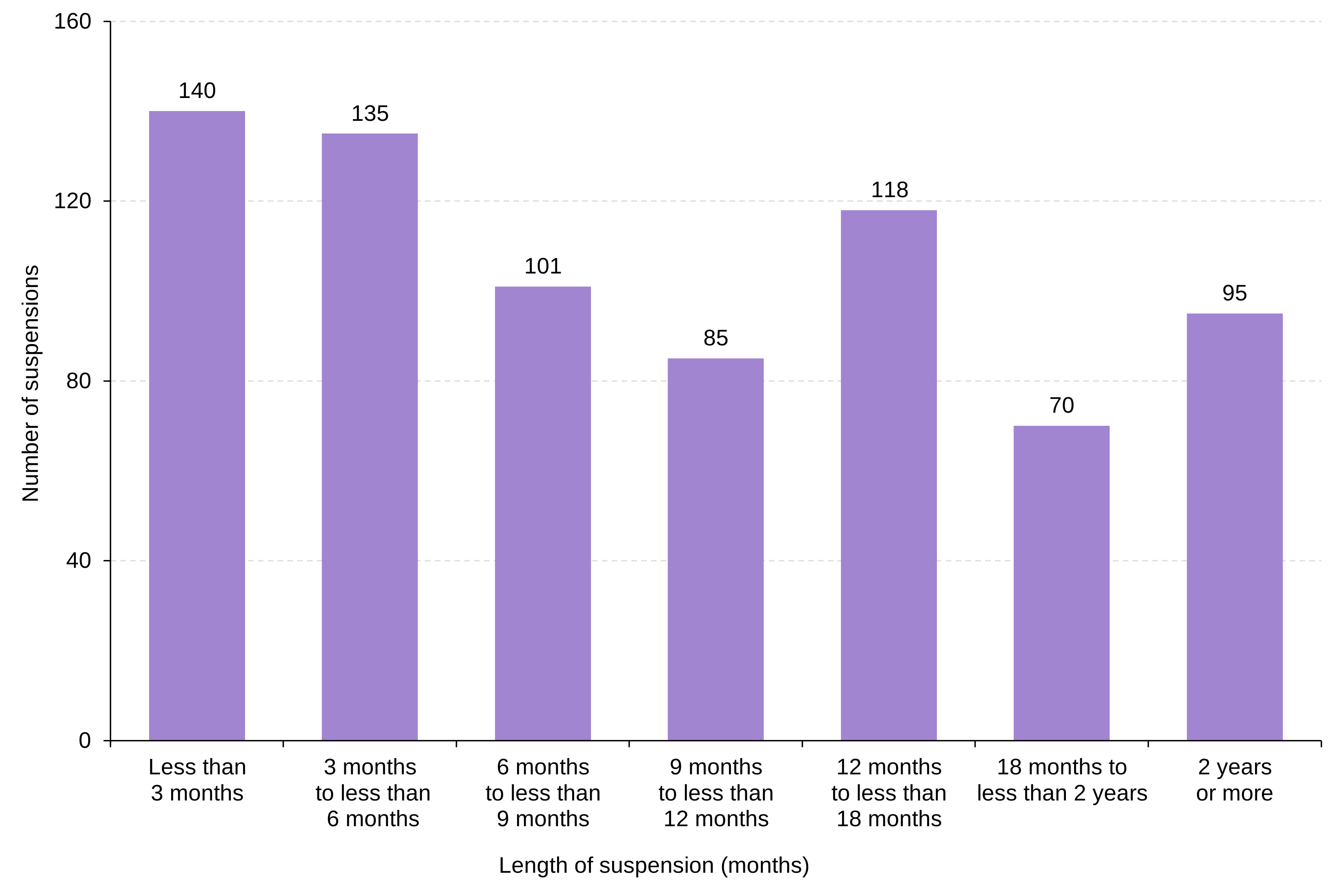
The average (median) suspension length for police officers during the year ending 31 March 2025 was 273 days, with 62% of all suspensions lasting less than a year. Overall, the majority of suspensions (87%) lasted less than 2 years. Figure 8.1 shows the distribution of suspensions, grouped by duration in months.
Figure 8.1: Duration of police officer suspensions (in months), for suspensions concluding in year ending 31 March 2025, England and Wales
Notes:
- Based on calendar days.
9. Individuals
9.1 How many individuals were subject to at least one misconduct allegation?
An individual police officer may be subject to multiple allegations of misconduct, (including across multiple case types) in a single year. Across the 15,843 conduct, recordable conduct and Special Procedures complaints allegations, a total of 8,031 distinct police officers (including special constables)[footnote 10] were involved in at least one allegation. This equates to an average of 2.0 allegations per officer identified.
As a proportion of the 155,886 police officers (including special constables) in post as at 31 March 2024, this is equivalent to 5.2% of the overall workforce.
The number of distinct individual police officers subject to at least one allegation has increased by 16% compared with cases finalised in the year ending 31 March 2024 (from 6,950 police officers or 4.4% of the workforce).
Table 9.1 shows the number of distinct police officers involved in at least one conduct, recordable conduct, or Special Procedures complaint finalised in the year ending 31 March 2025.
Table 9.1: Distinct individual police officers subject to misconduct allegations, by case type, cases finalised years ending 31 March 2024 and 2025, England and Wales
| Case type | 2024 | 2025 | % change |
|---|---|---|---|
| Complaint (Special Procedures) | 859 | 1,047 | 22% |
| Conduct Matters | 4,486 | 5,446 | 21% |
| Recordable Conduct Matters | 1,870 | 1,869 | 0% |
Source: Home Office, ‘Police misconduct, England and Wales, year ending 31 March 2025: data tables, Tables PC1b, CM1 and RC1 and Home Office, ‘Police misconduct, England and Wales, year ending 31 March 2024: data tables, Tables PC1b, CM1 and RC1
Notes:
- As an individual may be involved in multiple cases of different types, the number of individuals across the 3 case types sums to more than 8,031.
Compared with the previous year, the number of police officers subject to at least one Special Procedures complaint or conduct matter allegation increased (by 22% and 21% respectively), while the number of officers subject to at least one recordable conduct allegation remained similar.
9.2 Who faces misconduct allegations, by protected characteristics?
Information on the protected characteristics of officers subject to allegations and referred to misconduct proceedings are given below (where available). Where this information is not available, individuals have been recorded as ‘unknown’. This may include individuals who have not self-declared their protected characteristics on their force human resource system. Gender is not known for 0.2% of all identified individuals involved in misconduct allegations, ethnicity is not known for 4% of individuals and age is not known for 1% of individuals. Further information about the quality of protected characteristics data can be found in section 3.3 of the accompanying user guide.
Comparisons in this bulletin to the protected characteristics of all police officers (headcount) employed by police forces in England and Wales have been sourced from the ‘Police workforce, England and Wales’ publication series.
Further protected characteristic breakdowns by gender, ethnicity, and age are published in the data tables accompanying this publication, including:
- the number of distinct individuals subject misconduct allegations, by case type (in tables PC7 to PC9, tables CM7 to CM9 and tables RC7 to RC9 of the data tables accompanying this publication)
- the number of allegations by case to answer decision and action taken (in the misconduct allegations by gender, ethnicity, and age open data tables)
- the number of officers who faced proceedings by proceeding type, misconduct finding level, and outcome (in the misconduct proceedings by gender, ethnicity, and age open data tables)
Gender
Although these statistics report on ‘gender’, it is likely the Centurion system contains a mix of data on gender and sex (due to differences in user input). For the purpose of these statistics, we are reporting the data in the format it was intended to be collected by the Centurion system. For further information about the quality and limitations of the data, see section 3.2 of the accompanying user guide.
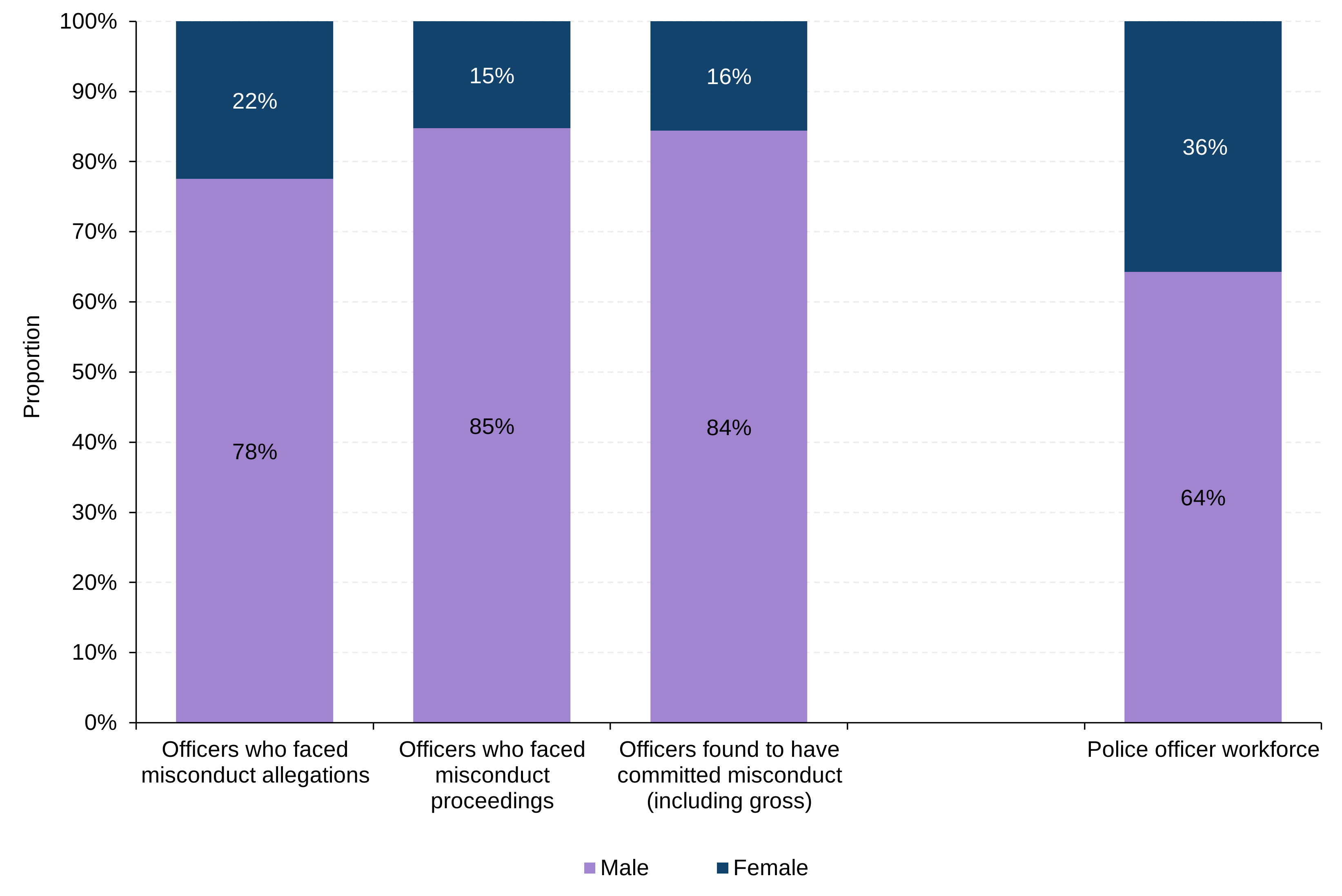
Figure 9.1 shows the gender breakdown of individuals at 3 stages: those facing misconduct allegations, those facing misconduct proceedings, and those found to have committed misconduct (including gross misconduct).
Across all 3 of these stages, males are represented at a higher rate than in the police officer workforce.
Figure 9.1: Gender of police officers subject to an allegation, proceeding, and finding of misconduct, in England and Wales, cases finalised year ending 31 March 2025
Source: Home Office, ‘Police misconduct, England and Wales, year ending 31 March 2025: misconduct proceedings by gender open data tables, and Home Office, ‘Police workforce, England and Wales, 31 March 2025: workforce open data tables’
Notes:
- Excludes individuals where gender is unknown (14 individuals who faced allegations and 1 individual who faced proceedings).
- Officers who faced more than one misconduct allegation (conduct matters, recordable conduct matters, and Special Procedures complaints) are counted once. Breakdowns by case type can be found in the data tables accompanying this publication.
- Police officer workforce data includes special constables and is counted on a headcount basis as at 31 March 2024.
Of the identifiable police officers who were subject to at least one misconduct allegation finalised in the year ending 31 March 2025, 78% were male and 22% were female.
Compared with the overall police officer workforce, where male officers made up 64%, male officers were more likely to be subject to a misconduct allegation. Similarly, males made up a higher proportion of officers facing misconduct proceedings (85%) and a higher proportion of those found to have committed misconduct (84%).
Ethnicity
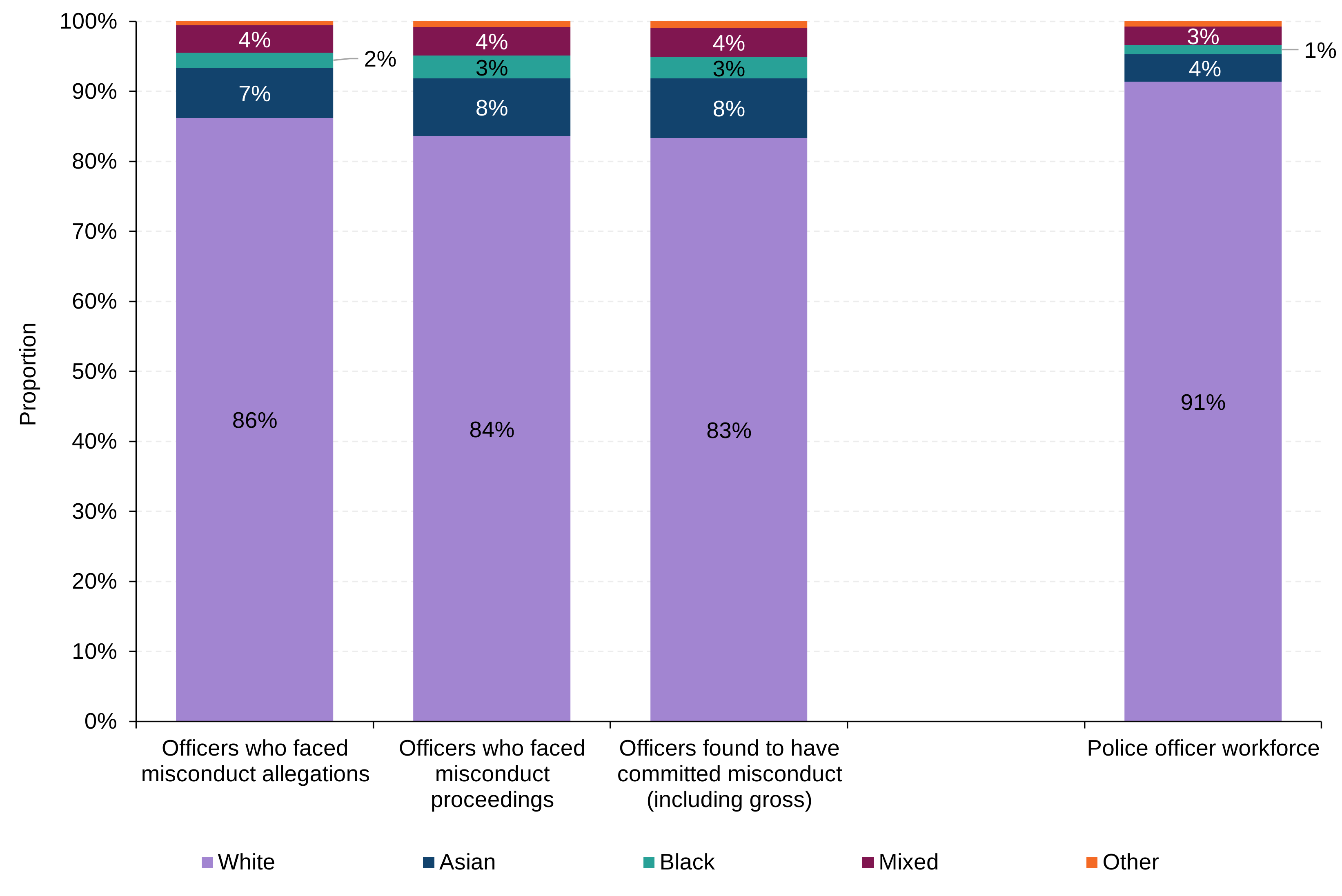
Figure 9.2 shows the ethnicity breakdown of individuals at 3 stages: those facing misconduct allegations, those facing misconduct proceedings, and those found to have committed misconduct (including gross misconduct).
The Asian, Black, and Mixed groups all saw higher representation in the misconduct system than in the overall police officer workforce.
Figure 9.2: Ethnicity of police officers subject to an allegation, proceeding, and finding of misconduct, in England and Wales, cases finalised year ending 31 March 2025
Source: Home Office, ‘Police misconduct, England and Wales, year ending 31 March 2025: misconduct proceedings by ethnicity open data tables, and Home Office, ‘Police workforce, England and Wales, 31 March 2025: workforce open data tables’
Notes:
- Excludes individuals where ethnicity is unknown (354 individuals who faced allegations and 70 individual who faced proceedings).
- Officers who faced more than one misconduct allegation (conduct matters, recordable conduct matters, and Special Procedures complaints) are counted once. Breakdowns by case type can be found in the data tables accompanying this publication.
- Police officer workforce data includes special constables and is counted on a headcount basis as at 31 March 2024.
Of the identifiable police officers who were involved in at least one misconduct allegation finalised in the year ending 31 March 2025, 86% were White, 7% Asian, 2% Black, and 4% Mixed ethnicity, compared with 91%, 4%, 1%, and 3% in the workforce respectively.
This difference in representation increases slightly from the allegation stage to the proceeding stage, with officers belonging to a minority ethnic group (excluding White minorities) making up a higher proportion of individuals who faced proceedings (16%) than at the allegation stage (14%).
Age
Data on age is calculated as at the date the case was received.
Figure 9.3 shows the age breakdown of individuals at 3 stages: those facing misconduct allegations, those facing misconduct proceedings, and those found to have committed misconduct (including gross misconduct).
Figure 9.3: Age of police officers subject to an allegation, proceeding, and finding of misconduct, in England and Wales, cases finalised year ending 31 March 2025
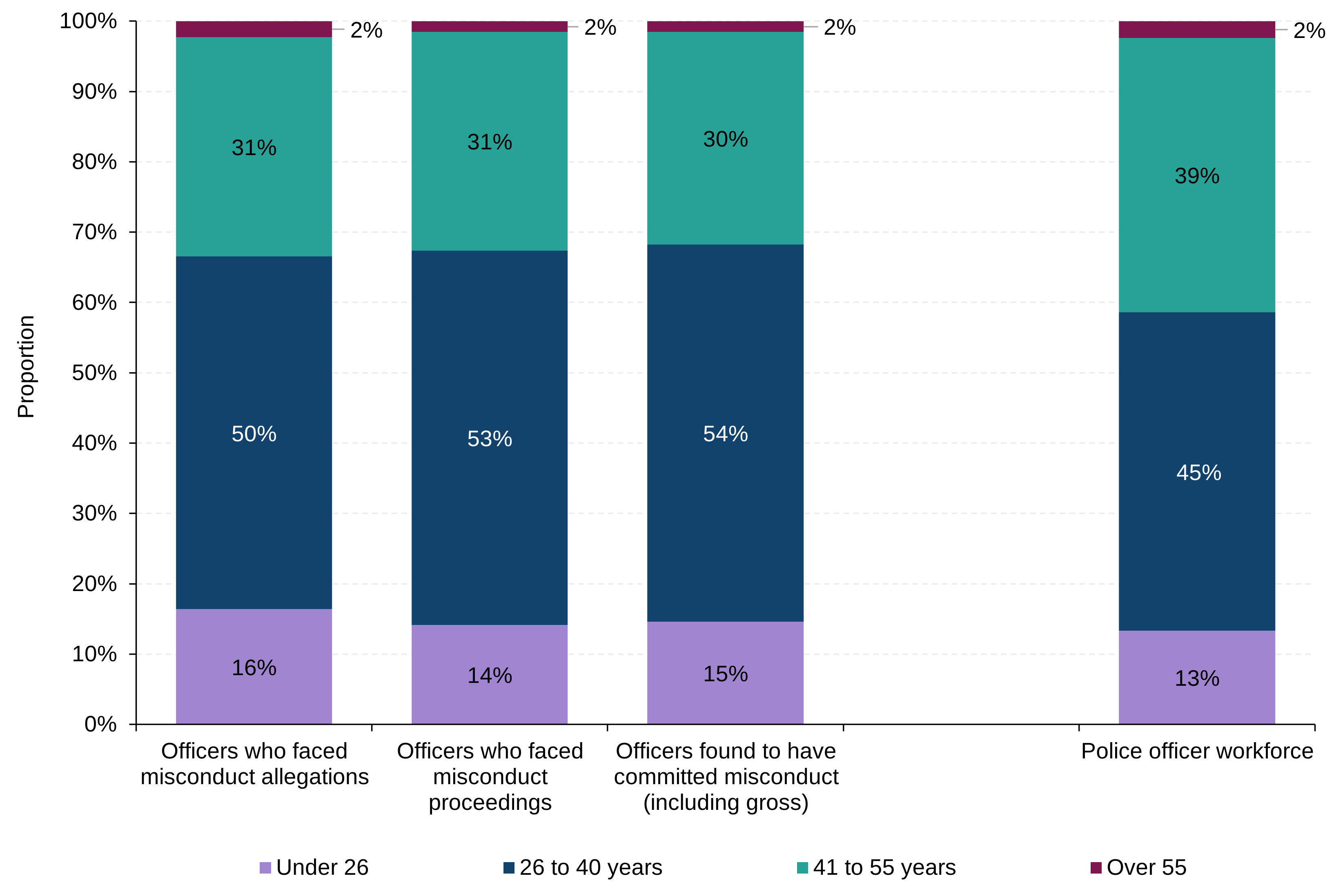
Source: Home Office, ‘Police misconduct, England and Wales, year ending 31 March 2025: misconduct proceedings by age open data tables, and Home Office, ‘Police workforce, England and Wales, 31 March 2025: workforce open data tables’
Notes:
- Excludes individuals where ethnicity is unknown (93 individuals who faced allegations and 7 individual who faced proceedings).
- Officers who faced more than one misconduct allegation (conduct matters, recordable conduct matters, and Special Procedures complaints) are counted once. Breakdowns by case type can be found in the data tables accompanying this publication.
- Police officer workforce data includes special constables and is counted on a headcount basis as at 31 March 2024.
Those aged under 26 and those aged 26 to 40, both saw higher representation in the misconduct system than in the overall police officer workforce, while those aged 41 to 55 saw lower representation.
Of the police officers who were subject to at least one misconduct allegation finalised in the year ending 31 March 2025, 16% were under 26, 50% aged 26 to 40, 31% aged 41 to 55, and 2% over 55. This compares with 13%, 45%, 39%, and 2% in the workforce respectively.
Officers aged 26 to 40 made up a slightly larger share of those who faced misconduct proceedings (53%) and those found to have committed misconduct (54%) than of those with misconduct allegations (50%).
10. Police staff
Staff data should be used with caution, as it may be incomplete and not directly comparable across forces. For more information, see section 3.3 of the user guide accompanying these statistics.
The Conduct Regulations apply only to police officers (including special constables). Members of police staff are governed by misconduct procedures adopted locally by forces. There may be variances between forces in the procedures adopted for handling conduct matters against police staff.
Whilst most forces use Centurion to record conduct matters against police staff, for some forces, police staff discipline matters are dealt with by human resource (HR) departments rather than Professional Standards Departments (PSDs). Matters dealt with by HR departments may not be recorded on Centurion. Some PSDs will record conduct matters against staff on Centurion even though their department is not investigating the case.
10.1 Summary of misconduct involving police staff
| Cases finalised in the year ending 31 March 2025: | Comparison to year ending 31 March 2024: |
|---|---|
| A total of 3,488 misconduct allegations involving police staff were finalised | The number of misconduct allegations finalised has increased by 23% (from 2,841) |
| Of all misconduct allegations, 34% (1,183 allegations) were determined to have sufficient evidence upon which a disciplinary panel could make a finding of misconduct (known as a “Case to answer”) | The proportion of allegations with a case to answer has decreased compared with the year ending 31 March 2024 (42%) |
| A total of 488 members of police staff were referred to a misconduct proceeding, equivalent to 0.5% of the overall workforce | The number of members of police staff referred to misconduct proceedings has increased by 26% (from 386) |
| Of these individuals referred to proceedings, 432 (89%) resulted in a finding of misconduct or gross misconduct | The number of police staff individuals found to have committed misconduct or gross misconduct has increased by 25% (from 345) |
| Following a proceeding, 253 members of police staff were dismissed, equivalent to 0.3% of the workforce | In year ending 31 March 2024, as a proportion of the overall workforce, police officer dismissals made up a similar proportion (0.2%) |
Full data on misconduct allegations and proceedings involving police staff can be found in the accompanying ‘Police misconduct, England and Wales: year ending 31 March 2025’ data tables.
Feedback
The data is designated ‘Official Statistics in Development’ to acknowledge that it is undergoing development and should be interpreted with caution. With each publication we continue to expand the scope of these statistics and have created a user engagement survey to allow users the opportunity to give feedback and shape future publications.
Alternatively, any user feedback or enquiries may be submitted via email to policingstatistics@homeoffice.gov.uk
Press and media enquiries should be made through the Home Office news desk: 0300 123 3535
-
Police workforce functions data is published as a part of Home Office Police Workforce statistics. Workforce functions data is counted a Full-Time Equivalent (FTE) basis. The Professional Standards function includes those dealing with complaints and discipline issues as well as Force Vetting Units. ↩
-
Comparisons are based on workforce figures as at 31 March 2024 as shown in the Home Office Police Workforce statistical series, reflecting the start of the financial year ending March 2025. These figures should be interpreted with caution, as allegations may span multiple years and involve officers who join or leave the workforce during that period. For further information see section 3.2 of the user guide accompanying this publication. ↩
-
Practice requiring improvement refers to underperformance or conduct not amounting to misconduct or gross misconduct, which falls short of the expectations of the public and the police service. ↩
-
Comparisons are based on workforce figures as at 31 March 2024 as shown in the Home Office Police Workforce statistical series, reflecting the start of the financial year ending March 2025. These figures should be interpreted with caution, as allegations may span multiple years and involve officers who join or leave the workforce during that period. For further information see section 3.2 of the user guide accompanying this publication. ↩
-
Comparisons are based on workforce figures as at 31 March 2024 as shown in the Home Office Police Workforce statistical series, reflecting the start of the financial year ending March 2025. These figures should be interpreted with caution, as allegations may span multiple years and involve officers who join or leave the workforce during that period. For further information see section 3.2 of the user guide accompanying this publication. ↩
-
For cases where an officer has a case to answer for gross misconduct, the appropriate authority can refer the individual who has since left the service to proceedings. If it is determined that they would have been dismissed had they still be serving, they are placed on the College of Policing Barred List. ↩
-
Comparisons are based on workforce figures as at 31 March 2024 as shown in the Home Office Police Workforce statistical series, reflecting the start of the financial year ending March 2025. These figures should be interpreted with caution, as allegations may span multiple years and involve officers who join or leave the workforce during that period. For further information see section 3.2 the user guide accompanying this publication. ↩
-
In the remaining 4 cases, the result and outcome of an appeal was unknown. ↩
-
Comparisons are based on workforce figures as at 31 March 2024 as shown in the Home Office Police Workforce statistical series, reflecting the start of the financial year ending March 2025. These figures should be interpreted with caution, as allegations may span multiple years and involve officers who join or leave the workforce during that period. For further information see section 3.2 of the user guide accompanying this publication. ↩
-
In a small number of allegations (67 allegations), the investigating force was not able to identify the police officer(s) involved. ↩