Near to real-time suspected suicide surveillance (nRTSSS) for England: data to October 2025
Updated 29 May 2026
Applies to England

© Crown copyright 2026
This publication is licensed under the terms of the Open Government Licence v3.0 except where otherwise stated. To view this licence, visit nationalarchives.gov.uk/doc/open-government-licence/version/3 or write to the Information Policy Team, The National Archives, Kew, London TW9 4DU, or email: psi@nationalarchives.gov.uk.
Where we have identified any third party copyright information you will need to obtain permission from the copyright holders concerned.
This publication is available at https://www.gov.uk/government/statistics/near-to-real-time-suspected-suicide-surveillance-nrtsss-for-england-data-to-october-2025/near-to-real-time-suspected-suicide-surveillance-nrtsss-for-england-data-to-october-2025
This statistical bulletin contains sensitive content which refers to details on deaths by suspected suicide.
If you are struggling to cope, please call the Samaritans for free on 116 123 (UK and the Republic of Ireland) or contact other sources of support, such as those listed on the NHS help for suicidal thoughts webpage. Support is available around the clock, every day of the year, providing a safe place for you, whoever you are and however you are feeling.
Any onward reporting of this data should consider following the Samaritans’ media guidelines on the reporting of suicide because of the potentially damaging consequences of irresponsible reporting. In particular, the guidelines advise on terminology and include links to sources of support for anyone affected by the themes in this report.
Main findings
This statistical bulletin presents data from October 2023 to October 2025. It shows that:
- there is no statistically significant difference between the suspected suicide directly standardised rate (DSR) in October 2025 (9.7 deaths per 100,000), compared to September 2025 (10.6 per 100,000) or August 2025 (10.0 per 100,000)
- the suspected suicide rate in October 2025 in males (15.3 per 100,000) remains higher than females (4.3 per 100,000)
- the age group with the highest rate of suspected suicide in October 2025 remains those aged 45 to 64 (12.5 per 100,000), followed by people aged 25 to 44, then those aged 10 to 24, with the lowest rate in those aged 65 and over (5.3 per 100,000) - there is no statistically significant change compared to recent months across these age groups
- the most common method type for deaths by suspected suicide in the latest quarter (July to September 2025) remains hanging, suffocation and strangulation (58.1%), followed by poisoning (21.8%), fall and fracture (5.8%), jumping or lying in front of a moving object (5.0%), sharp object (2.9%), drowning (2.1%) and other or unknown (4.3%)
To ensure rates are based on as up-to-date populations as possible, each summer a switch is made to the latest available mid-year population estimates (2024), see the accompanying methodology document. Because of this change, in the current report, rates presented from June 2025 onwards are based on a larger population than the rates for May 2025 and earlier. This population increase has contributed to fewer police force areas (PFAs) being included in DSR reporting for those months. Which means that less of England’s population is covered in reporting - around 60% from June 2025 compared to around 80% in the months prior to June 2025.
These statistics use between 58% and 87% of records received from the police forces to calculate monthly rates of deaths by suspected suicide. However, as the data is not exhaustive and due to wider data quality factors, this report should not be used as a measure of absolute numbers of deaths by suspected suicide in England. For further details on inclusion criteria and approach used to calculate rates, see the accompanying methodology document.
Introduction
This statistical bulletin is based on suspected suicides reported by date of death by local police. It complements, but does not replace, officially registered deaths by suicide (certified by a coroner) reported by the Office of National Statistics (ONS). ONS also present some suicide statistics based on date of occurrence, but these are less up-to-date than nRTSSS reporting.
The purpose of this statistical bulletin is to provide an early warning system for indications of changes in trends in suicide through analysis of data on suspected suicide. This data can inform and enable a more timely and targeted prevention response to changing patterns in suspected suicides at a local and national level.
This statistical bulletin draws upon suspected suicide data from across England supplied by PFAs submitting to the National Police Chiefs’ Council (NPCC) Suicide Prevention Portfolio. The designation ‘suspected suicide’ is provided by the police. The term is used because the cause of death has not yet been confirmed by coroner’s inquest. When sudden and unexpected death occurs, the suspected cause of death is allocated by the attending police officer. There is then a review, based on guidance from NPCC, before a death is reported as a suspected suicide.
This bulletin presents data at England level. It includes rates of death by suspected suicide and breaks the data down by age group and sex. This data is presented as monthly DSRs for the most recent available 25 months. This enables a comparison of the latest months with the same month in previous years.
The bulletin also includes suspected suicide method, grouped by category. This too has not been confirmed by coroner’s inquest and should be viewed as provisional. This data is shown as proportions of all suspected suicides and is presented as a snapshot figure for the latest available quarter.
The data outputs from the nRTSSS work programme are primarily for national and local organisations working on suicide prevention.
About these statistics
To enhance understanding of this bulletin, some important terms and aspects of the work are explained below. For further details on how these terms are defined and used, and on how results were generated, see the accompanying methodology document.
Data presented in this bulletin is based on month and year of death occurrence, which allows monitoring of monthly and seasonal variation.
Not all PFAs submit records each month and some PFA submissions are not used in monthly rates reporting. For records from a PFA to be included, there must be a submission for that month, and it must meet the ‘observed compared to expected’ criteria. This means the number of deaths by suspected suicide are comparable (within a tolerance range) with the number that would be expected, based on recent deaths by suicide for that area (as collected by ONS). These inclusion criteria are used for the purpose of calculating population-based statistics only. This is because sensitivity analysis indicated that inclusion of PFAs below the expected level may result in an underestimation of monthly suspected suicide rates.
The monthly data is presented as DSRs to enable comparison between groups and over time while accounting for differences in the age structure of populations. Due to relatively small numbers, identified trends in deaths may not have statistical significance. Within this bulletin, where a change is viewed as potentially important, comments are included in the text accompanying the figure. To help interpretation of monthly rates, a range is included based on upper and lower confidence intervals (CIs) for a 6-month rolling DSR (explained in the methodology document).
It is important to note that as rates of death by suicide and suspected suicide vary across the country, while this surveillance is not yet based on all of England, figures will be affected by which PFAs are included. For example, if data from some areas where rates are lower are included, while data from other areas with higher rates are excluded, the effect will be that the England rate may appear low.
There may be some change in the contributing PFAs between months, and therefore some variation in the population that figures are based on. This should be considered when interpreting the changes over time presented in figures 1 to 7. This is recognised in reporting by showing the trend with a dotted rather than solid line. Further details to help with interpretation of trends are available in the ‘Monthly and quarterly reporting explained’ section of this bulletin and the accompanying methodology document.
Data about method of suspected suicide is presented by quarter, because the number of method groups would lead to small number suppression if presented monthly. All records received are included in quarterly presentation.
Production of this statistical bulletin is based on best available data. However, there is a risk of some missing cases, particularly in the most recent months. Any delayed records are included and estimates updated in the earliest possible publication.
Publication updates
This statistical bulletin is published every 3 months. Each new publication includes data for the most recent time period and any delayed records for previously reported months.
The January 2026 report includes:
- new monthly suspected suicide rates for August 2025 to October 2025
- additional data for the months prior to August 2025, due to delayed submissions by some PFAs
- recalculated monthly rates for the months affected by delayed submissions
- new data on proportions by method type for quarter 3 (July to September) 2025
The data tables associated with this report are provided as an accessible spreadsheet.
Further analysis
Data in this section is presented for persons aged 10 and over.
Monthly rates
This section presents monthly rates of death by suspected suicide in England for the period October 2023 to October 2025. The rates are presented as DSRs per 100,000 population.
Monthly rates are presented for:
- persons
- sex as female or male
- age groups as follows:
- 10 to 24 years
- 25 to 44 years
- 45 to 64 years
- 65 years and over
Between October 2023 and October 2025, out of 8,453 deaths by suspected suicide:
- 6,314 (74.7%) were in males
- 2,139 (25.3%) in females
- 867 (10.3%) in people aged 10 to 24
- 3,098 (36.6%) in people aged 25 to 44
- 3,245 (38.4%) in people aged 45 to 64
- 1,243 (14.7%) in people aged 65 and over
In October 2025, out of 253 deaths:
- 195 (77.1%) were in males
- 58 (22.9%) in females
- 36 (14.2%) in people aged 10 to 24
- 96 (37.9%) in people aged 25 to 44
- 93 (36.8%) in people aged 45 to 64
- 28 (11.1%) in people aged 65 and over
Figure 1: suspected suicide rates in England, persons, October 2023 to October 2025

Source: NPCC.
Figure 1 shows that:
- of the 3 months added to reporting, the highest rate is for September 2025 (10.6 deaths per 100,000 population) followed by August 2025 (10.0) and October 2025 (9.7)
- when comparing the most recent 3 months to the same period in the previous years, October 2025 is similar to 2024 but lower than 2023, both September and August 2025 are similar to 2024 - these differences are not statistically significant
- within the reporting period, January 2024 (12.6) has the highest rate followed by July 2025 and October 2023 (both 12.3)
- the 6-month DSR range shows a decreasing trend at the beginning of the reporting period
This data is available in table 1 of the accompanying data tables on the Near to real-time suspected suicide surveillance for England: data to October 2025 page.
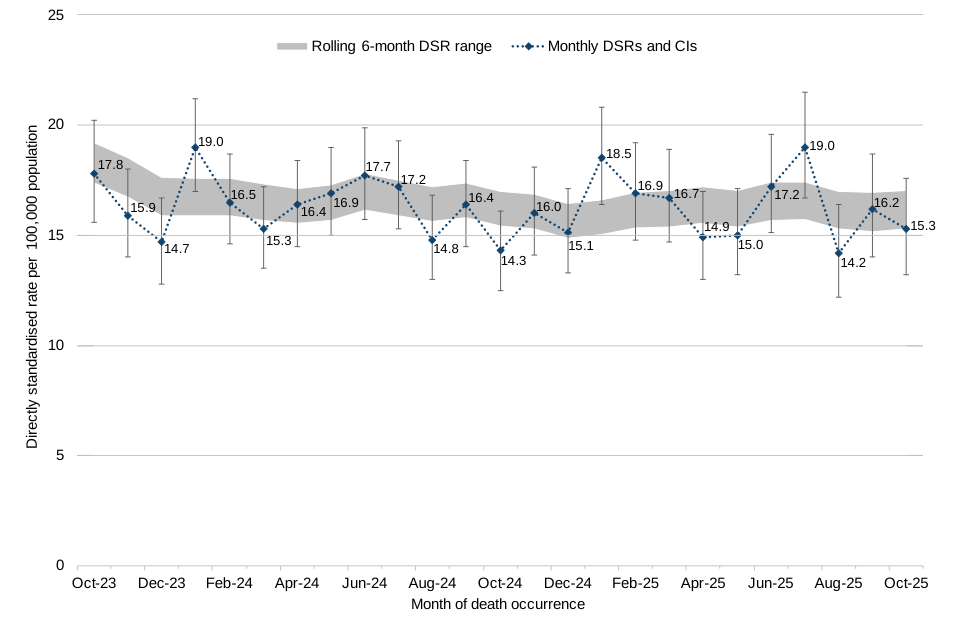
Figure 2: suspected suicide rates in England, males, October 2023 to October 2025
Source: NPCC.
Figure 2 shows that:
- of the 3 months added to reporting, the highest rate is for September 2025 (16.2 deaths per 100,000 males) followed by October 2025 (15.3) and August 2025 (14.2)
- the rate for August 2025 is the lowest in the 25-month period, it is statistically significantly lower than the previous month (July 2025) and January 2024, but no other month
- when comparing the most recent 3 months to the same period in the previous years, October 2025 is similar to 2024 but lower than 2023, both September and August 2025 are similar to 2024 - these differences are not statistically significant
- within the reporting period, rates are highest in July 2025 and January 2024 (both 19.0), followed by January 2025 (18.5)
This data is available in table 2 of the accompanying data tables on the Near to real-time suspected suicide surveillance for England: data to October 2025 page.
Figure 3: suspected suicide rates in England, females, October 2023 to October 2025

Source: NPCC.
Figure 3 shows that:
- of the 3 months added to reporting, the highest rate is for August 2025 (6.2 deaths per 100,000 females) followed by September 2025 (5.5) and October 2025 (4.3)
- the rate for October 2025 is the joint second lowest in the 25-month period, whereas August 2025 is the third highest - these differences are not statistically significantly different to any other reported month
- when comparing the most recent 3 months to the same period in the previous years, October 2025 is lower than 2024 and significantly lower than 2023, September 2025 is similar to 2024, whereas August 2025 is higher than 2024 - other than for October 2023 and 2025 differences are not statistically significant
- the highest rates in the reporting period are in October 2023 (7.2) followed by January 2024 (6.6) and August 2025 (6.2)
- the 6-month DSR range shows a decreasing trend at the beginning of the reporting period
This data is available in table 3 of the accompanying data tables on the Near to real-time suspected suicide surveillance for England: data to October 2025 page.
Figure 4: suspected suicide rates in England, persons aged 10 to 24, October 2023 to October 2025

Source: NPCC.
Figure 4 shows that:
- of the 3 months added to reporting, the highest rate is for October 2025 (6.8 deaths per 100,000 population), followed by August and September 2025 (both 3.9)
- the rates for August and September 2025 are the second lowest in the 25-month period, whereas the rate for October 2025 is one of the highest - these months are not statistically significantly different to any other reported month
- when comparing the most recent 3 months to the same period in previous years, October 2025 is higher than 2024 and 2023, September 2025 is lower than 2024, and August 2025 is similar to 2024 - these differences are not statistically significant
- within the reporting period, high rates are seen in March 2025 (7.4) January 2024 (7.3), July 2024 (6.9), and October 2025 (6.8)
This data is available in table 4 of the accompanying data tables on the Near to real-time suspected suicide surveillance for England: data to October 2025 page.
Figure 5: suspected suicide rates in England, persons aged 25 to 44, October 2023 to October 2025

Source: NPCC.
Figure 5 shows that:
- of the 3 months added to reporting, the highest rate is for August 2025 (12.5 deaths per 100,000 population), followed by October 2025 (11.9) and September 2025 (11.8)
- when comparing the most recent 3 months to the same period in previous years, October 2025 is higher than 2024 but lower than 2023, September 2025 is lower than 2024, and August 2025 is higher than 2024 - these differences are not statistically significant
- the highest rates in the reporting period are in October 2023 (17.3), and November 2023 and January 2024 (both 15.1)
- the 6-month DSR range shows a decreasing trend in the early months of the period
This data is available in table 5 of the accompanying data tables on the Near to real-time suspected suicide surveillance for England: data to October 2025 page.
Figure 6: suspected suicide rates in England, persons aged 45 to 64, October 2023 to October 2025

Source: NPCC.
Figure 6 shows that:
- of the 3 months added to reporting, the highest rate is for September 2025 (16.3 deaths per 100,000 population), followed by August and October 2025 (both 12.5)
- the rate for September 2025 is the fourth highest in the reporting period - however, this rate is generally not significantly different to other months
- when comparing the most recent 3 months to the same period in the previous years, October 2025 is similar to 2024 but lower than 2023, September 2025 is higher than 2024, and August 2025 is lower than 2024 - these differences are not statistically significant
- within the reporting period the highest rates were seen in July 2025 (16.7), January 2025 (16.5), January 2024 (16.4), and September 2025 (16.3)
This data is available in table 6 of the accompanying data tables on the Near to real-time suspected suicide surveillance for England: data to October 2025 page.
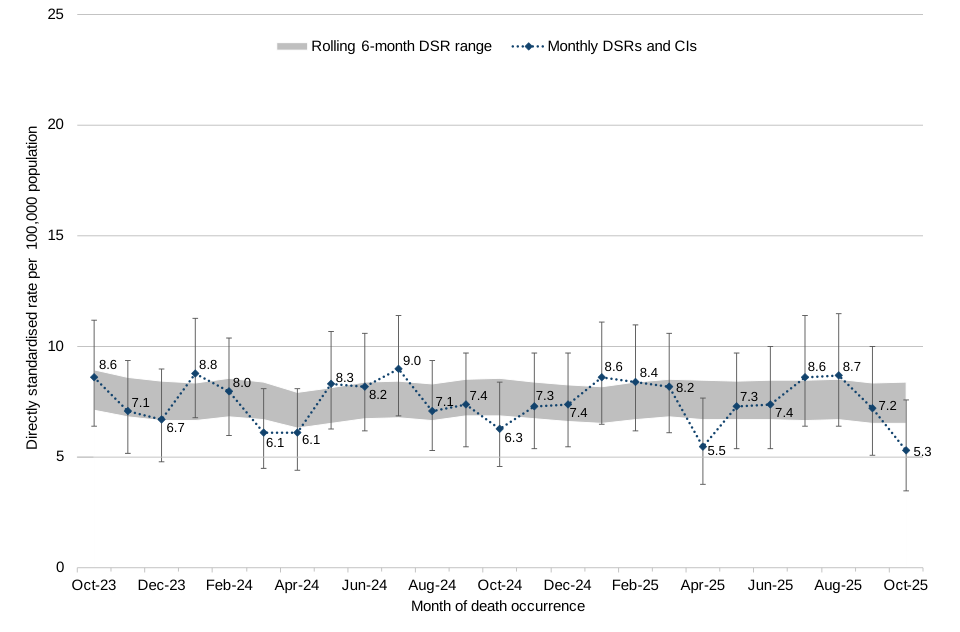
Figure 7: suspected suicide rates in England, persons aged 65 and over, October 2023 to October 2025
Source: NPCC.
Figure 7 shows that:
- of the 3 months added to reporting, the highest rate is for August 2025 (8.7 deaths per 100,000 population), followed by September 2025 (7.2) and October 2025 (5.3)
- the rate for August 2025 is the third highest in the reporting period, whereas the rate for October 2025 is the lowest - however, these rates are not significantly different to other months
- when comparing the most recent 3 months to the same period in the previous years, October 2025 is lower than 2024 and 2023, September 2025 is similar to 2024, and August 2025 is higher than 2024 - these differences are not statistically significant
- the highest rates in the reporting period are seen in July 2024 (9.0), January 2024 (8.8), August 2025 (8.7) and October 2023, January 2025 and July 2025 (all 8.6)
This data is available in table 7 of the accompanying data tables on the Near to real-time suspected suicide surveillance for England: data to October 2025 page.
Method of death by suspected suicide
This section of the bulletin presents quarterly proportions of deaths by suspected suicide in England by method group for quarter 3 (Q3) 2025 covering July, August and September.
In Q3 2025, there were 1,297 suspected suicides, with the following numbers recorded for each method group:
- hanging, suffocation and strangulation (765 deaths)
- poisoning (287 deaths)
- fall and fracture (77 deaths)
- jumping or lying in front of a moving object (66 deaths)
- other or unknown (56 deaths)
- sharp object (38 deaths)
- drowning (28 deaths)
Please note that for some suspected suicides more than one method is recorded.
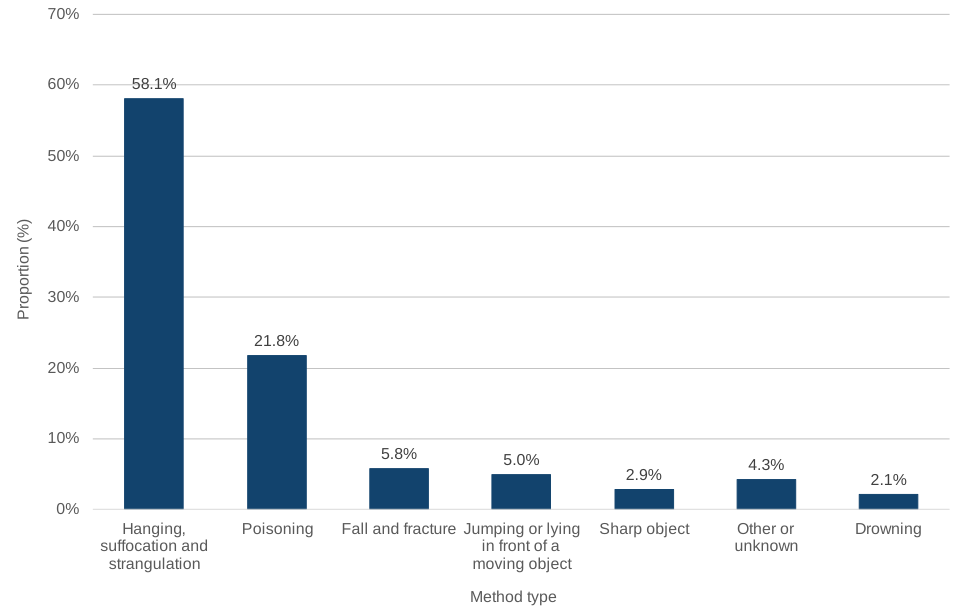
Figure 8: proportion of deaths by suspected suicide method group in England, persons, Q3 2025
Source: NPCC.
Figure 8 shows that for Q3 2025:
- hanging, suffocation and strangulation is the most common method type, accounting for more than half of all deaths (58.1%) - the proportion for the latest quarter is slightly higher than the previous quarter (Q2, 2025)
- the second highest method type is poisoning (21.8%) followed by fall and fracture (5.8%)
- sharp object (2.9%) shows a decrease from the previous quarter (Q2, 2025) where it was 4.8%
The number of deaths by method group are available in table 8 of the accompanying data tables on the Near to real-time suspected suicide surveillance for England: data to October 2025 page.
Monthly and quarterly reporting explained
Although from the same data source, the basis for monthly rates and quarterly proportions in this bulletin are different. This reflects data quality and approach to data presentation.
Monthly reporting of suspected suicide rates does not use all records received. Out of 39 PFAs in England some are excluded following a data completeness assessment. Table 1 provides detail of the basis for monthly rates reporting.
Table 1: basis for monthly rates reporting, October 2023 to October 2025
| October 2025 | October 2023 to September 2025, lowest | October 2023 to September 2025, highest | |
|---|---|---|---|
| Number of PFAs included | 23 | 23 | 32 |
| Percentage of England’s population aged 10 and over | 61 | 58 | 87 |
| Number of records received | 384 | 378 | 515 |
| Number of records included | 253 | 257 | 439 |
The excluded PFAs, and the populations within them, may affect the monthly rates. To help understand this, excluded PFAs are categorised as having low, medium or high suicide rates based on historical data. Knowing this helps understand if monthly rates are broadly representative of England.
For October 2025, out of 39.4% of England’s population excluded from reporting, 13.5% were categorised as low, 11.1% as medium and 14.7% as high. Lower population coverage can result in potential bias in the rates. In this instance the distribution of the excluded PFAs usual suicide rates does not indicate a bias to the data.
The accompanying data tables on the Near to real-time suspected suicide surveillance for England: data to October 2025, include further detail for each reporting month on:
- the number of suspected suicide records included
- proportions of England’s population covered
- excluded populations by low, medium and high category
Quarterly proportion reporting is based on all records received, but it is not based on all suspected suicide cases in England during the period. This is due to delayed reporting or under reporting by some PFAs.
Acknowledgements
This report draws upon data from across England supplied by local PFAs submitting to NPCC. Without their collaboration this work would not have been possible.
This work is supported and enhanced by continuing feedback and input from:
- members of the nRTSSS System Leadership Group
- local suicide prevention teams and PFAs
The responsible statistician is the Head of Intelligence, Mental Health Intelligence Team, Office for Health Improvement and Disparities (OHID)
The product leads are the:
- Programme Lead, Mental Health Intelligence Team, OHID
- Deputy Director, Clinical Epidemiology, OHID
This report complies with:
- the Samaritans’ media guidelines for reporting suicide
- the Code of Practice for Statistics
If you have any questions relating to this publication, contact mhit@dhsc.gov.uk.