
Malpractice in GCSE, AS and A level: summer 2025 exam series
Published 11 December 2025
Applies to England

© Crown copyright 2025
This publication is licensed under the terms of the Open Government Licence v3.0 except where otherwise stated. To view this licence, visit nationalarchives.gov.uk/doc/open-government-licence/version/3 or write to the Information Policy Team, The National Archives, Kew, London TW9 4DU, or email: psi@nationalarchives.gov.uk.
Where we have identified any third party copyright information you will need to obtain permission from the copyright holders concerned.
This publication is available at https://www.gov.uk/government/statistics/malpractice-in-gcse-as-and-a-level-summer-2025-exam-series/malpractice-in-gcse-as-and-a-level-summer-2025-exam-series
This release presents figures on reported cases of malpractice associated with GCSE, AS and A level qualifications in England for the summer 2025 exam series. The report only includes cases of malpractice where a penalty was issued. Historical data going back to summer 2022 is also presented.
Figures for the number of cases which resulted in at least one penalty (which are presented throughout this release) are not the same as the number of penalties issued. This is because it is not always possible to determine in our source data the number of penalties issued for each case. For further information, see the ‘Methods’ section of the background information document.
These figures are correct at the time of publication, however not all investigations into cases of malpractice may be concluded by the time the data is collected. In 2025, there were 95 malpractice cases which were ongoing at the time of the data cutoff date (12 November 2025).
A single malpractice case may involve an individual student, member of school or college staff, or whole school or college, but may also involve multiple individuals from either within or across these groups. When determining whether multiple individuals were involved in a single malpractice case, exam boards may need to exercise their judgement based on the evidence provided. A single case may also span one or more qualifications and can involve multiple types of malpractice. It is possible for cases of staff or school or college malpractice to include both GCSE and AS and A level qualifications.
Changes in cohort size may affect the overall number of malpractice cases in each academic year. In the summer 2025 exam series there was a 0.5% decrease in the total number of GCSE, AS and A level component entries compared with the previous year from 17.6 million in the summer 2024 to 17.5 million in the summer 2025.
Further information, including definitions and examples of the different categories of malpractice presented within this publication, is available in the Suspected Malpractice Policies and Procedures document published by the Joint Council for Qualifications (JCQ). Specific guidance for the 2024 to 2025 academic year is found on the JCQ website.
To ensure confidentiality, the data in this report has been rounded in line with our rounding policy for statistical publications. Further information on this release is available in the background information and data tables accompanying this report.
Key headlines
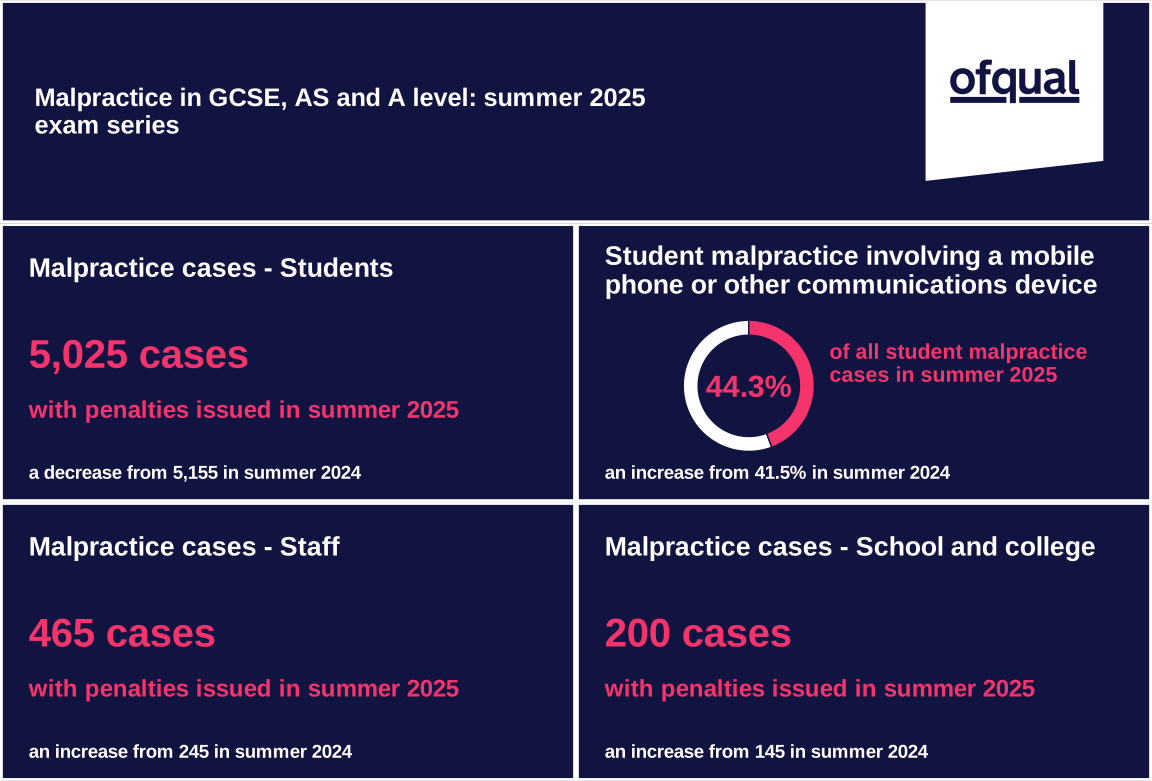
The key headlines for proven cases of malpractice for which a penalty was issued in GCSE, AS and A level qualifications for the summer 2025 exam series were:
- The number of proven cases of malpractice involving students decreased compared with the previous year. There were 5,025 cases of malpractice involving students in summer 2025, down 2.5% from 5,155 cases in summer 2024. For context there were 17.5 and 17.6 million GCSE, AS and A level entries (at component level) in summer 2025 and summer 2024 respectively.
- In summer 2025, 4,735 individual students had at least one penalty issued as a result of malpractice. This represents 0.3% of the overall 1,376,480 GCSE, AS and A level students with results issued (or pending at the time of data collection) in summer 2025. This is similar to summer 2024 where 0.4% of the overall 1,349,260 GCSE, AS and A level students had at least one penalty issued as a result of malpractice (4,975 individual students).
- For student malpractice, 44.3% of all cases involved mobile phone and other communication device offences. This continued to be the most common offence type for student malpractice, with 2,225 cases resulting in penalties for this type of offence in summer 2025, compared with 2,140 (41.5% of all student malpractice cases) in summer 2024.
- The number of cases of malpractice (including maladministration) involving school or college staff increased compared with the previous year, driven mostly by a rise in maladministration cases (a less serious form of malpractice). 465 cases of malpractice included members of staff in summer 2025, up from 245 in summer 2024. For context, according to statistics published on the school workforce in England from November 2024, there were over 373,000 full time equivalent teachers and support staff in state funded secondary schools.
- There were 200 cases of school or college level malpractice (including maladministration) in summer 2025, up from 145 in summer 2024, driven mostly by a rise in maladministration cases (a less serious form of malpractice). In summer 2025, 175 individual schools or colleges had at least one penalty issued as a result of malpractice, which represents 2.9% of the overall 6,010 schools and colleges with results issued (or pending at the time of data collection) for GCSEs, AS and A levels in that year. This is similar to summer 2024 when 2.4% of the overall 5,950 schools and colleges had at least one penalty issued as a result of malpractice (140 schools and colleges).
Provide your feedback
We welcome your feedback on our publications. If you have any comments on this statistical release, or how to improve it to meet your needs, please complete our short survey or data.analytics@ofqual.gov.uk.
Student malpractice
Exam boards may impose sanctions and penalties on students found to have committed malpractice. The penalties for student malpractice vary depending on the type of offence. An individual student can potentially be involved in multiple cases of malpractice and be penalised by more than one exam board if they commit malpractice offences when sitting more than one assessment. A student may also receive one penalty for multiple offences, or multiple penalties for a single offence. Similarly, a single malpractice case may involve more than one student.
In summer 2025, 5,025 cases of malpractice included students, down from 5,155 in summer 2024. For context, there were 17.5 and 17.6 million GCSE, AS and A level total entries (at component level) in summer 2025 and summer 2024 respectively (see our entries statistics for more information). Note that while this is provided for context, direct comparisons of the number of entries with the number of malpractice cases should not be made, particularly including the calculation of proportions or percentages. This is because entries are made per student and component, whereas a single malpractice case may involve multiple students, or cover more than one component or qualification, meaning that any direct comparisons are not valid.
In summer 2025, 4,735 individual students had at least one penalty issued as a result of malpractice. This represents 0.3% of the overall 1,376,480 GCSE, AS and A level students with results issued (or pending at the time of data collection) in summer 2025. This is similar to summer 2024 where 0.4% of the overall 1,349,260 GCSE, AS and A level students had at least one penalty issued as a result of malpractice (4,975 individual students).
Note that in this release ‘results issued’ refers to passing grades, Unclassified (U) as well as outcomes representing the absence of a result (Q, X) as these may still have had a penalty issued from a malpractice case.
The number of students only include those who had a known identifier, which is necessary to identify unique students. Instances where the student identifier was not known (fewer than 5 in summer 2025 and fewer than 5 in summer 2024) are removed from the analysis.
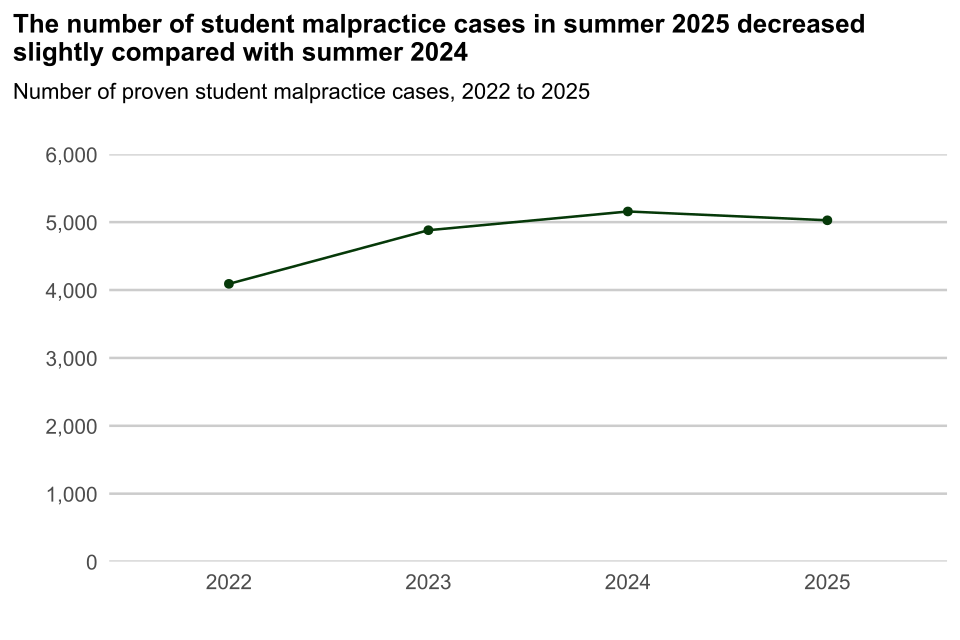
Table 1: Number of proven student malpractice cases, 2022 to 2025
| Type of malpractice | Number of cases in 2022 | Number of cases in 2023 | Number of cases in 2024 | Number of cases in 2025 |
|---|---|---|---|---|
| Student malpractice | 4,090 | 4,880 | 5,155 | 5,025 |
Types of student malpractice (proportion of cases per offence type)
The most common type of malpractice reported in summer 2025 was the introduction of a mobile phone or other communications device into the examination room, the same as in summer 2024. This category appeared in 44.3% of all cases of student malpractice in summer 2025 (2,225 cases), compared with 41.5% of all cases in summer 2024 (2,140 cases). Note that these figures include cases where multiple offence types took place. They therefore differ from the values reported in the chart and table 2 below, where cases involving multiple malpractice types are categorised separately.
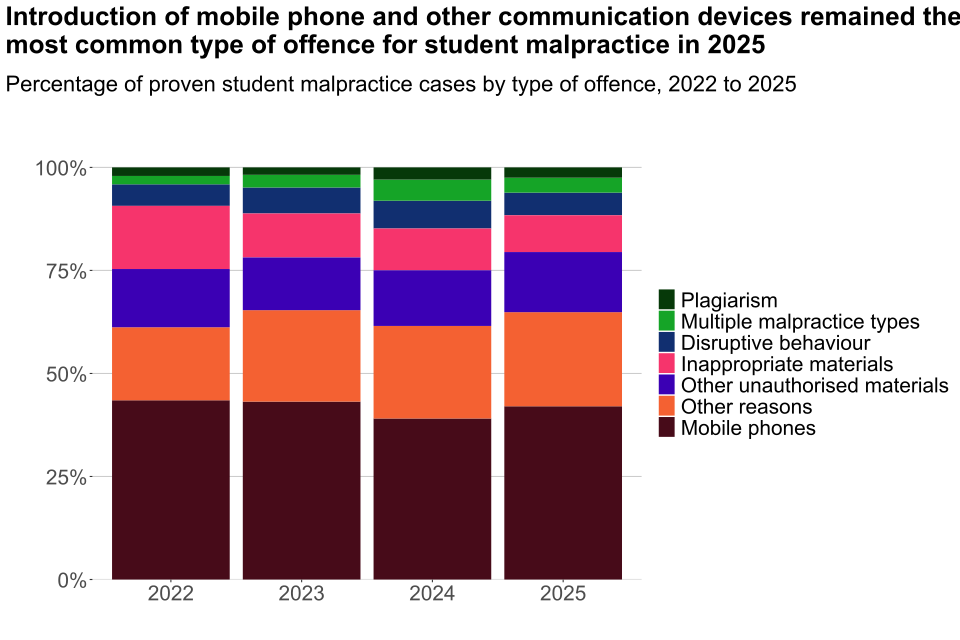
Table 2: Percentage of proven student malpractice cases by type of offence, 2022 to 2025.
| Type of student malpractice offence | Percentage of cases in 2022 | Percentage of cases in 2023 | Percentage of cases in 2024 | Percentage of cases in 2025 |
|---|---|---|---|---|
| Plagiarism | 2.1% | 1.8% | 3.0% | 2.5% |
| Multiple malpractice types | 2.0% | 3.1% | 5.1% | 3.6% |
| Disruptive behaviour | 5.2% | 6.3% | 6.7% | 5.5% |
| Inappropriate materials | 15.3% | 10.7% | 10.1% | 8.9% |
| Other unauthorised materials | 14.1% | 12.8% | 13.5% | 14.6% |
| Other reasons | 17.7% | 22.2% | 22.5% | 22.8% |
| Mobile phones | 43.5% | 43.2% | 39.1% | 42.0% |
Note: Throughout this report, the ‘mobile phones’ category also includes other communication devices such as smartwatches. The ‘inappropriate materials’ category refers to the inclusion of inappropriate, offensive or obscene materials in scripts, coursework or portfolios. The ‘other unauthorised materials’ category includes non-smart watches, which were prohibited from being brought into the examination room from September 2021. The ‘other reasons’ category include being in possession of confidential material in advance of the examination, copying from another candidate, misuse of or attempted misuse of examination material and resources, as well as other offences. The ‘plagiarism’ category includes plagiarism including and excluding the misuse of artificial intelligence (AI).
In summer 2025, plagiarism involving the misuse of AI accounted for 75.0% of all student plagiarism cases (100 cases) and 2.0% of all student malpractice cases. This is an increase compared with summer 2024 where AI-related plagiarism accounted for 55.4% of all student plagiarism cases (85 cases) and 1.7% of all student malpractice cases.
Types of penalty issued to students (number of cases per penalty type)
The most common type of penalty issued to students in summer 2025 was a warning, with the number of cases resulting in this type of penalty being issued increasing to 1,970 from 1,835 in summer 2024.
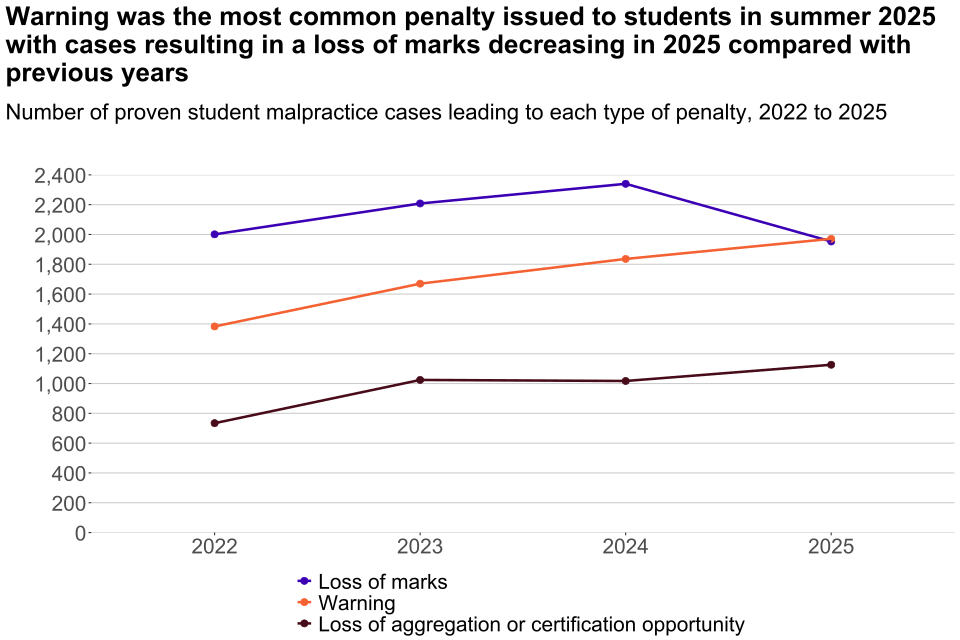
Table 3: Number of proven student malpractice cases leading to each type of penalty, 2022 to 2025.
| Penalty type | Number of cases in 2022 | Number of cases in 2023 | Number of cases in 2024 | Number of cases in 2025 |
|---|---|---|---|---|
| Loss of aggregation or certification opportunity | 735 | 1,025 | 1,015 | 1,125 |
| Loss of marks | 2,000 | 2,210 | 2,340 | 1,955 |
| Warning | 1,385 | 1,670 | 1,835 | 1,970 |
Number of malpractice cases per student
Individual students can be involved in multiple malpractice cases. In summer 2025, nearly all students who were involved in malpractice (94.1%) were involved in only one case, similar to summer 2024 (94.3%). There was a small number of students who were involved in more than one case of malpractice.
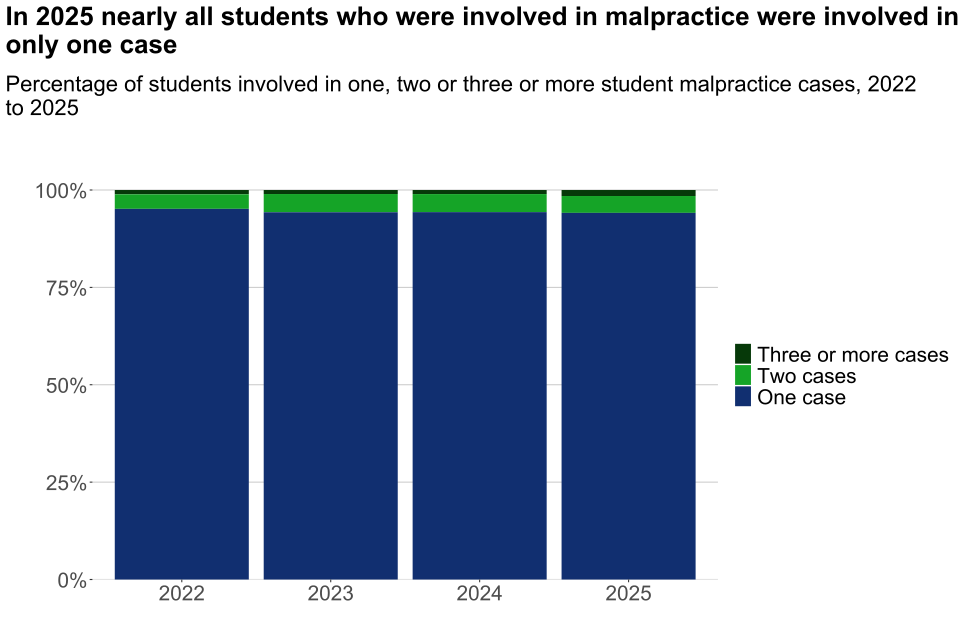
Table 4: Percentage of students involved in one, two or three or more student malpractice cases, 2022 to 2025.
| Number of cases | Percentage of students in 2022 | Percentage of students in 2023 | Percentage of students in 2024 | Percentage of students in 2025 |
|---|---|---|---|---|
| One case | 95.2% | 94.3% | 94.3% | 94.1% |
| Two cases | 3.7% | 4.7% | 4.6% | 4.3% |
| Three or more cases | 1.1% | 1.0% | 1.0% | 1.5% |
Note: Figures in this section only include students who had a known identifier, which is necessary to identify unique students within and across cases. Instances where the student identifier was not known (fewer than 5 in summer 2025 and fewer than 5 in summer 2024) are removed from the analysis.
Number of students per malpractice case
Similarly, a single malpractice case can involve multiple students. In summer 2025, nearly all cases of student malpractice (98.1%) involved only one student, similar to summer 2024 (97.5%). A small number of cases involved more than one student.
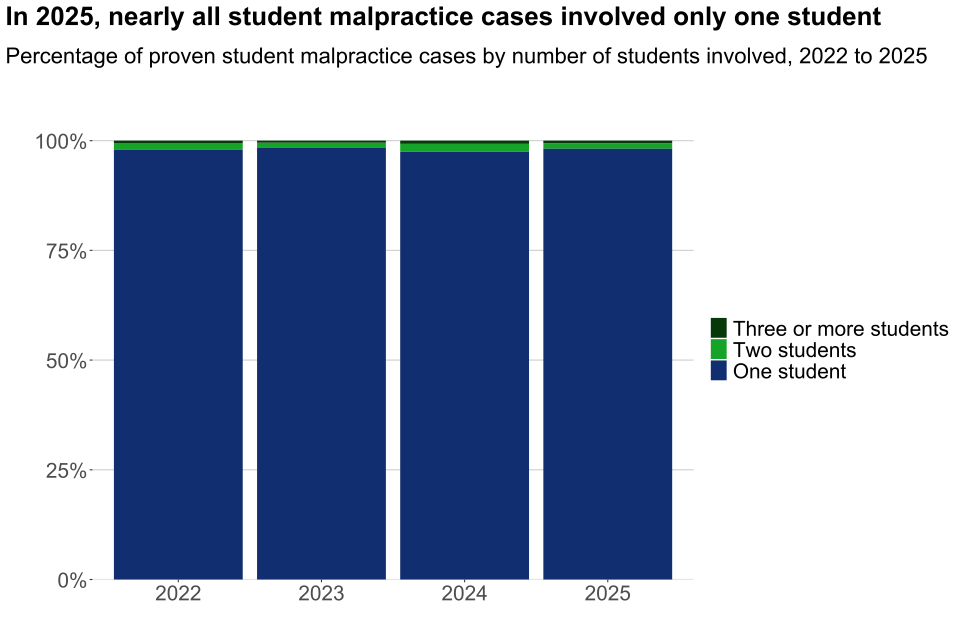
Table 5: Percentage of proven student malpractice cases by number of students involved, 2022 to 2025.
| Number of students | Percentage of cases in 2022 | Percentage of cases in 2023 | Percentage of cases in 2024 | Percentage of cases in 2025 |
|---|---|---|---|---|
| One student | 98.0% | 98.4% | 97.5% | 98.1% |
| Two students | 1.5% | 1.1% | 1.8% | 1.3% |
| Three or more students | 0.5% | 0.5% | 0.7% | 0.6% |
Note: Figures in this section only include students who had a known identifier, which is necessary to identify unique students within and across cases. Instances where the student identifier was not known (fewer than 5 in summer 2025 and fewer than 5 in summer 2024) are removed from the analysis.
Types of penalty issued to students, by type of malpractice offence
Penalties for cases of student malpractice vary depending on the type of offence. The categories presented here are broad and could cover a range of specific sanctions and transgressions. The precise penalty applied depends on the circumstances of the specific case.
The ‘multiple types of penalty’ category represents cases which resulted in more than one penalty type being applied. A full breakdown of penalty types, including those aggregated into the ‘multiple penalty’ category, for each student offence type is available in the data tables accompanying this release.
Charts and tables are only included in this section for offence types that had 20 or more student malpractice cases in 2025.
Mobile phones
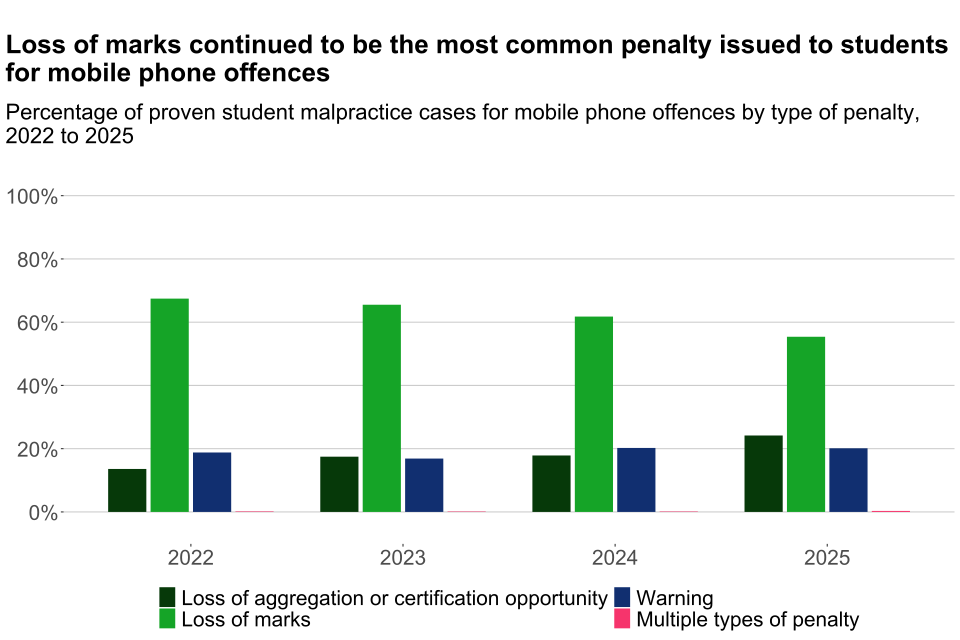
Table 6.1: Percentage of proven student malpractice cases for mobile phone offences by type of penalty, 2022 to 2025.
| Penalty type | Percentage of cases in 2022 | Percentage of cases in 2023 | Percentage of cases in 2024 | Percentage of cases in 2025 |
|---|---|---|---|---|
| Loss of aggregation or certification opportunity | 13.6% | 17.5% | 17.9% | 24.2% |
| Loss of marks | 67.5% | 65.5% | 61.8% | 55.4% |
| Multiple types of penalty | 0.2% | 0.1% | 0.1% | 0.3% |
| Warning | 18.8% | 16.9% | 20.2% | 20.1% |
Inappropriate materials
There were no cases of inappropriate material offences which led to multiple types of penalties being issued. The ‘multiple types of penalty’ category is therefore not shown in the chart and table 6.2 below.
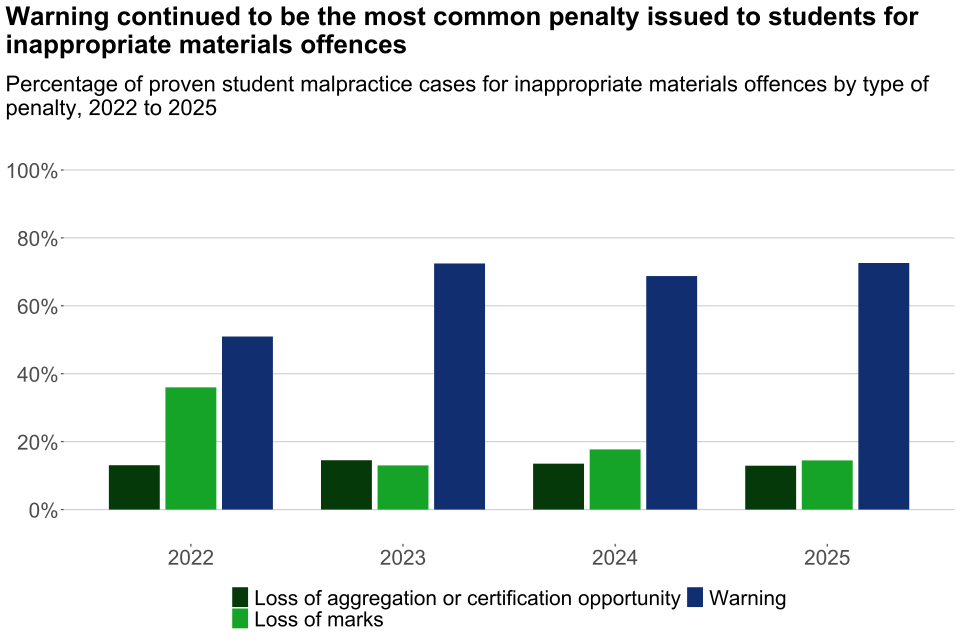
Table 6.2: Percentage of proven student malpractice cases for inappropriate materials offences by type of penalty, 2022, to, 2025.
| Penalty type | Percentage of cases in 2022 | Percentage of cases in 2023 | Percentage of cases in 2024 | Percentage of cases in 2025 |
|---|---|---|---|---|
| Loss of aggregation or certification opportunity | 13.1% | 14.5% | 13.5% | 12.9% |
| Loss of marks | 36.0% | 13.0% | 17.7% | 14.5% |
| Warning | 51.0% | 72.5% | 68.8% | 72.6% |
Other unauthorised materials
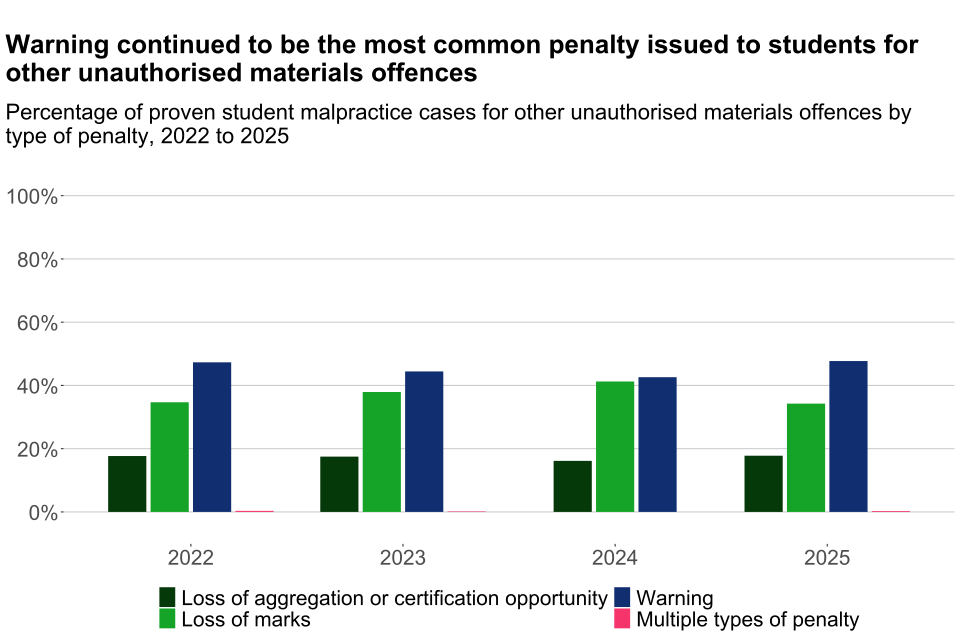
Table 6.3: Percentage of proven student malpractice cases for other unauthorised materials offences by type of penalty, 2022 to 2025.
| Penalty type | Percentage of cases in 2022 | Percentage of cases in 2023 | Percentage of cases in 2024 | Percentage of cases in 2025 |
|---|---|---|---|---|
| Loss of aggregation or certification opportunity | 17.7% | 17.5% | 16.1% | 17.8% |
| Loss of marks | 34.7% | 37.9% | 41.2% | 34.2% |
| Multiple types of penalty | 0.3% | 0.2% | 0.0% | 0.3% |
| Warning | 47.3% | 44.4% | 42.6% | 47.7% |
Disruptive behaviour
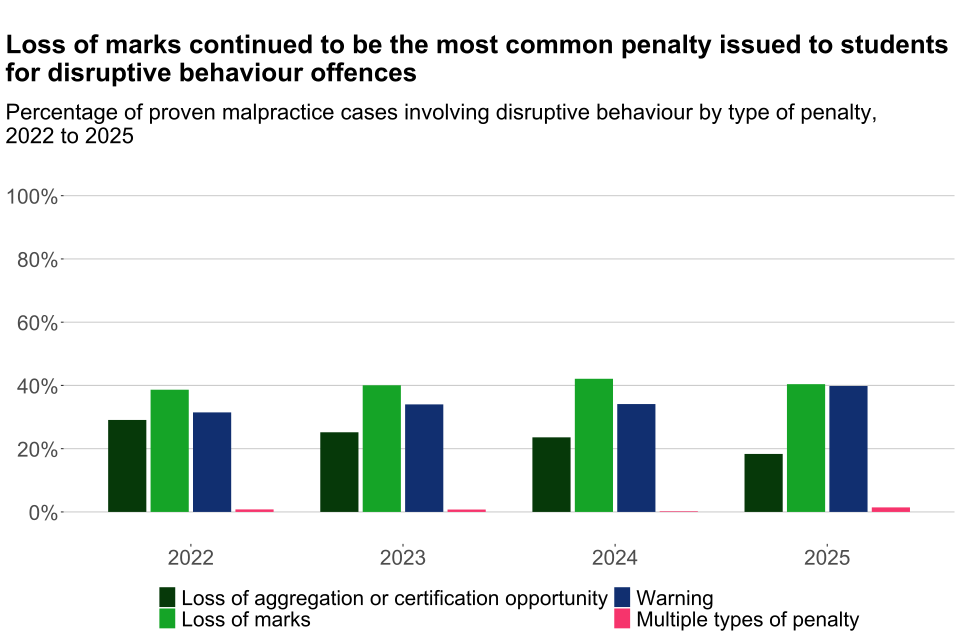
Table 6.4: Percentage of proven malpractice cases involving disruptive behaviour by type of penalty, 2022 to 2025.
| Penalty type | Percentage of cases in 2022 | Percentage of cases in 2023 | Percentage of cases in 2024 | Percentage of cases in 2025 |
|---|---|---|---|---|
| Loss of aggregation or certification opportunity | 29.1% | 25.2% | 23.6% | 18.3% |
| Loss of marks | 38.6% | 40.1% | 42.1% | 40.4% |
| Multiple types of penalty | 0.8% | 0.8% | 0.2% | 1.4% |
| Warning | 31.5% | 34.0% | 34.1% | 39.8% |
Plagiarism
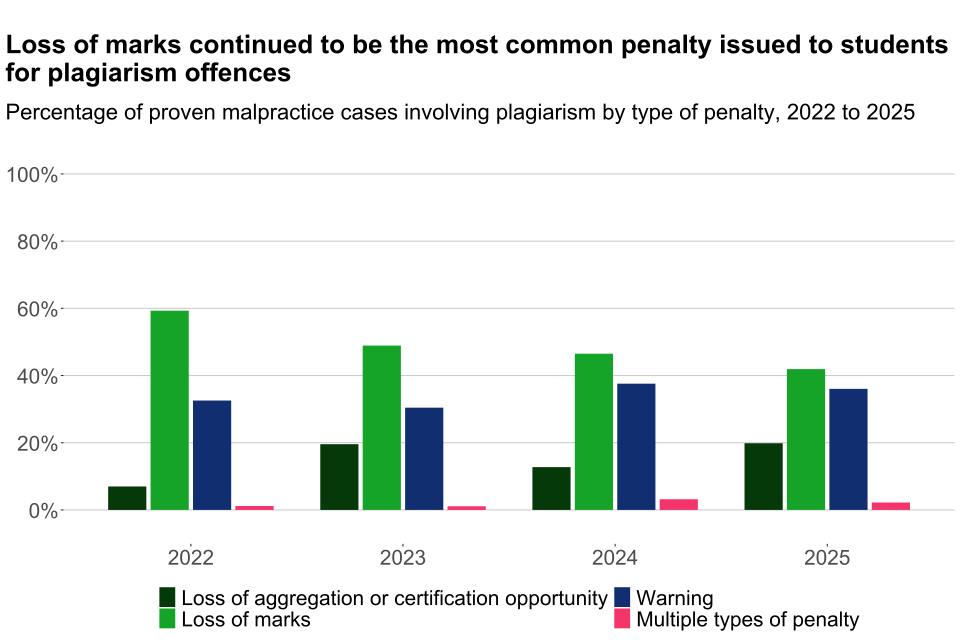
Table 6.5: Percentage of proven malpractice cases involving plagiarism by type of penalty, 2022 to 2025.
| Penalty type | Percentage of cases in 2022 | Percentage of cases in 2023 | Percentage of cases in 2024 | Percentage of cases in 2025 |
|---|---|---|---|---|
| Loss of aggregation or certification opportunity | 7.0% | 19.6% | 12.7% | 19.9% |
| Loss of marks | 59.3% | 48.9% | 46.5% | 41.9% |
| Multiple types of penalty | 1.2% | 1.1% | 3.2% | 2.2% |
| Warning | 32.6% | 30.4% | 37.6% | 36.0% |
Other reasons
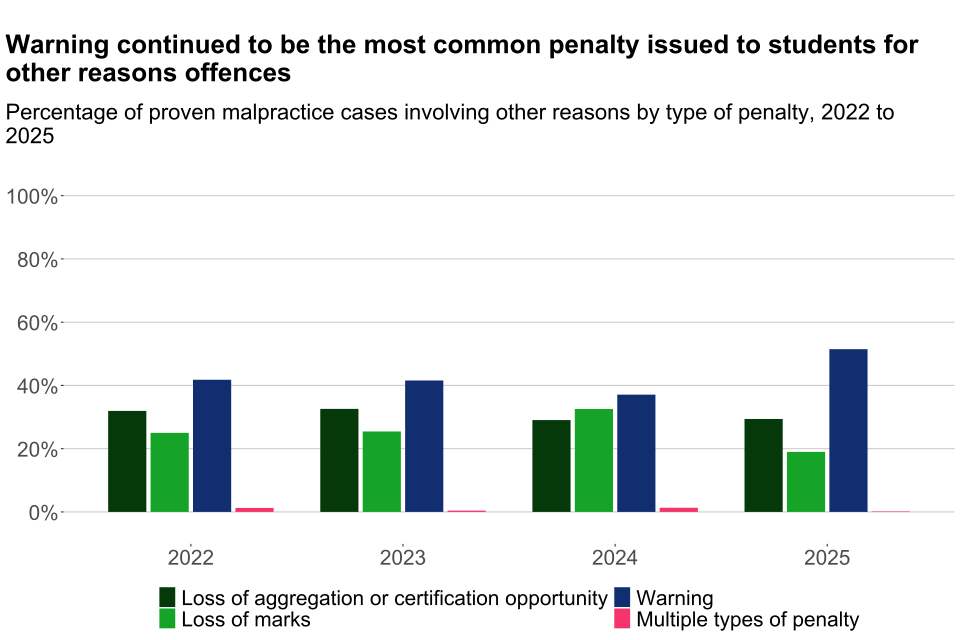
Table 6.6: Percentage of proven malpractice cases involving other reasons by type of penalty, 2022 to 2025.
| Penalty type | Percentage of cases in 2022 | Percentage of cases in 2023 | Percentage of cases in 2024 | Percentage of cases in 2025 |
|---|---|---|---|---|
| Loss of aggregation or certification opportunity | 31.9% | 32.6% | 29.0% | 29.4% |
| Loss of marks | 25.0% | 25.4% | 32.6% | 19.0% |
| Multiple types of penalty | 1.3% | 0.4% | 1.3% | 0.2% |
| Warning | 41.8% | 41.6% | 37.1% | 51.5% |
Staff malpractice
Exam boards may impose penalties for malpractice committed by an individual member of staff at a school or college, for example a teacher or an invigilator. The term ‘malpractice’ here includes both ‘maladministration’, which generally constitutes mistakes or poor process where there has been no intention to do any harm, and ‘malpractice’ in its narrower sense, which generally involves some form of intent. An individual member of staff can potentially be involved in multiple cases of malpractice, and a single malpractice case may involve more than one staff member. A staff member may also receive one penalty for multiple offences, or multiple penalties for a single offence.
In summer 2025, 465 cases of malpractice involved members of staff, up from 245 in summer 2024, driven mostly by a rise in maladministration cases (a less serious form of malpractice).
For context, according to statistics published on the school workforce in England from November 2024, there were over 373,000 full time equivalent teachers and support staff in state funded secondary schools.
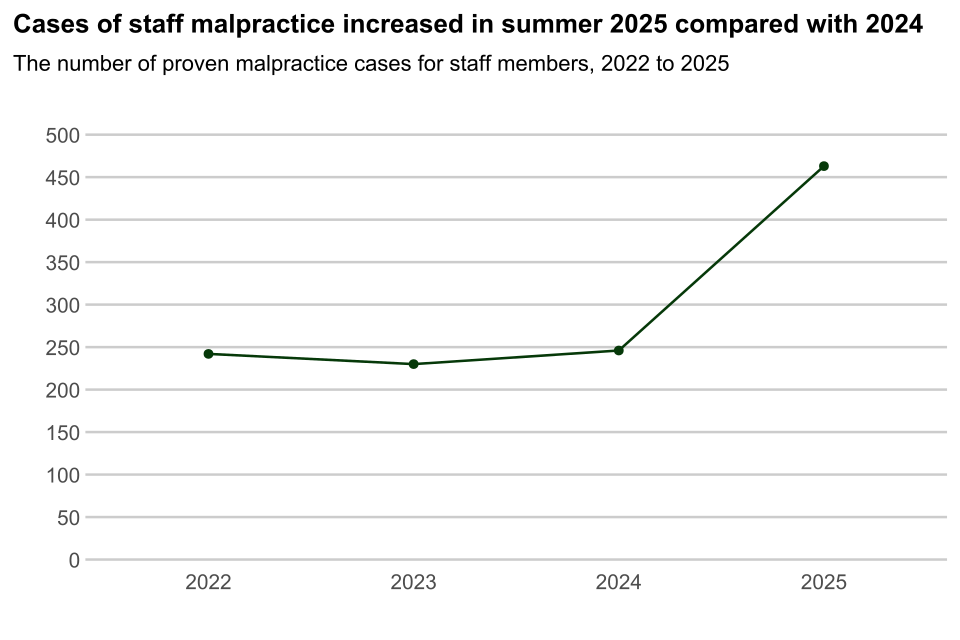
Table 7: The number of proven malpractice cases for staff members, 2022 to 2025.
| Type of malpractice | Number of cases in 2022 | Number of cases in 2023 | Number of cases in 2024 | Number of cases in 2025 |
|---|---|---|---|---|
| Staff malpractice | 240 | 230 | 245 | 465 |
Types of staff malpractice (proportion of cases per offence type)
The most common type of staff malpractice for which a penalty was applied in summer 2025 was maladministration (the failure to comply with the regulations of examinations and non-examination assessments), the same as in summer 2024. This category appeared in 73.7% (340 cases) of all cases of staff malpractice in summer 2025, compared with 56.9% (140 cases) in summer 2024. Note that these figures include cases where multiple offence types took place. They therefore differ from the values reported in the chart and table 8 below, where cases involving multiple malpractice types are categorised separately.
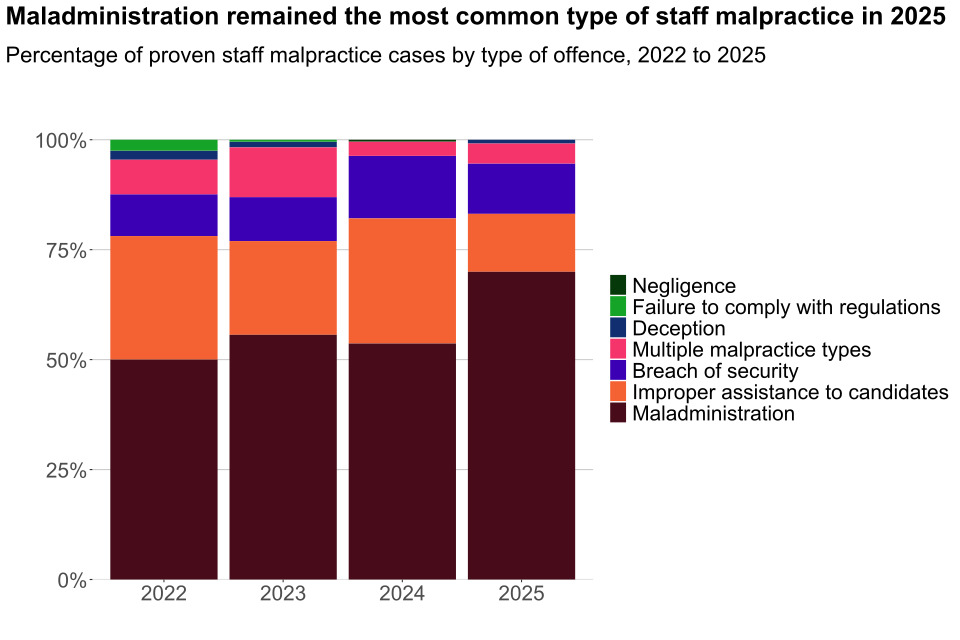
Table 8: Percentage of proven staff malpractice cases by type of offence, 2022 to 2025.
| Type of staff malpractice | Percentage of cases in 2022 | Percentage of cases in 2023 | Percentage of cases in 2024 | Percentage of cases in 2025 |
|---|---|---|---|---|
| Breach of security | 9.5% | 10.0% | 14.2% | 11.4% |
| Deception | 2.1% | 1.3% | 0.0% | 0.9% |
| Failure to comply with regulations | 2.5% | 0.4% | 0.0% | 0.0% |
| Improper assistance to candidates | 28.1% | 21.3% | 28.5% | 13.2% |
| Maladministration | 50.0% | 55.7% | 53.7% | 70.0% |
| Multiple malpractice types | 7.9% | 11.3% | 3.3% | 4.5% |
| Negligence | 0.0% | 0.0% | 0.4% | 0.0% |
Note: Throughout the report, ‘failure to comply with regulations’ refers only to failure to comply with regulations for access arrangements, reasonable adjustments, and/or special consideration.
Types of penalty issued to staff members (number of cases per penalty type)
The most common type of penalty issued to staff members in summer 2025 was a written warning, with the number of cases resulting in this type of penalty being issued increasing to 310, from 185 in summer 2024.
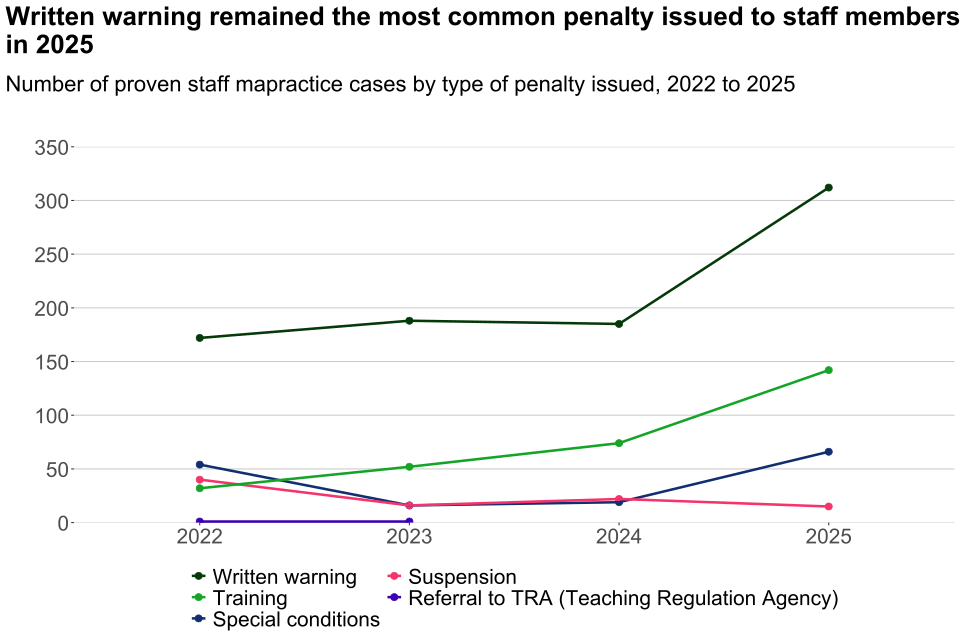
Table 9: Number of proven staff malpractice cases by type of penalty issued, 2022 to 2025.
| Penalty type | Number of cases in 2022 | Number of cases in 2023 | Number of cases in 2024 | Number of cases in 2025 |
|---|---|---|---|---|
| Referral to TRA (Teaching Regulation Agency) | Fewer than 5 | Fewer than 5 | 0 | 0 |
| Special conditions | 55 | 15 | 20 | 65 |
| Suspension | 40 | 15 | 20 | 15 |
| Training | 30 | 50 | 75 | 140 |
| Written warning | 170 | 190 | 185 | 310 |
Number of malpractice cases per member of staff
Individual members of school and college staff can be involved in multiple malpractice cases. As unique identifiers for staff members are not shared across exam boards, a breakdown of the number of malpractice cases per staff member cannot be provided.
Number of staff members per malpractice case
A single malpractice case can involve multiple staff members. In summer 2025, the majority of cases of staff malpractice (80.3%) involved only one staff member, up from 71.5% in summer 2024.
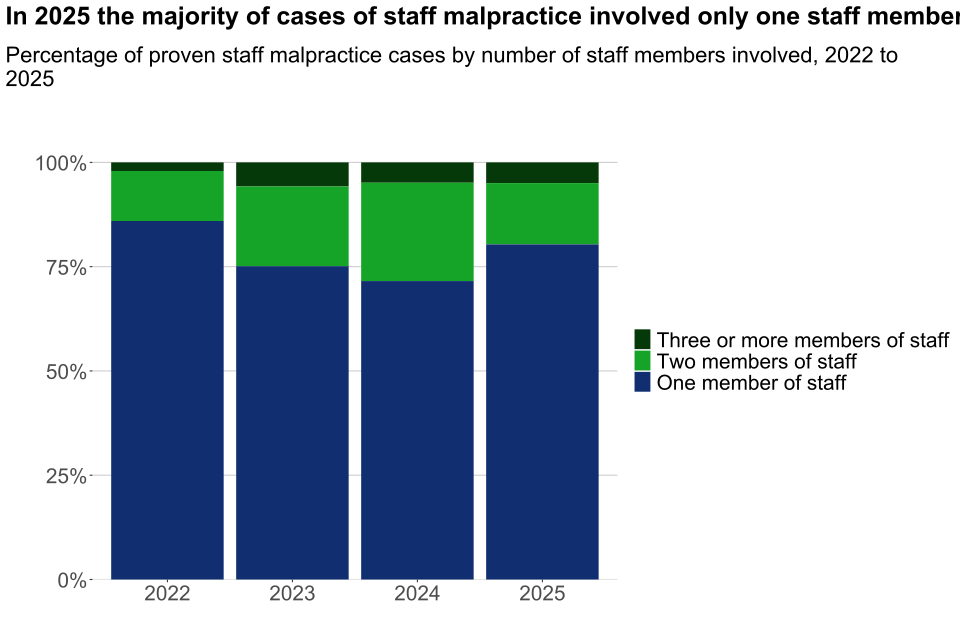
Table 10: Percentage of proven staff malpractice cases by number of staff members involved, 2022 to 2025.
| Number of staff members | Percentage of cases in 2022 | Percentage of cases in 2023 | Percentage of cases in 2024 | Percentage of cases in 2025 |
|---|---|---|---|---|
| One member of staff | 86.0% | 75.1% | 71.5% | 80.3% |
| Two members of staff | 12.0% | 19.1% | 23.6% | 14.7% |
| Three or more members of staff | 2.1% | 5.8% | 4.9% | 5.0% |
Types of penalty issued to members of school or college staff, by type of malpractice offence
Penalties for cases of staff malpractice vary depending on the type of offence. The precise penalty applied depends on the circumstances of the specific case.
The ‘multiple types of penalty’ category represents cases which resulted in more than one penalty type being applied. Should a type of penalty only occur in cases that resulted in multiple different types of penalties being applied, that type will be counted in the ‘multiple types of penalty’ category rather than individually listed in the tables and charts presented in the report. A full breakdown of penalty types, including those aggregated into the ‘multiple penalty’ category, for all staff offence types combined is available in the table 9 and the data tables accompanying this release.
Charts and tables are only included in this section for offence types that had 20 or more staff malpractice cases in 2025.
Maladministration
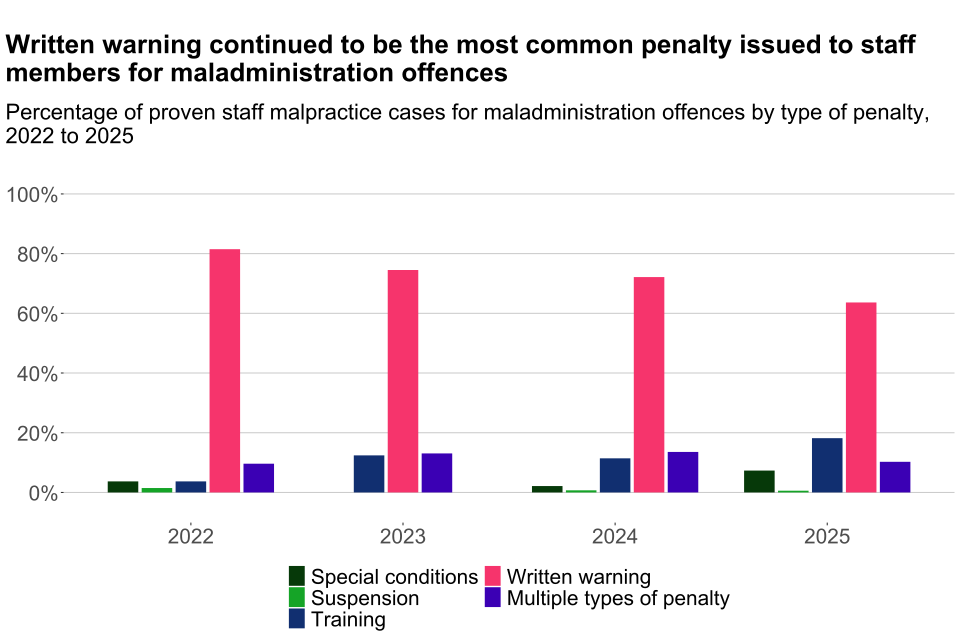
Table 11.1: Percentage of proven staff malpractice cases for maladministration offences by type of penalty, 2022 to 2025.
| Penalty type | Percentage of cases in 2022 | Percentage of cases in 2023 | Percentage of cases in 2024 | Percentage of cases in 2025 |
|---|---|---|---|---|
| Multiple types of penalty | 9.6% | 13.1% | 13.6% | 10.3% |
| Special conditions | 3.7% | 0.0% | 2.1% | 7.3% |
| Suspension | 1.5% | 0.0% | 0.7% | 0.6% |
| Training | 3.7% | 12.4% | 11.4% | 18.2% |
| Written warning | 81.5% | 74.5% | 72.1% | 63.6% |
Improper assistance to candidates
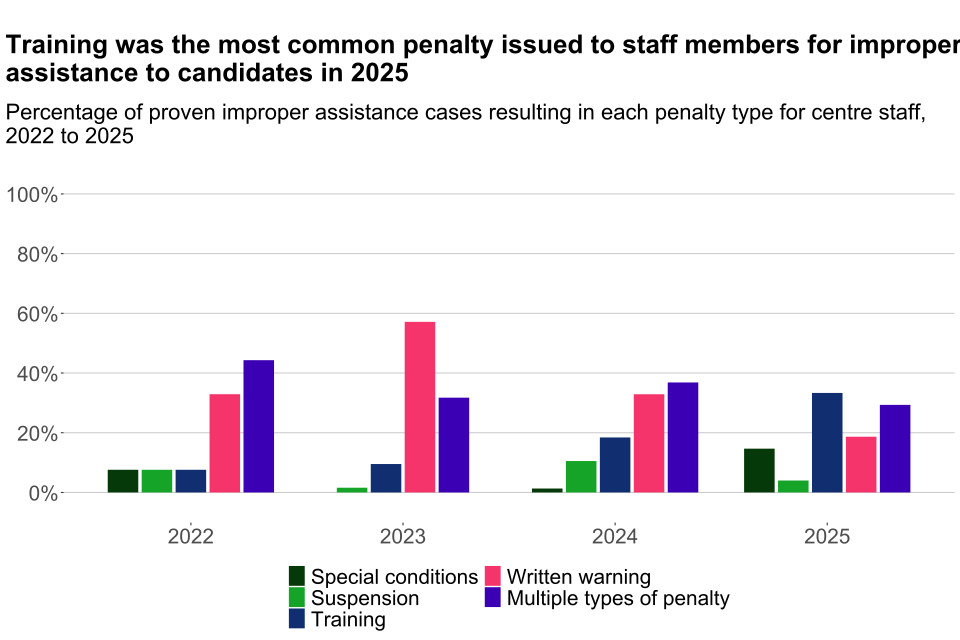
Table 11.2: Percentage of proven improper assistance cases resulting in each penalty type for school or college staff, 2022 to 2025.
| Penalty type | Percentage of cases in 2022 | Percentage of cases in 2023 | Percentage of cases in 2024 | Percentage of cases in 2025 |
|---|---|---|---|---|
| Multiple types of penalty | 44.3% | 31.7% | 36.8% | 29.3% |
| Special conditions | 7.6% | 0.0% | 1.3% | 14.7% |
| Suspension | 7.6% | 1.6% | 10.5% | 4.0% |
| Training | 7.6% | 9.5% | 18.4% | 33.3% |
| Written warning | 32.9% | 57.1% | 32.9% | 18.7% |
Breach of security
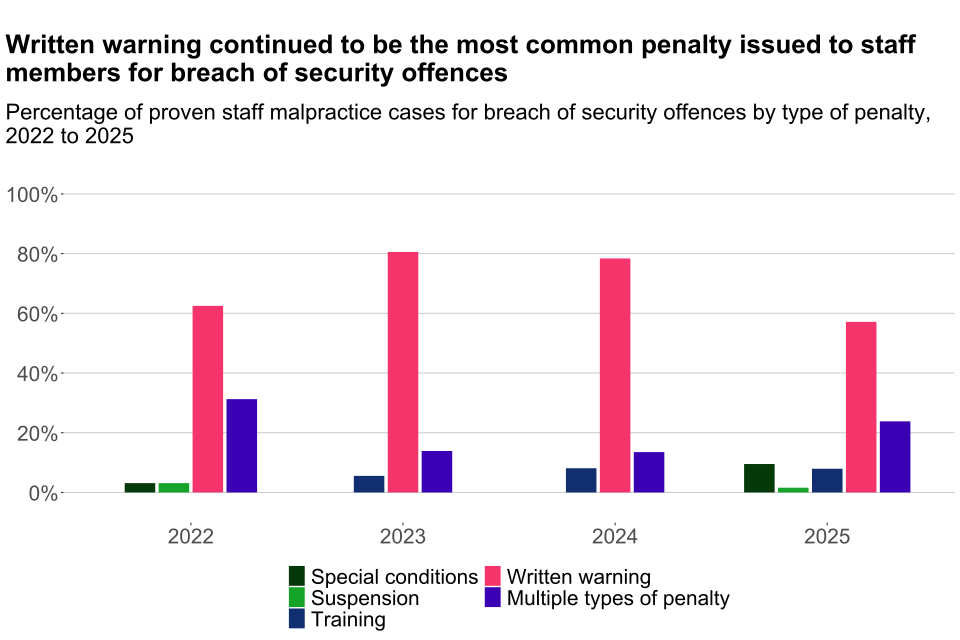
Table 11.3: Percentage of proven staff malpractice cases for breach of security offences by type of penalty, 2022 to 2025.
| Penalty type | Percentage of cases in 2022 | Percentage of cases in 2023 | Percentage of cases in 2024 | Percentage of cases in 2025 |
|---|---|---|---|---|
| Multiple types of penalty | 31.2% | 13.9% | 13.5% | 23.8% |
| Special conditions | 3.1% | 0.0% | 0.0% | 9.5% |
| Suspension | 3.1% | 0.0% | 0.0% | 1.6% |
| Training | 0.0% | 5.6% | 8.1% | 7.9% |
| Written warning | 62.5% | 80.6% | 78.4% | 57.1% |
School or college malpractice
Where there is evidence that malpractice is the result of a serious management failure, an exam board may apply sanctions against a whole department or a school or college. The term ‘malpractice’ here includes both ‘maladministration’, which generally constitutes mistakes or poor process where there has been no intention to do any harm, and ‘malpractice’ in its narrower sense, which generally involves some form of intent. A single school or college can potentially be involved in multiple cases of malpractice. A school or college may also receive one penalty for multiple offences, or multiple penalties for a single offence.
There were 200 cases of school or college malpractice in summer 2025, up from 145 in summer 2024, driven mostly by a rise in maladministration cases (a less serious form of malpractice).
In summer 2025, 175 individual schools or colleges had at least one penalty issued as a result of malpractice, which represents 2.9% of the overall 6,010 schools and colleges with results issued (or pending at the time of data collection) for GCSEs, AS and A levels in that year. This is similar to summer 2024 when 2.4% of the overall 5,950 schools and colleges had at least one penalty issued as a result of malpractice (140 schools and colleges).
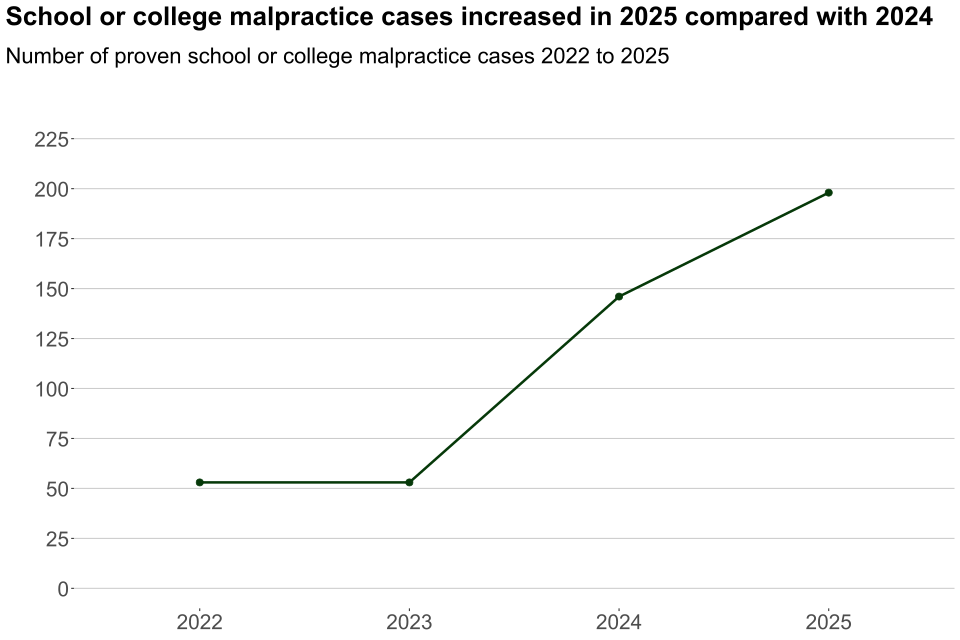
Table 12: Number of proven school or college malpractice cases 2022 to 2025.
| Type of malpractice | Number of cases in 2022 | Number of cases in 2023 | Number of cases in 2024 | Number of cases in 2025 |
|---|---|---|---|---|
| School or college malpractice | 55 | 55 | 145 | 200 |
Types of school or college malpractice (proportion of cases per offence type)
The most common type of school or college malpractice in summer 2025 was maladministration (the failure to comply with the regulations of examinations and non-examination assessments), the same as summer 2024. This category appeared in 175 (87.4%) of all cases of school or college level malpractice in summer 2025, compared with 120 (82.2%) of all cases of school or college level malpractice in summer 2024. Note that these figures include cases where multiple offence types took place. They therefore differ from the values reported in the chart and table 13 below, where cases involving multiple malpractice types are categorised separately.
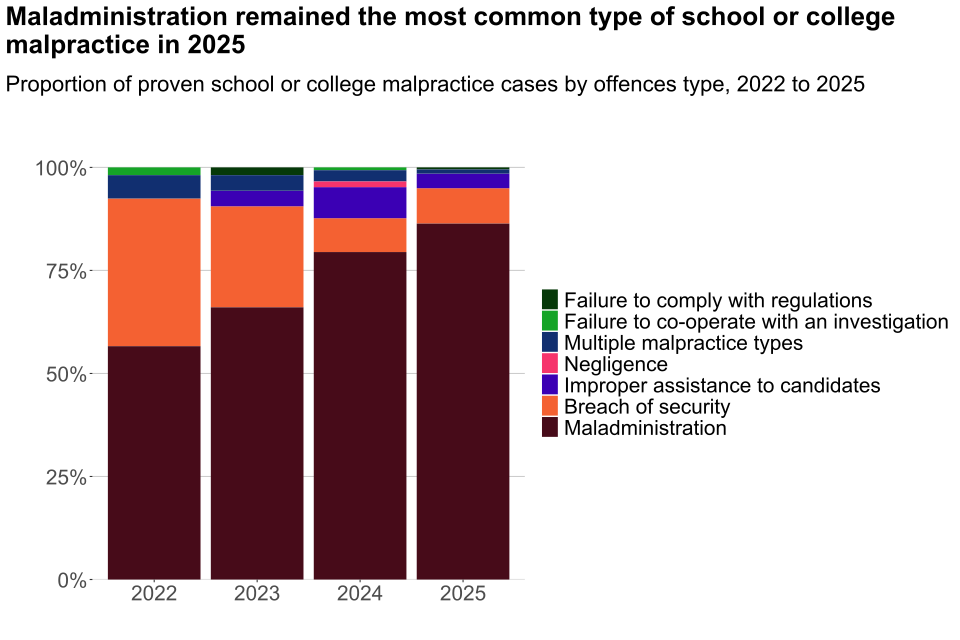
Table 13: Proportion of proven school or college malpractice cases by offence type, 2022 to 2025.
| Type of school or college malpractice offence | Percentage of cases in 2022 | Percentage of cases in 2023 | Percentage of cases in 2024 | Percentage of cases in 2025 |
|---|---|---|---|---|
| Breach of security | 35.8% | 24.5% | 8.2% | 8.6% |
| Failure to co-operate with an investigation | Less than 3% | 0.0% | Less than 3% | 0.0% |
| Failure to comply with regulations | 0.0% | Less than 3% | 0.0% | Less than 3% |
| Improper assistance to candidates | 0.0% | 3.8% | 7.5% | 3.5% |
| Maladministration | 56.6% | 66.0% | 79.5% | 86.4% |
| Multiple malpractice types | 5.7% | 3.8% | Less than 3% | Less than 3% |
| Negligence | 0.0% | 0.0% | Less than 3% | 0.0% |
Note: Due to small numbers involved, percentages less than 3% have been suppressed.
Types of penalty issued to schools or colleges (number of cases per penalty type)
The most common type of penalty issued to schools and colleges in summer 2025 was ‘review and report’. This is where a review takes place of the school or college’s procedures for the conduct or administration of a particular assessment, or all assessments in general, followed by reporting back to the exam board on improvements implemented by a set date. The number of cases resulting in this type of penalty being issued increased to 120 in summer 2025 from 70 in summer 2024.
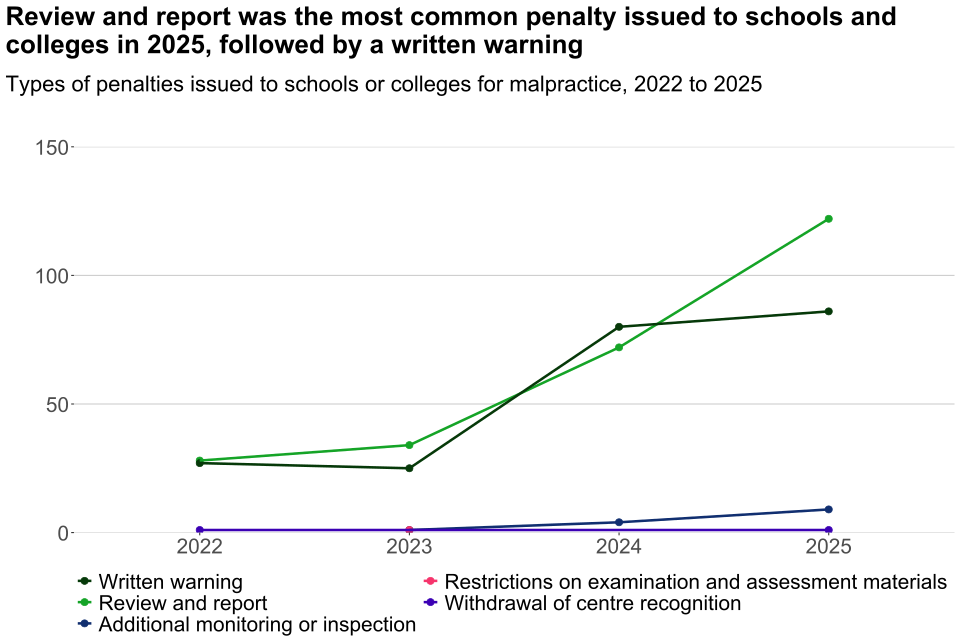
Table 14: Types of penalties issued to schools or colleges for malpractice, 2022 to 2025.
| Penalty type | Number of cases in 2022 | Number of cases in 2023 | Number of cases in 2024 | Number of cases in 2025 |
|---|---|---|---|---|
| Additional monitoring or inspection | 0 | Fewer than 5 | Fewer than 5 | 10 |
| Restrictions on examination and assessment materials | 0 | Fewer than 5 | 0 | 0 |
| Review and report | 30 | 35 | 70 | 120 |
| Withdrawal of centre recognition | Fewer than 5 | 0 | 0 | Fewer than 5 |
| Written warning | 25 | 25 | 80 | 85 |
Number of malpractice cases per school or college
Individual schools or colleges can be involved in multiple malpractice cases. In summer 2025, the majority of schools or colleges involved in school or college malpractice (90.3%) were involved in only one malpractice case, down from summer 2024 (97.1%).
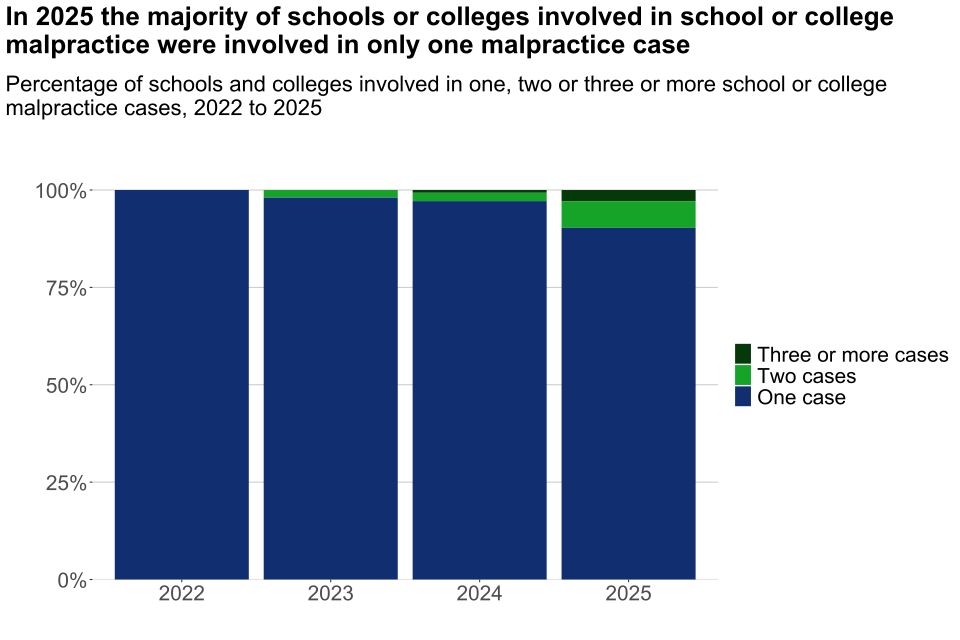
Table 15: Percentage of schools and colleges involved in one, two or three or more school or college malpractice cases, 2022 to 2025.
| Number of cases | Percentage of schools or colleges in 2022 | Percentage of schools or colleges in 2023 | Percentage of schools or colleges in 2024 | Percentage of schools or colleges in 2025 |
|---|---|---|---|---|
| One case | 100.0% | 98.1% | 97.1% | 90.3% |
| Two cases | 0.0% | 1.9% | 2.1% | 6.9% |
| Three or more cases | 0.0% | 0.0% | 0.7% | 2.9% |
Types of penalty issued to schools and colleges, by type of malpractice
Penalties for cases of school or college malpractice vary depending on the type of offence. The precise penalty applied depends on the circumstances of the specific case.
The ‘multiple types of penalty’ category represents cases that resulted in more than one penalty type being applied. Should a type of penalty only occur in cases that resulted in multiple different types of penalties being applied, that type will be counted in the ‘multiple types of penalty’ category rather than individually listed in the tables and charts presented in the report. A full breakdown of penalty types, including those aggregated into the ‘multiple penalty’ category, for all school and college offence types combined is available in table 14 and in the data tables accompanying this release.
Charts and tables are only included in this section for offence types that had 20 or more cases in 2025.
Maladministration
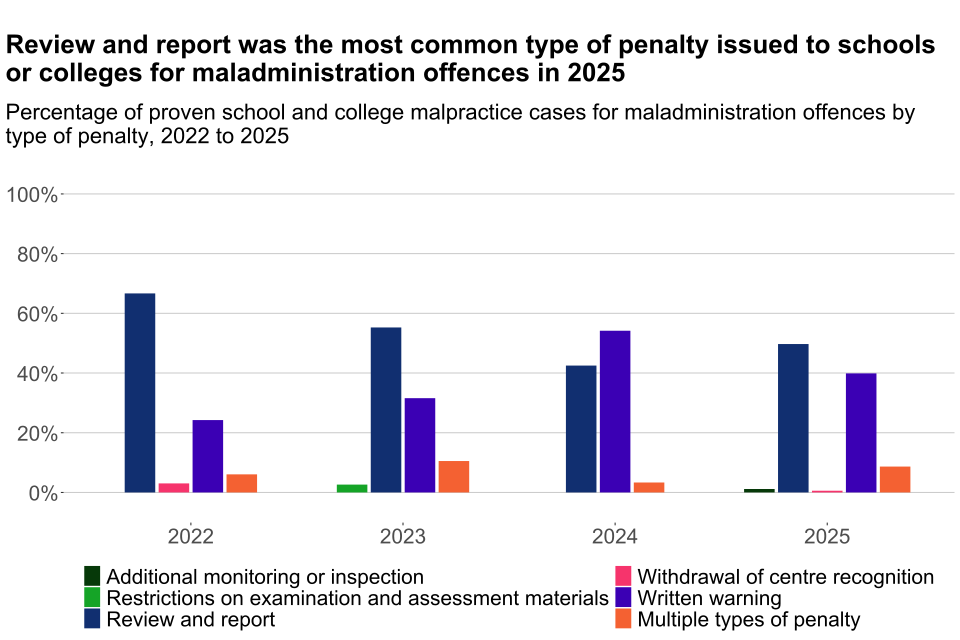
Table 16.1: Percentage of proven school and college malpractice cases for maladministration offences by type of penalty, 2022 to 2025.
| Penalty type | Percentage of cases in 2022 | Percentage of cases in 2023 | Percentage of cases in 2024 | Percentage of cases in 2025 |
|---|---|---|---|---|
| Additional monitoring or inspection | 0.0% | 0.0% | 0.0% | 1.2% |
| Multiple types of penalty | 6.1% | 10.5% | 3.3% | 8.7% |
| Restrictions on examination and assessment materials | 0.0% | 2.6% | 0.0% | 0.0% |
| Review and report | 66.7% | 55.3% | 42.5% | 49.7% |
| Withdrawal of centre recognition | 3.0% | 0.0% | 0.0% | 0.6% |
| Written warning | 24.2% | 31.6% | 54.2% | 39.9% |
Contextual information
In this statistical release, Ofqual presents data on malpractice in GCSE, AS, and A level assessments during the summer 2025 exam series in England. The data may not reflect the full extent of malpractice investigated because these cases relate only to instances of reported malpractice where a penalty has been applied.
Any breach of the exam boards’ regulations that might undermine the integrity of an assessment may constitute malpractice. This includes bringing into the exam room unauthorised material or mobile phones, and failures by school or college staff to comply with exam board instructions.
Ofqual requires exam boards to have procedures in place to prevent, investigate and act in relation to malpractice by students, school or college staff or others involved in the assessment of qualifications. The Joint Council for Qualifications (JCQ) publishes policies and guidance on malpractice that set out procedures for dealing with suspected malpractice as well as definitions for the categories of malpractice listed within this release.
Head of profession: Ben Cuff