Leasehold dwellings, 2024 to 2025
Published 21 May 2026
Applies to England

© Crown copyright 2026
This publication is licensed under the terms of the Open Government Licence v3.0 except where otherwise stated. To view this licence, visit nationalarchives.gov.uk/doc/open-government-licence/version/3 or write to the Information Policy Team, The National Archives, Kew, London TW9 4DU, or email: psi@nationalarchives.gov.uk.
Where we have identified any third party copyright information you will need to obtain permission from the copyright holders concerned.
This publication is available at https://www.gov.uk/government/statistics/leasehold-dwellings-2024-to-2025/leasehold-dwellings-2024-to-2025
1. Introduction
This report combines data from 2 years of the English Housing Survey with leasehold and title information held by HM Land Registry to provide the annual estimate of the number of leasehold and freehold dwellings in England in 2024-25, split by tenure, dwelling type and region, and as a proportion of the overall housing stock.
For the first time in this edition, there is additional analysis of the length of time remaining on the lease for households living in leasehold dwellings in England. This analysis explores the characteristics of households living in leasehold properties and how this varies by the length of time remaining on the lease.
While the estimate of leasehold dwellings are Official Statistics, the analysis of the lease terms remaining are Official Statistics in Development to reflect the new approach used to combine EHS data with HM Land Registry leasehold data. This also gives users an opportunity to provide feedback on the leasehold terms information. If you have any questions or feedback in relation to the information contained within this report, please contact ehs@communities.gov.uk.
Properties can have multiple leases. Most of the analysis in this report focuses on the most junior, or shortest, lease associated with the household. Further information can be found in the technical annex published alongside this report.
2. Main findings
2.1 Leasehold dwellings estimate
-
In 2024-25, there were an estimated 4.90 million leasehold dwellings in England. This equates to 20% of the English housing stock.
-
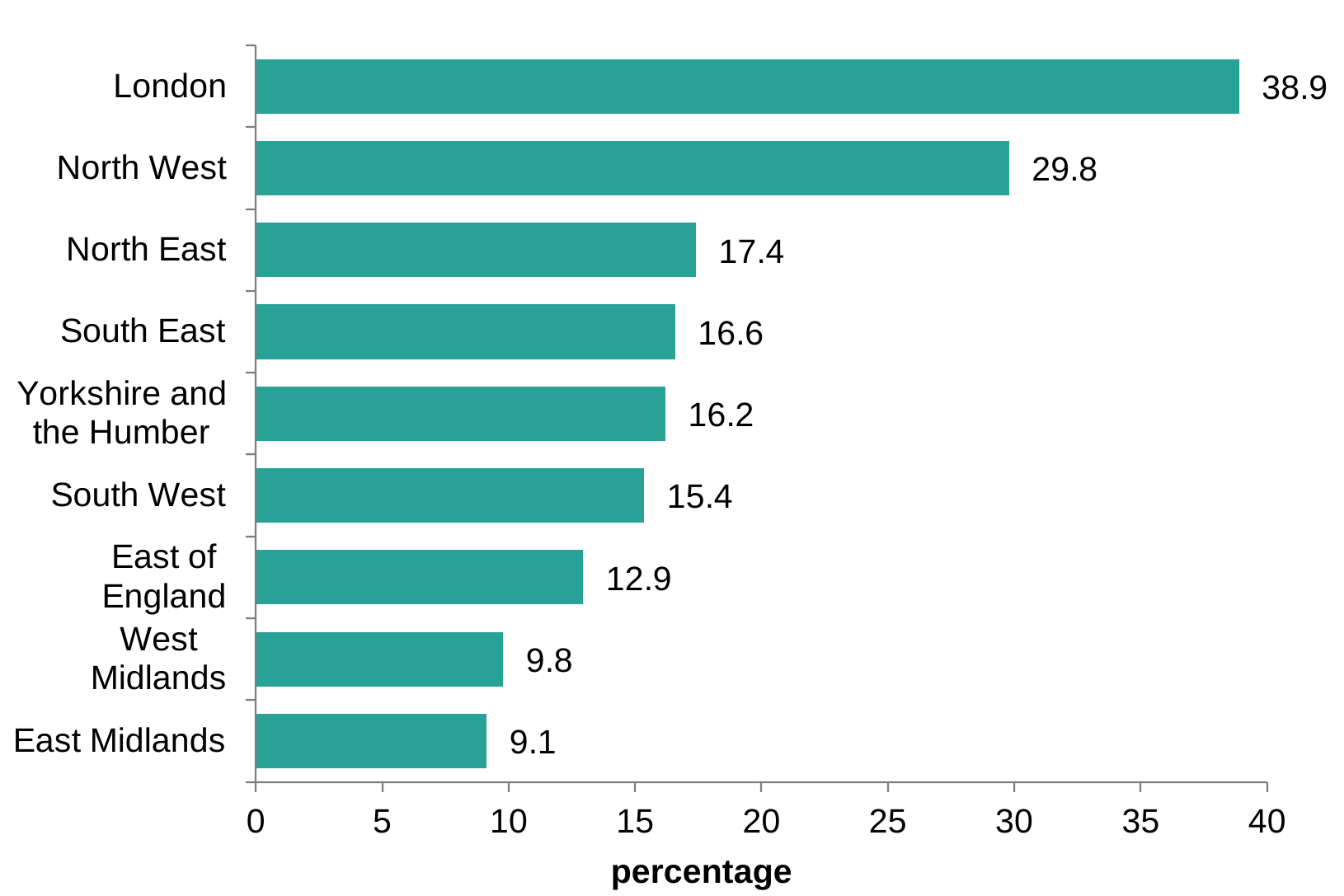
At regional level, London had the highest proportion of leasehold dwellings, 39%, followed by the North West, 30%. The remaining regions of England had a significantly lower proportion of leasehold (between 9% and 17%).
-
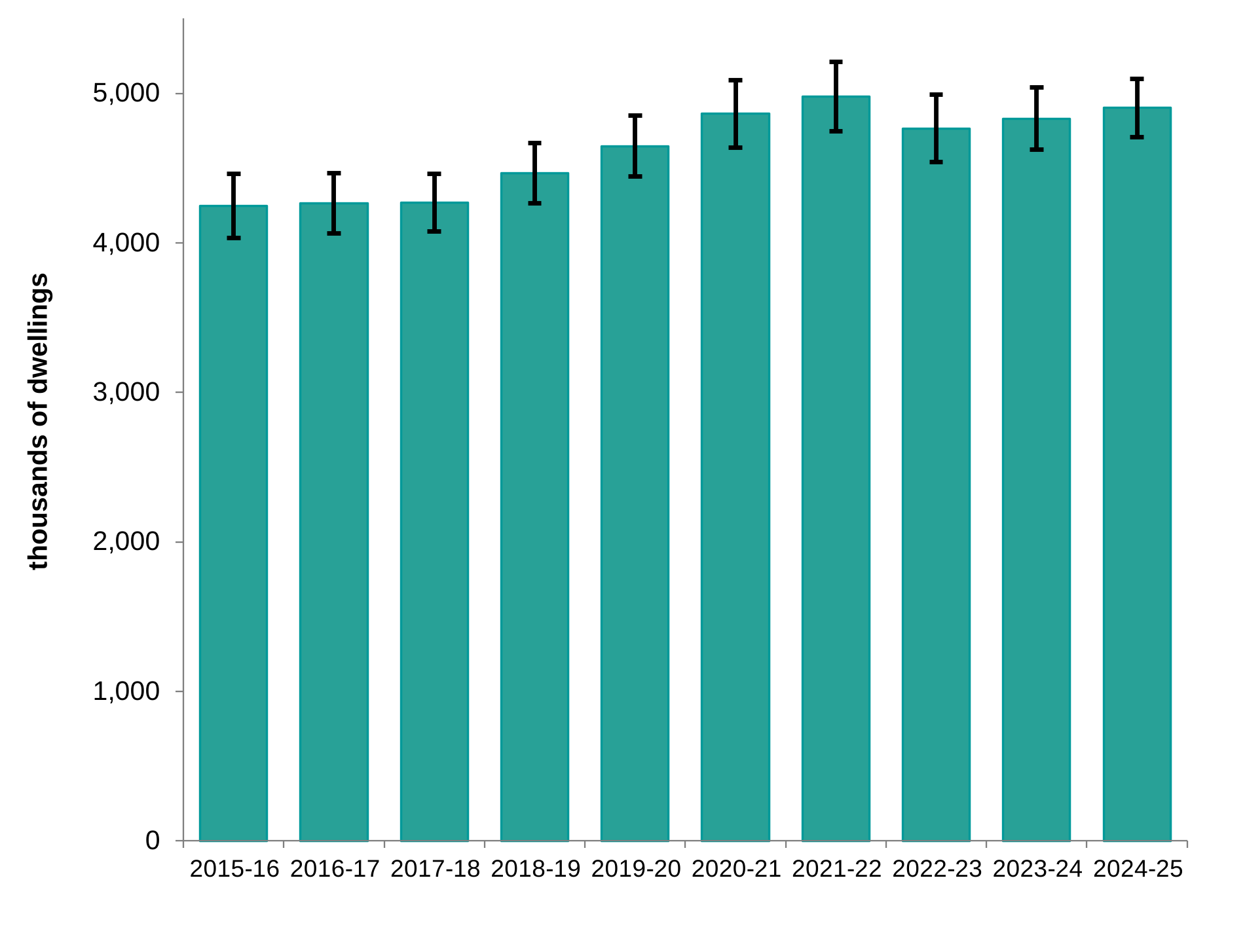
The total number of leasehold dwellings has not increased or decreased significantly in the past 5 years.
-
The majority of leasehold dwellings (2.72 million dwellings, 56%) were in the owner occupied sector and 1.91 million (39%) were privately owned and let in the private rented sector. The remaining 269,000 (5%) were dwellings let in the social rented sector.
-
The proportion of dwellings in the private rented sector that were leasehold increased in from 37% in 2022-23 to 41% in 2024-25
-
Of the leasehold dwellings in England 3.38 million (69%) were flats and 1.52 million (31%) were houses.
-
The proportion of semi-detached and terraced houses that are leasehold increased from 7% in 2022-23 to 9% in 2024-25
2.2 Time remaining on leases
-
In 2024-25 there were 4.3 million households with at least one lease in England, and a total of 5.3 million registered leases against these properties. The mean average length remaining on these leases was 483 years.
-
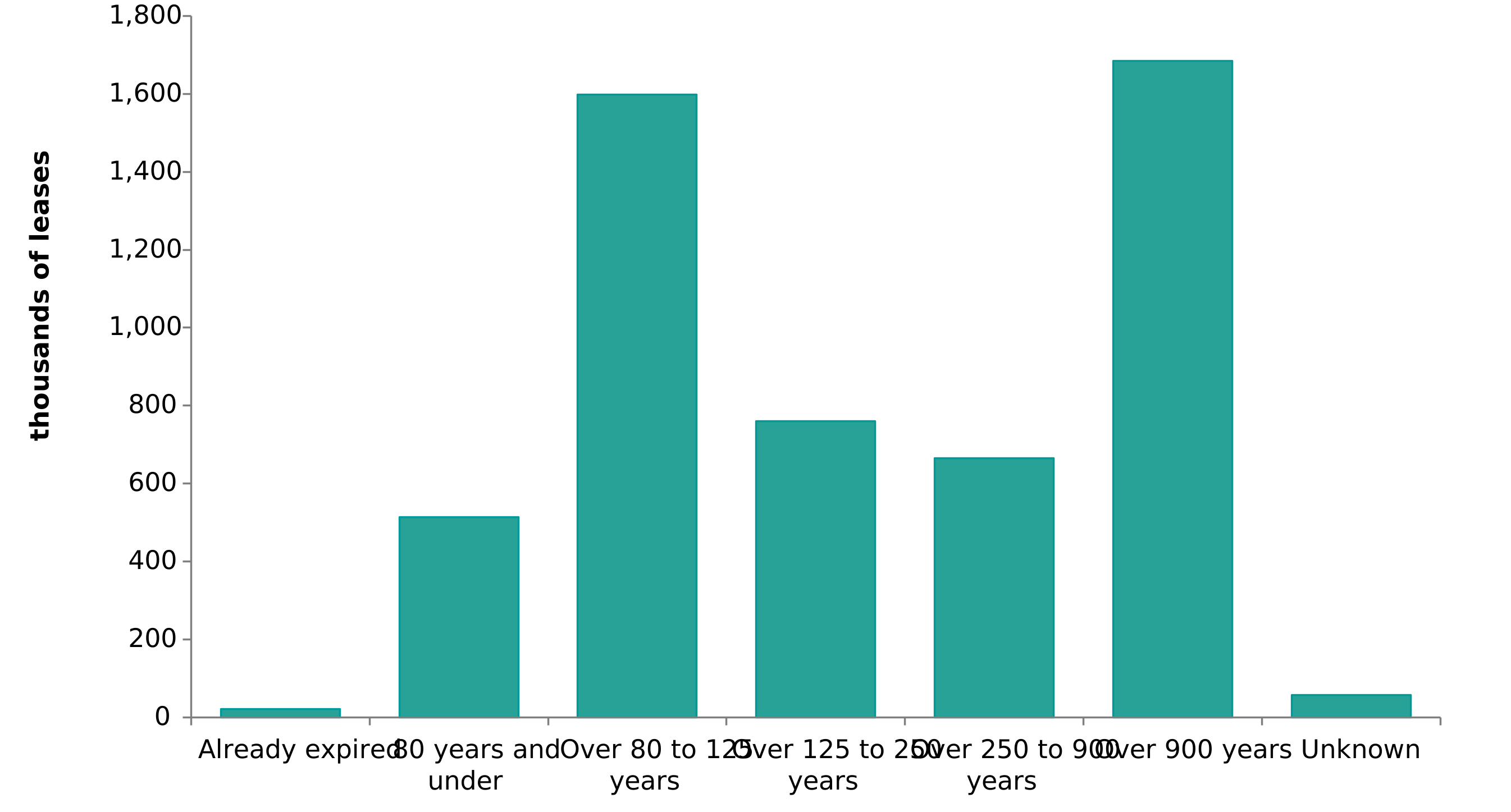
Around a third (32%) of leases had over 900 years remaining on their term. A tenth (10%) had 80 years or fewer remaining
-
Owner occupied and private rented leasehold houses had the longest average time remaining on the junior leases associated with the property, 475 and 431 years remaining respectively.
-
For those in owner occupied households (where those in residence might be expected to experience the consequences of a shorter lease), around 246,000 households were living in homes with a lease under 80 years (10%).
-
Owner occupied households in flats were significantly more likely to have less time remaining on their lease than those in houses (359 years remaining compared to 616 years).
-
Owner occupied households with a household reference person (HRP) aged 65 or older tended to have more time remaining on their lease (504 years average) than households with a HRP aged 30 to 44 (442 years).
-
However, older households were also those most likely to have a lease with under 80 years remaining (17%), significantly higher than all other age groups (1 - 11%).
-
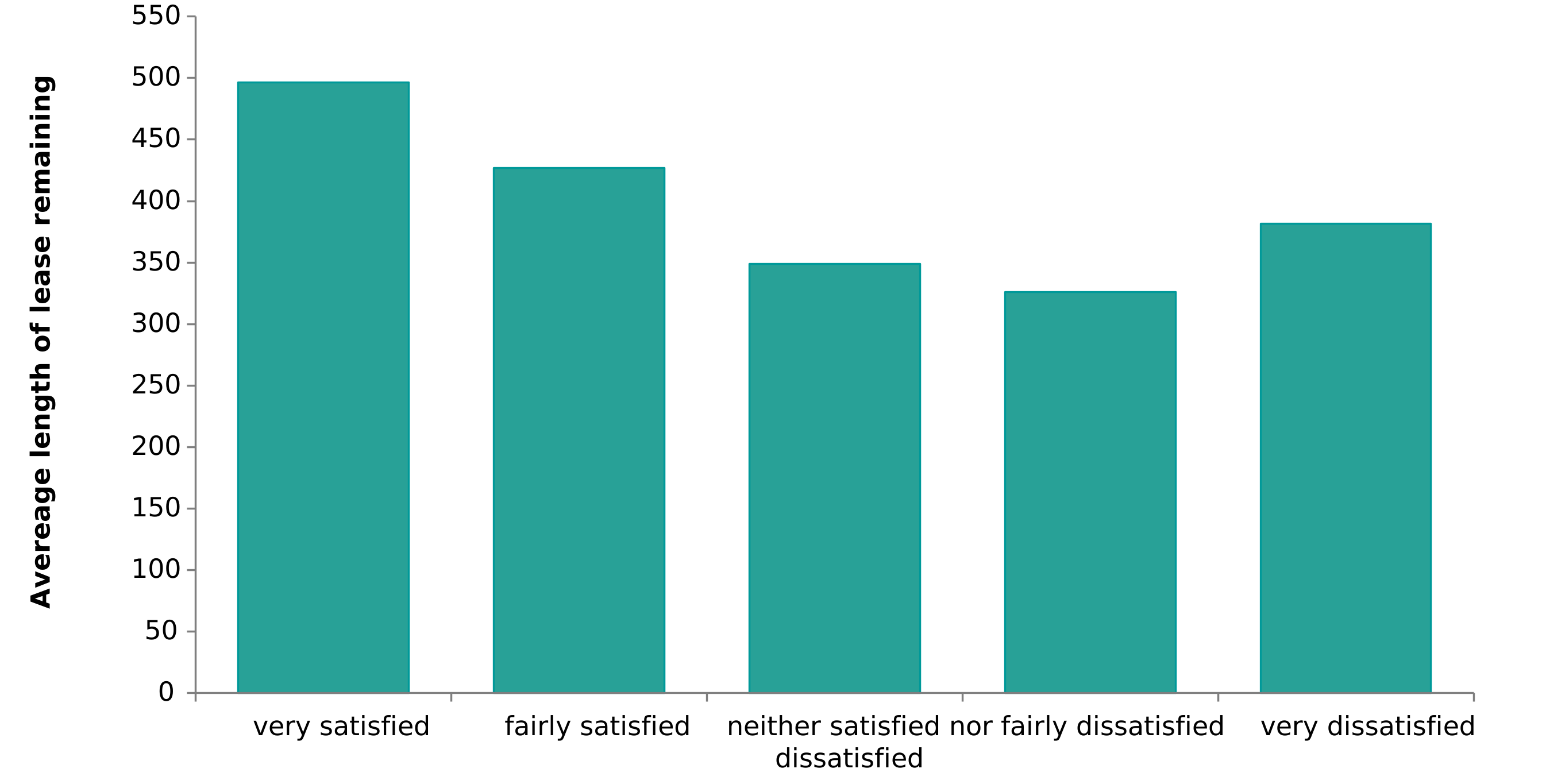
There was an association between home owner satisfaction and the time remaining on the lease. Owner occupied leaseholders who were “very satisfied” with being an owner occupier were significantly more likely to have a higher average lease term remaining (497 years) than less satisfied owner occupier leaseholders (326-427 years).
Release date: 21 May 2026
Date of next release: May 2027
Responsible Statisticians: Stephen Pottinger and Robin Hulme
Media enquiries: 0303 444 1209 NewsDesk@communities.gov.uk
3. Leasehold dwelling estimates by dwelling type and tenure
In 2024-25, there were an estimated 4.90 million leasehold dwellings in England. This equates to 20% of the English housing stock. There were a further 19.74 million freehold dwellings.
As this estimate is based on a sample of dwellings, a confidence interval around the estimate has been calculated. Using a 95% confidence interval, the 2024-25 estimate of 4.90 million sits within a lower bound of 4.71 million and an upper bound of 5.10 million leasehold dwellings.
Table 1: Number of leasehold and freehold dwellings in each tenure split by houses and flats, 2024-25
| Houses: number of leasehold dwellings (thousands) | Houses: number of freehold dwellings (thousands) | Flats: number of leasehold dwellings (thousands) | Flats: number of freehold dwellings (thousands) | Total: number of leasehold dwellings (thousands) | Total: number of freehold dwellings (thousands) | |
|---|---|---|---|---|---|---|
| Owner occupied | 1,092 | 13,147 | 1,631 | 132 | 2,722 | 13,278 |
| Private rented sector | 337 | 2,214 | 1,574 | 541 | 1,911 | 2,755 |
| All private sector | 1,428 | 15,361 | 3,205 | 673 | 4,633 | 16,034 |
| Local Authority | 12 | 697 | 27 | 749 | 39 | 1,446 |
| Housing Association | 79 | 1,277 | 151 | 989 | 230 | 2,265 |
| All social sector | 91 | 1,974 | 178 | 1,737 | 269 | 3,711 |
| All tenures | 1,519 | 17,335 | 3,383 | 2,410 | 4,902 | 19,745 |
Sources: English Housing Survey; HM Land Registry; MHCLG Dwelling Stock Estimate 2024; VOA Council Tax Stock of Properties 2024
Note: Number of dwellings listed in thousands; total sample size - 14,341 cases.
Based on Annex table 1.3
Table 1 shows the number of leasehold and freehold dwellings in flats and houses in each tenure. More than half of leasehold dwellings were in the owner occupied sector, 2.72 million dwellings, which is 56% of the leasehold dwelling stock, Annex table 1.5.
Another 1.91 million were privately owned and let in the private rented sector (39%). The remaining 269,000 (5%) were in the social rented sector.
A higher proportion of leasehold dwellings were flats (3.38 million dwellings, 69%) than houses (1.52 million dwellings, 31%). There were 2.41 million remaining flats and 17.34 million houses that were freehold, Annex Table 1.3 and 1.5.
Table 2: Proportion of leasehold dwellings in each tenure split by houses and flats, 2024-25
| Houses: % dwellings leasehold | Houses: % dwellings freehold | Flats: % dwellings leasehold | Flats: % dwellings freehold | Total: % dwellings leasehold | Total: % dwellings freehold | |
|---|---|---|---|---|---|---|
| Owner occupied | 7.7 | 92.3 | 92.5 | 7.5 | 17.0 | 83.0 |
| Private rented sector | 13.2 | 86.8 | 74.4 | 25.6 | 41.0 | 59.0 |
| All private sector | 8.5 | 91.5 | 82.7 | 17.3 | 22.4 | 77.6 |
| Local Authority | 1.7 | 98.3 | 3.5 | 96.5 | 2.6 | 97.4 |
| Housing Association | 5.8 | 94.2 | 13.3 | 86.7 | 9.2 | 90.8 |
| All social sector | 4.4 | 95.6 | 9.3 | 90.7 | 6.8 | 93.2 |
| All tenures | 8.1 | 91.9 | 58.4 | 41.6 | 19.9 | 80.1 |
Sources: English Housing Survey; HM Land Registry; MHCLG Dwelling Stock Estimate 2024; VOA Council Tax Stock of Properties 2024
Note: Number of dwellings listed in thousands; total sample size - 14,341 cases.
Based on Annex table 1.3
Table 2 shows the proportion of dwellings that were leasehold and freehold for flats and houses by tenure. The private rented sector had the highest proportion of leasehold dwellings, 41% and the smallest proportion was in the local authority sector, 3%. The private sector as a whole had 22% leasehold dwellings and the social sector had 7%.
Houses in the private rented sector were most likely to be leasehold, 13% and flats were most likely to be leasehold in the owner occupied sector, 93%.
Although it is still most common for flats to be leasehold, only 58% of flats were leasehold. A large proportion of the flats in England were in the social sector where they are less likely to be leasehold. There were 178,000 leasehold flats and 1.74 million freehold flats in the social sector.
Leasehold houses were less prevalent than leasehold flats across all tenures. Overall, there were 1.52 million houses owned on a leasehold basis (8% of all houses).
Semi-detached and terraced houses were more likely to be leasehold (9%) than detached houses (5%), Annex Table 1.3.
4. Leasehold dwellings by region
In 2024-25, just under two-fifths (39%) of all dwellings in London were leasehold, this was higher than all other English regions. London also had the greatest absolute number of leasehold dwellings (1.44 million dwellings), followed by the North West with 999,000 dwellings which represented 30% of the North West’s total dwelling stock, Annex Table(s) 1 and 2. These two regions had a significantly higher proportion of dwellings owned on a leasehold basis than the other seven regions (9% - 17%), Figure 1.1.
Figure 1.1: Proportion of housing stock owned on a leasehold basis, by region, 2024-25
Sources: English Housing Survey; HM Land Registry; MHCLG Dwelling Stock Estimate 2024; VOA Council Tax Stock of Properties 2024.
Underlying data are presented in Annex Table 1.1&1.2.
The large proportion of leasehold dwellings in London was largely due to the high number of flats in the capital. There were 2.08 million flats in London, more than half of its total dwelling stock of 3.70 million, Annex Table 1.1.
However, it is more common for a leasehold dwelling to be a house than a flat in parts of northern England. Of the leasehold dwellings in the North West, 70% were houses. Yorkshire and the Humber also had a higher proportion of houses than flats within its leasehold stock (62%), while the opposite end of the scale, in London just 6% of leasehold dwellings were houses, Annex Table 1.4.
There was a higher proportion of leasehold properties in the private sector than the social sector across all regions. London and the North West had significantly higher proportions (12% and 11% respectively) in the social sector than all other regions. There were further differences between the regions, as 5% of social properties in the West Midlands were leasehold compared to just 1% in the East Midlands.
Across all regions, leasehold properties were more common within the private rented sector than the owner occupied sector. In the private rented sector, London (65%) had the highest proportion of leasehold dwellings and the West Midlands had the lowest (16%). In the owner occupied sector, the proportion of leasehold dwellings ranged from 6% in the East Midlands to 36% in London, Annex table 1.2.
5. Changes in leasehold dwellings over time
The proportion of semi-detached and terraced houses that are leasehold increased from 7% in 2022-23 to 9% in 2024-25. This was driven by an increase proportion of semi-detached and terraced leasehold dwellings in the private rented sector, which increased from 8% in 2022-23 to 14% in 2024-25, Annex Table 1.3.
There was a slight increase in the proportion of houses that are leasehold from 7% in 2022-23 to 8% in 2024-25, but looking further back to 2019-20, it has remained the same (8%). The proportion of leasehold dwellings in the private rented sector as a whole also increased in 2024-25 to 41% from 37% in 2022-23, Annex table 1 (2022-23) .
The overall proportion of dwellings in England that were leasehold in 2024-25 (20%), is similar to 2022-23 and 2019-20 (both 19%). In London however, the proportion of dwellings that are leasehold has increased over the past 5 years from 34% in 2019-20 to 39% in 2024-25, Annex Table 1.1, Annex table 4 (2019-20).
The total number of leasehold dwellings increased from 4.25 million in 2015-16 to 4.98 million in 2021-22, however it has been stable since then. The total of 4.90 million leasehold dwellings in 2024-25 does not represent a statistically significant change from the totals in the previous 5 years, Figure 1.2.
Figure 1.2: Estimated number of leasehold dwellings, 2015-16 to 2024-25
Sources: English Housing Survey; HM Land Registry; MHCLG Dwelling Stock Estimate 2024; VOA Council Tax Stock of Properties 2024.
Underlying data are presented in Annex Tables 1.1, 1.2 and 1.3.
6. Length remaining on leases in England
This section of the report provides details of the length of time, or term, remaining on the lease for households living in leasehold properties in England. This analysis uses 2024-25, 2 years of full household survey data from 2023-24 and 2024-25. This section weights to all leasehold households in England, rather than dwellings, like the previous section.
It explores how the term remaining varies for households in different dwelling types and tenures, as well as differences by key household characteristics, and by leaseholder satisfaction with tenure and accommodation.
Shorter lease lengths can reduce a property’s market value and make it harder to sell or remortgage. Owners may also face higher costs to extend the lease over time, with premiums increasing as the remaining term decreases.
It follows on from similar analysis undertaken using data from HM Land Registry and English Housing survey covering the 2023-24 period. Due to an overlap in the reporting periods to ensure full geographical coverage of leasehold households results are not directly comparable. Direct comparisons to the 2023-24 data will be available when the 2025-26 data is published in 12 months’ time.
6.1 Length remaining on all leases
There were 5.3 million leases registered against properties occupied by households in England in 2024-25. This includes some households with multiple leases registered against the property. The mean average length remaining on these leases was 483 years, figure 2.1 underlying data.
The following chart shows the lease length remaining for all residential leases in England. This will include some leases registered against the same properties. Around a third (32%) of leases had over 900 years remaining on their term. A tenth (10%) had 80 years or fewer remaining, with a very small minority having already expired (<1%). There was also a cluster of leases with between 80 to 125 years remaining (30%). This likely reflects the shorter leases more generally associated with flats. Further details on this are provided in the following sections.
Figure 2.1. All leases, leasehold term analysis, 2024-25
Sources: English Housing Survey, 2 year combined data 2023/24 – 2024/25; HM Land Registry, leasehold households, excludes households in properties unable to be matched to the Land Registry title property database
6.2 Length remaining on the most junior leases for leasehold households
There were 4.3 million households with at least one lease in England in 2024-25, figure 2.2 underlying data.
Some properties can have more than one lease due to historical arrangements, such as separate leases being granted for different parts of a building (e.g. a flat and a garage) or variations/extensions that create overlapping lease interests. In other cases, multiple leases can arise from complex ownership structures, including headleases and subleases where different parties hold layered rights over the same property.
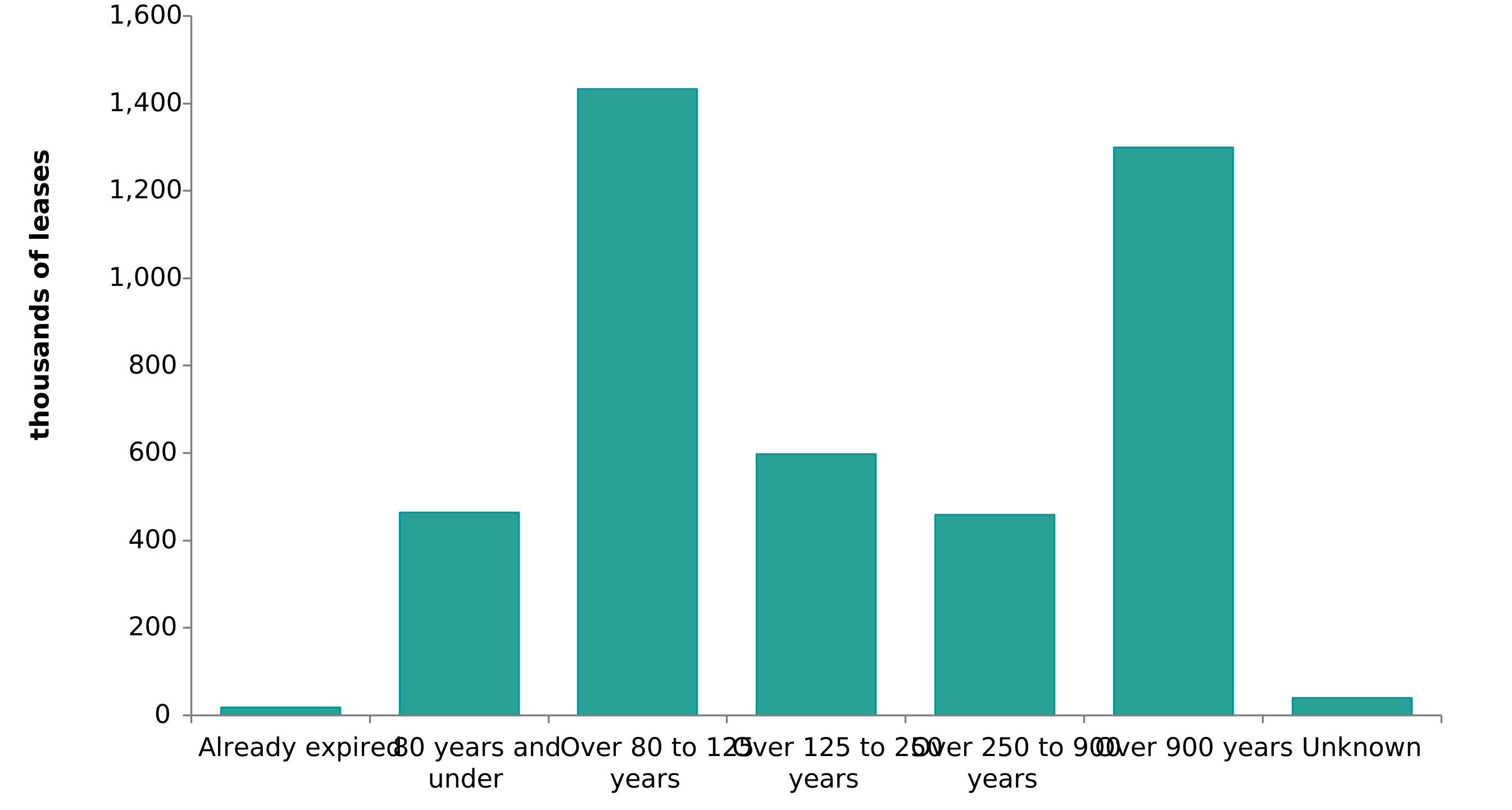
For households living in properties with more than one lease, the most junior lease is the one ending soonest, and this is the lease most likely to be heled by the homeowner or landlord in the case of leasehold properties in the rented sector. The following chart focuses solely on the most junior lease associated with households in England.
As might be expected given the large degree of overlap between the data, the results were comparable. The majority of households had a junior lease with either 900 or more years remaining (30%) or 80 to 125 years remaining (33%). Given these data excluded all senior leases (where more than one lease existed against a household’s property), it was unsurprising to find the average lease length remaining was shorter than that for all leases (447 compared to 483 years), figure 2.2 and annex table 2.1.
Figure 2.2. Most junior lease, leasehold term analysis, 2024-25
Sources: English Housing Survey, 2 year combined data 2023/24 – 2024/25; HM Land Registry, leasehold households, excludes households in properties unable to be matched to the Land Registry title property database
7. Lease length remaining by dwelling characteristics
There were significant differences in the average lease length remaining between leasehold households in different tenures.
Owner occupied and private rented leasehold houses had the longest average time remaining on the junior leases associated with the property, 475 and 431 years remaining respectively. This was significantly higher than leasehold households in both housing association and local authority social rented sector homes (306 and 250 years respectively), annex table 2.1.
Looking exclusively at owner occupied households (where those in residence might be expected to experience the consequences of a shorter lease), around 246,000 households were living in homes with a lease under 80 years (10%).
Owner occupied households in flats were significantly more likely to have less time remaining on their lease than those in houses (359 years remaining compared to 616 years). This was driven by the higher proportion of owner occupied households in flats with between 80 and 125 years remaining on the lease (47%) compared to houses (14%) and reflects the fact flats are more likely to be granted an initial lease term of 125 years or less.
Owner occupied households in flats were less likely to have a lease under 80 years (7%) than those in houses (13%), annex table 2.2.
8. Lease length remaining by household characteristics
This section primarily focuses on the relationship between household characteristics and leasehold length for those in owner occupied leasehold households. This is because household in the private rented and social rented sectors would not normally be expected to deal with leasehold issues (the responsibility would fall to the landlord). Data is provided on the relationship between all leasehold households and household characteristics in annex table 2,3.
Focusing on the household make-up of owner occupied leasehold households, there was little difference in mean lease length remaining between households with and without dependent children and those of single or mixed occupancy.
Owner occupied households with a household reference person (HRP) aged 65 or older had the highest mean length of time remaining on their lease (504 years), this was significantly higher than those households with a HRP aged 30 to 44 (442 years).
Despite having the highest mean length of time remaining on their lease, older households were also most likely to have a lease with fewer than 80 years remaining (17%), significantly higher than all other age groups (1 - 11%). Although they were also the group most likely to have over 900 years remaining on their lease (38%), significantly more than households with a HRP aged 30 to 44 years (29%) or 45 to 64 years (32%).
Owner occupied leasehold households where the HRP was retired were most likely to have a lease with under 80 years remaining (17%). This was significantly higher than households were the HRP was in full-time (7%) or part-time work (10%). This was perhaps unsurprising given the prevalence of shorter lease terms among older HRPs.
There were also some notable differences in average lease length remaining for owner occupied leasehold households by the ethnicity of the HRP. Households where the HRP was from a black ethnic background had a lower average lease term remaining (392 years), than those from Asian (536 years) ethnic backgrounds. HRPs from a black ethnic background were also significantly more likely to have fewer than 80 years remaining on their lease (14%) compared to HRPs with an Asian (3%) ethnic background.
There was little difference in lease terms remaining between owner occupied leasehold households by gender or health condition of the household reference person.
While there was no difference in the average remaining lease length for owner occupied households by household income quintile, households in the two lowest income quintiles were significantly more likely to have a lease with fewer than 80 years remaining (17% and 13% respectively) compared to households on the highest income quintile (7%), annex table 2.4.
9. Satisfaction with accommodation and tenure by lease length remaining
As in the previous section, this section focuses on owner occupied leasehold households. Data for all households is available in annex table 2.5.
There is an association between leaseholder satisfaction with tenure and the length of time remaining on the lease.
Owner occupied leaseholds households who indicated that were “very satisfied” with being an owner occupier were significantly more likely to have a higher average lease term remaining (497 years) than other owner occupier leaseholders (326-427 years).
Figure 2.3. Average lease length for shortest lease by satisfaction with being an owner occupier, 2024-25
Sources: English Housing Survey 2 year combined data 2023/24 – 2024/25; HM Land Registry, owner occupiers only, excludes don’t knows and households in properties unable to be matched to the Land Registry title property database
Looking specifically at those in houses, owner occupier leaseholders who were “very satisfied” with being an owner occupier had a higher average term time remaining than those who were “neither satisfied nor dissatisfied” (629 years compared to 391 years).Only 11% of “very satisfied” of leaseholders in houses had leases of between 80 and 125 years, whereas for those “slightly dissatisfied” the equivalent figure was 44%.
For those in flats there was little difference in satisfaction levels between those in properties with differing lease terms, annex table 2.7
10. Enquiries
Media enquiries:
telephone: 0303 444 1209
Email: newsdesk@communities.gov.uk
Public enquiries and Responsible Statisticians:
Stephen Pottinger
Robin Hulme
Email: ehs@communities.gov.uk
Information on Official Statistics is available via the UK Statistics Authority website.
Information about statistics at MHCLG is available via the Department’s website.