Income-related benefits: estimates of take-up: financial year ending 2024
Published 30 October 2025
Applies to England, Scotland and Wales

© Crown copyright 2025
This publication is licensed under the terms of the Open Government Licence v3.0 except where otherwise stated. To view this licence, visit nationalarchives.gov.uk/doc/open-government-licence/version/3 or write to the Information Policy Team, The National Archives, Kew, London TW9 4DU, or email: psi@nationalarchives.gov.uk.
Where we have identified any third party copyright information you will need to obtain permission from the copyright holders concerned.
This publication is available at https://www.gov.uk/government/statistics/income-related-benefits-estimates-of-take-up-financial-year-ending-2024/income-related-benefits-estimates-of-take-up-financial-year-ending-2024
The Income-related benefits: estimates of take-up report provides estimates of take-up for income-related benefits within the entitled pensioner population.
The pension age benefits covered are:
- Pension Credit (PC)
- Housing Benefit (HB) (for pensioners)
Take-up refers to the receipt of benefits someone is entitled to, and we estimate take-up in two ways:
- by the number of people who claim these benefits (‘caseload’)
- by the amount these people claim (‘expenditure’)
Family Resources Survey (FRS) data collection for financial year ending (FYE) 2024
During the survey years spanning the coronavirus (COVID-19) pandemic, FRS interviewing was conducted by telephone rather than using the established face-to-face method. Fieldwork operations during FYE 2024 have returned to the arrangements in place prior to the pandemic.
In Great Britain, survey fieldwork operations used face-to-face interviewing as the preferred method of data collection for the duration of the year. Telephone interviewing was retained as an alternative based on household preference and interviewer availability. Across the UK, 86% of FRS households were interviewed face-to-face during FYE 2024.
This year, the FRS achieved a sample of over 16,000 households. This is lower than that achieved in FYE 2023 (due to the boost in the sample size last year), it has returned to more usual levels and compares well with FYE 2022. Of the 16,000 households in the FYE 2024 sample, just over 5,000 were pensioners.
Users should be mindful of the differences in data collection approaches across the period and the effect this has had on sample composition when interpreting changes in estimates over recent years.
More information can be found in the Households Below Average Income (HBAI) quality and methodology information report and the FRS background information and methodology.
1. Estimates of take-up by caseload and expenditure
Pension Credit
The estimates show that:
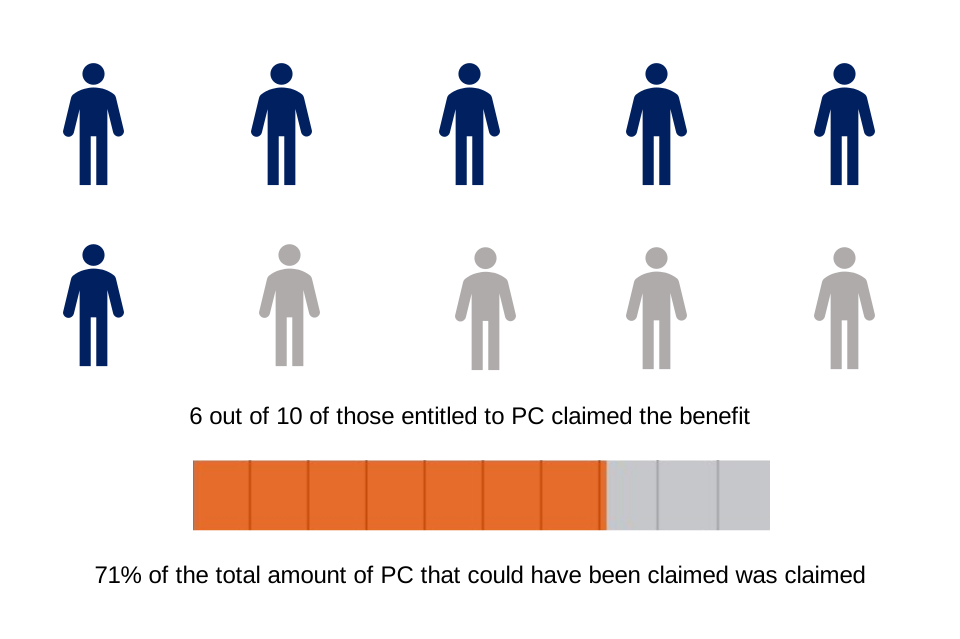
- caseload: 6 out of 10 of those entitled to PC claimed the benefit in FYE 2024
- 62% of those entitled to Pension Credit claimed the benefit in FYE 2024, which was a decrease from FYE 2023, when 65% claimed the benefit – this difference is not statistically significant
- expenditure: 71% of the total amount of PC that could have been claimed, was claimed in FYE 2024, which was a decrease from FYE 2023, when 78% was claimed – this difference is statistically significant
Overall PC caseload and expenditure figures for FYE 2024
Housing Benefit (for pensioners)
The estimates show that:
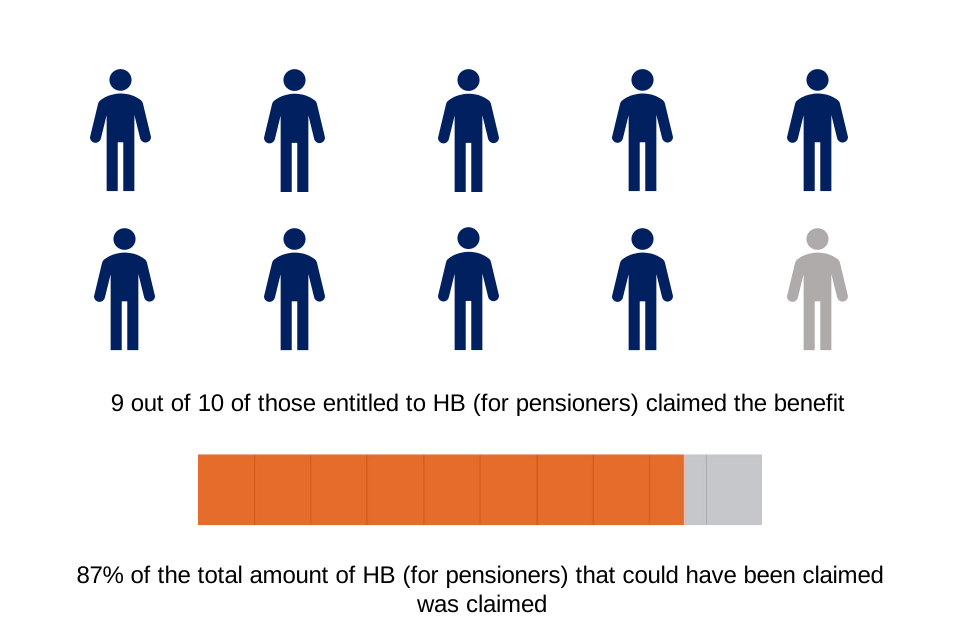
- caseload: 9 out of 10 of pensioners entitled to HB claimed the benefit in FYE 2024
- 85% of pensioners entitled to HB claimed the benefit in FYE 2024, which was an increase from FYE 2023, when 83% claimed the benefit – this difference is not statistically significant
- expenditure: 87% of the total amount of HB (for pensioners) that could have been claimed was claimed in FYE 2024, which was the same as in FYE 2023
Overall HB (for pensioners) caseload and expenditure figures for FYE 2024
2. Estimates of non-take-up for families and expenditure
Pension Credit
The estimates show that:
- caseload: up to 910,000 families who were entitled to receive PC did not claim the benefit, an increase from FYE 2023 when there were up to 760,000 families who were entitled and did not claim the benefit
- expenditure: up to £2.5 billion of available PC went unclaimed, an increase from the estimate of up to £1.5 billion unclaimed in FYE 2023
- on average, this amounted to around £2,600 per year (an increase from £1,900 in FYE 2023) for each family entitled to receive PC who did not claim the benefit
Housing Benefit (for pensioners)
The estimates show that:
- caseload: up to 230,000 pensioner families who were entitled to receive HB did not claim the benefit, a decrease from FYE 2023 when there were up to 270,000 families who were entitled and did not claim the benefit
- expenditure: up to £1.1 billion of available HB (for pensioners) went unclaimed, the same as in FYE 2023
- on average, this amounted to around £4,600 per year (an increase from £3,700 in FYE 2023) for each family entitled to receive HB (for pensioners) who did not claim the benefit
3. What you need to know
Introduction
This report provides estimates of the take-up of benefits in Great Britain (GB) for FYE 2024, within the entitled pensioner population for the following income-related benefits:
- Pension Credit (PC)
- Housing Benefit (for pensioners) (HB)
Take-up refers to the receipt of benefits someone is entitled to. There are some people who are entitled to benefits but have not claimed them. An income-related benefit is a benefit where a claimant’s income and capital are considered when deciding whether they are entitled to the benefit. Income can include earnings or other benefits and capital can include savings.
Take-up of benefits can be affected by multiple factors. Trying to explain the reasons for non-take-up is difficult and we do not have data in our modelling to do this. Take-up may be affected by broad factors such as the attractiveness of the benefit, lack of awareness of the benefit or application procedure, lack of awareness of entitlement, or the perceived stigma of receiving a benefit Eurofound 2015.
Take-up statistics are not available at a lower level of geography than GB. This is because the survey sample sizes for Entitled Non-Recipients (ENRs) are too small to calculate take-up rates in smaller geographical areas. Similarly, HB take-up statistics are only available as totals. This is also because the survey sample sizes for ENRs are too small to be able to calculate take-up rates for sub-groups.
Methodological refinements were applied to the data from FYE 2017. Therefore, comparisons to previous years should be treated with caution. This is indicated in the data tables and charts using a dashed grey line.
Since June 2018, all FRS processing in Great Britain, including data linking, has been carried out on the basis that it is necessary for the department to carry out its functions as a public body. It means we can attempt to link all respondents (who are fully informed about how their information will be used), as opposed to just the two thirds who consented previously. This change, together with recent improvements in our linking methodology, means that we can now find National Insurance Numbers (NINOs) for more than 95% of respondents – up from just over 50% previously. From FYE 2020 onwards we have been able to link to Universal Credit (UC), Disability Living Allowance (mobility component), Personal Independence Payment, Tax Credits, Carer’s Allowance, and Child Benefit, as well as benefits that we have been linking to in previous years.
From FYE 2024, we have incorporated improved linking of administrative data to the FRS, to better identify those in receipt of Pension Credit or Housing Benefit. See Background Information and Methodology for more detail.
From May 2019, both partners in a couple were required to have reached State Pension age (SPa) to make a successful claim for income-related pension age benefits. The SPa for FYE 2024 is 66 for both males and females.
With the abolition of Savings Credit (SC) for new pensioners from April 2016, and the reducing number of SC only cases in the entitled population, we are no longer able to estimate SC breakdowns with a sufficient level of confidence. Therefore, from FYE 2022 onwards, SC breakdowns are no longer included in the data tables. Historic SC breakdowns can be found in previous releases.
See Section 11 – Improvements and Refinements section in the background information and methodology for more details.
Content of the report
Take-up is estimated in 2 ways:
1. Caseload: Over a one-year period, the average number of benefit recipients who received each benefit compared to the number if everyone entitled to the benefit had claimed it.
2. Expenditure: Over a one-year period, the average amount of a benefit claimed multiplied by the total number of people claiming it, compared to the total amount if everyone entitled to the benefit had claimed it.
Note that the caseload figures are rounded to the nearest 10,000 and percentages are rounded to the nearest percentage point. For expenditure figures, the amounts claimed and unclaimed are rounded to the nearest £10 million and percentages are rounded to the nearest percentage point.
The charts presented here are based on these rounded estimates, rather than unrounded. Percentage point differences stated in this publication have been calculated on unrounded percentages.
The average numbers of ENRs, and the average amounts unclaimed are estimated, along with 95% confidence intervals to reflect uncertainty. These estimates are combined with the receipt estimates to produce the lower bound, central, and upper bound take-up estimates. The lower bound and upper bound estimates are presented as a range around the central estimate on all charts.
Throughout this report a ‘family’ refers to either a single adult or a married or cohabiting couple, and any dependent children.
In reporting average annual amounts unclaimed we have used mean weekly amounts to be consistent with the estimated total amount unclaimed. Information on median weekly amounts unclaimed is available in the data tables.
Statistically significant differences in this publication are clearly stated. For more information on statistical significance see Section 7.
This report contains data from FYE 2013 to FYE 2024. Data for FYE 2010 can also be found in the data tables.
Further information
A set of data tables which breaks down the headline results presented in this publication, along with a quick guide on how to use them, are available online in Data Tables and Guide. Data from the tables are referenced throughout this report.
DWP released a publication to go alongside the annual Fraud and Error in the Benefit system publication. This is called “Unfulfilled eligibility in the benefit system Financial Year Ending (FYE) 2025” and can be found at : Unfulfilled-eligibility-in-the-benefit-system.
This publication complements the Income-related benefits: estimates of take-up publication and estimates how much extra money benefit claimants could be getting if they told DWP accurately about their circumstances. These people are already getting some money on a certain benefit but may not be getting all the money they could be eligible for on this benefit – this is called unfulfilled eligibility.
For further information, contact Fraud and Error Measurement and Accuracy (FEMA) at enquiries.fema@dwp.gov.uk.
DWP released an ad hoc publication Analysis of householders potentially eligible for Pension Credit, and eligible households in receipt of pension Credit – 2023 to 2024, in October 2025. This publication provides analysis of the characteristics of households potentially eligible for, but not claiming, Pension Credit. The ad-hoc statistics do not include national estimates for Great Britain, instead, it provides analysis at a sub-national level (below Great Britain). It is important to note that the figures in this ad hoc are not directly comparable with the Income-related benefits: estimates of take-up publication, which should continue to be used for national estimates of take-up. The ad hoc report looks at entitlement across the full FYE 2024 rather than the FRS survey year, and does not take into account the savings and housing costs for potential recipients – making it more likely to incorrectly classify a household as being entitled to Pension Credit.
For further information please see the Ad hoc statistical analyses: 2025 - GOV.UK publication.
4. Pension Credit
62% of those entitled to Pension Credit received the benefit
Take-up range (caseload) of PC, FYE 2013 to FYE 2024, GB
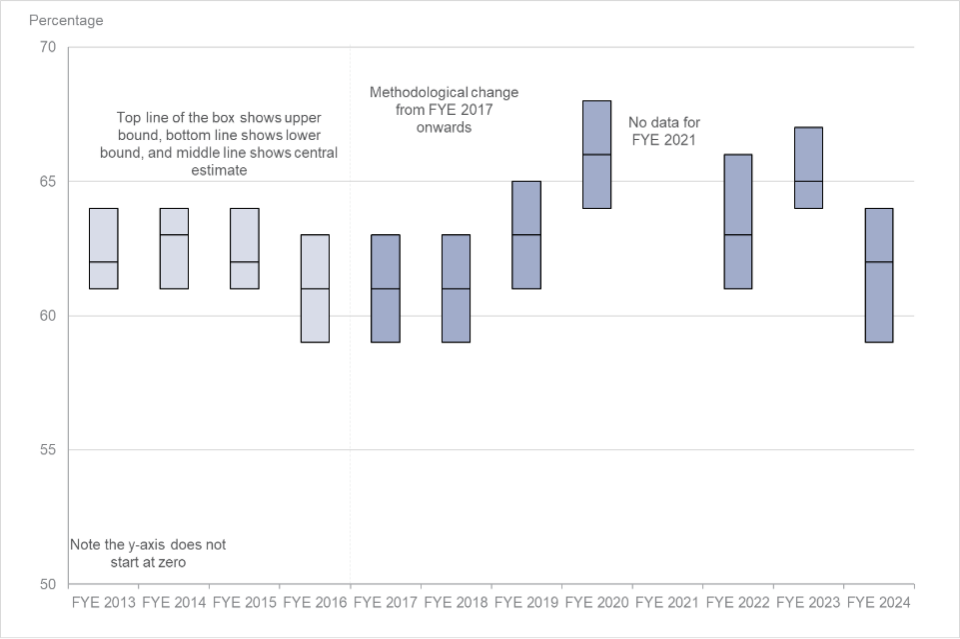
62% of those entitled to Pension Credit received the benefit in FYE 2024.
This was a decrease of 3 percentage points from FYE 2023, when the take-up rate was 65%. This difference is not statistically significant.
From April 2022, DWP launched an ongoing campaign which consists of increased advertising to make people more aware of the possibility that they could be entitled to PC.
During FYE 2023 and FYE 2024, people in receipt of Pension Credit were entitled to a Cost of Living Payment (COLP). For more information see the background information and methodology.
The estimated take-up rate for Pension Credit is lower in FYE 2024 than in FYE 2023, however this is not a statistically significant change. We present 95% confidence intervals alongside our central take-up estimates, as a measure of sampling error. As with any analysis using survey data there will be sample variation which can impact estimates year on year.
We see the number of Pension Credit recipients in the caseload figures is the same in FYE 2023 and FYE 2024. However, there are more estimated ENRs in FYE 2024 compared to FYE 2023.
See Table PC1 for full data.
Caseload take-up of Guarantee Credit (GC) was higher than Savings Credit only
Take-up range (caseload) of GC and SC only, FYE 2013 to FYE 2024, GB
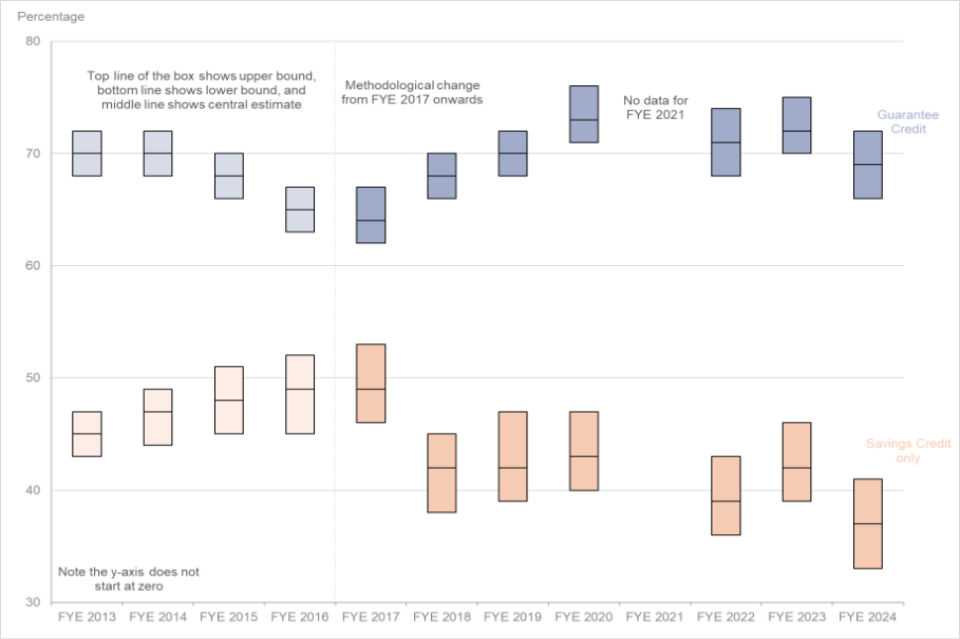
In FYE 2024, the take-up rate of GC was 69%, compared to FYE 2023 when it was 72%.
In FYE 2024, the take-up rate of SC only was 37%, compared to FYE 2023 when it was 42%.
In FYE 2024, the take-up rate for GC (69%) continued to be higher than the take-up rate for SC only (37%). This difference is statistically significant.
See Table PC1 for full data.
Caseload take-up of Pension Credit was highest for single males
Take-up range (caseload) of PC by family type, FYE 2013 to FYE 2024, GB
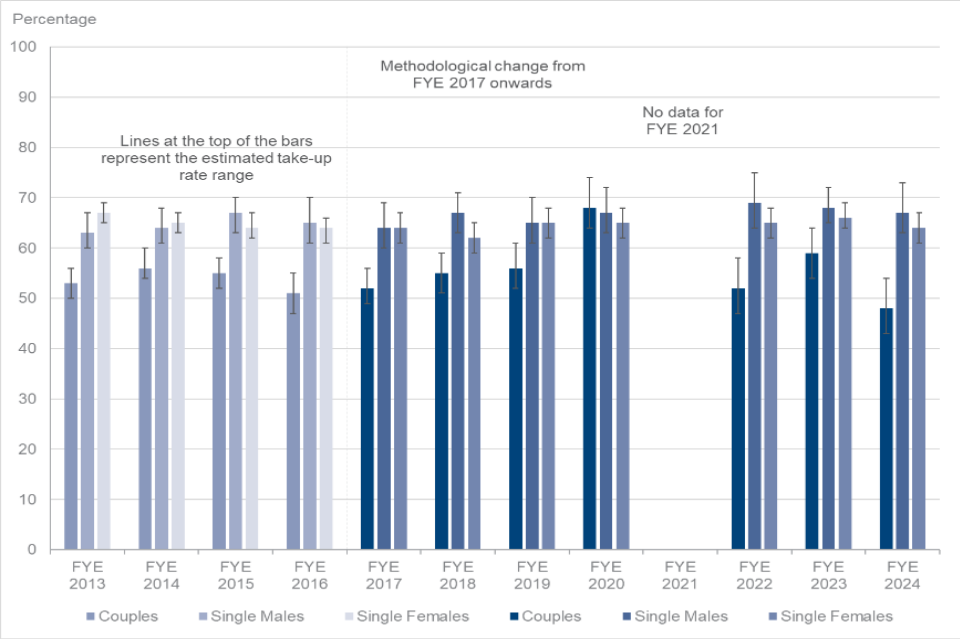
For FYE 2024, the caseload take-up rate of PC was higher for single males (67%) than for single females (64%) and couples (48%). The difference between single males and couples, and single females and couples, is statistically significant.
The take-up rate of PC for couples has decreased from FYE 2023 (59%) to FYE 2024 (48%).
See Table PC3 for full data.
The caseload take-up of Pension Credit by those aged 75 or over was lower than those aged under 75
Take-up range (caseload) of PC, by age, FYE 2013 to FYE 2024, GB
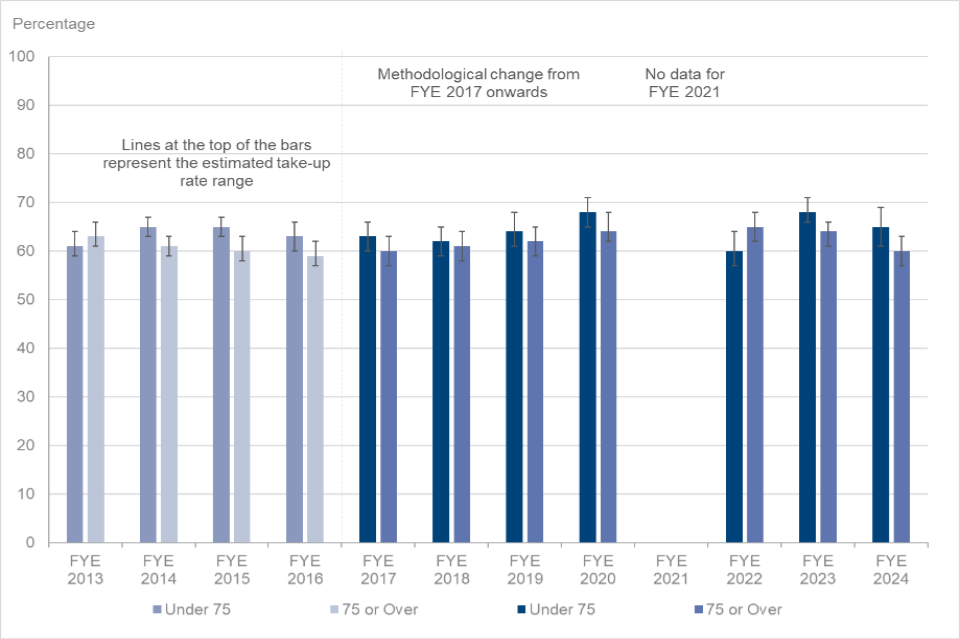
The take-up rate of PC for those aged under 75 has decreased by 3 percentage points from FYE 2023 (68%) to FYE 2024 (65%).
The take-up of PC for those aged 75 or over has decreased by 4 percentage points from FYE 2023 (64%) to FYE 2024 (60%).
See Table PC7 for full data.
71% of the total amount of Pension Credit that could have been claimed was claimed
Take-up range (expenditure) of PC, FYE 2013 to FYE 2024, GB
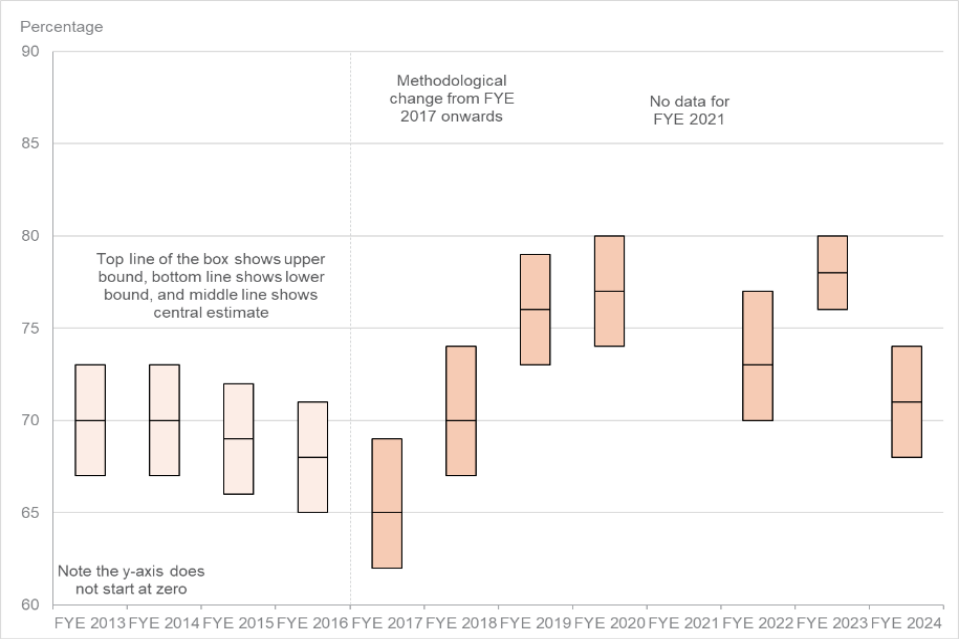
In FYE 2024, an estimated 71% of the total amount of PC that could have been claimed was claimed. This was 7 percentage points lower than for FYE 2023 (78%). This difference is statistically significant.
The difference is related to the decrease in the estimated caseload take-up rate and the 10.1% increase in the Standard Minimum Guarantee (SMG) in FYE 2024, which was higher than the 3.1% increase in FYE 2023. This led to an increase in the estimated mean weekly amount claimed and an increase in the estimated mean weekly amount unclaimed.
See Table PC2 for full data.
Expenditure take-up of Guarantee Credit was higher than Savings Credit only
Take-up range (expenditure) of GC and SC only, FYE 2013 to FYE 2024, GB
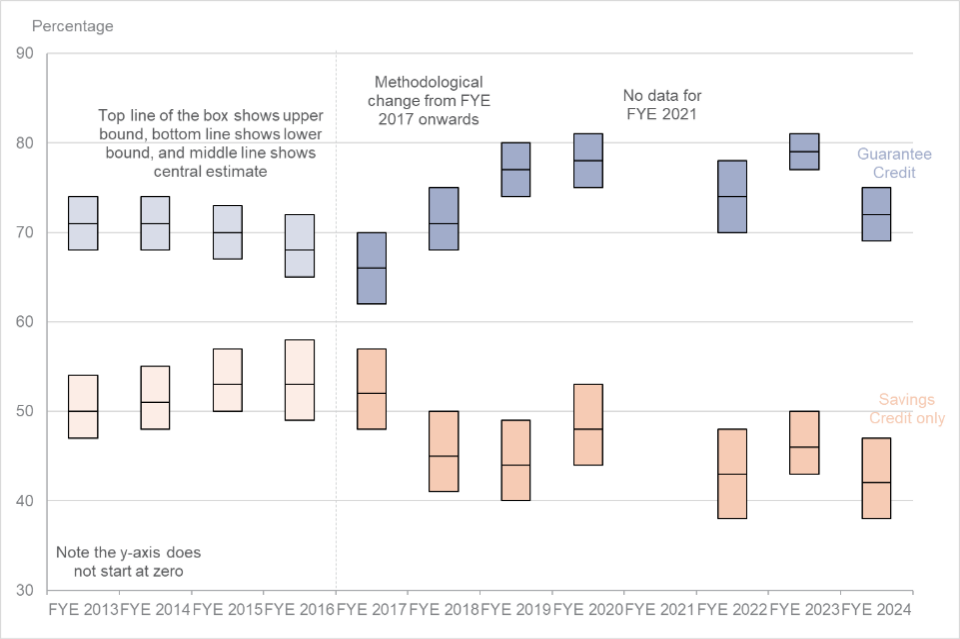
In FYE 2024, an estimated 72% of the total amount of total GC that could have been claimed was claimed. In FYE 2023 it was 79%. This difference is statistically significant.
In FYE 2024, an estimated 42% of the total amount of SC only that could have been claimed was claimed. In FYE 2023 it was 46%.
In FYE 2024, the expenditure take-up of GC (72%) continued to be higher than expenditure take-up of SC only (42%). This difference is statistically significant.
See Table PC2 for full data.
Expenditure take-up of Pension Credit was highest for single males
Take-up range (expenditure) of PC by family type, FYE 2013 to FYE 2024, GB
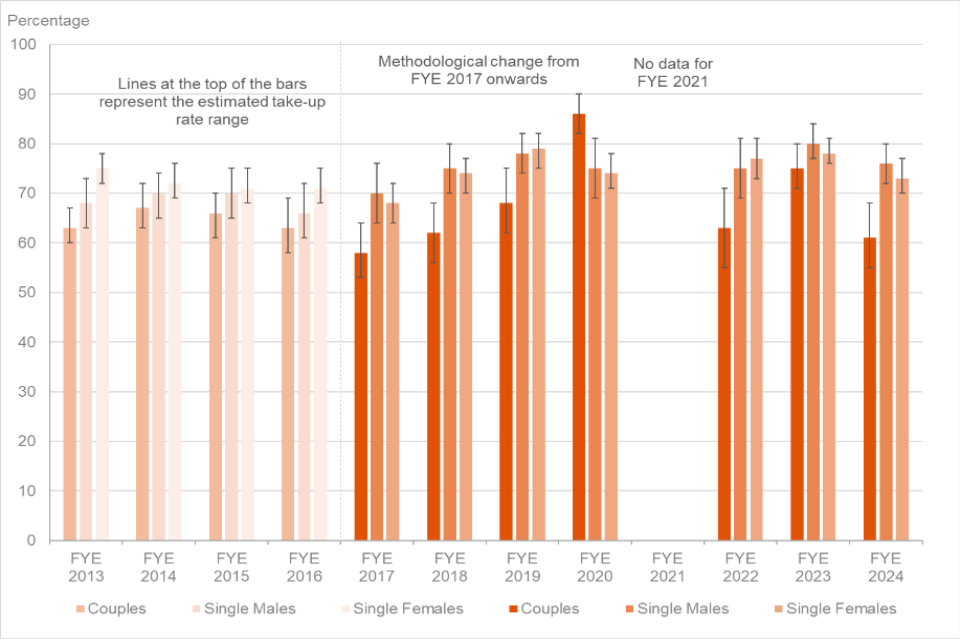
For FYE 2024, expenditure take-up of PC by single males (76%) was higher than that of single females (73%) and couples (61%). The difference between single males and couples, and single females and couples, is statistically significant.
In FYE 2024, an estimated 76% of the total amount of PC that could have been claimed by single males was claimed. In FYE 2023, it was 80%.
In FYE 2024, an estimated 73% of the total amount of PC that could have been claimed by single females was claimed. In FYE 2023, it was 78%.
In FYE 2024, an estimated 61% of the total amount of PC that could have been claimed by couples was claimed. In FYE 2023, it was 75%. This decrease of 14 percentage points is statistically significant.
The difference is related to the decrease in the estimated caseload take-up rate and the 10.1% increase in the Standard Minimum Guarantee (SMG) in FYE 2024. Which in turn led to an increase in the estimated mean weekly amount claimed and an increase in the estimated mean weekly amount unclaimed.
See Table PC4 for full data.
Expenditure take-up of Pension Credit by those aged 75 or over was lower than those aged under 75
Take-up range (expenditure) of PC, by age, FYE 2013 to FYE 2024, GB
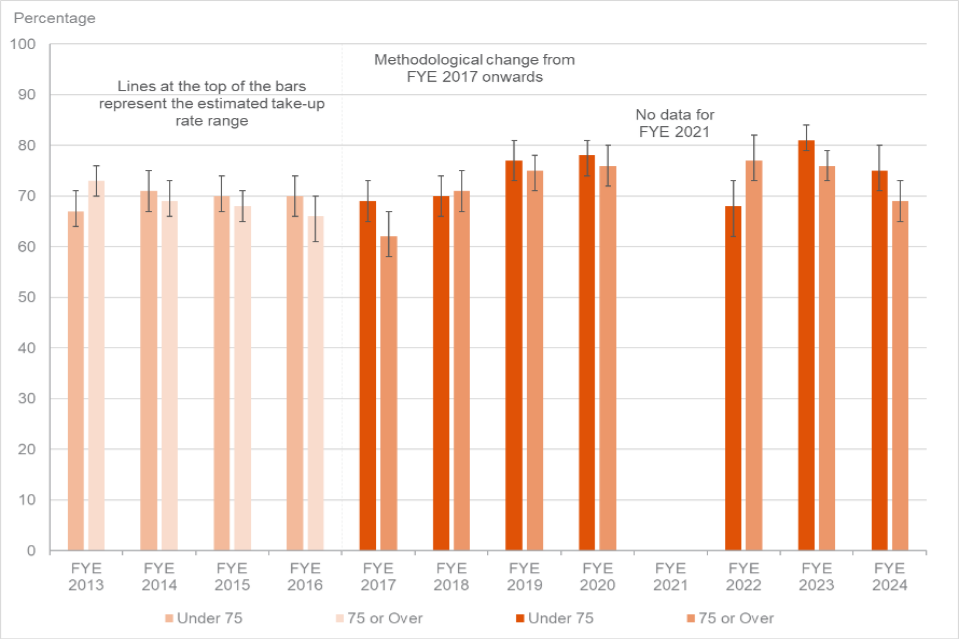
The expenditure take-up of PC by those aged under 75 decreased by 6 percentage points from 81% in FYE 2023 to 75% in FYE 2024.
The expenditure take-up of PC by those aged 75 or over decreased by 7 percentage points from 76% in FYE 2023 to 69% in FYE 2024. This decrease is statistically significant.
See Table PC8 for full data.
5. Housing Benefit (for pensioners)
85% of those entitled to Housing Benefit (for pensioners) received the benefit
Take-up range (caseload) of HB (for pensioners), FYE 2013 to FYE 2024, GB
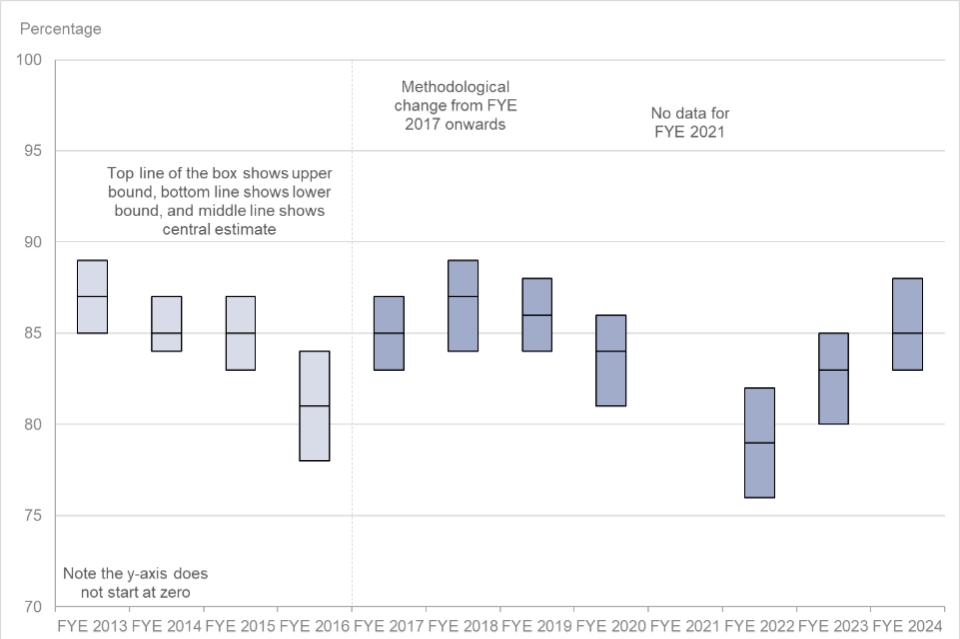
In FYE 2024, an estimated 85% of pensioners who were entitled to HB received it.
This was 2 percentage points higher than in FYE 2023 (83%).
See Table HB1 for full data.
87% of the total amount of Housing Benefit (for pensioners) that could have been claimed was claimed
Take-up range (expenditure) of HB (for pensioners), FYE 2013 to FYE 2024, GB
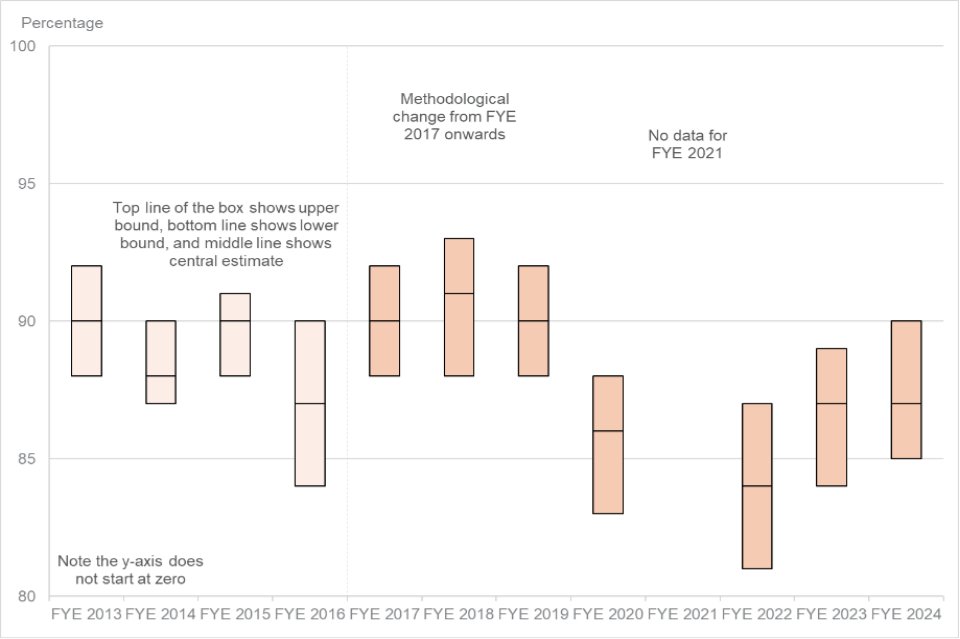
In FYE 2024, an estimated 87% of the total amount of HB (for pensioners) that could have been claimed was claimed. This is the same as in FYE 2023.
See Table HB2 for full data.
6. Overview of methodology
The methodology for deriving the estimates of take-up is complex. Figures in this report are based on DWP administrative data, local authority administrative data, and data from the Family Resources Survey (FRS). The survey data from the FRS is modelled using a static microsimulation model known as the Policy Simulation Model (PSM). The PSM is a model of the tax and benefit system of the UK. The source data for the model comes primarily from the FRS with benefit and tax credits entitlement and tax or National Insurance liability calculated for each FRS family.
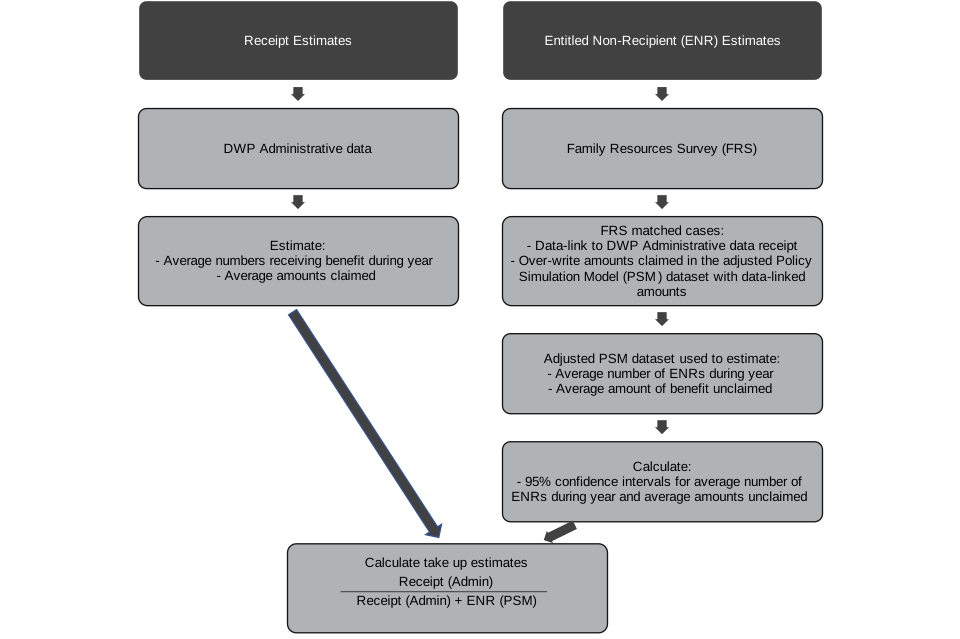
To produce the take-up estimates, information can be taken from DWP administrative data sources to look at the average number of those in receipt of the benefit along with the average amount claimed. However, because administrative benefit entitlement datasets do not exist, survey-based estimates of the population and unclaimed amounts for those who are entitled but not receiving are needed. These survey-based estimates come from the adjusted PSM dataset.
The data linking approach has continued to develop resulting in increasing overall match rates and making more use of administrative data over time. These 2 factors help to improve the quality of the estimates.
The estimates for the ENRs are calculated with confidence intervals which provide a lower and upper bound for the average number of ENRs and the average amount claimed. These estimates, along with the central estimates, are incorporated into the take-up formulae. Caseload and expenditure take-up rates are estimated. A point estimate is calculated. The lower and upper bound estimates of those not in receipt are used to estimate lower and upper take-up bounds. Statistical tests are performed on the point estimates to identify statistically significant differences between the take-up rates between years and between groups.
There are limitations to this methodology, but it aims to produce the best take-up estimates based on the evidence available.
See the background information and methodology for more information, available in background information and methodology.
Flow chart of how take-up estimates are calculated
7. About these statistics
Official statistics
These statistics are official statistics.
Our statistical practice is regulated by the Office for Statistics Regulation (OSR). OSR sets the standards of trustworthiness, quality, and value in the Code of Practice for Statistics that all producers of official statistics should adhere to.
You are welcome to contact us directly with any comments about how we meet these standards by email to: irb.takeup@dwp.gov.uk.
Alternatively, you can contact OSR by emailing regulation@statistics.gov.uk or via the Office for Statistics Regulation website.
Key updates within this release include:
- From FYE 2024, we have incorporated improved linking of administrative data to the FRS, to better identify those in receipt of Pension Credit or Housing Benefit. Take-up estimates were already based on administrative data linking and there are minimal impacts to estimates with this latest improvement to the approach used. This methodological change was implemented from FYE 2024 and not backdated to previous years.
- From FYE 2024, a further change in methodology was introduced, moving to an approach which uses more extensive calibration to derive sample weights for the survey data, used to obtain estimates for ENR cases. This improves the representativeness of the survey sample, for the estimation of ENR cases. It also ensures a consistent approach with other statistics. Investigations show minimal impacts of this change on estimates. This methodological change was implemented from FYE 2024 and not backdated to previous years
A few small errors were identified in the FYE 2020, FYE 2022 and FYE 2023 data tables. These have been corrected within this FYE 2024 release and therefore previous data should not be used.
See the background information and methodology for more information, available here: background information and methodology.
Where to find out more
Further outputs and reference tables from take-up analysis, alongside our background information and methodology, which provides additional detail on how we estimate the measures reported here, and release strategy, are available on the income-related benefits collections page.
Take-up of benefits can be affected by several factors. Trying to explain the reasons for non-take-up is difficult and we do not have the data in our modelling to do this. The background information and methodology also includes information on issues relating to the take-up of benefits which were reviewed in a paper by Eurofound.
Read more information from Eurofound:
DWP statistics on benefit receipt and expenditure:
Information on entitlement and how to claim a benefit.
A guide to income and earning statistics, with information on alternative sources of data.
Other useful information on income and earnings:
- Explaining income and earnings
- Admin-based income statistics, England, and Wales – Office for National Statistics (ons.gov.uk)
Other Official statistics
DWP official statistics published on GOV.UK.
In accordance with the Code of Practice for Statistics, DWP official statistics are announced on the GOV.UK statistics release calendar.
Using the take-up estimates for analysis
Survey data
This publication is based on modelled survey data – it is therefore subject to sampling variation and other forms of error associated with a sample survey. Relative to administrative records the FRS under-reports benefit receipt. See the FRS background information and methodology and the accompanying Quality Assessment Report for more details. Therefore, to improve the accuracy of identifying the number of ENRs, data linking allows recorded benefit amounts in DWP administrative data to replace reported FRS amounts. The FRS survey data used in the production of take-up statistics is not designed specifically to measure entitlement criteria to the same extent as an application for a specific benefit. It is a multi-purpose household survey.
Sample
Due to the restrictions in modelling and available data, certain populations are excluded from our analysis. The figures presented in this publication and accompanying reference tables only include those living in private households in GB. As a result of the exclusions noted, recipient totals and expenditure estimates in this report may differ from those in other published sources.
Sampling error
Results from surveys are estimates and not precise figures. In general terms the smaller the sample size, the larger the uncertainty.
Policy Simulation Model
As a model, the PSM is subject to a range of assumptions, beyond that of a typical survey. Of particular importance to take-up statistics are the methodologies for estimating entitlement and specific assumptions for making population estimates from the sample (known as grossing). These are described in more depth in the background information and methodology.
Statistical significance
This is a technical concept that says whether a reported change is likely to have arisen only by chance due to variations in the sampling. We calculate 95% confidence intervals around estimates in take-up which sets a standard that, where any change is reported as statistically significant, there is less than a 1 in 20 chance that the reported difference is due to sampling variation and there is no real underlying change.
Statistically significant differences in this publication are clearly stated.
Interpretation
Care should be taken when interpreting take-up statistics. For instance, if the upper limit of a caseload take-up range is 90%, this does not mean that at least 10% of the entitled population never take up their entitlement. This is because some of the shortfall in take-up may represent a delay in claiming or processing benefit that is eventually received. The confidence intervals are therefore used to represent the range in which we estimate the overall true rate of take-up, averaged over the whole year, lies.
Enquiries and feedback
DWP would like to hear your views on our statistical publications. If you use any of our statistics publications, we would be interested in hearing what you use them for and how well they meet your requirements. Please send your comments by email to: irb.takeup@dwp.gov.uk.
Feedback on the content, relevance, accessibility and timeliness of these statistics and any non-media enquiries should be directed by email to: irb.takeup@dwp.gov.uk
For media enquiries on these statistics, please contact the DWP press office.
Lead Statistician: Kate Martin
Producers of this release: Rachael Varley, William Shepherd, John Bilverstone, Matilda Cobbold, Tommi Kelha.
ISBN: 978-1-78659-859-2
Next edition: Between September and October 2026