Human papillomavirus (HPV) vaccination coverage in adolescents in England: 2024 to 2025
Published 29 January 2026
Applies to England

© Crown copyright 2026
This publication is licensed under the terms of the Open Government Licence v3.0 except where otherwise stated. To view this licence, visit nationalarchives.gov.uk/doc/open-government-licence/version/3 or write to the Information Policy Team, The National Archives, Kew, London TW9 4DU, or email: psi@nationalarchives.gov.uk.
Where we have identified any third party copyright information you will need to obtain permission from the copyright holders concerned.
This publication is available at https://www.gov.uk/government/statistics/human-papillomavirus-hpv-vaccine-coverage-in-england-2024-to-2025/human-papillomavirus-hpv-vaccination-coverage-in-adolescents-in-england-2024-to-2025
This report presents vaccine coverage data for the routine school-aged human papillomavirus (HPV) immunisation programme in England for the 2024 to 2025 academic year. These results include HPV vaccine coverage estimates for children in years 8, 9 and 10 (or the equivalent ages) measured up to 31 August 2025.
HPV vaccine coverage is presented for England at national, NHS commissioning region, and local authority levels.
In September 2023, the adolescent HPV vaccination programme moved to a one-dose schedule. All coverage numbers given in this report are therefore stated as single dose figures.
Your feedback
This survey aims to enhance our understanding of how readers are interacting with the report, highlighting aspects which are particularly useful and identifying areas that can be improved. The insights gathered from this survey will inform the development of future reports.
Main points
The main findings of this report are that during the 2024 to 2025 academic year:
- HPV coverage for year 8 students was 71.7% for females and 67.0% for males
- HPV coverage for year 9 students was 75.3% for females and 70.5% for males
- HPV coverage for year 10 students was 75.5% for females and 70.5% for males
- HPV coverage for year 9 females was 1.2 percentage points higher than for year 9 females in the 2023 to 2024 academic year
- HPV coverage for year 9 males was 2.0 percentage points higher than for year 9 males in the 2023 to 2024 academic year
- HPV coverage for female students in year 9 was 2.4 percentage points higher than in 2023 to 2024, when the same cohort was in year 8
- HPV coverage for male students in year 9 was 2.8 percentage points higher than in 2023 to 2024, when the same cohort was in year 8
- HPV coverage in female students in year 9 by NHS commissioning region was lowest in London (62.6%) and highest in the East of England (81.1%)
- HPV coverage in male students in year 9 by NHS commissioning region was lowest in London (57.7%) and highest in the East of England (76.2%)
Analysis of HPV vaccine coverage by cohort
The HPV vaccine is routinely offered in year 8, with some local authorities running catch up programmes in year 9 and 10. Year 8 coverage will be impacted by both the number of students consenting and the number of students who were offered the vaccine. This means that year 8 coverage can be used as an indicator of initial uptake and timeliness of routine programme delivery. By years 9 and 10, in-school catch up for HPV vaccination will be complete, which means coverage in these students can be used as an indicator of the final level of protection achieved.
In this report, HPV vaccine coverage is first described in terms of cohorts, where a cohort is a group of students who first became eligible for the HPV vaccine in the same academic year. For example, female cohort 20 and male cohort 4 first became eligible in the 2022 to 2023 academic year when they were in school year 8. This cohort would then have been in school year 9 in the 2023 to 2024 academic year, and in school year 10 in the 2024 to 2025 academic year. The dates of birth and first academic year of HPV vaccine eligibility for these cohorts are described in Table 1. For a more detailed cohort eligibility grid, please see the supplementary backing tables.
Table 1. HPV vaccination cohorts
| School year | Dates of birth | First academic year eligible |
|---|---|---|
| Female cohort 22 | 1 September 2011 to 31 August 2012 | 2024 to 2025 |
| Female cohort 21 | 1 September 2010 to 31 August 2011 | 2023 to 2024 |
| Female cohort 20 | 1 September 2009 to 31 August 2010 | 2022 to 2023 |
| Female cohort 19 | 1 September 2008 to 31 August 2009 | 2021 to 2022 |
| Female cohort 18 | 1 September 2007 to 31 August 2008 | 2020 to 2021 |
| Female cohort 17 | 1 September 2006 to 31 August 2007 | 2019 to 2020 |
| Female cohort 16 | 1 September 2005 to 31 August 2006 | 2018 to 2019 |
| Female cohort 15 | 1 September 2004 to 31 August 2005 | 2017 to 2018 |
| Female cohort 14 | 1 September 2003 to 31 August 2004 | 2016 to 2017 |
| Female cohort 13 | 1 September 2002 to 31 August 2003 | 2015 to 2016 |
| Male cohort 6 | 1 September 2011 to 31 August 2012 | 2024 to 2025 |
| Male cohort 5 | 1 September 2010 to 31 August 2011 | 2023 to 2024 |
| Male cohort 4 | 1 September 2009 to 31 August 2010 | 2022 to 2023 |
| Male cohort 3 | 1 September 2008 to 31 August 2009 | 2021 to 2022 |
| Male cohort 2 | 1 September 2007 to 31 August 2008 | 2020 to 2021 |
| Male cohort 1 | 1 September 2006 to 31 August 2007 | 2019 to 2020 |
Describing HPV vaccine coverage in terms of cohorts requires some caveats, in that the most recently eligible cohort will only have been vaccinated in year 8, while the next most recently eligible cohort will only have been able to be vaccinated in school years 8 and 9.
The trends in HPV vaccine coverage by cohort, and in which school year they were vaccinated, are shown in Figure 1 for female students and Figure 2 for male students.
Cumulative HPV vaccine coverage by cohort for female students remained stable at approximately 89.0% prior to the COVID-19 pandemic but declined progressively in subsequent cohorts, despite catch-up efforts in school years 9 and 10 (Figure 1). In more recent years, however, cohort coverage has shown signs of stabilising This suggests that cohorts 22 (currently in Year 8) and 21 (currently in year 9) may achieve coverage levels comparable to cohorts 19 and 20 once they have had sufficient opportunity for vaccination. The most recent cumulative figures in the 2024 to 2025 academic year (Female cohort 20) show that after 3 years of HPV vaccine eligibility, coverage for female students in school year 10 was 75.5%.
Figure 1. HPV vaccine coverage for female students by cohort and school year of vaccination between the 2015 to 2016 and the 2024 to 2025 academic years
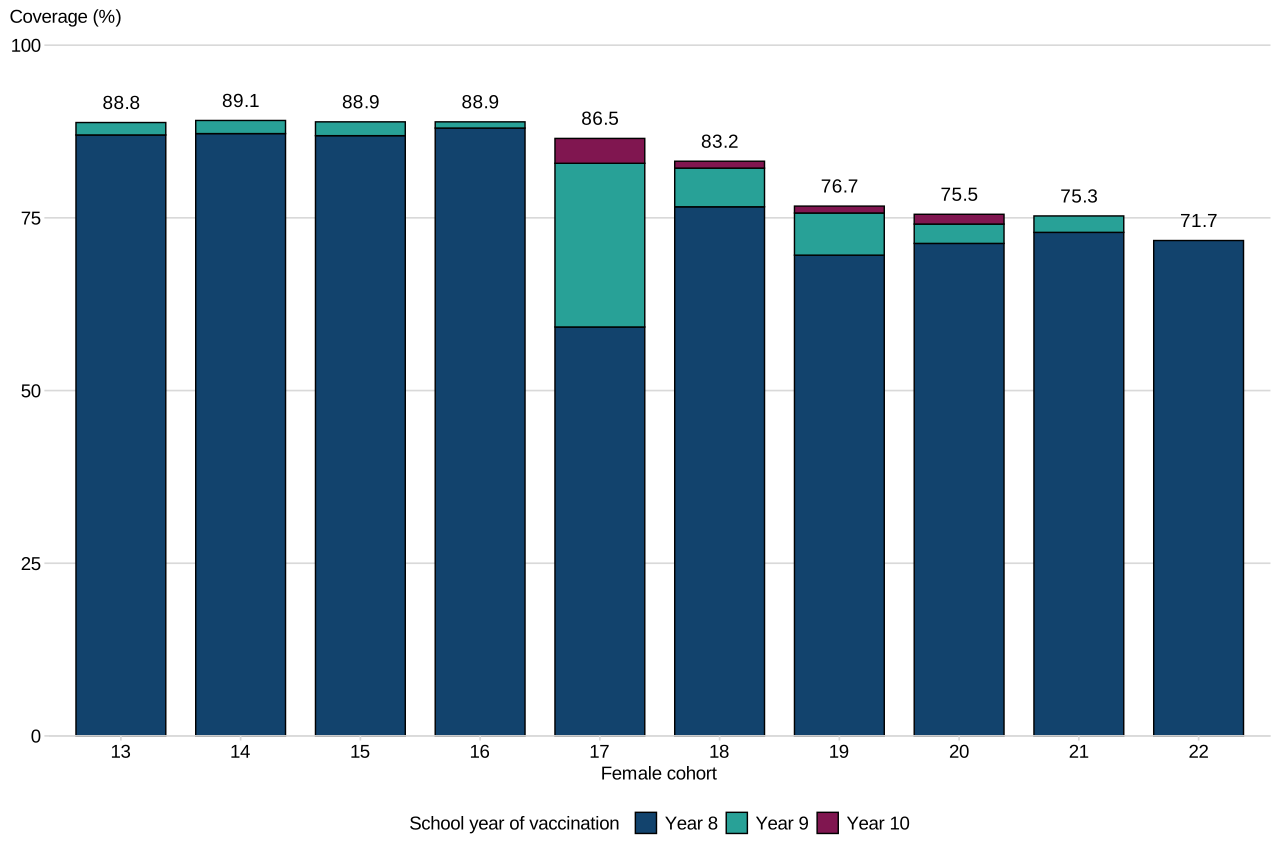
Table 2. HPV vaccine coverage for female students by cohort and school year of vaccination between the 2015 to 2016 and the 2024 to 2025 academic years [Note 1] [Note 2]
| Cohort | First academic year eligible | Coverage in year 8 (%) | Coverage in year 9 (%) | Change in coverage from year 8 to year 9 (percentage points) | Coverage in year 10 (%) | Change in coverage from year 9 to year 10 (percentage points) |
|---|---|---|---|---|---|---|
| 13 | 2015 to 2016 | 87.0 | 88.8 | 1.8 | [m] | [m] |
| 14 | 2016 to 2017 | 87.2 | 89.1 | 1.9 | [m] | [m] |
| 15 | 2017 to 2018 | 86.9 | 88.9 | 2.0 | [m] | [m] |
| 16 | 2018 to 2019 | 88.0 | 88.9 | 0.9 | [m] | [m] |
| 17 | 2019 to 2020 | 59.2 | 82.9 | 23.7 | 86.5 | 3.6 |
| 18 | 2020 to 2021 | 76.6 | 82.2 | 5.6 | 83.2 | 1.0 |
| 19 | 2021 to 2022 | 69.6 | 75.7 | 6.1 | 76.7 | 1.0 |
| 20 | 2022 to 2023 | 71.3 | 74.1 | 2.8 | 75.5 | 1.4 |
| 21 | 2023 to 2024 | 72.9 | 75.3 | 2.4 | [z] | [z] |
| 22 | 2024 to 2025 | 71.7 | [z] | [z] | [z] | [z] |
Note 1: the shorthand ‘[z]’ is used to mark cohorts that were not eligible in the given academic year so do not have a coverage estimate.
Note 2: the shorthand ‘[m]’ is used to mark cohorts that were eligible but had no data reported in the given academic year
Cumulative HPV vaccine coverage by cohort for male students decreased steadily from 81.5% in cohort 1 to 71.2% in cohort 3 when the programme was first expanded to male students in 2019 to 2020 (Figure 2). However, in cohorts who have become eligible since 2022 to 2023, coverage appears to be stablising. This suggests that cohorts 6 (currently in year 8) and 5 (currently in year 9) are likely to achieve coverage levels comparable to cohort 4 once they have had sufficient opportunity for vaccination. The most recent cumulative figures in the 2024 to 2025 academic year show that after 3 years of HPV vaccine eligibility, coverage for male students in school year 10 (male cohort 4) was 70.5%.
Figure 2. HPV vaccine coverage for male students by cohort and school year of vaccination between the 2019 to 2020 and the 2024 to 2025 academic years
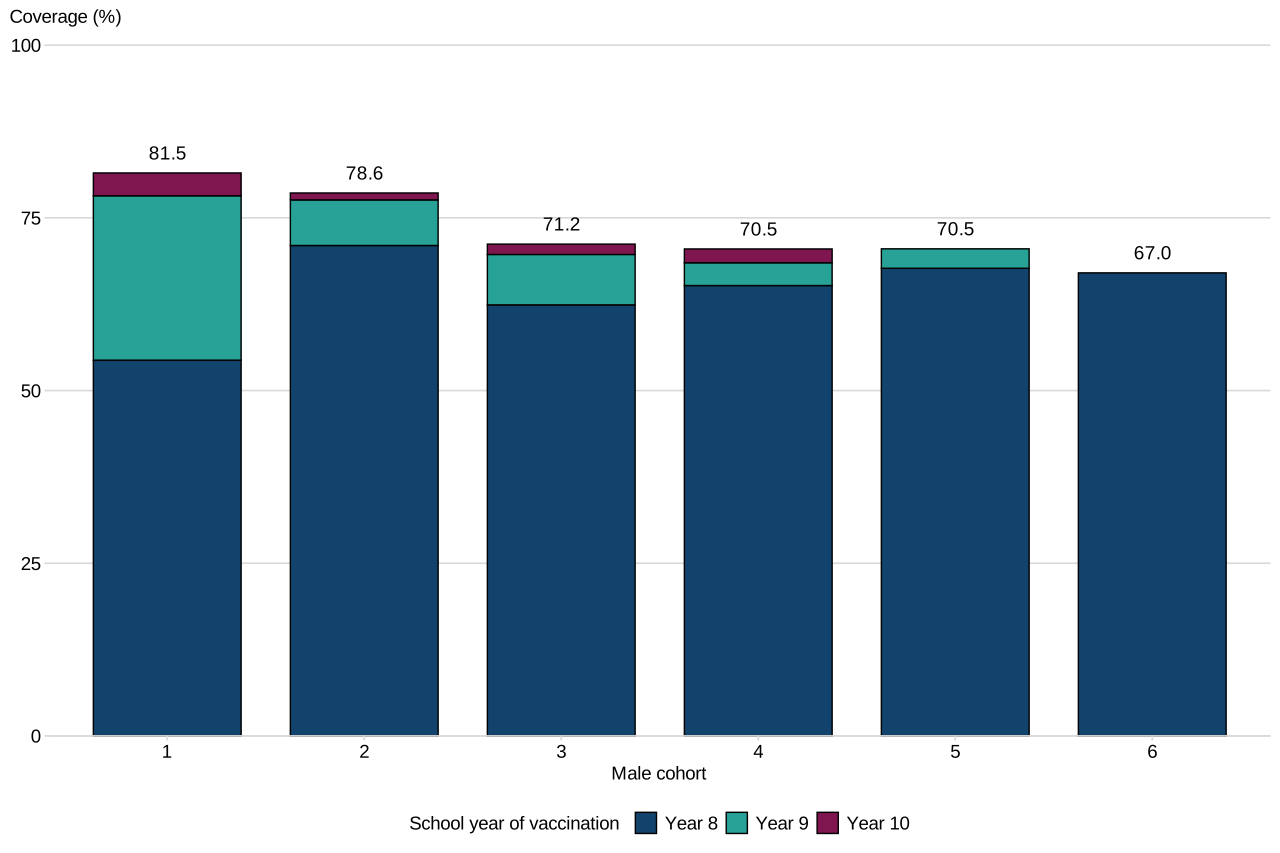
Table 3. HPV vaccine coverage for male students by cohort and school year of vaccination between the 2019 to 2020 and the 2024 to 2025 academic years [Note 1] [Note 2]
| Cohort | First academic year eligible | Coverage in year 8 (%) | Coverage in year 9 (%) | Change in coverage from year 8 to year 9 (percentage points) | Coverage in year 10 (%) | Change in coverage from year 9 to year 10 (percentage points) |
|---|---|---|---|---|---|---|
| 1 | 2019 to 2020 | 54.4 | 78.2 | 23.8 | 81.5 | 3.3 |
| 2 | 2020 to 2021 | 71.0 | 77.6 | 6.6 | 78.6 | 1.0 |
| 3 | 2021 to 2022 | 62.4 | 69.7 | 7.3 | 71.2 | 1.5 |
| 4 | 2022 to 2023 | 65.2 | 68.5 | 3.3 | 70.5 | 2.0 |
| 5 | 2023 to 2024 | 67.7 | 70.5 | 2.8 | [z] | [z] |
| 6 | 2024 to 2025 | 67.0 | [z] | [z] | [z] | [z] |
Note 1: the shorthand ‘[z]’ is used to mark cohorts that were not eligible in the given academic year so do not have a coverage estimate.
Note 2: the shorthand ‘[m]’ is used to mark cohorts that were eligible but had no data reported in the given academic year
Analysis of HPV vaccine coverage by school year
This section of the report presents HPV vaccine coverage for students by school year for the 2024 to 2025 academic year.
The majority of HPV vaccine doses are given in year 8, with some catch up required in years 9 and 10, particularly during and following the COVID-19 pandemic (figures 1 and 2). In the 2024 to 2025 academic year, the HPV vaccine was offered routinely to year 8 in 66.4% (101 out of 152) of local authorities, to year 8 and 9 in 20.4% (31 out of 152) of local authorities and alternative delivery models were used in 13.2% (20 out of 152).
Table 4 shows HPV vaccine coverage in each academic year since the 2018 to 2019 academic year, by school year and sex. This table shows that coverage in the 2024 to 2025 academic year was similar to the 2023 to 2024 academic year across all school years, although coverage remains substantially lower than pre-pandemic levels. While initial uptake in year 8 in 2024 to 2025 for both females and males appears to have fallen slightly relative to year 8 in the previous academic year, uptake for those in year 9 has increased.
Table 4. HPV vaccine coverage for students in year 8, year 9 and year 10, between the 2018 to 2019 and the 2024 to 2025 academic years
| School year | 2018 to 2019 | 2019 to 2020 | 2020 to 2021 | 2021 to 2022 | 2022 to 2023 | 2023 to 2024 | 2024 to 2025 | Change between 2023 to 2024 and 2024 to 2025 (percentage points) |
|---|---|---|---|---|---|---|---|---|
| Year 8 Female | 88.0 | 59.2 | 76.6 | 69.6 | 71.3 | 72.9 | 71.7 | -1.2 |
| Year 9 Female | 88.9 | 88.9 | 82.9 | 82.2 | 75.7 | 74.1 | 75.3 | 1.2 |
| Year 10 Female | [m] | [m] | [m] | 86.5 | 83.2 | 76.7 | 75.5 | -1.2 |
| Year 8 Male | [z] | 54.4 | 71.0 | 62.4 | 65.2 | 67.7 | 67.0 | -0.7 |
| Year 9 Male | [z] | [z] | 78.2 | 77.6 | 69.7 | 68.5 | 70.5 | 2.0 |
| Year 10 Male | [z] | [z] | [z] | 81.5 | 78.6 | 71.2 | 70.5 | -0.7 |
Year 8 HPV vaccine coverage in 2024 to 2025
Year 8 students in 2024 to 2025 are represented by female cohort 22 and male cohort 6 in Table 1 and first became eligible for the HPV vaccine in the 2024 to 2025 academic year.
The main findings for year 8 students in 2024 to 2025 are that:
- HPV coverage for female students in year 8 was 71.7%, which is 1.2 percentage points lower than female students in year 8 in 2023 to 2024
- HPV coverage for male students in year 8 was 67.0%, which is 0.7 percentage points lower than male students in year 8 in 2023 to 2024
- HPV coverage for female students in year 8 by NHS commissioning region was lowest in London (63.8%) and highest in the East of England (76.7%)
- HPV coverage for male students in year 8 by NHS commissioning region was lowest in London (59.7%) and highest in the East of England (73.1%)
- HPV coverage for female students in year 8 at local authority level varied by 50.0 percentage points, from 39.8% (Bradford) to 89.8% (East Riding of Yorkshire)
- HPV coverage for male students in year 8 at local authority level varied by 51.7 percentage points, from 34.9% (Bradford) to 86.7% (Rutland)
In the 2024 to 2025 academic year, HPV vaccine coverage for female students in year 8 was lowest in London (63.8%) and highest in the East of England (76.7%) (Figure 3). For male students in year 8 coverage was lowest in London (59.7%) and highest in the East of England (73.1%) (Figure 3).
Figure 3. HPV vaccine coverage by NHS commissioning region and sex for year 8 students in the 2024 to 2025 academic year
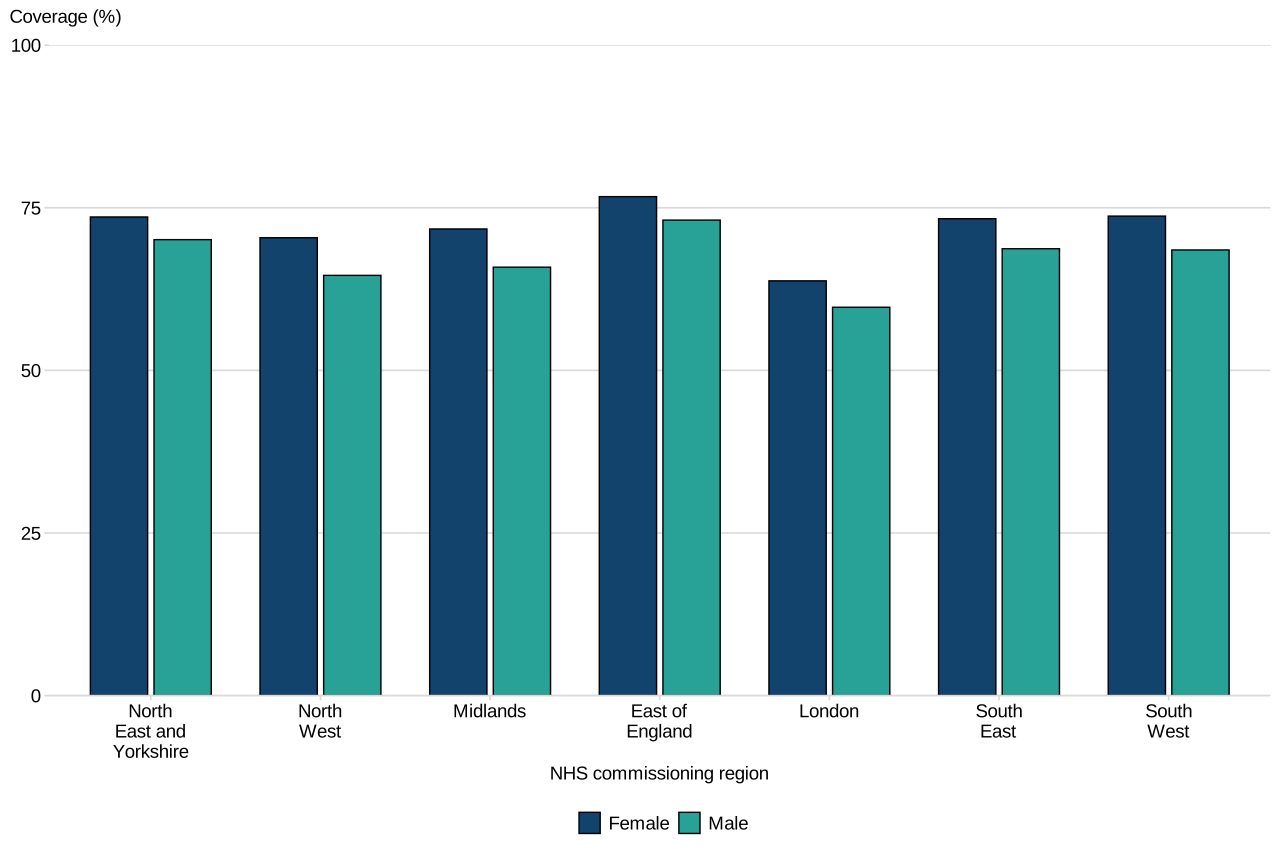
HPV vaccine coverage was similar for all NHS commissioning regions, apart from London where coverage was 8.0 percentage points lower than the national coverage in females and 7.3 percentage points lower in males.
Coverage in males was lower than coverage in females across all NHS commissioning regions. Nationally, coverage in year 8 was 4.7 percentage points lower in male students compared to female students.
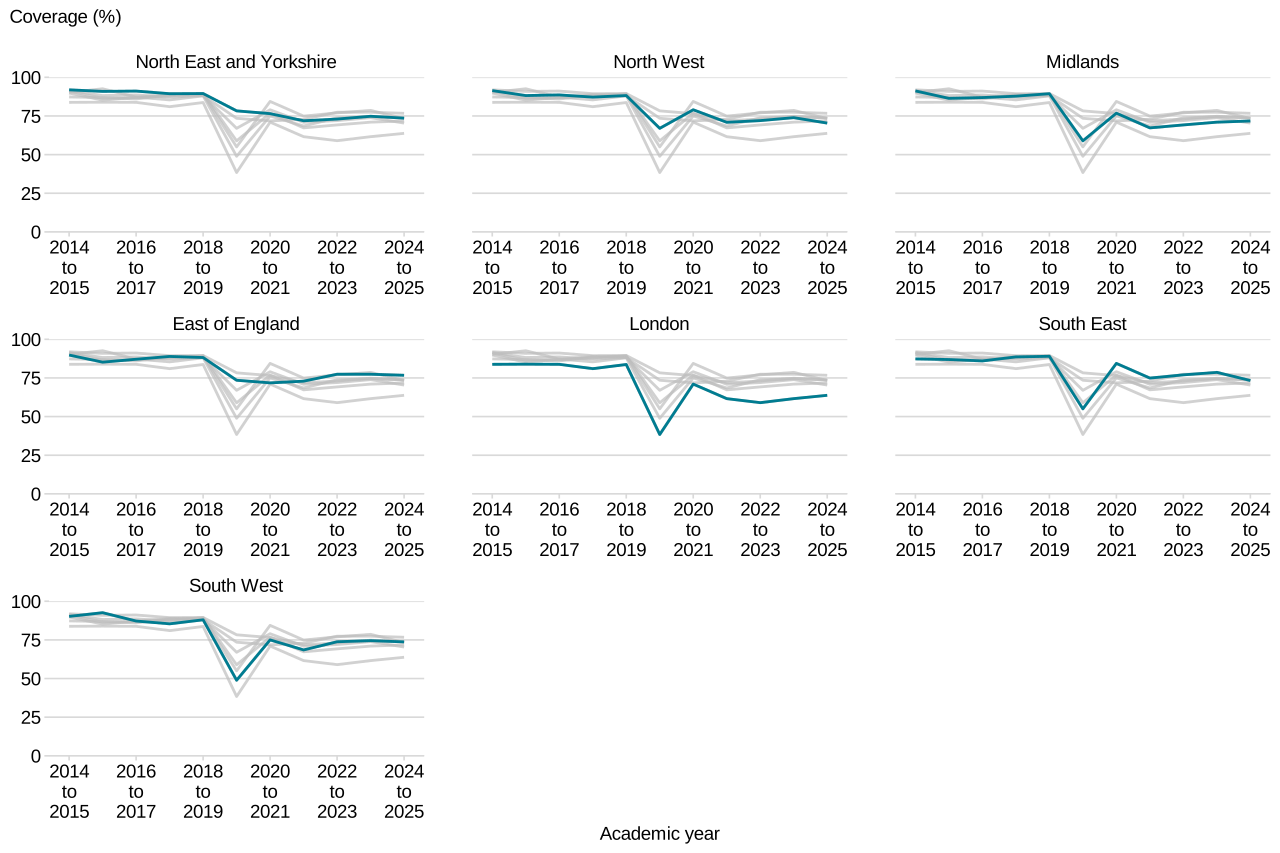
HPV vaccine coverage for female students in year 8 has decreased since the 2016 to 2017 academic year, with some NHS commissioning regions showing a significant drop in 2019 to 2020 due to the COVID-19 pandemic. HPV vaccine coverage for year 8 students remained slightly below pre-pandemic levels in all NHS commissioning regions, with uptake in London having fallen the most (Figure 4). In the 2024 to 2025 academic year, coverage remained similar to the 2023 to 2024 academic year.
Figure 4. HPV vaccine coverage for female students in year 8 between the 2014 to 2015 and the 2024 to 2025 academic years
The 2019 to 2020 academic year was the first year that male students were offered the HPV vaccine. Therefore, there is no pre-pandemic data to compare with current HPV vaccine coverage figures. However, there has been a general increase in HPV vaccine coverage in male students in year 8 since the 2019 to 2020 academic year (Figure 5). In the 2024 to 2025 academic year, coverage remained similar to the 2023 to 2024 academic year.
Figure 5. HPV vaccine coverage for male students in year 8 between the 2014 to 2015 and the 2024 to 2025 academic years
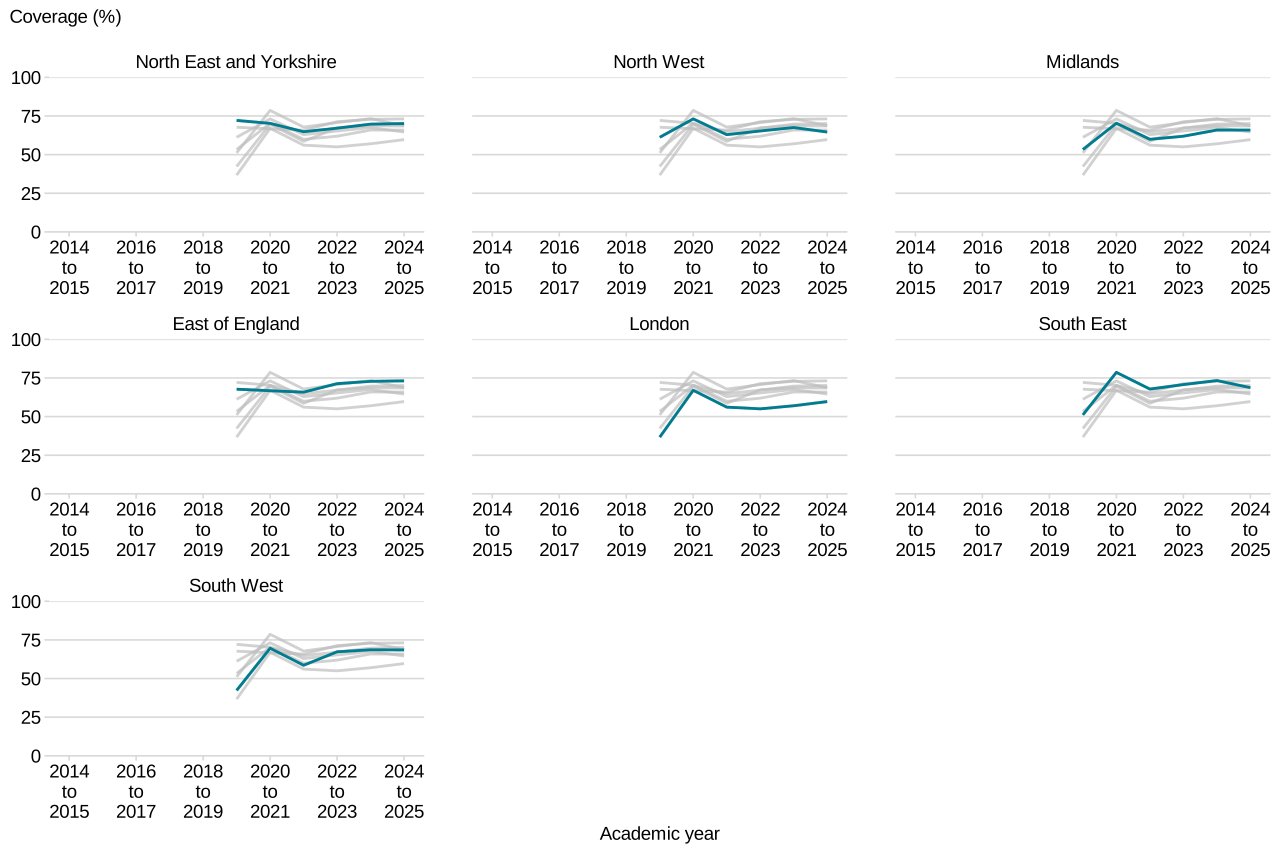
Figure 6 shows the distribution of HPV vaccine coverage by local authority and sex within each NHS commissioning region for year 8 students in the 2024 to 2025 academic year. The boxes indicate the range of the first to third quartiles, the inter-quartile range (IQR), among constituent local authorities in each NHS commissioning region. The median (second quartile) is indicated by the horizontal white line within each box. Vertical black lines indicate the range of coverage values among local authorities that fall within 1.5 times the IQR above the third quartile or below the first quartile. Local authorities with coverage outside this range are considered outliers and indicated by a black dot.
Figure 6. HPV vaccine coverage distribution by local authority and sex for each NHS commissioning region in year 8 students in the 2024 to 2025 academic year
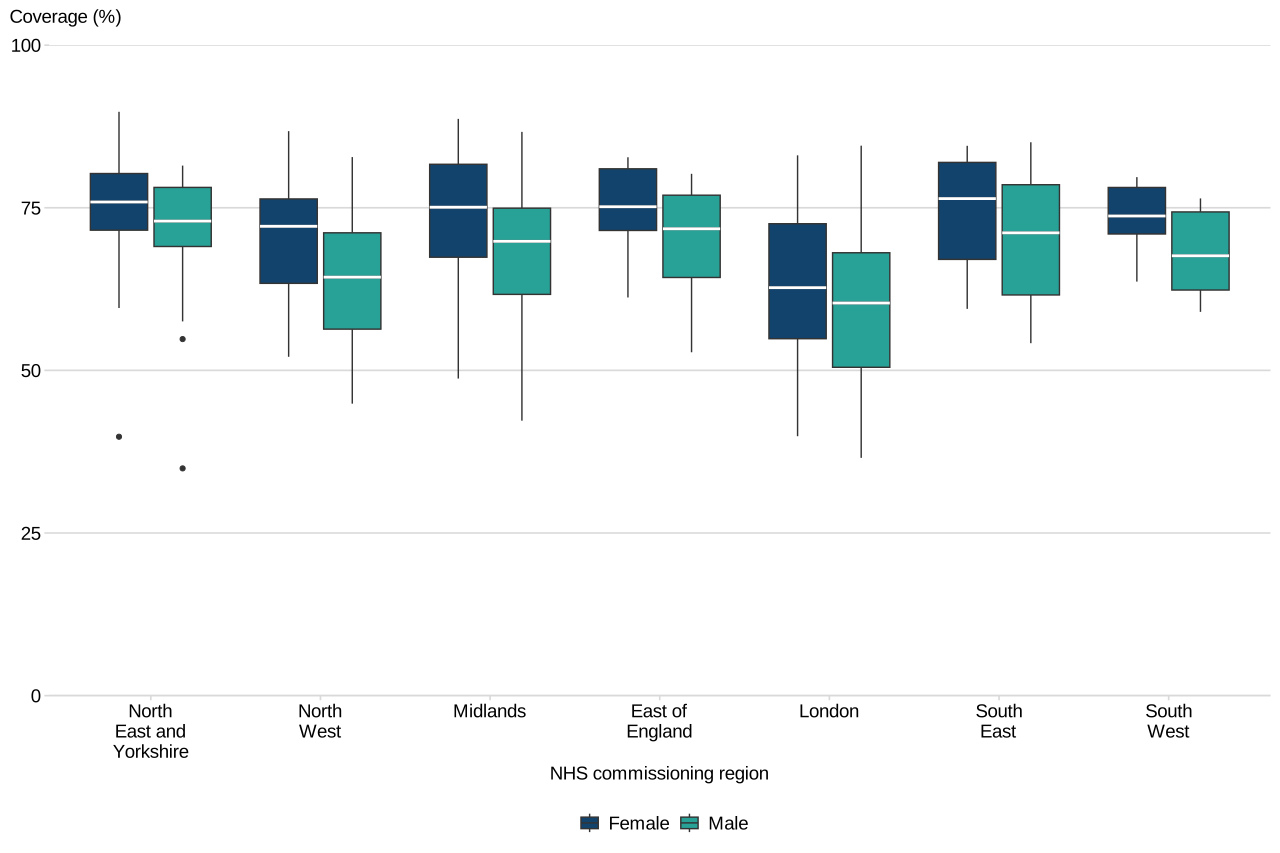
Within each NHS commissioning region, coverage by local authority varied substantially. The NHS commissioning region with the most variation in coverage was the North East and Yorkshire for females, where local authority level coverage varied by 50.0 percentage points, from 39.8% to 89.8%, and London for males, where local authority level coverage varied by 48.0 percentage points, from 36.5% to 84.5%.
The NHS commissioning region with the least variation in coverage was the South West for females, where local authority level coverage varied by 16.1 percentage points, from 63.6% to 79.7%, and the South West for males, where local authority level coverage varied by 17.4 percentage points, from 59.0% to 76.4%.
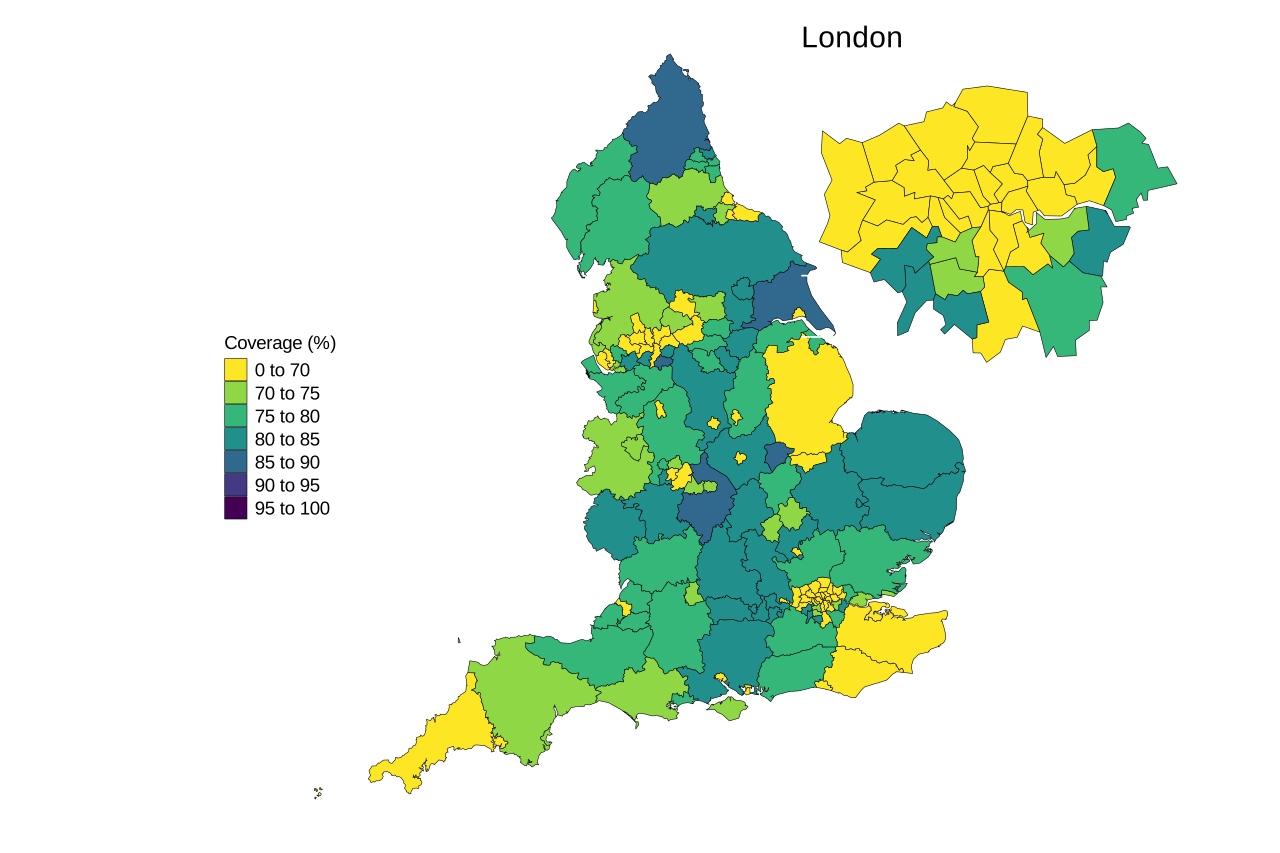
The map in Figure 7 shows HPV vaccine coverage by local authority for female students in year 8. The only NHS commissioning region with over half of local authorities reporting coverage less than 70.0% was London (23 out of 32, 71.9%).
Figure 7. HPV vaccine coverage by local authority for year 8 female students in the 2024 to 2025 academic year
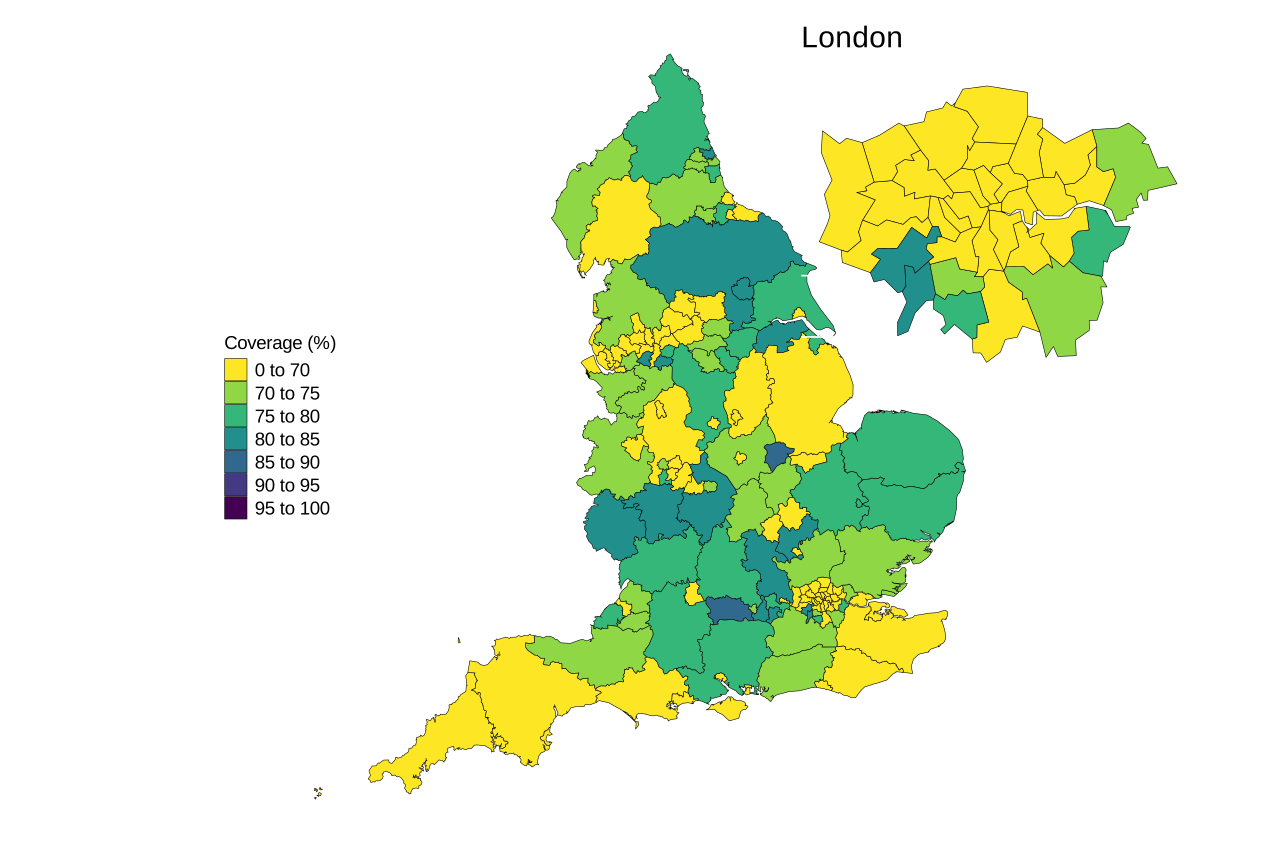
The map in Figure 8 shows HPV vaccine coverage by local authority for male students in year 8. The NHS commissioning regions with over half of local authorities reporting coverage of less than 70.0% were London (25 out of 32, 78.1%); North West (16 out of 24, 66.7%); and South West (8 out of 14, 57.1%).
Figure 8. HPV vaccine coverage by local authority for year 8 male students in the 2024 to 2025 academic year
Year 9 HPV vaccine coverage in 2024 to 2025
Year 9 students in 2024 to 2025 are represented by female cohort 21 and male cohort 5 in Table 1, and first became eligible for the HPV vaccine in the 2023 to 2024 academic year.
The main findings for year 9 students in 2024 to 2025 are that:
- HPV coverage for female students in year 9 was 75.3%, which is 1.2 percentage points higher than female students in year 9 in 2023 to 2024
- HPV coverage for male students in year 9 was 70.5%, which is 2.0 percentage points higher than male students in year 9 in 2023 to 2024
- HPV coverage for female students in year 9 was 2.4 percentage points higher than in 2023 to 2024 when the same cohort was in year 8, suggesting ongoing catch up
- HPV coverage for male students in year 9 was 2.8 percentage points higher than in 2023 to 2024 when the same cohort was in year 8, suggesting ongoing catch up
- HPV coverage for female students in year 9 by NHS commissioning region was lowest in London (62.6%) and highest in the East of England (81.1%)
- HPV coverage for male students in year 9 by NHS commissioning region was lowest in London (57.7%) and highest in the East of England (76.2%)
- HPV coverage for female students in year 9 at local authority level varied by 57.0 percentage points, from 35.0% (Brent) to 92.0% (North Tyneside)
- HPV coverage for male students in year 9 at local authority level varied by 60.5 percentage points, from 28.4% (Westminster) to 88.9% (Warwickshire)
In the 2024 to 2025 academic year, HPV vaccine coverage for female students in year 9 was lowest in London (62.6%) and highest in the East of England (81.1%) (Figure 3). For male students in year 9 coverage was lowest in London (57.7%) and highest in the East of England (76.2%) (Figure 9).
Figure 9. HPV vaccine coverage by NHS commissioning region and sex for year 9 students in the 2024 to 2025 academic year
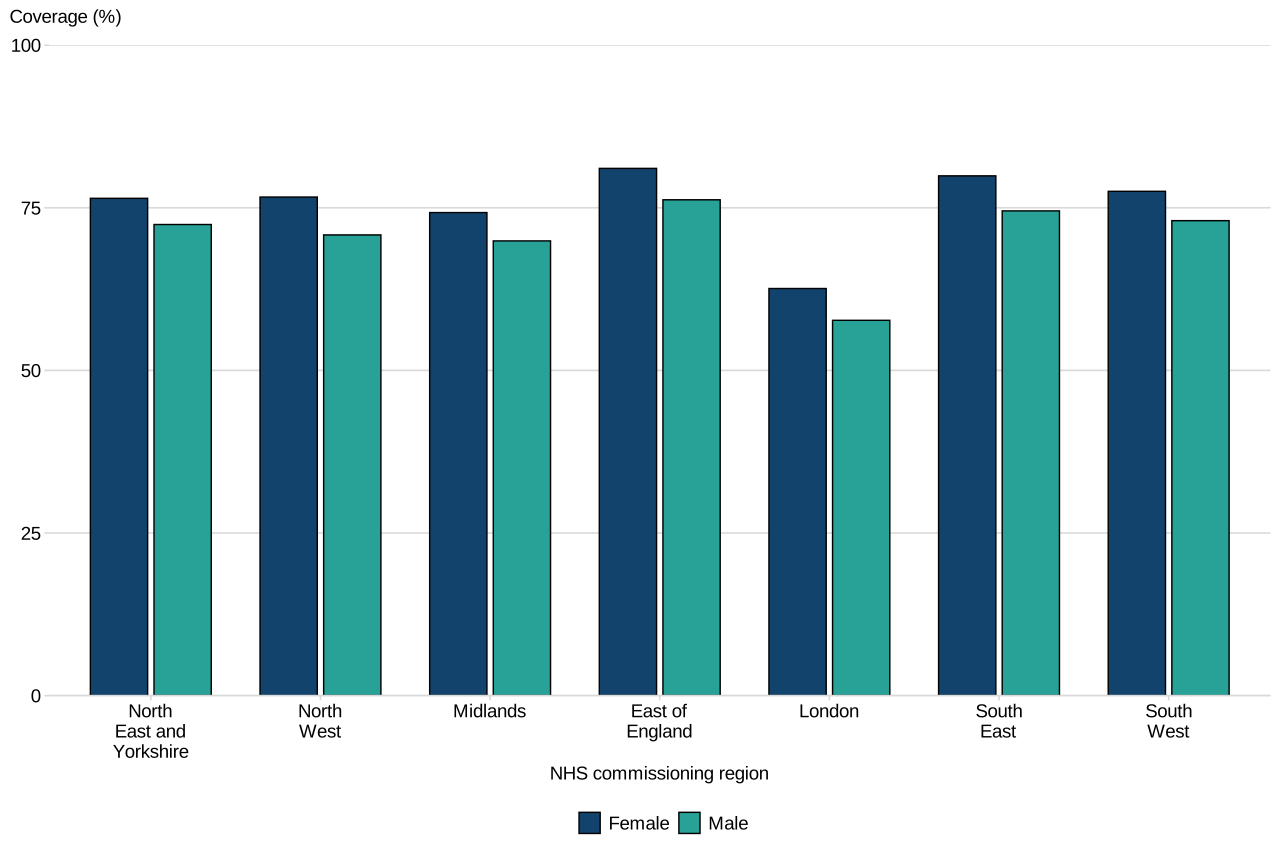
HPV vaccine coverage was similar for all NHS commissioning regions, apart from London where coverage was 12.7 percentage points lower than the national coverage in females and 12.8 percentage points lower in males.
Coverage in males was lower than in females across all NHS commissioning regions. Nationally, coverage in year 9 was 4.8 percentage points lower in male students compared to female students.
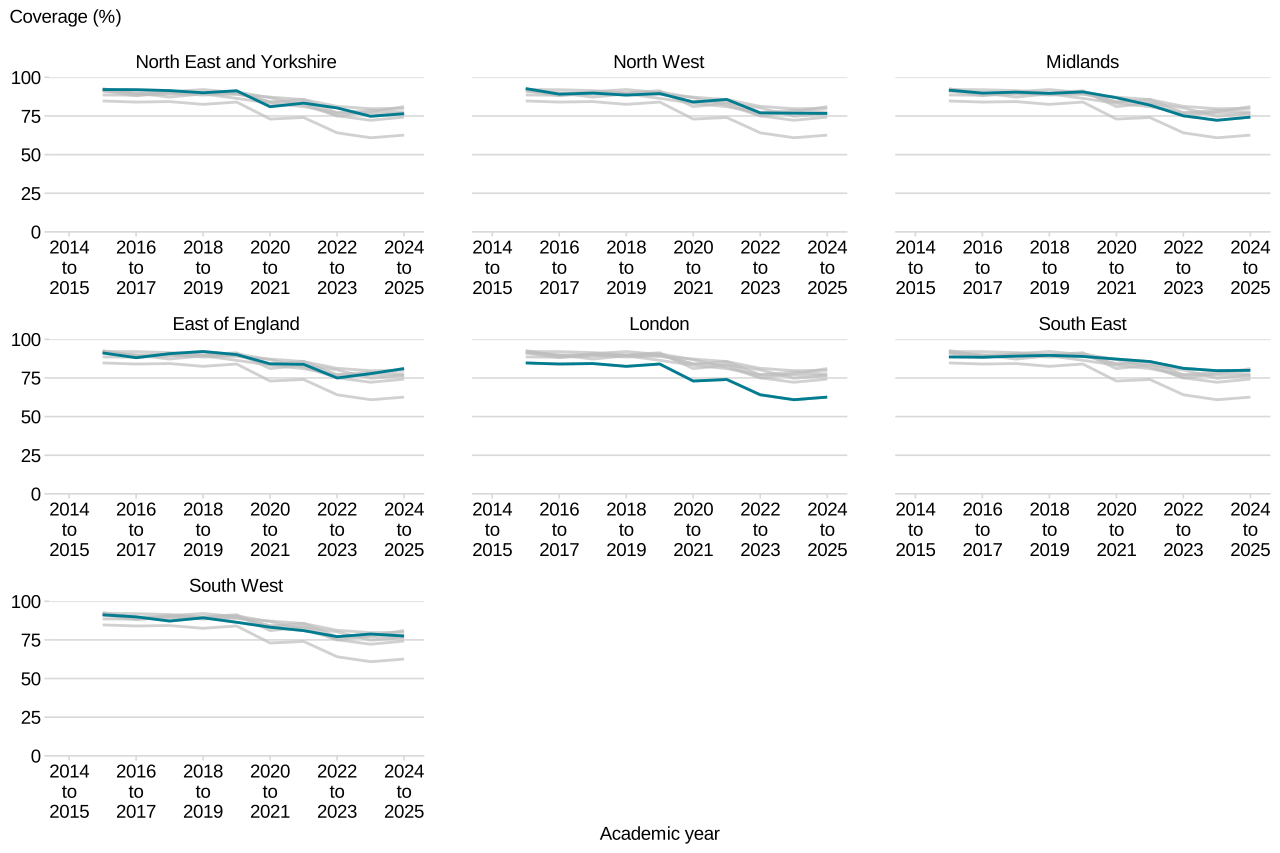
HPV vaccine coverage for female students in year 9 has gradually decreased since the 2016 to 2017 academic year, although this decrease has accelerated since the COVID-19 pandemic (Figure 10). This decrease in year 9 HPV vaccine coverage is greatest in London, with female year 9 coverage in the 2024 to 2025 academic year 19.9% percentage points lower than in the 2018 to 2019 academic year. In the 2024 to 2025 academic year, coverage remained similar to the 2023 to 2024 academic year.
Figure 10. HPV vaccine coverage for female students in year 9 between the 2014 to 2015 and the 2024 to 2025 academic years
Male students were first offered the HPV vaccine in year 9 during the 2020 to 2021 academic year, however there is a general decline in HPV vaccine coverage for male students in year 9 since then (Figure 11). In the 2024 to 2025 academic year, coverage remained similar to the 2023 to 2024 academic year.
Figure 11. HPV vaccine coverage for male students in year 9 between the 2014 to 2015 and the 2024 to 2025 academic years
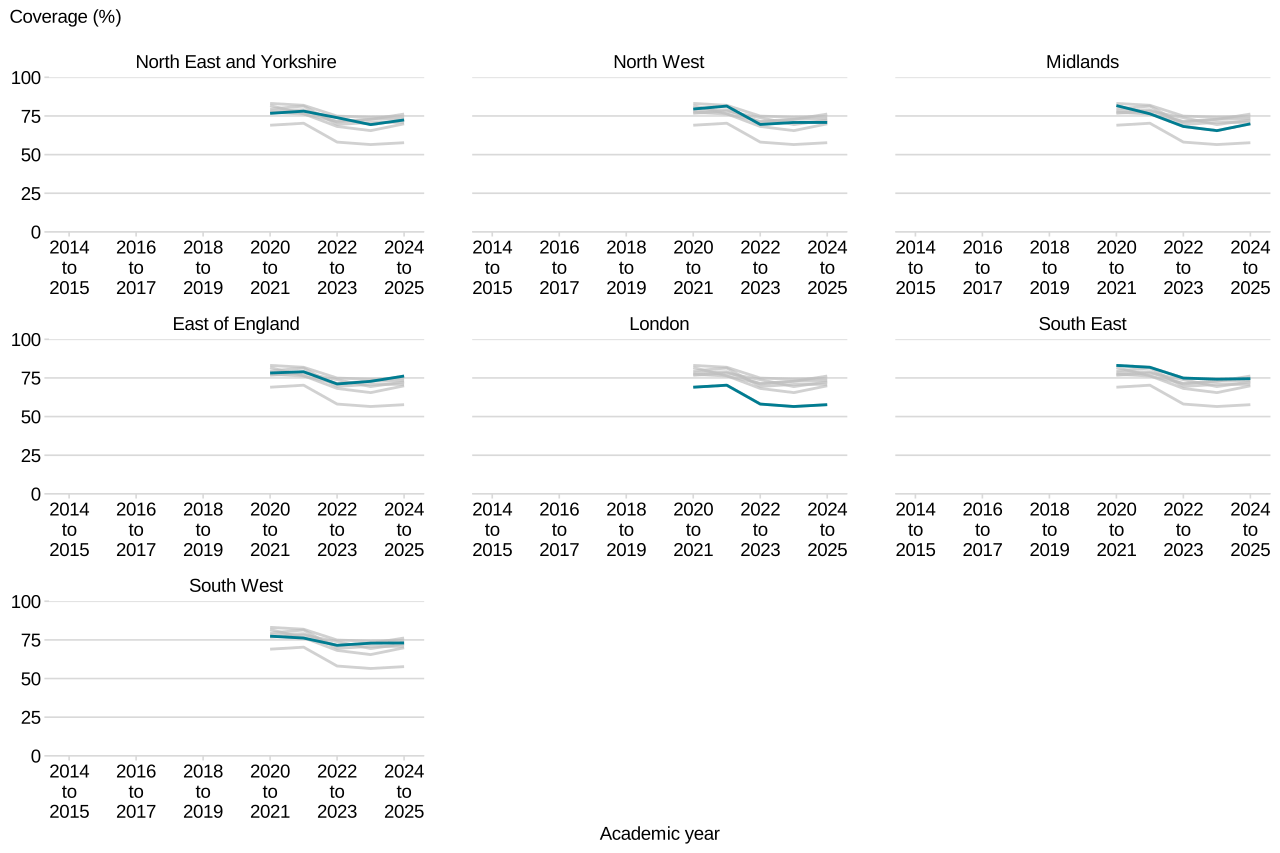
Figure 12 shows the distribution of HPV vaccine coverage within local authorities by NHS commissioning region and sex for year 9 students in the 2024 to 2025 academic year. The boxes indicate the range of the first to third quartiles, the inter-quartile range (IQR), among constituent local authorities in each NHS commissioning region. The median (second quartile) is indicated by the horizontal white line within each box. Vertical black lines indicate the range of coverage values among local authorities that fall within 1.5 times the IQR above the third quartile or below the first quartile. Local authorities with coverage outside this range are considered outliers and indicated by a black dot.
Figure 12. HPV vaccine coverage distribution by local authority and sex for each NHS commissioning region in year 9 students in the 2024 to 2025 academic year
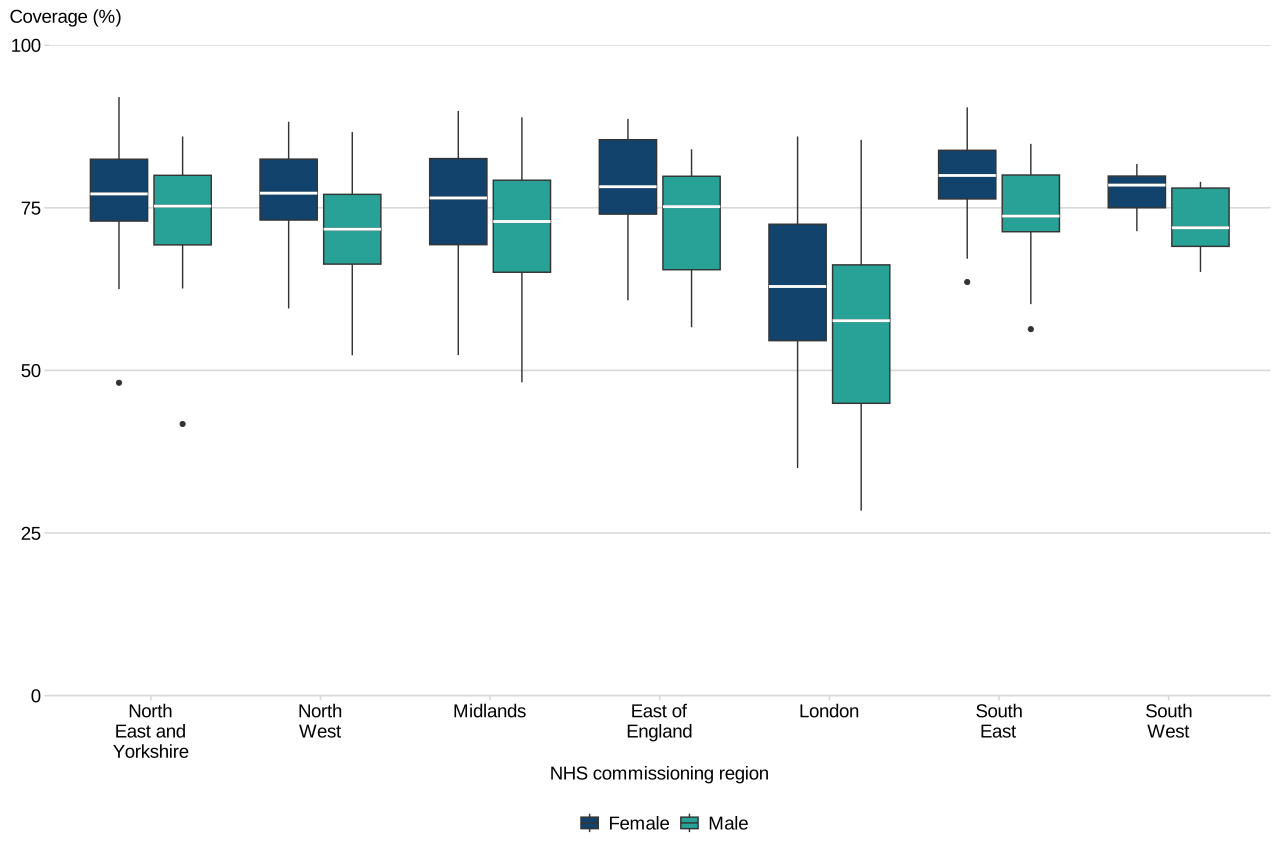
Within each NHS commissioning region, coverage by local authority varied substantially. The NHS commissioning region with the most variation in coverage was London for females, where local authority level coverage varied by 51.0 percentage points, from 35.0% to 86.0%, and London for males, where local authority level coverage varied by 57.0 percentage points, from 28.4% to 85.4%.
The NHS commissioning region with the least variation in coverage was the South West for females, where local authority level coverage varied by 10.3 percentage points, from 71.4% to 81.7%, and the South West for males, where local authority level coverage varied by 13.9 percentage points, from 65.1% to 79.0%.
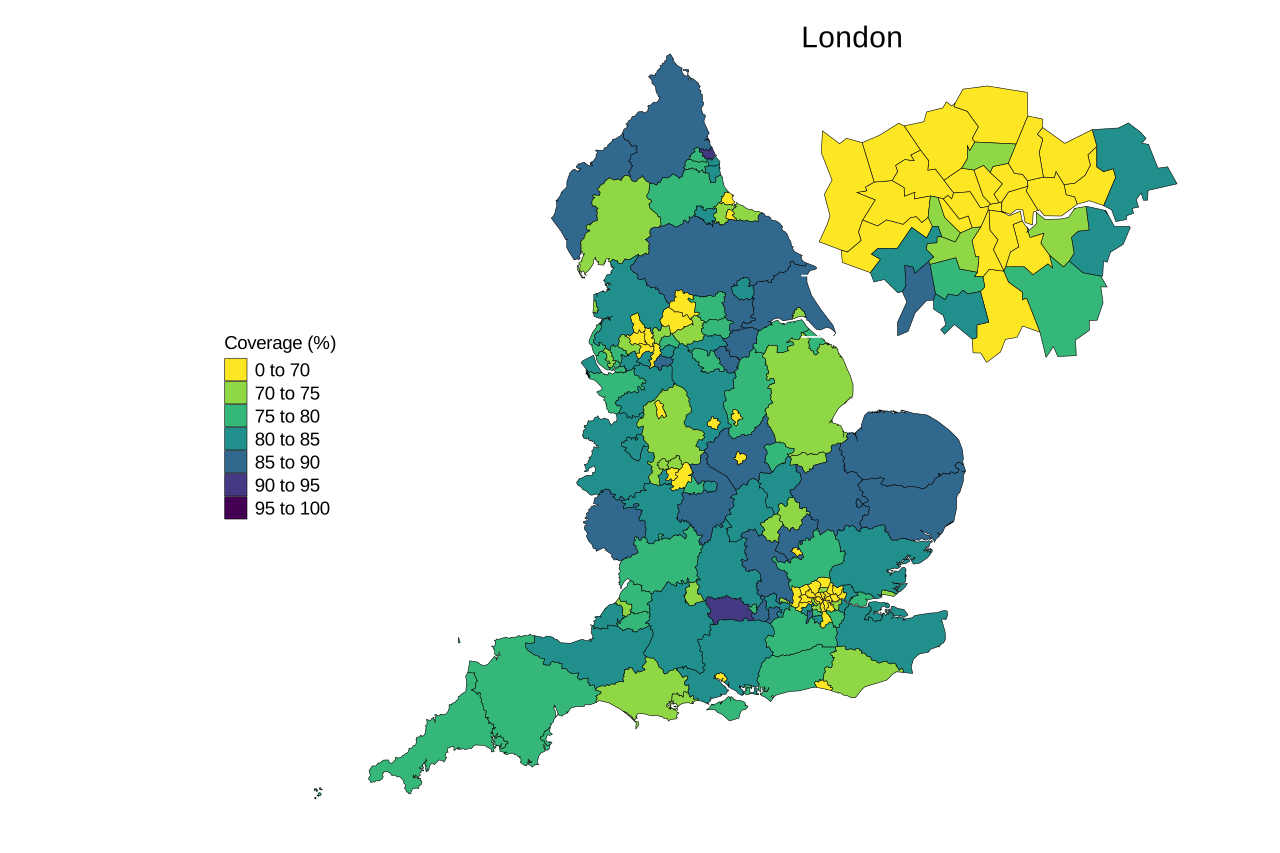
The map in Figure 13 shows HPV vaccine coverage by local authority for female students in year 9. The only NHS commissioning region with over half of local authorities reporting coverage less than 70.0% was London (21 out of 32, 65.6%).
Figure 13. HPV vaccine coverage by local authority for year 9 female students in the 2024 to 2025 academic year
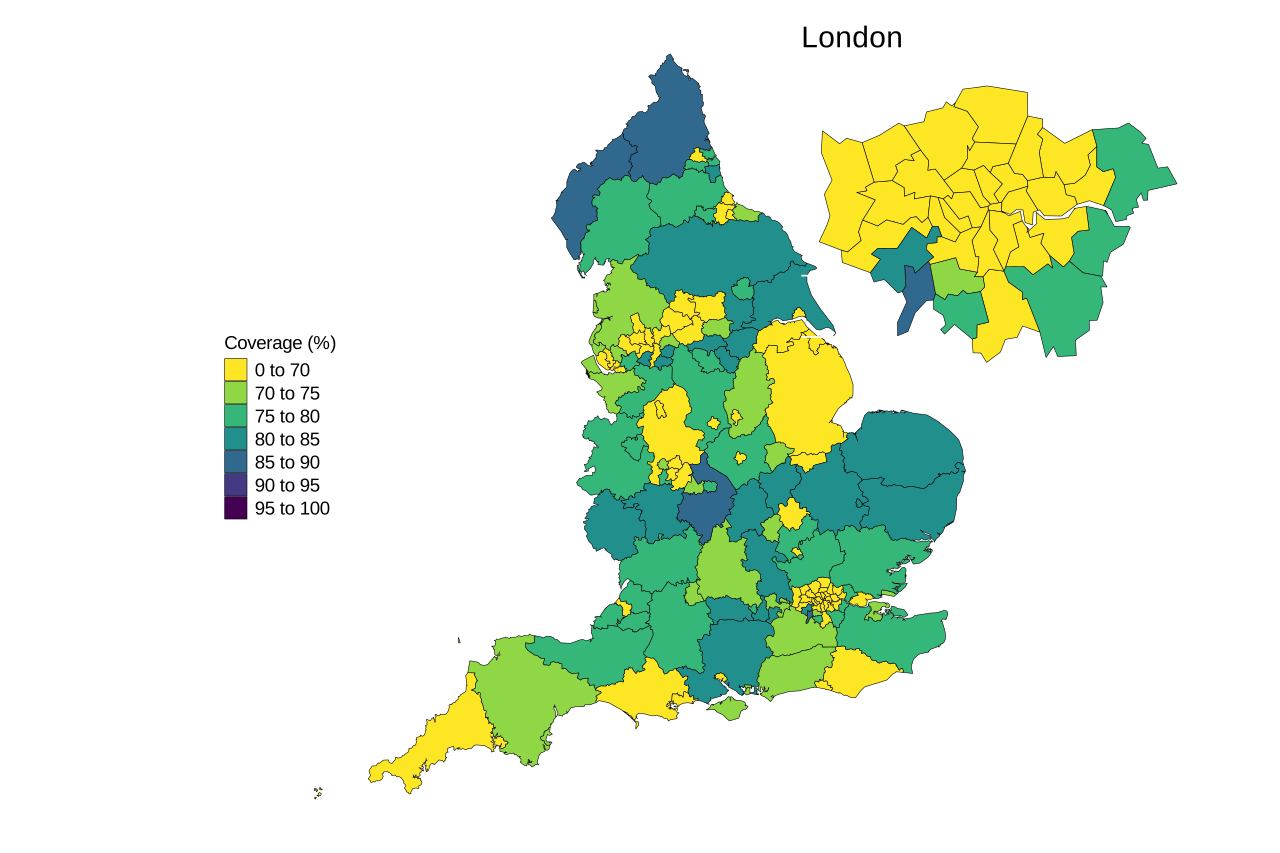
The map in Figure 14 shows HPV vaccine coverage by local authority for male students in year 9. The only NHS commissioning region with over half of local authorities reporting coverage less than 70.0% was London (25 out of 32, 78.1%).
Figure 14. HPV vaccine coverage by local authority for year 9 male students in the 2024 to 2025 academic year
Year 10 HPV vaccine coverage in 2024 to 2025
Year 10 students in 2024 to 2025 are represented by female cohort 20 and male cohort 4 in Table 1 and first became eligible for the HPV vaccine in the 2022 to 2023 academic year.
The main findings for year 10 students in 2024 to 2025 are that:
- HPV coverage for female students in year 10 was 75.5%, which is 1.2 percentage points lower than female students in year 10 in 2023 to 2024
- HPV coverage for male students in year 10 was 70.5%, which is 0.7 percentage points lower than male students in year 10 in 2023 to 2024
- HPV coverage for female students in year 10 was 1.4 percentage points higher than in 2023 to 2024 when the same cohort was in year 9, suggesting ongoing catch up
- HPV coverage for male students in year 10 was 2.0 percentage points higher than in 2023 to 2024 when the same cohort was in year 9, suggesting ongoing catch up
- HPV coverage for female students in year 10 by NHS commissioning region was lowest in London (61.0%) and highest in the East of England (82.8%)
- HPV coverage for male students in year 10 by NHS commissioning region was lowest in London (56.9%) and highest in the East of England (78.2%)
- HPV coverage for female students in year 10 at local authority level varied by 68.6 percentage points, from 30.8% (Brent) to 99.5% (Cumberland)
- HPV coverage for male students in year 10 at local authority level varied by 72.8 percentage points, from 26.4% (Kensington and Chelsea) to 99.2% (Cumberland)
Factors affecting HPV vaccine coverage estimates
HPV vaccine coverage by cohort showed evidence of stabilising after a number of years of decline, and in the 2024 to 2025 academic year this stabilisation appears to have continued. Final levels of coverage measured in year 10 continue to lag behind pre-pandemic levels. While initial uptake in year 8 in 2024 to 2025 for both females and males appears to have fallen relative to year 8 in the previous academic year, uptake for those in year 9 in 2024 to 2025 (both female and male) appears comparable to those in year 10 who had completed all three years of eligibility.
Overall, HPV vaccine coverage remains lower than pre-pandemic levels. This decline follows trends seen across many other routine vaccination programmes. One reason given by School Age Immunisation Services (SAIS) providers for the gradual decline in HPV coverage since the COVID-19 pandemic was an increase in the number of non-returned and declined consent forms. This drop in engagement may be linked to changes in vaccine confidence and fatigue following the pandemic.
Data sources and methodology
The data used for this report is submitted annually by screening and immunisation teams (SITs) at local authority level, although the data sources used vary by local authority. In the 2024 to 2025 academic year, 52 local authorities provided data from Child Health Immunisation Services (CHIS), 63 local authorities provided data from SAIS, and 37 local authorities provided data from an alternative source. In many local authorities, these figures were enriched using secondary data sources.
The types of children included in the denominator also varied, with 145 local authorities including children from pupil referral units, 100 local authorities including children in secure units, 115 local authorities including children from residential units, 151 local authorities including children who were home schooled, and 129 local authorities including children resident in the local authority but not linked to a school. Only Leeds local authority was unable to include vaccinations given in alternative settings such as general practices (GPs) and maternity settings.
For some local authorities it was not possible to get updated denominator figures, accounting for the movement of students in and out of the local authorities. For these local authorities provisional figures submitted for the cohort when they were measured in the 2023 to 2024 academic year have been used.
HPV vaccine coverage was calculated as the number of students vaccinated at any time in each birth and sex cohort divided by the number of students eligible for the vaccine in each cohort.
Full details of the methodology, data sources and validations used to produce this report can be found in the Quality and Methodology Information (QMI) report.
Background information
The national HPV vaccination programme was introduced in 2008 on the advice of the Joint Committee on Vaccination and Immunisation (JCVI). The programme aims to protect adolescents from HPV-related cancers. In 2008, a 3-dose schedule was offered routinely to secondary school year 8 females (aged 12 to 13 years) alongside a catch up programme targeting females aged 13 to 18 years. In September 2014, the programme changed to a 2-dose schedule based on evidence that showed antibody response to 2 doses of HPV vaccine in adolescent females was as good as 3 doses.
From September 2019, males aged 12 to 13 years became eligible for HPV immunisation alongside females, based on JCVI advice. This is the fourth year that males in year 9 have been offered the HPV vaccine. In order to evaluate the roll-out of the HPV vaccine to males the vaccine coverage collection was changed to monitor coverage in males and females separately.
From September 2023, the programme changed to a one dose only schedule. This is because the JCVI advised that a one dose HPV vaccine schedule was shown to be just as effective as 2 doses at protecting from HPV infection.
HPV vaccine programme delivery
The adolescent HPV immunisation programme is a school-based programme, with alternative provision in place for children who are not in mainstream schools. The vaccine is routinely offered in year 8 in all local authorities, with some local authorities offering catch up vaccination activity in years 9 and 10 depending on local needs. Those eligible for vaccination under the adolescent programme remain so until their 25th birthday, with catch up opportunities available through schools and GP surgeries.
In the 2024 to 2025 academic year, the HPV vaccine was offered routinely to children in year 8 in 101 local authorities and children in year 8 and 9 in 31 local authorities. All eligible children had been offered the vaccine, apart from year 8 students in 1 local authority. Of the 153 local authorities, 34 reported being unable to attend some schools. In most cases, this was due to the school refusing entry.
Previous reports were published by Public Health England (PHE).
Related statistics
-
HPV immunisation statistics Scotland: school year 2024/2025 (Public Health Scotland)
-
Vaccine uptake in children in Wales: COVER annual report 2025 (Public Health Wales)
-
Annual HPV vaccine coverage in Northern Ireland (Public Health Agency Northern Ireland)
Further information and contact details
Feedback and contact information
To provide feedback and for all queries relating to this document, please contact Adolescent@ukhsa.gov.uk.
Official statistics
Our statistical practice is regulated by the Office for Statistics Regulation (OSR). OSR sets the standards of trustworthiness, quality and value in the Code of Practice for Statistics that all producers of official statistics should adhere to.
You are welcome to contact us directly by emailing Adolescent@ukhsa.gov.uk with any comments about how we meet these standards. Alternatively, you can contact OSR by emailing regulation@statistics.gov.uk or via the OSR website.
UKHSA is committed to ensuring that these statistics comply with the Code of Practice for Statistics. This means users can have confidence in the people who produce UKHSA statistics because our statistics are robust, reliable and accurate. Our statistics are regularly reviewed to ensure they support the needs of society for information.