Freedom of Information statistics: annual 2025 bulletin_V2
Updated 16 September 2026

© Crown copyright 2026
This publication is licensed under the terms of the Open Government Licence v3.0 except where otherwise stated. To view this licence, visit nationalarchives.gov.uk/doc/open-government-licence/version/3 or write to the Information Policy Team, The National Archives, Kew, London TW9 4DU, or email: psi@nationalarchives.gov.uk.
Where we have identified any third party copyright information you will need to obtain permission from the copyright holders concerned.
This publication is available at https://www.gov.uk/government/statistics/freedom-of-information-statistics-annual-2025/freedom-of-information-statistics-annual-2025-bulletin
Statistical enquiries: Benjamin Szili
Press enquiries: Natalie Keffler
Next publication: 28 April 2027
1. Overview
This bulletin presents headline statistics for Freedom of Information (FOI) requests in central government for 2025, including key breakdowns by monitored body.
Key statistics
- In 2025 there were 94,526 FOI requests received across all monitored bodies*. This is an increase of 11,485 (+14%) from 2024 and represents the largest number of requests during a year since monitoring began in 2005 (see Statistical Note at Section 3 regarding the increases at The National Archives).
- Across all monitored bodies, 87% of requests were responded to in time, up from 76% in 2024.
- Of the 94,526 FOI requests received, 62,515 were resolvable. Of these, 36% were granted in full, up from 29% in 2024 and 35% were withheld in full, up from 30% in 2024. The remaining resolvable requests were not yet processed (8%) or were partially withheld (21%).
- Of the 34,807 requests withheld in full or in part, 26.6% were withheld due to the cost of response exceeding the limit, 2.7% were withheld as vexatious or repeated, and the remaining 70.7% fell under other exemptions.
*A full list of monitored bodies included in these statistics is provided in the scope of monitoring section.
Figure 1.1: Volume of FOI requests by year since 2005 (see Worksheet 2 of data tables)
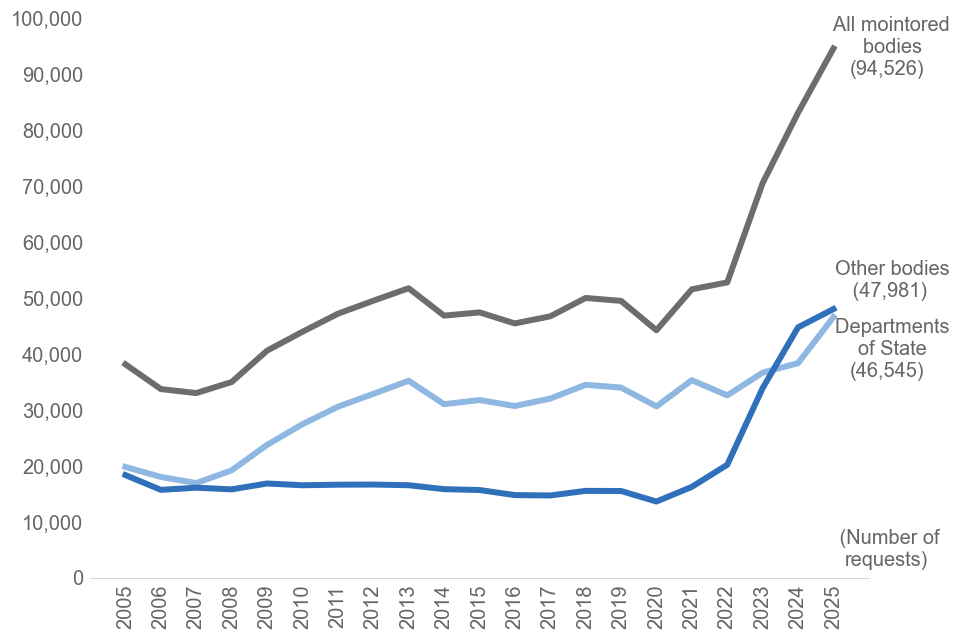
Figure 1.2: Number of monitored bodies by their percentage of responses to requests in time since 2021 (see Worksheet 6 of data tables and dataset)

2. Volumes
During 2025 there were 94,526 FOI requests received across all monitored bodies*. This is an increase of 11,485 (+14%) from 2024, and represents the largest number of requests during a year since monitoring began in 2005 (see Statistical Note at Section 3 regarding the increases at The National Archives).
Fewer than half (46,545) of these requests were at Departments of State, with the remaining 47,981 being received by other monitored bodies.
2.1 Environmental Information Regulations
In 2025, there were 4,113 requests treated under the Environmental Information Regulations (EIR).
Since 2024, the number of FOI requests handled under EIRs has increased by 1,275 (+45%). Departments of State handled 2,471 requests under EIRs, an increase of 808 (+49%) on 2024. The number of requests handled under EIRs for other monitored bodies increased to 1,642, up by 467 (+40%) since 2024.
2.2 Volume by department
The Home Office, the Ministry of Defence, the Ministry of Justice, and the Department for Work and Pensions accounted for just over half (51%) of requests to Departments of State; while The National Archives alone accounted for 70% of requests to other monitored bodies (see Statistical Note at Section 3 on The National Archives).
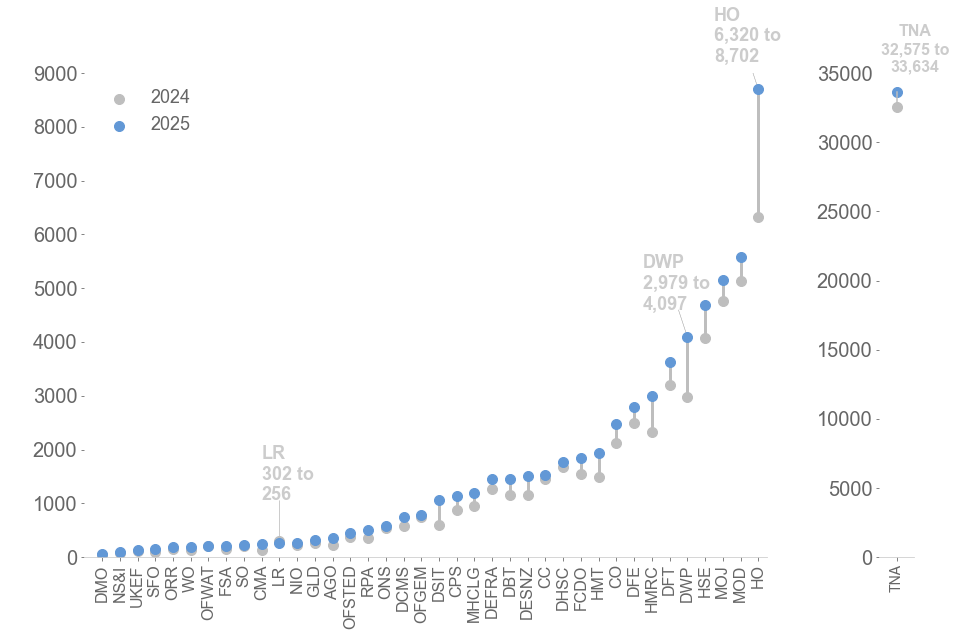
The Home Office had the largest increase in requests (+2,382) amongst all monitored bodies compared to 2024, followed by the Department for Work and Pensions (+1,118). HM Land Registry was the only department with a decrease in requests amongst all bodies compared to 2024 (-46).
Figure 2.1: Volume of FOI requests by year since 2005 (see Worksheet 2 of data tables)
Figure 2.2: Number of requests handled under EIRs since 2021 (see Worksheet 3 of data tables and dataset)
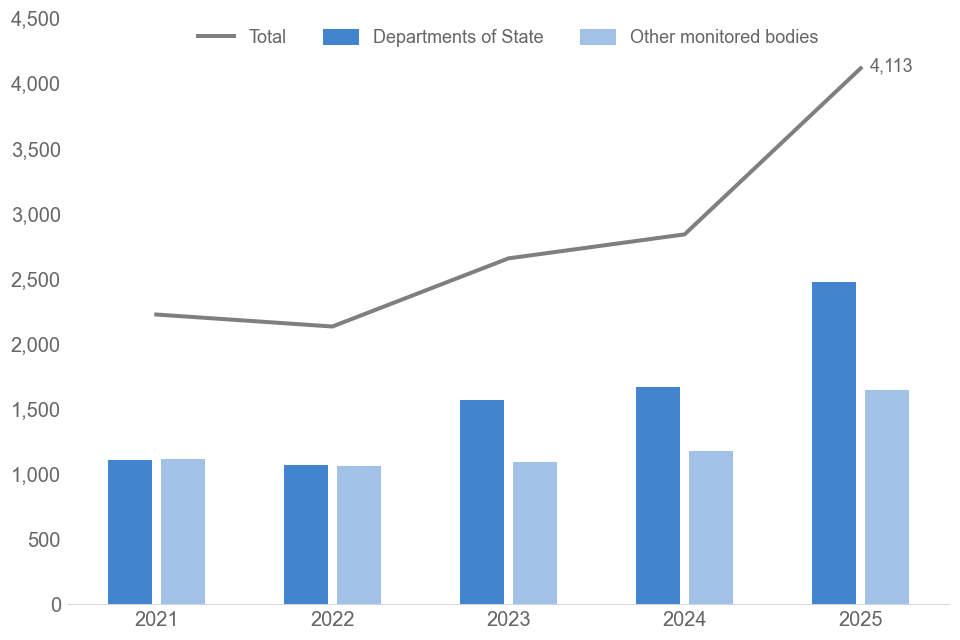
Figure 2.3: Proportion of FOI requests across all monitored bodies in 2025 (see Worksheet 3 of data tables)
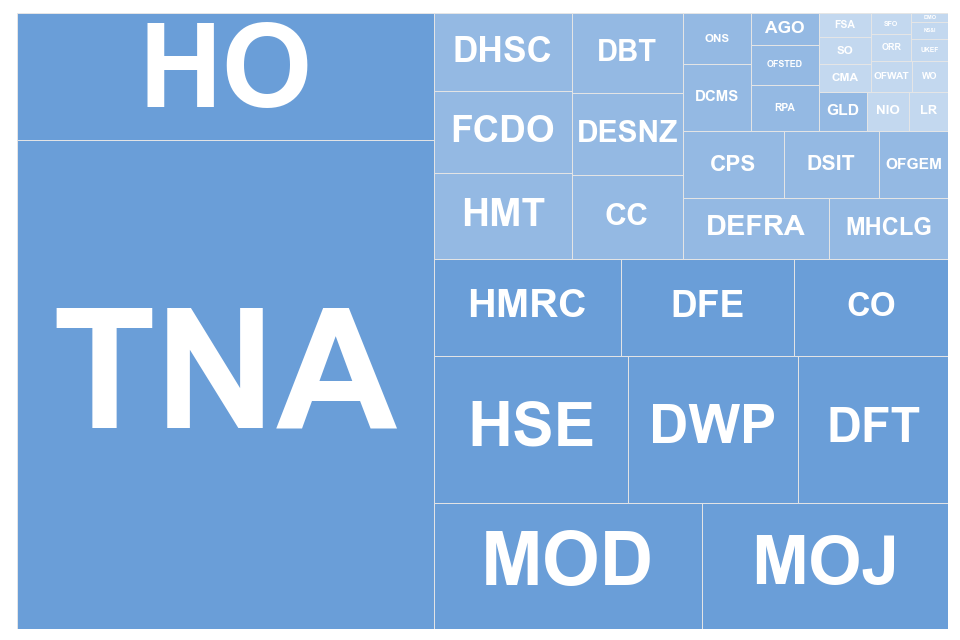
Figure 2.4: Volume of FOI requests across all monitored bodies in 2025 compared to 2024 (see Worksheet 4 of data tables and dataset)
3. Timeliness
Timeliness
The FOI Act requires public bodies to respond to requests for information in a timely manner. ‘In time’ responses are those processed within the statutory deadline (20 working days) or subject to a permitted deadline extension, including:
- Additional time for public interest tests under the FOI act.
- Extensions under the Environmental Information Regulations for complex requests.
- 10 additional working days for archival records from The National Archives.
Across all monitored bodies, 87% of requests were responded to in time, up from 76% in 2024.
- Across all Departments of State, 89% of requests were responded to in time, the same as in 2024.
- Across all other monitored bodies 84% of requests were responded to in time, up from 64% from 2024.
- Across all monitored bodies the percentage of requests responded to in time ranged from 64% to 100%
- 44% of bodies responded to 95% or more of requests in time, up from 39% in 2024.
Figure 3.1: Percentage of responses to FOI requests in time across all monitored bodies since 2021 (see Worksheet 6 of data tables and dataset)
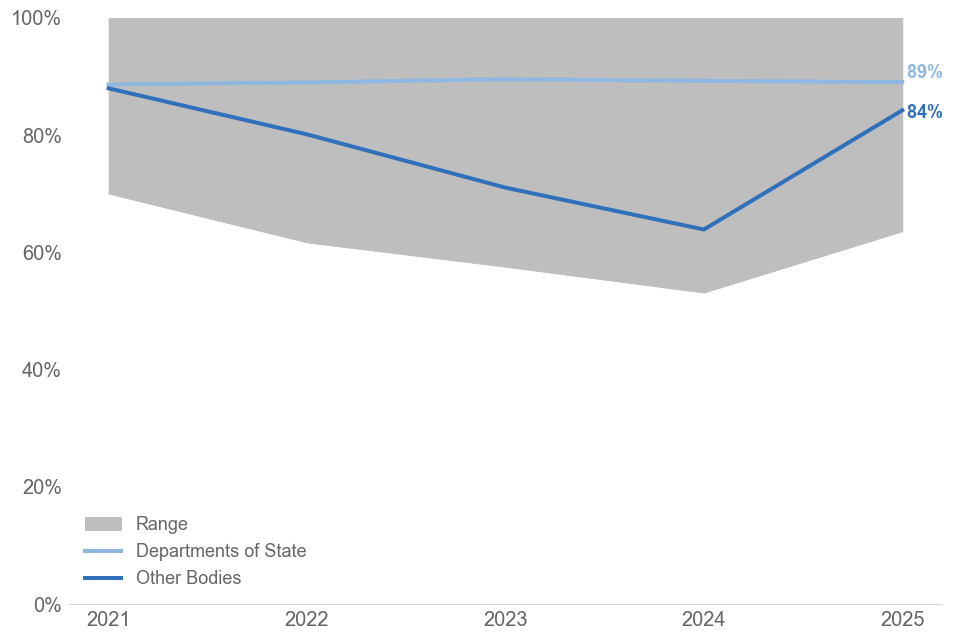
Figure 3.2: Number of monitored bodies by their percentage of responses to requests in time since 2021 (see Worksheet 6 of data tables and dataset)
Figure 3.3: Timeliness of response to FOI requests in 2025 (see Worksheet 5 of data tables)
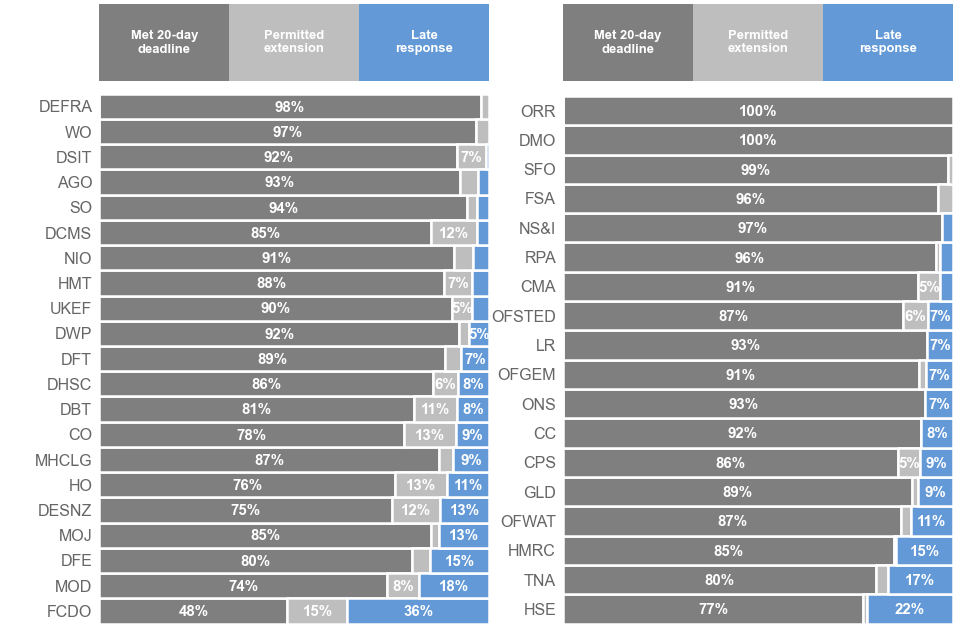
Figure 3.4: Departments of State: Percentage of requests responded to in time by department in 2024 and 2025 (see Worksheet 6 of data tables and dataset)
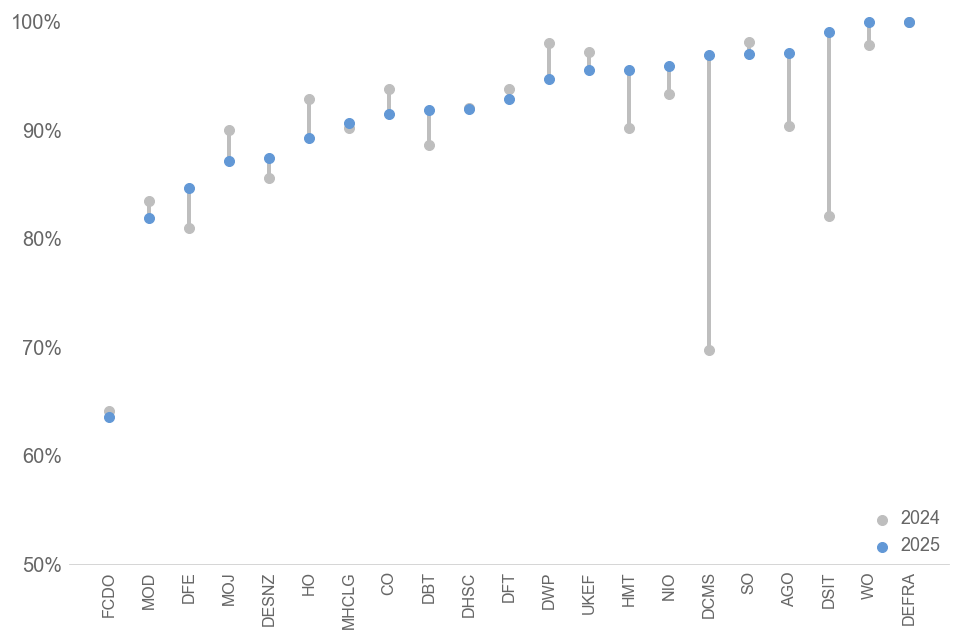
Figure 3.5: Other monitored bodies: Percentage of requests responded to in time by other monitored bodies in 2024 and 2025 (see Worksheet 6 of data tables and dataset)

Statistical Note
Where monitored bodies only receive a small number of requests they can demonstrate higher variability in their statistics.
Important note on The National Archives
In February 2021, the Ministry of Defence began the transfer of historic service personnel records to The National Archives. There are approximately 9.7 million records being transferred over 6 years. The transfer of over 85% of this collection (approx. 8.4 million records) resulted in a 321% increase in the volume of requests received by The National Archives in 2025 compared to 2022. This had, until Q2 2025, impacted the overall percentage of their requests responded to ‘in time’ as well as the overall timeliness across all monitored bodies. More information can be found on the National Archives website.
4. Outcomes
Important Note
‘Procedural refusals’ within the statistics are classified as resolvable requests that have been fully withheld. ‘Resolvable requests’ are defined as all those where it is possible to make a substantive decision on whether to release the requested information. They exclude requests which are lapsed or ‘on-hold’, where the information is not held, and where it was necessary to provide advice and assistance, since, in each of these cases, it would not have been possible to resolve the request in the form it was asked.
FOI requests that have been refused for being vexatious or repeated, along with those refused on cost grounds are treated and included in these statistics as resolvable requests that have been ‘fully-withheld’. These types of refusals are referred to as ‘procedural refusals’ in these statistics.
To better understand the impact on the statistics of classifying ‘procedural refusals’ as resolvable requests that have been ‘fully-withheld’, additional statistics are presented in section 4.2 that excludes ‘procedural refusals’ from resolvable requests and requests that have been ‘fully-withheld’.
Caution is advised when interpreting the number and percentage of requests withheld both partially and fully where departments handle large numbers of requests under the Environment Information Regulations (EIR). This is because under EIR, requests where information is not held or where it was necessary to provide advice and assistance are dealt with as a refusal under an exception whereas similar requests under FOIA are dealt with procedurally and not as a refusal.
4.1 Outcomes including procedural refusals
94,526 “non-routine”* requests were received in 2025. Of these, 62,515 (66%) were resolvable. Resolvable requests are those where it was possible to give a substantive decision on whether to release the requested information. Of these:
- 22,770 were granted in full.
- 34,807 were withheld in full** or in part, where:
- 706 were vexatious, as defined in Section 14 of the Act.
- 229 were repeated, as defined in Section 14 of the Act.
- 9,263 had a cost of response which exceeded the limit as defined in Section 12 of the Act.
- 24,609 involved information subject to one of the exemptions and exceptions listed under Sections 22-44.
- 4,938 were not yet processed.
31,221 (33%) requests were not resolvable. Of these:
- 12,027 requests required further clarification prior to responding, and monitored bodies provided “advice and assistance” on how to reformulate the request.
- 19,194 involved information not held by the responding body.
790 (1%) were on hold at the time of monitoring.
*For more detail and definition of ‘non-routine’ requests see Notes section.
**“Fully withheld requests” includes requests which were refused because it was estimated that the cost of complying with the request would exceed the appropriate limit or because the request was considered vexatious or repeated. Please note that requests refused on these grounds may include refusals where information is not held.
Of resolvable requests:
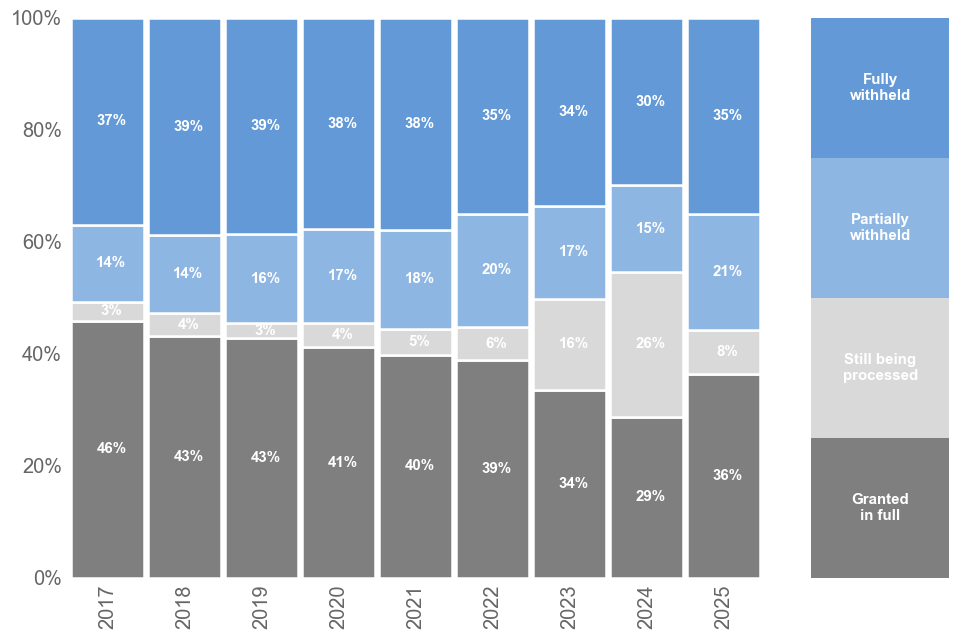
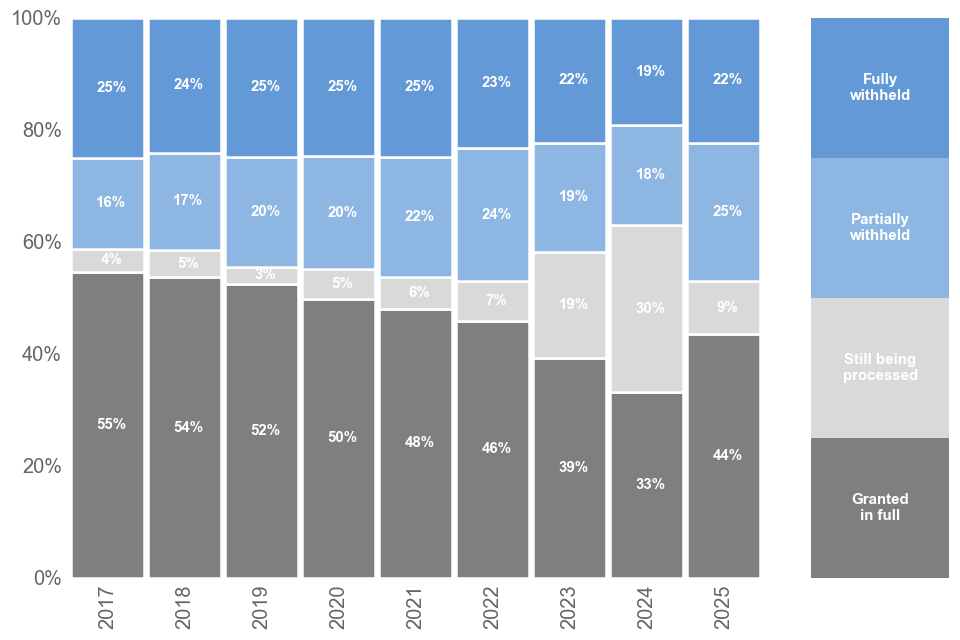
- 36% were granted in full, up from 29% in 2024.
- 21% were partially withheld, up from 15% in 2024.
- 35% were fully withheld, up from 30% from 2024.
These outcomes varied across monitored bodies:
- Requests were granted in full 75% or more of the time at three bodies, up from one in 2024.
- Eight monitored bodies granted 25% or fewer requests in full, down from nine in 2024.
Figure 4.1.1: Outcomes of FOI requests received in 2025 (see Worksheets 3, 7 and 11 of data tables and dataset and csv dataset)
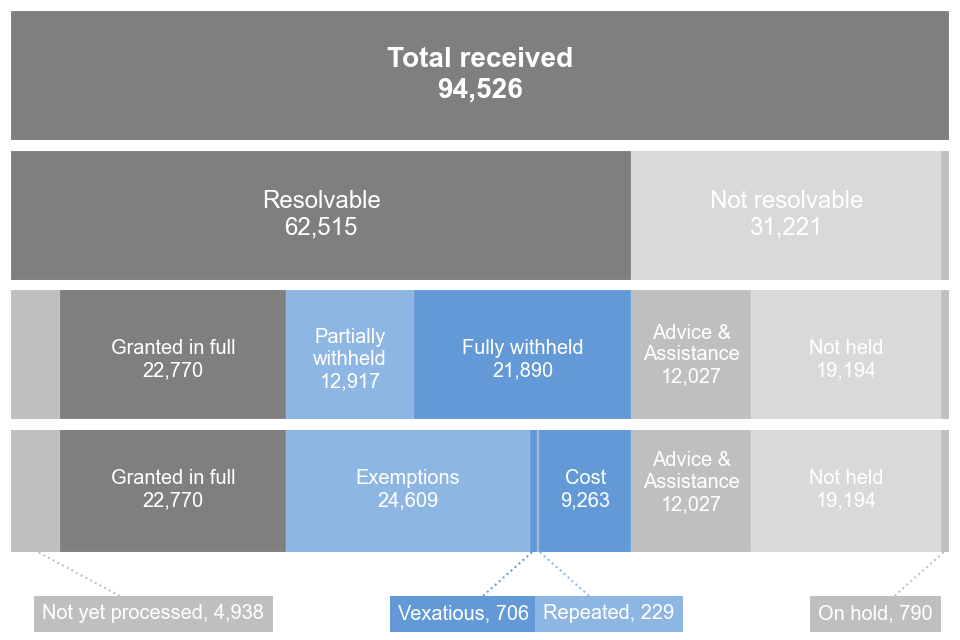
Figure 4.1.2: Departments of State and other monitored bodies: Outcomes of FOI requests as a percentage of resolvable requests in 2025(see Worksheet 7 of data tables)
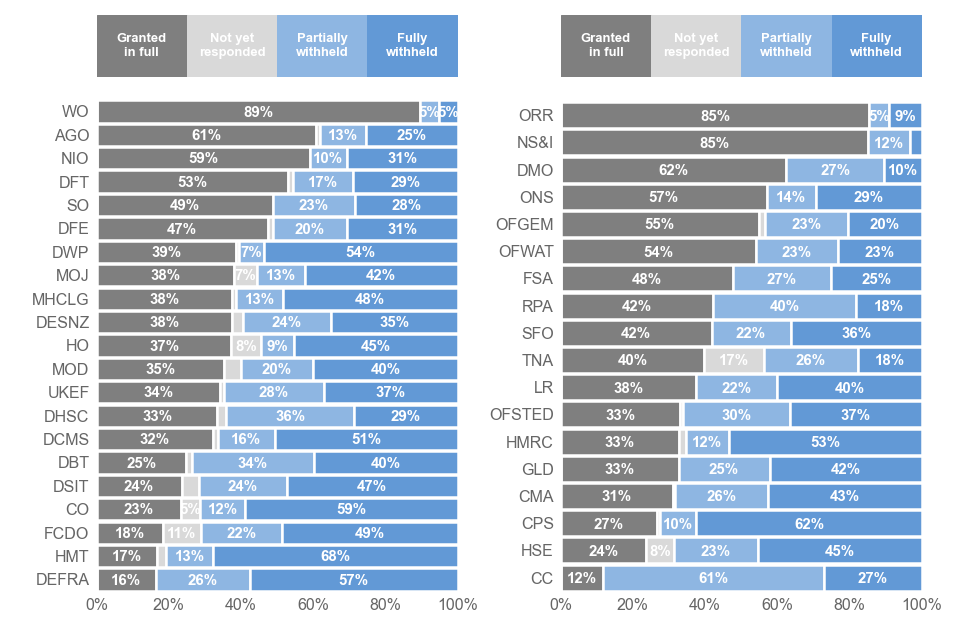
Figure 4.1.3: Outcomes of FOI requests as percentage of resolvable requests since 2017 (see Worksheet 9 of data tables and dataset)
4.2 Outcomes excluding procedural refusals
94,526 “non-routine”* requests were received in 2025. Of these, 52,317 (55%) were resolvable excluding procedural refusals. Of these:
- 22,770 were granted in full.
- 24,609 were withheld in full or in part, involving information subject to one of the exemptions and exceptions listed under Sections 22-44.
- 4,938 were not yet processed.
10,198 (11%) were procedural refusals. Of these:
- 706 were vexatious, as defined in Section 14 of the Act.
- 229 were repeated, as defined in Section 14 of the Act.
- 9,263 had a cost of response which exceeded the limit as defined in Section 12 of the Act.
31,221 (33%) requests were not resolvable. Of these:
- 12,027 requests required further clarification prior to responding, and monitored bodies provided “advice and assistance” on how to reformulate the request.
- 19,194 involved information not held by the responding body.
790 (1%) were on hold at the time of monitoring.
*For more detail and definition of ‘non-routine’ requests see Notes section.
Of resolvable requests excluding procedural refusals:
- 44% were granted in full, up from 33% in 2024.
- 25% were partially withheld, up from 18% in 2024.
- 22% were fully withheld, up from 19% since 2024.
These outcomes varied across monitored bodies:
- Requests were granted in full 75% or more of the time at three bodies, the same as in 2024.
- Three monitored bodies granted 25% or fewer requests in full, up from two in 2024.
Figure 4.2.1: Outcomes of FOI requests received in 2025 (see Worksheets 3, 8 and 11 of data tables and dataset and csv dataset)
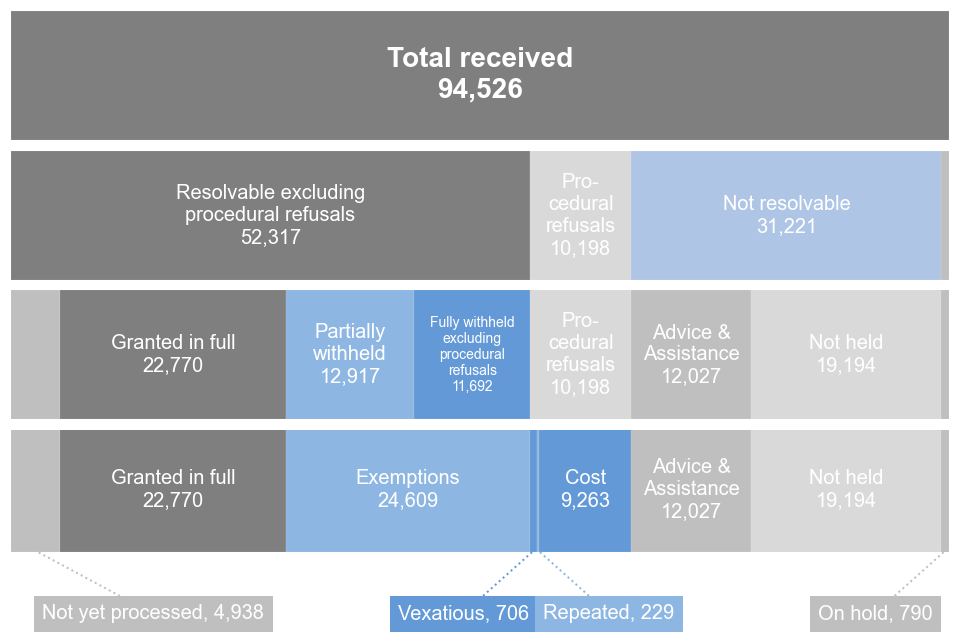
Figure 4.2.2: Departments of State and other monitored bodies: Outcomes of FOI requests as a percentage of resolvable requests excluding procedural refusals (see Worksheet 8 of data tables)
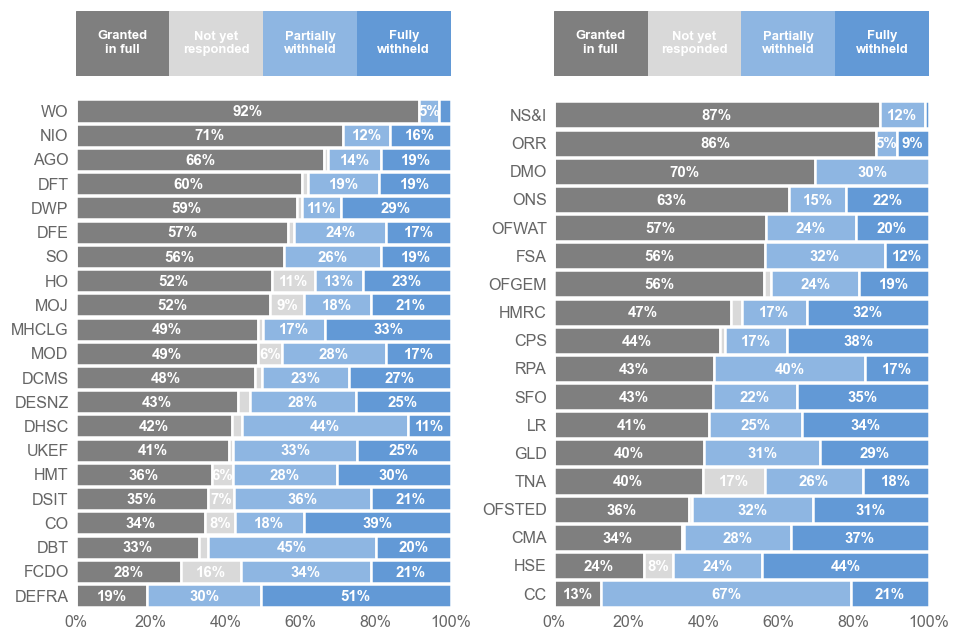
Figure 4.2.3: Outcomes of FOI requests as percentage of resolvable requests excluding procedural refusals since 2017 (see Worksheet 9 of data tables and dataset)
5. Exemptions
Exemptions
Under the FOI Act, public bodies can only refuse to provide requested information that they hold if the information falls under one of the specific exemptions within the Act.
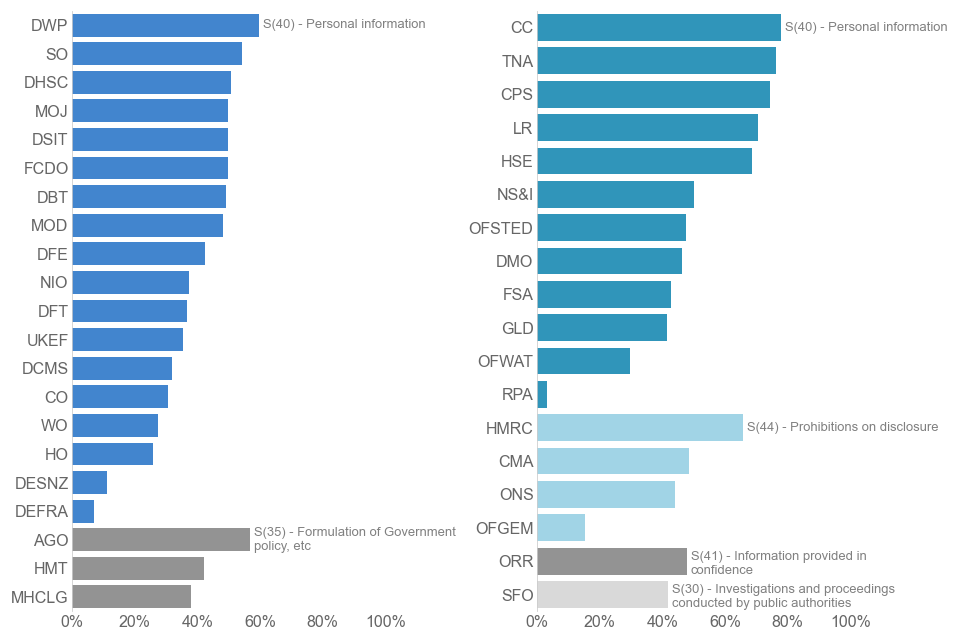
Of the 34,807 requests withheld in full or in part, 9,263 (26.6%) were withheld due to the cost of response exceeding the limit, 935 (2.7%) were withheld as vexatious or repeated, and the remaining 24,609 (70.7%) fell under other exemptions. Of these other exemptions, Section 40 (covering personal information) was by far the most commonly cited overall and at the majority of departments, as in previous years.
Statistical Note
Percentages for exemptions may sum to more than 100 as each request may cite multiple exemptions.
Important note on Section 21 exemptions
Exemptions listed under Section 21 are only included in Figures 5.3 and 5.4.
Section 21
A Section 21 exemption can be used under the FOI Act when information is reasonably available by other means. Requests where a Section 21 exemption was the sole exemption used are reported separately because the FOI Act is not meant to act as a means to access data in the public domain.
Across all monitored bodies 3,388 requests subject to a Section 21 exemption were reported.
Figure 5.1: Use of exemptions* in 2025, as a percentage of all exempted requests (see dataset)
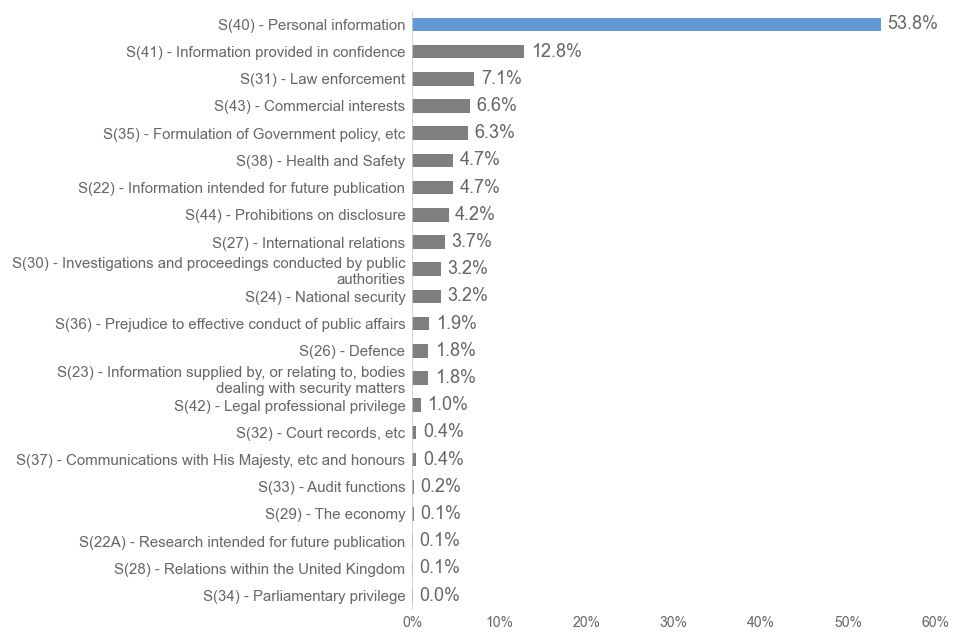
Figure 5.2: Most commonly used exemption* in 2025, as a percentage of exempted requests (see dataset)
*Note that exemptions under EIRs are not included here
Figure 5.3: Number of requests subject to a Section 21 exemption in 2025 (see Worksheet 13 of data tables and dataset)
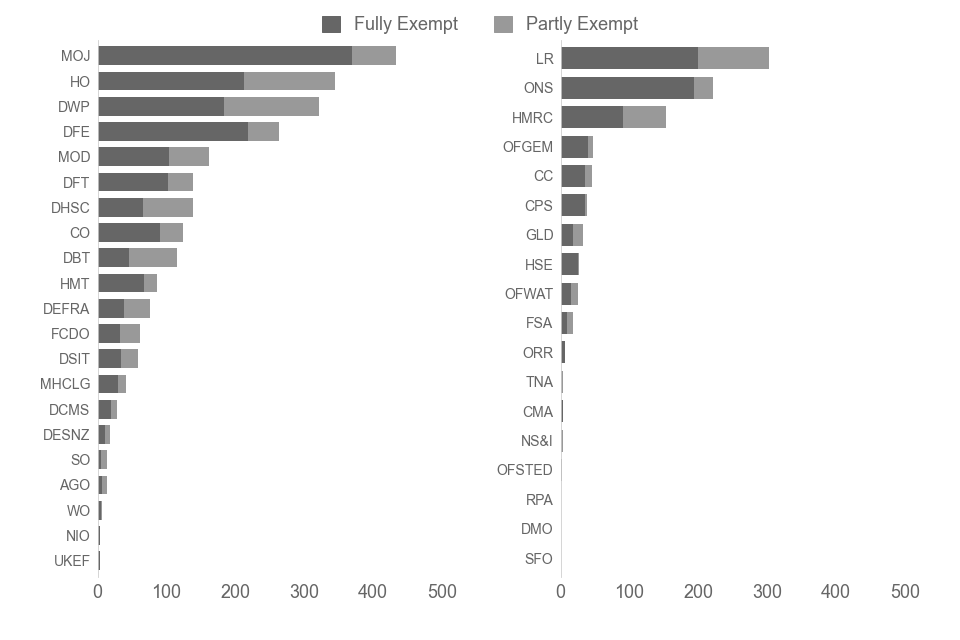
Figure 5.4: Number of requests subject to a Section 21 exemption 2021 - 2025 (see Worksheet 13)

6. Internal reviews and known complaints to the ICO
6.1 Internal reviews
Internal reviews
Requesters are able to ask a public authority for an Internal Review if they are not content with the public authority’s initial decision on whether or not to release requested information, if their request was not dealt with within 20 working days or if they felt a fee was wrongly charged.
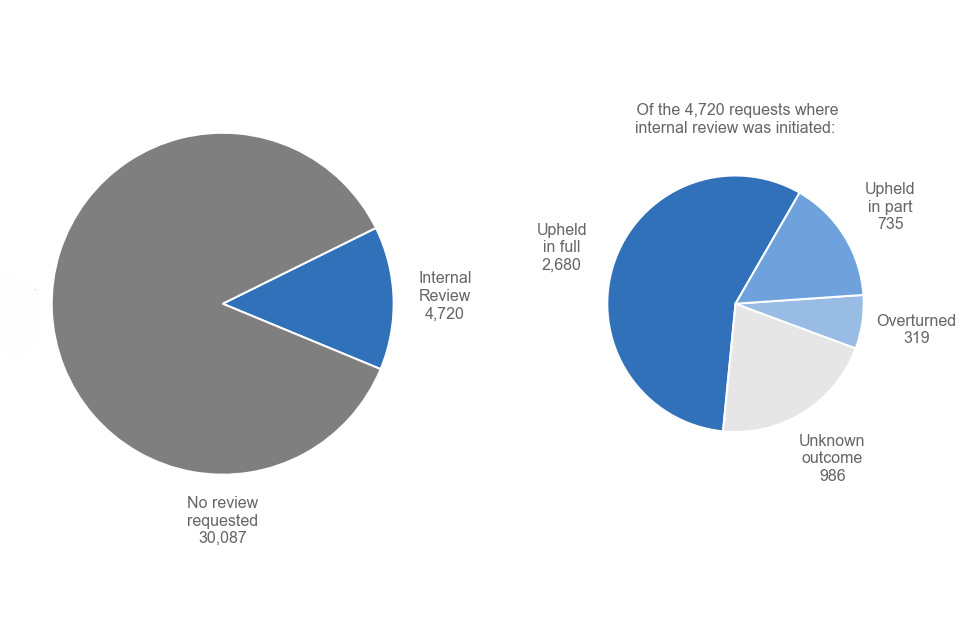
- An internal review was initiated for 4,720 (14%) of the 34,807 requests where information was initially withheld in 2025.
- Of these, the decision was overturned fully or partially in 1,054 cases (28% of those with a known outcome, up from 27% in 2024).
- Of reviews with a known outcome, 43% were completed within 20 days, down from 47% in 2024
- Of the 507 internal reviews with an unknown outcome at the time of end of year monitoring in 2024, 38 were still incomplete at the time of end of year monitoring in 2025 (see Worksheet 16 in the data tables).
Figure 6.1: Internal reviews of FOI requests where information was initially withheld in 2025 (see Worksheet 14)
6.2 Known complaints to the Information Commissioner’s Office (ICO)
Known complaints to the Information Commissioner’s Office (ICO)
Requesters who remain dissatisfied with the outcome of a public authority’s Internal Review can apply to the Information Commissioner for a decision on whether or not a public authority has handled their request properly. Please see notes for more information.
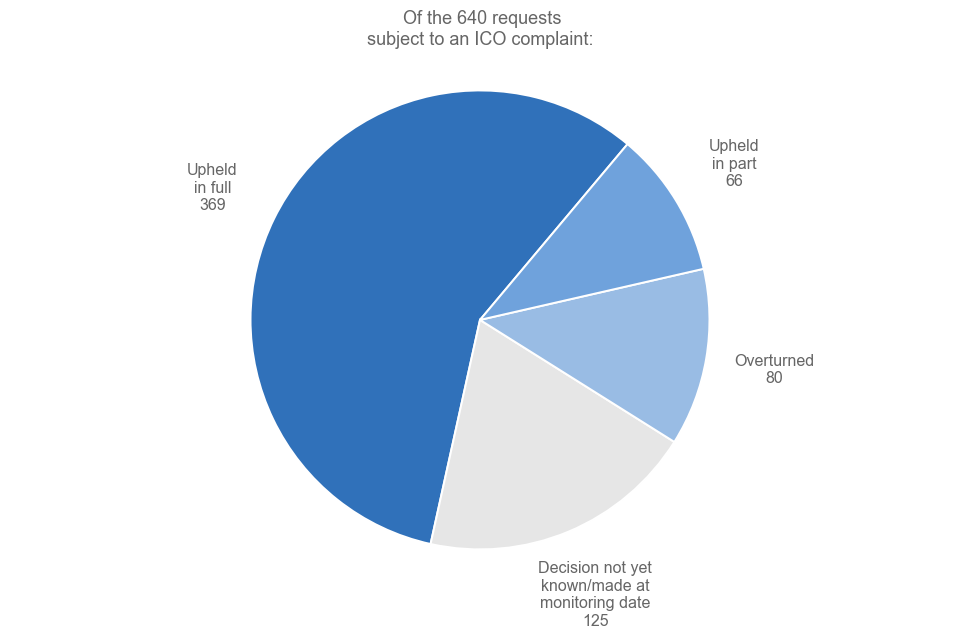
- Of the 640 known complaints to the ICO in 2024, 515 have known outcomes. Of these: 369 complaints saw the original decision upheld in full, 66 were upheld in part and 80 were overturned.
- There were 716 known complaints to the ICO in 2025. Outcomes data for these complaints will be collected and reported in the 2026 annual publication next year.
- For further details, and how to make a complaint: www.ico.org.uk
Figure 6.2: Outcomes of known complaints to the ICO received during 2024 (see Worksheet 18)
7. Scope of monitoring
7.1 Bodies included in centrally monitored statistics
| Government body | Note |
|---|---|
| Attorney General’s Office (AGO) | Department of State |
| Crown Prosecution Service (CPS) | Body monitored separately from parent department |
| Serious Fraud Office (SFO) | Body monitored separately from parent department |
| Crown Prosecution Service Inspectorate | Unmonitored body |
| Department for Business and Trade (DBT) | Department of State |
| Advisory Conciliation and Arbitration Service | Unmonitored body |
| Companies House | Unmonitored body |
| Insolvency Service | Unmonitored body |
| Cabinet Office (CO) | Department of State |
| Crown Commercial Service | Body included in monitoring by parent department |
| Government Property Agency | Body included in monitoring by parent department |
| Department for Culture, Media and Sport (DCMS) | Department of State |
| Department for Education (DFE) | Department of State |
| Skills England | Body included in monitoring by parent department |
| Teaching Regulation Agency | Body included in monitoring by parent department |
| Standards and Testing Agency | Unmonitored body |
| Office of Qualifications and Examinations Regulation | Unmonitored body |
| Department for Energy Security and Net Zero (DESNZ) | Department of State |
| Department for Environment Food and Rural Affairs (DEFRA) | Department of State |
| Rural Payments Agency (RPA) | Body monitored separately from parent department |
| Animal and Plant Health Agency | Unmonitored body |
| Centre for Environment, Fisheries and Rural Affairs | Unmonitored body |
| Veterinary Medicines Directorate | Unmonitored body |
| Department for Transport (DFT) | Department of State |
| Driver and Vehicle Licensing Agency | Body included in monitoring by parent department |
| Driver and Vehicle Standards Agency | Body included in monitoring by parent department |
| Maritime and Coastguard Agency | Body included in monitoring by parent department |
| Vehicle Certification Agency | Body included in monitoring by parent department |
| Active Travel England | Body included in monitoring by parent department |
| Department for Work and Pensions (DWP) | Department of State |
| Health and Safety Executive (HSE) | Body monitored separately from parent department |
| Department for Health and Social Care (DHSC) | Department of State |
| Medicines and Healthcare Products Regulatory Authority | Unmonitored body |
| UK Health Security Agency | Unmonitored body |
| Department for Science, Innovation and Technology (DSIT) | Department of State |
| Building Digital UK | Body included in monitoring by parent department |
| UK Intellectual Property Office | Unmonitored body |
| Met Office | Unmonitored body |
| UK Space Agency | Unmonitored body |
| Foreign, Commonwealth and Development Office (FCDO) | Department of State |
| FCDO Services | Body included in monitoring by parent department |
| Wilton Park Executive | Body included in monitoring by parent department |
| HM Treasury (HMT) | Department of State |
| Debt Management Office (DMO) | Body monitored separately from parent department |
| Office for Budget Responsibility | Body included in monitoring by parent department |
| Government Internal Audit Agency | Unmonitored body |
| Home Office (HO) | Department of State |
| Ministry of Defence (MOD) | Department of State |
| Defence Equipment and Support | Body included in monitoring by parent department |
| Defence Science and Technology Laboratory | Body included in monitoring by parent department |
| Submarine Delivery Agency | Body included in monitoring by parent department |
| UK Hydrographic Office | Body included in monitoring by parent department |
| Ministry of Housing, Communities and Local Government (MHCLG) | Department of State |
| Planning Inspectorate | Unmonitored body |
| Queen Elizabeth II Conference Centre | Unmonitored body |
| Ministry of Justice (MOJ) | Department of State |
| HM Courts and Tribunals Service | Body included in monitoring by parent department |
| Legal Aid Agency | Body included in monitoring by parent department |
| HM Prison and Probation Service | Body included in monitoring by parent department |
| The Office of the Public Guardian | Body included in monitoring by parent department |
| Criminal Injuries Compensation Authority | Unmonitored body |
| Northern Ireland Office (NIO) | Department of State |
| UK Export Finance (UKEF) | Department of State |
| Scotland Office (SO) | Department of State |
| Wales Office (WO) | Department of State |
| HM Revenue and Customs (HMRC) | Other monitored body |
| Valuation Office | Body included in monitoring by parent department |
| Charity Commission (CC) | Other monitored body |
| Competitions and Marketing Authority (CMA) | Other monitored body |
| Food Standards Agency (FSA) | Other monitored body |
| Government Legal Department (GLD) | Other monitored body |
| The National Archives (TNA) | Other monitored body |
| Office for National Statistics (ONS) | Other monitored body |
| Office for Standards in Education, Children’s Service and Skills (OFSTED) | Other monitored body |
| Office of Gas and Electricity Markets (OFGEM) | Other monitored body |
| Office of Rail and Road (ORR) | Other monitored body |
| Land Registry (LR) | Other monitored body |
| Water Services Regulation Authority (OFWAT) | Other monitored body |
| National Savings and Investments (NS&I) | Other monitored body |
8. Notes
The FOI Act 2000[footnote 1] and the associated Environmental Information Regulations[footnote 2] 2004 allow individuals to request information from public bodies.
This bulletin presents FOI statistics for 39 central government bodies, including all major Departments of State, and a number of other bodies with significant regulatory, policy-making or information handling functions. The quarterly statistics report on:
- The initial handling of FOI requests
- The number received during the quarter
- The timeliness of issuing a substantive response
- The rates of disclosure of requested information
- The exemptions applied when withholding information
Corrections and Revisions
Monitored bodies review the figures provided in the quarterly monitoring, and may make internal revisions to the statistics after publication. The revised figures are then included in the annual end of year monitoring. As a result, the quarter to quarter statistics will not always sum to the annual figures.
A small number of figures in this bulletin have been revised since the first version was published – please see the data tables for full details of what has changed.
Accredited Official Statistics
These accredited official statistics have been independently reviewed by the Office for Statistics Regulation (OSR). They comply with the standards of trustworthiness, quality and value in the Code of Practice for Statistics. Accredited official statistics are called National Statistics in the Statistics and Registration Service Act 2007.
Accreditation signifies their compliance with the authority’s Code of Practice for Statistics which broadly means these statistics are:
- managed impartially and objectively in the public interest
- meet identified user needs
- produced according to sound methods
- well explained and readily accessible
Our statistical practice is regulated by the Office for Statistics Regulation (OSR).
OSR sets the standards of trustworthiness, quality and value in the Code of Practice for Statistics that all producers of official statistics should adhere to.
These statistics were independently reviewed by the OSR in June 2017. See Assessment Report 328 Freedom of Information Statistics - implementation in Central Government. Since this review by the OSR, we have continued to comply with the Code of Practice for Statistics.
Request for Feedback
We always welcome user feedback on our publications. We can be contacted at: foistatistics@cabinetoffice.gov.uk
Defining known complaints to the ICO
Prior to 2019 the ICO section referred to “ICO appeals”. This was amended in 2019 to “known complaints to the ICO“. This change was made so that the description of what is being reported on in these annual statistics is now more clearly defined and accurate. This is because:
- Statistics for how many complaints are referred to the ICO about the handling of requests is held by the ICO and reported on in their annual report (a parliamentary paper).
- Departments are not necessarily always aware of all the cases about them that are referred to the ICO. This is because the ICO has the discretion whether or not to accept a case and some of those will be ineligible for investigation (e.g. they are premature/or out of scope) or will be withdrawn before a department is made aware.
- The figures that departments report on are the number of cases where a complaint has been made to the ICO and the departments are made aware of that complaint. They are not, therefore, a complete picture of all possible complaints.
- The terminology used in the revised wording is that used in legislation and by the ICO. Decisions made by the ICO may be appealed to the upper tribunal and as such it is important to keep this legal distinction. Outcomes data is now reported one year in arrears to ensure that the proportion of complaints with a reported outcome are higher and more meaningful than they were prior to this change in 2019.
Defining the scope of FOI monitoring
Section 1 of the Freedom of Information Act 2000[footnote 1] states that (subject to certain conditions):
‘Any person making a request for information to a public authority is entitled—
(a) to be informed in writing by the public authority whether it holds information of the description specified in the request, and
(b) if that is the case, to have that information communicated to him’
Regulation 5 of the Environmental Information Regulations 2004[footnote 2] states that (subject to certain conditions):
‘A public authority that holds environmental information shall make it available on request.’
Following their introduction on 1 April 2005, the above provisions apply to all relevant requests for information made to public authorities, no matter how routine and straightforward they may be.
Government departments supply large amounts of information, both on request and proactively, as an established and routine part of their business. This includes information released in the form of leaflets, correspondence exchanges, reports and other published material, and through websites and departmental FOI Publication Schemes. All information released on request is covered by the Freedom of Information Act, however it would be both uninformative and fundamentally unfeasible to count all such activity in departmental FOI monitoring returns.
The statistics in this bulletin therefore relate to all ‘non-routine’ information requests that government departments have received, and those routine information requests that are handled under Section 21. Essentially, this means that departments’ statistics should only count those requests where:
- It was necessary to take a considered view on how to handle the request under the terms of the Freedom of Information Act, and
- Departmental Freedom of Information officer(s) were informed of the request and logged it in their case management systems.
Defining a request
The full definition of an ‘information request’ for the purposes of inclusion in the Cabinet Office’s monitoring returns is shown below:
‘[An information request for monitoring purposes is one …]
- Which meets the criteria in section 8 of the Freedom of Information Act and if the request falls under the Environmental Information Regulations it includes requests made in any form or context, including oral requests; and
- Which is a request for information that is not already reasonably accessible to the applicant by other means; and
(i) Which results in the release of one or more documents (in any media) or inclusion of extracts of documents in the information released; or
(ii) Results in information being withheld under an exemption or exception from the right of access (either the Freedom of Information Act or the Environmental Information Regulations); or
(iii) The request is not processed because the department estimates the cost of complying would exceed the appropriate limit in accordance with section 12 of the Freedom of Information Act; or
(iv)The request is not processed because the department is relying on the provisions of section 14 of the Freedom of Information Act; or
(v) Where a search is made for information sought in the request and it is found that none is held.’
Consistency of the statistics
The definition shown above has been widely disseminated to FOI officers in government. It is necessary to apply a definition of this sort to set a clear boundary to the coverage of our monitoring, and thereby obtain meaningful information from the process.
However, there is considerable variation in the way these bodies are structured and managed, and in the mechanisms that they have put in place to meet their obligations under the FOI Act. For example, some bodies operate a centralised Freedom of Information secretariat that co-ordinates responses to all information requests received. Others give a greater degree of autonomy to individual work areas in the handling of information requests.
Because of these differences, there could be a degree of inconsistency in the way in which bodies have interpreted and applied the definition of an ‘information request’ for monitoring purposes. However, the statistics effectively count those requests which have been dealt with by each monitored body formally under the FOI Act. As such, the statistics report on how many such requests for information each monitored body has received and how they have implemented the Act’s requirements in providing responses. Direct comparisons between the statistics for different monitored bodies can therefore be made on this basis.
In summary:
(i) These statistics cover both ‘non-routine’ information requests, and ‘routine’ information requests which are answered under a Section 21 exemption. This does not give a representative picture of all requests for information received in government.
(ii) There is likely to be a degree of inconsistency between monitored bodies’ interpretations of the definition of an ‘information request’ for monitoring purposes. This should be borne in mind when using these statistics.
Coverage
The statistics in this bulletin have been derived from monitoring returns completed by Freedom of Information officers in government departments during February and March 2026. The formal monitoring work covers a total of 39 central government bodies, including major Departments of State. The monitored bodies which are not Departments of State nonetheless have significant policy-making, regulatory or information-handling functions.
The Freedom of Information Act 2000 applies in England and Wales, Northern Ireland and Scotland (with exceptions, see below).
The Freedom of Information (Scotland) Act 2002 applies to public bodies over which the Scottish Parliament has devolved jurisdiction, and as such lies outside the scope of the monitoring work on which this bulletin is based. However, Scottish parts of UK-wide bodies which are ordinarily under the remit of the Scottish Parliament act (such as the Forestry Commission) are subject to the UK wide 2000 act rather than Scottish Government’s 2002 Act.
The Northern Ireland Office, Scotland Office and the Wales Office are included in these statistics as they fall under the jurisdiction of the UK-wide 2000 act. However, data is not collected from the Welsh Government or Northern Ireland Executive.
Statistics on FOI requests made to the Scottish Government can be found here: http://www.gov.scot/About/Information/FOI/Reporting. Note that there are several differences in the UK and Scottish FOI Acts which mean that the figures are not directly comparable.
Users and uses of the statistics
The main users of these statistics are departmental FOI teams responsible for coordinating responses and requests, Ministers and officials with responsibility for developing information access policy, and other non-governmental bodies and individuals with an interest in the accessibility of government information. The statistics are used to monitor the implementation of the FOI Act by central government, both as a whole and by each individual body included in the figures.
Coronavirus (COVID-19)
The impact of the coronavirus (COVID-19) pandemic will have affected a number of the statistics presented for quarters during the pandemic and in particular those on ‘Timeliness’ and ‘Volumes’. These impacts will vary by organisation and over time. Caution is advised when interpreting these statistics and in comparing them with more recent and pre-pandemic time periods.
See the quality and methodology information document[footnote 3] for further detail