Farm Rents in England, 2024/25 – statistics notice
Updated 12 March 2026
Applies to England

© Crown copyright 2026
This publication is licensed under the terms of the Open Government Licence v3.0 except where otherwise stated. To view this licence, visit nationalarchives.gov.uk/doc/open-government-licence/version/3 or write to the Information Policy Team, The National Archives, Kew, London TW9 4DU, or email: psi@nationalarchives.gov.uk.
Where we have identified any third party copyright information you will need to obtain permission from the copyright holders concerned.
This publication is available at https://www.gov.uk/government/statistics/farm-rents/farm-rents-in-england-202425-statistics-notice
Data on farm rents are used by tenant farmers and landlords to set rents and by the Department for Environment, Food & Rural Affairs to inform decisions on statutory succession.
This release provides estimates of average annual farm rents in England paid under Full Agricultural Tenancies, Farm Business Tenancies, informal agreements and seasonal agreements, from 2015/16 to 2024/25. The 2024/25 survey year covers the fourth year of the Agricultural Transition period and relates to the 2024/25 Farm Business Income results.
Key results
-
The average annual rent for Full Agricultural Tenancy (FAT) agreements, in current prices, decreased by 6% to £174 per hectare in 2024/25. However, after adjusting for inflation, the 2023/24 figure rose to £193 per hectare, meaning that the average annual rent fell by 10% in real terms.
-
The average rent in current prices of Farm Business Tenancy (FBT) agreements rose by 4% to £230 per hectare, however, this was a negligible change in real terms.
-
Average rent for informal agreements rose by 8% in current prices, climbing to its highest nominal value in the last decade, £253 per hectare. In real terms, this was an increase of 4%.
-
The average rent for seasonal agreements increased by 2% to £166 per hectare in 2024/25. Conversely, this was a fall of 2% in real terms.
-
Amongst farm types in 2024/25, LFA grazing livestock farms had the lowest average rent, at £93 per hectare, while dairy farms had the highest, at £285 per hectare.
-
Across all agreement types, the region with the lowest average rent in 2024/25 was the North West, at £151 per hectare, while farms in the West Midlands had the highest, at £259 per hectare.
Points which apply throughout
-
The Farm Business Survey (FBS) is the source for all data presented in tables and charts unless otherwise stated.
-
All figures relate to England, unless otherwise stated, and cover a March to February fiscal year, with the most recent year shown ending in February 2025. Fiscal years are shown in YYYY/YY format, for example, the period of 1 March 2024 to 28 February 2025 is shown as 2024/25. To ensure consistency in harvest/crop year and commonality of subsidies within any one Farm Business Survey year, only farms which have accounting years ending between 31 December and 30 April are included in the survey. Aggregate results are presented in terms of an accounting year ending on the last day of February, which is the approximate average of all farms in the Farm Business Survey.
-
This publication only includes rental agreements in which the payment method is monetary (i.e., rental agreements that are free or have alternative forms of payments, such as payment in kind, are not included).
-
The total number of agreements are rounded to the nearest 100. Total rents are shown in millions, and rounded to the nearest £1 million. Rents per hectare are rounded to the nearest £1. Term lengths in months are rounded to the nearest whole number. Percentages have been calculated on unrounded data and are rounded to the nearest 1%.
-
The sample sizes for mixed, horticulture, poultry and pig farms are relatively small and have therefore been merged into a single farm type, ‘Other’.
-
The acronym ‘LFA’ refers to Less Favoured Area. These areas were established in 1975 to provide support to mountainous and hill farming areas. They are areas where the natural characteristics (geology, altitude, climate, short growing season, low soil fertility, or remoteness) make it difficult for farmers to compete.
-
Where dataset tables are referred to in the text, this refers to the ‘Farm Rents in England 2024/25 - dataset’ file, which can be found on the publication landing page.
- Total and average rents are available in the dataset tables in both current and real prices:
- current (or nominal) values are the values expressed in historical monetary terms.
- real term values are the current values adjusted to take inflation into account, scaled using a GDP deflator.
- Within this commentary, results are discussed for Full Agricultural Tenancy (FAT), Farm Business Tenancy (FBT), informal and seasonal agreements. Any agreement not falling into one of these types is collected by the FBS under the catch-all term ‘other’. These agreements are included in the all agreement level figures, and data for them is shown individually in the dataset tables.
1 All agreement types
There were approximately 83,300 farm tenancy agreements within the FBS population in England in 2024/25. This was 5% lower than the number of agreements in 2023/24.
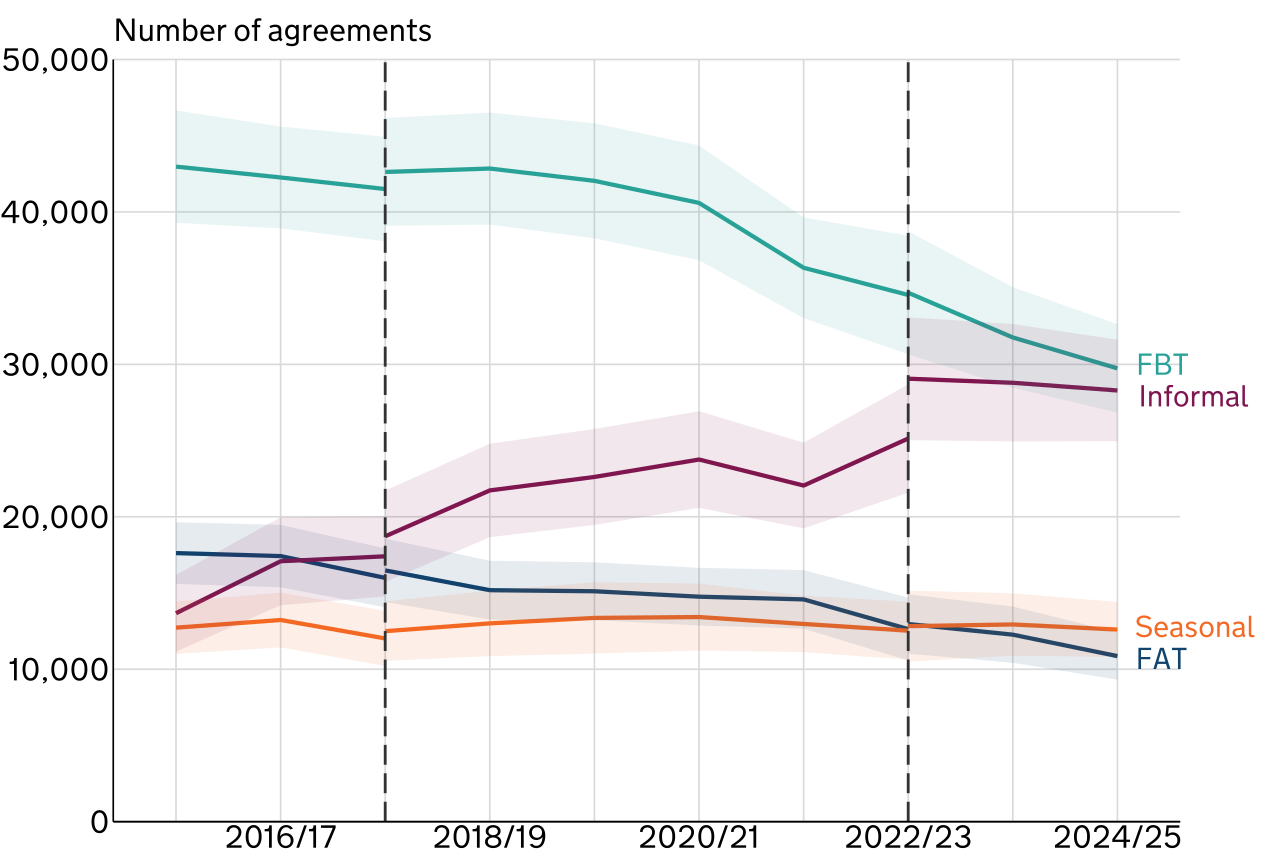
Figure 1.1 Total number of farm tenancy agreements by agreement type within the FBS population in England, 2015/16 to 2024/25
Source: Dataset table 1
Figure notes:
- The breaks in the series shown in 2017/18 and 2022/23 represent changes in the method used to assign farms to a specific farm type, along with further changes to the Standard Labour Requirements and the update to the weighting methodology in 2022/23. Where breaks occur, values have been calculated using both methods for comparability.
- Values are shown here with 95% confidence intervals, which give an indication of the degree of uncertainty around an estimate; the lower and upper limits show the possible range around the published averages.
Figure 1.1 shows that, between 2015/16 and 2024/25, the number of FBT and FAT agreements have been falling, the number of seasonal agreements has been generally steady, and the number of informal agreements has been rising. Despite this, all agreement types declined in number between 2023/24 and 2024/25. In 2024/25, FBT agreements continued to be the most common, with a total of approximately 29,700, a decrease of 6% compared to 2023/24. FAT and seasonal agreements remained the least common, with respective totals of around 10,900 and 12,600.
1.1 Total rent paid
The total annual rent of all farm tenancy agreements within the FBS population in 2024/25 was £729 million, a decrease of 5% compared to the nominal average from 2023/24. In real terms, this represented a fall of 8%.
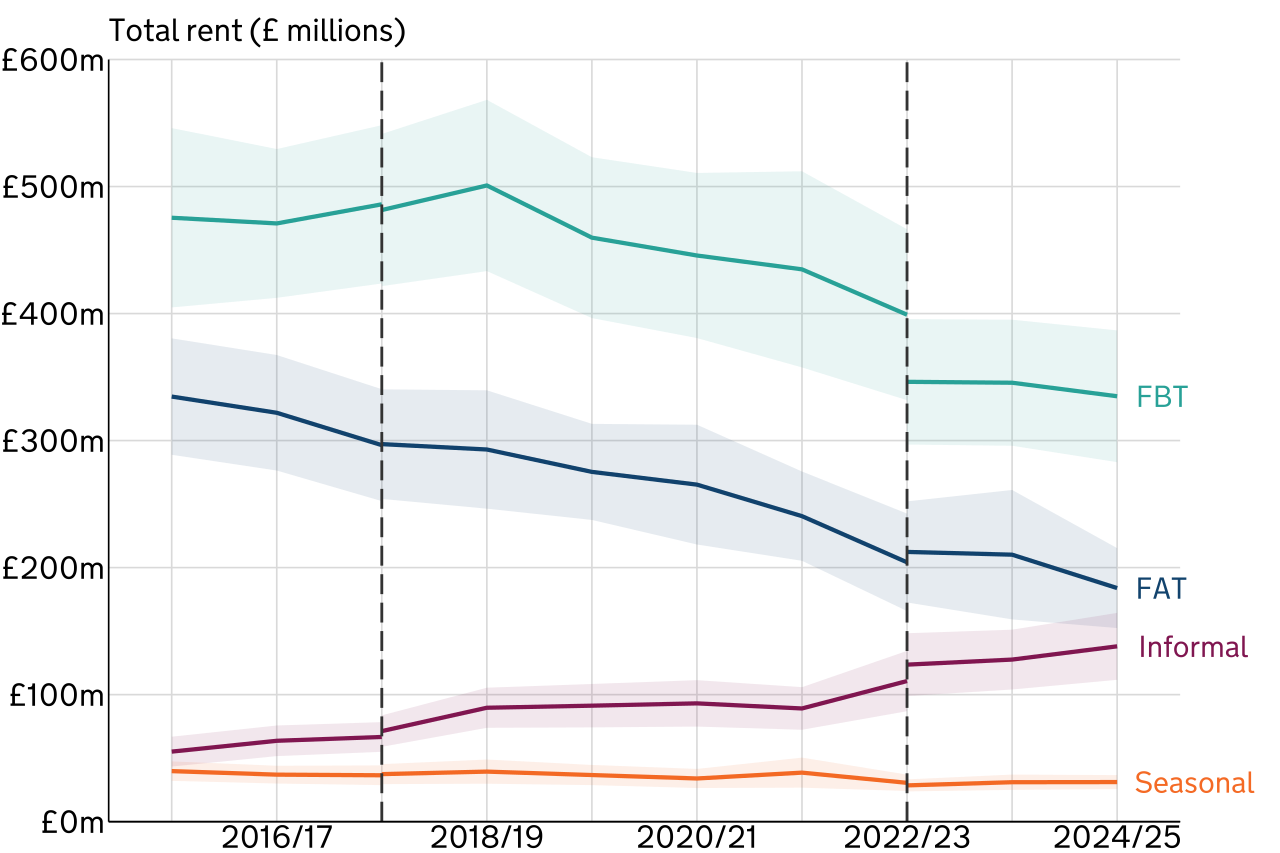
Figure 1.2 Total annual rent paid for farm tenancies in real terms at 2024/25 prices within the FBS population in England, 2023/24 to 2024/25
Source: Dataset table 2
Figure notes:
- The breaks in the series shown in 2017/18 and 2022/23 represent changes in the method used to assign farms to a specific farm type, along with further changes to the Standard Labour Requirements and the update to the weighting methodology in 2022/23. Where breaks occur, values have been calculated using both methods for comparability.
- Values are shown here with 95% confidence intervals, which give an indication of the degree of uncertainty around an estimate; the lower and upper limits show the possible range around the published averages.
- Real terms prices use the GDP deflator data published 30 September 2025 at: https://www.ons.gov.uk/economy/grossdomesticproductgdp/timeseries/ybgb.
Figure 1.2 shows that the overall trend of total annual rent paid in real term prices has generally decreased in the last 10 years, except in informal agreements. In all years, FBT agreements had the highest total rent paid and seasonal agreements had the lowest; these agreement types had respective values of £335 million and £31 million in 2024/25. However, total FBT rent has been trending down in real terms since 2018/19. The rent paid on seasonal agreements in real term prices has been relatively stable over the years. Conversely, the difference between total rent paid on FAT and informal agreements, which was initially large, has been getting smaller due to rent paid on FAT agreements decreasing and rent paid on informal agreements increasing.
1.2 Average rent paid per hectare
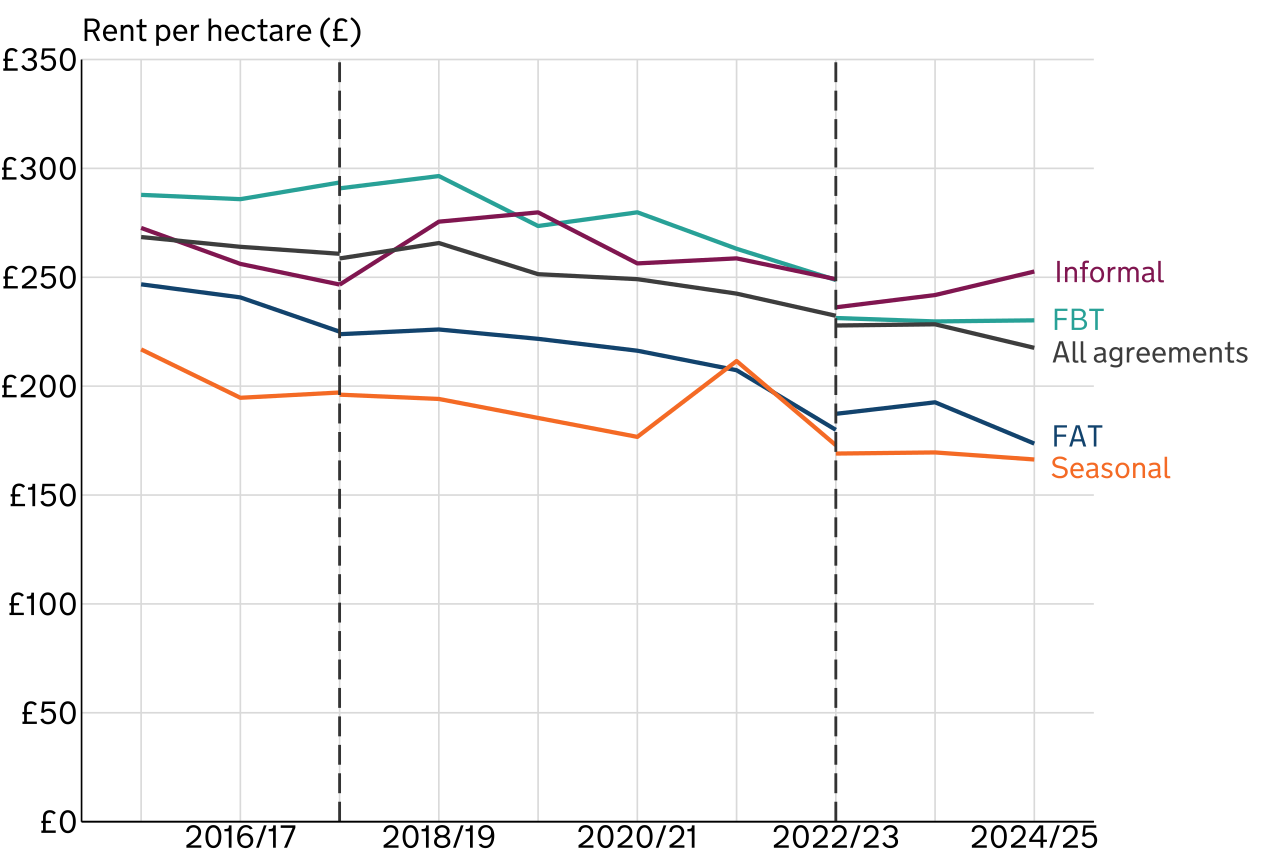
Figure 1.3 Average annual rents for farm tenancies at real term 2024/25 prices in England, 2015/16 to 2024/25
Source: Dataset table 3.1
Figure notes:
- The breaks in the series shown in 2017/18 and 2022/23 represent changes in the method used to assign farms to a specific farm type, along with further changes to the Standard Labour Requirements and the update to the weighting methodology in 2022/23. Where breaks occur, values have been calculated using both methods for comparability.
- Confidence intervals are not shown due to excessive overlapping; these are available in the machine-readable datasets.
- Real terms prices use the GDP deflator data published 30 September 2025 at: https://www.ons.gov.uk/economy/grossdomesticproductgdp/timeseries/ybgb.
Figure 1.3 shows that average annual rent paid per hectare for all agreements decreased by 5% in real terms to £218 in 2024/25. The average annual rent paid per hectare between farm tenancy agreements tends to be higher for FBT and informal agreements than for FAT and seasonal agreements. Additionally, rent per hectare has been decreasing in real terms across most agreement types since 2015/16.
Between 2023/24 and 2024/25, only informal agreements had a real terms increase in average rent per hectare, a rise of 4%, with FBT agreements showing a negligible change. While there has been fluctuation over the years, informal agreements had the highest average rent in 2024/25, at £253 per hectare. Seasonal agreements had the lowest average rents, at £166 per hectare.
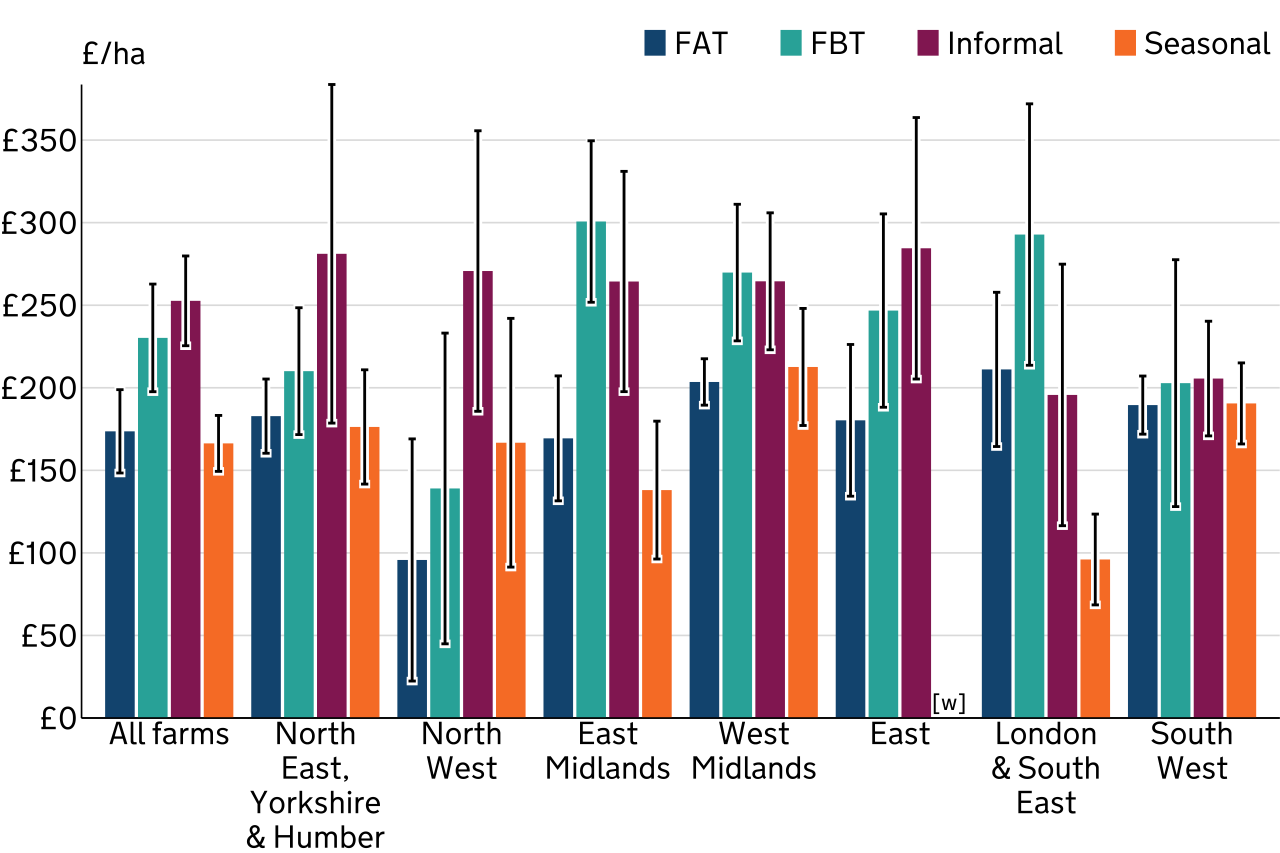
Figure 1.4 Average annual rent for farm tenancies by region in England, 2024/25
Source: Dataset table 3.1 and 3.2
Figure notes:
- The legend is presented in the same order as the bars.
- Values are shown here with 95% confidence intervals, which give an indication of the degree of uncertainty around an estimate; the lower and upper limits show the possible range around the published averages.
- The symbol [w] indicates that no farm businesses were recorded in the FBS survey in that category.
Figure 1.4 shows that, in 2024/25, the East Midlands had the highest average rent for FBT agreements at £301 per hectare and the East had the highest for informal agreements, at £284 per hectare. When comparing the average rents for the same agreement type across regions, there was considerable variation in rents for all agreement types. This reflects factors such as the quality of the land and that agreements may be for land only, or may also include any combination of dwellings, buildings and other assets.
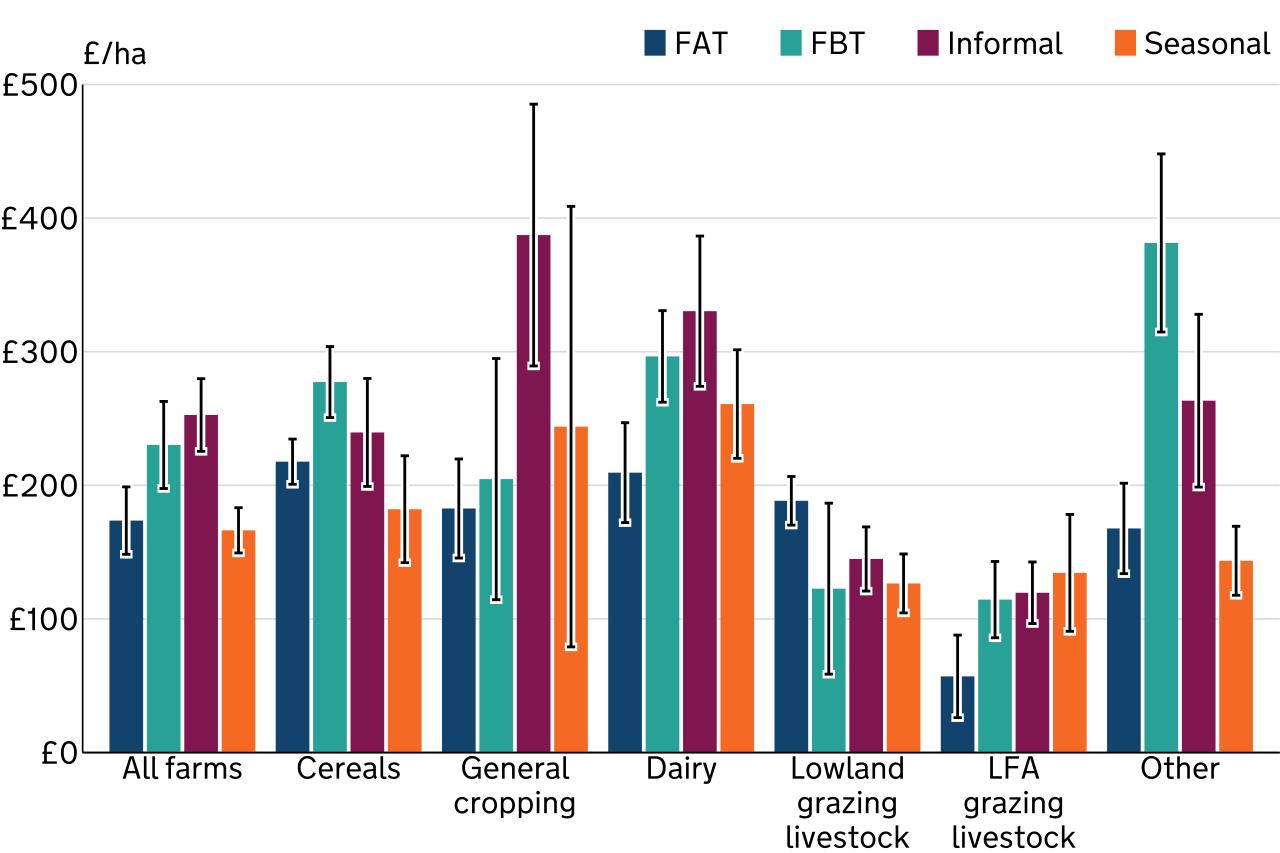
Figure 1.5 Average annual rent for farm tenancies by farm type in England, 2024/25
Source: Dataset table 3.1 and 3.3
Figure notes:
- The legend is presented in the same order as the bars.
- Values are shown here with 95% confidence intervals, which give an indication of the degree of uncertainty around an estimate; the lower and upper limits show the possible range around the published averages.
Figure 1.5 shows that across all agreement types, the average annual rent was generally lowest in grazing livestock farms. The lowest average rent across the farm types was in FAT agreements on LFA grazing livestock farms, at £57 per hectare. Informal agreements on general cropping farms had the highest average annual rent, at £387 per hectare.
1.3 Land only agreements
The FBS collects data on a wide range of rental agreements, including those that are land only and those that include dwellings, farm buildings and other assets. This section presents results for ‘land only’ agreements.
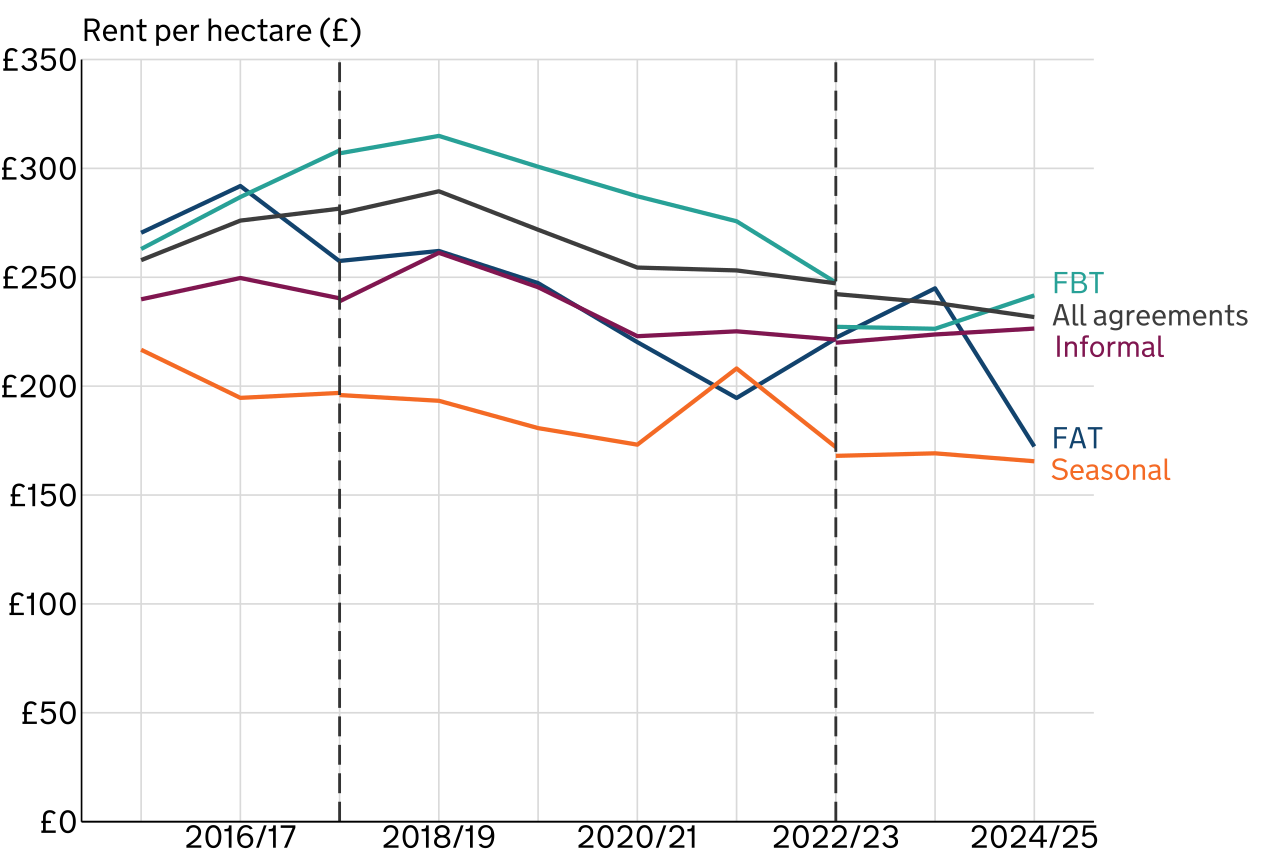
Figure 1.6 Average annual rents for land only agreements at real term 2024/25 prices in England, 2015/16 to 2024/25
Source: Dataset table 3.1 and 3.4
Figure notes:
- The breaks in the series shown in 2017/18 and 2022/23 represent changes in the method used to assign farms to a specific farm type, along with further changes to the Standard Labour Requirements and the update to the weighting methodology in 2022/23. Where breaks occur, values have been calculated using both methods for comparability.
- Confidence intervals are not shown due to excessive overlapping; these are available in the machine-readable datasets.
- Real terms prices use the GDP deflator data published 30 September 2025 at: https://www.ons.gov.uk/economy/grossdomesticproductgdp/timeseries/ybgb.
Figure 1.6 shows that average rent per hectare in land only agreements had more volatile trends than the all agreement averages between 2015/16 and 2024/25. For example, the average rent per hectare for land only FBT agreements was increasing up to a peak of £315 per hectare in 2018/19, and then it started to decrease; in 2024/25, the average was £242 per hectare. Average rent per hectare for land only seasonal agreements has been the lowest in most years, including 2024/25 where it was £165 per hectare. It has had a general downward trend, but spiked at £208 in 2021/22. Average rent per hectare for land only FAT agreements has also been trending down, falling to £172 in 2024/25. Average rent per hectare for land only informal agreements reached a peak of £261 per hectare in 2018/19. It then fell, and has seen only small variations since 2020/21, with an average of £226 per hectare in 2024/25.
1.4 Recorded rent reviews
A recorded rent review refers to the formal and documented process used to evaluate and potentially adjust the rental amount for farmland. A recorded change to terms and conditions signifies a documented modification to the specific details of the rental arrangement, which may include alterations to rent, lease duration, responsibilities or other agreed-upon terms. Note that, due to their short term length, seasonal agreements are not subject to review.
In 2024/25, 17% of agreements had a recorded rent review (dataset table 5.1). As a result of these reviews, the average change to annual rent was an increase of 8% (dataset table 5.2). FAT agreements had the lowest average increase, 4%, while informal agreements had the highest, 13%.
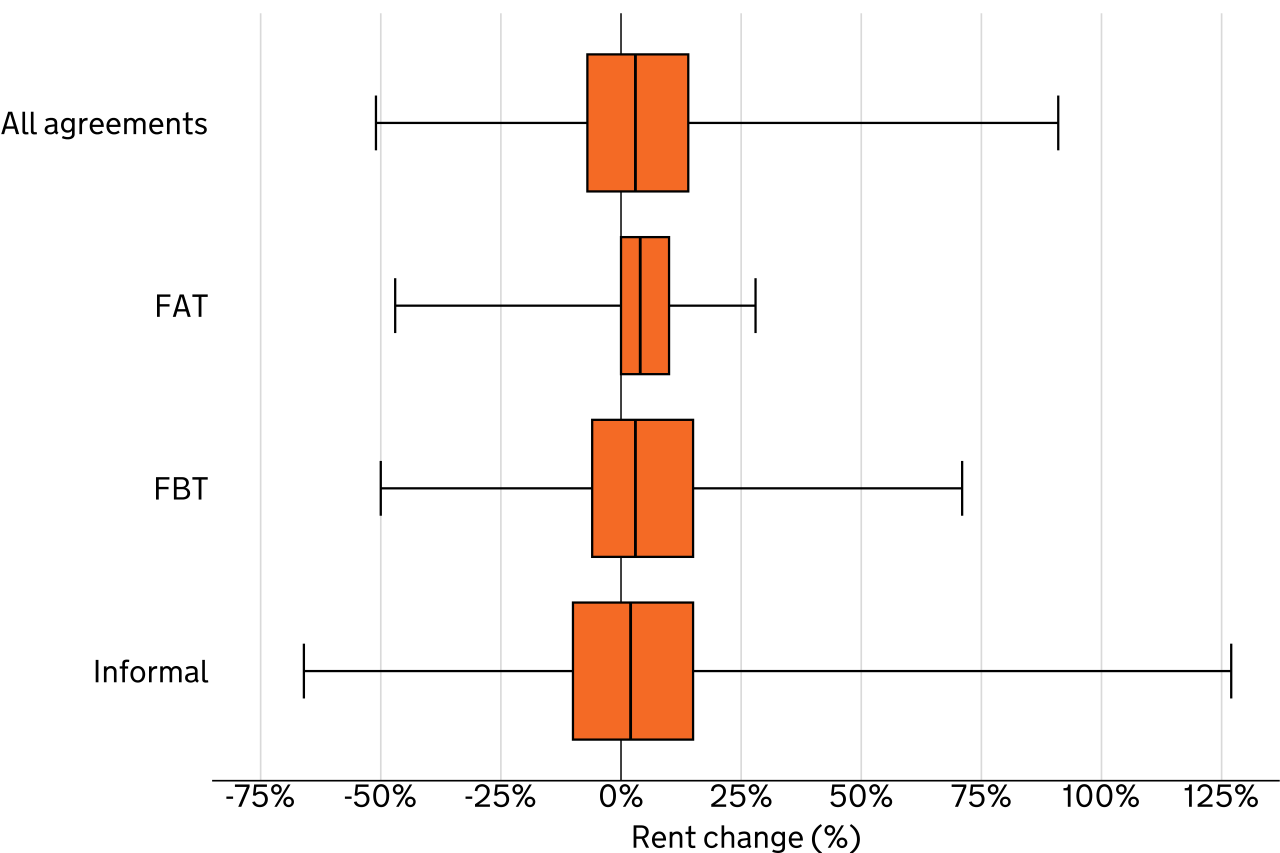
Figure 1.7 Distribution of rent reviews outcomes for farm tenancies in England, 2024/25
Source: Dataset table 5.3
Figure notes:
- In this boxplot, the end of the left-hand line is the 5th percentile, the left side of the box is the 25th percentile (also known as the lower quartile), the middle is the 50th percentile (the median), the right side of the box is the 75th percentile (the upper quartile), and the end of the right-hand line is the 95th percentile. The difference between the lower and upper quartile is called the inter-quartile range.
- Seasonal agreement contracts are not subject to review.
Figure 1.7 shows the distribution of changes to rent after review, across the agreement types, in 2024/25. At the all agreement level, the 5th percentile was -51%, meaning that 5% of rent reviews resulted in the rent decreasing by at least 51%. The 25th percentile was -7%, meaning that 25% of rent reviews resulted in a decrease to rent of at least 7%. The 50th percentile was 3%, which means that half of all rent reviews resulted in either a decrease, or an increase of up to 3%. The 75th percentile was 14%, meaning that 25% of rent reviews resulted in an increase of at least 14%. The 95th percentile was 91%, which means that 5% of rent reviews resulted in an increase of at least 91%.
The outcomes of rent reviews on informal agreements had the greatest variation, with the lowest 5th percentile, -66%, and the highest 95th percentile, 127%. The interquartile range, i.e., the range between the 25th and 75th percentiles, was the largest, going between -10% and 15%. In contrast, FAT agreements had the least variation; the 5th percentile was -47% and the 95th percentile was 28%, while the interquartile range was between 0% (i.e. no change) and 10%. All agreement types had a similar median, around 3%.
2 Full Agricultural Tenancies
Agricultural tenancies agreed before 1 September 1995 are known as Full Agricultural Tenancies (FATs). These tenancy agreements usually have lifetime security of tenure and those granted before 12 July 1984 also carry statutory succession rights, on death or retirement. More information is available in the agricultural tenancy guidance.
The total area of rented land under Full Agricultural Tenancies in hectares (million ha) by farm type in England for 2024 can be found Agricultural land ownership and tenure in England - GOV.UK.
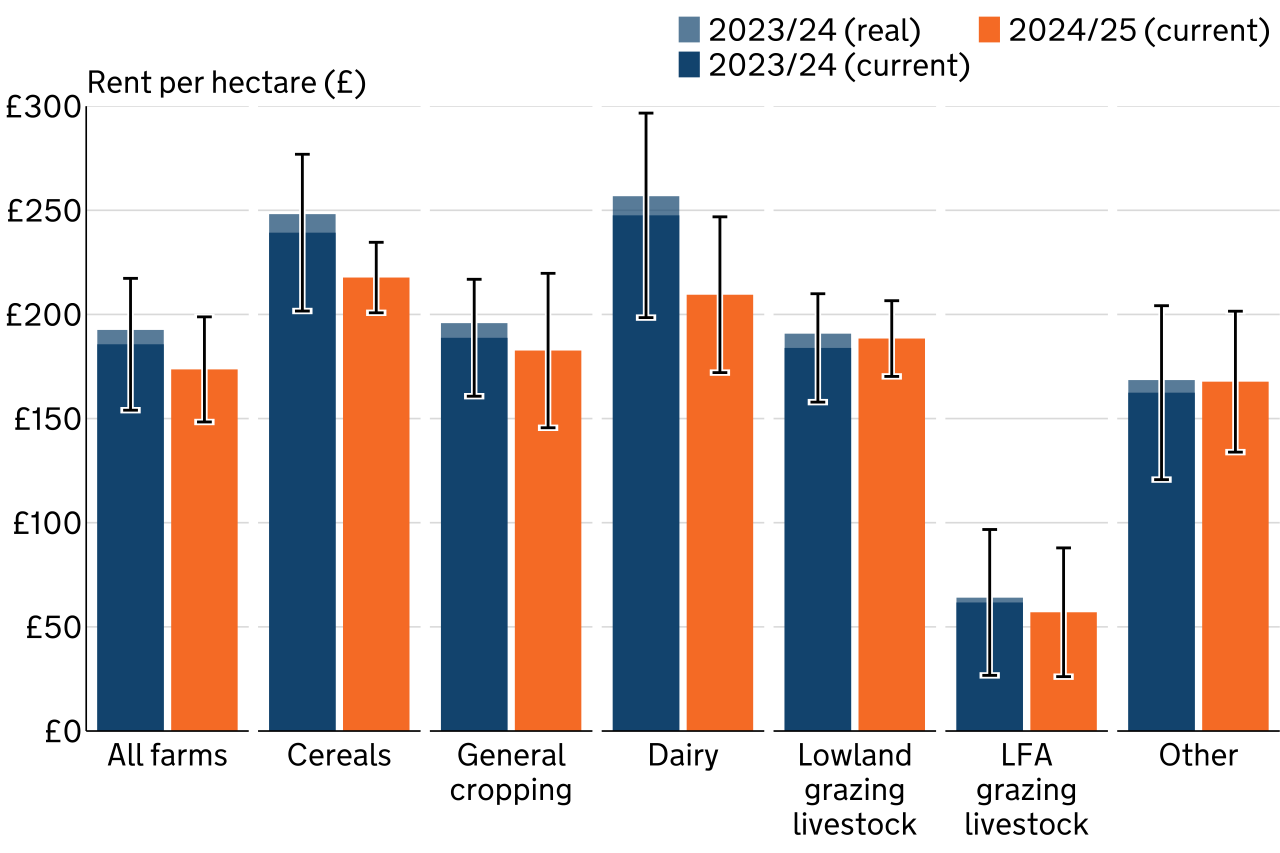
Figure 2.1 Average annual rent for Full Agricultural Tenancies, in current and real term 2024/25 prices, by farm type in England, 2023/24 and 2024/25
Source: Dataset table 3.1 and 3.3
Figure notes:
- The legend is presented in the same order as the bars.
- For the 2023/24 survey year, prices are presented in both current and real terms to clearly show changes between the previous year and the current survey year. The darker shade of blue represents the value in current terms, while the lighter shade represents the real terms value. Real terms prices use the GDP deflator data published 30 September 2025 at: https://www.ons.gov.uk/economy/grossdomesticproductgdp/timeseries/ybgb.
- Current terms values are shown here with 95% confidence intervals, which give an indication of the degree of uncertainty around an estimate; the lower and upper limits show the possible range around the published averages.
Figure 2.1 shows that, between 2023/24 and 2024/25, only lowland grazing livestock and other (mixed, pigs, poultry and horticulture) farms had a current terms increase in average FAT rent, at 2% and 3% respectively. However, in real terms, the change for lowland grazing livestock farms was a decrease of 1%, while for other farms it was a negligible change. The largest percentage decrease was in dairy farms, where average rent in current prices fell by 15% to £209 per hectare; in real terms, this represented a fall of 18%.
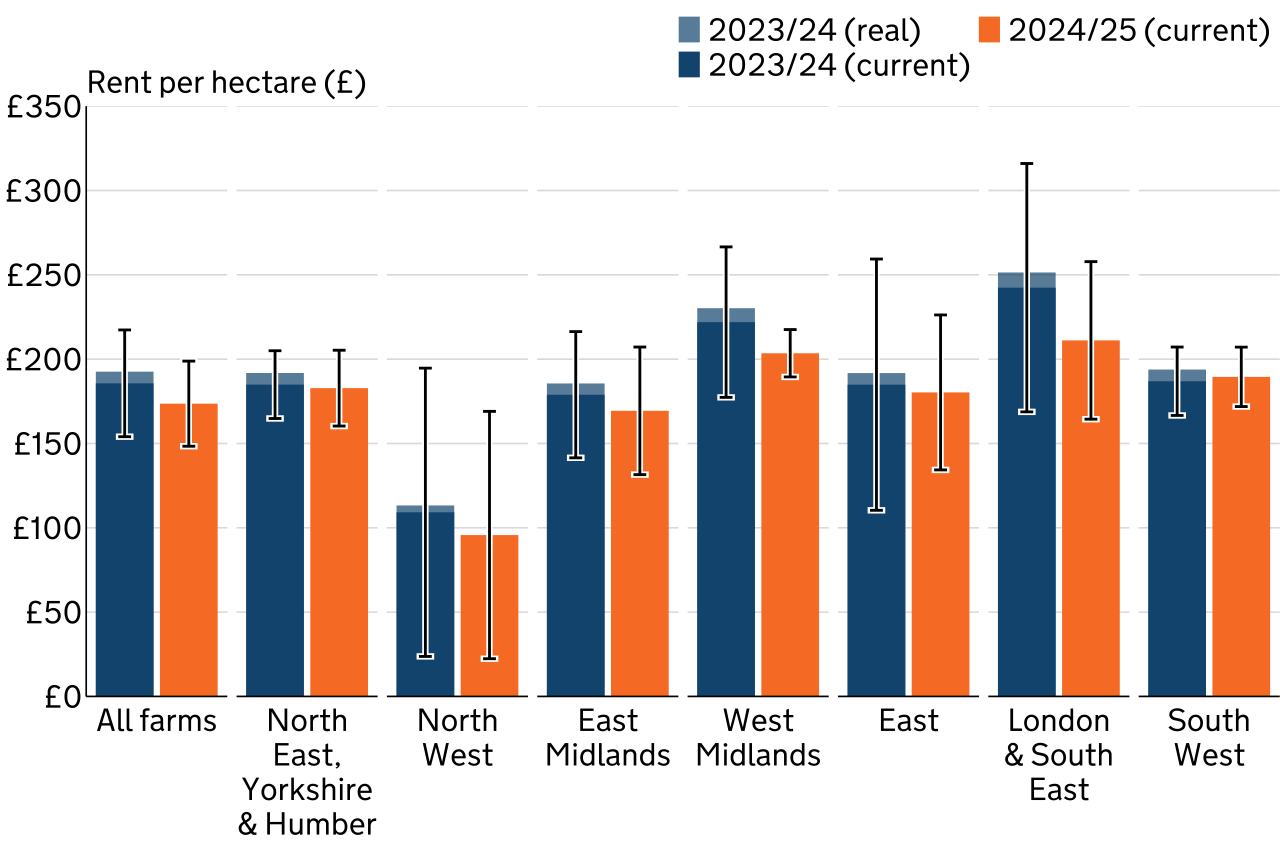
Figure 2.2 Average annual rent for Full Agricultural Tenancies, in current and real term 2024/25 prices, by region in England, 2023/24 and 2024/25
Source: Dataset table 3.1 and 3.2
Figure notes:
- The legend is presented in the same order as the bars.
- For the 2023/24 survey year, prices are presented in both current and real terms to clearly show changes between the previous year and the current survey year. The darker shade of blue represents the value in current terms, while the lighter shade represents the real terms value. Real terms prices use the GDP deflator data published 30 September 2025 at: https://www.ons.gov.uk/economy/grossdomesticproductgdp/timeseries/ybgb.
- Current terms values are shown here with 95% confidence intervals, which give an indication of the degree of uncertainty around an estimate; the lower and upper limits show the possible range around the published averages.
Figure 2.2 shows that, from 2023/24 to 2024/25, the only region with an increase in average FAT rent was the South West, where it increased by 1% to £190 per hectare; however, this was a fall of 2% in real terms. London & the South East had the largest percentage drop, decreasing by 13% to £211 per hectare, which was a 16% real terms decrease. The smallest current prices percentage change to average FAT rent was in the North East, Yorkshire & Humber, where it decreased by 1% to £183 per hectare, representing a fall of 5% in real terms.
3 Farm Business Tenancies
Agricultural tenancies agreed since 1 September 1995 under the Agricultural Tenancies Act 1995, are known as Farm Business Tenancies (FBTs). More information is available in the agricultural tenancy guidance. The average length of term for FBT agreements in 2024/25 was 5 years and 7 months (dataset table 6.1).
The total area of rented land under Farm Business Tenancies in hectares (million ha) by farm type in England for 2024 can be found Agricultural land ownership and tenure in England - GOV.UK.
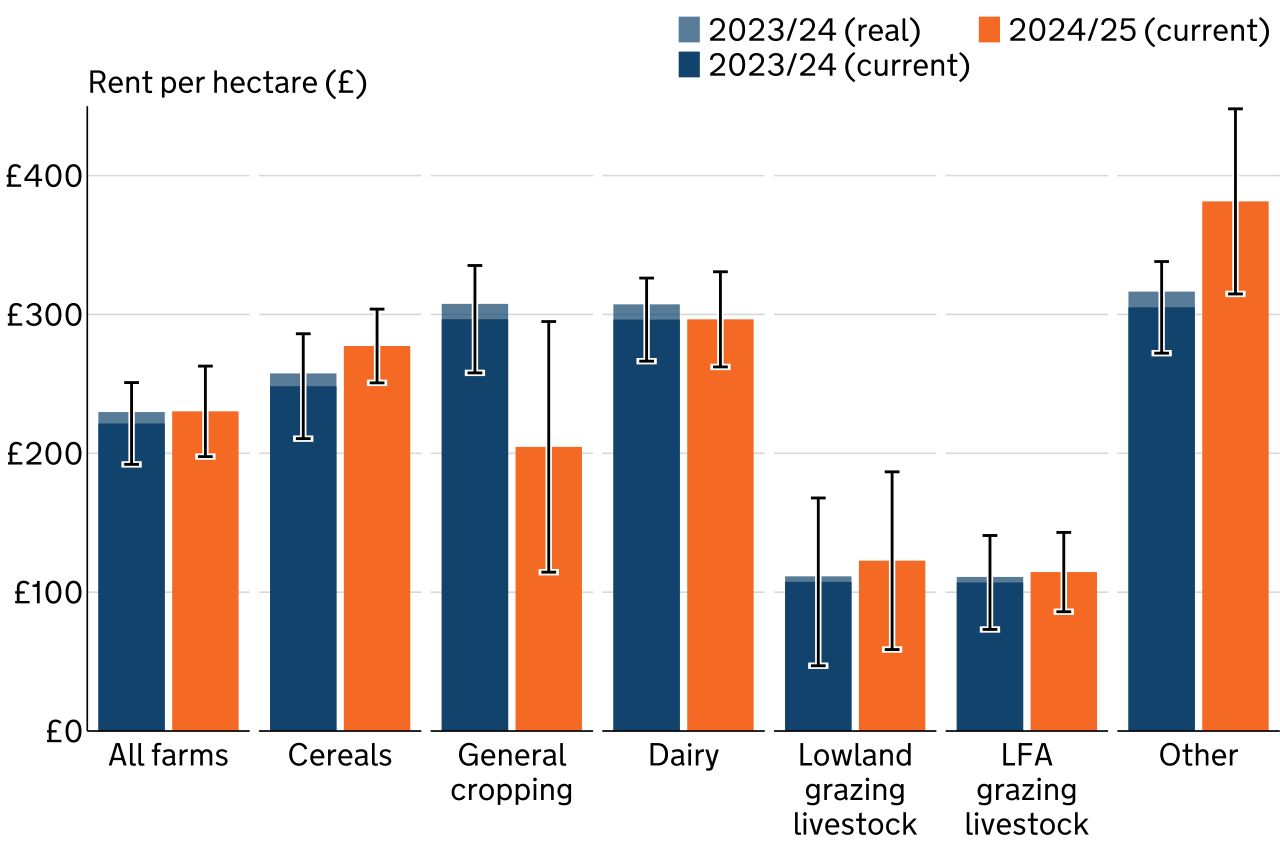
Figure 3.1 Average annual rent for Farm Business Tenancies, in current and real term 2024/25 prices, by farm type in England, 2023/24 and 2024/25
Source: Dataset table 3.1 and 3.3
Figure notes:
- The legend is presented in the same order as the bars.
- For the 2023/24 survey year, prices are presented in both current and real terms to clearly show changes between the previous year and the current survey year. The darker shade of blue represents the value in current terms, while the lighter shade represents the real terms value. Real terms prices use the GDP deflator data published 30 September 2025 at: https://www.ons.gov.uk/economy/grossdomesticproductgdp/timeseries/ybgb.
- Current terms values are shown here with 95% confidence intervals, which give an indication of the degree of uncertainty around an estimate; the lower and upper limits show the possible range around the published averages.
Figure 3.1 shows that, between 2023/24 and 2024/25, other (mixed, pigs, poultry and horticulture) farms had the largest percentage increase in average FBT rent at current prices, increasing by 25% to £381 per hectare. In real terms, this was a rise of 21%. The largest percentage change was in general cropping farms, whose average decreased by 31% to £205 per hectare in current prices, which was a fall of 33% in real terms. The farm type with the smallest percentage change in current prices was dairy farms, whose average FBT rent marginally increased to £296. However, this was a fall of 4% in real terms.
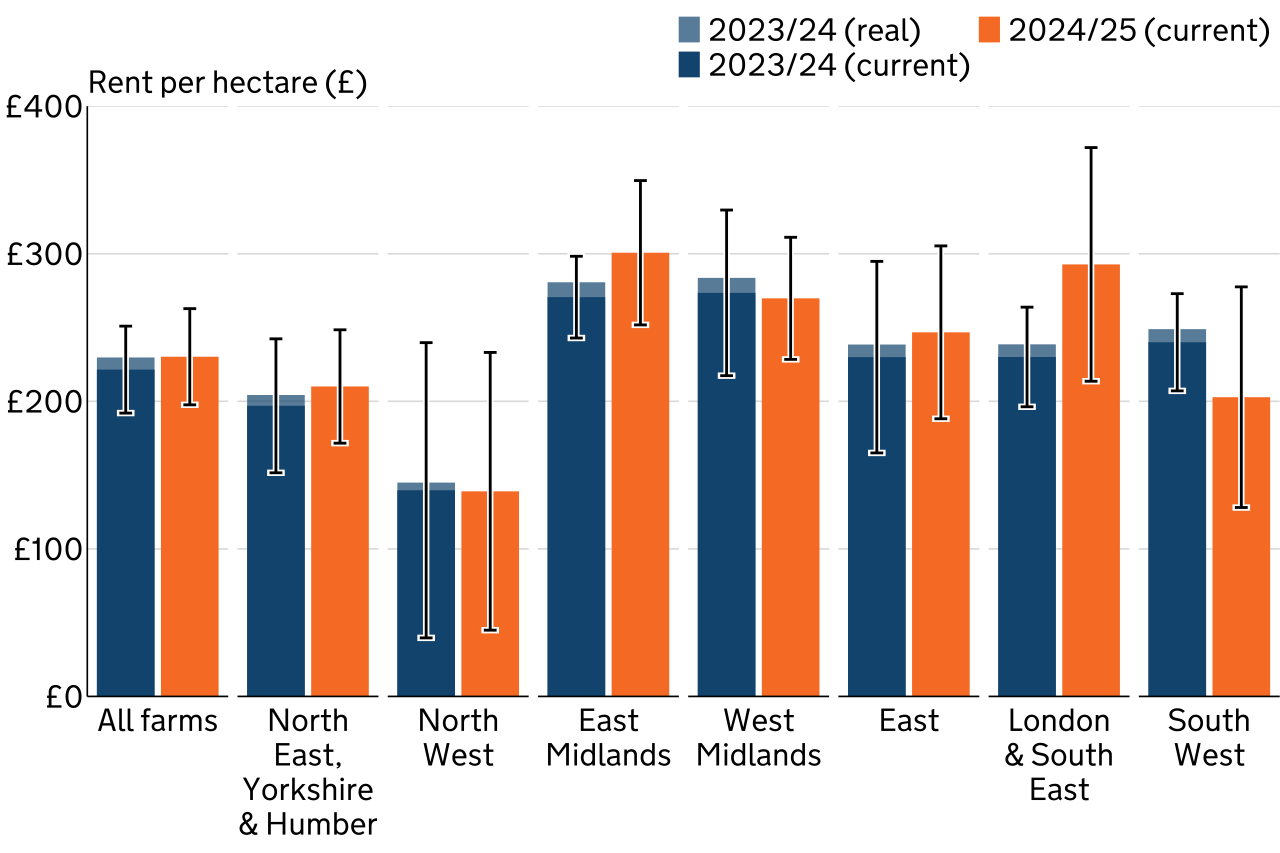
Figure 3.2 Average annual rent for Farm Business Tenancies, in current and real term 2024/25 prices, by region in England, 2023/24 and 2024/25
Source: Dataset table 3.1 and 3.2
Figure notes:
- The legend is presented in the same order as the bars.
- For the 2023/24 survey year, prices are presented in both current and real terms to clearly show changes between the previous year and the current survey year. The darker shade of blue represents the value in current terms, while the lighter shade represents the real terms value. Real terms prices use the GDP deflator data published 30 September 2025 at: https://www.ons.gov.uk/economy/grossdomesticproductgdp/timeseries/ybgb.
- Current terms values are shown here with 95% confidence intervals, which give an indication of the degree of uncertainty around an estimate; the lower and upper limits show the possible range around the published averages.
Figure 3.2 shows that, from 2023/24 to 2024/25, the region with the largest percentage increase in average FBT rent was London & the South East. This region’s average rose by 27% to £293 per hectare, representing a rise of 23% in real terms. Conversely, farms in the South West had the biggest percentage decrease in average FBT rent, as it fell by 16% to £203 per hectare. This was a fall of 19% when adjusted for inflation. The North West had the smallest percentage change in current prices; the average decreased by 1% to £139, while it fell by 4% in real terms.
4 Informal agreements
In 2015/16, there was an improvement to the way in which tenancy agreements were classified in the Farm Business Survey. A new category of ‘informal agreements’ was introduced. These informal agreements are those where there is no formal tenancy agreement, but the rented land is not seasonally let and so is part of the Utilised Agricultural Area. The average length of term for informal agreements was 1 year and 9 months in 2024/25 (dataset table 6.1).
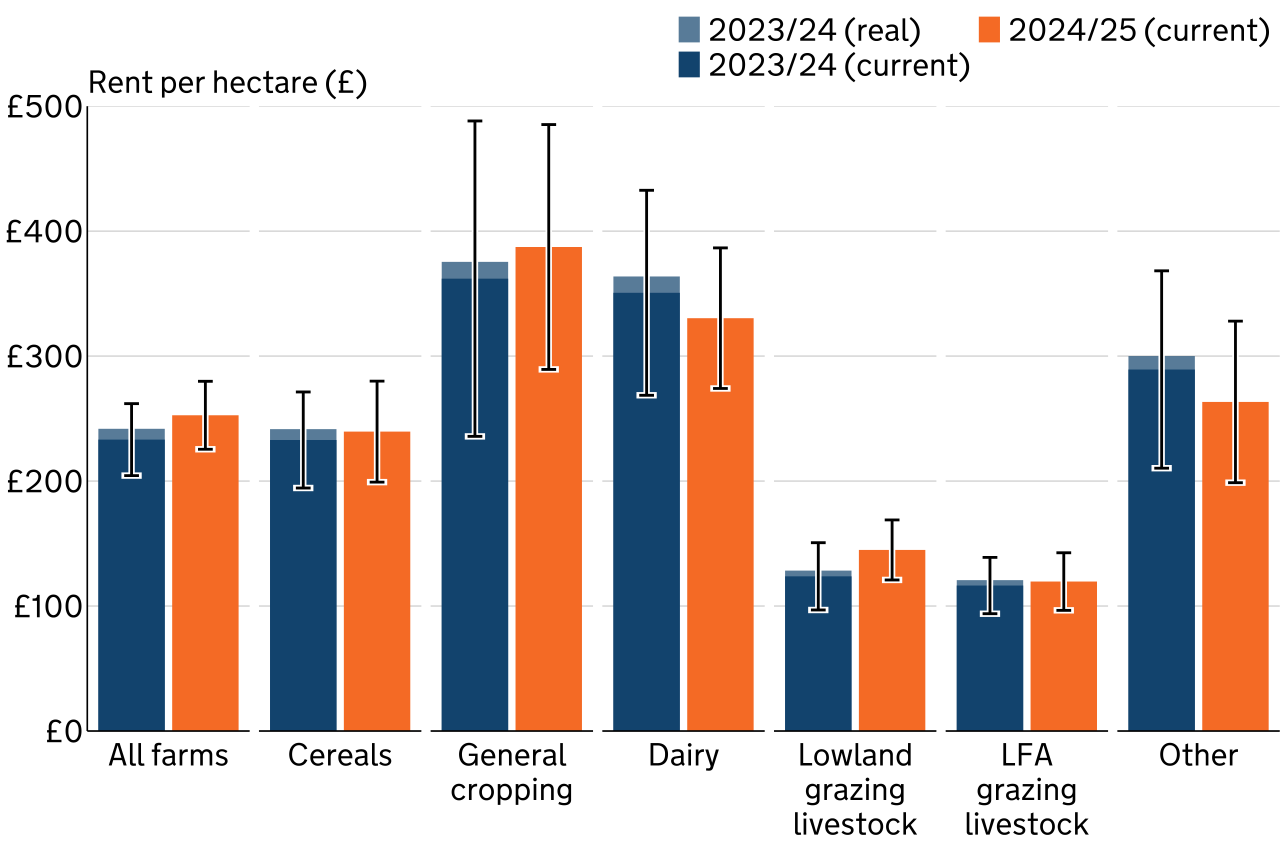
Figure 4.1 Average annual rent for informal agreements, in current and real term 2024/25 prices, by farm type in England, 2023/24 and 2024/25
Source: Dataset table 3.1 and 3.3
Figure notes:
- The legend is presented in the same order as the bars.
- For the 2023/24 survey year, prices are presented in both current and real terms to clearly show changes between the previous year and the current survey year. The darker shade of blue represents the value in current terms, while the lighter shade represents the real terms value. Real terms prices use the GDP deflator data published 30 September 2025 at: https://www.ons.gov.uk/economy/grossdomesticproductgdp/timeseries/ybgb.
- Current terms values are shown here with 95% confidence intervals, which give an indication of the degree of uncertainty around an estimate; the lower and upper limits show the possible range around the published averages.
Figure 4.1 shows that, between 2023/24 and 2024/25, lowland grazing livestock farms had the largest percentage increase in average informal rent. For these farms, the current prices average increased by 17% to £145 per hectare, and rose by 13% in real terms. Conversely, other (mixed, pigs, poultry and horticulture) farms had the largest percentage decrease; in current prices the average decreased by 9% to £263 per hectare, which was a fall of 12% in real terms. The smallest current terms percentage change was in LFA grazing livestock farms, whose average increased by 3% to £120, which represented a fall of 1% in real terms.
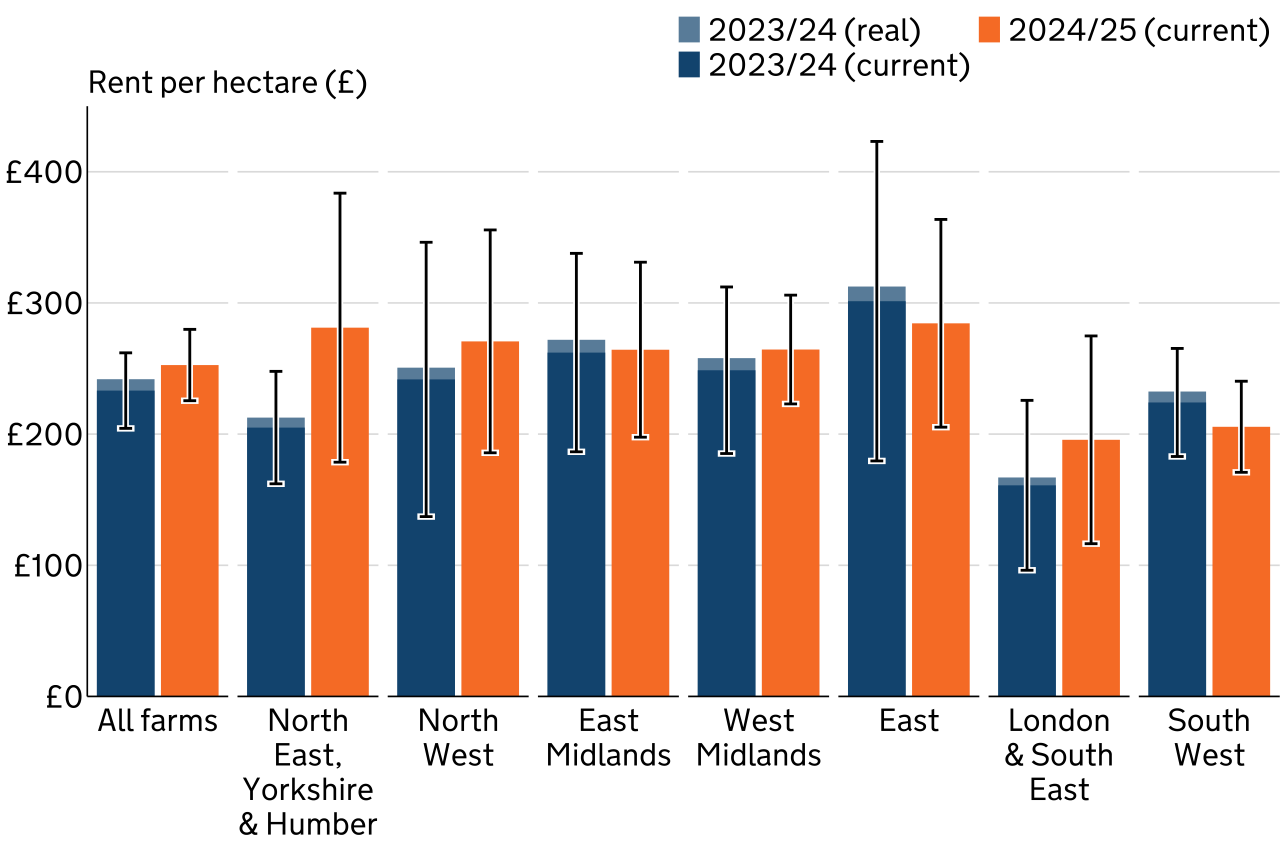
Figure 4.2 Average annual rent for informal agreements, in current and real term 2024/25 prices, by region in England, 2023/24 and 2024/25
Source: Dataset table 3.1 and 3.2
Figure notes:
- The legend is presented in the same order as the bars.
- For the 2023/24 survey year, prices are presented in both current and real terms to clearly show changes between the previous year and the current survey year. The darker shade of blue represents the value in current terms, while the lighter shade represents the real terms value. Real terms prices use the GDP deflator data published 30 September 2025 at: https://www.ons.gov.uk/economy/grossdomesticproductgdp/timeseries/ybgb.
- Current terms values are shown here with 95% confidence intervals, which give an indication of the degree of uncertainty around an estimate; the lower and upper limits show the possible range around the published averages.
Figure 4.2 shows that, from 2023/24 to 2024/25, the North East, Yorkshire & Humber had the largest percentage increase in average informal rent. In current terms, it increased by 37% to £281 per hectare, which represented a rise of 32% in real terms. The biggest percentage decrease was in the South West, where in current prices the average fell by 8% to £206 per hectare, and fell by 12% in real terms. The region with the smallest percentage change in current terms was the East Midlands, where the average increased by 1% to £264; which was a fall of 3% in real terms.
5 Seasonal agreements
Seasonal agreements are farm tenancies where the length of term is less than 12 months. These include licenses for grazing and/or mowing only. As noted in the previous section, there were changes to the way in which agreement types were classified within the Farm Business Survey in 2015/16. This resulted in some seasonal agreements being reclassified as informal agreements. The average length of term for seasonal agreements was 10 months in 2024/25 (dataset table 6.1).
Figure 5.1 Average annual rent for seasonal agreements, in current and real term 2024/25 prices, by farm type in England, 2023/24 and 2024/25
Source: Dataset table 3.1 and 3.3
Figure notes:
- The legend is presented in the same order as the bars.
- For the 2023/24 survey year, prices are presented in both current and real terms to clearly show changes between the previous year and the current survey year. The darker shade of blue represents the value in current terms, while the lighter shade represents the real terms value. Real terms prices use the GDP deflator data published 30 September 2025 at: https://www.ons.gov.uk/economy/grossdomesticproductgdp/timeseries/ybgb.
- Current terms values are shown here with 95% confidence intervals, which give an indication of the degree of uncertainty around an estimate; the lower and upper limits show the possible range around the published averages.
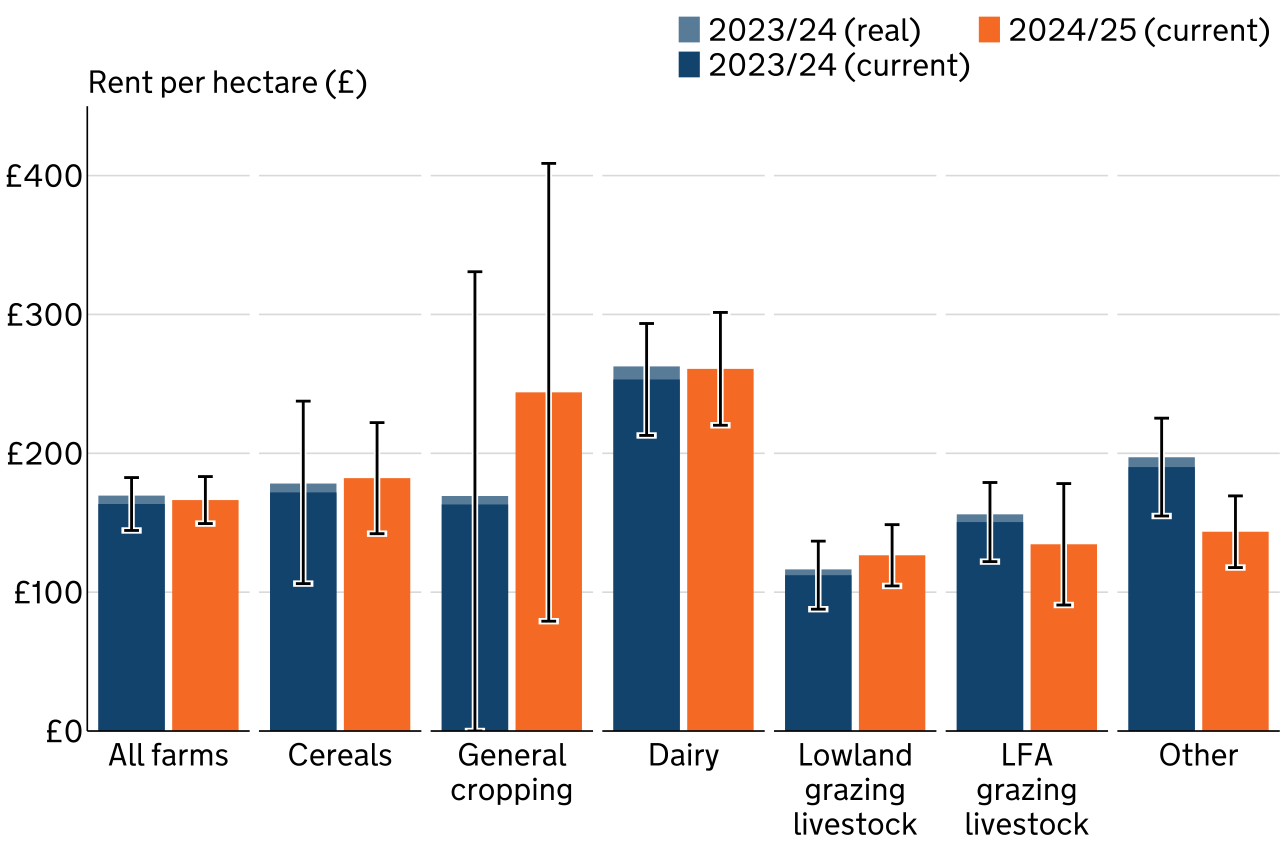
Figure 5.1 shows that, between 2023/24 and 2024/25, general cropping farms had the largest percentage increase in average seasonal rent at current prices, increasing by 49% to £244 per hectare. In real terms, this was a rise of 44%. However, confidence intervals for general cropping farms were very large in both years because of small sample sizes, so results for this farm type are more uncertain than for the other types. The largest percentage decrease was in other (mixed, pigs, poultry and horticulture) farms, whose current terms average decreased by 24% to £144 per hectare; in real terms, this represented a fall of 27%. The smallest current terms percentage change was in dairy farms, with a rise of 3%, or a fall of 1% in real terms.
Figure 5.2 Average annual rent for seasonal agreements, in current and real term 2024/25 prices, by region in England, 2023/24 and 2024/25
Source: Dataset table 3.1 and 3.2
Figure notes:
- The legend is presented in the same order as the bars.
- For the 2023/24 survey year, prices are presented in both current and real terms to clearly show changes between the previous year and the current survey year. The darker shade of blue represents the value in current terms, while the lighter shade represents the real terms value. Real terms prices use the GDP deflator data published 30 September 2025 at: https://www.ons.gov.uk/economy/grossdomesticproductgdp/timeseries/ybgb.
- Current terms values are shown here with 95% confidence intervals, which give an indication of the degree of uncertainty around an estimate; the lower and upper limits show the possible range around the published averages.
- The symbol [c] indicates that results have been suppressed due to a small sample size. Suppressed values are included in the ‘All farms’ averages.
- The symbol [w] indicates that no farm businesses were recorded in the FBS survey in that category.
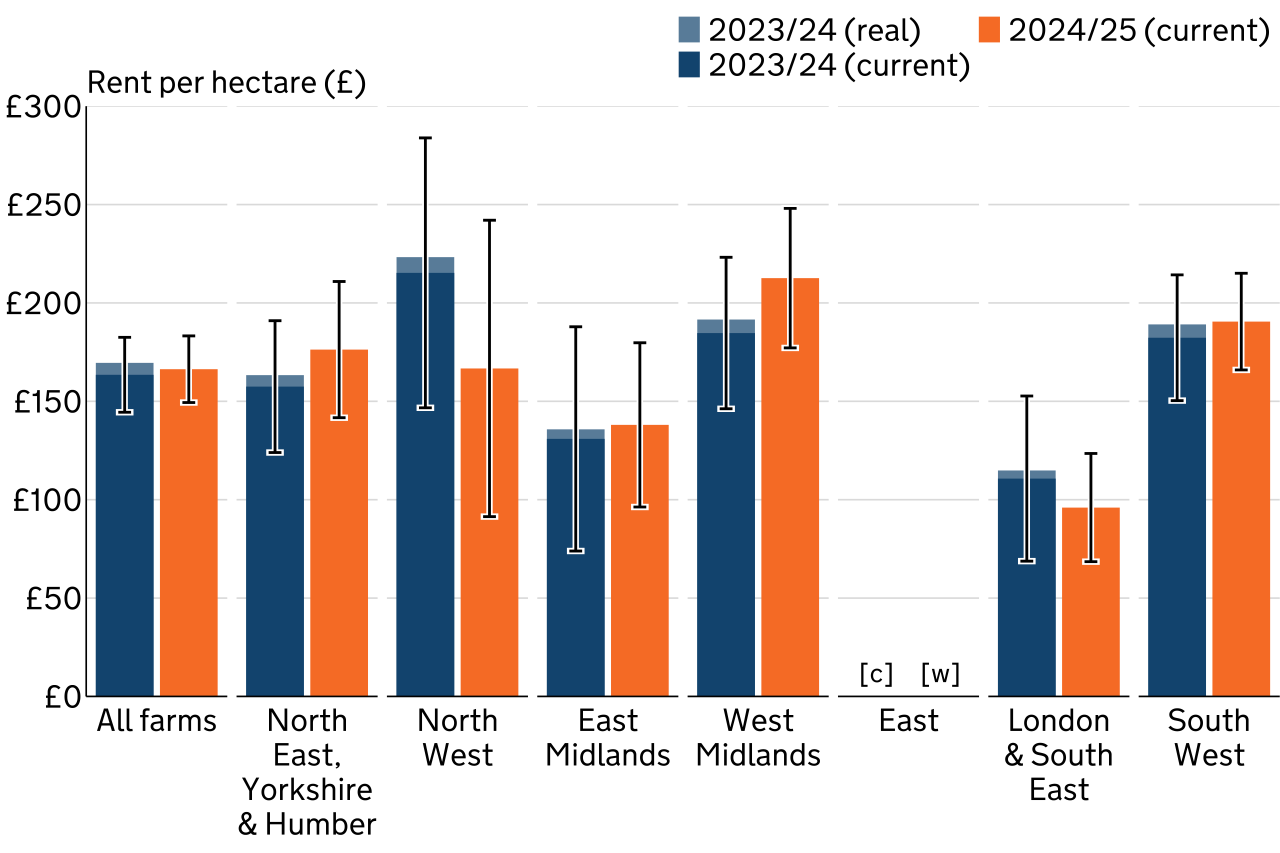
Figure 5.2 shows that, from 2023/24 to 2024/25, the West Midlands had the largest percentage increase in average current terms seasonal rent, increasing by 15% to £213 per hectare. This was a rise of 11% in real terms. In current prices, the North West had the biggest percentage decrease in informal rent, where it fell by 23%. In real terms, the average fell by 25%. The smallest percentage change in current terms was in the South West, a rise of 5%, or in real terms this was a rise of 1%.
6 What you need to know about this release
6.1 Contact details
Responsible statistician: Filipe de Jesus Colwell
Public enquiries: fbs.queries@defra.gov.uk
For media queries between 9am and 6pm on weekdays:
Telephone: 0330 041 6560
Email: newsdesk@defra.gov.uk
6.2 National Statistics Status
Accredited official statistics are called National Statistics in the Statistics and Registration Service Act 2007. An explanation can be found on the Office for Statistics Regulation website. Our statistical practice is regulated by the Office for Statistics Regulation (OSR). OSR sets the standards of trustworthiness, quality and value in the Code of Practice for Statistics that all producers of official statistics should adhere to.
These accredited official statistics were independently reviewed by the Office for Statistics Regulation in January 2014. They comply with the standards of trustworthiness, quality and value in the Code of Practice for Statistics and should be labelled ‘accredited official statistics’.
You are welcome to contact us directly with any comments about how we meet these standards (see contact details above). Alternatively, you can contact OSR by emailing regulation@statistics.gov.uk or via the OSR website.
Since the latest review by the Office for Statistics Regulation, we have continued to comply with the Code of Practice for Statistics, and have made the following improvements:
-
Reviewed and improved data presentation to better meet accessibility guidelines
-
Automated production of the statistics using Reproducible Analytical Pipelines (RAP)
-
Reviewed and improved accompanying commentary.
6.3 User engagement
In line with Defra’s User Engagement for Statistics Policy Statement and the Code of Practice for Official Statistics, we are committed to ensuring that our statistics are of value and meet user needs, and we welcome any feedback or suggestions regarding this publication. To provide feedback, you can email us at: fbs.queries@defra.gov.uk. You can also register as a user of the FBS statistics publications. Registering as a user means we will be able to contact you regarding any user engagement activities that we may run, such as seeking feedback on proposed changes.
6.4 Survey content, methodology and data uses
The Farm Business Survey is an annual survey providing information on the financial position, physical characteristics, and economic performance of farm businesses in England. The sample of farm businesses covers all regions of England and all types of farming.
Data for the Farm Business Survey are collected through face-to-face interviews with farmers, conducted by highly trained research officers.
The data are widely used by the industry for benchmarking and inform wider research into the economic performance of the agricultural industry, as well as for evaluating and monitoring current policies. The data will also help to monitor farm businesses throughout the Agricultural Transition period.
6.5 Availability of results
All Defra statistical notices can be viewed on the Statistics at Defra page.
More publications and results from the Farm Business Survey are available on the Farm Business Survey Collection page.
7 Technical note
7.1 Survey coverage and weighting
The Farm Business Survey only includes farm businesses with a Standard Output of at least £21 thousand, based on activity recorded in the previous June Survey of Agriculture and Horticulture. In 2024/25, the sample of 1,426 farms represented approximately 49,300 farm businesses in England.
Initial weights are applied to the Farm Business Survey records based on the inverse sampling fraction for each design stratum (farm type and farm size). Dataset table 16 from the Farm Accounts in England publication shows the distribution of the sample compared with the distribution of businesses from the 2024 June Survey of Agriculture. These initial weights are then adjusted, using calibration weighting, so that they can produce unbiased estimates of a number of different target variables. These variables have been updated due to the BPS data no longer being available in 2024/25. The detailed technical note on the weighting methodology has been updated to reflect the changes in the calibration model. More detailed information about the Farm Business Survey can be found on the technical notes and guidance page. This includes information on the data collected, information on calibration weighting and definitions used within the Farm Business Survey.
The FBS collects data on the rent paid over the period of a specified year. This covers a wide range of rental agreements, including those that are land only and those that include dwellings, farm buildings and other assets. To give an indication of the difference in rents, results have also been produced to show average rent per hectare for ‘land only’ agreements.
7.2 Accuracy and reliability of the results
As it is impractical to survey the entire population of farms, estimates derived from the Farm Business Survey data are inherently subject to sampling error. This is a core principle in statistical survey methodology, which aims to infer population parameters by obtaining a representative sample through carefully designed sampling techniques. To quantify sampling error and provide a measure of uncertainty, this publication presents 95% confidence intervals for estimated means. These intervals, shown as error bars in bar plots, indicate the range within which we expect the true population mean to lie for 95% of similarly constructed samples. Narrower confidence intervals typically indicate larger sample sizes or less variability within the sample, thereby offering more precise estimates of the population mean. Conversely, wider confidence intervals often result from smaller sample sizes or greater sample standard deviations, signalling less precision. These wider intervals should be interpreted with greater caution. Statistically, a confidence interval provides a plausible range for the true population mean based on the sample data. Specifically, a 95% confidence interval reflects a process that, under repeated sampling, would contain the true population mean in 95% of such intervals, rather than indicating a 95% probability for any single interval to include the population mean.
7.3 Definitions
Full Agricultural Tenancy (FAT)
Any agricultural tenancy agreed before 1 September 1995 is known as a Full Agricultural Tenancy (FAT). These tenancies usually have lifetime security of tenure and those granted before 12 July 1984 also carry statutory succession rights on death or retirement.
Farm Business Tenancy (FBT)
A tenancy is a Farm Business Tenancy (FBT) if at least part of the tenanted land is farmed throughout the life of the tenancy. The tenancy must also meet one of these two conditions:
-
if the tenancy is primarily agricultural to start with, the landlord and tenant can exchange notices before the tenancy begins confirming they intend it to remain a Farm Business Tenancy throughout; this allows tenants to diversify away from agriculture within the terms of the tenancy agreement
-
if the landlord and tenant do not exchange notices before the tenancy begins, the tenancy business must be primarily agricultural to be considered a Farm Business Tenancy
Informal agreement
An agreement where there is no formal tenancy agreement, but the land is part of the Utilised Agricultural Area (i.e. not seasonally let).
Seasonal agreement
An agreement of less than 12 months, generally used for grazing livestock and/or growing forage crops.
Farm type
This refers to the ‘robust type’, which is a standardised farm classification system.
Less Favoured Areas
The Less Favoured Areas (LFA) classification was established in 1975 as a means to provide support to farms where natural characteristics (geology, altitude, climate, short growing season, low soil fertility, or remoteness) make it difficult for farmers to compete. Within the LFA are the Severely Disadvantaged Areas (SDA) and the Disadvantaged Areas (DA). The SDA are more environmentally challenging areas and largely upland in character. The distinction between LFA and non-LFA farms is generally applied to grazing livestock farms.
An interactive map of LFA boundaries in England is available at this link: Interactive LFA map (select Map Layers and search for ‘Less Favoured Areas (England)’), and a static map is at this link: Static LFA map.
Regions
As part of the Farm Business Survey, the region a farm is located in is recorded. These regions are based on the International Territorial Level 1 (ITL1) geographical breakdown.
A map of the ITL regions can be found on the ONS Open Geography Portal website at this link: ITL geography hierarchy boundaries, January 2021.