Economic Estimates: Digital Sector Annual (2010 to 2024) and Regional (2010 to 2022) Gross Value Added
Published 12 February 2026

© Crown copyright 2026
This publication is licensed under the terms of the Open Government Licence v3.0 except where otherwise stated. To view this licence, visit nationalarchives.gov.uk/doc/open-government-licence/version/3 or write to the Information Policy Team, The National Archives, Kew, London TW9 4DU, or email: psi@nationalarchives.gov.uk.
Where we have identified any third party copyright information you will need to obtain permission from the copyright holders concerned.
This publication is available at https://www.gov.uk/government/statistics/economic-estimates-digital-sector-annual-2010-to-2024-and-regional-2010-to-2022-gross-value-added/economic-estimates-digital-sector-annual-2010-to-2024-and-regional-2010-to-2022-gross-value-added
1. Details
This publication provides estimates of the annual contribution of the Digital Sector to the UK economy from 2010 to 2023, and provisionally for 2024, measured by gross value added (GVA). Estimates are also provided for the UK International Territorial Level 1 (ITL1) regions from 2010 to 2022. The estimates produced as part of this release are consistent with national (UK) and regional estimates, published by the Office for National Statistics (ONS).
This publication is a continuation and combination of both our Annual GVA and Regional GVA series. The Annual GVA series is our most accurate estimate of the contribution of the Digital Sector and its associated subsectors to the UK, measured by GVA. The Regional GVA series is our only estimate of Digital Sector GVA at the ITL1 level of geography. Both series of Economic Estimates are Accredited Official Statistics used to provide an estimate of the size of the Digital Economy.
As described, UK national GVA estimates are released through the Annual GVA series. The term Annual GVA will therefore be used to refer to national GVA estimates in this publication.
2. Highlights
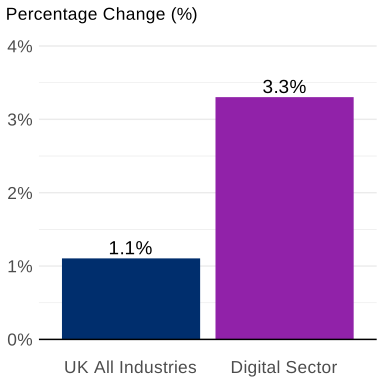
- Provisionally, Digital Sector GVA increased by an estimated 3.3% between 2023 and 2024, after accounting for inflation. For comparison, total UK GVA across all sectors is estimated to have increased by 1.1% over the same period.
- The Digital Sector is provisionally estimated to have accounted for 6.8% of total UK GVA in 2024 at £177.2 billion in current prices, similar to the estimated 6.7% of total UK GVA in 2023.
- Digital Sector GVA has been substantially revised. Digital Sector GVA in 2023 is now estimated at £168.5 billion in current prices, higher than the previous estimate of £153.5 billion. Digital Sector GVA is now estimated to have increased by 6.0% from 2022 to 2023, when accounting for inflation, where Digital Sector GVA was previously reported to have decreased by 1.6% over this period.
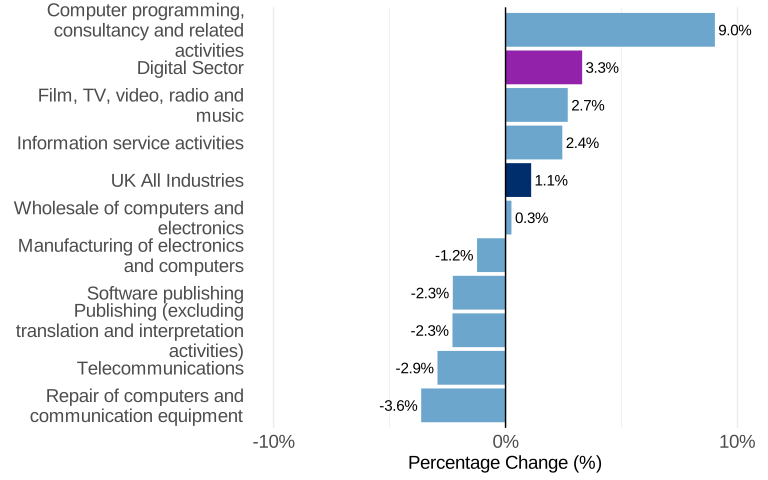
- Provisionally, from 2023 to 2024, the largest increase in GVA among Digital subsectors was a 9.0% increase in ‘Computer programming, consultancy and related activities’ and the largest decrease in GVA amongst Digital subsectors was a 3.6% decrease in ‘Repair of computers and communication equipment’.
- Estimates suggest that the North East of England experienced the largest proportional growth in Digital Sector GVA amongst ITL1 regions of the UK between 2010 and 2022 when accounting for inflation at 387.4% or £2.5 billion in 2022 prices. The East Midlands increased by 99.0% or also £2.5 billion in 2022 prices and accounting for inflation, the smallest proportional increase amongst ITL1 regions of the UK during this period.
3. Sectors
The estimates reported in this release cover the contribution of the Digital Sector and its subsectors to the UK economy, as measured by GVA.
It should be noted that while the Telecommunications Sector is considered a sector in its own right, it is also a subsector within the Digital Sector. Aggregates based on the Digital Sector, therefore, include data from the Telecommunications Sector in addition to all other Digital subsectors.
Please see the associated technical and quality assurance report for more information on how we define the Digital Sector and its subsectors.
4. Technical note
4.1 Data in this release
The ‘Economic Estimates: Digital Sector Annual (2010 to 2024) and Regional (2010 to 2022) Gross Value Added’ report covers GVA expressed in both:
- Current Price GVA (i.e.‘nominal GVA’), which gives the best ‘instantaneous’ measure of the value of the economy, but is not adjusted for inflation. Current Price GVA values are used in this report to describe current sector estimates.
- Chained Volume Measures (CVM) GVA (i.e. ‘real terms GVA’), where inflation is accounted for. CVM GVA values are used in this report to make comparisons over time.
Annual GVA values are calculated using the ONS Blue Book 2025 consistent Supply and Use Tables (SUT) (published 31 October 2025) and GDP low-level aggregates from the Quarterly GDP National accounts (published 13 November 2025). Regional GVA values are calculated using the Regional Gross Value Added (Balanced) by industry dataset (published 10 October 2025). Both statistics also use un-suppressed approximate GVA (aGVA) estimates from the Annual Business Survey (ABS).
The Digital Sector and its subsectors are defined using Standard Industrial Classification 2007 (SIC) codes at the 4-digit SIC code level. This allows data sources to be nationally consistent and internationally comparable. The definition of the Digital Sector is based on the Organisation for Economic Cooperation and Development (OECD) definition of the “Information Society” which is a combination of the ‘ICT Sector’ and the “Content and Media Sector”.
The ABS dataset reports aGVA at the sector level (4-digit SIC code level). Other ONS datasets used in production of this publication report GVA at the division level (2-digit SIC code level). As the Digital Sector and its subsectors are defined at the 4-digit SIC code level, we apportion out 2-digit SIC code data from the ONS data sources listed previously, to the 4-digit SIC code level using the proportions of 4-digit SIC data for aGVA from the ABS.
Chained Volume Measures GVA is calculated by taking the 4-digit SIC code level Current Price GVA calculated in the previous step and removing the effects of inflation through implied deflators. These data are then aggregated into the Digital Sector and its subsectors, then chain-linked to produce a CVM GVA series which accounts for variation in prices over time. In this release, the Annual Chained Volume Measure series is presented in 2023 prices and the Regional Chained Volume Measure series is presented in 2022 prices.
Users should note that Regional GVA estimates do not sum to the Annual GVA total. Regional data in this release is based on ONS estimates from the previous year, which have not had the latest year of National Accounts revisions applied. This means that Regional GVA data from this release is derived from the same Blue Book data as the previous Annual GVA release. Given that there have been substantial revisions to underlying GVA data since the previous Annual GVA release, provisional 2023 Regional GVA estimates have not been published in this release. See the associated technical report for further information.
Comparability with the previous Annual GVA release is limited as Regional ABS data for each sector does not necessarily sum to National ABS totals for each sector. This results in differing apportionment of GVA data between Regional and Annual GVA releases affecting all Digital subsectors aside from ‘Telecommunications’, ‘Film, TV, video, radio, and music’, ‘Computer programming, consultancy and related activities’, and ‘Information service activities’ which do not require apportionment.
Users should also note that the ‘Overall UK All industries’ total provided in the Regional GVA data does not match the Annual GVA UK All industries total or National Accounts total due to the differences in Regional and National ABS described previously, and as it does not include extra-regio activity.
For more detailed information on the methodology, as well as its limitations, data sources, and quality assurance processes, please see the associated technical and quality assurance report.
4.2 Revisions
Revisions have been made to underlying ONS data since the previous Annual GVA release. These revisions are larger than usual and are due to improvements in ONS annual survey, research and development, and administrative data. There are also updates to data used to estimate the value of software developed by companies which may have a larger impact on the Digital Sector than other sectors of the economy. For further information on these revisions, see the associated technical report.
National Accounts ONS data for 2023 is now balanced, and the ABS has been updated to provide 2023 data. This means Annual GVA estimates for 2023 are no longer provisional and now use revised underlying GVA data and up to date ABS data for apportionment.
As a consequence of these updates, the following headline figures have changed:
- The previous Annual GVA report stated that national Digital Sector GVA decreased by 1.6% from 2022 to 2023 when accounting for inflation. Current estimates suggest an increase of 6.0% for that period.
- Digital Sector growth from 2019 to 2023 is now estimated to be 24.9%, up 11.2 percentage points from the 13.7% reported previously.
- The current price GVA value of the Digital Sector in 2023 is now estimated at £168.5 billion, representing 6.7% of total UK GVA. This is higher than the £153.5 billion reported previously, representing 6.5% of total UK GVA.
Provisional Regional GVA estimates for 2023 have not been included in this release as they would be based on underlying ONS GVA data which is yet to incorporate the revisions described in this section. Provisional Regional GVA estimates for 2023 are therefore expected to be substantially revised in the next release and so are of limited value.
In addition to standard revisions to underlying Regional GVA data, Regional GVA estimates have been revised due to DSIT methodological updates applied to the previous Annual GVA release which have now been applied to the Regional GVA series. See the associated technical report for further information. The following headline figures have changed since the previous Regional GVA report:
- The largest inflation adjusted increases in Digital Sector GVA between 2019 and 2022 were previously reported in the North East and the South West of England. These increases have been revised from 37.2% to 44.5% and from 36.4% to 33.0% respectively, when accounting for inflation.
- Northern Ireland Digital Sector GVA was previously reported to have decreased by 3.4% from 2019 to 2022 compared to a 1.6% increase for all industries GVA, when accounting for inflation. Current estimates suggest Northern Ireland Digital Sector GVA increased by 3.8% from 2019 to 2022 compared to 3.4% for all industries, when accounting for inflation.
Other headline regional figures have been revised by up to 1.1 percentage points.
Further information quantifying the impact of ONS revisions and methodology changes on revisions to Digital Sector GVA estimates can be found in the associated technical report.
Current Regional GVA estimates are derived from the same underlying Blue Book data as the previous year’s National GVA estimates, with the exception of provisional, unbalanced values for 2023. Revisions to Regional GVA estimates similar to those observed in Annual GVA estimates should therefore be anticipated in the next release.
4.3 Accreditation
These accredited official statistics were independently reviewed by the Office for Statistics Regulation in June 2019. They comply with the standards of trustworthiness, quality and value in the Code of Practice for Statistics and should be labelled ‘accredited official statistics’.
These statistics have not been formally assessed for compliance with the Code of Practice for Statistics since their transfer from DCMS. The OSR is planning to assess the statistics for compliance with the Code of Practice for Statistics in the near future.
You are welcome to contact us directly at economicestimates@dsit.gov.uk with any comments about how we meet these standards.
Alternatively, you can contact OSR by emailing regulation@statistics.gov.uk or via the OSR website.
5. Digital Sector Annual GVA
5.1 Digital Sector GVA
This section compares Digital Sector annual GVA with UK All industries GVA from 2023 to 2024.
Digital Sector annual GVA is provisionally estimated to have been £177.2 billion in current prices in 2024. As shown in Figure 1, this was a 3.3% or £5.6 billion increase on 2023 Digital Sector GVA, accounting for inflation. For comparison, UK All Industries GVA is provisionally estimated to have increased by 1.1% or £27.6 billion over the same period. In 2024, Digital Sector GVA was provisionally estimated to account for 6.8% of UK All Industries GVA, similar to the estimated 6.7% of total UK GVA in 2023 which was the lowest proportion observed since 2010.
Figure 1: Percentage change in Digital Sector and UK All industries GVA from 2023 to 2024
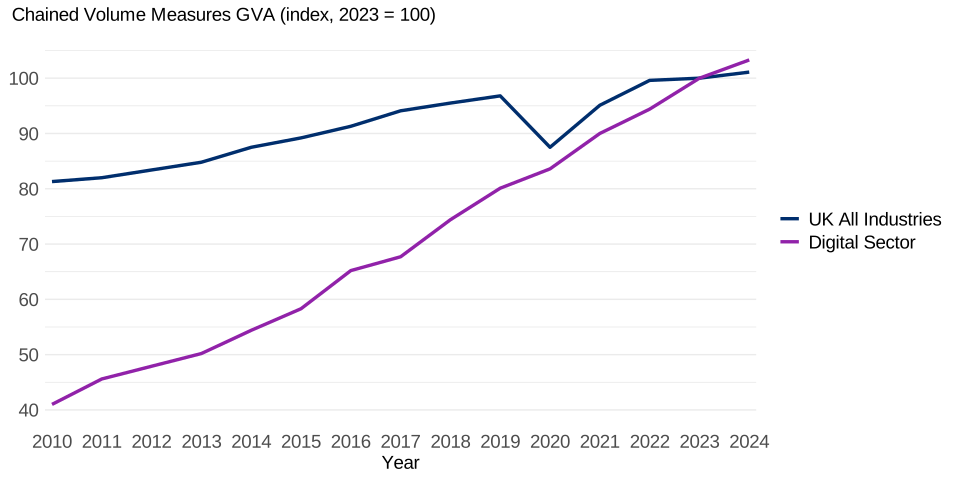
This release includes GVA estimates beginning in 2010, inclusive of revisions discussed in section 4.2 and the previous Digital Sector Annual GVA release. The Digital Sector grew across all years and by 152.2% in total from £69 billion in 2010 to £174 billion in 2024 in 2023 prices and accounting for inflation. In comparison, estimated UK All industries GVA grew by 24.4% from £2,029 billion (2023 prices) in 2010 to £2,525 billion (2023 prices) in 2024 when accounting for inflation.
As shown in Figure 2, UK All industries GVA decreased from 2019 to 2020, during the COVID-19 pandemic, in contrast to Digital Sector GVA which continued to increase. Digital Sector GVA also increased at a faster rate than UK All industries GVA for each year from 2010 to 2024, except for the growth from 2020 to 2021.
Despite Digital Sector GVA growing faster than UK All Industries GVA in real terms, the proportion of UK All Industries current prices GVA accounted for by the Digital Sector has decreased from 7.1% in 2010 to 6.8% in 2024. This is due to prices for Digital Sector outputs decreasing faster than for UK All Industries reflecting consumers receiving more Digital Sector output for the same cost.
Figure 2: Index of Digital Sector GVA (CVM) compared to UK All industries GVA from 2010 to 2024, 2023 = 100
5.2 Digital Subsector GVA
The Digital Sector is composed of nine subsectors. Provisional changes in the GVA of these Digital subsectors from 2023 to 2024 are discussed in this section, in comparison with UK All industries GVA and total Digital Sector GVA. Chained Volume Measures GVA is used for all values in this section to account for inflation.
As shown in Figure 3, from 2023 to 2024 the largest subsector provisional increase was a 9.0% (£6.1 billion in 2023 prices) increase in ‘Computer programming, consultancy and related activities’.
The Digital subsectors ‘Film, TV, video, radio and music’ and ‘Information service activities’ each provisionally increased from 2023 to 2024 by 2.7% (£619 million in 2023 prices) and 2.4% (£308 million in 2023 prices) respectively. ‘Wholesale of computers and electronics’ GVA increased by 0.3% (£20 million in 2023 prices) from 2023 to 2024.
The largest proportional subsector provisional decrease was a 3.6% (£86 million in 2023 prices) decrease in ‘Repair of computers and communication equipment’. From 2023 to 2024 ‘Telecommunications’, ‘Publishing (excluding translation and interpretation activities)’ and ‘Software publishing’ GVA decreased by 2.9% (£1.0 billion in 2023 prices), 2.3% (£236 million in 2023 prices) and 2.3% (£73 million in 2023 prices) respectively. ‘Manufacturing of computers and electronics’ also provisionally decreased by 1.2% (£74 million in 2023 prices) from 2023 to 2024.
Figure 3: Percentage change in Digital Sector, subsector and UK All industries GVA from 2023 to 2024
The largest subsector within the Digital Sector in 2024 was ‘Computer programming, consultancy and related activities’, which provisionally made up 42.6% of the total Digital Sector GVA in 2024 (Figure 4). The ‘Telecommunications’ and ‘Film, TV, video, radio and music’ subsectors provisionally made up 19.3% and 13.7% of total Digital Sector GVA in 2024 respectively. The remaining Digital subsectors combined provisionally made up 24.5% of total Digital Sector GVA. Note that estimates for subsectors do not sum to 100% due to rounding.
Figure 4: Provisional percentage composition of the Digital Sector by subsectors in 2024, UK
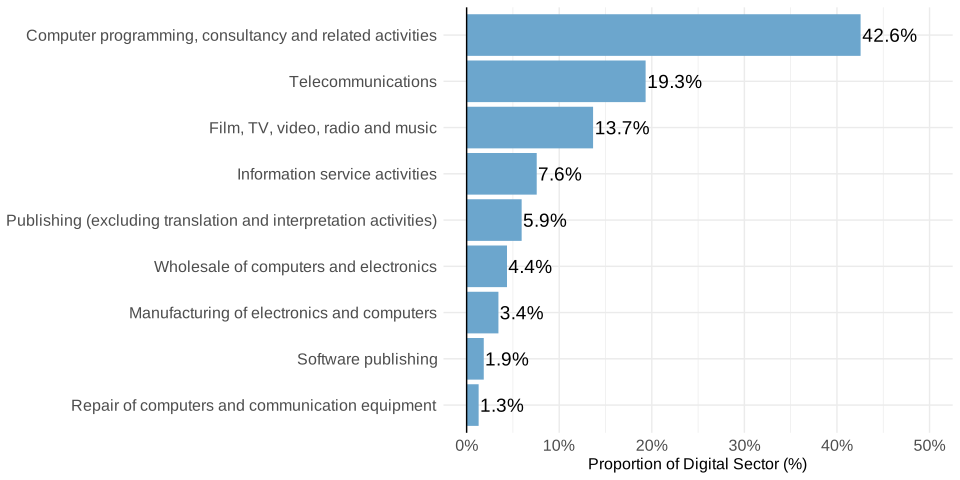
Note: Percentages do not sum to 100% due to rounding.
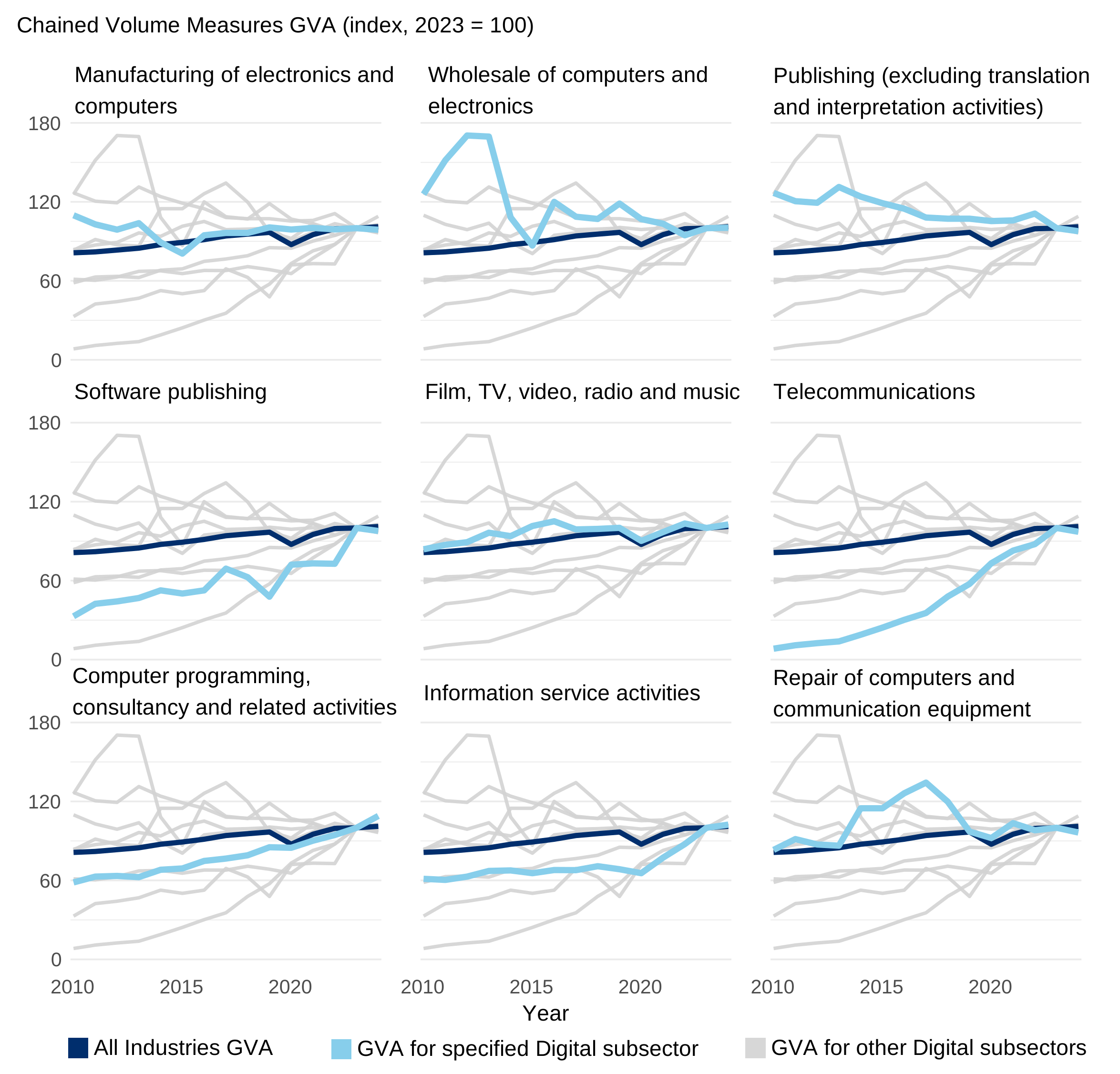
Digital subsectors have grown at different rates since 2010 as shown in Figure 5. The ‘Telecommunications’ subsector experienced the largest proportional growth from 2010 to 2024, accounting for inflation, at 1068.2% or £31.3 billion in 2023 prices, followed by ‘Software Publishing’ at 196.9% or £2.1 billion. ‘Computer programming, consultancy and related activities’, ‘Information service activities’, ‘Film, TV, video, radio and music’ and ‘Repair of computers and communication equipment’ each increased during this period, in 2023 prices, by 86.4% (£34.3 billion), 67.3% (£5.2 billion), 22.6% (£4.4 billion) and 15.9% (£312 million). ‘Manufacturing of electronics and computers’, ‘Wholesale of computers and electronics’, and ‘Publishing (excluding translation and interpretation activities)’ have decreased between 2010 to 2024 by 10.0% (£663 million), 20.3% (£2.0 billion) and 22.9% (£3.0 billion) respectively.
Figure 5: Index of Digital subsector GVA (CVM) compared to UK All industries GVA from 2010 to 2024, 2023 = 100, UK
6. Digital Sector Regional GVA
6.1 Regional contribution to Digital Sector GVA
Provisional Regional GVA estimates have not been included in this release. As described in Section 4.1, Regional GVA estimates are derived from data used to produce the previous year’s Annual GVA release. This data has subsequently undergone substantial revisions resulting in the revisions to Annual GVA estimates described in Section 4.2. Given that similar revisions are therefore expected to the data underlying Regional GVA estimates, reporting and analysing provisional 2023 Regional GVA data in this release is of limited value.
This section covers the contribution of each ITL1 region to the UK Digital Sector GVA in 2022, measured in Current Prices GVA. This is calculated by dividing each ITL1 regional Digital Sector GVA total by the sum of regional Digital Sector GVA totals. It must be noted that the sum of regional Digital Sector GVA totals does not equal the Digital Sector Annual GVA described in Section 5.1. This is because Regional GVA is calculated differently from Annual GVA, as described in Section 4.1. The sum of regional Digital Sector GVA will be referred to as ‘overall UK Digital Sector GVA’.
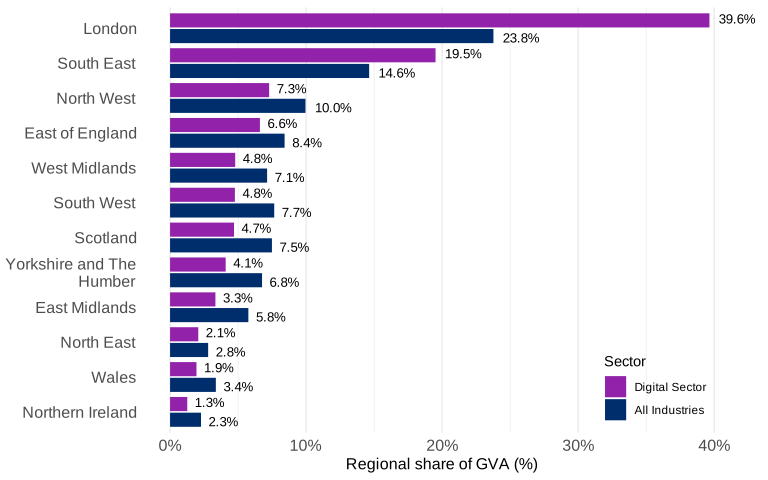
As shown in Figure 6 revised estimates for 2022 report the highest ITL1 regional shares of Digital Sector GVA were London and the South East of England, contributing 39.6% (£60.6 billion) and 19.5% (£29.8 billion) respectively. The North West and East of England had a 7.3% (11.1 billion) and 6.6% (10.1 billion) regional share of Digital Sector GVA in 2022 respectively. Other regions each had a less than 5% regional share of Digital Sector GVA. London and the South East of England were the only regions with a higher contribution towards overall UK GVA for the Digital Sector than for All industries.
The biggest revisions in regional share of Digital Sector GVA between provisional 2022 estimates reported previously and revised 2022 estimates reported here were a 1.1 percentage point upward revision for London and a 0.9 percentage point downward revision for the South East of England. The regional share of All industries GVA was also revised up by 0.5 percentage points for London and down by 0.4 percentage points for the South East of England. The East Midlands regional share of Digital Sector GVA was revised down by 0.4 percentage points between provisional and revised 2022 estimates. Estimates for all other ITL1 regions were revised by 0.2 percentage points or fewer.
Figure 6: Revised regional share of Digital Sector and All industries GVA in 2022, UK
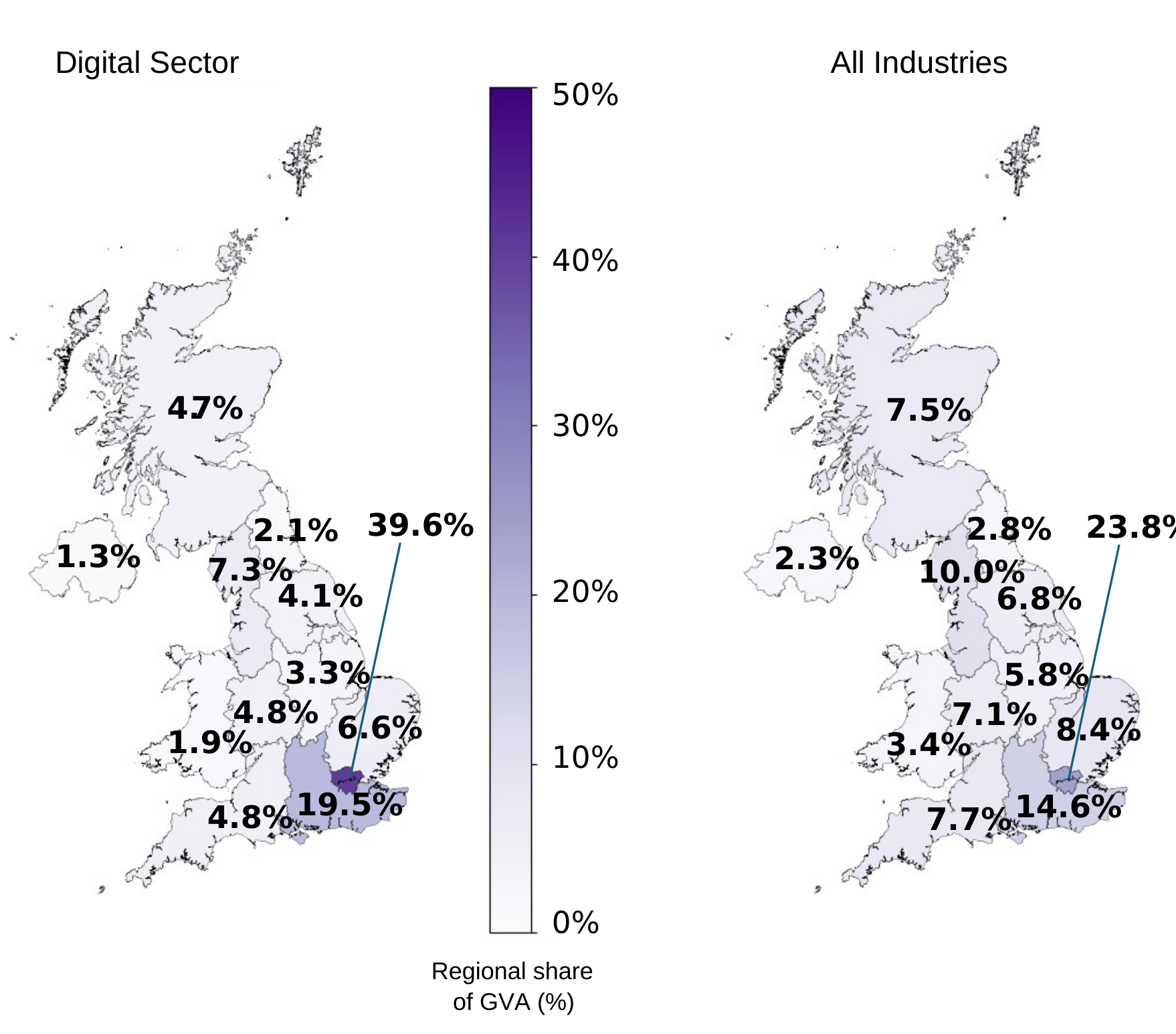
In 2022, the highest regional contributions to Digital Sector GVA were concentrated within London and the South East of England, as shown in Figure 7. Whilst regional contribution towards overall UK All industries GVA is also higher in London and the South East of England, the discrepancy between other regions of the UK is less pronounced. Revisions to 2022 estimates did not change this trend.
Figure 7: Revised geographic visualisation of regional share of Digital Sector and All industries GVA in 2022, UK
6.2 Digital Sector contribution to ITL1 regional GVA
In this section, the revised contribution of the Digital Sector to each ITL1 regional economy in 2022 is evaluated, when measured in Current Prices GVA. The contribution is calculated by dividing the Digital Sector GVA of each ITL1 region by the All industries GVA of the ITL1 region. This can be used to understand the importance of the Digital Sector to each ITL1 regional economy.
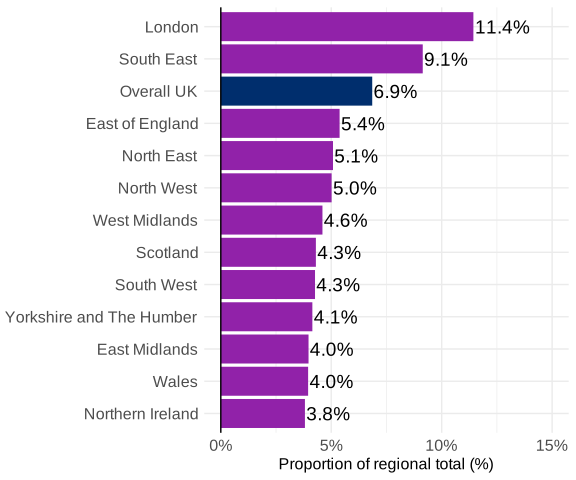
As shown in Figure 8, in 2022, London and the South East of England were the ITL1 regions with the highest proportion of GVA from the Digital Sector at 11.4% and 9.1% respectively. The ITL1 regions with the lowest proportional contribution from the Digital Sector were Northern Ireland, the East Midlands and Wales at 3.8%, 4.0% and 4.0% respectively.
The proportion of GVA from the Digital Sector has been revised down for all ITL1 regions except Wales and Northern Ireland between provisional 2022 estimates reported previously and revised 2022 estimates reported here. These estimates were revised up by 0.2 percentage points for Wales and 0.1 percentage points for Northern Ireland. The proportion of GVA from the Digital Sector was revised down for the East Midlands, South East of England and London by 0.6, 0.6 and 0.5 percentage points respectively. The proportion of GVA from the Digital Sector was revised down for all other ITL1 regions by 0.1 to 0.4 percentage points.
Figure 8: Revised proportion of regional GVA accounted for by the Digital Sector in 2022, UK
6.3 Changes in ITL1 region Digital Sector GVA
Provisional Regional GVA estimates have not been included in this release. As described in Section 4.1, Regional GVA estimates are derived from data used to produce the previous year’s Annual GVA release. This data has subsequently undergone substantial revisions resulting in the revisions to Annual GVA estimates described in Section 4.2. Given that similar revisions are therefore expected to the data underlying Regional GVA estimates, reporting and analysing provisional 2023 Regional GVA data in this release is of limited value.
Given that revisions to Regional GVA are expected to be smaller outside of provisional 2023 data, analysis of change in Digital Sector GVA between 2010 to 2022 is less likely to undergo large revisions.
ITL1 regions have grown at different rates since 2010 as shown in Figure 9. The North East of England experienced the largest proportional growth from 2010 to 2022, accounting for inflation, at 387.4% or £2.5 billion in 2022 prices. The East Midlands increased by 99.0% or also £2.5 billion, the smallest proportional increase during this period. All other ITL1 regions increased by between 100.6% and 227.9% from 2010 to 2022.
Figure 9: Index of ITL1 region Digital Sector GVA (CVM) compared to to ITL1 region All Industries GVA from 2010 to 2022, 2022 = 100
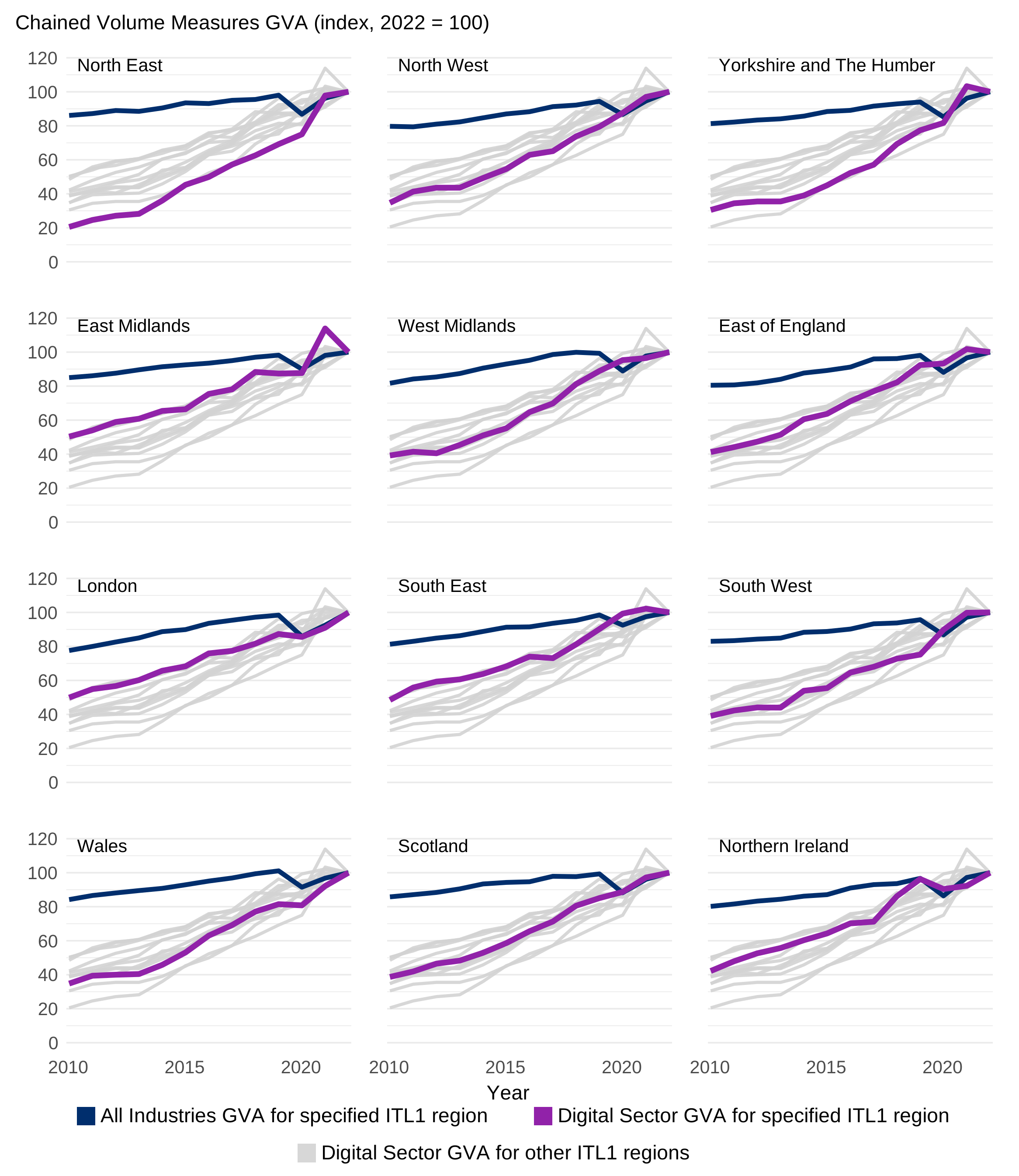
Regional GVA figures have been substantially revised since the previous Regional GVA release as described in Section 4.2. The previous Regional GVA release reported percentage change in Chained Volume Measures GVA from 2019 to 2022. The highest inflation adjusted increase in ITL1 region Digital Sector GVA between 2019 and 2022 was reported in the North East and South West of England. Whilst estimates in this release also report this, the increase in Digital Sector GVA has been revised up for the North East of England from 37.2% to 44.5% and revised down for the South West of England from 36.4% to 33.0%. Increase in Digital Sector GVA between 2019 and 2022 for Yorkshire and The Humber is now estimated to be similar at 29.2%.
The previous Regional GVA release reported an inflation adjusted increase in all industries GVA between 2019 and 2022 for the North East of England at 2.0% and for the South West of England at 5.2%. In this release, the North East of England estimate has been revised up to 2.1% and the South West of England estimate has been revised down to 4.5%.
Northern Ireland GVA was previously reported to have decreased by 3.4% for the Digital Sector and increased by 1.6% for All industries between 2019 and 2022, when accounting for inflation. These estimates have been revised in this release. Northern Ireland GVA is now estimated to have increased by 3.8% for the Digital Sector and increased by 3.4% for All industries. Northern Ireland remains the only ITL1 region with higher inflation adjusted GVA growth for All industries than for the Digital Sector between 2019 and 2022.
There have also been revisions to previously reported changes in GVA between 2021 and 2022 when accounting for inflation. Increases in Digital Sector GVA between 2021 and 2022 have been revised down for the North East of England from 11.5% to 2.3% and revised up for London from 9.4% to 9.9%. Similarly, increases in All industries GVA between 2021 and 2022 has been revised down for the North East of England from 5.0% to 4.0% and revised up for London from 4.8% to 8.1%. The biggest ITL1 region increases in Digital Sector GVA between 2021 and 2022 are now estimated to be London, Wales and Northern Ireland rather than the North East of England and London.
The East Midlands and Yorkshire and the Humber were previously reported to be the only regions in which Digital Sector GVA decreased between 2021 and 2022, when accounting for inflation, by 1.3% and 0.3% respectively. Current estimates suggest the East Midlands, Yorkshire and the Humber, the South East of England and East of England each decreased by 12.2%, 3.2%, 2.2% and 1.8% respectively.