DESNZ Public Attitudes Tracker: Energy infrastructure and energy security, Winter 2025, UK
Published 12 March 2026

© Crown copyright 2026
This publication is licensed under the terms of the Open Government Licence v3.0 except where otherwise stated. To view this licence, visit nationalarchives.gov.uk/doc/open-government-licence/version/3 or write to the Information Policy Team, The National Archives, Kew, London TW9 4DU, or email: psi@nationalarchives.gov.uk.
Where we have identified any third party copyright information you will need to obtain permission from the copyright holders concerned.
This publication is available at https://www.gov.uk/government/statistics/desnz-public-attitudes-tracker-winter-2025/desnz-public-attitudes-tracker-energy-infrastructure-and-energy-security-winter-2025-uk
The DESNZ Public Attitudes Tracker is a nationally representative annual survey of adults (aged 16+) in the UK that tracks public awareness, attitudes and behaviours relating to the policies of the Department for Energy Security and Net Zero (DESNZ), such as energy and climate change.
This report provides a summary of the headline findings relating to energy infrastructure and energy security from the Winter 2025 wave of the Tracker, which ran from 4 November to 9 December 2025.
Notes for interpretation of findings
Differences between groups are only reported where they are statistically significant at the 95% confidence interval level.
The annual personal income referred to in the report is a self-reported measure.
Line charts included in this report, based on a longer time series, use abbreviated season names in the x-axis (e.g. Winter 2025 = Win 2025).
The age-related findings are reported using six age groups (16-24, 25-34, 35-44, 45-54, 55-64, 65 and over). In some cases, findings across age groups have been combined to describe a general trend, for example, ‘between 78% and 88% of people aged 45 and above’ refers to the range of percentages for the three age groups 45-54, 55-64 and 65+.
Please note that some of the geographical findings have fluctuated over time. These variations may, in part, be due to the base sizes in specific areas and the wide geographic area covered by regions.
Two summary self-reported measures are used in this report:
- ‘Awareness’ encompasses all respondents who said they had heard of a particular concept or technology, including those who said they know ‘hardly anything but I’ve heard of this’, ‘a little’, ‘a fair amount’ or ‘a lot’.
- ‘Knowledge’ encompasses those who said that they know ‘a fair amount’ or ‘a lot’ about a topic.
Awareness and support for new electricity network infrastructure
A question on awareness of the need for new electricity network infrastructure, is asked in Summer and Winter waves[footnote 1].
Before being presented with the questions, the topic was introduced as follows: ‘As the UK increases the amount of electricity generated from low carbon and renewable sources, more electricity network infrastructure will be required to transfer electricity from where it is generated to where it is needed. This will include pylons, overhead power lines, and substations. Substations are sites which connect the main network to the distribution networks that supply homes and businesses. This includes sites that connect the offshore electricity transmission network onshore.’
Figure 3.1 displays the longer-term trends in overall awareness (had at least heard of it) and knowledge (a lot/fair amount) of new energy infrastructure (line chart). It also displays the detailed awareness and knowledge data for the most recent two waves alongside the baseline (bar chart).
While awareness increased between Winter 2024 (75%) and Summer 2025 (81%), this decreased in Winter 2025 (75%). Knowledge also decreased to 22% in Winter 2025 down from 27% in Summer 2025. This follows a pattern where awareness and knowledge have been higher in summer compared to winter waves (Figure 3.1).
Figure 3.1: Awareness of the need to build more electricity network infrastructure (% based on all people), Summer 2023 and 2024, Winter 2024, Summer 2025*, Winter 2025
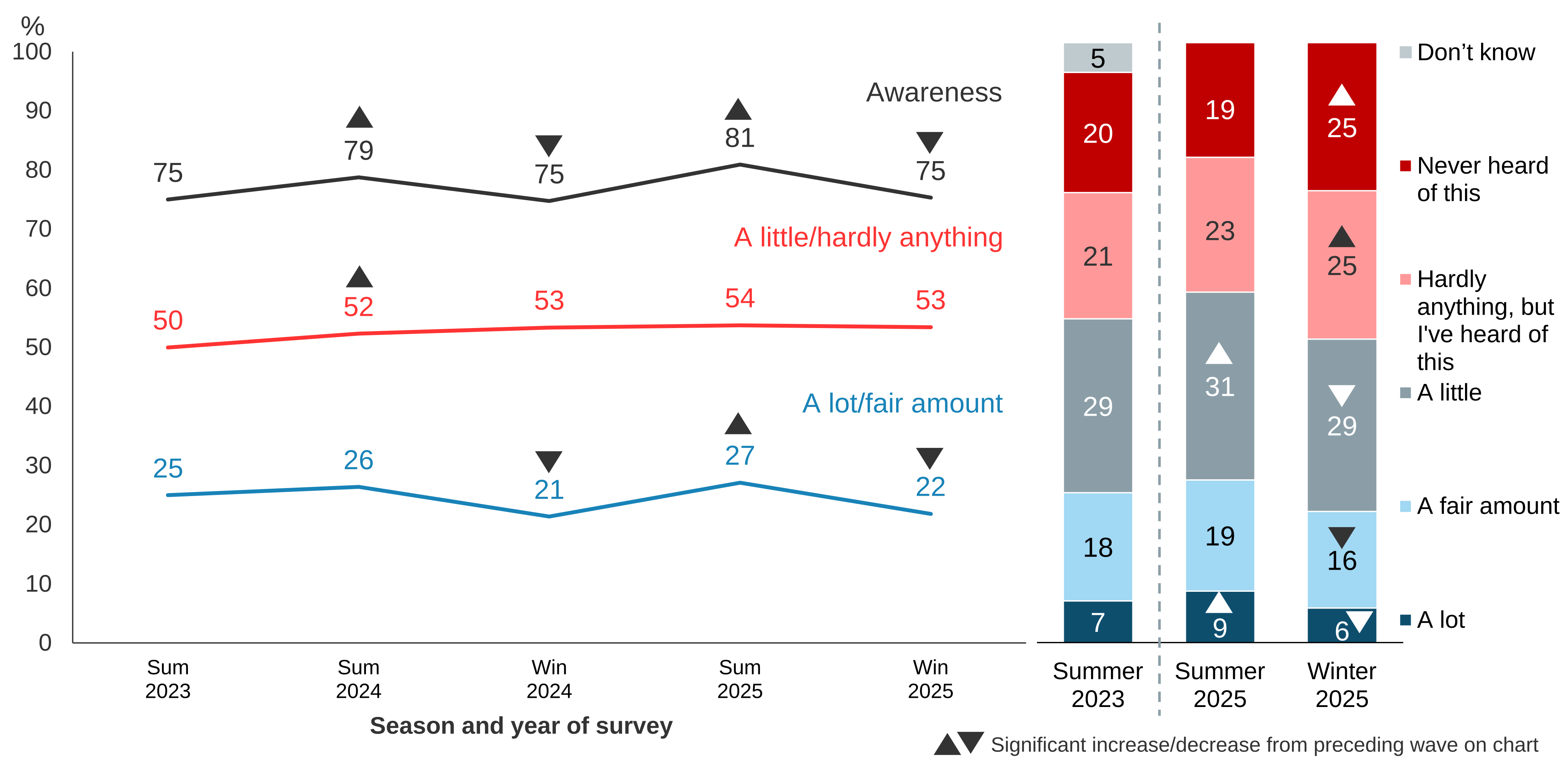
INFRAKNOW. Before today how much, if anything, did you know about the need to build more electricity network infrastructure as part of the UK’s transition to low carbon and renewable energy? *‘Don’t know’ option not included in answer list from Winter 2024.
Base: All wave respondents – Summer 2023 (4,000), Summer 2024 (3,642), Winter 2024 (3,211), Summer 2025 (3,436), Winter 2025 (3,280).
*The findings for Summer 2025 have been rebased to ensure comparability with Winter 2024. See footnote at the start of this section for further details.
Note: On the line chart, arrows denote a significant difference between one wave and the next. For the bar chart, significant differences are noted between Summer 2023 and Summer 2025, and between Summer 2025 and Winter 2025.
Analysis by subgroups
Knowledge about the need to build more energy infrastructure was higher among the following subgroups:
- Older people: knowledge (knowing a fair amount or a lot) declined from 27% of those aged 65 and over to 16% of those aged 16 to 24.
- People with a degree: 32% compared with 18% of those with another kind of qualification and 13% of those with no qualifications.
- People living in Scotland (29%); in contrast the lowest levels were reported in the North East and Northern Ireland (both 16%) and in the West Midlands (17%).
A similar pattern of findings was observed in subgroups for overall awareness.
Information priorities for planned new electricity infrastructure in local area
People were asked what information they would find most useful to know about during the planning stage of new electricity network infrastructure. This question was first asked in Winter 2024.
Respondents were first asked to imagine that new electricity network infrastructure such as pylons, overhead power lines, and substations was planned for their local area. They were then asked to choose three types of information from a list that they thought would be the most important to know about during the planning stage.
In Winter 2025, the most important item of information remained the impact on the cost of electricity bills (48%), followed by impact on local plant and animal life (40% down from 43%), and the visual impact on the landscape (40%) (Figure 3.2).
Around three in ten people selected other items including disruption caused by construction (31%), impact on property prices (30% up from 25%) and the purpose of the infrastructure (29%). Benefits to the local community were mentioned by 22% (down from 24%).
Figure 3.2: Most important information needs at planning stage of new electricity network infrastructure (% based on all people), Winter 2024 to 2025
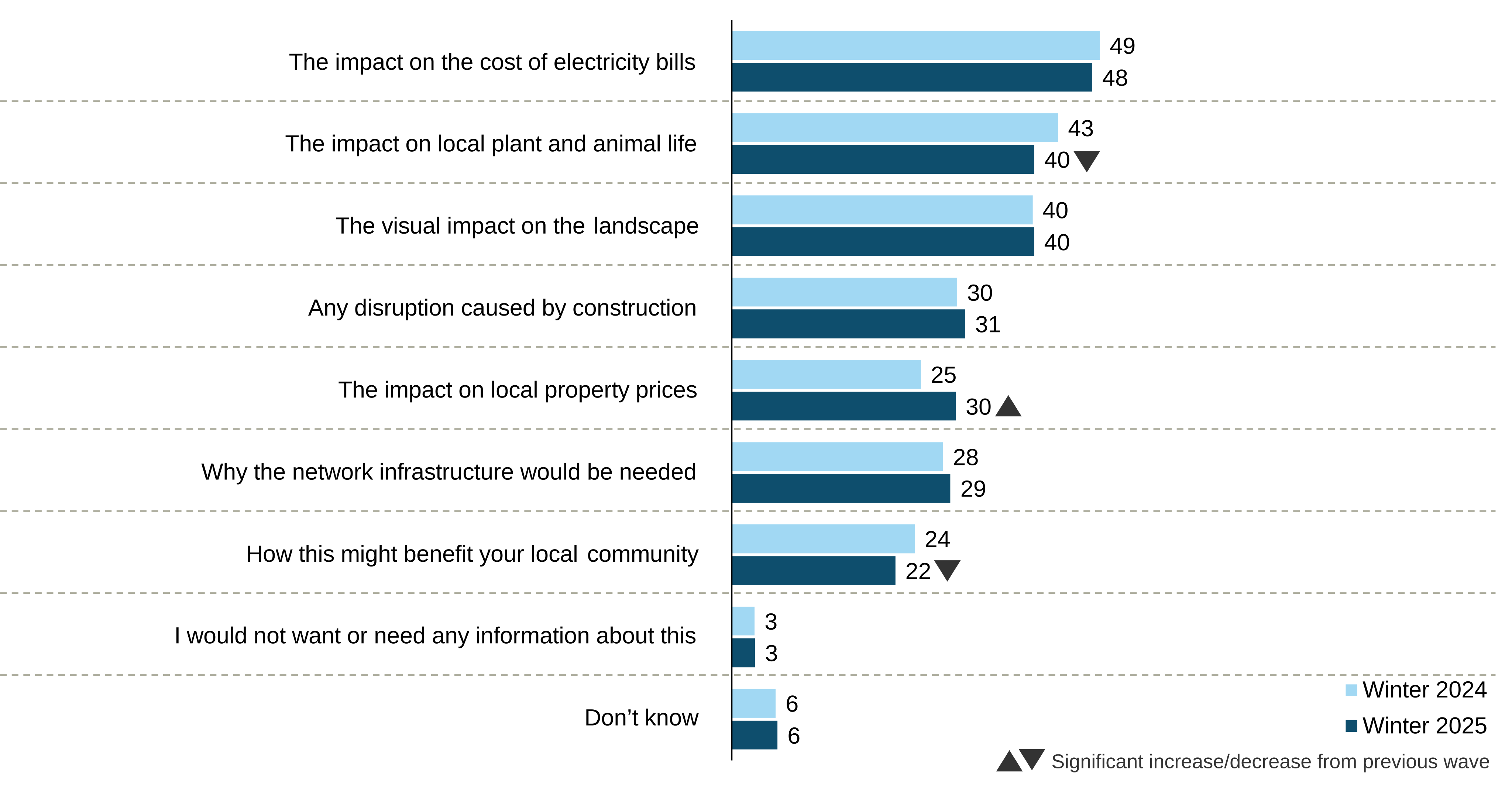
INFRA2IMP. Please now imagine that new electricity network infrastructure such as pylons, overhead power lines, and substations is planned for your local area. What would be the most important information that you would like to know about during the planning stage? Please select up to three responses.
Base: All wave respondents – Winter 2024 (3,187), Winter 2025 (3,254).
Analysis by subgroups
By age:
- People aged 55 and over were more likely to prioritise information about the visual impact on the landscape (between 47% and 50%) compared with between 31% and 34% of those in age groups from 16 to 44.
- There has been an increase in the perceived importance of the visual impact on the landscape among those aged 16 to 24 (from 22% to 34%).
- People aged 65 and over were more likely to prioritise the rationale for the infrastructure (33%) compared with between 25% and 27% of those in age groups from 16 to 44.
- People in age groups 16 to 34 were more likely to prioritise information on disruption caused (between 36% and 40%) compared with those in age groups from 55 and over (between 25% and 26%).
- Between 24% and 25% in age groups 45 and above were interested in how this might benefit their local community, compared to 15% of people aged 16 to 24.
By education:
- Those with a degree were more likely than those with no qualifications to prioritise information on the impact on local plant and animal life (46% vs 30%), the visual impact on the landscape (44% vs 34%), impact on property prices (31% vs 24%), and benefits to the local community (28% vs 20%).
By geography:
- Information on the impact on cost of bills was more important for people in urban areas (50%) than rural areas (39%).
- In contrast, the visual impact on the landscape and the impact on local plant and animal life was more important for people in rural areas compared to urban areas (51% vs 37% for visual impact, and 48% vs 38% for local plant and animal life).
- People living in London were most likely to prioritise information about disruption caused by construction (39% vs 31% overall), and about the impact on bills (55%); the latter was also higher in the North East (54%), compared with 48% overall.
- Residents in the South West were most keen to know about the visual impact on the landscape (50% vs 40% overall).
- Residents in Northern Ireland were most focussed on property prices (40% vs 30% overall) while those in the East Midlands were most focussed on benefits to the local community (29% vs 22% overall).
Nuclear energy
Questions on attitudes towards nuclear energy are asked annually in Winter waves. People are first asked whether they agree or disagree with four statements in relation to nuclear energy. Data is shown in Figure 3.3 for the baseline Winter 2021 wave, and for the most recent two waves.
In Winter 2025, as in previous years, for each of the four statements the proportion of respondents who gave a non-opinion response (that is ‘neither agree nor disagree’ or ‘don’t know’) was high, ranging between 42% and 53%.
Among those who gave an opinion for each statement, people were on balance more positive than negative about nuclear energy.
Between Winter 2021 and Winter 2025 there had been an increase in positive attitudes towards nuclear energy, but this has broadly stabilised in the latest two waves.
Overall, in Winter 2025:
- 51% agreed that ‘nuclear energy provides a reliable source of energy in the UK’; 7% disagreed (down from 9% in Winter 2024).
- 45% agreed that ‘nuclear energy will help combat climate change in the UK’; 9% disagreed (down from 12% in Winter 2024).
- 36% agreed that ‘nuclear energy offers affordable energy for the UK’; 11% disagreed.
- 35% agreed that ‘nuclear energy provides a safe source of energy in the UK’; 19% disagreed (continuing a decline from 25% in Winter 2021 and 21% in Winter 2024).
Figure 3.3: Attitudes towards nuclear energy (% based on all people), baseline wave (Winter 2021) and two most recent waves (Winter 2024 & Winter 2025)
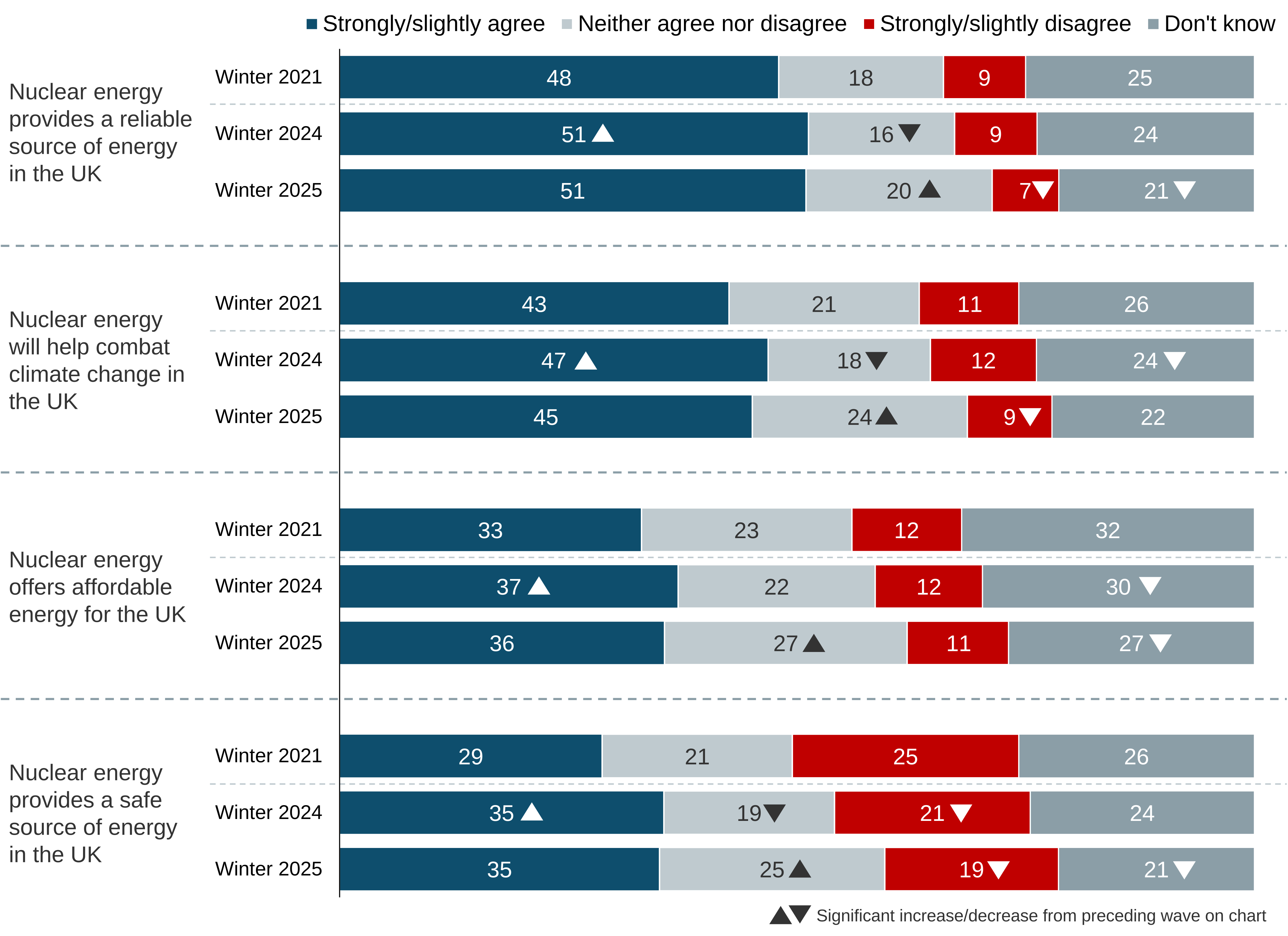
NUCATTA-NUCATTD. The next questions are about nuclear energy. How much do you agree or disagree with the following statements?
Base: All wave respondents – Winter 2021 / Winter 2024 / Winter 2025: Nuclear energy provides a reliable source of energy in the UK (3,669/3,204/3,255), Nuclear energy will help combat climate change in the UK (3,683/3,209/3,262), Nuclear energy offers affordable energy for the UK (3,668/3,207/3,251), Nuclear energy provides a safe source of energy in the UK (3,670/3,207/3,247).
Analysis by subgroups
By age
- People in age groups 55 and over (between 53% and 56%) were more likely than those aged 16 to 24 (44%) to agree that nuclear energy provides a reliable source of energy.
By education:
- People educated to degree level were more likely than those with lower or no qualifications to agree with each of these statements. For example, 57% of those with a degree agreed that nuclear energy will help combat climate change compared with 41% of those with another kind of qualification and 33% of those with no qualifications.
By geography:
- Agreement that nuclear energy provides a reliable source of energy: 51% overall; with highest levels of agreement in the South West (55%), East Midlands (55%), North West (54%) and Scotland (54%).
- Agreement that nuclear energy will help combat climate change in the UK: 45% overall vs 54% in the South West.
- Agreement that nuclear energy provides a safe source of energy in the UK: 35% overall, with highest levels of agreement in Scotland (42%), the South West (40%) and the North West (40%).
- Agreement that nuclear energy offers affordable energy for the UK: 36% overall vs 40% in Scotland, 39% in Wales and 39% in London.
People were also asked about their level of support for nuclear energy. In Winter 2025, people remained much more likely to support (44%) than oppose (11%) using nuclear energy to generate electricity in the UK.
Overall support for nuclear energy has increased over the longer term from 37% in Winter 2021 to 44% in Winter 2024, with strong support increasing over this period from 13% to 18%.
Overall opposition to nuclear energy decreased from 14% to 11% between Winter 2024 and Winter 2025. Almost half (45%) said they neither supported nor opposed, or that they didn’t know, indicating a high level of uncertainty on this topic (Figure 3.4). Strong support remained stable at 18% since Winter 2024.
Figure 3.4: Whether support nuclear energy (% based on all people), Winter 2021 to 2025
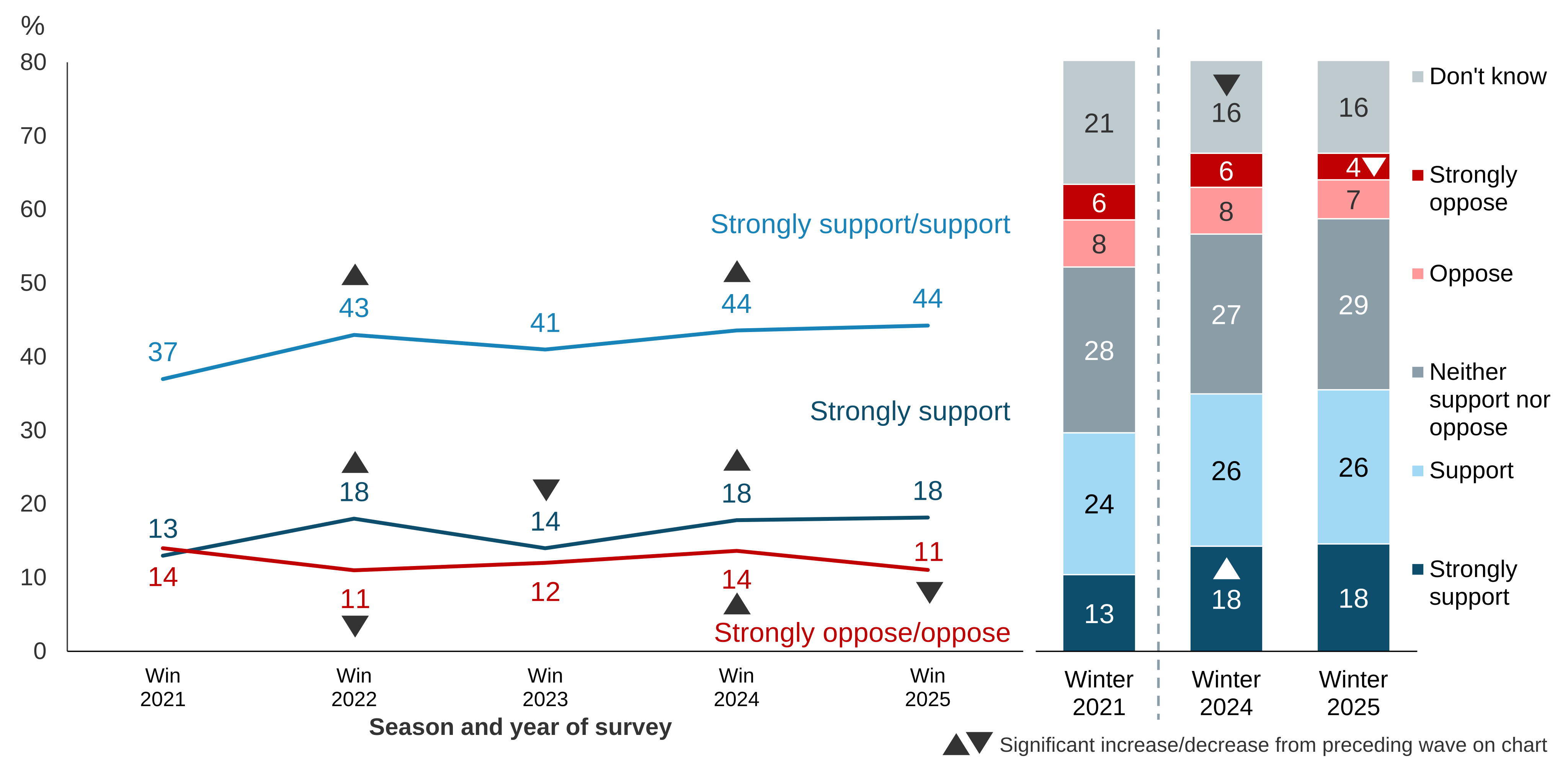
NUCSUPPORT. From what you know, or have heard about using nuclear energy for generating electricity in the UK, do you support or oppose its use?
Base: All wave respondents – Winter 2021 (3,703), Winter 2022 (3,570), Winter 2023 (3,731), Winter 2024 (3,211), Winter 2025 (3,277).
Note: On the line chart vertical scale has been reduced to 0-80%, and arrows denote a significant difference between one wave and the next. For the bar chart, significant differences are noted between Winter 2021 and Winter 2024, and between Winter 2024 and Winter 2025.
Analysis by subgroups
Overall support for nuclear energy in the UK was highest for:
- Older people: from 49% of those aged 65 and over declining to 39% of those aged 16 to 24).
- People with a degree: 53% compared with 35% of those with no qualifications.
- People living in the South West (52%); in contrast the lowest levels were reported in the West Midlands (28%).
Further findings on energy infrastructure and energy security
In previous waves, questions were included on other topics relating to energy infrastructure and energy security. The latest findings relating to these topics can be found as follows:
- Levels of happiness with electricity network infrastructure being built in the local area and reasons for happiness and unhappiness, see Summer 2025 report on Energy Infrastructure – section on ‘Awareness and support for new electricity network infrastructure’
- Levels of concern regarding a range of issues relating to energy security in the next 10-20 years, see Summer 2025 report on Energy Infrastructure – section on ‘Concerns about energy security’)
- Support for reducing domestic production of oil and gas, even if that means buying more from other countries, see Summer 2025 report on Energy Infrastructure – section on ‘Support for domestic production of oil and gas’
- The perceived importance of various aspects of energy policy, see Summer 2025 report on Energy Infrastructure – section on ‘Perceived importance of different aspects of energy policy’
- Awareness of greenhouse gas removals (GGRs), see Summer 2025 report on Energy Infrastructure – section on ‘Awareness of greenhouse gas removals’
- Attitudes towards fusion energy, hydrogen, small modular reactors, carbon capture and storage, local nuclear power stations and trust in information about emerging energy sources - see Spring 2025 report on Energy infrastructure
-
It should be noted that the tracking data is not wholly comparable due to a change in the question. The ‘don’t know’ answer code was removed from Winter 2024 onwards to be more consistent with other questions of this style. However, it was erroneously added back in Summer 2025. To ensure comparability with Winter 2024, Summer 2025 results have been rebased on results excluding the 4% of people who answered ‘don’t know’. ↩