DESNZ Public Attitudes Tracker: Renewable energy, Spring 2026, UK
Published 2 July 2026

© Crown copyright 2026
This publication is licensed under the terms of the Open Government Licence v3.0 except where otherwise stated. To view this licence, visit nationalarchives.gov.uk/doc/open-government-licence/version/3 or write to the Information Policy Team, The National Archives, Kew, London TW9 4DU, or email: psi@nationalarchives.gov.uk.
Where we have identified any third party copyright information you will need to obtain permission from the copyright holders concerned.
This publication is available at https://www.gov.uk/government/statistics/desnz-public-attitudes-tracker-spring-2026/desnz-public-attitudes-tracker-renewable-energy-spring-2026-uk
The DESNZ Public Attitudes Tracker is a nationally representative annual survey of adults (aged 16+) in the UK that tracks public awareness, attitudes and behaviours relating to the policies of the Department for Energy Security and Net Zero (DESNZ), such as energy and climate change.
This report provides a summary of the headline findings relating to renewable energy from the Spring 2026 wave of the Tracker, which ran from 16 March to 21 April 2026.
Notes for interpretation of findings
Differences between groups are only reported where they are statistically significant at the 95% confidence interval level.
The annual personal income referred to in the report is a self-reported measure.
Line charts included in this report, based on a longer time series, use abbreviated season names in the x-axis (e.g. Spring 2026 = Spr 2026).
The age-related findings are reported using six age groups (16-24, 25-34, 35-44, 45-54, 55-64, 65 and over). In some cases, findings across age groups have been combined to describe a general trend, for example, ‘between 78% and 88% of people aged 45 and above’ refers to the range of percentages for the three age groups 45-54, 55-64 and 65+.
Please note that some of the geographical findings have fluctuated over time. These variations may, in part, be due to the base sizes in specific areas and the wide geographic area covered by regions. This also applies to other subgroup findings that have low base sizes.
Two summary self-reported measures are used in this report:
- ‘Awareness’ encompasses all respondents who said they had heard of a particular concept or technology, including those who said they know ‘hardly anything but I’ve heard of this’, ‘a little’, ‘a fair amount’ or ‘a lot’.
- ‘Knowledge’ encompasses those who said that they know ‘a fair amount’ or ‘a lot’ about a topic.
Support for renewable energy
Figure 2.1 displays both the longer-term trends in overall support for renewable energy (line chart), and the detailed data on support for the most recent two waves alongside the baseline (bar chart).
In Spring 2026, overall support (support or strongly support) for the use of renewable energy such as wind power, solar energy and biomass to provide electricity, fuel and heat increased to 81% from 78% in Winter 2025. Opposition (oppose or strongly oppose) was unchanged since Winter 2025 at 4% (no significant change).
Overall support has declined over time, aside from some minor fluctuations, from 87% in Autumn 2021 to 81% in Spring 2026. In particular, strong support for renewable energy has declined from 54% in Autumn 2021 to 46% in Spring 2026.
Figure 2.1: Whether support use of renewable energy (% based on all people), Autumn 2021 to Spring 2026
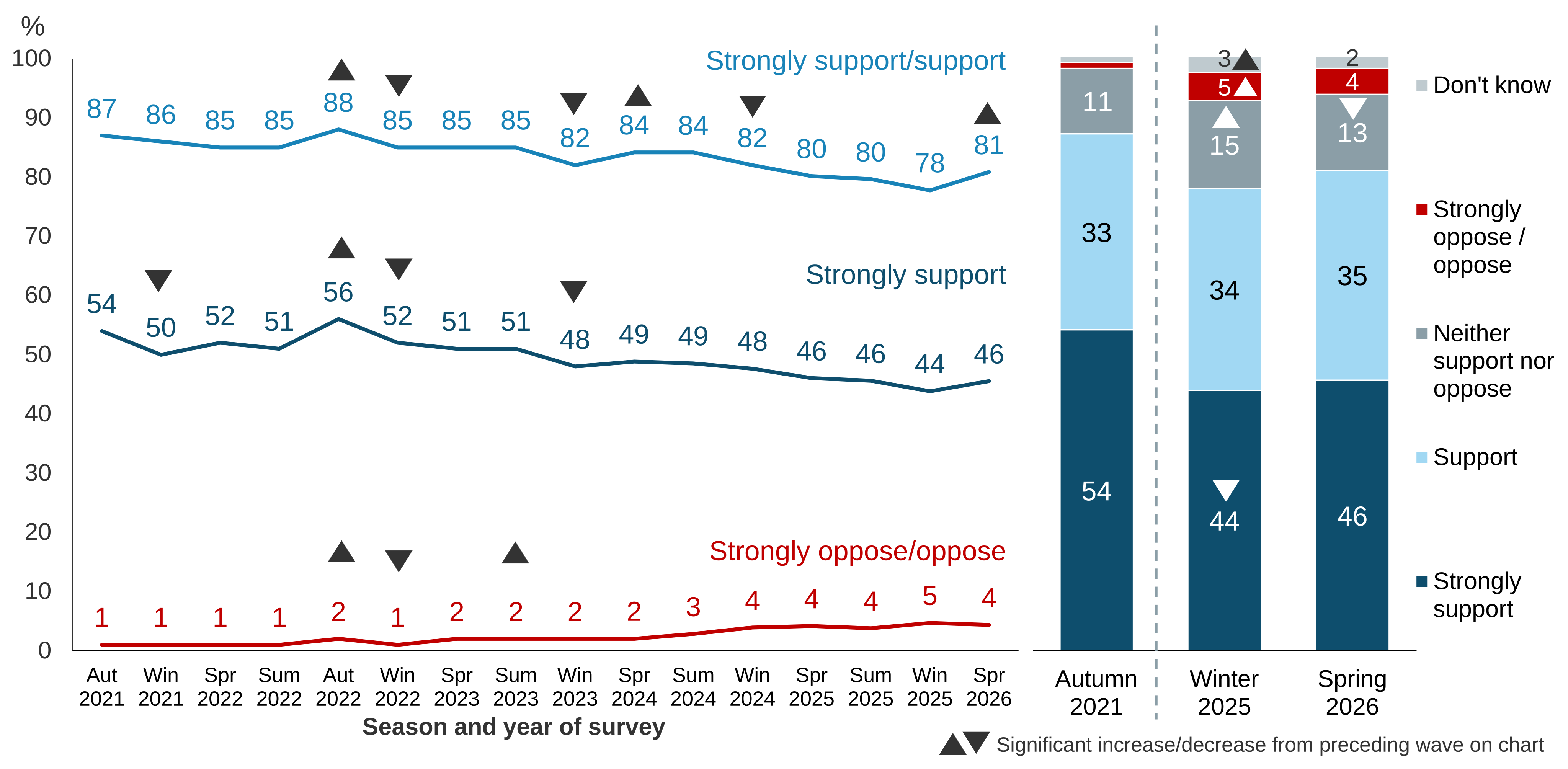
RENEWSUPPORT. The next question is about renewable energy. This includes a number of different forms of energy, such as wind power, solar energy and biomass. Do you support or oppose the use of renewable energy for providing our electricity, fuel and heat?
Base: All wave respondents – Autumn 2021 (5,556), Winter 2021 (3,705), Spring 2022 (4,373), Summer 2022 (4,489), Autumn 2022 (4,160), Winter 2022 (3,572), Spring 2023 (4,403), Summer 2023 (3,997), Winter 2023 (3,724), Spring 2024 (4,087), Summer 2024 (3,642), Winter 2024 (3,212), Spring 2025 (3,412), Summer 2025 (3,529), Winter 2025 (3,283), Spring 2026 (3,388) (Asked each wave).
Note: On the line chart, arrows denote a significant difference between one wave and the next. For the bar chart, significant differences are noted between Autumn 2021 and Winter 2025, and between Winter 2025 and Spring 2026.
Analysis by subgroups
Overall support (support or strongly support) for renewable energy was higher among the following subgroups:
- People in age groups under 65 (between 81% and 89%) compared with those aged 65 and over (74%).
- People living in the South West and Wales (both 86%) and the South East (85%); in contrast it was lowest in the North West (74%) and in the North East and East Midlands (both 76%).
Support for different types of renewable energy
As shown above, 81% of people in Spring 2026 supported renewable energy as an overall concept. However, levels of support varied when people were asked about specific types of renewables.
Respondents were asked to what extent they supported each of five different types of renewable energy sources. Figure 2.2 shows the results for the Spring 2022 baseline and the two most recent waves. The majority of people said they supported (support and strongly support) each type of renewable energy source, ranging from 84% for solar to 71% for biomass; a small proportion opposed each type.
Support was largely stable since Spring 2025, though there was a small decrease in support for offshore wind, from 80% to 78%. Support has remained below Spring 2022 baseline levels for all types of renewable energy source other than biomass, for which there has been no sustained change in support over time.
Focussing on the proportions who said they supported or opposed each type of renewable energy source in Spring 2026:
- Solar energy remained the most supported option (84% overall support), with 4% opposing.
- Support was similar for wave and tidal (80%) and offshore wind (78%). Opposition remained higher for offshore wind (5%) than for wave and tidal (2%).
- Support for onshore wind was stable at 73%, with opposition at 7%.
- Support remained lowest for biomass (71%), with 5% opposing (down from 8% in Spring 2025).
Figure 2.2: Whether support use of specific renewable energy developments (% based on all people), baseline (Spring 2022) and two most recent waves (Spring 2025 & Spring 2026)
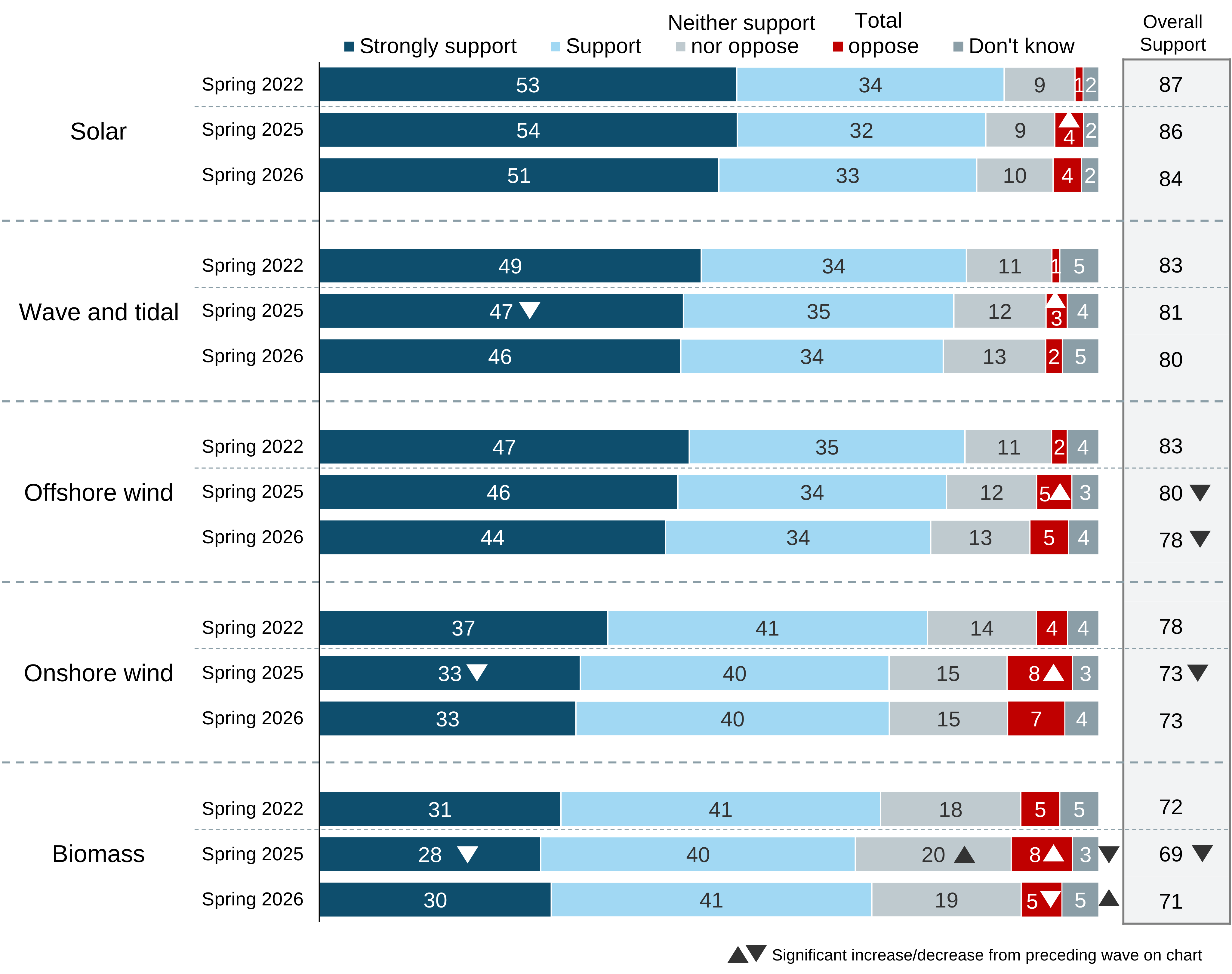
RENEW2SUPPORTA-RENEW2SUPPORTE. Generally speaking, do you support or oppose the use of the following renewable energy developments…
*Biomass fuller wording: this refers to any plant or animal-based material (for example food waste, branches, sawdust) or purposely grown crops which can be burned to produce heat and electricity.
Base: All wave respondents (Asked annually): Spring 2022 / Spring 2025 / Spring 2026: Solar (4,317/3,388/3,363), Wave and tidal (4,311/3,382/3,357), Offshore wind (4,320/3,387/3,363), Onshore wind (4,327/3,393/3,355), Biomass (4,296/3,374/3,327).
Analysis by subgroups
By age:
- Lower levels of support for all five types of renewable energy were observed among people aged 65 and over, most notably: onshore wind energy (65% compared with between 74% and 79% of people in age groups 16 to 64) and solar energy (80% compared with between 84% and 88% in age groups 16 to 64).
By geography:
- Support for solar energy was highest in the East of England, the South West and Scotland (all 88%) and in the South East and Northern Ireland (both 87%). The lowest levels were observed in the North East (77%).
- London respondents were among those least likely to express support for all types of renewable energy other than solar. However, this was impacted by the higher proportion reporting a neutral or ‘don’t know’ response, and not due to higher reported levels of opposition. For example, 68% of those in London said they supported onshore wind (as opposed to 73% of all respondents) but 28% could not give an opinion either way (as opposed to 20% of all respondents).
Attitudes towards local wind farms
As shown above, in Spring 2026 overall support for onshore wind was unchanged from Spring 2025 at 73%, remaining below the Spring 2022 baseline level of 78%.
People were also asked more specifically how happy they would be for an onshore wind farm to be constructed in their local area (Figure 2.3).
Overall views on local wind farm construction remained more positive than negative in Spring 2026, with 37% reporting that they would be happy overall (very or fairly happy) for a wind farm to be constructed in their local area, and 16% saying they would be very or fairly unhappy. There was, however, a decrease in the proportion saying they would be very happy (16%, back down from 18% in Summer 2025), and an increase in those saying they would be very or fairly unhappy overall (16%, back up from 14%).
In the longer term, there has been no change in overall support since Spring 2025, when support decreased from 43% to 37% after a period of stability between Spring 2022 and Spring 2024.
Figure 2.3: Whether would be happy for an onshore wind farm to be constructed in their local area (% based on all people), Spring 2022 to 2025, Summer 2025, Spring 2026
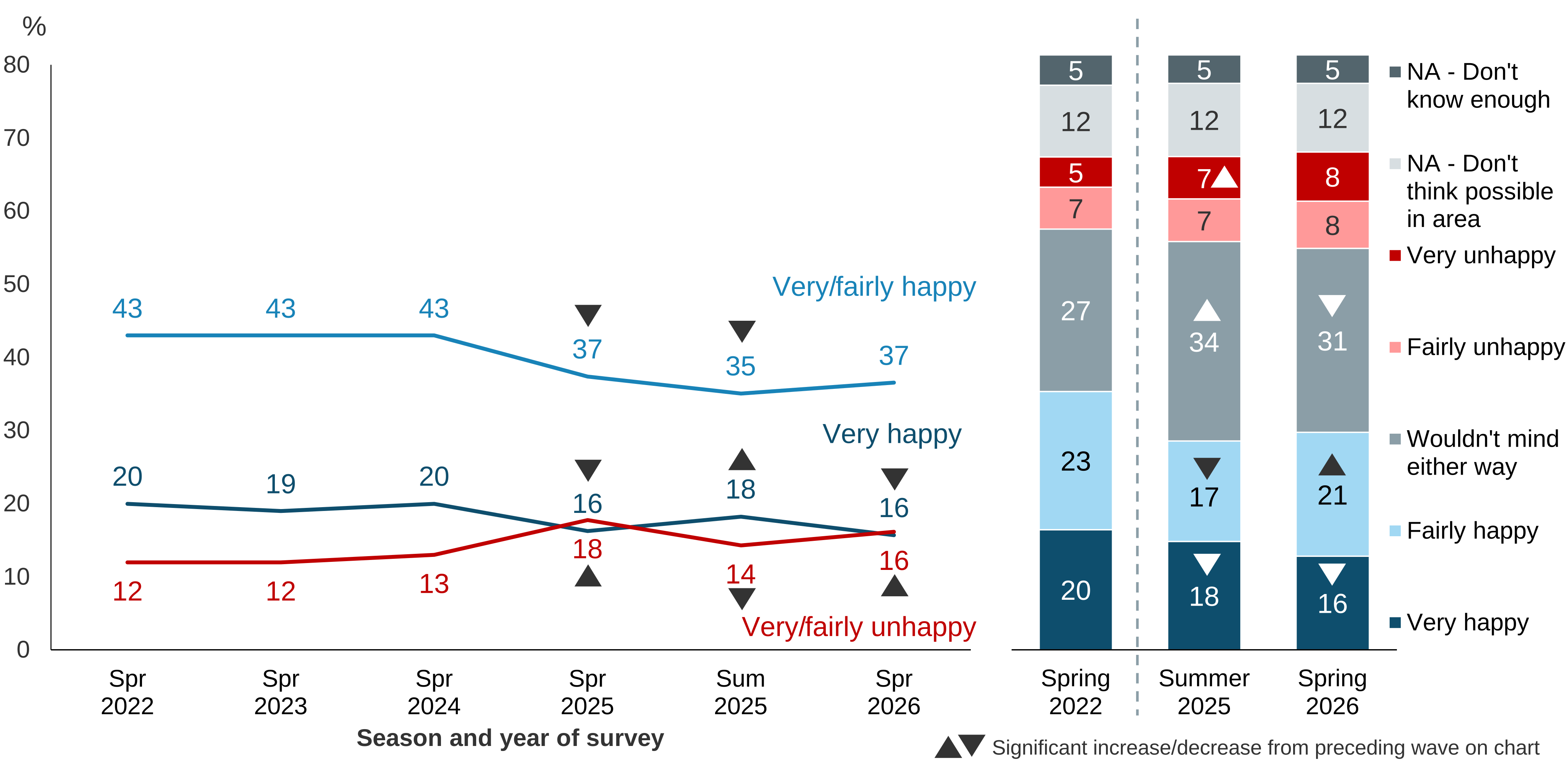
WINDFARM. Now imagine that there are plans for an onshore wind farm to be constructed in your local area. How happy or unhappy would you be about this? If you already have this in your local area, answer on the basis of how you feel about this now?
Base: All wave respondents – Spring 2022 (4,361), Spring 2023 (4,398), Spring 2024 (4,076), Spring 2025 (3,409), Summer 2025 (3,520), Spring 2026 (3,385).
Note: On the line chart vertical scale has been reduced to 0-80%, and arrows denote a significant difference between one wave and the next. For the bar chart, significant differences are noted between Spring 2022 and Summer 2025, and between Summer 2025 and Spring 2026.
Analysis by subgroups
The proportion who said they would be happy overall about a local wind farm was higher among the following subgroups:
- People in age bands 35 to 64 (between 41% and 44%) compared with those aged 16 to 24 (32%) and aged 65 and over (31%).
- People living in the South West (44%), Scotland (43%) and the South East (41%); in contrast support was lowest in the West Midlands (26%), the North East (30%) and in London (33%). However, those living in the West Midlands and London were also more likely than those in all other regions to say they do not think wind farm construction would be possible in their area (22% in London, 19% in the West Midlands vs 12% of all people), with levels of unhappiness no higher than elsewhere in these two regions.
Those in rural areas (25% vs 14% urban) were more likely to say they would be unhappy overall about a local wind farm, although overall happiness about a local wind farm is similar between urban and rural respondents (36% and 38%).
Reasons for attitudes towards construction of wind farms
Respondents who said they would be happy or unhappy overall about the construction of a wind farm in their local area were prompted to choose their reasons for this opinion from a list of options.
In Spring 2026, the main reasons for feeling happy about a wind farm in the local area were broadly in line with those given in the Spring 2022 baseline. These included providing a sustainable source of power (78%), reducing emissions (68%), and leading to lower dependence on foreign energy sources (53%, back up from 47% in Spring 2025).
Other reasons were because it would be cheaper than energy from fossil fuels (38%), it would create jobs (34%, back up from 28% in Spring 2025), and benefits to the local economy (30%, back up from 26% in Spring 2025).
The main reasons for being unhappy about the construction of a local wind farm were broadly in line with those seen in Spring 2025. The main reasons were concerns about the impact on the view (64%), local plant and animal life (59%), and house prices (43%).
Other concerns included a lack of benefit to the local community (38%, remaining up from 28% in Spring 2022), reliability of supply (38% up from 30% in Spring 2025), noise (36%)[footnote 1] and a lack of benefit to the local economy (34%, remaining up from 24% in Spring 2022).
Attitudes towards local solar farms
As shown above, overall support for solar energy in Spring 2026 was 84%. This was lower than at the Spring 2022 baseline (87%).
People were also asked about how happy they would be for a solar farm to be constructed in their local area (Figure 2.4).
Compared with support for a local wind farm (37%), support for a local solar farm was higher with 46% saying they would be very or fairly happy. Similar to the pattern for wind farms, this had increased from a lower level of 43% in Summer 2025. The proportion who said they would be very happy about a local solar farm was stable at 23%, while 15% said they would be unhappy (very or fairly) overall.
In the longer term, similar to the pattern seen for wind farms, support for a local solar farm was stable between Spring 2022 (54%) and Spring 2024 (53%), followed by a decline in Spring 2025 (47%) which has been maintained in Spring 2026 (46%). There has been a corresponding longer-term increase in overall unhappiness: 15% in Spring 2026, up from 7% in Spring 2022, but with no further increase since Spring 2025 (14%).
Figure 2.4: Whether would be happy for a solar farm to be constructed in their local area (% based on all people), Spring 2022 to 2025, Summer 2025, Spring 2026
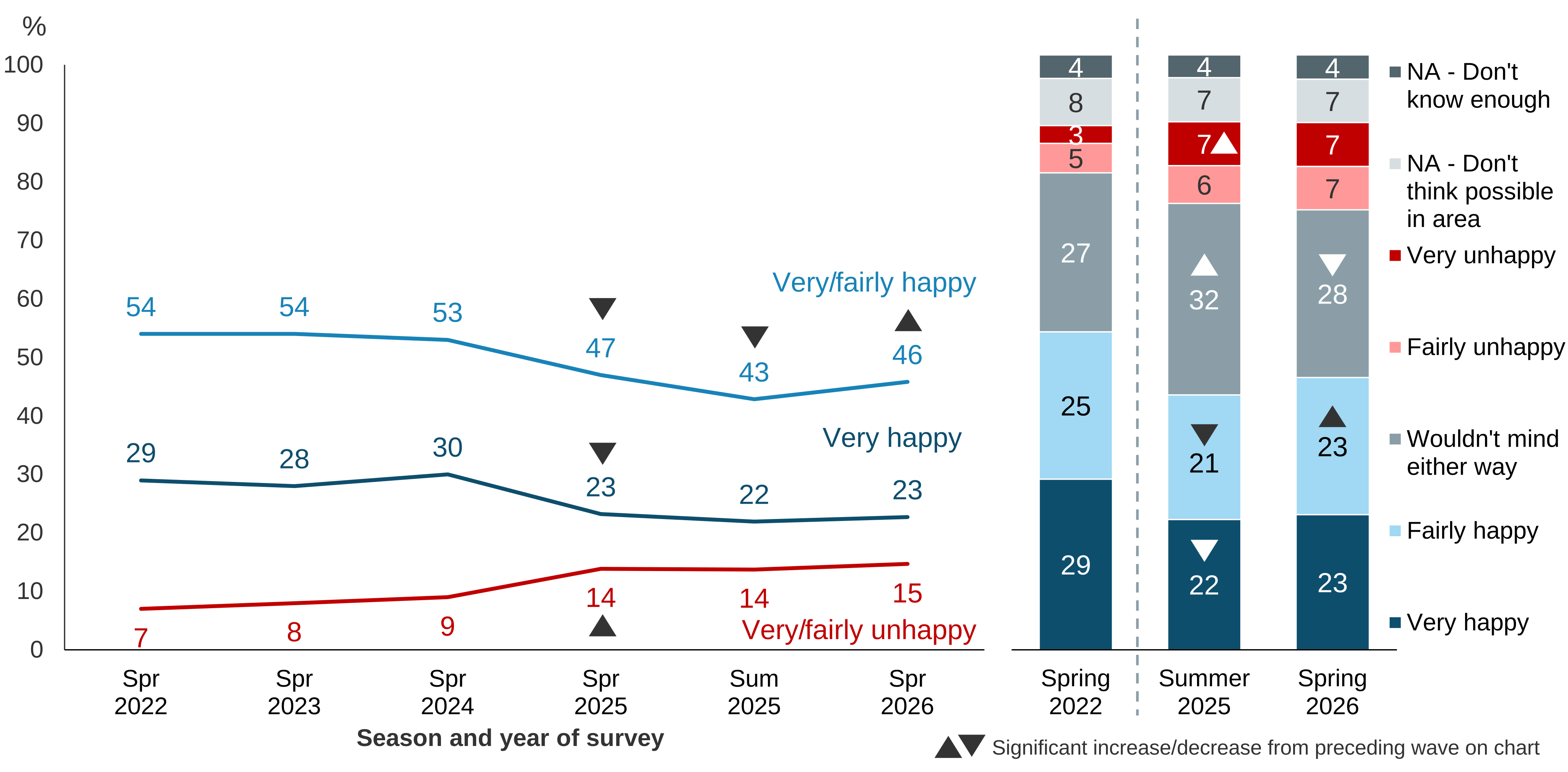
SOLARFARM. Now imagine that there are plans for a solar panel farm to be constructed in your local area. How happy or unhappy would you be about this? If you already have this in your local area, answer on the basis of how you feel about this now?
Base: All wave respondents – Spring 2022 (4,369), Spring 2023 (4,396), Spring 2024 (4,080), Spring 2025 (3,412), Summer 2025 (3,524), Spring 2026 (3,385).
Note: On the line chart, arrows denote a significant difference between one wave and the next. For the bar chart, significant differences are noted between Spring 2022 and Summer 2025, and between Summer 2025 and Spring 2026.
Analysis by subgroups
The proportion who said they would be happy about a local solar farm was higher among the following subgroups:
- Those in age groups below 65 (between 49% and 53%) compared with those aged 65 and over (35%).
- People living in the South East and Scotland (both 52%) and the South West (50%); in contrast support was lowest in the East and West Midlands (both 37%) and the North East (38%). However, as for wind farms, those living in the West Midlands and London were also more likely than those living elsewhere to say they do not think solar farm construction would be possible in their area (15% in London, 11% in the West Midlands vs 7% of all people), with levels of unhappiness no higher than elsewhere in these two regions.
Similar to findings for wind farms, those in rural areas were more likely to say they would be unhappy about a local solar farm (24% vs 13% urban), although overall happiness is similar between urban and rural respondents (47% and 42%).
Reasons for attitudes towards construction of solar farms
Respondents who said they would be happy or unhappy overall about the construction of a solar farm in their local area were prompted to choose their reasons for this opinion from a list of options.
In Spring 2026, the main reasons for supporting a solar farm in the local area were broadly in line with those seen in Spring 2022. The main reasons included providing a sustainable source of power (79%, back up from 76% in Spring 2025), reducing emissions (69%, with this remaining lower than 76% at the Spring 2022 baseline), and because it would lead to lower dependence on foreign energy sources (54%, back up from 48% in Spring 2025).
Other reasons included being cheaper than energy from fossil fuels (44%, up from 38% in Spring 2025), creating jobs (30%, up from 26% in Spring 2025), and benefitting both the local economy (29%) and the local community (29%), albeit with these last two remaining lower than in Spring 2022 (both 34%).
The main reasons for opposing the construction of a local solar farm remained centred on concerns about the loss in fertile and agricultural land (62%)[footnote 2], the impact on local plant and animal life (59%), and the impact on the view (51%, remaining lower than 61% at the Spring 2022 baseline).
Other concerns about solar farms involved a lack of benefit to the local community (41%, up from 34% in Spring 2025 and 26% in Spring 2022) and to the local economy (36%, remaining up from 24% in Spring 2022).
Among those who would be unhappy about different types of renewables in their local area, concerns about the view were less of a concern in relation to solar farms (51%) than wind farms (64%). There was also less concern about house prices (33%) and reliability of energy supply (31%) than in relation to wind farms (43% and 38%, respectively).
Attitudes towards renewable energy
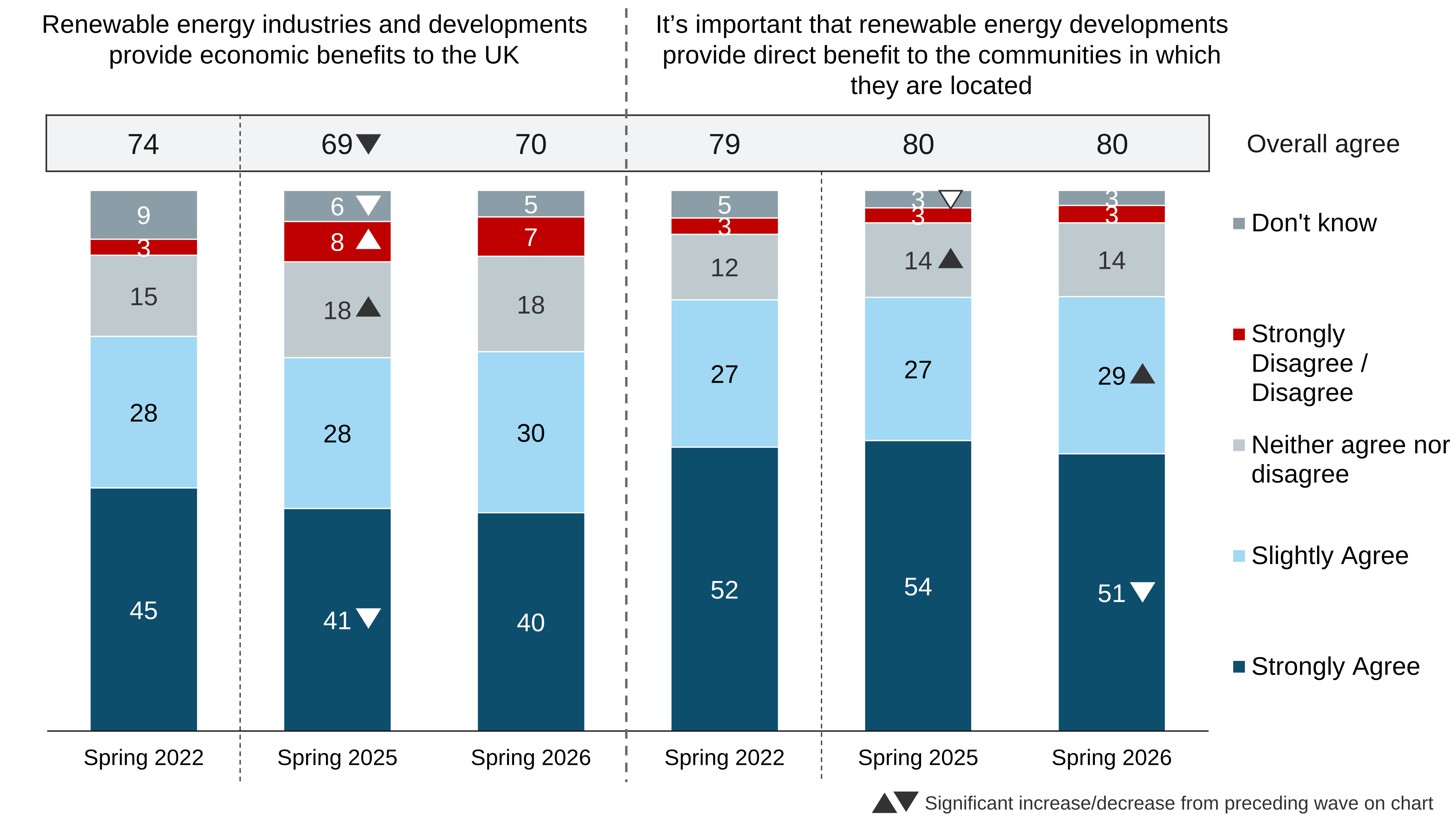
As shown in Figure 2.5, a stable 70% of people agreed overall that renewable energy industries and developments provide economic benefits to the UK, remaining lower than at the baseline in Spring 2022 (74%). There was a similar pattern for strong agreement, which decreased from 45% in Spring 2022 to 40% in Spring 2026, but was stable compared with Spring 2025 (41%).
Overall, a stable 80% agreed that it is important that renewable energy developments provide direct benefit to the communities in which they are located. However, the proportion who agreed strongly dropped to 51% from 54% in Spring 2025.
Figure 2.5: Attitudes towards renewable energy (% based on all people), baseline (Spring 2022) and two most recent waves (Spring 2025 & Spring 2026)
RENEWATT. As mentioned, renewable energy covers a number of different forms, including wind power, solar energy and biomass. How much do you agree or disagree with each of the following statements?
Base: All wave respondents – Spring 2022 / Spring 2025 / Spring 2026: Renewable energy industries and developments provide economic benefits to the UK (4,344/3,402/3,376); It’s important that renewable energy developments provide direct benefit to the communities in which they are located (4,328/3,393/3,373).
Analysis by subgroups
By age:
- People aged 65 and over were least likely to strongly agree that renewable energy provides economic benefits to the UK: 33% compared with between 41% and 46% of those in age groups from 25 to 64.
- People aged 65 and over were also least likely to strongly agree that renewable energy should provide benefits to the local community: 42% compared with between 51% and 58% of those in age groups from 25 to 64.
By geography:
- Strong agreement that renewable energy provides economic benefits to the UK was highest in London (45%), Yorkshire and the Humber, the South East, South West and Northern Ireland (all 44%) and was lowest in Wales (31%).
- Strong agreement that renewable energy should directly benefit communities was highest in Northern Ireland (62%) compared to the overall average (51%).
By knowledge of Net Zero:
- Strong agreement that renewable energy provides economic benefits to the UK was higher among those who said they knew a lot or a fair amount about Net Zero (49%) compared with those who were not aware of Net Zero (24%).
- There was a similar pattern in strong agreement that renewable energy should directly benefit communities where they are located ranging from 58% of those who knew a lot or a fair amount about Net Zero to 32% of those who were not aware of it.
Great British Energy
A question has been asked in each wave since Winter 2024 about Great British Energy (GBE), a government initiative set out in 2024. Respondents were provided with a brief description as follows: ‘The UK government has set up a publicly owned, clean energy company, called Great British Energy. Great British Energy will operate in all four nations of the UK’.
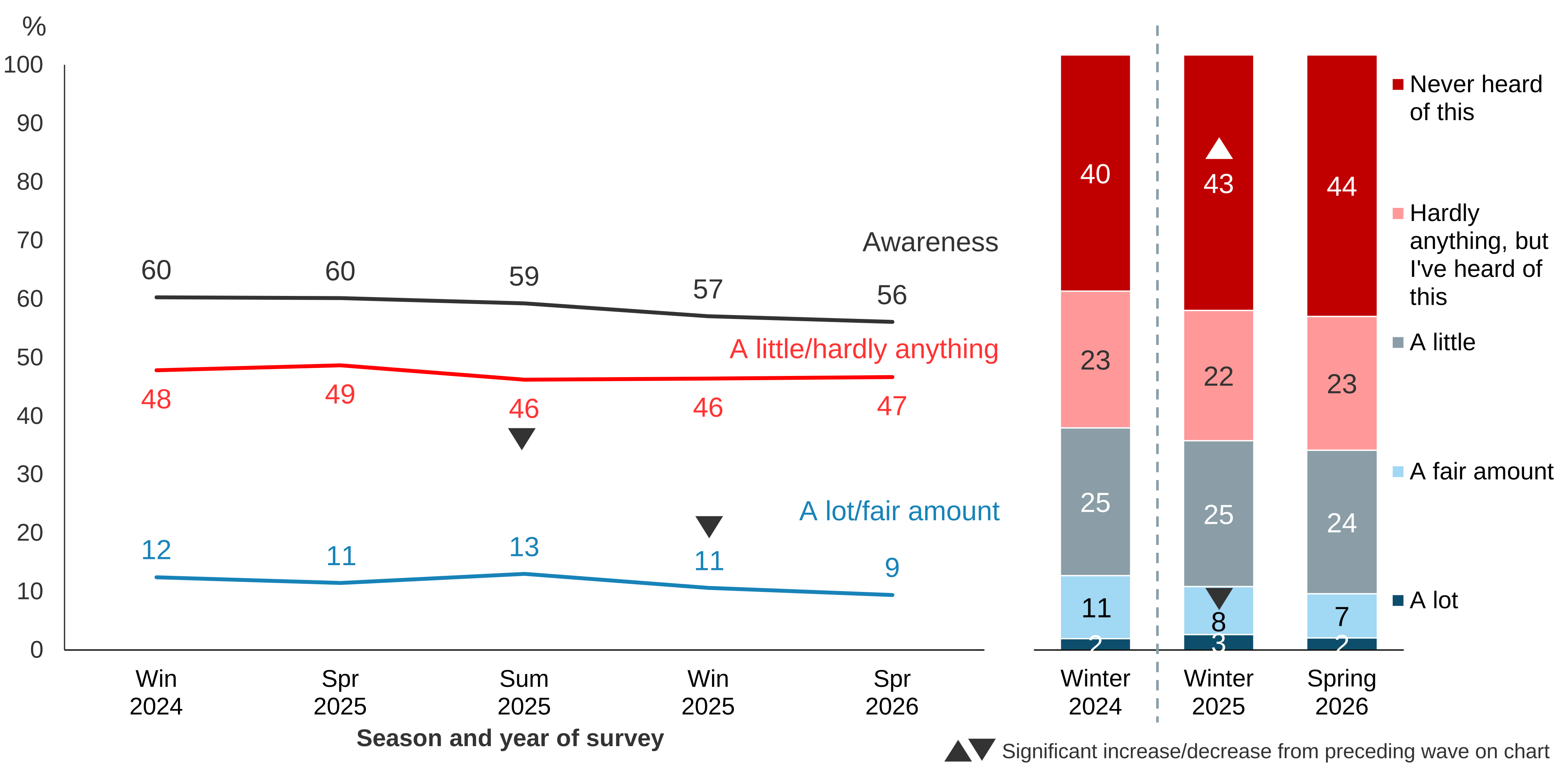
In Spring 2026, awareness remained stable from Winter 2025 at 56% (Figure 2.6). Levels of knowledge (knowing a lot or a fair amount) were also stable at 9% and there was no change in the proportion who said they knew a little or hardly anything (47%).
In the longer term, the proportion saying they know a lot or a fair amount has declined, from 12% at the Winter 2024 baseline to 9% in Spring 2026. There has been a similar steady decline in awareness, from 60% to 56%, over the same period.
Figure 2.6: Awareness of Great British Energy (% based on all people), Winter 2024 to Spring 2026
GBEKNOW. Before today, how much, if anything, did you know about Great British Energy?
Base: All wave respondents – Winter 2024 (3,212), Spring 2025 (3,409), Summer 2025 (3,530), Winter 2025 (3,281), Spring 2026 (3,387).
Note: On the line chart, arrows denote a significant difference between one wave and the next. For the bar chart, significant differences are noted between Winter 2024 and Winter 2025, and between Winter 2025 and Spring 2026.
Analysis by subgroups
Self-reported knowledge about GBE was higher among people with a degree (11%) compared with those with no qualifications (7%). There was a similar pattern for awareness.
Clean Power 2030
A question has been asked in each wave since Spring 2025 about the government’s clean power goal. Respondents were provided with a brief description as follows: ‘One of the government’s goals is to achieve Clean Power by 2030. This means generating at least 95% of electricity in Great Britain from clean sources, like wind and solar, by 2030’.
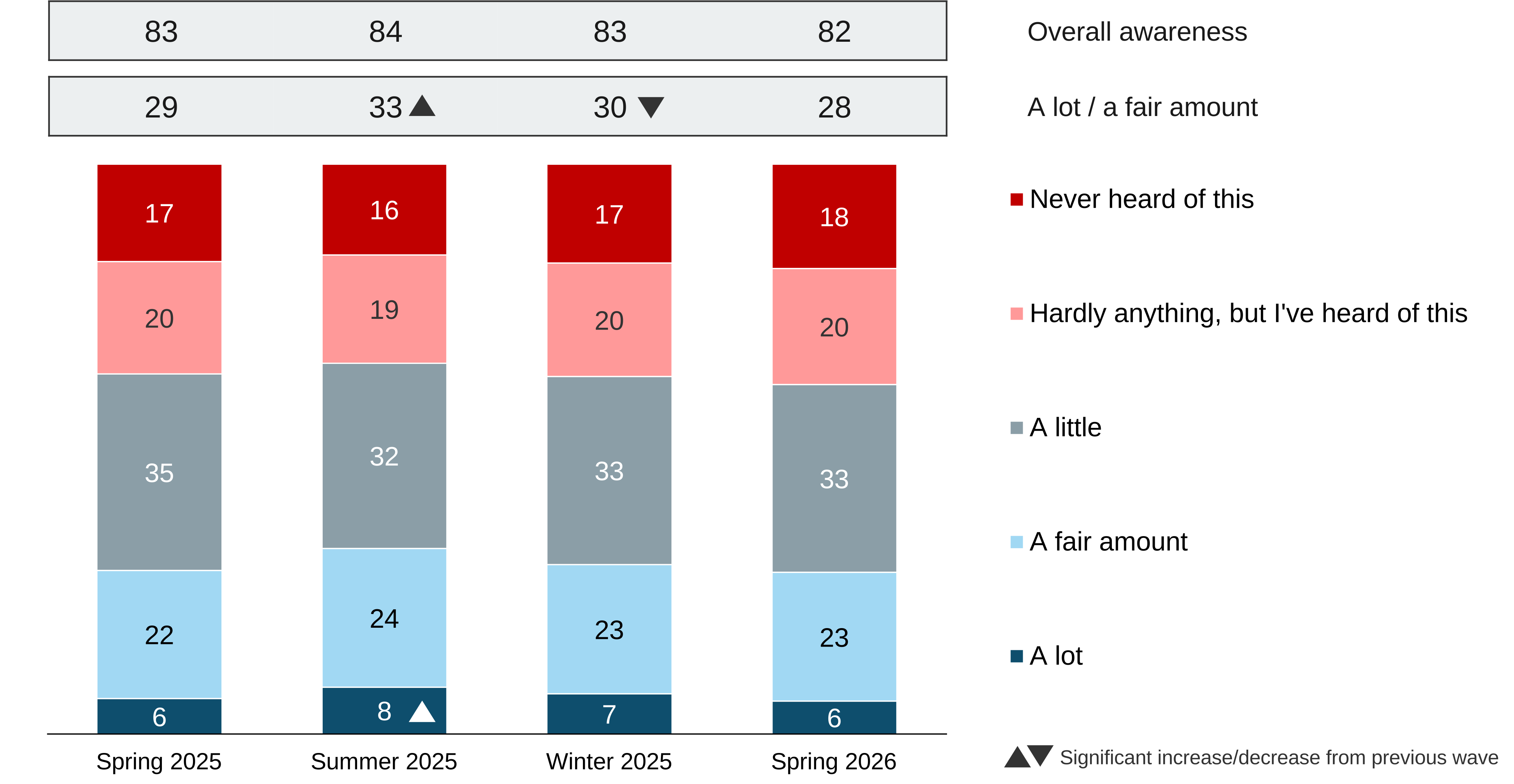
In Spring 2026, a majority (82%) were aware of Clean Power 2030, with no significant change from Spring 2025. The proportion who said they knew a lot or a fair amount about this was also stable in Spring 2026 (28%). This remains below the peak who knew a lot or a fair amount in Summer 2025 (33%) and similar to the baseline level of 29% in Spring 2025 (Figure 2.7).
Figure 2.7: Awareness of Clean Power 2030 (% based on all people), Spring 2025 to Spring 2026
CLEANPOWER2030. Before today, how much, if anything, did you know about this?
Base: All wave respondents – Spring 2025 (3,411), Summer 2025 (3,530), Winter 2025 (3,281), Spring 2026 (3,389).
Analysis by subgroups
Knowledge (a lot or a fair amount) about Clean Power 2030 was higher among the following subgroups, with similar patterns for awareness:
- Older people compared with younger people, ranging from 40% of those aged 65 and over to 19% of those aged 16 to 24.
- People with a degree (34%), compared to those with no qualifications (17%).
Further findings on Renewable energy
- Potential benefits that would make people more likely to support the construction of renewable energy infrastructure in their local area, see Summer 2025 report on Renewable Energy - section on ‘Benefits of renewable energy infrastructure’