DESNZ Public Attitudes Tracker: Heat and energy use in the home, Spring 2026, UK
Published 2 July 2026

© Crown copyright 2026
This publication is licensed under the terms of the Open Government Licence v3.0 except where otherwise stated. To view this licence, visit nationalarchives.gov.uk/doc/open-government-licence/version/3 or write to the Information Policy Team, The National Archives, Kew, London TW9 4DU, or email: psi@nationalarchives.gov.uk.
Where we have identified any third party copyright information you will need to obtain permission from the copyright holders concerned.
This publication is available at https://www.gov.uk/government/statistics/desnz-public-attitudes-tracker-spring-2026/desnz-public-attitudes-tracker-heat-and-energy-use-in-the-home-spring-2026-uk
The DESNZ Public Attitudes Tracker is a nationally representative annual survey of adults (aged 16+) in the UK that tracks public awareness, attitudes and behaviours relating to the policies of the Department for Energy Security and Net Zero (DESNZ), such as energy and climate change.
This report provides a summary of the headline findings relating to heat and energy use in the home from the Spring 2026 wave of the Tracker, which ran from 16 March to 21 April 2026.
Notes for interpretation of findings
Differences between groups are only reported where they are statistically significant at the 95% confidence interval level.
The annual personal income referred to in the report is a self-reported measure.
Line charts included in this report, based on a longer time series, use abbreviated season names in the x-axis (e.g. Spring 2026 = Spr 2026).
The age-related findings are reported using six age groups (16-24, 25-34, 35-44, 45-54, 55-64, 65 and over). In some cases, findings across age groups have been combined to describe a general trend, for example, ‘between 78% and 88% of people aged 45 and above’ refers to the range of percentages for the three age groups 45-54, 55-64 and 65+.
Please note that some of the geographical findings have fluctuated over time. These variations may, in part, be due to the base sizes in specific areas and the wide geographic area covered by regions. This also applies to other subgroup findings that have low base sizes.
Two summary self-reported measures are used in this report:
- ‘Awareness’ encompasses all respondents who said they had heard of a particular concept or technology, including those who said they know ‘hardly anything but I’ve heard of this’, ‘a little’, ‘a fair amount’ or ‘a lot’.
- ‘Knowledge’ encompasses those who said that they know ‘a fair amount’ or ‘a lot’ about a topic.
Awareness of heating changes to meet Net Zero targets
Respondents were presented with the following explanation: ‘In the lead up to 2050, the way we heat almost all of our homes and buildings will need to change in order to reach the UK government’s Net Zero target’.
Figure 4.1 displays the longer-term trends in overall awareness (had at least heard of it) and knowledge (a lot/fair amount) of the need to change the ways our homes are heated to reach Net Zero (line chart). The chart also displays the detailed awareness and knowledge data for the most recent two waves alongside the baseline (bar chart).
In Spring 2026, overall knowledge was stable at 38% (Figure 4.1). Over the longer term, awareness of the need to change the way homes and buildings are heated to reach the Net Zero target had remained broadly stable at just below nine in ten, albeit with some minor fluctuations. Consecutive declines have taken this below the baseline Autumn 2021 level of 87%.
Following an increase at the start of the tracking series between Autumn 2021 and Winter 2021, levels of knowledge have remained largely stable at around four in ten, despite some fluctuations.
Figure 4.1: Awareness of the need to change the way homes are heated to reach Net Zero targets in 2050 (% based on all people), Autumn 2021 to Spring 2026
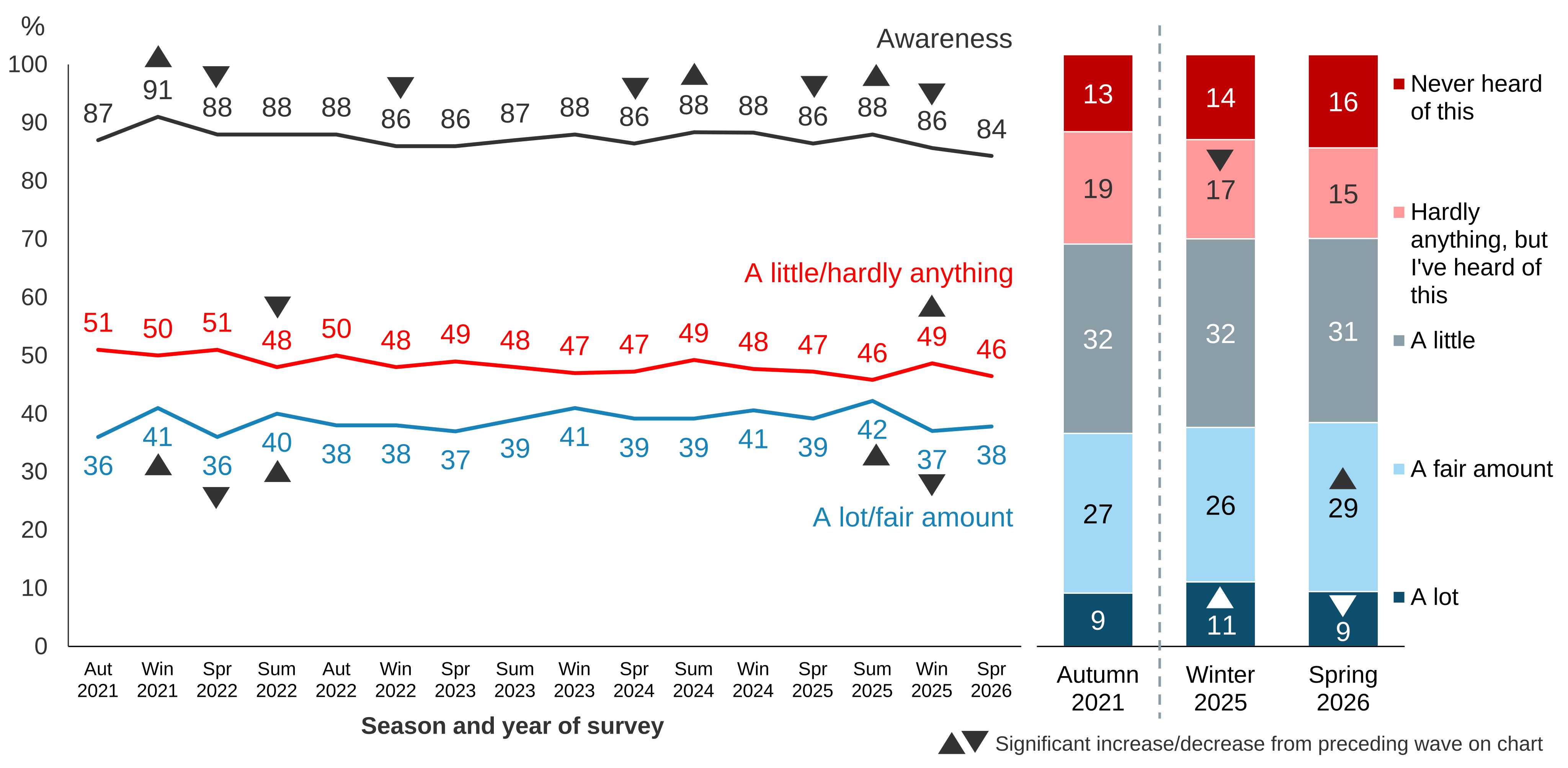
HEATHOMEKNOW. In the lead up to 2050, the way we heat almost all of our homes and buildings will need to change in order to reach the UK government’s Net Zero target. Before today, how much if anything did you know about this?
Base: All wave respondents – Autumn 2021 (5,552), Winter 2021 (3,705), Spring 2022 (4,374), Summer 2022 (4,489), Autumn 2022 (4,160), Winter 2022 (3,572), Spring 2023 (4,406), Summer 2023 (3,998), Winter 2023 (3,741), Spring 2024 (4,083), Summer 2024 (3,640), Winter 2024 (3,211), Spring 2025 (3,412), Summer 2025 (3,525), Winter 2025 (3,279), Spring 2026 (3,389) (Asked each wave).
Note: On the line chart, arrows denote a significant difference between one wave and the next. For the bar chart, significant differences are noted between Autumn 2021 and Winter 2025, and between Winter 2025 and Spring 2026.
Analysis by subgroups
Self-reported knowledge about the need to change the way homes are heated to reach Net Zero targets was higher among the following subgroups:
- People in age groups 45 and over: between 42% and 48% compared with between 26% and 31% in age groups 16 to 44.
- People living in owner-occupied homes: 45% vs 25% for those living in rented accommodation.
- People who said they knew a lot or a fair amount about Net Zero: 66% compared with 2% of those who were not aware of Net Zero.
Heat Pumps
Awareness of heat pumps, and likelihood of installing them, has been asked annually in Winter waves since Winter 2021, alongside similar questions for other types of low carbon heating. From Spring 2025, an adapted shorter version of this question was added to allow more frequent tracking of awareness and attitudes towards air source and ground source heat pumps only. Awareness of the more complete list of all seven types of low carbon heating systems continues to be tracked annually in Winter waves.
Awareness of heat pumps
A brief description of two types of heat pump was provided to respondents as follows:
- Air source heat pumps - these extract heat from the outside air to heat your home and water.
- Ground source heat pumps - these extract heat from pipes buried in the ground to heat your home and water.
Figure 4.2 shows awareness of air source heat pumps and Figure 4.3 shows awareness of ground source heat pumps.
Awareness of air source heat pumps in Spring 2026 (78%) was in line with awareness in Winter 2025. However, knowledge (knowing a lot or a fair amount) increased to 28% in Spring 2026 from 24% in Winter 2025. Awareness of ground source heat pumps in Spring 2026 (73%) was also stable compared with Winter 2025. There was a similar increase in knowledge of ground source heat pumps, to 24% in Spring 2026 from 20% in Winter 2025.
Over the longer term, awareness and knowledge of both air source and ground source heat pumps had increased between Winter 2021 and Spring 2025. This increasing trend reversed in Summer 2025, with declines for both awareness and knowledge. Nevertheless, Spring 2026 levels of awareness and knowledge for both types of heat pump remain higher than in the Winter 2021 baseline.
For air source heat pumps these declines have now been reversed, returning to the Spring 2025 peak levels. For ground source heat pumps, there has been a similar reversal for knowledge, but with only partial recovery for awareness.
Figure 4.2: Knowledge about air source heat pumps (% based on all people), Winter 2021 to 2024, Spring 2025 to Spring 2026
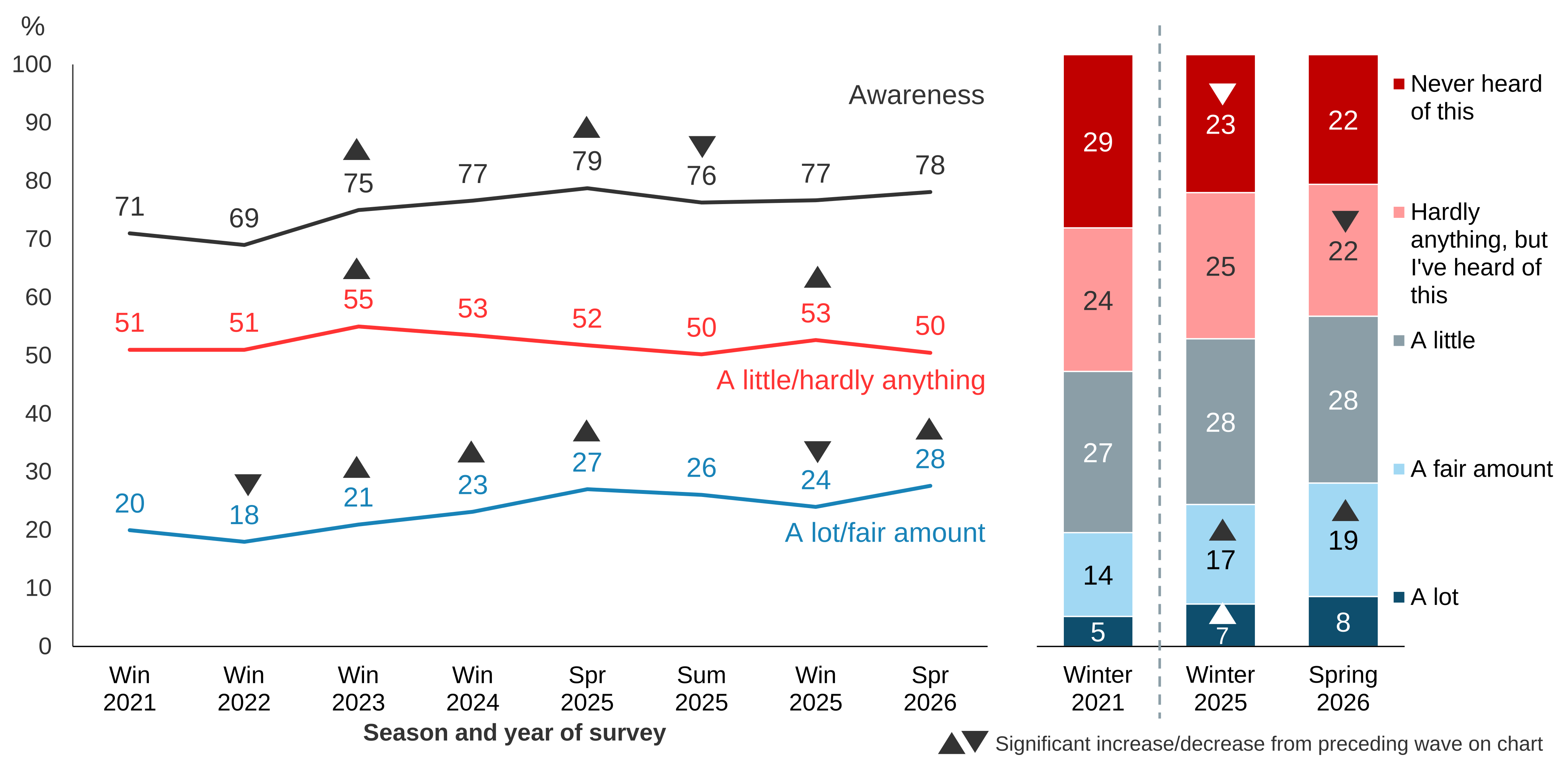
LCHEATKNOW1. How much would you say you know about the following low carbon heating systems: air source heat pumps?
Base: All wave respondents – Winter 2021 (3,696), Winter 2022 (3,552), Winter 2023 (3,736), Winter 2024 (3,209), Spring 2025 (3,410), Summer 2025 (3,524), Winter 2025 (3,278), Spring 2026 (3,386).
Figure 4.3: Knowledge about ground source heat pumps (% based on all people), Winter 2021 to 2024, Spring 2025 to Spring 2026
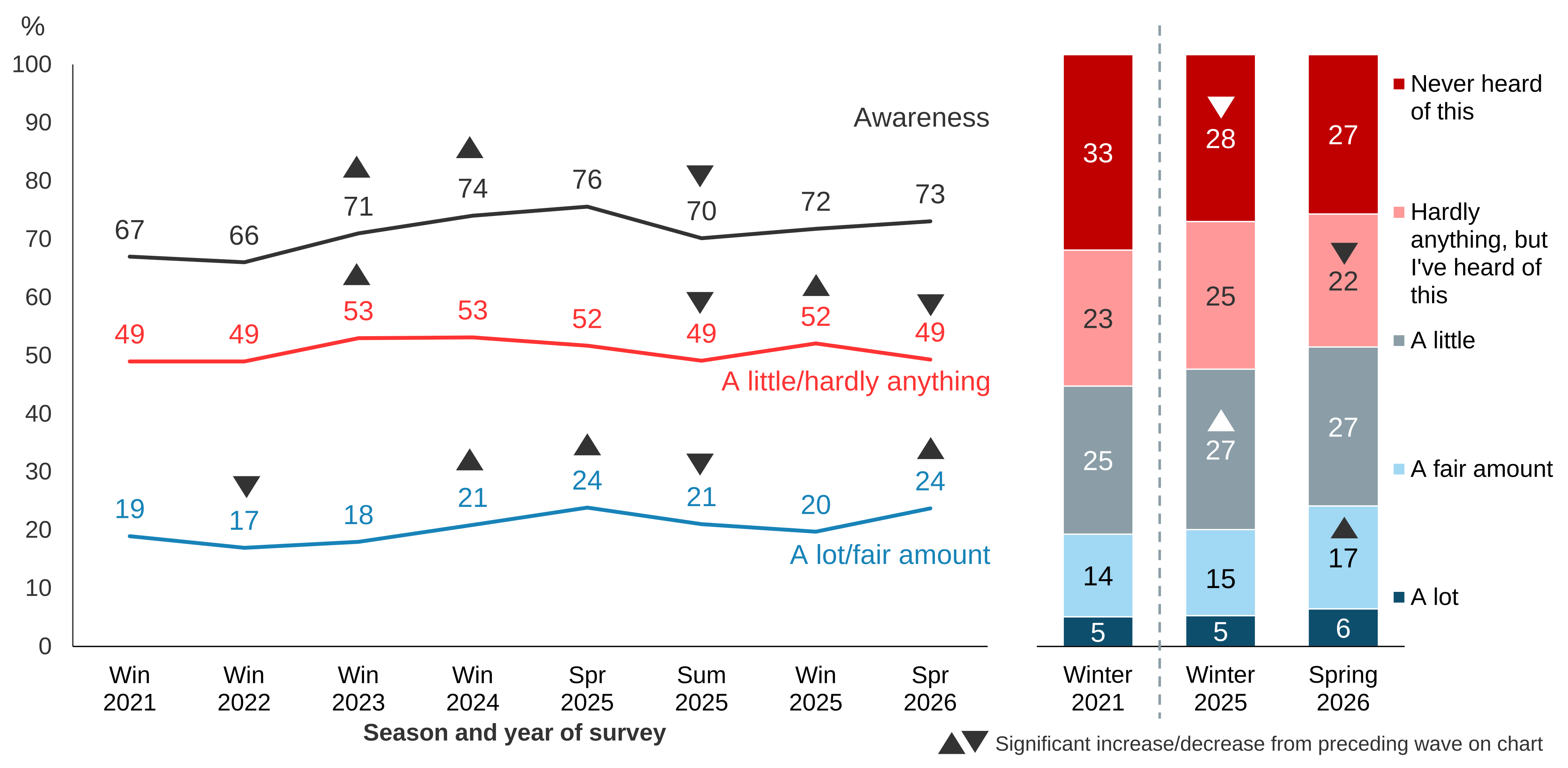
LCHEATKNOW2. How much would you say you know about the following low carbon heating systems: ground source heat pumps?
Base: All wave respondents – Winter 2021 (3,693), Winter 2022 (3,560), Winter 2023 (3,729), Winter 2024 (3,211), Spring 2025 (3,406), Summer 2025 (3,516), Winter 2025 (3,276), Spring 2026 (3,380).
Note: On the line charts (Figures 4.2 and 4.3), arrows denote a significant difference between one wave and the next. For the bar charts, significant differences are noted between Winter 2021 and Winter 2025, and between Winter 2025 and Spring 2026.
Analysis by subgroups
For these two types of heat pump, knowledge was higher among the following subgroups, with similar patterns observed for awareness.
By age:
- People in age groups 45 and over compared with those in age groups 16 to 45, for both air source (between 30% and 38% vs between 18% and 22%) and ground source heat pumps (between 27% and 29% vs between 17% and 19%).
By tenure:
- People living in owner-occupied households compared with those in rented households for both air source (33% vs 17%) and ground source heat pumps (28% vs 15%).
By self-reported knowledge of Net Zero:
- Those who reported knowing a lot or a fair amount about Net Zero compared with those unaware of Net Zero, for both air source (43% vs 9%) and ground source heat pumps (39% vs 4%).
Likelihood of installing heat pumps
To gauge the propensity to adopt heat pumps, respondents were asked if they would consider installing an air source heat pump or a ground source heat pump[footnote 1].
Two in ten of all respondents (19% for both air source heat pumps and ground source heat pumps) said that a decision around installing a new heating system was not theirs to make. This was mainly explained by people renting: for each type of heat pump over four in ten renters said that this was not their decision to make (42% for both air source and ground source) compared with under one in ten people in owner-occupier households (7% for both air source and ground source). Given the high rate of renters who said these questions were not applicable to them, the findings for these questions have been based only on people living in owner occupied households.
Figures 4.4 and 4.5 respectively display the likelihood of installing air source heat pumps and ground source heat pumps, rebased on all owner-occupiers. Only a very small proportion of owner-occupiers in Spring 2026 said that they had already installed one (2% for air source heat pumps and less than 1% for ground source heat pumps).
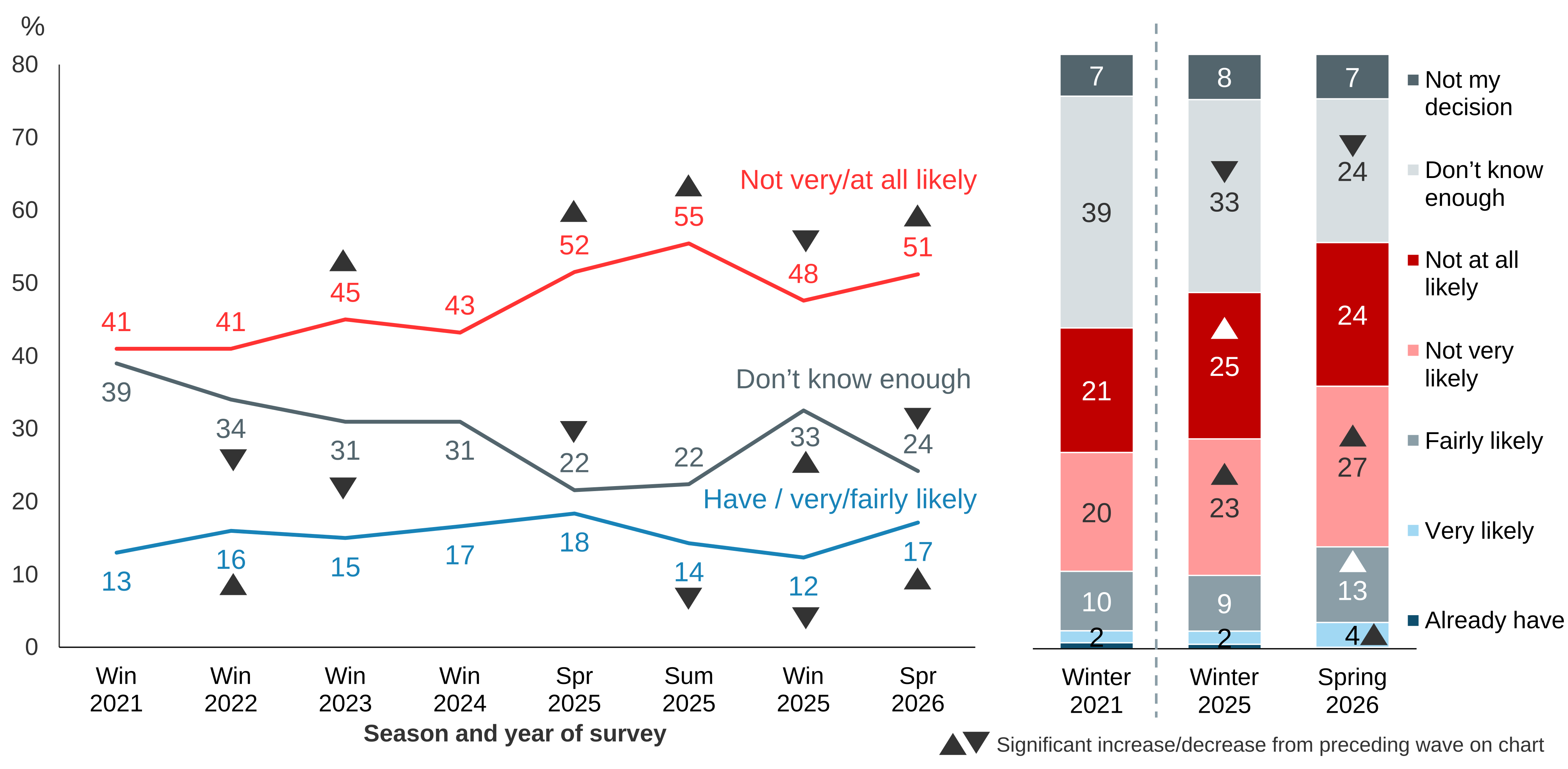
In Spring 2026, the likelihood of installing was highest for air source heat pumps, with 26% saying they were very or fairly likely to install one, or that they already have one, up from 22% in Winter 2025. While fewer people said they were likely to install a ground source heat pump or already had one, this had also increased to 17% in Spring 2026, up from 12% in Winter 2025.
Over the longer term, the likelihood of installing or already having a heat pump has increased for both types of heat pump between Winter 2021 and Spring 2026 (from 19% to 26% for air source heat pumps and from 13% to 17% for ground source heat pumps), however there have been some fluctuations in recent waves.
In Spring 2026, there was an increase since Winter 2025 in reluctance to install both air source heat pumps (46%, back up from 41%) and ground source heat pumps (51% back up from 48%). This signified a return to Spring 2025 levels for both types of heat pump. Both remain above Winter 2021 baseline levels, but below the Summer 2025 peak.
The proportion of people unable to decide whether to install a heat pump, because they did not know enough, has fallen from Winter 2021 to Spring 2026 for both air source (39% to 21%) and ground source heat pumps (39% to 24%).
Figure 4.4: Whether likely to install air source heat pumps next time they need to change (% based on people living in owner-occupied accommodation), Winter 2021 to 2024, Spring 2025 to Spring 2026
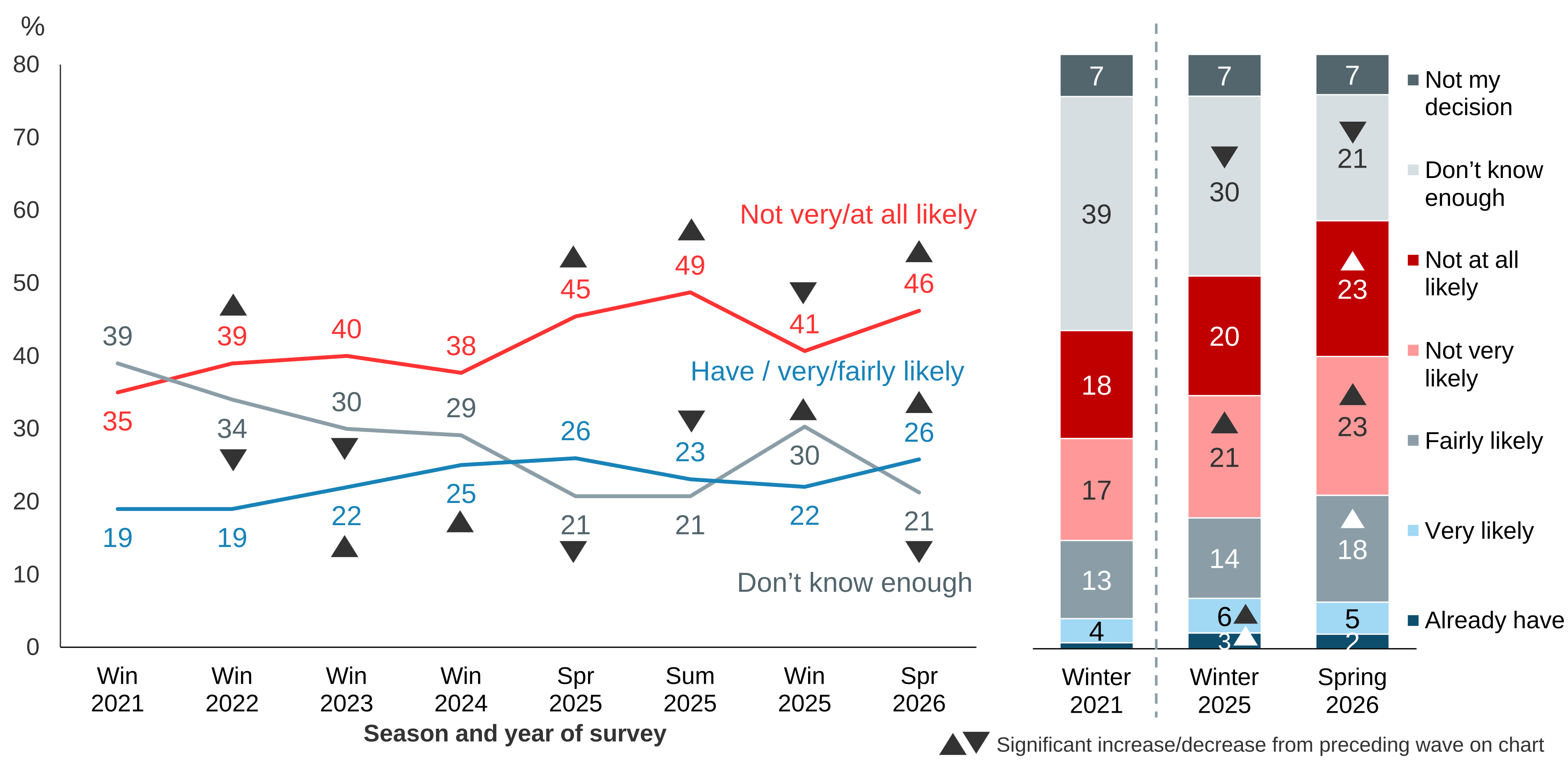
LCHEATINSTALL1. How likely is it that you would install each of the following heating systems in your home when you next need to change your heating system or boiler: air source heat pumps?
Base: All wave respondents living in owner-occupier households – Winter 2021 (2,738), Winter 2022 (2,566), Winter 2023 (2,681), Winter 2024 (2,476), Spring 2025 (2,622), Summer 2025 (2,788), Winter 2025 (2,480), Spring 2026 (2,614).
Figure 4.5: Whether likely to install ground source heat pumps next time they need to change (% based on people living in owner-occupied accommodation), Winter 2021 to 2024, Spring 2025 to Spring 2026
LCHEATINSTALL2. How likely is it that you would install each of the following heating systems in your home when you next need to change your heating system or boiler: ground source heat pumps?
Base: All wave respondents living in owner-occupier households – Winter 2021 (2,728), Winter 2022 (2,561), Winter 2023 (2,634), Winter 2024 (2,448), Spring 2025 (2,614), Summer 2025 (2,780), Winter 2025 (2,455), Spring 2026 (2,600).
Note: On the line charts (in Figures 4.4 and 4.5), vertical scale has been reduced to 0-80%, and arrows denote a significant difference between one wave and the next. For the bar charts, significant differences are noted between Winter 2021 and Winter 2025, and between Winter 2025 and Spring 2026.
Analysis by subgroups
The following subgroup trends on likelihood of installing heat pumps are also based on owner-occupiers only. The age-related findings are based on ages 25 and above due to a low base (less than n=100) of owner-occupiers in the 16-24 age group.
By age:
- People aged 25 to 34 were more likely than other age groups to say that they lacked sufficient knowledge about heat pumps to provide an answer (33% for air source and 38% for ground source heat pumps).
- Older people in age groups 55 and above were less likely than younger people to consider installing both types of heat pump:
- Between 10% and 14% of those in age groups 55 and over would consider installing ground source heat pumps compared with between 22% and 26% of those in age groups 25 to 54.
- Similarly, between 15% and 24% of those in age groups 55 and over said they would be likely to install an air source heat pump compared with between 31% and 32% of those in age groups 35 to 54.
By annual personal income:
- People with a higher personal income were more likely to consider installing either type of heat pump. For example: between 28% and 31% of those in income bands of £30,000 or over would consider an air source heat pump compared with between 17% and 20% of those in income bands below £30,000.
- It is worth noting, however, that people in income bands below £30,000 were also more likely to say they did not know enough to decide compared with those with an annual income of £45,000 or more. For example, for air source heat pumps between 23% and 24% for lower income groups vs 17% for those with income of £45,000 or more. The above findings mean there was no difference in the proportion unlikely to install either type of heat pump by income.
Attitudes towards solar panels in the home
Respondents were asked whether they were likely to install solar panels in their home in the next few years. A relatively large proportion of people who rented their home (33%) said that this question was not applicable to them as it was not their decision to make. The results are, therefore, based only on people living in owner occupied homes.
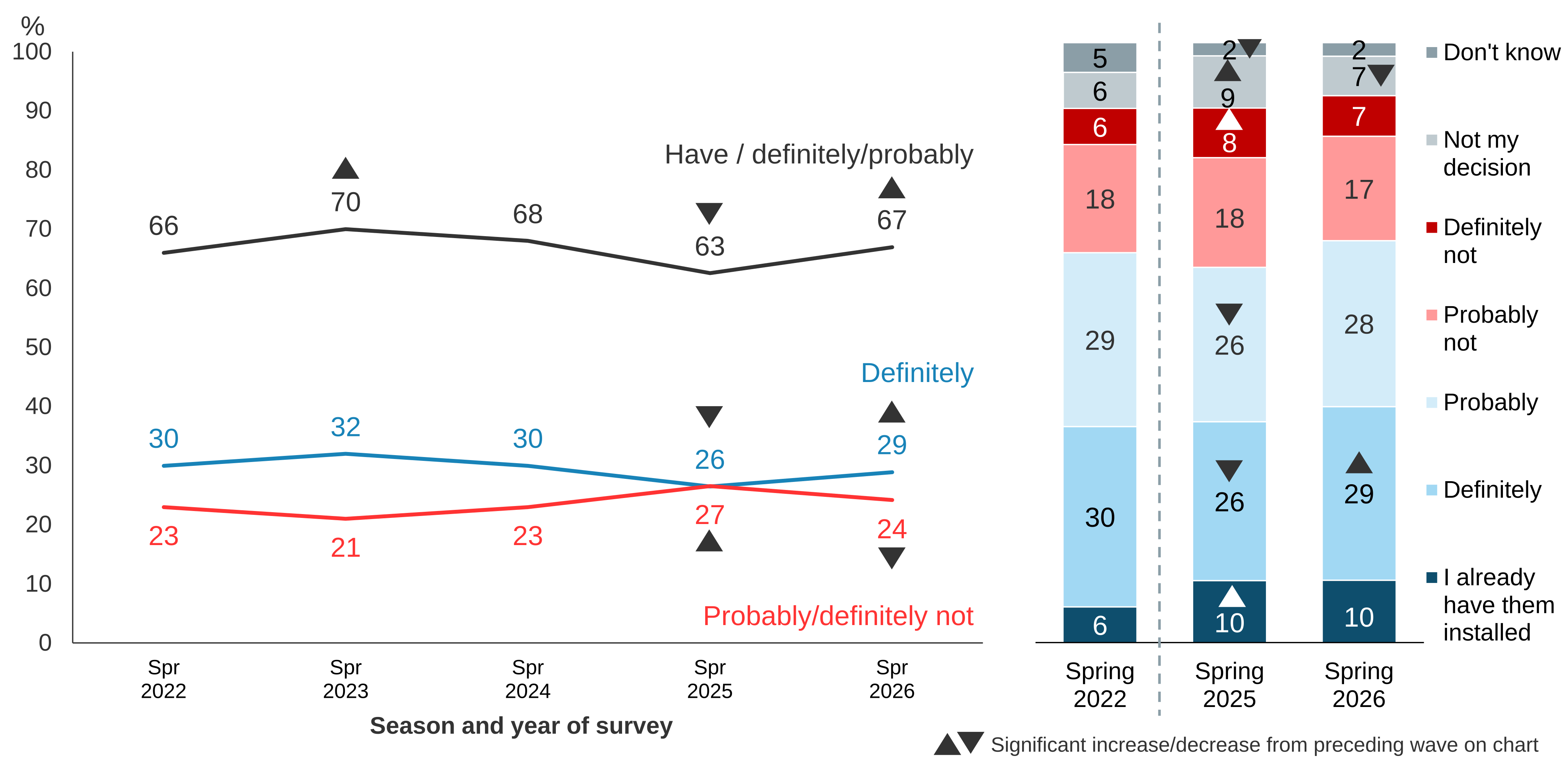
In Spring 2026, 67% said they either already had solar panels (10%) or were probably or definitely likely to install them (57%). This proportion (67%) has increased from 63% in Spring 2025. The proportion definitely likely to install panels also increased from 26% in Spring 2025 to 29% in Spring 2026. Correspondingly, the proportion unlikely to install panels dropped back from 27% in Spring 2025 to 24% in Spring 2026 (Figure 4.6).
In the longer term, levels have fluctuated but there has been no sustained change from the Spring 2022 baseline in terms of likelihood of installing solar panels (66% in Spring 2022 vs 67% in Spring 2026).
Figure 4.6: Likelihood to consider installing solar panels in the home to generate electricity (% based on people living in owner occupied accommodation) Spring 2022 to 2026
SOLARHOME. Would you consider having solar panels installed in your current home to generate electricity, in the next few years?
Base: All wave respondents living in owner-occupier households - Spring 2022 (3,285), Spring 2023 (3,239), Spring 2024 (3,175), Spring 2025 (2,631), Spring 2026 (2,618).
Note: On the line chart, arrows denote a significant difference between one wave and the next. For the bar charts, significant differences are noted between Spring 2022 and Spring 2025, and between Spring 2025 and Spring 2026.
Analysis by subgroups
The following trends are based on owner-occupiers only. The age-related findings are based on ages 25 and above due to a low base (less than n=100) of owner-occupiers in the 16-24 age group.
- People in age groups 25 to 44 (between 73% and 74%) were more likely than people aged 65 or over (38%) to consider installation of solar panels.
- Those with an annual personal income of £30,000 and above (between 59% and 66%) were more likely than those who earn less than £29,999 (between 51% and 59%) to consider installation of solar panels.
Reasons for being likely and unlikely to install solar panels
Owner-occupiers who did not already have solar panels and who said they would probably or definitely install them in the next few years (57%) were asked why they would consider this. Respondents were asked to select from a list of possible reasons.
Reasons given in Spring 2026 remained in line with those given in Spring 2025. The most frequent reasons for being likely to install solar panels were to cut electricity bills (83%), provide a renewable source of electricity (72%, remaining down from 81% at the Spring 2022 baseline), reduce dependence on the national grid (51%, remaining down from 56% in Spring 2022) and to sell excess electricity back to the grid (38%).
Owner-occupiers who said they would probably or definitely not install solar panels in the next few years (24%) were asked to select their reasons from a list.
In Spring 2026, the two factors most likely to discourage installation were being too expensive to install (55%, down from 63% in Spring 2025 and Spring 2022) and the payback period being too long[footnote 2] (53%).
Secondary reasons were unchanged, with people thinking they would look unsightly (24%), would not be suitable for their home (23%, remaining above 16% in Spring 2022), and the UK would not be sunny enough (18%).
What might encourage people to install solar panels
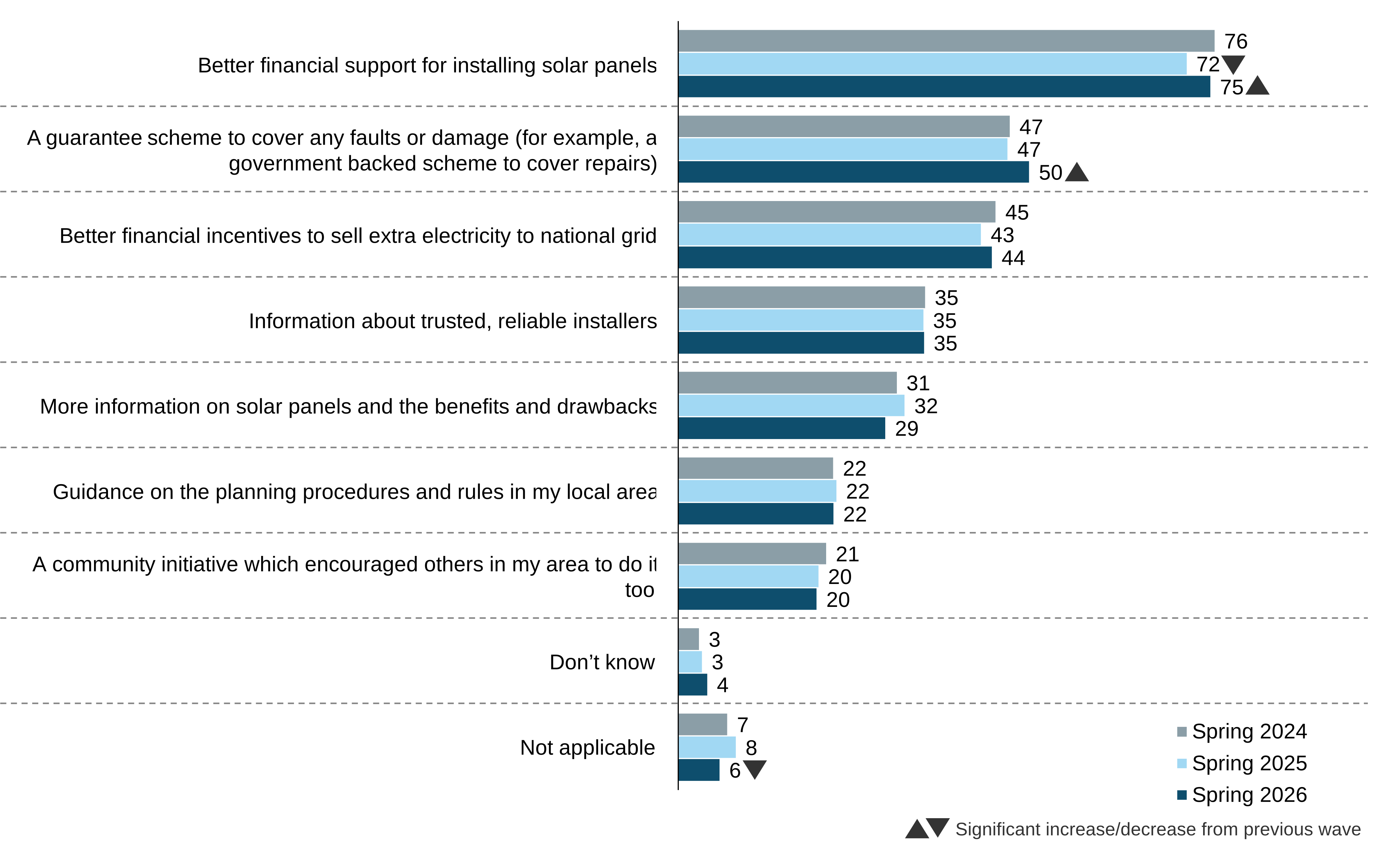
People living in owner occupied homes who did not already have solar panels[footnote 3] were asked which of a list of possible factors might encourage them to install solar panels (Figure 4.7). While this question has been asked annually since 2022, changes to the question over time mean that Spring 2026 data is only fully comparable with data collected from Spring 2024 onwards.
In Spring 2026, the factors most likely to encourage installation were in line with those seen in Spring 2025. The main factor was better financial support for installation (75%, back up from 72% in Spring 2025). Other factors included a guarantee scheme for faults or damage (50% up from 47%), and better financial incentives to sell electricity back to the grid (44%).
More information was also thought to be helpful: 35% would be encouraged to install solar panels if they had more information about trusted, reliable installers, and 29% by more information about the benefits and drawbacks of solar panels.
Figure 4.7: What would encourage people to install solar panels (% based on owner-occupiers responsible for decision who have not yet installed panels) Spring 2024 to 2026
SOLARENC. Which, if any, of the following might make you personally* more likely to consider installing solar panels? Please select all that apply. (* word ‘personally’ added to question in 2024, and two new answer codes included in list).
Base: All wave respondents living in owner-occupier households who have not already installed them excluding those who said it was not their decision to make – Spring 2024 (2,670), Spring 2025 (2,190), Spring 2026 (2,152).[footnote 4]
Analysis by subgroups
The following subgroup findings are based on owner-occupiers who did not already have solar panels and who said they would probably or definitely install them in the next few years. The findings for the age group 16 to 24 have been omitted due to a low base (less than n=100) of owner-occupiers in this age group.
By age:
- People in age groups 25 to 54 were more likely to be influenced by financial support or financial incentives. For example, between 87% and 80% of people in age groups 25 to 54 cited this as an encouragement factor for installation compared with 59% of people aged 65 and above.
By geography:
- People in Northern Ireland and the North West were more likely to be encouraged by better financial support for installing solar panels (83% and 82% vs 71% in the West Midlands, South East and South West). People in London were more likely to be encouraged by guidance on the planning procedures and rules (34% vs 14% in the East Midlands).
Further findings on heat and energy in the home
In previous waves, questions were included on other topics relating to heat and energy in the home. The latest findings relating to these topics can be found as follows:
- Awareness of, and likelihood of installing a range of different types of low carbon heating systems, and attitudes towards such systems, see Winter 2025 report on heat and energy use in the home – section on ‘Low carbon heating systems’
- The methods used to heat and cool homes, see Winter 2025 report on heat and energy use in the home – section on ‘Heating and cooling in the home’
- Results from questions prior to Winter 2025 about the main systems used to heat and cool homes, see Winter 2024 report on heat and energy use in the home – section on ‘Heating and cooling in the home’
- Likelihood of replacing heating systems and who people would trust to provide advice about which heating system to install, see Winter 2025 report on heat and energy use in the home – section on ‘Likelihood to replace heating systems’
- Awareness of Energy Performance Certificates and EPC recommendations, and changes made as a result, see Winter 2025 report on heat and energy use in the home – section on ‘Energy Performance Certificates (EPCs)’
- Awareness of the minimum energy standards for rental properties, see Winter 2025 report on heat and energy use in the home – section on ‘Awareness of rental property standards’
- Types of insulation in the home, see Winter 2022 report on heat and energy in the home - section on ‘Insulation in the home’
-
Results throughout this section are weighted by individuals. In practice, the differences between weighting these results by individual or by household are minor and do not change the narrative of the results. ↩
-
This response code was added in Spring 2026 based on 9% giving this as a write-in ‘other’ response in Spring 2025. ↩
-
Excluding people living in owner occupied homes who said this was not their decision to make. ↩
-
While this question was also asked in Spring 2022 and Spring 2023 changes in the answer list reduced comparability, so data is only shown from Spring 2024 onwards. ↩