Deferred payment agreements, England, 2024 to 2025
Published 29 January 2026
Applies to England

© Crown copyright 2026
This publication is licensed under the terms of the Open Government Licence v3.0 except where otherwise stated. To view this licence, visit nationalarchives.gov.uk/doc/open-government-licence/version/3 or write to the Information Policy Team, The National Archives, Kew, London TW9 4DU, or email: psi@nationalarchives.gov.uk.
Where we have identified any third party copyright information you will need to obtain permission from the copyright holders concerned.
This publication is available at https://www.gov.uk/government/statistics/deferred-payment-agreements-england-2024-to-2025/deferred-payment-agreements-england-2024-to-2025
Introduction
This report presents an overview of the number and associated monetary value of adult social care deferred payment agreements (DPAs) in England for the period 1 April 2024 to 31 March 2025.
The report uses data from the DPA return, a mandatory data collection for councils with adult social services responsibilities (CASSRs) in England. These councils will be referred to as local authorities throughout this report. The overall England-level statistics for 2024 to 2025 have been estimated due to 3 local authorities not being able to submit data.
By entering into a DPA with a local authority, an individual can delay paying the costs of their care and support in a care home or supported living accommodation until a later date. See the NHS page on self-funding care for more information on the DPA scheme.
The DPA report was previously published by NHS England.
Main points
During 2024 to 2025:
- 3,025 new DPAs were agreed with a total value of £87.8 million
- £132.6 million was collected from 2,950 DPAs which ended and were fully recovered
- 65 DPAs ended and were partly or wholly written off; the total value written off for these DPAs was £3.1 million
- loan style DPAs accounted for 18% of new DPAs, with the remainder being traditional style
As of 31 March 2025, there were 7,425 outstanding DPAs, with a total value of £389.2 million.
All data can be found on the accompanying data tables on the Deferred payment agreements, England: 2024 to 2025 page.
1. New DPAs
During 2024 to 2025 there were 3,025 new DPAs agreed, of which 545 were loan style.
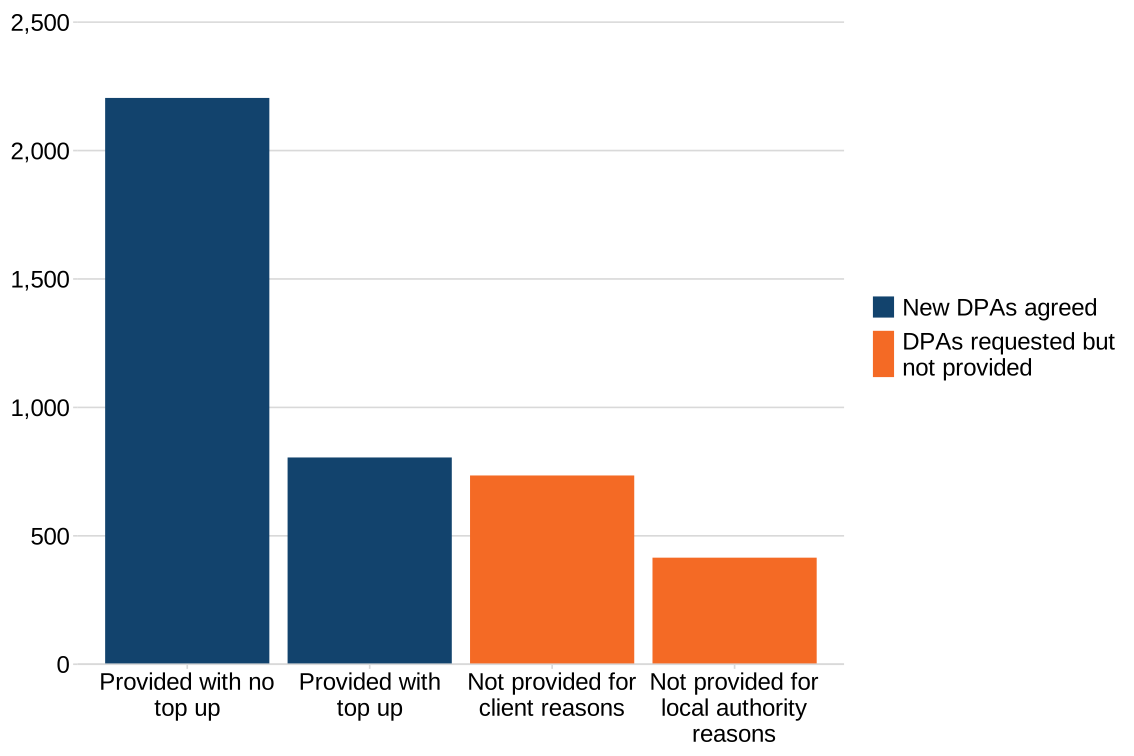
Figure 1: number of requests for DPAs during 2024 to 2025 in England
Source: DPA data collection, 2024 to 2025
Figure 1 shows a breakdown of requests for DPAs during 2024 to 2025. Top up information was reported for 3,010 new DPAs within the reporting year, of which 73% (2,205) were provided with no top up. A DPA was not provided for 1,150 requests, of which 64% (735) were due to client reasons; the remainder were not provided due to local authority reasons. There is a significantly higher number of DPAs agreed during the year than requests for a DPA where the DPA was not provided.
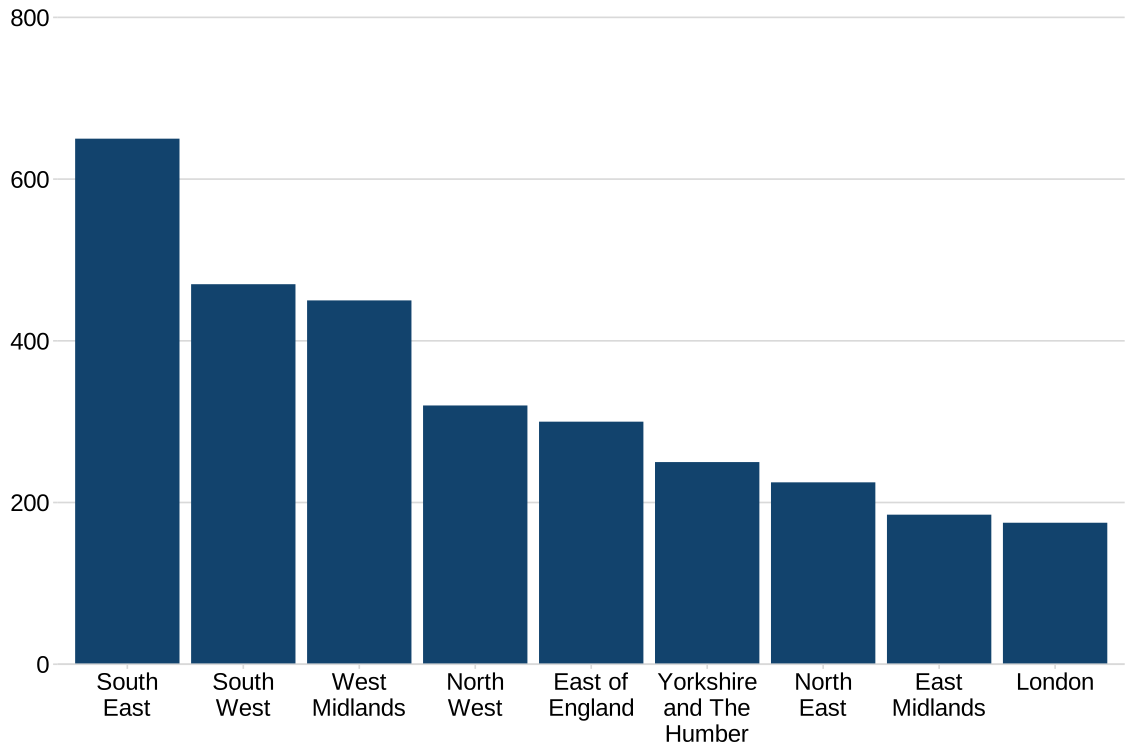
Figure 2: number of new DPAs agreed during 2024 to 2025 in England, by region
Source: DPA data collection, 2024 to 2025
Figure 2 shows the regional distribution of new DPAs agreed during 2024 to 2025. The South East agreed 650 new DPAs, which was the highest figure reported regionally, accounting for 22% of the national total. London agreed 175 (6%) new DPAs during the year, which was the lowest number reported regionally.
Reason for request
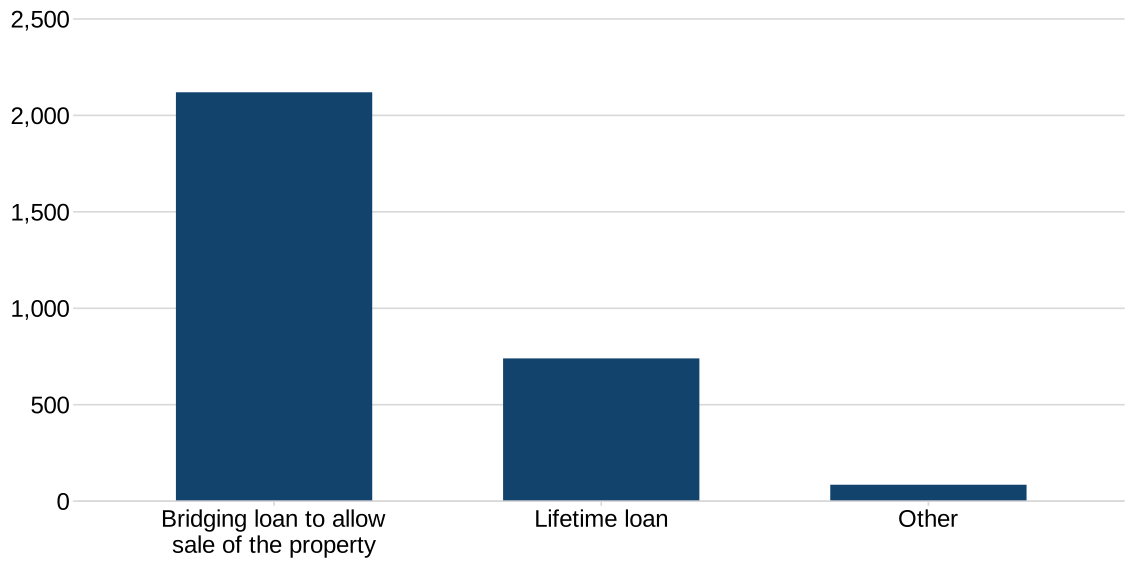
Figure 3: number of new DPAs during 2024 to 2025 in England, by reason of request
Source: DPA data collection, 2024 to 2025
Figure 3 shows the reason of request for new DPAs during 2024 to 2025. Reasons for the request (where the request resulted in a DPA being provided) were reported against 2,940 of the new DPAs. Of these, 72% (2,120) of these were bridging loans to allow for the sale of the client’s property, while 25% (740) were provided as a lifetime loan and 3% (85) were provided for other reasons.
Value of new DPAs
The total value of the new DPAs agreed during 2024 to 2025 was £87.8 million.
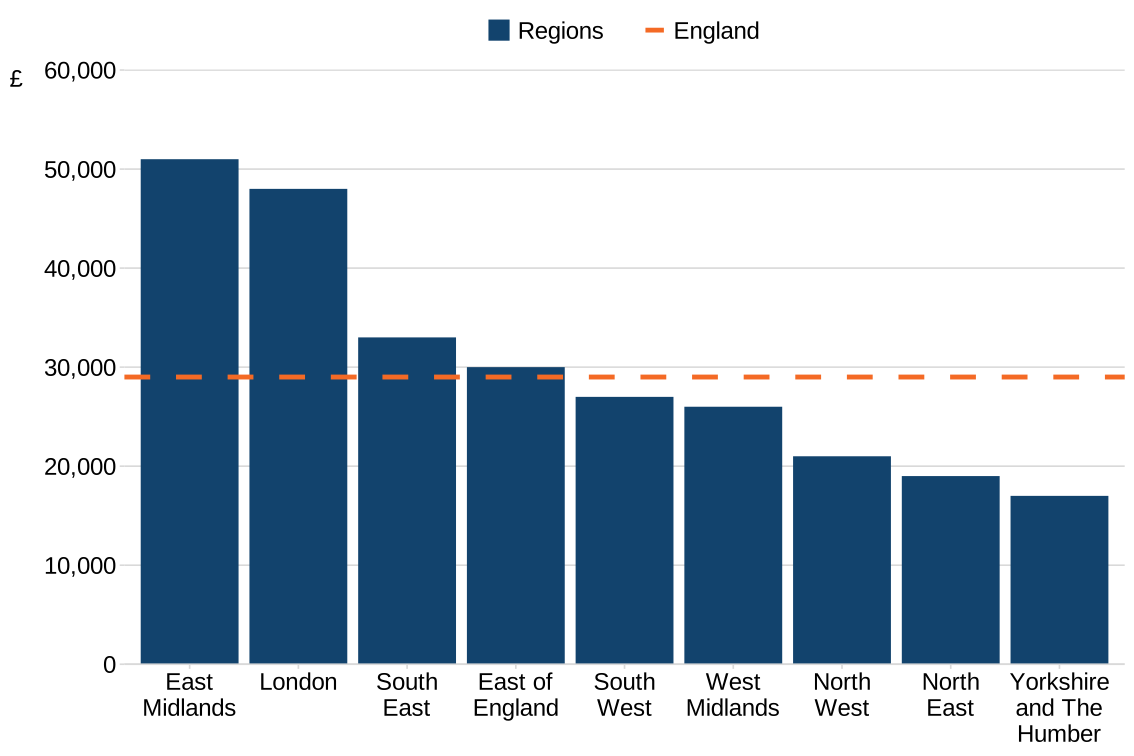
Figure 4: average (mean) value of a new DPA during 2024 to 2025 in England, by region
Source: DPA data collection, 2024 to 2025
Figure 4 shows the regional distribution of average (mean) values of new DPAs during 2024 to 2025. Yorkshire and The Humber reported the lowest average value at £17,000 compared with the East Midlands which reported the highest value at £51,000. The average value of a new DPA in England was £29,000.
2. Concluded DPAs
During 2024 to 2025, there were 3,015 DPAs which ended.
Fully recovered DPAs
During 2024 to 2025, 2,950 DPAs concluded and were fully recovered. The value recovered from these DPAs was £132.6 million.
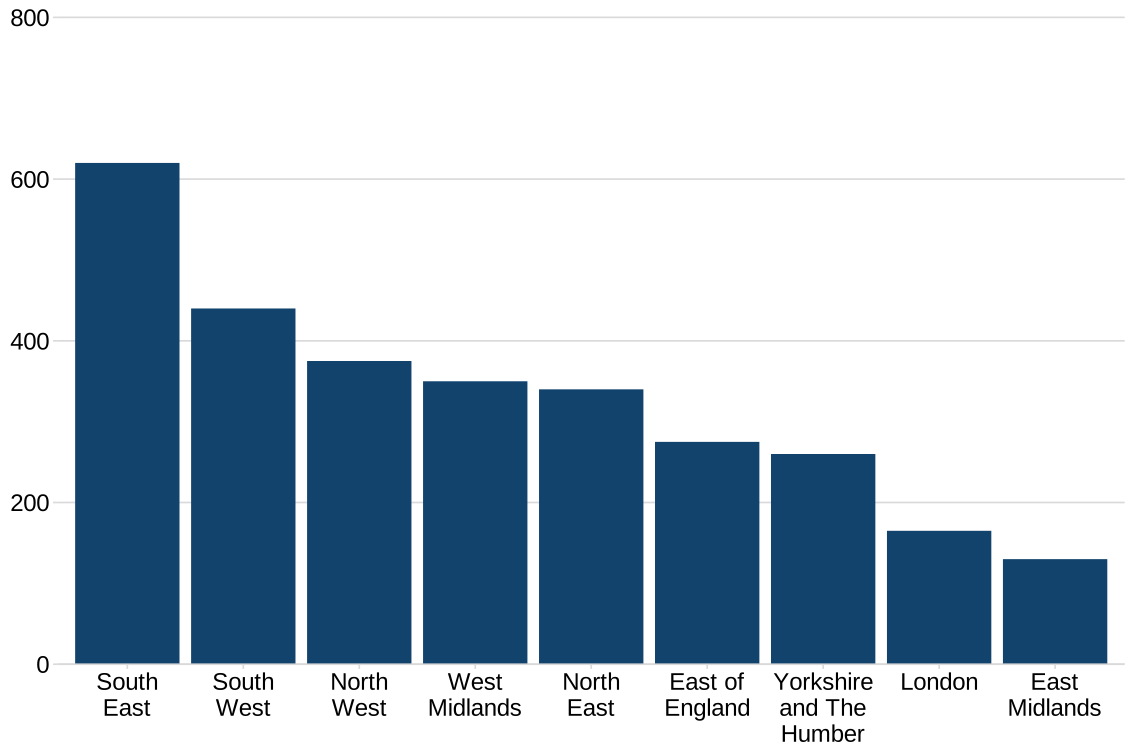
Figure 5: number of concluded DPAs that were fully recovered during 2024 to 2025 in England, by region
Source: DPA data collection, 2024 to 2025
Figure 5 shows the regional distribution of concluded and fully recovered DPAs during 2024 to 2025. The South East reported the highest number (620) of concluded DPAs that were fully recovered, which is 21% of all DPAs that were fully recovered in England. The East Midlands region reported the lowest number (130) fully recovered DPAs, amounting to 4% of the England total.
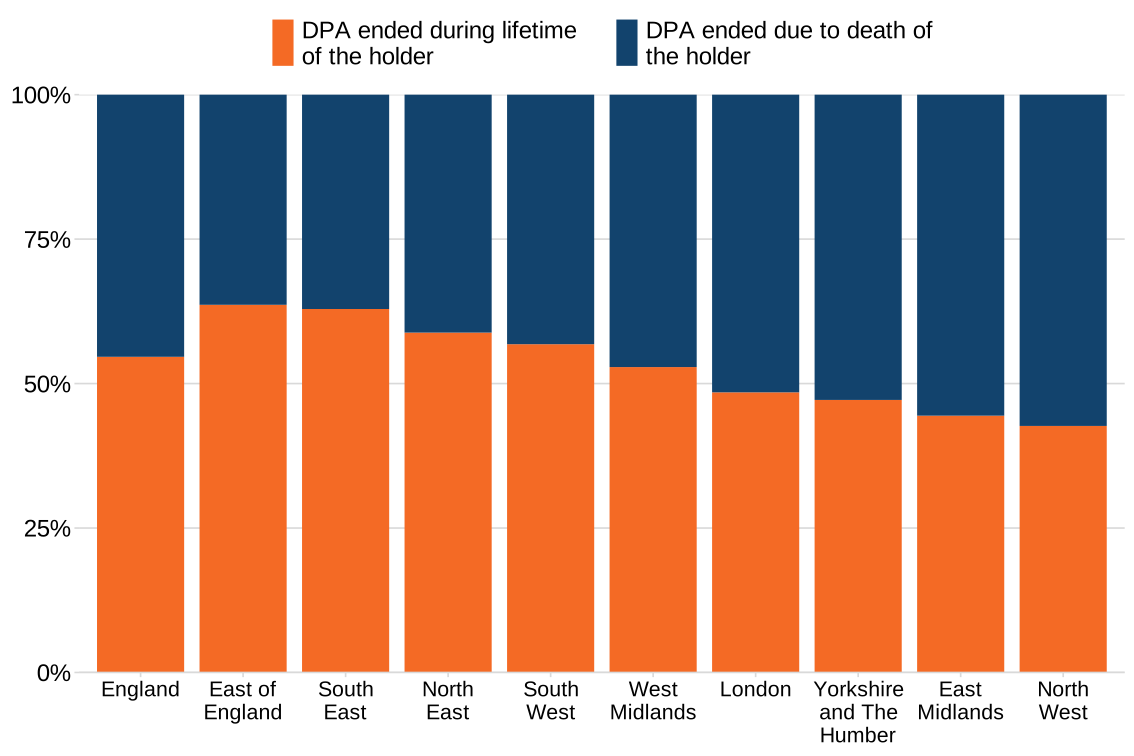
Figure 6: reason for conclusion of recovered DPAs during 2024 to 2025 in England, by region
Source: DPA data collection, 2024 to 2025
Figure 6 shows the regional distribution of conclusion of DPAs (which were fully recovered) by reason during 2024 to 2025. The reason for the DPA ending was provided for 2,965 DPAs which ended in England, and 45% of these concluded due to the death of the holder. The remainder concluded during the lifetime of the holder. The East of England had the lowest (36%) and the North West had the highest proportion (58%) concluding due to the death of the holder.
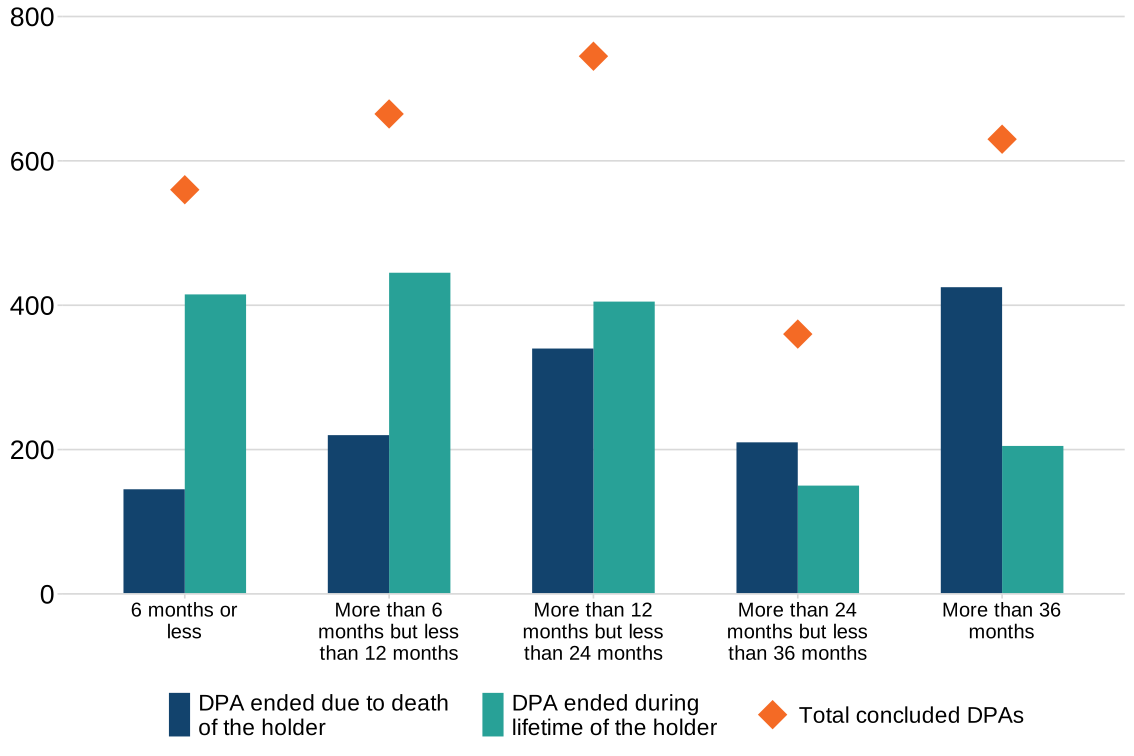
Of the 1,345 DPAs that concluded due to the death of the holder, 32% (425) had been in place for more than 36 months. Of the 1,620 DPAs that concluded during the lifetime of the holder, 26% (415) had been in place for 6 months or less.
Figure 7: number of recovered DPAs during 2024 to 2025 in England, by duration and reason for conclusion
Source: DPA data collection, 2024 to 2025
Figure 7 shows number of DPAs which concluded (and were fully recovered) during 2024 to 2025 by duration of the DPA and reason for conclusion. In general, the longer the duration of the DPA, the higher the proportion that conclude due to the death of the holder. For example, of recovered DPAs with duration of 6 months or less, 26% concluded due to the death of the holder. This increased to 67% for recovered DPAs which lasted more than 36 months.
Written-off DPAs
From 65 DPAs that concluded during 2024 to 2025 and were not fully recovered, £730,000 was reported as ‘recovered’, while £3.1 million was written off. This consisted of:
- £1.2 million written off for 10 DPAs which concluded without recovery attempts
- £1.7 million written off for 30 DPAs which concluded and where recovery attempts were made but no value was recovered
- £150,000 written off for 25 DPAs which concluded and were partially recovered; £730,000 was recovered for these DPAs
3. Outstanding DPAs
As of 31 March 2025, the total number of outstanding DPAs reported was 7,425 with a total value of £389.2 million.
Of the total number of outstanding DPAs reported, 1% (95) related to clients aged 18 to 64 and 99% (7,270) to clients aged 65 and over.
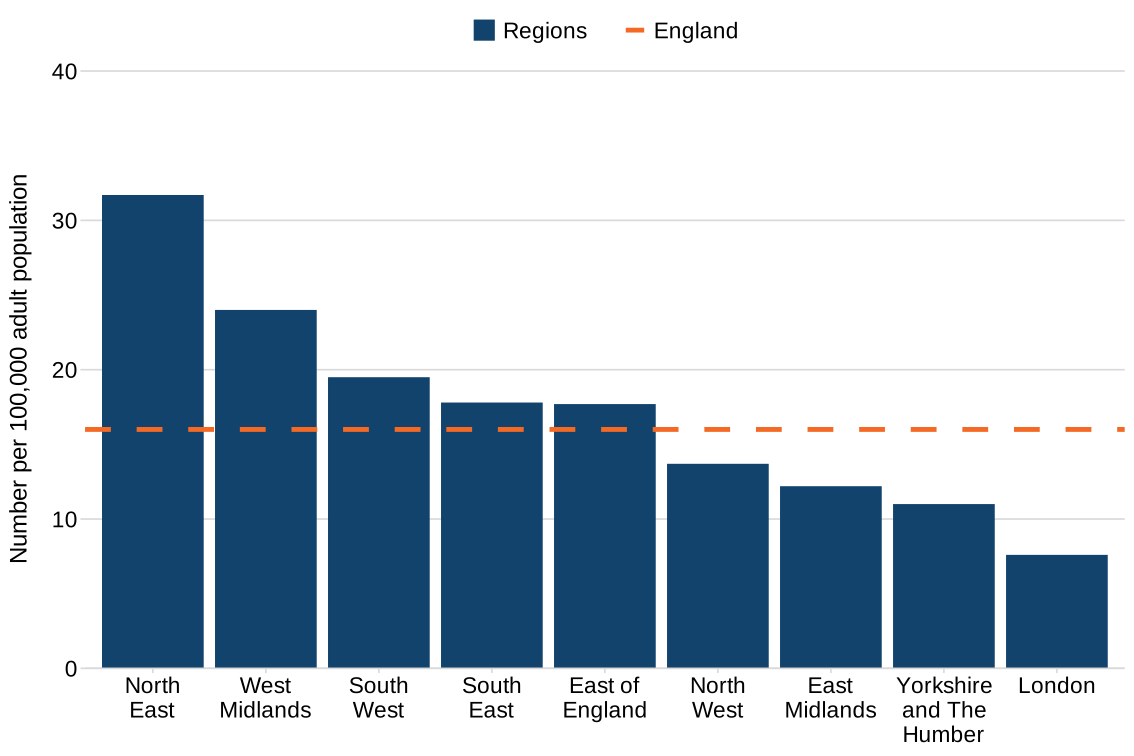
Figure 8: number of outstanding DPAs on 31 March 2025 per 100,000 adult population in England, by region
Sources: DPA data collection, 2024 to 2025, and mid-year 2024 population estimates, available from the Office for National Statistics.
Figure 8 shows the number of outstanding DPAs per 100,000 adult population by region, ranging from 7.6 in London to 31.7 in the North East, with an England average of 16.0.
Average value of an outstanding DPA
The average (mean) value of an outstanding DPA on 31st March 2025 in England was £52,000.
This is almost double the average amount of a new DPA (£29,000). As can be seen in figure 7, 41% of all DPAs which were recovered in 2024 to 2025 ended within the first 12 months and so care costs for new DPAs are less likely to accrue to the same extent as outstanding DPAs.
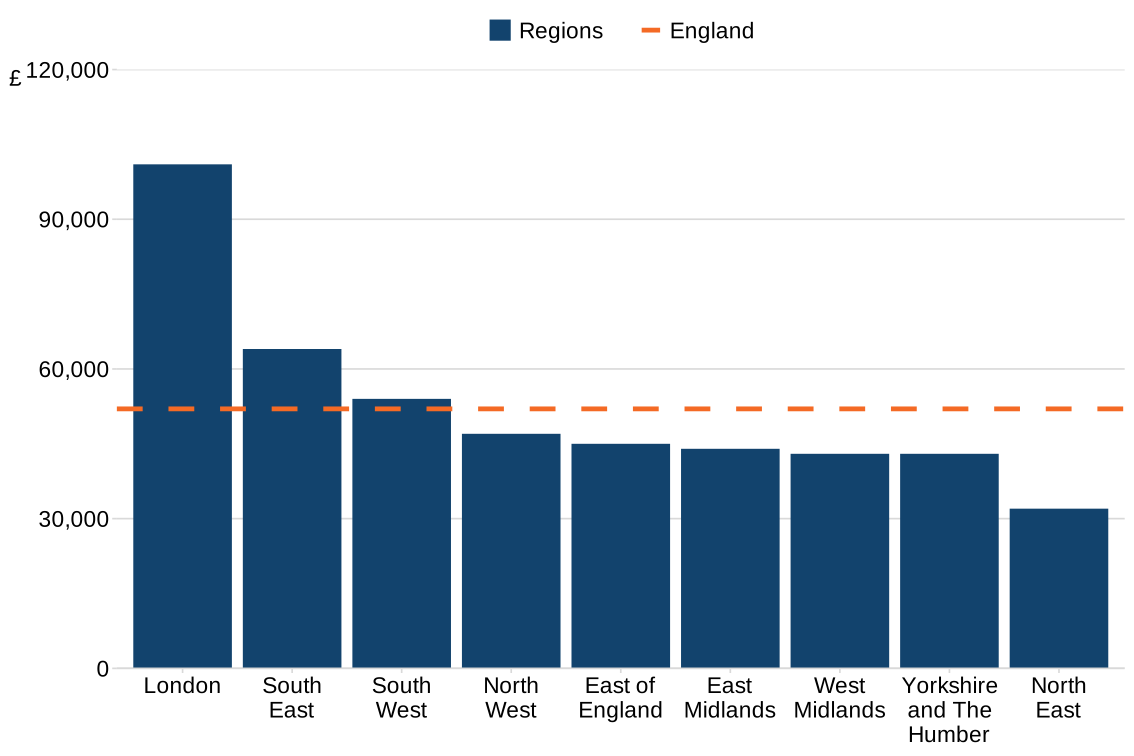
Figure 9: average value of an outstanding DPA as of 31 March 2025 in England, by region
Source: DPA data collection, 2024 to 2025
Figure 9 shows average outstanding DPA values by region, ranging from £101,000 in London to £32,000 in the North East, with an England average of £52,000.
Data source and methodology
The data used in this publication was collated by the Department of Health and Social Care (DHSC) from the DPA mandatory data collection of local authorities in England. Data was provided by 150 of 153 local authorities for 2024 to 2025.
More detailed information about data sources and processing can be found in the background, quality and methodology for these statistics on the Deferred payment agreements, England: 2024 to 2025 page.
Terminology
Deferred payment agreement
By entering into a deferred payment agreement (DPA) with a local authority, a person can delay paying the costs of their care and support in a care home or supported living accommodation until a later date. See more information in the accompanying background, quality and methodology document on the Deferred payment agreements, England: 2024 to 2025 page.
DPA with top up
If a client chooses to enter a care home costing more than their personal budget, they can top-up any additional residential care payments from their own resources.
Loan style DPA
Loan style DPAs are where the client pays the care provider and the local authority loans them the cost of their care in instalments.
Traditional style DPA
Traditional style DPAs are where the local authority pays the care home directly and defers part of the charge against the value of the property.
Contact
We welcome feedback from our users on how you use our products, how well these products meet your needs and how they could be improved.
For feedback and any further questions, contact asc.statistics@dhsc.gov.uk.