Community Life Survey 2024/25: Loneliness and support networks
Updated 31 July 2026
Applies to England

© Crown copyright 2026
This publication is licensed under the terms of the Open Government Licence v3.0 except where otherwise stated. To view this licence, visit nationalarchives.gov.uk/doc/open-government-licence/version/3 or write to the Information Policy Team, The National Archives, Kew, London TW9 4DU, or email: psi@nationalarchives.gov.uk.
Where we have identified any third party copyright information you will need to obtain permission from the copyright holders concerned.
This publication is available at https://www.gov.uk/government/statistics/community-life-survey-202425-annual-publication/community-life-survey-202425-loneliness-and-support-networks
Correction to sexual orientation and socio-economic classification data: A correction has been made to the 2024/25 estimates for sexual orientation and socioeconomic classification. The corrected 2024/25 figures are available in the 2025/26 Annual Community and Engagement Survey release, which show a small difference compared to the estimates presented here. Users are advised to use the updated figures in the CES release.
1. Loneliness
GSS harmonised questions on different aspects of loneliness were included in the 2024/25 survey.
-
How often do you feel lonely? (direct measure)
-
How often do you feel that you lack companionship? (indirect measure)
-
How often do you feel left out? (indirect measure)
-
How often do you feel isolated from others? (indirect measure)
For further information, see Measuring loneliness: guidance for use of the national indicators on surveys - Recommended measures for adults.
1.1 Headline findings
During October 2024 to March 2025 (2024/25):
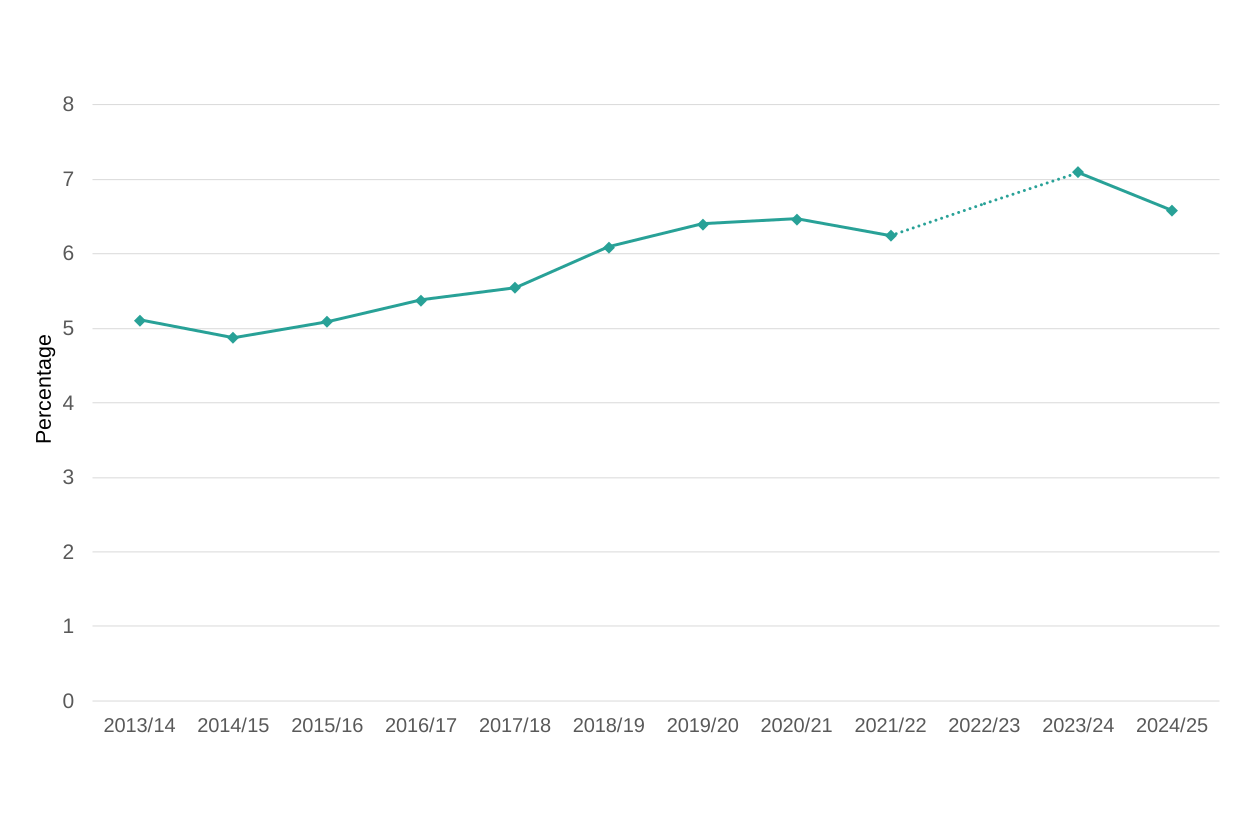
7% of adults reported that they felt lonely often or always, a small, but significant, decrease from 2023/24 (from 7.1% to 6.6%).
21% of adults reported that they never felt lonely, a 1 percentage point increase from 2023/24 (20%).
As shown in Figure 1.1, levels of loneliness were broadly stable from 2013/14, when push-to-web data collection first commenced on Community Life Survey, up to 2021/22 (5-6%). Levels in 2024/25 (6.6%) were higher than in the years 2013/14 to 2017/18 (4.9-5.6%).
Figure 1.1: Percentage of adults (aged 16+) reporting that they feel lonely often or always, England: 2013/14 to 2024/25 (Base: All adults)
1.2 Demographics: Who was more likely to experience loneliness? [footnote 1]
Age
Compared with the average for adults in England (7%), adults aged 16 to 24 (9%), aged 25 to 34 (8%) and aged 35 to 49 (7%) were more likely to report feeling lonely often or always. In contrast, adults aged 50 to 64 (5%), aged 65 to 74 (4%) and aged 75 and over (5%) were less likely to report feeling lonely often or always than the average for adults in England (7%).
Disability Status
Disabled adults (14%) were more likely to report that they feel lonely often or always than non-disabled adults (3%).
Sex [footnote 2]
Female adults (7%) were more likely to report that they feel lonely often or always than male adults (6%).
Gender identity [footnote 3]
Adults whose gender identity was different from their sex registered at birth (19%) were more likely to report that they feel lonely often or always than adults whose gender identity was the same as their sex registered at birth (6%).
Sexual orientation [footnote 4]
Bisexual adults (15%) and adults from the “other sexual orientation” classification (17%) were more likely to report feeling lonely often or always than gay or lesbian adults (11%) and heterosexual or straight adults (6%). Additionally, gay or lesbian adults (11%) were more likely to report feeling lonely often or always than heterosexual or straight adults (6%).
Ethnicity
Compared with the average for adults in England (7%), adults from the White Gypsy or Irish Traveller (13%), Any other mixed or multiple ethnic background (12%), mixed White and Black Caribbean (11%), mixed White and Black African (10%), Bangladeshi (10%), mixed White and Asian (9%) and Arab (9%) ethnic groups were more likely to report feeling lonely often or always. In contrast, adults from the White British [footnote 5] ethnic group (6%) were less likely to report feeling lonely often or always than the average for adults in England (7%).
Religion
Compared with the average for adults in England (7%), adults from the Any other religion classification (12%), Muslim adults (8%) and adults from the No religion classification (7.2%) were more likely to report feeling lonely often or always, although some of these differences were small. In contrast, Christian adults (5%) were less likely to report feeling lonely often or always than the average for adults in England (7%).
Socio-economic classification [footnote 6]
Levels of loneliness were significantly different between adults from each socio-economic classification. Adults from the never worked and long-term unemployed classification (13%) were more likely to report feeling lonely often or always. This was followed by adults from the routine and manual occupations classification (8%) and intermediate occupations classification (6%). Adults from the higher managerial, administrative and professional occupations classification (5%) were less likely to report feeling lonely often or always.
Index of multiple deprivation [footnote 7]
Adults living in the most deprived areas (1st decile, 11%) were more likely to report feeling lonely often or always compared with adults living in the least deprived areas (10th decile, 4%).
Population density
Adults living in urban areas (7%) were more likely to report that they feel lonely often or always than adults living in rural areas (5%).
1.3 Geographical findings
Regional differences
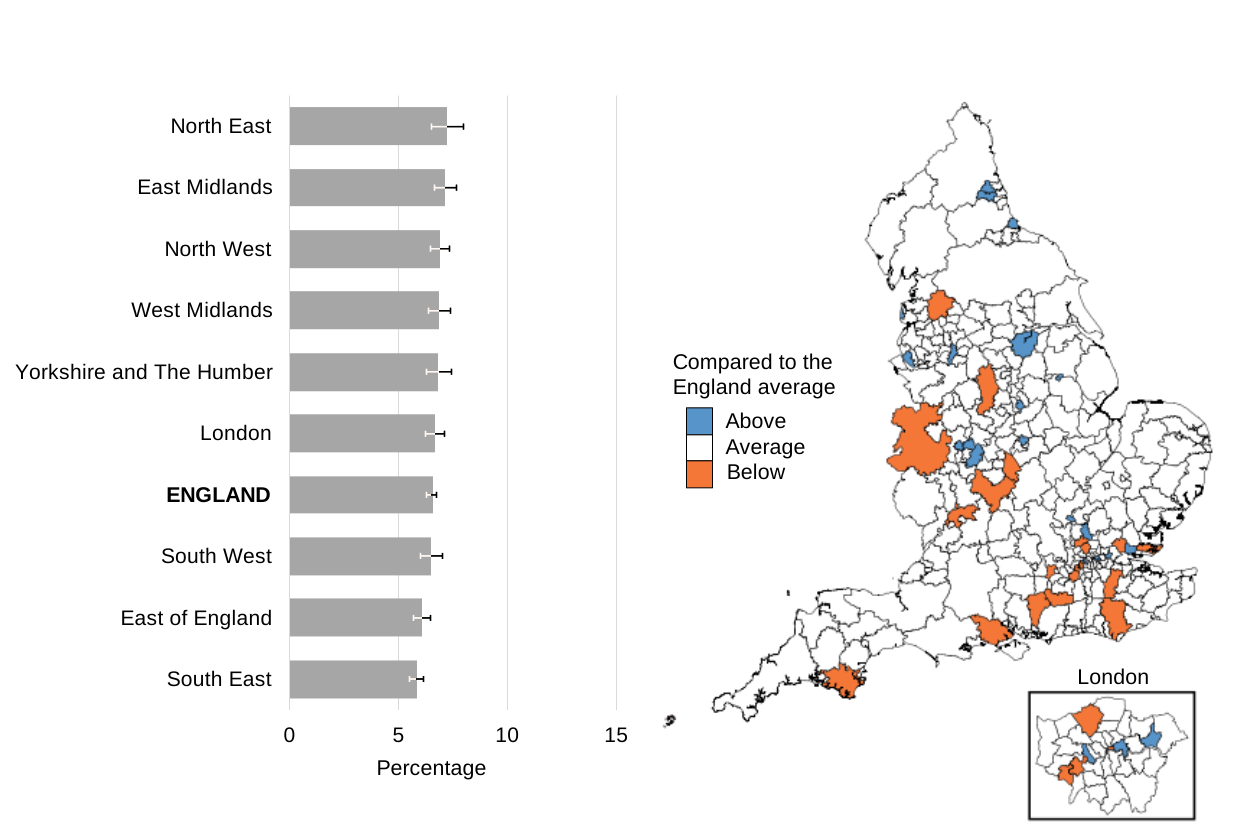
Compared with the average for adults in England (7%), adults living in the South East ITL1 area (6%) were less likely to report feeling lonely often or always. No significant differences were observed between the average for adults in England and the average for adults living in other ITL1 areas.
Local authority differences [footnote 8]
By local authority, there was a 9 percentage point difference in the proportion of adults who reported feeling lonely often or always, from 11% in Newcastle upon Tyne to 1% in East Hampshire.
The proportion of adults who reported feeling lonely often or always was in line with the England average in 256 (87%) local authorities, higher than the England average in 19 (6%) local authorities, and lower than the England average in 21 (7%) local authorities.
Patterns of feeling lonely often or always at the ITL1 level are also observed at the local authority (LA) level.
Figure 1.2 Percentage of adults (aged 16+) reporting that they feel lonely often or always, by ITL1 area and Local Authority, England: 2024/25 (Base: All adults).
2. Indirect measures of loneliness
To address variation in how people understand the term “loneliness” and potential reluctance to report any feelings of loneliness, the Community Life Survey also asks three questions relating to, but not explicitly asking about, loneliness. Responses to these questions were combined to produce a composite loneliness score running from 3 (indicating less frequent loneliness) to 9 (indicating more frequent loneliness).
The three indirect questions asked respondents:
-
How often do you feel that you lack companionship?
-
How often do you feel left out?
-
How often do you feel isolated from others?
For further information, see Measuring loneliness: guidance for use of the national indicators on surveys - Recommended measures for adults.
2.1 Headline findings
During October 2024 to March 2025 (2024/25):
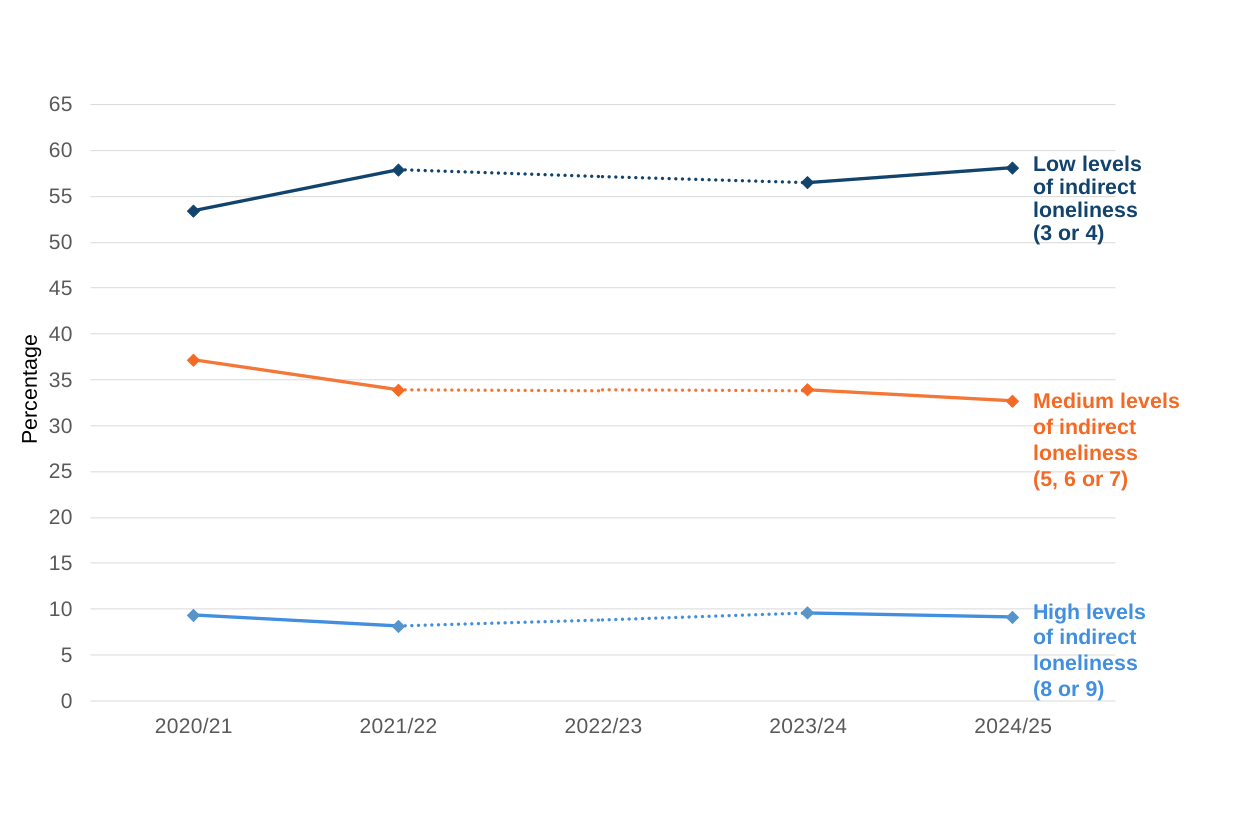
9% of adults reported high levels of indirect loneliness (a composite score of 8 or 9), a small, but significant, decrease from 23/24 (10%).
In 2024/25, 58% of adults reported low levels of indirect loneliness (a score of 3 or 4 out of 9), an increase from 2023/24 (56%).
As shown in Figure 2.1, rates of indirect loneliness in 2024/25 were in line with levels recorded in 2020/21 (9%) when this measure was introduced into the survey.
Figure 2.1: Percentage of adults (aged 16+) reporting low, medium and high levels of indirect loneliness, England: 2020/21 to 2023/24 (Base: All adults)
2.2 Demographics: Who was more likely to experience indirect loneliness? [footnote 1]
The demographic subgroups more likely to report high levels of indirect loneliness were generally in line with those more likely to have reported feeling lonely often or always, with only two demographic subgroups (ethnicity and religion) showing different reported high levels of indirect loneliness than those reporting feeling lonely often or always.
Age
Compared with the average for adults in England (9%), adults aged 16 to 24 (12%), aged 25 to 34 (11%) and aged 35 to 49 (10%) were more likely to report high levels of indirect loneliness (a composite score of 8 or 9). In contrast, adults aged 50 to 64 (8%), aged 75 and over (7%), and aged 65 to 74 (5%) were less likely to report high levels of indirect loneliness (a composite score of 8 or 9) compared with the average for adults in England (12%).
Disability Status
Disabled adults (18%) were more likely to report high levels of indirect loneliness (a composite score of 8 or 9) than non-disabled adults (5%).
Sex [footnote 2]
Female adults (10%) were more likely to report high levels of indirect loneliness (a composite score of 8 or 9) than male adults (8%).
Gender identity [footnote 3]
Adults whose gender identity was different from their sex registered at birth (27%) were more likely to report high levels of indirect loneliness (a composite score of 8 or 9) than adults whose gender identity was the same as their sex registered at birth (9%).
Sexual orientation [footnote 4]
Adults from the “other sexual orientation” classification (22%) and bisexual adults (19%) were more likely to report high levels of indirect loneliness (a composite score of 8 or 9) than gay or lesbian adults (15%) and heterosexual or straight adults (8%). Additionally, gay or lesbian adults (15%) were more likely to report high levels of indirect loneliness (a composite score of 8 or 9) than heterosexual or straight adults (8%).
Ethnicity
Compared with the average for adults in England (9%), adults from the White Gypsy or Irish Traveller (21%), Arab (15%), mixed White and Black Caribbean (14%), Any other mixed or multiple ethnic background (14%), Bangladeshi (13%), Pakistani (12%), Indian (11%), Any other Asian background (11%) and Any other White background (10%) ethnic groups were more likely to report high levels of indirect loneliness (a composite score of 8 or 9). In contrast, adults from the White British [footnote 5] ethnic group (8%) were less likely to report high levels of indirect loneliness (a composite score of 8 or 9) compared with the average for adults in England (9%).
Religion
Compared with the average for adults in England (9%), adults from the Any other religion classification (16%), Muslim adults (12%), Buddhist adults (12%) and adults from the No religion classification (10%) were more likely to report high levels of indirect loneliness (a composite score of 8 or 9). In contrast, Christian adults (8%) were less likely to report high levels of indirect loneliness than the average for adults in England (9%).
Socio-economic classification [footnote 6]
Adults from the never worked and long-term unemployed classification (18%) were more likely to report high levels of indirect loneliness (a composite score of 8 or 9) than adults from the routine and manual occupations classification (10%), intermediate occupations classification (9%), and higher managerial administrative and professional occupations classification (7%). Additionally, adults from the routine and manual occupations classification (10%) were more likely to report high levels of indirect loneliness (a composite score of 8 or 9) than adults from the intermediate occupations classification (9%), and higher managerial administrative and professional occupations classification (7%). Finally, adults from the intermediate occupations classification (9%) were more likely to report high levels of indirect loneliness (a composite score of 8 or 9) than adults from the higher managerial administrative and professional occupations classification (7%).
Index of multiple deprivation [footnote 7]
Adults living in the most deprived areas (1st decile, 15%) were more likely to report high levels of indirect loneliness (a composite score of 8 or 9) compared with adults living in the least deprived areas (10th decile, 6%).
Population density
Adults living in urban areas (10%) were more likely to report high levels of indirect loneliness (a composite score of 8 or 9) than adults living in rural areas (7%).
2.3 Geographical findings
Regional differences
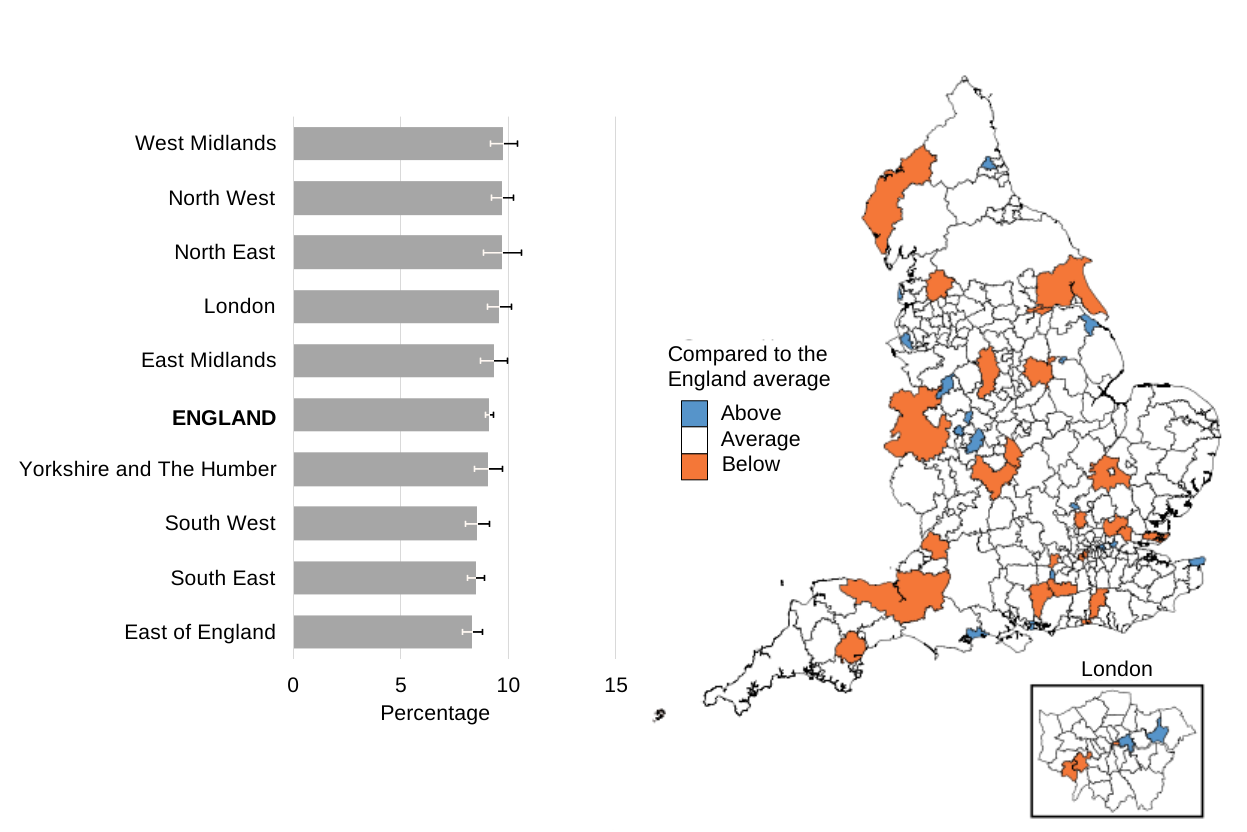
Compared with the average for adults in England (9%), adults living in the South East (8%) and East of England (8%) ITL1 areas were less likely to report high levels of indirect loneliness (a composite score of 8 or 9). No significant differences in levels of indirect loneliness were observed in the other ITL1 areas.
Local Authority differences [footnote 8]
By local authority, there was a 12 percentage point difference in the proportion of adults who reported high levels of indirect loneliness (a composite score of 8 or 9), from 15% in Thanet to 3% in East Hampshire.
The proportion of adults reporting high levels of indirect loneliness (8 or 9 out of 9) was in line with the average for adults in England in 256 (87%) local authorities, higher than the England average in 16 (5%) local authorities, and lower than the England average in 24 (8%) local authorities.
In general, patterns of indirect loneliness at the ITL1 level are also observed at the local authority (LA) level. However, there are some exceptions. The following notes the exceptions where levels in ITL1 areas are above or below the England average, but where levels in local authority areas show the reverse:
-
The proportion of adults reporting high levels of indirect loneliness was lower than the England average for adults living in the East of England ITL1 area (8%), but higher than the England average for adults living in the East of England local authority of Luton (15%).
-
The proportion of adults reporting high levels of indirect loneliness was lower than the England average for adults living in the South East ITL1 area (8%), but higher than the England average for adults living in the South East local authorities of Thanet (15%), Portsmouth (14%) and Rushmoor (13%).
Figure 2.2: Percentage of adults (aged 16+) reporting high levels of indirect loneliness (a composite score of 8 or 9), by ITL1 area and Local Authority, England: 2024/25.
3. Support networks
The 2024/25 Community Life Survey included three measures to gauge respondent’s access to support networks[footnote 9][footnote 10]:
-
Agreement with the statement that ‘If I needed help, there are people who would be there for me’
-
Agreement with the statement that ‘If I wanted company or to socialise, there are people I can call on’.
-
Agreement that ‘there is at least one person I can really count on to listen if I needed to talk (Yes/No)’
3.1 Headline findings
During October 2024 to March 2025 (2024/25):
94% of adults “definitely” or “tended” to agree that if they needed help there are people who would be there for them, no significant change from 2023/24 (94%).
92% of adults “definitely” or “tended” to agree that if they wanted company or to socialise there are people they could call, no significant change from 2023/24 (92%).
95% of adults had at least one person they could really count on to listen when they needed to talk, no significant change from 2023/24 (95%).
3.2 Demographics: How does access to support networks vary by subgroups?[footnote 1]
Age
- Compared with the average for adults in England (94%), adults aged 65 to 74 (96%) and aged 75 or over (97%) were more likely to agree that if they needed help there are people who would be there for them, while adults aged 35 to 49 (93%) were less likely to agree that if they needed help there are people who would be there for them.
- Compared with the average for adults in England (92%), adults aged 65 to 74 (94%) were more likely to agree that if they wanted company or to socialise there would be people they could call on, while adults aged 35 to 49 (90%) were less likely to agree that if they wanted company or to socialise there would be people they could call on.
- Compared with the average for adults in England (95%), adults aged 65 to 74 (96%) and aged 75 or over (97%) were more likely to agree that there was at least one person they could count on to listen, although some of these differences were small. Conversely, adults aged 50 to 64 (94%) were less likely to agree that there was at least one person they could count on to listen when they needed to talk, compared with the average for adults in England (95%).
Disability Status
Non-disabled adults were more likely than disabled adults to agree that if they needed help there are people who would be there for them (96% vs 91%), that if they wanted company or to socialise there would be people they could call on (94% vs 87%) and that they had at least one person they could count on to really listen when they needed to talk (97% vs 93%).
Sex [footnote 2]
Female adults were more likely than male adults to agree that if they needed help there are people who would be there for them (95% vs 94%), that if they wanted company or to socialise there would be people they could call on (93% vs 91%) and that they had at least one person they could count on to really listen when they needed to talk (96% vs 95%).
Gender identity [footnote 3]
Adults whose gender identity was the same as their sex registered at birth were more likely than adults whose gender identity was different from their sex registered at birth to agree that if they needed help there are people who would be there for them (95% vs 83%), that if they wanted company or to socialise there would be people they could call on (92% vs 86%), and that they had at least one person they could count on to really listen when they needed to talk (96% vs 87%).
Sexual orientation [footnote 4]
-
Heterosexual or straight adults (95%) were more likely to agree that if they needed help there are people who would be there for them than gay or lesbian adults (92%), bisexual adults (90%), and adults from the “other sexual orientation” classification (85%). Additionally, gay or lesbian adults (92%) were more likely to agree that if they needed help there are people who would be there for them than adults from the “other sexual orientation” classification (85%).
-
Heterosexual or straight adults (92%) were more likely to agree that if they wanted company or to socialise there would be people they could call on than gay or lesbian adults (90%), bisexual adults (89%), and adults from the “other sexual orientation” classification (81%). Additionally, gay or lesbian adults (90%) and bisexual adults (89%) were more likely to agree that if they wanted company or to socialise there would be people they could call on than adults from the “other sexual orientation” classification (81%).
-
Heterosexual or straight adults (96%) were more likely to report having at least one person they could count on to really listen when they needed to talk compared to bisexual adults (93%) and adults from the “other sexual orientation” classification (85%). Additionally, gay or lesbian adults (95%) and bisexual adults (93%) were more likely to report having at least one person they could count on to really listen when they needed to talk compared with adults from the “other sexual orientation” classification (85%).
Ethnicity [footnote 11]
-
Compared with the average for adults in England (94%), adults from the White British[footnote 5] ethnic group (95%) were more likely to agree that if they needed help there were people who would be there for them. Adults from the White Gypsy or Irish Traveller (61%), mixed White and Black African (85%), Arab (87%), Pakistani (89%), White Irish (89%), Black African (92%), Indian (92%) and Any other White background (92%) ethnic groups were less likely to report that if they needed help there are people who would be there for them compared with the average for adults in England (94%).
-
Compared with the average for adults in England (92%), adults from the White British [footnote 5] ethnic group (93%) were more likely to report that if they wanted company or to socialise there would be people to call on. Adults from the White Gypsy or Irish Traveller (80%), Arab (83%), White Irish (84%) and Any other White background (89%) ethnic groups were less likely to report that if they wanted company or to socialise there would be people to call on compared with the average for adults in England (92%).
-
Compared with the average for adults in England (95%), adults from the White British [footnote 5] ethnic group (96%) were more likely to report that that they had at least one person they could count on to really listen when they needed to talk, although this difference was small. Adults from the White Gypsy or Irish Traveller (77%), Arab (86%), White Irish (92%), mixed White and Black Caribbean (92%), Pakistani (93%) and Indian (94%) ethnic groups were less likely to report that they had at least one person they could count on to really listen when they needed to talk compared with the average for adults in England (95%).
Religion
-
Compared with the average for adults in England (94%), Christian adults (96%) were more likely to agree that if they needed help there are people who would be there for them, while Buddhist adults (89%), Muslim adults (91%), Sikh adults (91%) and adults from the Any other religion classification (91%) were less likely to agree that if they needed help there are people who would be there for them.
-
Compared with the average for adults in England (92%), Christian adults (93%) were more likely to agree that if they wanted company or to socialise there would be people they could call on, while Buddhist adults (86%) were less likely to agree that if they wanted company or to socialise there would be people they could call on.
-
Compared with the average for adults in England (95%), Christian adults (96%) were more likely to agree that they had at least one person they could count on to really listen when they needed to talk, while Sikh adults (92%) were less likely to agree that they had at least one person they could count on to really listen when they needed to talk.
Socio-economic classification [footnote 6]
-
Adults from the higher managerial, administrative and professional occupations (96%) and intermediate occupations (95%) classifications were more likely to agree that if they needed help there are people who would be there for them than adults from the routine and manual occupations classification (94%) and never worked and long-term unemployed classification (88%). Additionally, adults from routine and manual occupations classification were more likely to agree that if they needed help there are people who would be there for them than adults from the never worked and long-term unemployed classification.
-
Adults from the higher managerial, administrative and professional occupations (93%) and intermediate occupations (93%) classifications were more likely to agree that if they wanted company or to socialise there would be people they could call on than adults from the routine and manual occupations classification (91%) and never worked and long-term unemployed classification (86%). Additionally, adults from the routine and manual occupations classifications were more likely to agree that if they wanted company or to socialise there would be people they could call on than adults from the never worked and long-term unemployed classification.
-
Adults from the higher managerial, administrative and professional occupations (96%) and intermediate occupations (96%) classifications were more likely to agree that they had at least one person they could count on to really listen when they needed to talk than adults from the routine and manual occupations (95%) and never worked and long-term unemployed (91%) classifications. Additionally, adults from the routine and manual occupations classifications were more likely to agree that they had at least one person they could count on to really listen when they needed to talk than adults from the never worked and long-term unemployed classifications.
Index of multiple deprivation [footnote 7]
Adults living in the least deprived areas (10th decile) were more likely than adults living in the most deprived areas (1st decile) to agree that if they needed help there are people who would be there for them (97% vs 91%), that if they wanted company or to socialise there would be people they could call on (94% vs 89%), and that they had at least one person they could count on to really listen when they needed to talk (97% vs 93%).
Population density
Adults living in rural areas were more likely than those in urban areas to agree that if they needed help there are people who would be there for them (96% vs 94%) and if they wanted company or to socialise there would be people they could call on (93% vs 92%). There were no significant differences by population density on levels of agreement that adults had at least one person they could really count on to listen when they needed to talk.
3.3 Geographical findings
Regional differences
Compared with the average for adults in England (94%), adults living in the South West (95%) and South East (95%) ITL1 areas were more likely to agree that if they needed help there are people who would be there for them, although some of these differences were small. Conversely, adults in the London ITL1 area (93%) were less likely to agree that if they needed help there are people who would be there for them, compared with the average for adults in England (94%).
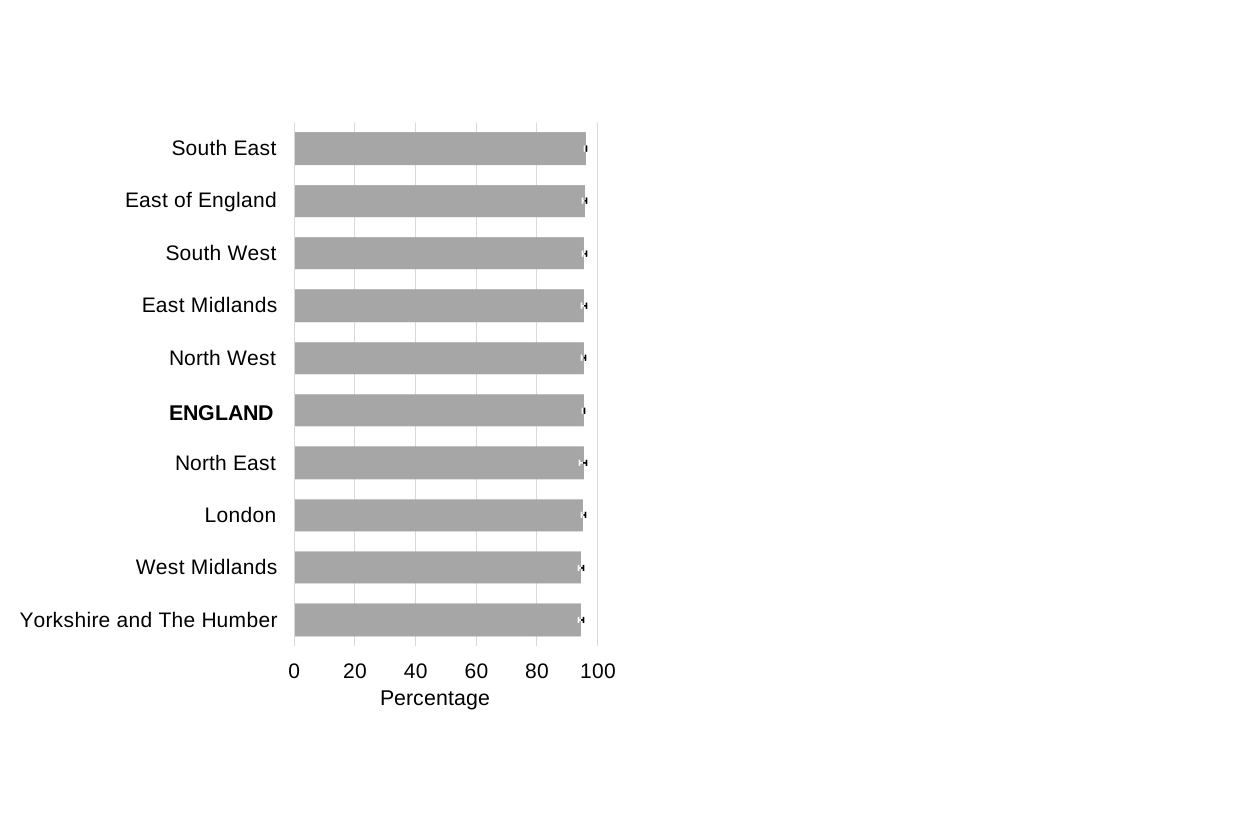
There were no significant differences by ITL1 area on levels of agreement that if respondent’s wanted company or to socialise there would be people they could call on, or levels of agreement that respondents had at least one person they could really count on to listen when they needed to talk.
Figure 3.1 Agreement that if people needed help, there are others who would be there for them, by region, England: 2024/25 (Base: Adults in subsample of approximately a third of online respondents)
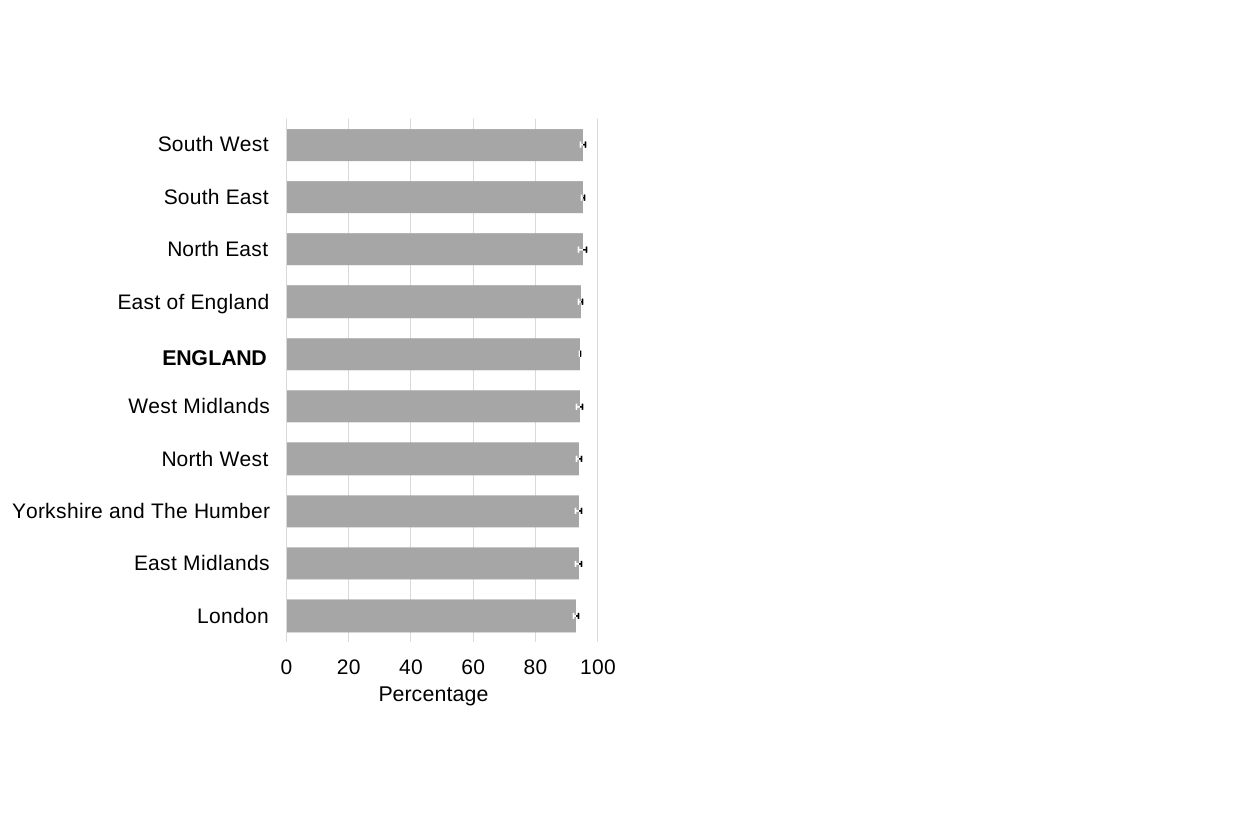
Figure 3.2 Agreement that if people wanted company or to socialise there are others they could call on, by region, England: 2024/25 (Base: Adults in subsample of approximately a third of online respondents)
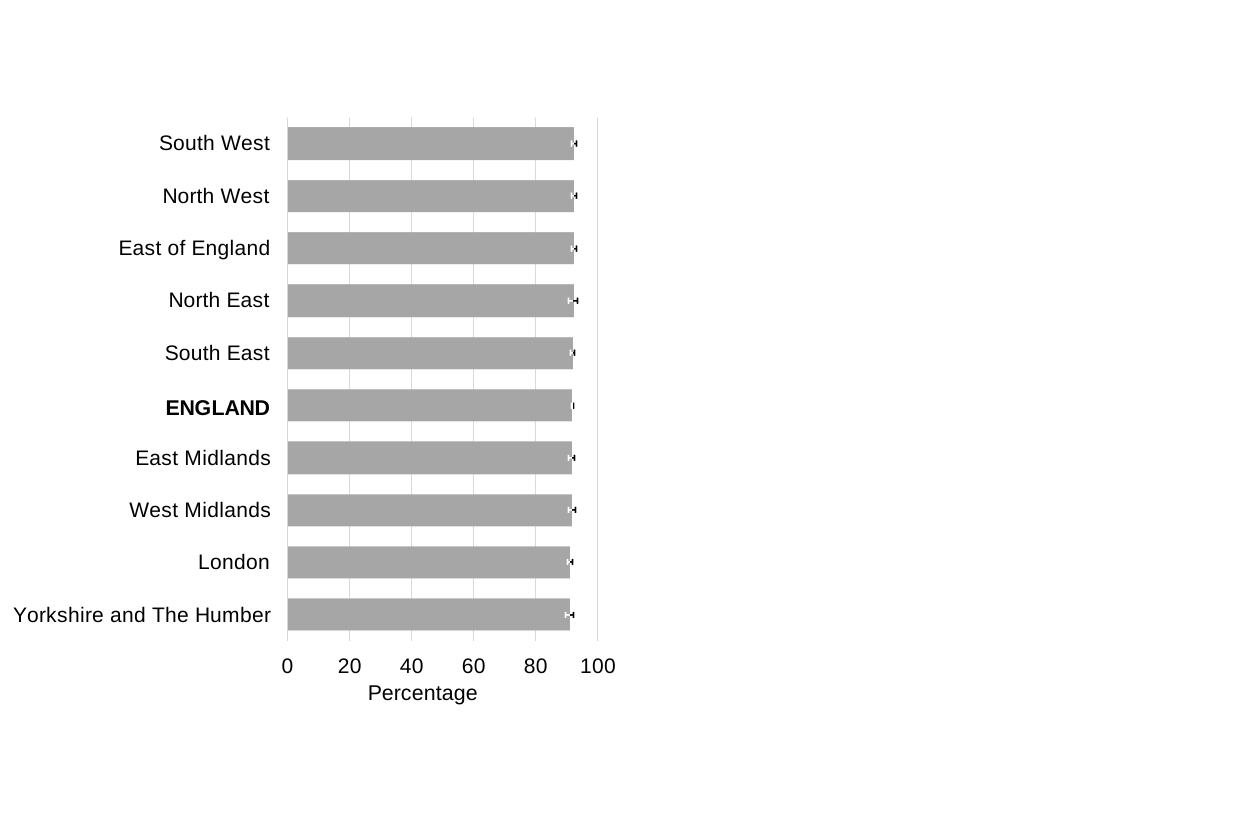
Figure 3.3 Agreement that people have at least one other person they can really count on to listen if they needed to talk, by region, England: 2024/25 (Base: Adults in subsample of approximately a third of online respondents)
-
Demographic questions in the survey are voluntary and self-reported by the respondent. ↩ ↩2 ↩3
-
This data is based on the respondent’s sex. The Community Life Survey respondents were asked the question “What is your sex?”. The response options were ‘Male’, ‘Female’ and ‘Prefer not to Say’. This closely follows the ONS Census 2021 question for sex designed to capture sex at birth, but has been slightly amended to include a ‘Prefer not to Say’ option as we do for all demographic questions in the Community Life Survey. ↩ ↩2 ↩3
-
This data is based on the respondent’s gender identity. Respondents were asked ‘Is the gender you identify with the same as your sex registered at birth’, with the possible responses being ‘Yes’, ‘No, type in gender identity’ or ‘Prefer not to say’.
Patterns were identified in Census 2021 data that suggest that some respondents may not have interpreted the gender identity question as intended, notably those with lower levels of English language proficiency. Analysis of Scotland’s census, where the gender identity question was different, has added weight to this observation. More information can be found in the ONS sexual orientation and gender identity quality information report, and in the National Statistical blog about the strengths and limitations of gender identity statistics ↩ ↩2 ↩3 -
Sexual orientation is an umbrella term covering sexual identity, attraction, and behaviour. For an individual respondent, these may not be the same. For example, someone in an opposite-sex relationship may also experience same-sex attraction, and vice versa. This means the statistics should be interpreted purely as showing how people responded to the question, rather than being about whom they are attracted to or their actual relationships. ↩ ↩2 ↩3
-
The White British ethnic group includes adults from an English, Welsh, Scottish, Northern Irish or British ethnic group ↩ ↩2 ↩3 ↩4 ↩5
-
This is a form of socio-economic classification based on the employment status and occupation of the respondent. ↩ ↩2 ↩3
-
The Index of Multiple Deprivation is a geographical measure which classifies the relative deprivation of an area. It combines seven indices to produce one overall measure for the area (rather than the individual). It takes into account income, employment, education, skills and training, health and disability, crime, barriers to housing and services, and living environment. For this commentary, the most and least deprived deciles have been compared. There may be some other significant differences between deciles in between which have not been commented on here. The analysis of the index of Multiple Deprivation was conducted using the 2019 Index of Multiple Deprivation. ↩ ↩2 ↩3
-
The 2024/25 Community Life Survey includes over 175,000 responses, so confidence intervals are generally very narrow. Whilst this reflects a strength of the data, when highlighting differences, some local authorities may be shown to be above/below the England average, but are only a percentage point more/ less than the average. There will be other local authorities who are much more above or below the England average, but will both be shown in the same shading within the map. ↩ ↩2
-
The questions on support networks were asked of adults in a subsample of approximately a third of online respondents - due to the smaller sample size, local authority estimates are not provided for these variables. This question was not included in the paper questionnaire and was asked of respondents online, so the results are only representative of the online population. ↩
-
The questions on support networks were mixed mode in 2021/22 but a web only question in 2023/24 and 2024/25. Analysis of the impact of mode has shown no significant mode effect for this question. ↩
-
The “Any other Black or African or Caribbean background” ethnic group is not included in reporting due to the data being suppressed, as fewer than 30 respondents selected this option. ↩