Claim migration impact on Universal Credit Health related claims and the No Work Requirements conditionality regime
Published 12 March 2026

© Crown copyright 2026
This publication is licensed under the terms of the Open Government Licence v3.0 except where otherwise stated. To view this licence, visit nationalarchives.gov.uk/doc/open-government-licence/version/3 or write to the Information Policy Team, The National Archives, Kew, London TW9 4DU, or email: psi@nationalarchives.gov.uk.
Where we have identified any third party copyright information you will need to obtain permission from the copyright holders concerned.
This publication is available at https://www.gov.uk/government/statistics/claim-migration-impact-on-universal-credit-health-related-claims-and-the-no-work-requirements-conditionality-regime/claim-migration-impact-on-universal-credit-health-related-claims-and-the-no-work-requirements-conditionality-regime
Introduction
This publication provides information in relation to numbers of individuals that have migrated to Universal Credit (UC) from legacy benefits, focussing on those with a health condition or disability restricting their ability to work who join the UC health journey and those with no work requirements (NWR).
Background
Universal Credit (UC) has streamlined and simplified the benefits system by combining six ‘legacy’ benefits (Working Tax Credit, Child Tax Credit, Housing Benefit (HB), income-related Employment and Support Allowance, Income Support and income-based Jobseeker’s Allowance) into a single monthly payment.
By the end of 2018, UC was rolled out to all Jobcentres for new customers. However, there remained a substantial number of households claiming legacy benefits. The Department for Work and Pensions’ (DWP) strategy for moving these remaining households to UC was formed of three ‘tracks’ of migration (natural, voluntary and managed), as set out in the department’s Completing the Move to UC policy document published in April 2022.
Natural migration applies to customers experiencing a change of circumstance that would normally have prompted a new legacy benefit claim, who will now need to claim UC to maintain their working age income related benefit entitlement. Legacy claimants could also choose to move voluntarily by making a claim for UC (and by default closing their legacy claim) if they thought they would be better off on UC.
The remainder of the legacy benefit population - who did not move through natural migration or voluntarily - were informed that they must claim UC to maintain their benefit entitlement (managed migration). This process involved legacy benefit customers being sent a Migration Notice with a three-month deadline, by which time they had to make a claim to UC to continue to receive financial support, including transitional protection where appropriate.
The Department publishes Move to Universal Credit statistics which cover those who receive a managed migration notice but not those who migrate through the natural or voluntary routes.
Depending on the nature of the claim, claimants are required to do certain work-related activities to receive Universal Credit. These activities are set by which of the conditionality groups the claimant is in, which also determines the required level of contact and the support that they will receive. Universal Credit statistics use the term ‘conditionality regime’ in place of conditionality groups and labour market regime, as explained at Universal Credit statistics: background information and methodology. Those in the NWR group are not expected to work due to health, caring responsibilities, or other reasons that can be found in the ‘Claimants subject to no work-related requirements’ section of the Universal Credit Regulations.
The number of people on UC health includes those who have acceptable medical evidence of a restricted ability to work and are pre-Work Capability Assessment (WCA); those who have completed a WCA and were assessed as having limited capability for work (LCW); and those who have completed a WCA and were assessed as having limited capability for work and work-related activity (LCWRA). For claims migrated from Employment and Support Allowance (ESA) their WCA decision is carried over from ESA and a new assessment is not required until the end of the ongoing award, or if their health condition changes. In some circumstances, UC can be claimed alongside New Style ESA. When both benefits are claimed together, this is classified as a Dual claim.
In December 2025, Universal Credit WCA statistics for the first time included ESA transitions. These are defined as claimants who either had an open ESA spell or an ESA spell that had closed within 90 days of the start of their recorded UC health journey. The publication showed that, as of September 2025, 1.1 million claimants (34%) on UC health had transitioned from ESA and that 69% of the UC health caseload growth in the year to September 2025 was driven by ESA transitions. However, this does not include information about claimants who have migrated to UC health from other legacy benefits and focuses on caseloads and WCA decisions so does not cover starts to UC health (on-flows).
Methodology
This analysis is based on claimant-level UC data and legacy benefit data extracted from the DWP’s computer systems. It does not include any information that would enable individuals to be identified.
To identify migrated claims, UC health data is matched to two separate sources of migration information. The first links legacy benefit records to UC data and captures natural, voluntary, and managed migrations from May 2019 onwards. The second draws directly from the Move to UC administrative system and therefore covers only managed migrations from July 2022 onwards. Both sources indicate which legacy benefit the claimant previously received, using the encrypted National Insurance Number as the common identifier across systems. Technical differences between the sources and methodologies used might lead to differences between the data here and the published UC WCA Statistics, but both are appropriate.
The Move to UC administrative system only contains information necessary for administering the process, including status of migration (Migration Notice sent with dates, and whether UC has been claimed or not), legacy benefit type and transitional protection information.
“Managed” migrations refer to claims where a household moves to UC after receiving a Migration Notice. “Natural” or “voluntary” migrations occur when a household moves to UC without receiving a Migration Notice, and the transition meets the 45‑day rule, meaning the UC claim start date and the legacy benefit end date fall within 45 days of each other, either before or after.
An on-flow to UC health is defined as a claimant who joins UC health and is based on the date that their medical evidence is accepted or, if they are migrating from ESA, the date their ESA WCA decision is recorded on UC systems.
Results
Figure 1: Quarterly combined ESA and UC health caseload by benefit
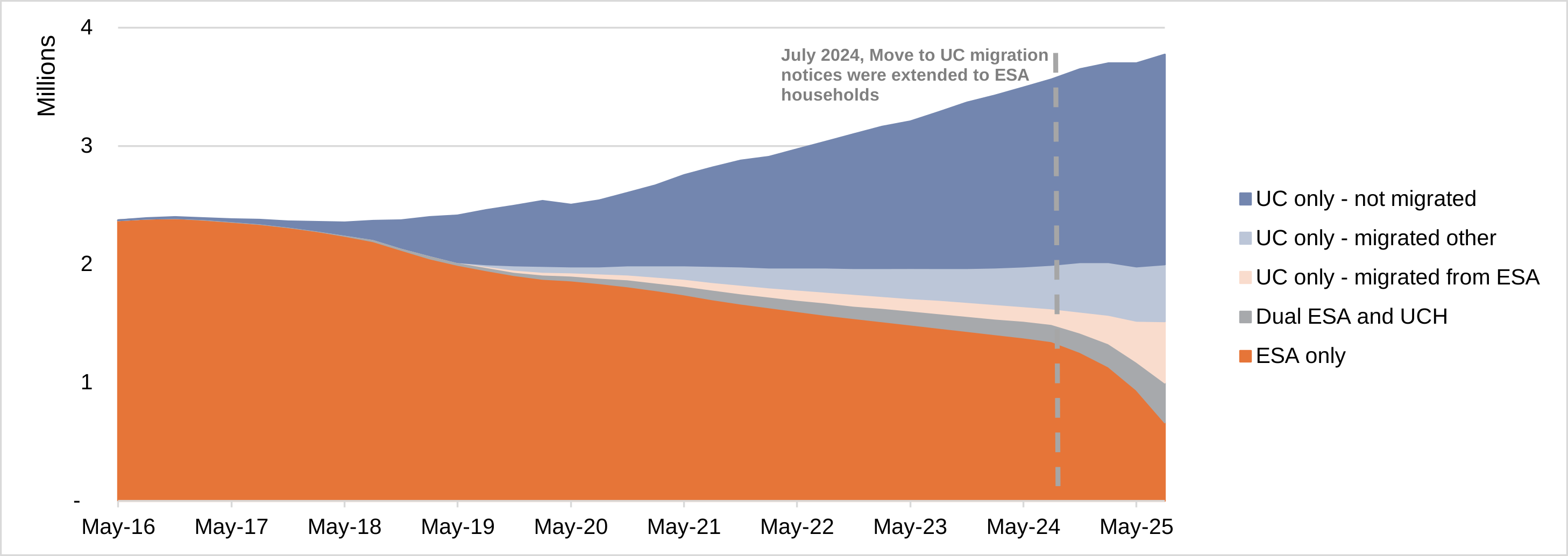
Natural and voluntary migrations have been taking place since UC rollout was completed and in 2024 the migration volumes increased as managed migrations were introduced. This led to migrated claims representing a larger proportion of the UC health caseload, including claims migrated from benefits other than ESA. By August 2025, migrated claims account for over 30% of the UC health caseload, with dual claims a further 11%.
Figure 2: Monthly on-flows to UC health by migration type
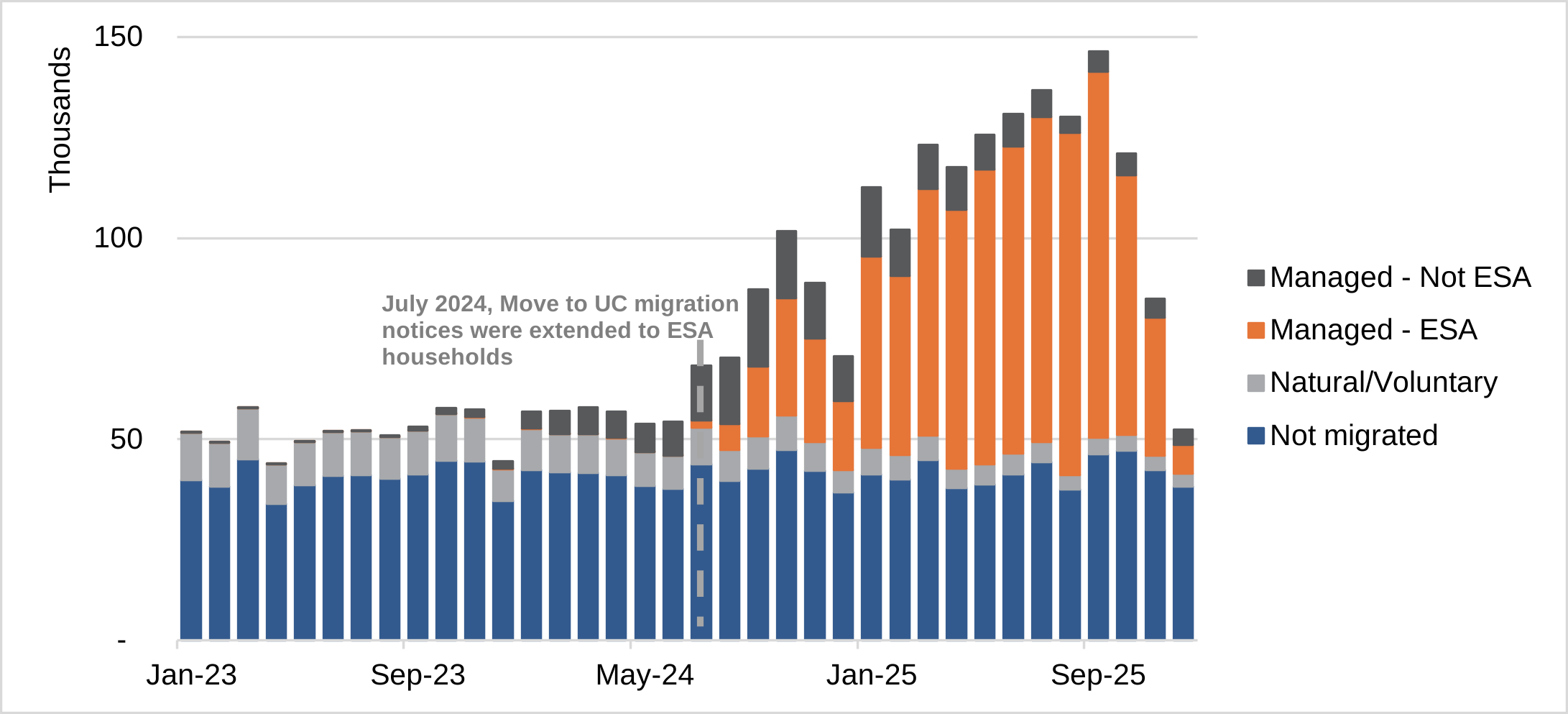
UC health on-flows from non-migrated claims, such as those newly joining UC without a legacy benefit link or already on UC and now joining the health journey, have remained steady at around 35,000 to 50,000 per month over the past few years, with the expected seasonal variation.
Throughout most of 2023 managed migration notices were only sent to Tax Credit only claimants and UC health on-flows were consistently between 40,000 and 60,000 per month, with 20% to 22% being migrated claims. From mid-2024 onwards the volumes increased, following migration notices being expanded to include Housing Benefit (HB) and ESA claimants meaning the vast majority of migrated claims from then on were through the managed migration route. For most of 2025, on-flows were over 100,000 per month with September 2025 having the highest volume at over 146,000. This also caused the proportion of on-flows that are from migrated claims to increase, peaking at 71% in August 2025.
Figure 3: Monthly on-flows to UC health by legacy benefit
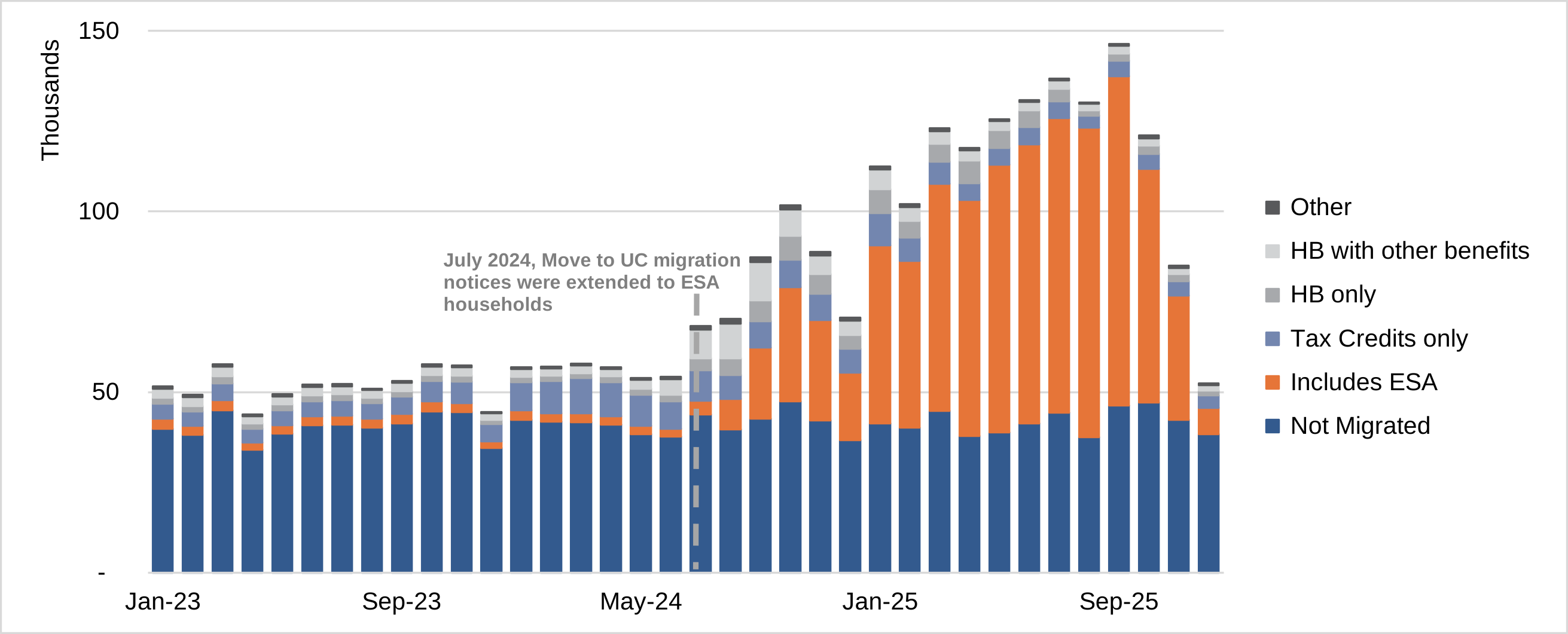
Throughout most of 2023, on-flows to UC health from migrations were quite steady at around 10,000 to 13,000 a month, with 35% to 48% coming from Tax Credits only, and around 20% from ESA only or ESA combined with other benefits. Most migrations during this time were through the natural route.
Towards the end of 2023, the proportion from tax credits increased slightly due to their managed migration as the proportion from ESA decreased. This rise continued to a peak of 60% in March 2024 then decreased in the Autumn as ESA migration notices led to a vast increase in the ESA-related migrations, which continued to rise, and peaked in August 2025 when over 90% of migrations were ESA related.
Figure 4: Time from UC registration to UC health for UC health on-flows January 2023 to December 2025
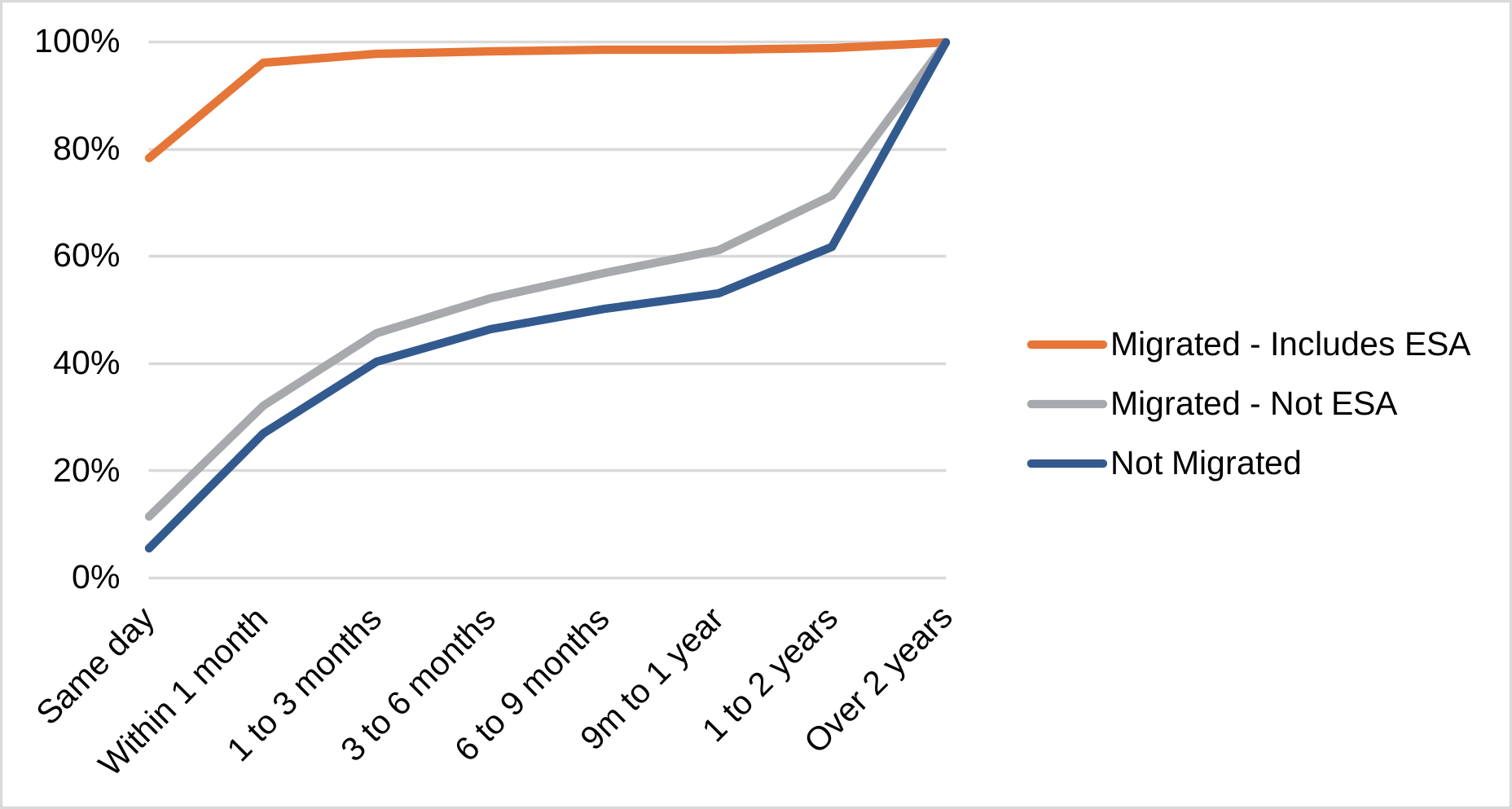
As expected, the vast majority of migrated ESA claims join UC health immediately as their ESA WCA decisions are built on the system when they migrate. Those that do not join immediately will be due to administrative reasons. Migrated claims from legacy benefits other than ESA join the health journey slightly quicker than non-migrated claims with half joining in 9 months or less.
Figure 5: No Work Requirements non-health journey caseload
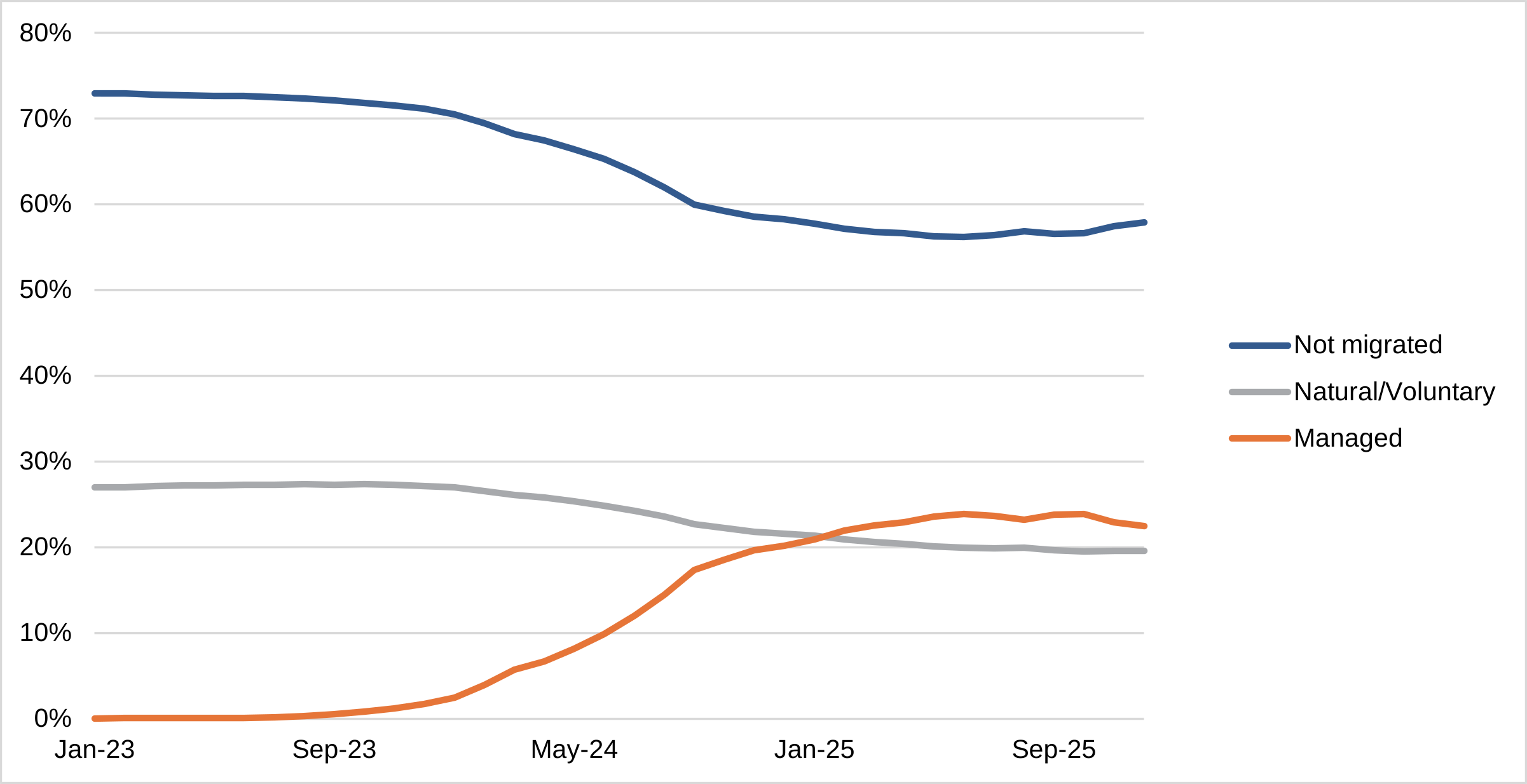
Claimants assessed as LCWRA make up around 60% of the NWR group and the proportion of claimants in NWR who are not LCWRA – most of whom are carers – has also been influenced by migration. Migrated claims now account for over 40% of this caseload, with an almost even split between natural/voluntary and managed migrations.
About this analysis
The figures presented in this release are based on internal analysis using Universal Credit and Legacy benefit claimant-level administrative data. As these are outturn figures, using 100 per cent of claimants in receipt of these benefits, the level of uncertainty in the analysis is low. However, the results may not match exactly the totals released as UC health Official Caseload statistics due to rounding.
Statement of Compliance with the Code of Practice for Statistics
The Code of Practice for Statistics (the Code) is built around 3 main concepts, or pillars:
- trustworthiness - is about having confidence in the people and organisations that publish statistics
- quality - is about using data and methods that produce statistics
- value - is about publishing statistics that support society’s needs
The following explains how we have applied the pillars of the Code in a proportionate way.
Trustworthiness
DWP analysts work to a professional competency framework and Civil Service core values of integrity, honesty, objectivity, and impartiality. The analysis in this release has been scrutinised and received sign off by the expert lead analyst.
We protect the security of our data in order to maintain the privacy of the citizen, fulfil relevant legal obligations and uphold our obligation that no statistics will be produced that are likely to identify an individual, while at the same time taking account of our obligation to obtain maximum value from the data we hold for statistical purposes. All analysts are given security training and the majority of data accessed by analysts is obfuscated and access is business case controlled based to the minimum data required.
The figures have been seen in advance by Ministers and officials, in line with the Code, where pre-release access does not apply for an ad hoc analysis release.
Quality
The data which underpins this information is taken directly from departmental systems, which are relied upon by DWP for the administration and operation of Universal Credit.
Quality assurance has taken place in line with the standards usually applied to DWP ad hoc releases, with an internal check that the results shown are robust and checked against published data.
Value
Releasing this information serves the public interest regarding the growth in the Universal Credit health caseload as a result of claims migrating from legacy benefits.
Contact information
For press enquiries contact DWP Press Office: 0203 267 5125