Chapter 2: Energy efficiency
Published 29 January 2026
Applies to England

© Crown copyright 2026
This publication is licensed under the terms of the Open Government Licence v3.0 except where otherwise stated. To view this licence, visit nationalarchives.gov.uk/doc/open-government-licence/version/3 or write to the Information Policy Team, The National Archives, Kew, London TW9 4DU, or email: psi@nationalarchives.gov.uk.
Where we have identified any third party copyright information you will need to obtain permission from the copyright holders concerned.
This publication is available at https://www.gov.uk/government/statistics/chapters-for-english-housing-survey-2024-to-2025-headline-findings-on-housing-quality-and-energy-efficiency/chapter-2-energy-efficiency
Introduction
This chapter discusses findings on energy efficiency ratings and heating systems and how this differs by tenure. It then goes on to discuss insulation measures in dwellings, smart meters by tenure and subjective overheating, then finishes with the average cost of improving dwellings to an EER band C.
For a summary of main findings in this report as a whole, please see the Introduction and Main Findings page.
Energy efficiency ratings
The government’s Standard Assessment Procedure (SAP) is used to monitor the energy efficiency of homes. It is an index based on calculating annual space and water heating costs for a standard heating regime and is expressed on a scale of 1 (highly inefficient) to 100 (highly efficient, with 100 representing zero energy costs). Findings presented in this report were calculated using Reduced Data SAP (RdSAP) version 9.93.
As mentioned in the introduction to this publication, the English Housing Survey physical data aggregates two years of the survey for analysis. Dwelling data from 2023-24 and 2024-25 was based on full inspections and was not impacted by COVID-19 restrictions.
The government ran a consultation on reforms to the Energy Performance of Buildings regime in December 2024, and a partial government response was published on 21 January 2026. Alongside this, proposals to ensure homes in the private rented sector in England and Wales meet minimum energy efficiency standards (MEES) of EER C by 2030 and the Warm Homes Plan were published. Further proposals will be published this year on the minimum energy efficiency standards for social rented homes. The current minimum energy efficiency standard in the private rented sector is EER E.
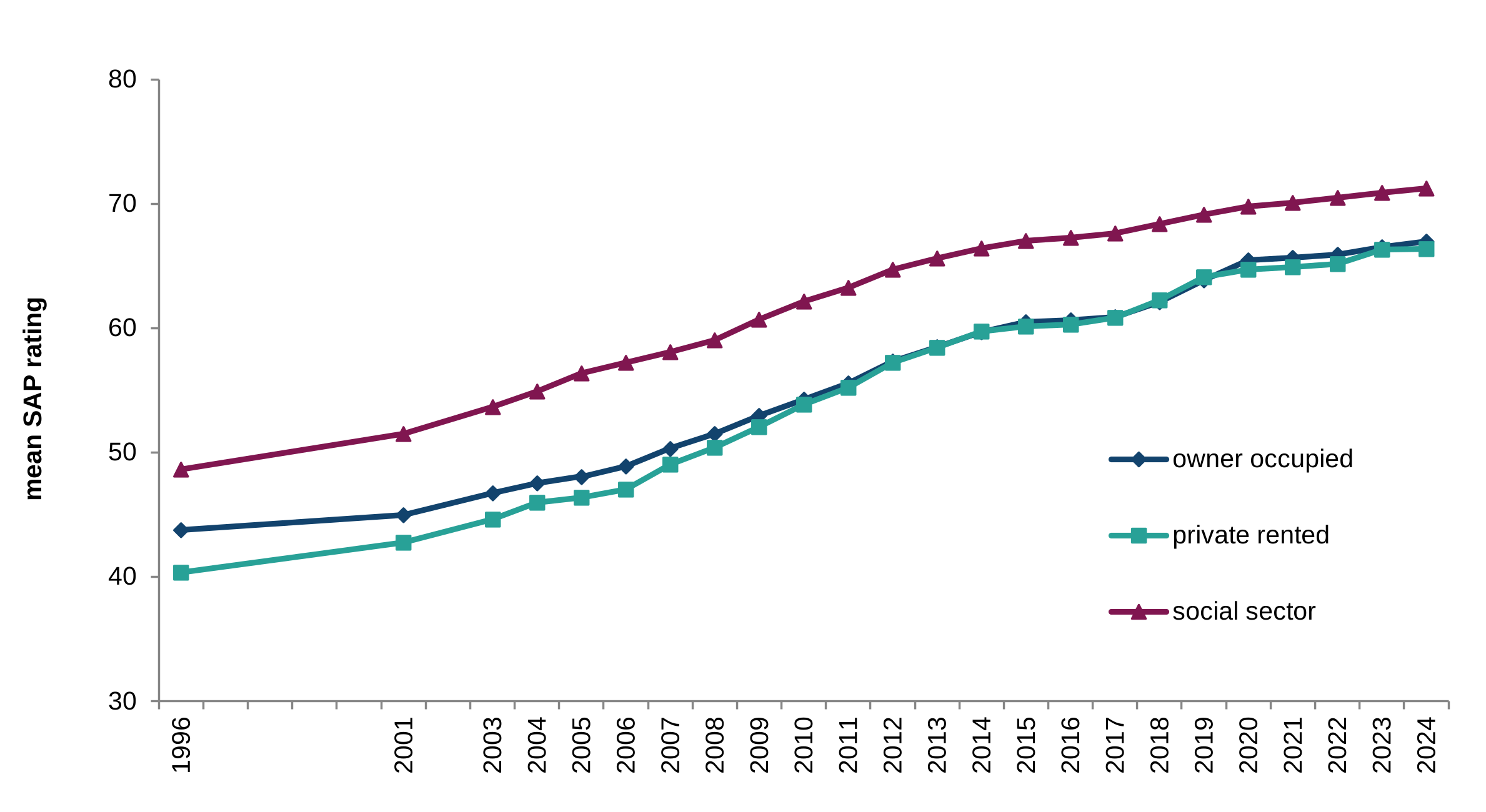
Overall, the energy efficiency of the English housing stock continued to improve. In 2024, the average SAP rating for English dwellings was 68 points, up from 45 points in 1996. This longer-term upward trend was evident in all tenures and largely driven by improvements in the prevalence of the most common energy efficiency measures across the stock, particularly cavity wall insulation, boiler upgrades from standard to condensing combi and full double glazing, Annex Table 2.1 and Figure 2.1.
Over the last ten years, the biggest improvements in average SAP rating were in owner occupied and private rented dwellings, a seven point increase for both since 2014. However, the social rented sector continued to be the most energy efficient sector, where the average SAP rating of local authority dwellings increased from 66 in 2014 to 71 in 2024, and similarly, the average SAP rating of housing association dwellings increased from 67 in 2014 to 72 in 2024. This is not surprising given the social sector contains a higher proportion of purpose built flats compared to the private and owner occupied sector, which have less exposed surface area (external walls and roofs) through which heat can be lost (Headline findings on demographics and household resilience, Chapter 1).
When compared to 2019 (pre-COVID pandemic), energy efficiency increased three points for owner occupied dwellings (from 64 to 67) and two points for both private and social rented sector homes (from 64 to 66, and from 69 to 71 respectively), Annex Table 2.1, Figure 2.1.
Figure 2.1: Mean SAP rating, by tenure, 1996 to 2024
Base: 1996-2019 all dwellings; 2020-2021 occupied dwellings; 2022 modelled and observed data; 2023-2024 all dwellings
Notes:
1) 2010-2012 uses SAP09
2) 2013-2018 uses SAP12. In 2018 RdSAP changed to version 9.94 and improvements were made to the modelling, which has led to a larger increase in the mean SAP rating compared to previous years.
3) underlying data are presented in Annex Table 2.1
Sources:
1996 to 2007: English House Condition Survey, dwelling sample
2008-2019: English Housing Survey, dwelling sample
2020-2021: English Housing Survey, modelled data based on occupied dwellings
2022: English Housing Survey, dwelling sample, modelled and observed data based on all dwellings 2023 onwards: English Housing Survey, dwelling sample
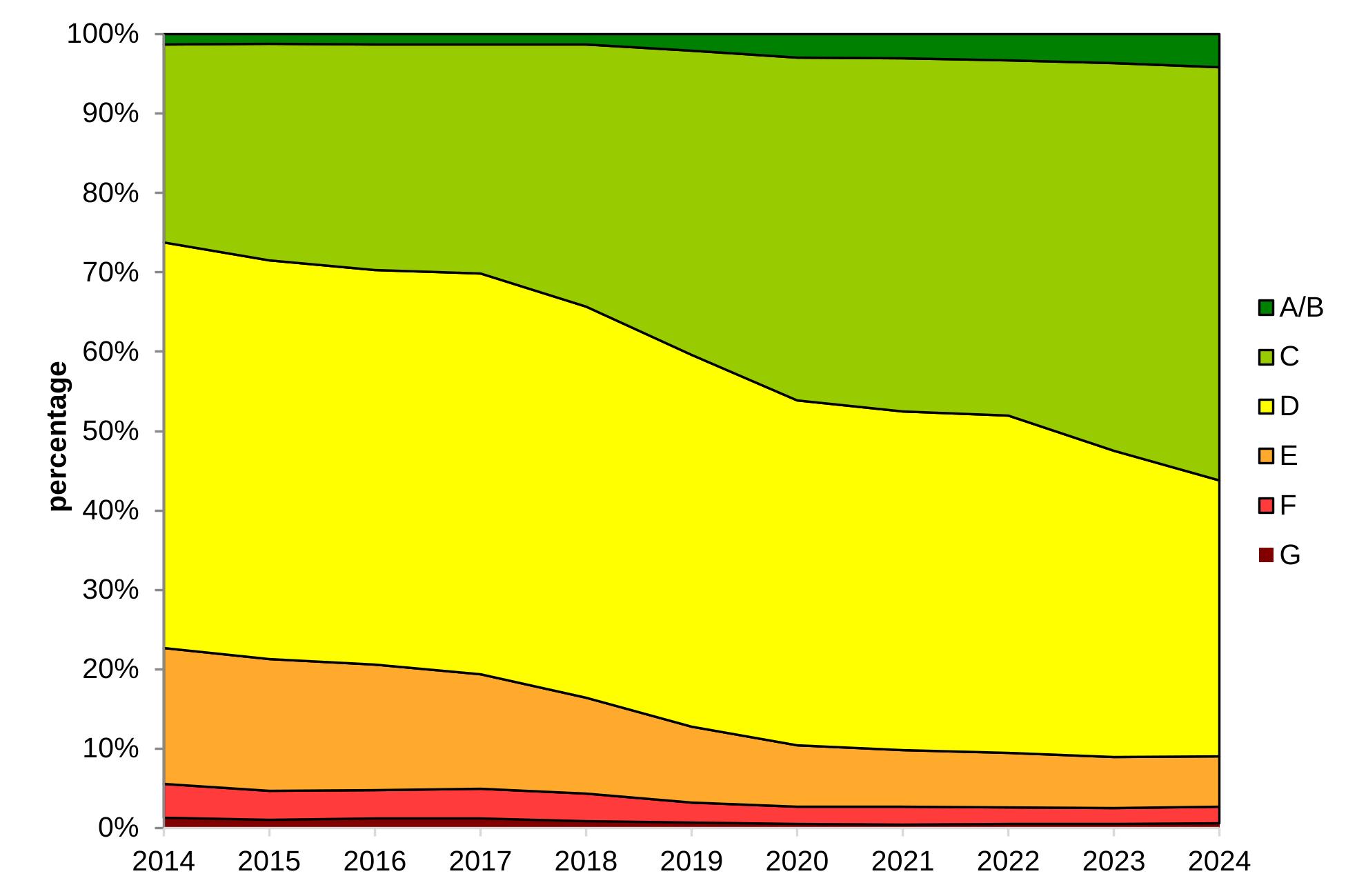
The proportion of dwellings in the highest SAP energy efficiency rating (EER) bands A to C increased over the last decade, from 26% in 2014 to over half of all dwellings (56%) in 2024, while the proportion in the lowest bands (E to G) decreased over the same time period (23% to 9%), Annex Table 2.2.
Over the last ten years, the proportion of dwellings with an energy efficiency rating of band D has continually decreased. However, in the last two years, the proportion decreased significantly (43% in 2022 to 35% in 2024), with a corresponding increase in dwellings rated band C (45% in 2022 to 52% in 2024), Annex Table 2.3.
Figure 2.2 demonstrates the transition of the individual EER bands from 2014 to 2024, highlighting the overall improvement in the energy efficiency of the English housing stock.
Figure 2.2: Energy efficiency rating bands, 2014 to 2024
Base: 2013-2019 all dwellings; 2020-2021 occupied dwellings; 2022 modelled and observed data; 2023 onwards all dwellings
Notes:
1) from 2018 the SAP 2012 methodology used new U values for cavity, solid and stone walls, both insulated and uninsulated.
2) EER bands A and B are grouped. There are currently insufficient numbers of Band A properties existing for which meaningful estimates can be made through a sample survey.
3) Due to the COVID-19 pandemic, EHS surveyors did not conduct any inspection of vacant properties in 2020. Although an external inspection of vacant homes occurred in 2021, the 2021 combined survey dwelling sample is for occupied properties only.
4) Underlying data are presented in Annex Table 2.3
Sources:
2014-2019: English Housing Survey, dwelling sample
2020-2021: English Housing Survey, modelled data based on occupied dwellings
2022: English Housing Survey, dwelling sample, modelled and observed data based on all dwellings
2023 onwards: English Housing Survey, dwelling sample
Energy efficiency rating bands, by tenure
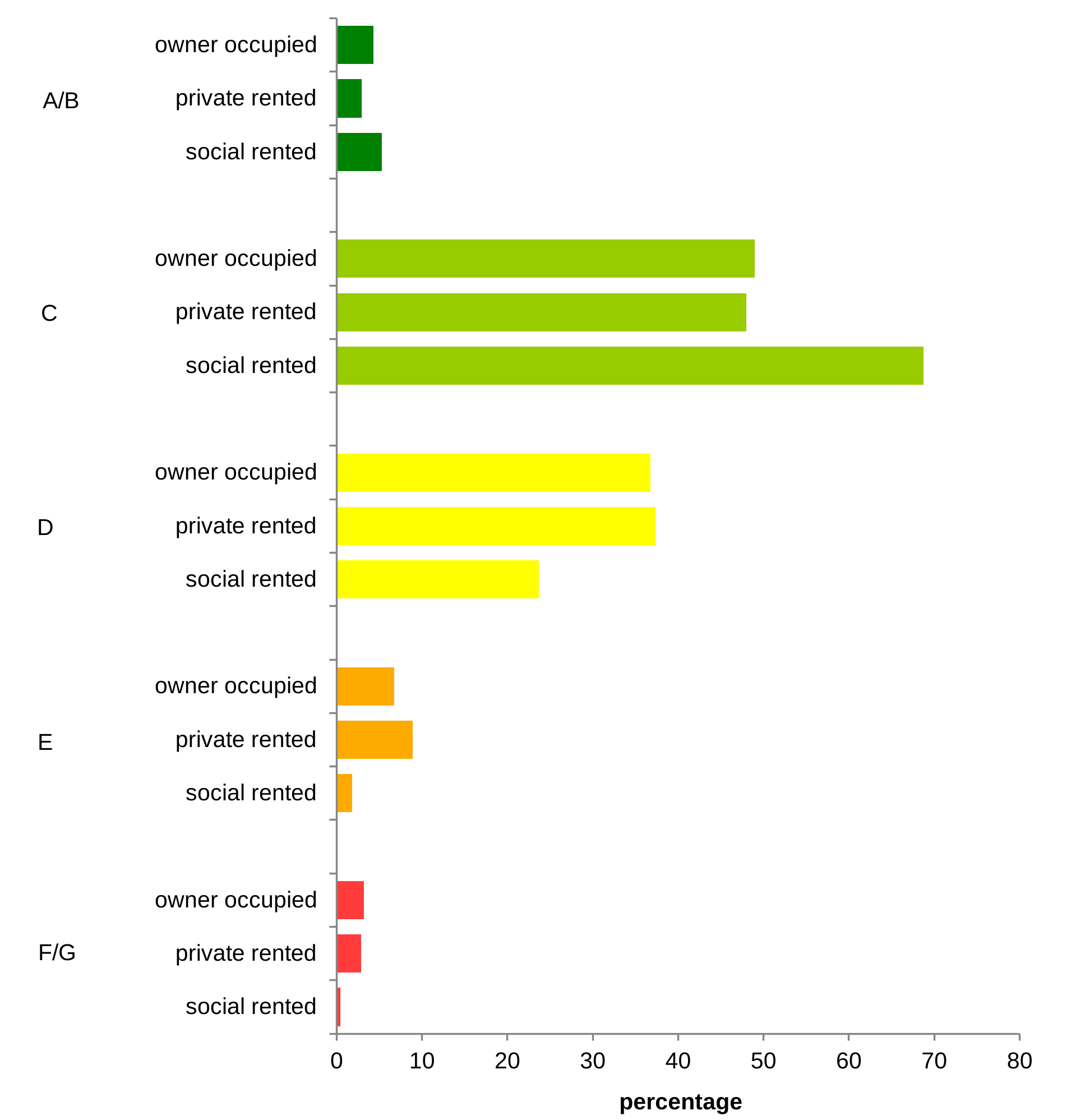
In 2024, the most common EER band was band C, with 69% of social rented dwellings, 49% of owner occupied dwellings and 48% of private rented dwellings falling into this rating, Annex Table 2.2 and Figure 2.3.
Social rented dwellings were more likely to be rated A or B (5%), than owner occupied dwellings (4%) and private rented dwellings (3%). Consequently, private rented dwellings were more likely to be EER band E (9%) than owner occupied (7%) and social rented dwellings (2%).
Figure 2.3: Energy efficiency rating bands, by tenure, 2024
Base: All dwellings
Notes:
1) underlying data are presented in Annex Table 2.2
Source: English Housing Survey, dwelling sample
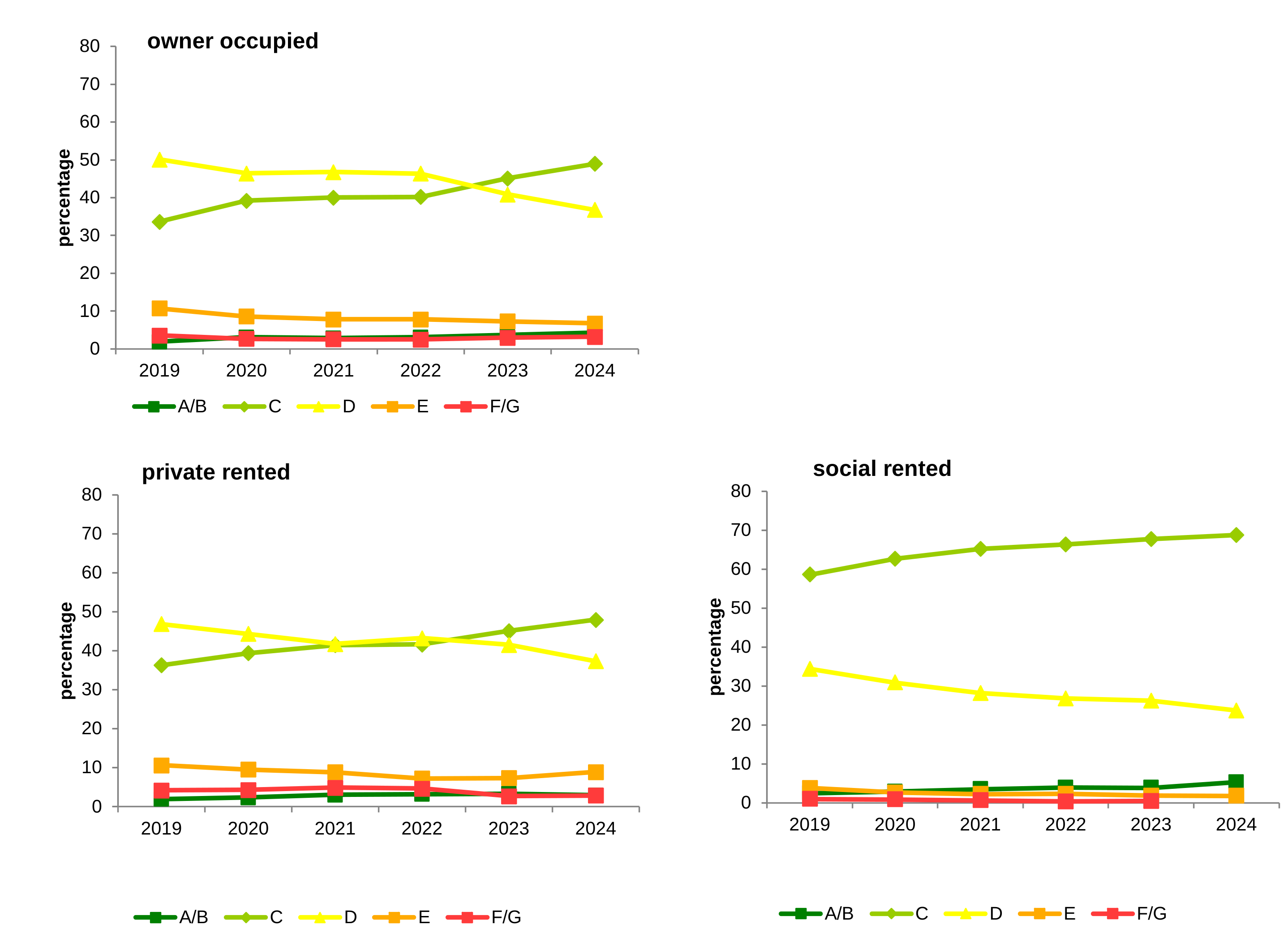
The energy efficiency bands of dwellings varied by tenure over time. In the last two years private rented dwellings with an energy efficiency rating of band D significantly decreased from 43% in 2022 to 37% in 2024 with a subsequent increase in band C dwellings (42% to 48%).
For owner occupied and social rented dwellings, as the proportion of band D rated dwellings decreased from 2022 to 2024 (from 46% to 37% for owner occupied, 27% to 24% for social rented dwellings) there was an increase in both Band C rated dwellings (from 40% to 49% and 66% to 69% respectively) and A/B rated dwellings (3% to 4% and 4% to 5% respectively).
Figure 2.4: Energy efficiency rating bands, by tenure, 2019 to 2024
Base: all dwellings
Notes:
1) underlying data are presented in Annex Table 2.2
Source: English Housing Survey, dwelling sample
Energy efficiency rating bands, by dwelling characteristics
In 2024, the most energy efficient homes (EER bands A to C) were more likely to be newer dwellings. The majority of dwellings built after 1944 were in bands A to C (ranging from 55% to 94%), whereas more than a quarter (27%) of dwellings built prior to 1919 had an EER of A to C, Annex Table 2.4.
Purpose built high rise (80%) and purpose built low rise (75%) flats had the highest proportion of A to C rated dwellings compared with all other dwelling types (ranging from 42% to 55%). In comparison, bungalows (58%) and converted flats (55%) had the largest proportion of D to G rated dwellings compared to all other dwelling types (ranging from 20% to 49%).
Energy efficiency rating bands, by region
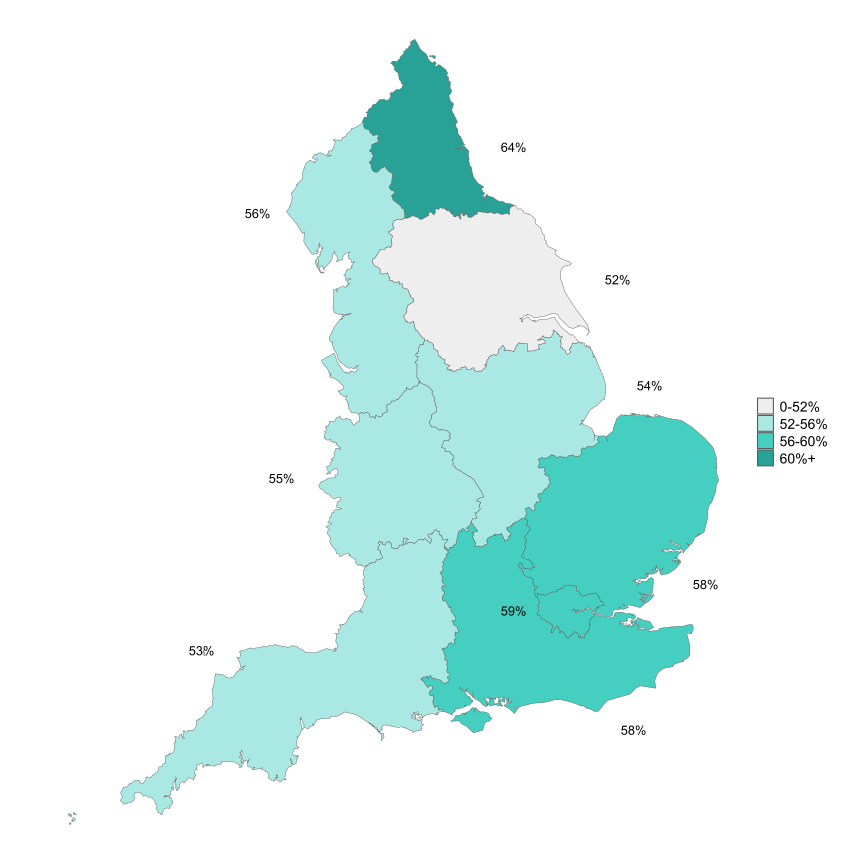
Overall, the North East had the highest proportion of energy efficient dwellings compared to all other regions. In the North East 64% of dwellings had an EER of A to C compared with 59% in London and 51% to 58% in all other regions, Figure 2.5 and Annex Table 2.4.
Figure 2.5: Dwellings with energy efficiency rating A to C, by region, 2024
Base: all dwellings
Note: underlying data are presented in Annex Table 2.4
Source: English Housing Survey, dwelling sample
Heating system
There are two key methods of increasing the energy efficiency of existing dwellings: upgrading the dwelling’s heating system and increasing insulation.
Between 1996 and 2024, the proportion of homes with central heating increased (from 80% to 93%), while the proportion of homes with room heaters as their main heating source – the least cost-effective and most inefficient method of heating – decreased from 12% to 4%, Annex Table 2.5.
In 2024, owner occupied and local authority homes had the highest proportion of homes with central heating (both 95%), followed by housing association homes (91%), and private rented homes (85%) with the lowest. In addition, the proportion of dwellings in the private rented sector with fixed room heaters was higher than in other tenures (8% compared to 3% for owner occupied and 1% for the social rented sector), Annex Table 2.6.
Condensing boilers are generally the most efficient boiler type and since the mid-2000s have been mandatory for new and replacement boilers. As expected, the proportion of dwellings with condensing or condensing-combination boilers has increased considerably since 2001. In 2001, just 1% of homes had condensing boilers and 2% had a condensing-combination boiler. By 2024, this increased to 19% and 63% respectively, Figure 2.6 and Annex Table 2.7.
Figure 2.6: Boiler types, 1996 to 2024

Base: 1996-2019 all dwellings; 2020-2021 occupied dwellings; and 2022 All dwellings; 2022 modelled and observed data; 2023 onwards all dwellings
Notes:
1) Condensing and condensing-combination boilers were rare in 1996, so data collection did not start until 2001
2) Underlying data are presented in Annex Table 2.7
Sources:
1996-2007: English House Condition Survey, dwelling sample
2008-2019: English Housing Survey, dwelling sample
2020-2021: English Housing Survey, modelled data based on occupied dwellings
2022: English Housing Survey, modelled and observed data based on all dwellings
2023 onwards: English Housing Survey, dwelling sample
Private rented and housing association homes were the most likely to have no boiler in their property at all (19% and 17% respectively), compared to 15% of local authority dwellings and 8% of owner occupied.
Overall, homes in the social rented sector were more likely to have newer, more energy efficient condensing-combination boilers (67%) compared to private rented and owner occupied dwellings (64% and 61% respectively). This may reflect the age and type of dwellings across tenures, Annex Table 2.8.
Insulation
The base for the following section is all dwellings, though not all dwellings will be suitable for particular upgrades e.g. some homes will not have loft space, so are unsuitable for loft insulation.
In alignment with current SAP assumptions dwellings built after 1995 with cavity walls with no evidence of insulation in the survey have been assumed to be insulated.
The second main method of increasing a dwelling’s energy performance is by installing or upgrading insulation. Standard insulation measures include installing cavity or solid wall insulation, loft insulation and double glazing. Installation of these measures has increased in the last ten years, though the changes are not as substantial as for other improvements.
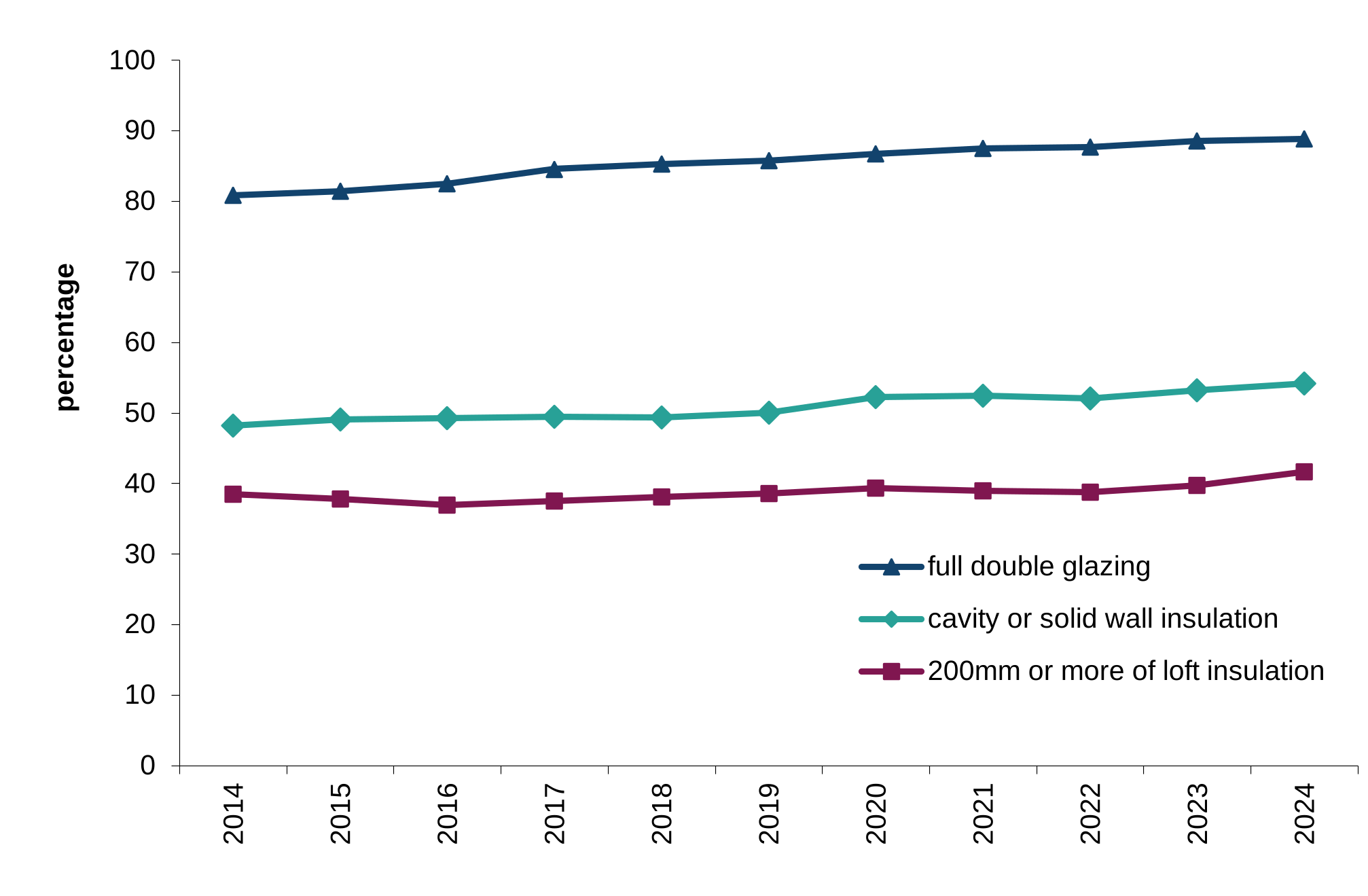
In 2024, 42% of dwellings had 200mm or more of loft insulation (up from 39% in 2014). Just over half (54%) of dwellings had cavity or solid wall insulation (up from 48% in 2014) and 89% of homes in England had full double glazing, up from 81% of homes in 2014, Figure 2.7 and Annex Table 2.9.
Over the last two years, the proportion of homes with 200mm or more of loft insulation rose from 39% in 2022 to 42% in 2024. Increases were also apparent for dwellings with solid wall insulation (from 3% to 4%) and double glazing (88% to 89%). However, there was no significant increase in dwellings with cavity wall insulation over the same period.
Figure 2.7: Insulation measures, 2014 to 2024
Base: 2014-2019 all dwellings; 2020-2021 occupied dwellings; 2022 modelled and observed data; 2023 onwards all dwellings
Notes:
1) Percentages are based on all dwellings, including those with no loft or other wall type.
2) Underlying data are presented in Annex Table 2.9. See footnotes in this table for further detail on methodology for cavity and solid wall insulation.
Sources:
2011-2019: English Housing Survey, dwelling sample
2020-2021: English Housing Survey, modelled data based on occupied dwellings
2022: English Housing Survey, dwelling sample, modelled and observed data based on all dwellings
2023 onwards: English Housing Survey, dwelling sample
Among dwellings with solid walls, the social rented sector had a higher proportion of dwellings with solid wall insulation (local authority housing 34%, and housing association 37%) compared to both owner occupied (11%) and private rented dwellings (10%), Annex Table 2.10.
The proportion of housing association dwellings with solid wall insulation increased from 28% in 2023 to 37% in 2024. All other tenures remained around the same.
Private rented dwellings had the lowest proportion of cavity wall insulation (60%) compared to all other tenures (73% owner occupied, 79% for both local authority and housing association dwellings), Figure 2.8.
Figure 2.8: Wall insulation, by main wall type and tenure, 2024

Base: dwellings with predominantly cavity wall insulation (green); dwellings with predominantly solid wall insulation (blue)
Note: underlying data are presented in Annex Table 2.10
Source: English Housing Survey, dwelling sample
Electricity smart meters and payment methods
The replacement of traditional meters with smart meters is a national infrastructure upgrade that aims to make the country’s energy system cheaper, cleaner and more reliable. Smart meters offer a range of intelligent functions. For example, they can tell residents how much energy they are using in pounds and pence via an In-Home Display. This information should help customers manage their energy use, save money and reduce emissions. Smart meters in smart mode communicate automatically with energy suppliers, which avoids manual meter reads and provides customers with accurate bills.
The English Housing Survey asks residents whether they have a smart meter. This section of the report is based on the information given by the resident through the household survey and focuses on electricity smart meters only.
In 2024-25, 60% of households in England reported having an electricity smart meter (around 15 million households), an increase from 56% in 2023-24, Annex Table 2.11.
Owner occupiers and social renters were more likely to report having an electricity smart meter (63% and 58% respectively) compared with private renters (50%). The proportion of households with an electricity smart meter continued to increase for all tenures, Figure 2.9.
Figure 2.9: Electricity smart meters, 2021-22 to 2024-25

Base: all households
Notes:
1) Self reported presence of electricity smart meters
2) Underlying data are presented in Annex Table 2.11
Source: English Housing Survey, full household sample
Households who paid for their electricity by direct debit (62%) or pre-payment token (61%) were more likely to report having an electricity smart meter than those who paid on receipt of the bill (46%) or by other methods (32%) e.g. included in the rent, fixed annual bill, Annex Table 2.11.
The English Housing Survey results are broadly in line with smart meter statistics from the Department for Energy Security and Net Zero (DESNZ) over the same time period. As of 30 September 2024, 68% of domestic properties had an electric smart meter. Differences between EHS and DESNZ statistics are likely to reflect the different time periods for data collection and the EHS survey reliance on self-reporting.
Subjective overheating
The English Housing Survey includes a subjective measure for gauging whether households feel any part of their home gets uncomfortably hot.
In 2024, 12% of households reported at least one part of their home got uncomfortably hot, no change from 2023, Annex Table 2.12.
Owner occupiers (13%) were more likely to report at least part of their home got uncomfortably hot than those in the private and social rented dwellings (both 11%). Households living in detached houses (15%) were most likely to report overheating in their homes, compared with 11% in terraced houses, 10% in low rise flats and 9% in purpose built high rise flats, Annex Table 2.12.
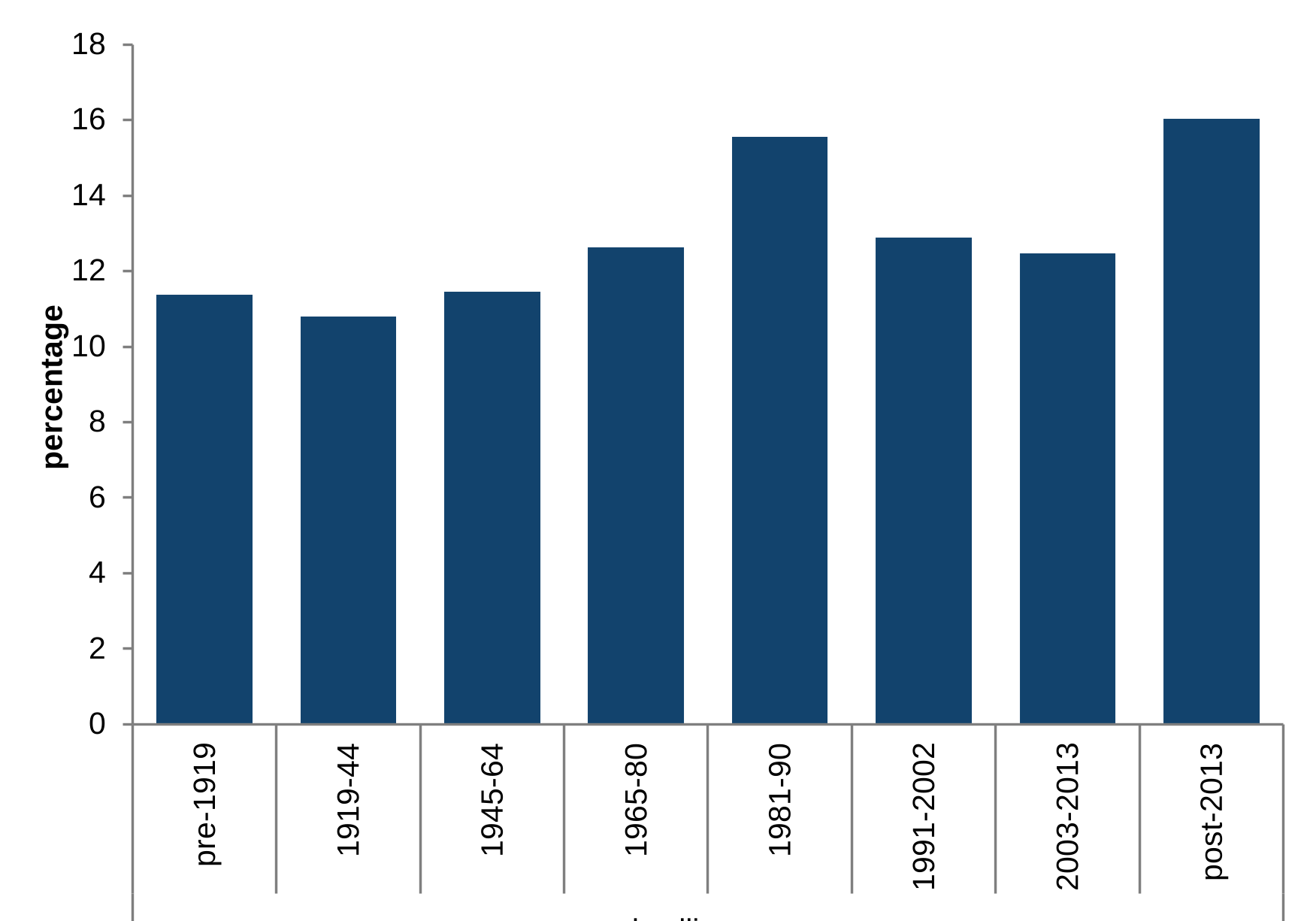
Households living in newer homes were more likely to report overheating than those in older homes. Older homes can be more difficult and costly to insulate compared to new homes. In 2024, 16% of households in homes built post-2013 reported at least one part of their home got uncomfortably hot, compared with homes built between 1919 and 1964 (11%), Figure 2.10.
Figure 2.10: Subjective overheating, by dwelling age, 2024
Base: all occupied dwellings with households reporting overheating
Note: underlying data are presented in Annex Table 2.12
Source: English Housing Survey, dwelling sub-sample
Costs to improve to an energy efficiency rating band C
This section looks at the cost of improving dwellings with an energy efficiency rating (EER) band of D or lower to an EER band of at least C, by dwelling characteristics.
To estimate costs, for each dwelling identified as having an EER band of D or lower, improvement measures were simulated cumulatively using SAP as the underlying methodology. After each improvement, the SAP rating was recalculated until the dwelling reached the threshold for EER band C (SAP rating of 68.5 or higher).
In certain cases, a dwelling’s energy efficiency rating may be improved beyond the target band, where a dwelling’s energy efficiency rating is already close to the band C threshold. If a measure with a high SAP improvement yield is installed, for example cavity wall insulation, then the dwelling may be improved beyond a band C into the band B range.
In 2024, fewer than half of the dwellings in England (42%) could be improved to an EER band C or higher. Around 2% (443,000) would either not be suitable to receive any improvement measures or received at least one improvement measure but were unable to reach band C, and the remaining dwellings in the stock (56%) already had an EER band of C or higher, Annex Table 2.13.
The mean cost to improve dwellings to an EER band C was £7,480 per dwelling. The median cost per dwelling was slightly higher, at £8,648 to improve dwellings to band C, Annex Table 2.14.
On average, owner occupied dwellings would cost the most to improve to an EER band C (£7,869) compared to private rented (£7,040) and social rented dwellings (£5,655). Within the social sector, housing association dwellings cost more than local authority dwellings to improve (£6,082 compared to £5,050), Figure 2.11.
Figure 2.11: Average cost to improve to energy efficiency rating band C, by tenure, 2024

Base: all dwellings able to be improved to an EER band C
Note: Underlying data are presented in Annex Table 2.14
Source: English Housing Survey, dwelling sample
The age and type of dwelling have a large influence on the energy efficiency of homes, and it is not surprising that the cost to bring older dwellings up to a band C was higher. Dwellings built before 1919, which are more likely to be of solid wall construction, had the highest average cost to improve to a band C, at £10,728, followed by dwellings built between 1919 to 1944 (£7,143).
Detached dwellings had the highest average cost to reach band C, at £9,464, closely followed by medium/large terraced houses (£8,075). Conversely, purpose built, low rise and purpose-built, high rise flats had the lowest average costs, at £4,193 and £2,468, respectively. Converted flats cost the most out of all flat types, at £7,167, this is not surprising given converted flats tend to be older dwellings than purpose built flats and therefore will likely cost more to improve.
As expected, dwellings with an EER rating of F or G had a higher average cost to improve to a band C (£17,354), than E (£12,430) and D rated dwellings (£6,002).
The cost to improve a dwelling to an EER rating of band C varied by region. The West Midlands had the highest average cost of £8,576 to achieve an EER rating of band C compared to the North East with the lowest, £5,147, Figure 2.12.
Figure 2.12: Average cost to improve to energy efficiency rating band C, by region, 2024

Base: all dwellings able to be improved to an EER band C
Note: underlying data are presented in Annex Table 2.14
Source: English Housing Survey, dwelling sample
Banded costs to improve to an energy efficiency rating band C
In 2024 it would cost between £1,000 to £4,999 to improve just over a quarter (27%) of eligible dwellings to an EER band C and around £5,000 to £9,999 to improve just under half (44%). Around 5% of eligible dwellings would require less than a £1,000 investment, whereas 15% of eligible dwellings would require larger investments of between £10,000 and £14,999. The remaining 8% would need more than £15,000 to improve to a band C, Figure 2.13, Annex Table 2.15.
Figure 2.13: Banded cost to improve to energy efficiency rating band C, by region, 2024

Base: all dwellings able to be improved to an EER band C
Note: underlying data are presented in Annex Table 2.15
Source: English Housing Survey, dwelling sample
Owner occupied dwellings (10%) were more likely to cost £15,000 or more to bring up to band C compared to private rented (7%), housing association (2%) and local authority (1%) dwellings, Annex Table 2.15.
The South West, West Midlands and East of England were more likely to have dwellings costing £15,000 or more to improve compared to all other regions (14%, 14% and 11% respectively).