Blue Fin Tuna Catch and Release Recreational Fishery: 2025
Updated 5 February 2026

© Crown copyright 2026
This publication is licensed under the terms of the Open Government Licence v3.0 except where otherwise stated. To view this licence, visit nationalarchives.gov.uk/doc/open-government-licence/version/3 or write to the Information Policy Team, The National Archives, Kew, London TW9 4DU, or email: psi@nationalarchives.gov.uk.
Where we have identified any third party copyright information you will need to obtain permission from the copyright holders concerned.
This publication is available at https://www.gov.uk/government/statistics/bluefin-tuna-catch-and-release-recreational-fishery-crrf-2025/blue-fin-tuna-catch-and-release-recreational-fishery-2025
These official statistics contain information about fishing activity from the Blue Fin Tuna Catch and Release Recreational Fishery (CRRF) in the 2025 season. Comparisons are made with statistics collected from the 2024 season (published 19 March 2025).
The 2025 season ran from 18 July 2025 to 30 November 2025.
This report contains charts and commentary to describe activity reported within the CRRF in 2025. The accompanying datasets are available here.
1. Key Findings
The 2025 Blue Fin Tuna Catch and Release Recreational Fishery ran from 18 July 2025 to 30 November 2025. The 2025 season lasted for 19 weeks and 3 days, which is 2 weeks and 1 day shorter than the 2024 season (21 weeks and 4 days).
There were 142 vessels permitted to fish in the CRRF in 2025. This is an increase of 49 vessels (up by 52.69%) compared to 2024. Of these, 124 vessels (87.32%) were active at least once during the 2025 season.
The 124 active vessels made 1,362 trips in total over the course of the season. Of those, 959 trips (70.41%) were successful in terms of catching at least one Blue Fin Tuna. This is 12.23 percentage points lower than the 2024 figure, which was an 82.64% success rate.
In total, 2,666 Blue Fin Tuna were caught throughout the 2025 season, with an average of 1.96 Blue Fin Tuna per trip. This is 1.35 Blue Fin Tuna per trip lower (down by 40.79%) than the 2024 figure which was 3.31 Blue Fin Tuna per trip.
The average length of the Blue Fin Tuna caught in 2025 was 179.48cm, which is an increase of 11.78cm (up by 7.02%) from the average length in 2024. The average estimated weight of the Blue Fin Tuna caught in 2025 was 115.18kg, which is an increase of 19.68kg (up by 20.61%) from the average weight in 2024.
The majority (97.00%) of Blue Fin Tuna caught in 2025 were released in a good to excellent condition. The reported mortality rate before release was 0.53% of all Blue Fin Tuna caught. In comparison to 2024, this is an increase of 0.32 percentage points in mortality rate, up from 0.21%.
2. Background
The English Catch and Release Recreational Fishery (CRRF) for Blue Fin Tuna (BFT) first opened in 2024. The fishery allows permitted vessels to be used to ‘catch and release’ BFT by rod and line, for a defined period in English waters. As this fishery operates within English waters, the Marine Management Organisation (MMO) is responsible for issuing permits for the fishery, as well as monitoring fishing activity to enable sustainable marine activities and support UK economic growth.
Permit numbers are proportionate to the amount of quota available to cover any BFT mortalities that occur during the catch and release process. To receive and maintain their permit, vessel owners are required to submit data about their trips and associated catch. The MMO collects these data for operational purposes, including monitoring and managing the fishery throughout the season. The MMO is also required to submit data to the International Council for the Conservation of Atlantic Tuna (ICCAT) to fulfil the UK’s reporting obligations as a contracting party.
The 2025 season started 18 July 2025 and ran through until the 30 November 2025. The season was open for 19 weeks and 3 days. This is the second season of the CRRF for BFT in English waters. The first was in 2024.
These official statistics contain information about fishing activity from the Blue Fin Tuna Catch and Release Recreational Fishery (CRRF) in the 2025 season.
A three-year scientific research programme CatcH And Release Tagging (CHART) by the Centre for Environment, Fisheries and Aquaculture Science (Cefas) into BFT in the Southwest of England ran between 2021 and 2023. Comparisons have been made between the activity from the 2025 season to both activity from the 2024 CRRF season and the results of the CHART programme to provide context for these statistics.
More details about CHART programme can be found on Cefas’ website: CatcH And Release Tag (CHART) Scientific Data Collection Programme for Atlantic Bluefin Tuna (BFT) - Cefas (Centre for Environment, Fisheries and Aquaculture Science)
3. Vessel Insight
This section includes statistics related to the vessels permitted as part of the BFT CRRF.
3.1 Vessel Activity
Vessel Types
Charter Vessels in the CRRF were vessels that took paying anglers out on trips targeting BFT.
Private Vessels in the CRRF were vessels that were for private use and did not take paying anglers on trips.
There were 142 vessels granted permits for the 2025 BFT CRRF season. This is an increase of 52.69% (up by 49 vessels) compared to the 2024 season. There were 73 charter vessels (51.41% of all permitted vessels) and 69 private vessels (48.59%). This is different to 2024, where 66.67% of vessels were charter and 33.33% were private.
A total of 124 vessels reported at least one trip. In total, 87.32% of all permitted vessels were active. This is an increase of 0.22 percentage points compared to 2024, where 87.10% of vessels were active. There were 57 of the permitted charter vessels (78.08%) and 48 of the permitted private vessels (69.57%) active in the 2025 season. Compared to the 2024 season, this is a decrease down by 5.79 percentage points for charter vessels from 83.87% and down by 23.98 percentage points for private vessels from 93.55%.
Activity was reported on 120 days of the 135 days (88.89%) that the fishery was open. This is an increase of 14.89 percentage points from 2024, where activity was reported on 111 of the 150 days of the season (74.00%). The intensity of activity varied through the season, with most activity occurring between August and October.
Success rates
A hookup is where a Blue Fin Tuna has been caught.
A vessel is considered successful if they reported at least one successful hookup during the season. A vessel is unsuccessful if they reported activity, but no successful hookups during the season.
A vessel is considered inactive if no activity has been reported.
3.2 Season Outcomes
Overall, 105 of the 124 active vessels (84.68%) were successful in the 2025 season. This is down 0.51 percentage points from 2024, in which 69 of the active 81 vessels (85.19%) were successful. In 2025, there were 19 vessels that were unsuccessful (15.32% of all active vessels), and 18 vessels were inactive. This is compared to 12 vessels (14.81%) that were unsuccessful and 12 vessels that were inactive in 2024.
Table 1. Outcomes by Vessel Group for the 2025 CRRF season.
| Category | Successful | Unsuccessful | Inactive | Total |
|---|---|---|---|---|
| Charter | 57 | 9 | 7 | 73 |
| Private | 48 | 10 | 11 | 69 |
| Total | 105 | 19 | 18 | 142 |
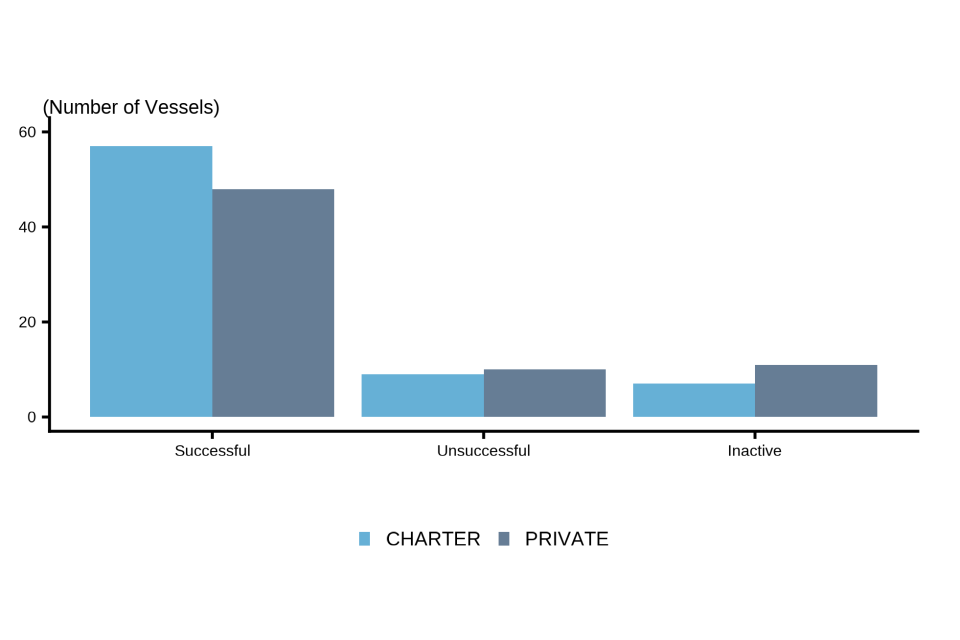
For charter vessels, 57 of the 66 active charter vessels (86.36%) were successful in the 2025 season. This is down 0.18 percentage points when compared to the 2024 season, in which 45 of the 52 active charter vessels (86.54%) were successful. There were 9 vessels that were unsuccessful (13.64% of active charter vessels), and 7 vessels were inactive. This is compared to 7 vessels (13.46%) that were unsuccessful and 10 charter vessels that were inactive in 2024.
For private vessels, 48 out of the 58 active private vessels (82.76%) were successful in the 2025 season. This is comparable to 2024’s season, in which 24 of the 29 active private vessels (82.76%) were successful. There were 10 vessels that were unsuccessful (17.24% of active charter vessels), and 11 vessels were inactive. This is compared to 5 vessels (17.24%) that were unsuccessful and 2 private vessels that were inactive in 2024.
Figure 1.a: Outcomes for the Catch and Release Recreational Fishery in 2025.
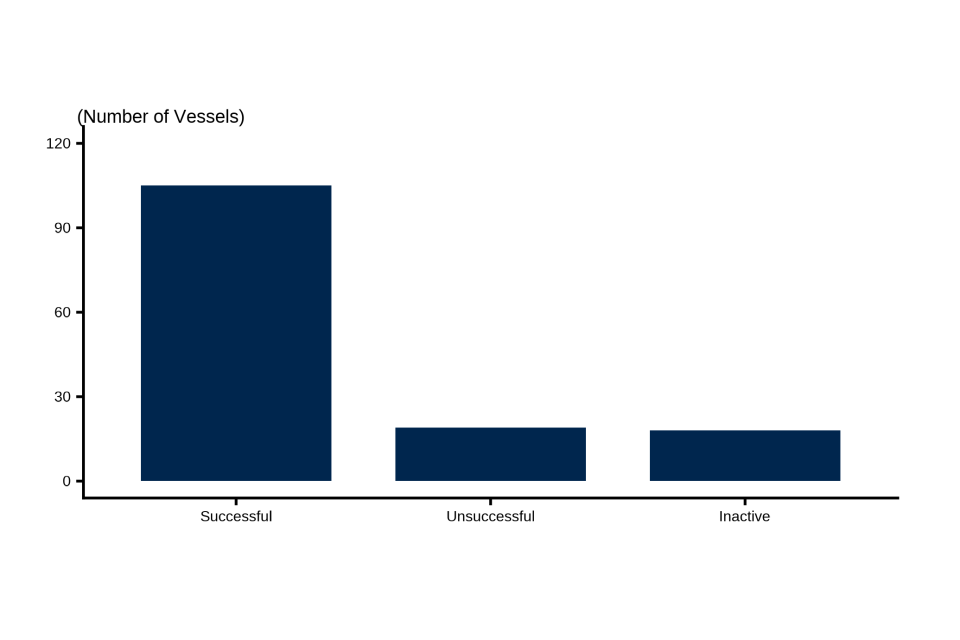
Figure 1.b: Outcomes by Vessel Group for the Catch and Release Recreational Fishery in 2025.
3.3 Gear Usage
Gear types
Gear types permitted for the BFT CRRF are restricted to rod and line gear types only. Multiple gear types can be used across a single trip.
Spreader Bars are a rod and line fishing gear that tows multiple lures in a row perpendicular to the line, with one of the lures containing a hook.
Daisy Chains are a rod and line fishing gear that tow a string of lures on a single line with the final lure containing a hook.
Over the 1,362 reported trips, six main gear types were reported to have been used. The most common were small spreader bars (732 trips, 53.74% of reported trips), followed by large spreader bars (715 trips, 52.50% of reported trips). This is similar to the 2024 season where large spreader bars were the most commonly reported gear (553 trips, 54.54% of reported trips), followed by small spreader bars (455 trips, 44.87% of reported trips).
For trips that declared the gear as ‘Other’, permit holders described the gear in a free text box. Responses here referenced rod and line gears such as “poppers” and “casting tackle”.
Table 2. Gear type by number of trips in the 2025 Catch and Release Recreational Fishery for Blue Fin Tuna.
| Gear Type | Number of Trips |
|---|---|
| Small Spreader Bars (over 36 inches) | 732 |
| Large Spreader Bars (under 36 inches) | 715 |
| Dead Bait | 379 |
| Single Lure | 323 |
| Live Bait | 311 |
| Daisy Chains | 92 |
| Other | 61 |
Note that the sum of the gear counts exceeds the total number of trips as multiple gears can be used on the same trip.
3.4 Trips
In the 2025 season, 1,362 complete trips were reported by active vessels.
The number of trips per month varied through the season, with the highest number of trips reported in September (504 trips) and the lowest reported in July (40 trips).
Table 3. Number of trips per month for the 2025 Catch and Release Recreational Fishery for Blue Fin Tuna.
| Month | Number of Trips |
|---|---|
| July | 40 |
| August | 376 |
| September | 504 |
| October | 325 |
| November | 117 |
The number of trips each week also varied throughout the 20-week season, with the highest number of trips occurring in week 11 (26 September to 2 October 2025) (206 trips) and the lowest occurring week 1 (18 July to 24 July 2025, 9 trips).
The average number of trips per week throughout the 2025 season was 68. When compared to 2024, this is an increase in the average number of trips of 22 trips per week (47.83%).
The number of trips a week per vessel in the fleet was 0.48, when compared to the 2024 season, the number of trips a week per vessel was down slightly by 0.02 trips a week per vessel (4.00%) from 0.50.
Figure 2.a: The number of reported trips per week in the 2025 Catch and Release Recreational Fishery for Blue Fin Tuna.
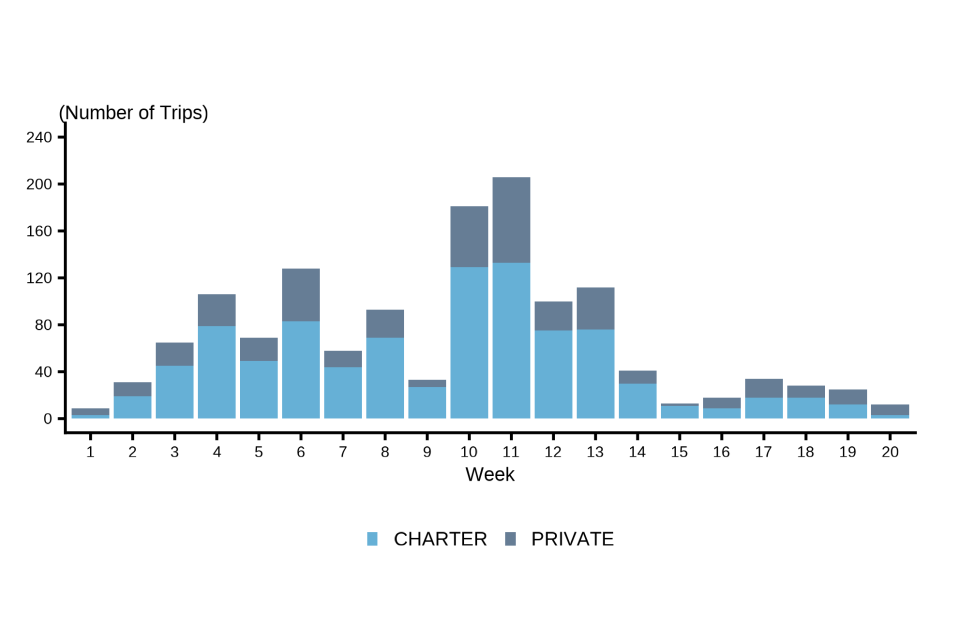
The total number of charter vessel trips for the 2025 season was 932. Week 11 (26 September – 02 October 2025) had the greatest number or trips (133 trips) and week 1 (18-24 July 2025) had the lowest number of trips (3 trips).
The average number of trips per week throughout the 2025 season was 47. When compared to 2024, this is an increase in the average number of trips of 10 trips per week by charter vessels (up by 27.03%).
The number of trips a week per charter vessel over the 20-week season was 0.64, when compared to the 2024 season, this was an increase of 0.05 trips a week per vessel (up by 8.47%) up from 0.59.
For private vessels, week 11 (26 September – 02 October 2025) had the greatest number of tips (73 trips) and week 15 (24-30 October 2024) had the lowest number of trips (2 trips). The total number of private vessel trips for the 2025 season was 430.
The average number trips per week throughout the 2025 season was 22. When compared to 2024, this is an increase in the average number of trips of 12 trips per week by private vessels (up by 120.00%).
The number of trips a week per private vessel over the 20-week season was 0.31, this is in line with the 2024 season, which also reported 0.31 trips a week per vessel.
Figure 2.b: The number of reported trips per week by vessel group in the 2025 Catch and Release Recreational Fishery for Blue Fin Tuna.
3.5 Hookups
Hookup
A hookup is when a Blue Fin Tuna takes the hook and is effectively caught alongside the vessel by the fisher.
In the 2025 season, the total number of reported hookups was 2,666. When compared to the 2024 season this was a reduction of 693 hookups (down by 20.63%).
The number of hookups per month varied throughout the season, with the highest number of hookups in the month of August (897 hookups) and with the lowest in the month of July (65 hookups).
Table 4: Number of hookups reported by month in the 2025 Catch and Release Recreational Fishery for Blue Fin Tuna.
| Month | Hookups |
|---|---|
| July | 65 |
| August | 897 |
| September | 890 |
| October | 681 |
| November | 133 |
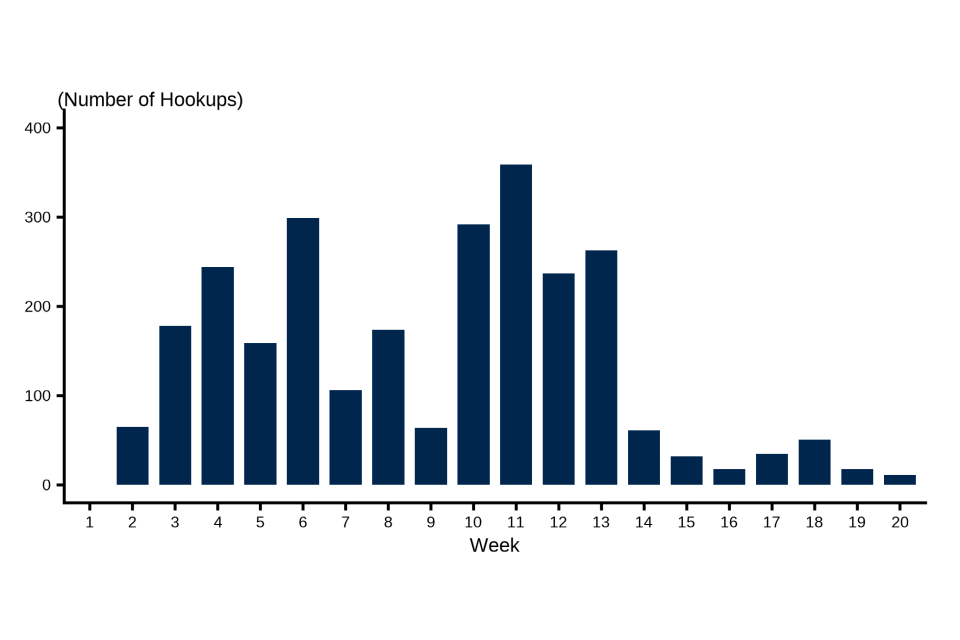
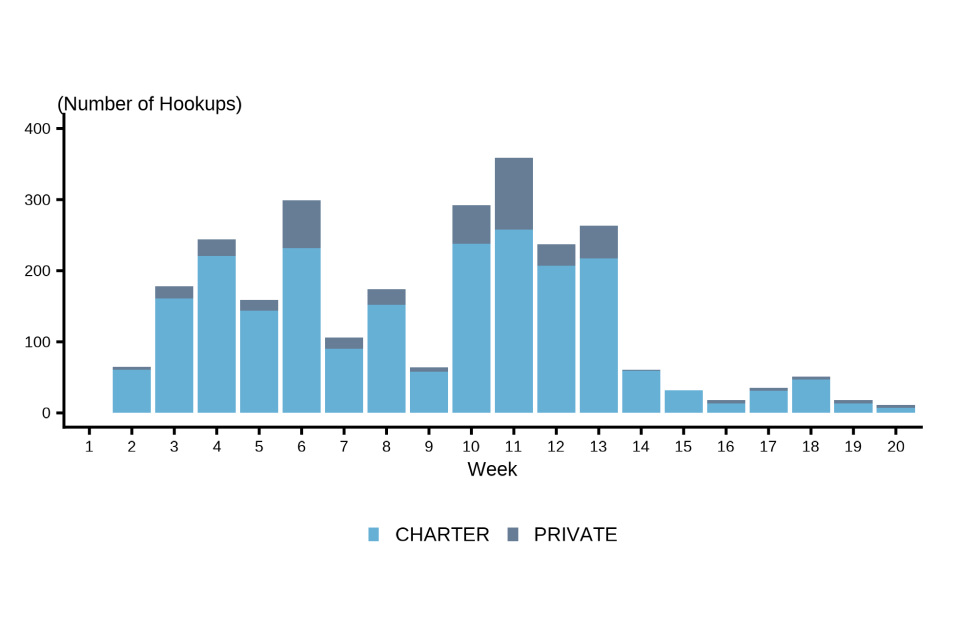
The weekly number of hookups also varied throughout the season, with the highest number of hookups occurring in week 11 (26 September to 2 October 2025, 359 hookups) and the lowest number of hookups occurring in week 1 (18 July to 24 July 2025, 0 hookups).
Figure 3.a: The number of reported hookups by week in the 2025 Catch and Release Recreational Fishery for Blue Fin Tuna.
For charter vessels, week 11 (26 September to 2 October 2025) had the greatest number or hookups (258 hookups) and week 1 (18 July to 24 July 2025) had the lowest number (0 hookups).
For private vessels, week 11 (26 September to 2 October 2025) had the greatest number of hookups (101 hookups) and week 1 (18 July to 24 July 2025) and week 15 (24 October to 30 October 2025) had the lowest number (0 hookups).
Figure 3.b: The number of reported hookups per week by vessel group in the 2025 Catch and Release Recreational Fishery for Blue Fin Tuna.
3.6 Trip Success Rates
Success Rate
A trip is considered successful if there has been at least one successful Blue Fin Tuna hookup during that trip.
The trip success rate is calculated as the number of successful trips as a percentage of total trips.
Of the 1,362 trips, 959 were reported as having a successful hookup, giving the CRRF a success rate of 70.41% in the 2025 season. When compared to the 2024 season, this is a decrease of 12.23 percentage points down from 82.64%.
The trip success rate varied throughout the season, with the highest success rate occurring in August (79% success rate), and the lowest success rate occurring in July (48% success rate).
Table 5: The monthly total trips, successful trips and success rate in the 2025 Catch and Release Recreational Fishery for Blue Fin Tuna.
| Month | Total Trips | Successful Trips | Success Rate (%) |
|---|---|---|---|
| July | 40 | 19 | 48 |
| August | 376 | 296 | 79 |
| September | 504 | 352 | 70 |
| October | 325 | 229 | 70 |
| November | 117 | 63 | 54 |
At the weekly level, there was variation to the success rate throughout the season. The success rate peaked in week 15 (24 October to 30 October 2025) of the season, at 85%. Broadly speaking, the success rate rose sharply in the first three weeks of the season. From week 3, the success rate showed a general decrease, with some exceptions to the trend, such as week 15.
Figure 4: Weekly success rates through the 2025 Catch and Release Recreational Fishery for Blue Fin Tuna. The dark line represents the rolling 4-week average success rate throughout the season.
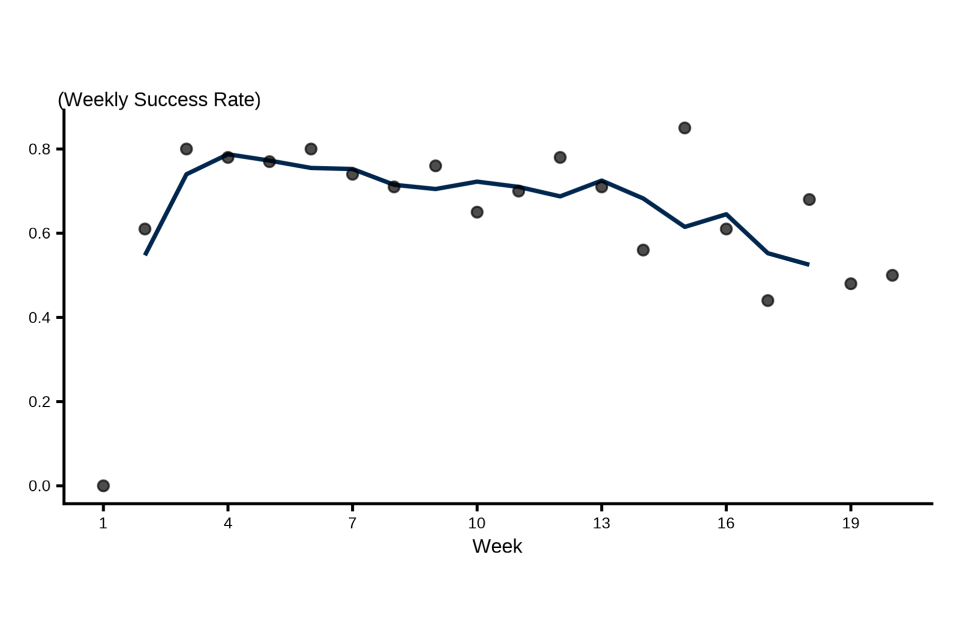
A rolling 4-week average was calculated for estimated success rate throughout the season. The average runs from week 2 to week 18 (25 July to 20 November 2025), where the point shown for week 2 is the success rate for weeks 1 to 4 (18 July to 14 August 2025). The rolling average ends at week 18 as this is the limit of the rolling 4-week window period.
3.7 Catch per Unit Effort
Catch per Unit Effort (CPUE) is calculated as the number of BFT hookups to the number of trips.
Cefas’ Catch And Release Tag (CHART) programme ran each year between 2021 to 2023. It consisted of 15 to 25 vessels per year, amounting to 1,655 trips and 3,803 hookups in total.
Comparisons have been made between the results from the 2025 season’s CRRF to the 2024 CRRF season as well as Cefas’ CHART programme to provide context for statistics.
More details about CHART programme can be found on Cefas’ website.
There were 2,666 hookups in 1,362 trips, giving the CRRF a CPUE of 1.96 BFT per trip in the 2025 season. In comparison to the 2024 season, this is a decrease of 1.35 BFT per trip (down by 40.79%) from 3.31 BFT per trip. When compared to the figures reported in CHART between 2021 and 2023, there is a slight decrease of 0.03 BFT per trip (down by 1.51%) from 1.99.
The CPUE varied throughout the season, with the highest CPUE occurred in August (2.39 BFT per trip) and the lowest CPUE occurred in November (1.14 BFT per trip).
Table 6. The monthly total trips, hookups and catch per unit effort in the 2025 Catch and Release Recreational Fishery for Blue Fin Tuna.
| Month | Total Trips | Hookups | Catch per Unit Effort |
|---|---|---|---|
| July | 40 | 65 | 1.62 |
| August | 376 | 897 | 2.39 |
| September | 504 | 890 | 1.77 |
| October | 325 | 681 | 2.10 |
| November | 117 | 133 | 1.14 |
There was variation to the CPUE by week throughout the season. The CPUE peaked in week 3 (1 August to 7 August 2025) of the season, at 2.74 BFT per trip. Broadly speaking, the CPUE increased sharply through the first 3 weeks of the season, with a downward trend from this peak to the end of the season. There is however an upturn in CPUE in the mid-season from weeks 9 through 13 (12 September to 16 October 2025).
This early peak differs from last season’s mid-season peak at week 10 (5 October to 11 October 2024), however the mid-season upturn is consistent with the mid-season peak of the 2024 CRRF season.
The reported trend through the 2025 season is also comparable to the 2023 CHART season, that reported highest CPUE rates at the start of the season and a peak in October.
Figure 5: Weekly Catch per Unit Effort through the 2025 Catch and Release Recreational Fishery for Blue Fin Tuna. The dark line represents the rolling 4-week average catch per unit effort throughout the season
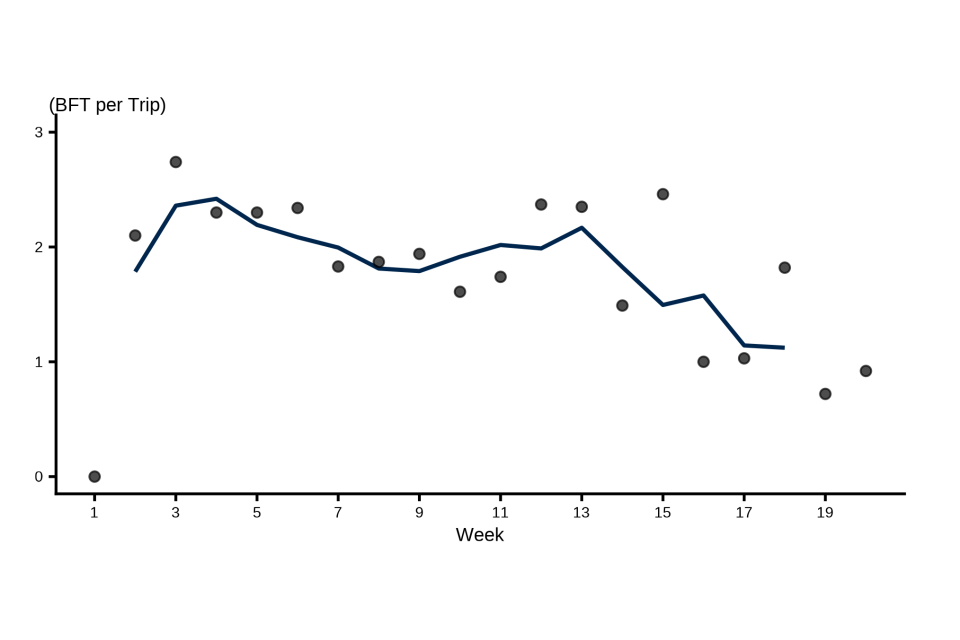
A rolling 4-week average was calculated for estimated success rate throughout the season. The average runs from week 2 to week 18 (25 July to 20 November 2025), where the point shown for week 2 is the success rate for weeks 1 to 4 (18 July to 14 August 2025). The rolling average ends at week 18 as this is the limit of the rolling 4-week window period.
4. Fishery Biological Insight
In this section, metrics from individual fish are reported to provide insight on the population dynamics of reported BFT via the CRRF.
4.1 Length
Straight Fork Length (SFL) is the straight line distance from the tip of the upper jaw to the fork of the tail.
SFL was recorded and submitted by vessel owners.
SFL measurements were submitted for (97.07%) of all BFT caught in the 2025 season.
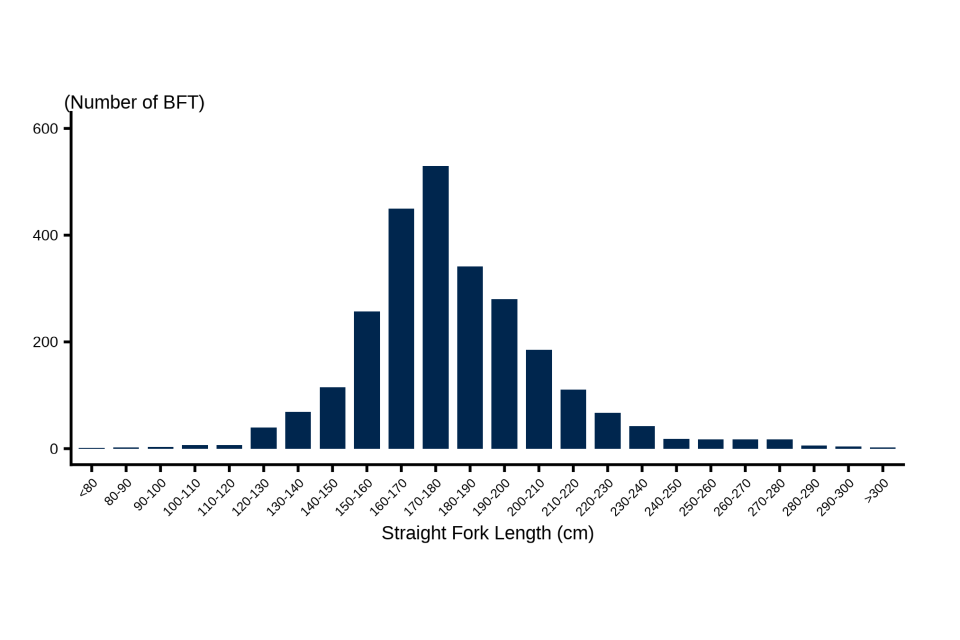
The average reported SFL in the 2025 season was 179.48cm. The shortest length reported was 76.20cm and the longest was 304.80cm.
In comparison to the 2024 CRRF fishery, this was an increase of 11.81cm (up by 7.04%) in the average reported SFL up from 167.67cm. When comparing to the CHART programme, this is an increase of 14.48cm (up by 8.88%) from the average reported SFL in 2023 (165.00cm).
When compared to the average reported SFL for the duration of CHART between 2021 and 2023, this is a slight increase of 2.48cm (up by 1.40%) from 177.00cm.
Figure 6: The number of Blue Fin Tuna to SFL classes in the 2025 Catch and Release Recreational Fishery for Blue Fin Tuna.
SFL varied through the season, with the weekly mean SFL showing a very gradual decrease as the season progressed up to week 15 (24 October to 30 October 2024). Beyond this point there is more variability in the mean SFL, but it should be noted that the number of BFT measured in each week from this point was relatively low.
This decrease in the average reported SFL through the season, with increasing variability as the number of BFT measured each week decreases, is in line with what was reported in the 2024 CRRF. This decrease is also broadly in line with the reported trends in weekly mean SFL in the English CHART programme.
Figure 7: Average estimated SFL, by week through the 2025 Catch and Release Recreational Fishery for Blue Fin Tuna. The dark line represents the rolling 4-week average SFL (cm) throughout the season.
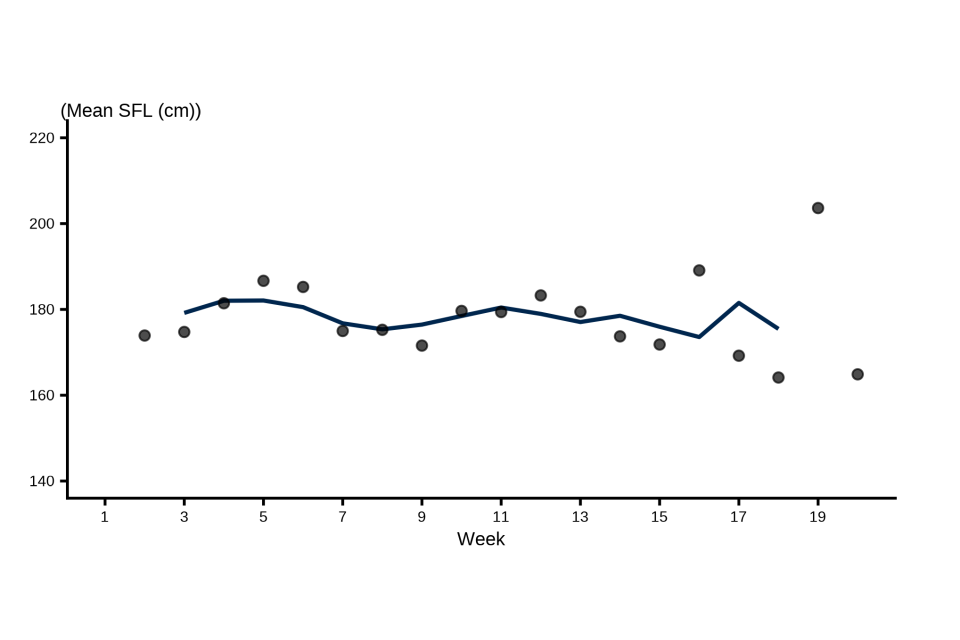
A rolling 4-week average was calculated for SFL throughout the season. The average runs from week 3 to week 18 (1 August to 20 November 2025), where the point shown for week 3 is the average SFL for weeks 2 to 5 (25 July to 21 August 2025). The rolling average ends at week 18 as this is the limit of the rolling 4-week window period.
4.2 Weight
Round Weight (RWT) has been estimated using a conversion from SFL.
Further details about this conversion, including the calculation used, can be found in the methodology for this release.
The average estimated RWT of BFT caught in the 2025 season was 115.18kg. The lightest BFT was estimated as 9.17kg and the heaviest was 496.07kg.
In comparison to the 2024 CRRF fishery, this is an increase of 19.68kg (up by 20.61%) in the average reported RWT up from 95.50kg.
Figure 8: The number of Blue Fin Tuna by estimated round weight classes in the 2025 Catch and Release Recreational Fishery for Blue Fin Tuna.
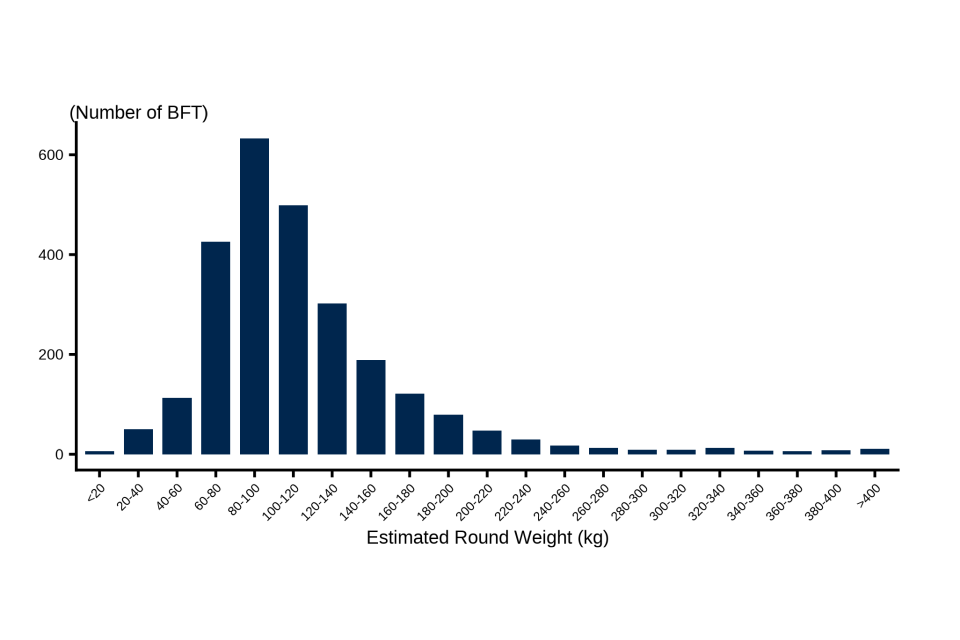
Estimated RWT also varied through the season, reflecting what was observed in the SFL. This is to be expected, given the RWT is estimated using the reported SFL.
The weekly mean RWT decreased as the season progressed up to week 15 (24 – 30 October 2025). There was an increase in variability as of week 16, but as for SFL, it should be noted that the number of BFT measured in each week as of this point was relatively low.
This decrease in the average reported RWT through the season, with increasing variability as the number of BFT measured each week decreases, is broadly in line with what was reported in the 2024 CRRF.
Figure 9: Average estimated RWT, by week, through the 2025 Catch and Release Recreational Fishery for Blue Fin Tuna. The dark line represents the rolling 4-week average estimated RWT (kg) throughout the season
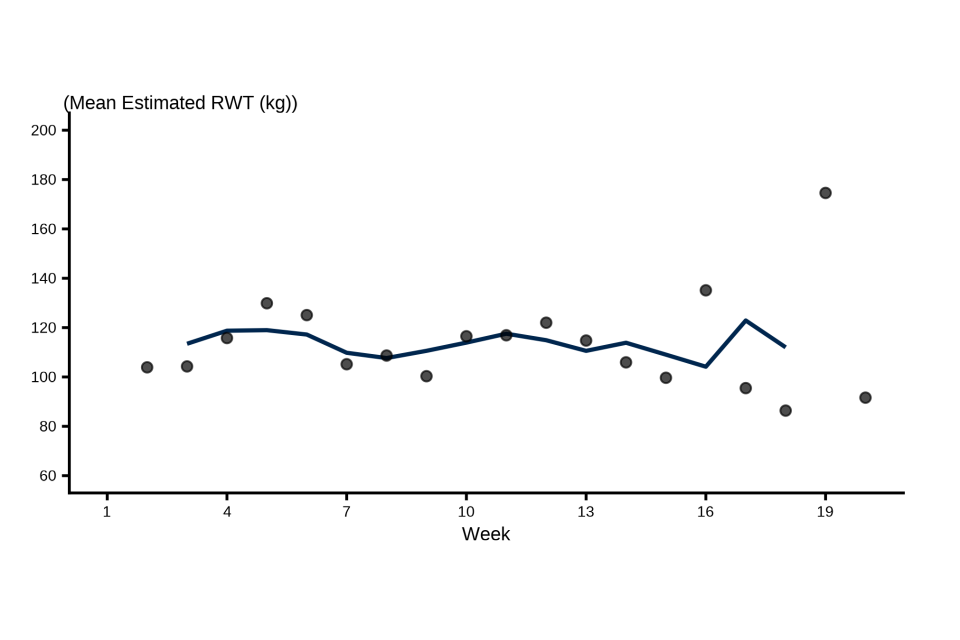
A rolling 4-week average was calculated for RWT throughout the season. The average runs from week 3 to week 18 (01 August to 20 November 2025), where the point shown for week 3 is the average RWT for weeks 2 to 5 (25 July - 21 August 2025). The rolling average ends at week 18 as this is the limit of the rolling 4-week window period.
4.3 Outcomes
Outcomes
Permitted skippers / vessel owners of the CRRF must notify the permitting authority whether BFT are released alive or dead.
This is defined under statutory instrument 2024/655 The Sea Fisheries (International Commission for the Conservation of Atlantic Tunas) (Amendment) (No. 2) Regulations 2024.
Permit holders reported the release status of the BFT which have been grouped into categories: Alert, Lethargic, and Dead.
The mortality rate is the number of BFT reported as ‘dead’ as a percentage of total hookups.
Of all BFT caught in the 2025 CRRF, 97.00% were reported as being released in an ‘alert’ condition (2586 out of 2,666 hookups). 1.31% (35 BFT) were reported as being released in a ‘lethargic’ condition, 0.53% (14 BFT) were reported as dead, and 1.16% (31 BFT) were reported as unknown (did not come alongside). The unknown (did not come alongside) category was reported in instances where the BFT did not come alongside the vessel, such as in the event of a BFT breaking off the fishing line.
Table 7: The number of BFT by release status for the 2025 Catch and Release Recreational Fishery for Blue Fin Tuna.
| Release Status | Number of BFT |
|---|---|
| Alert | 2586 |
| Lethargic | 35 |
| Dead | 14 |
| Unknown (did not come alongside) | 31 |
The mortality rate of BFT in the 2025 CRRF was 0.53%. When compared to the 2024 CRRF mortality rate, this is a 0.32 percentage point increase up from 0.21%. The mortality rate is still lower (down 0.17 percentage points) than reported in the CHART programme between 2021-2023 which showed a mortality rate of 0.70%.
The total estimated round weight (RWT) of those BFT reported as ‘dead’ in the 2025 CRRF was 1746.06kg, or 1.75 tonnes. This equals 13.43% of the total quota allocated to the BFT CRRF in 2025 (13.00 tonnes).
The smallest BFT reported as ‘dead’ had an estimated RWT of 55.31kg, while the largest had an estimated RWT of 386.16kg. The average estimated RWT of BFT reported as ‘dead’ was 145.51kg.