
Annual qualifications market report: academic year 2024 to 2025
Published 19 March 2026
Applies to England

© Crown copyright 2026
This publication is licensed under the terms of the Open Government Licence v3.0 except where otherwise stated. To view this licence, visit nationalarchives.gov.uk/doc/open-government-licence/version/3 or write to the Information Policy Team, The National Archives, Kew, London TW9 4DU, or email: psi@nationalarchives.gov.uk.
Where we have identified any third party copyright information you will need to obtain permission from the copyright holders concerned.
This publication is available at https://www.gov.uk/government/statistics/annual-qualifications-market-report-academic-year-2024-to-2025/annual-qualifications-market-report-academic-year-2024-to-2025
This release provides information on the number and types of qualifications available, and the number of certificates awarded by Ofqual-regulated awarding organisations in England during the 2024 to 2025 academic year. It also includes statistics on certificates issued for the same qualifications in international jurisdictions.
For this report, because certificates are collected quarterly, the 2024 to 2025 academic year is considered to be the start of October 2024 until the end of September 2025.
The release covers regulated qualifications across GCSEs, AS, A levels, and vocational and other qualifications. Where this release refers to ‘vocational and other’ qualifications, this means all qualifications other than GCSE, AS, A level, apprenticeship end-point assessments (EPAs), Apprenticeships Assessment Qualifications and T Level Technical Qualifications (TQs). This report does not include EPAs, Apprenticeships Assessment Qualifications or TQs in the counts of qualifications and certificates. You can find further information on the qualifications covered in this release in the accompanying background notes.
Many assessments used alternative arrangements in the 2020 to 2021 academic year because of ongoing disruption from the coronavirus (COVID‑19) pandemic. Exams and other formal assessments returned in the 2021 to 2022 academic year, with some adaptations, and then in the 2022 to 2023 academic year, most exams and assessments returned to pre-pandemic arrangements. The figures reported for the 2024 to 2025 academic year, especially in comparison with the 2020 to 2021 and 2021 to 2022 academic years, may reflect these changes.
Changes in cohort sizes can also affect the overall numbers of certifications in an academic year. Notably, the number of 16-year-olds fell by 0.25% over the last year, from 711,389 in 2024 to 709,586 in 2025 according to Office for National Statistics (ONS) population projections. You can find more detail on how these figures were retrieved in the ‘external influences’ section of the background information accompanying this release. For more information on how population projections are calculated, see Office for National Statistics: Population projections.
Information on regulated qualifications (covering title, type, availability, awarding organisation, sector subject area and level) and recognised awarding organisations in England is taken from Ofqual’s Register of Regulated Qualifications, referred to as ‘the Register’ in this release. This database is continually updated - this report reflects its contents when the data was extracted on 10 February 2026.
Key headlines
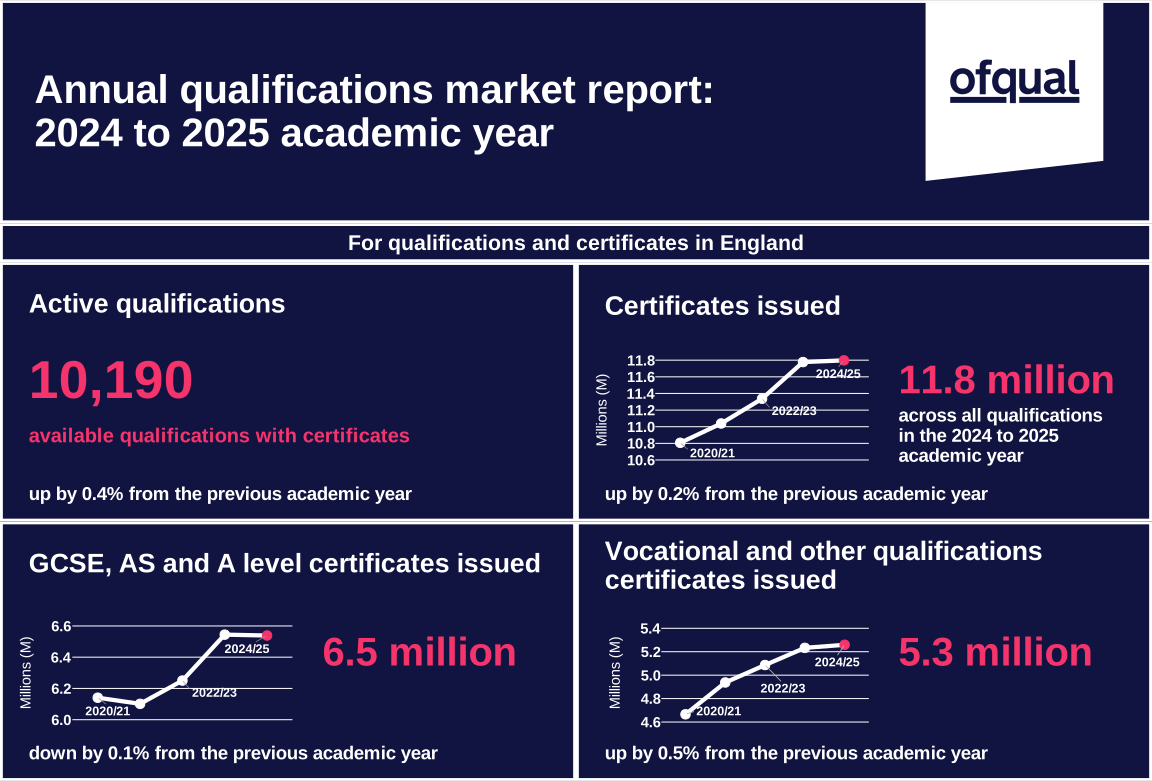
The main headlines in the regulated qualifications market in England for the 2024 to 2025 academic year were:
-
There were 10,190 active qualifications (available qualifications with certificates) in the academic year 2024 to 2025, a 0.4% increase from the 2023 to 2024 academic year.
-
A total of 11.8 million certificates were issued for GCSE, AS, A level, vocational and other qualifications, up 0.2% from the 2023 to 2024 academic year.
-
There were 6.5 million GCSE, AS and A level certificates issued in the 2024 to 2025 academic year, down 0.1% from the previous academic year.
-
There were 5.3 million certificates issued for vocational and other qualifications in the 2024 to 2025 academic year, up 0.5% from the 2023 to 2024 academic year.
-
The awarding organisations with the largest overall market shares (by number of certificates issued across all qualification types in scope of this release) were AQA (34.0%), Pearson (20.1%), Cambridge OCR (6.3%) and WJEC (4.8%).
Provide your feedback
We welcome your feedback on our publications. If you have any comments on this statistical release, or how to improve it to meet your needs, please complete our short survey or email our statistics team.
Awarding organisations offering regulated qualifications
Any organisation that wants to offer regulated qualifications in England has to be regulated (officially recognised) by Ofqual. Any new awarding organisation needs to meet Ofqual’s Criteria for Recognition and, once officially recognised, all awarding organisations must continue to meet Ofqual’s General Conditions of Recognition.
There were 254 Ofqual regulated awarding organisations during the 2024 to 2025 academic year. This number includes 87 awarding organisations which only delivered EPAs or Apprenticeships Assessment Qualifications for apprenticeship standards during the 2024 to 2025 academic year and 11 awarding organisations that had no active qualifications (available qualifications with certificates). Please note that elsewhere in the report, statistics on qualifications and certifications do not include apprenticeship EPAs and Apprenticeships Assessment Qualifications. We report on volumes and outcomes of regulated apprenticeship EPAs in a separate statistical publication.
Ofqual regulated 254 awarding organisations during the 2024 to 2025 academic year
Figure 1: Number of regulated awarding organisations offering regulated qualifications over time
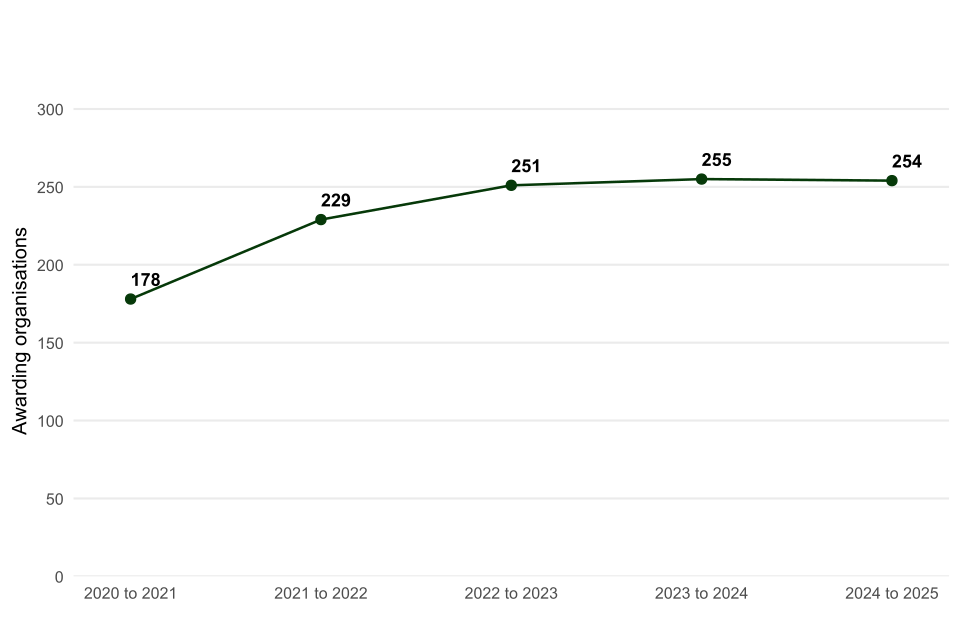
Table 1: Number of awarding organisations offering regulated qualifications
| 2020 to 2021 | 2021 to 2022 | 2022 to 2023 | 2023 to 2024 | 2024 to 2025 | |
|---|---|---|---|---|---|
| Number of awarding organisations | 178 | 229 | 251 | 255 | 254 |
Regulated qualifications
Information on qualifications including title, type, awarding organisation, sector subject area and level is taken from Ofqual’s Register of Regulated Qualifications. A qualification is counted as available in a given academic year if an awarding organisation can issue certificates for it during that year. Awarding organisations self-report when a qualification they offer is ‘active’ or available to candidates for certification.
Available qualifications
There were 16,503 qualifications available for certification in the 2024 to 2025 academic year. This is a 0.2% increase from the 2023 to 2024 academic year, marking a change in the downward trend from the previous academic year.
Of the available qualifications, 10,190 had certificates issued in the 2024 to 2025 academic year. This is a 0.4% increase compared with the 2023 to 2024 academic year. Some qualifications did not have any certificates issued because they are new and require a 1- or 2-year course of study before students can complete them.
There were 16,503 qualifications available for certification across all GCSE, AS, A level and vocational and other qualifications in the 2024 to 2025 academic year
Figure 2: Number of available qualifications with, and without, certificates over time
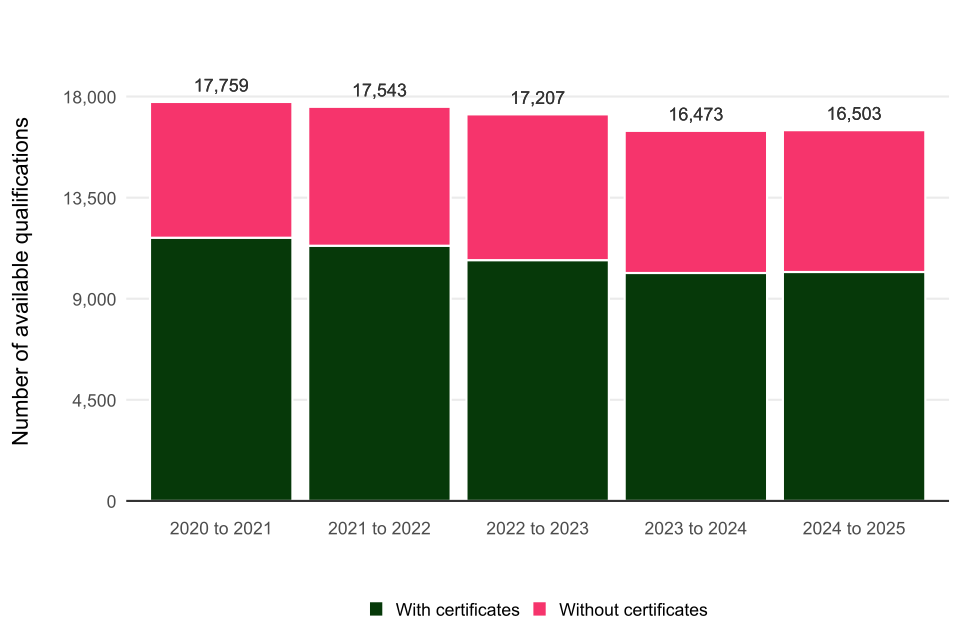
Table 2: Number of available qualifications
| 2020 to 2021 | 2021 to 2022 | 2022 to 2023 | 2023 to 2024 | 2024 to 2025 | |
|---|---|---|---|---|---|
| Number of qualifications with certificates | 11,716 | 11,360 | 10,718 | 10,146 | 10,190 |
| Number of qualifications without certificates | 6,043 | 6,183 | 6,489 | 6,327 | 6,313 |
| Total number of qualifications | 17,759 | 17,543 | 17,207 | 16,473 | 16,503 |
Available qualifications by type
Qualification types describe the nature of regulated qualifications. Information on qualification type comes from Ofqual’s Register of Regulated Qualifications.
Qualifications available to certificate
Performing arts graded examination qualifications had the largest percentage increase in the number of qualifications available to certificate, up by 9.6% from the 2023 to 2024 academic year. Technical occupation qualification saw the largest overall increase in the number of qualifications available to certificate, up by 89 qualifications.
Occupational qualification and Other Life Skills qualification qualifications had the largest decreases in the number of qualifications available to certificate (down by 182 and 53 qualifications, respectively). Functional Skills had the largest percentage decrease in the number of available qualifications, down 18.0% from the 2023 to 2024 academic year.
Please note that qualifications with certificates issued for the first time this year, and therefore showing no year‑on‑year change in certificate numbers, are denoted as ‘[x]’ in both the charts and the tables.
Among all GCSE, AS, A level, vocational and other qualifications, Performing arts graded examination qualifications had the largest percentage increase in the number of qualifications available to certificate, up by 9.6% in the 2024 to 2025 academic year
Figure 3: Percentage change in the number of qualifications available to certificate by qualification type

Table 3: Number of qualifications available to certificate by type between 2023 to 2024 and 2024 to 2025
| Qualification type | Number of qualifications available to certificate in 2023 to 2024 | Number of qualifications available to certificate in 2024 to 2025 | Percentage change in the number of qualifications available to certificate between 2023 to 2024 and 2024 to 2025 |
|---|---|---|---|
| A level | 137 | 137 | 0.0% |
| GCSE (9 to 1) | 137 | 137 | 0.0% |
| AS | 96 | 96 | 0.0% |
| Vocationally-related qualification | 7,755 | 7,814 | 0.8% |
| Occupational qualification | 4,169 | 3,987 | -4.4% |
| Other Life Skills qualification | 1,493 | 1,440 | -3.5% |
| Other vocational qualification | 953 | 1,019 | 6.9% |
| Performing arts graded examination | 739 | 810 | 9.6% |
| Other general qualification | 466 | 431 | -7.5% |
| English for Speakers of Other Languages | 384 | 389 | 1.3% |
| Functional Skills | 100 | 82 | -18.0% |
| Essential Digital Skills | 18 | 18 | 0.0% |
| Digital Functional Skills qualification | 14 | 14 | 0.0% |
| Project | 11 | 11 | 0.0% |
| Technical occupation qualification | 0 | 89 | [x] |
| Advanced extension award | 1 | 1 | 0.0% |
| Alternative academic qualification | 0 | 27 | [x] |
| Other | 0 | 1 | [x] |
| Total | 16,473 | 16,503 | 0.2% |
Available qualifications with certificates
Essential Digital Skills qualifications had the largest percentage increase in the number of available qualifications with certificates, up by 6.2% from the 2023 to 2024 academic year. Vocationally-related qualification had the largest overall increase in the number of available qualifications with certificates, up by 58 qualifications.
Occupational qualification and Other Life Skills qualification qualifications had the largest decreases in the number of available qualifications with certificates, with 33 and 23 qualifications, respectively. Functional Skills had the largest percentage decrease in available qualifications with certificates, down 14.6% from the 2023 to 2024 academic year.
Please note that qualifications with certificates issued for the first time this year, and therefore showing no year‑on‑year change in certificate numbers, are denoted as ‘[x]’ in both the charts and the tables.
Among all GCSE, AS, A level, vocational and other qualifications, Essential Digital Skills qualifications had the largest percentage increase in the number of available qualifications with certificates, up by 6.2% in the 2024 to 2025 academic year
Figure 4: Percentage change in the number of available qualifications with certificates by qualification type

Table 4: Number of qualifications with certificates by type between 2023 to 2024 and 2024 to 2025
| Qualification type | Number of available qualifications with certificates in 2023 to 2024 | Number of available qualifications with certificates in 2024 to 2025 | Percentage change in the number of available qualifications with certificates between 2023 to 2024 and 2024 to 2025 |
|---|---|---|---|
| A level | 137 | 137 | 0.0% |
| GCSE (9 to 1) | 137 | 137 | 0.0% |
| AS | 95 | 96 | 1.1% |
| Vocationally-related qualification | 4,397 | 4,455 | 1.3% |
| Occupational qualification | 2,371 | 2,338 | -1.4% |
| Other Life Skills qualification | 1,102 | 1,079 | -2.1% |
| Other vocational qualification | 645 | 669 | 3.7% |
| Performing arts graded examination | 546 | 573 | 4.9% |
| Other general qualification | 349 | 328 | -6.0% |
| English for Speakers of Other Languages | 236 | 248 | 5.1% |
| Functional Skills | 89 | 76 | -14.6% |
| Essential Digital Skills | 16 | 17 | 6.2% |
| Digital Functional Skills qualification | 14 | 14 | 0.0% |
| Project | 11 | 11 | 0.0% |
| Technical occupation qualification | 0 | 11 | [x] |
| Advanced extension award | 1 | 1 | 0.0% |
| Total | 10,146 | 10,190 | 0.4% |
Certificates issued for regulated qualifications
Overall certificates
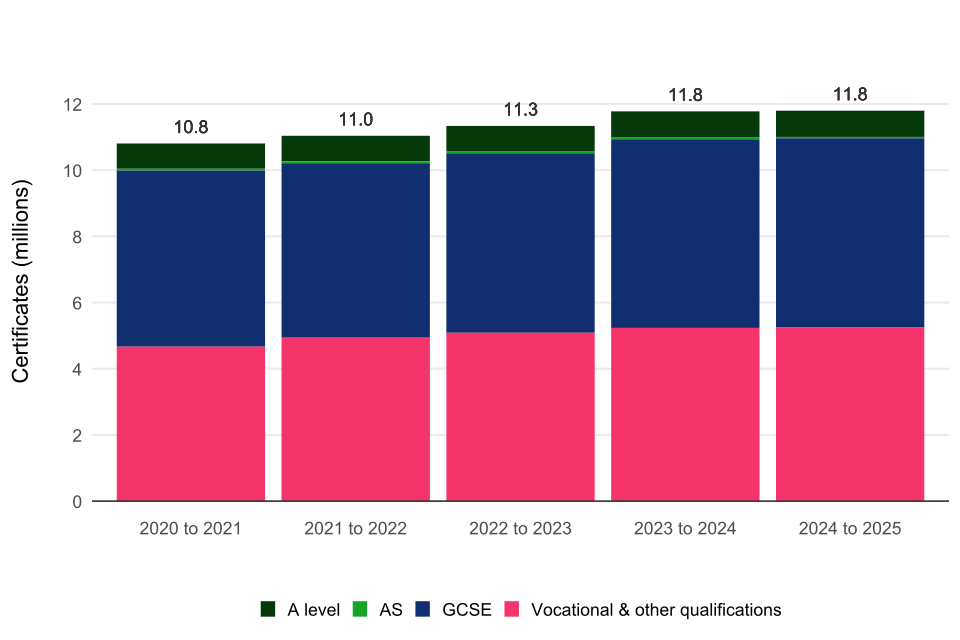
The total number of certificates issued for all qualifications (A level, AS, GCSE and vocational and other qualifications) in the 2024 to 2025 academic year was 11.8 million, up 0.2% compared with the previous year.
The number of certificates for A level qualifications in 2024 to 2025 decreased by 1,172 certificates, down 0.1% from the 2023 to 2024 academic year.
AS qualifications also saw a decrease in the number of certificates, with 5,400 certificates fewer compared with the 2023 to 2024 academic year. This continues the downward trend seen in AS entries in previous years, following the decoupling of AS and A levels after qualification reforms.
The number of certificates for GCSE qualifications increased slightly by less than 0.1%. This small rise reflects a higher number of certificates issued in the November exam series, offset by fewer certificates issued in the summer 2024 to 2025 exam series compared with the previous academic year. The decrease in GCSE certificates issued in the summer 2024 to 2025 series is at least partly due to demographic changes. According to Office for National Statistics (ONS) population projections, the number of 16-year-olds decreased by 0.3% compared with previous year.
The number of certificates in vocational and other qualifications increased by 0.5% in the 2024 to 2025 academic year compared with 2023 to 2024.
There were 11.8 million certificates issued for GCSE, AS, A level, vocational and other qualifications in the 2024 to 2025 academic year
Figure 5: Number of certificates issued for all qualifications, England
Please note that where this release refers to ‘vocational and other’ qualifications, this means all qualifications other than GCSEs, AS, A levels, EPAs, Apprenticeships Assessment Qualifications and T Level TQs.
Table 5: Number of certificates issued for regulated qualifications
| 2020 to 2021 | 2021 to 2022 | 2022 to 2023 | 2023 to 2024 | 2024 to 2025 | |
|---|---|---|---|---|---|
| A level | 763,930 | 773,300 | 775,615 | 794,385 | 793,215 |
| AS | 55,150 | 55,445 | 50,940 | 48,615 | 43,215 |
| GCSE | 5,321,595 | 5,272,685 | 5,423,805 | 5,701,340 | 5,702,275 |
| Vocational & other qualifications | 4,665,960 | 4,937,560 | 5,086,425 | 5,233,105 | 5,259,215 |
| Total | 10,806,630 | 11,038,990 | 11,336,785 | 11,777,445 | 11,797,920 |
Final certificates show the final outcome and are usually issued some time after provisional results. Please note that GCSE combined science certificates have been double counted throughout the report and data tables because the qualification is the size of 2 single GCSEs.
Certificates by qualification type
Table 6: Number of certificates issued by qualification type in 2023 to 2024 and 2024 to 2025
| Qualification type | Number of certificates in 2023 to 2024 | Share of certificates in 2023 to 2024 | Number of certificates in 2024 to 2025 | Share of certificates in 2024 to 2025 |
|---|---|---|---|---|
| GCSE (9 to 1) | 5,701,340 | 48.4% | 5,702,275 | 48.3% |
| A level | 794,385 | 6.7% | 793,215 | 6.7% |
| AS | 48,615 | 0.4% | 43,215 | 0.4% |
| Vocationally-related qualification | 1,839,665 | 15.6% | 1,837,280 | 15.6% |
| Other vocational qualification | 729,280 | 6.2% | 738,640 | 6.3% |
| Occupational qualification | 658,305 | 5.6% | 634,905 | 5.4% |
| Performing arts graded examination | 542,950 | 4.6% | 551,730 | 4.7% |
| English for Speakers of Other Languages | 440,720 | 3.7% | 446,260 | 3.8% |
| Other general qualification | 406,785 | 3.5% | 425,215 | 3.6% |
| Functional Skills | 335,130 | 2.8% | 326,060 | 2.8% |
| Other Life Skills qualification | 210,770 | 1.8% | 228,200 | 1.9% |
| Project | 51,575 | 0.4% | 53,025 | 0.4% |
| Essential Digital Skills | 15,430 | 0.1% | 12,500 | 0.1% |
| Digital Functional Skills qualification | 2,320 | Less than 0.1% | 4,905 | Less than 0.1% |
| Technical occupation qualification | 0 | 0.0% | 290 | Less than 0.1% |
| Advanced extension award | 175 | Less than 0.1% | 200 | Less than 0.1% |
| Retired qualifications | Fewer than 5 | Less than 0.1% | 0 | 0.0% |
| Total | 11,777,445 | 100.0% | 11,797,920 | 100.0% |
Among vocational and other qualifications in 2024 to 2025, Digital Functional Skills qualification had the largest percentage increase in certificates, up by 111.3%, (an increase of 2,585 certificates).
The largest percentage decrease in certificates among vocational and other qualifications (except retired qualifications) was in Essential Digital Skills qualifications, down by 19.0%, (a decrease of 2,930 certificates).
Please note that qualifications with certificates issued for the first time this year, and therefore showing no year‑on‑year change in certificate numbers, are denoted as ‘[x]’ in both the charts and the tables.
Among vocational and other qualifications, the largest percentage increase in the number of certificates was in Digital Functional Skills qualification, up by 111.3% in the 2024 to 2025 academic year compared with 2023 to 2024 academic year
Figure 6: Percentage change in the number of certificates issued by qualification type

Table 7: Percentage change in the number of certificates issued by qualification type between 2023 to 2024 and 2024 to 2025
| Qualification type | Percentage change in the number of certificates issued by qualification type between 2023 to 2024 and 2024 to 2025 |
|---|---|
| GCSE (9 to 1) | less than 0.1% |
| A level | -0.1% |
| AS | -11.1% |
| Vocationally-related qualification | -0.1% |
| Other vocational qualification | 1.3% |
| Occupational qualification | -3.6% |
| Performing arts graded examination | 1.6% |
| English for Speakers of Other Languages | 1.3% |
| Other general qualification | 4.5% |
| Functional Skills | -2.7% |
| Other Life Skills qualification | 8.3% |
| Project | 2.8% |
| Essential Digital Skills | -19.0% |
| Digital Functional Skills qualification | 111.3% |
| Technical occupation qualification | [x] |
| Advanced extension award | 14.5% |
| Retired qualifications | -100.0% |
| Total | 0.2% |
Certificates by awarding organisation
The 20 awarding organisations that reported the highest volume of certificates in the 2024 to 2025 academic year awarded 89.6% of all certificates. Gateway Qualifications Limited had the largest percentage increase in certificates, up by 17.8% (an increase of 14,610 certificates) since the 2023 to 2024 academic year. No new awarding organisations joined this list this year.
WJEC had the largest overall increase in the number of certificates issued, up by 45,335 compared with the previous year.
Figure 7 and Table 8 show the 20 awarding organisations with the greatest number of certificates in 2024 to 2025. Others are grouped under the ‘other awarding organisations’. You can find a full breakdown of all awarding organisations, in Table 4 of the accompanying data tables.
Among awarding organisations with the highest volume of certificates issued in GCSE, AS, A level, vocational and other qualifications, Gateway Qualifications Limited had the largest percentage increase in certificates, up by 17.8% in the 2024 to 2025 academic year
Figure 7: Percentage change in the number of certificates by awarding organisation
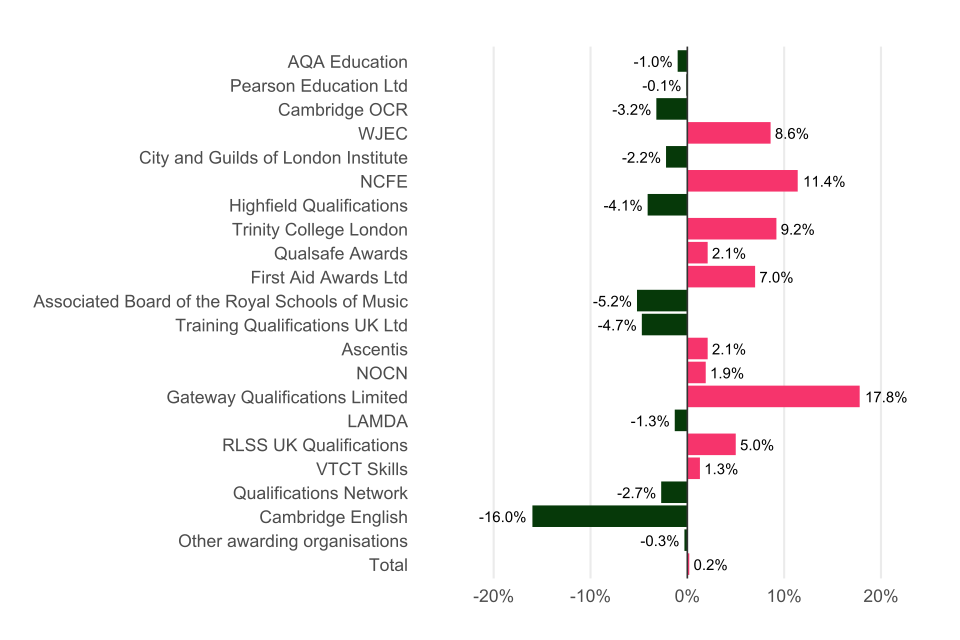
Table 8: Number of certificates issued and percentage change in the number of certificates issued by awarding organisation between 2023 to 2024 and 2024 to 2025
| Awarding organisation | Number of certificates in 2023 to 2024 | Number of certificates in 2024 to 2025 | Percentage change in the number of certificates by awarding organisation between 2023 to 2024 and 2024 to 2025 |
|---|---|---|---|
| AQA Education | 4,047,695 | 4,006,595 | -1.0% |
| Pearson Education Ltd | 2,369,750 | 2,367,285 | -0.1% |
| Cambridge OCR | 765,260 | 741,050 | -3.2% |
| WJEC | 524,890 | 570,225 | 8.6% |
| City and Guilds of London Institute | 555,200 | 543,260 | -2.2% |
| NCFE | 314,530 | 350,365 | 11.4% |
| Highfield Qualifications | 320,640 | 307,630 | -4.1% |
| Trinity College London | 255,245 | 278,750 | 9.2% |
| Qualsafe Awards | 237,640 | 242,685 | 2.1% |
| First Aid Awards Ltd | 206,170 | 220,660 | 7.0% |
| Associated Board of the Royal Schools of Music | 193,210 | 183,080 | -5.2% |
| Training Qualifications UK Ltd | 125,430 | 119,520 | -4.7% |
| Ascentis | 106,510 | 108,770 | 2.1% |
| NOCN | 97,120 | 98,990 | 1.9% |
| Gateway Qualifications Limited | 81,995 | 96,605 | 17.8% |
| LAMDA | 80,265 | 79,260 | -1.3% |
| RLSS UK Qualifications | 69,190 | 72,665 | 5.0% |
| VTCT Skills | 62,430 | 63,215 | 1.3% |
| Qualifications Network | 64,240 | 62,535 | -2.7% |
| Cambridge English | 74,345 | 62,435 | -16.0% |
| Other awarding organisations | 1,225,695 | 1,222,335 | -0.3% |
| Total | 11,777,445 | 11,797,920 | 0.2% |
GCSE, AS and A levels
Market share per awarding organisation: GCSE
The total number of certificates for GCSE qualifications increased by less than 0.1% between the 2023 to 2024 academic year and the 2024 to 2025 academic year. AQA continues to hold the largest market share.
The GCSE market continued to be stable in the 2024 to 2025 academic year
Figure 8: GCSE market share per awarding organisation
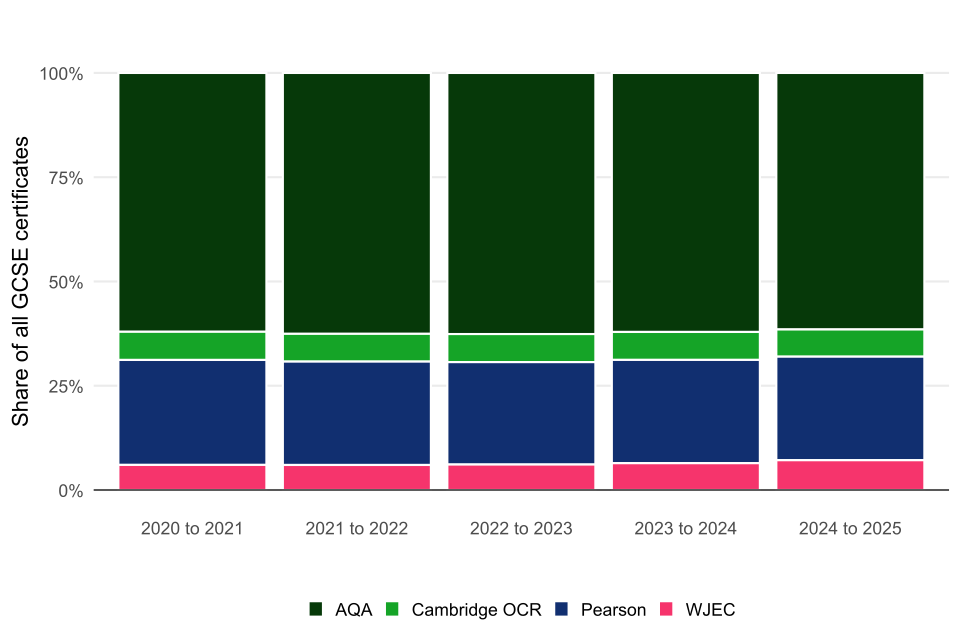
Table 9: GCSE market share per awarding organisation
| Awarding organisation | 2020 to 2021 | 2021 to 2022 | 2022 to 2023 | 2023 to 2024 | 2024 to 2025 |
|---|---|---|---|---|---|
| AQA | 62.1% | 62.6% | 62.6% | 62.1% | 61.5% |
| Cambridge OCR | 6.8% | 6.7% | 6.7% | 6.7% | 6.5% |
| Pearson | 25.2% | 24.8% | 24.6% | 24.8% | 24.8% |
| WJEC | 6.0% | 6.0% | 6.1% | 6.4% | 7.1% |
GCSE certificates issued by awarding organisations for the 10 most certified subjects in 2024 to 2025
The 10 subjects with the highest volume of certificates this year (called ‘highest volume subjects’ in this release) account for 79.7% of all GCSE certificates, which is 0.2 percentage points higher than in 2023 to 2024.
You can find the market share of awarding organisations in all GCSE subjects in the 2024 to 2025 academic year in the data tables accompanying this release (Table 8). Please note that GCSE combined science certificates have been double counted throughout the report and data tables because the qualification is the size of 2 single GCSEs.
AQA has the largest market share in 8 of the 10 highest volume subjects. Pearson has the largest share in the remaining 2 subjects: mathematics and history.
Of the 10 highest volume subjects, the largest increases in the number of certificates were for English language and mathematics (up by 31,715 and 21,190 certificates respectively), driven by increase in the numbers of certificates issued in both November and June series. Among the 10 highest volume subjects, English language had the largest percentage increase in the number of certificates (up by 3.9% from the 2023 to 2024 academic year).
The 10 highest volume subjects account for 79.7% of all GCSE certificates in 2024 to 2025 academic year
Figure 9: GCSE certificates issued by awarding organisation for the 10 most certified subjects
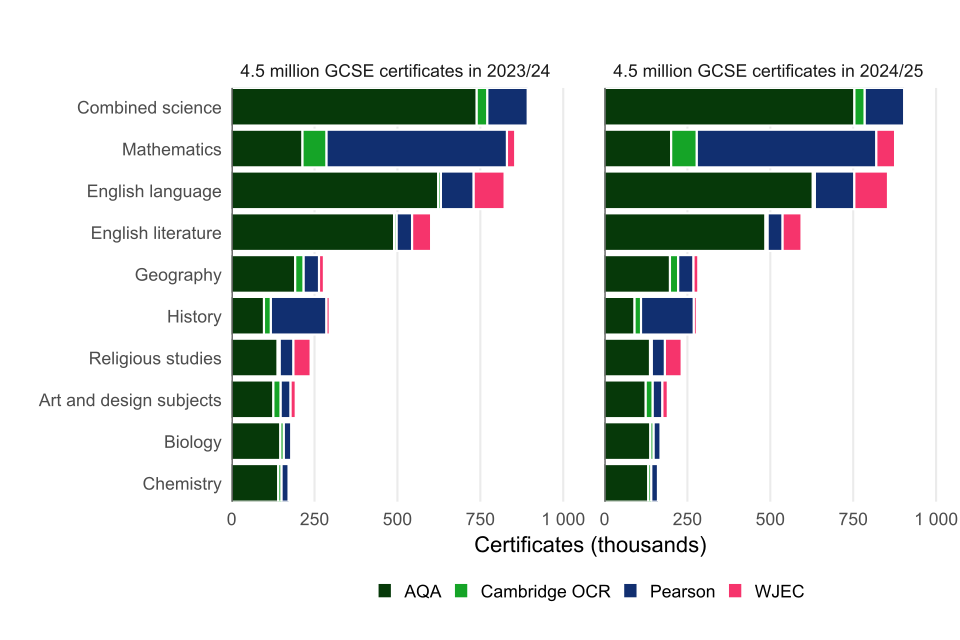
Table 10: GCSE certificates issued by awarding organisation for the 10 most certified subjects in the 2024 to 2025 academic year
| Subject | AQA | Cambridge OCR | Pearson | WJEC | Total |
|---|---|---|---|---|---|
| Combined science | 753,725 | 30,435 | 119,365 | 0 | 903,525 |
| Mathematics | 201,085 | 76,690 | 542,035 | 56,445 | 876,255 |
| English language | 628,210 | 5,945 | 119,335 | 101,380 | 854,870 |
| English literature | 485,580 | 5,790 | 45,075 | 57,660 | 594,105 |
| Geography | 197,410 | 24,440 | 46,630 | 14,325 | 282,805 |
| History | 90,690 | 19,320 | 159,420 | 8,965 | 278,390 |
| Religious studies | 137,225 | 5,035 | 39,555 | 50,840 | 232,660 |
| Art and design subjects | 124,365 | 20,400 | 29,860 | 16,205 | 190,830 |
| Biology | 138,335 | 9,165 | 21,340 | 0 | 168,840 |
| Chemistry | 132,020 | 8,615 | 20,465 | 0 | 161,100 |
Table 11: GCSE certificates issued by awarding organisation for the 10 most certified subjects in the 2023 to 2024 academic year
| Subject | AQA | Cambridge OCR | Pearson | WJEC | Total |
|---|---|---|---|---|---|
| Combined science | 739,200 | 31,430 | 122,175 | 0 | 892,810 |
| Mathematics | 213,800 | 71,820 | 544,740 | 24,705 | 855,065 |
| English language | 623,085 | 8,080 | 98,855 | 93,130 | 823,155 |
| English literature | 489,910 | 7,210 | 46,960 | 57,460 | 601,545 |
| History | 97,565 | 20,410 | 168,000 | 9,825 | 295,800 |
| Geography | 191,735 | 24,800 | 47,005 | 14,665 | 278,205 |
| Religious studies | 138,855 | 5,685 | 41,235 | 52,450 | 238,220 |
| Art and design subjects | 125,955 | 21,350 | 30,545 | 15,435 | 193,285 |
| Biology | 146,995 | 9,955 | 22,590 | 0 | 179,540 |
| Chemistry | 140,600 | 9,345 | 21,635 | 0 | 171,575 |
Market share per awarding organisation: AS
The total number of certificates for AS qualifications has decreased by 11.1% between the 2023 to 2024 academic year and the 2024 to 2025 academic year.
Cambridge OCR and AQA saw a decrease (down by 1.5% and 0.8% respectively) in their share of the AS market, with Pearson seeing an increase in its market share (up by 2.3% in the 2024 to 2025 academic year). WJEC saw no change in their share of the AS market in the 2024 to 2025 academic year compared to the 2023 to 2024 academic year.
The AS market remained relatively stable in the 2024 to 2025 academic year
Figure 10: AS market share per awarding organisation
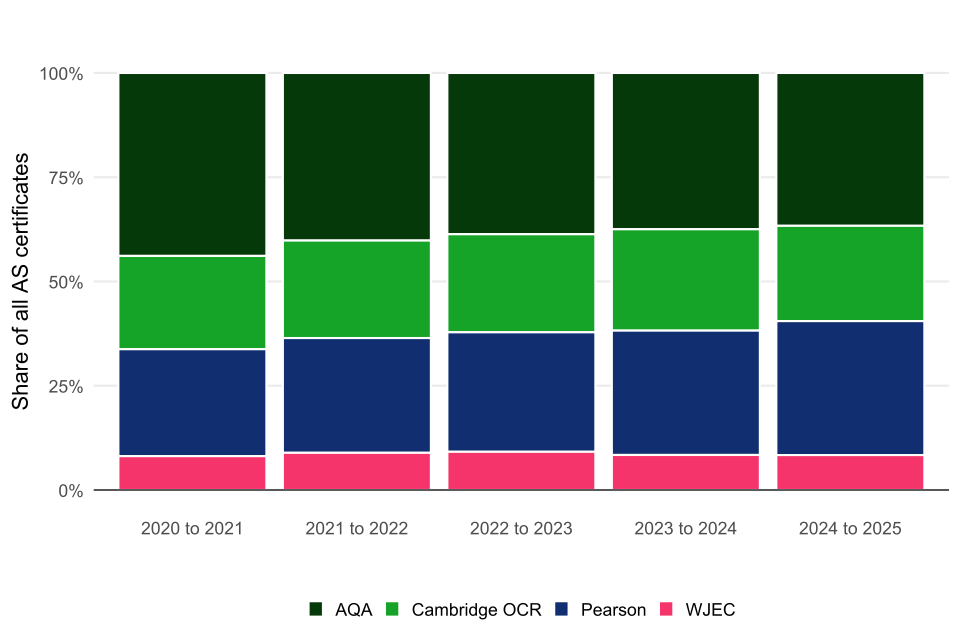
Table 12: AS market share per awarding organisation
| Awarding organisation | 2020 to 2021 | 2021 to 2022 | 2022 to 2023 | 2023 to 2024 | 2024 to 2025 |
|---|---|---|---|---|---|
| AQA | 43.9% | 40.2% | 38.7% | 37.5% | 36.7% |
| Cambridge OCR | 22.4% | 23.4% | 23.5% | 24.3% | 22.8% |
| Pearson | 25.6% | 27.5% | 28.7% | 29.8% | 32.1% |
| WJEC | 8.1% | 8.9% | 9.2% | 8.4% | 8.4% |
AS certificates issued by awarding organisation for the 10 most certified subjects in the academic year 2024 to 2025
Pearson and AQA each have the largest market share in 4 of the 10 highest volume subjects. AQA has the largest market share in psychology, sociology, biology and physics. Pearson has the largest market share in mathematics, further mathematics, business studies and economics. Cambridge OCR has the largest share in chemistry and in art and design subjects.
The 10 highest volume subjects account for 72.5% of all AS certificates, which is 0.8 percentage points more than in the 2023 to 2024 academic year. The order of the 10 highest volume AS subjects changed slightly between the 2023 to 2024 academic year and the 2024 to 2025 academic year. No subjects have left the 10 most certified subjects and no new subjects have entered the list.
The number of certificates for most of the highest volume AS subjects has decreased since the 2023 to 2024 academic year. Only further mathematics increased, with 215 more certificates between the 2023 to 2024 academic year and the 2024 to 2025 academic year. The largest decrease was in for mathematics, with 720 fewer certificates than in the 2023 to 2024 academic year.
The 10 highest volume subjects account for 72.5% of all AS certificates in 2024 to 2025 academic year
Figure 11: AS certificates issued by awarding organisation for the 10 most certified subjects
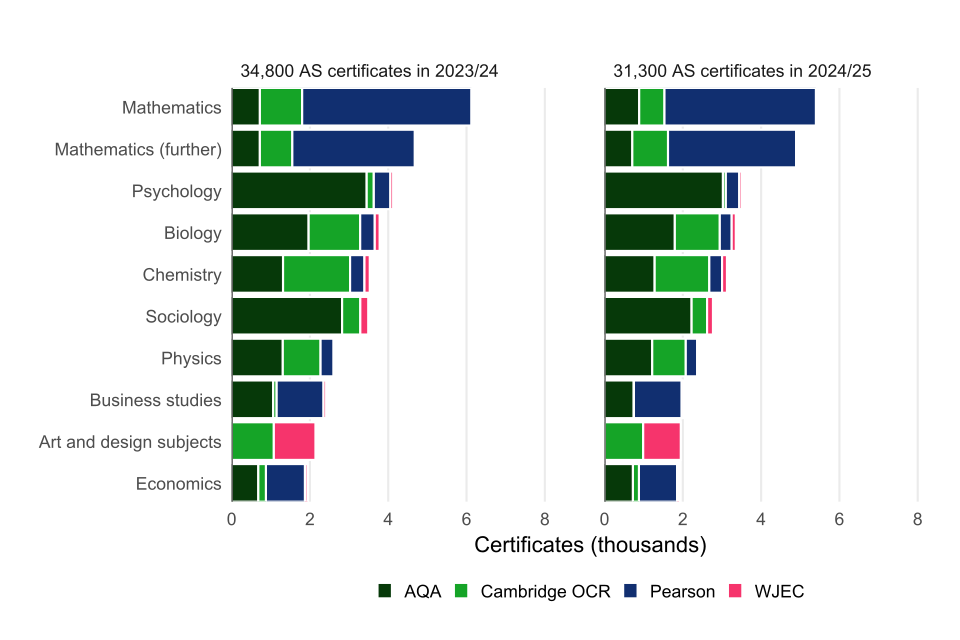
Table 13: AS certificates issued by awarding organisation for the 10 most certified subjects in the 2024 to 2025 academic year
| Subject | AQA | Cambridge OCR | Pearson | WJEC | Total |
|---|---|---|---|---|---|
| Mathematics | 885 | 640 | 3,875 | 0 | 5,400 |
| Mathematics (further) | 705 | 915 | 3,270 | 0 | 4,895 |
| Psychology | 3,025 | 70 | 350 | 65 | 3,505 |
| Biology | 1,795 | 1,150 | 305 | 105 | 3,355 |
| Chemistry | 1,275 | 1,400 | 325 | 125 | 3,125 |
| Sociology | 2,225 | 395 | 0 | 150 | 2,770 |
| Physics | 1,220 | 855 | 290 | 35 | 2,405 |
| Business studies | 745 | Fewer than 5 | 1,225 | 55 | 2,025 |
| Art and design subjects | 0 | 990 | 0 | 960 | 1,950 |
| Economics | 725 | 155 | 975 | 45 | 1,900 |
Table 14: AS certificates issued by awarding organisation for the 10 most certified subjects in the 2023 to 2024 academic year
| Subject | AQA | Cambridge OCR | Pearson | WJEC | Total |
|---|---|---|---|---|---|
| Mathematics | 720 | 1,080 | 4,320 | 0 | 6,120 |
| Mathematics (further) | 715 | 830 | 3,130 | 0 | 4,675 |
| Psychology | 3,450 | 175 | 430 | 70 | 4,125 |
| Biology | 1,965 | 1,315 | 370 | 125 | 3,780 |
| Chemistry | 1,310 | 1,715 | 365 | 135 | 3,530 |
| Sociology | 2,820 | 465 | 0 | 200 | 3,490 |
| Physics | 1,305 | 965 | 335 | 30 | 2,635 |
| Business studies | 1,060 | 80 | 1,205 | 65 | 2,415 |
| Art and design subjects | 0 | 1,080 | 0 | 1,065 | 2,140 |
| Economics | 680 | 195 | 1,000 | 65 | 1,935 |
The market share of awarding organisations in all AS subjects in the 2024 to 2025 academic year is given in the data tables accompanying this release (Table 9).
Market share by awarding organisation: A level
The A level market remained stable in the 2024 to 2025 academic year. The total number of certificates for A levels decreased by 0.1% since the 2023 to 2024 academic year.
The A level market remained stable in the 2024 to 2025 academic year
Figure 12: A level market share per awarding organisation
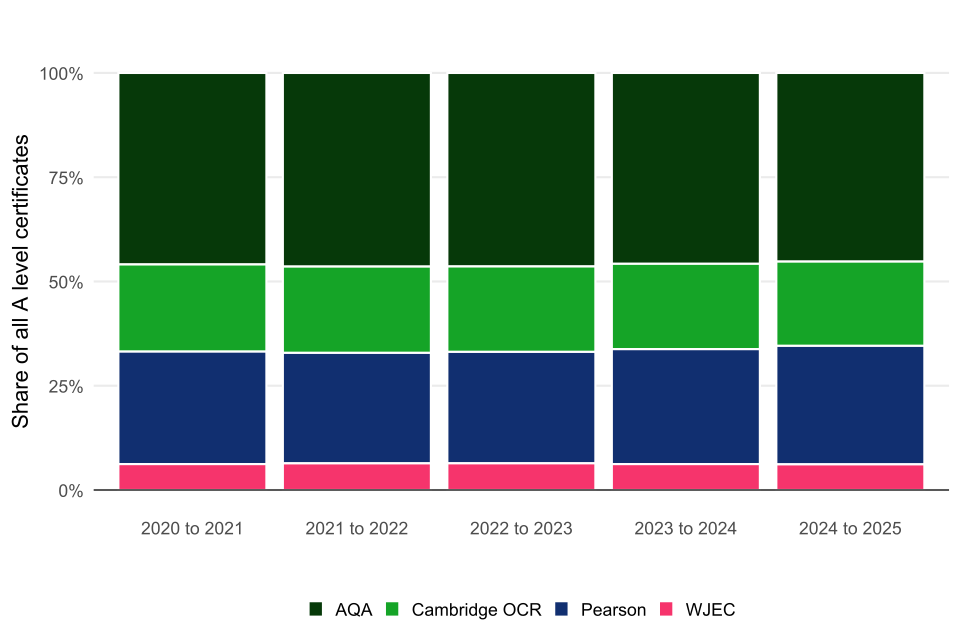
Table 15: A level market share by awarding organisation
| 2020 to 2021 | 2021 to 2022 | 2022 to 2023 | 2023 to 2024 | 2024 to 2025 | |
|---|---|---|---|---|---|
| AQA | 45.9% | 46.4% | 46.4% | 45.8% | 45.2% |
| Cambridge OCR | 20.9% | 20.7% | 20.5% | 20.5% | 20.2% |
| Pearson | 27.0% | 26.5% | 26.7% | 27.6% | 28.4% |
| WJEC | 6.2% | 6.4% | 6.4% | 6.2% | 6.2% |
A level certificates issued by awarding organisation for the 10 most certified subjects in the academic year 2024 to 2025
The 10 highest volume subjects account for 67.2% of all A level certificates, 0.5 percentage points more than in the 2023 to 2024 academic year.
The top 3 subjects with the largest decreases in the number of certificates issued since the 2023 to 2024 academic year were biology, history and psychology (down by 2,435, 2,290 and 1,975 certificates respectively). Mathematics had the largest increase in the number of certificates issued (up by 4,740 certificates).
The 10 highest volume subjects account for 67.2% of all A level certificates in 2024 to 2025 academic year
Figure 13: A level certificates issued by awarding organisation for the 10 most certified subjects
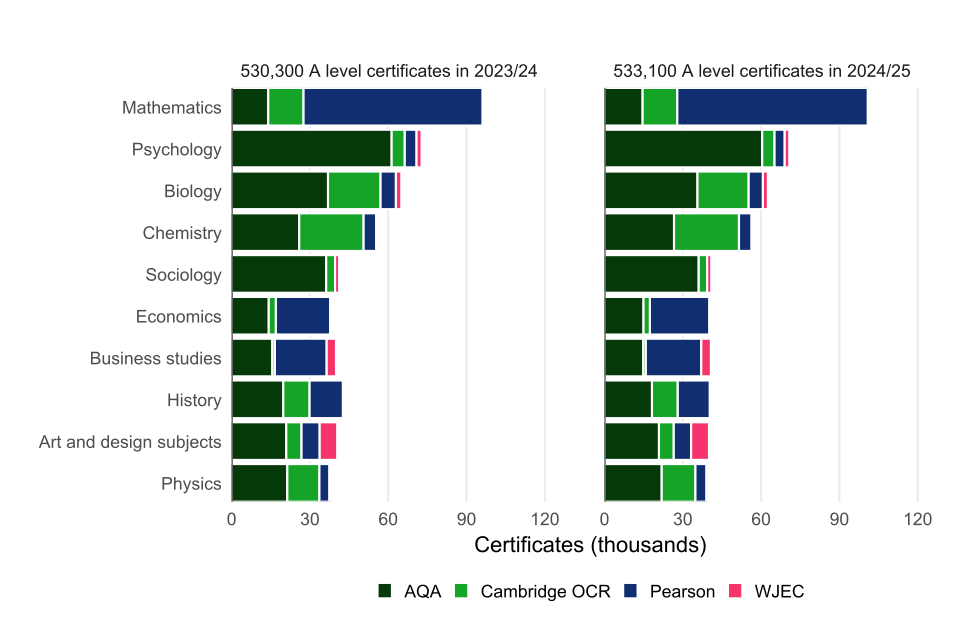
Table 16: A level certificates issued by awarding organisation for the 10 most certified subjects in the in 2024 to 2025 academic year
| Subject | AQA | Cambridge OCR | Pearson | WJEC | Total |
|---|---|---|---|---|---|
| Mathematics | 14,600 | 13,230 | 73,010 | 0 | 100,835 |
| Psychology | 60,420 | 4,735 | 3,885 | 1,760 | 70,795 |
| Biology | 35,615 | 19,625 | 5,455 | 1,890 | 62,580 |
| Chemistry | 26,630 | 24,895 | 4,825 | 110 | 56,460 |
| Sociology | 36,095 | 3,240 | 0 | 1,565 | 40,900 |
| Economics | 14,940 | 2,410 | 22,825 | 620 | 40,795 |
| Business studies | 14,840 | 925 | 21,320 | 3,670 | 40,755 |
| History | 18,190 | 9,790 | 12,320 | 0 | 40,305 |
| Art and design subjects | 20,860 | 5,585 | 6,700 | 6,885 | 40,035 |
| Physics | 21,915 | 12,925 | 4,240 | 590 | 39,670 |
Table 17: A level certificates issued by awarding organisation for the 10 most certified subjects in the 2023 to 2024 academic year
| Subject | AQA | Cambridge OCR | Pearson | WJEC | Total |
|---|---|---|---|---|---|
| Mathematics | 14,030 | 13,435 | 68,635 | 0 | 96,100 |
| Psychology | 61,310 | 5,030 | 4,510 | 1,920 | 72,770 |
| Biology | 36,920 | 20,145 | 5,870 | 2,080 | 65,015 |
| Chemistry | 25,900 | 24,670 | 4,850 | 110 | 55,530 |
| History | 19,795 | 9,980 | 12,820 | 0 | 42,595 |
| Sociology | 36,230 | 3,395 | 0 | 1,570 | 41,200 |
| Art and design subjects | 20,940 | 5,755 | 7,045 | 6,700 | 40,440 |
| Business studies | 15,590 | 930 | 19,895 | 3,575 | 39,990 |
| Economics | 14,225 | 2,685 | 20,895 | 750 | 38,555 |
| Physics | 21,330 | 12,310 | 3,835 | 625 | 38,095 |
The market share of awarding organisations in all A level subjects in the 2024 to 2025 academic year is given in the data tables accompanying this release (Table 10).
Vocational and other qualifications
In this release, ‘vocational and other’ qualifications include all regulated qualifications other than GCSEs, AS, A levels, apprenticeship EPAs, Apprenticeship Assessment Qualifications and T Level TQs. This section does not include T Level TQs because certificates are issued for the overall T Level, which is not regulated by Ofqual. This section also does not include apprenticeship EPAs because the awarding organisations that carry out EPAs do not issue certificates for their completion. The Department for Education issues certificates for overall T Levels, apprenticeship EPAs, and Apprenticeship Assessment Qualifications. Some changes in the market are likely to be caused by ongoing qualifications reform. You can find more detail in the background notes.
Most of the data for awarding organisations offering qualifications covered in this section is available in Ofqual’s Vocational and Other qualifications quarterly publication. However, this section also includes data for Project qualifications and Advanced Extension Awards, which are not reported in the Vocational and Other qualifications quarterly publication.
Certificates in vocational and other qualifications by sector subject area
All levels and types of regulated qualifications may be assigned to a sector subject area (SSA), which is a classification of qualifications into business sectors or subject areas maintained by Ofqual. There are 15 SSAs in total. Sector subject areas are self-assigned on the Register by the awarding organisation with reference to Ofqual’s published list of sector subject areas.
There were 5.3 million certificates awarded in vocational and other qualifications in the 2024 to 2025 academic year. This is up 0.5% compared with the 2023 to 2024 academic year.
Although History, philosophy and theology saw the largest percentage increase (of 9.2%), the largest increase in the absolute number of certificates issued in vocational and other qualifications was seen in Preparation for life and work (up by 34,030 certificates). Health, public services and care saw the most substantial decline in the number of certificates issued (down by 22,315 certificates). The number of certificates issued for vocational and other qualifications for all sector subject areas in the 2024 to 2025 academic year and previous 4 academic years is given in the data tables accompanying this release (Table 4).
Table 18: Number of certificates issued in vocational and other qualifications by sector subject area
| Sector subject area | Number of certificates in 2023 to 2024 | Share of certificates in 2023 to 2024 | Number of certificates in 2024 to 2025 | Share of certificates in 2024 to 2025 |
|---|---|---|---|---|
| Health, public services and care | 1,327,675 | 25.4% | 1,305,365 | 24.8% |
| Preparation for life and work | 919,565 | 17.6% | 953,595 | 18.1% |
| Arts, media and publishing | 756,705 | 14.5% | 765,135 | 14.5% |
| Construction, planning and the built environment | 357,700 | 6.8% | 367,715 | 7.0% |
| Business, administration and law | 353,990 | 6.8% | 336,800 | 6.4% |
| Leisure, travel and tourism | 294,190 | 5.6% | 306,055 | 5.8% |
| Retail and commercial enterprise | 264,685 | 5.1% | 264,550 | 5.0% |
| Engineering and manufacturing technologies | 243,235 | 4.6% | 254,255 | 4.8% |
| Languages, literature and culture | 219,650 | 4.2% | 202,985 | 3.9% |
| Science and mathematics | 133,915 | 2.6% | 136,240 | 2.6% |
| Digital technology | 115,945 | 2.2% | 118,160 | 2.2% |
| Agriculture, horticulture and animal care | 105,785 | 2.0% | 104,880 | 2.0% |
| Education and training | 85,375 | 1.6% | 86,815 | 1.7% |
| Social sciences | 45,295 | 0.9% | 46,400 | 0.9% |
| History, philosophy and theology | 9,395 | 0.2% | 10,260 | 0.2% |
| Total | 5,233,105 | 100.0% | 5,259,215 | 100.0% |
Among all vocational and other qualifications, History, philosophy and theology sector subject area saw the largest percentage increase in the number of certificates issued, up by 9.2% in the 2024 to 2025 academic year
Figure 14: Percentage change in certificates issued by sector subject area
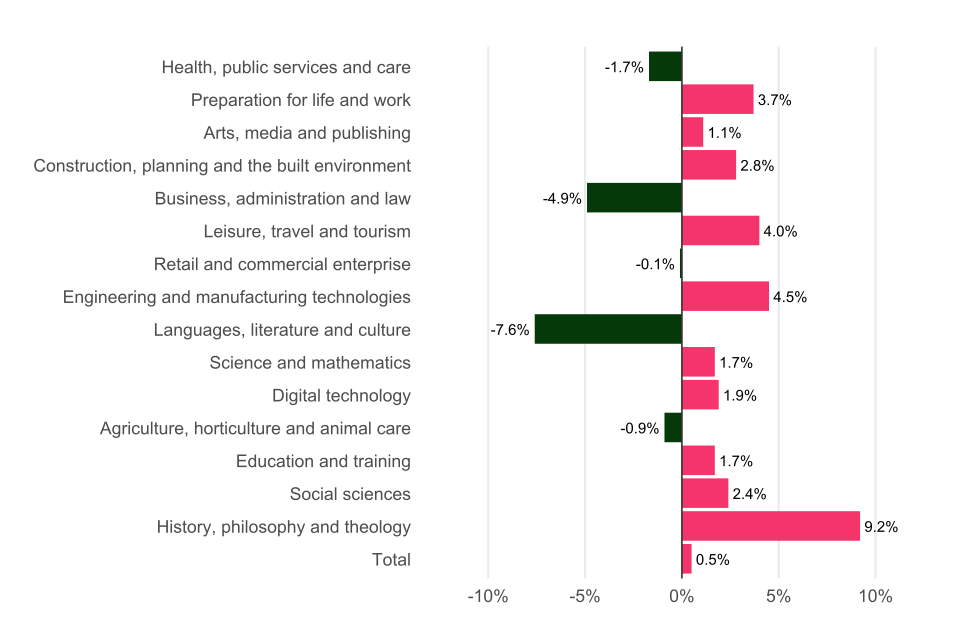
Table 19: Percentage change in certificates issued by Sector subject area between 2023 to 2024 and 2024 to 2025
| Sector subject area | Percentage change in certificates issued between 2023 to 2024 and 2024 to 2025 |
|---|---|
| Health, public services and care | -1.7% |
| Preparation for life and work | 3.7% |
| Arts, media and publishing | 1.1% |
| Construction, planning and the built environment | 2.8% |
| Business, administration and law | -4.9% |
| Leisure, travel and tourism | 4.0% |
| Retail and commercial enterprise | -0.1% |
| Engineering and manufacturing technologies | 4.5% |
| Languages, literature and culture | -7.6% |
| Science and mathematics | 1.7% |
| Digital technology | 1.9% |
| Agriculture, horticulture and animal care | -0.9% |
| Education and training | 1.7% |
| Social sciences | 2.4% |
| History, philosophy and theology | 9.2% |
| Total | 0.5% |
Certificates in vocational and other qualifications by level
Regulated qualifications are assigned a level from entry level through to level 8. Qualification level indicates the relative level of demand of the qualification, with higher levels being more demanding. Levels are assigned on the Register by the awarding organisation with reference to Ofqual’s published level descriptors.
Numbers of entry level and level 3 certificates continued to increase in the 2024 to 2025 academic year, with the greatest increase in numbers seen in entry level (up by 41,300 certificates since 2023 to 2024).
The number of level 1/level 2 certificates rose by 40,700 certificates in the 2024 to 2025 academic year compared with 2023 to 2024 academic year, totalling 398,270 certificates.
The number of certificates in levels 4 to 8 increased this year, up by 4.1% from the 2023 to 2024 academic year to 171,945 certificates in 2024 to 2025. The number of certificates in level 2 decreased by 40,700 certificates this year, down by 2.9% from the 2023 to 2024 academic year.
Among all vocational and other qualifications, the numbers of entry level and level 3 certificates continued to increase in the 2024 to 2025 academic year
Figure 15: Number of certificates in vocational and other qualifications by level
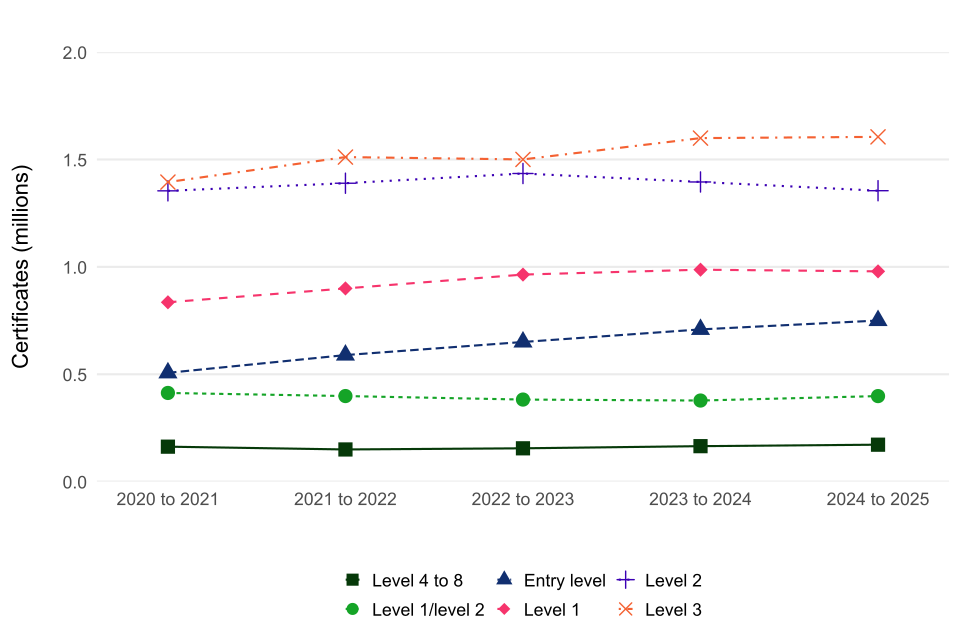
Table 20: Number of certificates in vocational and other qualifications by level
| Qualification level | Number of certificates in 2020 to 2021 | Number of certificates in 2021 to 2022 | Number of certificates in 2022 to 2023 | Number of certificates in 2023 to 2024 | Number of certificates in 2024 to 2025 |
|---|---|---|---|---|---|
| Entry level | 506,540 | 589,205 | 650,195 | 708,765 | 750,095 |
| Level 1 | 835,070 | 899,530 | 964,055 | 986,810 | 979,005 |
| Level 1/level 2 | 412,845 | 398,420 | 382,100 | 377,565 | 398,270 |
| Level 2 | 1,354,020 | 1,389,460 | 1,434,680 | 1,395,300 | 1,354,585 |
| Level 3 | 1,394,755 | 1,511,205 | 1,500,285 | 1,599,555 | 1,605,310 |
| Level 4 to 8 | 162,730 | 149,740 | 155,110 | 165,115 | 171,945 |
Awarding organisations with the highest number of certificates issued in vocational and other qualifications
The 20 awarding organisations that reported the highest volume of certificates issued in vocational and other qualifications in the 2024 to 2025 academic year awarded 76.8% of all vocational and other qualifications certificates.
NCFE had the largest increase (up by 35,835 certificates) in certificates compared with the previous year. Gateway Qualifications Limited showed the largest percentage increase in certificate numbers (up by 17.8%, an increase of 14,610 certificates compared with the 2023 to 2024 academic year).
Figure 16 & Table 21 show the 20 awarding organisations with the greatest number of certificates issued in vocational and other qualifications in 2024 to 2025. Others are grouped under the ‘other awarding organisations’.
Among all awarding organisations with certificates issued in vocational and other qualifications, Gateway Qualifications Limited had the largest percentage increase in the number of certificates issued, up by 17.8% in the 2024 to 2025 academic year
Figure 16: Percentage change in the number of certificates issued by awarding organisation
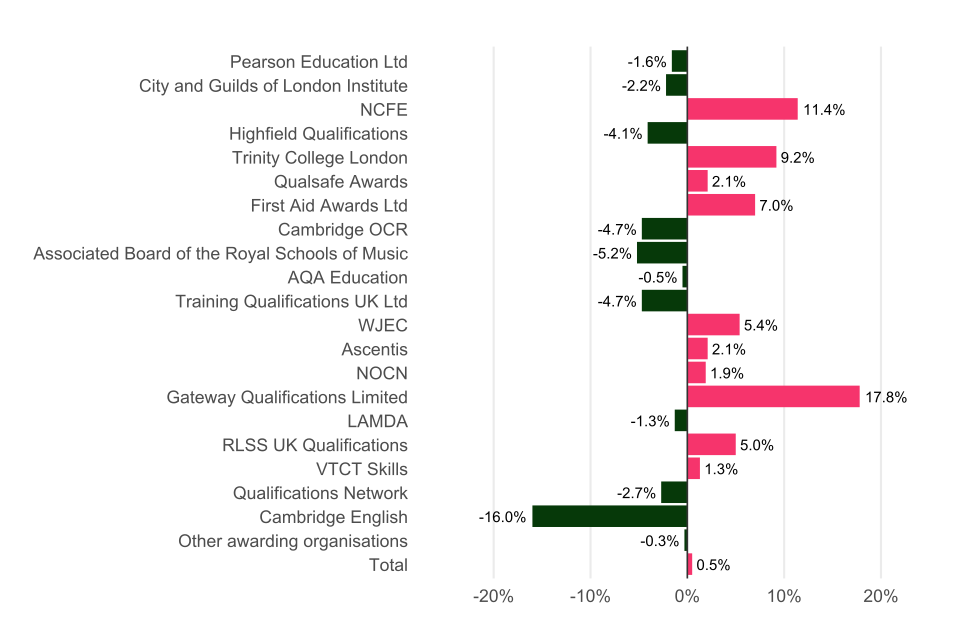
Table 21: Awarding organisations with the highest number of certificates issued in vocational and other qualifications in 2024 to 2025
| Awarding organisation | Number of certificates in 2023 to 2024 | Number of certificates in 2024 to 2025 | Percentage change in number of certificates between 2023 to 2024 and 2024 to 2025 |
|---|---|---|---|
| Pearson Education Ltd | 724,345 | 712,455 | -1.6% |
| City and Guilds of London Institute | 555,200 | 543,260 | -2.2% |
| NCFE | 314,530 | 350,365 | 11.4% |
| Highfield Qualifications | 320,640 | 307,630 | -4.1% |
| Trinity College London | 255,245 | 278,750 | 9.2% |
| Qualsafe Awards | 237,640 | 242,685 | 2.1% |
| First Aid Awards Ltd | 206,170 | 220,660 | 7.0% |
| Cambridge OCR | 208,825 | 198,980 | -4.7% |
| Associated Board of the Royal Schools of Music | 193,210 | 183,080 | -5.2% |
| AQA Education | 125,580 | 124,890 | -0.5% |
| Training Qualifications UK Ltd | 125,430 | 119,520 | -4.7% |
| WJEC | 104,505 | 110,120 | 5.4% |
| Ascentis | 106,510 | 108,770 | 2.1% |
| NOCN | 97,120 | 98,990 | 1.9% |
| Gateway Qualifications Limited | 81,995 | 96,605 | 17.8% |
| LAMDA | 80,265 | 79,260 | -1.3% |
| RLSS UK Qualifications | 69,190 | 72,665 | 5.0% |
| VTCT Skills | 62,430 | 63,215 | 1.3% |
| Qualifications Network | 64,240 | 62,535 | -2.7% |
| Cambridge English | 74,345 | 62,435 | -16.0% |
| Other awarding organisations | 1,225,695 | 1,222,335 | -0.3% |
| Total | 5,233,105 | 5,259,215 | 0.5% |
In focus: technical qualifications and applied generals
Technical and applied general qualifications are vocational qualifications designated as such according to Department for Education criteria and can count towards school and college performance tables. Please note that the list of qualifications that count towards performance tables can change every year. The figures in this section relate only to technical and applied general qualifications that were included in the respective year’s performance tables.
Applied general qualifications are for students who want to continue their education through applied learning and offer a progression route to employment or higher education. Applied general qualifications are all level 3 qualifications aimed at post-16 students.
Technical qualifications comprise tech levels, technical certificates and technical awards. Please note that this is different to, and does not include, the technical qualification components of T level qualifications. The purpose of technical qualifications is to equip students with applied knowledge and associated practical skills not usually associated with GCSE, AS and A levels. They are level 1, 1/2, 2 and 3 qualifications.
New technical awards were awarded for the first time in 2023 to 2024. From the 2023 to 2024 academic year, there were new rules introduced about the design and structure of the qualifications. In many cases, the changes led to substantial differences in the design and delivery of the qualifications. For more information on these changes please see the background notes.
Please note, figures reported below may differ slightly from those published by the Department for Education for a number of reasons, including differences in data processing and rounding. There may also be slight differences in the timing of when data was collected from awarding organisations.
Technical qualifications and applied generals by qualification category
Applied general qualifications saw 219,860 certificates issued, making up 4.2% of vocational and other certificates in the 2024 to 2025 academic year.
The 418,585 technical qualifications certificates issued in the 2024 to 2025 academic year can be further broken down into:
-
373,855 technical awards, which are level 1, level 2 or level 1/ level 2 qualifications and designed for study at key stage 4 (14- to 16-year olds); they require the same or more guided learning hours as a GCSE
-
13,215 technical certificates, which are level 2 qualifications designed for study at key stage 5 (16- to 19-year olds) and are intended for students who wish to specialise in a specific industry or prepare for a particular job
-
31,520 tech levels, which are also designed for study at key stage 5; these are level 3 qualifications
Table 22: Share of technical qualifications and applied generals in the 2024 to 2025 academic year by qualification category
| Qualification category | Number of available qualifications | Number of certificates | Share of vocational and other qualifications |
|---|---|---|---|
| Applied general | 134 | 219,860 | 4.2% |
| Tech levels | 148 | 31,520 | 0.6% |
| Technical awards | 72 | 373,855 | 7.1% |
| Technical certificates | 80 | 13,215 | 0.3% |
| Remaining vocational and other qualifications | 16,133 | 4,620,770 | 87.9% |
Technical and applied general qualifications certificates by sector subject area
The sector subject area with the largest decrease in number of certificates was Business, administration and law with a decrease of 10,205 certificates between the 2023 to 2024 academic year and 2024 to 2025 academic year.
Retail and commercial enterprise saw the largest increase in the number of certificates issued in the 2024 to 2025 academic year compared with the 2023 to 2024 academic year (up by 7,600 certificates).
Technical certificates in Agriculture, horticulture and animal care saw the largest percentage increase (up by 24.2%) in the number of certificates compared with other qualification categories and SSAs in the 2024 to 2025 academic year. The number of certificates increased from 3,570 certificates in 2023 to 2024 to 4,435 certificates in the 2024 to 2025 academic year.
Table 23: Number of technical qualifications and applied generals in the 2024 to 2025 academic year by sector subject area
| Sector subject area | Applied generals | Technical awards | Technical certificates | Tech levels | Total |
|---|---|---|---|---|---|
| Leisure, travel and tourism | 27,765 | 85,625 | 140 | 1,855 | 115,380 |
| Health, public services and care | 28,725 | 72,895 | 550 | 4,505 | 106,675 |
| Business, administration and law | 56,610 | 39,540 | 590 | 0 | 96,745 |
| Arts, media and publishing | 11,660 | 70,780 | 40 | 3,660 | 86,140 |
| Retail and commercial enterprise | 1,365 | 42,125 | 1,300 | 485 | 45,275 |
| Digital technology | 16,165 | 23,335 | 530 | 3,840 | 43,870 |
| Social sciences | 40,910 | 0 | 0 | 0 | 40,910 |
| Engineering and manufacturing technologies | 5,345 | 27,820 | 445 | 4,505 | 38,120 |
| Science and mathematics | 31,290 | 0 | 0 | 0 | 31,290 |
| Construction, planning and the built environment | 30 | 9,750 | 5,185 | 3,210 | 18,175 |
| Agriculture, horticulture and animal care | 0 | 1,985 | 4,435 | 9,455 | 15,875 |
| Total | 219,860 | 373,855 | 13,215 | 31,520 | 638,445 |
Among all technical qualifications and applied generals, Retail and commercial enterprise sector subject area had the largest percentage increase in the number of certificates issued for 2024 to 2025 academic year
Figure 17: Percentage change in the number of certificates issued by sector subject area
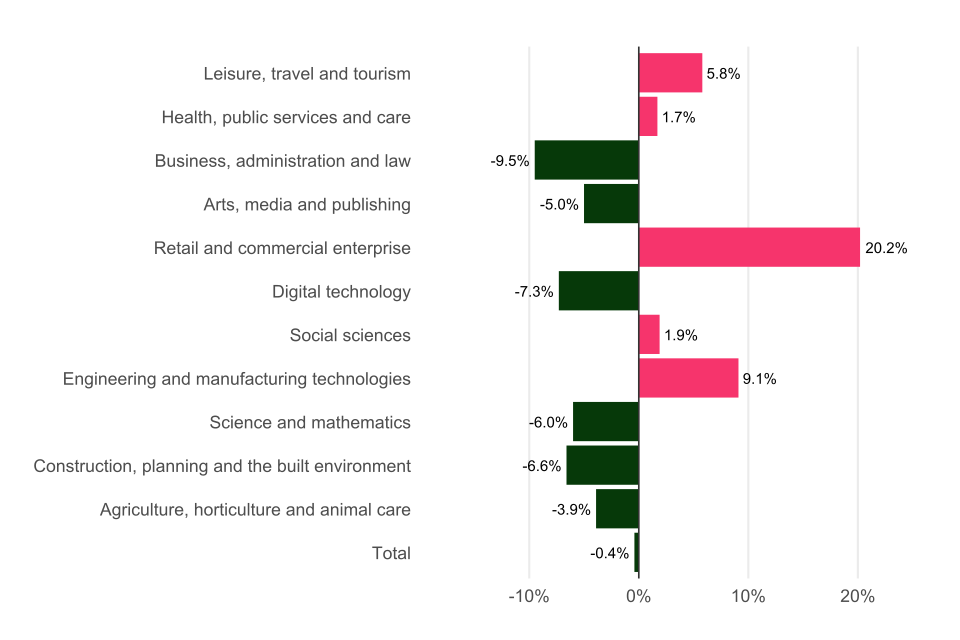
Table 24: Percentage change in the number of certificates issued by sector subject area between 2023 to 2024 and 2024 to 2025
| Sector subject area | Number of certificates issued for technical qualifications and applied generals in the 2023 to 2024 academic year | Number of certificates issued for technical qualifications and applied generals in the 2024 to 2025 academic year | Percentage change in the number of certificates issued between 2023 to 2024 and 2024 to 2025 |
|---|---|---|---|
| Leisure, travel and tourism | 109,060 | 115,380 | 5.8% |
| Health, public services and care | 104,890 | 106,675 | 1.7% |
| Business, administration and law | 106,950 | 96,745 | -9.5% |
| Arts, media and publishing | 90,675 | 86,140 | -5.0% |
| Retail and commercial enterprise | 37,675 | 45,275 | 20.2% |
| Digital technology | 47,310 | 43,870 | -7.3% |
| Social sciences | 40,155 | 40,910 | 1.9% |
| Engineering and manufacturing technologies | 34,925 | 38,120 | 9.1% |
| Science and mathematics | 33,275 | 31,290 | -6.0% |
| Construction, planning and the built environment | 19,460 | 18,175 | -6.6% |
| Agriculture, horticulture and animal care | 16,520 | 15,875 | -3.9% |
| Total | 640,895 | 638,445 | -0.4% |
Different SSAs have a different mix of technical and applied general qualifications. For instance, the Arts, media and publishing sector is dominated by technical awards and the Agriculture, horticulture and animal care sector is dominated by tech levels. The Science and mathematics and Social sciences SSAs consist entirely of applied general qualifications. Some other SSAs contain more of a mixture of different qualification types.
Different SSAs have a different mix of technical and applied general qualifications
Figure 18: Distribution of technical and applied general certificates by sector subject area
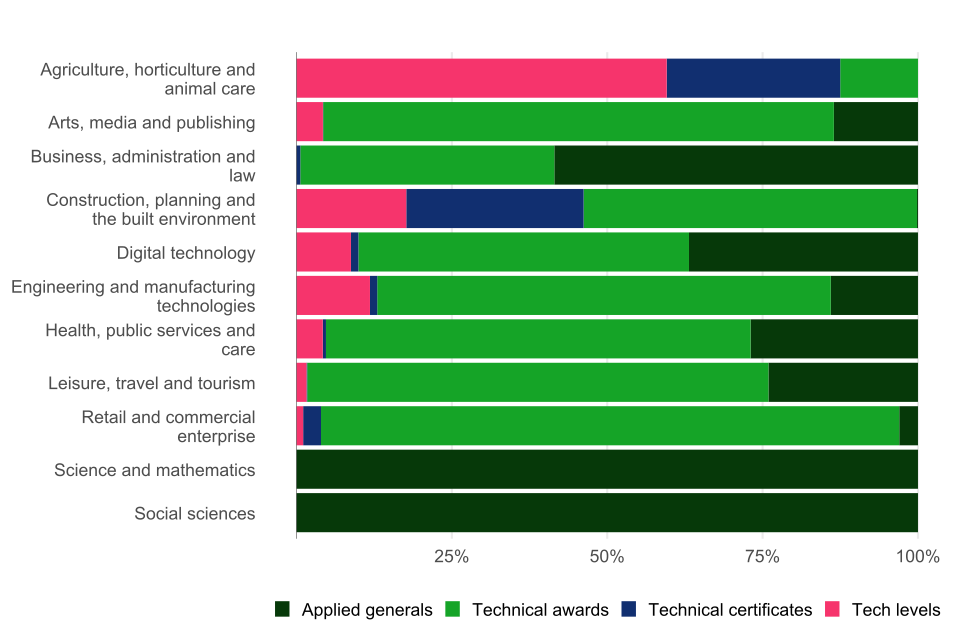
Table 25: Distribution of technical and applied general certificates by sector subject area
| Sector subject area | Applied generals | Technical awards | Technical certificates | Tech levels |
|---|---|---|---|---|
| Agriculture, horticulture and animal care | 0.0% | 12.5% | 27.9% | 59.6% |
| Arts, media and publishing | 13.5% | 82.2% | 0.0% | 4.3% |
| Business, administration and law | 58.5% | 40.9% | 0.6% | 0.0% |
| Construction, planning and the built environment | 0.2% | 53.7% | 28.5% | 17.7% |
| Digital technology | 36.8% | 53.2% | 1.2% | 8.8% |
| Engineering and manufacturing technologies | 14.0% | 73.0% | 1.2% | 11.8% |
| Health, public services and care | 26.9% | 68.3% | 0.5% | 4.2% |
| Leisure, travel and tourism | 24.1% | 74.2% | 0.1% | 1.6% |
| Retail and commercial enterprise | 3.0% | 93.0% | 2.9% | 1.1% |
| Science and mathematics | 100.0% | 0.0% | 0.0% | 0.0% |
| Social sciences | 100.0% | 0.0% | 0.0% | 0.0% |
| Total | 34.4% | 58.6% | 2.1% | 4.9% |
Technical and applied general qualifications certificates by awarding organisation
Pearson was the largest provider of applied generals. Pearson and Cambridge OCR were the largest providers of technical awards. City & Guilds and Pearson were the largest providers of technical certificates, and Pearson, City & Guilds and Cambridge OCR were the largest providers of tech levels.
Most awarding organisations saw a decrease in certificate numbers for technical and applied general qualifications in the 2024 to 2025 academic year. Only WJEC, NCFE, VTCT Skills and The Institute of the Motor Industry saw increases in the number of certificates issued.
NCFE and WJEC saw the largest overall increase in the number of certificates issued (up by 23,680 and 6,270 certificates respectively) compared with the 2023 to 2024 academic year. The largest percentage increase in certificates issued (402%) was seen by NCFE, up from 5,890 certificates in 2023 to 2024 to 29,570 in 2024 to 2025.
Pearson saw the largest overall drop in the number of technical and applied general qualification certificates, down from 322,905 certificates in the 2023 to 2024 academic year to 309,280 certificates in the 2024 to 2025 academic year (down by 13,630 certificates).
Please note that ‘[g]’ denotes a percentage change greater than the range on the chart, which has been restricted to 200% to aid better interpretation of the rest of the chart.
Among all awarding organisations with certificates issued in technical and applied general qualifications, NCFE had the largest percentage increase in certificates issued, up by 402% in the 2024 to 2025 academic year
Figure 19: Percentage change in the number of certificates issued by awarding organisation
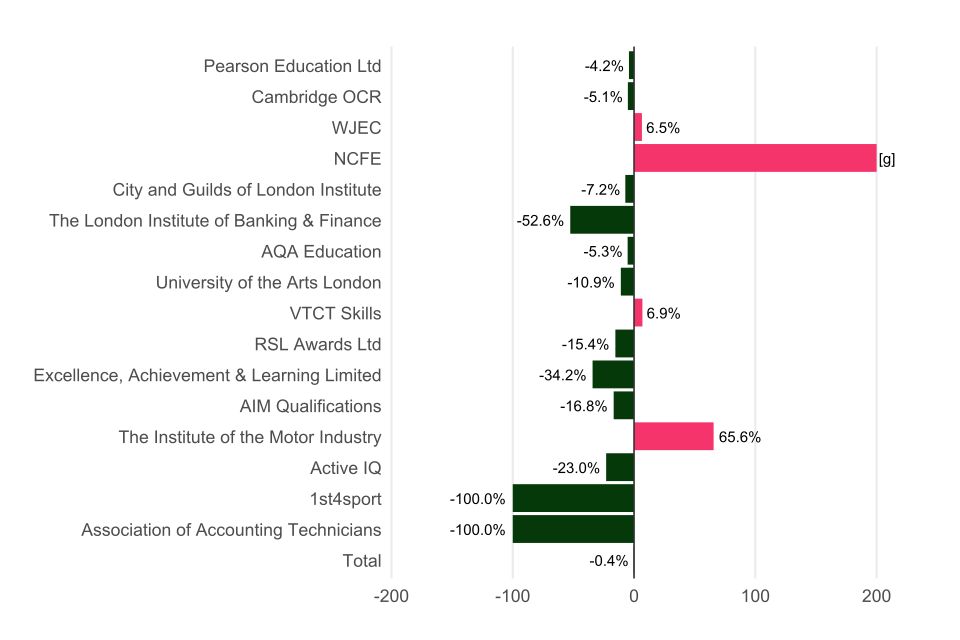
Table 26: Number of technical and applied general qualifications certificates by awarding organisation
| Awarding organisation | Applied generals | Technical awards | Technical certificates | Tech levels | Total |
|---|---|---|---|---|---|
| Pearson Education Ltd | 141,450 | 154,370 | 1,870 | 11,590 | 309,280 |
| Cambridge OCR | 25,420 | 130,115 | 950 | 6,670 | 163,155 |
| WJEC | 43,540 | 59,895 | 0 | 0 | 103,435 |
| NCFE | 195 | 25,065 | 0 | 4,305 | 29,570 |
| City and Guilds of London Institute | 0 | 1,260 | 9,620 | 7,140 | 18,025 |
| The London Institute of Banking & Finance | 4,295 | 1,560 | 0 | 0 | 5,855 |
| AQA Education | 2,530 | 0 | 0 | 0 | 2,530 |
| University of the Arts London | 2,425 | 0 | 0 | 0 | 2,425 |
| VTCT Skills | 0 | 1,590 | 455 | 175 | 2,220 |
| RSL Awards Ltd | 0 | 0 | Fewer than 5 | 775 | 780 |
| Excellence, Achievement & Learning Limited | 0 | 0 | 150 | 460 | 610 |
| AIM Qualifications | 0 | 0 | 0 | 310 | 310 |
| The Institute of the Motor Industry | 0 | 0 | 115 | 45 | 160 |
| Active IQ | 0 | 0 | 45 | 50 | 95 |
| 1st4sport | 0 | 0 | 0 | 0 | 0 |
| Association of Accounting Technicians | 0 | 0 | 0 | 0 | 0 |
| Total | 219,860 | 373,855 | 13,215 | 31,520 | 638,445 |
Table 27: Percentage change in the number of certificates issued between 2023 to 2024 and 2024 to 2025
| Awarding organisation | Number of certificates issued for technical qualifications and applied generals in the 2023 to 2024 academic year | Number of certificates issued for technical qualifications and applied generals in the 2024 to 2025 academic year | Percentage change in the number of certificates issued between 2023 to 2024 and 2024 to 2025 |
|---|---|---|---|
| Pearson Education Ltd | 322,905 | 309,280 | -4.2% |
| Cambridge OCR | 171,945 | 163,155 | -5.1% |
| WJEC | 97,165 | 103,435 | 6.5% |
| NCFE | 5,890 | 29,570 | 402.0% |
| City and Guilds of London Institute | 19,430 | 18,025 | -7.2% |
| The London Institute of Banking & Finance | 12,345 | 5,855 | -52.6% |
| AQA Education | 2,670 | 2,530 | -5.3% |
| University of the Arts London | 2,720 | 2,425 | -10.9% |
| VTCT Skills | 2,075 | 2,220 | 6.9% |
| RSL Awards Ltd | 920 | 780 | -15.4% |
| Excellence, Achievement & Learning Limited | 925 | 610 | -34.2% |
| AIM Qualifications | 370 | 310 | -16.8% |
| The Institute of the Motor Industry | 95 | 160 | 65.6% |
| Active IQ | 120 | 95 | -23.0% |
| 1st4sport | Fewer than 5 | 0 | -100.0% |
| Association of Accounting Technicians | 1,310 | 0 | -100.0% |
| Total | 640,895 | 638,445 | -0.4% |
In focus: Functional Skills qualifications
Functional Skills are qualifications that cover the fundamental and applied skills that help people to get the most from everyday life, education and work. Functional Skills qualifications are available in English, mathematics and, until recently, ICT at the following levels: entry level, level 1 and level 2.
While some Functional Skills qualifications in ICT were still certificating in 2024 to 2025, they are no longer available to new learners and have been replaced by Digital Functional Skills qualifications (DFSQs). DFSQs were first certified in 2023 to 2024 and are a separate qualification type only available at entry level and level 1. DFSQs place greater emphasis on the use of digital devices and developing digital skills to use in daily life as well as in the workplace or education setting. As DFSQs are considered a separate qualification type, they are not included in this section but overall volumes are reported in Tables 3 and 4: Number of certificates issued by qualification type.
Certificates in Functional Skills qualifications
The overall number of certificates issued in Functional Skills qualifications has reduced by 2.7% (equivalent to 9,100 certificates) in the 2024 to 2025 academic year compared to the 2023 to 2024 academic year.
The overall number of certificates issued in Functional Skills qualifications has reduced by 2.7% in the 2024 to 2025 academic year
Figure 20: Number of certificates in Functional Skills qualifications over time
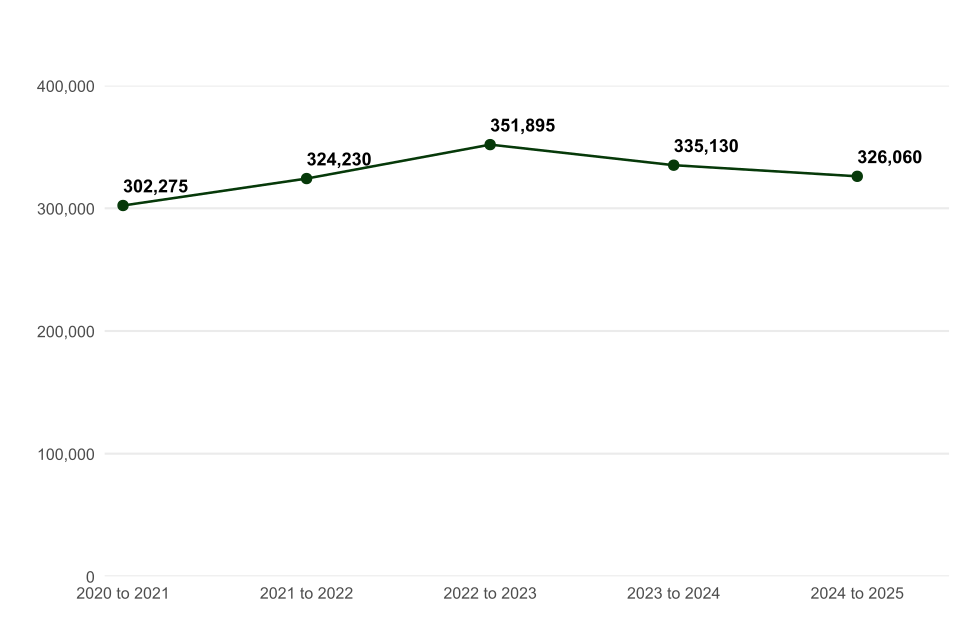
Table 28: Number of certificates in Functional Skills qualifications over time
| 2020 to 2021 | 2021 to 2022 | 2022 to 2023 | 2023 to 2024 | 2024 to 2025 | |
|---|---|---|---|---|---|
| Number of certificates | 302,275 | 324,230 | 351,895 | 335,130 | 326,060 |
Certificates in Functional Skills qualifications by subject
The number of certificates in Functional Skills qualifications in mathematics and English decreased (down by 5,300 and 2,200 certificates respectively) in the 2024 to 2025 academic year compared with the 2023 to 2024 academic year academic year.
The continual decrease in ICT Functional Skills certificates is due to them no longer being available to new learners and being replaced by new DFSQs.
Mathematics and English Functional Skills qualifications decreased in number of certificates in the 2024 to 2025 academic year compared to the 2023 to 2024 academic year
Figure 21: Number of certificates in Functional Skills qualifications by subject over time
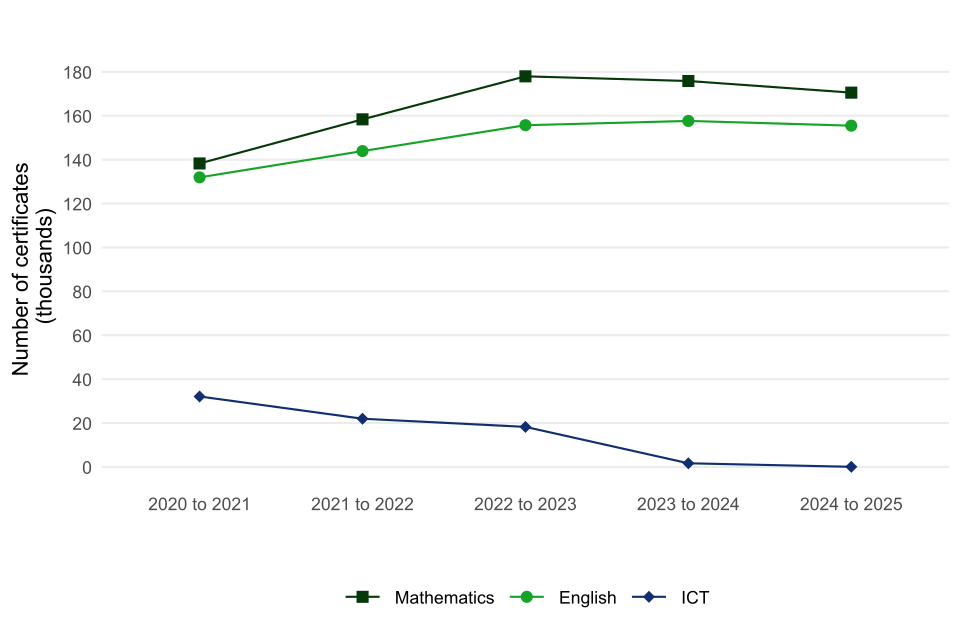
Table 29: Number of certificates in Functional Skills qualifications by subject
| Subject | 2020 to 2021 | 2021 to 2022 | 2022 to 2023 | 2023 to 2024 | 2024 to 2025 |
|---|---|---|---|---|---|
| Mathematics | 138,265 | 158,365 | 177,960 | 175,830 | 170,530 |
| English | 131,930 | 143,915 | 155,700 | 157,640 | 155,480 |
| ICT | 32,080 | 21,950 | 18,235 | 1,655 | 50 |
Certificates in Functional Skills by level
There was a decrease in the number of certificates in Functional Skills qualifications for level 1 and 2 while entry level increased in the 2024 to 2025 academic year compared with the 2023 to 2024 academic year. The largest decrease in the number of certificates was in level 2 qualifications, down by 8,700 certificates.
Level 1 and 2 qualifications had a decrease in the number of certificates in Functional Skills qualifications while entry level increased in the 2024 to 2025 academic year compared to the 2023 to 2024 academic year
Figure 22: Number of certificates in Functional Skills by level over time
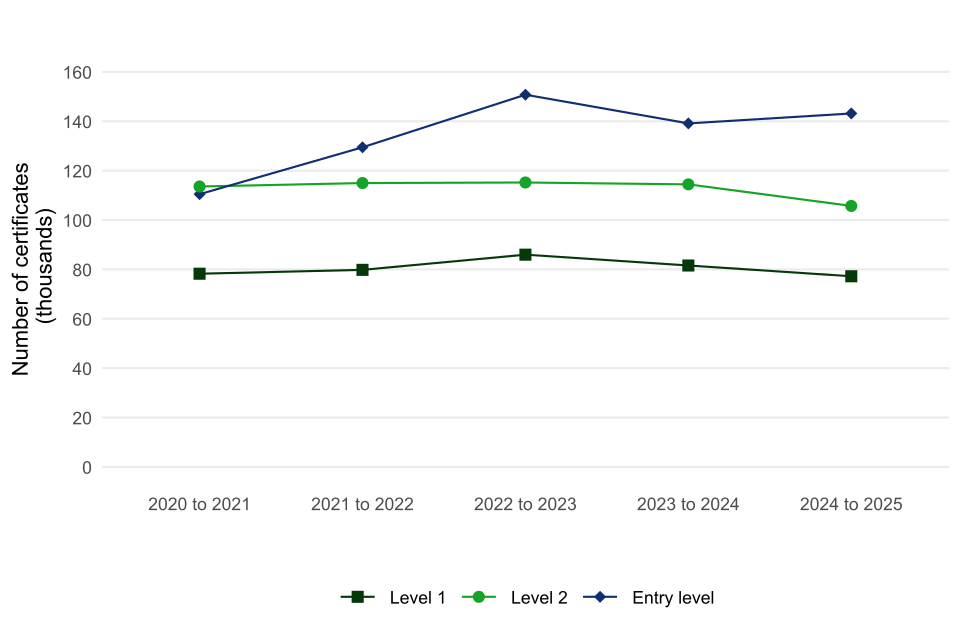
Table 29: Number of certificates in Functional Skills by level
| Qualification level | 2020 to 2021 | 2021 to 2022 | 2022 to 2023 | 2023 to 2024 | 2024 to 2025 |
|---|---|---|---|---|---|
| Entry level | 110,465 | 129,450 | 150,740 | 139,120 | 143,155 |
| Level 1 | 78,245 | 79,810 | 85,960 | 81,570 | 77,210 |
| Level 2 | 113,560 | 114,970 | 115,190 | 114,435 | 105,690 |
Certificates in Functional Skills qualifications by awarding organisation
There were 11 awarding organisation issuing certificates in Functional Skills qualifications in the 2024 to 2025 academic year, up from 10 in the 2023 to 2024 academic year.
Most awarding organisations awarded fewer certificates in Functional Skills qualifications in the 2024 to 2025 academic year in comparison with the 2023 to 2024 academic year. Of those with a decrease in the number of certificates issued, City and Guilds of London Institute saw the largest decline in the number of certificates in the 2024 to 2025 academic year compared with the 2023 to 2024 academic year (down by 8,465 certificates).
Please note that an awarding organisation with certificate issued for the first time this year, and therefore showing no year‑on‑year change in certificate numbers, are denoted as ‘[x]’ in both the charts and the tables. ‘[g]’ denotes a percentage change greater than the range on the chart, which has been restricted to 200% to aid better interpretation of the rest of the chart.
Most awarding organisations awarded fewer certificates in Functional Skills qualifications in the 2024 to 2025 academic year in comparison with the previous year
Figure 23: Percentage change in the number of certificates issued by awarding organisation
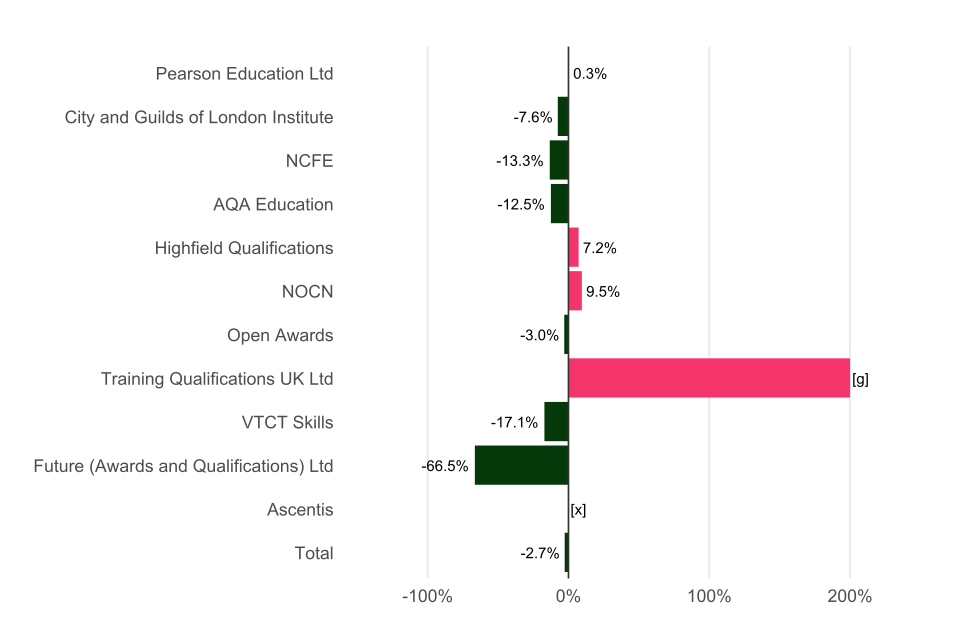
Table 30: Number of certificates in Functional Skills qualifications by awarding organisation in 2023 to 2024 and 2024 to 2025
| Awarding organisation | Number of certificates in 2023 to 2024 | Number of certificates in 2024 to 2025 | Percentage change in the number of certificates between 2023 to 2024 and 2024 to 2025 |
|---|---|---|---|
| Pearson Education Ltd | 156,060 | 156,605 | 0.3% |
| City and Guilds of London Institute | 110,700 | 102,235 | -7.6% |
| NCFE | 23,675 | 20,525 | -13.3% |
| AQA Education | 18,965 | 16,585 | -12.5% |
| Highfield Qualifications | 9,635 | 10,335 | 7.2% |
| NOCN | 5,950 | 6,515 | 9.5% |
| Open Awards | 5,250 | 5,090 | -3.0% |
| Training Qualifications UK Ltd | 875 | 4,875 | 458.6% |
| VTCT Skills | 3,820 | 3,165 | -17.1% |
| Future (Awards and Qualifications) Ltd | 200 | 65 | -66.5% |
| Ascentis | 0 | 60 | [x] |
| Total | 335,130 | 326,060 | -2.7% |
In focus: International market
Ofqual regulated awarding organisations offer a wide selection of regulated qualifications outside the UK. These qualifications, offered internationally, are protected by Ofqual regulation so long as they are also taken by learners in England.
Certificates for Ofqual regulated qualifications awarded outside the UK
In total, 8.3 million certificates were awarded for 2,739 different regulated qualifications to students outside the UK over the 2024 to 2025 academic year, down by 2.4% compared with the previous year.
Table 31: Number of certificates for Ofqual regulated qualifications awarded outside the UK
| Year | Number of certificates |
|---|---|
| 2020 to 2021 | 6,365,655 |
| 2021 to 2022 | 7,478,255 |
| 2022 to 2023 | 8,407,355 |
| 2023 to 2024 | 8,522,610 |
| 2024 to 2025 | 8,316,385 |
Certificates for regulated qualifications issued outside the UK by type
The 5 highest volume qualification types accounted for 99.1% of all certificates issued outside the UK. English for Speakers of Other Languages had the highest number of certificates issued, followed by Other general qualification and Performing arts graded examinations.
The largest increase in the number of certificates issued outside the UK was among other general qualification regulated qualifications, up by 82,035 compared with the 2023 to 2024 academic year.
Table 32: Number of certificates for Ofqual regulated qualifications issued outside the UK by type
| Qualification type | Number of certificates in 2023 to 2024 | Number of certificates in 2024 to 2025 | Share of certificates in 2023 to 2024 | Share of certificates in 2024 to 2025 |
|---|---|---|---|---|
| English for Speakers of Other Languages | 6,391,030 | 6,096,925 | 75.0% | 73.3% |
| Other general qualification | 1,254,960 | 1,336,990 | 14.7% | 16.1% |
| Performing arts graded examination | 545,375 | 541,120 | 6.4% | 6.5% |
| Vocationally-related qualification | 221,220 | 218,630 | 2.6% | 2.6% |
| GCSE (9 to 1) | 42,090 | 44,755 | 0.5% | 0.5% |
| Other qualifications | 67,935 | 77,970 | 0.8% | 0.9% |
| Total | 8,522,610 | 8,316,385 | 100.0% | 100.0% |
The largest percentage increase in the number of certificates issued outside the UK was among other general qualification and GCSE (9 to 1) regulated qualifications for the 2024 to 2025 academic year
Figure 24: Percentage change in the number of certificates issued by qualification type

Table 33: Percentage change in the number of certificates issued by qualification type between 2023 to 2024 and 2024 to 2025
| Qualification type | Percentage change in the number of certificates issued by qualification type between 2023 to 2024 and 2024 to 2025 |
|---|---|
| English for Speakers of Other Languages | -4.6% |
| Other general qualification | 6.5% |
| Performing arts graded examination | -0.8% |
| Vocationally-related qualification | -1.2% |
| GCSE (9 to 1) | 6.3% |
| Other qualifications | 14.8% |
| Total | -2.4% |
Certificates for regulated qualifications awarded outside the UK by level
Level 1 regulated qualifications had the highest number of certificates issued outside the UK in the 2024 to 2025 academic year, accounting for 35.4% of the non-UK total.
Level 4 to 8 regulated qualifications had the largest percentage increase in the number of certificates issued outside the UK in the 2024 to 2025 academic year compared with the 2023 to 2024 academic year, up by 12.1%. Level 3 saw the largest increase in the raw number of certificates issued outside the UK certificates compared with the previous year (an increase of 40,395 certificates).
Level 1 regulated qualifications had the largest percentage decrease in the number of certificates issued outside the UK, down by 5.6%, equivalent to a decrease of 176,305 certificates compared with the previous year.
Table 34: Number of certificates for regulated qualifications awarded outside the UK by level
| Qualification level | Number of certificates in 2023 to 2024 | Number of certificates in 2024 to 2025 | Share of certificates in 2023 to 2024 | Share of certificates in 2024 to 2025 |
|---|---|---|---|---|
| Entry level | 2,143,710 | 2,039,565 | 25.2% | 24.5% |
| Level 1 | 3,121,375 | 2,945,070 | 36.6% | 35.4% |
| Level 1/level 2 | 193,965 | 213,645 | 2.3% | 2.6% |
| Level 2 | 1,474,970 | 1,477,185 | 17.3% | 17.8% |
| Level 3 | 1,490,305 | 1,530,700 | 17.5% | 18.4% |
| Level 4 to 8 | 98,285 | 110,220 | 1.2% | 1.3% |
| Total | 8,522,610 | 8,316,385 | 100.0% | 100.0% |
Level 4 to 8 regulated qualifications had the largest percentage increase in the number of certificates issued outside the UK, up by 12.1% in the 2024 to 2025 academic year
Figure 25: Percentage change in the number of certificates issued by qualification level
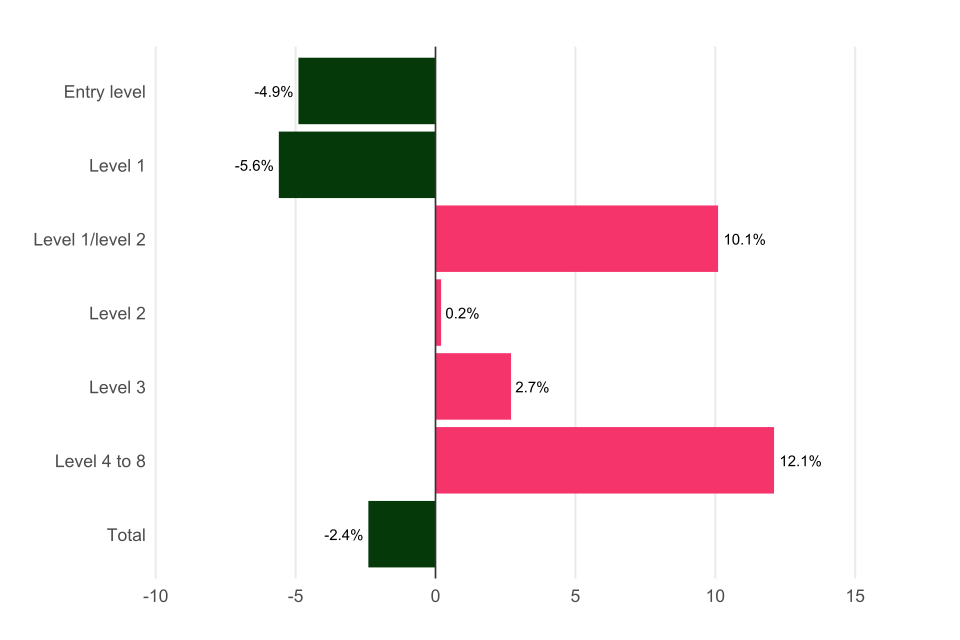
Table 35: Percentage change in the number of certificates issued outside the UK by qualification level between 2023 to 2024 and 2024 to 2025
| Qualification level | Percentage change in the number of certificates issued between 2023 to 2024 and 2024 to 2025 |
|---|---|
| Entry level | -4.9% |
| Level 1 | -5.6% |
| Level 1/level 2 | 10.1% |
| Level 2 | 0.2% |
| Level 3 | 2.7% |
| Level 4 to 8 | 12.1% |
| Total | -2.4% |
Awarding organisations with the highest number of certificates for regulated qualifications awarded outside the UK
The 20 awarding organisations that reported the highest volume of non-UK certificates of regulated qualifications in the 2024 to 2025 academic year awarded 98.5% of all regulated qualifications certificates issued outside the UK. AIM Qualifications is new to the top 20 this year.
International Baccalaureate Organisation and The British Council saw the largest increases in certificates compared with the previous year (up by 82,910 and 44,640 certificates respectively).
AIM Qualifications has had the largest percentage increase (up by 53.4%) in certificate numbers compared with 2023 to 2024.
Figure 26 & Table 36 show the 20 awarding organisations that issued the most certificates outside the UK in 2024 to 2025. Others are grouped under the ‘other awarding organisations’. You can find a full breakdown of all awarding organisations, in Table 22 of the accompanying data tables.
Among all awarding organisations with certificates for regulated qualifications awarded outside the UK, AIM Qualifications saw the largest percentage increase in certificate numbers, up by 53.4% in the 2024 to 2025 academic year
Figure 26: Percentage change in the number of certificates issued by awarding organisation
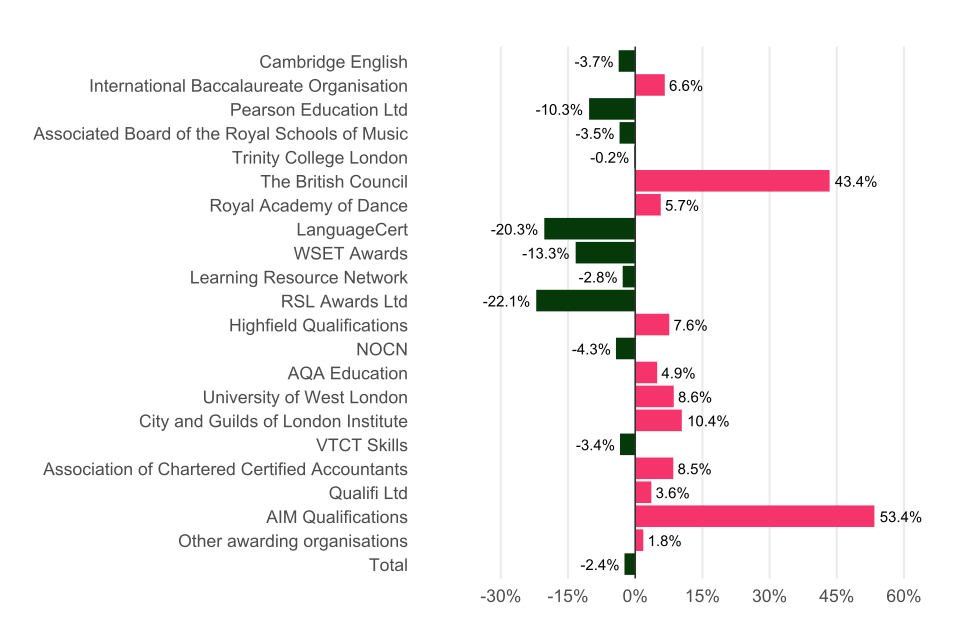
Table 36: Awarding organisations with the highest number of certificates for regulated qualifications awarded outside the UK in 2024 to 2025
| Awarding organisation | Number of certificates in 2023 to 2024 | Number of certificates in 2024 to 2025 | Percentage change in number of certificates between 2023 to 2024 and 2024 to 2025 |
|---|---|---|---|
| Cambridge English | 4,923,545 | 4,739,050 | -3.7% |
| International Baccalaureate Organisation | 1,247,820 | 1,330,730 | 6.6% |
| Pearson Education Ltd | 1,114,115 | 999,665 | -10.3% |
| Associated Board of the Royal Schools of Music | 232,510 | 224,390 | -3.5% |
| Trinity College London | 215,460 | 215,055 | -0.2% |
| The British Council | 102,800 | 147,435 | 43.4% |
| Royal Academy of Dance | 100,000 | 105,655 | 5.7% |
| LanguageCert | 111,830 | 89,085 | -20.3% |
| WSET Awards | 85,220 | 73,890 | -13.3% |
| Learning Resource Network | 49,360 | 47,970 | -2.8% |
| RSL Awards Ltd | 46,245 | 36,020 | -22.1% |
| Highfield Qualifications | 25,995 | 27,970 | 7.6% |
| NOCN | 26,275 | 25,155 | -4.3% |
| AQA Education | 23,590 | 24,755 | 4.9% |
| University of West London | 20,185 | 21,920 | 8.6% |
| City and Guilds of London Institute | 17,580 | 19,410 | 10.4% |
| VTCT Skills | 17,480 | 16,880 | -3.4% |
| Association of Chartered Certified Accountants | 14,015 | 15,205 | 8.5% |
| Qualifi Ltd | 13,745 | 14,240 | 3.6% |
| AIM Qualifications | 9,095 | 13,950 | 53.4% |
| Other awarding organisations | 125,745 | 127,960 | 1.8% |
| Total | 8,522,610 | 8,316,385 | -2.4% |
Data for all awarding organisations is available in the accompanying data tables (Table 22).
Contextual Information
To ensure confidentiality of the published accompanying data, figures have been rounded to the nearest 5. If the value is less than 5, it is represented as “fewer than 5” and 0 represents zero entries.
Where individual rounded values have been presented in a table along with their sum total, this total may be slightly different to the sum of the individual rounded values. This is because the total has been calculated using the original unrounded values.
We also use unrounded values to derive percentages. Percentages are then rounded to one decimal place. Due to this rounding, percentages may not always add to up exactly 100%.
For more information, see our Ofqual’s rounding policy.
You can find further information is available in the detailed background information and data tables accompanying this release.