Technical report
Updated 17 December 2025
Applies to England

© Crown copyright 2025
This publication is licensed under the terms of the Open Government Licence v3.0 except where otherwise stated. To view this licence, visit nationalarchives.gov.uk/doc/open-government-licence/version/3 or write to the Information Policy Team, The National Archives, Kew, London TW9 4DU, or email: psi@nationalarchives.gov.uk.
Where we have identified any third party copyright information you will need to obtain permission from the copyright holders concerned.
This publication is available at https://www.gov.uk/government/statistics/adult-oral-health-survey-2023/technical-report
Adult oral health survey series
The adult oral health survey (AOHS) 2023 marks the sixth iteration of a series of nationally representative surveys on adult oral and dental health, conducted approximately every decade since 1968. The 2023 survey was renamed the adult oral health survey to more accurately reflect its focus and scope in capturing the overall oral health and wellbeing of the mouth, including teeth and gums, but also the specific dental health and condition of the teeth and gums. The AOHS series was established to help understand how the dental and oral health of adults is changing.
The survey was commissioned by the Office for Health Improvement and Disparities (OHID) within the Department of Health and Social Care (DHSC). The survey was conducted by a consortium led by the National Centre for Social Research (NatCen). The consortium included dental academics with experience of oral epidemiology from the following organisations:
- Department of Dentistry at the University of Birmingham
- Faculty of Dentistry, Oral and Craniofacial Sciences at King’s College London
- School of Dental Sciences at Newcastle University
- Dental Public Health Group at the Department of Epidemiology and Public Health at University College London
- Office for National Statistics
The University of Leeds also provided guidance and support to the survey and its design.
The initial adult dental health surveys (ADHSs) were conducted in 1968 and 1978 across England and Wales, managed by a consortium of academic dental centres and led by the Government Social Surveys Unit in 1968, followed by the Office for Population, Censuses and Surveys in 1978.
The surveys conducted in 1988 and 1998 were expanded to include Scotland and Northern Ireland. By 2009, the survey encompassed adults in England, Wales and Northern Ireland.
All these surveys gathered data through face-to-face interviews conducted with adults in their own homes, followed by an oral examination performed by a qualified dental practitioner. The questionnaires and examinations covered various aspects of dental and oral health, their impact, service utilisation and related attitudes and behaviours. Although the surveys adapted to reflect changing priorities, many measures remained consistent across different surveys, facilitating tracking of trends over time.
The AOHS 2020 was intended to be the next round of face-to-face data collection. However, the progression of the COVID-19 pandemic meant that this approach was not feasible at that time. Instead, an online and paper survey without an oral examination was undertaken for the 2021 survey. Because of this, the results from the 2021 survey are not comparable to the rest of the survey series.
The AOHS series returned to in-person data collection in 2023.
Table 1: adult oral health survey series
| Survey year | Geographical coverage | Achieved interviews | Achieved oral examinations | Age group | Survey method |
|---|---|---|---|---|---|
| 1968 | England and Wales | 2,932 | 2,658 | 16 and older | Paper |
| 1978 | UK | 5,967 | 3,495 | 16 and older | Paper |
| 1988 | UK | 6,825 | 4,331 | 16 and older | Paper |
| 1998 | UK | 6,204 | 3,187 | 16 and older | Computer assisted interviewing |
| 2009 | England, Wales and Northern Ireland | 11,380 | 6,469 | 16 and older | Computer assisted interviewing |
| 2023 | England | 2,285 | 1,619 | 16 and older | Computer assisted interviewing |
Aims of survey series
Like previous surveys, the purpose of the 2023 survey was to provide information on the condition of adults’ teeth and oral health, and to track changes in oral health over time. The specific aims of the survey were to:
- examine dental experiences, knowledge of, and attitudes towards dental care and oral hygiene
- determine the condition of natural teeth and supporting tissues
- analyse changes in dental health, attitudes and behaviour over time
- provide the evidence and demonstrate impact in various topic areas, including impact on quality of life and to inform dental health policy
The 2023 survey was specifically designed to offer more relevant and appropriate information to NHS dental commissioners, informed by feedback from user consultations. The results of this survey will be utilised by a broad spectrum of users, including:
- clinical specialists
- public health experts
- policy makers
- academics
- trade associations such as the British Dental Association
- patient groups
2023 survey overview
Summary of survey design
The AOHS 2023 was designed to be the next face-to-face survey in the series following a gap in data collection. The 2023 survey was a random probability survey, covering adults living in residential households in England. Data collection took place from June 2023 to April 2024. Up to 2 adults aged 16 and older from each eligible household were invited to take part. See the ‘Sample design’ section for further information.
Data collection for the 2023 survey involved a face-to-face interview conducted by a NatCen interviewer in the participant’s home. The interviewer-administered survey collected self-reported data on:
- current oral health behaviours
- the need for and access to dental treatment
- patterns of dental attendance
- attitudes and barriers towards dental care
- socio-demographic characteristics
Standardised instruments used in the survey to measure oral health-related quality of life included the Oral Health Impact Profile-14 (OHIP-14) and the Oral Impacts on Daily Performances (OIDP). The Modified Dental Anxiety Scale (MDAS) was used to assess anxiety and phobia to visit the dentist and receive dental care.
Interviewers were accompanied by a trained and calibrated dental examiner who performed the oral examination on consenting participants. This took place during the same visit, unlike in previous surveys, where the interview and oral examination were carried out in 2 separate visits. The oral examination incorporated clinical criteria comparable to the 2009 survey, with specific innovations such as recording enamel decay in addition to decay into dentine. The Basic Erosive Wear Examination (BEWE) was administered to all participants, unlike in 2009 when it was only applied to a subsample of adults. Furthermore, the periodontal condition criteria were revised to align as closely as possible with the 2017 internationally agreed classification. See the ‘Survey development and piloting’ section for more detailed information on the questionnaire and oral examination content.
A household response rate of 28% was achieved. Overall, 2,285 adults were interviewed and 1,619 of these adults also had an oral examination.
Study strengths
By sampling from the general population rather than patient lists, AOHS provides an informative account of the oral health status of the adult population in England rather than only of those adults that attend dental services.
Gathering extensive data across various topics allows for the examination of relationships between different domains. Specifically, the questionnaire collects subjective data on health behaviours, oral health-related quality of life measures and dental attendance, which can then be correlated with the clinical findings of the oral examination.
The criteria for the 2023 oral examination closely align with previous surveys, allowing the monitoring of trends over time across broad oral health outcomes.
At the end of the interview, permissions for follow-up and for data linkage were requested, creating opportunities for future linkage to health and longitudinal data collection from participants.
The AOHS data set is shared with the UK Data Service and is designed to be suitable for extensive further analysis. There is only scope for a small part of the data collected to be covered in this publication.
Study limitations
Coverage of the AOHS 2023 is limited to England, while previous surveys in the series have covered England and other nations of the United Kingdom (this has varied in each of the survey years).
As with any survey, some households selected for the survey could not be contacted or declined to take part. The household response rate achieved (28%) was lower than in previous surveys in the series (60% in ADHS 2009) and lower than anticipated when the study was planned. However, this is consistent with broader trends in survey response rates (for example, the Family Resources Survey 2022 to 2023 achieved a response rate of 25% and the English Housing Survey 2022 to 2023 achieved a response rate of 32%). A challenge for all probability-sample surveys is how to take account of those who do not take part. The weighting scheme includes a non-response adjustment (outlined in the ‘Weighting’ section) to help account for non-response bias.
The visit involved a paired visit with an interviewer and examiner. The presence of an examiner during the interview may have led some participants giving responses that they thought the examiner wanted to hear, resulting in some underreporting. While this is a risk, the study minimised this by instructing examiners not to intervene during the interview stage nor to respond to any questions participants may have asked them during this stage.
Conducting the interview and oral examination during the same visit in participant’s homes resulted in a higher level of consent to the oral examination than seen in previous ADH surveys. However, recruitment of examiners was more difficult than expected and not all issued addresses were able to be covered by an examiner. This meant that some participants were not offered an oral examination and completed the interview only.
Access to AOHS data
The AOHS 2023 data set will be shared with the UK Data Service under End User Licence. The ADHS 2009 and ADHS 1998 data sets are also available to access from the UK Data Service.
Ethical approval
Ethical approval for the AOHS 2023 was obtained from the NatCen Research Ethics Committee (NatCen P16782: 4 May 2023).
Sample design
Overview of the sample design
The AOHS 2023 aimed to interview a representative sample of men and women aged 16 and older living in residential households across England. Adults living in institutions (for example students in halls of residence, adults in care homes and prisoners) and temporary housing (for example hostels and bed and breakfast accommodation) were outside the scope of the survey. As with previous surveys in the series, the 2023 survey adopted a 2-stage stratified probability sampling design. At the first stage, a random sample of primary sampling units (PSUs) based on postcode sectors was selected across England. Within each selected PSU, a random sample of postal addresses (known as delivery points) was then drawn.
Sampling frame
The sample was selected from the Census sampling frame known as the AddressBase Premium database. This replaces the Postcode Address File (PAF) used in previous surveys, because AddressBase contains fewer non-residential addresses and offers a more comprehensive listing of multi-occupancy addresses, thereby facilitating more efficient data collection. AddressBase allows some communal establishments to be included in the sample.
Selection of primary sampling units
A list of all postcode sectors in England was generated. Postcode sectors were combined with adjacent sectors into pairs within each of the 7 NHS regions to:
- mitigate the clustering effect of sampled addresses
- enhance the diversity of the population within each PSU
This was done by running an algorithm to obtain the best pairing of each postcode sector in each NHS region, based on distance between pairs of postcode sectors. Combining neighbouring postcode sectors also helped to minimise the complexity of the sampling without adversely affecting its precision.
A total of 123 PSUs were selected consisting of 2 postcode sectors each. Up to 26 addresses were sampled from each postcode sector (up to 52 addresses per PSU), giving a total sample of 5,876 addresses across England.
Before selection, postcode sectors were stratified to maximise the precision of the sample and to ensure that different strata in the population were correctly represented. The list of PSUs was first sorted by the proportion of households in the 2011 Census from the National Statistics Socioeconomic Classification (NS-SEC) in groups 1 to 3 (in halves), and then by the proportion of people aged 65 or older within England (in tertiles, that is, arranged in order and split into 3 groups of equal size). The postcode sectors were selected systematically, with each postcode sector being given a probability of selection proportional to its total number of delivery points.
As the survey’s size and design needed to ensure representativeness within each NHS region, the sample of addresses was evenly distributed across the NHS regions. To meet the required numbers, London and the South East NHS regions each had a slightly higher proportion of sampled addresses, ranging from 17% to 19% of the total sample, with each of the remaining 5 regions accounting for approximately 13% of the total sampled addresses.
The AOHS 2023 sample size design was based on a target minimum of 400 examinations in each NHS region (totalling 2,800 examinations nationwide), which was considered to provide sufficient levels of precision for analysis. It is important to note that the allocation of addresses per region was adjusted based on the response metrics from 2009. Consequently, London and the South East regions were oversampled because they had lower response rates compared to other regions in the ADHS 2009. Response rate assumptions for the AOHS 2023 are listed in table 2 below.
Table 2: household response rate assumptions, AOHS 2023 survey
| Response category | Number |
|---|---|
| Selected sample | 6,000 |
| Ineligible addresses | 240 (4% of selected sample) |
| Number of achieved households | 2,000 (35% of selected sample) |
| Individuals responding per household | 1.4 |
| Number of achieved individuals (interviews and oral examinations) | 2,800 |
Sampling dwelling units and households
Most addresses selected from AddressBase comprised a single dwelling unit and or a household. However, a small proportion of addresses (about 1%) were multi-occupied. At addresses with more than one dwelling unit (with a separate entrance), one unit was randomly selected by the interviewer to be included in the survey. Similarly, for dwelling units containing more than one household, a single household was randomly chosen.
Sampling individuals within households
Up to 2 adults aged 16 years and older at each issued household were eligible for the interview and oral examination. Where households contained 3 or more adults, 2 adults were selected at random by the interviewer. Only the selected adults were eligible to take part in the survey.
Eligibility for the oral examination
All selected adults who completed an interview were eligible for the oral examination. This included both self-reported dentate (having at least one natural tooth) and edentate (having no natural teeth) adults, which was different to previous ADH surveys where only self-reported dentate adults were offered an oral examination.
Survey development and piloting
Consultation
In early 2020, Public Health England (PHE) commissioned 3 strands of development work for a survey of adult dental health in England, scheduled to be conducted later that year. These strands included:
- a stakeholder consultation (involving the NHS, British Dental Association, academia, Health Education England, Community Dental Services, third sector organisations and scientific societies)
- the development of the survey protocol (including the sample design)
- the creation of data collection instruments, which comprised an interview questionnaire and the protocol for an oral examination
The findings from the consultation emphasised the necessity of the survey and its results, highlighting its role as the sole source of representative oral health data for adults, which is essential for informing health policy and workforce planning. Furthermore, the findings identified priorities for both existing and new areas of coverage. Additionally, the methodological approach was evaluated and recommendations for improvements and innovations were proposed.
Final reports were presented to PHE in June 2020. A change to the survey name was recommended. The survey protocols included updating the sampling frame to reduce the proportion of ineligible addresses in the sample, and a new approach to the recruitment of dental examiners. The draft questionnaire included a broader focus on general health and lifestyle and more focused questions about past treatment, as well as retaining questions on the impact of oral health problems and barriers to accessing care (for example, anxiety and cost).
New areas for inclusion were outlined, including the impact of COVID-19 (this was in the first few months of the pandemic) and the prevalence of dry mouth. The examination protocol was designed as far as possible to be comparable with past surveys, with the inclusion of enamel decay within the criteria for coronal surfaces and some revisions to the periodontal examination.
The impact of COVID-19 created uncertainty regarding the feasibility of conducting any face-to-face fieldwork and oral examinations at that time. Consequently, the proposed 2021 survey adopted a different fieldwork design, using a ‘push-to-web’ (directing participants to an online questionnaire) methodology. Much of the survey development and consultation work concerning questionnaire content was incorporated in the 2021 survey.
A full summary of the findings from the 2020 stakeholder consultation is available from the UK Data Service.
2023 questionnaire development
The 2023 survey drew on the development and consultation work, using the 2021 survey as a foundation to enhance and expand the content of the next face-to-face survey in the series, reflecting on current policy needs.
The questionnaire development activities included a full review of the 2021 survey questionnaire involving survey experts at NatCen, the academic consortium leads and OHID. This enabled an understanding of:
- which existing topic areas and questions the survey should continue to cover
- whether there were new topics or questions that should be included
- where new questions were suggested, which existing questions these could replace
Revisions to questionnaire content included incorporating questions adapted from the 2009 survey on sugary drinks, including soft drinks and sugar added to hot drinks. Self-reported questions on the number of natural teeth, fillings, crowns, root canal fillings, implants and fixed bridges were removed, as these would be assessed during the oral examination. Additionally, questions about the impact of COVID-19 on treatments received were excluded, as they were no longer relevant.
Regarding the oral examination content, the review highlighted the importance of maintaining continuity with the 2009 examination criteria to enable comparisons over time.
The recommendations from this review shaped the content of the 2023 pilot questionnaire and oral examination content.
The pilot
The pilot aimed to assess the survey procedures and fieldwork model. This involved evaluating the flow, content and timing of the entire interview and oral examination process, as well as the collaboration between examiners and interviewers. Additionally, the pilot served as a test of the recruitment and training of dental examiners.
The pilot used a random probability sample of addresses drawn from the Postcode Address File (PAF). Five postcode sectors were selected based on the availability of interviewers and examiners, ensuring a diverse range of participants from various areas. In each sector, 25 addresses were selected, resulting in 125 addresses distributed across the 5 selected postcode sectors in England.
Pilot interviewers and examiners participated in a 2-day training event on 2 and 3 February 2023. Pilot fieldwork commenced on 8 February and continued over a 6-week period. In each fieldwork area, an interviewer collaborated with an examiner, with the interviewer managing and co-ordinating appointments based on interviewer’s and examiner’s joint availability.
Interviewers were provided with advance letters and survey information leaflets to send to their selected addresses ahead of their first doorstep call. The advance letter and leaflet gave some general background to the survey and explained its importance, its uses and how the household had been selected. It also stated that each participant would receive a £20 shopping voucher upon completion of the survey. A few days after these were sent, interviewers contacted households by personal visit. Interviewers were required to make a minimum of 6 calls (that is, personal visits to the address) and to make sure that the days and times of these calls varied to maximise the chance of making contact with the selected household.
A total of 38 households participated in the pilot, resulting in 54 interviews and 53 oral examinations. Response rates varied by area and the overall response is summarised in tables 3a to 3c.
Table 3a: address eligibility
| Address category | Sample size (N) | Response rate (%) |
|---|---|---|
| Selected addresses | 125 | not applicable |
| Addresses containing eligible households | 122 | 98 |
| Ineligible addresses | 3 | 2 |
Table 3b: household response rate
| Response category | Sample size (N) | Response rate (%) |
|---|---|---|
| Assumed eligible households | 122 | not applicable |
| Responding households | 38 | 31 |
| Fully completed [note 1] | 22 | 18 |
| Partially completed [note 2] | 16 | 13 |
| Refusal | 63 | 52 |
| Non-contact | 16 | 13 |
| Other unproductive | 5 | 4 |
Table 3c: individual response rate
| Response category | Sample size (N) | Response rate (%) |
|---|---|---|
| Number of eligible adults in responding households | 231 | not applicable |
| Responding adults | 54 | 23 |
Note 1: fully completed households refer to those where all eligible adults in the household (up to 2) participated in the interview and oral examination.
Note 2: partially completed household refers to those where at least one eligible participant was interviewed and examined, or in one-person households where they completed the interview only and did not have an oral examination.
Overall, 38 (31%) eligible households participated in the survey. Among these, 22 households included the maximum number of eligible participants (up to 2 adults aged 16 and older). An additional 16 households were classified as partially complete, where at least one but not all selected participants participated, or if it was a one-person household, they completed the interview only. This resulted in 54 responding adults, yielding an individual response rate of 23%. Most participants who completed the interview went on to have a full oral examination.
The main recommendations taken forward from the pilot were:
- to provide interviewers with a breadth of ways that the data is used, to help gain co-operation by explaining to participants how the survey will benefit all individuals
- to streamline the household level questions and to make minor modifications to existing questions
- to make minor adjustments to the examination content, including streamlining the clinical codes presented to the interviewer
- a review of the edentate pathway through the examination
- to enhance the content of the interviewer and examiner training by providing a comprehensive overview of the survey series through the decades
Questionnaire coverage
The pilot questionnaire was refined for the mainstage survey and the final questionnaire covered the topics listed in table 4 below.
Table 4: AOHS 2023 questionnaire topic content coverage by dental status
| Topic | Dentate | Edentate |
|---|---|---|
| Household questions including household composition | Yes | Yes |
| Consent to interview | Yes | Yes |
| Health and lifestyles | Yes | Yes |
| Condition of teeth and mouth | Yes | Yes |
| Oral Health Impact Profile-14 (OHIP-14) | Yes | Yes |
| Oral health behaviour | Yes | No |
| Usual pattern of dental attendance | Yes | Yes |
| Attitudes and barriers to care | Yes | Yes |
| Modified Dental Anxiety Scale (MDAS) | Yes | No |
| Oral Impacts on Daily Performances (OIDP) | Yes | Yes |
| Demographic information including ethnicity | Yes | Yes |
| Consent to and completion of oral examination | Yes | Yes |
| Consents for data linkage and recontact for future research | Yes | Yes |
As with previous surveys, the Oral Health Profile-14 was included. This is a validated tool measuring the frequency of problems related to teeth, mouth or dentures. This profile assesses how often these issues affect various aspects of life, including speaking, diet and eating, pain and discomfort, emotional and mental health, social interactions, and employment. The Oral Impacts on Daily Performances (OIDP) was also included. This is a 9-item scale that measures the severity of oral and dental issues on various aspects of daily life. Additionally, a follow-up question was included to identify the specific dental or oral condition responsible for any of these problems. The Modified Dental Anxiety Scale (MDAS), a 5-item measure assessing anxiety in various treatment scenarios, was also included.
The survey incorporated new questions exploring access to private or NHS care, challenges participants encountered in securing NHS dental services, and the reasons for opting for private care over NHS care.
A copy of the full 2023 questionnaire and oral examination content is available at the UK Data Service.
The oral examination and criteria
The 2023 oral examination and criteria were developed to align with previous surveys while also incorporating new innovations based on clinical practice and information needs. It encompassed the areas of assessment listed in table 5 below.
Table 5: AOHS 2023 oral examination content by dental status of participant
| Content | Dentate | Edentate |
|---|---|---|
| Presence of natural teeth in arches | Yes | Yes |
| Health of intraoral soft tissues [note 1] | Yes | Yes |
| Denture type | No | Yes |
| Condition of teeth and coronal surfaces | Yes | No |
| Condition of root surfaces | Yes | No |
| Basic Erosive Wear Examination (BEWE) | Yes | No |
| Spaces, aesthetics and dentures | Yes | Dentures only |
| PUFA index | Yes | No |
| Enamel defects | Yes | No |
| Basic Periodontal Exam (BPE) | Yes | No |
| Participant feedback | Yes | Yes |
Note 1: the condition of intraoral soft tissues was assessed for the first time in 2023.
The epidemiological criteria for tooth decay was updated to include enamel decay codes. Reflecting stakeholder interest identified during the consultation, it was recommended that decay management “has changed over the last 15 to 20 years and that the need for precision is important in that context”, aligning with the preventive philosophy outlined in the national guidance Delivering Better Oral Health. Following the successful example of the 2013 Children’s Dental Health Survey, enamel decay codes were included, based on the International Caries Detection and Assessment System (ICDAS) in scoring each tooth surface. This enabled the examiner to score the decay severity on each surface efficiently and estimating the total decay in enamel and dentine value, in line with international convention and as recommended by The European Association for Dental Public Health (EADPH), the Platform for Better Oral Health in Europe (PBOHE) and the Alliance for a Cavity Free Future (ACFF). This approach allowed backward comparability of results with the decay into dentine threshold recorded in previous surveys.
The 2023 survey included the BEWE, which is a change to the 2009 survey. The 2009 oral examination focused on the condition of anterior teeth, whereas the BEWE records wear of all teeth by sextant. Additionally, the 2009 criteria stipulate dentine exposure in its wear categories, whereas BEWE has this at 2 stages alongside an earlier level of tooth surface loss confined to enamel. In 2009, measurement of tooth wear was based on different criteria, with the exception of participants in the West Midlands Strategic Health Authority where the BEWE index was also used. As such, there is no direct comparability between the BEWE and the 2009 measure.
Revisions were made to the periodontal examination from the criteria used in 2009 to conform as far as possible with the 2017 international classification. Periodontal health has been a challenging aspect of all previous surveys because of changing classifications of periodontal measurement.
The main changes for the 2023 survey included directions to:
- examine all participants for all the measures used
- record only the worst score in each sextant, but examine all sites within those sextants for bleeding, plaque retention factors (including calculus) and pocketing
- include new measures of interdental recession, furcation involvement and mobility, replacing loss of attachment
It should be noted that the AOHS 2023 continued to follow the convention to examine clinically at the surface level, but then report at tooth level (crown or coronal level and also whole tooth level which considers the crown and roots), having consolidated the results for each surface.
Questionnaire errors
During the mainstage fieldwork period, it was realised that documenting the type of denture worn in the upper and lower arches failed to include individuals who had natural teeth in one of the arches but did not wear a denture in the other arch. To address this issue, an additional code (‘I do not wear a denture or prosthesis’) was introduced at question variables ‘EdenUp’ and ‘EdenLow’ to accurately record the type of denture the participant was wearing.
Comparability with 2009 oral examination criteria
In the 2023 report, comparisons are drawn with data collected from previous years in the series (1978 to 2009 for adults in England). However, it is important to exercise caution when comparing findings from this survey year to those of previous years due to differences in the clinical criteria measured.
For tooth decay, it is important to consider that the 2009 criteria did not record decay solely affecting enamel, so comparisons can only be made for decay affecting dentine.
Table 6: comparison of 2023 criteria with the 2009 criteria
| Criteria component | 2009 survey | 2023 survey |
|---|---|---|
| Intra-oral soft tissues | Not included (exception reporting of lesions of concern) | Included |
| Decay affecting dentine and/or pulp and restorations placed due to decay | Included. Up to 2 codes per surface | Included (minor changes to definition for decay affecting pulp). Single code per surface |
| Decay affecting enamel only | Not included | Included |
| Tooth wear | Anterior teeth only. Three surfaces maxillary teeth and worst score mandibular teeth plus BEWE index in West Midlands | BEWE index for all sextants |
| Occlusion | Functional occlusal contacts (dentate adults) | Not included |
| Plaque and/or debris | Presence of plaque and/or debris collected at whole tooth level | Not included (calculus and other plaque retention factors recorded within BPE score) |
| Periodontal disease | BPE (South Central SHA area only). Pocket depths, calculus and bleeding for all adults. Loss of attachment for adults aged 55 years and older only | BPE for all adults. Interdental recession, mobility and furcation defects for all adults |
A copy of the full list of clinical criteria is available at the UK Data Service.
Fieldwork procedures
Training of interviewers and examiners
Between May 2023 and January 2024, a series of training events were held across England. These 2-day events brought together NatCen interviewers and dental examiners to provide them with comprehensive training on the study protocols prior to fieldwork. Day one included a joint session for both interviewers and examiners and covered an introduction to the survey series, an overview of questionnaire and examination content, strategies for managing paired fieldwork assignments, as well as roles and responsibilities of interviewer and examiner teams. The second day focused on the more practical aspects of conducting the oral examination and included training and carrying out of the oral examination on volunteers.
Interviewer training and supervision
Interviewers were provided with detailed project instructions that covered all stages of project administration and fieldwork protocols, including guidelines on how to introduce the survey and examination to recruited participants. To become familiar with the oral examination codes, interviewers engaged in a role play exercise to practise coding the examination in a simulated setting. This exercise involved a member of the examiner training team reading out examination codes from a pre-completed paper version of the examination. Each interviewer input the codes into their laptop in the same manner they would when recording an examination during the mainstage fieldwork. This enabled interviewers to familiarise themselves with their tasks during the examination.
In addition to the formal training, interviewers were supported through a network of team leaders to ensure that any problems experienced in-field were resolved. Routine supervision of interviewer work was subsequently carried out.
Examiner recruitment and training
The method of recruiting examiners for this survey was different from previous surveys. In the past, salaried dentists, primarily from NHS Community Dental Services, were the main source of the survey workforce. For the 2023 survey, this approach was deemed no longer generally applicable due to the changes to commissioning arrangements for dental epidemiology in England, introduced through the Health and Social Care Act 2012. The examiner workforce was recruited from dentists and dental therapists working in a range of sectors, including community dental services. Recruitment was carried out by advertising the role both online and in print media and using word-of-mouth within the dental profession. Recruiting dental examiners was more difficult and took longer than anticipated than for previous surveys, necessitating 3 waves of recruiting and additional training events to match these. Particular areas, such as the North West, required more targeted recruitment through word-of-mouth and professional networks in order to achieve a sufficient number of examiners.
Overall, 70 examiners, including 6 pilot examiners, (40 dentists and 30 dental therapists) were trained for the survey. Of these, 59 (37 dentists and 22 dental therapists) conducted fieldwork. Examiners who were involved in the pilot were used as part of the team that trained the mainstage examiners for data collection and also carried out some examinations during the mainstage fieldwork. Some sample areas were not able to be covered by an examiner in their entirety. A total of 596 participants completed the interview only and were not offered an oral examination.
The examiner specific training covered a detailed review of the examination criteria from a variety of tools, including:
- a coding manual (this was a document outlining the clinical criteria for each component of the oral examination and provided guidance for the conduct of the examination)
- a crib sheet (this was a laminated A4 page that the examiner could carry with them during fieldwork, containing the examination criteria codes and brief descriptions for all aspects of the oral examination)
- an e-coding support tool (an innovative online platform that could be accessed from an examiner’s mobile phone, tablet, laptop or PC, featuring photographic examples of each examination criterion code alongside their definitions)
Examiners were also sent the detailed slides and instructions used during the training events in advance of the start of fieldwork.
In addition to the ‘theory-based training’, examiners conducted practice examinations in full with volunteer participants recruited through local advertising initiatives. This was to make them confident in conducting the examination in a non-clinical setting. All volunteers received a £20 shopping voucher to thank them for their time, and feedback (as was given during fieldwork to participants) was provided.
Cross-infection precautions and responsibilities were discussed during the examiner training and the importance of good clinical practice was emphasised. This included ensuring that each examiner was provided with sufficient sets of sterile disposable instruments, latex-free gloves, a single use IIR face mask and a disposable plastic apron for the examination of each participant. Standard infection control precautions (SICPs) were taken at all times during the training examinations and fieldwork. More information can be found in the clinical criteria which is available at the UK Data Service.
Examiner calibration
At the end of the practical training days, an examiner calibration exercise was carried out. The calibration exercise aimed to understand inter-examiner reliability and level of clinical agreement. The exercise formally measured coding agreement among examiners and examiner variation and discrepancies. This exercise was important to ensure diagnostic consistency would be maintained in the field. Volunteers were enlisted from the local area at each location and received an email outlining the objectives of the training event. They then opted in to take part in the calibration exercise. Examiners were placed in teams, with each team independently examining the same volunteers. Although 70 examiners were trained and calibrated for the survey, 11 did not go on to conduct oral examinations for the survey and have therefore been excluded from the calibration analysis. Consequently, 59 examiners were calibrated with each examiner examining at least 5 volunteers during the mainstage training events (the pilot examiners each examined 3 volunteers).
The objective of the calibration was for examiners to conform to accepted diagnostic standards to maintain diagnostic consistency.
To minimise the burden and discomfort for volunteers participating in repeat examinations, the calibration was limited to specific elements of the oral examination. This included the condition of the teeth and coronal surfaces, including enamel decay. This aspect of the examination was considered particularly crucial for the survey outcomes, and experienced dental examiners are expected to code tooth surface conditions reliably. The upper right and lower left dental arches were examined.
Data was recorded by trained recorders on paper forms. The data was subsequently entered manually at NatCen and a quality check was conducted with any discrepancies resolved by reference to the paper record.
Examiner agreement was measured by calculating a kappa score for each possible pairing of examiners in each group. The kappa statistic (Κ) is derived by comparing the observed levels of agreement between 2 examiners with the expected levels of agreement. A kappa value of 1 indicates perfect agreement and a value of 0 indicates no more agreement than could be expected by chance. It is generally accepted that kappa scores above 0.81 indicate excellent levels of agreement and scores between 0.61 and 0.80 indicate substantial agreement. Kappa scores for the AOHS 2023 have been calculated in a more comprehensive way than in previous ADHSs. Previously, the score did not take into account differences in missing teeth in the same sextants (for example, pre-molars and molars). For example, if one examiner coded the upper right 8 tooth as missing and the other examiner coded the upper right 7 tooth as missing, this was previously coded as an agreement, however for the AOHS 2023 this has been coded as a disagreement. Examiners with low kappa scores were offered additional support and training.
To assess tooth condition, each tooth was coded into 1 of 4 states:
- missing
- decayed
- restored
- sound
As enamel decay codes were new for the AOHS 2023 examination and comparability with previous ADHS was based on decay without considering enamel lesions, kappa scores with and without enamel decay codes are presented below in table 7.
Table 7: kappa scores for condition of teeth (coronal surfaces) including enamel decay codes
| Measure | Group 1 | Group 2 | Group 3 | Group 4 | Group 5 | Group 6 | Pilot group |
|---|---|---|---|---|---|---|---|
| Number of examiners | 10 | 10 | 9 | 8 | 5 | 11 | 6 |
| Number of volunteers per examiner | 5 to 8 | 6 to 7 | 6 to 7 | 5 | 6 | 6 | 3 |
| Mean kappa score | 0.85 | 0.81 | 0.81 | 0.60 | 0.59 | 0.78 | 0.83 |
| Standard deviation | 0.062 | 0.060 | 0.067 | 0.102 | 0.102 | 0.060 | 0.102 |
| Coefficient of variation | 0.07 | 0.07 | 0.08 | 0.17 | 0.17 | 0.08 | 0.12 |
| Minimum | 0.69 | 0.69 | 0.59 | 0.41 | 0.46 | 0.64 | 0.66 |
| Maximum | 0.97 | 0.94 | 0.96 | 0.81 | 0.77 | 0.92 | 1 |
Examiners who dropped out after calibration and did not do any examining have been removed from the analysis. Two examiners in group 1 only had one volunteer whom they both examined so this kappa score has been removed from the analysis.
When including enamel decay codes, the mean kappa scores for each group ranged from 0.59 to 0.85. These scores represent moderate to excellent levels of agreement. The kappa scores for teeth excluding enamel decay are shown below in table 8.
Table 8: kappa scores for condition of teeth (coronal surfaces) excluding enamel decay codes
| Measure | Group 1 | Group 2 | Group 3 | Group 4 | Group 5 | Group 6 | Pilot group |
|---|---|---|---|---|---|---|---|
| Number of examiners | 10 | 10 | 9 | 8 | 5 | 11 | 6 |
| Number of volunteers per examiner | 5 to 8 | 6 to 7 | 6 to 7 | 5 | 6 | 6 | 3 |
| Mean kappa score | 0.89 | 0.86 | 0.84 | 0.70 | 0.60 | 0.85 | 0.87 |
| Standard deviation | 0.037 | 0.063 | 0.052 | 0.109 | 0.116 | 0.07 | 0.110 |
| Coefficient of variation | 0.04 | 0.07 | 0.06 | 0.16 | 0.19 | 0.08 | 0.13 |
| Minimum | 0.80 | 0.66 | 0.73 | 0.37 | 0.45 | 0.67 | 0.67 |
| Maximum | 0.97 | 0.96 | 0.94 | 0.90 | 0.73 | 1 | 1 |
Examiners who dropped out after calibration and did not do any examining have been removed from the analysis. Two examiners in group 1 only had one volunteer whom they both examined so this kappa score has been removed from the analysis.
When excluding enamel decay codes, the mean kappa scores for each group ranged from 0.60 to 0.89. These scores represent moderate to excellent levels of agreement.
Data collection
An advance letter and survey information leaflet was sent by interviewers to each sampled address before they began their fieldwork. This introduced the survey and oral examination and stated that the interviewer would be visiting the address to seek permission to interview up to 2 adults aged 16 or older living in the household. The letter also made clear that all adults who took part in the survey would receive a £20 shopping voucher as a token of appreciation. During the survey briefing, all interviewers were advised on methods to encourage potential participants to take part in the survey. A copy of all participant-facing materials is available at the UK Data Service.
Once the advance letters had been sent, interviewers visited all addresses in their sample. At initial contact, the interviewer established the number of households at the address and made any selections necessary (see the ‘Sample Design’ section). The interviewer randomly selected up to 2 adults aged 16 or older per household and then booked a face-to-face visit for them and the examiner to conduct the survey.
The interview and examination data was collected using computer assisted personal interviewing (CAPI). The interview and the oral examination were both incorporated into the same CAPI instrument, which was transmitted electronically to each interviewer prior to the start of the fieldwork period. Unlike previous surveys, consent for both the interview and the oral examination was obtained verbally and recorded by the interviewer in the CAPI programme. Interviewers had the option of administering questions that were deemed to be more sensitive, for example smoking and drinking questions, using computer assisted self-interviewing (CASI). This option was available for younger adults aged 16 to 24 in households where discretion was necessary to safeguard the participants’ privacy.
The oral examination was carried out after the interviewer had collected the self-reported questionnaire data. Interviewers entered the examination codes into the CAPI programme as the examiner conducted the examination and called out the codes. Examiners provided verbal or written feedback to participants based on the outcomes of the oral examination. Verbal feedback was organised into one of 2 categories:
- no obvious oral problems
- minor issues requiring a dental check-up
Written feedback was provided if there was suspected serious oral pathology that required immediate action. In these cases, there was a specific protocol that dental examiners were expected to follow. Examiners asked participants for their consent for their GP to be contacted and informed of the findings from the survey. Dental examiners were required to complete the GP consent form, as well as a report form that gave details of what they had found (site, size, location and description). These forms were escalated to the AOHS lead survey clinician. A verbal referral was immediately conducted over the phone from the examiner to the survey clinician to prevent any delay. The survey clinician informed and discussed the findings with the participants’ GP, provided that consent was given. If consent was not provided or if the participant did not have a GP, they were given a letter advising them to arrange an appointment with a GP as soon as possible. During the fieldwork period, a total of 5 serious pathology cases were reported. The procedures for reporting a serious pathology were rigorously followed and participants were referred promptly and appropriately.
A copy of these materials is available at the UK Data Service.
Survey response
Household response
Of the 5,876 addresses selected, 6% (362) were found to be ineligible either because the address was a business, vacant or a second home. A total of 94% (5,514) were found to include at least one residential household and were therefore eligible for participation.
Twenty-eight per cent of eligible households (1,517) were described as ‘responding households’. This category is defined as where there was at least one eligible person who participated in the interview and oral examination. Fifty-eight per cent (875) of responding households were described as ‘fully completing households’ where all eligible participants were interviewed and examined. Forty-two per cent (642) were described as ‘partially completing households’ where at least one eligible participant was interviewed and examined, or in one-person households where they completed the interview only.
Forty-five per cent (2,492) of eligible households refused to take part, 16% (908) could not be contacted and 11% (597) did not take part due to other reasons (including language barriers, being away or ill during the survey period, physically or mentally incapable, and broken appointments). A broken appointment occurs when an interviewer schedules an appointment with a participant, but the participant does not attend and cannot be reached afterwards. The household responses are summarised below in table 9.
Table 9a: mainstage household eligibility rate
| Address category | Sample size (N) | Percentage (%) |
|---|---|---|
| Selected addresses | 5,876 | Not applicable |
| Addresses containing eligible households | 5,514 | 94 |
| Ineligible addresses | 362 | 6 |
Table 9b: mainstage household response rate
| Response category | Sample size (N) | Percentage (%) |
|---|---|---|
| Assumed eligible households | 5,514 | Not applicable |
| Responding households [note 1] | 1,517 | 28 |
| Fully completing households | 875 | 58 |
| Partially completing households | 642 | 42 |
| Refusals | 2,492 | 45 |
| Non-contact | 908 | 16 |
| Other non-response | 597 | 11 |
Note 1: Responding households were those where at least one selected household member took part in the interview and oral examination.
Table 10 below shows household response rates across the 7 NHS regions. Household response to the survey was highest in the East of England (34%) and lowest in the North West (20%).
Table 10: number and percentage of mainstage household responses by NHS region
| Response category | North East and Yorkshire | North West | The Midlands | East of England | London | South East | South West |
|---|---|---|---|---|---|---|---|
| Issued addresses | 747 (100%) | 780 (100%) | 741 (100%) | 754 (100%) | 1,112 (100%) | 991 (100%) | 751 (100%) |
| Addresses containing eligible households | 687 (92%) | 720 (92%) | 706 (95%) | 719 (95%) | 1,057 (95%) | 941 (95%) | 684 (91%) |
| Ineligible addresses | 60 (8%) | 60 (8%) | 35 (5%) | 35 (5%) | 55 (5%) | 50 (5%) | 67 (9%) |
| Responding households [note 1] | 170 (25%) | 147 (20%) | 158 (22%) | 246 (34%) | 218 (21%) | 285 (30%) | 293 (43%) |
| Fully completing households | 135 (20%) | 105 (15%) | 128 (18%) | 101 (14%) | 136 (13%) | 130 (14%) | 140 (20%) |
| Partially completing households | 35 (5%) | 42 (6%) | 30 (4%) | 145 (20%) | 82 (8%) | 155 (16%) | 153 (22%) |
| Refusals | 316 (46%) | 354 (49%) | 303 (43%) | 364 (51%) | 493 (47%) | 424 (45%) | 238 (35%) |
| Non-contact | 121 (18%) | 111 (15%) | 150 (21%) | 67 (9%) | 248 (23%) | 140 (15%) | 71 (10%) |
| Other non-response | 80 (12%) | 108 (15%) | 95 (13%) | 42 (6%) | 98 (9%) | 92 (10%) | 82 (12%) |
Note 1: responding households were those where at least one selected household member took part in the interview and oral examination.
Individual response
In responding households, 91% (2,285) of eligible adults completed an interview and 9% (217) were eligible to take part but did not respond to the survey for various reasons. These included:
- interviewers not being able to contact the participant
- refusals (before and during the interview)
- being away or ill during the survey period
- language barriers
All adults who completed an interview were eligible for the oral examination, and 71% (1,619) of interviewed adults also completed an oral examination. Of these examinations, 98% (1,585) were with observed dentate adults and 2% (34) were observed edentate adults. Of the interviewed adults, 3% (70) refused the oral examination and 26% (596) were not able to have an oral examination due to lack of examiner availability in their area.
Table 11a: mainstage individual overall response rate
| Response category | Sample size (N) | Percentage (%) |
|---|---|---|
| Number of eligible adults in responding households | 2,503 | Not applicable |
| Adults interviewed (full and partial) | 2,285 | 91 |
| No interview obtained | 218 | 9 |
Table 11b: mainstage individual interview response rate
| Response category | Sample size (N) | Percentage (%) |
|---|---|---|
| Interviewed adults | 2,285 | Not applicable |
| Interviewed dentate adults (self-reported) | 2,232 | 98 |
| Interviewed edentate adults (self-reported) | 50 | 2 |
Table 11c: mainstage individual oral examination response rate
| Response category | Sample size (N) | Percentage (%) |
|---|---|---|
| Adults eligible for oral examination | 2,285 | Not applicable |
| Oral examinations performed | 1,619 | 71 |
| Oral examinations performed on dentate adults (observed) | 1,585 | 98 |
| Oral examinations performed on edentate adults (observed) | 34 | 2 |
| Refused examination | 70 | 3 |
| No examiner available | 596 | 26 |
Interviews were conducted with at least 250 adults in each NHS region, with the exception of the North West where 211 adults were interviewed. The highest individual response rate for the interview was 95% (255) in the Midlands and the highest individual response rate for the oral examination was 95% (248) in the North East and Yorkshire. The lowest number of examinations were conducted in the East of England with 54% (191) of eligible adults completing the oral examination.
Table 12a: mainstage individual full and partial interview response numbers and percentage within responding households by NHS region
| Interviewees | North East and Yorkshire | North West | The Midlands | East of England | London | South East | South West |
|---|---|---|---|---|---|---|---|
| Number of eligible adults in responding households | 282 (100%) | 234 (100%) | 269 (100%) | 406 (100%) | 353 (100%) | 466 (100%) | 493 (100%) |
| Adults interviewed (full and partial) | 262 (93%) | 211 (90%) | 255 (95%) | 357 (88%) | 316 (90%) | 425 (91%) | 459 (93%) |
| No interview obtained | 20 (7%) | 23 (10%) | 14 (5%) | 49 (12%) | 37 (10%) | 41 (9%) | 34 (7%) |
Table 12b: mainstage interview edentate response numbers and percentage within responding households by NHS region
| Interviewees | North East and Yorkshire | North West | The Midlands | East of England | London | South East | South West |
|---|---|---|---|---|---|---|---|
| Interviewed adults | 262 (100%) | 211 (100%) | 255 (100%) | 357 (100%) | 316 (100%) | 425 (100%) | 459 (100%) |
| Interviewed dentate adults | 255 (97%) | 199 (94%) | 248 (97%) | 353 (99%) | 310 (98%) | 416 (98%) | 451 (98%) |
| Interviewed edentate adults | 7 (3%) | 10 (5%) | 6 (2%) | 4 (1%) | 6 (2%) | 9 (2%) | 8 (2%) |
Table 12c: mainstage oral examination response numbers and percentage within responding households by NHS region
| Oral examination status | North East and Yorkshire | North West | The Midlands | East of England | London | South East | South West |
|---|---|---|---|---|---|---|---|
| Adults eligible for oral examination | 262 (100%) | 211 (100%) | 255 (100%) | 357 (100%) | 316 (100%) | 425 (100%) | 459 (100%) |
| Oral examinations performed | 248 (95%) | 199 (94%) | 239 (94%) | 191 (54%) | 253 (80%) | 236 (56%) | 253 (55%) |
| Oral examinations performed on dentate adults | 241 (97%) | 190 (95%) | 234 (98%) | 187 (98%) | 248 (98%) | 234 (99%) | 251 (99%) |
| Oral examinations performed on edentate adults | 7 (3%) | 9 (5%) | 5 (2%) | 4 (2%) | 5 (2%) | 2 (1%) | 2 (1%) |
| Refused examination | 8 (3%) | 0 (0%) | 8 (3%) | 20 (6%) | 27 (9%) | 2 (0%) | 5 (1%) |
| No examiner available | 6 (2%) | 12 (6%) | 8 (3%) | 146 (41%) | 36 (11%) | 187 (44%) | 201 (44%) |
Profile of the responding sample
For the variables of age, sex and region the populations were taken from the ONS mid-year population estimates for 2023. Ethnicity estimates were taken from the ‘Labour Force section’ of the Labour Force Survey for 2024.
Tables 13a to 13d below compares the unweighted age, sex, regional and ethnic group profiles of the 2,285 responding adults in the AOHS 2023 sample with population estimates.
Table 13a: demographic profile of all participants by sex (unweighted)
| Demographic | Sample size (N) | Sample estimates (%) | Population estimates (%) |
|---|---|---|---|
| Male | 1,052 | 46 | 49 |
| Female | 1,233 | 54 | 51 |
Table 13b: demographic profile of all participants by age (unweighted)
| Demographic | Sample size (N) | Sample estimates (%) | Population estimates (%) |
|---|---|---|---|
| 16 to 24 | 144 | 6 | 13 |
| 25 to 34 | 297 | 13 | 17 |
| 35 to 44 | 401 | 18 | 17 |
| 45 to 54 | 325 | 14 | 15 |
| 55 to 64 | 372 | 16 | 16 |
| 65 to 74 | 410 | 18 | 12 |
| 75 and older | 336 | 15 | 11 |
Table 13c: demographic profile of all participants by NHS region (unweighted)
| Demographic | Sample size (N) | Sample estimates (%) | Population estimates (%) |
|---|---|---|---|
| North East and Yorkshire | 262 | 11 | 14 |
| North West | 211 | 9 | 13 |
| Midlands | 255 | 11 | 19 |
| East of England | 357 | 16 | 11 |
| London | 316 | 14 | 15 |
| South East | 425 | 19 | 16 |
| South West | 459 | 20 | 10 |
Table 13d: demographic profile of all participants by ethnicity (unweighted)
| Demographic | Sample size (N) | Sample estimates (%) | Population estimates (%) |
|---|---|---|---|
| White | 1,928 | 84 | 83 |
| Mixed/multiple | 31 | 1 | 2 |
| Asian/Asian British | 214 | 9 | 9 |
| Black/African/Caribbean/Black British | 94 | 4 | 4 |
| Other | 15 | 1 | 2 |
Comparison of the unweighted responding sample profile with ONS 2023 mid-year population estimates demonstrates that survey response was higher among women than men (54% and 46% respectively, compared with 51% of women and 49% of men in the 2023 mid-year population estimates). This is a response pattern found on several surveys. Older adults aged 65 to 74 and 75 and older were also overrepresented (18% and 15% of the sample profile, compared with 12% and 11% in the 2023 mid-year population estimates). There was an underrepresentation of participants in most regions apart from the East of England, South East and South West where there was an overrepresentation. Ethnic minority representation broadly matched the population estimates.
Weighting
The survey and oral examination data was weighted to take account of selection probabilities and non-response, so that the results are representative of the population aged 16 years and older in England.
For the AOHS 2023 2 sets of weights were required:
- individual weights to make the profile of survey participants representative of the adult (aged 16 and older) population in England
- oral examination weights to make the profile of oral examination participants representative of the adult (aged 16 and older) population in England
There were 7 weighting stages for the individual weights and an extra stage to produce the oral examination weights, which were based on the individual weights.
Individual survey weights
Selection or design weights were applied to take account of differential address selection probabilities between NHS regions. Address selection weights were calculated to adjust for the uneven address selection probabilities between different regions due to oversampling in London and the South East. Address selection weights were calculated as the inverse of the probability of address selection, that is, the total number of addresses in the region divided by the number of addresses selected in the region.
To reduce household non-response bias, a household level non-response model was created, which involved estimating the likelihood that any given sampled household would respond. This was used to adjust the selection weights, so that the households that were least likely to respond (but did in fact respond) were assigned a larger weight, reducing non-response bias. Address non-response weights were calculated using a logistic regression model weighted by the address selection weights. The outcome variable was whether a household responded (coded 1) or not (coded 0). The model estimated differences in the probability of households responding to the survey using a range of geographic and area-level predictors from the 2021 Census. These included NHS region, quintiles (fifths) of higher managerial occupation rates, owner-occupier rates, degree-level education and population aged 55 and older, as well as output area classification and population density quintiles. The model also incorporated interviewer observations and survey responses, such as the general condition of properties in the area, the external condition of the selected flat or house compared to others nearby, any barriers to entry at the property, and the type of dwelling. The weights were calculated as the inverse of the predicted probability of a household taking part in the survey estimated from the logistic regression model above. The weights were trimmed by 0.5% at the top tail to remove high weights. The household non-response weights were then created by multiplying these weights with the address selection weights.
Dwelling unit selection weights were calculated as the inverse of the probability of selection for each dwelling unit, that is, the number of dwelling units at the address. These weights were set to one for single-dwelling unit addresses. This accounted for the lower probability of selection for dwelling units where more than one dwelling unit was present at the address.
Household selection weights were calculated as the inverse of the probability of selection for each household, that is, the number of households at the address. These weights were set to one for single-household addresses. This was done to account for the lower probability of selection for households where more than one household was present at the address. The dwelling unit and household weights were then combined to create a dwelling unit (household composite weight), which was trimmed at 4 to remove high weights. This composite weight was then combined with the household non-response weight to produce the pre-calibration weights.
To correct any remaining bias, the household level data was calibrated to match age-by-sex and region population estimates. This process produced the calibrated household non-response weights, using the pre-calibration weights as a starting point. This was done to ensure that the weighted distribution of household members in participating households matched the latest mid-year 2023 population estimates from the Office for National Statistics (published in July 2024).
Individual non-response weights were then calculated using a logistic regression model weighted by the calibrated household non-response weights. The model estimated differences in the probability of adults responding in households with 2 or more adults. The base for this model was all individual adults in multi-adult households, including non-selected adults as non-participants. The outcome variable was whether an individual responded (coded 1) or not (coded 0). This model included NHS region, age-by-sex, household size, income and number of adults in the household as predictors. The weights were calculated as the inverse of the predicted probabilities from the logistic regression model described above. For participants in single-adult households, the weight was set to 1. To reduce the influence of extreme values, the highest 1% of weights were trimmed. These weights were then combined with the calibrated household weights, and the top 3 resulting weights were further trimmed to produce the final individual survey weights.
Weighting for non-response can minimise the overall impact of eligible households that did not participate, especially relating to the characteristics in our model. However, there may be unobserved variations between responding and non-responding households that are associated with oral health outcomes that would have an unknown impact on our estimates.
Oral examination weights
The oral examination weights were calculated using a logistic regression model weighted by the final individual survey weights. The base for this model was all survey participants. The outcome variable was whether an individual took part in the oral examination (coded 1) or not (coded 0). Some individuals who participated in an interview were not offered an oral examination, as there were no examiners available. For the logistic regression, these survey participants were treated the same as participants who refused the oral examination. Predictors for the model included NHS region as well as a range of individual and household-level variables collected from the survey. These were:
- age by sex
- number of adults in the household
- number of children in the household
- income
- marital status
- smoking status
- alcohol audit score
- usual reason for going to the dentist
The weights were calculated as the inverse of the predicted probability from the logistic regression model described above. These were then multiplied by the final individual survey weights to produce the oral examination weights.
After calibration, the AOHS 2023 weighted data broadly matched the estimated population in terms of age-by-sex and region-by-sex as shown in tables 14 and 15.
Table 14: comparison of weighted sample with ONS mid-year 2023 population estimates for England: age within sex
| Age | Sample weighted by final weights: males | Sample weighted by final weights: females | Sample weighted by final weights: all adults | Population estimates: males | Population estimates: females | Population estimates: all adults |
|---|---|---|---|---|---|---|
| 16 to 24 | 13% | 12% | 12% | 14% | 13% | 13% |
| 25 to 34 | 17% | 17% | 17% | 17% | 17% | 17% |
| 35 to 44 | 17% | 17% | 17% | 16% | 17% | 17% |
| 44 to 54 | 16% | 15% | 16% | 16% | 15% | 15% |
| 55 to 64 | 16% | 16% | 16% | 16% | 16% | 16% |
| 65 to 74 | 12% | 12% | 12% | 11% | 12% | 12% |
| 75 and older | 10% | 12% | 11% | 10% | 12% | 11% |
| All age categories | 48% | 52% | Not applicable | 49% | 51% | Not applicable |
Table 15: comparison of weighted sample with ONS mid-year 2023 population estimates for England: region within sex
| NHS Region | Sample weighted by final weights: males | Sample weighted by final weights: females | Sample weighted by final weights: all adults | Population estimates: males | Population estimates: females | Population estimates: all adults |
|---|---|---|---|---|---|---|
| North East and Yorkshire | 14% | 14% | 14% | 14% | 14% | 14% |
| North West | 13% | 13% | 13% | 13% | 13% | 13% |
| Midlands | 20% | 19% | 19% | 19% | 19% | 19% |
| East of England | 11% | 11% | 11% | 11% | 11% | 11% |
| London | 16% | 15% | 15% | 15% | 16% | 15% |
| South East | 15% | 17% | 16% | 16% | 16% | 16% |
| South West | 10% | 11% | 10% | 10% | 10% | 10% |
| All regions | 48% | 52% | Not applicable | 49% | 51% | Not applicable |
Data processing
Data editing and coding
The questionnaire was designed to require minimal editing. However, some questions in the survey questionnaire allowed participants to provide a free form answer, usually if they thought none of the existing answer categories were suitable. These verbatim responses were reviewed and if possible coded back to the existing code frame by a team of experienced coders. Survey questions that required back-coding included other answers for:
- what participants use to clean their teeth or mouth
- other problems experienced with accessing NHS dental care in the last 2 years
- other ethnicity categories
- why the oral examination was not performed
Data validation
Household income questions were asked of all responding adults in the household, which meant it was possible that different participants would provide different information about the household. Participants were also asked about their own income and, if they were in a relationship, what their joint income was. To determine which individual data to use for the whole household income and which data to use for the joint income (where there were inconsistencies), the highest value that was given was selected. If either of the participants refused to answer or selected ‘don’t know’ then the other response was selected.
Quality assurance
The following steps were used to quality assure the data processing:
- basic checks to ensure that the data files contained the productive cases based on the final outcome code
- routing checks, which involved checking that all questions were asked of the right participants
- variable checks, which involved checking that all variables included had the same answer categories that had been specified in the questionnaire. This stage also included checking that all variables had consistent missing value codes
- reviewing all variables and value labels to ensure these were clear, consistent and matched the questionnaire and oral examination
- deriving additional variables that summarise or combine the raw variables from the questionnaire (called derived variables)
- curating the final dataset to ensure that they contained all the required variables in the expected order
Data disclosure
Statistics disclosure control guidance from the Department of Health and Social Care (DHSC) has been followed. Any cells in tables that have counts of 1 to 4 participants have been replaced with the letter ‘c’, which stands for confidential. Any cells that are true zeros (where no participants are in the cell) are indicated by a ‘0’.
Data analysis and reporting
Accuracy and reliability of survey estimates
The AOHS, in common with other surveys, collects information from a sample of the general population. The sample is designed to represent the general population as accurately as possible within practical constraints, such as time and cost. Consequently, statistics based on the survey are estimates, rather than precise figures, and are subject to a margin of error, also known as a 95% confidence interval. For example, the survey estimate might be 24% with a 95% confidence interval of 22% to 26%. A different sample might have given a different estimate, but we expect that the true value of the statistic in the population would be within the range given by the 95% confidence interval in 95 cases out of 100.
Confidence intervals are affected by the size of the sample on which the estimate is based. Generally, the larger the sample, the smaller the confidence interval, and therefore the more precise the estimate. Where differences are commented on in this report, these reflect the same degree of certainty that these differences are real, and not just within the margins of sampling error. These differences can be described as statistically significant.
Confidence intervals are quoted for only selected statistics within this publication.
Survey estimates in the tables have been presented to one decimal place to provide additional accuracy. However, estimates have been rounded to whole numbers in the presented chapters, to improve user accessibility.
Survey limitations
AOHS 2023 is a cross-sectional survey of the general population. While it allows for associations between oral health and personal characteristics and behaviour to be explored, it is important to emphasise that such associations cannot be assumed to imply causality. A list of the variables used in the analysis in this report will be included in the archived data set (available at the UK Data Service).
Weighted analysis and bases
As outlined in the ‘Weighting’ section, all the data presented in the substantive chapters of this report are weighted to account for likelihood of selection and non-response. Both unweighted and weighted bases (total responses from a particular participant group) are given in each table in the report. The unweighted bases show the number of participants included, in other words the size of the sample on which the estimate is based. The size of the unweighted base influences the precision of the estimates derived from it. In general, the larger the unweighted base, the more precise is the estimate and the narrower the confidence interval around it.
The weighted bases show the relative size of the various sample elements after weighting, reflecting their proportions in the population in England. The absolute size of the weighted bases has no particular significance, since they have been scaled to the achieved sample size.
Standard analysis breakdowns
Most of the oral health conditions covered in this report are analysed by a core set of breakdowns:
- sex
- age group
- NHS region
- equivalised household income quintile
- Index of Multiple Deprivation (IMD) quintile
These are described below.
NHS region
Analysis by region is based on the 7 NHS regions. Base sizes for regions can be relatively small and caution should be exercised in examining regional differences.
Equivalised household income
Household income was established by means of a show card (this is included in the survey documentation that is available at the UK Data Service). This can be used directly as an analysis variable, but it can also be adjusted to take account of the number of people in the household. This is called equivalised household income. To derive this, each household member is given a score. For adults, this is based on the number of adults apart from the household reference person. For dependent children, it is based on their age. The total household income is divided by the sum of the scores to provide the measure of equivalised household income. All individuals in each household were allocated to the equivalised household income quintile to which their household had been allocated.
It should be noted that around 16% of adults live in households where no information was provided on income and are therefore excluded from the breakdown by equivalised household income.
Area-level deprivation
Area-level deprivation has been defined using the English Indices of Deprivation 2019, commonly known as IMD.
IMD is the official measure of relative deprivation for Lower Super Output Areas (LSOAs) in England. LSOAs comprise between 400 and 1,200 households and usually have a resident population between 1,000 and 3,000 people. IMD ranks every LSOA in England from 1 (most deprived area) to 32,844 (least deprived area). Deprivation quintiles are calculated by ranking the 32,844 areas in England from most deprived to least deprived and dividing them into 5 equal groups. These range from the most deprived 20% of areas nationally to the least deprived 20% of areas nationally.
The IMD was revised in 2019. It combines several indicators, chosen to cover a range of economic, social and housing issues, into a single deprivation score for each small area in England. Seven distinct domains have been identified in the English Indices of Deprivation:
- income
- employment
- health deprivation and disability
- education, skills and training
- crime
- barriers to housing and services
- living environment
In this report, quintiles (or fifths) of IMD are used to give an area-level measure of deprivation related to where participants live.
Testing for statistical significance
Significance testing was carried out on the results in the AOHS 2023 report. The term ‘significant’ refers to statistical significance at the 95% level and is not intended to imply substantive importance.
The significance tests are carried out to test the relationship between variables in a cross-tabulation, usually an outcome variable cross-tabulated with an explanatory variable such as age (in groups), equivalised household income quintiles, or NHS region. The test is for the main effects only (using a Wald test, explained below). For example, the test might examine whether there is a statistically significant relationship between the prevalence of clinical decay and age (or other analysis breakdowns, for example sex, NHS region and so on). The Wald test calculates the statistical significance of parameters in a logistic regression model of prevalence of clinical decay in order to establish whether age is significantly associated with prevalence of clinical decay.
It is worth noting that the test does not establish whether there is a statistically significant difference between any particular pair of subgroups (for example, the second and third IMD quintiles). Instead it is used to establish whether there is a significant pattern of association across a variable’s categories (for example, across the 5 IMD quintiles). Significance testing gives some insight into whether the variation in the outcome between groups that is observed could have happened by chance or whether it is likely to reflect some ‘real’ differences in the population.
A p-value is the probability of the observed difference in results occurring due to chance alone. A probability of less than 5% is conventionally taken to indicate a statistically significant result (shown as ‘p < 0.05’, or p less than 0.05). It should be noted that the p-value is dependent on the sample size, so that with large samples, differences or associations that are very small may still be statistically significant.
Using this method of statistical testing, differences that are significant at the 5% level indicate there is sufficient evidence in the data to suggest that the differences in the sample reflect a true difference in the population.
For selected estimates in each chapter, the tables also include confidence intervals, to give readers more information on statistical significance.
Trend analysis
The AOHS 2023 is a continuation of the ADHS series and follows on from the AOHS 2021 online survey, which took place during the COVID-19 pandemic and did not include an oral examination of participants. Due to the change in approach, the results from the AOHS 2021 survey are not comparable to the rest of the survey series and have been excluded from trend analysis. The last similar survey to AOHS 2023, that contained both an oral examination of participants and self-reported oral health data, occurred in 2009.
In most chapters, some AOHS 2023 results are compared to results from previous survey years. Direct comparison to previous surveys is not always possible due to differences with codes, categories and oral health outcome measures. For example, the epidemiological criteria for tooth decay have changed over time and measures of oral health-related quality of life were first introduced in 1998. Any caveats or explanatory information regarding the trend tables have been presented within each table as a note.
As the AOHS 2023 is an England-only survey, trends and comparisons presented in this report relate only to England - this includes any data presented from former ADHSs. The 1968 survey combined data for adults in both England and Wales and therefore, 1968 data has been excluded from trend analyses.
It is important to note that tests for statistical significance were only conducted between the 2009 and 2023 survey years, restricting the ability to demonstrate statistically significant differences between time points over the series of surveys.
The standard breakdowns (such as age group and sex) presented in trend tables sometimes vary between tables due to differences in what was previously presented across the different ADHS reports.
Trend estimates in the tables are rounded to whole numbers (and not to 1 decimal place) because these were not presented to one decimal place in previous ADH survey reports.
Glossary of terms
ADHS
The adult dental health survey (ADHS) was the name of all previous surveys in the series.
AOHS
The adult oral health survey (AOHS) is the current name of the 2023 survey. It was decided to rename the survey to more accurately reflect its focus and scope in capturing the overall oral health and wellbeing of the mouth, including teeth and gums.
Amalgam restoration
A filling (restoration) to replace lost tooth tissue containing a mixture of metals which forms a stable alloy. Amalgam can appear silver-coloured or grey.
Anterior sextants
The section of the mouth including the front teeth (incisors and canines). In each jaw this sextant includes up to 6 front teeth.
Artificial crown
A tooth restoration which is cemented to the tooth and covers all the natural coronal surfaces. It is usually made of metal, ceramic or a combination of both materials.
Calculus
Hardened (calcified) plaque deposits found on tooth surfaces (both above and below the gum line). Also commonly known as ‘tartar’.
Calibration
A training process and practical exercise with dental examiners to ensure consistency and accuracy when measuring oral health against the published clinical criteria.
Cavitated decay
Term used in the survey which incorporates those with obvious decay experience and also includes those who have cavitated decay affecting enamel only.
Clinical decay
Term used in this survey which incorporates those with cavitated decay and also those who have non-cavitated visual decay affecting enamel only.
Complete denture
A prosthesis which replaces all of the natural teeth in one jaw. In some cases there may be a few remaining natural roots or implants but the denture will cover these, so that all of the visible teeth are on the denture.
Coronal surfaces
The 5 surfaces of the crown of the tooth:
- mesial
- distal
- occlusal
- buccal
- lingual
Crown
The crown is the part of the tooth which, on a natural sound tooth, is covered in dental enamel.
Crown or bridge abutment
The connecting element of a prothesis which either supports an artificial crown or bridge.
Decay with pulpal involvement
Tooth decay that involves the pulp of the tooth and which requires extraction or pulp treatment (in the opinion of the examiner).
Dental bridge
A viable and often preferable alternative to partial dentures, where the space to be filled is small enough and the surrounding teeth are in reasonable condition, as bridges are fixed in the mouth.
Dental caries (tooth decay)
Dental caries is a destructive disease of tooth tissue caused by an interaction between dietary sugars and oral bacteria. It can affect crown or root surfaces. See further description and diagrams below.
Dental implants
Dental implants are surgically fixed substitutes for roots of missing teeth. Embedded in the jawbone, they act as anchors for a replacement tooth, also known as a crown, or a full set of replacement teeth.
Dental examiner
A General Dental Council (GDC) registered dentist or dental therapist who had successfully calibrated for the AOHS 2023 survey.
Dentate
Having one or more natural teeth.
Dentine
The hard, calcified tissue which forms the major part of the tooth. It encloses the dental pulp but is covered by enamel on the coronal surfaces.
Edentate (edentulism)
Having no natural teeth (total tooth loss).
Enamel
The hard mineralised outer layer covering the coronal surfaces of the natural tooth.
Extensive obvious decay
Participants with at least one tooth which had decay affecting pulp or decay affecting dentine which was cavitated.
Exposed root surface
Tooth root which is usually covered and below the gum line but is now exposed in the mouth and visible.
Functional dentition
Oral health was defined in terms of function in the 1994 Department of Health publication ‘An oral health strategy for England’. The definition of oral health referred to the ability to “eat, speak and socialise without active disease, discomfort or embarrassment”. Such attributes as eating comfortably and socialising without embarrassment can be related directly to the number and distribution of natural teeth, described as a functional dentition. From the point of view of analysis in this report, a functional dentition was defined as having 21 or more standing teeth, although at an individual level the attributes described above could be achieved with fewer.
Furcation defect
A furcation is the anatomical area of a multi-rooted tooth where the roots divide. A furcation defect infers the loss of bone support in this specific area.
Gingivitis
Gingivitis is a response by the gum tissue to plaque building up around the necks of the teeth. This irritates the gums and causes them to become inflamed (gingivitis). Gingivitis is a reversible condition and effective cleaning will lead to health within a couple of weeks.
Indirect restoration
A custom-made filling constructed outside of a person’s mouth to replace tooth tissue lost within the confines of the visible tooth crown. Their manufacture requires dental laboratory input and/or specialised in-practice machinery.
Interdental recession
Observed when the gums (gingivae) retreat away from the tooth crown and begin to expose tooth roots specifically between the teeth. There are multiple causes including (but not limited to:
- periodontal (gum) disease
- abrasive tooth brushing
- a response to periodontal treatment
Modified Dental Anxiety Scale (MDAS)
Dental anxiety is assessed by asking participants to report the extent of their anxiety about 5 scenarios to do with visiting a dentist, for example:
- sitting in a waiting room
- having a tooth drilled
- having a scale and polish
Missing teeth
Teeth which were not present or visible in the mouth at the time of examination. Missing teeth includes those which had been extracted and those which were unerupted.
Mobile teeth
For AOHS 2023, this included teeth where the crown was able to be displaced laterally by greater than 1mm with light fingertip pressure exerted by the dental examiner.
Obvious decay
Term used in this survey which incorporates the category of extensive obvious decay and also includes those who have non-cavitated but visible tooth decay affecting the dentine layer.
Obviously sealed surfaces
Tooth surfaces (typically the ‘occlusal’ or biting surface) with obvious evidence of a protective fissure sealant that helps to protect the tooth from dental decay.
Oral Health Impact Profile-14 (OHIP-14)
The OHIP-14 is a generic oral health-related quality of life measure. The OHIP-14 is intended to measure the impact of a person’s oral health on their life overall, rather than the effects of specific disorders.
Oral Impacts on Daily Performances (OIDP)
The OIDP is an indicator of oral health-related quality of life that measures the severity of the oral problems.
Partial denture
A prosthesis which replaces some of the natural teeth in one jaw, and which can be removed by the wearer.
Periodontal diseases
The group of diseases of the tissues which invest and support the teeth. Also known as gum disease.
Plaque
The soft, sticky white bacterial material which collects around the teeth and which is implicated in causing dental decay and the periodontal diseases.
Plaque retention factor
Something on the tooth which impedes cleaning, typically dental calculus (hardened plaque) or overhanging restorations such as fillings or crowns that are not flush with the tooth surface. By retaining plaque they can contribute to the risk of periodontal disease.
Pocketing
The difference between the visible gum line against a tooth and the point at which the gum is attached to the tooth. In this survey a pocket depth of up to 3.5mm from gum line to the base of the pocket where it attaches to the tooth, measured using gentle probing, was regarded as healthy. Pocketing between 3.5mm and 5.5mm was regarded as indicating moderate periodontal (gum) disease and pocketing greater than 5.5mm indicating more advanced disease. These are standard norms used by dental teams in clinical practice and further details are available in the clinical criteria.
Potentially urgent condition
A condition which might increase the risk of someone needing urgent dental care because of pain or infection. The 2023 definition of a ‘potentially urgent condition’ is based on having at least one of the following:
- current dental pain or problems reported at the oral examination
- one or more PUFA signs (pulpal involvement, ulceration (due to carious teeth or roots), fistula and abscess)
- one or more teeth with decay with pulpal involvement (this involves coronal surfaces only and does not include root surfaces)
Primary decay
A tooth is described as having primary decay if it has any decay on a surface which has not been treated previously (for the purpose of this definition, sealants alone are not included as treatment). Other surfaces of the tooth may or may not have restorative treatment or recurrent decay.
PUFA
An established index which refers to ‘Pulp, Ulceration, Fistula, Abscess’ - the clinical consequences of untreated dental decay.
Pulp involvement is recorded when the opening of the pulp chamber is visible or when the coronal tooth structures have been destroyed by the decay process and only roots or root fragments are left.
Ulceration due to trauma is recorded when sharp edges of a dislocated tooth with pulp involvement or root fragments have caused traumatic ulceration of the surrounding soft tissues, for example, the tongue or buccal mucosa.
Fistula is scored when a pus-releasing sinus tract related to a tooth with pulp involvement is present.
Abscess is scored when a pus-containing swelling related to a tooth with pulp involvement is present.
Pulp (dental)
The vascular soft tissue which fills the pulp chamber and the root canals of a tooth. It is the innermost part of the tooth and includes connective tissue, blood vessels and nerves.
Restoration
The material end result of operative procedures that restore the form, function and appearance of a tooth. In this survey it was defined as a filling, veneer or artificial crown.
Restored teeth, otherwise unaffected by decay
Teeth previously treated with a permanent filling or restoration which are considered in satisfactory condition with no visible evidence of current decay and/or disease.
Root
The part of the tooth not covered by enamel and which is usually below the level of the gum.
Root caries (decay)
Decay occurring on the roots of the teeth where the gum margin has receded, exposing the root surface. Root decay was categorised with codes for both lesion contour and colour. See the UK Data Service for further information the AOHS 2023 clinical criteria.
Secondary decay
Dental decay which has occurred immediately adjacent to previously placed restorations or fissure sealants. This type of decay makes up a smaller proportion of the total burden of coronal decay than primary decay.
Sextant
One of the 6 equal parts into which the dental arch may be divided:
- maxillary right, left and anterior
- mandibular right, left and anterior
Shim
A shim is a restoration cemented onto a functional surface (such as the palatal surface of an upper anterior or a molar occlusal surface) to change its shape. These are less common than typical fillings and, unlike fillings, are not placed due to damage from tooth decay.
Sound
Used to describe a tooth surface with no evidence of treated or untreated dental decay.
Teeth that are unrestored and clinically unaffected by decay or trauma, previously known as ‘sound and untreated teeth’.
‘Sound and untreated teeth’ was the term used in previous ADHSs. This has been updated to ‘teeth that are unrestored and clinically unaffected by decay or trauma’ because this is a better description of the data that is used in this construct.
The criteria for this survey excluded enamel decay codes, because enamel decay is now part of the criteria for tooth decay. The criteria for 1998 and 2009 would have included enamel decay as part of their ‘sound and untreated’ estimates.
Tooth-coloured restoration
A dental material that, in its final form, restores the form, function and appearance of a tooth to mimic the colour and shade of the natural tooth tissue originally lost. Most commonly, these materials are dental composites or glass ionomer cements (a glass ionomer is a restorative material that chemically bonds to a tooth structure).
Traumatised surface
A surface of a tooth with clear evidence of traumatic loss of tooth substance exposing dentine (rather than resulting from mechanisms causing tooth wear).
Unrestorable teeth
Teeth which are beyond restoration.
Veneer
An adhesive restoration often placed for aesthetic reasons on anterior (front) teeth to improve the colour, shade or shape of teeth.
Visual caries (decay)
Term used in the survey to describe a tooth that has visible caries present, but it is not obviously cavitated.
Wear or tooth wear
Loss of tooth substance due to a non-bacterial cause. This may take the form of:
- attrition: where the teeth in opposing arches have worn away each other
- abrasion: where the teeth have been worn away mechanically by a foreign body, such as a toothbrush
- erosion: where there has been damage to the teeth from acids, usually dietary or gastric, not produced by bacteria
The AOHS 2023 used the BEWE, which is a partial scoring system that records the most severely affected surface in a sextant.
Stages of dental caries (tooth decay)
Tooth decay is a destructive disease of tooth tissue caused by an interaction between dietary sugars and oral bacteria. The disease begins just below the surface of the tooth and, unless stopped (arrested) or treated, progresses deeper into the tooth tissues. Where the surface of the tooth collapses and forms a visible cavity, this is indicative of more advanced disease than decay presenting as visual changes without cavitation.
Tooth decay can affect both the crowns of teeth (coronal surfaces) and the root surface, the latter particularly in older people where the gums have receded to expose the root surface.
Teeth consist of 3 main tissues:
- enamel
- dentine
- pulp
In this survey the dental examiners were asked to identify which of these tissues were affected by decay and whether the decay had proceeded to form a cavity. The various tooth tissues are illustrated below in Figure 1.
Figure 1: tissues of a typical tooth
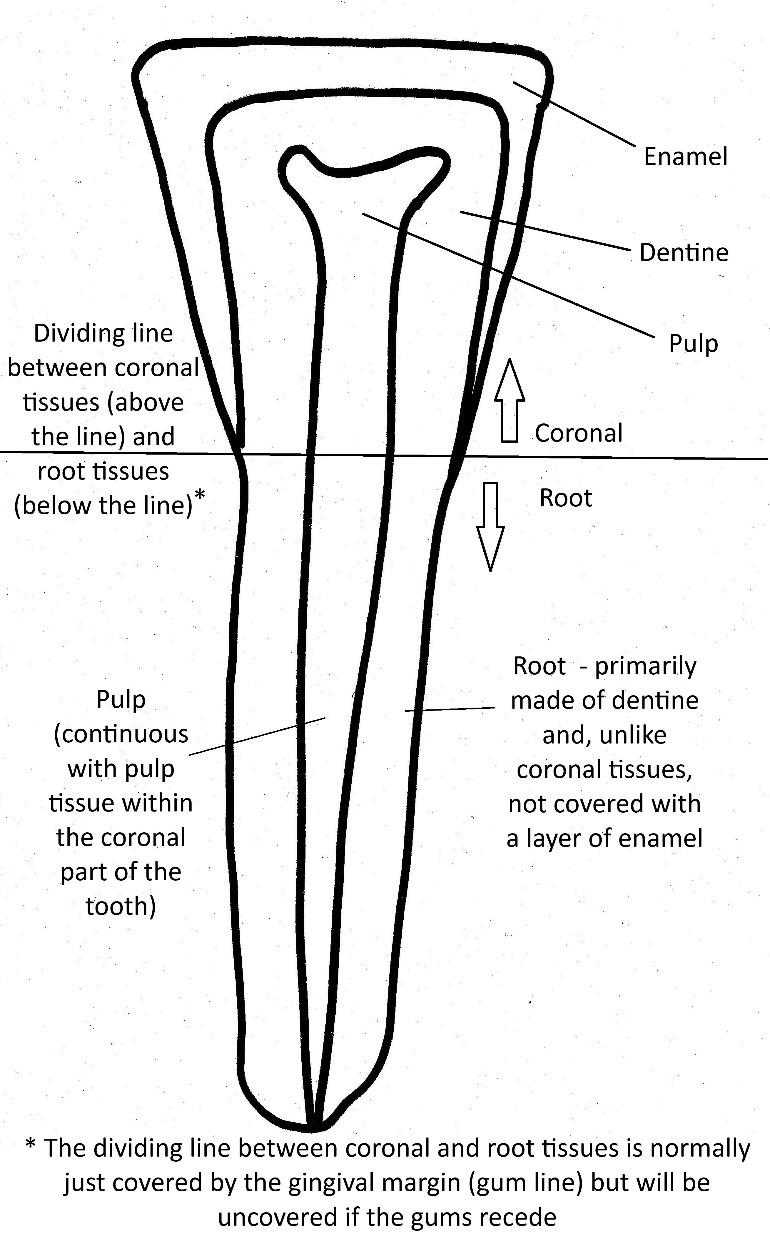
Description of figure 1: a cross-sectional diagram of a tooth showing its 3 main tissues. The outermost layer is labelled ‘enamel’, which covers the crown of the tooth. Beneath the enamel is ‘dentine’, forming the bulk of the tooth structure. At the centre is the ‘pulp’, a soft tissue containing nerves and blood vessels. The diagram also indicates the dividing line between the coronal (crown) and root tissues, with the root primarily made of dentine and not covered by enamel. The pulp extends from the crown into the root. The gum line is noted as the usual boundary between the crown and root tissues.
The way in which the condition presents and progresses is different on crowns than on roots, but the risks for the disease are broadly similar.
The following illustrations show the different stages of tooth decay on coronal and root surfaces.
Figure 2: tooth decay affecting enamel only
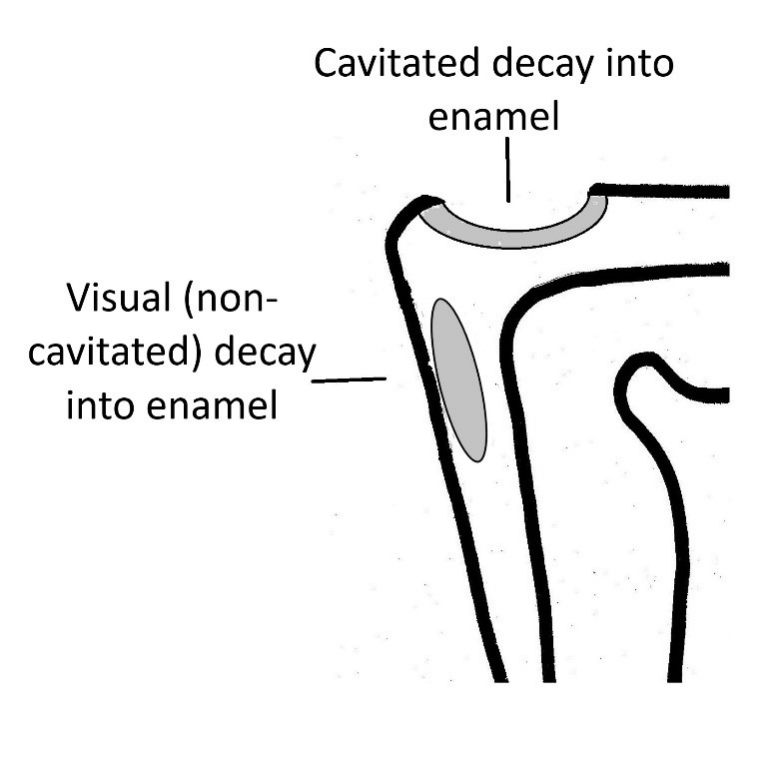
Description of figure 2: a cross-section of a tooth showing a small area of decay limited to the enamel layer. Both cavitated and non-cavitated decay are indicated on the enamel surface.
Figure 3: tooth decay affecting both enamel and dentine layers
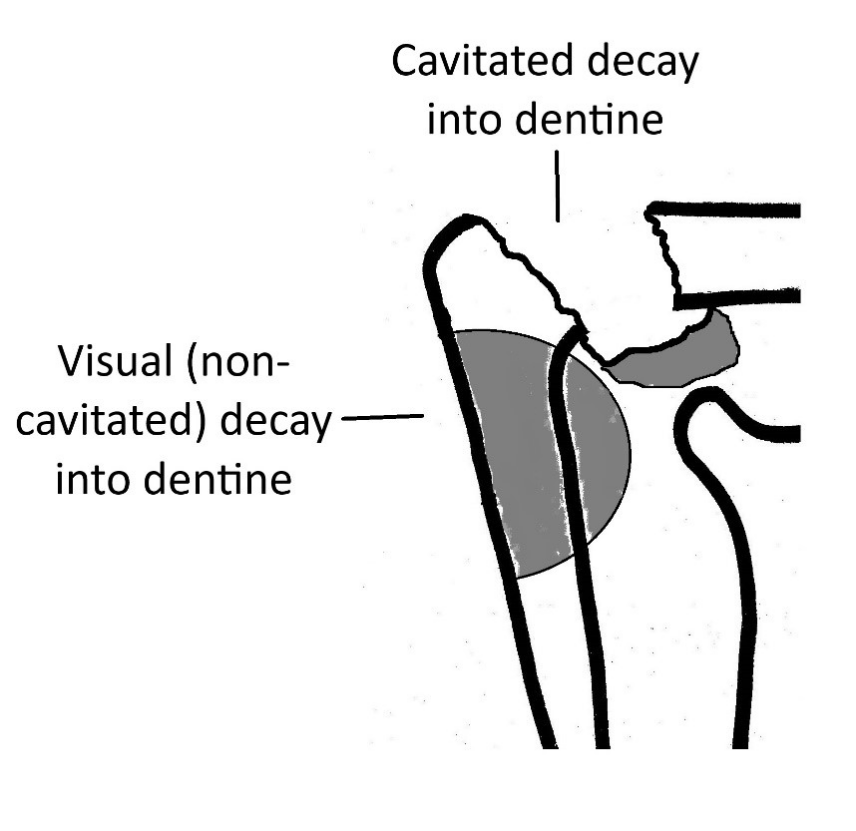
Description of figure 3: a cross-section of a tooth showing decay that has progressed through the enamel into the dentine. Both cavitated and non-cavitated decay are marked in the dentine area.
Figure 4: tooth decay affecting enamel, dentine and pulp

Description of figure 4: a cross-section of a tooth showing advanced decay that has reached the pulp, with affected areas in the enamel and dentine also labelled.
Figure 5: tooth decay affecting root surfaces

Description of figure 5: a cross-section showing decay on the root surface of a tooth, including both non-cavitated and cavitated decay, and decay that has reached the pulp.