Oral health-related behaviours
Updated 17 December 2025
Applies to England

© Crown copyright 2025
This publication is licensed under the terms of the Open Government Licence v3.0 except where otherwise stated. To view this licence, visit nationalarchives.gov.uk/doc/open-government-licence/version/3 or write to the Information Policy Team, The National Archives, Kew, London TW9 4DU, or email: psi@nationalarchives.gov.uk.
Where we have identified any third party copyright information you will need to obtain permission from the copyright holders concerned.
This publication is available at https://www.gov.uk/government/statistics/adult-oral-health-survey-2023/oral-health-related-behaviours
Introduction
The adult oral health survey (AOHS) 2023 collected information about oral health-related behaviours via an interviewer-administered questionnaire. Questions about health-related behaviours were very similar to those in the 2021 online survey, covering the following topics:
- oral hygiene
- tobacco use
- vaping
- alcohol consumption
- intake of sugary drinks
For the 2021 survey report, the chapter on oral health-related behaviours also covered participants’ reports of behavioural advice received during dental visits. For the AOHS 2023 report, this information is included in the ‘Service use and barriers to accessing care’ chapter. Methodological details of the AOHS 2023 survey can be found in the technical report.
Good oral hygiene is important for the prevention of both dental decay and periodontal disease prevention of both dental decay and periodontal disease (see ‘Chapter 8: oral hygiene’ in the guidance Delivering better oral health). Questions on oral hygiene included the following topics:
- frequency of toothbrushing
- use of fluoride toothpaste
- type of toothbrush
- use of any other oral hygiene aids
Smoking and other forms of tobacco are major risk factors for periodontal disease and oral cancers. Participants were asked about use of cigarettes and non-smoked tobacco, and also about use of e-cigarettes or vaping devices. Frequency of alcohol consumption was also included in the survey, as alcohol increases the risk of developing oral cancer (see ‘Chapter 12: alcohol’ in Delivering better oral health). This risk increases when combined with tobacco use.
Sugar consumption is a main cause of dental decay (see ‘Chapter 10: healthier eating’ in Delivering better oral health). The survey asked about the frequency of sugary drinks consumption, including frequency of adding sugar to hot drinks.
The data tables provided alongside this chapter present a breakdown of these oral health-related behaviours by the following sociodemographic characteristics:
- sex
- age group
- NHS region
- equivalised (adjusted) household income
- area deprivation
Breakdowns by ethnic group have not been included in this report due to small sample sizes in some groups. Findings based on fewer than 5 participants were not reported on. Where differences are commented on in this report, these differences are statistically significant. This implies at least a 95% chance that any reported difference is a real one and not a consequence of sampling error. Please note that estimates in this report are rounded, however in the associated data tables they are presented to one decimal place. More detail on survey estimates can be found in the technical report.
Main findings
The main findings are summarised as follows:
- 71% of dentate adults (those with one or more natural teeth) reported cleaning their teeth at least twice a day, and 87% said that they used fluoride toothpaste
- 15% of adults said that they currently smoked cigarettes or other tobacco products, and 9% reported that they currently vaped
- 19% of adults reported drinking alcohol 2 to 3 times a week, while 1 in 10 (10%) reported to drink 4 or more times a week
- 33% of adults reported consuming sugary drinks every day, and slightly more (36%) reported consuming sugar in hot drinks daily
People who were more socioeconomically disadvantaged were less likely to report brushing teeth at least twice a day, were more likely to be current smokers and were more likely to consume sugary drinks and have hot drinks with added sugar 3 times a day or more.
Frequency of cleaning teeth
The source data for the following findings can be found in table 1 of the associated data tables.
All dentate adults were asked how often they clean their teeth. Participants who self-reported having one or more natural teeth were considered dentate for the purposes of this section.
The majority (71%) of dentate adults aged 16 years and over said that they cleaned their teeth at least twice a day, and 24% reported cleaning their teeth once a day. Four per cent said that they cleaned their teeth less than once a day, and 2% reported never cleaning their teeth.
The reported frequency of cleaning teeth varied by sex, NHS region, income, and area deprivation. There were no significant differences by age group.
Sex
More women (77%) than men (64%) reported cleaning their teeth at least twice a day.
NHS region
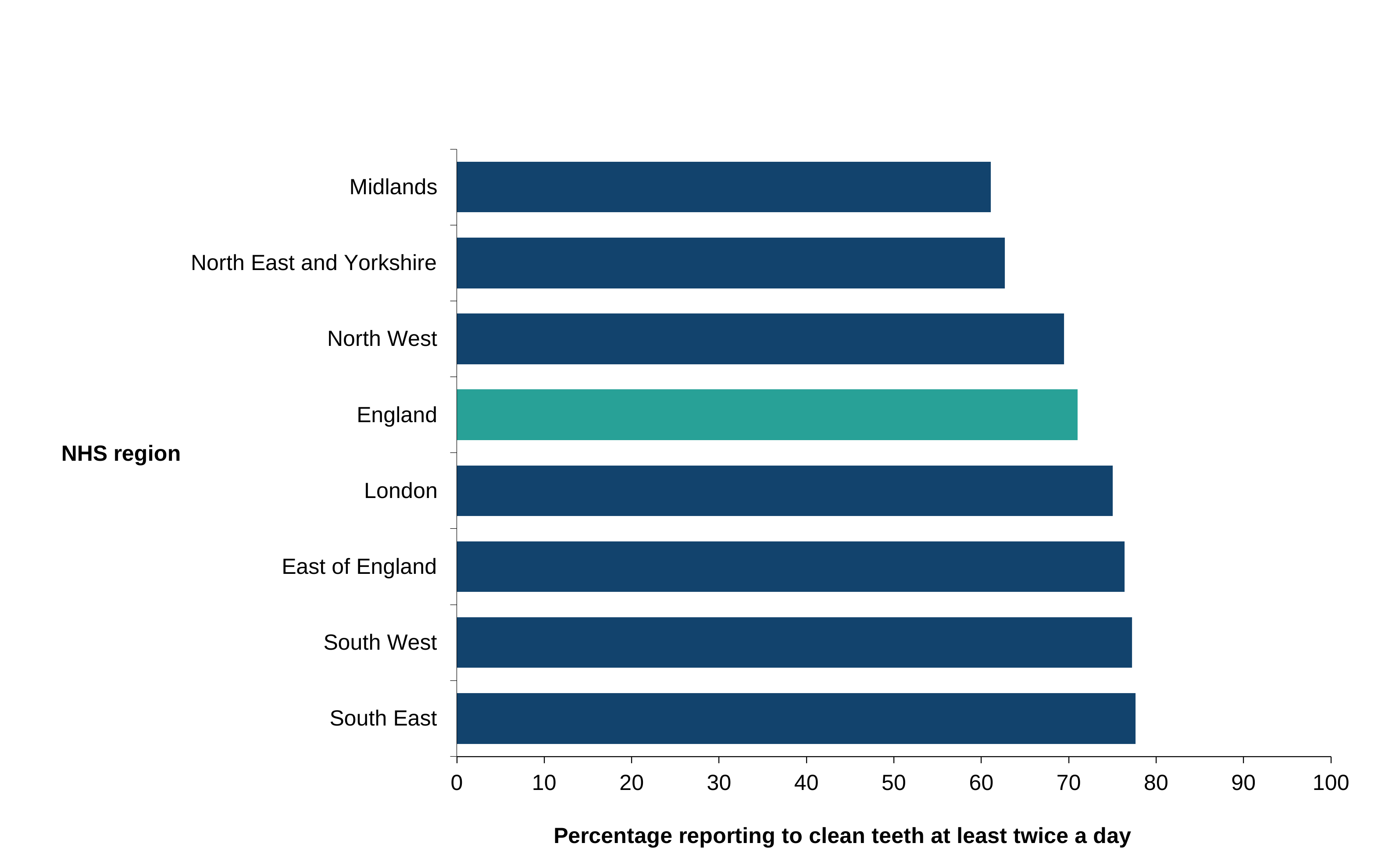
The proportion of adults who cleaned their teeth at least twice a day varied between regions and was lowest in the Midlands (61%) and highest in the South East (78%). This is illustrated in the bar chart below in figure 1.
Figure 1: proportion of adults reporting to clean teeth at least twice a day, by NHS region, with the England average for comparison
Base (respondent group): dentate adults (self-reported).
Source: table 1 in ‘Data tables: oral health-related behaviours’.
Household income
Household income was analysed in quintiles (fifths) and was equivalised (adjusted) to take account of the number of adults and dependent children in the household.
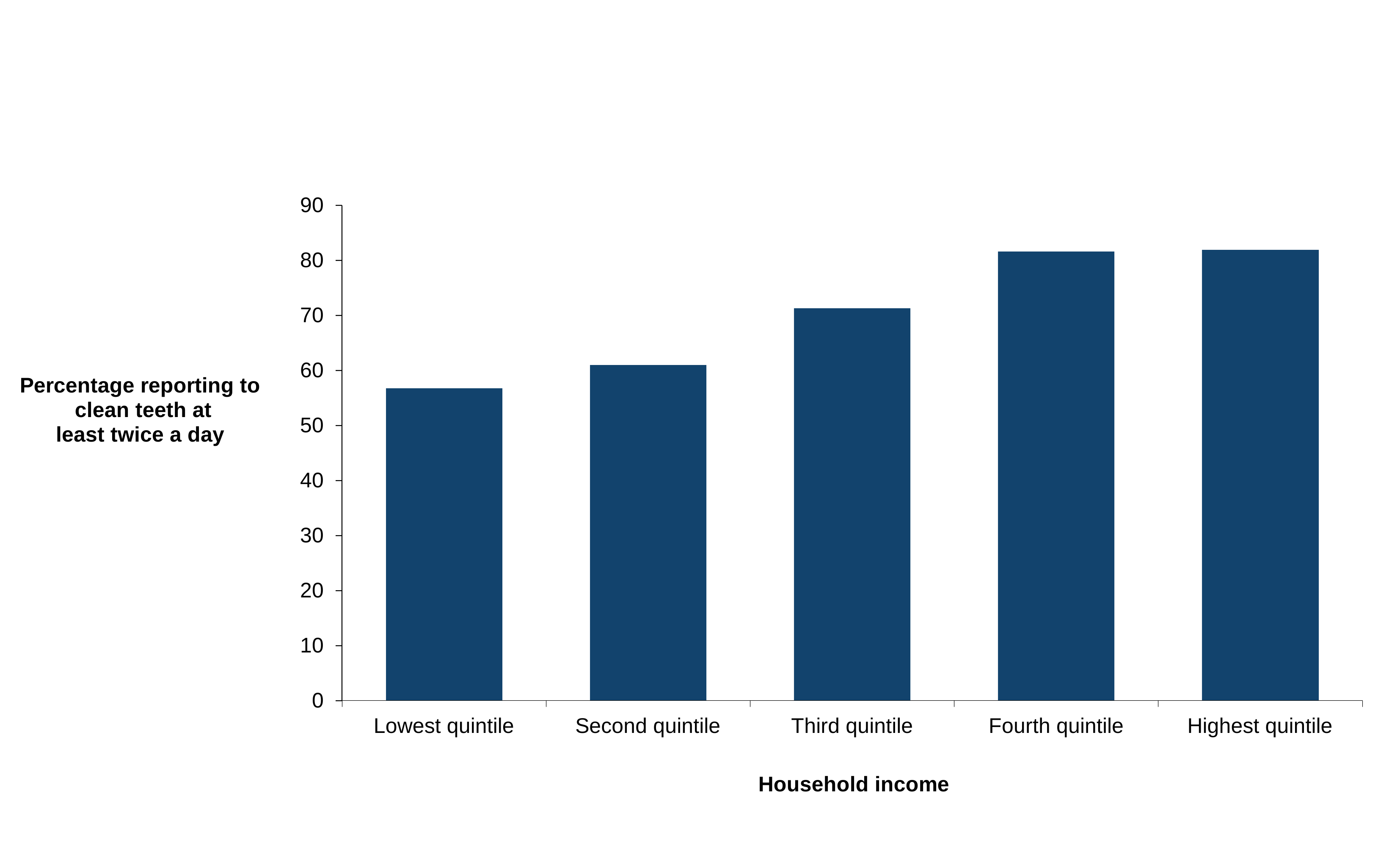
The proportion of adults who cleaned their teeth at least twice a day increased with household income from 57% among those in the lowest income quintile to 82% of those in the highest income quintiles. This is shown in the bar chart below in figure 2.
Figure 2: proportion of adults reporting to clean teeth at least twice a day, by household income
Base: dentate adults (self-reported).
Source: table 1 in ‘Data tables: oral health-related behaviours’.
Area deprivation
Area deprivation was analysed in quintiles based on the 2019 English Index of Multiple Deprivation (IMD). IMD is based on 37 indicators, across 7 domains of deprivation. IMD is a measure of the overall deprivation experienced by people living in an area, although not everyone who lives in a deprived area will be deprived themselves.
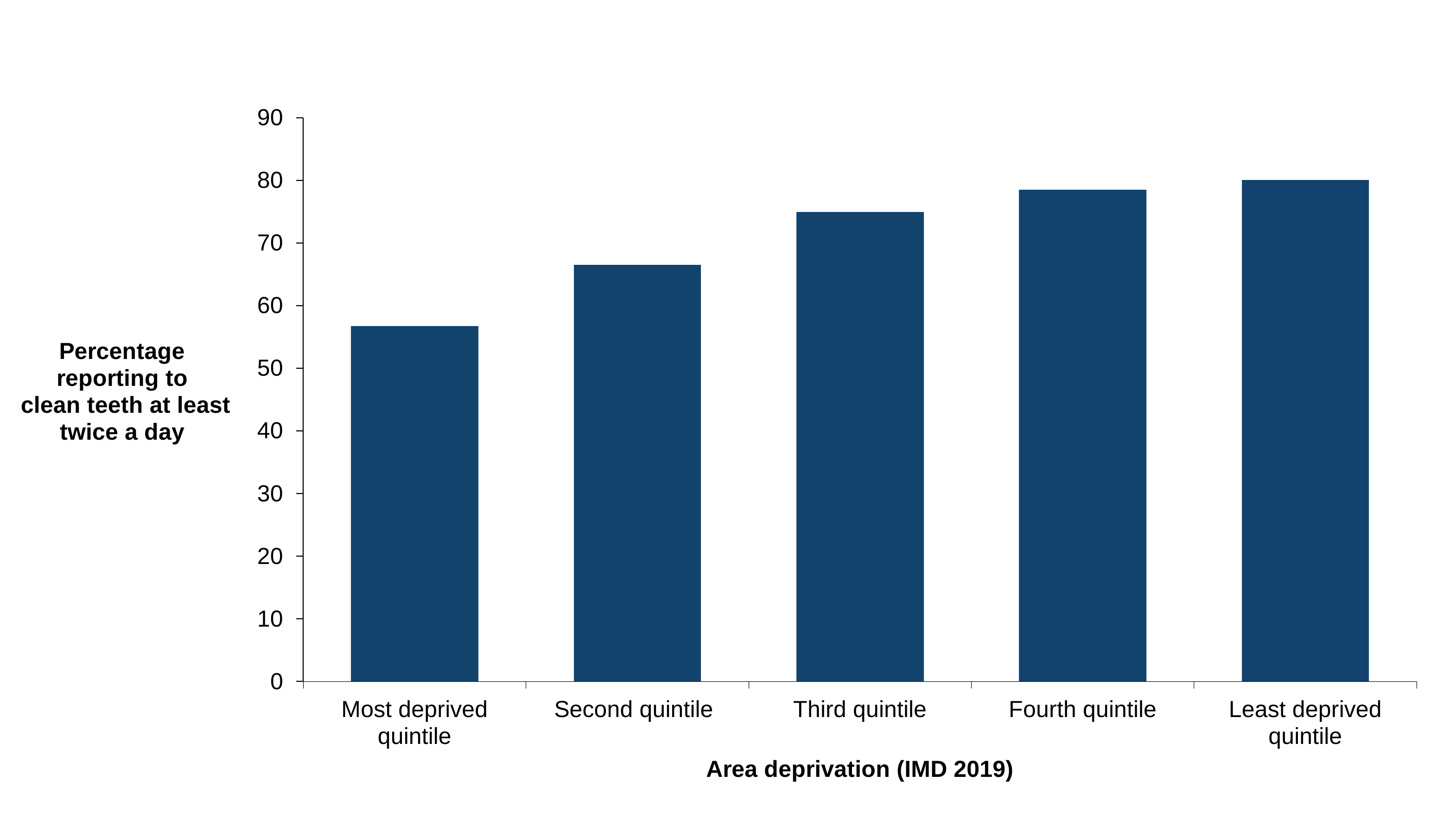
The proportion of adults who cleaned their teeth at least twice a day also varied by area deprivation. Fifty-seven per cent of those living in the most deprived areas reported cleaning their teeth at least twice a day. This proportion increased to 80% of adults in the least deprived areas. The bar chart in figure 3 below illustrates these proportions across the area deprivation quintiles.
Figure 3: proportion of adults reporting to clean teeth at least twice a day, by area deprivation
Base: dentate adults (self-reported).
Source: table 1 in ‘Data tables: oral health-related behaviours’.
Use of fluoride toothpaste
The source data for the following findings can be found in table 2 of the associated data tables.
Participants who cleaned their teeth were asked whether the toothpaste they used most often contained fluoride. This excluded participants who reported that they never cleaned their teeth and also excluded those who reported that they did not use toothpaste.
Most adults (87%) said that they used fluoride toothpaste. A small proportion (3%) said that they did not use fluoride toothpaste, and 10% did not know if their toothpaste contained fluoride.
The proportion of adults who reported using fluoride toothpaste varied significantly by NHS region, and did not differ significantly across the remaining sociodemographics (sex, age group, household income or area deprivation).
NHS region
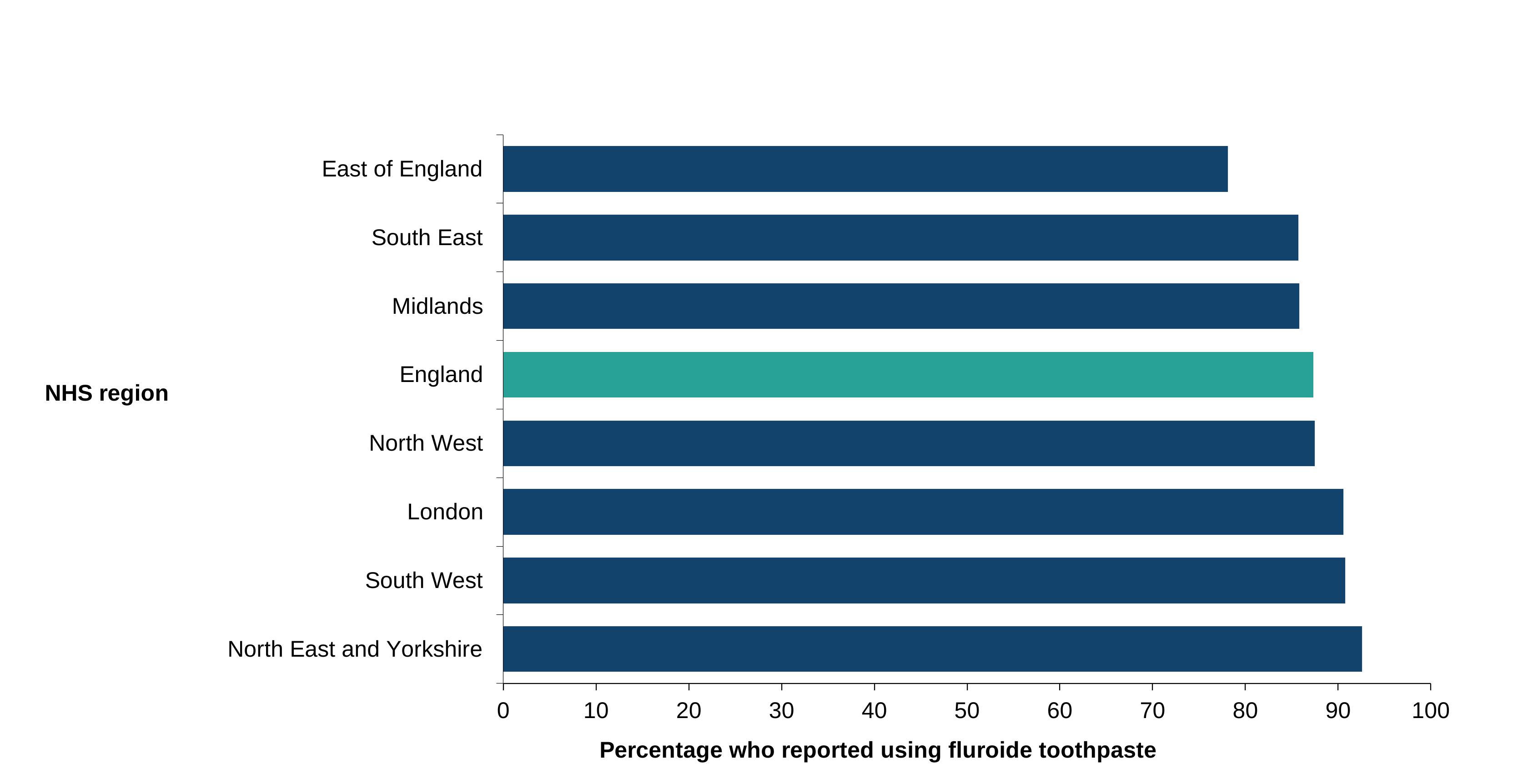
The proportion of adults who reported using fluoride toothpaste was greatest in the North East and Yorkshire (93%) and lowest in the East of England (78%). These differences in fluoride toothpaste use across the NHS regions are shown in the bar chart below in figure 4.
Figure 4: proportion of adults reporting to use fluoride toothpaste, by NHS region, with the England average for comparison
Base: dentate adults (self-reported) who clean their teeth and use toothpaste.
Source: table 2 in ‘Data tables: oral health-related behaviours’.
High fluoride toothpaste prescribed by a dentist
Six per cent of adults who cleaned their teeth reported using a high fluoride toothpaste that had been prescribed to them by a dentist. More information about prescription strength toothpaste and its indications can be found in ‘Chapter 9: fluoride’ of the guidance Delivering better oral health.
Use of a prescribed high fluoride toothpaste did not differ significantly across any of the sociodemographics (sex, age group, NHS region, household income or area deprivation).
Aids used for dental hygiene
The source data for the following findings can be found in table 3 of the associated data tables.
Participants who reported cleaning their teeth were asked about the type of toothbrush they used and any other dental hygiene aids. Participants could select more than one answer to this question.
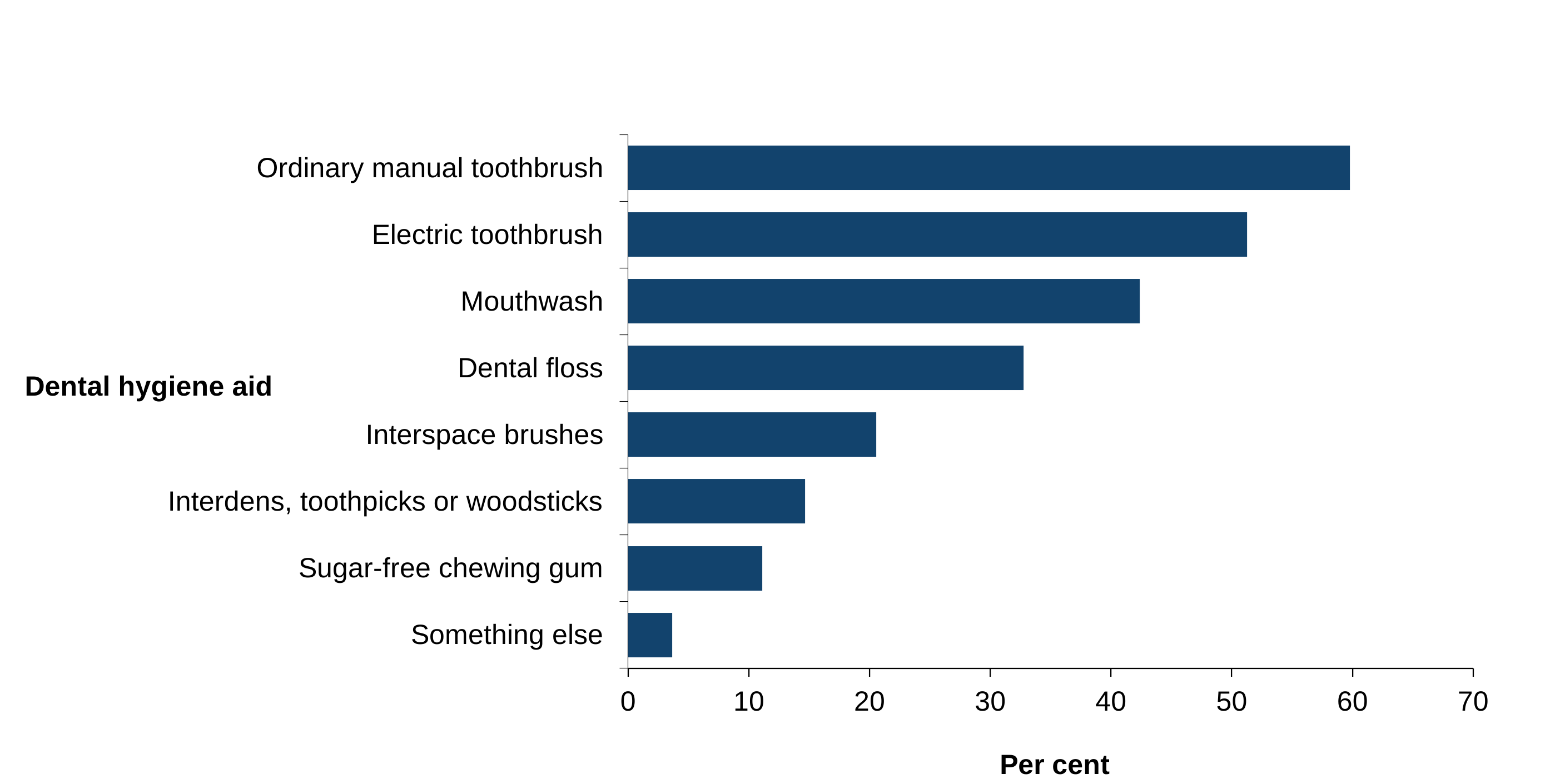
More than half (60%) of adults who cleaned their teeth said that they used an ordinary manual toothbrush, and just over half (51%) of adults reported using an electric toothbrush. This means that some adults used both an electric and manual toothbrush. More information about electric versus manual toothbrushes can be found in chapter 8 of the Delivering better oral health guidance.
Use of other dental hygiene aids was reported as follows:
- mouthwash (42%)
- dental floss (33%)
- interspace brushes (21%)
- interdental brushes, toothpicks, or wood sticks (15%)
- sugar-free chewing gum (11%)
- something else (4%)
These observations in the use of dental hygiene aides is illustrated in the bar chart below in figure 5.
Figure 5: use of dental hygiene aids
Base: dentate adults (self-reported) who clean their teeth.
Source: table 3 in ‘Data tables: oral health-related behaviours’.
There was significant variation in the use of manual and electric toothbrushes by age group, NHS region, household income, and area deprivation. There was no variation by sex.
Age group
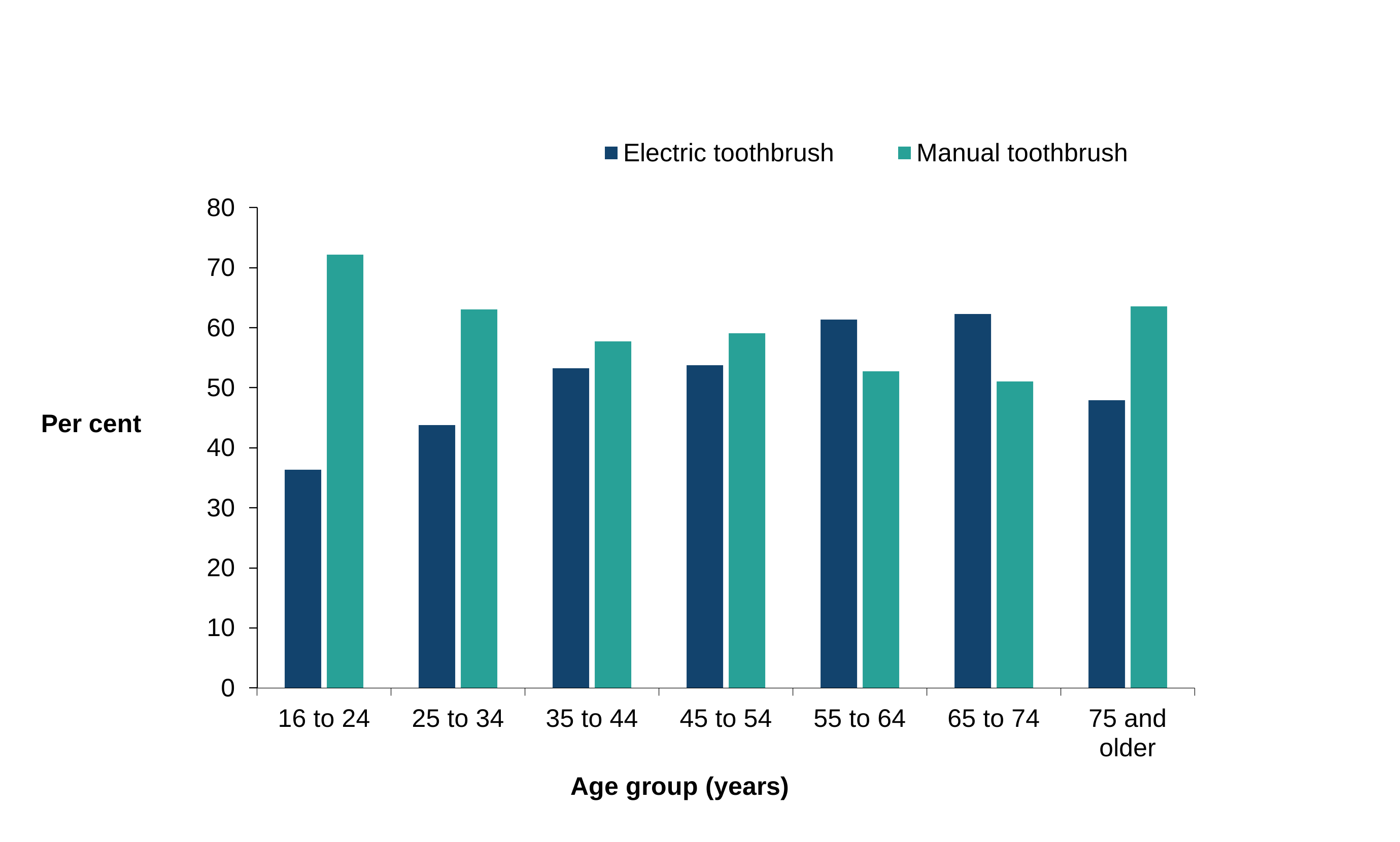
The proportion of adults who used an electric toothbrush increased with age from 36% of those aged 16 to 24 to 62% of those aged 65 to 74. Forty-eight per cent of adults aged 75 years and older reported using an electric toothbrush.
The oldest and youngest age groups were more likely to report manual toothbrush use (72% of those aged 16 to 24 and 64% for those 75 years and older). Using a manual toothbrush was least common among those aged 65 to 74 (51%). The bar chart in figure 6 below illustrates the type of toothbrush use across the age groups.
Figure 6: use of electric and manual toothbrush, by age group
Base: dentate adults (self-reported) who clean their teeth.
Source: table 3 in ‘Data tables: oral health-related behaviours’.
NHS region
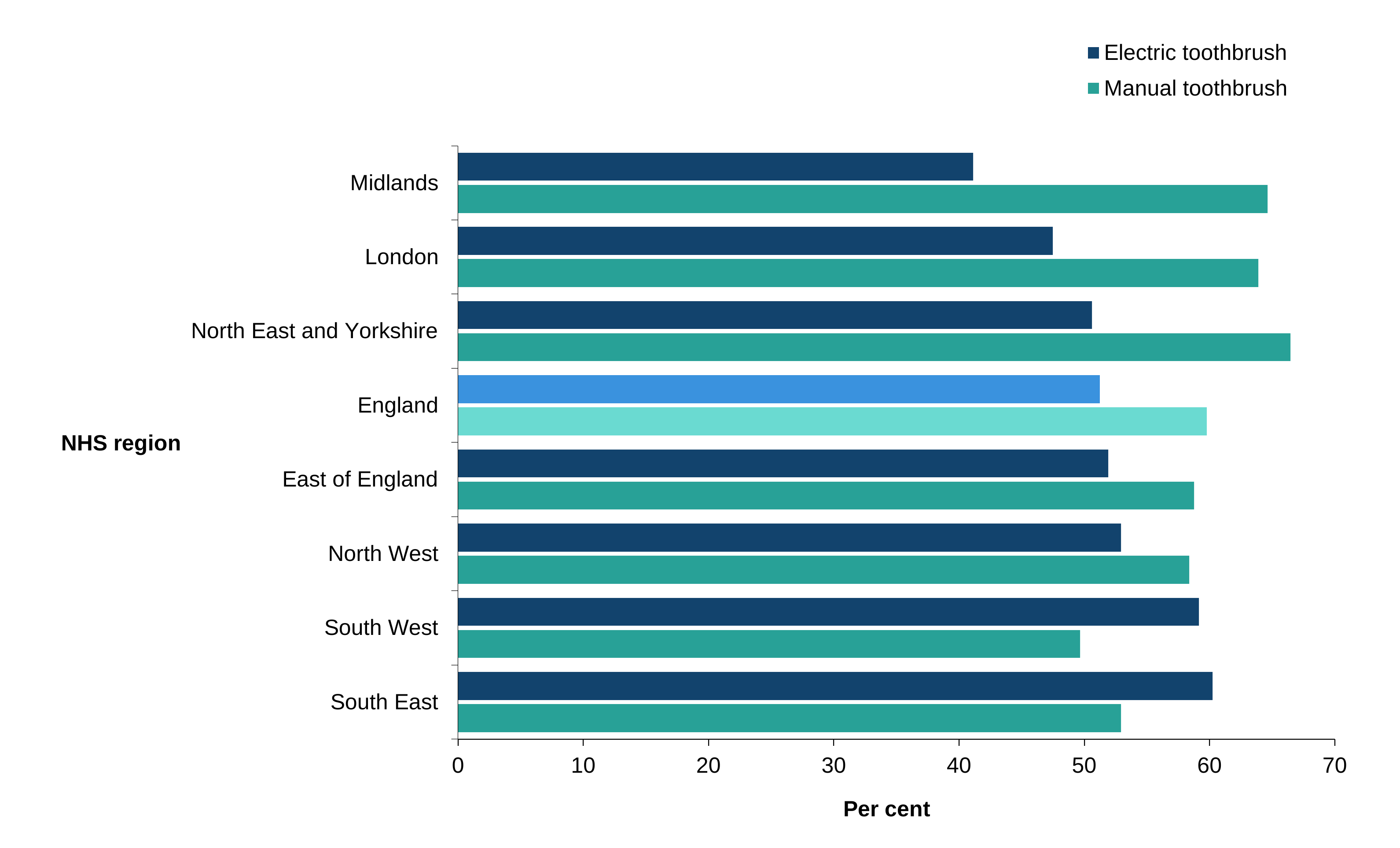
Electric and manual toothbrush use varied between NHS regions. The proportion of adults who used an electric toothbrush was highest in the South East (60%) and lowest in the Midlands (41%). The proportion of adults who reported using a manual toothbrush was highest in the North East and Yorkshire (66%) and lowest in the South West (50%). This comparison of type of toothbrush use across the NHS regions is shown in the bar chart below in figure 7.
Figure 7: use of electric and manual toothbrush, by NHS region, with the England average for comparison
Base: dentate adults (self-reported) who clean their teeth.
Source: table 3 in ‘Data tables: oral health-related behaviours’.
Household income
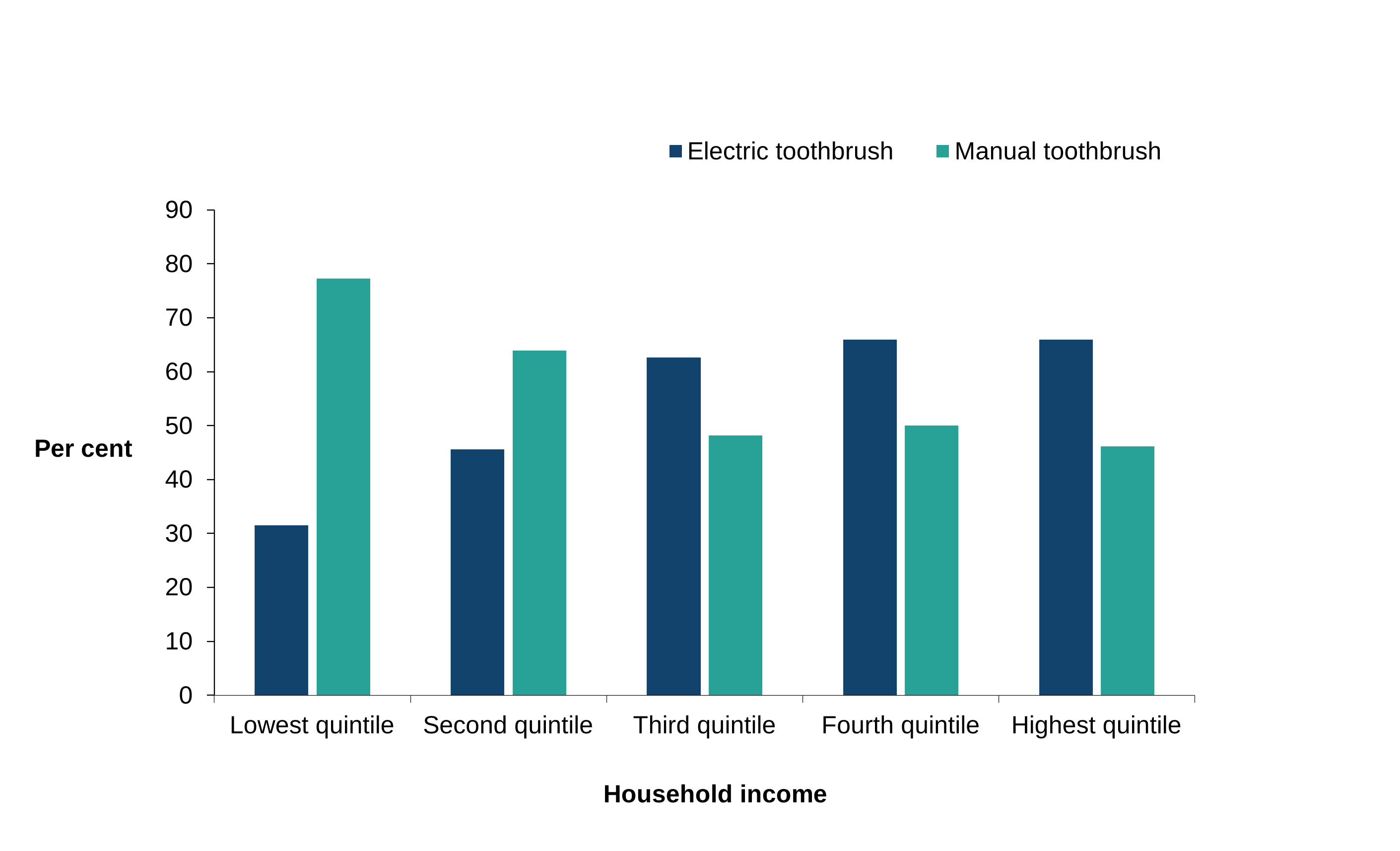
The proportion of adults who used an electric toothbrush increased with household income, from 32% of those in the lowest income quintile to 66% of those in the highest income quintile.
Conversely, using a manual toothbrush was more common among those in the lowest income quintile (77%) and least common in the highest income quintile (46%). The type of toothbrush used by household income quintiles is illustrated in the bar chart below in figure 8.
Figure 8: use of electric and manual toothbrush, by household income
Base: dentate adults (self-reported) who clean their teeth.
Source: table 3 in ‘Data tables: oral health-related behaviours’.
Area deprivation
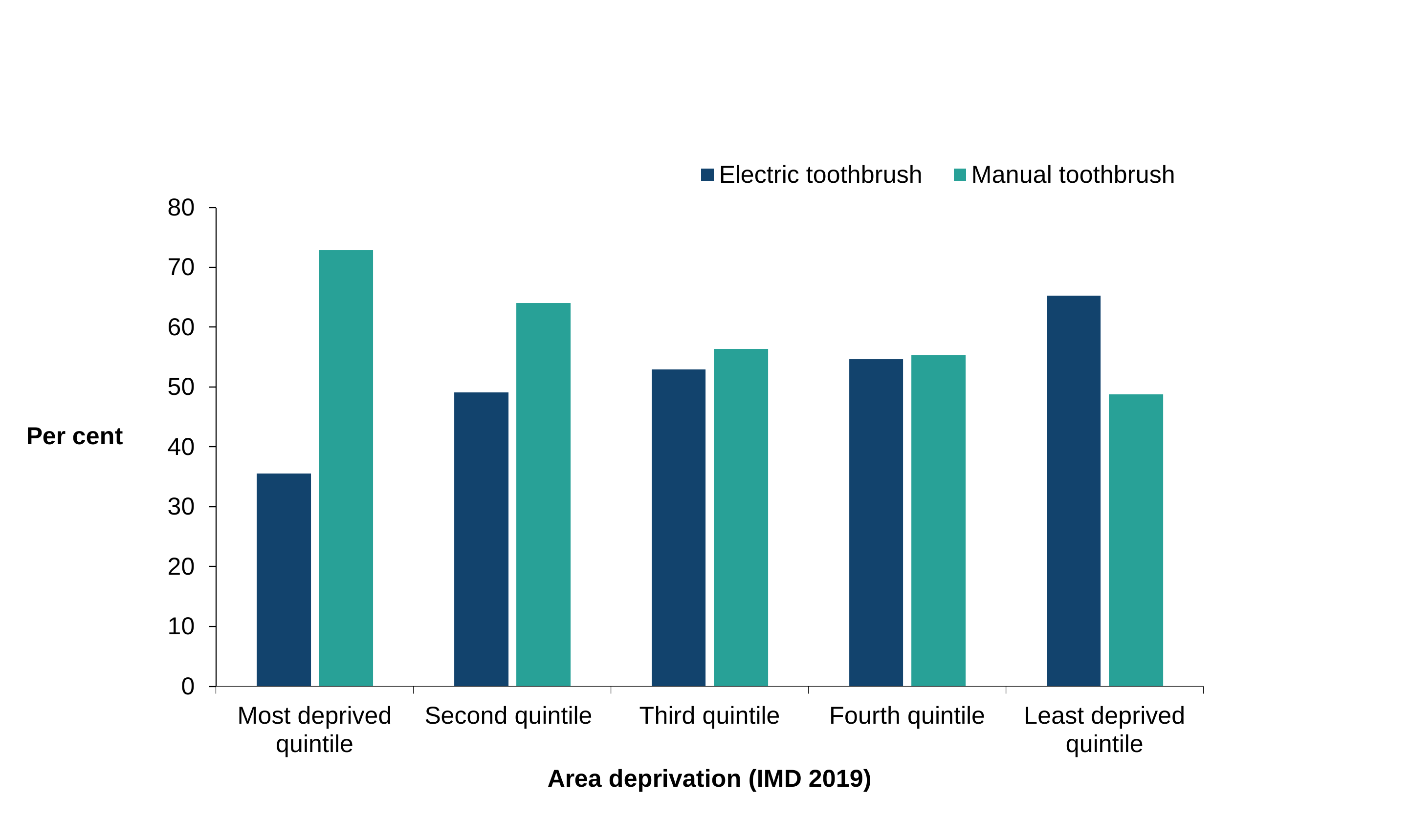
A similar pattern was observed for area deprivation. The proportion of adults who used an electric toothbrush increased from 36% of those living in the most deprived areas to 65% of those in the least deprived areas.
The proportion of adults who used a manual toothbrush decreased from 73% in the most deprived areas to 49% in the least deprived areas. These comparisons of use of toothbrush type by area deprivation are illustrated in the bar chart below in figure 9.
Figure 9: use of electric and manual toothbrush, by area deprivation
Base: dentate adults (self-reported) who clean their teeth.
Source: table 3 in ‘Data tables: oral health-related behaviours’.
Tobacco use
Prevalence of tobacco use
The source data for the following findings can be found in Table 4 of the associated data tables.
All participants were asked about tobacco use, including smoking cigarettes or other tobacco products, as well as their use of non-smoked tobacco.
This analysis focuses on smoking and categorises adults into one of 3 groups:
- current smokers, who answered yes to the question: ’Do you smoke cigarettes or other tobacco products at all nowadays?’
- past smokers, who did not currently smoke but reported that they had smoked cigarettes or other tobacco products
- never smoked, who did not currently smoke and reported that they had never smoked cigarettes or other tobacco products
Fifteen per cent of adults said that they currently smoked cigarettes or other tobacco products. Thirty-seven per cent reported that they were past smokers, and 49% of adults had never smoked.
The use of non-smoked tobacco was uncommon, 3% of adults said that they had previously used non-smoked tobacco and 1% reported currently using it.
Smoking status varied by sex, age group, household income and area deprivation. There were no significant differences in smoking status by NHS region.
Sex
More men than women reported that they currently smoked cigarettes or other tobacco products (18% and 12% respectively). Similarly, a higher proportion of women than men reported that they had never smoked (53% and 44% respectively).
Age group
The proportion of current smokers varied by age group. It was highest among adults aged 45 to 54 (20%), and lowest among those aged 75 and older (6%).
The proportion of those who reported smoking in the past was highest among those aged 75 and older (54%) and lowest among those aged 16 to 24 (27%).
Adults in the youngest age group were also most likely to report never smoking (60% of those aged 16 to 24), whereas those aged 75 and older were least likely to report never smoking (40%). The stacked bar chart below in figure 10 illustrates smoking prevalence rates by age group.
Figure 10: smoking status, by age group

Base: all adults.
Source: table 4 in ‘Data tables: oral health-related behaviours’.
Household income
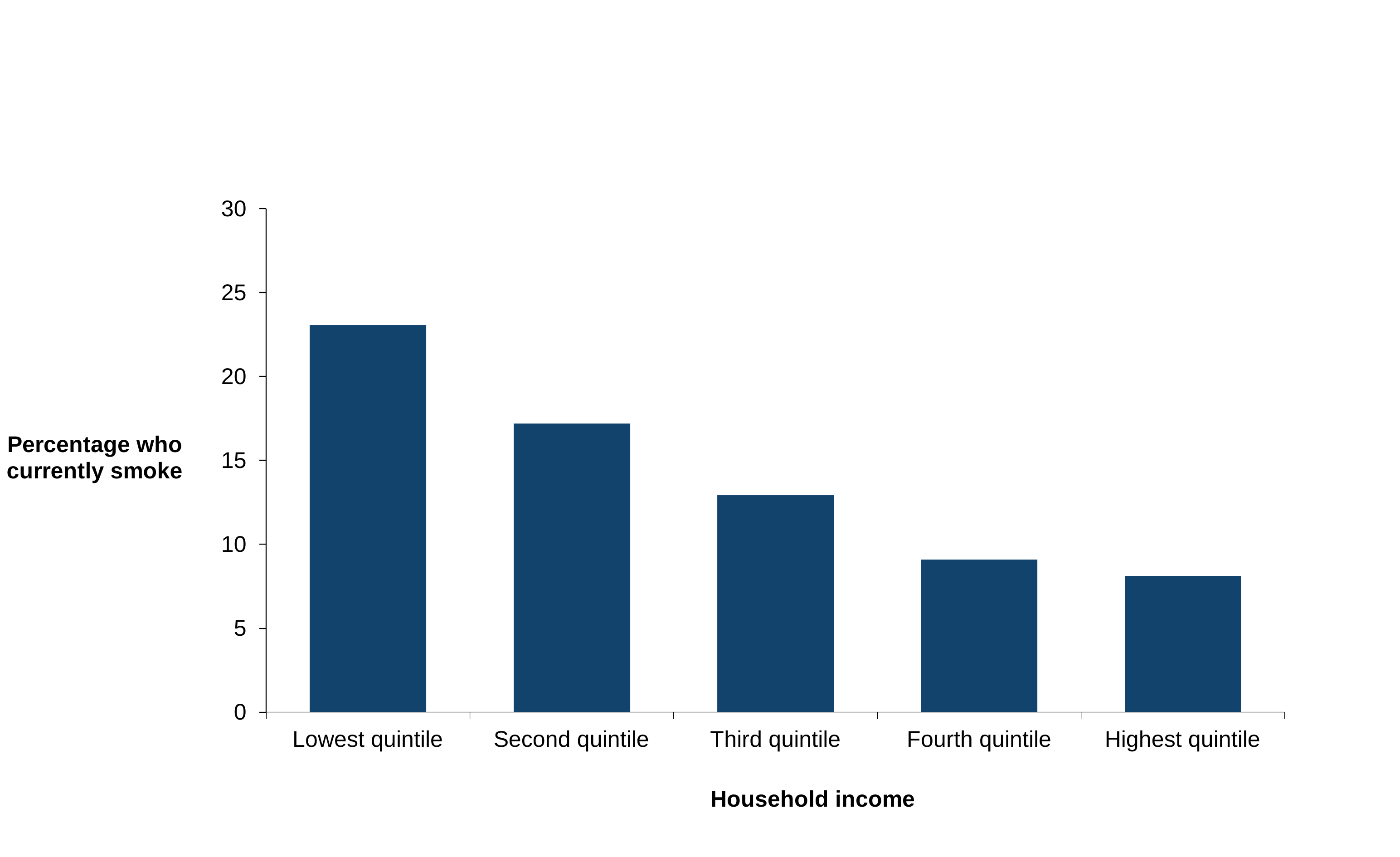
The proportion of adults who reported current smoking decreased with increasing household income from 23% in the lowest income quintile to 8% in the highest income quintile. These current smoker prevalence rates by household income are shown in the bar chart below in figure 11.
Figure 11: proportion of adults who currently smoke, by household income
Base: all adults.
Source: table 4 in ‘Data tables: oral health-related behaviours’.
Area deprivation
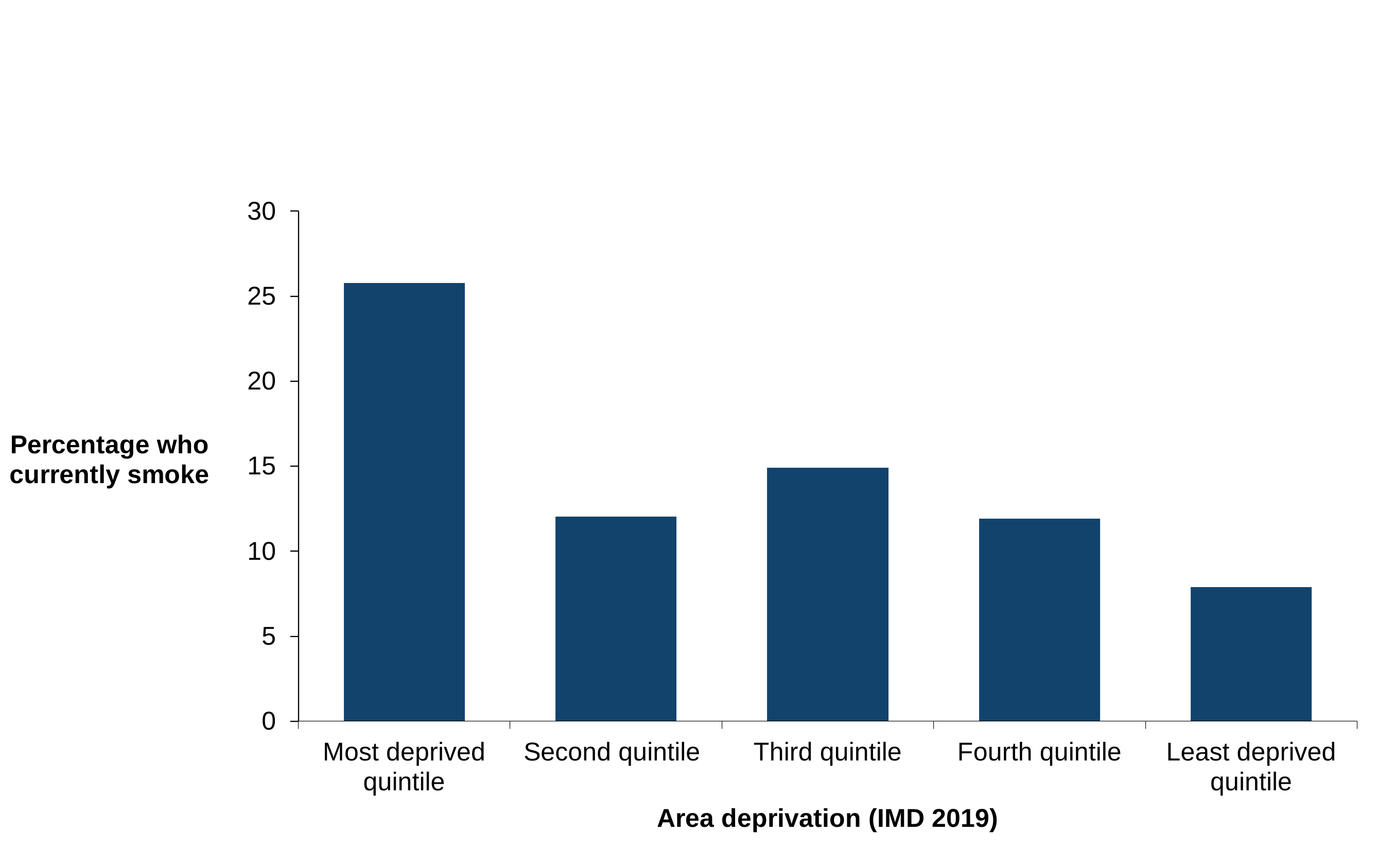
Current smoking also varied by area deprivation. Adults living in the most deprived areas were most likely to currently smoke (26%) and those in the least deprived areas were least likely to currently smoke (8%). These differences in current smoking patterns by area deprivation are shown in the bar chart below in figure 12.
Figure 12: proportion of adults who currently smoke, by area deprivation
Base: all adults.
Source: table 4 in ‘Data tables: oral health-related behaviours’.
Use of e-cigarettes and other vaping devices
Prevalence of vaping
The source data for the following findings can be found in table 5 of the associated data tables.
All participants were asked if they had ever used e-cigarettes or vaping devices, and if yes, if they were currently using them.
Most adults (79%) had never used an e-cigarette or other vaping device. Eleven per cent had vaped in the past, and 9% reported that they currently vaped.
The prevalence of vaping varied significantly by age group. There were no significant differences in the use of e-cigarettes and other vaping devices across the other sociodemographics (sex, NHS region, household income or area deprivation).
Age group
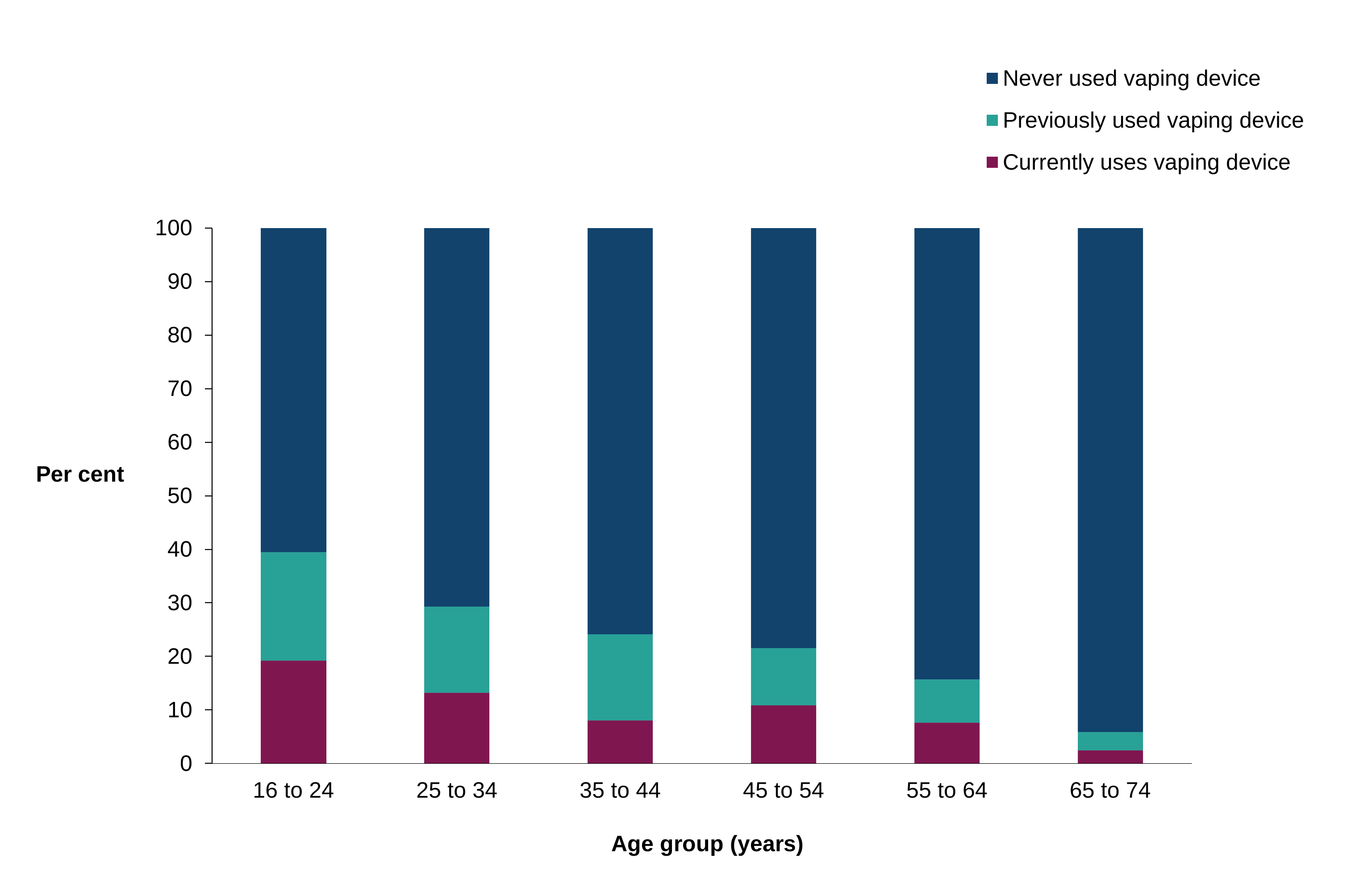
Current vaping was most common among the youngest age group aged 16 to 24 (19%) and least common among those aged between 65 to 74 (2%). The likelihood of having previously used an e-cigarette or other vaping device decreased with age from 20% of those aged 16 to 24 to 3% of those aged 65 to 74.
The likelihood of having never used an e-cigarette or other vaping device increased with age from 61% of those aged 16 to 24 to 97% of those aged 75 and older. These observations of e-cigarette and vaping prevalence by age group is shown in the stacked bar chart below in figure 13.
Figure 13: e-cigarette or vaping device status, by age group
Base: all adults.
Note: data on those aged 75 and older has not been reported in the figure due to low numbers.
Source: table 5 in ‘Data tables: oral health-related behaviours’.
Drinking alcohol
Prevalence of drinking alcohol
The source data for the following findings can be found in table 6 of the associated data tables.
All participants were asked how often they had drunk alcohol in the past 12 months:
- never
- monthly or less
- 2 to 4 times a month
- 2 to 3 times a week
- 4 or more times a week
Twenty-eight per cent of adults reported drinking alcohol monthly or less. Twenty-one per cent reported drinking 2 to 4 times a month, 19% drank 2 to 3 times a week and 10% drank 4 or more times a week. Twenty-three per cent of adults reported never drinking alcohol.
Alcohol consumption varied significantly by sex, age group, region, household income and area deprivation.
Sex
Men (13%) were more likely than women (7%) to drink alcohol 4 or more times a week.
Women (26%) were more likely than men (20%) to report that they never drank alcohol.
Age group
The proportion of adults who drank 4 or more times a week increased with age from 3% of those aged 25 to 34, to 21% of those aged 75 years and older.
There were no significant differences by age group among those who never drank.
NHS region
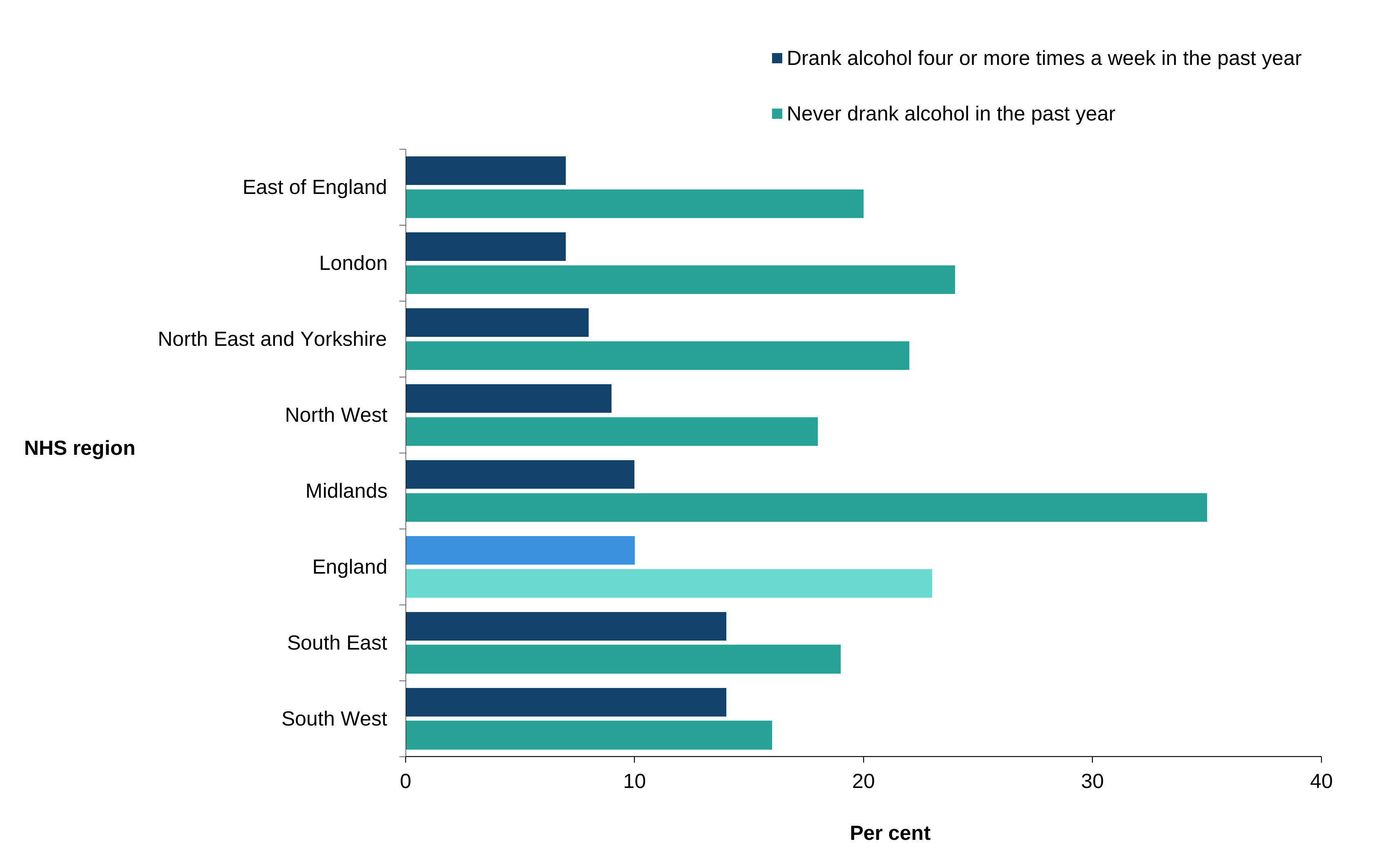
The proportion of adults who drank 4 or more times a week was highest in the South East and in the South West (14% in both regions) and lowest in the East of England and London (7% in both regions).
The proportion of adults who reported never drinking alcohol was highest in the Midlands (35%) and lowest in the South West (16%). The bar chart in figure 14 below shows the frequency of alcohol drinking across the NHS regions.
Figure 14: frequency of drinking alcohol in the past year, by NHS region, with the England average for comparison
Base: all adults.
Source: table 6 in ‘Data tables: oral health-related behaviours’.
Household income
The proportion of adults who never drank decreased with increasing household income, from 34% in the lowest income quintile to 10% in the highest income quintile. There was no significant difference by household income with drinking 4 or more times a week. The bar chart in figure 15 below illustrates these differences in adults who never drank alcohol by household income quintiles.
Figure 15: proportion of adults who never drank alcohol in the past year, by household income

Base: all adults.
Source: table 6 in ‘Data tables: oral health-related behaviours’.
Area deprivation
The proportion of adults who reported drinking 4 or more times a week was lowest among those living in the most deprived areas (6% in both the most deprived and second quintile), and highest in the least deprived areas (15%).
The proportion of adults who reported never drinking alcohol was highest in the most deprived areas (35%) and lowest in the least deprived areas (15%). This is illustrated in the bar chart below in figure 16.
Figure 16: frequency of drinking alcohol in the past year, by area deprivation

Base: all adults.
Source: table 6 in ‘Data tables: oral health-related behaviours’.
Consumption of sugary drinks
Prevalence of consuming sugary drinks
The source data for the following findings can be found in table 7 of the associated data tables.
All participants were asked how often they consumed sugary drinks, including fizzy drinks, fruit juice, or soft drinks, excluding diet or sugar-free drinks.
For analysis, adults’ consumption of sugary drinks was categorised into the following:
- 3 or more times a day
- 1 to 2 times a day
- less than once a day
- rarely or never
Just under half of adults (44%) reported that they rarely or never drank sugary drinks. Twenty-three per cent reported consuming sugary drinks 1 to 2 times a day, and 10% of adults reported that they consumed sugary drinks 3 or more times a day (this equates to one-third of adults (33%) consuming sugary drinks every day). A similar proportion drank sugary drinks less than once a day (23%).
Consumption of sugary drinks varied significantly by sex, age group, NHS region and area deprivation. It did not vary by household income.
Sex
Women were more likely than men to rarely or never consume sugary drinks (47% and 40% respectively). There was no significant difference between men and women consuming sugary drinks 3 or more times a day.
Age group
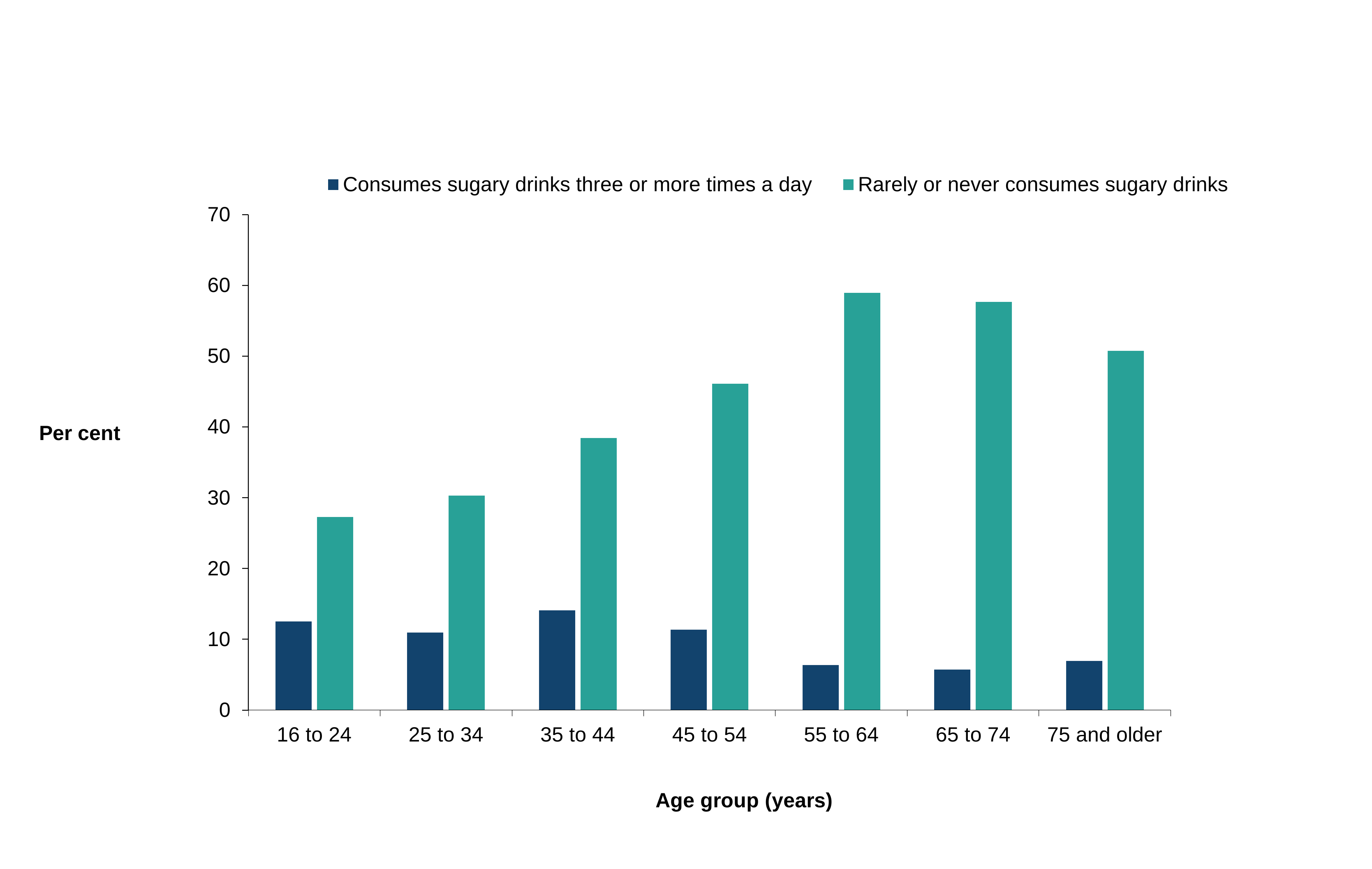
Sugary drinks consumption was higher among the younger age groups. The proportion of adults who reported consuming sugary drinks 3 or more times a day was highest among those aged 35 to 44 (14%). It was least common among those aged 55 to 64 and those aged 65 to 74 (6% in both age groups).
Rarely or never consuming sugary drinks was most common in adults aged 55 to 64 (59%) and least common among in those aged 16 to 24 (27%). These patterns in sugary drinks consumption across the age groups is shown in the bar chart below in figure 17.
Figure 17: frequency of sugary drinks consumption, by age group
Base: all adults.
Source: table 7 in ‘Data tables: oral health-related behaviours’.
NHS region
Adults living in the North West were most likely to consume 3 or more sugary drinks a day (18%) and those in London and the South East were least likely to consume 3 or more sugary drinks a day (6% in both regions).
The proportion of adults who reported rarely or never consuming sugary drinks was highest in the South East (52%) and lowest in the Midlands (30%). The bar chart below in figure 18 illustrates the frequency of sugary drinks consumption across the NHS regions.
Figure 18: frequency of sugary drinks consumption, by NHS region, with the England average for comparison

Base: all adults.
Source: table 7 in ‘Data tables: oral health-related behaviours’.
Area deprivation
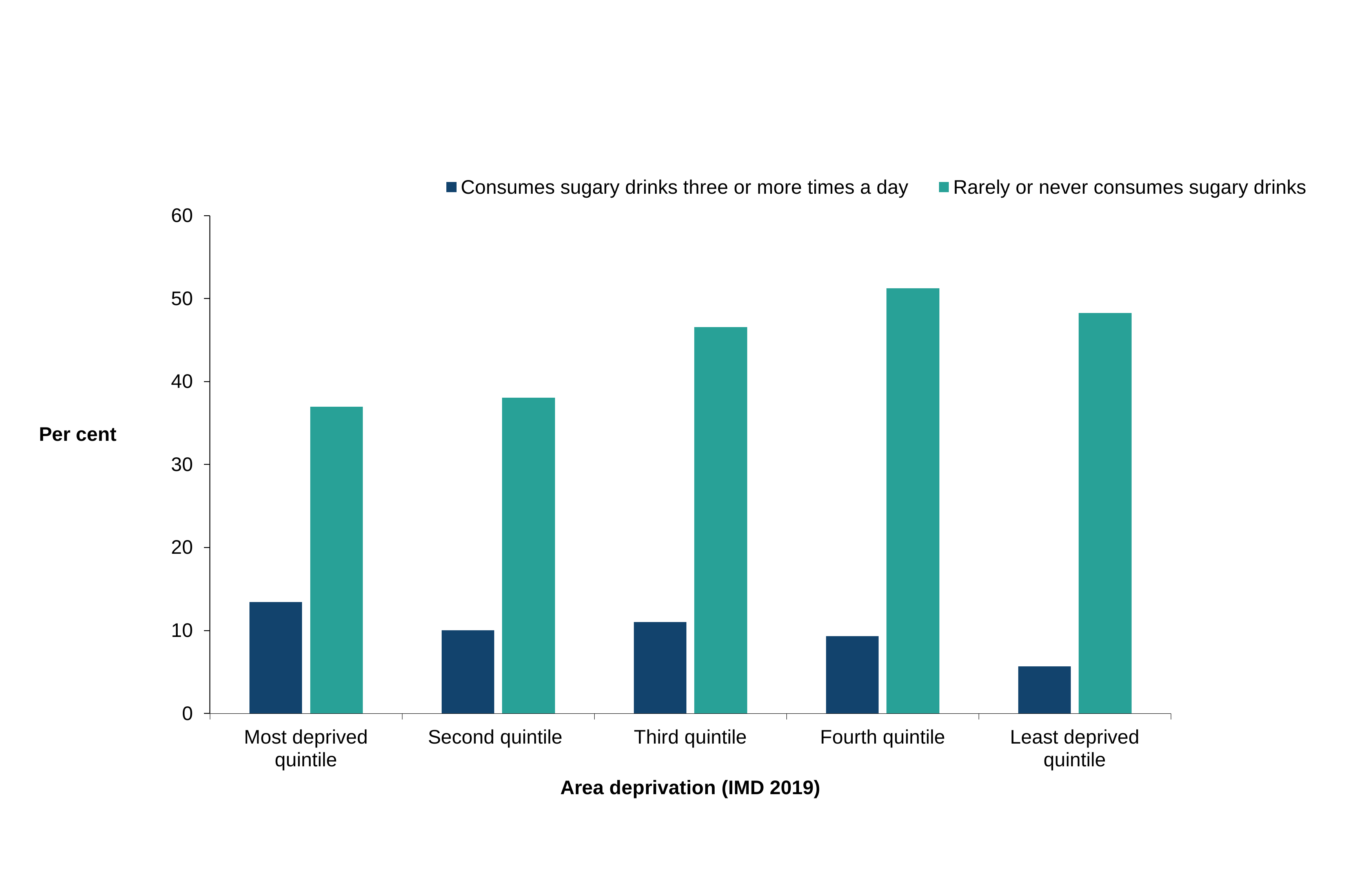
The proportion of adults who consumed sugary drinks 3 or more times a day varied by area deprivation and was highest among adults living in the most deprived areas (13%), and lowest among those living in the least deprived areas (6%).
The proportion of those who reported rarely or never consuming sugary drinks was lowest in the most deprived areas (37%) and highest in the second-least deprived areas (51%). This is shown in the bar chart below in figure 19.
Figure 19: frequency of sugary drinks consumption, by area deprivation
Base: all adults.
Source: table 7 in ‘Data tables: oral health-related behaviours’.
Consumption of sugar in hot drinks
Prevalence of consuming sugar in hot drinks
The source data for the following findings can be found in table 8 of the associated data tables.
Participants were asked how often they had sugar in hot drinks, such as tea and coffee.
For analysis, consumption of sugar in hot drinks was categorised into the following:
- 3 or more times a day
- 1 to 2 times a day
- less than once a day
- rarely or never
The analysis excluded those who said they did not drink hot drinks (8% of all adults).
Most adults (60%) said that they rarely or never added sugar to hot drinks. Twenty-one per cent reported consuming sugar in hot drinks 1 to 2 times a day, and 15% reported consuming sugar in hot drinks 3 or more times a day (this equates to just over a third of adults (36%) consuming sugar in hot drinks every day). Five per cent said that they consumed sugar in hot drinks less than once a day.
Sex
Men were more likely than women to report having sugar in hot drinks 3 or more times a day (17% and 13% respectively).
Likewise, women (62%) were more likely than men (57%) to report never having sugar in hot drinks.
Age group
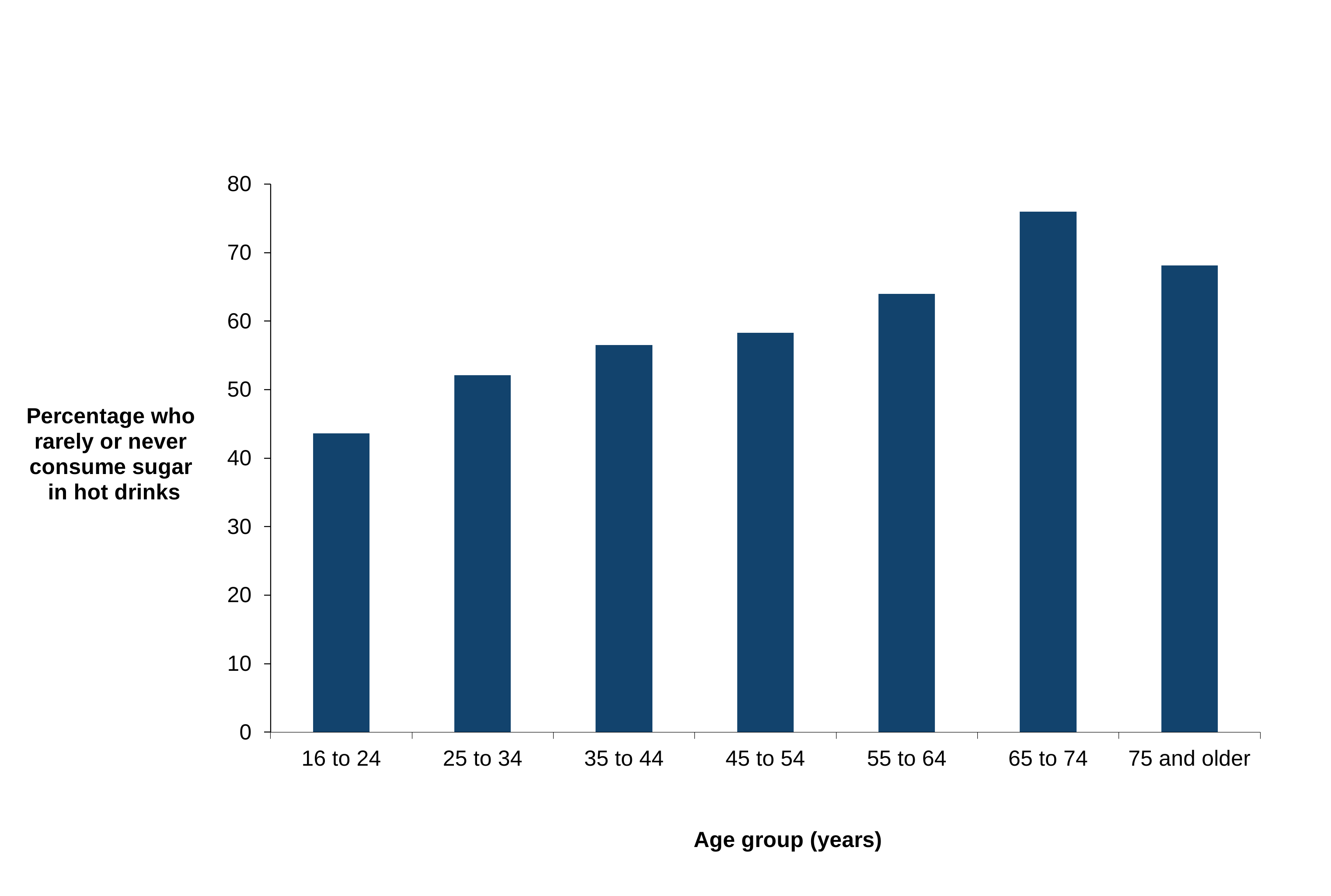
The proportion of adults who reported rarely or never having sugar in hot drinks increased with age from 44% of those aged 16 to 24 to 76% of those aged 65 to 74, before decreasing to 68% of adults aged 75 and older. There was no significant difference by age group in having sugar in hot drinks 3 or more times a day. These differences in the proportion of adults who rarely or never consume sugar in hot drinks by age group is shown in the bar chart below in figure 20.
Figure 20: proportion of adults who rarely or never consume sugar in hot drinks, by age group
Base: all adults who drink hot drinks.
Source: table 8 in ‘Data tables: oral health-related behaviours’.
NHS region
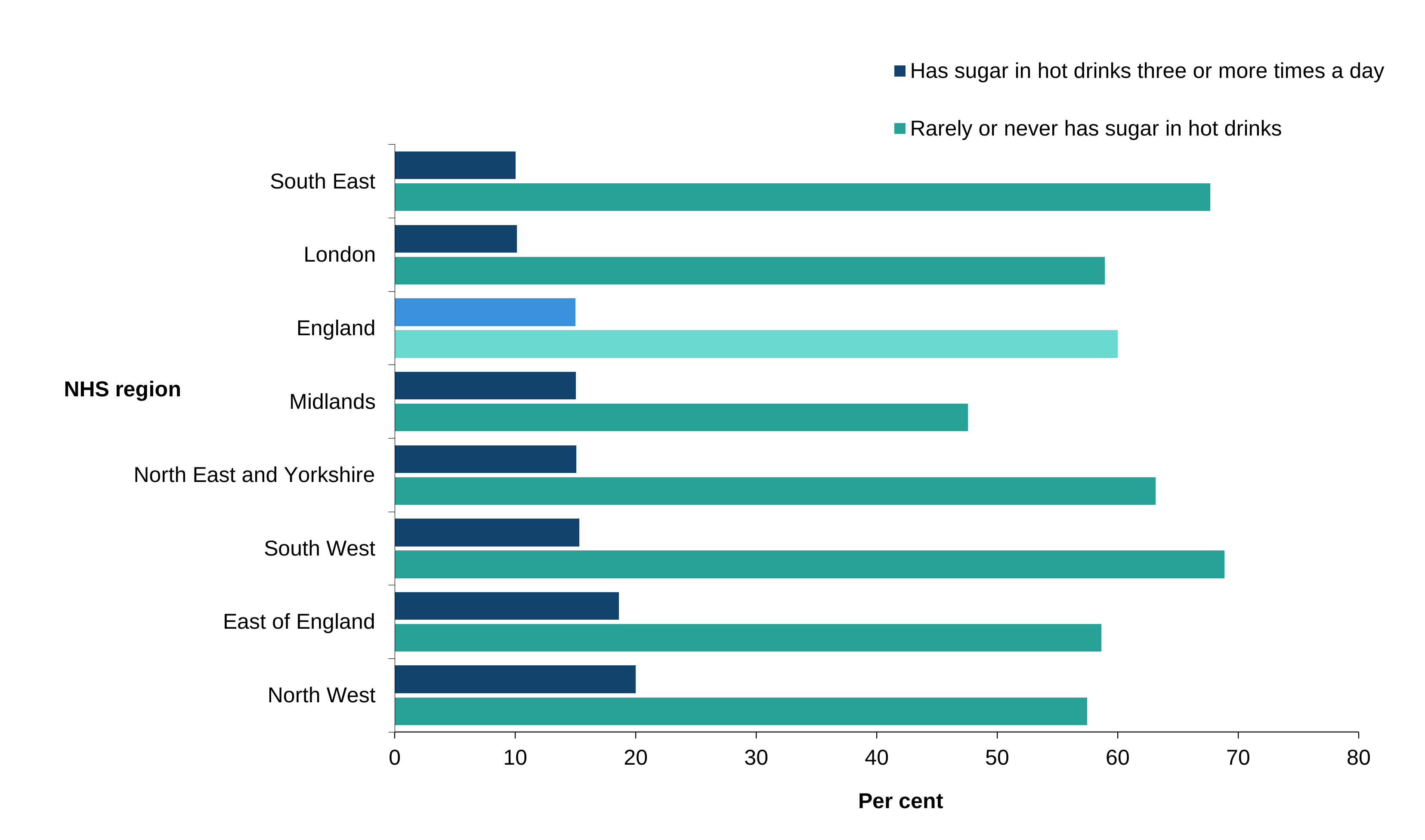
Having sugar in hot drinks 3 or more times a day was most common among adults living in the North West (20%) and least common in London and the South East (10% in both regions).
Adults in the South West (69%) were most likely to report that they rarely or never have sugar in hot drinks. Those in the Midlands (48%) were least likely to report rarely or never having sugar in hot drinks. The bar chart below in figure 21 illustrates these differences in frequency of consuming sugar in hot drinks across the NHS regions.
Figure 21: frequency of consuming sugar in hot drinks, by NHS region, with the England average for comparison
Base: all adults who drink hot drinks.
Source: table 8 in ‘Data tables: oral health-related behaviours’.
Household income
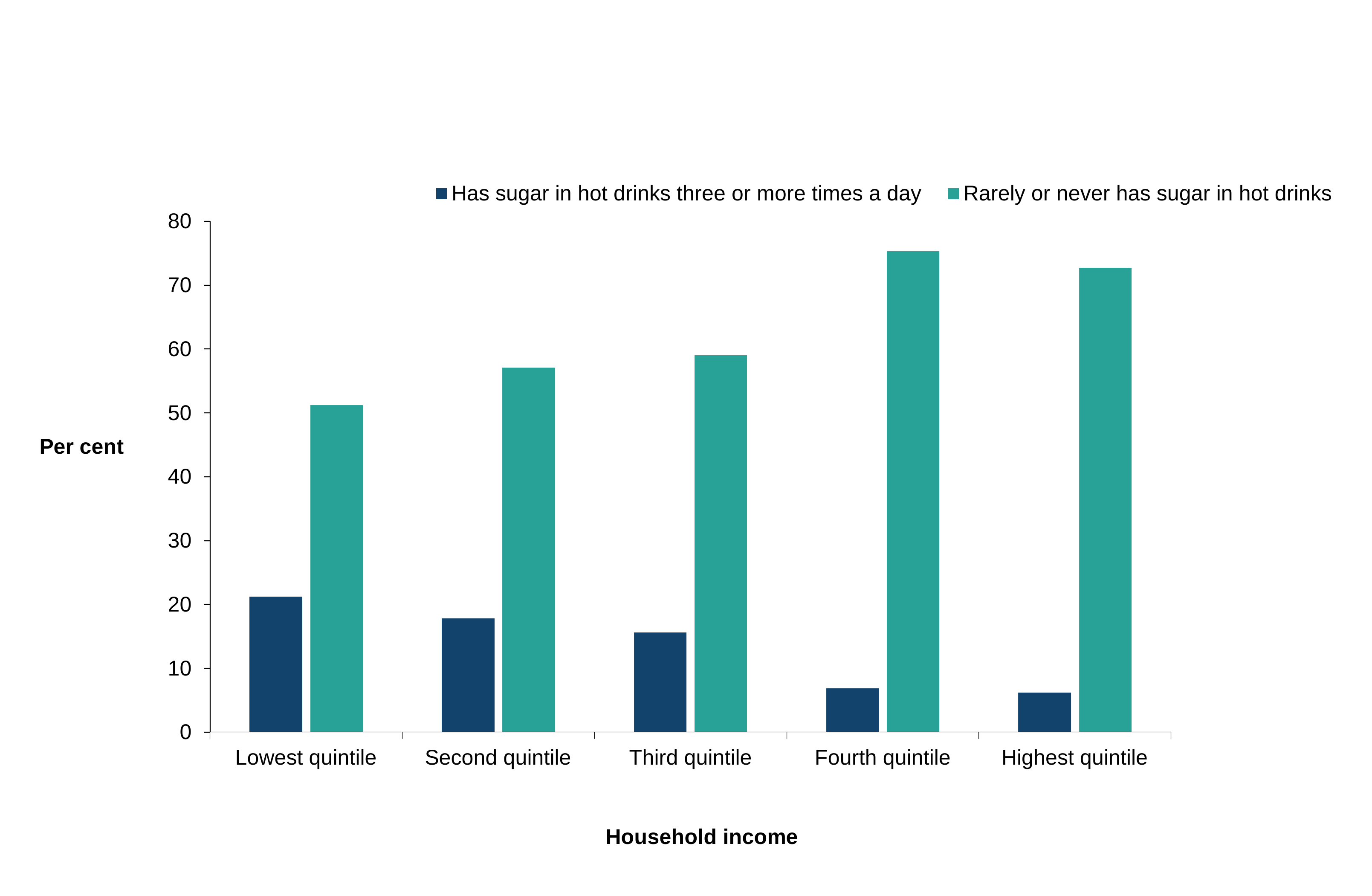
Having sugar in hot drinks 3 or more times a day decreased with increasing household income from 21% of adults in the lowest income quintile to 6% in the highest income quintile.
The proportion of adults who reported rarely or never having sugar in hot drinks increased with household income from 51% in the lowest income quintile to 75% in the second-highest income quintile. This is shown below in the bar chart in figure 22.
Figure 22: frequency of consuming sugar in hot drinks, by household income
Base: all adults who drink hot drinks.
Source: table 8 in ‘Data tables: oral health-related behaviours’.
Area deprivation
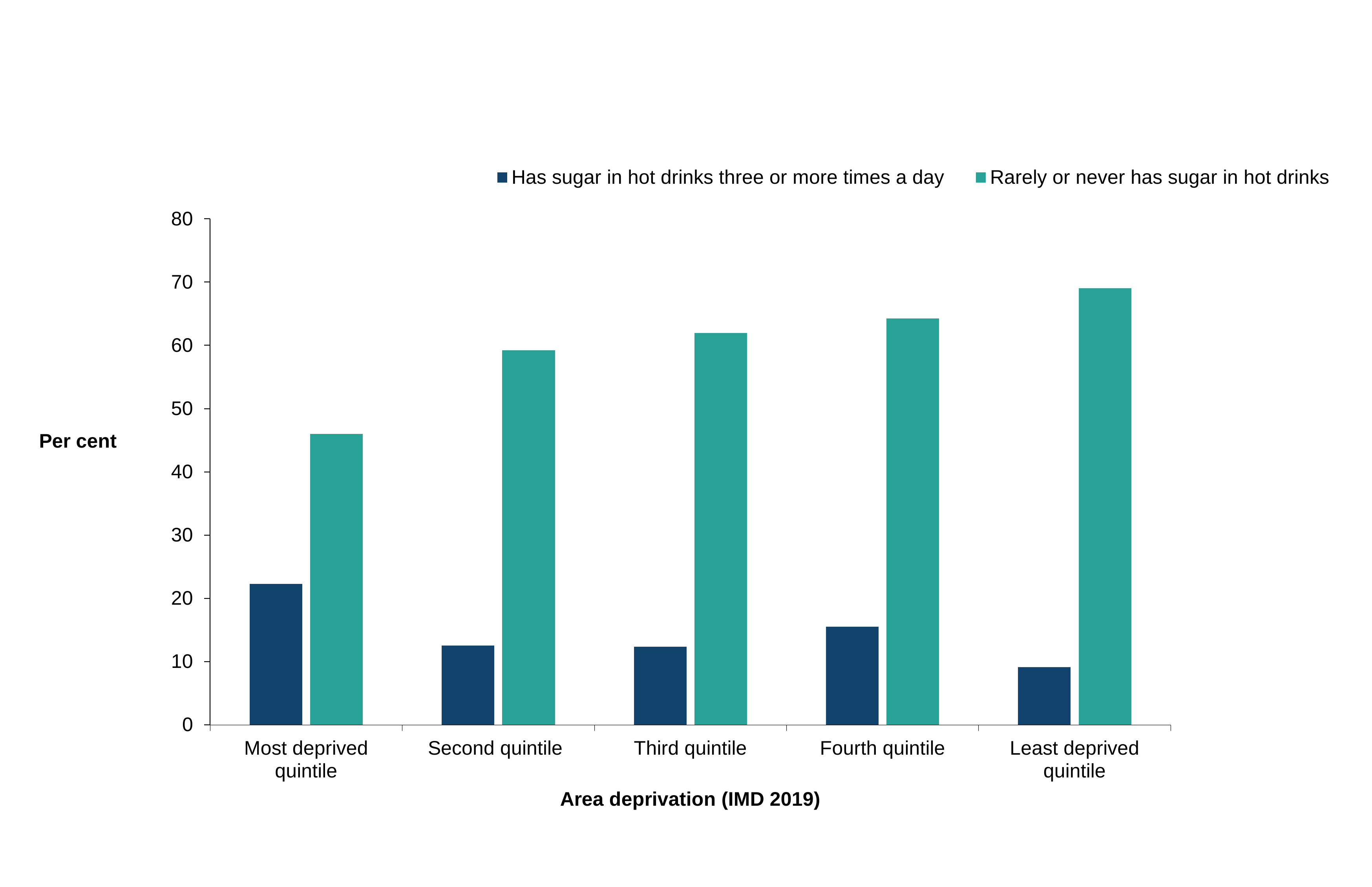
The proportion of adults who added sugar to hot drinks 3 or more times a day was highest among those living in the most deprived areas (22%) and lowest among those living in the least deprived areas (9%).
The proportion of adults who rarely or never had sugar in hot drinks was lowest among those living in the most deprived areas (46%) and highest among those in the least deprived areas (69%). The bar chart below in figure 23 shows these patterns of frequency of sugar in hot drinks consumption by area deprivation.
Figure 23: frequency of consuming sugar in hot drinks, by area deprivation
Base: all adults who drink hot drinks.
Source: table 8 in ‘Data tables: oral health-related behaviours’.
Summary
This chapter reported on important oral health-related behaviours. While the majority of adults followed current recommendations, it is worth highlighting that almost a third (29%) reported brushing their teeth less than twice a day. Generally, unfavourable patterns were more frequently reported by men than women. Vaping was much more prevalent among the youngest age groups.
Social inequalities were also apparent across different behaviours. Behaviours that are strongly related to oral disease risk (less than twice-daily toothbrushing, smoking and consumption of sugary drinks) were more prevalent among those who were more disadvantaged. Alcohol consumption was more prevalent in the least-deprived areas. This reverse social gradient is a similar pattern to that observed in other health surveys in England.