Clinical oral health
Updated 17 December 2025
Applies to England

© Crown copyright 2025
This publication is licensed under the terms of the Open Government Licence v3.0 except where otherwise stated. To view this licence, visit nationalarchives.gov.uk/doc/open-government-licence/version/3 or write to the Information Policy Team, The National Archives, Kew, London TW9 4DU, or email: psi@nationalarchives.gov.uk.
Where we have identified any third party copyright information you will need to obtain permission from the copyright holders concerned.
This publication is available at https://www.gov.uk/government/statistics/adult-oral-health-survey-2023/clinical-oral-health
Introduction
The findings in this chapter are based on the oral examination of participants and provide insight into the oral health of dentate (having one or more natural teeth) adults in England and the prevalence of common oral diseases, such as tooth decay, periodontal (gum) diseases and tooth erosion or wear.
Examining the general population in their home using simple equipment provides a contemporary and wide-ranging assessment of oral health and diseases, including those who do not routinely access dental care.
The diagnostic criteria used for the adult oral health survey (AOHS) 2023 oral examination and the approach taken to train and calibrate examiners are outlined in the technical report published alongside this chapter. Across the entire series of national surveys since 1968, there has been progressive evolution in the criteria for tooth decay, periodontal diseases and tooth wear. These reflect innovations, improved understanding of the diseases and/or conditions, and developments in clinical practice over the last 14 years. Where possible, backwards compatibility with previous surveys has been retained, particularly in relation to the last clinical survey in 2009.
A clinical epidemiological survey, conducted in a standardised manner, provides evidence of the burden of oral disease in a population. It is not designed to replicate the clinical examination of a patient in a dental surgery which, for example, uses additional diagnostic aids such as radiographs (x-rays) and takes account of patient preferences when treatment planning is explored. The survey findings also give insight into the variations in levels of oral health and disease between different sections of the population, revealing where the greatest burden of disease lies, and the greatest risk of future disease.
The data tables associated with this chapter present a breakdown of these measures by the following sociodemographic characteristics:
- sex
- age group
- NHS region
- equivalised (adjusted) household income
- area deprivation
Breakdowns by ethnic group have not been included in this report due to small sample sizes in some groups. Findings based on fewer than 5 participants were not reported on. Where differences are commented on in this report, these differences are statistically significant. This implies at least a 95% chance that any reported difference is a real one and not a consequence of sampling error. Please note that estimates in this report are rounded. However in the data tables they are presented to one decimal place. See the technical report for more detail on survey estimates and a glossary of all clinical terms.
There are also data tables presenting trends in oral health status over time. Monitoring trends in the nation’s oral health are of importance not only to health care professionals but also to a range of stakeholders including policy makers and the general public. As the AOHS 2023 is an England-only survey, trends and comparisons presented here relate only to England - this includes any data presented from former adult dental health surveys (ADHSs). It is important to note that tests for statistical significance were only conducted between the 2009 and 2023 survey years, restricting the ability to demonstrate statistically significant differences between time points over the series of surveys. See the technical report for more detail on the trends analysis.
Main findings
Prevalence of tooth decay
Taking account of the various stages of the tooth decay process, 39% of dentate adults had no current decay detected.
Around 1 in 5 (21%) dentate adults had extensive obvious tooth decay that affected the pulp (deepest part) of the tooth or had a cavity into the dentine (inner) layer of the tooth. An additional 20% had decay into the inner tooth tissue that was not cavitated making 41% with obvious decay affecting the pulp of the tooth and/or the dentine layer.
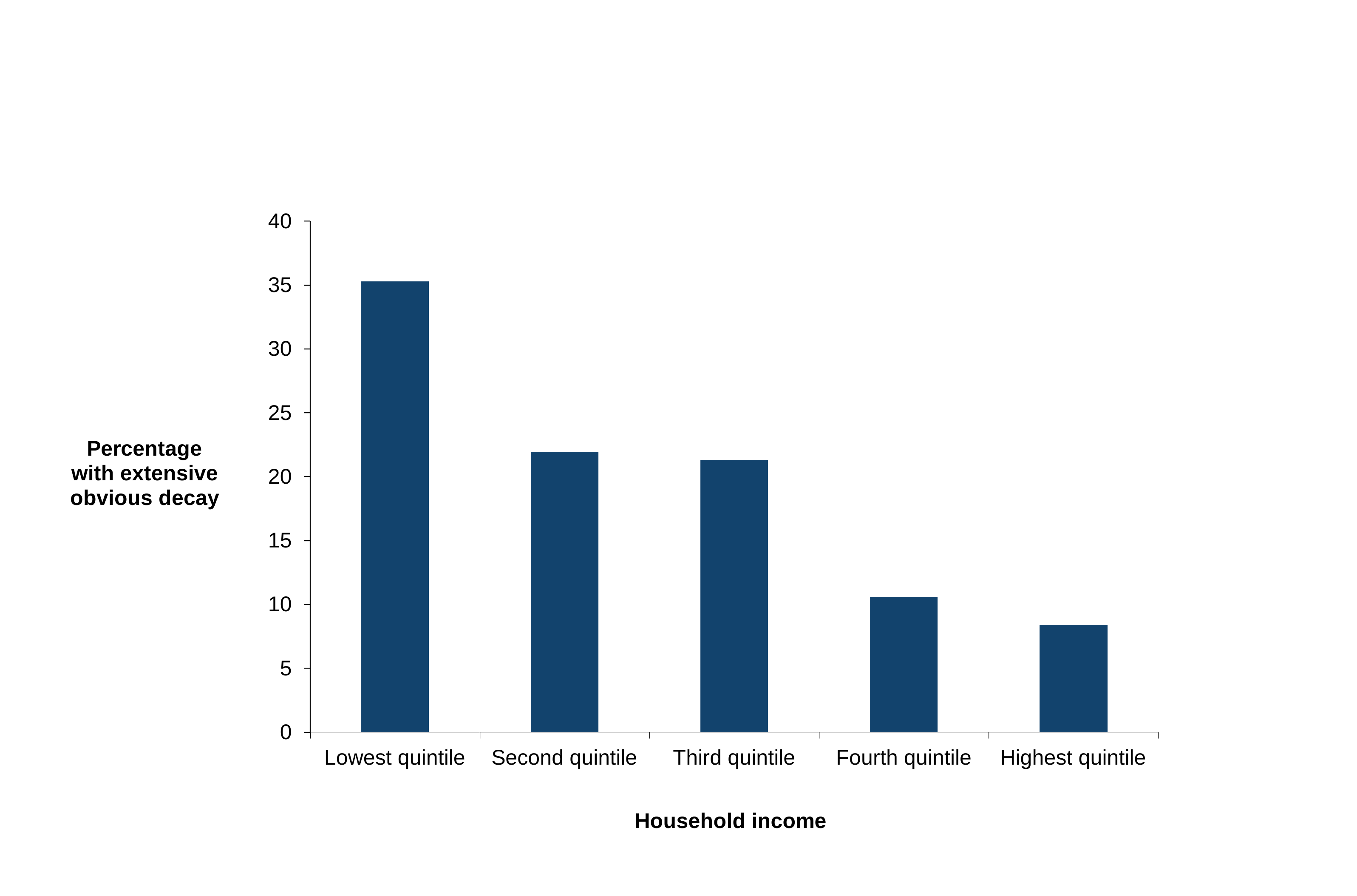
Over a quarter (28%) of dentate adults aged 75 years and older had extensive obvious tooth decay and 43% had obvious decay. While fewer than 1 in 10 (8%) dentate adults from households in the highest income quintile had extensive obvious decay, the figure was over a third (35%) for those from households in the lowest income quintile. The proportion of all adults with decay affecting the root surfaces was 14%, with an average of 0.5 teeth affected.
While the proportion of dentate adults with obvious decay had considerably reduced between 1998 and 2009, there was a 13 percentage point increase in the prevalence of the disease between 2009 and 2023. This is almost a reversal of the previous decrease, bringing the 2023 estimate closer to the one of 1998 rather than 2009. The increase was more pronounced for middle age and older adults compared with younger adults. It was also larger for primary decay (decay on a tooth that has not been previously restored) and less so for secondary decay (decay on a tooth that had previously been restored).
Just under two-thirds of adults (64%) had clinical decay present in one or more teeth on the crown or roots of their teeth at the time of oral examination using the most sensitive measure of tooth decay which includes enamel decay.
Tooth wear
Seventy-one per cent of dentate adults had some tooth wear in the mouth as measured by the Basic Erosive Wear Examination (BEWE) index, with 66% having some tooth wear in their anterior (front) teeth. Twenty-two per cent of dentate adults had moderate wear (at least one tooth with a distinct loss of tooth tissue but affecting less than half of the tooth surface) as the worst score in the mouth and 5% had severe wear (at least one tooth with a distinct loss of tooth tissue affecting more than half of the tooth surface). For anterior teeth only, 19% of dentate adults had moderate wear and 3% had severe wear.
Periodontal disease
Only 7% of dentate adults had no observed periodontal conditions, that is:
- bleeding
- calculus
- pocketing greater than 3.5mm
- furcation defect
- interdental recession mobility
The vast majority (93%) had one or more of these indicators.
Ninety-two per cent had calculus, bleeding or pocketing greater than 3.5mm on oral examination in at least one sextant of the mouth, comprising:
- 9% with bleeding on gentle probing only
- 43% with calculus or other plaque-retention factors but no pocketing greater than 3.5mm
- 28% with pocketing greater than 3.5mm but no deeper pocketing
- 12% with more severe pocketing of 5.5mm or greater
Indicators of more advanced periodontal disease were more common in men, older adults and those from more deprived backgrounds.
Teeth with no obvious decay, trauma or restorations
The number of teeth that have no obvious decay, trauma or restorations has continued to increase but the overall increase between 2009 and 2023 was more modest (from 18.0 to 19.6 teeth) than between previous survey years, though the increase was still considerable for middle age groups, those aged 45 to 54 years in particular. For tooth level data (crowns of teeth only) based on 2023 criteria which include enamel decay, almost three-fifths (59%) of adults had 18 or more teeth that were unrestored and clinically unaffected by decay or trauma. Using the 2009 criteria (where enamel decay is not included in the calculation of tooth decay), the equivalent estimate was, as expected, higher at 61% of adults with 18 or more teeth that were unrestored and clinically unaffected by tooth decay or trauma.
Number and condition of natural teeth
The proportion of adults in England reporting having no natural teeth was 2.5%, increasing with age. Around 1 in 10 (11%) participants aged 75 years and older reported having no natural teeth (edentulous). This represents a considerable reduction in the proportion of adults in England that reported having no natural teeth over the survey years, from 28% in 1978 and 6% in 2009. These reductions were evident for both sexes and across age groups.
A large majority of adults (86%) had 21 or more natural teeth and so were likely to have better dental function such as chewing ability. This declined with age and area deprivation and rose with household income. For example, half of adults aged 75 years and older had 21 or more teeth, while 98% of those from households in the highest income quintile (fifth) had 21 or more teeth. The figure was 76% for those from households in the lowest income quintile. While this proportion was gradually increasing in previous surveys, with larger increases for older age groups, it has remained stable overall at 86% since 2009.
Restored teeth
The mean number of teeth restored but otherwise unaffected by decay continued to decrease, from 7.8 teeth in 1998, to 6.7 teeth in 2009 and 4.9 teeth in 2023. The decrease between 2009 and 2023 primarily occurred in middle aged adults.
Similar proportions of dentate adults (60%) had tooth coloured and amalgam restorations. Twenty-seven per cent had one or more teeth restored with a crown, 5% had a bridge present and 2% had one or more teeth replaced by implants.
Presence of natural teeth
One of the most basic measures of oral health is the extent to which any natural teeth are retained throughout an entire lifetime by the population. In the AOHS 2023, as in all previous surveys, any adult with at least one natural tooth was classified as dentate. Unlike in previous surveys, even those who reported having no natural teeth (referred to in the report as being ‘edentate’ or having ‘edentulism’) were offered an oral examination, meaning that there are estimates for 2023 based both on self-reporting and the examiners’ assessments.
All adults who were interviewed were asked how many natural teeth they thought they had. Those reporting having one or more teeth are considered self-reporting dentate adults. During the oral examination, dental examiners recorded the condition of each tooth, including whether it was present or missing. Participants with one or more natural teeth (as observed during the oral examination) are considered dentate adults and those with no observed natural teeth are edentate adults.
In 2023, 97.5% of all adults self-reported having some natural teeth and only 2.5% reported that they had no natural teeth (edentate). Similar proportions of observed natural teeth were reported by the dental examiner: 98% of adults were classified as dentate and 2% as edentate.
Most adults were able to closely estimate the number of teeth they had present in their mouth. There were no significant differences between the number of self-reported teeth and the number of teeth observed during the oral examination.
Among adults classified as dentate from observation during the oral examination, the majority had natural teeth in both top and bottom dental arches (98%). The remainder had natural teeth in the lower arch only (2%).
The percentage of adults who were dentate varied by age group, NHS region and area deprivation as outlined below. No significant differences were observed between men and women or household income.
Age group
The majority of adults examined in each age group were dentate, though this declined with age. All adults aged 16 to 54 (100%) were classified as dentate compared with 90% of adults aged 75 years and older. In other words, 9 out of 10 adults aged 75 years and older had some natural teeth.
Similarly, the proportion of adults with natural teeth in both dental arches decreased with age. Younger adults were more likely to have natural teeth in both arches (100% of those aged 16 to 34), compared with 92% of adults aged 75 years and older.
NHS region
Although most adults across all NHS regions were considered dentate during the oral examination, there was variation across regions. Ninety-five per cent of adults living in the North West were classified as dentate, compared with 97% to 100% across the other regions.
Area deprivation
Area deprivation was analysed in quintiles, based on the 2019 English Index of Multiple Deprivation (IMD). IMD is based on 37 indicators, across 7 domains of deprivation. IMD is a measure of the overall deprivation experienced by people living in an area, although not everyone who lives in a deprived area will be deprived themselves.
Having natural teeth in both arches varied by area deprivation. Adults living in the most deprived areas were less likely to have teeth in both arches (96%), compared with those living the least deprived areas (99%).
Trends in edentulism
In all previous ADHSs, classification of dentate or edentate status was based on adults self-reporting the number of natural teeth they have. Any adult reporting at least one natural tooth is classified as dentate.
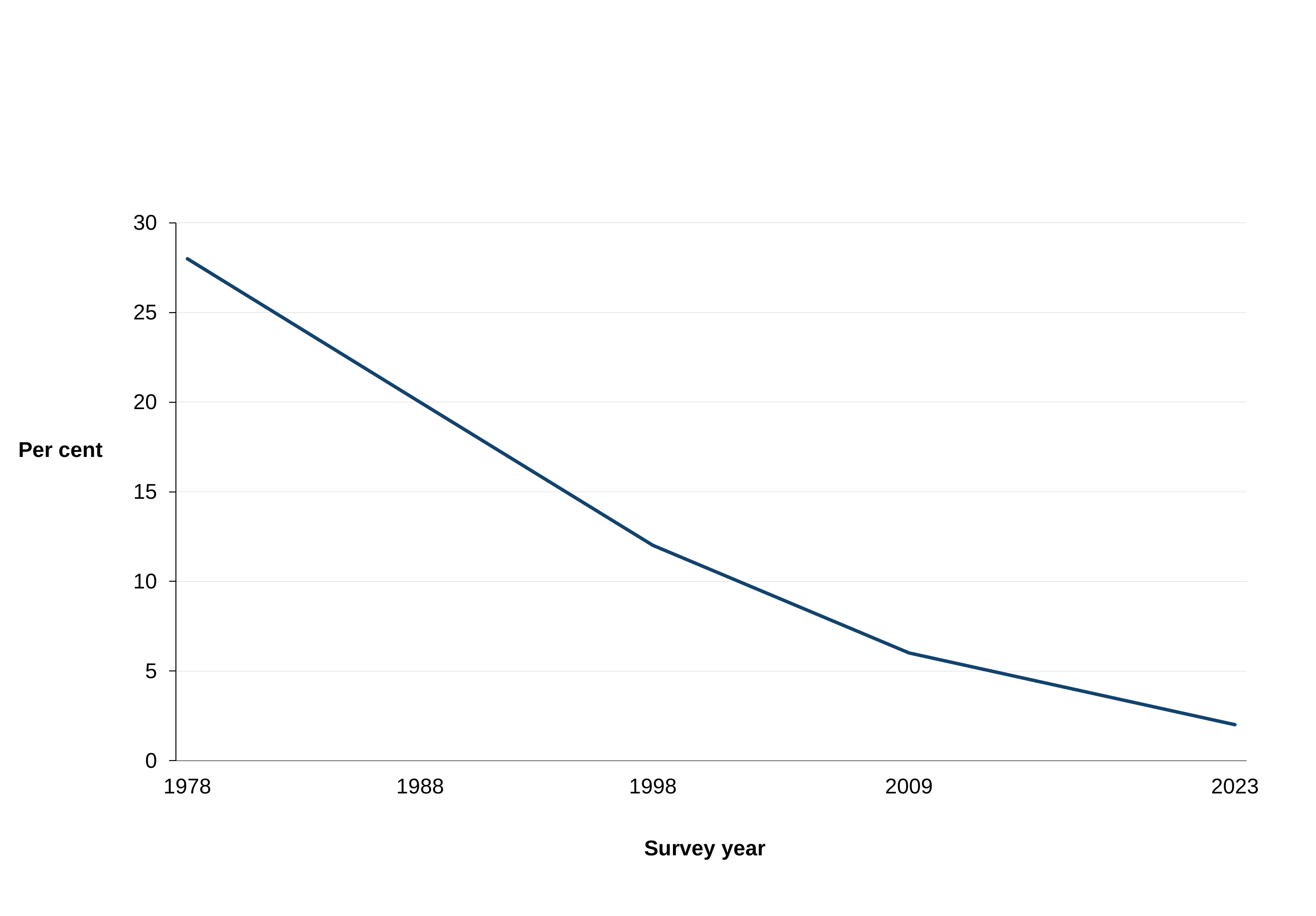
The proportion of adults in England with self-reported edentulism was:
- 28% in 1978
- 20% in 1988
- 12% in 1998
- 6% in 2009
- 2.5% in 2023
This substantial reduction in the proportion of adults with no natural teeth over the survey years continued in 2023 and the proportion of adults who are edentate is now minimal, documenting a major transformation of oral health and advances in oral treatment and care over time. This reduction is illustrated in the line graph below in figure 1.
Figure 1: percentage edentate (self-reported) adults in England, 1978 to 2023
Base (respondent group): all adults.
Source: table 2 in ‘Data tables: clinical oral health’.
Sex
Between 1978 and 2023, the difference in the proportion of men and women who reported they were edentate narrowed, despite women historically reporting higher levels of edentulism than men in 1978 and 1988.
From 2009 to 2023, the decrease in the prevalence of edentulism did not differ significantly between men and women.
These observations across the survey years are illustrated in the line graph in figure 2 below.
Figure 2: percentage edentate (self-reported) adults by sex in England, 1978 to 2023

Base: all adults.
Source: table 2 in ‘Data tables: clinical oral health’.
Age group
Between 1978 and 1998 there were large reductions in the prevalence of self-reported edentulism across the older age groups, with the rate reducing slightly between 1998 and 2009. Analysis of the interaction between survey year (between 2009 and 2023) and age group was not possible, as the proportion of edentate adults in younger age groups was very low or zero. Total number of teeth is reported in the following section.
Across the survey series, large reductions in those who reported they were edentate were observed in those aged 55 to 64 years old. In the 1978 ADHS, almost half of adults aged 55 to 64 years were edentate (47%) which reduced to fewer than 1 in 10 adults (2.5%) in 2023. There were larger reductions for the older age groups. Earlier ADHSs considered all those aged 65 years or older in one age group, while from 1998 there were 2 age groups: 65 to 74 years and 75 years or older. Most adults aged 65 years or older were edentate in 1978 (78%) and in 1988 (66%), but considerably lower proportions of older adults have reported being edentate in subsequent surveys. In 2023 this was just 4% of those aged 65 to 74 years and 11% of those aged 75 years or older. Similar, albeit slightly lower percentages, were reported in the National Dental Epidemiology Programme oral health survey of adults attending general dental practice 2018. The line graph in figure 3 below shows these reductions in self-reported edentulism by age group across the survey years.
Figure 3: percentage edentate (self-reported) adults by age group in England, 1978 to 2023
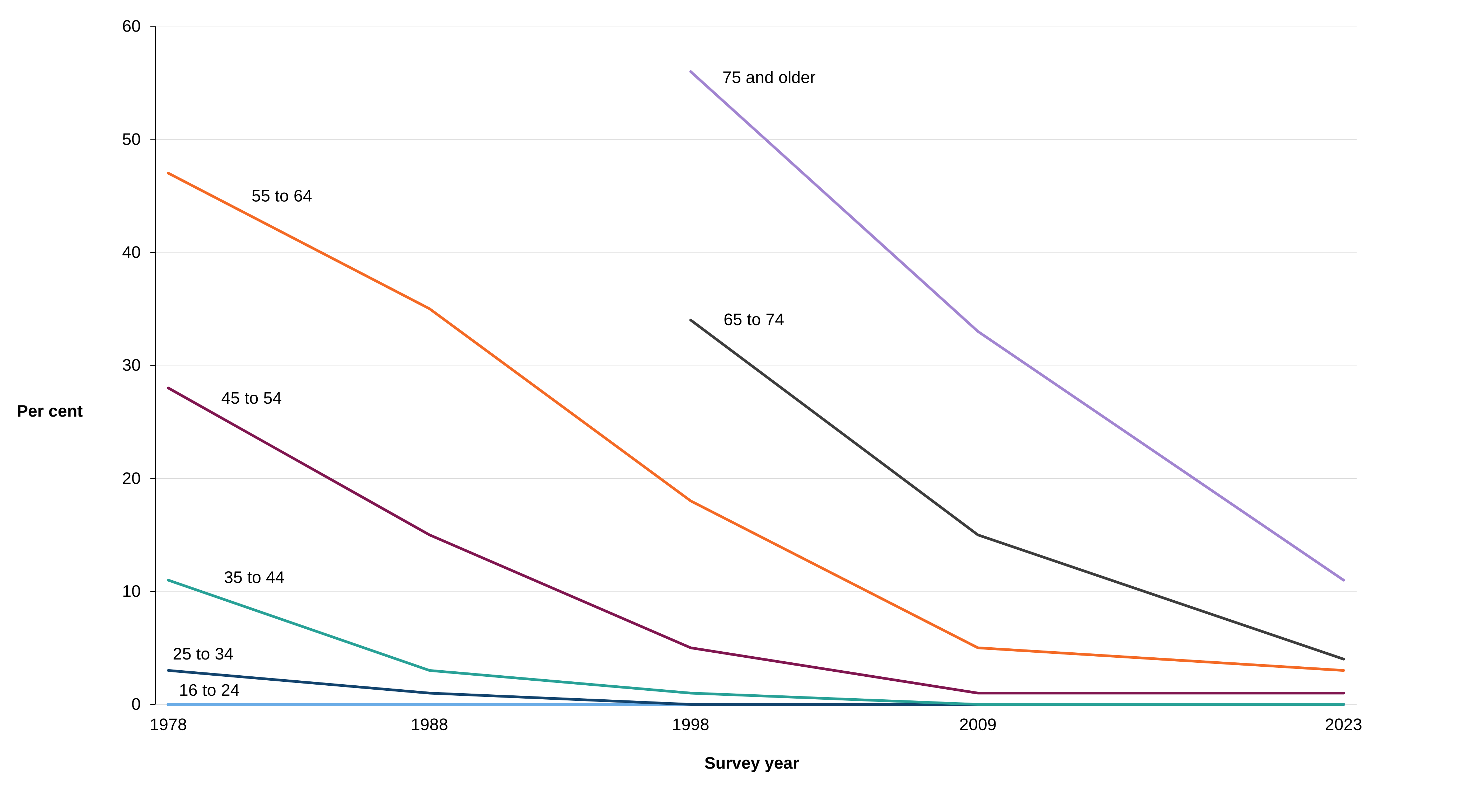
Note: In 1978 and 1988, data on adults aged 65 to 74 and aged 75 and older were combined into one group. These have therefore not been presented in the figure.
Base: all adults.
Source: table 2 in ‘Data tables: clinical oral health’.
Number and condition of natural teeth
Having an adequate number of teeth is important for the functions of eating, speaking and social interaction. The retention of 21 or more natural teeth has been used as an indicator of having a functional dentition in previous surveys from 1988 onwards and in research. However, it does not take account of the status of the teeth. While initially regarded as an arbitrary threshold, subsequent research (see references 1 and 2) has suggested this measure has an association with chewing ability and nutritional status and reduced reliance on partial dentures.
Number of natural teeth
The overall mean number of natural teeth present was 25.9. Eighty-six per cent of dentate adults had 21 or more natural teeth.
The mean number of teeth varied by age group, NHS region and household income. There was no significant difference between men and women or area deprivation. Having 21 or more natural teeth varied by age group, household income and area deprivation. It did not vary by sex or NHS region.
Age group
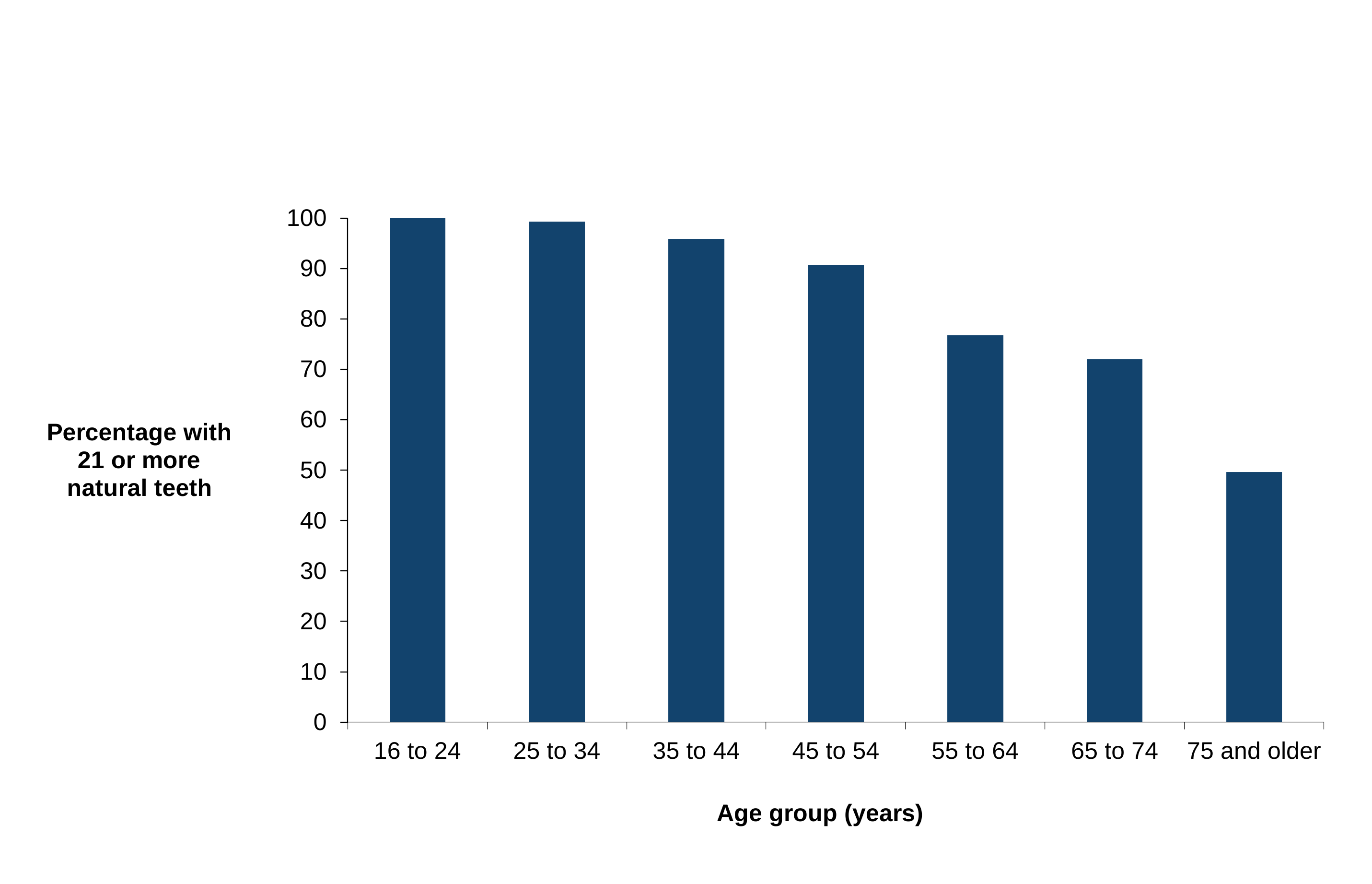
Younger adults had a higher mean number of natural teeth, compared with older adults. The mean number of teeth was:
- 29.1 teeth for adults aged 16 to 24
- 29.2 teeth for adults aged 25 to 34
- 19.3 teeth for adults aged 75 years and older
The proportion of adults with 21 or more natural teeth progressively declined with age, from 99% among adults aged 25 to 34 to 50% among adults aged 75 years and older. The bar chart in figure 4 below illustrates this decline in the proportion of adults with 21 or more natural teeth by age group.
Figure 4: proportion of adults with 21 or more natural teeth by age group
Base: dentate adults (observed).
Source: table 6 in ‘Data tables: clinical oral health’.
NHS region
The mean number of natural teeth was lowest among adults in the East of England (25.0) and highest among those in London (27.5).
Household income
Household income was analysed in quintiles and was equivalised (adjusted) to take account of the number of adults and dependent children in the household.
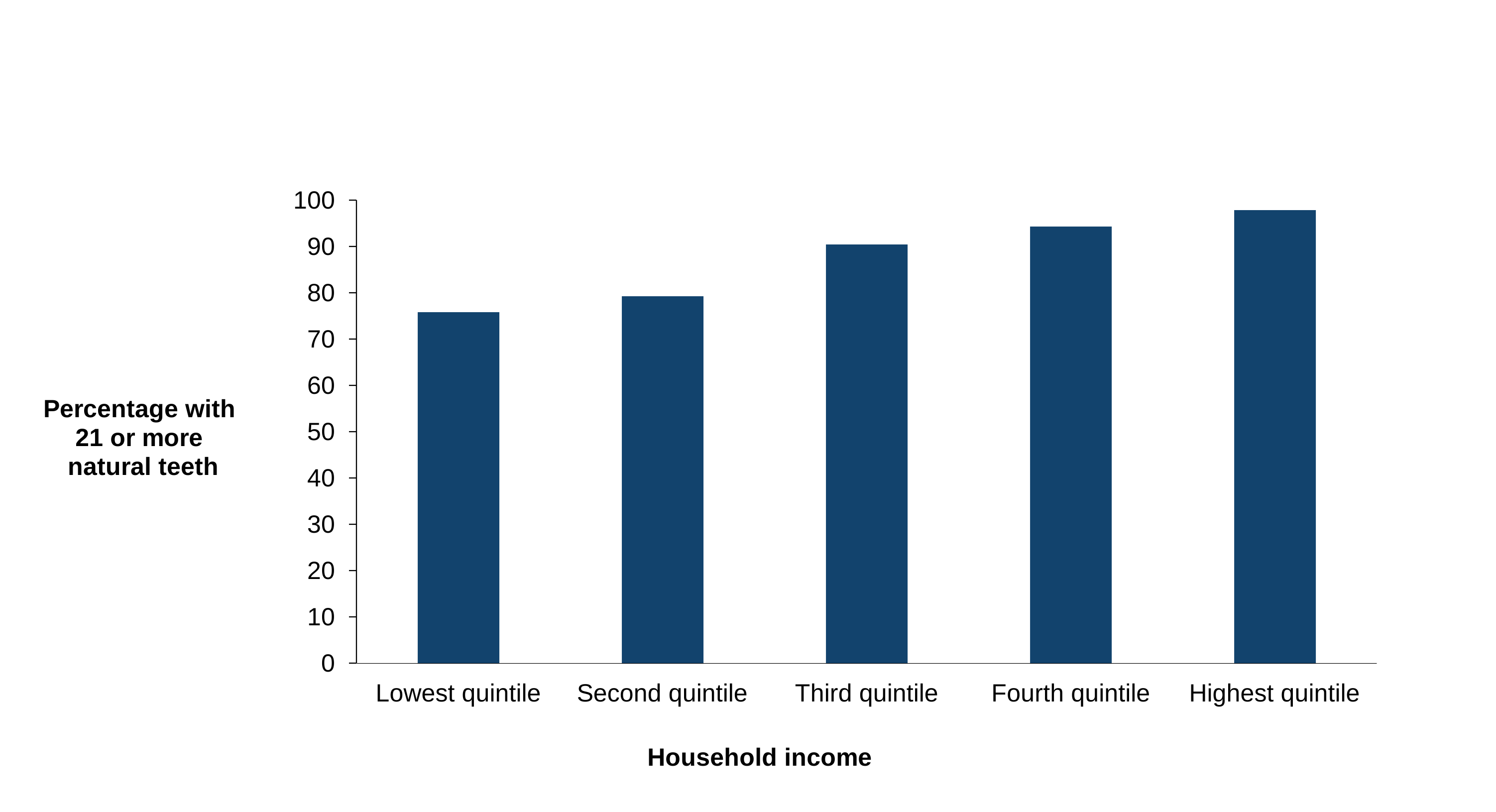
The mean number of teeth increased as household income increased. Those in the highest income quintile had a mean of 28.1 teeth, compared with 23.9 teeth among adults in the lowest income households.
Similarly, having 21 or more natural teeth increased as household income increased, from 76% among those living in the lowest income quintile to 98% of those in the highest income households. This observation across income quintiles is shown in the bar chart in figure 5 below.
Figure 5: proportion of adults with 21 or more natural teeth by household income
Base: dentate adults (observed).
Source: table 6 in ‘Data tables: clinical oral health’.
Area deprivation
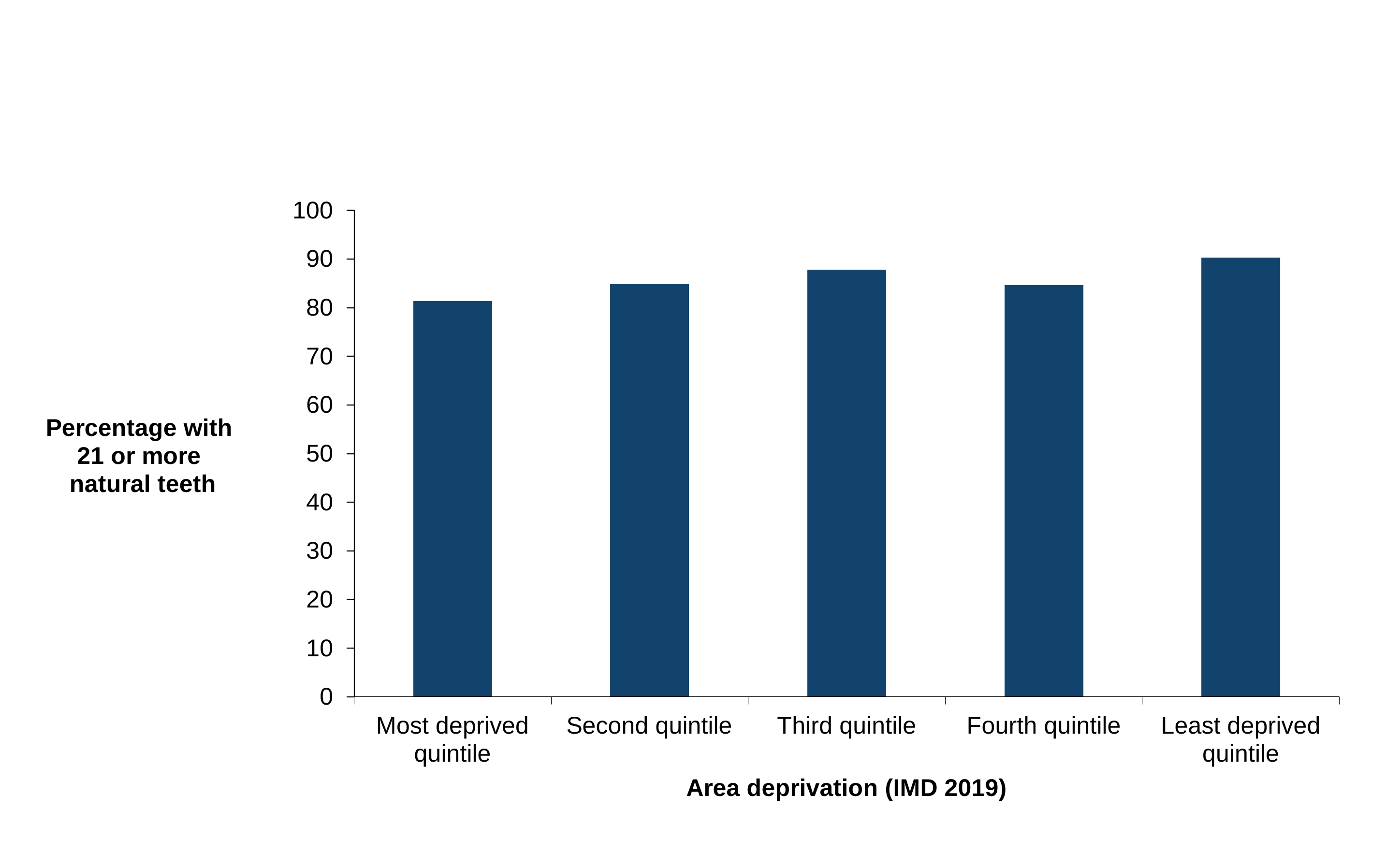
The mean number of teeth did not vary significantly by area deprivation. However, the proportion of adults having 21 or more natural teeth did, ranging from 81% in the most deprived quintile to 90% in the least deprived quintile. This range is illustrated in the bar chart in figure 6 below.
Figure 6: proportion of adults with 21 or more natural teeth by area deprivation
Base: dentate adults (observed).
Source: table 6 in ‘Data tables: clinical oral health’.
Trends in tooth retention
Trends in the prevalence of having 21 or more natural teeth
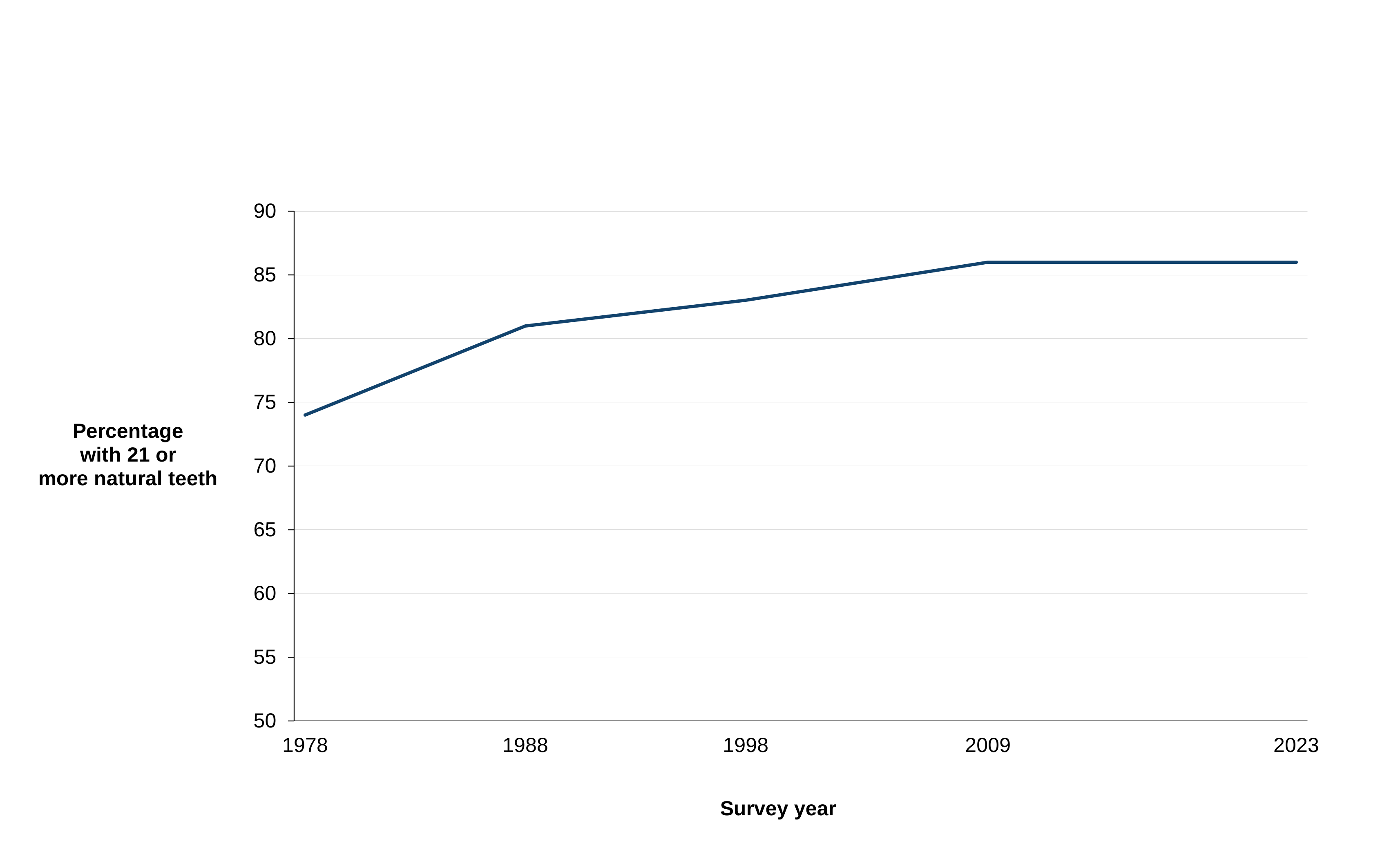
The total proportion of dentate adults in England with 21 or more natural teeth (as observed in the oral examination) was:
- 74% in 1978
- 81% in 1988
- 83% in 1998
- 86% in 2009
Between 2009 and 2023, the total proportion of dentate adults with at least 21 natural teeth remained stable at 86%. This trend across the survey years is illustrated in the line graph in figure 7 below.
Figure 7: proportion of adults with 21 or more natural teeth England, 1978 to 2023
Base: dentate adults (self-reported).
Source: table 7 in ‘Data tables: clinical oral health’.
Age group
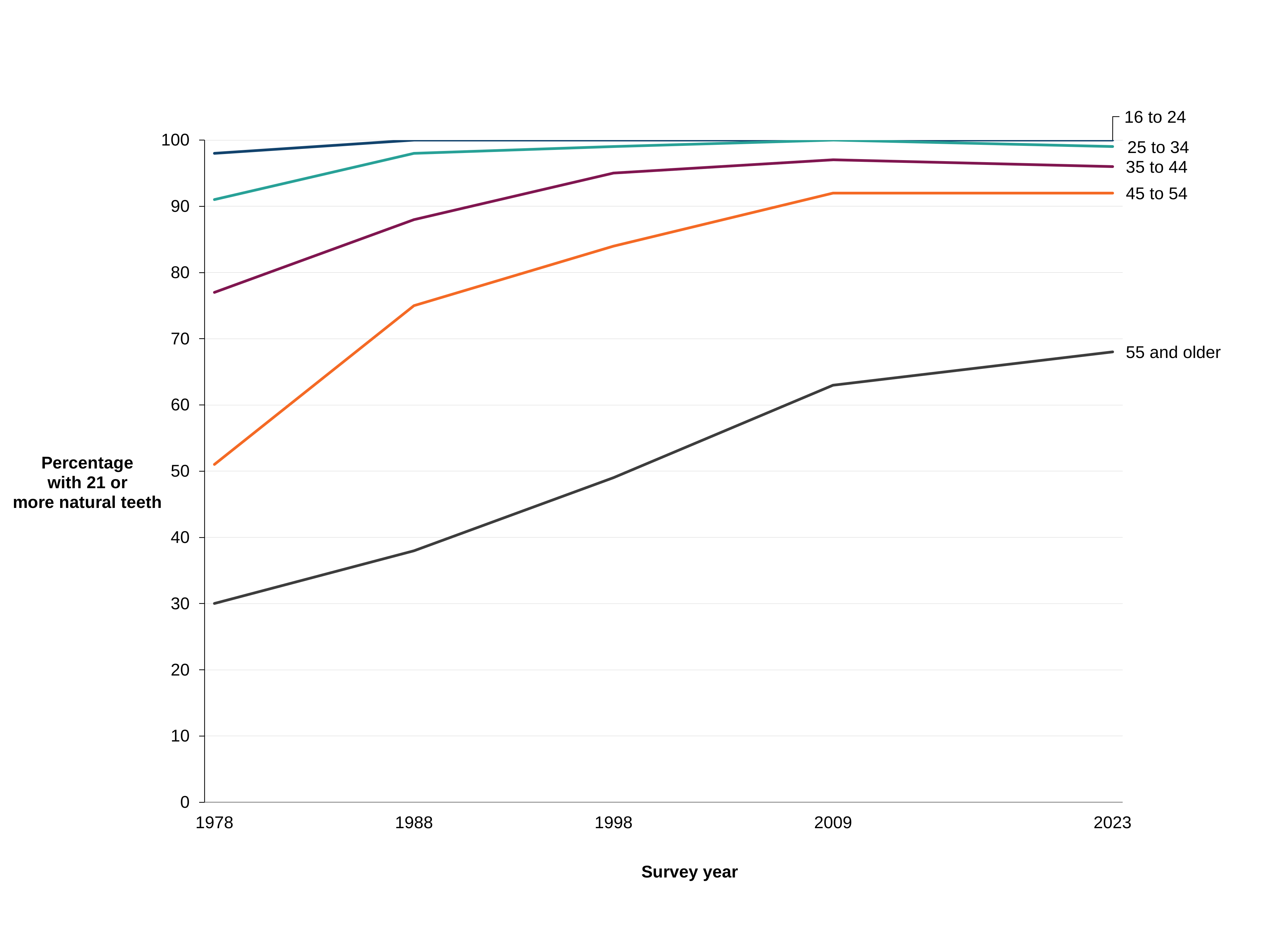
There were large differences between age groups in the proportion of dentate adults with 21 or more natural teeth in earlier ADHSs, but these differences have narrowed in recent survey years. However, in 2023 older adults were still less likely than younger adults to have 21 or more natural teeth.
Between 1978 and 2023, the most substantial increases in the proportion of those with 21 or more natural teeth were evident in participants aged 45 to 54, from 51% to 92%, and those aged 55 and older, from 30% to 68%. These proportions by age group across the survey years are shown in the line graph below in figure 8.
Figure 8: proportion of adults with 21 or more natural teeth by age group, England, 1978 to 2023
Base: dentate adults (self-reported).
Source: table 7 in ‘Data tables: clinical oral health’.
Analysis of the interaction between survey year (between 2009 and 2023) and age group was not possible, as the proportion of adults in younger age groups without 21 or more teeth was very low or zero. Total number of teeth is reported in a previous section.
Trends in mean number of natural teeth
The mean number of natural teeth per person among dentate adults was:
- 23.3 in 1978
- 24.4 in 1988
- 24.9 in 1998
In 2009 the mean number of natural teeth was 25.7 and in 2023 it was 25.9.
Age group
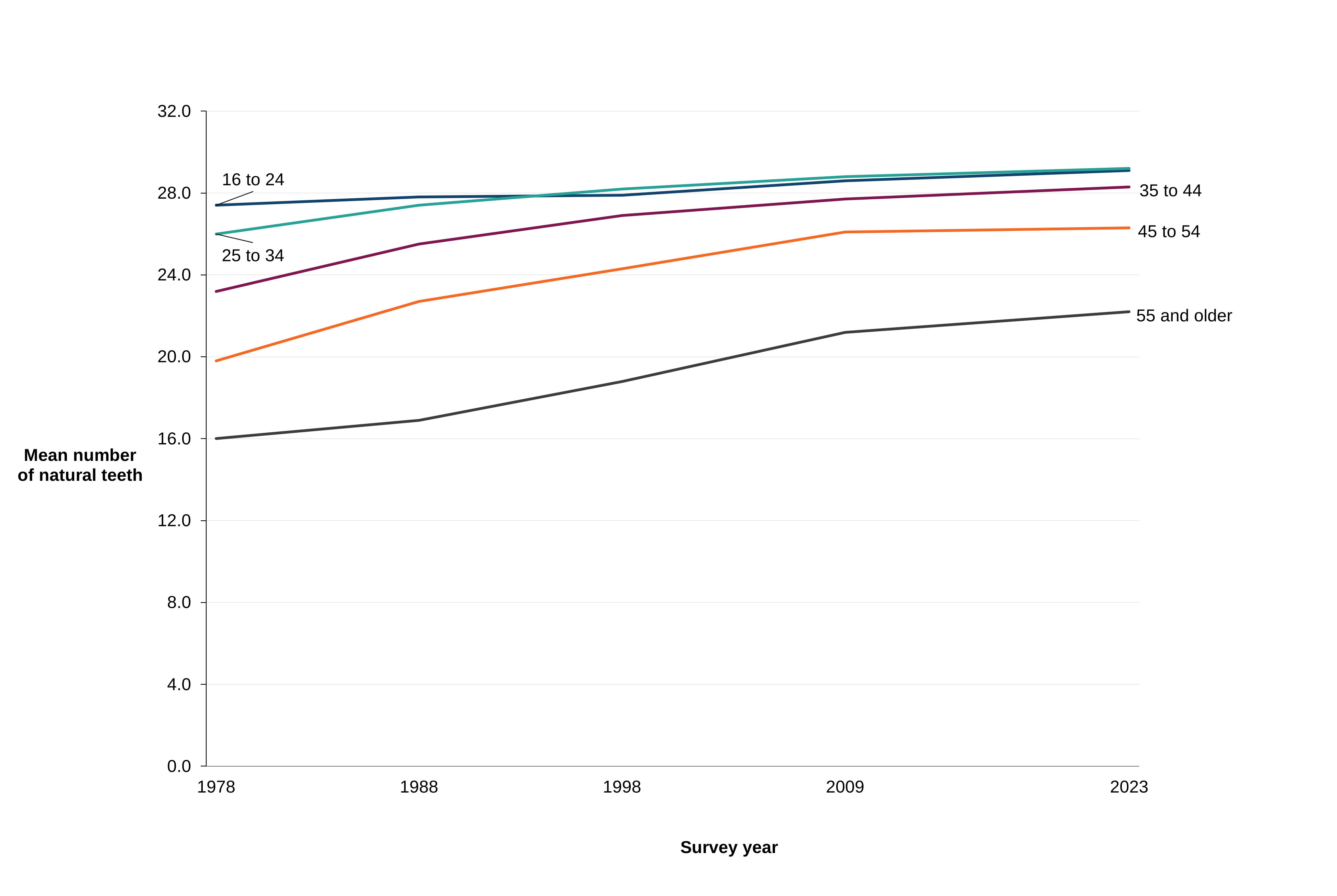
Across all age groups, the mean number of natural teeth increased between the 1978 and 2023 survey years, with the rate of this increase slowing over time. In addition, the variation in the mean number of natural teeth between different age groups was less pronounced in 2023 compared with previous survey years, particularly in comparison to 1978. This trend in the mean number of natural teeth across the survey years by age group is illustrated in the line graph in figure 9 below.
Figure 9: mean number of natural teeth, by age group England, 1978 to 2023
Base: dentate adults (self-reported).
Source: table 7 in ‘Data tables: clinical oral health’.
There was no significant variation by age group in the changes in the mean number of natural teeth between 2009 and 2023.
Prevalence of teeth that are both unrestored and clinically free of disease
Teeth that are both apparently free of disease (decay and trauma) and have not been repaired are less likely to require future treatment and less likely to be lost in the longer term. They provide, therefore, an indicator of current and future oral health.
Having 18 or more ‘sound and untreated teeth’, while an arbitrary threshold, has been used as an indicator of a healthy dentition (teeth) with a good long-term prognosis (outlook) since the first ADHS in 1968. In previous national surveys the term ‘sound and untreated teeth’ was used. In 2023 the term has been updated to ‘teeth that are unrestored and clinically unaffected by decay or trauma’ as a better description of the variables that are used in this survey.
Following innovation in the 2013 Child Dental Health Survey, the AOHS 2023 survey criteria for dental caries (tooth decay) included enamel decay (visible and cavitated), which had not been included in previous ADHSs. This means that a more extensive measure of decay, reflecting contemporary understanding and measurement of the disease, was used in 2023 than in the 2009 survey. The revised criteria do, however, provide the opportunity for backwards comparison of the findings. As a result, the data tables present both 2009 and 2023 criteria definitions. As expected, the use of the 2023 criteria, which includes enamel decay, detects early disease and led to fewer teeth classified as being free of decay than the 2009 criteria.
In this survey series we continue to follow the convention to examine clinically at the surface level but then report at tooth level (crown or coronal level and also whole tooth level which considers the crown and roots), having consolidated the results for each surface.
Considering tooth coronal surfaces only, in 2023 around three-fifths (59%) of adults had 18 or more teeth that were unrestored and clinically unaffected by decay or trauma. Using the 2009 criteria (where enamel decay is not included in the calculation of ‘tooth decay’), the equivalent estimate was, as expected, higher at 61% of adults with 18 or more teeth that were unrestored and clinically unaffected by tooth decay or trauma.
Similar proportions were found when considering both crown and root surfaces (57%), with adults having a mean number of 18.2 teeth that are unrestored and clinically unaffected by decay or trauma.
There were variations by age group and household income as reported below. There were no significant differences between men and women, area deprivation or NHS region.
Age group
Both the proportion and mean number of teeth that were unrestored and clinically unaffected by decay or trauma declined with age. For adults aged 16 to 24, the proportions were 98% for both coronal surfaces only and when looking at coronal and root surfaces. For adults aged 75 and older the equivalent proportions were 4% and 3%.
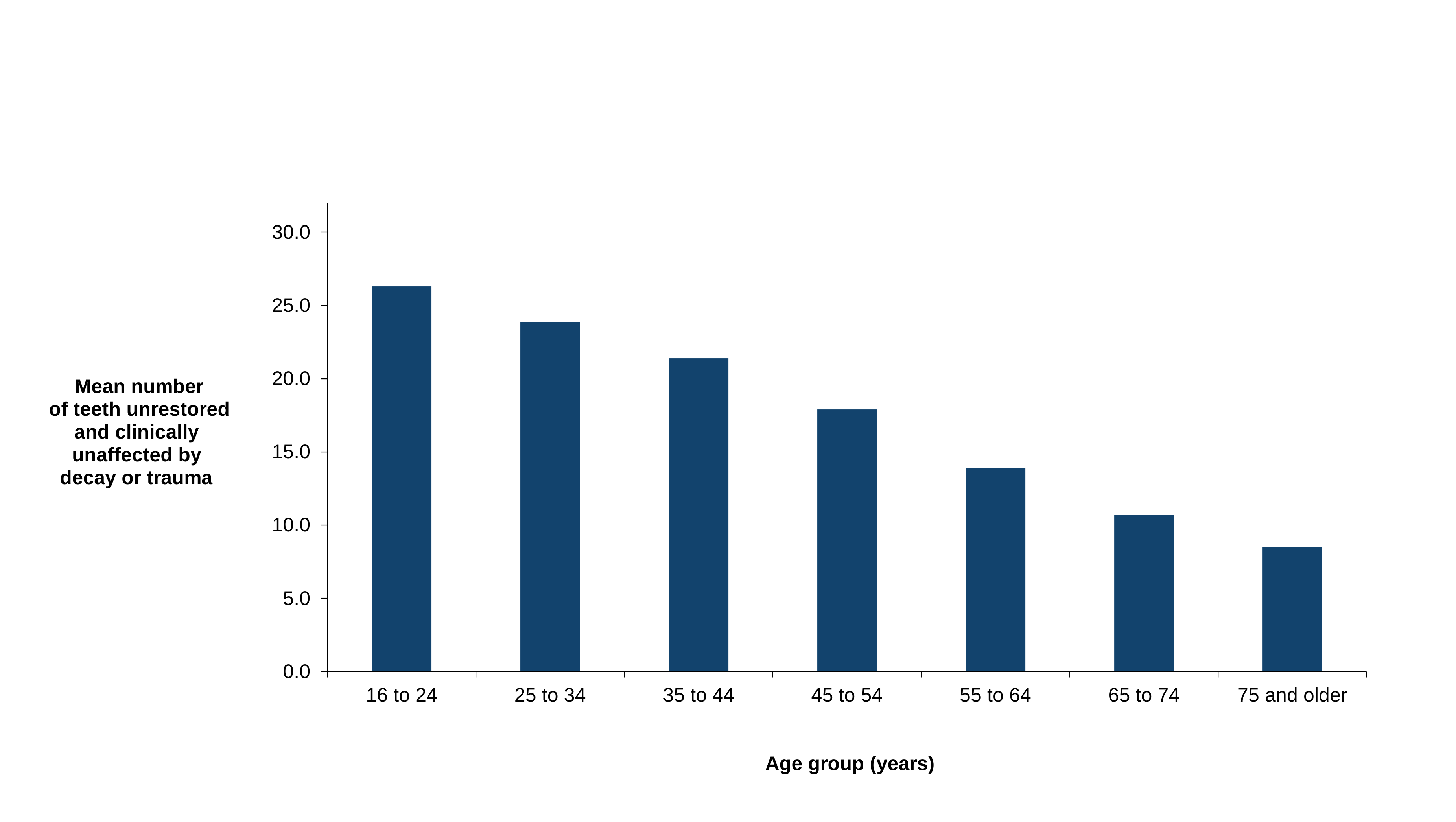
The mean number of teeth with unrestored and clinically unaffected coronal and root surfaces declined markedly by age group from 26.3 teeth for adults aged 16 to 24 to 8.5 teeth for adults aged 75 and older. This decline in the mean number of teeth is illustrated in the bar chart in figure 10 below.
Figure 10: mean number of teeth unrestored and clinically unaffected by decay or trauma (2023 criteria, coronal and root surfaces) by age group
Base: dentate adults (observed).
Source: table 8 in ‘Data tables: clinical oral health’.
Household income
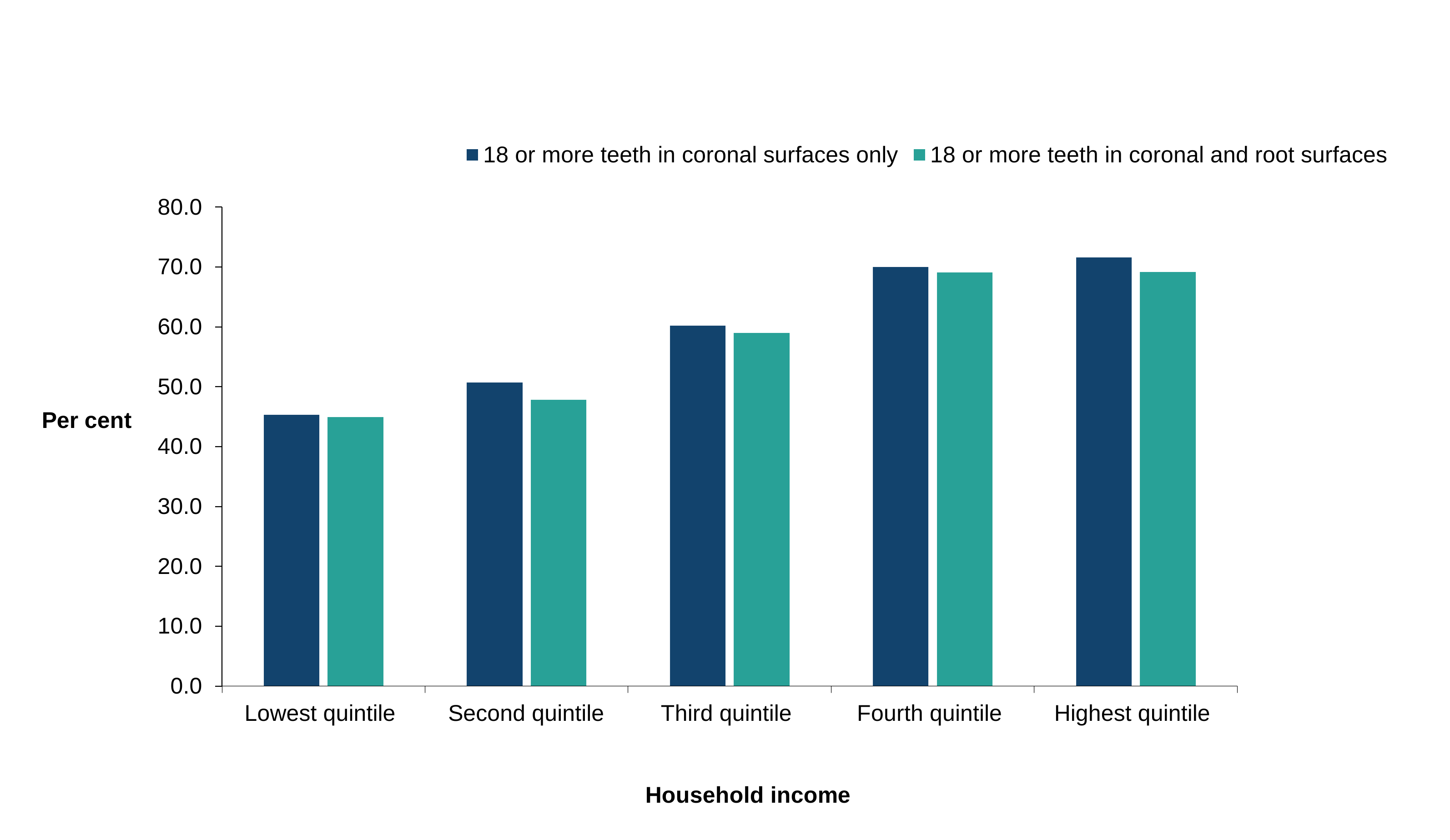
The proportion of adults with 18 or more teeth that were unrestored and clinically unaffected by decay or trauma varied by household income for coronal surfaces only and for coronal and root surfaces. Adults in the lowest household income quintile were less likely to have 18 or more teeth that were unrestored and clinically unaffected by decay or trauma, compared with those in the highest income quintile. For example, when considering both coronal surfaces only and coronal and root surfaces, 45% of adults in the lowest income quintile had 18 or more teeth that were unrestored and clinically unaffected by decay or trauma, compared with 72% (coronal surfaces only) and 69% (tooth level involving both coronal and root surfaces) of those in the highest income quintile.
At tooth level (both coronal and root surfaces), the mean number of teeth that were unrestored and clinically unaffected by decay or trauma was 15.5 in the lowest income quintile increasing to 20.7 in the highest income quintile. These comparisons across the household income quintiles are shown below in the bar charts in figure 11.
Figure 11: percentage of adults with 18 or more teeth unrestored and clinically unaffected by decay or trauma (2023 criteria, coronal and root surfaces) by household income
Base: dentate adults (observed).
Source: table 8 in ‘Data tables: clinical oral health’.
Trends in teeth that are both unrestored and clinically free of disease
Among self-reported dentate adults in England, the mean number of teeth (coronal surfaces only) that were unrestored and clinically unaffected by decay or trauma was 15.6 teeth in 1998, increasing to 18.0 in 2009. Between 2009 and 2023, the mean number of teeth that were unrestored and clinically unaffected by decay or trauma increased at a slower rate, from 18.0 to 19.6 teeth. This increase is illustrated in the bar chart below in figure 12.
Figure 12: mean number of teeth that are unrestored and clinically unaffected by decay or trauma (2009 criteria, coronal surfaces only) England, 1998 to 2023

Base: dentate adults (self-reported).
Source: table 9 in ‘Data tables: clinical oral health’.
Age group
Between 2009 and 2023, the largest increase in the mean number of teeth (coronal surfaces only) that were unrestored and clinically unaffected by decay or trauma was observed among 45 to 54 year olds, from 15.2 to 19.6 (an increase of 4.4 teeth). The smallest increases were observed among 16 to 24 year olds (26.1 to 27.4) and 25 to 34 year olds (24.0 to 25.3). These increases in mean numbers of teeth by age group are shown in the line graph in figure 13 below.
Figure 13: mean number of teeth that are unrestored and clinically unaffected by decay or trauma (2009 criteria, coronal surfaces only) by age group, England, 1998 to 2023

Base: dentate adults (self-reported).
Source: table 9 in ‘Data tables: clinical oral health’.
Prevalence of tooth decay
Tooth decay is a destructive disease of tooth tissue caused by an interaction between dietary sugars and oral bacteria as described in chapter 4 of Delivering better oral health. The disease begins just below the surface of the tooth and, unless arrested or treated, progresses deeper into the tooth tissues. When the surface of the tooth collapses and forms a visible cavity, this is indicative of more advanced disease than decay presenting as visual changes without cavitation.
Decay can occur on both the crowns of the teeth and the roots, the latter particularly in older people where the gums have receded. The way in which the condition presents and progresses is different on crowns than on roots, but the risks for the disease are broadly similar. For example, unlike coronal surfaces, root surfaces do not have an outer layer of enamel and decay on root surfaces can be more difficult to manage and be more likely to result in loss of the tooth.
The conditions in which the oral examination was conducted allowed the dental examiners to establish the number of teeth seen with decay of tooth crowns (coronal decay) and roots. Decay on the surface of a tooth that has not been previously restored is known as primary decay and decay which is on a surface that has previously been restored is known as secondary decay.
Decay affecting all 3 of the main tooth tissues (enamel, dentine and pulp) have been recorded in this survey. Teeth with decay affecting only the enamel of coronal surfaces can be managed preventively and monitored to check that the disease does not progress. Measuring enamel decay both in child and adult surveys gives us the ability to better understand the decay burden at different age groups, in terms of what types of preventive and surgical care is indicated (recommended).
While decay affecting enamel only can often be managed through preventive measures and monitoring, decay affecting the dentine may have to be managed by removing infected tissue and placing a restoration such as a filling, particularly if the decay has formed an open cavity. Decay affecting the deepest of the tissues (the pulp) may require more complex treatment or even extraction. The presence of fillings and some extractions are an indication of past disease.
See the technical report for details of tooth tissues and different types of decay, along with details of the clinical criteria.
How decay has been defined has changed over the course of previous ADHSs in line with contemporary concepts on its diagnosis and management. The measures that have been used to code tooth decay in the present survey are consistent with those used in the 1998 and 2009 surveys, with the additional recording of decay affecting enamel, which is the most sensitive measure of tooth decay. This was successfully introduced in the 2013 Children’s Dental Health Survey. In the 1998 and 2009 ADHSs, decay was recorded only once it had reached the dentine layer. The 1998 survey included dentine decay that, while apparent through changes in the appearance of the dentine, had not formed a cavity. Surveys prior to 1998 recorded decay into dentine only once the tissues had broken down to form a visible cavity. Decay affecting enamel (both cavitated and non-cavitated) were not included in previous adult surveys and surfaces, and such lesions would have been recorded as ‘sound’.
Building on the approach adopted for the 2013 Children’s Dental Health Survey, decay that was observed at the time of the oral examination has been grouped into cumulative categories reflecting different stages of the disease as follows:
- ‘extensive obvious decay’ refers to those who have at least one tooth which had decay affecting pulp or decay affecting dentine which was cavitated. This is how decay was defined and recorded in the 1968, 1978 and 1988 ADHSs
- ‘obvious decay’ incorporates the above category of ‘extensive obvious decay’ and also includes those who have non-cavitated but visible tooth decay affecting dentine who were not already included in the category of ‘extensive obvious decay. This is how decay was defined and recorded in the 1998 and 2009 ADHSs
- ‘cavitated decay’ incorporates the above category of ‘obvious decay’ experience and also includes those who have cavitated decay affecting enamel only who were not already included in the category of ‘obvious decay’
- ‘clinical decay’ incorporates the above category of cavitated decay and also includes those who have non-cavitated visual decay affecting enamel only who were not already included in the category of ‘cavitated decay’. In the 2023 survey, decay was defined and recorded if it met any of the above criteria - extensive obvious, obvious, cavitated and/or clinical
- ‘no current decay detected’ refers to those in whom no tooth decay was detectable under the clinical criteria used in the survey. This does not mean that they were necessarily truly free of dental decay, just that no disease could be seen that met the survey criteria. This category includes people who may show signs of previous disease experience that has already been managed and those who have missing or restored teeth
Figure 14 below illustrates the different cumulative stages of tooth decay as described above, with an explanation of how the tooth decay criteria has evolved across the ADHS and AOHS series.
Figure 14: percentage of adults with tooth decay (coronal surfaces only) in 2023 by the 4 cumulative stages of decay
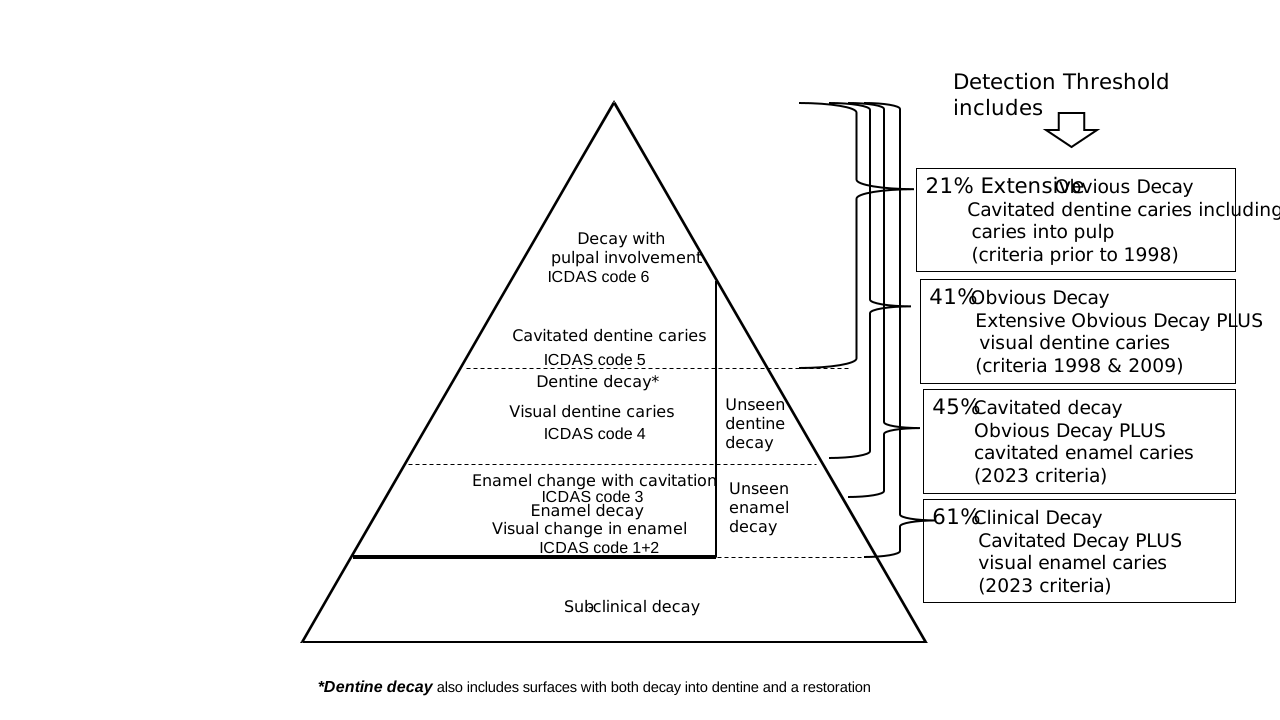
Description of figure 14: a pyramid diagram illustrates the cumulative stages of tooth decay severity among adults in England in 2023, based on coronal surfaces. The pyramid is divided into 4 decay sections and a ‘sub-clinical’ decay section, each representing a cumulative stage of decay. At the top of the pyramid, 21% have ‘extensive obvious decay’ affecting the pulp or dentine (ICDAS codes 5 and 6). The next section (41%) is defined as ‘obvious decay’ which incorporates the criteria from ‘extensive obvious decay’ plus visual dentine caries (ICDAS code 4). The next section down (45%) is defined as ‘cavitated decay’ which includes the criteria from ‘obvious decay’ plus caveated enamel caries (ICDAS code 3). The section below this (61%) is defined as ‘clinical decay’ which includes the criteria from ‘cavitated decay’ plus visual enamel caries (ICDAS codes 1 and 2). The bottom section is defined as ‘sub-clinical decay’. Unseen dentine or enamel decay represents what would be detected in examinations in dental surgery conditions and with the use of radiographs, as opposed to survey conditions in the home.
The diagram visually demonstrates how the prevalence of decay as reported by the survey decreases as severity increases, highlighting that most adults have some form of decay (61%), but fewer have the most severe forms which extend into dentine and pulp.
Cumulative stages of tooth decay
Recognising that tooth decay has different levels of severity (as outlined above) the prevalence of disease in adults was as follows:
- 21% had extensive obvious tooth decay
- 41% had obvious decay
- 45% had cavitated decay
The proportion of adults with any clinical decay was 61%, and in 39% of adults no current decay was detected. These cumulative stages of tooth decay severity are illustrated in the bar chart in figure 15 below.
Figure 15: cumulative stages of tooth decay severity

Base: dentate adults (observed).
Source: table 10 in ‘Data tables: clinical oral health’.
The severity of tooth decay varied by sex, age group, NHS region, household income and area deprivation.
Sex
Men were more likely than women to have extensive obvious tooth decay (25% compared with 17%).
Age group
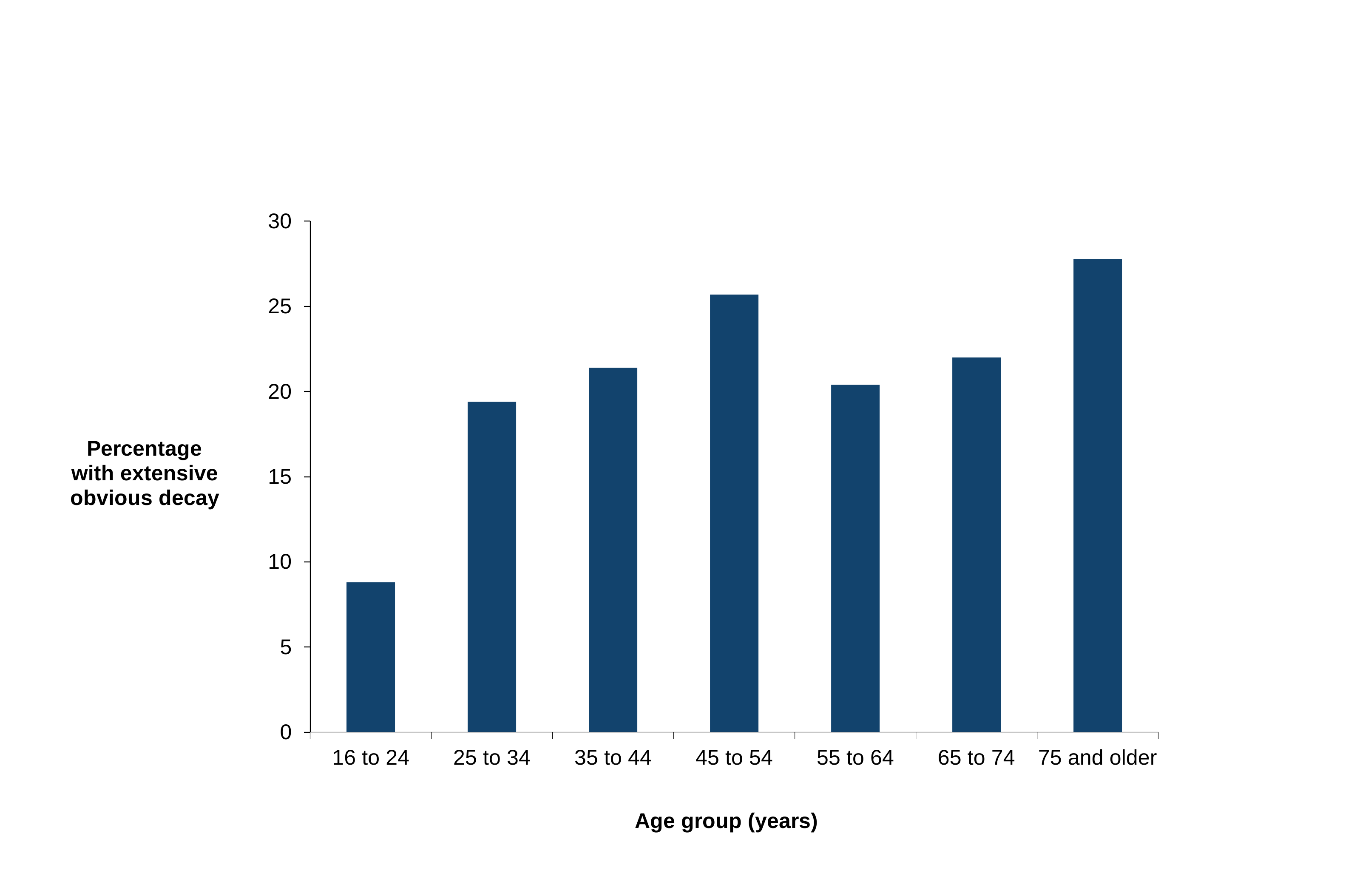
Having extensive obvious tooth decay increased with age. Nine per cent of younger adults aged 16 to 24 had extensive obvious decay. This increased to 21% of 35 to 44 year olds and to 28% of those aged 75 and older. These percentages in extensive obvious tooth decay across the age groups are shown in the bar chart below in figure 16.
Figure 16: percentage with extensive obvious decay by age group
Base: dentate adults (observed).
Source: table 10 in ‘Data tables: clinical oral health’.
NHS region
There was variation in obvious tooth decay and cavitated tooth decay by NHS region. The proportion of adults with obvious tooth decay ranged from 32% in London to 51% in the Midlands. The proportions with cavitated tooth decay ranged from 37% in the South East to 57% in the Midlands.
Household income
The severity of tooth decay varied by household income, with rates of severity lower in higher income households. For example, for adults in the lowest income households:
- 35% had extensive obvious tooth decay
- 57% had obvious decay
- 60% had cavitated decay
For adults in the highest income households:
- 8% had extensive obvious decay
- 29% had obvious decay
- 34% had cavitated decay
These percentages with extensive obvious decay across the household income quintiles are illustrated in the bar chart in figure 17 below.
Figure 17: percentage with extensive obvious decay by household income
Base: dentate adults (observed).
Source: table 10 in ‘Data tables: clinical oral health’.
Area deprivation
The severity of tooth decay varied by area deprivation. For adults living in the most deprived areas:
- 32% had extensive obvious tooth decay
- 54% experienced obvious tooth decay
- 58% had cavitated tooth decay
The equivalent proportions for adults living in the least deprived areas were:
- 15% with extensive obvious decay
- 32% with obvious decay
- 36% with cavitated decay
Prevalence of clinical decay
In the following section the term ‘clinical decay’ refers to those who had any decay recorded under the survey criteria, including decay affecting the enamel, dentine or pulp tissues. As with other indicators of the condition of natural teeth, it is important to also bear in mind that an additional consideration when interpreting this data, particularly for older adults, is that increased numbers of retained teeth may also increase the risk for disease, as there are more teeth to experience the disease. The analysis in this section focuses on disease apparent at the time of the oral examination, not past experience of dental decay in terms of restorations or extractions.
Just under two-thirds of adults had clinical decay present in one or more teeth at the time of oral examination (61% of adults when only tooth-level coronal data was included and 64% of adults when decay into dentine affecting root surfaces was also included). The mean number of teeth affected by clinical decay was 2.5 for coronal only and 2.7 for coronal and root surfaces.
Using the 2009 criteria definition (which excludes decay affecting enamel only) the equivalent estimates were lower: 41% of adults with clinical decay affecting coronal surfaces and a mean of 1.3 teeth affected. This highlights the high prevalence of decay in its earlier stages in adults. Further details on enamel decay are presented later in this chapter.
There were variations by the following socioeconomic categories:
- sex
- age group
- household income
- area deprivation
There were no significant differences by NHS region.
Sex
Considering coronal surfaces only, men were more likely than women to have:
- clinical decay (63% compared with 59%)
- a higher mean number of teeth affected by decay (2.8 compared with 2.2)
Patterns for coronal and root surfaces were similar, with men more likely than women to have:
- clinical decay (67% compared with 61%)
- a higher mean number of teeth affected by decay (3.1 compared with 2.3)
Age group
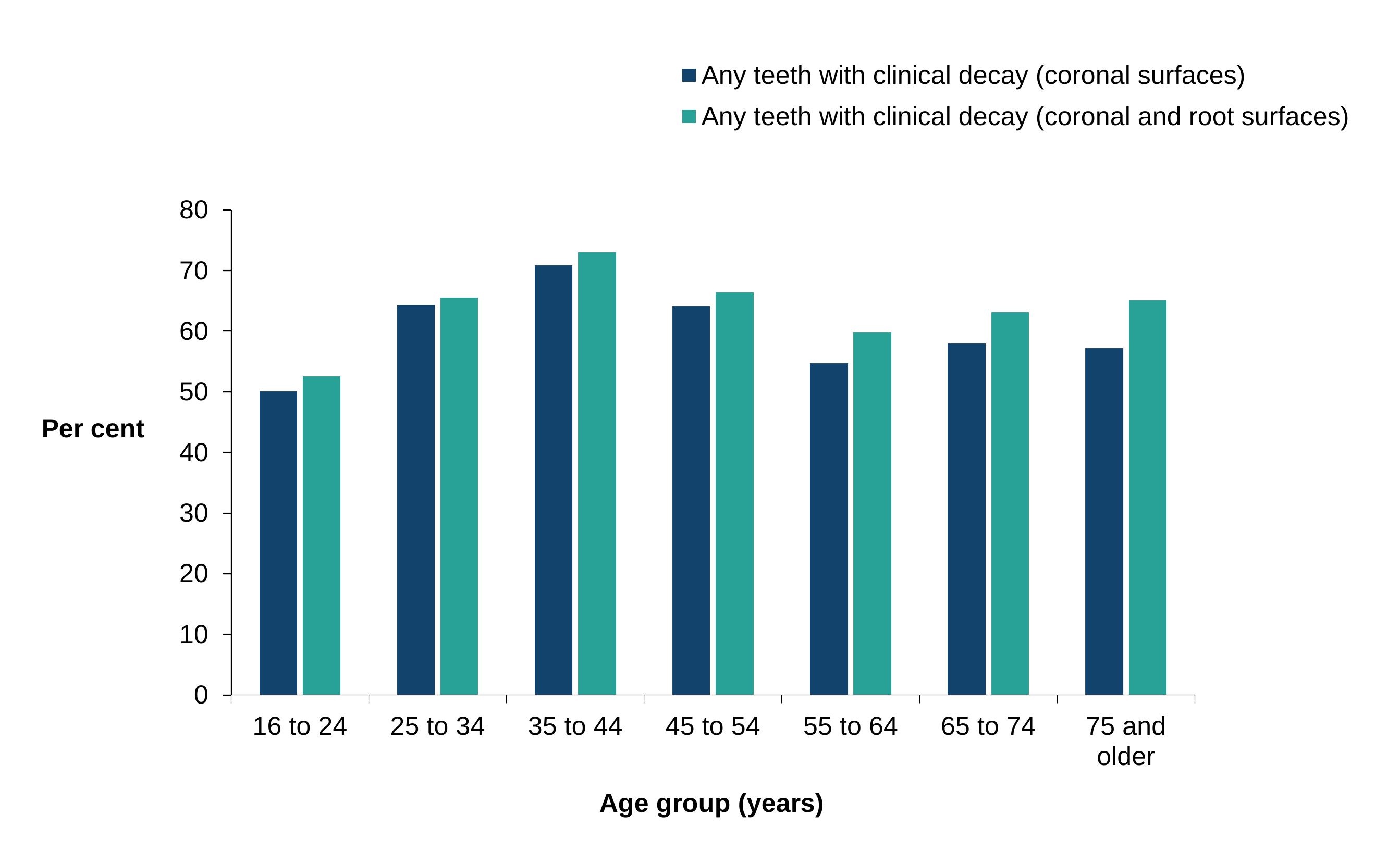
For coronal surfaces only, there was variation in tooth decay by age group, although no clear pattern was evident. Seventy-one per cent of adults aged 35 to 44 had clinical decay compared with 50% of those aged 16 to 24. Adults aged 45 to 54 had a higher mean number of teeth affected (3.1) compared with other age groups (ranging from 1.7 for adults aged 75 and older to 2.9 for adults aged 25 to 44).
Findings were similar across the age groups for coronal and root surfaces with no clear emerging pattern. Seventy-three per cent of adults aged 35 to 44 had clinical decay, with a mean of 3.0 teeth affected. In adults aged 16 to 24, the equivalent estimates were 53% with tooth decay with a mean of 2.0 teeth affected. These clinical decay findings by age group are illustrated in the bar chart in figure 18 below.
Figure 18: prevalence of any teeth with clinical decay (2023 criteria, coronal and roots) by age group
Base: dentate adults (observed).
Source: table 11 in ‘Data tables: clinical oral health’.
Household income
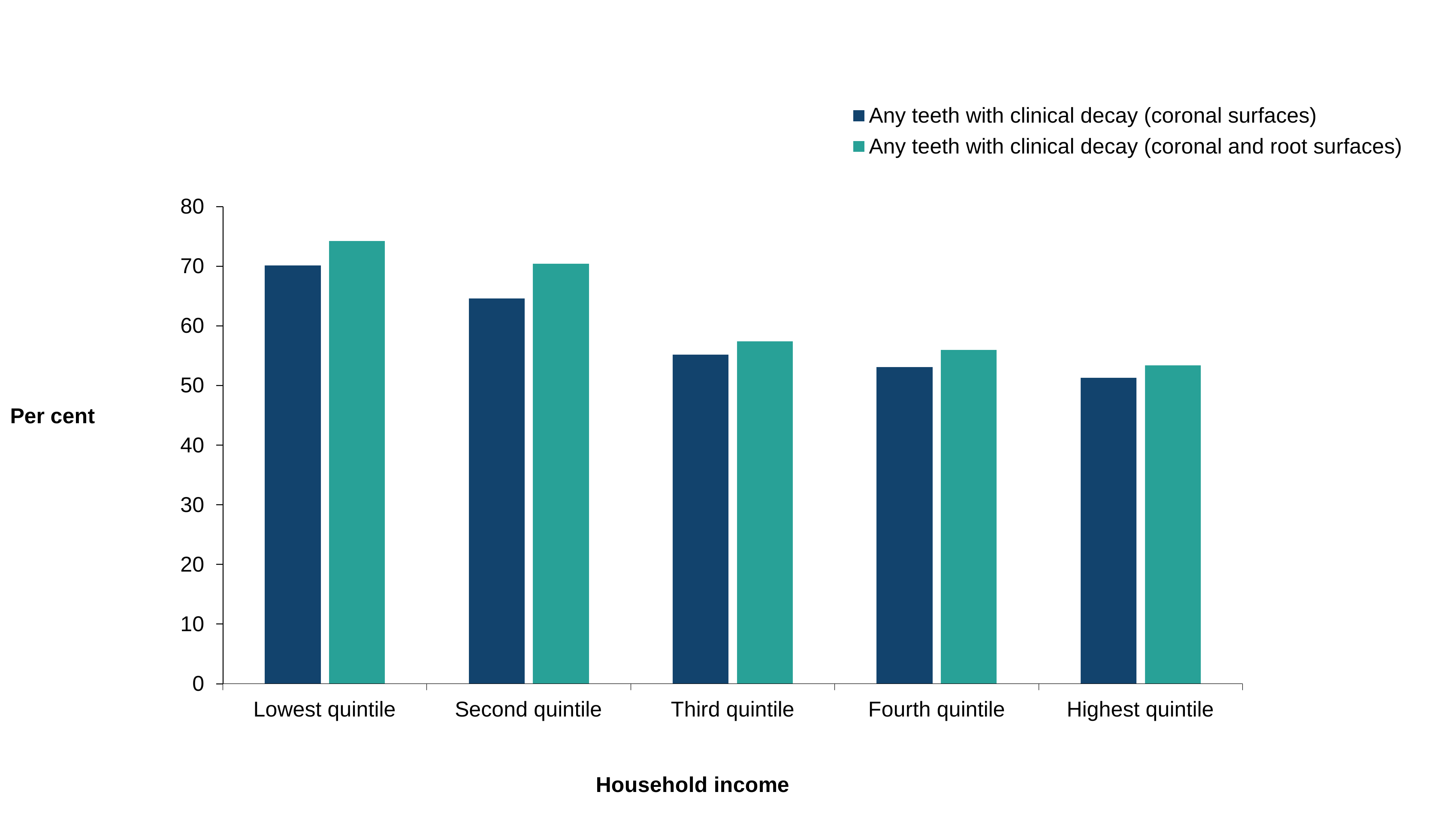
There was variation in clinical decay by household income, with a greater percentage of adults in the lowest household income quintile experiencing decay and with a higher mean number of teeth affected compared with those in the highest household income quintile. However, over half of all participants, regardless of household income, had clinical decay present.
For coronal surfaces only:
- there was a clear relationship whereby 70% of adults in lower income households had clinical decay, compared with 51% in higher income households
- the equivalent mean number of teeth affected was 3.4 and 1.9 respectively
For coronal and root surfaces:
- there was a clear relationship whereby 74% of adults living in lower income households had clinical decay declining to 53% for those in higher income households
- the mean number of teeth affected was 3.7 for the lowest income quintile and 2.1 for the highest income quintile
These clinical decay findings across the household income quintiles are shown in the bar chart below in figure 19.
Figure 19: prevalence of any teeth with clinical decay (2023 criteria, coronal and roots) by household income
Base: dentate adults (observed).
Source: table 11 in ‘Data tables: clinical oral health’.
Area deprivation
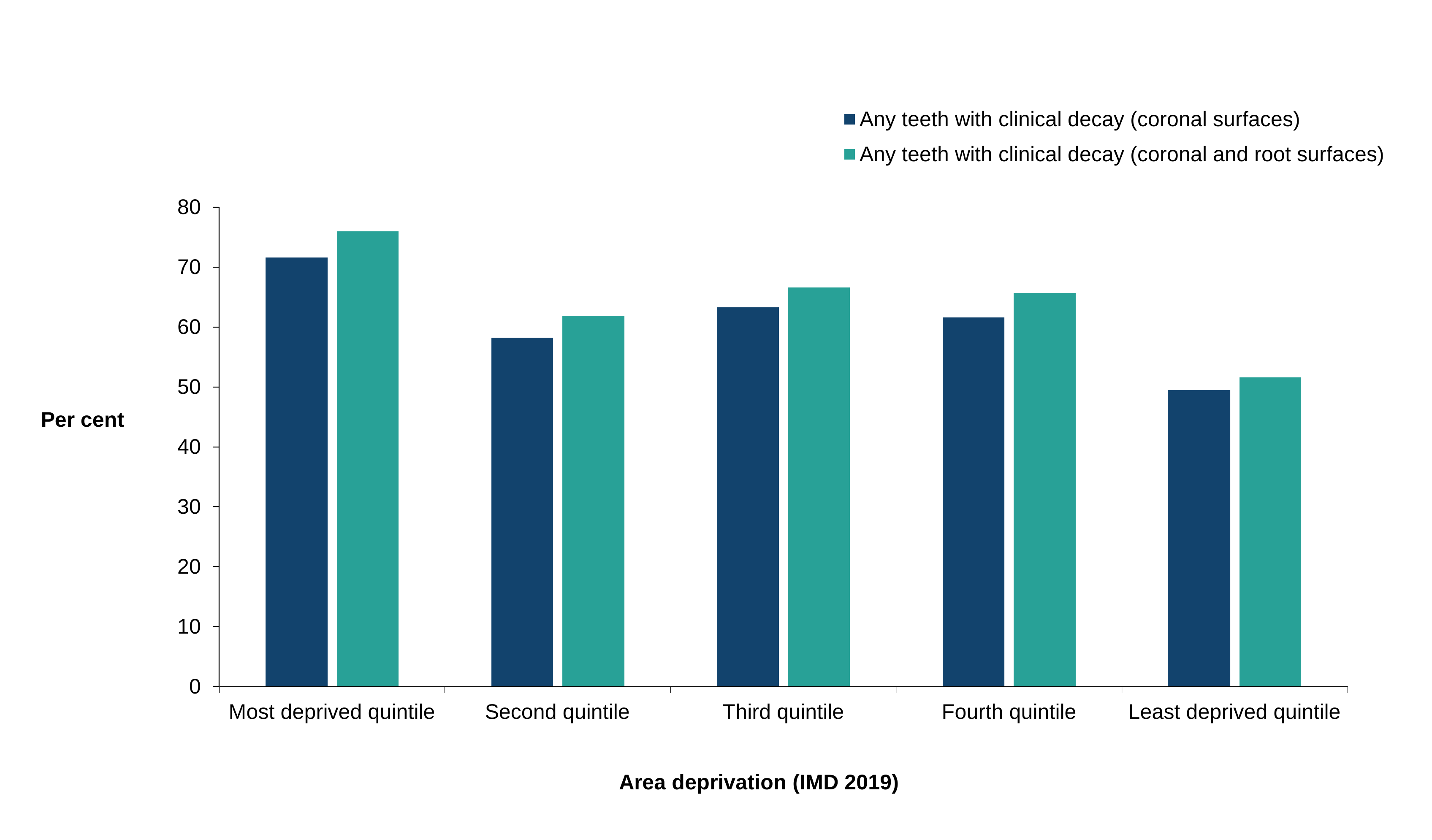
The pattern was similar by area deprivation, with adults in the most deprived areas having higher prevalence of clinical decay and a higher mean number of teeth affected.
For coronal surfaces only:
- 72% of adults living in the most deprived areas had clinical decay, compared with 50% of those living in the least deprived areas
- the equivalent mean number of teeth affected was 3.8 and 1.7 respectively
For coronal and root surfaces:
- 76% of adults living in the most deprived areas had clinical decay, compared with 52% of those living in the least deprived areas
- the mean number of teeth affected was 4.2 and 1.8 respectively
These clinical decay findings across the area deprivation quintiles are illustrated below in the bar chart in figure 20.
Figure 20: prevalence of any teeth with clinical decay (2023 criteria, coronal and roots) by area deprivation
Base: dentate adults (observed).
Source: table 11 in ‘Data tables: clinical oral health’.
Prevalence of decay affecting enamel only
It is also important to analyse the prevalence of decay that affects enamel only and not deeper tooth tissues, since this represents the earliest stage of the disease and a particular opportunity for disease to be arrested (stopped) through modification of risk factors. This includes both cavitated and visual enamel decay, which crosses categories in the earlier groupings. As roots do not have any enamel tissue, this data represents tooth level prevalence of enamel decay.
Around 1 in 5 dentate adults (20%) had coronal surfaces with decay affecting enamel only and no decay affecting dentine or pulp.
Having enamel decay only varied by age group. There were no significant differences by sex, NHS region, income or area deprivation.
Age group
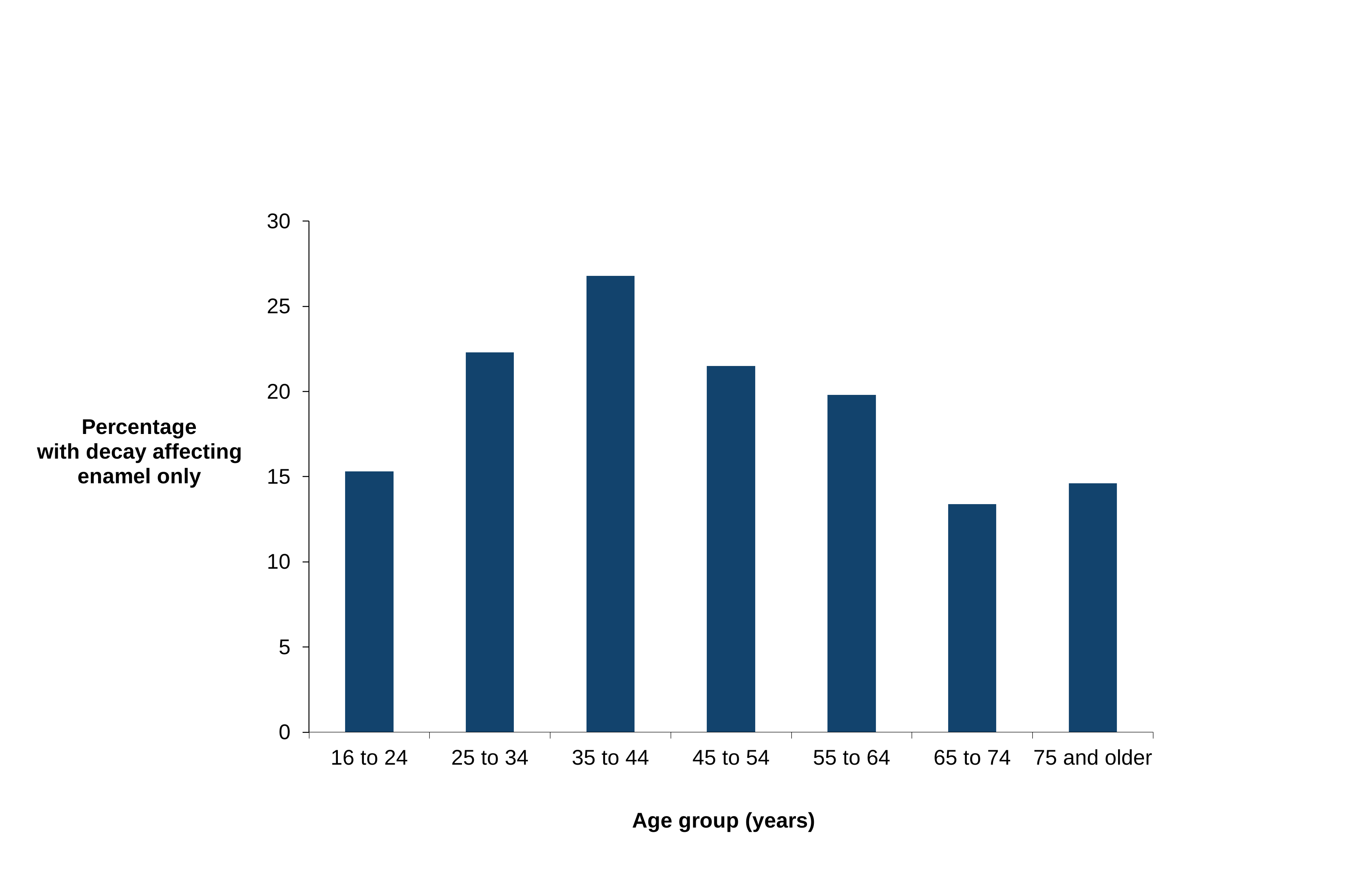
Prevalence of enamel decay only varied by age group, with the highest proportions being found in the middle age groups. Twenty-seven per cent of adults aged 35 to 44 had decay affecting enamel only, in comparison to 15% of those aged 16 to 24 and those aged 75 and older. These enamel decay findings by age group are shown in the bar chart in figure 21 below.
Figure 21: prevalence of any teeth with decay affecting enamel only (coronal surfaces only) by age group
Base: dentate adults (observed).
Source: table 12 in ‘Data tables: clinical oral health’.
Trends in tooth decay
Trends in percentage with obvious decay
Obvious decay includes teeth that have non-cavitated but visible tooth decay affecting the dentine layer. It also includes teeth that have decay affecting pulp or decay affecting dentine which was cavitated. This is how decay was defined and recorded in the 1998 and 2009 ADHSs. The 2023 clinical criteria for decay also included cavitated and visual decay affecting enamel only. Therefore, to enable comparison to previous ADHSs, decay affecting enamel only results have not been included here and decay estimates for 2023 have been calculated according to the criteria from previous survey years.
Tooth decay most commonly affects the enamel-covered crown of the tooth, which is referred to as the coronal surfaces. The data presented in this section is based on decay recorded on the coronal surfaces only. Decay on the surface of a tooth that has not been previously restored is known as primary decay. Decay which is on a surface that has previously been restored is known as secondary decay.
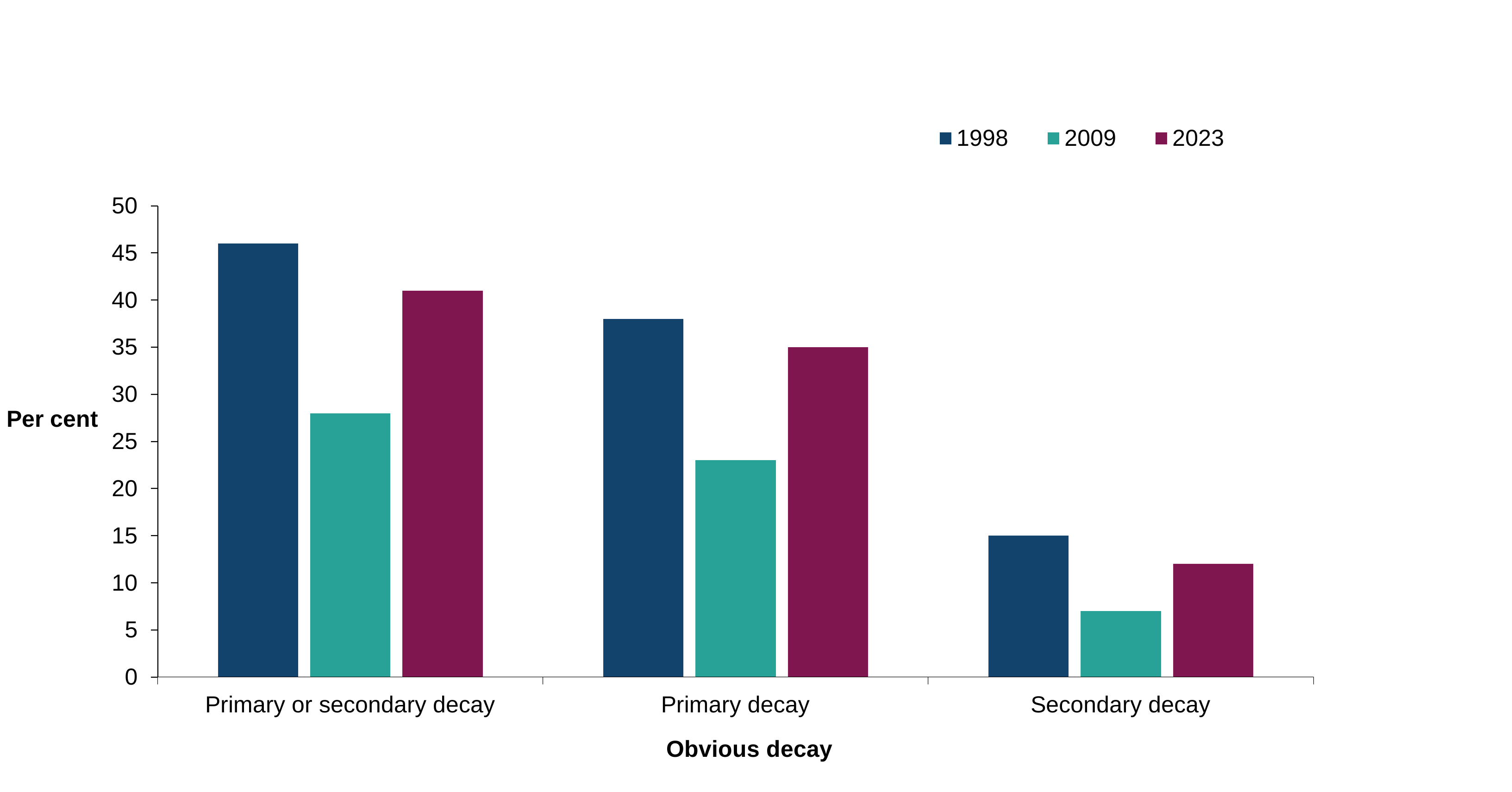
Among dentate adults, the prevalence of having a combination of obvious primary and secondary coronal decay was 46% in 1998. In 2009, the prevalence was 28% and this increased in 2023 to 41%, an increase of 13 percentage points.
There was an increase in the prevalence of obvious primary coronal decay between 2009 and 2023, from 23% to 35% (an increase of 12 percentage points), reaching similar levels to those observed in 1998 (38%).
Likewise, the prevalence of obvious secondary coronal decay increased between 2009 and 2023 by 5 percentage points from 7% to 12%, a similar proportion to that observed in 1998 (15%). These trends in obvious coronal decay across the 3 survey years are illustrated in the bar chart in figure 22 below.
Figure 22: percentage of adults with obvious decay (coronal surfaces only) England, 1998 to 2023
Base: dentate adults (self-reported).
Source: table 13 in ‘Data tables: clinical oral health’.
Age group
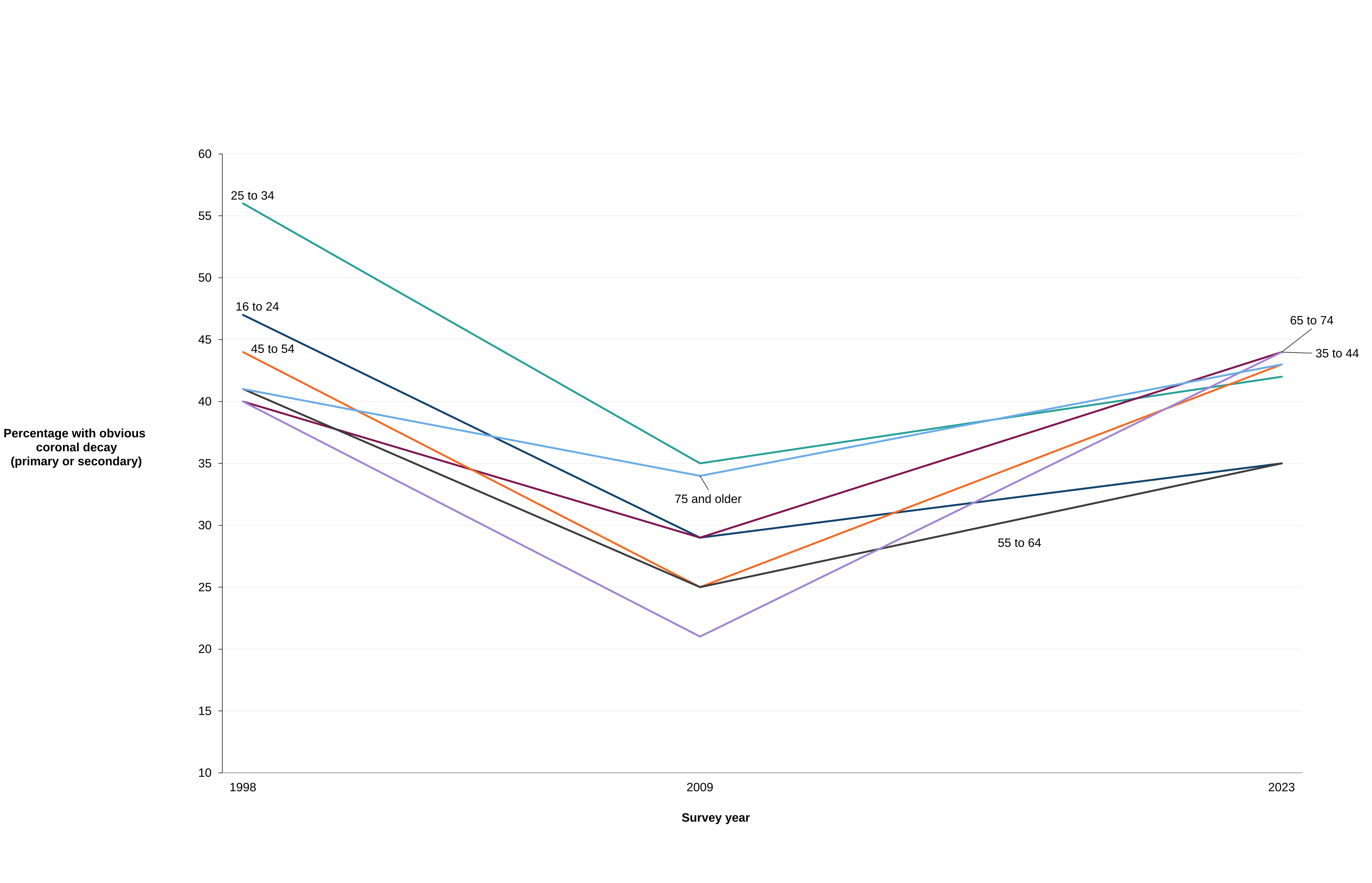
Increases in the prevalence of all obvious coronal decay (primary and secondary combined) were observed across all age groups between 2009 and 2023.
Between 2009 and 2023, the most notable increase in the prevalence of primary and secondary coronal decay was among those aged:
- 65 to 74 (from 21% in 2009 to 44% in 2023, an increase of 23 percentage points)
- 45 to 54 (from 25% in 2009 to 43% in 2023, an increase of 18 percentage points)
Smaller increases were observed in the youngest age group, from 29% in 2009, to 35% in 2023, an increase of 6 percentage points. These increases in obvious decay by age group across the 3 survey years are illustrated in the line graph below in figure 23.
Figure 23: percentage of adults with obvious decay (coronal surfaces only, primary or secondary decay) by age group, England, 1998 to 2023
Base: dentate adults (self-reported).
Source: table 13 in ‘Data tables: clinical oral health’.
Trends in mean number of teeth with obvious decay on crowns or roots
The data presented in this section includes teeth that have decay affecting the coronal surfaces and/or decay affecting the root surface of the tooth. The root surface of the tooth is not covered by enamel and is normally masked by the supporting bone and soft tissues of the jaw. Where the root surface becomes uncovered, for example due to periodontal (gum) disease, there is the potential for tooth decay to affect that surface also. The data in this section also includes root surfaces due to availability of data in the 2009 ADHS report. There is no published trend table that enables comparison with earlier ADHSs.
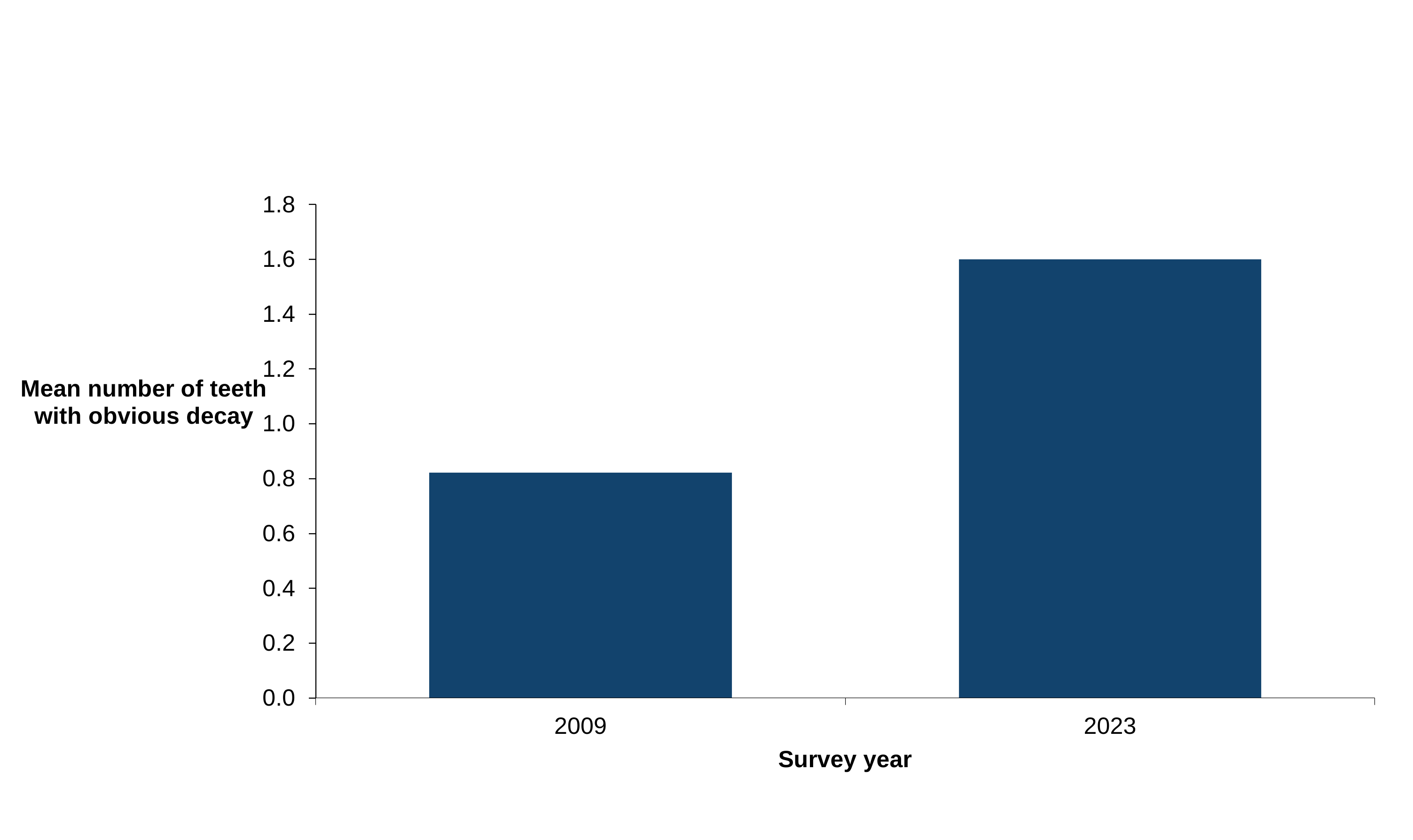
In dentate adults, the mean number of teeth with obvious decay (considering both coronal and root surfaces) increased from 0.8 in 2009 to 1.6 in 2023. This is shown in the bar chart below in figure 24.
Figure 24: mean number of teeth with obvious decay (coronal and root surfaces) in England, 2009 to 2023
Base: dentate adults (self-reported).
Source: table 14 in ‘Data tables: clinical oral health’.
Age group
Between 2009 and 2023, the mean number of teeth with obvious decay increased across all age groups (except for those aged 16 to 24). However, this increase did not differ significantly between age groups.
Presence of root decay and exposed root surfaces
Tooth decay most commonly affects the enamel-covered crown of the tooth, which is referred to as the coronal surfaces. The root surface of the tooth is not covered by enamel and is normally masked by the supporting bone and soft tissues of the jaw. When the root surface becomes uncovered, for example due to periodontal (gum) disease, there is the potential for tooth decay to affect that surface also. This section presents estimates for roots that already have been affected by decay and roots that are exposed and so potentially vulnerable to decay. See the technical report for details of the different tooth tissues and the clinical criteria.
Overall, 69% of adults had one or more exposed and potentially vulnerable root surfaces. The mean number of teeth with exposed root surfaces was 6.5. Although it is useful to look at the mean number of teeth affected overall in the general population, it is also important to understand the burden of risk and disease in those who have exposed root surfaces. Among adults who had exposed roots, the mean number of teeth affected was 9.3 (2.8 more teeth than in adults overall).
The proportion of all adults with roots affected by decay was 14%, with a mean of 0.5 teeth affected. Among adults with decayed roots, the mean number of roots affected by decay was 3.2.
Sex
Men were more likely than women to have roots affected by decay (18% compared with 11%). Likewise, the mean number of roots with decay was 0.7 in men and 0.3 in women. In adults with decayed roots, the mean number of roots affected by decay was 3.7 for men and 2.5 for women.
Age group
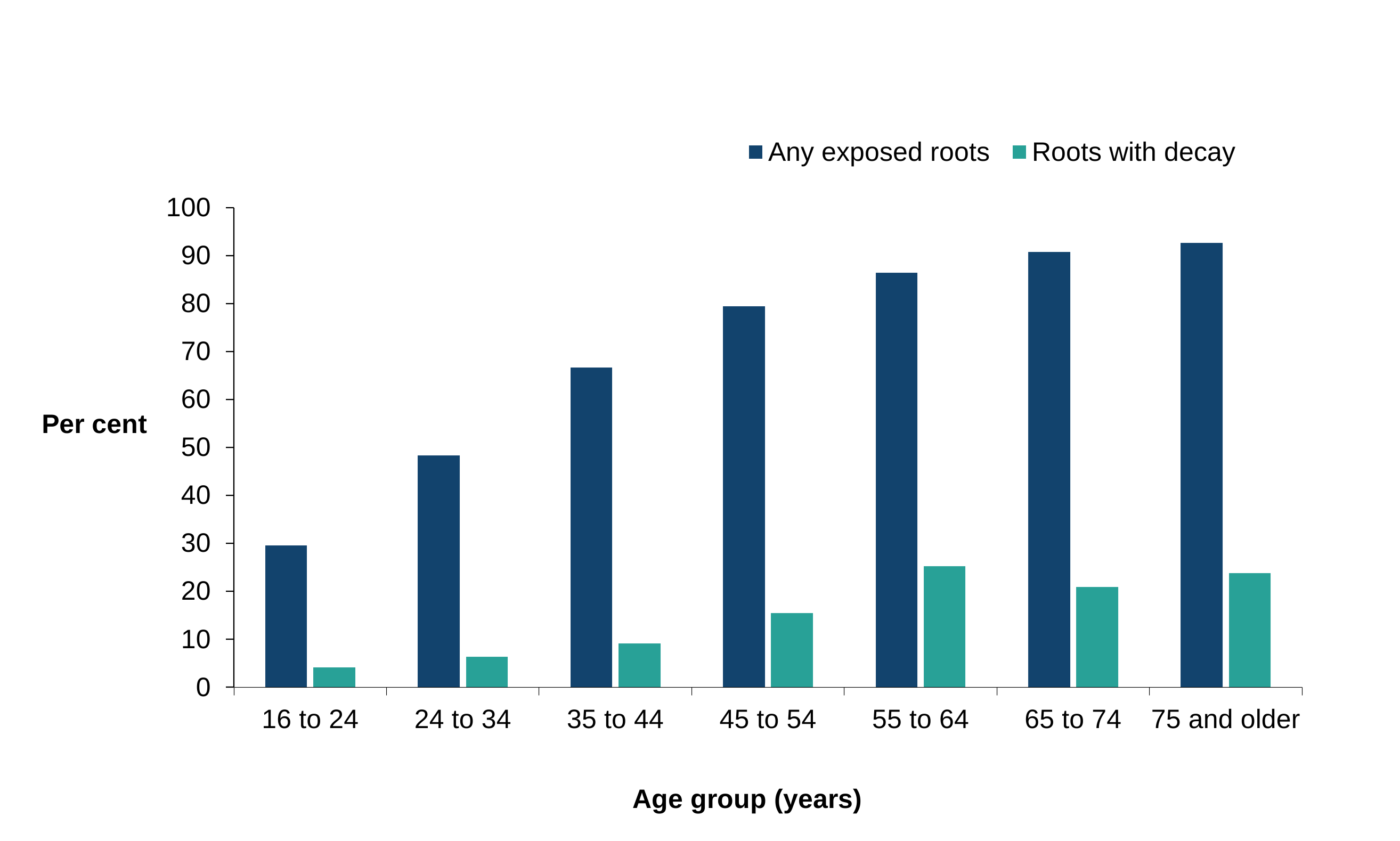
The proportion of adults with any exposed root surfaces increased with age. For adults aged 75 and older:
- 93% had exposed root surfaces, compared with 30% of adults aged 16 to 24
- there was a higher mean number of teeth with exposed roots (8.9 compared with 2.7 of those aged 16 to 24)
As expected, adults affected by root decay increased with age, with 4% of adults aged 16 to 24 having affected roots, compared with 15% of adults aged 45 to 54 and 25% of adults aged 55 to 64. The mean number of teeth affected ranged from 0.1 in those aged 16 to 24 to 0.9 in those aged 45 to 54. Among those with root decay, the equivalent estimates were 1.4 and 6.0 roots with obvious decay. These findings for exposed root surfaces and root decay across the age groups are shown in the bar chart below in figure 25.
Figure 25: percentage with exposed root surfaces and root decay by age group
Base: dentate adults (observed).
Source: table 15 in ‘Data tables: clinical oral health’.
NHS region
Differences were observed across regions. The prevalence of any exposed root surfaces ranged from 62% in the North East and Yorkshire to 87% in the North West. The mean number of teeth with exposed roots ranged from 4.3 in London to 8.9 in the South West. Among those with exposed roots, the mean number of roots affected ranged from 7.5 in London to 11.8 in the East of England.
A higher proportion of adults living in the South West and the North West had roots affected by decay (22% and 19% respectively) in comparison with adults living in London and the East of England (9% in both).
Household income
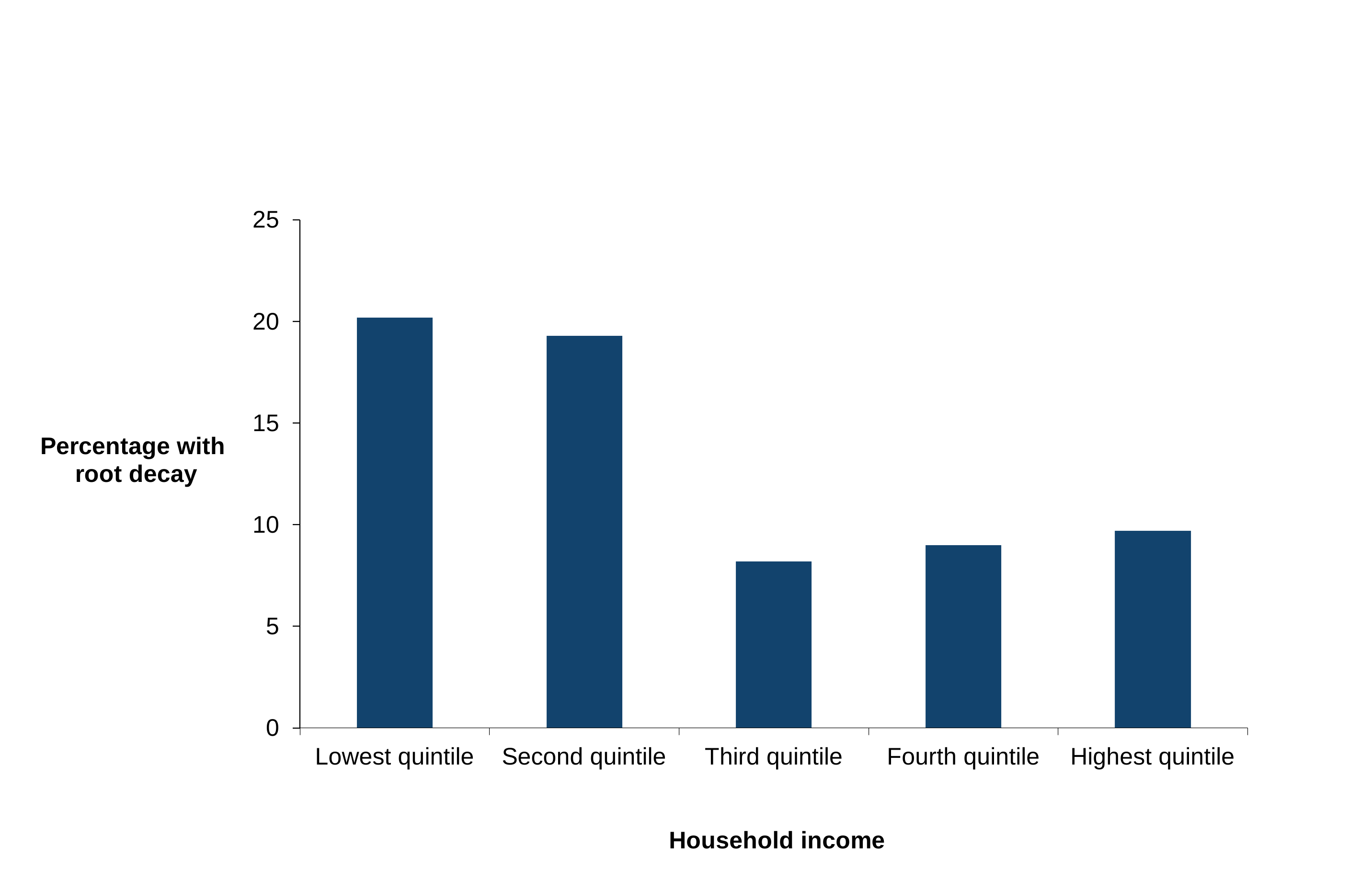
Adults living in the lowest income households were twice as likely to have roots with decay compared with those in the highest income households (20% and 10% respectively). This root decay by household income quintile is illustrated in the bar chart in figure 26 below.
Figure 26: percentage with root decay by household income
Base: dentate adults (observed).
Source: table 15 in ‘Data tables: clinical oral health’.
The mean number of roots with decay ranged from 0.6 in the lowest quintile to 0.5 in the highest quintile.
Area deprivation
There was some variation by area deprivation in the prevalence of roots affected by decay but with no clear pattern.
Prevalence of tooth restorations
While many teeth are restored to repair the damage caused by tooth decay, restorations may have been placed for other reasons such as tooth wear and trauma or aesthetics. Tooth restorations are prone to failure over time and successive restorations may need to be larger or more complex to manage the changed condition of the tooth. Restored teeth are, therefore, both an indicator of past disease experience, predominantly tooth decay, and an indicator of future treatment need and increased complexity of care. Teeth are regarded as restored if they have any type of the following:
- filling
- inlay
- veneer
- shim
- crown
See the technical report for full details of the survey criteria, as well as a glossary of clinical terms.
Overall, adults had a mean of:
- 4.6 restored teeth for coronal surfaces
- 0.2 restored teeth for root surfaces
- 4.7 restored teeth with either coronal or root surfaces restored, or both
There were variations in the prevalence and mean number of restorations by the following characteristics:
- sex
- age group
- NHS region
- household income
- area deprivation
Sex
Women had a higher mean number of restored teeth than men (5.0 compared with 4.2). The mean number of teeth with either coronal and/or root surfaces restored was also higher in women than men (5.1 compared with 4.3).
Age group
Considering coronal surfaces only, adults in the age groups of 65 to 74 and 75 and older had the highest mean number of restored teeth (8.7 and 7.9 respectively). For root surfaces, the mean number of restored teeth was higher again in the older age groups (0.5 for adults aged 65 and older compared with 0.1 for adults aged 16 to 24). Older adults also had a higher mean number of teeth with either coronal or root surfaces restored (0.7 in adults aged 16 to 24 compared with 8.9 in adults aged 65 to 74).
NHS region
The mean number of restorations also varied by NHS region, for:
- coronal surfaces: the mean number of restorations ranged from 3.2 in the Midlands to 5.7 restorations in the South West
- coronal and/or root surfaces restored: the mean number of teeth ranged from 3.3 in the Midlands to 5.8 in the South West
Area deprivation
Adults living in the most deprived areas had a smaller mean number of teeth restored than those living in the least deprived areas, for:
- coronal surfaces: the mean number of restored teeth was 3.3 and 5.4 respectively
- root surfaces: the mean number of restored teeth was 0.1 and 0.2 respectively
- either coronal and/or root surfaces restored: the mean number of restored teeth were 3.3 and 5.5 respectively
Types of tooth restoration
Most restorations are fabricated in the mouth by the dental team and there are several materials that may be used including dental amalgam, composite resins and glass ionomer cements (a glass ionomer is a restorative material that chemically bonds to a tooth structure). The latter 2 groups of materials are usually tooth-coloured and it can be difficult to distinguish between them, particularly as advances in dental materials have blurred the distinction between them, therefore directly placed restorations in this survey were classified into amalgam or tooth-coloured categories. Where both an amalgam and a tooth-coloured restoration were present on the same surface, the amalgam restoration was recorded.
Some restorations, particularly larger restorations and those designed to change the shape and appearance of teeth are fabricated outside of the mouth and cemented in place. Common examples include crowns and veneers. Crowns, veneers and shims, are presented separately. All other such restorations, for example gold or ceramic inlays, are referred to as indirect restorations.
See the technical report for full details of the survey criteria and a glossary of terms.
It is important to bear in mind that people may well have more than one type of restoration in their mouths and so the percentages will add up to more than 100%. Furthermore, surfaces that were restored with both amalgam and composite were recorded under amalgam, so there will be a likely small degree of underreporting of single surface tooth-coloured restorations that occupied the same surface as an amalgam restoration.
Considering both coronal and root surfaces, 60% of all adults had an amalgam restoration, 60% had a tooth-coloured restoration and 7% had an indirect restoration. For restorations involving coronal surfaces, 27% of adults had a tooth restored with a crown (a mean of 0.8 teeth) and 3% with a veneer or shim (a mean of 0.1 teeth). The bar chart in figure 27 below shows these breakdowns of tooth restoration types.
Figure 27: prevalence of types of tooth restoration

Base: dentate adults (observed).
Source: table 16 in ‘Data tables: clinical oral health’.
There were variations in the types of restoration by the following characteristics:
- age group
- NHS region
- household income
- area deprivation
Type of restoration did not vary by sex.
Age group
As expected, older adults were more likely to have any type of tooth restoration. For adults aged 65 to 74 and those aged 75 and older:
- 90% and 86% respectively had an amalgam restoration, compared with 21% of adults aged 16 to 24
- 80% and 79% had tooth-coloured restorations, compared with 27% of adults aged 16 to 24
- 13% had an indirect restoration, compared with 6% of adults aged 35 to 44
Fifty-eight per cent of adults aged over 65 had a tooth restored with a crown (coronal surfaces only), a mean of 1.9 teeth for adults aged 65 to 74 and 2.3 teeth for adults aged 75 and older. A smaller proportion of adults aged 25 to 34 had a restoration with a crown (6%, with an average of 0.1 teeth).
Six per cent of adults aged 55 to 64 and 65 to 74 had a tooth restored by a veneer or shim, compared with 3% in other age groups.
NHS region
There were some variations by NHS region in the types of tooth restorations:
- 53% of adults in London had an amalgam restoration, compared with 69% of adults in the South West
- 49% of adults living in the Midlands had a tooth-coloured restoration, compared with 71% in the South West
- 20% of adults in the North West and the Midlands had a tooth restored with a crown (coronal surfaces only), compared with 35% of adults in London
Household income
There were differences in the types of restorations by household income although there was no clear relationship across the income quintiles:
- 57% of adults in the lowest household income quintile had amalgam restorations compared with 54% in the highest income quintile
- a lower proportion of adults living in the lowest income households (62%) had tooth-coloured restorations, compared with those in the highest income quintile (66%)
- restorations involving veneers and shims were more common among those in high income households compared with those in lower income households (6% and 1% respectively)
Area deprivation
Adults living in the most deprived areas were less likely than those living in the least deprived areas to have had:
- an amalgam restoration (57% and 62% respectively)
- a tooth-coloured restoration (51% and 71% respectively)
- teeth restored with a crown (17% and 35% respectively)
Trends in restorations
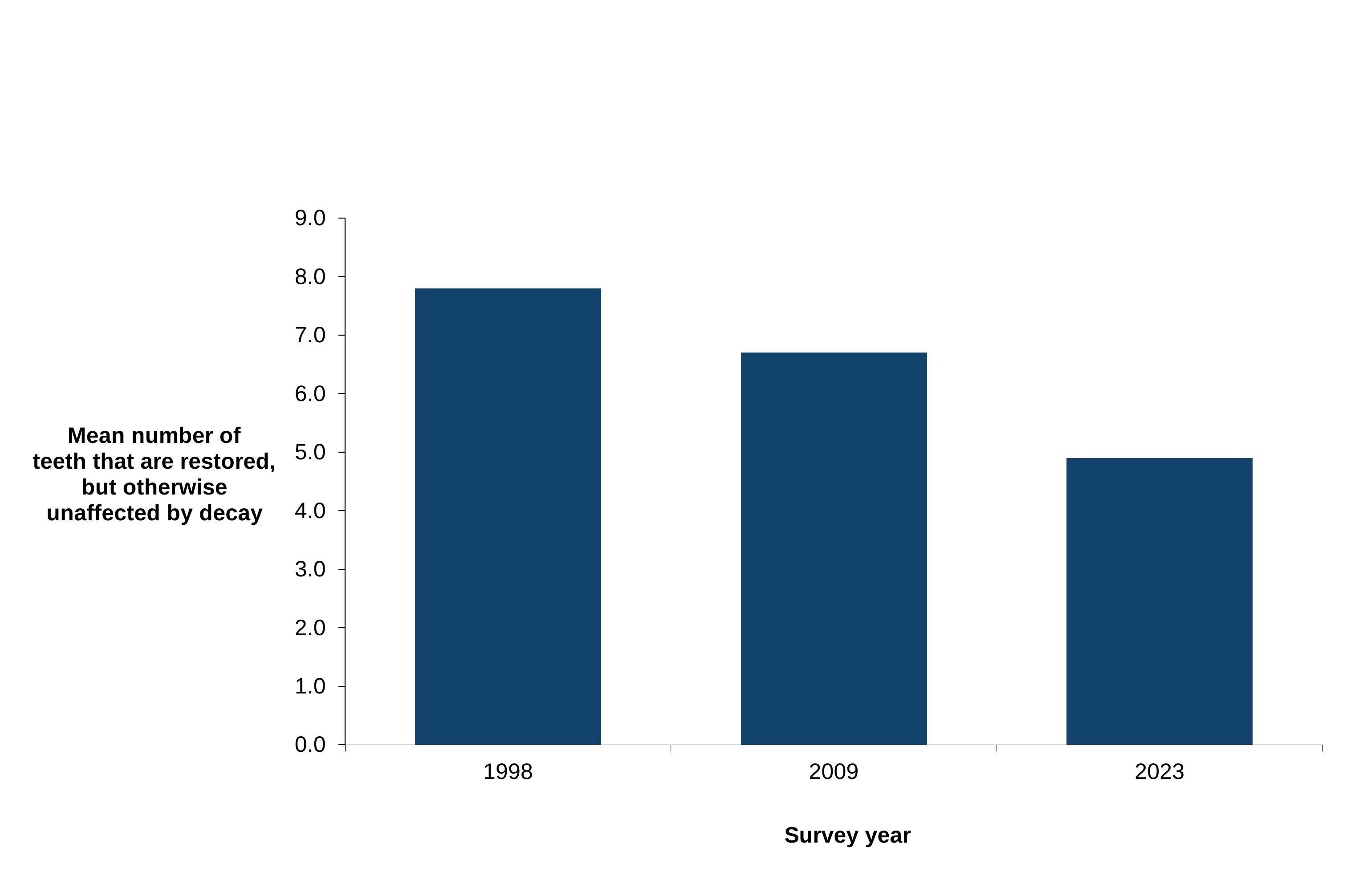
The mean number of teeth restored but otherwise unaffected by decay was 7.8 in 1998, 6.7 in 2009 and 4.9 in 2023. The mean number of restored teeth appears to have significantly declined between 2009 and 2023, while disease levels have increased. The bar chart in figure 28 below illustrates this decline in the mean number of restored teeth.
Figure 28: mean number of teeth that are restored, but otherwise unaffected by decay in England, 1998 to 2023
Base: dentate adults (self-reported).
Source: table 17 in ‘Data tables: clinical oral health’.
Age group
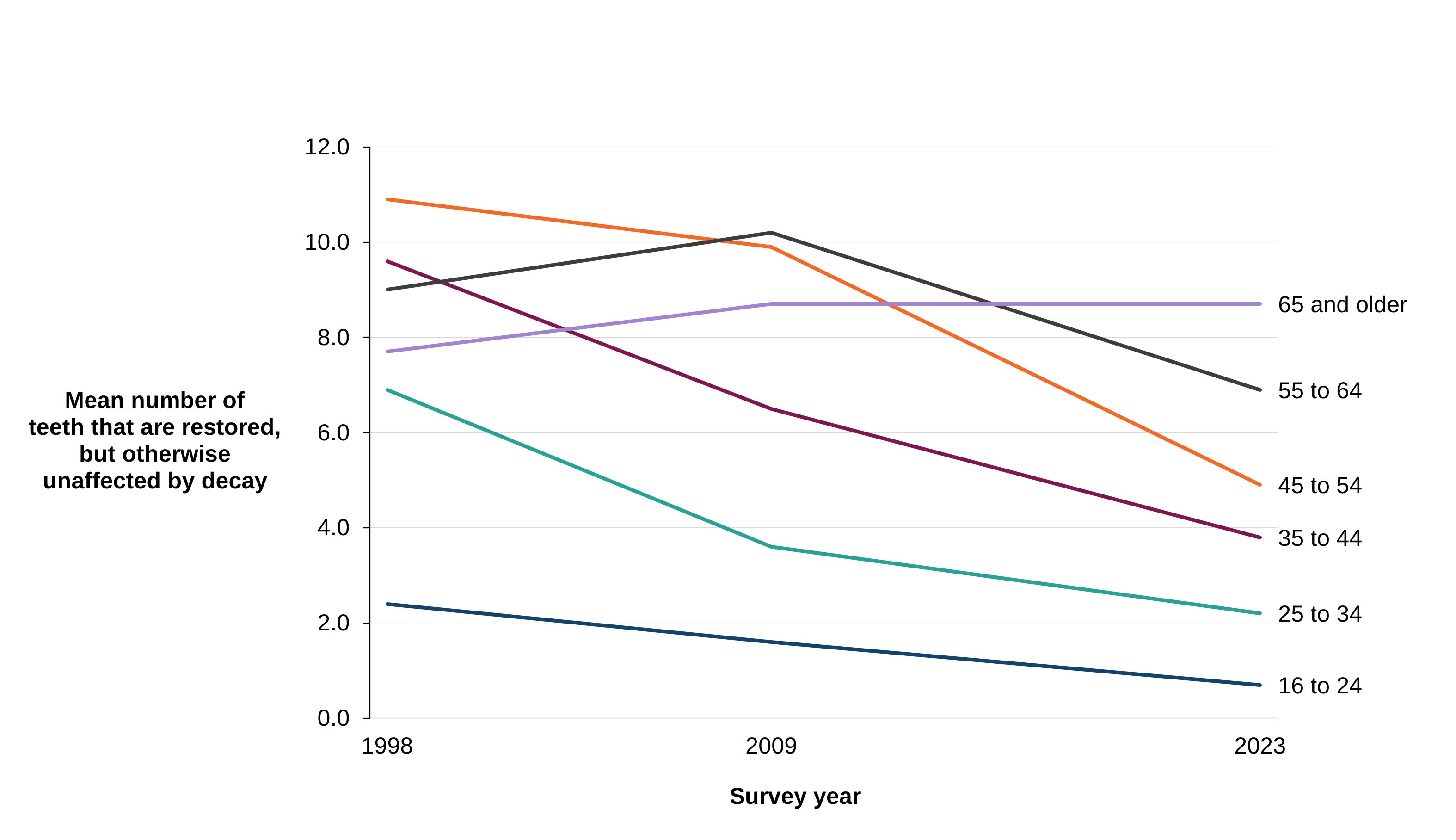
In 2023, most age groups saw a reduction in the mean number of restored teeth by almost half of what was observed in 2009. For example, the mean number of restored teeth in 45 to 54 year olds was 9.9 in 2009 and this reduced to 4.9 in 2023. This was a similar proportion to 16 to 24 year olds, where the mean number fell from 1.6 to 0.7 teeth. However, there was no change among those aged 65 and older (8.7 restored teeth in both 2009 and 2023). These trends in the mean number of restored teeth by age group for the 3 survey years is illustrated in the line graph in figure 29 below.
Figure 29: mean number of teeth that are restored, but otherwise unaffected by decay, by age group in England, 1998 to 2023
Base: dentate adults (self-reported).
Source: table 17 in ‘Data tables: clinical oral health’.
Dentures, bridges and implants
While it is possible to lose some teeth without significant impact on function, when greater numbers are missing this may affect the ability to chew or speak. In addition, some individual teeth, such as those towards the front of the mouth, may be noticeable when missing and affect confidence and social function. In such situations it is often necessary to replace missing teeth in some way. The commonest options for doing so are removable dentures, bridges fixed to remaining natural teeth or implants placed into the underlying bones of the jaws. Just as for restorations, having missing teeth replaced by dentures, bridges or implants is an indicator both of past disease experience and of a need for complex care in the future when they need replacement or repair.
Prevalence of dentures
During the interview, participants were asked whether or not they had a denture. If so, they were able to report whether they had a denture replacing one or more teeth in their upper jaw, lower jaw or if they had one but didn’t wear it. During the oral examination, examiners recorded whether there was a denture present in the mouth. For dentures present during the oral examination they recorded where the denture was as well as the type, material and status of the denture.
Among all adults interviewed, almost 1 in 8 (13%) reported that they wore dentures, comprising 11% who reported having both natural teeth and dentures and 2% who reported having dentures only. Eight per cent of dentate adults were observed to have a denture during the oral examination, the commonest observation being a partial denture in one arch only (6% of dentate adults). Some people who regard themselves as using dentures may only wear them at mealtimes or when out of their home. Therefore, some who reported themselves as wearing dentures were found not to have them in their mouths when examined.
Among the 8% of dentate adults who had a denture at the time of the oral examination:
- 15% had a metal-based partial denture
- 66% had a plastic partial denture
- 19% had a plastic complete denture
Wearing a denture varied by age group, household income and area deprivation. There were no significant differences by sex or NHS region.
Age group
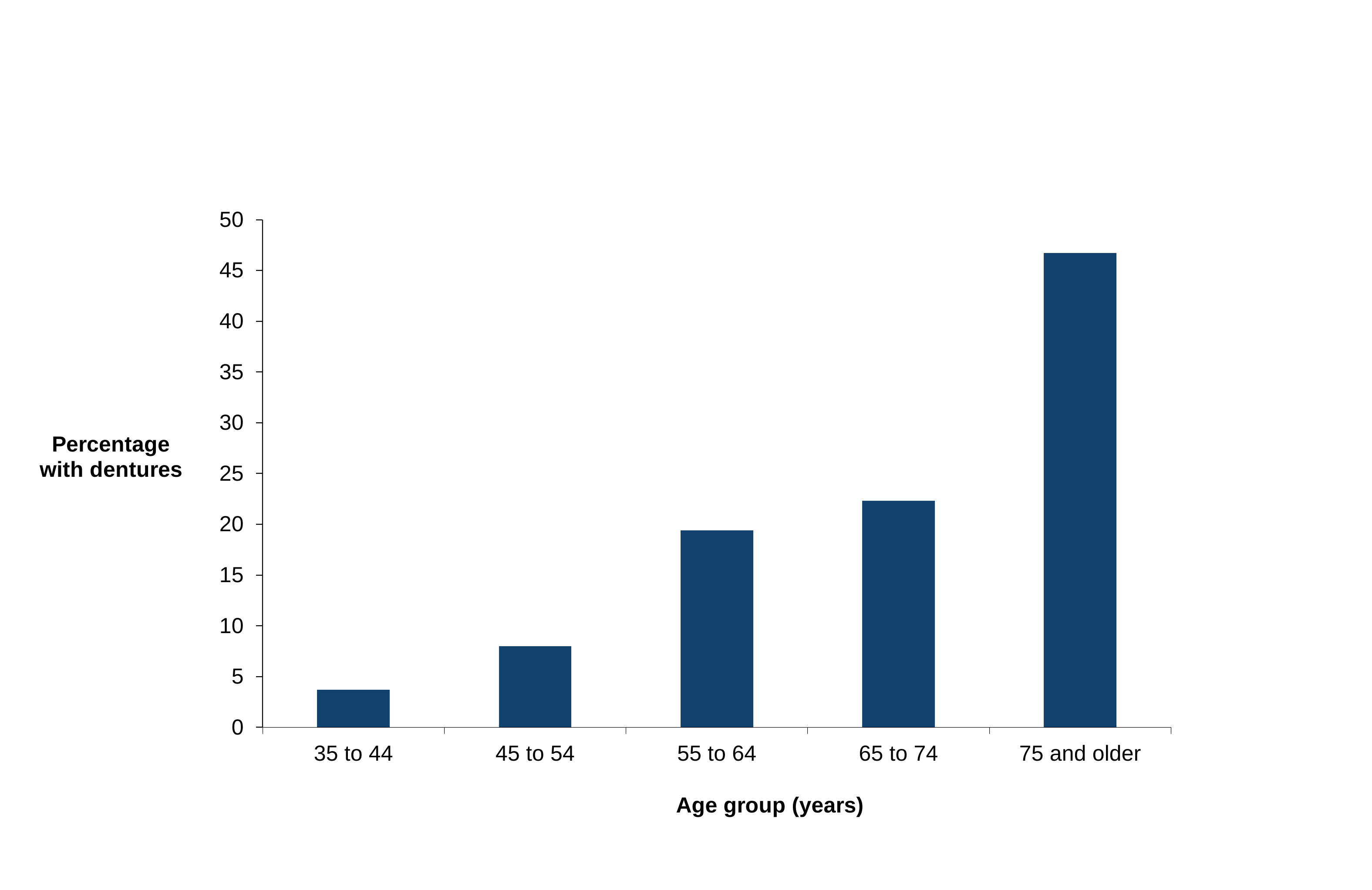
Given patterns of tooth retention outlined earlier in the chapter, it is not surprising that younger adults were less likely to report wearing dentures than older age groups (4% of those aged 35 to 44 compared with 22% of those aged 65 to 74 and 47% of those aged 75 and older). The bar chart in figure 30 below shows this proportion of adults who self-reported wearing dentures by age group.
Figure 30: proportion with dentures (self-reported) by age group
Note: data on 16 to 34 year olds has not been reported in the figure due to low numbers.
Base: all adults.
Source: table 18 in ‘Data tables: clinical oral health’.
A similar observation was made among those who had an oral examination whereby 5% of those aged 45 to 54 and 35% of those aged 75 and older had a denture in their mouths when examined.
Household income
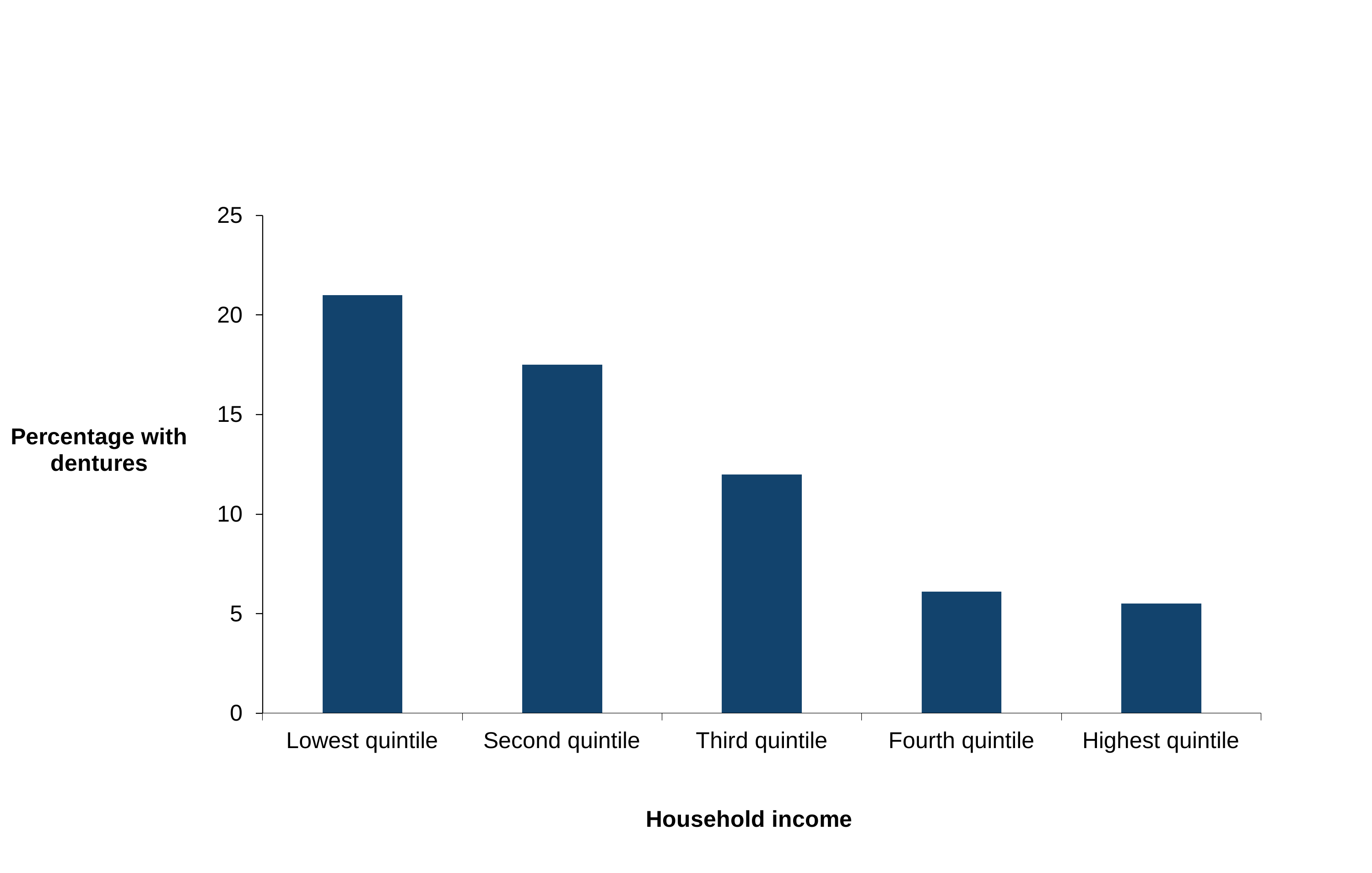
Adults living in the lowest income households were more likely to report having a denture compared with those in the highest income households (21% and 6% respectively). This social gradient was also observed during the oral examination, with 14% of those in the lower income households having dentures present in comparison with 4% of adults in the second-highest income quintile. This is illustrated in the bar chart below in figure 31.
Figure 31: proportion with dentures (self-reported) by household income
Base: all adults.
Source: table 18 in ‘Data tables: clinical oral health’.
Area deprivation
Adults living in the most deprived areas were also more likely to report having a denture compared with those living in the least deprived areas (16% and 8% respectively).
Prevalence of dental bridges
Among dentate adults, 1 in 20 (5%) had a dental bridge (replacement tooth attached to adjacent teeth, crowns or implant). This varied significantly by age group and area deprivation. There were no associations with sex, NHS region or household income.
Age group
Adults in the oldest age groups were more likely to have at least one dental bridge. Just 3% of those aged 35 to 44 had one or more dental bridges, rising to 14% of those aged 65 years and older. The bar chart in figure 32 below illustrates this proportion of adults with at least one dental bridge across the age groups.
Figure 32: proportion with at least one dental bridge by age group

Note: data on 16 to 34 year olds has not been reported in the figure due to low numbers.
Base: dentate adults (observed).
Source: table 19 in ‘Data tables: clinical oral health’.
Area deprivation
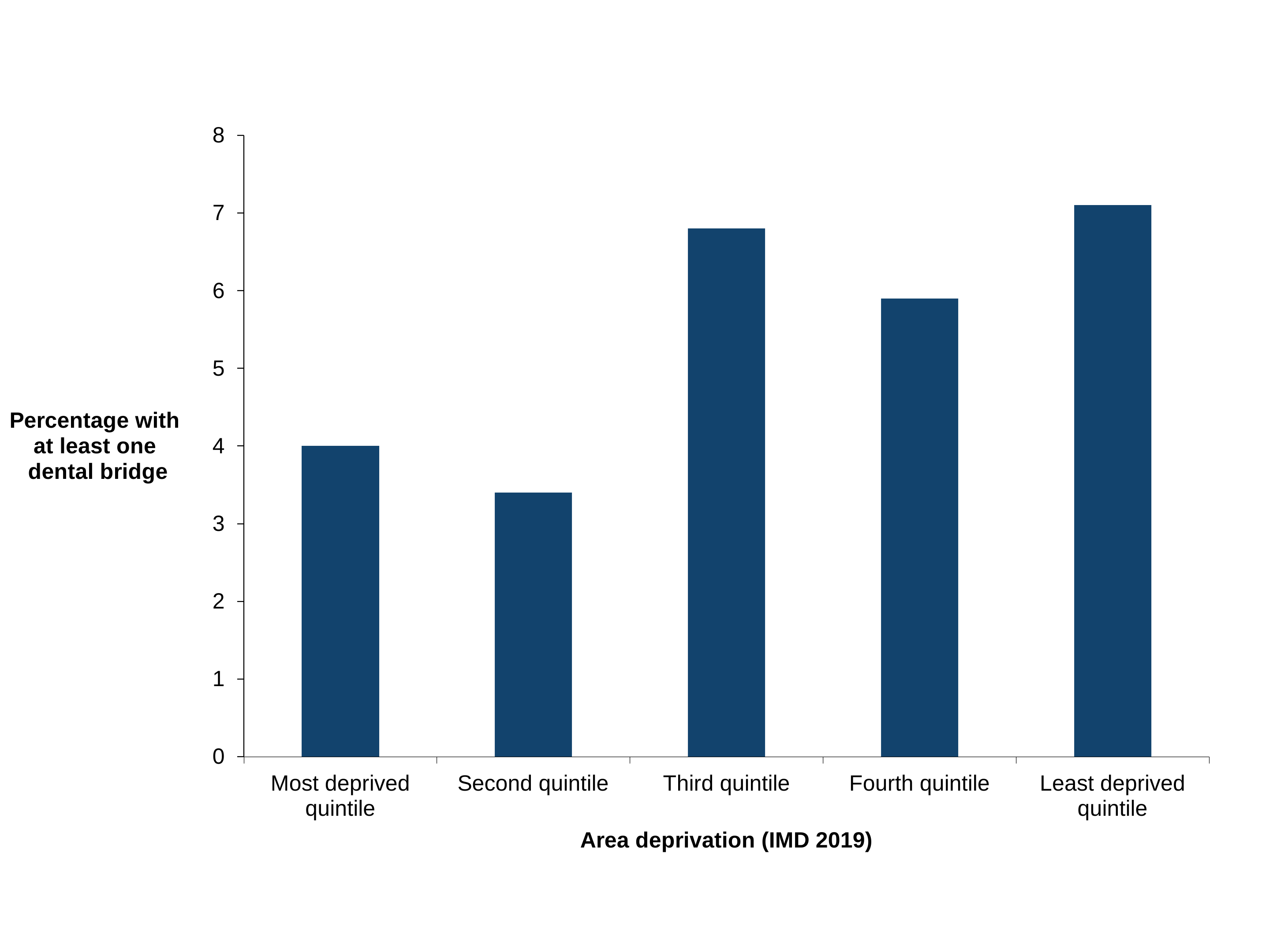
There was some variation by area deprivation in the prevalence of at least one dental bridge. Adults living in the 2 most deprived quintiles were less likely to have a dental bridge (between 3% and 4%) than those living in the other quintiles (between 6% and 7%). This is illustrated in the bar chart below in figure 33.
Figure 33: proportion with at least one dental bridge by area deprivation
Base: dentate adults (observed).
Source: table 19 in ‘Data tables: clinical oral health’.
Prevalence of dental implants
Dental implants were present in only 2% of dentate adults. Among those who had at least one implant, the mean number of implants was 2.1.
Due to the low prevalence of implants, comparisons between groups were not possible.
Trends in dental implants
The proportion of self-reported dentate adults with at least one implant increased from 1% in 2009 to 2% in 2023.
Sex
Between 2009 and 2023, the increase in the proportion of those with at least one implant was greater in women (1% to 3%) compared with men (1% to 2%).
Age group
Across age groups, there were no significant changes in the proportion of adults with at least one implant between the 2009 and 2023 survey years.
Prevalence of tooth wear
As with earlier sections describing the condition of teeth, the following section on tooth wear only considers dentate adults.
This section provides an overview of tooth surface loss (tooth wear) from causes other than tooth decay. A degree of tooth wear is physiological, so some degree of wear will be inevitable as the teeth age. The wear can happen in a range of ways, through:
- exposure to dietary or other acids (erosion)
- contact with something abrasive such as food or toothbrushes and toothpaste (abrasion)
- contact with other teeth (attrition)
These processes may all occur in parallel, or one may predominate.
The 2009 survey used the BEWE index in a sub-sample of adults and it was decided to adopt this for all participants in the 2023 survey. The index captures wear from all causes as listed above and measures different stages, from loss of enamel only through to hard tissue loss affecting more than half of the surface of the tooth and records the most severely affected surface in each of the 6 sextants. The 6 sextants are relatively equal sections into which a dental arch, or the arrangement of teeth in the mouth, can be divided. Figures for wear in the upper and lower anterior sextants (the front upper and lower teeth) are also reported. These adults may also have wear in other sextants. Wear affecting anterior sextants may impact upon the appearance of teeth, for example the teeth appearing short and not visible when smiling, which may result in people seeking treatment even if they are not experiencing symptoms such as pain during consumption of hot or cold food and drink.
Overall, 71% of dentate adults had some tooth wear in the mouth as measured by the BEWE index, with 66% having tooth wear in their anterior teeth. Twenty-two per cent of dentate adults had moderate wear (at least one tooth with a distinct loss of tooth tissue but affecting less than half of the tooth surface) as the worst score in the mouth and 5% had severe wear (at least one tooth with a distinct loss of tooth tissue affecting more than half of the tooth surface). For anterior sextants only, 19% of dentate adults had moderate wear and 3% severe wear.
Having tooth wear anywhere in the mouth and more specifically in the anterior teeth, where it has aesthetic implications, varied significantly by sex and age group. There were no associations with NHS region, household income or area deprivation.
Sex
Men were more likely than women to have any tooth wear (75% compared with 68%) and tooth wear in the anterior teeth (68% compared with 63%).
Age group
The prevalence of any tooth wear varied by age group, with 51% of adults aged 16 to 24 having any wear, compared with 90% of those aged 75 and older. Similarly, adults aged 75 and older were more likely to have any wear in their anterior teeth, compared with younger adults aged 16 to 24 (88% compared with 38%).
The severity of wear also varied, with the prevalence of any moderate wear, and moderate wear in the anterior teeth, higher among the older adults compared with younger adults, 41% of those aged 75 or older had moderate wear compared with 11% of 25 to 34 year olds. The equivalent proportions for moderate wear in the anterior teeth were 37% for adults aged 75 or older and 9% for 25 to 34 year olds. The bar chart in figure 34 below illustrates this tooth wear prevalence by age group.
Figure 34: proportion of adults with any tooth wear or any anterior tooth wear by age group

Base: dentate adults (observed).
Source: table 23 in ‘Data tables: clinical oral health’.
Periodontal disease
This section on periodontal disease reports on dentate adults only.
The soft tissues and bone supporting teeth are vital to their maintenance. Periodontal disease involves the progressive destruction of these supporting tissues which can result in pain, tooth mobility affecting eating, aesthetic changes and, ultimately, tooth loss. Individual susceptibility and rates of progression may vary but oral bacteria and bacterial plaque (collectively referred to as a dental biofilm) are risk factors, as are dental calculus or rough dental restorations which might retain biofilm by the soft tissues and increase the risk of local inflammation. The disease is typically painless in earlier stages but may produce increasing discomfort and occasional acute symptoms in later stages.
Full clinical diagnosis of periodontal disease (as with tooth decay) requires radiographic (x-ray) examination (see reference 3) which is outside the scope of this survey, but the following findings were recorded:
- indicators of inflammation (bleeding on probing of the periodontal pocket to its base)
- plaque retention factors, including calculus
- loss of supporting tissue, including pocketing, mobility, exposed root furcations (the point at which roots divide from the crown in premolar and molar teeth) and recession in between the teeth
An important additional consideration when interpreting the data, particularly among older adults, is that retaining increased numbers of natural teeth may also increase the likelihood for periodontal disease as there are more teeth present to experience the disease. Furthermore, the periodontal measures may indicate past disease that is no longer progressing, currently active disease or a mixture of both, or even a desire to retain mobile teeth for as long as possible.
The presence of periodontal disease under the criteria used in this study covers a wide range of disease severity which may reflect a range of factors including past disease management, access to care and decisions to retain teeth with periodontal disease rather than have them extracted. Compared with the 2009 survey, all dentate adults were examined for periodontal disease and, reflecting the 2017 classification of periodontal disease, the criteria were further developed to include interdental recession, mobility and exposure of root furcations.
See the technical report for full details of the clinical criteria and a glossary of all terms.
Data is presented for gingival bleeding on probing (bleeding gums), calculus or other plaque-retention factors and pocketing at different levels of severity. These are measures reported in previous surveys and are components from the Basic Periodontal Examination (BPE) index. The additional measures of furcation defect, interdental recession and mobility, based on the 2017 classification of periodontal disease, are reported separately. Finally, combined evidence indicating greater extent and severity of disease experience are presented.
Prevalence of any periodontal condition
In 2023, almost all dentate adults (93%) had some plaque retention factors such as calculus or evidence of periodontal disease on oral examination. Only 7% of dentate adults had none of the following observed periodontal conditions:
- bleeding
- calculus
- pocketing greater than 3.5mm
- furcation defect
- interdental recession
- mobility
Having no observed periodontal condition varied by NHS region and household income but not by sex, age group or area deprivation.
NHS region
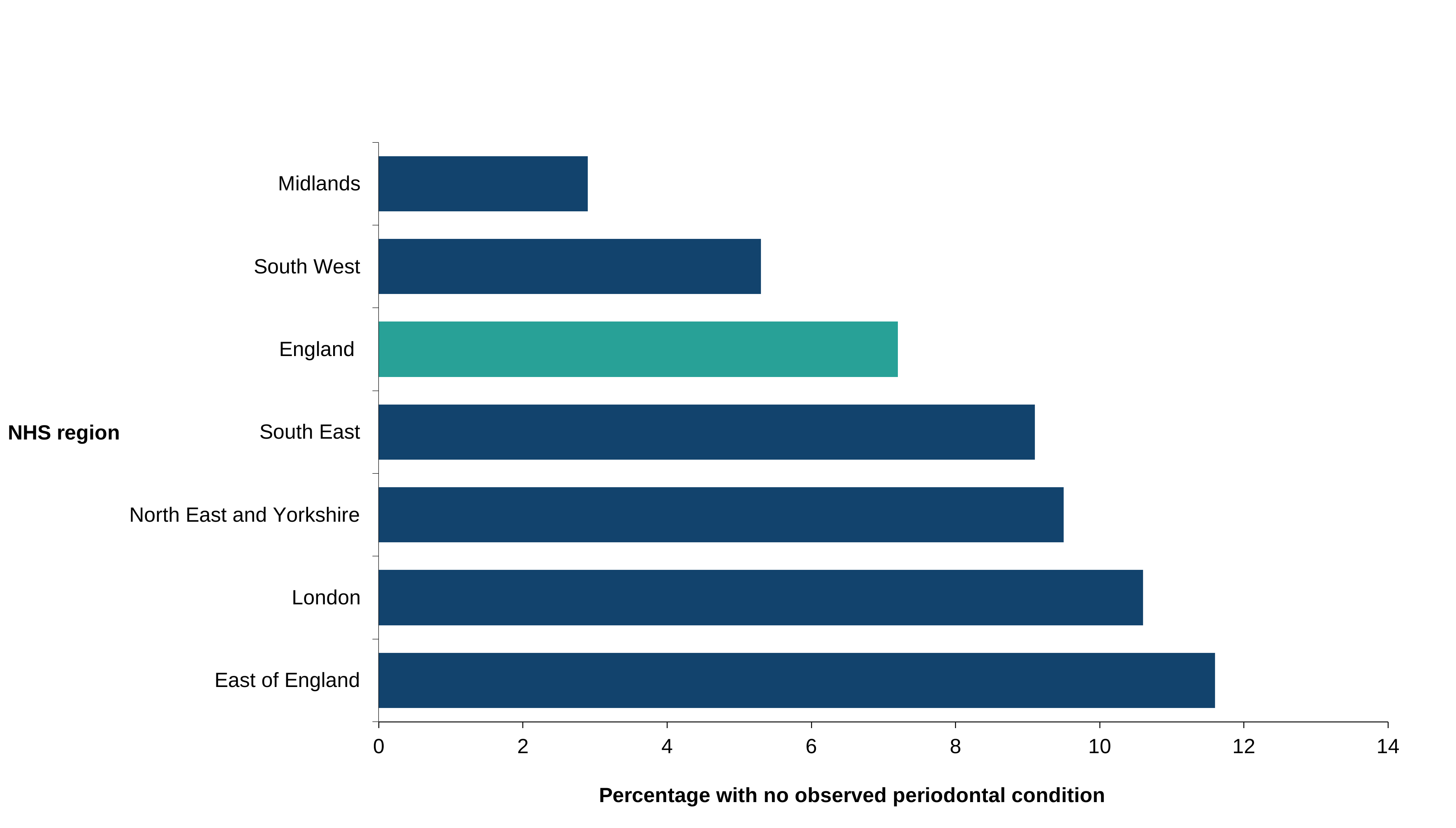
There were some differences across regions, for example 3% of adults in the Midlands had no observed condition, compared with 12% of adults in the East of England. This is shown in the bar chart in figure 35 below.
Figure 35: proportion of adults with no observed periodontal condition by NHS region, with the England average for comparison
Base: dentate adults (observed).
Source: table 24 in ‘Data tables: clinical oral health’.
Household income
The likelihood of having no observed periodontal condition varied by household income, but without a clear pattern. Fourteen per cent of adults living in the fourth highest income households had no observed condition, compared with a range of 4% to 8% in other income quintiles.
Bleeding, calculus and pocketing
Bleeding, calculus and other plaque retention factors and periodontal pocketing are the 3 components of the BPE scoring system used by dental teams to record periodontal health in clinical settings and has been used in previous surveys as measures of periodontal health. While not absolute markers of the presence or absence of periodontal disease they are indicators of risk and presence of disease and of the need for further investigation in the individuals concerned. A feature of this measure is that it records the worst score in the sextant, so while the recorded prevalence of deeper pocketing is reported, the prevalence of less severe indicators is masked.
Bleeding that is stimulated by gentle probing of the gum margin to the base of the natural pocket is an indicator of inflammation which may lead to tissue destruction. Calculus, or other plaque biofilm retention factors such as dental restorations that are rough beside the gum margin (referred to as over-hangs or ledges by clinical dental teams) are a risk marker, in that these may retain plaque biofilm against the gum margin and stimulate inflammation. Pocketing that is deeper than the deepest natural or physiological pocket depth (generally held to be beyond 3.5mm) is an indicator that there has been some destruction of the supporting tissues of the tooth and is an indicator of risk of further destruction since deeper pockets are difficult to keep clean. Having one or more of these markers were common and so, overall, 8% of adults had no calculus, bleeding or pocketing on oral examination.
Among the 92% who had one or more of these factors:
- 9% of all adults had bleeding of their gums on probing to the base of the periodontal pocket but no plaque retention factors such as calculus or any pocketing greater than 3.5mm
- 43% had calculus or other plaque-retention factors but no pocketing greater than 3.5mm
- 28% of adults had pocketing greater than 3.5mm but no deeper pocketing
- 12% had more severe pocketing of 5.5mm or greater
Overall, 41% of dentate adults had at least one tooth with pocketing greater than 3.5mm.
The section below focuses on the presence of pocketing, both moderate and severe.
Moderate pocketing greater than 3.5mm but less than 5.5mm differed by household income, NHS region and area deprivation but not by sex or age group.
Prevalence of severe pocketing, 5.5mm or greater, varied by sex, age group, area deprivation and household income but not by NHS region.
Sex
Severe pocketing was more common in men than women (10% and 15%).
Age group
Severe pocketing was more prevalent in older age groups with around 1 in 5 adults having pocketing of 5.5mm or greater in at least one sextant: 20% of adults aged 55 to 64 and 23% of adults aged 65 to 74 compared with less than 5% of adults under 35. This severe pocketing prevalence by age group is illustrated in the bar chart below in figure 36.
Figure 36: prevalence of severe pocketing as the worst score in the mouth by age group
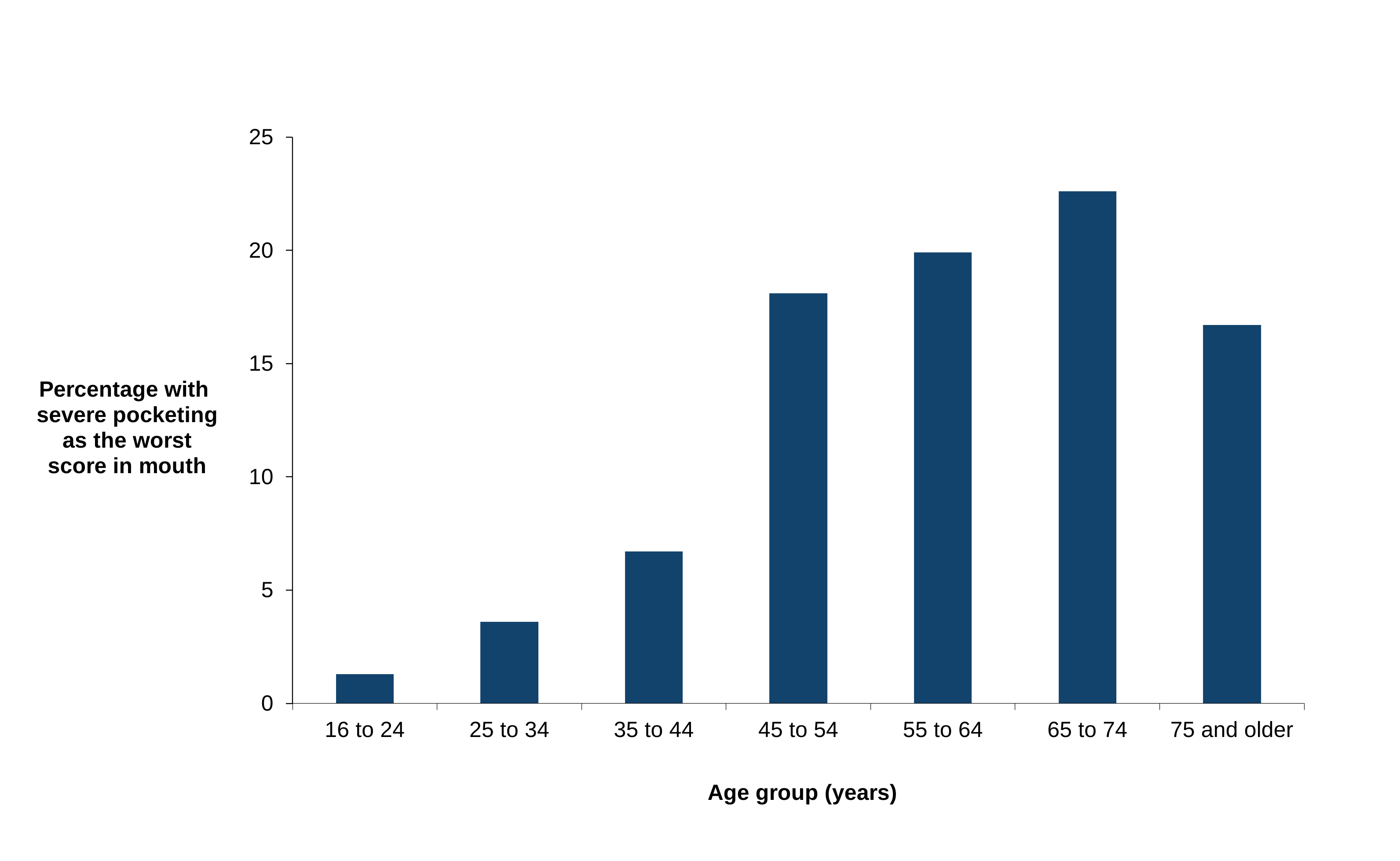
Base: dentate adults (observed).
Source: table 24 in ‘Data tables: clinical oral health’.
NHS region
Prevalence of moderate pocketing varied by NHS region.
Adults living in the Midlands had moderate pocketing greater than 3.5mm but less than 5.5mm as the worst score in their mouth compared with those who lived in the South East (38% and 21% respectively).
Prevalence of severe pocketing (5.5mm or greater) did not vary between regions.
Household income
Prevalence of pocketing also varied by household income:
- 1 in 3 (34%) dentate adults living in the lowest household income quintile were experiencing moderate pocketing greater than 3.5mm but less than 5.5mm compared with those living in the 2 highest household income quintiles (22% and 26% respectively)
- 1 in 4 (24%) dentate adults from the lowest household income quintile had severe pocketing (5.5mm or greater) compared with between 7% and 11% in the other income quintiles
Area deprivation
A similar pattern was observed by area deprivation:
- adults living in the most deprived areas had a higher prevalence of pocketing greater than 3.5mm but less than 5.5mm (37%) compared with those living in the least deprived areas (24%)
- they were also more likely to have severe pocketing (19%) compared with those living in the least deprived areas (10%)
The bar chart in figure 37 below illustrates this pocketing prevalence across the area deprivation quintiles.
Figure 37: prevalence of pocketing between 3.5mm and 5.5mm and severe pocketing 5.5mm or greater as the worst score in the mouth by area deprivation
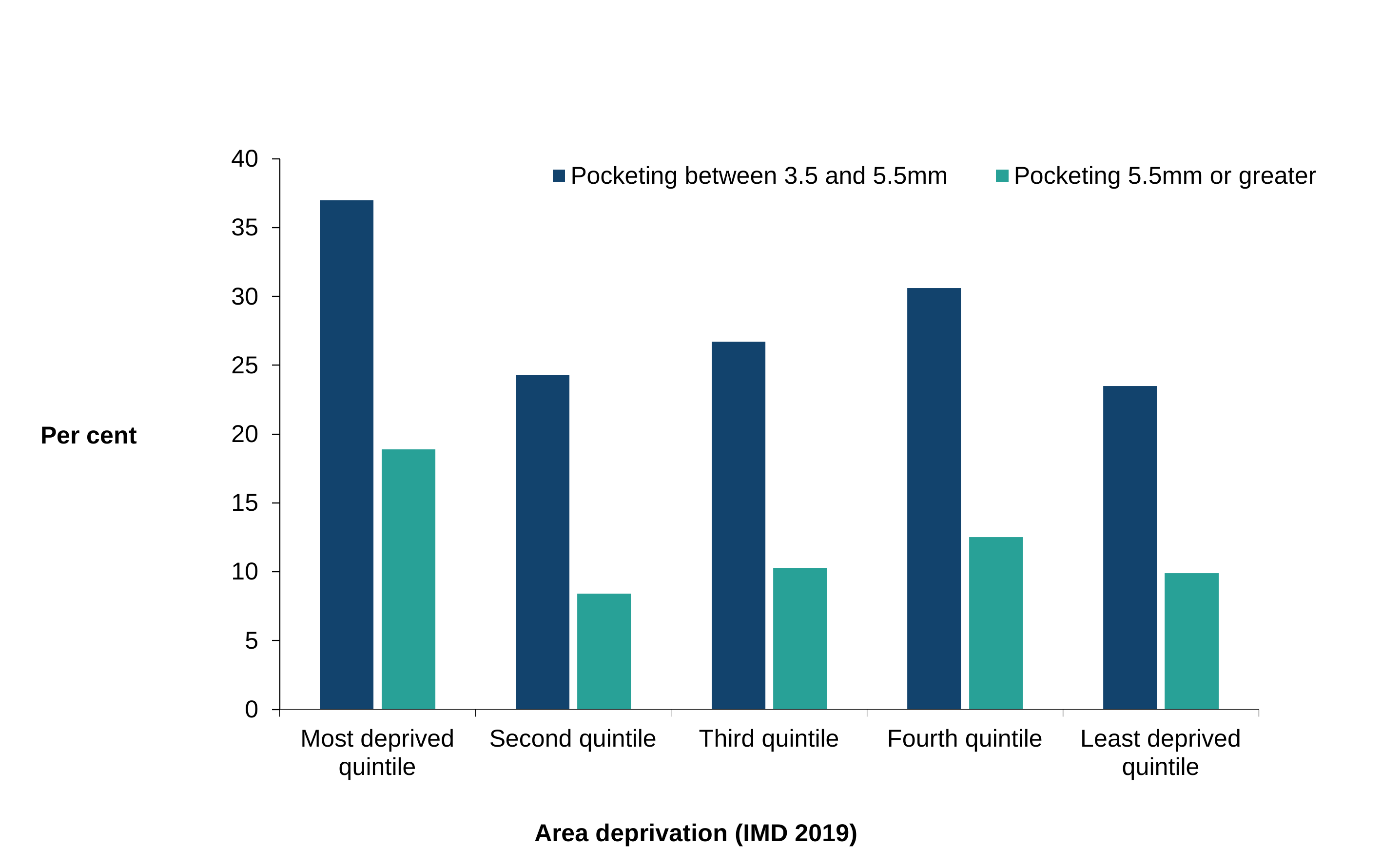
Base: dentate adults (observed).
Source: table 24 in ‘Data tables: clinical oral health’.
Recession, furcation and mobility
These indicators of periodontal disease experience have been used in this national survey for the first time. They were less prevalent and were present in 28% of dentate adults, and so 72% of dentate adults had no furcation defects, interdental recession or mobile teeth.
The prevalence of these indicators varied by age group, household income and area deprivation, but not by sex or NHS region.
Age group
The presence of these more severe indicators increased with age, with 7% of adults aged 16 to 24 having furcation defects, interdental recession or mobile teeth, compared with 54% of adults aged 75 and older.
Household income
Adults living in the lowest income households were more likely to have furcation defects, interdental recession or mobile teeth, compared with those in the highest income households (40% in the lowest income quintile and 21% in the highest income quintile). This is illustrated in the bar chart below in figure 38.
Figure 38: proportion of adults with furcation defects, interdental recession or mobile teeth, by household income
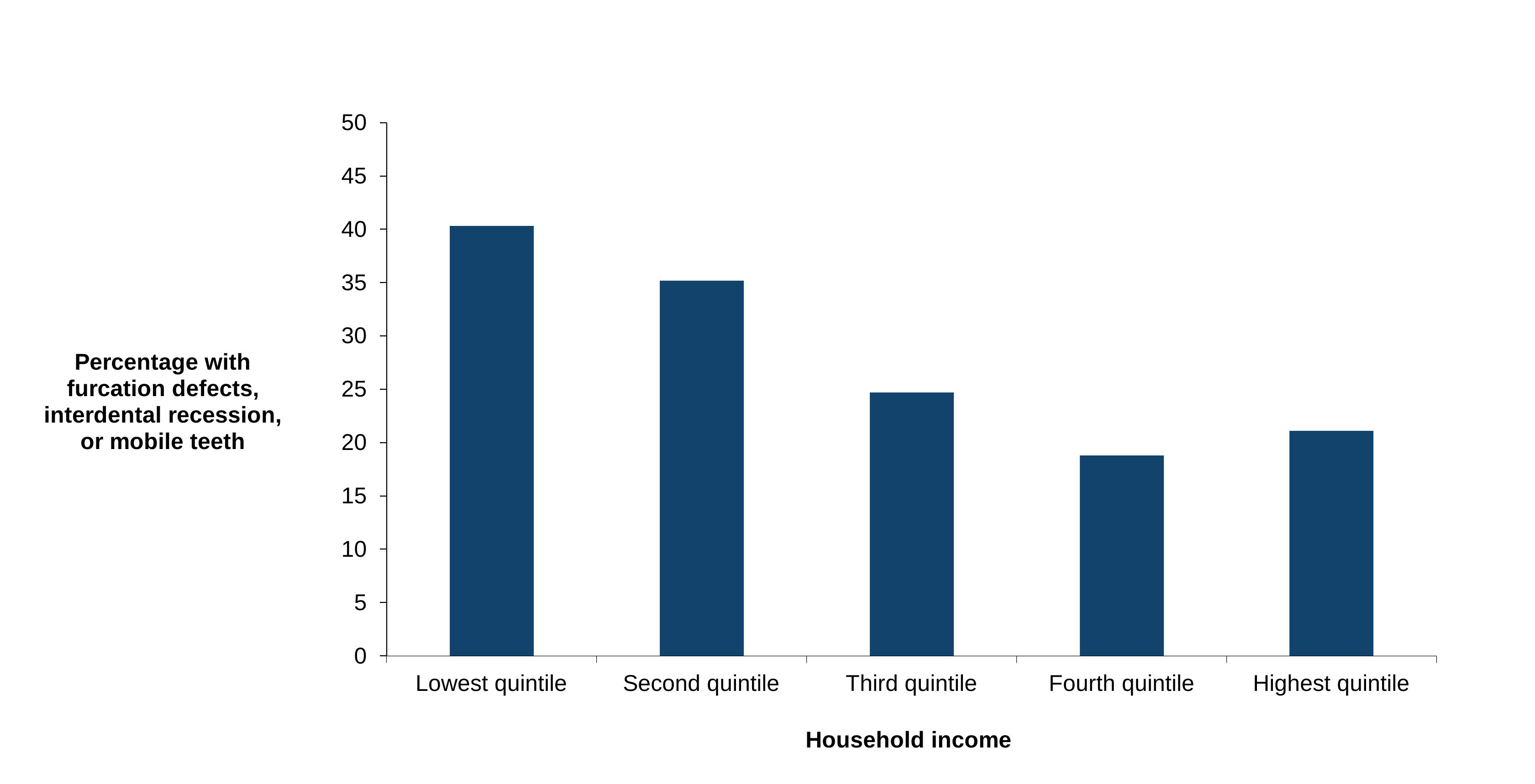
Base: dentate adults (observed).
Source: table 24 in ‘Data tables: clinical oral health’.
Area deprivation
Prevalence of having furcation defects, interdental recession or mobile teeth varied by area deprivation: 38% living in the most deprived areas had furcation defects, interdental recession or mobile teeth, compared with between 30% and 23% living in other areas.
Indicators of greater severity in more than one sextant
Some measurable characteristics of periodontal disease may indicate more advanced disease experience. The following 3 indicators of greater severity of periodontal disease have been presented:
- having more than one sextant (there are 6 sextants that are relatively equal sections into which a dental arch, or the arrangement of teeth in the mouth, can be divided) with more severe pocketing of 5.5mm or greater (deeper pockets are indicative of more advanced disease)
- having more than one sextant with furcation defect, and/or interdental recession and/or mobility (these indicate greater loss of supporting tissues as a result of disease)
- having both pocketing 5.5mm or greater and furcation defect, and/or interdental recession and/or mobility (in either the same sextant or across multiple sextants)
Seven per cent of all adults had pocketing 5.5mm or greater in more than one sextant (one-sixth) and 19% had a furcation defect and/or interdental recession and/or mobility in more than one sextant. Having evidence of both these measures is an indicator of greater periodontal disease severity. Nine per cent of adults had both ‘more severe pocketing’ and ‘a furcation defect and/or interdental recession and/or mobility’ in the mouth.
The proportion of adults experiencing these indicators of greater severity varied by age group, NHS region, household income and area deprivation. Between men and women, having both pocketing of 5.5mm or greater and a furcation defect, interdental recession or mobility in the mouth varied. However, it did not vary by sex to only have pocketing or to only have a furcation defect, interdental recession or mobility in more than one sextant.
Sex
Having both pocketing of 5.5mm or greater and a furcation defect, interdental recession or mobility in the mouth was more common in men than women (12% compared with 7%).
Age group
The prevalence of one or more of these indicators increased with age, with 3% of adults aged 35 to 44 having more than one sextant with pocketing of 5.5mm or greater compared with 13% of adults aged 65 to 74 and 11% aged 75 and older.
Similar patterns were evident for the proportion of adults with more than one sextant with a furcation defect, interdental recession or mobility: 5% of 25 to 34 year olds compared with 40% aged 75 and older. The severity of these indicators was also more apparent in older adults. Twenty-one per cent of adults aged 65 to 74 had both severe pocketing and a furcation defect, interdental recession or mobility compared with 5% of 35 to 44 year olds.
NHS region
There were some variations by region in the prevalence of more than one sextant with a furcation defect, interdental recession or mobility. For example, this was observed in 10% of adults living in the East of England compared with 30% in the South West. There were no variations by region in the proportion of adults with more than one sextant with pocketing greater than 5.5mm and having both severity indicators.
Household income
Indicators of greater severity of periodontal disease were more prevalent in adults living in the lowest income households compared with those in the highest income households.
Of adults living in the lowest income quintile:
- 16% had more than one sextant with pocketing of 5.5mm or greater (compared with 4% of those living in the highest income quintile)
- 27% had more than one sextant with furcation defect, interdental recession or mobility (compared with 16%)
- 21% experienced both indicators in more than one sextant (compared with 5%)
The bar chart in figure 39 below shows these indicators of severe periodontal disease across the household income quintiles.
Figure 39: prevalence of indicators of greater severity in more than one sextant by household income

Base: dentate adults (observed).
Source: table 24 in ‘Data tables: clinical oral health’.
Area deprivation
A higher proportion of adults living in the most deprived areas had more than one sextant with pocketing of 5.5mm or greater compared with those in least deprived areas (13% and 5%). There were no variations in the proportion of adults having more than one sextant with furcation defect, interdental recession or mobility or having both severity indicators.
Summary
This chapter provides an overview of the current oral health of adults in England. Trends described in this chapter present an important picture about the transformation of oral health of adults in England over time. The proportion of adults that were edentate (had no natural teeth) continued to decrease and in 2023 affected only a very small minority (2.5%). This represents a considerable reduction over the survey years, from 28% in 1978 and 6% in 2009.
For dentate adults (those with natural teeth), the vast majority (86%) retained a functional dentition (21 or more natural teeth), though this had not increased further since 2009. Only 13% reported having dentures (partial or complete), 5% had teeth replaced by dental bridges and only 2% by implants.
There was a slight increase in the mean number of teeth without obvious decay, trauma or restorations (up from 18.0 teeth in 2009 to 19.6 teeth in 2023). The proportion of dentate adults that had obvious decay (41%) has, however, increased considerably since 2009, reversing a previous decrease trend and bringing the prevalence of disease in 2023 to levels similar to those seen in 1998. Around 1 in 5 (21%) dentate adults had extensive obvious tooth decay that affected the deepest part (pulp) of the tooth or had a cavity into the inner (dentine) of the tooth. Overall, 71% of dentate adults had some tooth wear in the mouth but only 5% had severe wear as measured by the BEWE index. While almost all adults had some evidence of indicators associated with periodontal disease, only 9% had evidence of very severe disease (having both pocketing 5.5mm or greater and a furcation defect and/or interdental recession and/or mobility).
In line with the chronic and cumulative nature of dental diseases, the number of teeth decreased with increasing age and experience of disease and treatment increased with increasing age. There were marked inequalities in oral health across a range of indicators, from having a functional dentition to the prevalence of tooth decay and more advanced periodontal disease.
References
-
Department of Health and Social Care. NDNS: headline results from years 1 and 2 (combined). (viewed on 13 September 2024)
-
Sheiham A and J Steele. Does the condition of the mouth and teeth affect the ability to eat certain foods, nutrient and dietary intake and nutritional status amongst older people? Public Health Nutrition 2001: volume 4, issue 3, pages 797 to 803
-
Caton J and others. A new classification scheme for periodontal and peri-implant diseases and conditions: introduction and key changes from the 1999 classification. Journal of Periodontology 2018: volume 89, supplement 1, pages S1 to S8