The United Kingdom unequivocally condemns the dangerous escalation by the Houthis in Yemen: UK statement at the UN Security Council
Statement by Ambassador Kate Foster, UK Deputy Permanent Representative to the UN, at the UN Security Council meeting on Yemen.
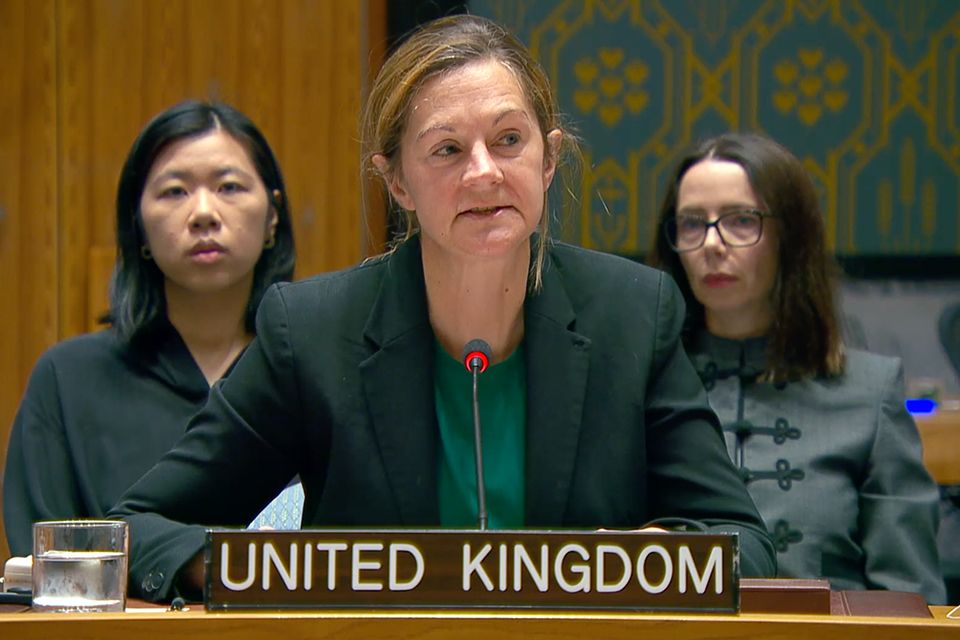
First, the United Kingdom unequivocally condemns the Houthis’ dangerous escalation in Yemen.
Their recent offensive has intensified the conflict, increased civilian suffering, and pushed the prospect of peace further out of reach.
In Taiz City, Houthi forces continue to besiege civilians and threaten vital supply routes placing further strain on an already fragile health system.
This is yet another example of their reckless disregard for the wellbeing of the Yemeni people.
The Houthis’ attacks on shipping, civilians, and critical infrastructure pose a serious threat to regional security, maritime shipping and global energy security.
Let me extend the United Kingdom’s condolences to Saudi Arabia for the attacks against the Abha and King Khalid International airports.
The United Kingdom stands with the Government of Yemen and the Kingdom of Saudi Arabia in the face of these attacks.
And we reaffirm their right to defend their security and sovereignty in accordance with international law.
Coming on top of months of Iranian attacks including against commercial shipping in the Strait of Hormuz, the Houthis’ actions risk further destabilising an already volatile region.
We urge the Houthis to de-escalate and return to the path of diplomacy.
Second, the consequences of this escalation are being felt first and most acutely by ordinary Yeminis.
Since fighting intensified in September, latest escalation is worsening an already catastrophic humanitarian situation.
479 civilians have been killed or injured, and more than 200,000 people have been forced to flee from their homes.
Many have fled to communities already struggling to cope.
UNICEF reports that 300 primary healthcare clinics have been affected, restricting access to lifesaving care, including nutrition and vaccination support.
As ever, women and girls are disproportionately affected. UNFPA reports several instances of pregnant women being forced to give birth on the roadside.
We must do more.
The United Kingdom continues to support the humanitarian response through our $137 million commitment this year.
We welcome the recent release of a World Food Programme member of staff.
But many more remain in detention and have been separated from their families and loved ones for years.
We will continue to call for the immediate and unconditional release of all UN, NGO, civil society, and diplomatic mission personnel held by the Houthis, and for full, safe and unhindered humanitarian access.
Third, this escalation also demonstrates why effective international pressure on the Houthis remains essential.
The Houthis are able to sustain their attacks because weapons and dual-use items continue to reach Houthi-controlled areas in violation of this Council’s decisions.
Resolution 2140 established a sanctions regime to halt the flow of arms.
All Member States must fully comply with its provisions.
As we approach the renewal of the mandate next month, this Council must ensure that the sanctions regime remains effective, relevant, and responsive to the evolving threat.
President, ultimately, there is no military solution to this conflict.
The United Kingdom remains steadfast in its support for Special Envoy Grundberg’s efforts to secure de-escalation and advance an inclusive political process.
We urge the Houthis to choose dialogue over escalation, and a political settlement over continued conflict.