The United Kingdom continues to support the humanitarian response in the DRC, including through our assistance to the Ebola response: UK statement at the UN Security Council
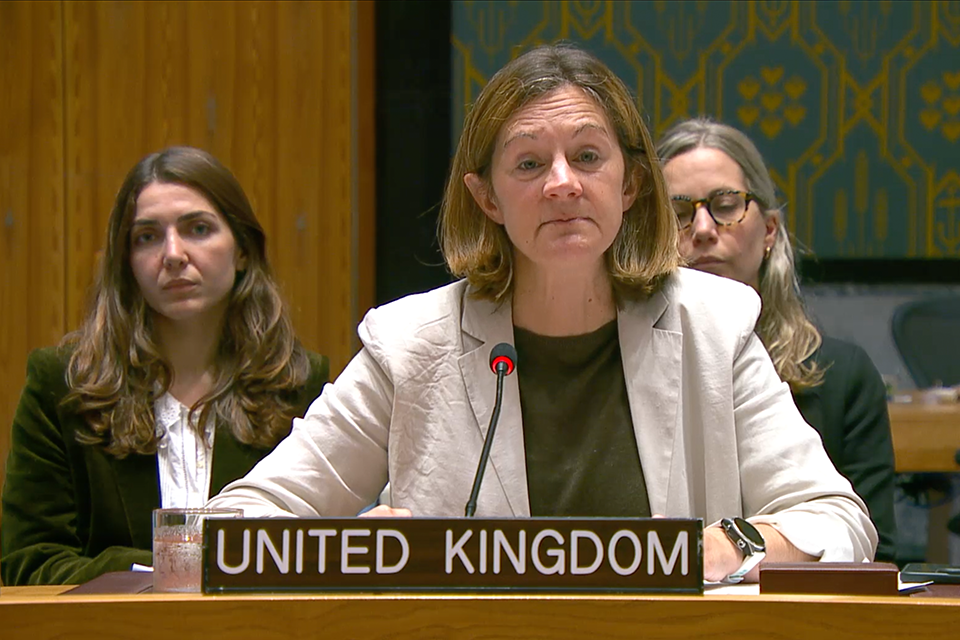
Statement by Ambassador Kate Foster, UK Deputy Permanent Representative to the UN, at the UN Security Council meeting on the Great Lakes Region.
There has been welcome diplomatic progress in recent months.
But for civilians in eastern DRC, that progress has yet to translate into greater security.
I will make three points.
First, the humanitarian situation remains deeply concerning.
More than 26 million people in DRC face acute food insecurity, including 3.6 million at emergency levels.
Conflict and displacement are compounding the effects of the Ebola outbreak and climate-related shocks.
The United Kingdom continues to support the humanitarian response, including our assistance to the Ebola response.
But all parties must guarantee safe, rapid, and unhindered humanitarian access, and remove obstacles to the delivery of lifesaving assistance.
Second, we welcome progress through the Doha and Washington processes, including recent EJVM+ deployments with the support of MONUSCO, alongside ongoing African Union-led mediation efforts.
To achieve lasting peace, agreements and mechanisms must now deliver tangible improvements for people on the ground.
We call on all parties to cease hostilities, implement their commitments in full, and engage constructively and in good faith with the peace processes.
The Washington, Doha and African Union-led processes must reinforce one another, with clear coordination and African ownership.
Progress also depends on those working for peace being able to do their jobs.
All parties must respect MONUSCO’s mandate and guarantee the Mission the freedom of movement that it needs.
And all parties must fully adhere to their obligations under international humanitarian law, including on the protection of civilians.
The increasing use of drones, heavy artillery, and explosive weaponry in populated areas is increasing the threat to civilians and civilian infrastructure.
Third, the ongoing illicit exploitation and trafficking of critical minerals in the region sustains armed groups, undermines trust, and deprives communities of legitimate development.
We support the Secretary-General’s call for strengthening the Regional Certification Mechanism.
And we encourage regional and international actors to work together to ensure stronger traceability and certification mechanisms.
The development of critical minerals should reach local communities, not drive conflicts.
President, sustained diplomacy has created an opportunity for progress.
But its measure will be on what changes on the ground: whether civilians are safer, humanitarian assistance can reach those who need it, and the parties fulfil the commitments that they have made.
We urge all parties and regional leaders to turn the present diplomatic momentum into lasting peace.