The UK is acting with international partners to protect the two-state solution: UK statement at the UN Security Council
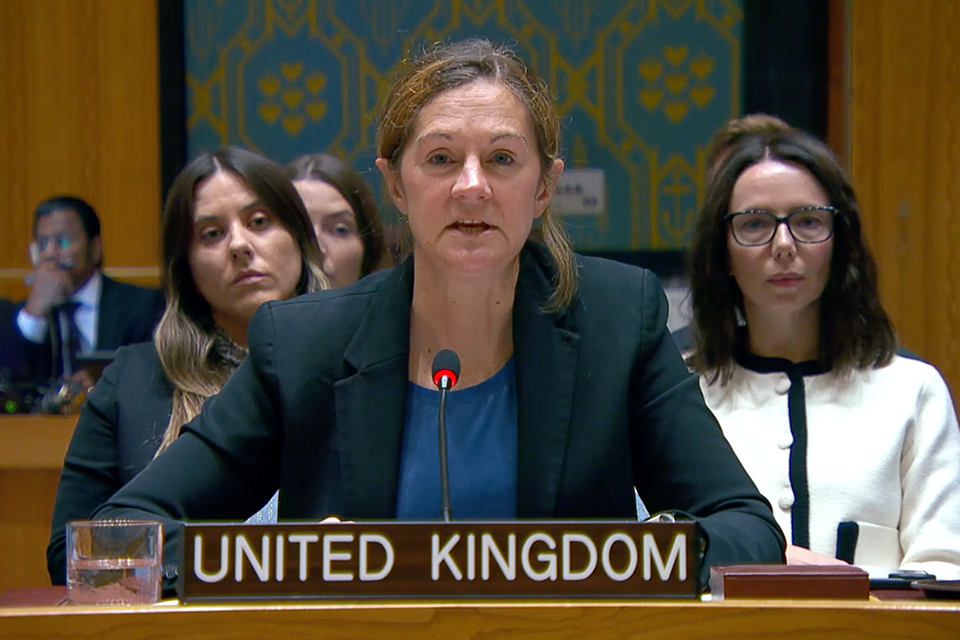
Statement by Ambassador Kate Foster, UK Deputy Permanent Representative to the UN, at the UN Security Council meeting on the West Bank.
Throughout High-Level Week, we heard a clear and repeated commitment to achieving a two-state solution.
It remains the only credible path forwards to a better future for Israelis and Palestinians, founded on lasting peace and security for both.
Yet the two-state solution is at risk of being destroyed by the facts on the ground.
Mr President, my Prime Minister has been clear: the 7th October 2023 terrorist attack on Israel was monstrous, and he has condemned Hamas’ actions in the strongest terms.
The United Kingdom continues to stand with Israel in the face of ongoing threats, including from Iran.
But my Prime Minister has also been clear that this does not justify the Government of Israel’s actions in the West Bank and Gaza.
In the West Bank, Israel continues to expand settlements at pace, in violation of international law, and contrary to Resolution 2334.
We are approaching a point of no return with the E1 settlement project.
We welcome the reports that the deadline for bids may be delayed.
But a temporary delay is not enough.
It would sever East Jerusalem from the West Bank and endanger the viability of a two-state solution.
This project must not go ahead.
Alongside the rapid expansion of settlements, we have also seen an alarming increase in settler violence.
The Government of Israel must prevent violence in all of its forms and ensure proper accountability for perpetrators.
Pardons and decisions not to bring charges against Israeli soldiers who have committed violent crimes sends the opposite message.
The United Kingdom is acting with international partners to protect the two-state solution.
Together with partners, we have announced our intention to legislate to ban the import of goods from illegal settlements, and bring in sanctions against those who finance, support, and facilitate illegal settlements.
We have been clear that we view the Israeli occupation of Palestinian land as unlawful.
We continue to support the Palestinian Authority’s reform agenda and welcome its commitments to hold elections.
Credible, transparent, and reformed public institutions remain essential to a future Palestinian state.
We welcome the recent extension by Israel of correspondent banking relationships.
But we need urgent action to reverse policies which are crippling the West Bank economy.
Further measures must include:
The release of clearance revenues to the Palestinian Authority;
Ensuring sustainable and predictable banking arrangements;
Easing movement and access restrictions, facilitating trade, and improving access to employment and economic opportunities.
Turning to Gaza, the United Kingdom remains fully committed to implementation of Resolution 2803 and the 20-Point Peace Plan.
Hamas must decommission its weapons, dismantle its terrorist infrastructure, and completely relinquish its control of Gaza.
The United Kingdom has pledged $117 million in humanitarian and early recovery assistance this year.
But aid cannot save lives if it cannot reach people.
With another winter approaching, urgent action is needed.
Last week, my Foreign Secretary, alongside Jordan and Qatar, brought partners together behind a Call to Action on humanitarian access and healthcare in Gaza.
The focus must now be on turning that shared commitment into tangible improvements for people on the ground.
Israel must lift all restrictions on humanitarian aid, stop the killing in Gaza, and withdraw.
Mr President, we are at a critical juncture.
The peoples of Israel and Palestine deserve a better future.
This Council must do all we can to protect the two-state solution, bolster stability in the West Bank, and bring the suffering in Gaza to an end.