The Foreign Secretary's Locarno Centenary Speech
To commemorate the centenary of the signing of the Locarno Treaties in London, the Foreign Secretary delivered a speech on the lessons from 100 years ago and the new threats we face today.
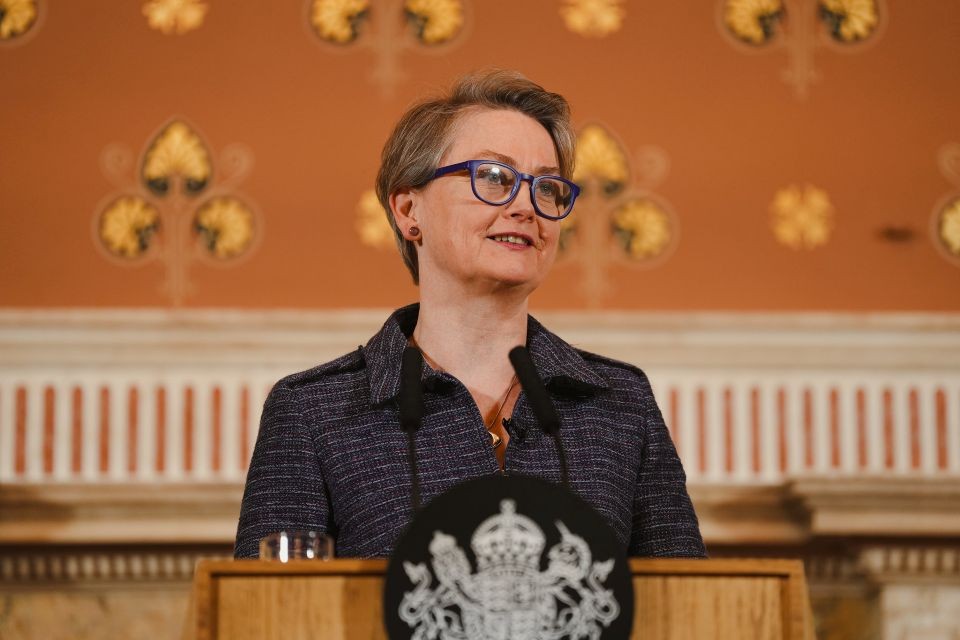
The Foreign Secretary’s Locarno Centenary Speech
Thank you very much, your Excellencies, Ladies and Gentlemen, let me welcome you to the Foreign Office, as we commemorate the hundredth anniversary of the Treaty-signing from which these great rooms derive their name.
Je suis desolée, que – contrairement a mon predecesseur – Austen Chamberlain, I am unable to preside over today’s events in fluent French.
But thank you to Dominique for that introduction and to the Swiss Mission in London for co-hosting today’s event.
And let me also welcome the Mayor of Locarno, here today to represent the ‘City of Peace’ where the Treaties were negotiated one hundred years ago.
And I’m pleased to say that we are also joined by representatives of other countries that signed the Treaties in this room in 1925, as well as our friends from other nations who share a common interest in the search for peace on our continent, and a resolution to conflicts across the globe today.
So this afternoon, I want to commemorate the signing of the Locarno Treaties, and to reflect on what the Spirit of Locarno can teach us about responding to the rapidly changing security challenges facing our world today.
Looking back at the coverage of the Treaty-signing from 1925, I was struck by how modern some of the discussion felt. There was even what we would nowadays call a ‘spin row.’ It seems that exclusive filming rights for the ceremony were sold to the Gaumont Company and the British media were furious. And even worse, in an attempt to protect that exclusive deal – over-zealous Foreign Office officials called for police to remove press photographers from the courtyard below us.
The result was that, in the three weeks after the ceremony, there were four separate debates in Parliament about the filming row - and just one about the military consequences of the Locarno Pact.
But beyond all the noise, it’s clear from every contemporary account of the Treaty ceremony that the unmistakable sense there was among all of those present about the weight and importance of what they were trying to achieve, and the duty that they owed to the peoples of Europe to succeed.
Every delegate spoke about the cause of international unity. Seven years on from the end of the Great War, the memory of the millions lost and the debt of peace owed to them weighed heavily on all involved.
Millions of people like Lieutenant Eric Henn, who – in the summer of 1914 – had come second in the entrance exams for a place here at the Foreign Office. But instead of starting his new job in this building, he volunteered to join the army. He shipped out to France in 1915, and was killed just a month later.
All that potential, stolen too soon. And for his mother and father, their only child lost. In 1925 millions of parents were in that same situation, still mourning their lost sons and daughters. Which explained why men and women standing in this great room a hundred years ago openly wept when the French Foreign Minister Aristide Briand quoted a letter that he had received after the Locarno Conference.
It said: “Allow the mother of a family to congratulate you. At last, I shall be able to look at my children without apprehension, and love them with security.”
King George V wrote in his diary that night: “I pray this may mean peace for many years. Why not forever?”
Of course, forever was not to be.
We could spend hours debating how far the flaws in the Treaties led to their demise – the weakness of the guarantees of Polish and Czech sovereignty, the limited institutional underpinnings, or lack of resilience within the signatory nations.
But as contested as the letter of the Locarno Treaties still is, we should not forget that it was the spirit of the common endeavour that in 1925 was so striking and that matters still. And we should not forget how brave and radical it seemed at the time.
As the award speech at the Nobel Peace Prize Ceremony stated the following year, and I quote, “If we are to appreciate fully what these statesmen accomplished, we must not overlook the violent nationalistic opposition in their own countries which several of them had to overcome to push through the peace programme.”
A group of political leaders choosing to pursue peace and unity, and recognising that partnerships with nations abroad made them stronger and more secure at home.
And that is the spirit that matters just as much today, at a time of huge global instability, in a world where we face ever more complex hybrid security threats.
The most acute of which for us right now lies in Russia’s war against Ukraine.
It has been nearly four years since Vladimir Putin led his illegal invasion into Ukraine.
Unprovoked.
Unjustifiable.
And unforgivable.
In the period since, Ukraine has been subjected to drone and missile strikes day-in, day-out targeting civilians.
While Russia has embarked on an appalling campaign to abduct Ukrainian children and ‘re-educate’ them to adopt pro-Russian views.
But each time, the Russians have underestimated Ukraine and underestimated their friends.
No one wants this war and the suffering and destruction it has wrought to continue.
Least of all Ukraine.
That is why the attempts by the US and President Trump to broker a ceasefire and pursue a sustainable end to this war are so important.
It is why just over the road in 10 Downing Street yesterday, the Prime Minister hosted President Zelenskyy alongside E3 counterparts to talk about the prospects for peace.
And yesterday, I met Secretary Rubio and others in Washington D.C. to discuss the negotiations and the path towards an agreement.
An agreement which must be just.
Which must be lasting.
And which must deter Russia.
Not give them simply a platform to come again.
And it must be acceptable to Ukraine.
But while we have two Presidents pursuing peace, the Russian President has continued to escalate the war with drones and bombs.
Russia’s aggression and security threats go far beyond Ukraine. We’ve seen sabotage in European cities. Reckless breaches of NATO airspace. Relentless cyber-attacks. A full spectrum campaign. To test us. To provoke us. And to destabilise us.
And that is why the UK has so consistently supported Ukraine in its efforts to resist Russian aggression.
Because this is the right thing to do.
Morally, and strategically.
For Ukraine yes, but also because it is our security that is at stake too.
But while those ceasefire discussions for Ukraine continue, I want to just take a step back and reflect on how the current security challenges that we and partner nations face relate back to the principles established through the Locarno Treaty 100 years ago.
And I want to offer two reflections – firstly, on the transformed nature of security threats compared to a century ago, and how that means we need to respond.
But secondly, on the changing partnerships and the renewed multilateralism we need if we are to confront the full range of shared threats we face.
So first on the threats.
Armed conflict is of course the threat uppermost in our minds as we think of Ukraine. Other traditional security threats have not gone away - from border disputes through to terrorism and nuclear proliferation.
But novel and hybrid threats to our collective security have emerged which would have been inconceivable a century ago.
From tampering with undersea communications cables to using biotechnology and AI as new kinds of weapons of war, those threats come in many different forms, and from many different quarters.
Some of these threats are flagrantly visible – the spy ships in our waters, or the acts of violence, terror or sabotage in our cities.
Some have not always been recognised for the threats that they pose, in particular on issues of economic security, for example the over-reliance of European nations on imports of energy from Russia or also on China for the critical minerals that we need.
And across Europe we are witnessing an escalation in hybrid threats – from physical through to cyber.
Designed to weaken our critical national infrastructure, undermine our interests or destabilise our democracies, all for the advantage of malign foreign states.
Some of these threats have echoes a hundred years ago. Two years before Locarno in 1923, the Soviet Union coined the expression ‘Dezinformatsiya’ and set up their first office to deploy disinformation.
But the term disinformation does not begin to capture the industrial scale approach from some malign actors today.
A hundred years ago, state-sponsored disrupters may have relied on expertly forged documents or carefully planted stories to manipulate public opinion. Today’s technology gives them the ability to do that on steroids.
And in 2024, evidence suggests that automated online traffic surpassed human activity for the first time, with some evidence of malicious bots accounting for more than a third of all messages.
In the Moldovan elections, two months ago, we saw fake websites designed to be the spitting image of legitimate outlets fabricating policies for politicians they sought to discredit. Across Africa we see videos laundered through apparent news portals with false claims about the Ukrainian president and his wife, seeking to undermine support for Ukraine. And across Europe, we see Russian agencies responsible for vast malign online networks like Doppelgänger that seek to flood social media with counterfeit documents and deepfake material in English, German, and French, to advance Russia’s strategic aims.
This isn’t about legitimate debate on contentious issues. We have wide-ranging debates, with strong views on all sides, on many things. But this is about state-backed organisations who seek to do us harm pursuing malign aims.
So we should call this out for what it is – Russian information warfare. And we are defending ourselves.
That is why we have built world-class cyber security, expert law enforcement and intelligence capabilities.
Why, since October 2024, this government has sanctioned 31 different organisations and individuals responsible for delivering Russia’s information warfare.
And why today I have gone further in exposing and sanctioning Russian media outlet Rybar, whose Telegram channel and network of affiliates in 28 languages reaches millions worldwide. Using classic Kremlin manipulation tactics, including fake ‘investigations’ and AI driven content to shape narratives about global events in the Kremlin’s favour.
Masquerading as an independent body, Rybar is in fact partially coordinated by the Presidential Administration. And receiving funding from Russian state corporation Rostec and working with members of the Russian Intelligence Services.
We have also sanctioned Pravfond, attributed by Estonia as a front for the GRU. Leaked reports suggest that Pravfond finances the promotion of Kremlin narratives to Western audiences as well as bankrolling legal defences for convicted Russian assassins and arms traffickers.
And our new measures will also hit Moscow-based ‘think tank’, the Centre for Geopolitical Expertise, and its founder Aleksander Dugin, whose work closely informs Putin’s calculations. And an organisation whose senior leaders are involved in Storm-1516, a malign influence network which produces content designed to create support for Russia’s illegal war in Ukraine.
But it isn’t just Russia.
Other countries are also enabling or ignoring this kind of undeclared action or cyber threats.
And that is why today, with support from our international partners and allies, we are also sanctioning two of the most egregious China-based companies, i-Soon and Integrity Technology Group, for their vast and indiscriminate cyber activities against the UK and its allies.
Attacks like this impact our collective security and our public services, yet those responsible operate with little regard for who or what they target.
And so we are ensuring that such reckless activity does not go unchecked.
And our message to those who would harm us is clear – we see you in the shadows; we know what you are doing, and we will defend ourselves and the international partnerships on which we depend.
And it is those partnerships with our allies around the world that have enabled the steps we have taken today.
The growing cooperation between teams in the UK, in France, Germany, Poland, Brussels and other countries that has led to these sanctions.
Pooling expertise, understanding and evidence.
And that’s what takes me to my second reflection on the collective Locarno spirit, and why multilateral action matters more than ever, but why it needs to modernise and adapt.
Because faced with growing global instability, there is a tendency to talk of two clashing perspectives.
One – that the era of traditional multilateral partnerships or collective commitments is over.
That, as we move into the second quarter of the twenty-first century, only great power politics matters.
Or alternatively, that at a time of global turmoil, we need to revert solely to the multilateral architecture built up since the Second World War as the only safe refuge, and dare not risk stepping outside it or asking it to change.
Neither are true as an account of the world or as an account of UK foreign policy and our national interests today.
The first ignores the lessons of history; that we are stronger if we tackle shared threats together.
But the second ignores the realities of today, where longstanding institutions, important as they may be, can be too constrained or too slow to respond
What we need instead in today’s world is to approach every challenge and tackle every threat by finding the most effective means of cooperation to get each job done.
Creative diplomacy.
Diplomatic entrepreneurialism.
A new and reinvigorated and more agile form of multilateralism, adapting to the demands of the task. Drawing on our long-standing relationships and multilateral institutions but also adapting, reforming and building new partnerships too.
That’s the approach the UK is taking. But it also reflects what we also see around us.
Just look at the range of new and old groupings that helped to create the conditions for peace in the Middle East and the ceasefire in Gaza.
In the last few months, we have seen the world come together to support the US-led peace process in Gaza.
The 20-point plan drawn up by President Trump, working with mediators from Qatar, Türkiye and Egypt.
All following the commitments made by the whole of the Arab League to isolate Hamas, the recognition of Palestine by the UK and dozens more nations at the UN, and a Declaration then endorsed by 142 countries.
And a ceasefire agreement supported by over 25 nations at Sharm El-Sheikh, followed weeks later by a UN Security Council resolution to support implementation on the ground and provide the mandate to move forward.
So that was leadership by the US, with new and agile partnerships for peace coming together from across the globe but underpinned by multilateral institutional agreement. It’s not multilateralism as we have always known it, but it is essential in today’s world and must be matched by further work to reform and adapt.
But look at other examples. The E3 cooperating on the nuclear threat from Iran, or the vital work now underway that we are supporting in the Quad and at the UN to seek to secure a humanitarian ceasefire in Sudan.
And the new deals that Britain has agreed with France on migration returns, and with Germany on tackling smuggling gangs, as pilots for broader cooperation in future.
In each case, we see new partnerships of like-minded countries with the agency and will to secure rapid breakthroughs, supported by later, broader agreements, rather than having to wait for them.
And nowhere does that matter more than on our collective response to that most immediate national security challenge that we face – that I have already talked about – on Russia and Ukraine.
So there too, we have worked to strengthen and reinvigorate NATO – the cornerstone of European security. But we’ve also worked flexibly and creatively to bring likeminded countries together in Europe and beyond.
Working with the US on the peace process. But also, thanks to the leadership the Prime Minister has shown, working with France to establish the Coalition of the Willing. More than 30 countries signing up – including all the original Locarno signatories – and not just in Europe, but beyond, because we all recognise the threat Russia poses.
For too long, Europe has relied too heavily on US support to protect ourselves from the threats to Euro-Atlantic security.
And we can do so no more.
Europe must step up.
Because it is fundamentally in our own interests. And because our continent, is, first and foremost, our responsibility.
And because the Transatlantic partnership will be stronger and more durable if that burden is properly shared.
And so earlier this year, the Prime Minister took the decision to boost defence spending up to 5% of GDP by 2035 – making difficult trade-offs in the meantime.
But it’s also why we are deepening cooperation and partnerships on security around the world, including for example, our Carrier Strike Group. Conducting operations with partners beyond NATO across the Indo-Pacific, but then placed directly under the command of NATO on its return leg, reflecting still that centrality of NATO in all that we do.
That is how UK will operate – agile and pragmatic partnerships for the sake of our national security, our shared interests, and the principles we champion across the world.
So yes, that’s why I believe the centenary we mark today is so important. A vital reminder – that when we discuss the modern threats that we face, whether it be from information warfare to the shared risks to our economic security, to cyber security, border security and beyond – that the Locarno spirit is not a quaint relic of times long gone, but an essential lesson from history.
A reminder that for us in the UK, the partnerships we build abroad make us stronger and more secure here at home.
And to reinforce that, let me quote the words of German Foreign Minister Gustav Stresemann, spoken in this great room one hundred years ago after he added his name to the Treaties.
He said, “One fact has emerged, namely that we are bound to one another by a single and a common fate. If we go down, we go down together; if we are to reach the heights, we do so not by conflict but by common effort.”
And Doctor Stresemann’s words are as vital and as powerful now as they were one hundred years ago. He reminds us of the duty we all have – every person, every leader and every nation – to work together in the pursuit of peace, security and democracy, and to stand together against anyone who threatens that goal.
That is our task today as surely as it was 100 years ago, and that is the Locarno spirit which we must now keep alive.
Thank you very much.