Modernising the NHS to meet changing demands
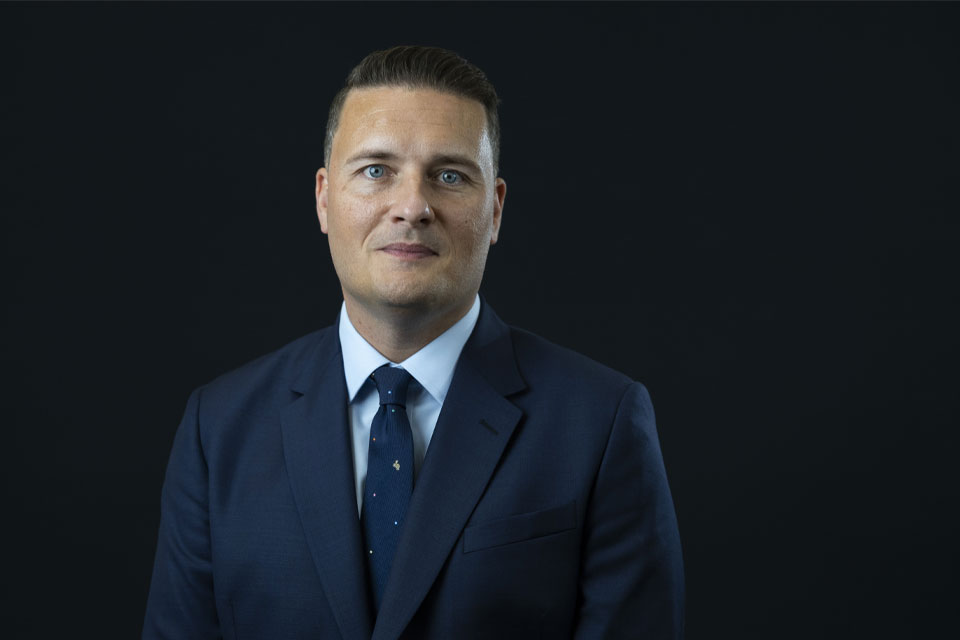
Wes Streeting, Secretary of State for Health and Social Care, delivers a keynote speech on NHS reform at the Institute for Government's annual conference.
Good morning and, if it’s not too late to say, Happy New Year.
We gather in the depths of winter, during what is the busiest time for the NHS and the point of maximum pressure on our social care services.
And in the NHS and across the social care system, there are encouraging signs of year-on-year improvement.
On New Year’s Day we had the highest volume of 999 calls in the history of the NHS, yet ambulances responded to cat 2 calls - which are suspected heart attacks and strokes - around 15 minutes faster than the same time last year.
But for all the progress we are making, there is so much more to do. On our best days, there will still have been patients on trolleys in corridors being treated in conditions that fall short of my ambitions and expectations for our health service, just as on our worst days there are still outstanding episodes of care being delivered by dedicated people.
In the 18 months that I’ve had the privilege of leading the largest public service in the world and the largest corner of the British state, I’ve sought to get the balance right: of being proud of our progress without overselling success and of being honest about our shortcomings and challenges without fuelling pessimism and defeatism.
Most of all, I’ve strived to make every day in this office count.
To be motivated by the scale of the challenge I am up against, not weighed down by it.
To take as many people as possible with me, without surrendering to vested interests.
And to never forget that the British state is like a shopping trolley with a slightly wonky front wheel that will always orientate to the status quo unless it is steered in the right direction.
One of the great challenges of our age is how to reform the state and public services so they deliver for people.
The failure in this area has led to disaffection, cynicism and ultimately the rise of populists.
That alone is cause for urgency in our public service reform agenda.
But even if the state was awash with cash and delivering consistently high performance, there are 3 reasons modernisation can’t be dodged any longer.
First, demand has changed. We are living longer, but too many are living in poorer health. More people are managing multiple conditions. Demand for mental health and special educational needs support has exploded. We are paying a heavy price for social failure, with schools, hospitals and GPs increasingly expected to pick up the pieces.
Second, the state is inefficient at a time when resources are limited. People are paying more in tax, but getting a poorer service in return. From Whitehall down, the state has become too often reactive - paying the highest price at the latest stage - instead of preventing problems earlier and cheaper. It’s penny wise and pound foolish.
Third, the world is changing and public expectations have changed. For too long, public services have rationed power as tightly as they ration money. Those with confidence, connections and time find ways through. Those without are told to wait, comply and be grateful.
That isn’t equality - it’s a quiet inequality built into the system.
In the rest of their lives, people are used to services that are straightforward, joined up and digital. They rightly ask: if I can track a parcel across the world, why can’t the state tell me what’s happening with my case? Why do I have to tell my story 5 times? Why do I have to travel, queue, wait and chase? Unless the state modernises it will become increasingly irrelevant to the lives of its citizens.
Failure to address these challenges is creating a national mood of cynicism and pessimism. But the most corrosive sense of all is fatalism - the idea that things can’t change. However much joy we continue to take in the simple pleasures of home, family and community, we’re losing faith in our collective ability to do big things.
[Political content removed]
And we should be in no doubt that they are excuses. Back to my shopping trolley analogy - there’s no point complaining about the wonky wheel if you’re letting the trolley have a mind of its own, instead of steering it towards the destination you’re after.
We are not simply at the mercy of forces outside of our control. Our fortunes are in our hands. [Political content removed]
Where there aren’t levers, we build them. Where there are barriers, we bulldoze them. Where there is poor performance, we challenge it.
That is the approach that has put the NHS on the road to recovery.
Over the past 18 months the NHS has improved in ways that haven’t happened for over a decade.
That is the result of the combination of investment and a modernisation agenda that is transforming the way the NHS runs. My approach to modernisation of public services is based on 5 principles:
- power to the people
- freedom to the frontline, with accountability
- shifting from crisis response to prevention
- productivity and potential unleashed through technology
- spending taxpayers’ money with care
Turning first to power to the patient.
Public services exist to serve the public, not their producers. That is the fundamental driver of every decision I take in the Department of Health and Social Care.
The experience of the citizen and the impact on their lives is paramount to the design of public services. If public services are designed around the convenience of the institution, the result is silos, handouts, delays and poor performance. When those services don’t co-ordinate, the public pays twice: in money and in misery. If public services are designed around the citizen, the result should be joined up support, better impact and better value for money.
Strong public services don’t fear empowered users. They’re built on them. Putting more power, agency, choice and control into the hands of service users is how we level the playing field.
It’s about trusting people as experts in their own lives, redistributing power, not just from central to local bureaucracy, from secretaries of state to metro mayors, but all the way to the people who need services most. If devolution is simply the transfer of power from one set of politicians and institutions to another, then it won’t deliver the scale of transformation needed. In today’s world, we’ve got to enlist the citizen as an agent of change.
[Political content removed]
Because of the improvements and new features we’ve added to the NHS App, an extra 3 million patients use the app each month compared to a year ago. 330 million messages were sent from GPs, hospitals and screening services to patients last year - twice as many as the previous year.
This morning, an NHS patient can:
- avoid the 8am scramble and request a GP appointment online
- review test results in the NHS App rather than having to go through their GP
- track their prescription order like they would an Amazon package
- demand a second opinion from a different care team if they’re concerned theirs or a loved one’s condition is rapidly worsening
Next year, patients will be able to see a specialist online for conditions including prostate cancer, cataracts and endometriosis through NHS Online, rather than traipsing across town to a hospital.
And here’s the point: none of that was true in July 2024. Except for patients who could afford to go private.
That’s what we’re delivering after just 18 months in government. [Political content removed]
By modernising the NHS we are giving patients the same choice, convenience and control they are used to in every other aspect of their lives. And we are closing the gap between the service enjoyed by the wealthiest and the rest of the public.
One of the most well-evidenced, effective changes you can make to public services is putting expert leaders in charge. Expert leaders solve persistent problems. I’ve been fortunate to have worked with, and learned from, the expert leadership of Dame Amanda Pritchard and her successor Sir Jim Mackey, who is radically changing things in the NHS off the back of decades of experience and impact.
But there is a reason we have politicians rather than experts as secretaries of state. We are here to put the patient, the pupil, the passenger first. To fulfil Nye Bevan’s promise to put a megaphone to the mouth of every patient. One of the reasons I am comfortable battling the system is because it is my job to be in touch with the public and speak up for their interests.
When the BMA opposed online booking for appointments, I didn’t back down because I knew it was what the public expected and deserved.
Despite the criticism that league tables would, quote ‘undermine public confidence’, I didn’t back down because the public deserve to know what their taxes are paying for.
There are many decent people working at Healthwatch who care. But the job of listening to patients can’t be farmed out to an arm’s length body. It must be core business for the NHS. That is why we’re taking it back in-house and I won’t back down on that either.
When it comes to the running of the service, the people who best understand what’s broken are the people who work in it every day.
Centralisation has infantilised NHS leaders and stifled the frontline.
You cannot effectively run a public service the size of the NHS from 2 offices a mile apart from each other in Whitehall and Wellington House.
We’re stripping out layers of bureaucracy, trusting professionals and giving teams the tools to drive self-improvement and better outcomes. Roles, resources and responsibilities are being devolved to the frontline.
The quid pro quo is that freedom comes with clarity. I was willing to take the [political content removed] flak for slashing the number of directions and targets in order to provide the NHS with clear priorities. Out with the focus on controls and inputs, in with incentives and accountability for outcomes. No more hiding behind process when outcomes are poor.
We need to value our people. We know that more expert teaching is the key to better outcomes in our schools, that consultants make more efficient and effective triage decisions in A&E departments, and that more expert governors run more secure and rehabilitative prisons. So those leaders who aren’t up to the job are being effectively and professionally moved on. And I’ve risked the inevitable tabloid headlines by approving higher salaries for NHS managers, because the best leaders are worth it.
I’m constantly told that I will have to fight NHS leaders to deliver change. Quite the opposite, in my experience. They are some of the strongest advocates for it.
We’ve told them: if you’ve got a new approach that works, if the outcome is positive, then crack on. The result is waiting times falling for the first time in 15 years.
Queen’s Hospital in Romford halved its list of kids needing their tonsils removed, many of whom had been waiting longer than 40 weeks for surgery, with a 2-week blitz of procedures.
Unused theatre slots were identified and there were back-up patients in case of cancellations.
The result was more than 200 kids free of sore throats and tonsilitis that kept them out of school and forced their parent to take days off to look after them.
Last week, I was at the Royal Brompton, where they are using robotic-assisted bronchoscopy to treat lung tumours in such a precise way that patients can go home the very next day. That’s so much better for patients, but also less expensive for taxpayers.
The remarkable thing is that the hospital is running it as a loss-leader, because they know it’s the right thing to do for patients. They are building the evidence base for it, confident that national leadership will change the financial incentives so the benefits flow back to the hospital. That is what restored trust and confidence in frontline leadership looks like.
Turning to prevention, the biggest waste in the system is problems being left to escalate.
Prevention isn’t a slogan. It’s a method for catching illness earlier, intervening before children fall behind, stopping crime before it happens, supporting families before breakdown, keeping people independent rather than institutionalised.
Prevention is also the most progressive thing we can do. The people hit hardest by failure are always those with the least power to navigate it.
When it comes to public health, people often complain that the scale of the solution doesn’t match the size of the problem. I don’t think that is true for a progressive smoking ban that will eventually ban smoking for everyone. Or for a healthy food standard that could cut obesity by 20%.
We can’t create a healthier society without the state. But the state can’t do it alone. We need to mobilise business, civil society and all of us as citizens on a national mission to close the gap between rich and poor so we all live well for longer.
The mission-driven approach we set out in opposition remains the right approach to the monumental challenges we face today.
We partnered with Joe Wicks to keep kids active during the summer holidays. Colgate are providing toothpaste and brushes to help run supervised toothbrushing in nurseries and primary schools. Danone has committed to never producing a high fat, salt or sugar product aimed at children.
There is a coalition of the willing to help build a healthier nation and, in many cases, they aren’t waiting for government.
The state will support the foundations of good health. Partnering with industry and the voluntary sectors will drive innovation to support healthier lives. In exchange, citizens will be empowered to take responsibility for their health.
Then to technology. Modernisation will require allying the public’s desire for change with the technological revolution.
Running 21st-century public services on analogue systems is not a neutral choice - it is an active decision to waste time, money and human potential. Paper forms, endless queues and outdated IT don’t protect the public - they protect inefficiency. Worse, they shift the burden of failure onto users.
Access is rationed through delay and complexity. Those with time, confidence and connections can get seen. The rest are left behind.
Digital services do the opposite - they put users in control, make entitlements transparent and force the system to work at the pace of people’s lives, not the convenience of institutions.
The productivity case is overwhelming. Highly trained professionals should not be burning hours on tasks that can be automated.
Every minute spent chasing paperwork is a minute not spent teaching, treating or rehabilitating. Digitisation is how we release expertise, raise output and improve outcomes without endlessly returning to the taxpayer for more.
Take Greater Manchester, where an AI-powered chest X-ray tool is reducing delays in diagnosing lung cancer. The proportion of patients getting results within 24 hours has leapt from a quarter to three-quarters in just 3 weeks.
The principle must be technology where we can, human where it matters. The NHS will always be a people-based service. Empathy, expertise and accountability can’t be substituted with tech. Marrying the care of frontline staff with the ingenuity of modern technology will make the service more productive for taxpayers and more humane for patients. If a GP is staring at their screen and typing their notes while talking, patients are not receiving the best personal service. If the GP is using AI to capture and transcribe the appointment, their full focus can be on the patient.
Convenience is not cosmetic. When services are easier to access, people use them earlier and more appropriately, preventing problems from escalating and costs from ballooning. The real risk is not moving too fast but moving too slowly - locking inefficiency into the system while demand continues to rise.
And of course we must always be mindful of those at risk of digital exclusion. The important thing is choice. But we also shouldn’t kid ourselves. The NHS is so far behind what patients and staff expect.
Like the guy in the pub who told me his consultant was using his own ambient AI app on his phone - no doubt in breach of one or two important information governance and security protocols, albeit with the patient’s permission - because his NHS trust was behind the times.
Nor should we patronise. I’m often reminded of, during the pandemic, when I asked one of my elderly party members if she needed me to pick up any shopping for her. She replied, “Oh no dear, I do all my shopping on the iPad. Don’t you?”
So we shouldn’t assume and make stereotypes about who is and who isn’t connected.
Finally, to valuing taxpayers’ money. The need to improve productivity is not technocratic, it is a moral issue. Every pound wasted on failure is a pound not spent on cancer treatment, on classroom support, on safer streets, on decent homes.
The burden of taxation in Britain is at historic highs. Individuals and businesses are making sacrifices at an opportunity cost to themselves, and they deserve to see their taxes spent carefully and wisely.
The abolition of NHS England and changes to ICBs are about removing the number of bureaucratic layers in the service. Fewer checkers and more doers. But they are also about making sure that every pound going into the service is well spent and spent to the best effect.
The IfG describe it as a ‘distraction’. You can’t have it both ways. You can’t complain that money is tight and then oppose changes to put money wasted on duplication to better use.
Taxpayers should never be asked to fund inefficiency as if it were compassion.
How could I possibly justify continuing to employ 2 teams doing the same job, sitting a mile apart from each other and checking each other’s homework, when we don’t have enough GPs?
Your report described this as ‘manager bashing’. This is precisely why the state has become so bloated and ineffective. We can blink as ministers and our departments will grow without any direction.
Try and shrink it and it becomes much more challenging.
No one actually defends the status quo by the way, but try to change it and the chorus of disapproval shows why maintaining a bad status quo becomes the default setting for the British state.
I have been told since opposition that the NHS is a sinkhole for public money and it’ll never change. In fact, because of the changes we are making, the NHS is working to financial balance for the first time in years. This is a system that is rebuilding trust in its ability to deliver to budget.
That isn’t risk-free. There are some parts of the service that have oversteered and therefore are underdelivering on elective activity. That’s a challenge, but it’s much easier to solve than a system that routinely spends beyond its means without consequence.
So in conclusion, the scale of change required is enormous.
[Political content removed]
If we opt for timidity or incrementalism, we will fail. Nor can we accept the binary choice of recovery or modernisation. It is only through bold transformation that we will cut waiting times at the pace that’s needed.
But we know we can do it because we’ve already begun.
For the first time in 15 years, waiting lists are falling.
Ambulances are arriving faster and A&E waits are shorter.
Patient satisfaction with GPs has gone from 60% to 75%.
Fewer staff are leaving than at any point in the past decade, outside of the pandemic.
The progress we are making in the NHS shows that things can get better.
Government is hard because we are facing into big challenges that affect every single person across our country, which is what has made this job so utterly rewarding.
The future has not been written yet. We have the power to do big things, to shape our country, change our public services for the better and to improve the lives of every citizen of this great country.
We do so with a willingness to learn, adapt and govern in the world as it is, without surrendering the values that tell us how the world ought to be.
And we do so with a strong belief in common endeavour - that simple but demanding conviction that believes that the individual flourishes when the collective is strong and that the collective is strong when individuals are able to give their best.
Nowhere else in the state do those values and sentiments find better expression through deeds rather than words than in our National Health Service.
We’ve got a 10 year plan that will not just get the NHS back on its feet but will make it fit for the future.
So as we start 2026, I can confidently say: change has begun and the best is still to come.
Thank you very much.