Rachel Reeves Mansion House 2026 speech
Chancellor of the Exchequer Rachel Reeves delivered her third Mansion House speech on the evening of Tuesday 14 July 2026.
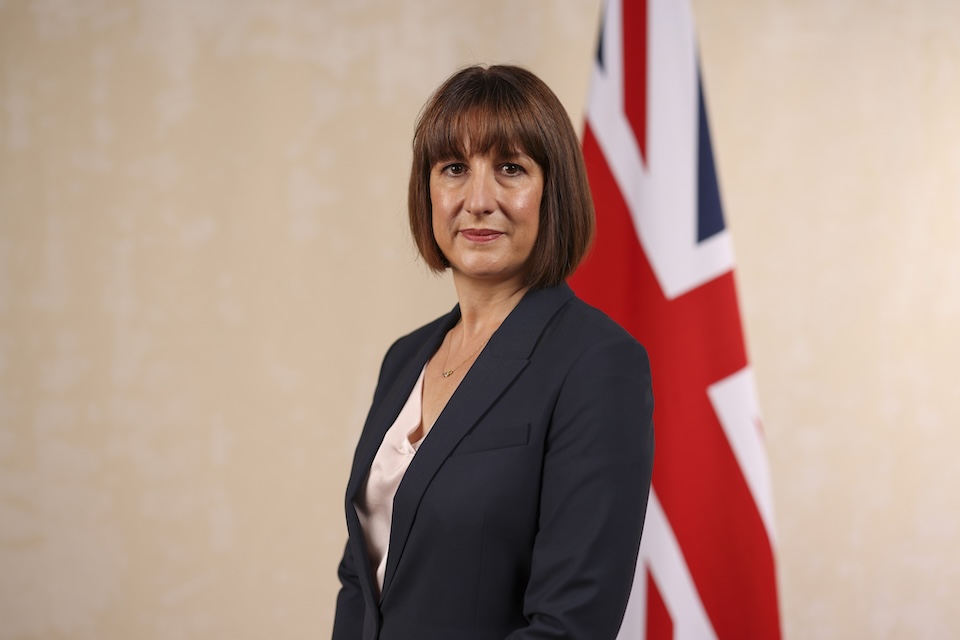
Lady Mayor, Governor, Ladies and Gentlemen…
…my thanks to the Lady Mayor for her address and to the City of London Corporation for hosting us here this evening…
I’d also like to thank the Financial Secretary, Economic Secretary and the Chief Secretary for the work they have put in towards my address this evening…
…and to the brilliant Gwyneth Nurse and her team at the Treasury for their tireless support.
I have always been a firm believer that the success of our world-leading financial services sector is good for the whole of the United Kingdom…
…and I’m pleased to address you again this evening for the third time as your Chancellor.
It was two years ago this month that this government was elected to office…
…and I was appointed Chancellor of the Exchequer.
This evening, I want to take the opportunity to reflect on the past two years:
On the choices that I have made, on Britain’s economy today, and on the opportunities I see ahead of us.
I’m proud to report that the British economy is strong:
At the start of this year, Britain had the fastest economic growth of any country in the G7,
Last year, borrowing fell from 5.2% to 4.2% of GDP - its lowest level in six years,
Investment is up, productivity is up, and wages are up too,
NHS waiting lists are falling at the fastest rate than at any time in the last 17 years…
…and half a million children will be lifted out of poverty during the course of this Parliament.
If I had said two years ago that this is where we would be today, many people would have doubted it…
…but we have proven the doubters wrong.
Through strength, through resilience and through determination, Britain has beaten the odds once again.
Two years ago, I inherited an economy that had challenges on multiple fronts:
A public finance challenge – spending over £100bn a year on debt interest…
…while capital investment was cut in favour of short-term fixes - projects promised, yet no money committed to deliver them.
A public services challenge - school roofs crumbling, prisons overflowing and hospital waiting lists skyrocketing…
…and an economic challenge – anaemic economic growth, interest rates rising and the cost-of-living crisis weighing on the everyday lives of ordinary people.
Since the election, I have systematically addressed each of those challenges.
In my first Budget, I repaired the public finances, whilst setting out a path of fiscal consolidation to bring borrowing costs down…
…and at the same time, I made bold changes to the fiscal rules that meant I was able to invest an additional £120bn in my Spending Review to restore our public services, and build the housing, energy and transport infrastructure that is so critical for economic growth.
At my second Budget last year, I built on these strong foundations to bear down on the cost of living…
…cutting inflation by reducing energy bills, freezing prescription charges and freezing rail fares…
…and doubling our fiscal buffers to protect both household and the public finances from increasingly common economic shocks.
The resumption of hostilities in the Middle East in the last few days has shown that our economic resilience will continue to be tested…
…and the market response to those changes shows that there is still work to do to ensure that our economy and our country is protected against a volatile global landscape.
The action I have taken so far has been underpinned by a new approach to building sustainable and resilient economic growth in every part of our country…
…an approach that I have called securonomics - an investment-led growth model for Britain…
…where an active and strategic state steps up to make conscious and deliberate choices…
…through stability in the public finances, investment in our infrastructure and reform of our economy.
This government has shown that change, indeed radical change, is possible…
…and the record of the last two years makes clear that governments can achieve that change only when they combine radicalism with credibility.
I had to earn that credibility in opposition, and I have proven it in government…
…in every action that I have taken since I was appointed as Chancellor.
That hard-won credibility must be sustained and the foundations maintained if this work of radical change is to continue.
In the past, radical governments without credibility have ultimately failed to win the trust necessary to deliver their agenda…
…and without radicalism, credible governments have found their credibility eroding when they are unable to satisfy the public’s justified impatience for change.
The most successful [political content redacted] Governments have and must pursue the twin path of radical change and economic credibility.
The work of change has begun, and I am proud that the decisions that I have made as Chancellor provide a platform for the next Prime Minister to take our country forward.
I am optimistic about our country’s potential, hugely optimistic…
…the economic future that is within our grasp.
But that future is not an inevitability…
…it requires choices.
That is why in my second Mais lecture earlier this year, I set out three big choices…
…to go much bigger and bolder in the areas which offer the greatest opportunities for Britain’s growth, prosperity and security.
First, building growth in every part of our country – breaking with the failed idea that prosperity can be built from just a few narrow parts of Britain,
Second, a concerted drive to make sure the jobs, industries and the innovations of the future are built here in Britain…
…and third, confronting head-on the damage done by Brexit by building much deeper ties with our largest and closest trading partner – the European Union.
Britain should not be a country where opportunity and prosperity are confined to a few parts of the country…
…with other areas’ potential untapped, their talent and their resources wasted.
This is a long-standing weakness in the British economy…
…and one where we are a clear outlier compared to our global counterparts.
Since the election we have taken a new approach…
…increasing investment in regions across Britain…
…and taking steps to unwind the old model which hoarded too much power in London…
…with Whitehall taking a monopoly not only on where but on how money is spent.
To boost regional investment, I have reformed the Treasury’s Green Book – our investment manual – so every part of our country is given a fair hearing…
…and I have increased investment in city region transport, supported Development Corporations in our two growth corridors, and allocated money to new place-based funds to boost defence, innovation and creative clusters in our regions and our nations.
Yesterday, I met with Mayors from across Britain.
Their frustration is familiar to me from sixteen years as a Member of Parliament in Leeds…
…of knowing the right priorities for your own area, but not being empowered to deliver them.
Here too, we have made progress.
This government has done more to devolve power in the last two years than its predecessors did over the last two decades:
Expanding integrated settlements so that more Mayors receive a single multi-year funding pot with flexibility about deciding how that money should be spent,
Introducing City Investment Funds, giving established regional leaders control over long-term, self-sustaining capital where returns can then be be re-invested for further growth…
…and giving Mayors the power to introduce an overnight visitor levy.
But devolving real power means doing this at a much greater scale…
…and in my Mais lecture I set out the next major step:
Giving regional leaders control over a share of national taxes including income tax and business rates.
There is much further to go…
…but the steps I have taken put us on a path to a permanent transfer of power and resources away from central government…
…towards long-term investment, local accountability and regional leadership to create growth in every part of our country.
Our economy is most successful when an active and strategic state partners with business to innovate and to compete globally.
That is a fundamental principle of securonomics and of our industrial strategy:
Not shying away from technological change – but stepping up and charting a path as our economy changes…
…and not allowing our industrial base to decay, leaving us exposed to volatile global supply chains…
…instead recognising that economic security is national security.
That is why we stepped in to save British steel and prevent Britain’s steel capacity from being fundamentally undermined…
…so that our infrastructure, our industries and our security are not dependent on foreign imports.
That is why we are backing our world-leading defence sector…
…so that as defence spending rises across the world, the benefits of that investment and those jobs will come here to Britain…
…and that is why I have changed our procurement rules, so that government procurement is no longer a cheque for global incumbents but a launchpad for British businesses…
…ensuring we can buy British when it is critical to our national security – for steel, for shipbuilding…
…and now for AI.
AI is the defining technology of our generation.
It will be crucial to our national security and to all our economic futures.
I am clear that the role of the active and strategic state is not to step back from the challenges this new technology presents…
…but instead it is to step up - embracing the opportunities of AI while guarding against the risks.
That means having a serious plan on AI sovereignty, backing UK companies to win at critical positions in the AI stack:
Through our Sovereign AI unit, through our advanced market commitment to quantum, through our AI hardware plan,
…and through our new AI Economics Institute…
…so that the jobs of the future are created here in Britain.
Financial Services is already at the cutting edge – a sector that is leading the way in embracing new technology and innovating to compete right across the globe.
Today, I am publishing the recommendations of the Transatlantic Taskforce on Markets of the Future that I launched with Secretary Scott Bessent last year…
…and I am publishing an update on our progress in the last year against the Financial Services Growth and Competitiveness Strategy where I hope you all agree we have made good progress.
We have one of the best stablecoin regimes in the world,
The Great British Tokenised Deposit initiative is now moving to pilot transactions,
From today UK businesses can access new AI payment tools - with Mastercard choosing the UK as the first place in Europe to launch new agentic payments,
…and I can announce that by early next year, the UK is set to become the first G7 country to issue a Digital Sovereign Bond, with plans for future issuance to come.
The success of the Financial Services sector is built on the deep strengths of our economy…
…with world-leading universities, cutting-edge research capability and one of the most vibrant start-up ecosystems anywhere in the world.
We must now go further to achieve the same success in other sectors of the economy…
…supporting the small and medium sized businesses that are the backbone of local economies in every part of our country…
…and making the UK the best place in the world to start, to scale and to stay.
Since becoming Chancellor, I have reformed financial regulation, setting out proposals for changes to ringfencing rules…
…and last week the Financial Policy Committee published the results of the review I requested on bank capital requirements…
…which is estimated to mean up to £150bn of additional lending…
…with Nationwide alone committing an additional £40bn in mortgages and to SMEs because of the changes that I have made.
I am turning Britain’s savers into investors through changes to ISAs and to financial advice,
Last year, our largest pension funds invested an additional £10bn into private markets because of the changes that I have made…
…and insurers are well on the way to delivering their £100bn investment pledge, with £17bn invested into UK assets to date.
And I have boosted SME lending including through the changes I announced yesterday in Gateshead to help businesses grow, invest and create jobs…
…launching a new UK Export Finance guarantee scheme, to help small businesses to start exporting…
…and expanding the highly successful Growth Guarantee Scheme from the British Business Bank…
…more than doubling SME lending that it will support to £3.5bn per year…
…and increasing the number of businesses supported from 8,000 to 20,000.
Lloyds, NatWest and Allica Bank have already confirmed that those changes will help them to provide £1bn each of SME lending over the next 3 years…
…and I am grateful to Paul Thwaite and to Charlie Nunn for driving forward this vital work.
This is a crucial pillar of our growth strategy - backing British businesses to innovate, to export, to grow and to succeed.
In the age of insecurity in which we live, the economic strength of our country will rest on strategic alliances…
…and no alliance is more important to us than our relationship with the European Union.
Last week, I attended Eurogroup in Brussels, where I met with Commissioner Albuquerque, and I am pleased to have John Berrigan from the Commission here tonight.
I have always been clear about the damage that Brexit did to our economy.
Britain’s future is inescapably bound with that of Europe…
…our largest trading partner, with whom we share common interests and common values.
We have already made significant progress:
Participation in Horizon Europe is supporting the development of cutting-edge technology,
We are set to rejoin the EU’s Erasmus scheme from next year…
…and yesterday the Prime Minister announced an agreement on the UK’s participation in the EU’s €90bn loan to Ukraine…
…which will strengthen our defence links and our defence industrial base.
I want to see the next UK-EU summit rescheduled as soon as possible…
…so that we can finalise ambitious agreements on agrifoods, emissions trading, electricity and a Youth Experience Scheme.
But I think that we need to be much bolder and go much further…
…moving towards a trusted economic and security partnership, where the default is that the UK is included not excluded…
…recognising that in the majority of cases, that will be the approach with the greatest benefits for Britain, and for the EU.
To achieve that, it will be incumbent on those of us who believe in Britain’s relationship with Europe to make it happen…
…and to demonstrate the positive difference it will make to the British people.
I am grateful for the support of so many in this room for championing a policy of greater EU cooperation and integration.
Reduced burdens for businesses,
Lower costs for consumers,
Greater opportunities for our young people…
…and a more resilient economy – with our energy systems, national security and supply chains buttressed against a volatile global landscape.
The prize for Britain of a closer relationship with the EU is immense.
I am proud of what this government has achieved since the last general election:
We have restored economic stability – putting our public finances on a secure path,
We have invested in our public services and in economic growth - in transport, in nuclear, in housing…
…and we have reformed our economy so that it works better for working people - sweeping away our antiquated planning system and striking trade deals with countries around the world.
The result is an economy that is stronger, with wages rising, and child poverty falling.
Through the choices I have made I have fixed the foundations…
…and I have begun the work of building secure and sustainable growth in every part of our country…
…where an active and strategic state steps up to empower our regional leaders, back British businesses and deepen our relationships with the EU.
Radical change is only possible if it comes with credibility…
Radical change without credibility does not endure…
….and credibility cannot be sustained without delivering change that meets the moment.
Radical change is only possible if it comes with credibility.
That has been my mission as Chancellor of the Exchequer.
That is the mission of this government.
And I know it will remain the mission of the next.
Thank you.