Prime Minister's speech on social care - 29 July 2026
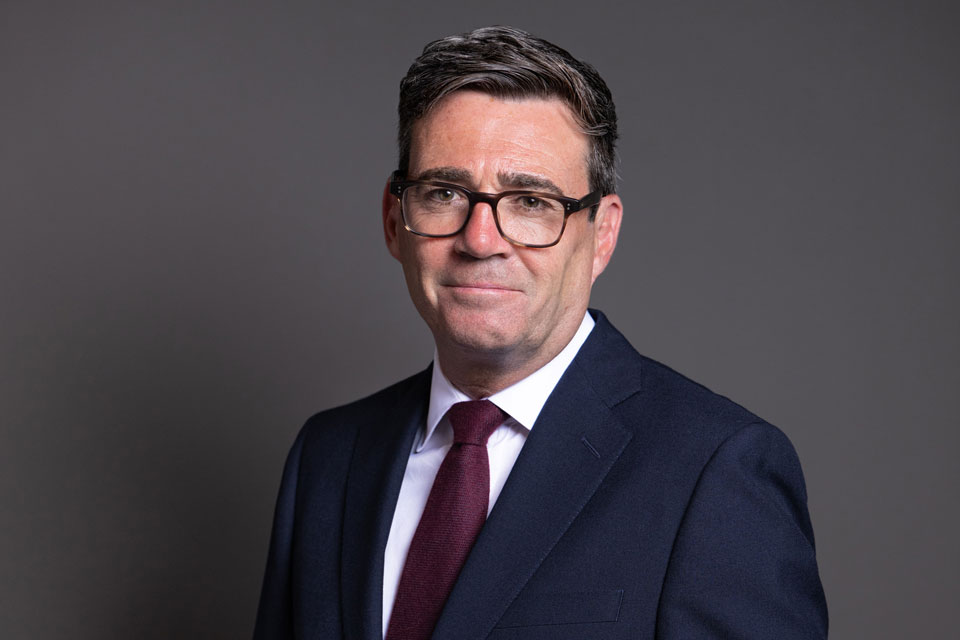
Prime Minister Andy Burnham delivered a speech on social care this morning in Golders Green.
Good morning, everyone. Thank you so much. Lovely welcome there.
I’m just looking around the room and I see a lot of faces who’ve been on this journey with me for a long time.
Many of you, you know who you all are.
You’ve probably got a feeling of déjà vu, don’t you?
You’ve probably got that, but don’t have that, because this time we’re going to do it, right.
We’re going to do it.
You don’t take anything on without doing it, do you, Louise?
So let’s make sure we do.
And lots of new faces as well. Fantastic to be with you all this morning.
I was going to speak from notes, but for the reasons Louise just gave, you can’t, can you?
I’ve just got to speak from the heart when it comes to this issue because it is very, very personal for me right now and for my family.
We’ve kind of lived it in the last few years from the inside and the only thing you can do is talk from that.
You can’t do this job, in my view, without bringing all of that to it and then using that emotion, if you like, to make the change and be brave in making that change.
And that’s what I intend to do, as I’m going to explain.
There’s lots I can say about what’s wrong with the system.
I will come to that.
But I want to start with what’s good about the system, because sometimes when we talk about social care, we don’t do that enough, do we?
And I see so much good in terms of the journey that we’ve been on.
And I am talking about the people who’ve cared for my dad.
Hundreds of them - we’ve seen and we’ve watched.
You know when someone in your family is receiving care, you look at everything through new eyes, don’t you?
You notice things that maybe you didn’t notice before because you watch it so closely and so carefully.
And I’ve just been really overwhelmed by their care, their skill in what they do, their professionalism.
It really is incredible, and it’s humbling to watch them caring for someone else’s dad or someone else’s mum.
If you think about that, you know, bringing all of that to the care of someone else’s relative, it’s just an incredible thing, isn’t it?
To me, they should be the best paid people in society, not the worst.
And I just start with that feeling.
And I am talking because many people from other countries have been caring for my dad.
I want those carers to know we appreciate you.
We appreciate what you are doing to support people here.
And it really matters that I say that as well.
There is so much to be proud of.
I mentioned the skill, and the care, and the professionalism.
I watch sometimes how people communicate with my dad and they’re able to catch a kind of a moment of his old character.
It comes out because of the way they draw in the conversation and that is an amazing talent to have.
But also moving from a wheelchair to an armchair, or from there to a bed without distress or discomfort, it is incredibly demanding and skilful what they do and that needs to be recognised.
I also want to recognise the good organisations, care organisations in all sectors, and as Louise said, we are really lucky to be in one today.
I visited Jewish Care here in Enfield with the Member of Parliament, Sarah, 10 years ago, and I remember thinking well this is the gold standard, this is how it should be.
We’re lucky to have its sister organisation in Manchester called The Fed, the leader of Bury Council here today, chair of the LGA.
He knows what I mean when I say that’s whole person care, Eamon, isn’t it?
You know it when you see it and you see it there at The Fed, you see it here at Jewish Care.
I see it at the faith-based charity who run my dad’s care home.
I see the same.
I see good in all sectors.
Let’s celebrate the good in social care before we turn to the things that we know need to be better.
And before we then say, how have we got to this position?
When it comes to the bad, I think there’s only one group really to blame, and that’s my generation of politicians.
It’s almost 30 years since the Royal Commission on Social Care.
30 years.
And in that time, what did Yvette say?
22 reviews.
It’s a major dereliction of public duty that Parliament has not faced up to this of all challenges, something so fundamental to life as this.
It’s shameful, to be honest, that politicians have put point scoring before fixing this issue.
But that’s what’s happened.
It’s created a feeling in Westminster that this is too difficult, and if you take it on, you’re taking on too big a political risk.
How have we’ve got to a position where it’s too difficult to fix the basic care that we give to each other, that fellow human beings receive?
How has Parliament got itself to that position?
And there is something here that is a test for the political and the media culture in this country when it comes to this issue, how it’s spoken about, how it’s reported.
It’s for everybody.
Everybody needs to take on what is being launched today with this big conversation.
Because I think everybody needs to engage in it responsibly, needs to remember who they are talking about, what they are talking about, the people who work within it.
And to do it respectfully, and to do it accurately, that’s a really important starting point.
And I feel I need to say that.
Because the current situation, frankly, is bad for everybody.
It’s certainly bad for the people who don’t get the care that they need.
It’s estimated today in England around 2 million adults have unmet care needs.
Now, think about that for a moment and what that means.
I can again certainly attest from family experience that it’s too hard for the family carers.
The leader of the Liberal Democrats, Sir Ed Davy, was quite right to talk about that on the radio this morning and say how important it is that we see people struggling in their homes looking after a partner or a relative.
It can break people if they’re left without the support that they need.
In fact, it does break people, and that needs to be recognised.
It needs to be recognised that people can see everything they’ve worked for wiped out by the cost of care.
Hundreds of thousands of pounds can just disappear, paying for care.
Adults with disabilities will say that they face very unfair care charges just to live their life.
That needs to be recognised.
And let me come back to the staff doing what they do on poverty pay.
I’ve been made aware of somebody homeless working in a care setting, living out of a mobile home.
Just again, think about that.
How can we enable those staff to give a real sense of security to the people they’re looking after if they do not have it in their own lives?
And it makes what they do all the more remarkable that they do care in the way that they do.
But we cannot take them for granted and we must not do that.
So it’s bad for everybody in this, but it’s also bad for the National Health Service.
And let me just say something about that.
Again, I’ve had experience in the system as it currently is, which is trying to give out care in 15 minute slots, because honestly, that’s all the councils say that they can afford for many people.
It’s fine if the needs are moderate and you can complete the task within that time slot, but what if they’re not?
What if the needs become moderate or severe and you try and carry out everything within 15 minutes?
I can tell you from experience that can be a recipe for quite significant chaos if you are not careful.
And it leaves the staff in a really difficult position.
Because often what they are told, if they have a problem and they can’t complete what they’re doing, ring 999.
Ring 999.
And I heard a few yeses in the audience and a few nods.
I know there’ll be people watching who know what I’m talking about.
That can be a really frightening experience because it often isn’t the case that person needs hospitalisation.
In fact, you could say it’s the worst place for them to end up.
But once that process is underway, it’s very difficult to stop the drag of the system into hospital and then everything that comes from that.
That’s bad for the NHS too and the staff who work there.
It’s a lose-lose situation because often people then spend a long time in A&E, a long time in hospital, but are then fit to be discharged and can’t be discharged.
It just is a pressure that the NHS struggles to meet.
And look at it in the numbers.
In the latest figures, about 6 million people - just there or thereabouts - over 65, are going to A&E every year.
Now some of those will be from social care settings.
If you go back to 2010, it was about half, roughly 3 million.
So you can see that change in that period.
Last month, 13,600 people were deemed medically fit to be discharged, but couldn’t be.
That was an average across the month in England.
3,000 people every single day receiving corridor care.
The trade unions now are monitoring corridor care.
Do you remember there was a time when that was what you called the winter pressures?
Well, these are year-round now and staff in the NHS are trying to deal with those pressures every single day.
And there’s growing talk of burnout amongst NHS staff because the pressure they are trying to deal with is simply too great.
And it’s not sustainable.
If you think about all of those things, then you know the NHS cannot carry on in that position.
And let’s not have a conversation about social care as though it lives in its own silo.
It doesn’t live in its own silo.
It’s intrinsically linked to the National Health Service and what happens there.
When I left office as Health Secretary, it wasn’t all my doing, but 98% of people there or thereabouts were going through A&E within 4 hours.
If you look at that figure today, it’s about 75%.
And there is just no way that we can restore the NHS to the standards that we would all want to see without fixing this issue.
We can’t do it.
So we need to face up to it with a new determination.
We need to bring our best game to this and not the sort of stock and trade of Westminster; business as usual and finding a reason to score points rather than actually face up to what’s involved here given that it involves so many vulnerable people, so many underpaid staff, and so many under pressure people in our National Health Service.
We need to bring the best of us to solving this issue because it affects all of us in one way or another.
So that brings me then to what I want to announce today.
Three announcements and you’ve already got a flavour of some of them.
This is what I’ve decided to do, coming into office, to bring things forward.
The first thing is to ask Baroness Casey Louise to bring forward her review by a year.
So working with the Yvette and with Angela and other colleagues, we want to expedite that review.
We ideally want to do it even sooner, but we’ve got to be realistic.
If we say a year from now that we have that independent review, then I think we can rise to this challenge with the urgency it requires.
So that’s the first announcement.
And let me also just say something about what I want that review to address.
I go back to what we proposed in 2010, and Phil Hope was Minister at that time: a national care service.
A national care service.
Well, why do we talk about that?
Because we need to talk about a system that can become highly integrated with the NHS.
Social care is different.
It has to be person-centred.
If it’s not person-centred, like the brilliant care provided here at Jewish Care, then it won’t be what people would recognise as social care.
You don’t want to over-medicalise care.
But it has to be very integrated with the rest of the system.
It has to be preventative in its character.
It has to be person-centred.
And that’s what we’re asking Louise to give us her report on.
How do we deliver a national care service in England that sits alongside the National Health Service, works in a similar way that is highly integrated, and can optimise the journey of a patient?
For patients leaving home to hospital back as quickly as possible and there’s no delay.
We also then ask for a principle of home care wherever possible so that we have an approach that supports people where they should be and often where they want to be rather than ending up in a hospital bed.
So how do we deliver a national care service?
There are different ways of doing it.
You could do the fully fledged version, or you could do a lesser version, or you could do something in between.
And then you have the question of how you pay for all of those options.
But that’s the stuff of the review, and the big conversation will feed that review.
And again, I would ask everybody to engage with it.
The second announcement is to immediately, and not wait for the review, focus on the social care workforce.
We already have a situation where the government has agreed a fair pay agreement for social care staff to come in financial year 2028-29, and that is a major step forward.
I pay tribute to Keir Starmer, the Prime Minister, as was when that was brought forward.
That is a massive building block of a national care service.
What I’m going to ask of the ministerial group led by Yvette, Angela and John Healey, will be to look at how we turn the fair pay agreement into a bigger reform to improve the social care workforce.
To lift it up, to lift it closer to NHS standards.
Infact, to integrate it more with the NHS workforce and actually to start to think about progression routes for young people coming into social care so they can progress from social care into NHS positions as well, and think about it as one workforce.
We will not get the care service we all want until we improve the strength and the capability of care at the very front of the service.
And that means lifting up the social care workforce as best we possibly can.
Yes, in terms of pay, but also in terms of training and the wider support we give them; the security of their roles.
And that is the commitment I’m giving today.
That is an essential enabler of the reform that we wish to see.
The third announcement is to start, right now, initiating cross-party talks on social care.
And yes I have been here before, and yes I do have some of the scars of that, but it’s the right thing to do.
I stood on the steps of Downing Street just a few days ago and I said I wanted to create a new way of doing politics in this country.
More problem solving, less point scoring.
And this is the first big test of that.
And I mean what I say.
We won’t fix this through politics as usual.
We have to bring a different approach.
And I’m really pleased that today I’ve invited both of the main parties that have written to me to start those talks.
They will begin later today.
And the thing is, if you know me and you know what I’ve said on this issue in the past.
If you were to search what I’ve said about social care, you will see it all and you will, well, some of you are writing stories about what I’ve said.
And I stand by what I’ve said.
But here’s the point.
Ed Davey was right about this this morning.
We’re all going to have to give and take here, aren’t we, if we’re going to get to a solution?
We’re all going to have to listen to each other, something we don’t do particularly well in politics, and actually engage and listen to other perspectives.
We’re going to have to find common ground here.
If this is to be a lasting solution, it requires common ground to be found.
And then ultimately you would hope a new social consensus can emerge about social care.
So all of that is required if we are to get there and that process starts today.
It will run alongside the other streams of work that we are doing but I will work closely with the other parties who want to be involved to have that conversation.
But what I would say in closing is, I’m not going to be deflected by the point scoring or the screaming headlines that comes out of that point scoring.
That is what has set back social care.
And I come back to this point about the political culture of this country and the media culture of this country.
If we’re trying to shut down the fact that you have a serious debate about an issue like this, if that’s what that is trying to do, well, it’s shame on all of us if we let that happen.
If we say, well, I’m not brave enough then to go into that.
I’m just not going to do that in my time in office.
I am making this a test of myself whether I can bring forward a solution, or I would never forgive myself, ever.
Who knows how long I will be in this position, but as long as I am, I will do my best to find a solution.
And I would never forgive myself if I left without having tried because of some of the headlines that will inevitably appear, and some of the efforts that some people will make to create scare stories about the whole issue.
Well you can’t create scare stories when people are already scared by what they’re seeing anyway through their own eyes in their own homes or in care homes.
You can’t create scare stories for the staff when they’re kind of living the life that they have to live.
They see it anyway.
You can have as many headlines as you like about this tax or something else, but when people are losing hundreds of thousands of pounds, everything they’ve worked for, well, what about them?
And it seems that those stories don’t really often think about the people who’ve already lost far, far more.
And that indeed almost lost everything.
So that’s the way I’m coming at it.
And no doubt more of those headlines will appear.
But I’m just going to be really clear about this.
I’m going to stick this out.
I’m going to back Louise 100% in what she is doing in her review.
I’m going to back Yvette, Angela, and all of the ministerial team as we face up to this together.
We’re going to do it with strength; we’re going to do it with resolution.
I’m going to work and reach out with the other political parties and that’s not just a passing statement today.
That’s a commitment that I’m making today.
And why am I going to do it?
I am going to do all of those things for my dad and the millions like him up and down the country.
Thank you very much.