Normalisation of relations between Kosovo and Serbia remains essential to long term stability: UK statement at the UN Security Council
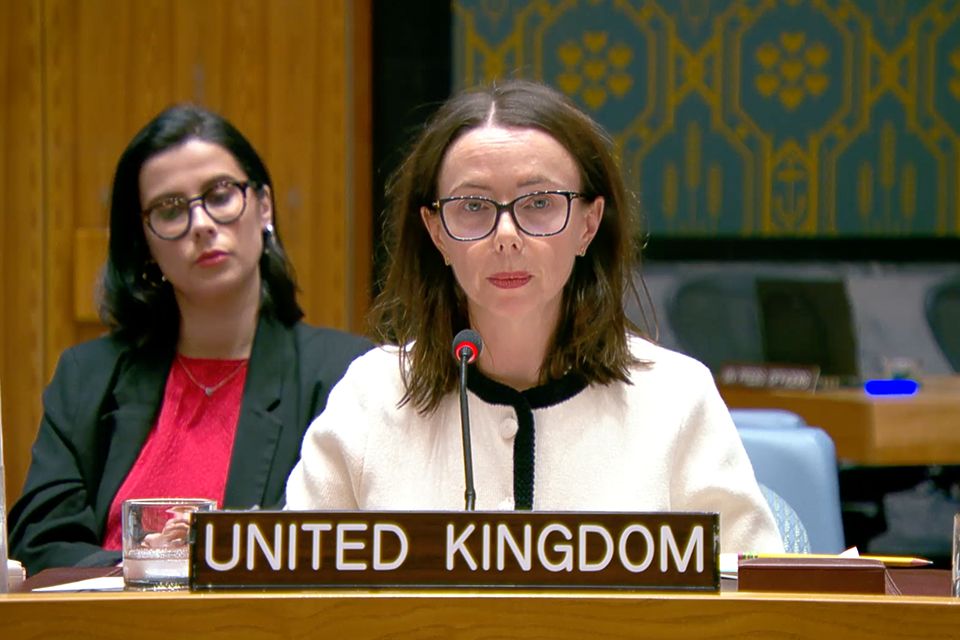
Statement by Jennifer MacNaughtan, UK Political Coordinator, at the Security Council meeting on Kosovo.
The United Kingdom welcomes the recent formation of a Government in Kosovo and the election of President Justina Shiroka Pula.
We look forward to continuing to work closely with Kosovo to advance its Euro-Atlantic future and to support its continued development as an inclusive, democratic, and multi-ethnic state.
As the first country to recognise Kosovo’s independence, we call upon those Member States who have not yet done so, to join the majority.
Normalisation of relations between Kosovo and Serbia remains essential to long term stability and to both countries’ European futures.
We continue to call on both sides to implement existing agreements and engage constructively in the EU facilitated Dialogue, including by: - - implementing the Ohrid agreement in full; and delivering on its Article 7 commitment to “ensure an appropriate level of self-management for the Serbian community in Kosovo”.
We note concerns highlighted in the Secretary-General’s report regarding the impact of some of Kosovo’s actions on non-majority communities, particularly in northern Kosovo.
Kosovo’s Constitution provides comprehensive safeguards for their rights, which must be fully implemented in practice, and in accordance with the rule of law.
Serbia should provide access to relevant archives and records to support progress on missing persons.
Over 1,500 people from all communities remain unaccounted for more than twenty-five years after the conflict.
It has also been more than three years since the Banjska attack and the murder of Kosovo Police Sergeant Afrim Bunjaku.
We continue to call on Serbia to ensure that those responsible are brought to justice. This includes Milan Radoičić, who is the subject of an Interpol Red Notice and continues to live freely in Serbia.
Finally, Kosovo has been transformed since 1999.
Many functions once performed by UNMIK are now carried out by Kosovo’s own institutions and by other international organisations, including KFOR, EULEX, and the OSCE.
This should be reflected in the Mission’s structure and resources.
While we welcome the significant staffing reductions already made, we reiterate our call for a strategic review of UNMIK’s role, responsibilities and funding, with a view to ensuring that UN resources are aligned with present-day realities.
I would like to end by expressing the United Kingdom’s gratitude to the Special Representative, and all Mission staff who have contributed to UNMIK’s work.