Minister of State for Social Care and Mental Health speech on dementia
Minister Alison McGovern delivered the keynote speech at the Alzheimer's Society Conference 2026 in London, highlighting the government's action on dementia.
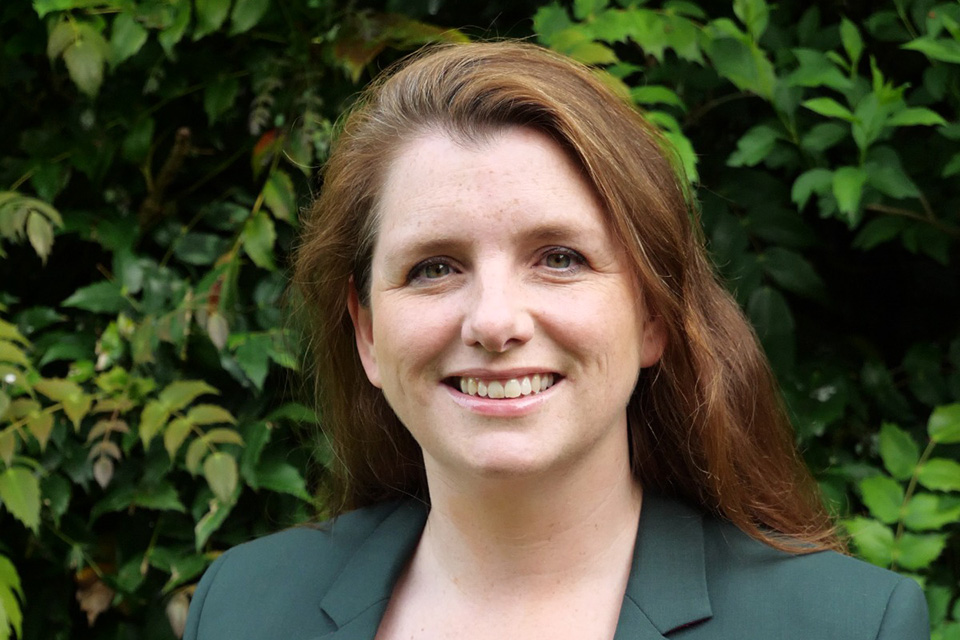
It’s lovely to be with you all and I just want to say thank you, Michelle, and to the whole team for welcoming me here this morning. It’s been a very exciting time to take on my new brief as Minister of State for Social Care and Mental Health, and it’s wonderful to see you all today.
Now, I just want to start my contribution with a little story, because in the House of Commons nearly 13 years ago a backbench opposition MP intervened on the Shadow Health Secretary during the debate on what became the 2014 Care Act, proudly telling him that a hundred of her constituents had turned out to a public meeting on social care.
Now, the Shadow Health Secretary at the time replied by acknowledging her recent campaign against zero-hours contracts for care workers, and he said that with such poor conditions for care workers, he was particularly bothered about young people being able to join the profession.
You’ve probably guessed that the Shadow Health Secretary is now the Prime Minister, and that backbencher was me. And I start with this blast from the past to explain why we meet here at a very important time.
In the 13 years since that exchange, many issues have crowded the political agenda, from Brexit to COVID, the cost of living and the cost to society of hate rising around the world.
It’s about time for a more hopeful story to capture our attention. And I believe the subject of this conference is exactly that - from the despair that too many feel when the diagnosis is Alzheimer’s, to the hope that one day this disease will be something to be managed and no longer a determinant of your future.
Now, it’s true we should also be hopeful, not just because we have a new Prime Minister who knows this subject intimately, and I hope you will all have seen from the football last night that, in fact, in the G7 we have 2 prime ministers who know and care about this subject intimately. And I also want to add that I know that the thoughts of everyone at this conference will be with Andy and his mum and his brothers and their whole family, grieving the loss of their dad. I know that your thoughts are with them.
And it’s also true, not just because we’ve now speeded up the Casey Commission and social care is rising up the agenda, but also we should have hope because the science of our brains is giving us that hope for the next generation that we will be able to prevent, contain and treat dementia like never before.
But before I turn to the science, I want to dwell on social care. Now, again, forgive me for telling a short story. Over 16 years ago, I asked my friends and family in the Wirral to send me to Parliament. It is an absolute honour to stand to be elected in your hometown. I thought I knew all the issues requiring attention in my part of the north of England.
We needed industrial jobs, apprenticeships for young people and we needed to keep families’ heads financially above water. But in that election, when I knocked on door after door, after door, I was shocked how many people told me their issue was care - whether a family member with dementia, a partner working in a care home or a constituent desperately worried about their carers struggling to get around a complicated day of 15-minute appointments. There was a hidden crisis I had failed to see.
And I wish that I could tell you that that changed long ago, and that all MPs in my 16 years in Parliament since have been focused on social care. We haven’t. So I want to ask: what is it about social care that means it gets pushed to one side, never quite the challenge - until recently - that politicians walk towards?
We are told people just don’t like to think about getting old. Yet there are plenty of people who will opine on pensions, the triple lock, Inheritance Tax, and a plethora of other issues that affect us as we age.
I think there are 2 factors that hide social care: the role of working-class women in care and the experience of trauma.
First, women. Of the 1.5 million-strong care workforce:
- just under 4 in 5 are women
- more than 1 in 5 are on a zero-hours contract
- more than 2 in 5 aren’t working full time
- a third of them are caring unpaid for an adult, likely a family member, outside work
And around 80% of care workers working for independent providers receive within 10% of the minimum wage - the legal minimum that anyone can earn. So the odds are set against this workforce getting a hearing.
Moreover, it’s a noted failure, pointed out through the years, that economics, particularly the economic models we use to oversee policy, have historically accounted badly for care. In the history of economics, caring responsibilities were not costed but assumed to be given freely by women.
And as more women worked beyond marriage, their caring responsibilities were thought of as a constraint to the potential labour supply, but not as the crucial infrastructure in our economy without which productivity and growth would be held back.
We’re still going through this transition. In 2023, the Office for Budget Responsibility recognised that improving childcare would help more people move into paid work, but social care still lives with the consequences of that age-old misunderstanding of care work, which assumed no cost for the labour, ignoring its crucial and foundational role for the rest of the economy.
Investment in social care is not just a matter of fairness. It’s a matter of seeing the work done by 50% of the population. So, as the population ages, more and more people will face hard choices: keep working, dividing yourself badly between a career and a family, go part-time, or give up your job to care for the person you love. And unless we have social care that helps families keep life in a better balance, that is no choice at all.
And too many women, and many others, now experience the constraints of providing both childcare and care for an older loved one - it can feel like drowning.
We know people are leaving work to care for a family member. Recent polling commissioned by Carers UK estimates that about 1,500 people in Britain quit their jobs each day to become unpaid carers, often people with many years’ experience in the labour market whose knowledge we can ill afford to lose.
And I want to pause on these people for a moment, because I think their experience explains why social care has been a cause without enough campaigners in recent years.
It’s not that people don’t want to talk about it - it’s that they can’t. Too many of my constituents have lived the trauma of seeing a strong, determined loved one become a shadow of themself.
To be a child and lose a parent, as I found out only recently, is a horribly predictable shock at any age. But to be a child and experience your parent not knowing you is torture, to try to comfort a parent crying for their own parents, to help a parent lost in this world to try to find any memory that can calm them, is traumatic.
And I think that’s why people don’t want to talk about social care, particularly care for people with dementia. It’s too often a trauma, and as a result it’s been neglected for far too long. But that is all the more reason it must be a priority right now.
We need to get our economy firing on all cylinders everywhere, and I think care is a crucial part of the answer for that. And we need the hope in our hearts that the traumas we have lived through can heal. And I believe the plan for social care can do both. Politics doesn’t need to fail. Changing social care will show that we are prepared to walk towards the hardest of problems and hide from them no longer.
Our Fair Pay Agreement lays the foundations for a national care service. These agreements are the first of their kind for the adult social care workforce, with long overdue boost to their pay, terms and professional development. A national agreement, negotiated between unions and employers, and backed by half a billion pounds for the first agreement alone.
It’s a major step forward to improve pay and conditions, and give staff the status and respect that they deserve, not just once, year-on-year. And it has addressed the power imbalance that has meant women and others working in care have been looked down on for way too long.
This is just the beginning, though. Skills England estimate that there will need to be an extra 200,000 adult social care workers by 2035. And it will not have escaped anyone’s notice that we have nearly one million young people out of work. But you may not be aware that just 7% of the care workforce are under 25, lower than you would expect compared to their representation in the overall workforce.
And I think that’s a huge missed opportunity, because as Minister of State for Social Care and Mental Health, I know only too well what some of the next generation are experiencing. Their opportunities for work experience have been constrained, particularly by COVID and other things, and too many have been left to struggle with very poor mental health.
Those people deserve a job, a start, and to have a first boss who can help them learn alongside the dignity of their first pay packet. Now, when I point this out, some people tell me that care is not for everyone. They tell me people don’t want to wipe old people’s bums. And I would just ask those people to come with me to a care home or on a domiciliary care shift, because quite apart from the fact that dementia also affects people at younger ages, I would just like to show them the emotional intelligence it takes to help an older person, proud, but frail, to have a shower; allowing someone to be vulnerable with you, giving them the confidence to let you help them. That takes intelligence and kindness - and it’s a skill that most politicians could do with learning.
Working out in the moment what a person can still do for themselves, and helping only to give them the surety to keep going, requires an attention to detail that could help the next generation go on to great careers.
And I have hope that not only will our plan to change social care serve our citizens better, but also that it will play a central role in paying our debt to the COVID generation, for all those who’ve missed out on the chance they should have had, and who had the temperament to work in care but not the experience on their CV. I want to help them get a job and give them hope for the future. It will also set a clear direction for the health and social care sector to take over the next 10 years.
And so, now, I want to turn to my second source of hope: science. Now, I know you’ve already heard from Professor Catherine Mummery, who has done so much to build the evidence base on dementia treatments as Director of the UK Dementia Trials Network.
And after 2 short years, the network can already point to a proud record of supporting 10 trials and for some of these studies, the UK Dementia Trials Network was the first site in the world to recruit participants, which is another reason to be hopeful about this country’s potential.
In July, Professor Mummery also gave a fascinating presentation of the CELIA Phase 2 trial results, which showed that the drug, diranersen - I hope I’ve pronounced that right - removed harmful proteins from the brain and slowed cognitive decline. And this is coming at the tail end of a decade that has seen so many breakthroughs.
I think, if only I could go back in time now and tell Andy Burnham and I, in that House of Commons debate, what we know now about Alzheimer’s and dementia, I think he and I would have been so happy.
The Lancet Commission on Dementia, which gave us a systematic understanding of the ways in which we could modify dementia risk, including addressing hearing loss, which until now we just took to be a natural part of ageing. Blood-based biomarker tests, which may now indicate Alzheimer’s disease pathology, which we’re trialling through READ-OUT and ADAPT trials funded in partnership with the Alzheimer’s Society. We now have 158 drugs being tested in clinical trials, compared to only 24 a decade ago.
Through the Medical Research Council, the government has funded several studies which will allow us to better understand the neurodegenerative diseases that give rise to dementia.
Take the Sleep Boost project, which is using sleep recordings, brain activity monitoring, and blood and spinal fluid tests to assess the importance of how slow-wave sleep impacts dementia risk. Now, we know sleep plays a vital role in removing harmful proteins from the brain, potentially slowing the development of Alzheimer’s disease, and this study will be recruiting widely, including South Asian communities, who it’s possible may be more affected by poor sleep.
The SPIN-D multidisciplinary dementia network are funding some really exciting projects, like an evaluation of a physical activity programme inspired by martial arts to see whether it can reduce the risk of dementia.
But we also know that the average time taken for evidence and innovation to be incorporated into practice is too long at 17 years, which is why the government has committed £5 million to the Dementia Patient Flow Challenge to work out what we need to do to speed up diagnosis and get innovation into practice.
And I’ll just pause at this point to say that the report that the Alzheimer’s Society published today on going on the journey that we have been on with cancer with Alzheimer’s and dementia. I think that is spot on. The science says we can hope. The question is: can we get it into practice quickly? And that is the job now.
Now, speaking of getting things done, Baroness Casey will address you this afternoon, and I was very proud to welcome her to the Wirral earlier this month. She recommended we move faster on dementia trials, and we will - turbocharging participation in trials to 2,000 people this year, furthering our investment in the AD-SMART platform trial and standing up the next phase of the Dementia Trials Accelerator. We want these trials to be available to people across the country, because wherever you live, you should have the same chances as everyone else to participate in life-changing research.
Because this science is not just in pursuit of knowing more, important though that is, but of our lives being more. This science is directed at undoing the trauma of watching a loved one disappear in all but body before us. Twinned with political efforts on all sides to find a way to provide better, easier, more predictable care. This science can give us hope.
And we have another reason for hope just now, and that’s the policy decisions we’re taking with the most pro-social-care Prime Minister in history.
Dementia has been neglected for far too long, and nowhere is this division between health and social care felt more sharply than by people living with dementia and their families, too often left to navigate a shattered system at the most difficult time in their lives.
That’s why this year we will publish the first ever modern service framework for frailty and dementia, our guidebook for better support. It will bring health and care workers together, adhering to a clear set of national standards, sharpening the priorities, raising expectations of the help that people living with dementia and their families should receive, because we must put a floor under the kind of care that people can expect, and we must improve it too, giving the workforce the direction and support it needs to reach the best standards.
And nobody knows that better than this audience, because I know so many of you have helped shape the framework over the past year. So thank you for putting your expertise, creativity and commitment at the service of our carers and people who depend on care.
Now, we will need that support again as we act on Louise’s recommendation to appoint a dementia tsar, backed with real expertise, I’m going to waste no time in doing.
Nobody wants a future where we can live longer but do less. We want a future where our loved ones stay with us for more years, with more joy and more life to live.
Where dementia has been a burden for too many to carry, the efforts of those in science and social care together can lift that weight off their shoulders.
Families can be free to enjoy their time and make more memories. That, I think, is the vision for all of us here today, and I’m very excited and pleased to be joining the fight.