Libyan parties must honour commitments made to give security, economic opportunity and democratic freedom to the Libyan people: UK statement at the UN Security Council
Statement by Ambassador Sarah MacIntosh, UK Permanent Representative to the UN, at the UN Security Council meeting on Libya
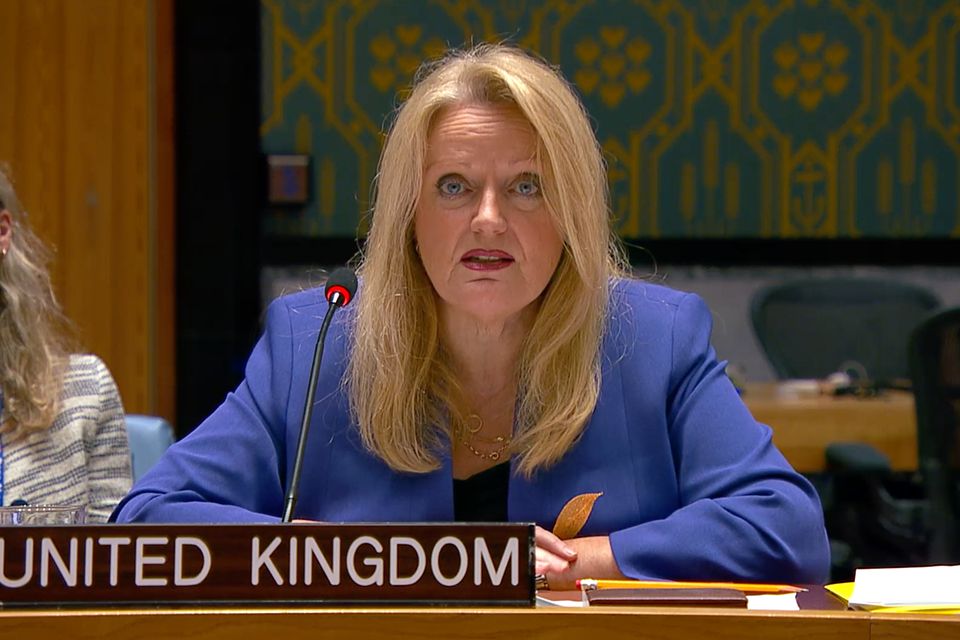
Thank you, Special Representative of the Secretary-General Tetteh, for your briefing. The United Kingdom supports UNSMIL and welcomes and supports your continuing work to move Libya’s political process forward.
We are at an important juncture in the roadmap that you described.
Recent progress has created an opportunity to move Libya from political deadlock towards a brighter and more sustainable future.
To realise that opportunity and commitments on paper need to be translated into action.
First, on the 4+4 process. We welcome the agreement reached.
The commitment from both sides to amend Libya’s electoral laws and to hold parliamentary and presidential elections within 24 months is a significant step forward.
Implementation now needs participants in that 4+4 process to honour the commitments they made.
Not to reopen or relitigate settled issues, and to engage wider stakeholders so that these commitments are fully recognised by both houses.
In order that we can protect the compromises made by both sides and to move past the political stalemate that has risked instability and economic collapse.
Second, on UNSMIL. We need to preserve UNSMIL’s core remit of facilitating a durable and inclusive political settlement, as well as the mission’s role in supporting the reunification of Libya’s political, economic, military, and security institutions.
Progress towards a single executive authority is essential to a lasting political settlement.
We need also to preserve UNSMIL’s role in continuing to support human rights and fundamental freedoms of Libyans, as part of a Libyan-led and Libyan-owned process, and continuing promotion of full, equal, and meaningful participation of women at all levels.
Third, on accountability. Reports of enforced disappearances, arbitrary detention, and attacks on civilian infrastructure are deeply troubling.
Accountability for human rights violations and abuses remains essential, which needs enhanced independence and capacity of Libya’s judiciary and institutions to collect evidence and investigate human rights violations.
In which context the United Kingdom welcomes the commitment made by the parties to the 4+4 at their 4 October meeting to make all efforts to prevent the fragmentation of Libya’s judiciary.
Madame President, recent developments demonstrate that progress is possible.
And Libyan parties should now honour the commitments they have made to give Libyans the democratic choice, economic opportunity, and security they seek.