Health Secretary gives address on NHS performance
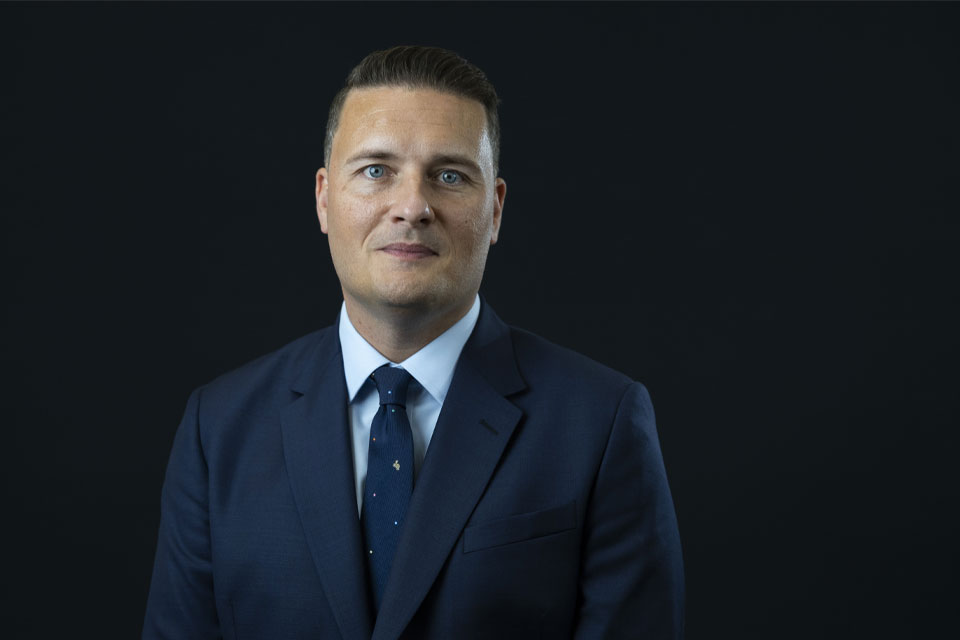
Secretary of State delivers a speech on NHS urgent and emergency care at Royal College of Emergency Medicine's (RCEM) annual conference in Birmingham.
It’s good to be with you today, and it’s really good to follow a session on high performance.
Let me start by echoing Ian’s words in his opening remarks on Tuesday, when he encouraged you to be ‘loud and proud’ of what you do.
At a time when more and more people have lost faith that things can get better…
When a general sense of pessimism and cynicism risks slipping into fatalism…
And when the very existence of the NHS is being contested like never before…
You are helping to prove the doubters and doomsters wrong.
So I want to say a simple but heartfelt thank you to all of you for all your energy, stamina, creativity, and the huge amount of hard graft over the past year, not just all of you in this room, you and all of your colleagues across the country, because you - the whole team - are achieving something we’ve not seen for a long time, an NHS that is improving.
This government set you ambitious targets last year. And despite resident doctors’ strikes and record demand, you rose to the challenge.
Best 4-hour performance in A&E in 5 years.
Today, almost 4 in 5 patients are seen within 4 hours and 500,000 more people than last year are being seen on time.
Ambulances are arriving faster than for half a decade.
For suspected heart attacks and stroke patients, we’re reaching them 5 minutes faster than last year, when you and I both know that every second matters.
We have been repeatedly told that the NHS recovery won’t happen, it can’t happen. But you are delivering it.
And in doing so, you have landed one in the eye to every commentator who was preparing the headline [political content removed], or ‘the NHS falls short’, depending on which of us they dislike most that day.
You’ve delivered a blow to think tank orthodoxy, which says that the NHS will never be able to cut waiting lists, A&E and ambulance waiting times all at once.
And to those who argue that the results are just a March sprint, just wait until you see April’s performance data.
This is a marathon, not a sprint. And there’s a long track ahead of us. But some of the frontrunners are already approaching the finishing line.
North East and West Midlands ambulance services are within reach of the constitutional standard of 18-minute response times.
At Sheffield children’s A&E, 98% of kids are seen within 4 hours - above the constitutional standard. West Herts, Northumbria and George Eliot are all above 90%.
George Eliot, in particular, has made incredible strides, going from 66% to 91% in just this past year.
They are showing what’s possible when urgent and emergency care is made a priority.
The trust introduced round-the-clock assessments to speed up triage; 7-day ward rounds in the acute medical unit to get patients home on time; and doctors working the discharge lounge to make sure patients had the medication they needed to send them home.
Those simple steps have transformed the experience and the safety of their patients. They have proven that we can do it.
Ambulance recovery isn’t happening by accident, if you excuse the pun.
It is happening because the ambulance service is embracing change.
Where paramedics would once provide extraordinary care on the scene, then take their patient to hospital, now they’re using their skills to act as co-ordinators of care.
Providing the same world class, urgent, on-the-spot care they always have, then deciding the best place for follow-up treatment, which isn’t always a hospital.
The result is improved turnaround and handover times, and fewer people ending up in A&E.
You in emergency medicine understand better than most that the NHS is not just a service, it’s a system.
And when part of the system has broken down, people end up at your door.
It’s why A&E had gone from ‘Accident and Emergency’ to ‘Anything and Everything’.
When people can’t see a GP, they end up in A&E, which is worse for them, worse for you and more expensive for the taxpayer.
When people can’t get the mental health support they need, they reach crisis point, which is worse for them, worse for you and more expensive for the taxpayer.
And when people can’t get the social or community care they need, they’re left in hospital, which is worse for them, worse for you and more expensive for the taxpayer.
And so a lot of the answers to cutting ambulance and A&E response times lie outside the doors of the emergency department.
It’s why the health think tanks are so wrong to argue that the government ought to prioritise certain sections of the NHS over others.
That we should focus on social care or emergency care first and do electives or GPs later.
The way we will get the NHS out of the hole it had been left in is by week by week, year on year, across the board improvement. A rising tide that lifts all ships.
The NHS has been the standout winner from this government. A record £26 billion a year investment at a time when the public finances are under big and growing pressures, with increased instability and uncertainty around the world.
It shows what this government’s priority is.
But you and I know that the additional funding alone cannot buy our way to recovery. It has to be accompanied by change and modernisation.
A narrative emerged during the years of [political content removed] that the NHS just needs more inputs into the same model. More staff, more beds, more money in hospitals.
Investment is part of the solution.
But unless we change how the NHS works those will only be sticking plasters, storing up the same problems for later down the line.
There will still be ever-increasing numbers of patients walking through your doors and ever-increasing numbers stuck in beds waiting to go home.
With the war in Iran and its consequences for the global economy, I’m afraid I can’t play the Oliver Twist of the Cabinet, pleading for more from the Treasury.
Not because the Chancellor is Scrooge - to invoke another Dickens character - but because there isn’t any.
So we’re having to mop up the consequences of austerity, Brexit, [political content removed], the pandemic and the war in Ukraine, as well as dealing with the Iran crisis and making sure that as we do so we’re beating a path to a better future, not just seeking to scramble back to a broken status quo.
So the new investment needs to be matched with change and modernisation to help that investment go further and to make sure we get to where we want to be.
You in emergency medicine are leading the way and showing that change is possible.
Ambulance services are providing more paramedic-led care at the scene.
Urgent community response services in Dorset and Kirklees cared for patients, directed them to appropriate services, with 80% never needing to step foot in a hospital.
Hear and Treat is freeing up ambulance crews to reach the most urgent patients faster, and get other patients the right care, in the right place, at the right time.
We set what was an ambitious 45-minute target for ambulance handovers and today average handover times are down to just shy of 30 minutes.
That’s more patients off ambulances and into emergency departments more quickly.
And it’s only been possible because of the combined efforts of ambulance services and emergency department (ED) teams - and we are grateful for it.
My department and the NHS worked with the Royal College of Emergency Medicine (RCEM) to pull together our model ED guidance.
It identifies the most successful methods of streamlining emergency care from across the country, taking the best of the NHS to the rest of the NHS.
This is the first chapter of the new book we are writing together, and I look forward to working with RCEM on the model discharge guidance, which is coming soon.
The government is putting our money where our mouth is.
We’re investing £300 million in 55 new or improved same-day emergency care and urgent treatment centres.
We’re spending almost an extra half a billion pounds on mental health facilities, including up to 85 mental health EDs - providing patients with rapid assessment, urgent treatment and safe discharge with referral for longer term support.
All of this will help to unclog emergency departments, and make sure patients are seen where they should be, when they should be, by who they should be.
Much of the change you are leading is about delivering the left shift from within emergency medicine.
And the government is leading the left shift outside of emergency departments.
Our 10 Year Plan for Health set the NHS on course to become as much a neighbourhood health service as a National Health Service.
A key measure of its success will be A&E admissions - specifically the 1 in 5 patients who turn up to A&E who do not need urgent and emergency care.
They have been failed upstream.
Our modernisation agenda is all about catching patients earlier, treating them faster and preventing them falling ill in the first place.
That work has already begun.
We’ve recruited 2,000 more GPs, and patients can now request appointments online.
We’re delivering millions more dental appointments.
We’ve invested £600 million more in community pharmacy and given them greater powers to monitor and manage patients with ongoing conditions.
We’re investing £4.6 billion in social care.
We’ve legislated for the first ever fair pay agreement for care workers, backed by half a billion pounds.
We’ve given carers the biggest increase in carer’s allowance since the 1970s and increased the disabled facilities grant, which will help to speed up discharge, reduce admissions and, most importantly of all, give people dignity, freedom, quality of life and comfort in their own homes.
And the first report from the Casey Commission is coming later this year, forging the national consensus we need to build a national care service.
New neighbourhood health services will bring together healthcare professionals to deliver proactive and personalised care, out of hospital, in the community.
We’ve set them a target of reducing avoidable hospital admissions by 10% for the most vulnerable patients, backed by new financial incentives.
I know that the most difficult cases you see are patients in the midst of a mental health crisis. Failed by a lack of early support, in A&E through desperation, often the very worst place for them to be.
So, we are intervening earlier.
This government promised to recruit 8,500 more mental health workers by the end of the Parliament.
And today I can announce that we have kept that promise… 3 years early.
We have recruited 8,500 more therapists, psychiatrists and mental health nurses. They are delivering more care, earlier and closer to home.
Another 900,000 children can also now see a mental health support team in their own school, thanks to action we have already taken.
Promises made, promises kept.
Change has begun. And the best is still to come.
One of the bigger balancing acts I face as a political leader is giving the public confidence that the NHS is improving and hope for the future, at the same time as acknowledging that we know that things still aren’t good enough.
Corridor care is the most visible, most distressing symptom of the pressures in our NHS.
And since emergency departments are the frontline of the NHS and most people’s first impression of a hospital, you’re in the full glare of the public spotlight - and often used as the barometer for how the service is doing overall.
I know this will be a test the government is judged against.
When we came into office, NHS England didn’t measure corridor care, let alone have a plan to address it.
Corridors were officially referred to as ‘temporary escalation spaces’.
And as corridor care became normalised, you, the teams working in those conditions, suffered the moral injury of having to treat your patients in circumstances so undignified that you wouldn’t wish them on your worst enemy, never mind your closest loved one.
I have walked past many of those trolleys. I cannot imagine walking past lines of trolleys every day, desperately wishing you could do something about it, but being held back.
And I want to thank the Royal College, alongside the Royal College of Nursing and others, for never accepting this practice, for sounding the alarm, and for keeping the pressure on me and others to act.
I am clear: corridor care is not normal, it is not acceptable, it should never be tolerated, and I am determined to end it.
We’re calling it what it is; we’ve defined it; we’re measuring it; and with your help, we’re finally getting on top of it.
Once again, change is being led from below.
Blackpool are using data to predict the busiest periods and clearing beds in advance.
The main corridor [political content removed] was cleared when the Medical Director and Chief Nurse took over discharge decisions.
And take [political content removed], as seen on TV, because when its corridors were full of trolleys this winter, the broadcasters understandably chose the hospital of [political content removed] to exemplify the national crisis.
I was back there the other month, no cameras in sight, apart from the one on my phone, walking the same corridors I did in January, but this time they were empty. Demand hadn’t changed, the level of funding hadn’t changed, but the model of care had.
They put the senior consultant on the front door of the A&E to make swift triaging decisions - sending frail elderly people who needed care, but not A&E, into the frailty same day emergency care centre. And they worked with the ambulance service and community teams to get people the right care at home.
As a result 12-hour waits are down, 10,000 corridor hours were saved in February alone, and the corridors were empty aside from one chap who was about to be wheeled in for a scan.
That is amazing progress, a real credit to the staff [political content removed], and they are sustaining that progress.
It’s not always easy, but it is important that we recognise improvement and we celebrate success.
I said as much publicly, and then received a text message after an interview on BBC Breakfast, and that message said, ‘Glad to see this can be done. I had the opposite experience with my dad this weekend.’
Her elderly father, who has Parkinson’s, had been left on a bed in a corridor by a vending machine, with a small bleed on the brain, with no water, no buzzer and no dignity.
That is the contradiction of where the NHS is today.
There has been marked improvement.
Incredible progress has been made against predictions and expectations.
But too many patients are still being failed.
What we have shown together - in just under 2 years that this government has been in office - is that the NHS can change and things can get better.
Success has come when we’ve moved as a pack, working together, driven by a simple but powerful conviction that we will not accept the status quo any more.
It’s not easy. We are having to rebuild the plane mid-flight. There are times when it is a bumpy ride.
If we’re getting things wrong, I want to hear about it. If something’s not working, we need to know.
But we must never forget that we are one team of 1.5 million people in the National Health Service, working alongside another 1.5 million in social care.
Resident doctors say I need to do more for them. So does general practice. So do consultants. And so does every specialty.
Take Advice & Guidance. If patients should be on waiting lists for elective care, that’s where I want them to be.
But if they can be treated faster and better in the community, that is better for everyone.
Yet even on that simple principle, we have encountered opposition.
We can’t do everything, for everyone, everywhere, all at once. And if everyone just advocates for their part of the service, the NHS is going to end up like an overloaded shopping trolley with the wheels all pointing in different directions.
Every part of the service has been under real pressure and has been through extended crises over the past decade.
It isn’t just your corner of the NHS that feels like that.
The model of care was broken across the whole service.
So, the NHS has to change to survive. And it’s going to take a concerted effort from everyone.
That’s why I wanted to speak to you all today.
You and your colleagues are stepping up. You are proving the pessimists wrong and showing that change is possible. In doing so you are charting the course to a brighter future.
So, I need you to keep at it.
To keep showing the innovation, drive and leadership that is taking the NHS from the worst crisis in its history, getting it back on its feet and making it fit for the future.
We can do it.
All of us.
Together.
And what a legacy that would be for our country.
Thank you very much.