Value for money metrics and reporting 2025
Annex to the Global Accounts 2025
Applies to England
Documents
Details
Contents
Executive Summary
This publication provides a summary overview of value for money performance and achievements delivered by the social housing sector in England for the year ending 2025.
The Value for Money (VFM) Standard requires private registered providers to report annually against prescribed VFM measures with the aim of enhancing both transparency and accountability to the sector and addressing relative performance. With increasing demands on providers to reinvest into their existing homes and to deliver new energy-efficient housing, it is essential that boards provide robust challenge where they are not making the most effective use of their resources to achieve the strategic objectives of the organisation.
Value for money performance in recent years has been defined by changes to the sector’s operating environment and financial challenges arising from higher interest rates and the need to increase investment in the existing housing stock. The impact of these trends continued to play out in 2025. Investment in the existing stock to address building safety issues, improve energy efficiency and improve stock quality continued to affect financial performance for many providers. Headline Social Housing Costs (Headline costs) per unit have risen again and average operating margins and EBITDA-MRI interest cover have continued to decline. For many providers this has meant making trade-offs in their investment decisions and this year’s data shows a consequent fall in new supply, particularly for non-social housing development.
However, there are still significant opportunities for providers to drive growth and support economic development. With greater financial certainty following recent government announcements, including the long-term rent settlement of CPI+1% from April 2026 for ten years and a new Social and Affordable Homes Programme (SAHP) there is now renewed pressure on the sector to ensure it maximises its resources and to help meet housing demands across all regions of the country.
Beneath the overall sector trends, this publication shows that there is significant variation between providers and that the financial pressures facing the sector are not distributed evenly. There are particular challenges facing some large providers.
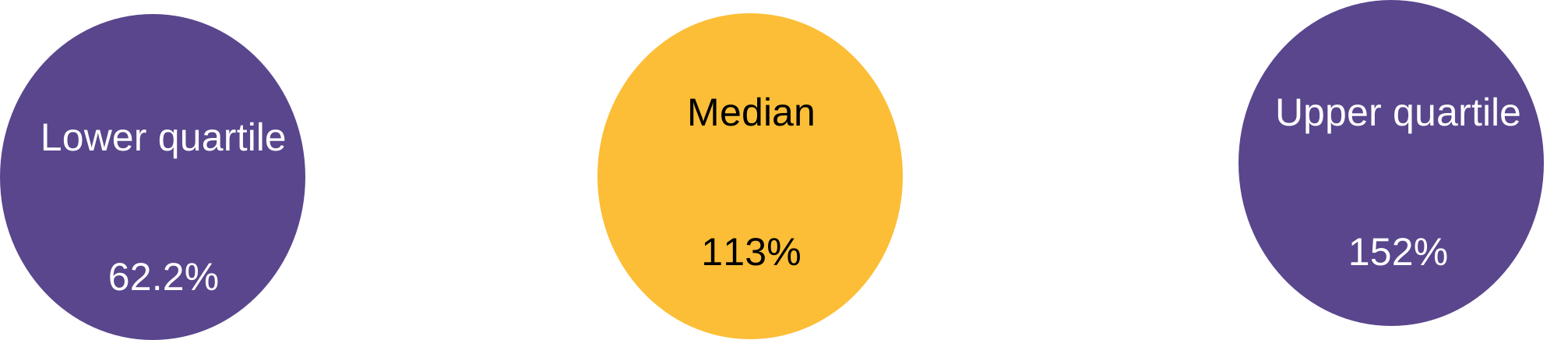
However, the financial pressure on parts of the sector is not universal. The weighted sector average EBITDA-MRI interest cover figure has fallen to 87% but this is heavily influenced by a small number of very large providers which have low interest cover and are big enough to materially affect the average figure for the sector as a whole. Most providers have stronger interest cover than this weighted sector average figure, and the median provider has EBITDA-MRI interest cover of 113%. The top quartile of providers have interest cover of 152%. There is a similar degree of variability in terms of delivery of new supply with new social housing supply as a percentage of the existing stock more than three times higher in the upper quartile of providers (2.1%) than in the lowest quartile (0.6%). This reinforces the important role of boards in shaping the future of their organisations, informed by an evidence-based strategy that addresses the need to preserve financial viability and undertake necessary investment in the existing stock whilst also assessing the opportunities to foster growth and deliver new social housing. It is also important that boards make the most effective use of their assets and seek to optimise the efficiency of their businesses to strengthen their capacity to deliver improved outcomes for both existing and future tenants.
Other key highlights on VFM performance include:
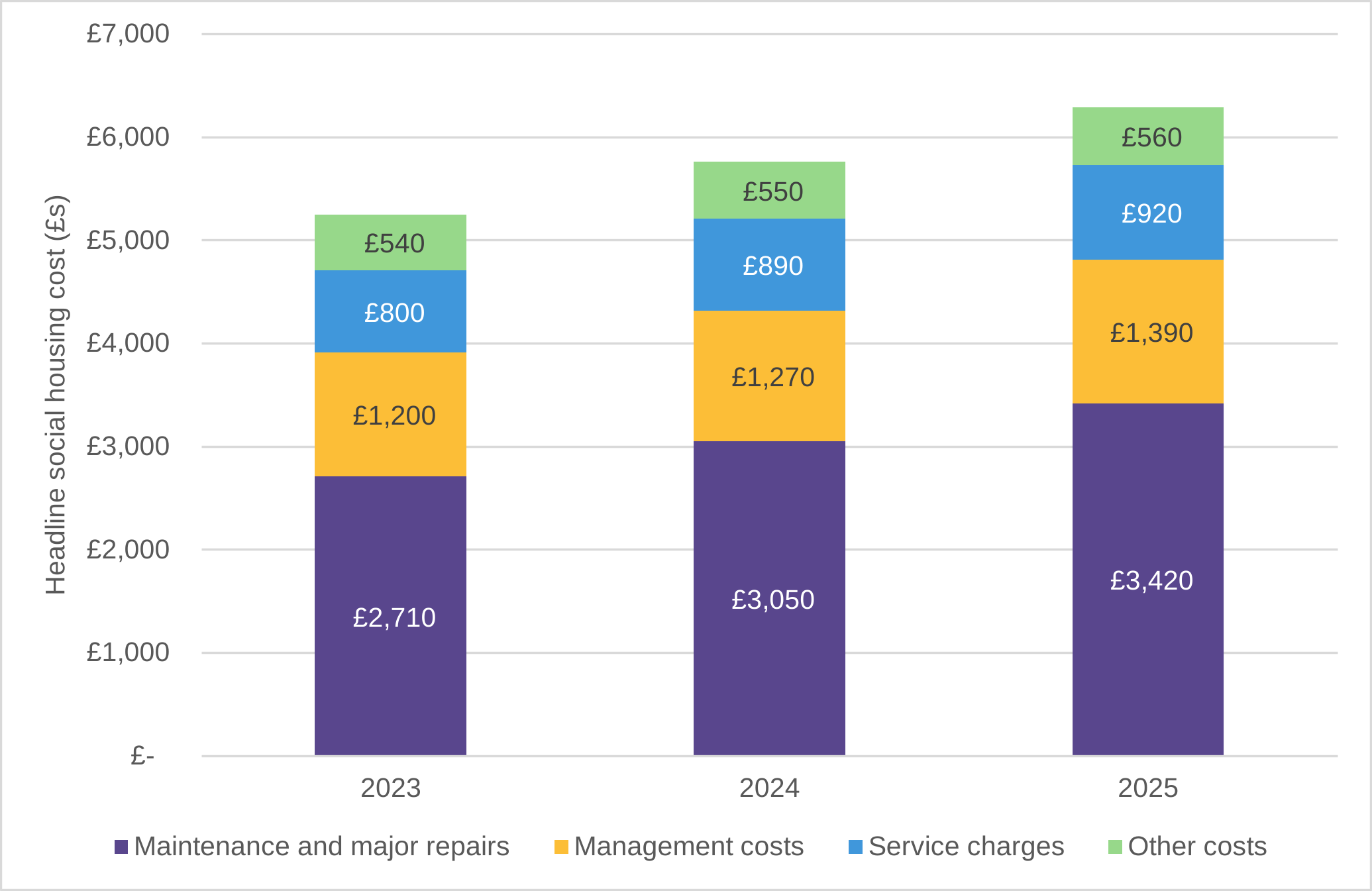
Record levels of capital reinvestment especially into existing homes
Alongside a challenging environment, the sector invested record levels of capital into existing and new homes of £14.8bn as more providers focus on sustainable homes, stock quality and building safety. Capital reinvestment into existing homes increased by 15% to £3.8bn in the year. However, while the sector continues to direct substantial investment into new homes, there was a more cautious approach in the year due to economic and policy uncertainty – overall reinvestment into new homes fell by 4% to £11bn. At an aggregate level, the sector delivered 53,330 new homes of which 48,548 were social housing.
Headline costs increased at a slower rate, but cost management remains challenging for some parts of the sector.
The sector’s headline cost per unit continued to outpace the general rate of inflation, albeit rising at a lower rate compared to previous years. The reported median headline cost increased by 11% to £5,690 per unit which was largely driven by maintenance and major repair and management costs. While there is evidence that providers with the largest proportion of tall buildings saw costs rise more slowly than in past years, these providers still experience much higher maintenance and major repair costs than other providers. For some parts of the sector the cost of building safety and other stock condition investment remains challenging.
Strategic repositioning of capital and assets
Persistent cost pressures continue to dampen the overall operating margin (which includes social housing activities) as some providers struggle to offset rising costs through net rental income alone. Despite stabilisation across some parts of the sector, the median operating margin overall was 17.4% which remains below the long-term average of 18.5%.
Notwithstanding these tighter margins, the sector’s utilisation of its asset base, measured by the return on capital employed, increased to 3.0% - its highest level in over three years as providers continue with their strategic asset management programmes.
Particular pressures in some regions
The financial pressures facing providers have been felt more acutely in some parts of the country than others. Many London providers, in particular, have been exposed to higher building safety costs, which has had an impact on their wider business plans. Providers who own the majority of their stock in London are much more likely to own flats rather than houses (the median London provider has 20% of stock defined as houses or bungalows, compared to a national average of 59%). Higher rise blocks are associated with higher maintenance and repairs costs, including for building safety work, and this helps contribute to London having the highest costs per property of any region. As a result, providers’ capacity to fund new supply has been most acutely affected in London, and the region continues to show the lowest level of social housing supply as a proportion of existing housing stock. This year, almost half of the providers with the majority of their stock in London delivered no new social housing supply.
Prioritisation and driving efficiency to deliver more and better social homes.
While these are challenging times for some providers, there is also greater certainty for providers to actively plan for the longer term. Importantly, there is now a shifting expectation on boards to transition from traditional oversight to more active, strategic leadership. As social housing providers, it is boards’ core responsibility to ensure their organisations are maximising their resources and intervening when there is strategic misalignment with their purpose.
To support that challenge, this publication is designed to complement recently published material pertaining to VFM performance – Delivering better Value for Money Summary Regression Note which enables stakeholder understanding of key factors that impact on provider level performance. The analysis set out as a part of that report is a good starting point for providers to challenge their organisation’s performance and we expect management to make good use of it to better support board decision-making from here on in.
It is up to providers to be transparent about their VFM performance and to evidence they are meeting the outcomes of the VFM Standard. This includes reporting against their strategies and showing how they are optimising resources in the delivery of their objectives. Providers should be up front when they are not meeting expected or planned outcomes. We will continue to seek assurance that providers are delivering the outcomes as required by the VFM Standard through our programme of Inspections. Where providers do not provide the evidence that gives us the assurance we need, we will reflect it in our regulatory judgements.
1 - Introduction
1.1 - The Value for Money Standard (Standard) sets a requirement for registered providers to have a clear VFM strategy which aligns with their strategic objectives and to report performance against targets. The Standard expects Boards to be accountable for their decisions on the use of their resources, demonstrating how they arrived at their decisions and how they are delivering against them in pursuit of their strategic objectives.
1.2 - The requirements of the Standard are amplified in the Value for Money Code of Practice. As a part of the Standard providers must also report annually on their VFM performance based on a range of VFM measures ( VFM Metrics Technical Note) which are commonly used across the sector.
1.3 - This publication provides the most comprehensive analysis of value for money performance across the social housing sector based on those measures. Performance is based on 191 private registered providers annual accounts for the year ending 2025 and analyses the absolute and relative performance at a sector, sub-sector, and regional level.
1.5 - The publication also reports on key factors that influence value for money performance such as building type, stock age, and service provision. The Global Accounts 2025 of private registered providers sets out the wider financial and economic context which will also help users of this report improve their understanding of sector performance. There are some reporting differences between this report and the Global Accounts and these are set out separately in the Notes section that accompanies this report.
1.6 - A key output from the VFM analysis is the VFM benchmarking tool. This tool shows how providers and segments of the sector compare to one another. The benchmarking tool also allows management of organisations to identify potential areas for improvement. We also publish all related VFM data tables which accompany this report.
2 - Feedback on VFM reporting and VFM themes drawn from providers’ annual accounts
2.1 - There are two key aims to this section of the report:
- to provide a high-level overview of the strategic activities and related opportunities that providers have reported through their accounts which are of particular interest to a wide range of stakeholders and
- to provide feedback to the sector on the quality of value for money reporting in provider accounts as required by 2.2 of the Standard focusing on strengthening transparency to serve a wide range of stakeholders.
2.2 - The scope of this review was limited to a sample of around 30 providers (Unless otherwise stated) drawn from different regions, size groups, type of activity, for example, supported housing and recently merged providers.
2.3 - The review of accounts found that there is a shared ambition for growth and a clear focus on enhancing overall efficiency through improved service delivery and efficient asset management. Some reports reflected on the need for the sector to move beyond traditional delivery models and challenge existing operational approaches to unlock growth.
Value for Money – Strategic Intelligence Review
2.4 - This section examines some of the issues faced by providers in meeting their value for money strategies and the strategic and operational decisions that boards are taking to address them, as reported in their 2024/25 accounts.
2.5 - Continuing from 2024, a key pervasive theme is the challenging economic environment, which impacts delivery of existing objectives, as well as strategic decision making.
2.6 - Despite general inflation having fallen since 2022, providers report certain costs continue to rise, as does the required levels of investment in their homes to meet safety, quality and energy efficiency standards and targets.
2.7 - These increased obligations mean providers’ boards are having to balance delivery of strategic objectives (for example, new build and investing in existing homes), with increased expectations on operational service delivery, whilst ensuring their organisations’ on-going stability and sustainability.
2.8 - Against this backdrop, providers note the 2025 spending review, including, the announcement of the new Social and Affordable Homes Programme (SAHP) of £39bn, increased stock remediation funding and the 10-year rent settlement agreement from April 2026. For providers within our sample review, most of these measures are yet to be reflected in their business plans due to the timing of these announcements, although some reports note the positive impact and increased certainty this will bring going forward.
2.9 - Common themes have emerged from the review, which are summarised below.
Strategic foresight
2.10 - Given the scale, complexity and persistence of the challenges faced by the sector, most reports indicate that boards are steering the future direction of their organisations more pro-actively. For example, going beyond managing risk and ensuring regulatory compliance, to providing strategic oversight and constructive executive challenge to shape and prioritise organisational objectives and how these can be best achieved.
2.11 - Increasingly, this includes self-assessment and challenge, with reports acknowledging where Tenant Satisfaction Measure (TSM) results, or the regulator’s consumer standards gradings indicate room for improvement in service delivery. Some reports were transparent about the remedial actions their organisations were taking, for example: strengthening the oversight and triangulation of performance data to ensure there is clear oversight of the quality of services that residents receive; providing a faster, more efficient repairs service; and reducing void properties.
2.12 - Where corporate planning cycles come to an end, reports note the opportunity to review delivery structures to achieve better results for tenants and financial and other efficiencies (see details below). In other cases, providers are considering the activities and areas they engage in, and whether to continue to do so. Other reports also assess the frameworks in place to support value for money, such as decision-making, planning and reporting, or procurement processes.
Unlocking growth
2.13 - Providers reported on increasing their capacity for future growth, and how this could also contribute to improving service delivery.
Mergers
2.14 - Some providers are continuing to explore plans for merger. Reasons cited include:
- potential to deliver more new homes (due to increased capacity/ scale) than providers could deliver individually,
- consolidating regional presence for tenants’ benefit, and
- achieving overhead efficiencies.
Asset rationalisation
2.15 Strategic asset management programmes are essential for some providers in meeting their overall objectives. For some providers this can include homes for transfer or sale where they sit outside of their core operating areas or are uneconomic to maintain. The surpluses generated from these sales:
- support growth in areas with greater stock concentrations
- can be reinvested in existing homes, and
- achieve efficiencies by reducing the costs of maintaining/ managing homes in outlying areas.
2.16 - Reports reference disposals, where assets are uneconomic to maintain to required standards, as part of active asset management strategies.
2.17 - Some reports reference that geographic asset rationalisation increases the capacity for providers receiving transferred properties, supporting their own strategic growth plans. Other reports make clear that improving the tenant experience of those transferred to a local provider is a key priority.
2.18 - Conversely, a small number of providers have made clear they are seeking to expand and consolidate into wider geographic areas, through asset transfers, or by smaller provider acquisition, creating a platform for to deliver new homes in those areas.
Business consolidation
2.19 - There is also evidence to suggest, that not only are boards considering the geographic areas of operation, but also the activities being undertaken, and assessing which to continue with, and which to withdraw from.
2.20 - In previous years, examples included ceasing low margin activities such as managing supported housing activities, including care homes, to improve financial performance. While still a key factor (for example one board reported focussing on its core activities, and selling its non-core care supported housing business stream to a provider whose primary activity is supported housing only), this year some providers within our sample report considering the sale of more profitable non-core or other social assets, for example the sale of strategic land holdings, leasehold management and private (market) rental companies, as well as student accommodation. Reports are clear - sales which align with strategic objectives and unlock capital to reinvest into the providers’ core purposes, for example building new social homes, will be undertaken.
Treasury
2.21 - Value for money is a foundational element of providers’ treasury strategies serving as a tool for managing financial risk. Typically, reports that were within the sample outlined the importance of the mix of fixed and variable rate debt to optimise the balance between certainty and minimising the cost of finance while for others, refinancing expensive existing debt, to reduce business costs was a key priority.
2.22 - Some reports advocate diverse funding models to increase the supply of new homes, utilising not just grant and their own debt funding, but also partnerships, joint ventures and increasingly equity investments. To this end, some providers have, or plan to register, for-profit subsidiaries, to attract new capital to fund future growth.
Maximising operational delivery
Service delivery models
2.23 - Larger providers reported restructuring housing management operations to balance their financial capacity with delivering services better meeting tenants’ needs. Approaches differ but include:
- reducing “patch” sizes (i.e. number of homes a neighbourhood housing officer is responsible for) but with specialist teams supporting housing officers;
- “patchless” working enabling staff deployment where most needed to optimise use of resources, with an officer responsible for an area to ensure local accountability; and
- increasing the number of operating regions to strengthen the support of senior colleagues for local managers.
2.24 - Providers report that shaping services centrally but delivering them regionally increases reliability and consistency, ensures responsiveness to local needs, and delivers better value for money.
Technological innovation and making better use of data
2.25 - Providers report investing in innovative technology to deliver future value for money. Strategic examples include, replacing asset management systems to improve the quality of information required for efficient business planning and risk management, including investment needs of existing homes, and to support asset strategies that identify homes to hold or dispose of.
2.26 - Operational examples include upgraded repairs management systems and integration with customer relationship and housing management systems that increase efficiency and service delivery and improve project planning. Of note, energy efficient automatic ventilation systems can reduce damp and mould by increasing power as moisture levels rise. Usage levels are recorded to identify homes potentially at risk.
2.27 - Reports also note some providers exploring the use of artificial intelligence (AI) and potential opportunities and risks. Other providers note practical benefits already being delivered by AI. For example, automating stock condition survey reporting to reduce the time surveyors spend on site, or using chatbots to address routine tenant queries.
Cost optimisation and procurement
2.28 - Some providers have reviewed procurement policies and processes to comply with the 2023 Procurement Act. Reports suggest anticipated value for money benefits by making procurement of essential services fairer, more effective, and transparent, and by balancing cost and quality with broader social and environmental outcomes. Further, some reports noted seeking strengthened strategic partnerships with suppliers.
2.29 - Consistent with last year’s reports, providers noted decisions to insource work that had previously been outsourced, for example, repairs and maintenance. The result was increased efficiencies and better service delivery overall to tenants.
2.30 - An important focus for some reports was optimising the balance between responsive repairs, planned maintenance and major repairs. Reports indicate that providers are proactively reducing responsive repair costs by improving processes and controls put in place, targeted at planned maintenance and major repair programmes including building safety remediation, wider investment into existing homes and resolution of cases of damp and mould.
Social value and supporting tenants
2.31 - While we do not actively regulate social value and impact reported by providers, a continuing theme from 2024, shows providers are providing increased detail regarding the impact and value that managing affordable housing has on tenants and communities over and above providing homes. For example, providing debt and money advice which helped tenants keep their homes, and reduced the costs and lost income from evictions. Reports noted providing direct assistance:
- to help tenants with cost-of-living pressures, including food and heating vouchers, and
- supporting allotments, community centres, and child play facilities.
2.32 - A key theme was the value created by providing apprenticeships/ training and assisting tenants into employment. This not only has a directly positive impact on individuals and neighbourhoods but develops a pool of skilled trades people to both maintain homes and deliver future growth.
2.33 - In addition to delivering social value initiatives with their own resources, some providers ask their suppliers to participate, for example by taking on residents for work placements, training, and sponsoring community projects.
2.34 - More providers are not just reporting on their social value activities, and the impact these have, but also analysing them, and quantifying the financial value of the social returns. However, providers are using a range of methodologies to do this. It is also less clear from a sample of reports whether there is any strategic misalignment between the cost of providing these additional services and their benefits.
Managing inefficiencies
2.35 - Linked to cost optimisation and stock rationalisation, some reports highlight a focus on identifying and tackling inefficiencies.
Empty homes
2.36 - Managing vacant homes was a key theme, particularly minimising void losses by quicker void property turn around. Providers reported:
- reviewing processes
- implementing closer working between housing management and property management teams, and
- enhancing data to identify quickly works needed on vacant homes.
2.37 - Other reports also noted identifying empty homes that would no longer meet prospective tenants’ needs and are inefficient to maintain and should be considered for disposal.
Contract management and underperformance
2.38 - While there is an increased focus on bringing repairs and maintenance services in-house, providers still rely on contractors to deliver the volume of this work. Providers reported strengthening their contract management frameworks to hold contractors to account, and in some cases, exiting and re-procuring services.
Reporting against expectation 2.2 of the VFM Standard
Providers must report performance against their own value for money targets and the metrics defined by the regulator.
What the review found
2.39 - The Value for Money metrics Technical Note (Technical Note) defines how value for money metrics should be calculated for reporting in the accounts. For around a third of large providers (N= 191 PRPs) the reported performance was misrepresented for at least three or more key VFM metrics, including on New Supply, Reinvestment, Headline Costs and EBITDA MRI Interest Cover, compared to the results calculated from the financial viability accounts (FVA) – the annual electronic regulatory return that replicates the accounts in data form.
2.40 - Typical departures from the requirements include failing to deduct gains on disposals from the operating surplus and excluding one-off or unusual transactions. For example, loan break costs associated with refinancing, or exceptional spend to address building safety, while some providers included the capital cost of stock transferred from other providers as part of their reported reinvestment metric in the accounts.
2.41 - Another critical issue seen in recent years is reported differences in relation to unit numbers between the FVA and either the audited accounts or to other regulatory submissions, in particular, the Statistical Data Return (SDR)footnote 1.
Feedback
2.42 - It is recognised that unusual costs may cause reported results to be unrepresentative of underlying performance. However, providers must calculate and report the metrics in their accounts defined by the Technical Note and required by the Standard. Consistent reporting enables comparability across the sector which is undermined by deviation from the reporting requirements. Where providers consistently deviate from the Technical Note we will seek to engage with them.
2.43 - Providers are encouraged to report on other value for money measures that increase stakeholder insight (including adjusting for the impact of unusual costs). However, these should be in addition to, not instead of, the Technical Note metrics.
2.44 - We also recognise that there may be a timing difference between strategic report preparation (setting out value for money performance), and final financial statement approval by board. However, providers must ensure their reported performance agrees with the final numbers, and with the performance calculated from the FVA, amending the value for money report where appropriate.
2.45 - Providers must adopt the definitions of social and non-social housing and of homes owned and homes managed, as set out in published guidance, and ensure units are accurately recorded in their regulatory returns. The same unit counts should be used to calculate reported performance in the accounts and for the new supply and headline cost per unit metrics. Inaccurate unit counts will distort results for new supply, and for headline cost per unit, leading to misleading views of performance.
Providers must set appropriate targets for their value for money measures and metrics and report performance against these.
What the review found
2.46 - Providers report performance for current and previous years for the regulator’s value for money metrics and, in many cases, for their own measures aligned to their objectives. For the most part, providers disclosed their targets for the metrics for current year and one or more future years. However, a quarter of providers did not include targets. This increases difficulty in stakeholders understanding whether current year plans have been met and the validity of planning assumptions for future years. We also found that while a small number of reports quantified the efficiency savings generated mapped to specific business activities in the year, for the vast majority of providers in the sample, quantifiable data was lacking.
Feedback
2.47 - It is vital providers include targets for the current year to put the out-turn into context, and the extent to which their objectives have been achieved. It is also important that providers include targets for at least one forecast year, to demonstrate plans are reviewed in light of historic actual performance, and future operating environment assumptions.
2.48 - Consideration could also extend to reporting on improvement plans set out in previous years’ reports to make clear whether service improvement targets, efficiency savings or new supply delivery targets are being met. Publishing targets gives confidence that board understand any impacts on performance, can adjust its plans accordingly, and increase assurance it can deliver its strategic objectives. Moreover, it showcases boards’ commitment to openness and demonstrates accountability.
The Value for Money Standard expects providers to demonstrate how their performance compares to peers
What the review found
2.49 - The Standard and VFM Code of Practice require providers to evidence in the accounts how their performance compares with peers. In many cases, the reports clearly do this and set out the comparator peer group’s composition. However, a third of reports reviewed either lacked transparency around peer group composition or limited their performance to the sector as a whole.
Feedback
2.50 - While most providers compare their performance at sector level, in addition, granular-level reporting should also be considered. Together they provide a more comprehensive picture than could be obtained from either dataset alone. Factors including region of operation, the proportion of supported housing that a provider is involved in or stock characteristics, such as building height are all known factors that impact provider’s performance – management should take these factors into consideration in future with differences in performance analysed and understood.
2.51 - Reports should clearly set out how the peer group has been chosen. The regulator’s value for money benchmarking tool and its reports - Delivering better Value for Money Summary Regression Note and Technical Note can help providers select relevant peer groups and improve their understanding about the factors driving their organisation’s performance.
2.52 - This level of analysis also enables boards and stakeholders to challenge (or commend) performance through reference to comparator organisations and potentially share learning and identify different strategic approaches.
The Value for Money Standard requires providers to have measurable plans to address any areas of underperformance
What the review found
2.53 - Where providers underperform against performance objectives, we expect providers to be transparent about the actions they are taking to address performance issues.
2.54 - Most reports with published targets identified those not achieved and provided reasonable explanations, for example, increased demand for repairs, supply chain pressures and contractor failures, inflation, and refusal to accept handover of new homes not meeting quality standards. These factors may lead to per unit housing costs exceeding budget, which in turn impacts operating margins and interest cover, and reinvestment and new supply targets.
2.55 - The best reports set out how the provider was responding to each issue, for example, increasing the proportion of repairs delivered in house, business transformations, or slowing development programmes to reduce sales risks and funding needs.
2.56 - Equally, if particular business activities are loss-making, it is important to address the issues, explain how these activities align with the provider’s objectives, and justify the continuation of those activities. For the majority of accounts in our sample review, any losses identified from the notes to the financial statements were either immaterial or discussed within the report.
2.57 - However, where providers do not set out their targets, it is difficult to identify underperformance. A small number of accounts disclosed losses from non-core activities but did not pinpoint which individual business stream the loss related to or the issues driving the losses.
Feedback
2.58 - Being transparent where performance falls short, does not equal organisational weakness. It is the opposite – boards that embrace open reporting, demonstrate they are accountable which is essential for building confidence with stakeholders.
2.59 - Critically, reports should clearly:
- set out targets, and
- identify where performance has fallen short of expectations.
2.60 - Providers must set out their understanding for the underperformance, which for example may be due to external factors or to internal strategic decision-making.
2.61 - Providers should set out plans for how to address shortfalls in annual performance, making clear whether outputs have been adjusted in future targets reflecting strategic changes or reprioritisation.
2.62 - Providers that are actively engaged in non-social housing activities, should also share improvement plans regarding those activities. This ensures any material losses are identified and acknowledged, and demonstrates the board is in control of the business, delivering its objectives and making best use of available resources.
Conclusion
2.63 - Feedback provided in previous reports makes clear that value for money reporting and full transparency is a lot more than a check on a regulation box. It is a strategic cornerstone that can shape the way in which stakeholders perceive the sector and individual providers.
2.64 - There are incremental improvements to value for money reporting, and it is encouraging to see that in some cases feedback from previous years’ reviews has been taken on board by individual providers.
2.65 - However, there continue to be disclosure weaknesses and a lack of transparency in some reports. Boards are urged to review their organisations’ recent accounts with reference to the findings set out above and ensure that highlighted issues are addressed for future value for money reporting.
2.66 - Transparent value for money reporting is more critical than ever – not a nice-to-have. From now on, there will be greater scrutiny on providers’ value for money achievements amplified by long-term funding certainty that supports strategic growth and innovation. We recognise that financial performance varies significantly from one provider to another and not all providers have capacity to contribute to new supply. However, there are providers that could be maximising resources more efficiently and effectively. Where there continue to be gaps in assurance regarding value for money performance we will look to engage with individual providers.
3 - VFM Metrics Analysis 2025
Sector analysis
Reinvestment %
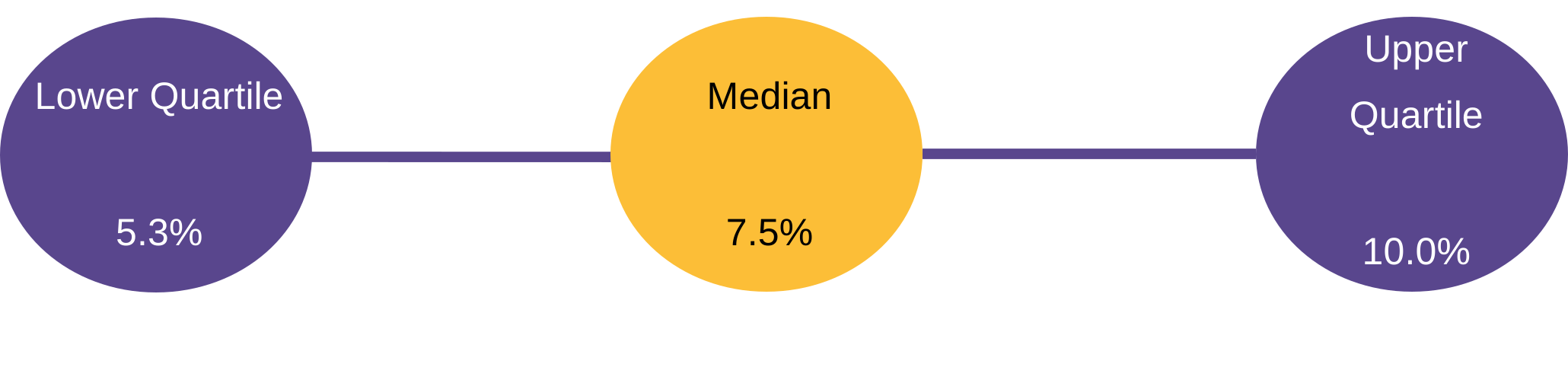
| Lower quartile | Median | Upper quartile |
|---|---|---|
| 5.3% | 7.5% | 10.0% |
3.1 - The median reinvestment into existing homes and the development of new homes (as a proportion of total housing assets, measured by its net book value), has remained relatively stable at 7.5% (2024:7.7%). Although performance in the lower quartile is broadly reflective of previous years outturn, the upper quartile dipped slightly to 10.0% (2024: 11.0%), which was largely influenced by a fall in development and other expenditure in the year.
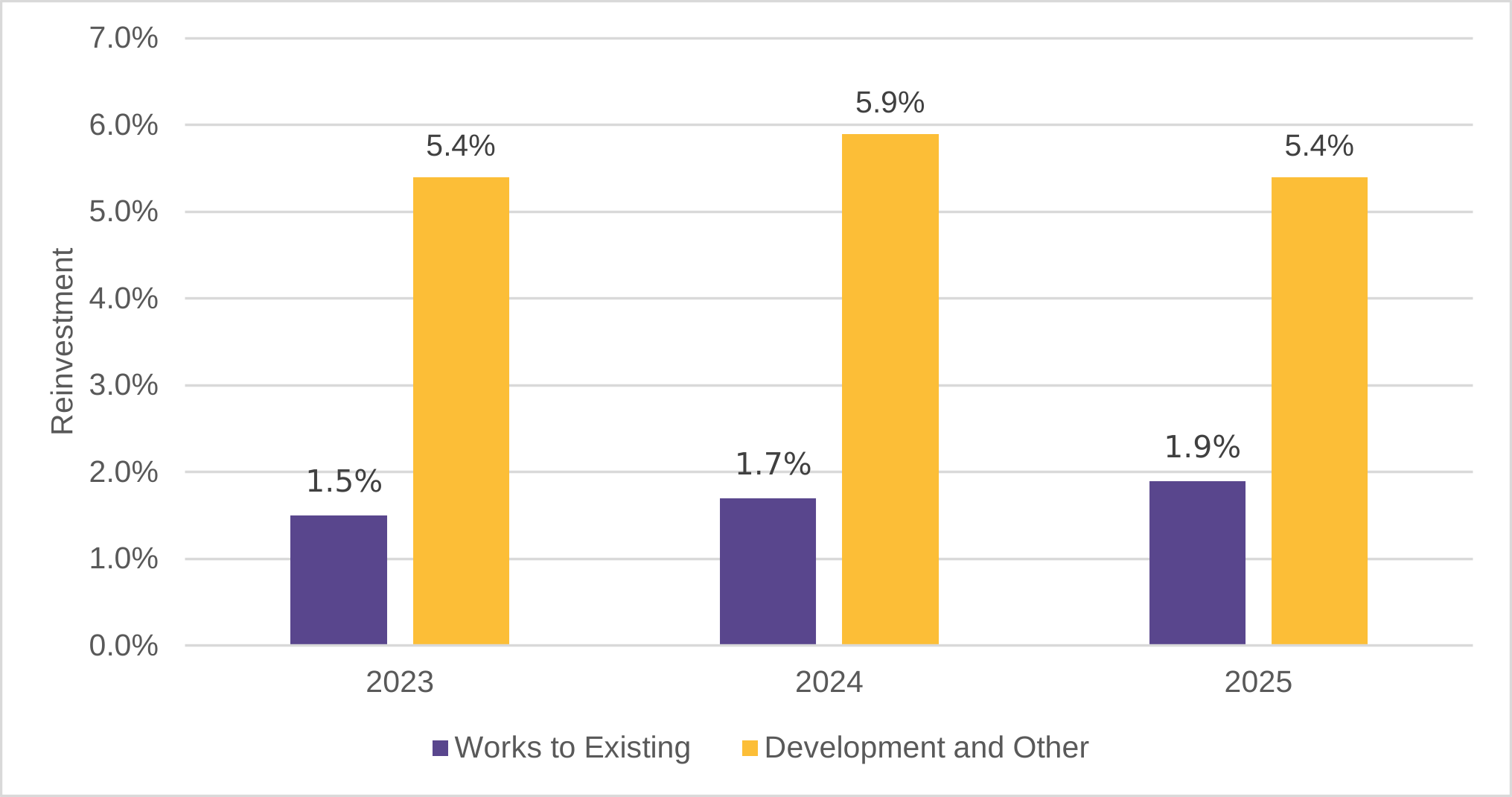
3.2 - The overall dip in total reinvestment levels year on year, conceals significant shifts in different categories of investment. In nominal terms, expenditure relating to works to existing properties has increased by 36% since 2023 to £3.8bn which demonstrates the sector’s commitment to improving the safety of tenants and the quality of their homes.
3.3 - In contrast, tougher decisions around the allocation of resources into ‘development and other activity’ is evident. In 2025, reinvestment relating to development and other expenditure fell from £11.4bn to £11bn and accounted for 74% of total reinvestment spend, compared to 78% in the previous year – this fall largely offsets the increase in investment in the existing stock and therefore explains the slight dip in the sector reinvestment median in the year.
Table 1: Sector reinvestment 2023-2025
| Year | 2023 | 2024 | 2025 |
|---|---|---|---|
| Total reinvestment (median) % | 6.7% | 7.7% | 7.5% |
| Total works to existing properties spend (£bn) | 2.8 | 3.3 | 3.8 |
| Total development and other spend (£bn) | 9.7 | 11.4 | 11.0 |
| Housing properties at cost or valuation (£bn) | 181.4 | 191.3 | 201.8 |
3.4 - The value of housing properties at cost or valuation footnote 2 - the denominator of the reinvestment measure - rose by 5.5%. This national increase is similar to that seen in previous years but conceals variation at a regional level which is reported on in later sections.
Figure 1: Reinvestment weighted average breakdown 2023-2025
| Measure | 2023 | 2024 | 2025 |
|---|---|---|---|
| Works to Existing | 1.5 | 1.7 | 1.9 |
| Development and Other | 5.4 | 5.9 | 5.4 |
New Supply (social and non-social) %
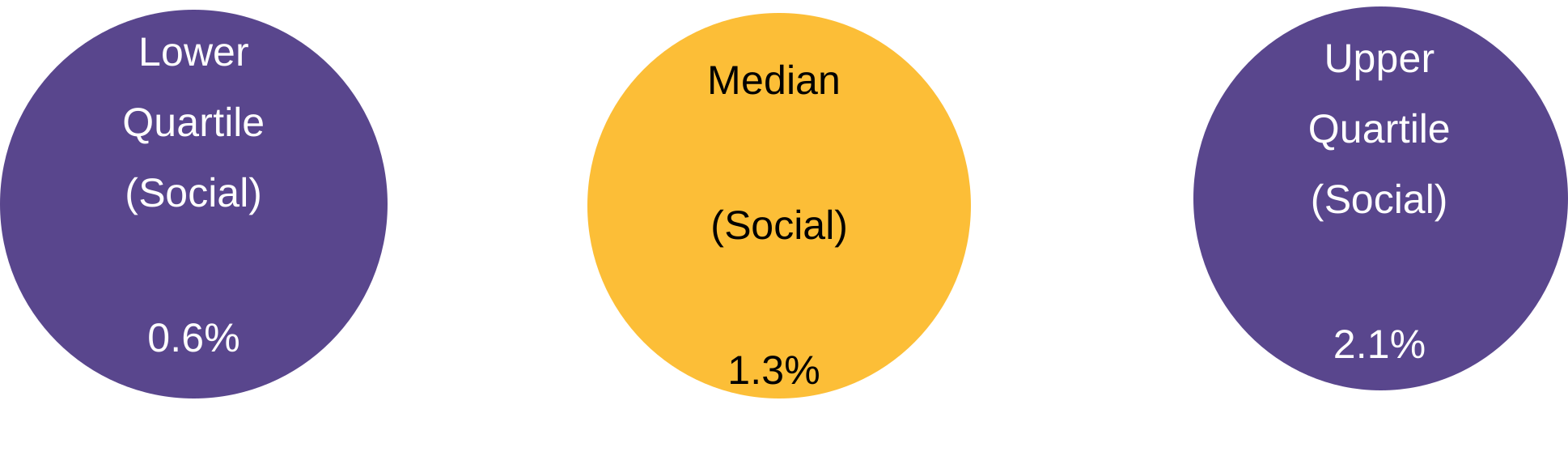
| Lower quartile (social) | Median (social) | Upper quartile (social) |
|---|---|---|
| 0.6% | 1.3% | 2.1% |
3.5 - While the development of new social homes should be central to the achievement of the sector’s social objectives and a key target for most providers, a significant proportion of the sector also invest in non-social housing activities such as market sale housing to subsidise the construction and maintenance of affordable social homes. Despite construction cost inflation relating to new homes falling from highs of around 12% in 2022 to 3.8% over the 12 months to March 2025, the delivery of new supply overall has fallen as providers scaled back on building non-social homes - the development of new social homes remains fairly stable.
3.6 - The new supply (social) metric measures the number of social homes delivered as a proportion of total social homes owned. The median level of new supply (social) delivered in the year fell to 1.3% compared to 1.4% the previous year.
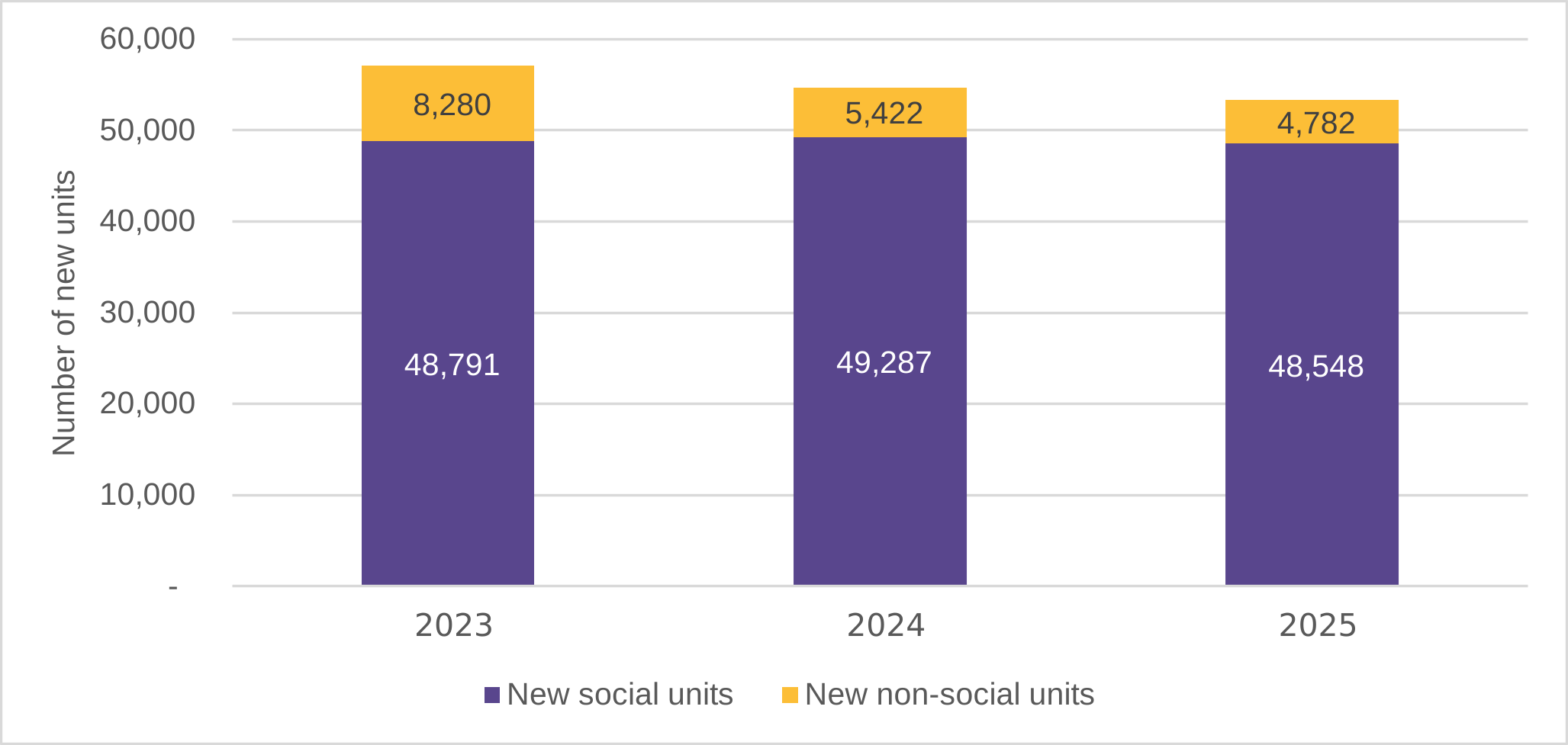
3.7 - Performance in the lower and upper quartiles of new supply (social) in the year generally reflects previous years, suggesting that the distribution of new social homes delivered across the sector remains relatively unchanged. While eighteen of the sector’s largest providers delivered almost a half of all new social homes, in contrast, there remains a significant minority (circa 23%) of providers that deliver less than 0.5% new homes as a percentage of total stock owned. Around a quarter of these providers include supported housing and Housing for Older people (HOP) as well as the majority of providers with fewer than 2,500 homes. In aggregate, 48,548 new social homes were delivered compared to 49,287 the previous year.
3.8 - As mentioned, for some providers, investment into non-social homes can partially offset the cost of providing social housing activities. Despite a small spike in the delivery of new non-social homes in 2023 following pro-longed delays in construction activity due to the COVID-19 pandemic, the number of new (non-social) homes delivered in the year remains sluggish and fell by 12% to 4,782.
Figure 2: Total number of New Supply units (Social and Non-social) 2023-2025
| Measure | 2023 | 2024 | 2025 |
|---|---|---|---|
| New social units | 48791 | 49287 | 48548 |
| New non-social units | 8280 | 5422 | 4782 |
EBITDA MRI Interest Cover %
| Lower quartile | Median | Upper quartile |
|---|---|---|
| 62.2% | 113% | 152% |
3.9 - The EBITDA MRI interest cover metric is a prudent measure and an indicator of the sector’s ability to cover ongoing finance costs from its operating activities after major repairs expenditure. It is a crucial measure for understanding investment capacity. A lower EBITDA MRI Interest Cover increases the risk exposure the sector has to potential shocks and will generally limit the amount of new debt that can be taken on.
Figure 3: EBITDA MRI Interest Cover % (median) 2023-2025
| Measure | 2023 | 2024 | 2025 |
|---|---|---|---|
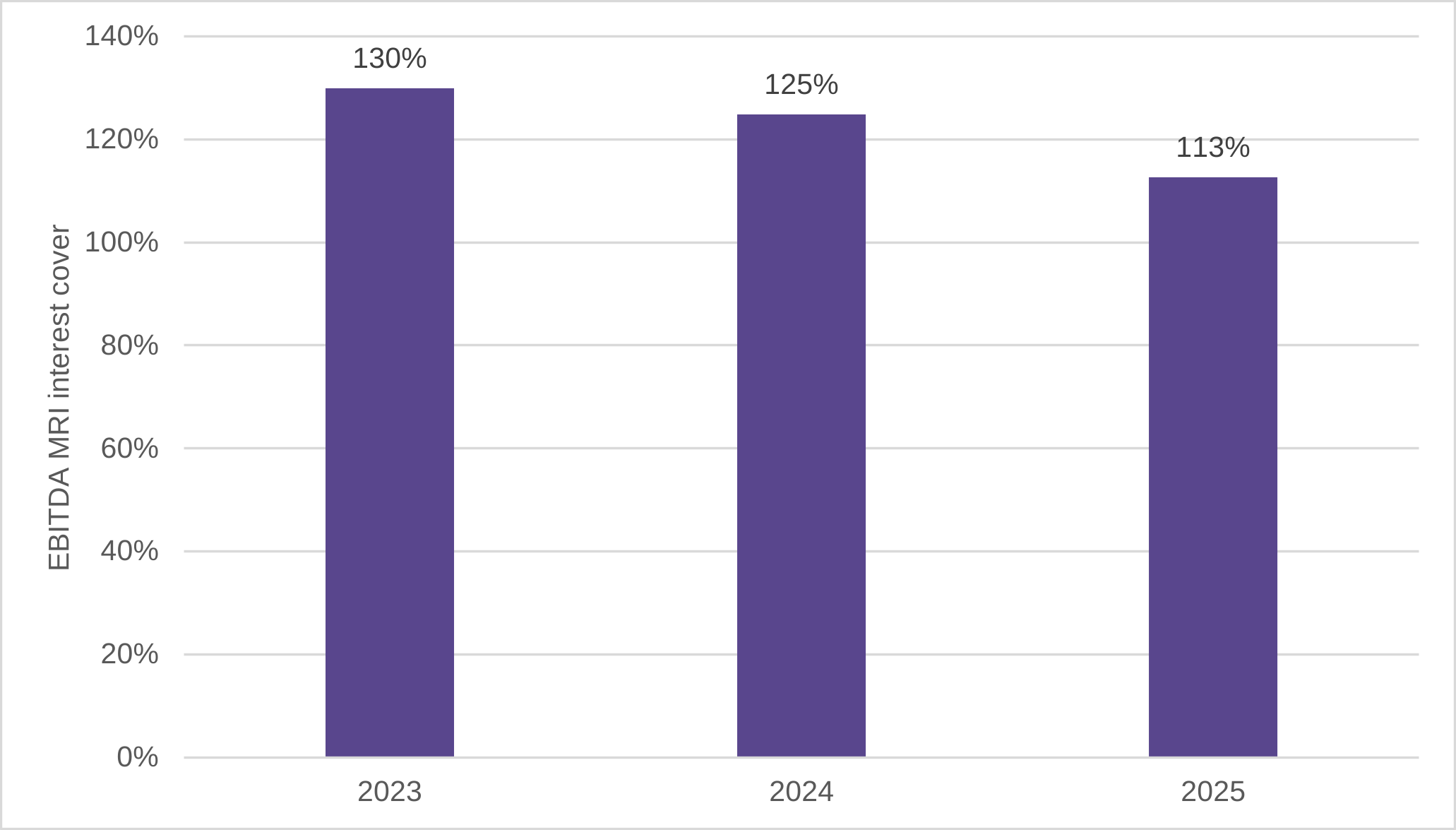
| Median | 130 | 125 | 113 |
3.10 - The median EBITDA MRI interest cover fell by 10% to 113% while the weighted average EBITIDA MRI Interest Cover also fell to 87% in the year, which reflects the on-going squeeze on surplus cash once debt obligations have been covered. The difference between the median and weighted average figure is driven by the performance of the very largest providers, who as a group exhibit low interest cover and are large enough to materially influence the weighted average for the sector overall.
3.11 - Whilst surplus cash – the numerator of the measure, has remained relatively unchanged since 2023, both interest payable & financing costs and interest capitalised have increased by almost a quarter to £4.6bn over the past two years. This is closely correlated with the Bank of England’s borrowing rates which increased to their highest level of 5.25% (April: 2024) since 2008, although the base rate was cut to 4.5% by the end of this reporting period in March 2025.
Gearing %
| Lower quartile | Median | Upper quartile |
|---|---|---|
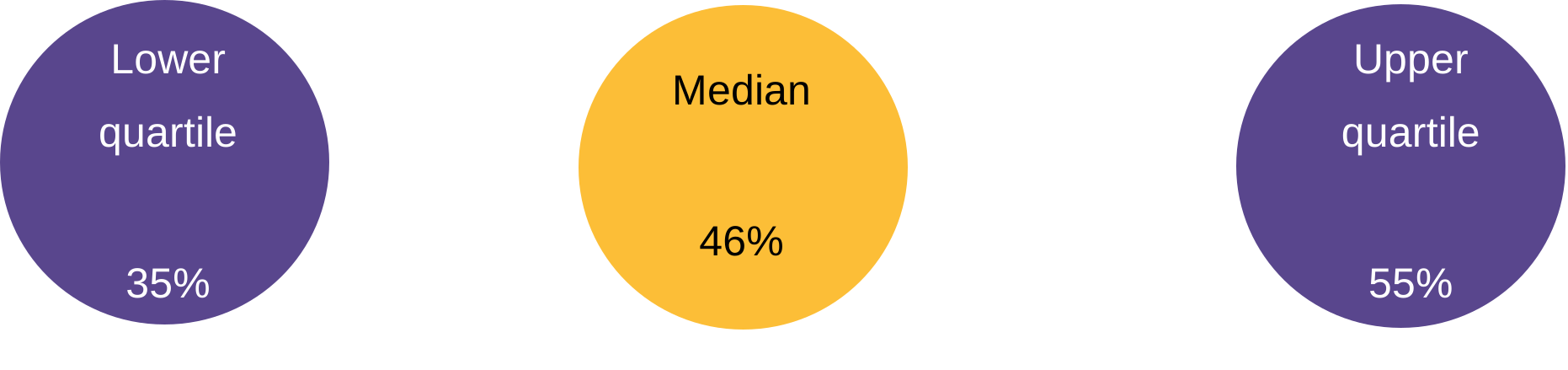
| 35% | 46% | 55% |
3.12 - The Gearing VFM metric is measured net of cash and is an indication of debt finance dependence. Over the past two years, there is a similar distribution of performance. However, there is a notable change in relation to short-term debt which increased by 19% to £2.5bn in the year. This likely reflects providers utilising short term facilities offered by lenders compared to slightly higher rates of interest offered on longer term loans by the bond market.
Headline social housing cost per unit £k
| Lower quartile | Median | Upper quartile |
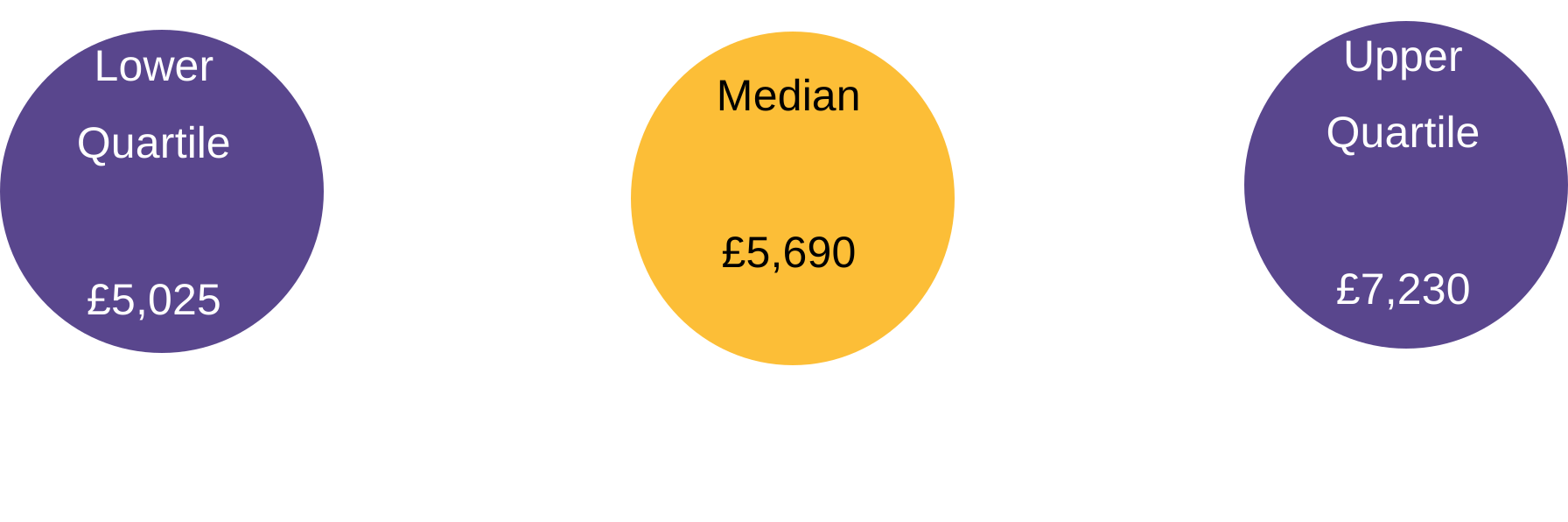
| £5,025 | £5,690 | £7,230 |
3.13 - The median headline cost footnote 3 in 2025 increased by 11% to £5,690 which was significantly above the reported CPI figure of 2.6% in March 2025. Important factors influencing costs are discussed in later sections of this report. The lower and upper headline cost quartiles increased by 12% and 14% respectively, which demonstrates that headline costs have risen at a broadly similar level across the sector.
3.14 - The overall increase in headline cost is primarily driven by maintenance and major repair costs, inclusive of capitalised major repair costs. The sector weighted average spend on maintenance and major repair costs has increased by a quarter since 2023 to £3,420 per unit which further reflects the sector’s continued commitment to meeting stock quality and energy efficiency improvements.
3.15 - Other key drivers that influence the headline cost include management costs which increased by 9% in the year to £1,390 per unit, while service charges and other costs increased by just 2.7% and 2.4%, respectively. A considerable number of providers have reported they’ve experienced higher costs driven by a combination of necessary improvements into complaints handling and rising costs relating to insurance premiums as well as backroom services including essential, large-scale upgrades to IT systems, driven by the need to replace aging, inefficient or legacy technology. Other costs that contribute to the overall headline cost measure are, other (SHL) costs, charges for support services, development services, community and neighbourhood services, lease costs, and other social housing activities – these costs account for just 9% of the total headline cost.
3.16 - The weighted average headline cost per unit of £6,280 is higher than the median due to the prevalence of providers who exhibit significantly higher costs due to cost factors such as ownership of supported housing and HOP, having significant numbers of tall buildings with high repairs costs, or operating in regions with high wages, such as London (see sub-sector analysis section for more detail relating to cost factors). Around three-quarters of organisations in the highest 10% headline cost group are defined as supported housing or HOP providers.
Figure 4: Headline social housing cost per unit (£k) weighted average by expenditure component 2023-2025
| Cost per unit | 2023 | 2024 | 2025 |
|---|---|---|---|
| Maintenance and major repairs | 2710 | 3050 | 3420 |
| Management costs | 1200 | 1270 | 1390 |
| Service charges | 800 | 890 | 920 |
| Other costs | 540 | 550 | 560 |
Operating Margin (SHL and Overall) %
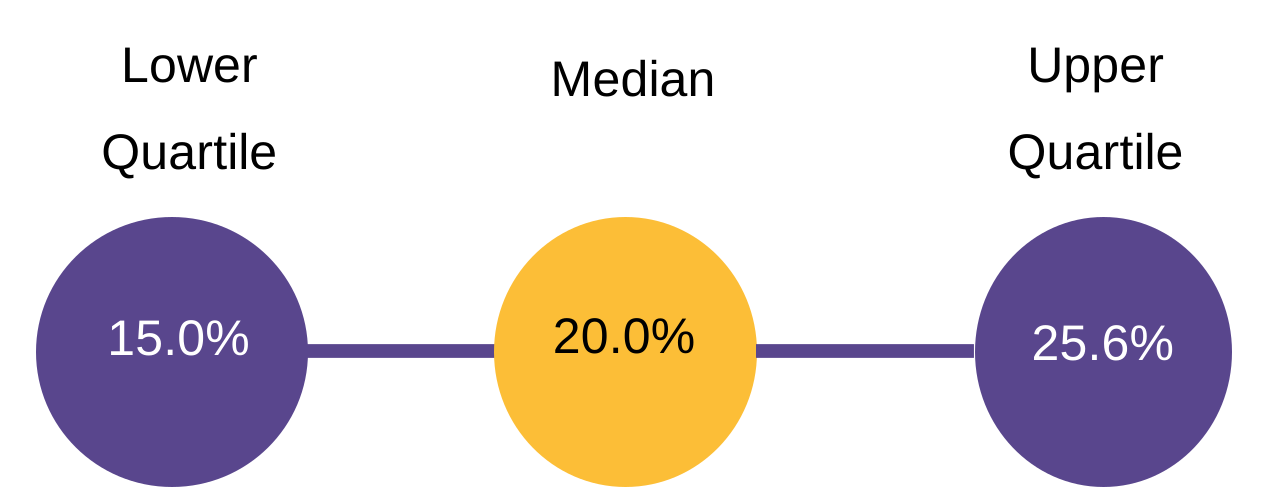
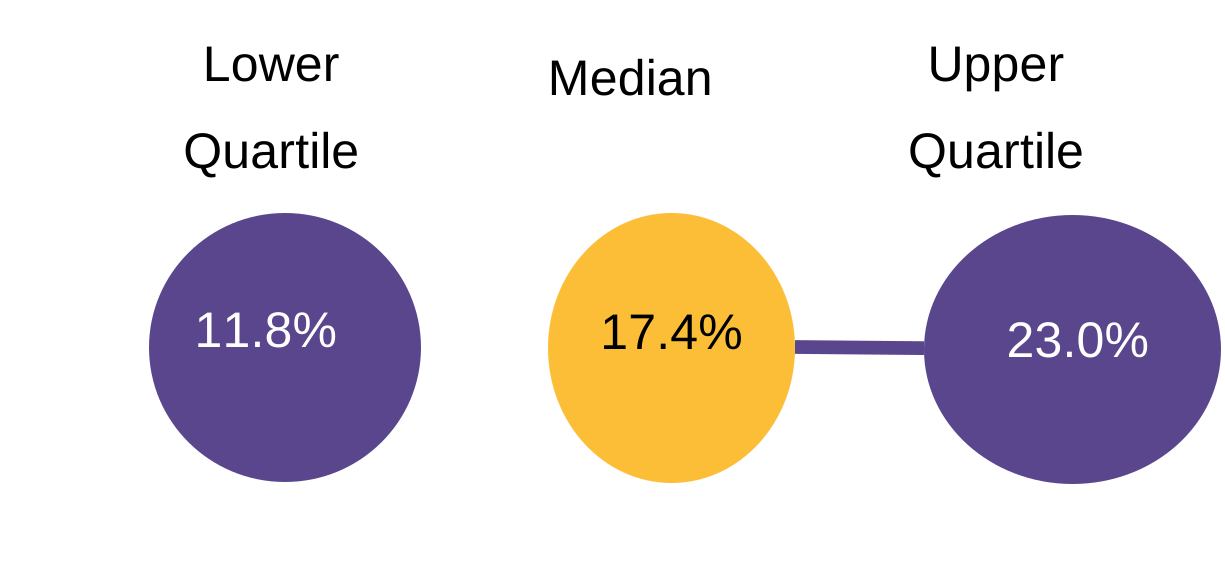
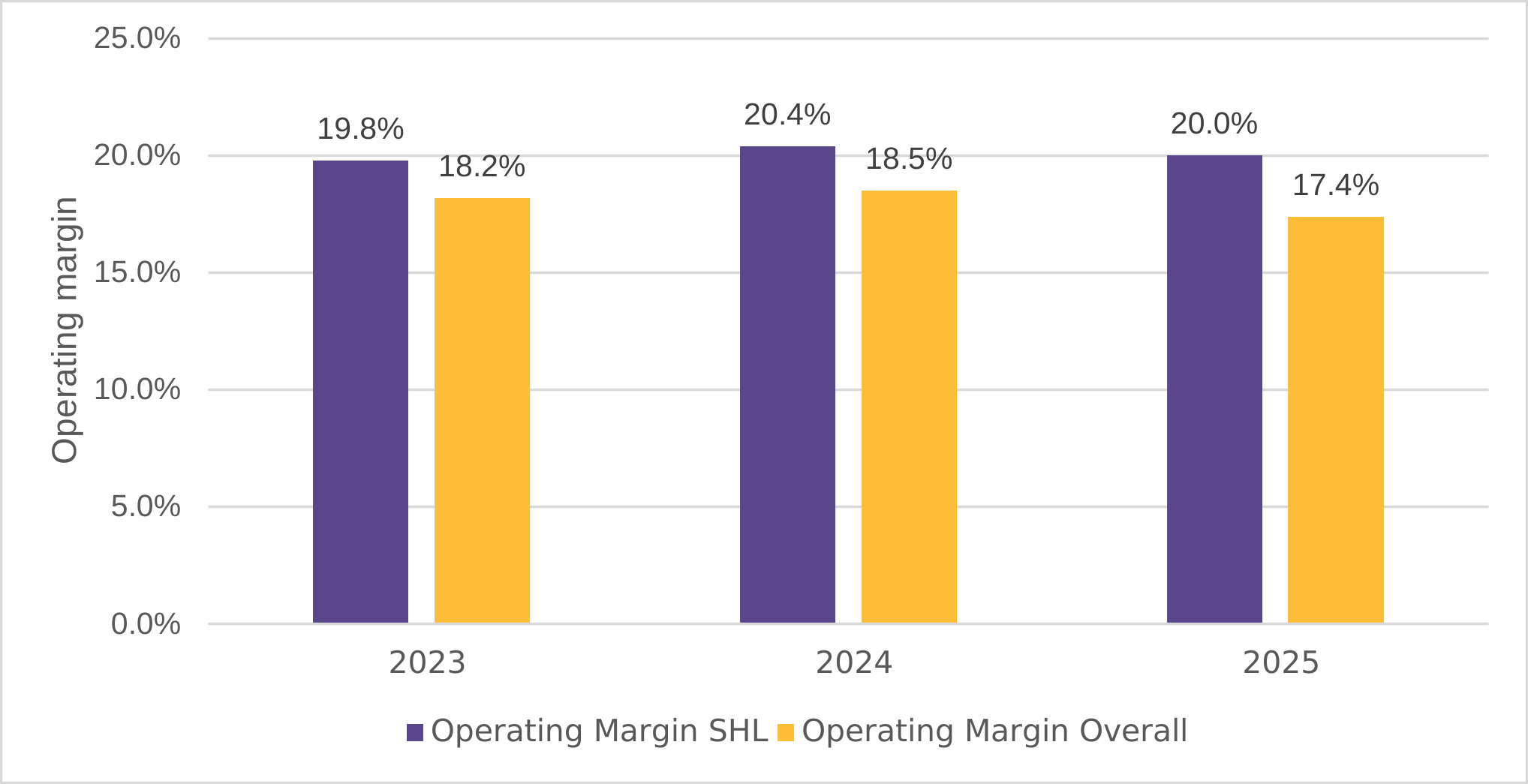
3.17 - The operating margin Social Housing Lettings (SHL) is a measure of operating efficiency and reflects all social housing lettings activities. In contrast, the operating margin (Overall) includes all business activities, including non-social housing activities measured at a group level.
Operating Margin (SHL)
| Lower quartile | Median | Upper quartile |
|---|---|---|
| 15.0% | 20.0% | 25.6% |
Operating Margin (Overall)
| Lower quartile | Median | Upper quartile |
|---|---|---|
| 11.8% | 17.4% | 23.0% |
Figure 5: Median operating margin SHL and operating margin overall 2023-2025
| Measure | 2023 | 2024 | 2025 |
|---|---|---|---|
| Operating Margin SHL | 19.8 | 20.4 | 20.0 |
| Operating Margin Overall | 18.2 | 18.5 | 17.4 |
3.18 - The median operating margin (SHL) which shows how much surplus is generated from core operations before interest and taxes, has remained relatively stable at 20% (2024:20.4%). In contrast, the median operating margin (overall) fell to 17.4% (2024:18.5%) and was largely driven by lower margins in relation to non-social housing lettings activities.
Return on Capital Employed %
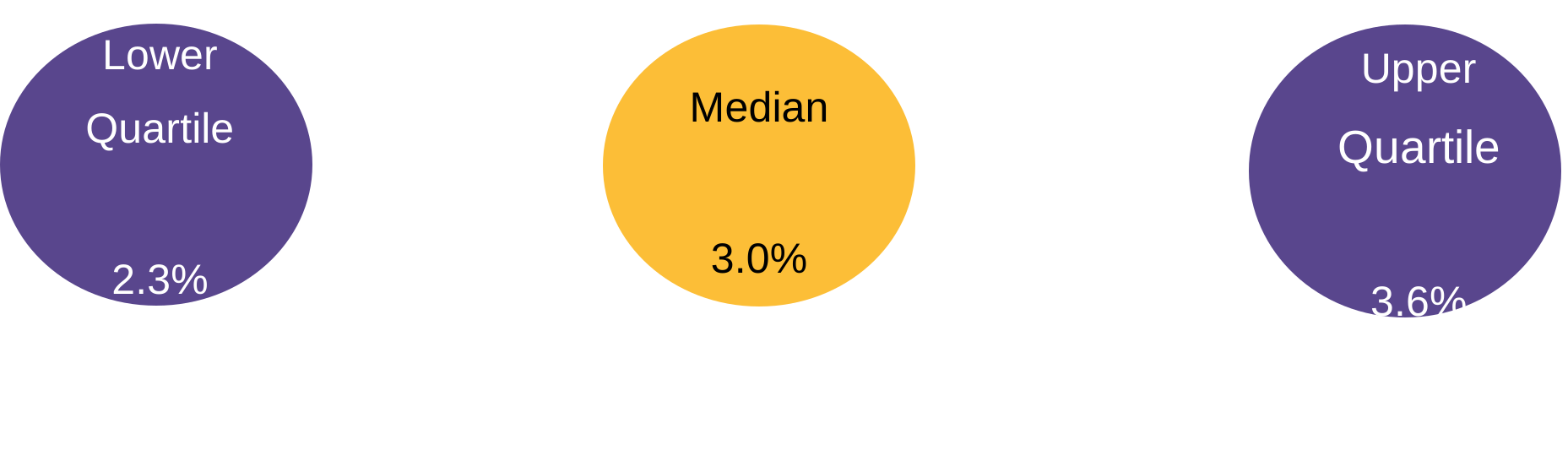
| Lower quartile | Median | Upper quartile |
|---|---|---|
| 2.3% | 3.0% | 3.6% |
3.19 - The return on capital employed (ROCE) measures the amount of pre-tax surplus an organisation generates from the capital employed in its business and is a measure of efficient use of capital.
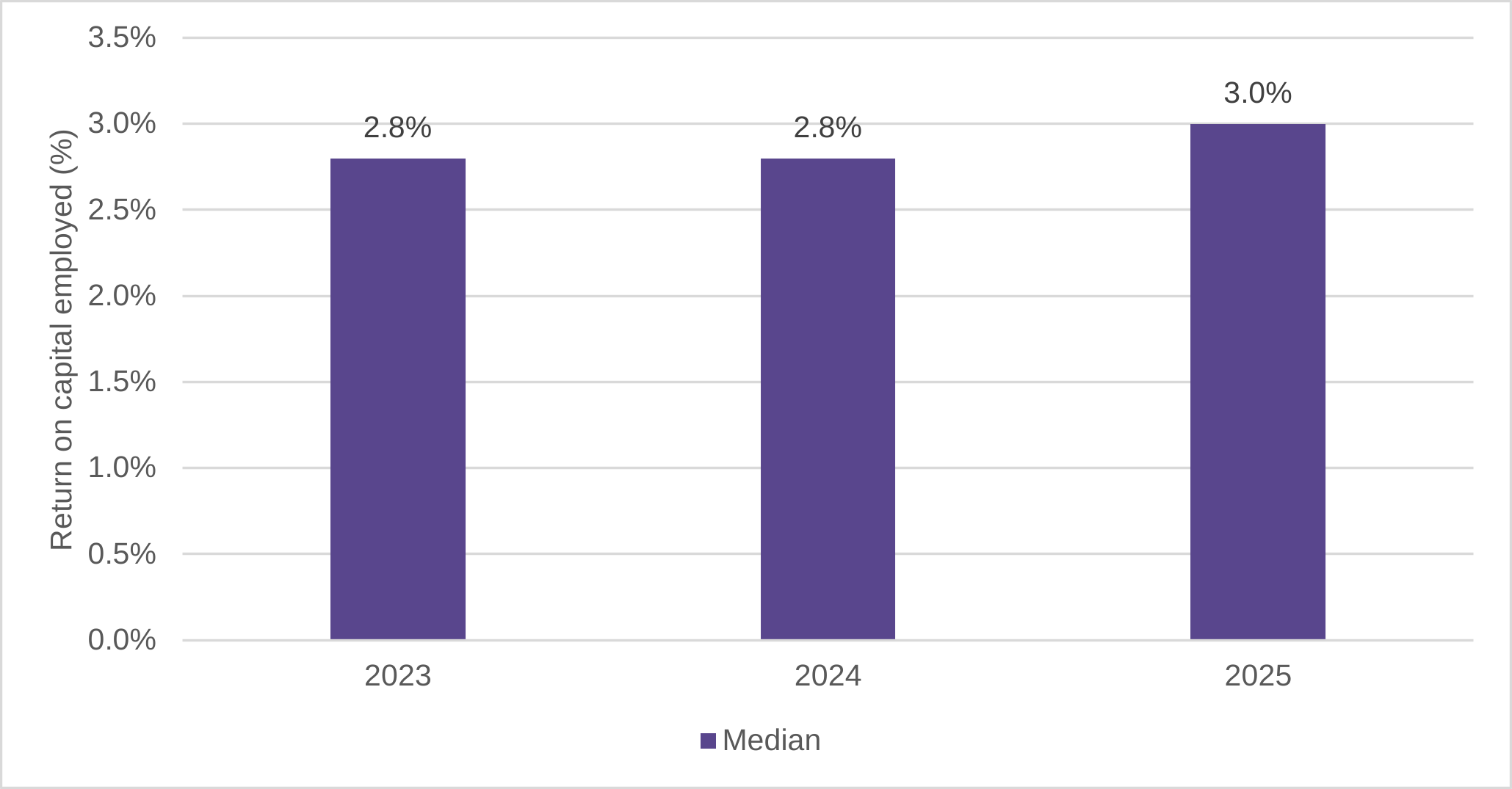
3.20 - The median ROCE increased to 3.0% in 2025, up from 2.8% the previous year - its highest level since 2022. As quality and safety standards increase, more providers are undertaking stock rationalisation programmes and disposing of housing assets that are no longer viable to manage. The weighted average ROCE increased to 2.7% from 2.5% in 2024 which was attributed by a 13% increase in the operating surplus (including a 32% increase in the gain on disposal of fixed assets relating to housing) compared to a 4% increase in total net assets - the denominator of the measure.
Figure 6: Return on Capital Employed (median), 2023-2025
| Measure | 2023 | 2024 | 2025 |
|---|---|---|---|
| Median | 2.8 | 2.8 | 3 |
Sub-sector analysis
3.21 - The analysis set out in this section of the report assesses the performance of different types of providers based on a range of factors that most influence the VFM metrics. In 2025, we have made minor changes to this part of the report. Performance analysis relating to the London region is now reported in the regional section of this report to minimise repetition.
3.22 - Moreover, as the last few providers defined as Large Scale Voluntary Transfer (LSVT) organisations less than 12 years old near the end of their major improvement and regeneration programmes, their financial characteristics are more aligned with traditional providers. Given that the last large-scale transfers took place in 2015, there are now only three providers remaining that can be classed as LSVTs. This very small cohort means that it is hard to conduct meaningful segmental analysis. Segmental analysis relating to the last three remaining LSVT organisations is therefore no longer disaggregated in this report.
3.23 - In 2024, we published a report that analyses factors impacting the value for money metrics. These significant factors include:
- Building height footnote 4: Includes the following building types and based on Low-cost rental accommodation owned:
a. House /Bungalow,
b. Homes in a block fewer than 7 storeys in height
c. Homes in a block at least 7 storeys in height
-
Stock Age: Relates to the average age of a building and is based on the original property build date
-
Supported Housing: Providers with 30% of social stock owned that is classified as supported housing and meet the definition of supported housing specified in the Rent Policy Statement. Note: the fact that a tenant receives support services in their home does not make it supported housing.
-
Housing for Older People: Providers with 30% of social stock owned that fully meets the definition specified in the Rent Policy Statement.
Size of provider

| Total | 1,000-2,500 | 2,500-4,999 | 5,000-9,999 | 10,000-24,999 | 25,000-40,000 | > 40,000 |
|---|---|---|---|---|---|---|
| 191 PRPs | 42 PRPs | 27 PRPs | 49 PRPs | 37 PRPs | 18 PRPs | 18 PRPs |
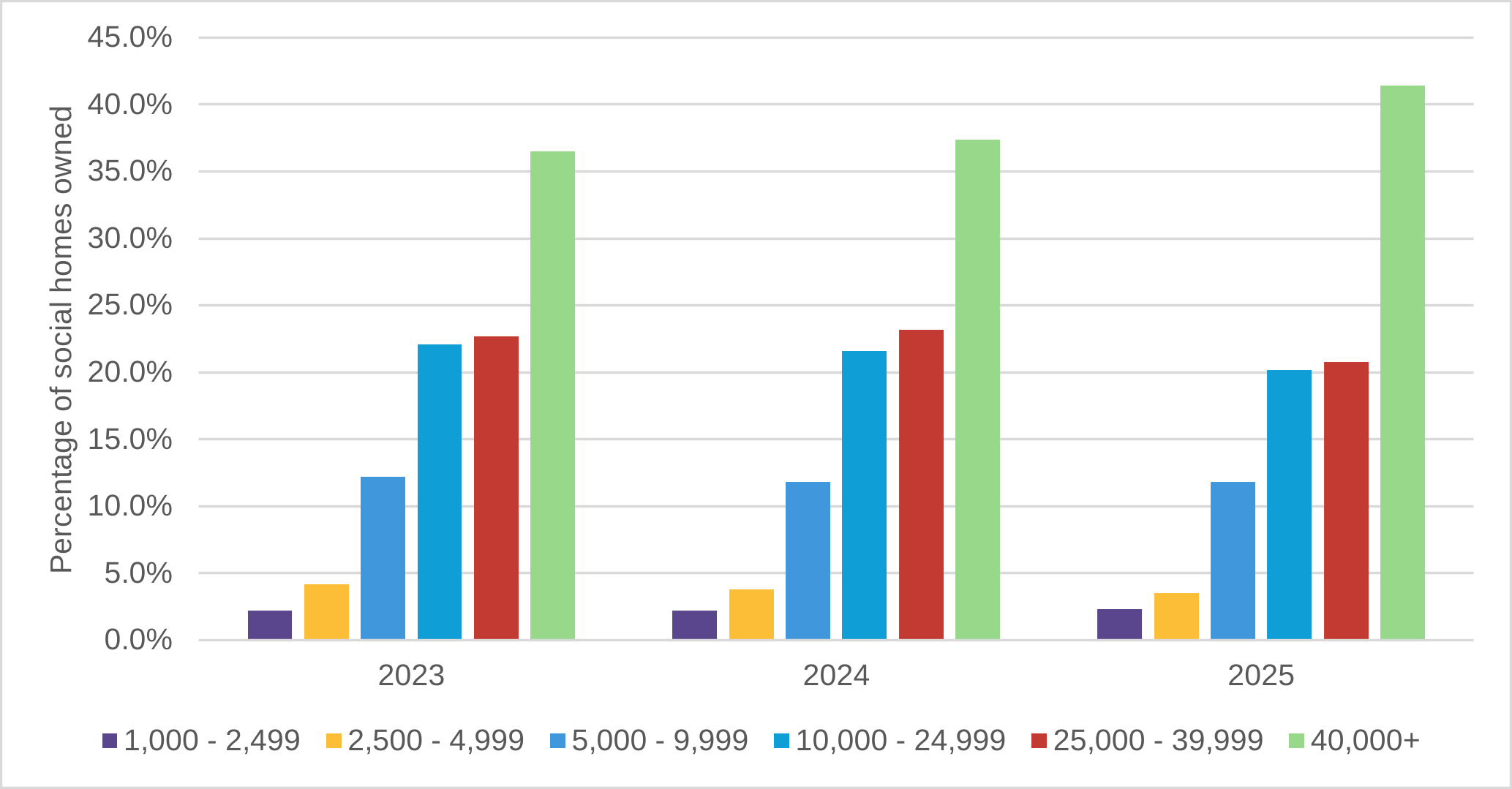
Figure 7: Percentage of total PRP homes owned by size band 2023-2025
| Size group | 2023 (%) | 2024 (%) | 2025 (%) | |
|---|---|---|---|---|
| 1,000 - 2,499 | 2.2 | 2.2 | 2.3 | |
| 2,500 - 4,999 | 4.2 | 3.8 | 3.5 | |
| 5,000 - 9,999 | 12.2 | 11.8 | 11.8 | |
| 10,000 - 24,999 | 22.1 | 21.6 | 20.2 | |
| 25,000 - 39,999 | 22.7 | 23.2 | 20.8 | |
| 40,000+ | 36.5 | 37.4 | 41.4 |
3.24 - Key dynamics shaping the sector continue to be driven by mergers and Transfers of Engagement, However, over the past three years the delivery of new homes and stock rationalisation have also had an impact on size bands. In 2025, providers with more than 40,000 homes account for just over 41% of the sector, up from 37% in 2023. Over the same period, six mergers were completed, which has impacted year on year performance across a range of size groups footnote 5.
3.25 - The influence of size on performance is complex. Certain size groups exhibit significant deviations from sector averages. However, this is not necessarily the result of size itself; performance can also be influenced by the factors referred to above as well as area of operation and providers operating in the most deprived parts of England.
Reinvestment %
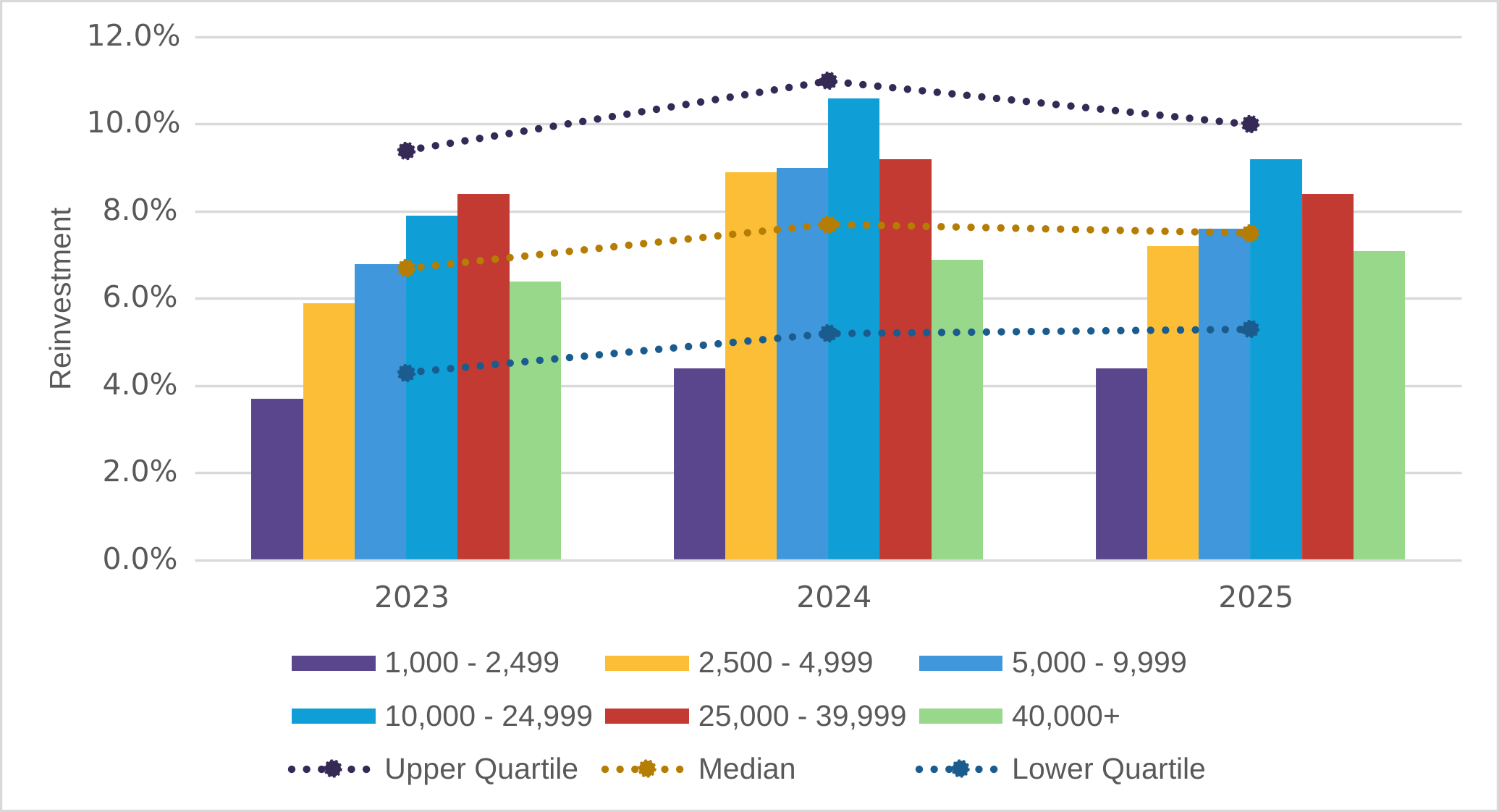
Figure 8: Reinvestment (median) by size band, 2023-2025
| Size group | 2023 | 2024 | 2025 |
|---|---|---|---|
| 1,000 - 2,499 | 3.7 | 4.4 | 4.4 |
| 2,500 - 4,999 | 5.9 | 8.9 | 7.2 |
| 5,000 - 9,999 | 6.8 | 9 | 7.6 |
| 10,000 - 24,999 | 7.9 | 10.6 | 9.2 |
| 25,000 - 39,999 | 8.4 | 9.2 | 8.4 |
| 40,000+ | 6.4 | 6.9 | 7.1 |
| Upper Quartile | 9.4 | 11 | 10 |
| Median | 6.7 | 7.7 | 7.5 |
| Lower Quartile | 4.3 | 5.2 | 5.3 |
3.26 - With the exception of providers with over 40,000 homes, the median reinvestment as a proportion of total housing assets fell across all other size bands. This was influenced by new providers assigned to the cohort of largest providers in the year who had higher reinvestment levels. However, compared to other size bands, the median reinvestment level relating to this cohort remained below the sector median of 7.5%. This is influenced by the higher proportion of homes based in London and the South of England which are associated with a higher net book value, leading to a higher denominator and a lower reinvestment rate (as a percentage of the value of the stock) compared to other size bands.
3.27 - The median reinvestment for providers in the size band 2,500-4,999 homes fell by 19%, the largest decline reported across all size bands. This was influenced by a significant fall in development and other expenditure compared to previous years. However, it is important to note that housing stock owned by this group accounts for just 3.5% of the sector total. Development figures for smaller providers can be disproportionately affected by the progress of individual schemes and so can be more volatile year on year than is the case for larger organisations.
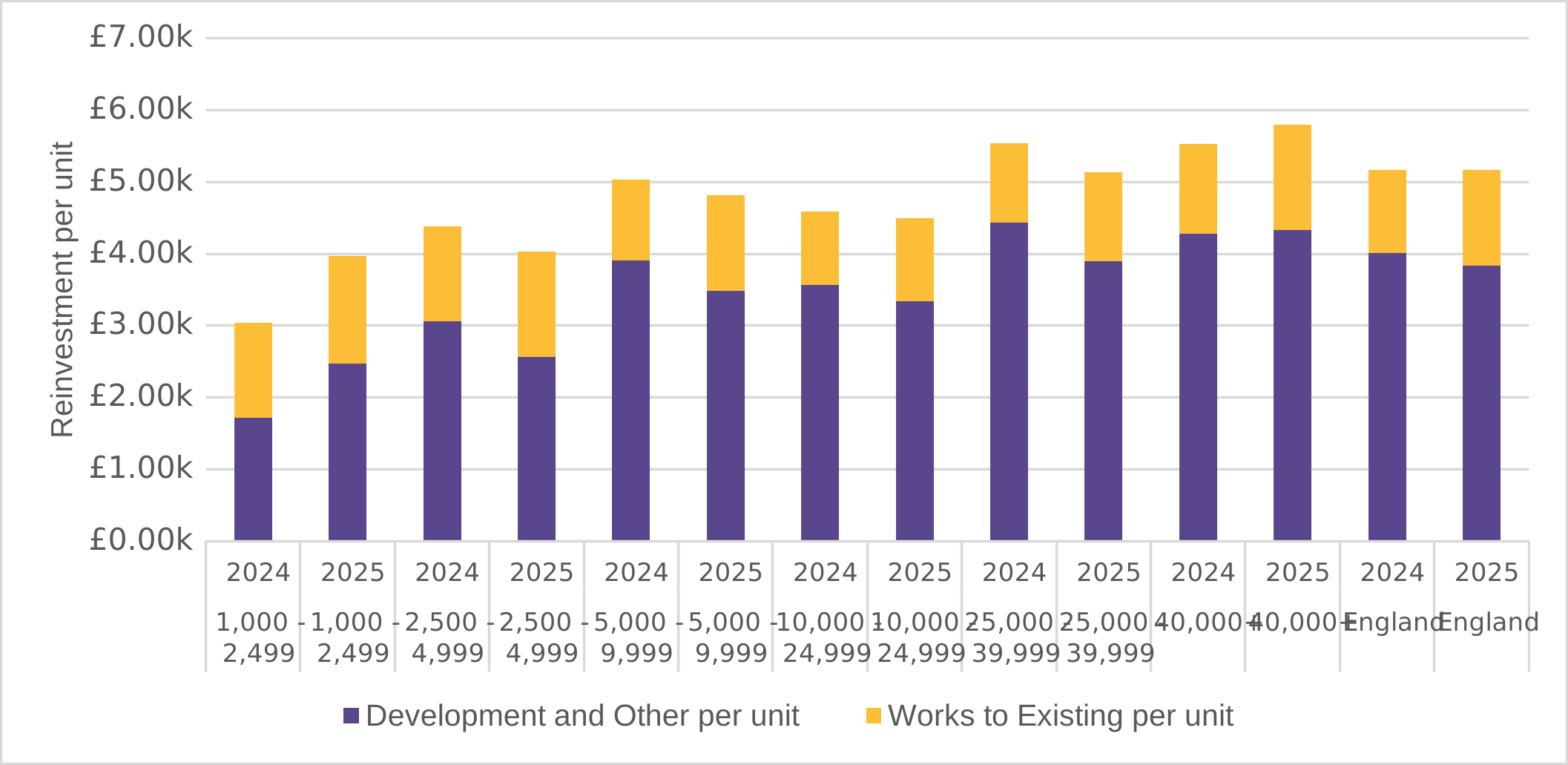
Figure 9: Reinvestment spend per unit (£k) by size band, 2024-2025
| Size group | Year | Development and Other per unit | Works to Existing per unit |
|---|---|---|---|
| 1,000 - 2,499 | 2024 | 1.72 | 1.32 |
| 1,000 - 2,499 | 2025 | 2.47 | 1.5 |
| 2,500 - 4,999 | 2024 | 3.06 | 1.32 |
| 2,500 - 4,999 | 2025 | 2.57 | 1.46 |
| 5,000 - 9,999 | 2024 | 3.91 | 1.12 |
| 5,000 - 9,999 | 2025 | 3.48 | 1.34 |
| 10,000 - 24,999 | 2024 | 3.57 | 1.02 |
| 10,000 - 24,999 | 2025 | 3.34 | 1.16 |
| 25,000 - 39,999 | 2024 | 4.43 | 1.11 |
| 25,000 - 39,999 | 2025 | 3.9 | 1.24 |
| 40,000+ | 2024 | 4.28 | 1.25 |
| 40,000+ | 2025 | 4.33 | 1.47 |
| England | 2024 | 4.01 | 1.16 |
| England | 2025 | 3.83 | 1.34 |
3.28 - In nominal terms, all size bands increased their spend on works to existing homes on a per unit basis. With around a third of providers in the cohort with between 1,000 and 2,499 homes operating from London and the South East of England, it’s unsurprising that on a per unit basis, this size band of providers continue to spend most on works to existing homes. However, in contrast to previous years, spend on development and other increased by 50% to £2,580 per unit, albeit below the England average.
3.29 - Across the other range of size bands and compared to previous years trends, providers with over 40,000 homes spent most on development and other per unit, up 1% from previous years to £4,330 per unit.
Reinvestment and cost factors
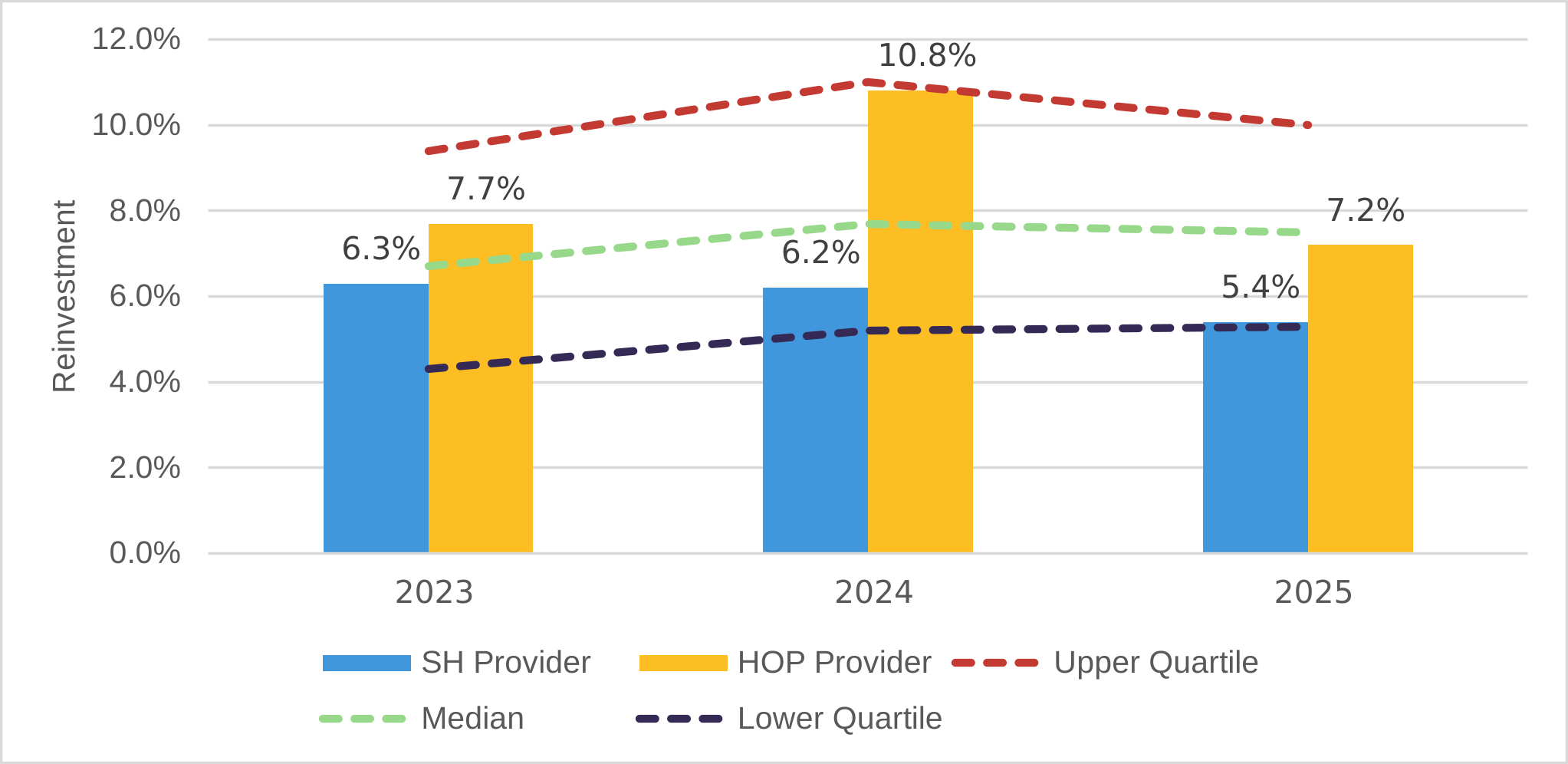
Figure 10: Reinvestment % (median) by cost factor, 2023-2025
| Providers/Measure | 2023 | 2024 | 2025 |
|---|---|---|---|
| SH Provider | 6.3 | 6.2 | 5.4 |
| HOP Provider | 7.7 | 10.8 | 7.2 |
| Upper Quartile | 9.4 | 11 | 10 |
| Median | 6.7 | 7.7 | 7.5 |
| Lower Quartile | 4.3 | 5.2 | 5.3 |
3.30 - Levels of reinvestment pertaining to supported housing and HOP providers broadly reflects the funding constraints and strategic choices that these providers must take. The median level of reinvestment for providers defined as HOP and supported housing fell by 3.6 percentage points and 0.8 percentage points, respectively. For the HOP group this was primarily influenced by changes in the composition of the cohort as well as a lower level of reinvestment by a small number of providers compared to previous years. In contrast, the downward shift in reinvestment performance by supported housing providers was largely driven by a reduction in development and other spend with around 40% of providers in the size band delivering no new social homes, compared to 20% the previous year.
3.31 - On a per unit basis however, the supported housing group of providers increased their spend on works to existing homes by 36% compared to 2024. This compares to HOP providers who increased works to existing homes spend per unit by just 13%.
Reinvestment by average social housing stock age
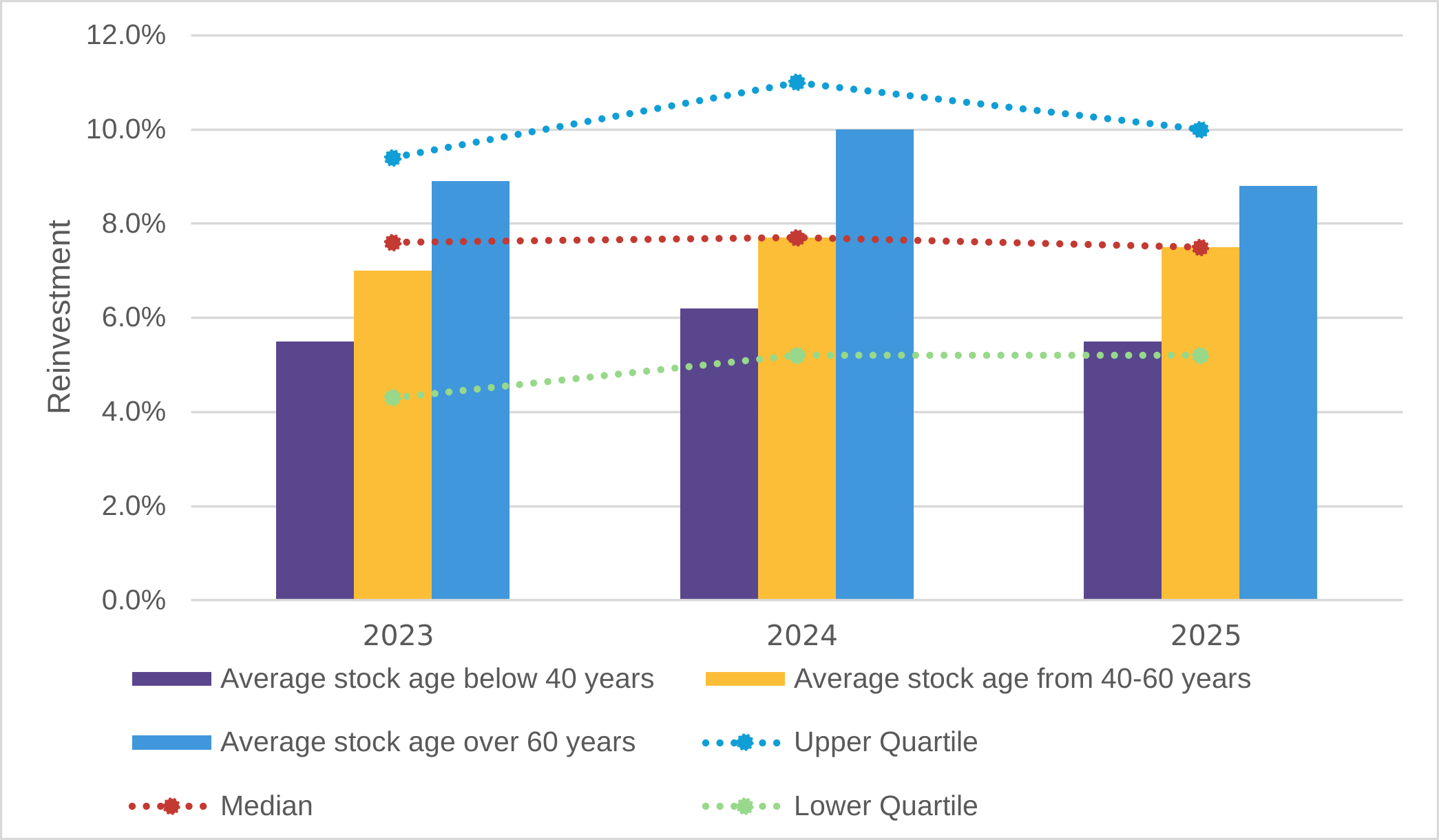
Figure 11: Reinvestment (%) by average social housing stock age (median) 2023-2025
| Provider group/Measure | 2023 | 2024 | 2025 |
|---|---|---|---|
| Average stock age below 40 years | 5.5% | 6.2% | 5.5% |
| Average stock age from 40-60 years | 7.0% | 7.7% | 7.5% |
| Average stock age over 60 years | 8.9% | 10.0% | 8.8% |
| Upper Quartile | 9.4% | 11.0% | 10.0% |
| Median | 7.6% | 7.7% | 7.5% |
| Lower Quartile | 4.3% | 5.2% | 5.2% |
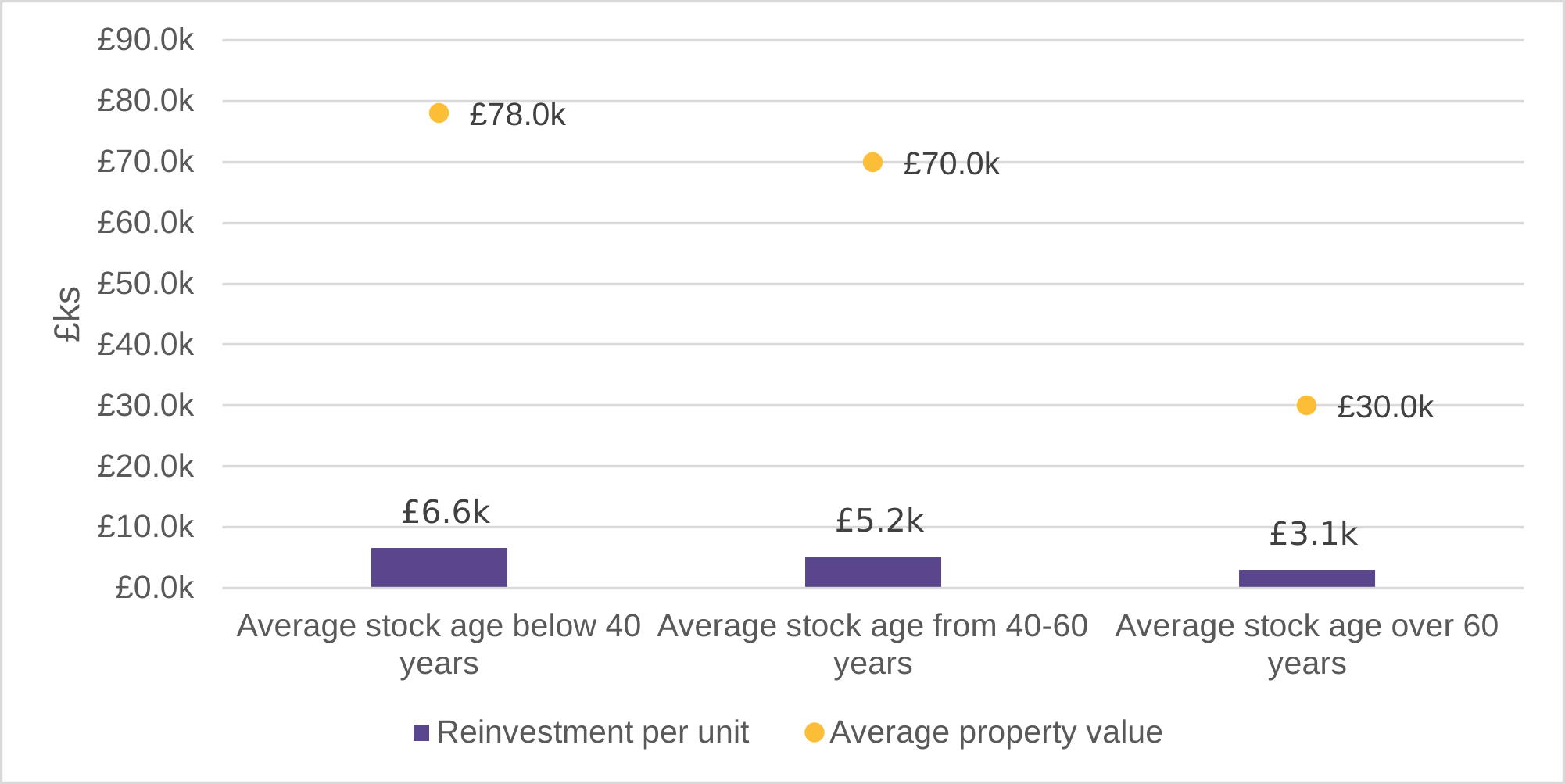
3.32 - While the replacement of asset components will vary between one provider and another, average stock age has a significant relationship with levels of reinvestment. Providers with an average stock age over 60 years old continue to average the highest level of reinvestment of 8.8% - above the sector median of 7.5%. This is influenced by providers with an older average stock age averaging a lower net book value per home – the denominator element of the reinvestment measure. The net book value average is only £30k per unit for providers with an average stock age of over 60 years compared to the sector average net book value of almost £70k per unit.
Figure 12: Reinvestment spend per unit and property value (£k) by stock age- 2025
| Sub sector | Reinvestment per unit | Average property value |
|---|---|---|
| Average stock age below 40 years | 6.6 | 78 |
| Average stock age from 40-60 years | 5.2 | 70 |
| Average stock age over 60 years | 3.1 | 30 |
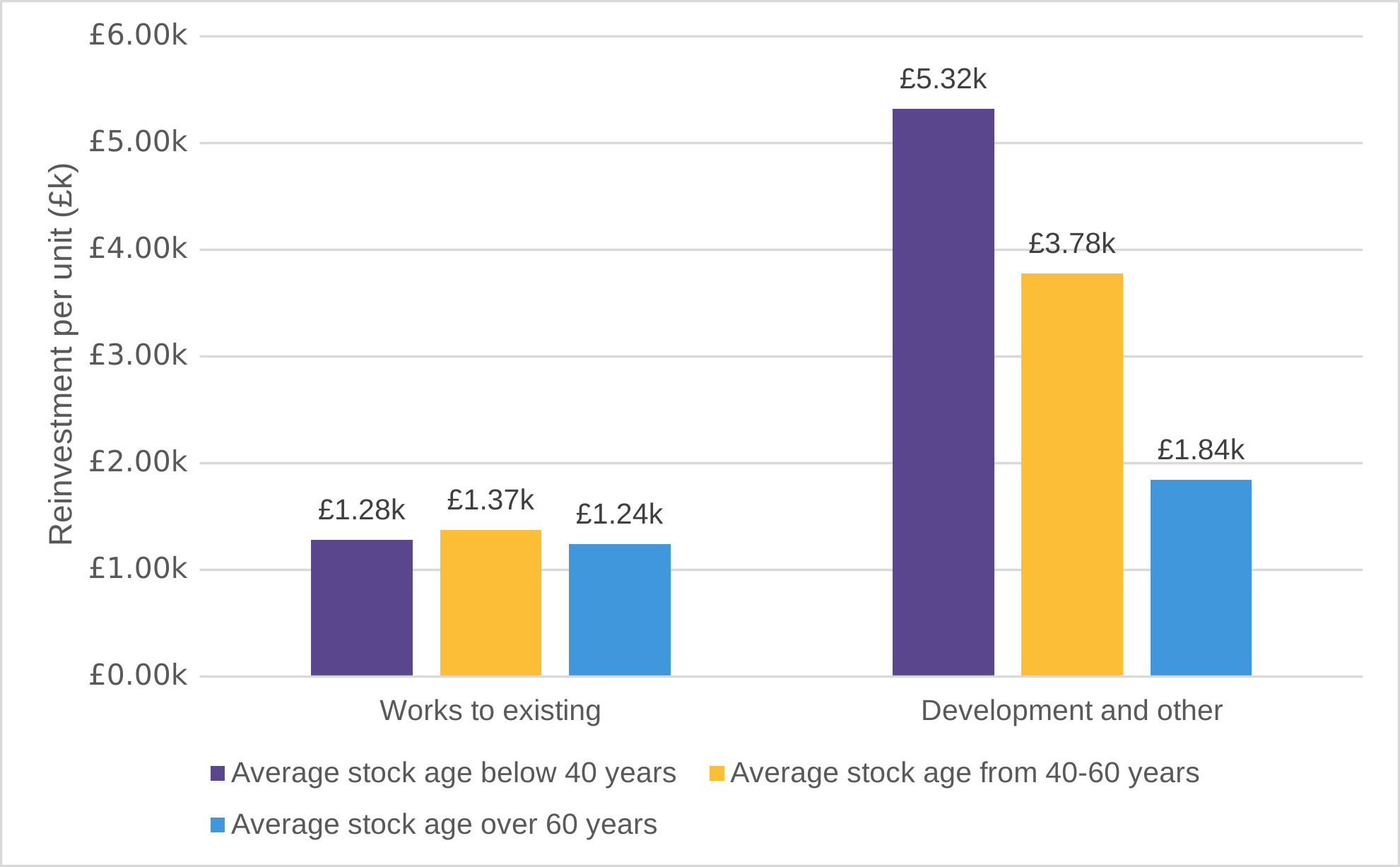
3.33 - At a disaggregated level, providers with an average stock age greater than 60 years old reinvest £1,240 per unit into existing homes which is almost 10% less compared to providers with an average stock age of between 40 and 60 years of age.
3.34 - there is however greater disparity between spend on development and other per unit across the range of stock age bands. Providers with an average stock age less than 40 years old spend £5,320 on average per unit, which is almost three times more compared to providers with an average stock age greater than 60 years. This relationship is likely to be partly a result of providers with active development programmes consequently owning a larger amount of new build stock.
Figure 13: Stock Age Reinvestment (£k) by component - Works to existing per unit and Development and other (2025)
| Sub sector | Works to existing | Development and other |
|---|---|---|
| Average stock age below 40 years | 1.28 | 5.32 |
| Average stock age from 40-60 years | 1.37 | 3.78 |
| Average stock age over 60 years | 1.24 | 1.84 |
New supply (social) by cost factor and size of provider
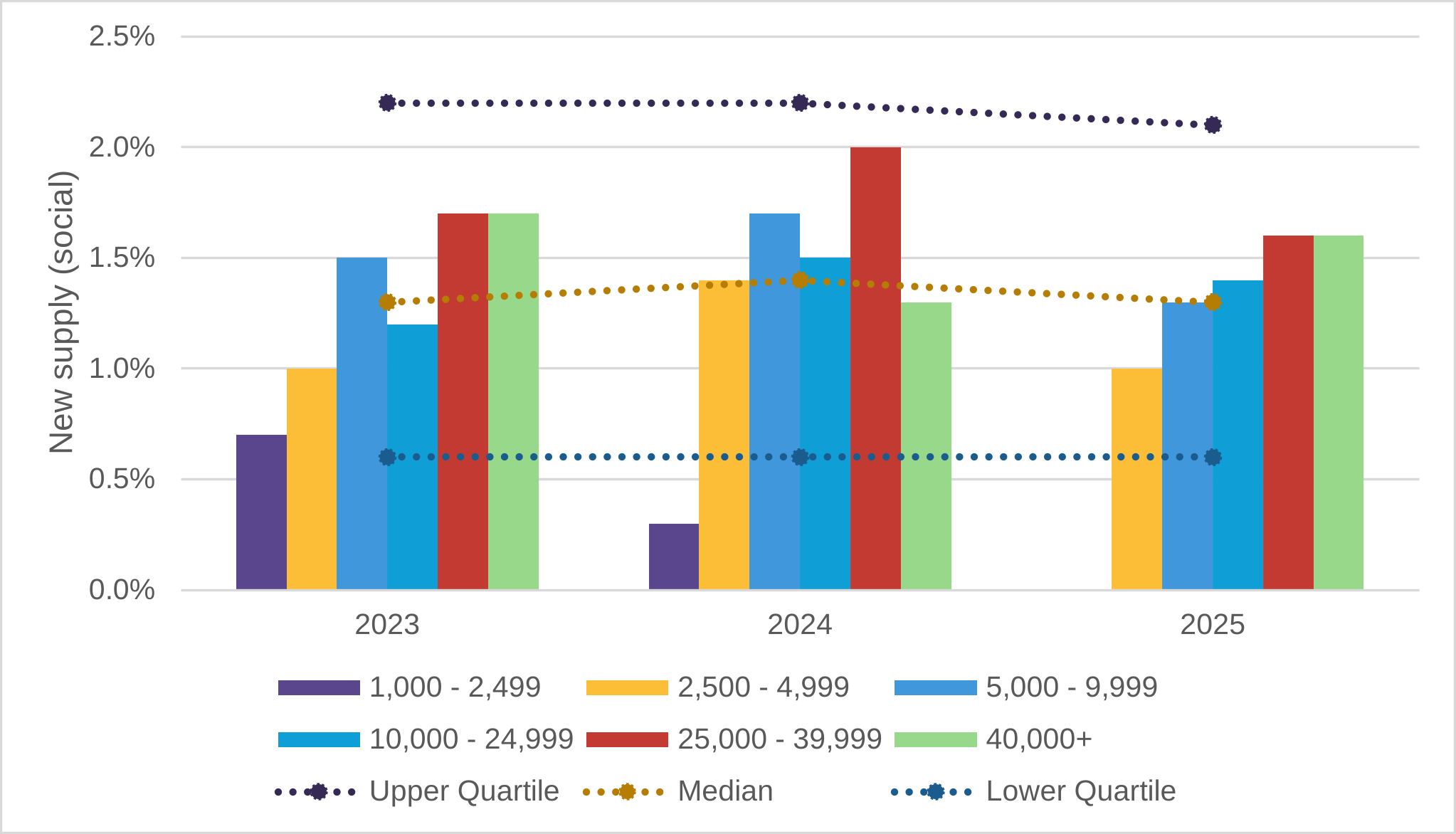
Figure 14: New supply (social) by size of provider (median) 2023–2025
| Size group/Measure | 2023 | 2024 | 2025 |
|---|---|---|---|
| 1,000 - 2,499 | 0.7 | 0.3 | 0.0 |
| 2,500 - 4,999 | 1.0 | 1.4 | 1.0 |
| 5,000 - 9,999 | 1.5 | 1.7 | 1.3 |
| 10,000 - 24,999 | 1.2 | 1.5 | 1.4 |
| 25,000 - 39,999 | 1.7 | 2.0 | 1.6 |
| 40,000+ | 1.7 | 1.3 | 1.6 |
| Upper Quartile | 2.2 | 2.2 | 2.1 |
| Median | 1.3 | 1.4 | 1.3 |
| Lower Quartile | 0.6 | 0.6 | 0.6 |
3.35 - In 2025, providers with over 40,000 homes were the only group that reported an increase in the median level of new supply (social), albeit from a lower base compared to previous years. This group of providers delivered 1.6% of new social homes as a proportion of total homes owned but this increased figure is in part influenced by two new providers entering the size band.
3.36 - providers with between 25,000 and 39,999 homes also delivered a similar proportion of new homes. While the delivery of new homes fell by 20% compared to previous years, just under half of providers in this group delivered new homes consistent with the upper quartile for the sector of 2.1%.
3.37 - Despite an increase in development and other spend per unit by providers with between 1,000 and 2,499 homes, the number of new homes developed by this group in the year fell by 6.3%. This change appears to be due to the timing of development programs completing in the year. Around a quarter of homes in this group are supported housing, while around a third of the group operate from London and the South East of England. Both of these factors tend to be associated with lower levels of development. However, there is significant variation within this smallest size band with around 15% of providers delivering new homes in line with the upper quartile.
Headline social housing cost (£k)
Headline social housing cost per unit by size band
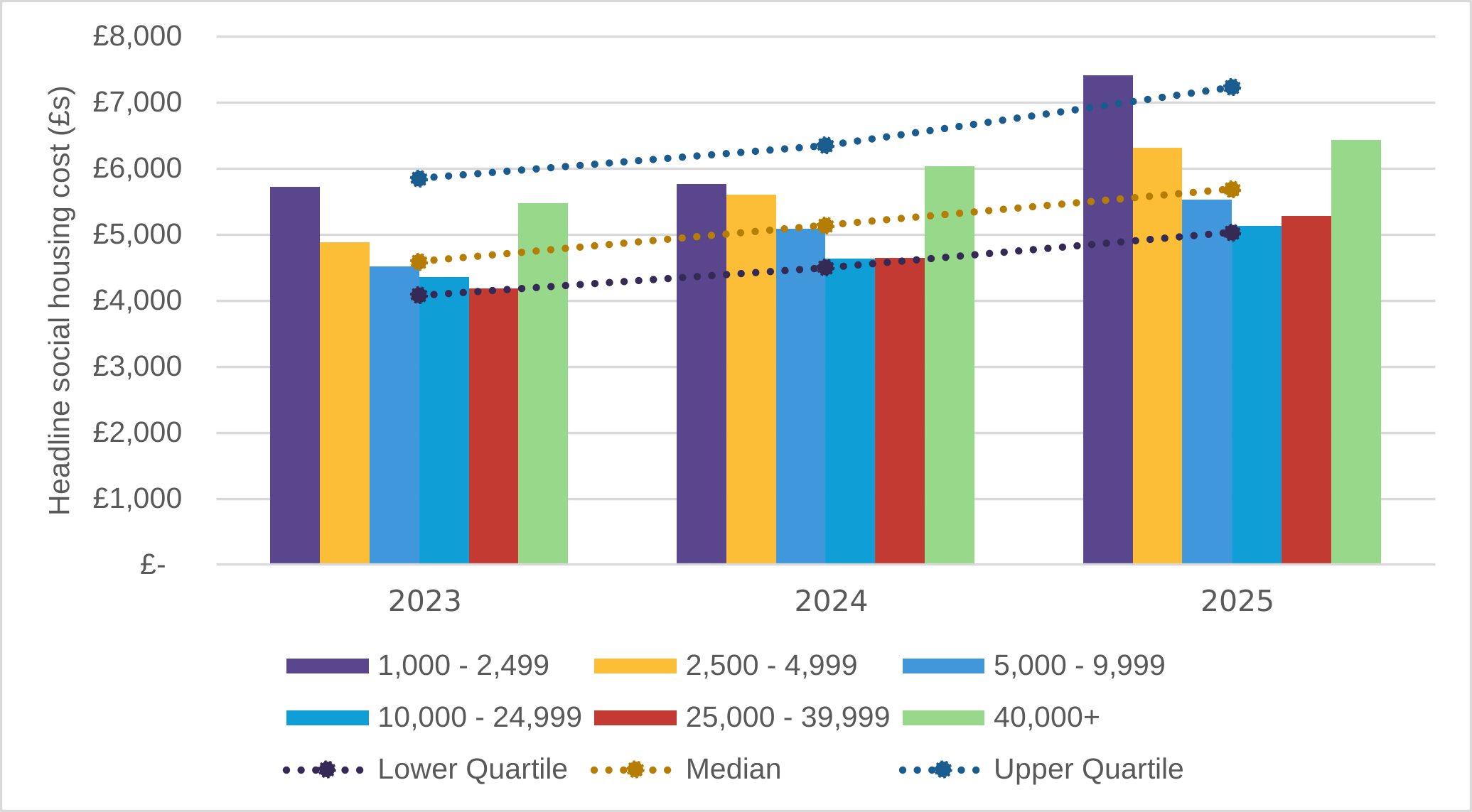
Figure 15: Headline social housing cost per unit by size band (median), 2023-2025
| Size group/Measure | 2023 | 2024 | 2025 |
|---|---|---|---|
| 1,000 - 2,499 | £ 5,720 | £ 5,770 | £ 7,410 |
| 2,500 - 4,999 | £ 4,880 | £ 5,600 | £ 6,320 |
| 5,000 - 9,999 | £ 4,520 | £ 5,090 | £ 5,530 |
| 10,000 - 24,999 | £ 4,360 | £ 4,640 | £ 5,130 |
| 25,000 - 39,999 | £ 4,190 | £ 4,650 | £ 5,280 |
| 40,000+ | £ 5,480 | £ 6,040 | £ 6,430 |
| Lower Quartile | £ 4,080 | £ 4,500 | £ 5,030 |
| Median | £ 4,590 | £ 5,140 | £ 5,690 |
| Upper Quartile | £ 5,850 | £ 6,350 | £ 7,230 |
3.38 - The median headline cost across all size bands increased in 2025. Most notably however, the headline cost per unit pertaining to providers with between 1,000-2,499 increased by 28% to £7,410 per unit and is driven by a higher number of supported housing providers in this cohort which increased in the year. On a weighted average basis, the main contribution to the headline cost for this size band included management costs which accounted for 44% of total cost – an increase of 19% in the year. Providers in this size band also exhibit higher service charges and ‘other’ costs compared to all other size bands.
3.39 - Around 30% of homes owned in the size band with greater than 40,000 homes are owned by providers who operate from London. The median headline cost for this group of providers was £6,430 per unit – an increase of just 6% in the year and the smallest percentage increase across all size bands. The weighted average maintenance and major repair costs increased by 11% which was also the lowest rate compared all other size groups – the increase in maintenance and major repair costs was partially offset by a fall in service charge and other costs per unit.
Headline social housing cost per unit by cost factor
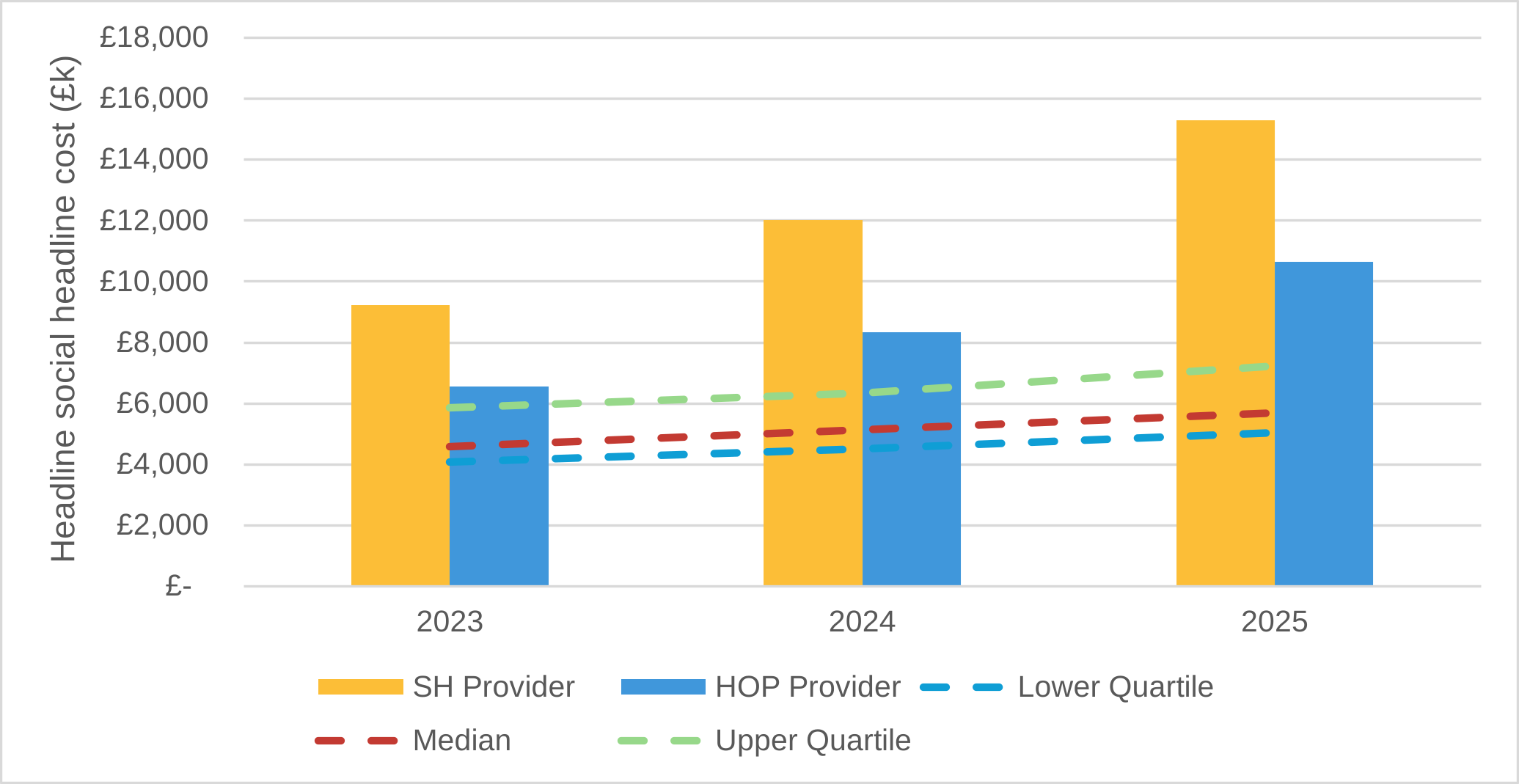
Figure 16: Headline social housing cost per unit (£k) by cost factor (median), 2023-2025
| Provider group/Measure | 2023 | 2024 | 2025 |
|---|---|---|---|
| SH Provider | £ 9,220 | £ 12,030 | £ 15,280 |
| HOP Provider | £ 6,550 | £ 8,330 | £ 10,650 |
| Lower Quartile | £ 4,080 | £ 4,500 | £ 5,030 |
| Median | £ 4,590 | £ 5,140 | £ 5,690 |
| Upper Quartile | £ 5,850 | £ 6,350 | £ 7,230 |
3.40 The median supported housing headline cost increased by 27% to £15,280 in the year. Overall, there is a large degree of variation in cost performance relating to this group of providers, which ranges from £4,500 per unit to £39,530 per unit. However, the weighted average headline cost of £13,990 relating to supported housing providers increased by just 9% which is broadly in line with the weighted average sector increase.
3.41 The annual change in the headline cost per unit relating to HOP providers is driven by the relatively smaller number of providers in the group in the year. The median and weighted average headline costs increased by 28% and 11%, respectively. The weighted average maintenance and major repair costs increased by 13% while service charge costs increased by 15% which was significantly above the sector weighted average of just 3%.
Headline social housing cost per unit by property height
3.42 - Stock height has a significant influence on headline cost performance. Following the introduction of the Building Safety Act 2022, providers with higher proportions of homes in blocks of at least 7 storeys in height, of which 75% are based in London, are associated with higher costs and likely attributed to complex remediation work required in the region.
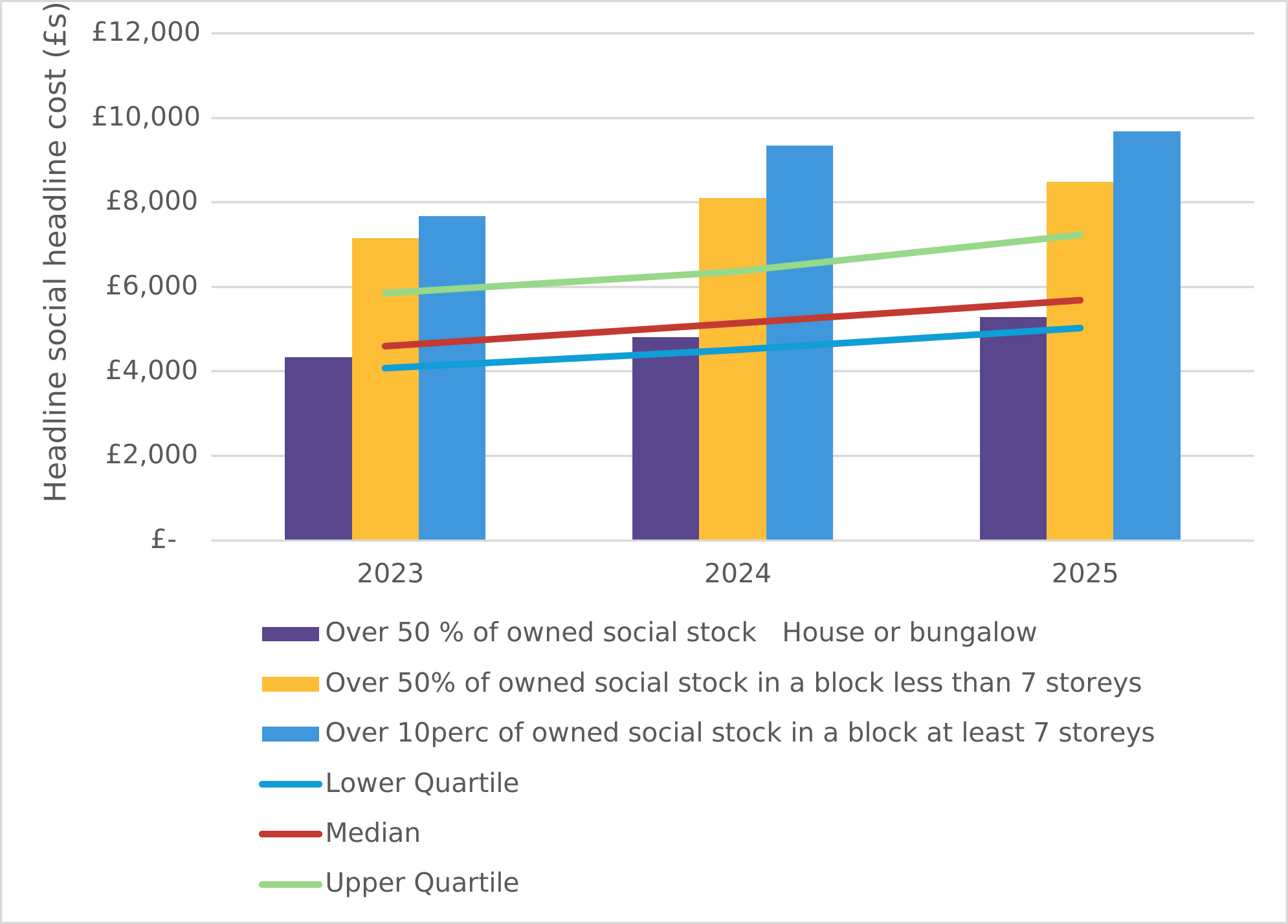
3.43 - The headline cost for providers with a significant amount of homes in high-rise buildings (those with over 10% of their homes owned in blocks of at least 7 storeys) remains higher than for other providers. However, the rate of annual cost increases for this group of providers was much slower than seen in previous years. In 2025, the median headline cost related to this group of providers increased by just 4% to £9,680 per unit which compares to a 22% increase reported in 2024. The weighted average maintenance and major repair costs increased by 9% to £4,500 per unit. However, the weighted average management costs increased by 21% to £1,660 per unit in the year which was influenced by a large London provider entering this cohort.
3.44 - The headline cost related to providers with over 50% of homes owned in a block less than 7 storeys in height increased by 5% to £8,490 per unit (2024: £8,100 per unit) – a broadly similar rate reported by providers with 10% of their homes in blocks of at least 7 storeys in height. The weighted average maintenance and major repair costs increased by 12% to £3,940 per unit. However, while the weighted average management costs increased by just 8% to £1,820 per unit, it is higher compared to those providers with over 10% of their homes owned in blocks of at least 7 storeys.
3.45 - In stark contrast, the median headline cost relating to providers with over 50% of homes classed as house/bungalow, increased by 10% to £5,290 per unit. The weighted average maintenance and major repair spend for these providers increased by 12% to £3,250 per unit – a similar increase to providers with over 50% of homes owned in a block less than 7 storeys in height. The weighted average management costs for this group also increased by 8% £1,260 per unit.
Figure 17: Headline social housing cost per unit (£k) by property height (median), 2023-2025
| Provider group/Measure | 2023 | 2024 | 2025 |
|---|---|---|---|
| Over 50 % of owned social stock House or bungalow | £4,340 | £4,810 | £5,290 |
| Over 50% of owned social stock in a block less than 7 storeys | £7,160 | £8,100 | £8,490 |
| Over 10perc of owned social stock in a block at least 7 storeys | £7,670 | £9,340 | £9,680 |
| Lower Quartile | £ 4,080 | £4,500 | £5,030 |
| Median | £4,590 | £5,140 | £5,690 |
| Upper Quartile | £5,850 | £6,350 | £7,230 |
Regional analysis
3.46 - The region that a provider is allocated to is defined as the region in which 50% or more of their total social homes owned are located. For example, just under 20% of providers are allocated to the North West region on this basis and own 17% of total social stock. However, around a third of the country’s social homes owned are managed by providers who operate across a range of regions and are defined as mixed. The mixed group of providers own around 17% of total social homes in the London region – for some of these providers it will have a bearing on their performance.
3.47 - Over the past three years, both the number of providers and the percentage of social homes owned by organisations defined as London or East of England providers have fallen due to entities merging with one another.
| Figure 18: No. of providers by region 2025 | Figure 19: % of social stock owned 2025 |
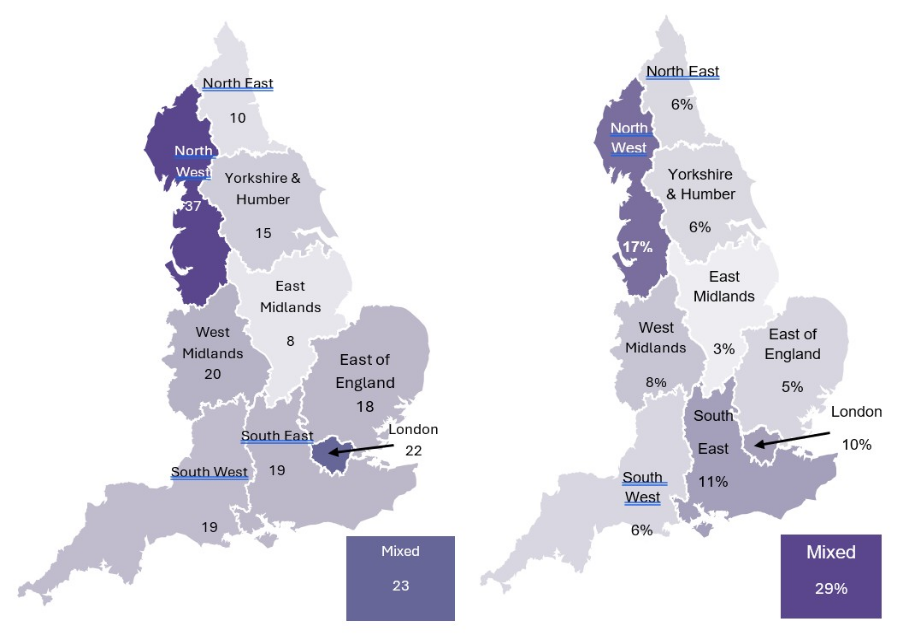
Figure 18: No. of providers by region 2025
| Region | Year | No of providers |
|---|---|---|
| London | 2025 | 22 |
| Mixed | 2025 | 23 |
| South East | 2025 | 19 |
| South West | 2025 | 19 |
| East Midlands | 2025 | 8 |
| West Midlands | 2025 | 20 |
| East of England | 2025 | 18 |
| North East | 2025 | 10 |
| North West | 2025 | 37 |
| Yorkshire & The Humber | 2025 | 15 |
Figure 19: % of social stock owned 2025
| Region | Year | Percentage of social units owned |
|---|---|---|
| London | 2025 | 10 |
| Mixed | 2025 | 29 |
| South East | 2025 | 11 |
| South West | 2025 | 6 |
| East Midlands | 2025 | 3 |
| West Midlands | 2025 | 8 |
| East of England | 2025 | 5 |
| North East | 2025 | 6 |
| North West | 2025 | 17 |
| Yorkshire & The Humber | 2025 | 6 |
Reinvestment %
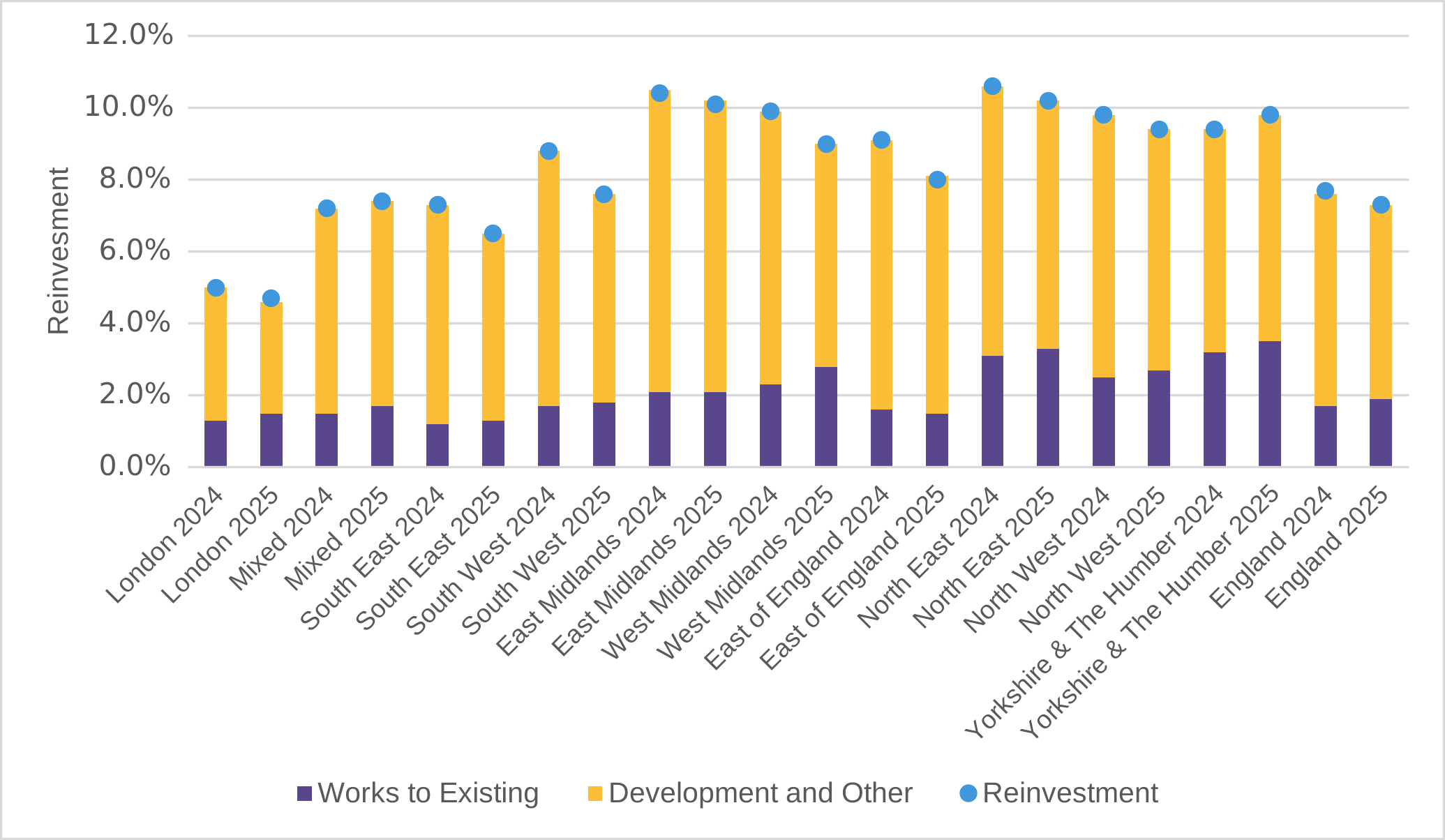
Figure 20: Reinvestment % broken down by components by region 2024-2025
| Region | Works to Existing | Development and Other | Reinvestment |
|---|---|---|---|
| London 2024 | 1.3% | 3.7% | 5.0% |
| London 2025 | 1.5% | 3.1% | 4.7% |
| Mixed 2024 | 1.5% | 5.7% | 7.2% |
| Mixed 2025 | 1.7% | 5.7% | 7.4% |
| South East 2024 | 1.2% | 6.1% | 7.3% |
| South East 2025 | 1.3% | 5.2% | 6.5% |
| South West 2024 | 1.7% | 7.1% | 8.8% |
| South West 2025 | 1.8% | 5.8% | 7.6% |
| East Midlands 2024 | 2.1% | 8.4% | 10.4% |
| East Midlands 2025 | 2.1% | 8.1% | 10.1% |
| West Midlands 2024 | 2.3% | 7.6% | 9.9% |
| West Midlands 2025 | 2.8% | 6.2% | 9.0% |
| East of England 2024 | 1.6% | 7.5% | 9.1% |
| East of England 2025 | 1.5% | 6.6% | 8.0% |
| North East 2024 | 3.1% | 7.5% | 10.6% |
| North East 2025 | 3.3% | 6.9% | 10.2% |
| North West 2024 | 2.5% | 7.3% | 9.8% |
| North West 2025 | 2.7% | 6.7% | 9.4% |
| Yorkshire & The Humber 2024 | 3.2% | 6.2% | 9.4% |
| Yorkshire & The Humber 2025 | 3.5% | 6.3% | 9.8% |
| England 2024 | 1.7% | 5.9% | 7.7% |
| England 2025 | 1.9% | 5.4% | 7.3% |
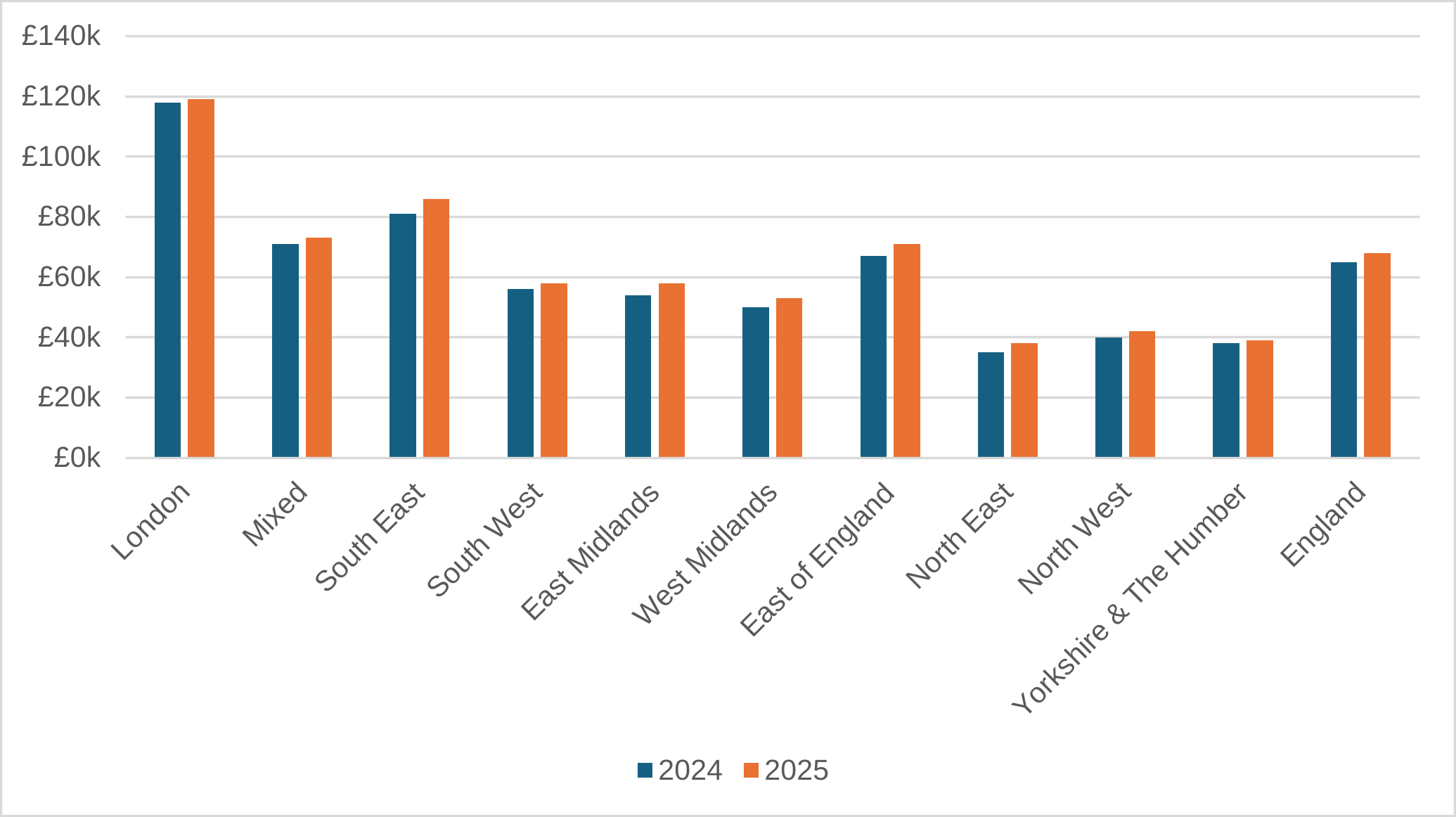
3.48 - There is an inverse relationship between the level of reinvestment and the total net book value of housing properties. New homes will typically increase the average net book value due to their current values – equally these homes will have lower levels of depreciation compared to older properties. This relationship is most reflected in the London region which has the highest property values. Investment per property in London is actually higher than in most regions (see below). However, London has an average net book value of the existing housing stock that is 75% greater than the England average, so its total reinvestment rate of 4.7% in the year is lower compared to all other regions.
3.49 - The weighted average reinvestment fell across all regions, except in Yorkshire and the Humber (4% increase) and the Mixed region (3% increase). The Yorkshire and the Humber region has the highest percentage increase in reinvestment into existing properties as a proportion of the value of the stock of 3.5%, with just over 40% of providers in the England upper quartile. There is evidence from providers’ annual reports based in this region that investment relating to decarbonisation and meeting net zero targets is a key priority. This is further reflected by the number of measures installed across waves 1 and 2.1 of the Warm Homes Social Housing Fund (WH:SHF) – the region has the highest number of installations and equally the highest proportion of homes rated as EPC C or above.
3.50 - In the East Midlands and North East of England levels of reinvestment are also influenced by property values which are lower than the national average. The North East has the lowest net book value and continues to have the highest weighted average reinvestment at 10.2% (2024:10.6%).
Figure 21: Average net book value (£k) per home by region 2024-2025
| Region | 2024 | 2025 |
|---|---|---|
| London | 118 | 119 |
| Mixed | 71 | 73 |
| South East | 81 | 86 |
| South West | 56 | 58 |
| East Midlands | 54 | 58 |
| West Midlands | 50 | 53 |
| East of England | 67 | 71 |
| North East | 35 | 38 |
| North West | 40 | 42 |
| Yorkshire & The Humber | 38 | 39 |
| England | 65 | 68 |
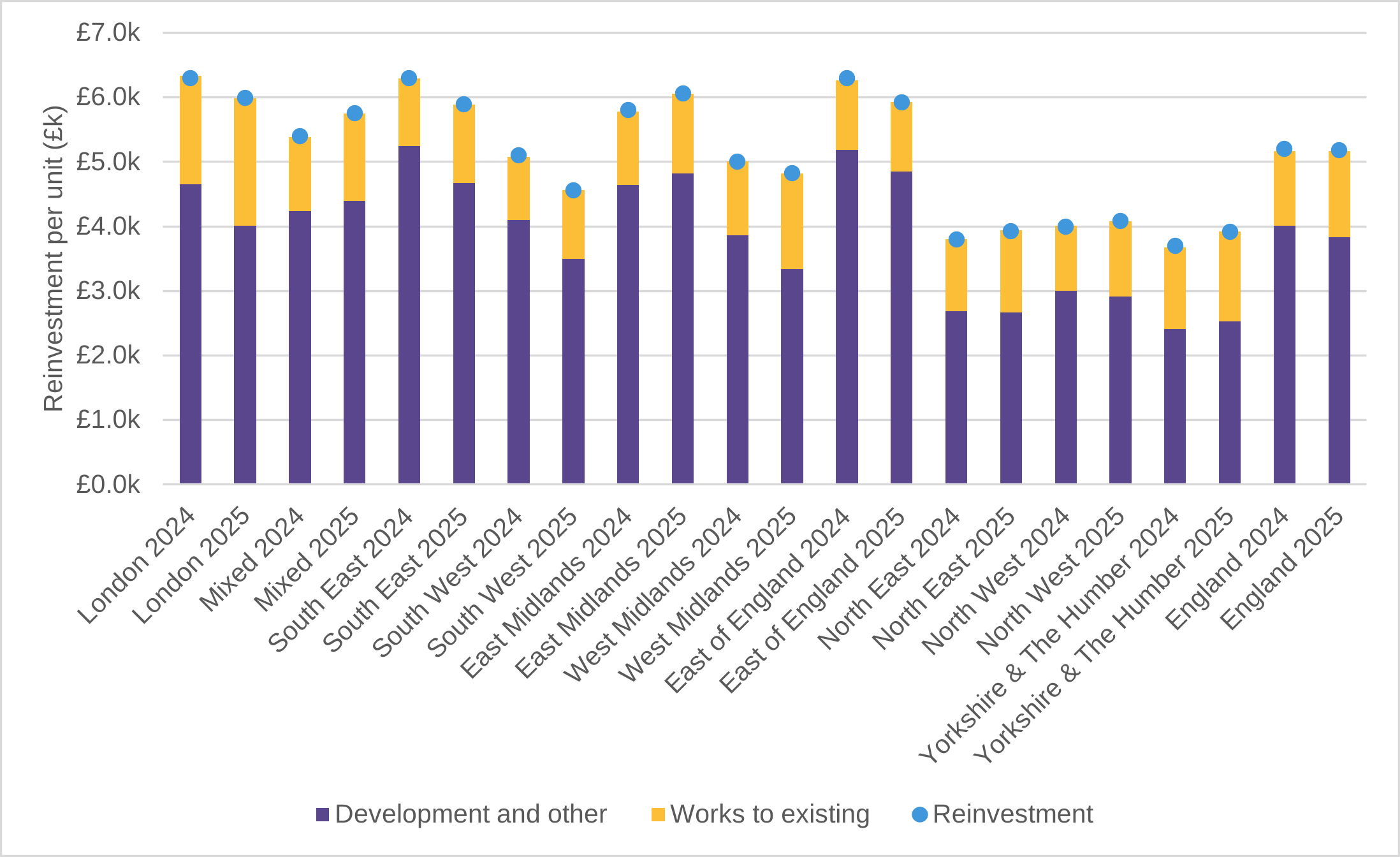
Figure 22: Reinvestment per unit (£k) (weighted average) 2024-2025
| Region | Development and other | Works to existing | Reinvestment |
|---|---|---|---|
| London 2024 | £4,650 | £1,680 | £6,300 |
| London 2025 | £4,010 | £1,980 | £5,990 |
| Mixed 2024 | £4,240 | £1,140 | £5,400 |
| Mixed 2025 | £4,400 | £1,350 | £5,750 |
| South East 2024 | £5,250 | £1,040 | £6,300 |
| South East 2025 | £4,670 | £1,220 | £5,890 |
| South West 2024 | £4,100 | £980 | £5,100 |
| South West 2025 | £3,500 | £1,060 | £4,560 |
| East Midlands 2024 | £4,640 | £1,140 | £5,800 |
| East Midlands 2025 | £4,820 | £1,240 | £6,060 |
| #West Midlands 2024 | £3,860 | £1,150 | £5,000 |
| West Midlands 2025 | £3,340 | £1,480 | £4,830 |
| East of England 2024 | £5,190 | £1,070 | £6,300 |
| East of England 2025 | £4,850 | £1,080 | £5,920 |
| North East 2024 | £2,690 | £1,110 | £3,800 |
| North East 2025 | £2,670 | £1,270 | £3,930 |
| North West 2024 | £3,000 | £1,010 | £4,000 |
| North West 2025 | £2,910 | £1,170 | £4,080 |
| #Yorkshire & The Humber 2024 | £2,410 | £1,260 | £3,700 |
| Yorkshire & The Humber 2025 | £2,530 | £1,390 | £3,920 |
| England 2024 | £4,010 | £1,160 | £5,200 |
| England 2025 | £3,830 | £1,340 | £5,180 |
3.51 - Reinvestment into existing homes on a per unit basis increased across all regions as the sector continues to deploy significant resource into improving stock quality and energy efficiency.
3.52 - Despite spiralling pressure for new homes in the London region, there is continued evidence that providers in this region are required to make difficult trade-off choices between reinvestment into existing homes and new supply. Around 40% of providers in this region have over 10% of homes in blocks with at least seven storeys in height. It is therefore unsurprising that London continues to reinvest more into existing homes on a per unit basis compared to all other regions - total expenditure on existing homes increased by almost a third over the past two years to £2,000 per unit.
On the other hand, development and other spend per unit fell by 20% over the same period, although it still accounts for two-thirds of the region’s total reinvestment spend per unit.
3.53 - Business plans demonstrate a common desire for growth among providers in the south west region. However, due to planning and construction delays, development expenditure on a per unit basis fell by 15% to £3,500 per unit – below the sector average of £3,830 per unit.
New supply %
| Figure 23: New supply (Social) % (weighted average) and No. of new homes 2025 | Figure 24: New supply (non-social) % (weighted average) and No. of new homes 2025 |
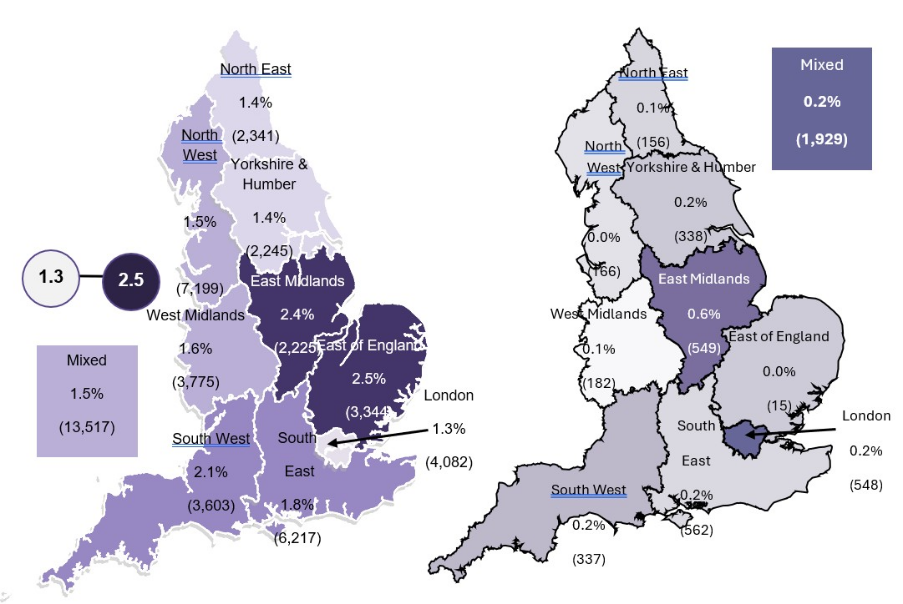
Figure 23: New supply (Social) % (weighted average) and No. of new homes 2025
| Region | New supply (social) (%) | Number of new social units |
|---|---|---|
| London | 1.3 | 4082 |
| Mixed | 1.5 | 13517 |
| South East | 1.8 | 6217 |
| South West | 2.1 | 3603 |
| East Midlands | 2.4 | 2225 |
| West Midlands | 1.6 | 3775 |
| East of England | 2.5 | 3344 |
| North East | 1.4 | 2341 |
| North West | 1.5 | 7199 |
| Yorkshire & The Humber | 1.4 | 2245 |
Figure 24: New supply (Non-social) % (weighted average) and No. of new homes 2025
| Region | New supply (Non-Social) (%) | New supply non social units |
|---|---|---|
| London | 0.2 | 548 |
| Mixed | 0.2 | 1929 |
| South East | 0.2 | 562 |
| South West | 0.2 | 337 |
| East Midlands | 0.6 | 549 |
| West Midlands | 0.1 | 182 |
| East of England | 0.0 | 15 |
| North East | 0.1 | 156 |
| North West | 0.0 | 166 |
| Yorkshire & The Humber | 0.2 | 338 |
3.54 - While providers in the North West, the South East and Mixed regions delivered just over half of the sector’s new social homes, as a proportion of total homes owned, performance was more pronounced in the East Midlands and East of England.
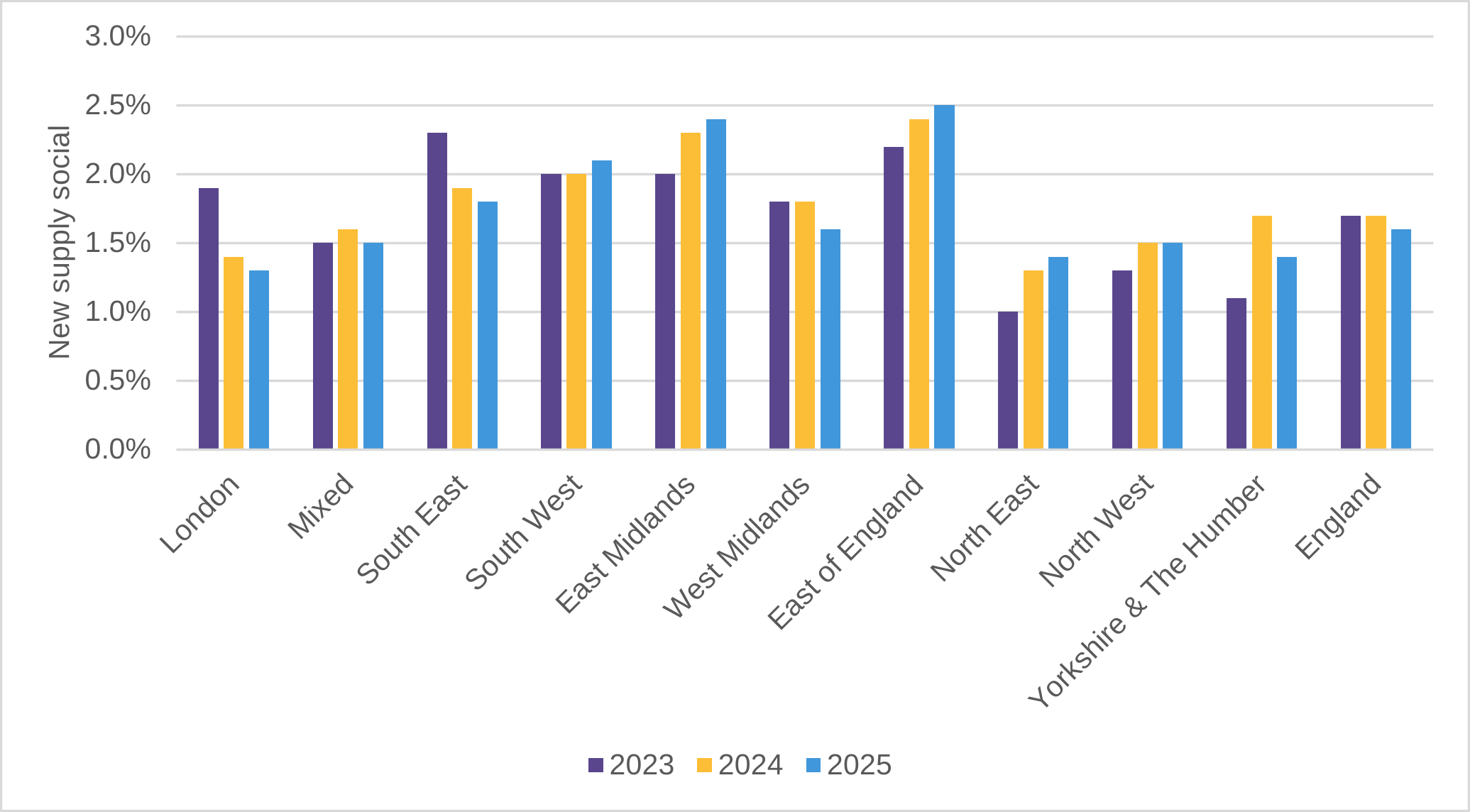
Figure 25: New supply (social) as a % of total social units owned by region (weighted average), 2023-2025
| Region | 2023 | 2024 | 2025 |
|---|---|---|---|
| London | 1.9 | 1.4 | 1.3 |
| Mixed | 1.5 | 1.6 | 1.5 |
| South East | 2.3 | 1.9 | 1.8 |
| South West | 2 | 2 | 2.1 |
| East Midlands | 2 | 2.3 | 2.4 |
| West Midlands | 1.8 | 1.8 | 1.6 |
| East of England | 2.2 | 2.4 | 2.5 |
| North East | 1 | 1.3 | 1.4 |
| North West | 1.3 | 1.5 | 1.5 |
| Yorkshire & The Humber | 1.1 | 1.7 | 1.4 |
| England | 1.7 | 1.7 | 1.6 |
3.55 - The East of England continues to have the highest weighted average level of new social supply delivered as a proportion of total social stock owned at 2.5%, a small increase compared to the previous year’s performance.
3.56 - New supply performance across the East of England and the South East regions were both above the national weighted average between 2023-2025 and directly attributed to the Affordable Homes Programme which has focused on the delivery of homes in areas of low affordability.
3.57 - London reported the lowest weighted average level of new supply of 1.3%. Just under half of providers in the region developed no new social homes in 2025, slightly up from previous years, which further reflects the competing pressures in this region.
3.58 - In the Yorkshire and the Humber region, new supply social delivered fell by 18% in the year, this compares to reinvestment into existing homes which increased by 29%.
3.59 - Providers in the Mixed region delivered 40% of the sector’s new supply non-social homes in 2025, although as a proportion of total homes owned it was lower than previous year’s performance. In the South East and East Midlands there was a marked increase in new non-social homes delivered in the year.
Headline social housing cost per unit
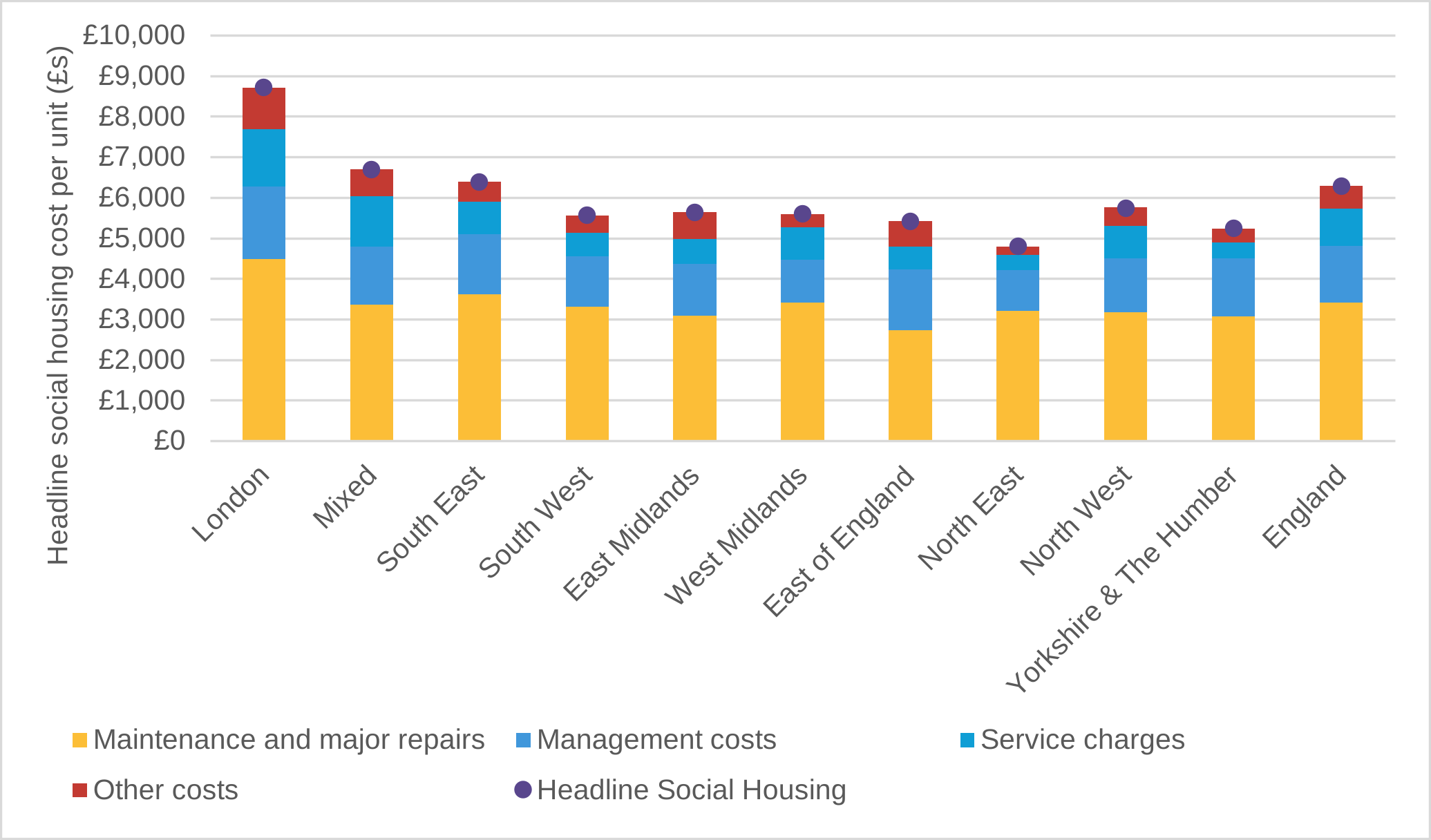
Figure 26: Headline social housing cost per unit by component and region 2025 (weighted average)
| Region | Headline Social Housing | Maintenance and major repairs | Management costs | Service charges | Other costs |
|---|---|---|---|---|---|
| London | £8,720 | £4,490 | £1,790 | £1,410 | £1,030 |
| Mixed | £6,700 | £3,360 | £1,440 | £1,240 | £660 |
| South East | £6,390 | £3,630 | £1,470 | £800 | £490 |
| South West | £5,570 | £3,320 | £1,230 | £590 | £430 |
| East Midlands | £5,640 | £3,100 | £1,270 | £620 | £660 |
| West Midlands | £5,610 | £3,410 | £1,070 | £790 | £330 |
| East of England | £5,410 | £2,740 | £1,500 | £550 | £630 |
| North East | £4,800 | £3,210 | £1,010 | £380 | £200 |
| North West | £5,750 | £3,180 | £1,320 | £810 | £450 |
| Yorkshire & The Humber | £5,240 | £3,080 | £1,420 | £400 | £340 |
| England | £6,280 | £3,420 | £1,390 | £920 | £560 |
Figure 27: Total Headline social housing cost per unit (£k) by region 2023-2025 (weighted average)
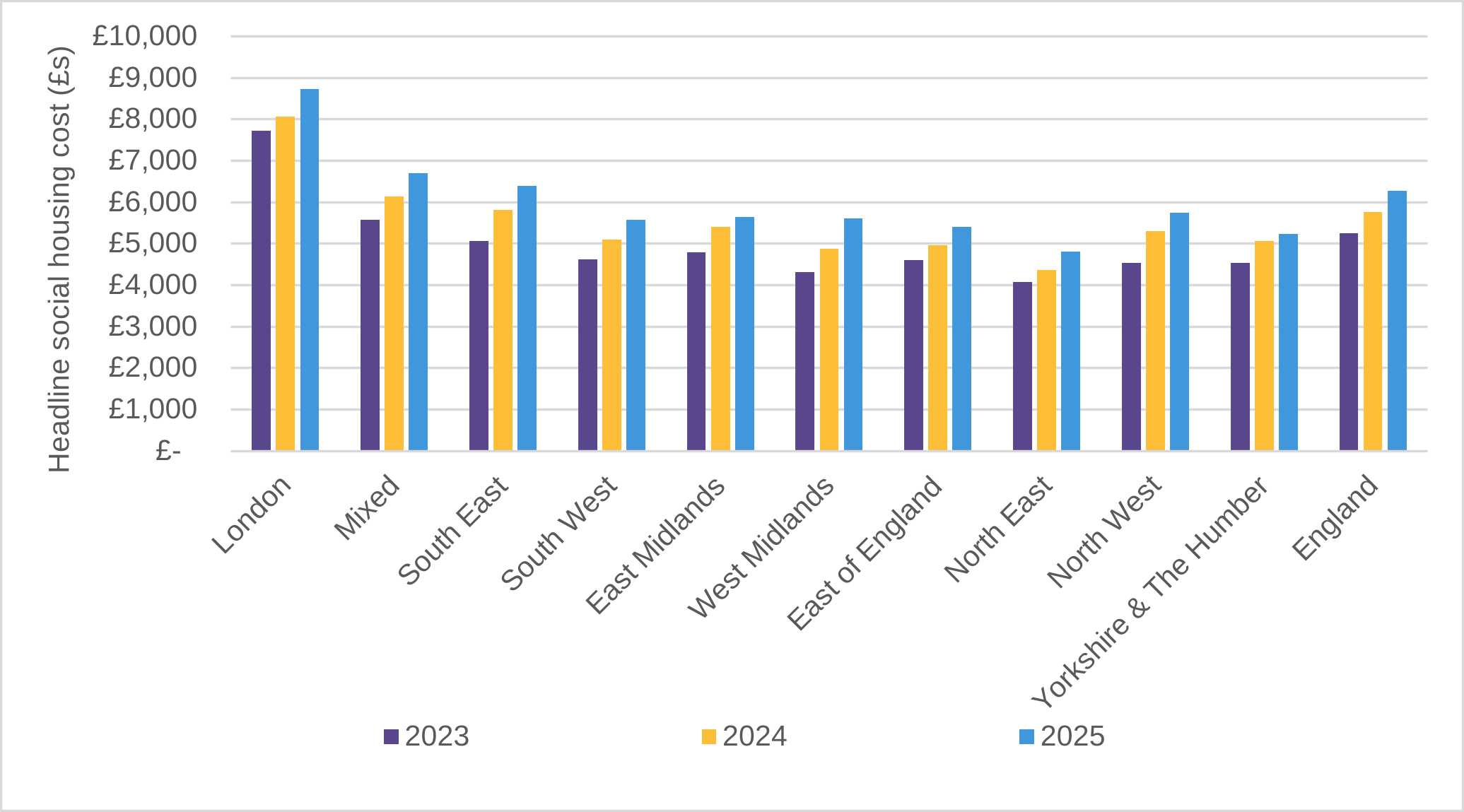
| Region | 2023 | 2024 | 2025 |
|---|---|---|---|
| London | 7730 | 8060 | 8720 |
| Mixed | 5580 | 6130 | 6700 |
| South East | 5070 | 5820 | 6390 |
| South West | 4620 | 5100 | 5570 |
| East Midlands | 4790 | 5410 | 5640 |
| West Midlands | 4310 | 4880 | 5610 |
| East of England | 4610 | 4960 | 5410 |
| North East | 4070 | 4370 | 4800 |
| North West | 4530 | 5300 | 5750 |
| Yorkshire & The Humber | 4540 | 5070 | 5240 |
| England | 5250 | 5760 | 6280 |
3.60 - Headline costs in London are largely defined by regional wages and stock characteristics. The median London provider has 9% of homes in blocks at least seven storeys in height (sector median: 1%), and only 20% of homes classed as houses or bungalows (sector median: 59%). Flats in blocks at least seven storeys in height are associated with higher maintenance and major repair costs and service charge costs.
3.61 - Accordingly, London continues to have the highest weighted average headline cost which increased by 8% in the year to £8,720 per unit and was primarily driven by a 12% increase in maintenance and major repair costs. While the mixed region has the highest number of supported housing providers compared to all other regions, supported housing providers operating in London have a significant impact on the headline cost also. The weighted average cost of a supported housing home in London is £30,050, which is five times higher than the sector average and twice the cost of the supported housing sector median of £15,710 per unit.
3.62 - The highest weighted average increase in headline costs was in the West Midlands region which increased by 15% to £5,610 per unit in the year. In this region, there were reported increases across all cost components, with maintenance and major repair costs increasing by 19% alone. This compares to the Yorkshire and the Humber region who had the lowest weighted average headline cost increase due to a reduction in service charge and ‘other’ costs of 3% and 25%, respectively.
3.63 - The North East region is characterised by the highest proportion of houses and bungalows which are associated with a lower headline cost – it is not surprising that this region continues to have the lowest weighted average headline cost of just £4,800 compared to all other regions. However, despite being associated with lower costs, the region also reported one of the highest weighted average headline cost increases which was driven by maintenance and major repair costs and management costs which increased by 11% and 13%, respectively.
Operating margin (SHL) and (overall) %
Figure 28: Operating margin % (overall) by region (median), 2024-2025
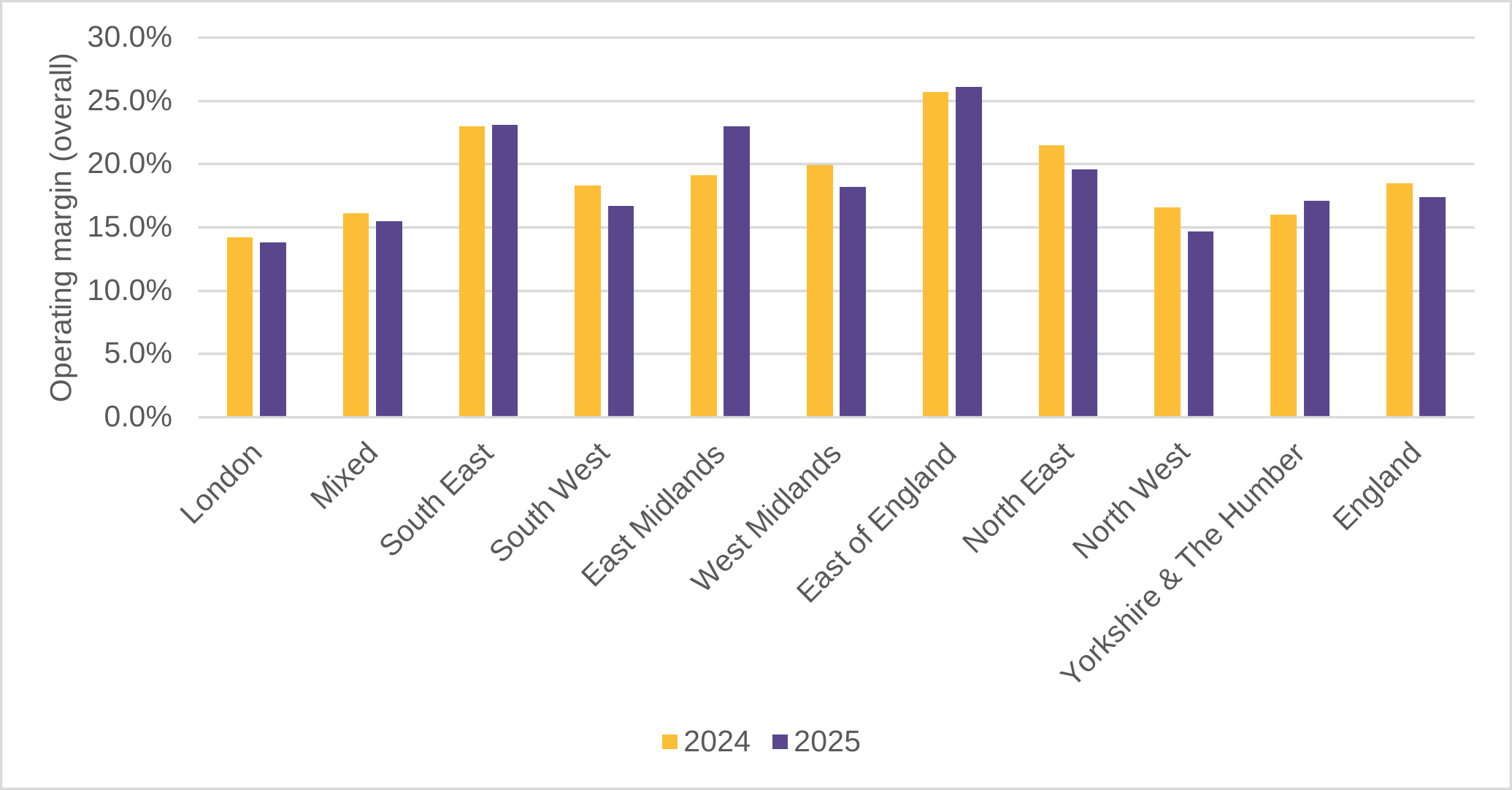
| Year | London | Mixed | South East | South West | East Midlands | West Midlands | East of England | North East | North West | Yorkshire & The Humber | England |
|---|---|---|---|---|---|---|---|---|---|---|---|
| 2024 | 14.2 | 16.1 | 23.0 | 18.3 | 19.1 | 19.9 | 25.7 | 21.5 | 16.6 | 16.0 | 18.5 |
| 2025 | 13.8 | 15.5 | 23.1 | 16.7 | 23.0 | 18.2 | 26.1 | 19.6 | 14.7 | 17.1 | 17.4 |
3.64 - Operating margin performance across each region remains broadly aligned with previous years. London continues to have the lowest median operating margin (overall) of 13.8% and operating margin (SHL) of 16.8%. The total operating surplus in London fell by 7% compared to the previous year and is heavily influenced by the characteristics set out in the headline cost section above. There were also pressures on the operating margins in the North West region in the year - the operating margin (overall) fell by 11% to 15% driven by operating deficits reported by some providers in the region and increased levels of investment into operating activities.
3.65 - The East of England continues to have the highest median operating margin (overall) of 26% compared to all other regions. Providers in this region are associated with a lower average stock age compared to the rest of England, which is associated with a higher operating margin (overall). In the East Midlands, just under 90% of providers reported an operating margin (overall) above the sector median of 17.4%.
Figure 29: Operating Margin (SHL) % median by region, 2023-2025
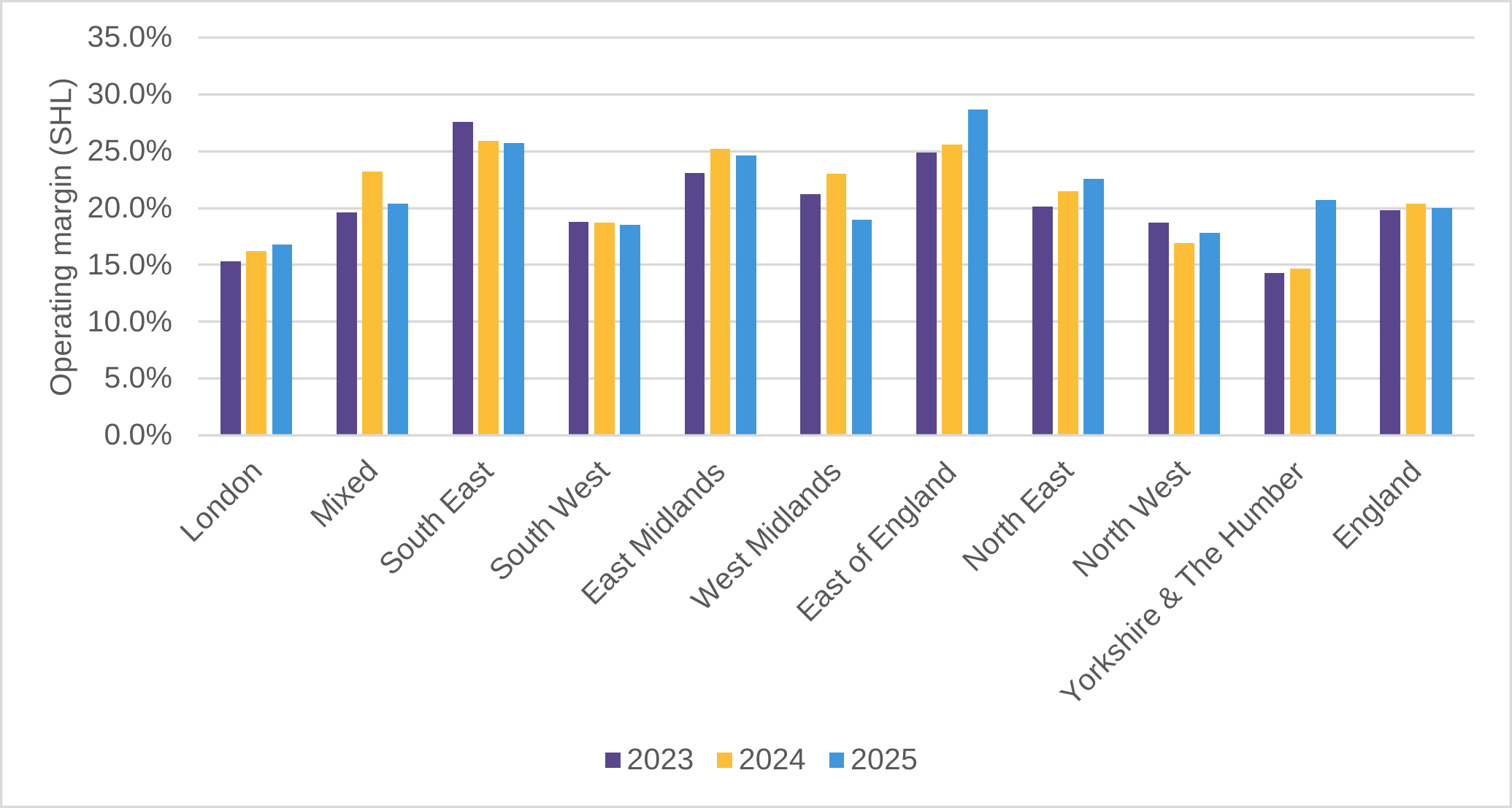
| Region | 2023 | 2024 | 2025 |
|---|---|---|---|
| London | 15.3 | 16.2 | 16.8 |
| Mixed | 19.6 | 23.2 | 20.4 |
| South East | 27.6 | 25.9 | 25.7 |
| South West | 18.8 | 18.7 | 18.5 |
| East Midlands | 23.1 | 25.2 | 24.6 |
| West Midlands | 21.2 | 23.0 | 19.0 |
| East of England | 24.9 | 25.6 | 28.7 |
| North East | 20.1 | 21.5 | 22.6 |
| North West | 18.7 | 16.9 | 17.8 |
| Yorkshire & The Humber | 14.3 | 14.7 | 20.7 |
| England | 19.8 | 20.4 | 20.0 |
Return on Capital Employed %
3.66 - ROCE is influenced by a provider’s total net assets. London based providers have total average net assets that are significantly higher relative to the national average, meaning these providers tend to have a lower return on capital employed. The measure is also influenced by the total gain or loss on the disposal of fixed assets and the share of operating surplus from joint venture arrangements.
Figure 30: Return on capital employed % by region (median), 2024-2025
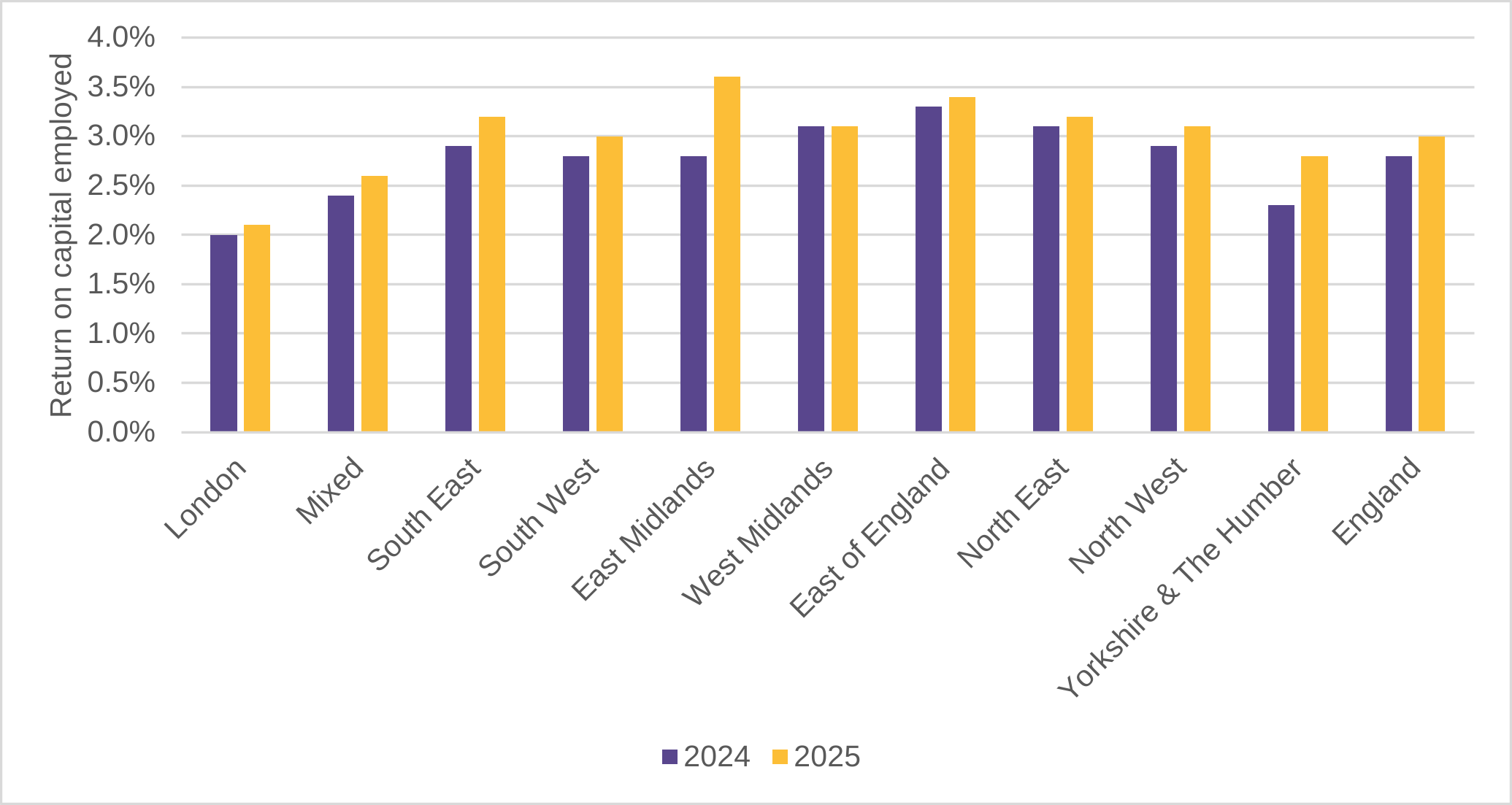
| Region | 2024 | 2025 |
|---|---|---|
| London | 2.0 | 2.1 |
| Mixed | 2.4 | 2.6 |
| South East | 2.9 | 3.2 |
| South West | 2.8 | 3.0 |
| East Midlands | 2.8 | 3.6 |
| West Midlands | 3.1 | 3.1 |
| East of England | 3.3 | 3.4 |
| North East | 3.1 | 3.2 |
| North West | 2.9 | 3.1 |
| Yorkshire & The Humber | 2.3 | 2.8 |
| England | 2.8 | 3.0 |
3.67 - The median ROCE in the East Midlands region increased by 29% to 3.6% in the year which was the highest reported increase compared to all other regions. This was due to an increase in the weighted average operating surplus which was influenced by a range of factors, including, a higher turnover as a result of a merger, combined with income generated from the proceeds of asset disposals which also increased in the year.
3.68 - In the East of England, the reported ROCE was 3.4% (2024:3.3%), but in contrast to the East Midlands, ROCE in this region is influenced by statistical factors such as deprivation and regional wages which are below the England average, rather than an increase in overall surplus in the year. Smaller increases in ROCE were reported across most other regions.
4 - Notes
Reconciliation between the Global Accounts and the VFM metrics & reporting report
4.1 - The main source of information relating to the Global Accounts (GA) and the VFM metrics and reporting publication is the FVA 2025 database. Care must be taken when considering the performance results between the two publications as they are not directly comparable. Reasons for the reported differences include methodology employed on key measures and averages quoted.
4.2 - For-profit registered providers are also excluded from the VFM metrics, as their funding structures and stock holdings make them difficult to compare meaningfully with other organisations. Analysis reported on in this report heavily focuses on sector medians, although we will quote weighted averages where relevant.
Figure 31: New Supply – social and non-social numerator (No. units)
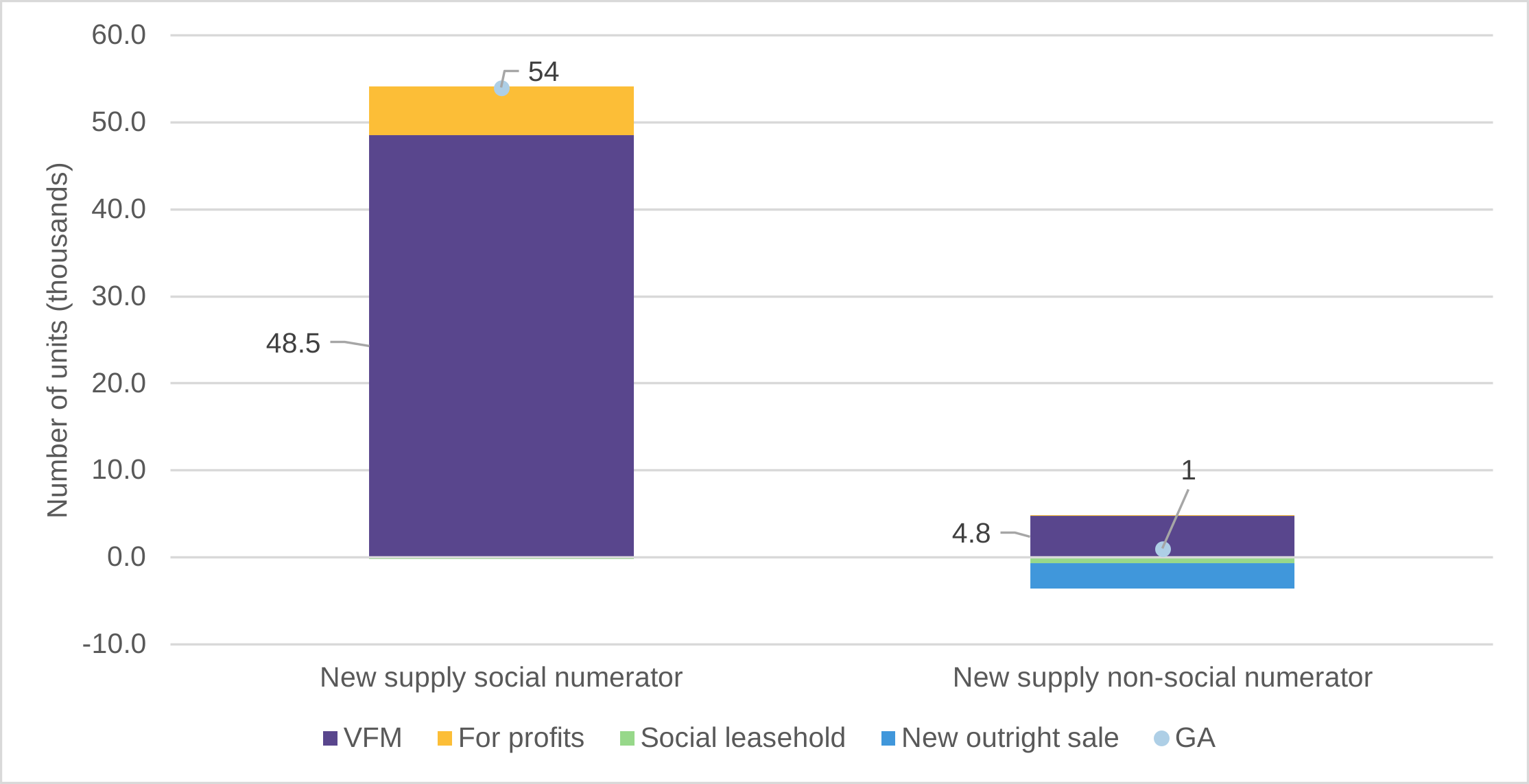
| Measure | GA | Social leasehold | For profits | New outright sale | VFM |
|---|---|---|---|---|---|
| New supply social numerator | 54 | 0 | 6 | 0 | 49 |
| New supply non-social numerator | 1 | -1 | 0 | -3 | 5 |
The main difference between the reported VFM New supply (Social) numbers (48,548) and the GA (54,000) is the exclusion of 5,497 new homes delivered by For-Profit organisations.
The largest difference between the reported VFM New supply (Non-Social) homes and the GA is the inclusion of 2,880 homes built for outright sale.
Figure 32: Gearing numerator and denominator
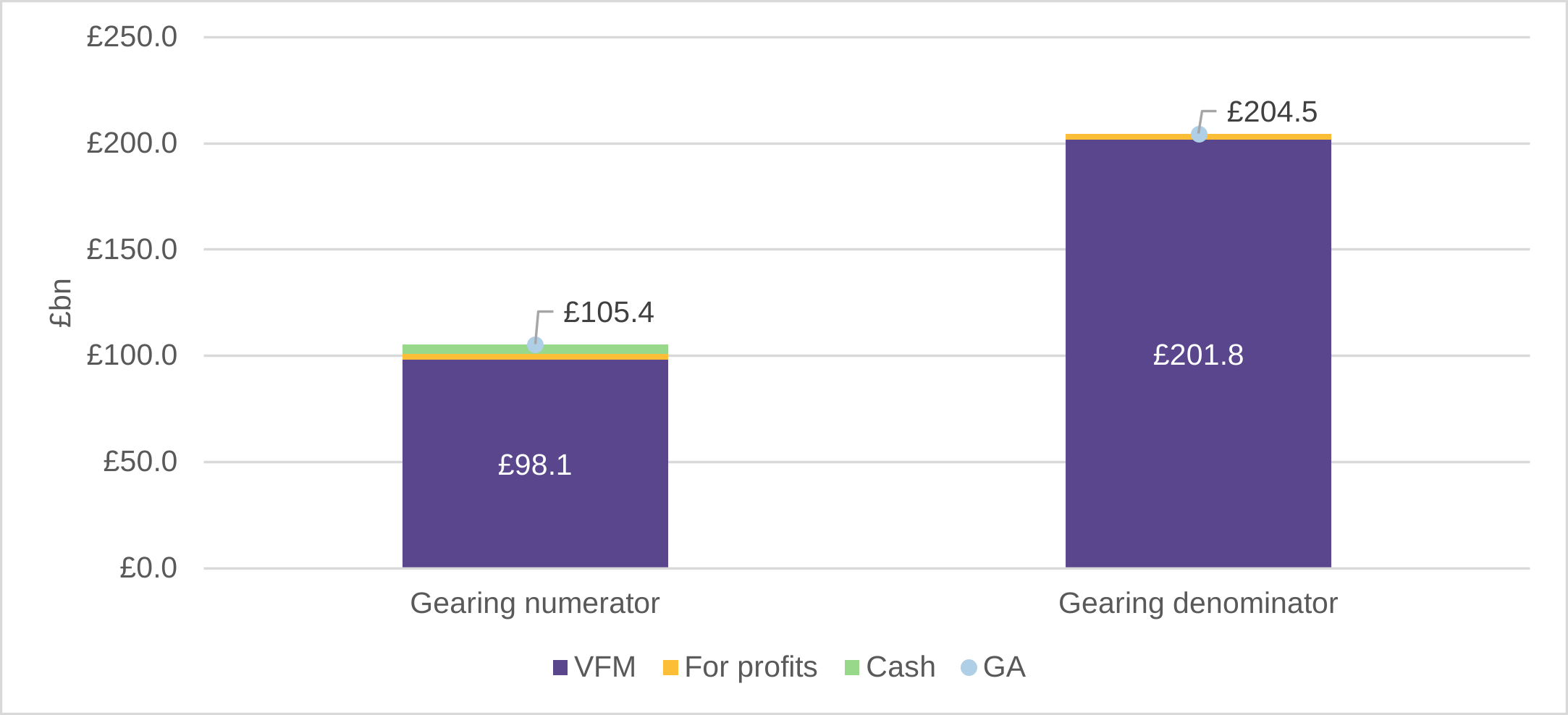
| Measure | GA | For profits | Cash | VFM |
|---|---|---|---|---|
| Gearing numerator | £105.4 | £2.7 | £4.6 | £98.1 |
| Gearing denominator | £204.5 | £2.8 | £0.0 | £201.8 |
The VFM weighted average for gearing is 49% compared to 52% reported in the GA. The VFM results are lower as the VFM Gearing metric is based on a net-debt basis (less cash).
For-Profit organisations also reported a higher gearing result.
Figure 33: EBITDA MRI Interest Cover numerator and denominator
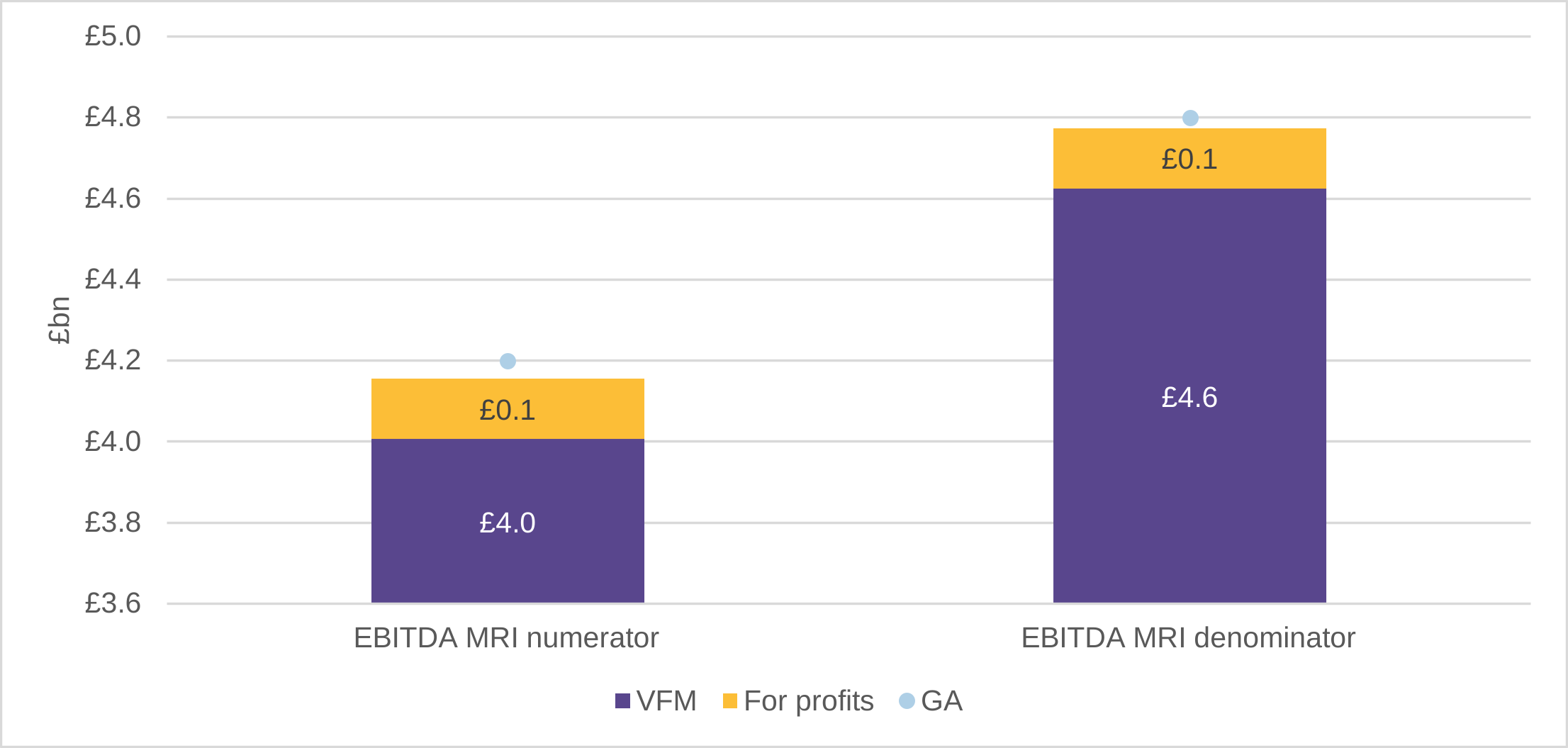
| Measure | GA | For profits | VFM |
|---|---|---|---|
| EBITDA MRI numerator | 4.2 | 0.1 | 4.0 |
| EBITDA MRI denominator | 4.8 | 0.1 | 4.6 |
The VFM EBITDA MRI Interest Cover weighted average is 87% and similar to the GA reported figure.
The reported GA EBITDA MRI Interest Cover numerator equals the VFM numerator plus For-profits, but rounding means the components are not equal to the GA total value for the year.
5 - Annex A: Methodology
Methodology of the VFM analysis
| VFM metrics and measures | The RSH VFM metrics help measure economy, efficiency and effectiveness, enabling analysis and comparison of large providers. For consistency, the VFM metrics for individual providers have been calculated on the basis set out in the regulators VFM Technical Note which all providers must comply with. |
|---|---|
| Frequency | Annual |
| Geographical coverage | The majority of large providers are part of a group structure. Group structures can include multiple registered providers and non-registered entities. The Global Accounts publication considers providers’ accounts on both a registered entity (entity level) and group consolidated basis (consolidated level). Some group level accounts can cover homes outside of England. |
| Sample size | The analysis is based on data from 191 PRPs (2024:193 PRPs and 2023: 198 PRPs) > 1,000 homes. |
| Periods available | 2023 – 2025 inclusive. |
| Data sources | 2025 FVA (Electronic, financial viability accounts), 2025 SDR (Statistical Data Return). |
| Exclusions | For-profit providers are excluded. Three providers with non-March year ends are excluded. |
| Notes on the analysis | The Headline Social Housing Cost per unit measure includes, maintenance and major repair costs including capitalised repair costs. ‘Other costs’ includes: Lease costs, Other (social housing letting) costs, Development services (Operating expenditure), Community/neighbourhood services (Operating expenditure), Other social housing activities: Other (Operating expenditure), Charges for support services (Operating expenditure). |
| Quality assurance | Checks are carried out and comparisons made with previous years’ data and between the SDR (Statistical Data Return), and FVA to gauge consistency and completeness of coverage. Quality assurance follows the principals set out in the RSH analytical governance and management framework. |
Annex B: VFM metrics definitions footnote 6
| VFM Metric | Subdivision-consolidated or social housing | Metric description |
|---|---|---|
| Reinvestment % (in existing homes and new homes) | Consolidated | Scale of investment into existing housing and acquisition or development of new housing in relation to the size of the asset base. |
| New supply delivered % | Consolidated and social housing | Units acquired or developed in-year as a proportion of existing stock footnote 7. |
| Gearing % | Consolidated | Proportion of borrowing in relation to size of the asset base. |
| Earnings Before Interest, Tax, Depreciation, Amortisation, Major Repairs, Included (EBITDA MRI) Interest cover % | Consolidated | The regulator’s measure of Interest Cover - it measures the ability of registered providers to cover ongoing finance costs. |
| Headline social housing cost per unit | Social housing only | Social housing operating costs per unit (inclusive of capitalised major repair costs). |
| Operating margin % | Consolidated and social housing | Operating surplus (deficit) divided by turnover (demonstrates the profitability of operating assets). |
| Return on capital employed % | Consolidated | Surplus/(deficit) plus disposal of fixed assets plus profit /(loss) of joint ventures compared to total assets |
1: In some cases, these variances can relate to timing differences where a provider has a non-March year end, or to the returns being submitted on a different basis. For example, the accounts and group FVA should reflect homes owned and managed at a group consolidated level, whereas the SDR collects the information for providers at an individual entity level. However, even when the SDRs are aggregated to group level before reconciling to the FVAs, we still see differences that, for some providers, are material. return]
2: Property value relates to the Net Book Value (NBV), and not the Open Market Value (OMV) of a home. return]
3: The Headline social housing cost per unit metric assesses the headline social housing cost per unit as defined by the regulator. It is a proxy cash measure of a social housing cost per unit. This means it excludes non-cash items such as depreciation, amortisation and write downs. Capitalised major repair costs are included in the calculation, but capitalised major repair grants are excluded.return]
4: Building Height Note – reconciliation to the SDR: Homes in a block at least 18 metres in height or at least seven storeys are included in the category – in a block at least 7 storeys. Homes in a block less than 18 metres in height and fewer than 7 storeys are included in the category – in a block fewer than 7 storeys (it includes fewer than 5 storeys and 5-6 storey categories (SDR: 2025). return]
5: This included two separate mergers within the size band 10,000 - 24,999 category, and a merger between two large providers with more than 32,000 homes each. return]
6: The VFM metrics are restricted to data derived from registered providers’ Annual Accounts regulatory returns – FVA return]
7: New supply developed by joint ventures is excluded from the New supply (non-social) metric return]