UKRI Framework Document 2025
Published 24 November 2025

© Crown copyright 2025
This publication is licensed under the terms of the Open Government Licence v3.0 except where otherwise stated. To view this licence, visit nationalarchives.gov.uk/doc/open-government-licence/version/3 or write to the Information Policy Team, The National Archives, Kew, London TW9 4DU, or email: psi@nationalarchives.gov.uk.
Where we have identified any third party copyright information you will need to obtain permission from the copyright holders concerned.
This publication is available at https://www.gov.uk/government/publications/ukri-framework-document-2025/ukri-framework-document-2025
Introduction and background
1. Purpose of document
1.1. This framework document (the “framework document”) has been agreed between the Department for Science, Innovation and Technology (DSIT) and UK Research and Innovation (UKRI) in accordance with HM Treasury’s handbook Managing Public Money [footnote 1] (“MPM”) (as updated from time to time) and has been approved by HM Treasury.
1.2. The framework document sets out the broad governance framework within which UKRI and DSIT will operate. It sets out UKRI’s core responsibilities, describes the governance and accountability framework that applies between the roles of the DSIT and UKRI and sets out how the day-to-day relationship works in practice, including in relation to governance and financial matters.
1.3. The document does not convey any legal powers or responsibilities but both parties agree to operate within its terms. The framework document is subject to, and complements:
a) legal and regulatory requirements, in particular the Higher Education and Research Act (HER Act)
b) delegation, Accounting Officer and annual allocations letters from DSIT
c) ‘Managing Public Money’, and
d) other instructions/rules issued to government departments by the Cabinet Office and HM Treasury.
1.4. References to UKRI include all its subsidiaries and joint ventures that are classified to the public sector and central government for national accounts purposes. If UKRI establishes a subsidiary or joint venture, there shall be a document setting out the arrangements between it and UKRI agreed with DSIT.
1.5. Copies of the document and any subsequent amendments have been placed in the libraries of both Houses of Parliament and made available to members of the public on the UKRI GOV.UK website.
1.6. This framework document should be reviewed and updated at least every 3 years unless there are exceptional reasons that render this inappropriate that have been agreed with HM Treasury and the Principal Accounting Officer of the sponsor department. The latest date for review and updating of this document is November 2028.
1.7. Minor updates, for example changes to names of teams and referenced documents may be made at the discretion of the relevant Director with the agreement of the UKRI CEO.
2.Objectives
2.1. DSIT’s role on research, development and innovation is to develop and deliver science, research, innovation and technology related policy for His Majesty’s Government (HMG). UKRI is a strategic delivery partner and enabler for HMG, providing expert advice and analysis, protecting and promoting curiosity-driven research and supporting the delivery of the government’s priorities, missions and industrial strategy.
2.2. The creation of DSIT brought key areas of science and technology under one department, building a joined-up research and innovation system. This has enabled government research and development activity to be coordinated, with DSIT also establishing a programme of work to ensure that the strategic priorities of UKRI support investment-oriented relationships with OGDs
2.3. DSIT and UKRI share the common objective of maximising the impact of government action to drive national and regional growth through supporting R&D, technology and innovation. To achieve this UKRI and DSIT will work together in recognition of each other’s roles and areas of expertise, providing an effective environment for UKRI to achieve its objectives through the promotion of partnership and trust and ensuring that UKRI also supports the strategic aims and objective of DSIT and wider government as a whole.
UKRI Strategic objectives
2.4. The government has agreed with UKRI a revised set of strategic objectives. These are:
Objective 1: Protect and promote basic curiosity-driven research through a long-term, sustainable funding model that underpins the UK research environment.
1.1 By funding outstanding, internationally recognised, basic curiosity-driven research and innovation, growing this investment from the Spending Review 2025 (SR25) baseline, as the economy allows.
1.2 By increasing the opportunities for multi- and interdisciplinary research, minimising research bureaucracy and eliminating administrative barriers, including between research councils.
1.3 By working with DSIT to improve the financial sustainability of research and innovation, including through higher education reform and measures such as assessing the long-term impact of investments
1.4 By sustainably managing a portfolio of world-class research and innovation infrastructure that meets the UK’s strategic and critical needs and maximises regional economic impact.
Objective 2: Ensure UKRI’s portfolio is aligned with delivering the government’s priorities, including the 5 missions and industrial strategy and their ambitions to deliver UK-wide impact:
2.1 By designing a research and innovation portfolio that tracks and communicates measurable outcomes to deliver on the government’s 5 Missions and the Industrial Strategy.
2.2 By leveraging private sector investment to a ratio of at least 3:1 over a 5-year period on appropriate areas of UKRI’s portfolio.
2.3 By ensuring that UKRI’s portfolio complements the government’s wider portfolio of research and innovation investments, supporting policy objectives across all departments.
2.4 By communicating the outcomes and impact of UKRI’s investments in ways that resonate with the public.
Objective 3: Provide targeted innovation, commercialisation and scale-up support across the UK to drive economic growth:
3.1 By supporting the UK’s most innovative R&D based firms to grow and bring ideas to market and ensuring innovative start-ups and scale-ups become the market leaders of the future.
By making it easier for businesses to access the most appropriate finance and innovation support, where relevant, and eliminating unnecessary UKRI bureaucracy.
3.3 By maximising the value of research data, ensuring that it is created, handled, and made available safely and ethically, and in a way that reduces bureaucracy unlocks innovation and economic opportunities and enhances decision making.
3.4 By delivering a new regional innovation funding programme that supports high-potential clusters to grow across the UK in line with government’s devolution ambitions and the growth mission.
3.5 By ensuring adequate incentives are in place, especially at lower technology readiness levels, to encourage exploitation of the wider socioeconomic impact of research and maximise the economic return to the UK.
Objective 4: Deliver local impact and enhance national and international collaboration, security and resilience:
4.1 By ensuring that regional growth is considered in UKRI’s investments, so that the benefits are felt by citizens and communities right across the UK, including by ensuring access for researchers and innovators from all backgrounds.
4.2 By establishing global partnerships through facilitating science diplomacy and removing barriers that prevent international collaboration on research and innovation.
4.3 By working with the government to support research and innovation that strengthens our national defence, security and resilience.
4.4 By fostering a positive security culture that protects UKRI’s people, information and assets through grant assessment, procurement activity and facilities access.
Objective 5: Develop and sustain an R&D environment that supports national science capability and attracts and nurtures the best research and innovation talent.
5.1 By supporting research talent at all career stages, enhancing diversity of opportunities in research careers and ensuring that researchers and innovators are equipped with the breadth of professional, entrepreneurial, and technical skills.
5.2 By working with DSIT to deliver and embed reforms across the R&D system that will deliver high quality research and innovation which drives sustainable economic growth, transforms ideas into solutions, and improves the lives of citizens.
5.3 By building on previous organisational change to consolidate UKRI as a cohesive, engaged and effective organisation, with a culture of continuous improvement.
5.4 By creating a pro-innovation culture across UKRI, and, in collaboration with partners in industry, to experiment with new and innovative ways of funding, delivering and evaluating research.
5.5 By ensuring that the work of UKRI benefits citizens
3. Classification
3.1. UKRI has been classified as a central government organisation by the ONS/HM Treasury Classifications Team.
3.2. It has been administratively classified by the Cabinet Office as an executive non-departmental public body (NDPB).
Purposes, aims and duties
4. Purposes
4.1. UKRI was established under the Higher Education and Research Act 2017, bringing together the 7 research councils, Innovate UK, and the research and knowledge exchange functions of the Higher Education Funding Council for England (HEFCE).
4.2. UKRI’s main purpose is to advance knowledge, improve lives and drive growth across the UK through its own activities and those of the partners that it funds, and, through Research England, directly support higher education providers in England to carry out research and knowledge exchange activities.
5. Powers and duties
5.1. UKRI’s powers and duties stem from parts 3 and 4 and schedule 9 of the HER Act 2017.
5.2. UKRI’s statutory duties and functions are detailed in section 93 of the HER Act 2017 and permit it to:
- carry out research into science, technology, humanities and new ideas
- facilitate, encourage and support research into science, technology, humanities and new ideas
- facilitate, encourage and support the development and exploitation of science, technology,new ideas and advancements in humanities
- facilitate, encourage and support knowledge exchange in relation to science, technology, humanities and new ideas
- collect, disseminate and advance knowledge in and in connection with science, technology, humanities and new ideas
- promote awareness and understanding of science, technology, humanities and new ideas
- provide advice on any matter relating to any of its functions, and
- promote awareness and understanding of its activities.
5.3. As required by the HER Act, UKRI must have regard to using its resources in the most effective, efficient and economical way with due regard to any other guidance issued to it by DSIT.
5.4. The government’s response to the Review of research bureaucracy[footnote 2] gave UKRI a mandate to have due regard for reducing bureaucracy in all new initiatives and programmes it funds.
6. Governance and accountability
6.1. UKRI shall operate corporate governance arrangements that, so far as practicable and in the light of the other provisions of this framework document or as otherwise may be mutually agreed, accord with good corporate governance practice and applicable regulatory requirements and expectations.
6.2. In particular (but without limitation), UKRI should:
- comply with the principles and provisions of the Corporate Governance in Central Government Departments Code of Good Practice[footnote 3] (as amended and updated from time to time) to the extent appropriate and in line with their statutory duties or specify and explain any non-compliance in its annual report
- comply with MPM
- in line with MPM have regard to relevant Functional Standards[footnote 4] as appropriate and in particular those concerning Finance, Commercial, Counter Fraud, Analysis and Grant and Project Management.
- take into account the codes of good practice and guidance set out in Annex A of this framework document, as they apply to ALBs
6.3. In line with MPM Annex 3.1 UKRI shall provide an account of corporate governance in its annual governance statement including the Board’s assessment of its compliance with the Code with explanations of any material departures. To the extent that UKRI does intend to materially depart from the Code, the sponsor should be notified in advance.
Role of the department
7. The responsible Minister
7.1. The Secretary of State is accountable to Parliament for all matters concerning UKRI and is the minister with formal responsibility for UKRI. References in this document to the Secretary of State mean the Secretary of State for DSIT. In practice he or she may empower another DSIT minister or a senior DSIT official to act on his or her behalf. Day-to-day ministerial oversight is delegated to the Minister of State for Science Research and Innovation (the Science Minister).
7.2. The Secretary of State’s statutory powers in respect of UKRI are set out in the Higher Education and Research Act 2017.
7.3 These include:
- Appointment of Board members and other senior roles see section 24
- Power to give directions (as defined at 7.5)
- Power to amend the structure of Councils through regulations
- Power to amend the fields of activity of Councils through regulations
- Power to request and agree a research and innovation strategy from UKRI
- Power to make grants to UKRI and apply terms and conditions
- To provide UKRI with guidance on exercising its functions
- To require information and advice from UKRI
- To require UKRI to represent the government in international relations
Other Ministerial powers and responsibilities
7.4 The Secretary of State is also responsible for:
- the strategic agenda and policy framework within which UKRI operates
- setting the performance framework within which UKRI will operate including approving UKRI’s Strategy and Corporate Plan
- matters regarding spending approvals, acquisitions, disposals, and joint ventures in line with delegations as set out in the delegation letter
- such other matters as may be appropriate and proportionate.
Powers to give Directions and Guidance
7.5. The HER Act provides the Secretary of State with power to give directions to UKRI. This power will be exercised proportionately, for example, in response to serious financial management issues where the 4 Accounting Officer standards of regularity, propriety, value for money or feasibility are in question for any particular initiative. The Secretary of State will consult with UKRI before issuing any directions, and not intervene in detail in the conduct of UKRI’s affairs unless national interests so require.
7.6. Any direction from the Secretary of State must comply with the HER Act provisions on directions relating to Research England’s functions.
7.7. UKRI should also comply, or respond if they cannot comply, with any guidance falling short of a direction from the Secretary of State.
7.8. In issuing directions or guidance, the Secretary of State will have regard to the issues outlined in paragraph 15.2
7.9. In line with ‘Corporate Governance in Central Government Departments: Code of Good Practice’[footnote 5] the CEO should inform the Board at the next meeting of all ministerial directions, and arrange for the existence of any direction to be published as soon as possible, and no later than in the governance statement of the next Annual Report and Accounts.
7.10. Both parties should endeavour to learn the lessons from this process following the issuance of a ministerial direction.
8. The Principal Accounting Officer
8.1. The Principal Accounting Officer (PAO) is the Permanent Secretary of the department.
PAO’s specific accountabilities and responsibilities
8.2. The PAO of DSIT designates the Chief Executive as UKRI’s Accounting Officer (AO) and ensures that they are fully aware of their responsibilities. The PAO issues a letter appointing the AO, setting out their responsibilities and delegated authorities.
8.3. The respective responsibilities of the PAO and AOs for ALBs are set out in Chapter 3 of MPM.
8.4. The PAO is accountable to Parliament for the issue of any grant-in-aid to UKRI.
8.5. The PAO is also responsible, usually via the sponsorship team, for advising the responsible Minister on:
- an appropriate framework of objectives and targets for UKRI in the light of the department’s wider strategic aims and priorities
- an appropriate budget for UKRI in the light of the sponsor department’s overall public expenditure priorities
- how well UKRI is achieving its strategic objectives and whether it is delivering value for money
- the exercise of the Secretary of State’s statutory responsibilities concerning as outlined above
8.6. The PAO via the sponsorship team is also responsible for ensuring arrangements are in place in order to:
- monitor UKRI’s activities and performance
- address significant problems in UKRI, making such interventions as are judged necessary
- periodically and at such frequency as is proportionate to the level of risk carry out an assessment of the risks both to the department and UKRI’s objectives and activities in line with the wider departmental risk assessment process
- inform UKRI of relevant government policy in a timely manner
- bring ministerial or departmental concerns about the activities of UKRI to the full UKRI Board, and, as appropriate to the departmental Board, requiring explanations and assurances that appropriate action has been taken
8.7. The PAO and his/her supporting officials will support the CEO of UKRI in discharging his/her delegated Accounting Officer responsibilities, including by:
- meeting regularly to discuss performance, issues and risks (see also section 103)
- providing advice and guidance in line with ‘Managing Public Money’
- maintaining clear and open lines of communication between DSIT officials and UKRI
- disseminating updates to public sector corporate governance guidance in a timely manner, and
- ensuring arrangements are in place for training on Accounting Officer responsibility.
PAO modes of intervention
8.8 The PAO has responsibility to ensure that the UKRI CEO fulfils his/her delegated Accounting Officer responsibilities. The PAO will use appropriate mechanisms to exercise this control. In extremis, this may include withdrawal of the delegated Accounting Officer responsibilities. However, the PAO may intervene, for example, through:
- negotiations on the corporate plan
- the ability to withdraw or change delegated authorities whilst respecting the Haldane principle (see paragraphs 310.3-310.5)
- the ability to advise the Secretary of State to exercise his/her right to remove Board members (whether actively or by not renewing appointments)
- attaching conditions to grants (complying with the HER Act provisions relating to terms and conditions of grants for Research England’s activity)
- placing a requirement on UKRI to report financial or other data and provide assurance on appropriate use of funds more regularly, and
- contributing to the annual performance appraisal of the UKRI Chair and/or CEO.
9. The role of the sponsorship team
9.1. The framework document outlines UKRI’s roles and responsibilities to the department, which are summarised in box 2. This section sets out the complementary sponsorship role held by DSIT.
9.2. The UKRI Sponsorship Team in DSIT is the primary contact for UKRI on a day to day basis and will maintain an effective two-way relationship: championing UKRI within government, and supporting and challenging UKRI to deliver effectively.
9.3. Officials of the UKRI Sponsorship Team in DSIT will liaise regularly with UKRI officials to review performance against plans, achievement against targets and expenditure against its DEL and AME allocations.
9.4 The DSIT sponsorship role will involve:
a) informing UKRI of relevant government policy and guidance in a timely manner
b) engaging closely with UKRI on wider policy developments and cross-government priorities impacting on, or affected by, the work of UKRI
c) presenting UKRI’s advice when making recommendations to the Secretary of State for DSIT on the allocation of funding to the UKRI Councils, including funding held centrally by UKRI, within its overall public expenditure provision, sharing any advice provided by UKRI (see chapter section 39)
d) advising the Secretary of State for DSIT on appropriate performance targets for UKRI
e) advising the Secretary of State on matters which require the Secretary of State’s approval
f) liaising regularly with UKRI officials to monitor and review UKRI’s performance against targets, financial performance against plans, and expenditure against its budgetary allocations
g) acting on any significant problems within UKRI in a timely fashion, whether financial or otherwise
h) ensuring coordination across DSIT on asks of UKRI
i) advising the Secretary of State on how well UKRI is achieving its objectives and whether it is delivering value for money
j) advising the Secretary of State on appointments and remuneration in the context of advice from UKRI’s Board, including performance related pay for the UKRI CEO, Chief Finance Officer (CFO) and Executive Chairs, and issuing appointment letters for all public appointments on behalf of the Secretary of State
k) being sufficiently well informed about the UKRI’s activities to be able to offer advice on any issue for which the Secretary of State may be held to account
l) being aware of when UKRI activities constitute novel, contentious or repercussive arrangements under ‘Managing Public Money’ rules, or exceed UKRI’s delegated authority
m) supporting UKRI to be an efficient, effective and agile organisation and in developing and maintaining an effective sponsor-relationship, and
n) continuing to provide effective sponsorship support, advice and guidance on matters of business to ensure efficient operations, including: managing approvals for business cases in a timely and efficient manner, championing UKRI’s cause with others in the UK and internationally, and issuing delegation letters in a timely fashion to ensure efficient and effective delivery.
9.5. The UKRI Sponsorship team and UKRI will maintain a shared list of information requirements and update this annually. This list should be reviewed at a Quarterly Governance and Assurance meeting
10. DSIT and UKRI partnership principles
10.1 DSIT and UKRI will have an open, honest and trust-based partnership.[footnote 6] This partnership will be based on clear accountability, mutual understanding of strategic aims and objectives, and recognition of the unique capabilities each organisation brings so as to add greater collective value.
10.2. As such, both parties will commit to:
a) working together with clearly designated roles between organisations, without duplication of effort
b) keeping each other informed of any significant issues and concerns
c) maintaining a focus on what is needed to deliver policy outcomes
d) supporting and challenging each other on developing policy and practice
e) maintaining open and honest communication and dialogue, in particular when addressing issues or emerging risks, including sharing information with each other wherever possible
f) ensuring proportionate oversight at a departmental level and within UKRI, tailored to reflect different levels of risk in UKRI’s activities
g) using best endeavours to resolve issues and respond to requests as quickly as possible, and
h) acting at all times in line with values of integrity, honesty, objectivity and impartiality.
i) Ensure security is considered and risks are assessed and mitigated and reviewed at each stage. This specifically includes sharing information outside of DSIT, UKRI and/or between sensitive partners. All parties must understand the impact of the loss of any sensitive information or data on HMG, or the UK more broadly.
Haldane Principle
10.3 In engaging with UKRI, DSIT will have regard to the Haldane principle as set out in a written ministerial statement from the Science Minister on 20 December 2010. The HER Act defines more precisely how the Haldane principle will apply with respect to UKRI. For the science and humanities councils (see section 19), HER Act section 103 sets out that the Haldane principle is the principle that decisions on individual research proposals are best taken following an evaluation of the quality and likely impact of the proposals (such as a peer review process). HER Act Section 97 provides equivalent measures for the activities of Research England. Strategic, long term decision making requires input from both subject matter experts and central government, as explained in the written ministerial statement. This includes investment in large capital infrastructure and research treaties. The Haldane principle does not apply to the government’s funding of innovation and the activities of Innovate UK.
10.4. This does not impact upon the Secretary of State’s overall powers and responsibilities for research and innovation policy or accountability to parliament, consistent with ‘Managing Public Money’ and the Haldane Principle. The Secretary of State still takes decisions about overall strategic priorities (for example on major programmes) and overall budgets on advice from UKRI, approves the overall strategy and corporate plan for UKRI, and takes specific spending decisions if those are above delegated limits or have significant policy implications.
10.5. The Secretary of State may also ask UKRI to manage additional investment programmes. The governance arrangements for these programmes will be agreed with the UKRI Board, to ensure that the Accounting Officer responsibilities of the UKRI CEO can be achieved and be consistent with the HER Act.
Dual support, balanced funding, and devolved funding
10.6. The Secretary of State will also take into account the balanced funding principle, as set out in the HER Act, when determining allocations to the 2 components of the dual support system (see box 1).
Box 1: Dual support, balanced funding and devolved funding
Dual support, balanced funding: The dual support system combines funding administered by the science and humanities councils, with core research for English higher education providers funding administered by Research England. Protection for dual support is complemented by the introduction of the balanced funding principle in the HER Act. This new principle requires the Secretary of State to carefully consider the split in funding between the 2 sides of the dual support system, taking advice from UKRI.
Devolved considerations: Research England’s allocation is determined by the Secretary of State. The Barnett Formula is applied to all changes in DSIT budgets and the block grants for the devolved administrations will be adjusted accordingly. It is a matter for each devolved administration to decide how or if it makes equivalent grants (funded from the block grant) to its higher education providers to support research or knowledge exchange.
Box 2: UKRI’s role
UKRI’s role is set out throughout this document. This includes:
- using resources in an effective, efficient and economical way (paragraph 5.3)
- responding to or complying with any guidance from DSIT, and complying with any directions from the Secretary of State (paragraphs 7.5-7.10)
- providing updates and reporting on progress and the delivery of objectives, and any changes likely to impact on delivery or agreed allocation (paragraphs 14.4, 15.15, 15.12, 42.3, 44.4)
- conducting all activity with regularity, propriety and probity, including complying with ‘Managing Public Money’ and other corporate governance guidance delegations from DSIT, and rules around novel and contentious activities (section 14 and 33, and paragraph 21.3)
- reporting performance, management information and other financial information to DSIT (paragraphs 14..4-14.5 and 43.1-43.3)
- ensuring that plans, policies and actions support DSIT’s wider strategic aims and priorities, and take into account wider public sector goals (paragraphs 14.4, 16.4, 39.11)
- working closely and collaboratively with other bodies including devolved funding bodies, the Office for Students, and other bodies in the research and innovation landscape, and providing updates to DSIT on engagement with and delivery for other government departments (sections 25-29)
- when requested by ministers, considering the wider research and innovation landscape when providing advice to DSIT on the allocation of funding (paragraph 39.9)
- ensuring risks are captured, escalated and communicated speedily and effectively (throughout the document, in particular paragraphs 36.1-36.4), and
- having responsibility for the recruitment, retention and motivation of staff (section 38).
- ensuring that security risks are managed, monitored, reviewed and mitigated.
Communications and announcements
10.7. UKRI will work to achieve effective communications impact from the work it funds, including by demonstrating the impact R&D has on citizens’ lives and livelihoods in the UK. Working closely with DSIT where there are opportunities for ministerial involvement in announcements, UKRI will:
a) provide ministers with the opportunity to be involved, if they wish, in all significant funding and public appointment announcements,
b) provide DSIT with advance sight of announcements involving funding commitments to enable effective joint planning, and
c) put in place an effective branding strategy to ensure that, where initiatives have benefitted from government funding, that fact is properly acknowledged and communicated.
10.8. It is an important principle, supported by both UKRI and DSIT, that the conclusions of publicly funded research can always be communicated independently, freely and objectively, without political restriction.
Contact and engagement between DSIT and UKRI
10.9. The Director-General within the Science, Innovation and Growth Group in DSIT is the primary contact for the discharge of responsibilities of UKRI and acts as the senior sponsor. The Director-General and his/her team also support the Permanent Secretary as Principal Accounting Officer (PAO) on his/her responsibilities toward UKRI.
10.10. Within DSIT, the UKRI sponsorship team, relevant policy teams within the Science, Innovation and Growth Group and relevant DSIT Corporate Service Teams will maintain a close working relationship with their counterparts in UKRI on all issues. The sponsorship function will be based on a transparent, fair, rational and well-understood model of working in partnership, tailored towards the complexities of UKRI. It will ensure that there are effective and efficient department processes and systems to support governance activities.
10.11. In addition to routine and policy lead contact between DSIT and UKRI staff, a minimum number of formal meetings will take place:
a) UKRI CEO and the Director General for the DSIT Science, Innovation and Growth Group to meet every month
b) Quarterly progress and performance meeting between the UKRI CEO and their senior team, and the Director General for the DSIT Science, Innovation and Growth Group, Director for Science, Research and Innovation DSIT Finance Deputy Director
c) A Quarterly DSIT and UKRI Assurance meeting, chaired by Sponsorship team Deputy Director with meeting attendees subject to agenda.
10.12. The responsible Minister will meet regularly as appropriate with the Board, Chair and Chief Executive.
10.13. Other, formal meeting groups will be maintained or established as necessary, and professional lines of engagement will also be maintained between UKRI teams and their counterparts within DSIT on a regular basis.
DSIT attendance at UKRI meetings
10.14. The HER Act states that the Secretary of State, or a DSIT official representing the Secretary of State, has a right of attendance to meetings of the Board and any of UKRI’s committees alongside access to any papers, with the exception of the Executive Committee. The Secretary of State will usually delegate this right to a senior DSIT official. DSIT will commit to attending meetings regularly whenever this would aid deliberations or help to provide assurance to the department and UKRI.
10.15. The Executive Committee may, as part of determining its own and any sub-committees’ procedure, choose to invite either the Secretary of State or a representative to attend such meetings, with access to the papers where appropriate.
11. Resolution of disputes between UKRI and DSIT
11.1. DSIT and UKRI will take a pragmatic and issue-based approach to dispute resolution.
11.2. This framework document and other high level governance documents such as Managing Public Money and Cabinet Office guidance as referenced in Appendix A should be used as a reference point for agreement between the 2 parties. A resolution should be agreed upon in a timely manner and in such a way that any potential disruption to on-going projects or operations is limited as much as possible.
11.3. Parties should endeavour to identify emerging issues as early as possible, and to communicate these to each other through the most appropriate route of engagement. This could include routine sponsorship meetings for more day-to-day issues, or direct conversations between the senior management for more urgent matters. Parties will ensure they come to a shared understanding of risk and take action accordingly.
11.4. Both parties will agree clear routes of escalation for addressing both routine issues and urgent matters arising. In the first instance, issues should be escalated within the organisation at a working level and in a timely manner. Where this does not resolve the dispute, the issue should be escalated within DSIT to the relevant Director and subsequently to the Director General for the Science, Innovation and Growth Group, Permanent Secretary as the PAO. The PAO may then choose to ask the Permanent Secretary to nominate a Non-Executive Member of the department’s Board to review the dispute, mediate with both sides and reach an outcome, in consultation with the Secretary of State. Within UKRI, the issue should be escalated within the organisation at working level, then to the relevant Director and/or working level committee Chair, and ultimately to the CEO as Accounting Officer and/or the UKRI Chair (as appropriate).
11.5. Once the dispute is resolved, both parties should endeavour to learn the lessons from this process, and guidance should be recorded and communicated within each organisation to aid future deliberations.
12. Freedom of Information requests
12.1. Where a request for information is received by either party under the Freedom of Information Act 2000, or the Data Protection Act 1998 or 2018, the party receiving the request will consult with the other party prior to any disclosure of information that may affect the other party’s responsibilities.
13. Reporting on legal risk and litigation
13.1. UKRI shall provide a quarterly update to the sponsor on the existence of any active litigation and any threatened or reasonably anticipated litigation. The parties acknowledge the importance of ensuring that legal risks are communicated appropriately to the sponsor in a timely manner.
13.2. In respect of each substantial piece of litigation involving UKRI, the parties will agree a litigation protocol which will include specific provisions to ensure appropriate and timely reporting on the status of the litigation and the protection of legally privileged information transmitted to the sponsor to facilitate this. Until such time as a protocol is agreed, the parties will ensure that:
- material developments in the litigation are communicated to the sponsor in an appropriate and timely manner
- legally privileged documents and information are clearly marked as such
- individual employees handling the legally privileged documents are familiar with principles to which they must adhere to protect legal privilege
- circulation of privileged information within government occurs only as necessary
UKRI governance structure
14. The Chief Executive
Responsibilities of UKRI’s Chief Executive as Accounting Officer
14.1. The Chief Executive as AO is personally responsible for safeguarding the public funds for which they have charge; for ensuring propriety, regularity, value for money and feasibility in the handling of those public funds; and for the day-to-day operations and management of UKRI. In addition, they should ensure that UKRI as a whole is run on the basis of the standards, in terms of governance, decision-making and financial management, that are set out in Box 3.1 of MPM. These responsibilities include the below and those that are set in the AO appointment letter issued by the PAO of the sponsor department.
14.2 The CEO’s general responsibilities will include the following:
a) to develop dialogue and partnerships with UKRI’s research, business and other user communities and related national and international organisations to inform the development of strategy
b) to develop proposals for the UKRI Strategy and to lead the implementation of a programme of work to deliver UKRI’s agreed plans
c) together with the Chair:
1. promoting the effective recruitment, retention and development of staff and the effective, efficient and economic use of resources and
2. representing the views of UKRI to the general public.
Responsibilities for accounting to Parliament and the public
14.3. Responsibilities to Parliament and the public include: - signing the accounts and ensuring that proper records are kept relating to the accounts and that the accounts are properly prepared and presented in accordance with any directions issued by the Secretary of State - preparing and signing a Governance Statement covering corporate governance, risk management and oversight of any local responsibilities, for inclusion in the annual report and accounts - ensuring that effective procedures for handling complaints about UKRI in accordance with Parliamentary and Health Service Ombudsman’s Principles of Good Complaint Handling are established and made widely known within UKRI and published on UKRI’s website. - acting in accordance with the terms of MPM and other instructions and guidance issued from time to time by the department, the Treasury and the Cabinet Office - ensuring that as part of the above compliance they are familiar with and act in accordance with: - any governing legislation - this framework document - any delegation letter issued to body as set out in paragraph 30.1 - any elements of any settlement letter issued to the sponsor department that is relevant to the operation of UKRI - any separate settlement letter that is issued to UKRI from the sponsor department - ensuring they have appropriate internal mechanisms for monitoring, governance and external reporting regarding non-compliance with any conditions arising from the above documents - giving evidence, normally with the PAO, when summoned before the PAC on UKRI’s stewardship of public funds
Responsibilities of the CEO to DSIT
14.4. Responsibilities to DSIT include:
- establishing, in agreement with DSIT, UKRI’s corporate and business plans in the light of the department’s wider strategic aims and agreed priorities also taking into account wider public sector goals (for example in relation to Civil Service diversity, efficiency, digital, as communicated to UKRI by DSIT, Cabinet Office or HM Treasury).
- informing DSIT of progress in helping to achieve the department’s policy objectives and in demonstrating how resources are being used to achieve those objectives
- ensuring that timely forecasts and monitoring information on performance and finance are provided to DSIT; that DSIT is notified promptly if over or under spends are likely and that corrective action is taken; and that any significant problems whether financial or otherwise, and whether detected by internal audit or by other means, are notified to DSIT in a timely fashion
- ensuring UKRI adheres to ministerial budget allocations
- ensuring that Council Executive Chairs receive an annual performance appraisal (see paragraphs 24.14-24.17)
- maintaining a comprehensive system of internal delegated authorities which is notified to all staff, together with a system for regularly reviewing compliance with these delegations, and
- ensuring that appropriate personnel management policies are maintained.
14.5. The CEO will ensure information necessary for effective monitoring of performance is supplied both to the UKRI Board and to DSIT in a timely manner (see also section 43 and 44).
CEO (as Accounting Officer): responsibility for assurance and control
14.6. The UKRI Board will delegate responsibility for the oversight and control of operational issues to the CEO. The DSIT Permanent Secretary as PAO will delegate appropriate financial authority to the UKRI Accounting Officer (the UKRI CEO).The CEO will establish a system of controls and assurance that ensure that his/her Accounting Officer responsibilities are fulfilled. As such the CEO will be able to demonstrate to the PAO that UKRI has an effective assurance framework which facilitates clear accountability and efficient decision-making.
CEO (as delegated Accounting Officer) responsibilities to the PAO
14.7. The CEO will ensure that the DSIT Permanent Secretary is assured on the discharge of his/her delegated Accounting Officer responsibilities, including by:
- providing an Accounting Officer assessment[footnote 7] ahead of major or potentially contentious investments
- ensuring that DSIT officials are aware of emerging material risks and issues in a timely manner
- being open and transparent about internal operational processes and procedures
- escalating problems in a manner appropriate to its magnitude
- ensuring guidance from the PAO is disseminated amongst UKRI as appropriate, and
- maintaining clear and open lines of communication between UKRI staff and DSIT officials.
Responsibilities to the Board
14.8. The Chief Executive is responsible for:
- advising the Board on the discharge of their responsibilities as set out in this document, in the founding legislation and in any other relevant instructions and guidance that may be issued from time to time
- advising the Board on UKRI’s performance compared with its aims and objectives
- ensuring that financial considerations are taken fully into account by the Board at all stages in reaching and executing its decisions, and that financial appraisal techniques are followed
Managing conflicts
14.9. The Chief Executive should follow the advice and direction of the Board, except in very exceptional circumstances with a clear cut and transparent rationale for not doing so.
14.10. If the Board, or its Chairperson, is contemplating a course of action involving a transaction which the Chief Executive considers would infringe the requirements of propriety or regularity or does not represent prudent or economical administration, efficiency or effectiveness, is of questionable feasibility, or is unethical the Chief Executive in their role as AO should reject that course of action and ensure that the Board have a full opportunity to discuss the rationale for that rejection.
14.11. Such conflicts should be brought to the attention of the PAO and the Secretary of State as soon as possible.
14.12. Furthermore, and if agreed with the Secretary of State, the AO must write a letter of justification to the Chair of the Board setting out the rationale for not following the advice and recommendation of the Board and copy that letter to the Treasury Officer of Accounts.
14.13. If the Secretary of State agrees with the proposed course of action of the Board it may be appropriate for the Secretary of State to direct the AO in the manner as set out in MPM paragraph 3.6.6 onwards.
15. The Board
Composition of the Board
15.1. UKRI will have a Board in line with good standards of corporate governance and as set out in in its establishing statute and in guidance as set out in Annex A. The role of the Board shall be to run UKRI, and to deliver the objectives, in accordance with the purposes as set out above, their statutory, regulatory, common law duties and their responsibilities under this framework document. Detailed responsibilities of the Board shall be set out in the Board terms of reference. Remuneration of the Board will be disclosed in line with the guidance in the Government Financial Reporting manual (FReM).
15.2. The Board will consist of a Chairperson, together with the Chief Executive, Chief Finance Officer and 9-12 independent non-executives that have a balance of skills and experience appropriate to directing UKRI’s business. For UKRI there should be members who have experience of the sectors served by UKRI, its business, operational delivery, corporate services such as HR, technology, digital and data, property asset management, estate management, communications and performance management. This will include as an executive and voting Board member an appropriately qualified Finance Director as described in Annex 4.1 of MPM. For UKRI this is the Chief Finance Officer. The Board should include a majority of independent non-executive members to ensure that executive members are supported and constructively challenged in their role.
Board Committees
15.3. The Board may set up such committees as it deems necessary for it to fulfil its functions. As a minimum, UKRI should establish an Audit and Risk Assurance Committee and a Nominations and Remuneration Committee chaired by an independent and appropriately qualified non-executive member of the Board. Other committees are established at the Board’s instruction.
15.4. While the Board may make use of committees to assist its consideration of appointments, succession, audit, risk and remuneration it retains responsibility for, and endorses, final decisions in all of these areas. The Chair should ensure that sufficient time is allowed at the Board for committees to report on the nature and content of discussion, on recommendations, and on actions to be taken.
15.5. The Chair of the Board should ensure Board committees are properly structured with appropriate terms of reference. The terms of each committee should set out its responsibilities and the authority delegated to it by the Board. The Chair should ensure that committee membership is periodically refreshed and that individual independent Non-Executive Directors are not over-burdened when deciding the chairs and membership of committees.
Audit and Risk Assurance Committee (ARAC)
15.6. The Audit and Risk Assurance Committee (ARAC) is an advisory committee that supports the UKRI Board and Accounting Officer by:
- reviewing the comprehensiveness and reliability of assurances on governance, risk management, the control environment, performance information, financial reporting and the integrity of the annual report and accounts.
- gaining assurance that there is an adequate and effective risk management and assurance framework in place
- providing oversight and independent challenge regarding the implementation of policies and processes developed by UKRI reviewing UKRI’s overall operational performance, the comprehensiveness and reliability of assurances on governance, risk management, the control environment and the integrity of financial statements.
15.7. Its roles, and responsibilities and membership are set out in full in its published terms of reference.
15.8. DSIT will inform UKRI of relevant public sector pay policy and guidance in a timely manner.
Nominations and Remuneration Committee
15.9 The Nominations and Remuneration Committee (NomCo) is an advisory committee which supports the UKRI Board in determining the composition and effectiveness of the Councils and will agree the appointment of Council members. It also advises on appropriate remuneration for Ministerial appointments (CFO, CEO, and Executive Chairs) and remuneration packages for senior officials earning £100,000 or above. More information about NomCo is set out in the Board’s terms of reference.
15.10. DSIT will require assurance that remuneration proposals from the Nomination and Remuneration Committee comply with the latest public sector pay policy and guidance applicable to non-departmental public bodies (NDPBs), which may be updated annually, including on:
- Senior pay and reward[footnote 8]
- Civil Service pay[footnote 9]
- Public sector pay and terms[footnote 10]
15.11. DSIT will inform UKRI of relevant public sector pay policy and guidance in a timely manner.
Duties of the Board
15.12. The Board is specifically responsible for:
- establishing and taking forward the strategic aims and objectives of UKRI, consistent with its overall strategic direction and within the policy and resources framework determined by the Secretary of State
- providing effective leadership of UKRI within a framework of prudent and effective controls which enables risk to be assessed and managed
- ensuring the financial and human resources are in place for UKRI to meet its objectives
- reviewing management performance
- ensuring that the Board receives and reviews regular financial and management information concerning the management of UKRI ensuring that it is kept informed of any changes which are likely to impact on the strategic direction of UKRI Board or on the attainability of its targets, and determining the steps needed to deal with such changes and where appropriate bringing such matters to the attention of the responsible Minister and PAO via the executive team, sponsorship team or directly
- ensuring that any statutory or administrative requirements for the use of public funds are complied with; that the Board operates within the limits of its statutory authority and any delegated authority agreed with the sponsor department, and in accordance with any other conditions relating to the use of public funds
- ensuring that in reaching decisions, the Board takes into account guidance issued by the sponsor department
- ensuring that as part of the above compliance they are familiar with:
- this framework document,
- any delegation letter issued to body as set out in paragraph 30.1
- any elements of any settlement letter issued to the sponsor department that is relevant to the operation of UKRI
- any separate settlement letter that is issued to UKRI from the sponsor department
- that they have appropriate internal mechanisms for the monitoring, governance and external reporting regarding any conditions arising from the above documents and ensure that the Chief Executive and UKRI as a whole act in accordance with their obligations under the above documents
- this framework document,
- demonstrating high standards of corporate governance at all times, including by using the independent audit committee to help the Board to address key financial and other risks
- determining all such other things which the Board considers ancillary or conducive to the attainment or fulfilment by UKRI of its objectives
15.13. The Board should ensure that effective arrangements are in place to provide assurance on risk management, governance and internal control.
15.14. The Board should make a strategic choice about the style, shape and quality of risk management and should lead the assessment and management of opportunity and risk. The Board should ensure that effective arrangements are in place to provide assurance over the design and operation of risk management, governance and internal control in line with the Management of Risk – Principles and Concepts (The Orange Book)[footnote 11]. The Board must set up an Audit and Risk Assurance Committee chaired by an independent and appropriately qualified non-executive member to provide independent advice and ensure that the department’s Audit and Risk Assurance Committee are provided with routine assurances with escalation of any significant limitations or concerns. The Board is expected to assure itself of the adequacy and effectiveness of the risk management framework and the operation of internal control.
15.15 As set out in the HER Act, and if asked to by the Secretary of State, the Board will be responsible for the development of the UKRI Strategy and will present it to the Secretary of State for approval. The Board will ensure that the Secretary of State is kept informed of changes likely to impact on the strategic direction of UKRI or on the attainability of its targets.
15.16. The Board is also responsible for advising the Secretary of State on strategic priorities, the balance of funding between research disciplines and the appropriate balance of dual support funding (see paragraph 10.6) or any other issue where the Secretary of State requests advice.
15.17. The Board will adhere to terms of reference agreed by the Director-General at DSIT and the UKRI Chair, which should be reviewed regularly in accordance with section 23, below.
Role of the Secretary of State in relation to the UKRI Board
15.18. The HER Act sets out specific roles for the Secretary of State in relation to the Board, including the following:
- As set out in paragraphs 39.1-39.2, the Secretary of State may ask the Board to oversee the development of the UKRI Strategy, and to present it to the Secretary of State for approval
- The Board is responsible for providing specific advice to the Secretary of State on his/her request. The Secretary of State must consider any advice from the Board regarding the allocation of funding in relation to UKRI functions (see paragraphs 39.8 – 39.9), and
- The Secretary of State may provide grants to UKRI and terms and conditions in relation to such grants (see paragraph 40.2. The Board is responsible for advising the Secretary of State on strategic priorities, the balance of funding between research disciplines and the appropriate balance of dual support funding (see paragraph 10.6), or any other issue where the Secretary of State requests advice.
15.19. The Secretary of State has a power of direction with regard to the allocation or expenditure of grants received from parliament. The HER Act places specific restriction on the use of directions with regard to block funding for higher education providers allocated by Research England. (On the power to give directions and guidance, See paragraphs 7.5 -7.10).
15.20. The Secretary of State may also provide guidance falling short of a direction (see paragraphs 7.5. -7.10).
15.21. The Secretary of State will have regard to the Haldane principle, the balanced funding principle and any advice relating to financial allocations provided by the Board when making funding allocations to UKRI, issuing terms and conditions of grants or providing guidance and directions to UKRI.[footnote 12]
15.22. The Secretary of State has an obligation to ensure that the Board has a balance of skills appropriate to directing UKRI’s business, as set out in the ‘Government Code of Good Practice for Corporate Governance’ and in line with the HER Act, through making ministerial appointments to the Board.
16. The Chair’s role and responsibilities
16.1. The Chair is responsible for leading the Board in the delivery of its responsibilities. Such responsibility should be exercised in the light of their duties and responsibilities as set out in their contract of employment/appointment letter, the priorities in the Chair’s letter issued to them by the Secretary of State, the statutory authority governing UKRI, this document and the documents and guidance referred to within this document.
16.2. Communications between UKRI’s Board and the Secretary of State should normally be through the Chair.
16.3. The Chair Is bound by the Code of Conduct for Board Members of Public Bodies[footnote 13], which covers conduct in the role and includes the Nolan Principles of Public Life[footnote 14]
16.4. In addition, the Chair is responsible for:
- ensuring including by monitoring and engaging with appropriate governance arrangements that UKRI’s affairs are conducted with probity
- ensuring that policies and actions support the Secretary of State’s wider strategic policies and where appropriate, these policies and actions should be clearly communicated and disseminated throughout UKRI.
16.5. Whilst the Chair is formally responsible to the Secretary of State, he or she should work closely with the Director General for the DSIT Science, Innovation and Growth Group as his or her normal point of contact.
16.6. The Chair, with the CEO, should meet the Secretary of State together with the Director General for the DSIT Science, Innovation and Growth Group at least annually to discuss strategy, priorities and delivery performance. The Chair should also meet regularly with the Director General for the DSIT Science, Innovation and Growth Group to ensure that he or she is informed of the department’s views on all relevant research and operational policies and other matters relating to the work of UKRI, and to give the Chair and CEO the opportunity to brief the Director General on UKRI matters.
16.7. The Chair has the following leadership responsibilities:
- formulating the Board’s strategy
- ensuring that the Board, in reaching decisions, takes proper account of guidance provided by the Secretary of State or the Department
- promoting the efficient and effective delivery of UKRI’s activities
- delivering high standards of regularity and propriety
- representing the views of the Board to the general public
16.8. The Chair also has an obligation to ensure that:
- the work of the Board and its members are reviewed and are working effectively including ongoing assessment of the performance of individual Board members with a formal annual evaluation and more in-depth assessments of the performance of individual Board members when being considered for re-appointment
- that in conducting assessments that the view of relevant stakeholders including employees and the sponsorship team are sought and considered
- that the Board has a balance of skills appropriate to directing UKRI’s business, and that all Directors including the Chair and Chief Executive continually update their skills, knowledge and familiarity with UKRI to fulfil their role both on the Board and committees. This will include but not be limited to skills and training in relation to financial management and reporting requirements, risk management and the requirements of Board membership within the public sector.
- the Board and its members are functioning effectively as a strategic decision making body and are providing appropriate levels of support and challenge to the executive, and that the performance of the Board is evaluated regularly (see section 23)
- Board members are fully briefed on terms of appointment, duties, rights and responsibilities
- they, together with the other Board members, receives appropriate training on financial management and reporting requirements and on any differences that may exist between private and public sector practice
- members of the Board receive annual performance appraisals (see paragraphs 24.14-24.17)
- he or she can advise the Secretary of State on the performance of individual Board members when being considered for re-appointment
- the Secretary of State is advised of UKRI’s needs when Board or Executive Chair vacancies arise
- there is a Board Operating Framework in place setting out the role and responsibilities of the Board consistent with the Government Code of Good Practice for Corporate Governance
- there is a code of practice for Board members in place, consistent with the Cabinet Office Code of Conduct for Board Members of Public Bodies[footnote 15]
17. Individual board members’ responsibilities
17.1. Board members’ responsibilities specific to the requirements of UKRI are set out in their agreed terms and conditions of public appointment. Furthermore, individual board members should:
- comply at all times with the Code of Conduct for Board Members of Public Bodies, which covers conduct in the role and includes the Nolan Principles of Public Life as well as rules relating to the use of public funds and to conflicts of interest
- demonstrate adherence to the 12 Principles of Governance for all Public Body Non-Executive Directors as appropriate[footnote 16]
- not misuse information gained in the course of their public service for personal gain or for political profit, nor seek to use the opportunity of public service to promote their private interests or those of connected persons or organisations
- comply with the Board’s rules on the acceptance of gifts and hospitality, and of business appointments
- act in good faith and in the best interests of UKRI
- ensure they are familiar with any applicable guidance on the role of public sector Non-Executive Directors and Board that may be issued from time to time by the Cabinet Office, HM Treasury or wider government
UKRI Board Senior Independent Member
17.2. The Secretary of State may choose to designate one of the UKRI Non-Executive Board members to act as the UKRI Senior Independent Member (UKRI SIM). This role will primarily support the Chair and help to support the role of non-executives in UKRI.
18. UKRI internal governance
UKRI internal governance structure
18.1. UKRI is comprised of a Board, 9 Councils that are overseen by the Board, and a strategic and corporate centre. The Councils and the strategic and corporate centre are coordinated by the Executive Committee, which is led by the CEO.
18.2. The Board will be made up of the Chair, CEO, CFO and 9-12 independent members (see section 24). The Board will be supported as a minimum by an Audit, Risk, Assurance and Committee (ARAPC) and a Nomination and Remuneration Committee (see paragraphs 15.6-15.8 and 15.9-15.11 respectively).
18.3. The UKRI Councils are statutory entities, established by the HER Act, which will deliver against their specific discipline focus as described in section 19. The Councils will each be led by an Executive Chair and supported by up to 12 independent members. Each Executive Chair is a senior member of UKRI staff and is managed by the UKRI CEO (UKRI’s Accounting Officer, see chapter 5). The Executive Chairs will be delegated financial authority from the CEO to make commitments on behalf of his/her Council (see paragraph 18.3) and may also be delegated additional responsibilities by the CEO in line with UKRI’s Delegations Framework.
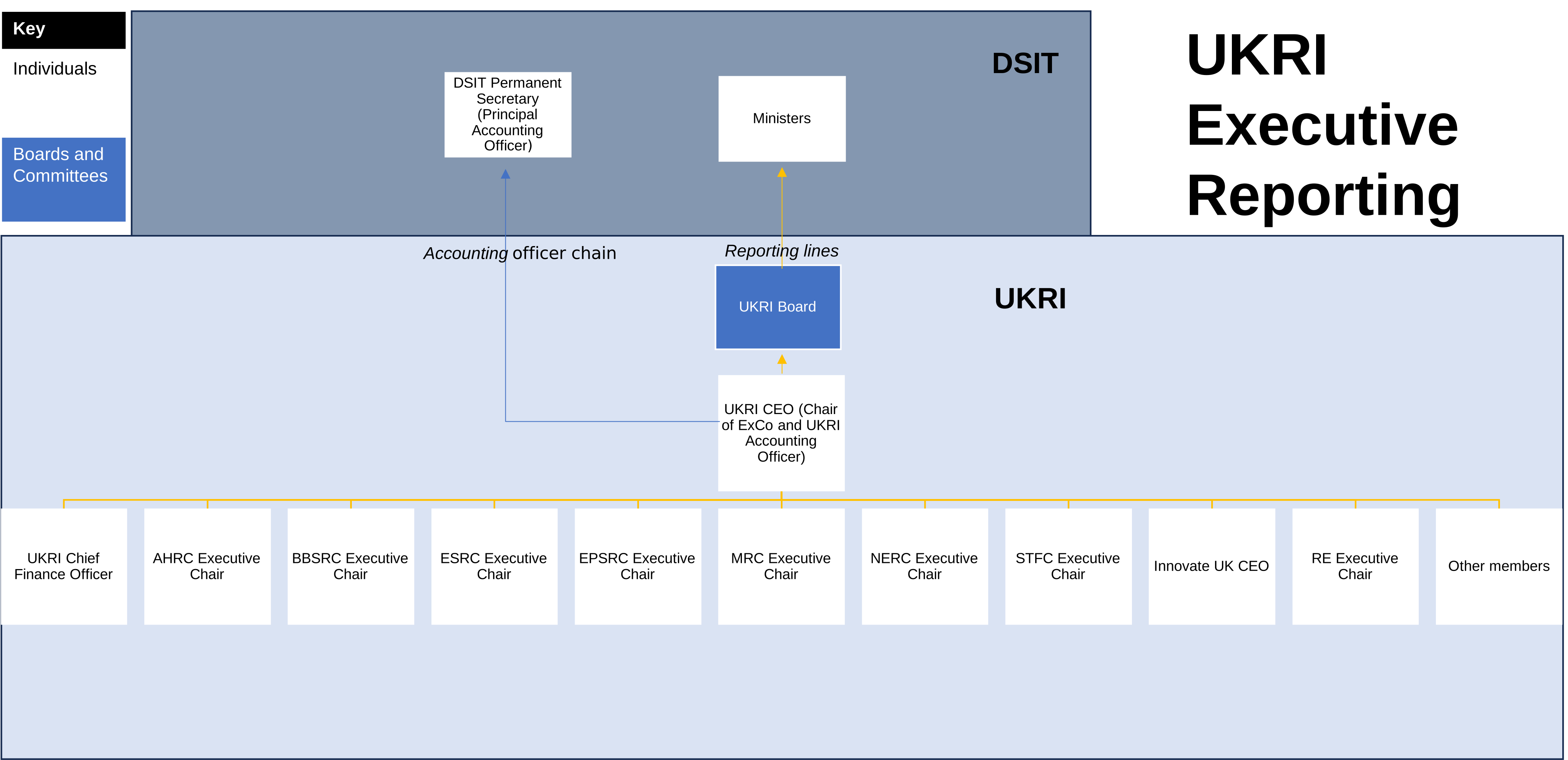
18.4. The Executive Committee of UKRI is also established by the HER Act. The Executive Committee provides strategy advice to the UKRI Board and is the day-to-day coordinating body for UKRI executive activity. It will provide leadership to the organisation including across the collective activities of the separate Councils to ensure collaboration on strategy and operational matters, and as a minimum its membership consists of the 9 Executive Chairs, the UKRI CEO and the UKRI CFO.
Figure 1 [footnote 17]: UKRI Board and Councils
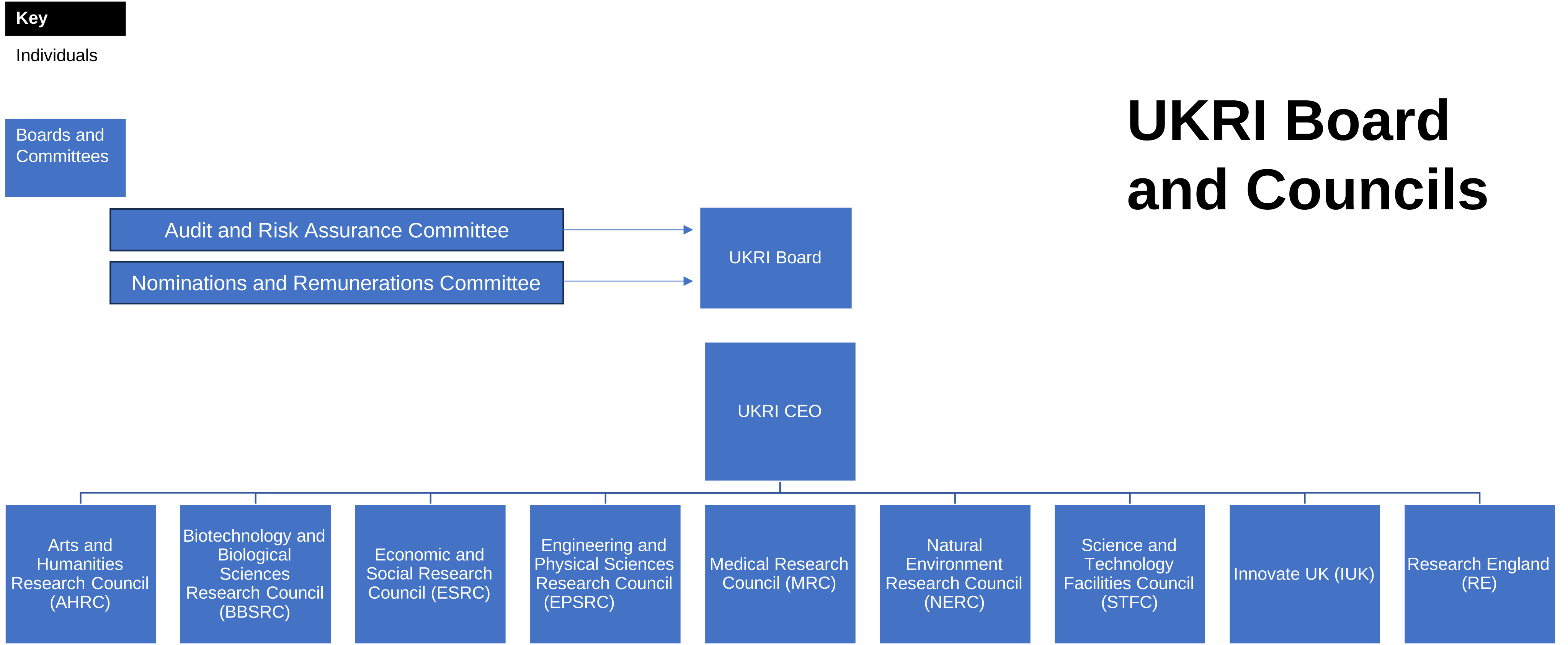
Figure 2: UKRI Executive Reporting
UKRI Councils
19. Role of the Councils
19.1. The UKRI Councils (the Councils) are 7 science and humanities councils, Innovate UK and Research England. As set out in the HER Act, the Councils will be responsible for both advising the Board and making decisions on scientific, research and innovation matters in their discipline specific area.
| Council of UKRI [footnote 18] | Field of activity |
|---|---|
| Arts and Humanities Research Council (AHRC) | Arts and humanities |
| Biotechnology and Biological Sciences Research Council (BBSRC) | Biotechnology and biological sciences |
| Economic and Social Research Council (ESRC) | Social sciences |
| Engineering and Physical Sciences Research Council (EPSRC) | Engineering and physical sciences |
| Medical Research Council (MRC) | Medicine and biomedicine aimed at improving human health |
| Natural Environment Research Council (NERC) | Environmental and related sciences |
| Science and Technology Facilities Council (STFC) | Astronomy, particle physics, space science, nuclear physics and provision and operation of research facilities in relation to any area of activity specified in the column |
| Innovate UK | Business-led innovation |
| Research England | Supports English higher education providers to deliver research and knowledge exchange |
19.2. As described in section 24, each Council will consist of 5-12 independent (ordinary) members and an Executive Chair.
19.3. The responsibilities of the Executive Chairs of UKRI Councils include:
- the leadership of their field of activity, including prioritisation of budgets and the development of delivery plans
- ensuring the future supply of skilled researchers and other specialists essential to the sustainability of the UK’s research and innovation capacity, and
- engaging with their community to develop ideas, raise awareness and disseminate strategic outputs.
19.4. The ordinary members of the Council will:
a) support and challenge the Executive Chair to ensure the effective delivery of the Council’s mission. In particular, they should:
- provide guidance, advice and make recommendations as appropriate on research, knowledge exchange, training and innovation to the Executive Chair and, if required, to the Board. Where relevant this will include ensuring that the UK receives greatest possible benefit from its involvement in major international programmes,
- contribute to the development and implementation of the UKRI Strategy (see paragraphs 39.1-39.2),
- provide leadership in the development and delivery of the Council’s strategic delivery plan (see paragraphs 39.3-39.7), and
- Provide independent scrutiny, support and challenge to the Executive Chair to ensure effective delivery of their responsibilities, specifically in matters relating to the Council’s field of activity, and in relation to institutes and facilities managed by the Council. This will also include performance; quality of portfolio; delivery against the Council’s Strategic Delivery Plan; and reporting of outputs outcomes and impacts.
b) Provide advice on the prioritisation of funding distribution between the disciplines within each Councils field of activity, and
c) encourage collaborative working across the UKRI Councils, and the wider research innovation and business community, in order to foster strategic relationships.
20. Delegation of functions from the Board to Councils
20.1. The Board will delegate responsibility for decision making to each Council in relation to their discipline area, as required by the HER Act. In delegating functions, the Board will adopt a principle of subsidiarity, so that functions are delegated to Councils wherever it is effective to do so. The HER Act requires the Board to consider the overall effectiveness, efficiency and economy of UKRI when delegating functions .
20.2. The Board will delegate authority to individual Councils through a range of methods including the commissioning and approval of strategic delivery plans (see paragraphs 39.3-39.7), budget allocation letters and delegation letters.
Research England
20.3. In accordance with its remit (see also paragraph 25.1), Research England shall be delegated the following responsibilities by the Board:
a) Research England will be responsible for decision-making in respect of its delegated budget
b) Research England will operate on behalf of UKRI on institutionally-focused policy and funding issues regarding research and knowledge exchange in English higher education providers, working closely with devolved funding bodies
c) when required by UKRI, Research England will work co-operatively with the devolved funding bodies to allocate funds available across the UK
d) Research England will evaluate its own policy and funding programmes, engaging with the devolved administrations and devolved funding bodies to gather a UK-wide view of higher education sector-related policy issues.
21. Role of the Executive Chairs and internal delegations from the CEO and the Board
21.1. Executive Chairs will be responsible for the development and approval of their Council strategic delivery plans and will be responsible for delivery against the plans.
21.2. Executive Chairs will also undertake cross-cutting activity on behalf of UKRI as a whole, reporting to the CEO.
21.3. Executive Chairs will be delegated authority for managing budgets by the CEO through a system of delegations. The CEO may also delegate additional responsibilities to ExCo members or to senior staff elsewhere in UKRI, in line with UKRI’s Delegations Framework. As described in paragraph 5.6, the CEO will establish a system of controls and assurance to ensure his or her Accounting Officer responsibilities under ‘Managing Public Money’ are fulfilled.
22. Senior Independent Members
22.1. One ordinary member of each Council will be appointed as Senior Independent Member, whose role will be to support the Executive Chair in chairing Council meetings and holding the council’s executive to account, and to assure the UKRI Chair and the UKRI Board of the effective operation of the Council. They will also provide a route to escalate problems and concerns from within the Council independently to the UKRI Chair and the UKRI Board.
23. Review of Board and Committees
23.1. The Board, Councils, Executive Committee and their immediate sub-committees should be evaluated internally on an annual basis, and there should be independent input at least once every 3 years. Evaluations should be in line with any guidance issued by DSIT or other public sector guidance. This includes the ‘Corporate Governance in Central Government Departments: Code of Good Practice’ and the corresponding ‘Guidance Note’[footnote 19] , which sets out that Board effectiveness evaluations should:
a) include the Board, its committees and its individual members, and
b) be incorporated in the normal line management appraisals of the executive Board members, and any other appraisal processes that are in place for Board members.
23.2. These reviews should be coordinated by the relevant secretariat in consultation with the Chair. For Councils, this should also be in consultation with the Senior Independent Member. The outcome of these reviews should inform the annual governance statement.
Public Appointments to UKRI and Council members
24. Public and Ministerial appointments
24.1 The HER Act specifies which appointments to UKRI are ministerial appointments. Some ministerial UKRI appointments are also regulated by the Office of the Commissioner for Public Appointments (OCPA). A list of regulated public appointments is maintained in the ‘Public Appointments Order in Council’ which is updated annually and published online.
24.2. For all regulated public appointments, the ‘Governance Code’ must be adhered to and DSIT is subject to periodic audit by the Commissioner for these appointments to ensure compliance. [footnote 20] For Ministerial appointments not also regulated appointments, standard DSIT guidance will be followed.
24.3. DSIT is accountable for making ministerial appointments to UKRI in an efficient and effective manner. DSIT welcomes a minimum of 12 months’ notice, where this is possible, of any recommendations for re-appointment. DSIT will aim to make decisions on reappointment cases in good time to support effective recruitment.
24.4. DSIT will advise the Secretary of State on all public appointments to UKRI and will manage the process of making such appointments in accordance with the above Governance Code and the provisions laid down in the HER Act. This includes advice on role specifications, remuneration, and the composition of recruitment panels.
24.5. DSIT will work with UKRI on the public appointments process in a timely, efficient and effective manner. This includes taking into consideration advice and recommendations from UKRI when seeking ministerial and cross-government approvals through an agreed way of working with the Nominations and Remuneration Committee.
24.6. DSIT will provide advice to UKRI on relevant guidance or regulations issued by DSIT or wider government relating to remuneration, including pay, pensions and expenses (see also paragraph 158).
24.7. UKRI will provide advice and recommendations to DSIT on remuneration for ministerial appointees including expense arrangements. This advice will detail the way in which such expense arrangements are in line with ‘Managing Public Money’ requirements on the handling of public funds. DSIT will remain responsible and accountable for advising ministers on all elements of the remuneration package for ministerial appointees including expense arrangements.
Composition of the UKRI Board
24.8. The Secretary of State will appoint the UKRI Chair, CEO, CFO, and at least 9 but no more than 12 other independent Board members, to ensure that executive members are supported and constructively challenged in their role (see also section 15 about the UKRI Board and Board member roles and responsibilities).
24.9. The CEO, CFO and the 9-12 independent members will be appointed by the Secretary of State in consultation with the UKRI Chair. The CFO will be an executive and voting Board member and appropriately qualified as a finance director as described in Annex 4.1 of Managing Public Money.
24.10. In appointing the Board, the Secretary of State will take account of the diverse needs of the organisation as set out in the HER Act (Schedule 9) so that the Board members (between them) have experience across UKRI’s portfolio.
24.11. One independent member of the Board will be appointed to take up the role of Chair of the ARAC (see paragraphs 15.6-15.8). Independent members typically serve terms between 2-4 years.
Composition of UKRI Councils
24.12. The HER Act specifies that each UKRI Council will consist of between 5 and 12 independent members and an Executive Chair. The Executive Chairs will be appointed by the Secretary of State and the 12 independent members will be appointed by the Board on the recommendation of the relevant Executive Chair. In addition, the Secretary of State has the option to appoint one member to each of the UKRI Councils (see also section 19 about the roles and responsibilities of the UKRI Councils). Government officials may be asked to attend Councils on a personal basis, where these officials are Chief Scientific Advisors (CSA) they will also be attending as representatives of the wider government CSA network.
Executive Chairs of UKRI
24.13. While these are Ministerial appointments set out in legislation, recognising the importance of subsidiarity in management of UKRI and the need for pace in recruitment, the UKRI CEO will lead on the recruitment campaigns for Council Executive Chairs and Ministers will ratify the panel’s decision. DSIT Officials and Ministers will support UKRI to conduct recruitment exercises in no less than 90 days from the point campaign materials are submitted to Ministers and the point an offer is made to a candidate.
Performance Management
24.14. Ministerial appointees to UKRI should be subject to annual performance appraisals. For independent Board members, this will form part of the evaluations described in chapter 9. Other appointees will be evaluated in the following manner:
24.15. the Director General for the DSIT Science, Innovation and Growth Group will be responsible for arranging the performance management of the UKRI Chair. The appraisal will seek and represent the views of DSIT ministers and the Permanent Secretary during this process
a) the UKRI Chair will be responsible for the performance management of the CEO and CFO, but may delegate responsibility for the CFO performance appraisal to the CEO, liaising closely with DSIT, and
b) the UKRI CEO will be responsible for the performance management of the Council Executive Chairs, liaising closely with DSIT.
24.16. UKRI performance management and internal appraisal processes should align with DSIT guidance for the appraisal of independent and executive leaders of partner organisations, with any significant variances discussed via the sponsor team (see section 10,) and agreed in writing between DSIT and UKRI.
24.17. There is no automatic presumption of reappointment for public appointees. Ministers will make decisions based on merit, in accordance with the ‘Governance Code on Public Appointments’[footnote 21] and will not agree a reappointment or extension of term in office without written evidence of satisfactory performance appraisal.
Devolution, and relationships with other bodies
25. Devolution and the devolved administrations
25.1. UKRI has a UK-wide remit in respect of the science and humanities councils and Innovate UK. Research England’s primary focus is confined to English higher education providers. However, Research England should cooperate with its devolved counterparts where it is more efficient and effective to do so, for example in delivery of any cross-UK assessment of research quality. Research England may also carry out UK-wide activity if explicitly authorised by the UKRI Board.
25.2. DSIT will regularly engage with the devolved administrations on UKRI’s priorities, including with respect to how UKRI and the devolved funding bodies can most effectively work together to support the UK’s research and innovation base. This will include engagement through the UK Funders of Research and Innovation Group.
25.3. Complementing this will be several types of engagement:
a) UKRI will engage as closely as possible with the devolved funding bodies to ensure a collaborative and coherent approach. However, decisions on reserved matters are for UKRI and UK government ministers
b) on matters where UKRI’s focus is England-only, Research England will work in partnership with the devolved funding bodies, and
c) on matters where UKRI’s focus is UK-wide and where the higher education systems of all 4 nations are affected, UKRI will engage with the devolved funding bodies, consulting with the Research England executive.
25.4. In coming to a decision on research or innovation funding that will have a significant impact on higher education providers or on the higher education sector more broadly, UKRI should draw on wider information on institutional strategy from Research England (internally), the Office for Students or relevant devolved funding bodies.
25.5. Security and risk management (especially of information) must be considered when transferring information between devolved authorities and central government, and mitigated and reviewed accordingly.
26. Joint-working between UKRI and the Office for Students
26.1. The HER Act makes provision for joint working between UKRI and the Office for Students, and places associated duties on these bodies to reflect the need for a collaborative approach between the research and teaching agenda. The Secretary of State may require UKRI to cooperate with the Office for Students on specific issues, as set out in the HER Act.
26.2. A collaboration agreement between the 2 organisations has been agreed and will be maintained, which sets out the details of how they will work together, including any formal structures for regular engagement and information sharing agreements. This will include ensuring that the Office for Students is consulted on the priorities and approach for investing the teaching element of Higher Education Innovation Funding (HEIF) allocated by Research England.
26.3. Close collaboration between DSIT and the Department for Education, as the respective sponsoring departments of UKRI and the Office for Students, will help to ensure governance arrangements are aligned where appropriate.
27. Working with other bodies
27.1. UKRI should work closely and collaboratively with other bodies in the wider research and innovation landscape on areas of shared interest to maximise the benefit to research and innovation.
28. Arrangements where UKRI delivers programmes on behalf of DSIT
28.1. UKRI may be asked to deliver programmes on behalf of DSIT, where DSIT is responsible for budgets and funding decisions, and UKRI is responsible for monitoring and administering financial support). Where UKRI is asked to deliver such programmes, DSIT and UKRI will discuss and agree respective roles, responsibilities and resourcing in advance of the new programme going live. These arrangements will be reviewed and adjusted as necessary.
29. Engagement with other government departments
29.1. UKRI will engage with other government departments as a matter of routine, playing a central role in enabling the Government’s strategic agenda for research and innovation. UKRI will work closely with government departments to effectively implement research and innovation programmes and to provide expert advice and analysis to support government priorities. UKRI should monitor such engagement centrally and provide updates to DSIT.
Management and financial responsibilities and controls
30. Delegated authorities
30.1. UKRI’s delegated authorities are set out in the delegation letter. This delegation letter may be updated and superseded by later versions which may be issued by DSIT in agreement with HM Treasury. UKRI’s delegated authorities will be communicated to the UKRI CEO as Accounting Officer.
30.2. In line with MPM Annex 2.2 these delegations will be reviewed on an annual basis.
30.3. UKRI shall obtain DSIT’s and where appropriate HM Treasury’s prior written approval before:
- entering into any undertaking to incur any expenditure that falls outside the delegations or which is not provided for in UKRI’s annual budget as approved by the department
- incurring expenditure for any purpose that is or might be considered novel or contentious, or which has or could have significant future cost implications
- making any significant change in the scale of operation or funding of any initiative or particular scheme previously approved by the department
- making any change of policy or practice which has wider financial implications that might prove repercussive or which might significantly affect the future level of resources required
- carrying out policies that go against the principles, rules, guidance and advice in MPM
31. ‘Novel and Contentious’ activities
31.1. There is no formal definition of “novel and contentious”, although ‘Managing Public Money’ provides guidance with respect to interpretation (Chapter 2 of Managing Public Money and box 2.3). In practice whether something is considered novel or contentious will vary from case to case and should involve early and close engagement with the DSIT sponsor team. Being novel or contentious in itself does not mean a proposal should not be undertaken, but it will require careful consideration and escalation to DSIT, and HM Treasury, to ensure mutual understanding of risk.
31.2. In general, a novel proposal could be considered as new activity that cannot easily be compared to existing activity already undertaken by an organisation. A contentious proposal would describe an activity where there is reason to believe one or more of the Accounting Officer standards are in question. The Accounting Officer standards are regularity, propriety, value for money and feasibility, and should be assessed through an Accounting Officer assessment[footnote 22] whenever concerns around whether a proposal is ‘novel and contentious’ arise.
31.3. In the context of UKRI’s activities, funding for research and innovation in general is not classified as novel or contentious. However, from time to time exceptions may arise. A good example would be dual use research of concern (DURC),[footnote 23] and UKRI is expected to keep the potential wider impacts of the research it funds under review.
31.4. The administrative mechanisms used to implement research and innovation funding fall within the scope of the Accounting Officer standards. In this context, novelty is about activity that would be novel for UKRI to undertake, for example, unusual schemes or the use of novel administrative techniques or alternate legal structures. This applies to spending and to any other set of arrangements that have financial implications (for example pay, remuneration and recruitment, disclosure, conflict of interest or entering into contractual arrangements).
31.5. Areas that are potentially contentious relate to activity that may be considered controversial both within government, for example on policy grounds or financial management considerations, or publicly, for example issues that might raise public or parliamentary concerns.
31.6. Furthermore, all proposals and existing activity should be periodically assessed for appropriateness and be able to withstand public scrutiny.
32. UK Shared Business Services (UK SBS)
32.1. UK SBS is a company wholly owned by its public sector customers and shareholders: DSIT, DBT, DESNZ and UKRI. It is a recognised government Shared Service provider. The company provides a range of efficient transactional and specialist services to support the delivery of effective corporate services.
33. Spending authority
33.1. Unless agreed by DSIT and, as necessary, HM Treasury, UKRI shall follow the principles, rules, guidance and advice in ‘Managing Public Money’, referring any difficulties or potential bids for exceptions to the Science, Innovation and Growth group in DSIT in the first instance.
33.2 Once the budget has been approved by DSIT and subject to the Secretary of State’s instructions in allocation letters, UKRI shall have authority to incur expenditure approved in the budget without further reference to DSIT, on the following conditions:[footnote 24]
- UKRI shall comply with the delegations set out in the delegation letter. These delegations shall not be altered without the prior agreement of the sponsor department and as agreed by HM Treasury and Cabinet Office as appropriate
- UKRI shall comply with ‘Managing Public Money’ regarding the value-for-money, feasibility, regularity and propriety of spending, including with respect to novel, contentious or repercussive proposals, engaging with DSIT sponsors early on interpretation of ‘Managing Public Money’ rules (see also section 30)
- UKRI may only establish subsidiary organisations in accordance with terms and conditions specified by the Secretary of State (as set out in the HER Act). The establishment of such subsidiaries will be considered “novel” under ‘Managing Public Money’ rules, unless pertaining to a previously agreed scheme, and will require DSIT and HM Treasury agreement
- inclusion of any planned and approved expenditure in the budget shall not remove the need to seek formal departmental approval where any proposed expenditure is outside the delegated limits or is for new schemes not previously agreed
- UKRI shall provide the sponsor department with such information about its operations, performance, individual projects or other expenditure as the sponsor department may reasonably require.
34. Banking and managing cash
34.1. UKRI must maximise the use of publicly procured banking services (accounts with central government commercial banks managed centrally by Government Banking).
34.2. UKRI should only hold money outside Government Banking Service accounts where a good business case can made for doing so and HM Treasury consent is required for each account to be established. Only commercial banks which are members of relevant UK clearing bodies may be considered for this purpose.
34.3. Commercial accounts where approved should be operated in line with the principles as set out in MPM.
34.4. The AO is responsible for ensuring UKRI has a banking policy as set out in MPM and ensuring that policy is complied with.
35. Procurement
35.1. UKRI shall ensure that its procurement policies are aligned with and comply with any relevant UK or other international procurement rules and in particular the Public Contracts Regulations 2015.
35.2. UKRI shall establish its procurement policies and document these in a Procurement Policy and Procedures Manual.
35.3. In procurement cases where UKRI is likely to exceed its delegated authority limit, procurement strategy approval for the specific planned purchase must be sought from the department’s sponsor team.
35.4. Goods, services, and works should be acquired by competition. Proposals to let single-tender or restricted contracts shall be limited and exceptional, and a quarterly report explaining those exceptions should be sent to DSIT.
35.5. Procurement by UKRI of works, equipment, goods, and services shall be based on, a full option appraisal and value for money (VfM), i.e. the optimum combination and whole life costs and quality (fitness for purpose).
35.6. UKRI shall:
- engage fully with department and government wide procurement initiatives that seek to achieve VfM from collaborative projects
- comply with all relevant Procurement Policy Notes issued by Cabinet Office
- co-operate fully with initiatives to improve the availability of procurement data to facilitate the achievement of VfM
35.7. UKRI shall comply with the commercial[footnote 25] and grants standards[footnote 26]. These standards apply to the planning, delivery, and management of government commercial activity, including management of grants in all departments and ALBs, regardless of commercial approach used and form part of a suite of functional standards that set expectations for management within government.
36. Risk management
36.1 UKRI shall ensure that the risks that it faces are dealt with in an appropriate manner, in accordance with relevant aspects of best practice in corporate governance, and develop a risk management strategy, in accordance with the Treasury guidance Management of Risk: Principles and Concepts[footnote 27] .
36.2. In keeping with both organisations’ commitment to a policy of transparency and openness between DSIT and UKRI, UKRI will ensure that DSIT is informed at the earliest appropriate time of any significant emerging issues and risks. UKRI will work with the DSIT sponsorship team to ensure its risk management approach aligns with the principles of ‘Managing Public Money’ and is consistent with DSIT’ policies and systems where appropriate.
36.3. UKRI will establish processes to ensure that it is cognisant of risks that it is exposed to and which it exposes others to, and that these risks are captured, escalated and communicated speedily and effectively. UKRI will establish processes to monitor and report to DSIT, according to a schedule agreed with the DSIT sponsor team, on:
a) major projects identified and agreed with DSIT in line with DSIT and the National Infrastructure and Service Transformation Authority requirements and guidance, and
b) major risks, including operational, financial and reputational risks.
36.4. As part of its approach to risk management and information assurance UKRI should ensure the robustness of its cyber security to protect itself against data breaches, service disruption, loss of sensitive information and reputational damage. The level of provision should be proportionate to UKRI’s size and the level of risk it carries in terms of cyber vulnerability. [footnote 28]
37. Counter fraud, theft and propriety
37.1. UKRI should adopt and implement policies and practices to safeguard itself against fraud and theft.
UKRI should act in line with guidance as issued by the Counter Fraud Function and in compliance with the procedures and considerations as set in in MPM Annex 4.9 and the Counter Fraud Functional Standard[footnote 29]. It should also take all reasonable steps to appraise the financial standing of any firm or other body with which it intends to enter a contract or to provide grant or grant-in-aid.
37.2. UKRI should keep records of and prepare and forward to the department an annual report on fraud and theft suffered by UKRI and notify the sponsor department of any unusual or major incidents as soon as possible. UKRI should also report detected loss from fraud, bribery, corruption and error, alongside associated recoveries and prevented losses, to the counter fraud centre of expertise in line with the agreed government definitions as set out in Counter Fraud Functional Standard.
37.3. UKRI will maintain a register of interests for Board members of UKRI and Council members that is published annually.
37.4. UKRI will establish a gift and hospitality policy based on the principle of transparency, ensuring this is published on its website.
37.5. UKRI will maintain a record of all entertainment given or received by senior members.
37.6. UKRI shall at all times be mindful of public perceptions around the appropriate use of public money.
38. Staff
Broad responsibilities for staff
38.1 Within the arrangements approved by the responsible Minister and the Treasury UKRI will have responsibility for the recruitment, retention and motivation of its staff. The broad responsibilities toward its staff are to ensure that:
- the rules for recruitment and management of staff create an inclusive culture in which diversity is fully valued; appointment and advancement is based on merit; there is no discrimination against employees with protected characteristics under the Equality Act 2010
- the level and structure of its staffing, including grading and staff numbers, are appropriate to its functions and the requirements of economy, efficiency and effectiveness
- the performance of its staff at all levels is satisfactorily appraised and UKRI performance measurement systems are reviewed from time to time
- its staff are encouraged to acquire the appropriate professional, management and other expertise necessary to achieve UKRI’s objectives
- proper consultation with staff takes place on key issues affecting them
- adequate grievance and disciplinary procedures are in place
- whistle-blowing procedures consistent with the Public Interest Disclosure Act are in place
- a code of conduct for staff is in place based on the Cabinet Office’s Model Code for Staff of Executive Non-departmental Public Bodies[footnote 30]
Staff costs
38.2. Subject to its delegated authorities, UKRI shall ensure that the creation of any additional posts does not incur forward commitments that will exceed its ability to pay for them.
Pay and conditions of service
38.3. UKRI staff are subject to levels of remuneration and terms and conditions of service (including pensions) within the general pay structure approved by DSIT and the Treasury, and in line with HER Act requirements. UKRI must also comply with the latest public sector pay policy and guidance applicable to non-departmental public bodies (NDPBs). [footnote 31] In line with this UKRI is subject to an annual pay remit process which must be agreed by DSIT and HMT. UKRI must also comply with Treasury guidance on senior salaries and performance pay (referred to below). UKRI has no delegated power to amend these terms and conditions.
38.4. If civil service terms and conditions of service apply to the rates of pay and non-pay allowances paid to the staff and to any other party entitled to payment in respect of travel expenses or other allowances, payment shall be made in accordance with the Civil Service Management Code [footnote 32] and the annual Civil Service Pay Remit Guidance, except where prior approval has been given by DSIT to vary such rates.
38.5. For all senior UKRI staff there are specific pay controls in place, set by the Government to ensure that senior pay is set at an appropriate level to enable the public sector to recruit, retain and motivate the best people, whilst ensuring value for money for the taxpayer. The Government’s Guidance for Approval of Senior Pay[footnote 33] sets out the process for approving remuneration packages over a designated value for salaries (base pay and allowances) and for performance bonuses, which require approval from the Chief Secretary to the Treasury (CST). In situations where CST approval is not required, the guidance states that sponsoring departments are expected to undertake an assessment of the value for money of senior remuneration packages, in line with the principles and criteria in the guidance. DSIT has set the threshold for this assessment for salaries in Partner Organisations across the DSIT Group and all remuneration packages above this threshold must receive DSIT approval.
38.6. Staff terms and conditions should be set out in an Employee Handbook, which should be provided to the department together with subsequent amendments.
38.7. UKRI shall operate a performance-related pay scheme that shall form part of the annual aggregate pay budget approved by DSIT where relevant with due regard to the Senior Pay Guidance.
38.8. The travel expenses of Board members shall be tied to the rates allowed to senior staff of UKRI. Reasonable actual costs shall be reimbursed.
Pensions, redundancy and compensation
38.9. Compensation scheme rules and pension scheme rules should reflect legislative and HM Treasury guidance requirements regarding exit payments.
38.10. Staff recruited into UKRI shall normally be eligible for a pension provided by the Civil Service Pension Scheme. Staff recruited into an MRC Institute will be provided with access to the Medical Research Pension scheme. Staff may opt out of the occupational pension scheme provided by UKRI, but that employers’ contribution to any personal pension arrangement, including stakeholder pension, shall normally be limited to the national insurance rebate level.
38.11. Any proposal by UKRI to move from the existing pension arrangements, or to pay any redundancy or compensation for loss of office, requires the prior approval of DSIT, and any redundancy payments must be made in line with the Civil Service Compensation Scheme. Proposals on severance must comply with the rules in chapter 4 of MPM.
Business plans, financial reporting and management information
39. Corporate and business plans
UKRI Strategy
39.1. The Secretary of State may commission from the Board a research and innovation strategy (‘The UKRI Strategy’), which will set out how UKRI will meet the strategic objectives and vision (detailed in section 2) and other key priorities over the coming years. The details of the strategy, including timing and sign-off, are set out in the HER Act.
39.2. The board will oversee the development of the UKRI strategy and will be engaged by the UKRI executive on critical challenges or policy context to be considered within it. In line with the HER Act, the Secretary of State will approve the UKRI Strategy.
Council strategic delivery plans
39.3. The Board will commission each Council to produce a strategic delivery plan, covering each Spending Review period.
39.4. These will set out how each Council will exercise UKRI’s functions, efficiently and effectively prioritising their budget to contribute to the delivery of UKRI’s strategic objectives in respect of their fields of activity.
39.5. Each Council will submit its strategic delivery plan to the Board for approval. The Board will ensure consistency, coherence and coordination between all of the Councils’ strategic delivery plans, the activities of the corporate centre and the UKRI Strategy.
39.6. Once agreed, the plans provide the mechanisms by which the Board formally delegates its functions to the Councils, as required by the HER Act.
39.7. Detail of the approvals process, timing and publication of these plans is included in section 100 of the HER Act.
Budget allocations and advice
39.8. The Secretary of State will make budget allocations for UKRI and each of its 9 Councils, taking advice from the Board on strategic priorities and on the balance of funding between disciplines (see also paragraph 10.6).
39.9. The Board should consider the wider research and innovation landscape in providing any advice to the Secretary of State on the allocation of funding. DSIT may also from time to time invite the Board to provide advice on the funding DSIT provides across the research and innovation landscape through its research and innovation budget or other matters relevant to the research and innovation landscape. When providing such advice, the Board should consult with any relevant bodies to ensure their expertise and interests are properly reflected.
Corporate Plan
39.10. UKRI will also develop a corporate plan which sets out how it will deliver against the UKRI Strategy.
39.11. UKRI will agree with DSIT the issues to be addressed in the plan and the timetable for its preparation. The plan will reflect UKRI’s statutory and/or other duties, powers and strategic objectives and, within these, the priorities set from time to time by the Secretary of State (including decisions taken on policy and resources in the light of wider public expenditure decisions). The plan will demonstrate how UKRI contributes to the achievement of DSIT’s medium-term plan and priorities and aligned performance metrics and milestones and will set out the size, structure, costs and benefits of the body.
39.12. The corporate plan will be updated annually, at which point UKRI will expand upon the details where necessary. The update will include key targets and milestones for the year immediately ahead and will be linked to budgeting information so that resources allocated to achieve specific objectives can readily be identified by DSIT. Both DSIT and UKRI will work to an agreed annual cycle of activity and make every effort to conclude changes in advance of the new financial year.
39.13. UKRI and DSIT will work together in a close and collaborative way to develop the plan and review progress.
39.14. The following matters should be included in the plan:
- important objectives and associated key performance targets for the forward years, and the strategy for achieving those objectives
- clear ongoing strategy to ensure the efficiency of operational expenditure so that funding priorities are maximised
- key non-financial performance targets
- context of any risk factors that may significantly affect the execution of the plan, and
- other matters as agreed between DSIT and UKRI.
39.15. UKRI’s performance framework should report on delivery progress against corporate plan targets.
39.16. UKRI will submit the corporate plan, or subsequent annual updates, to DSIT for agreement according to a timeframe agreed with the DSIT sponsors (see section 10 on DSIT-UKRI partnership principles). The Secretary of State will approve each corporate plan or annual update.
40. Budgeting procedures
40.1. Each year DSIT will send to UKRI a formal statement (grant letter or allocation letter) of the annual budgetary provision allocated by DSIT in the light of competing priorities across the department, net grant funding provision and any specific condition applied to income and expenditure, alongside a statement of any planned change in policies affecting UKRI.
40.2. When making grants to UKRI, the Secretary of State may provide terms and conditions relating to that grant. When making grants or setting terms and conditions relating to any grants, the Secretary of State will have regard to the factors outlined in paragraph 15.18: the Haldane principle, the balanced funding principle, and any advice provided by the Board.
40.3. UKRI’s approved updated corporate plan will take account both of approved funding provision and any forecast receipts, and will include a budget of estimated payments and receipts together with a profile of expected expenditure and of draw-down of any departmental funding and/or other income over the year.
40.4. DSIT reserves the right, in exceptional circumstances, to vary UKRI funding in the event of a general issue (for example, an emergency budget in the event of an economic shock) or specific issue such as serious systemic contravention of an Accounting Officer duty.
Budgeting and reporting cycle
40.5. UKRI will operate on a multi-year cycle for strategy, budgeting and delivery (the precise timing of which will be subject to the parliamentary cycle). This will be kept live through annual adjustments and updates to the corporate plan.
40.6. The UKRI Board will be responsible for preparing an annual report and accounts for each financial year (see section 42 below).
40.7. UKRI will also engage with DSIT, as appropriate to all DSIT partner organisations, on the DSIT ‘Single Departmental Plan’.
41. Grant-in-aid and any ring-fenced grants
41.1. Any grant-in-aid provided by the department for the year in question will be voted in the department’s Supply Estimate and be subject to parliamentary control.
41.2. The grant-in-aid will normally be paid in monthly instalments on the basis of written applications showing evidence of need. UKRI will comply with the general principle, that there is no payment in advance of need. Cash balances accumulated during the course of the year from grant-in-aid or other Exchequer funds shall be kept to a minimum level consistent with the efficient operation of UKRI. Grant-in-aid not drawn down by the end of the financial year shall lapse. Subject to approval by Parliament of the relevant Estimates provision, where grant-in-aid is delayed to avoid excess cash balances at the year-end, the DSIT will make available in the next financial year any such grant-in-aid that is required to meet any liabilities at the year end, such as creditors.
41.3. In the event that DSIT provides UKRI separate grants for specific (ring-fenced) purposes, it would issue the grant in accordance to profiles agreed within the business case or provide justification for a different basis. UKRI would provide evidence that the grant was used for the purposes authorised by DSIT. UKRI shall not have uncommitted grant funds in hand, nor carry grant funds over to another financial year.
42. Annual report and accounts
42.1. The UKRI Board must publish an annual report of its activities together with its audited accounts after the end of each financial year. UKRI shall provide the department its finalised (audited) accounts by a date notified by DSIT each year in order for the accounts to be consolidated within DSIT. A draft of the report should be submitted to the department as advised by DSIT before the proposed publication date. The accounts should be prepared in accordance with the relevant statutes and specific accounts direction issued by the department as well as the Treasury’s Financial Reporting Manual (FReM).
42.2. The annual report must:
- cover any corporate, subsidiary or joint ventures under its control
- comply with the FreM and in particular have regard to the illustrative statements for an NDPB[footnote 34]
- outline main activities and performance during the previous financial year, including an assessment of how its achievements compare against its strategic objectives and the UKRI Strategy for that period, together with comparable outturns for the previous [2-5] year where appropriate, and key elements of the activities and expenditure of the UKRI Councils
- set out in summary form forward plans
- include a statement specifying how UKRI has cooperated with the Office for Students during that year
- include a statement setting out the work UKRI has undertaken to foster and support international collaboration
42.3. Information on performance against key financial targets is included within the annual report and subject to the auditor’s consistency opinion. The report and accounts shall be laid in Parliament and made available on the UKRI website, in accordance with the guidance in the FReM.
42.4. A draft of the report should be submitted to the department according to a timeframe agreed with the DSIT sponsors (see section 10 on DSIT-UKRI partnership principles) before the proposed publication date, in order for the Secretary of State to approve the report. The accounts should be prepared in accordance with the relevant statutes and specific accounts direction issued by the department as well as the above manual.
43. Reporting performance to the department
43.1. UKRI will operate management, information and accounting systems that enable it to review in a timely and effective manner its financial and non-financial performance against the budgets and targets set out in the corporate in a timely and effective manner. This information should be shared with DSIT and monitored against priorities set out in the corporate plan, the UKRI Strategy and the strategic objectives (see section 2) as well as assurance measures requested by DSIT.
43.2. UKRI will inform DSIT of any changes that make achievement of objectives more or less difficult. It shall report financial and non-financial performance, including performance in helping to deliver Ministers’ policies, and the achievement of key objectives, in accordance with a schedule agreed between DSIT and UKRI.
43.3. UKRI’s performance shall be formally reviewed by DSIT quarterly (see paragraph 10.11).
44. Information sharing
44.1. The department has the right of access to all UKRI records and personnel for any purpose including, for example, sponsorship audits and operational investigations subject to any applicable legislation, including data protection legislation, or confidential commercial considerations where they apply.
44.2. UKRI shall provide the sponsor department with such information about its operations, performance, individual projects or other expenditure as the sponsor department may reasonably require. As set out in section 105 of the HER Act, UKRI is obliged to provide DSIT with information and advice relating to its activities.
44.3. The department and HM Treasury may request the sharing of data held by UKRI in such a manner as set out in central guidance except insofar as it is prohibited by law. This may include requiring the appointment of a senior official to be responsible for the data sharing relationship.
44.4. As a minimum, UKRI shall provide the department with information monthly that will enable the department satisfactorily to monitor:
- UKRI’s cash management
- its draw-down of grant-in-aid
- any decisions that impact upon allocations agreed with the Secretary of State or any in-year investment decision
- forecast outturn by resource headings
- reporting against policy ringfences
- other data required for the Online System for Central Accounting and Reporting (OSCAR)
- other areas of reporting requiring monthly reporting; and
- data as required in respect of its compliance with any Cabinet Office Controls pipelines or required in order to meet any condition as set out in any settlement letter
44.5. Further reporting of corporate information will be provided on a schedule agreed with the DSIT sponsors.
44.6. UKRI will also assist DSIT in responding to Cabinet Office or HM Treasury requests for information on areas of its performance and expenditure.
44.7. Additionally, UKRI shall provide DSIT with information and data that enables tracking of performance, that includes:
- data to demonstrate UKRI’s progress towards its vision and mission (see section 2),
- data to evidence the key performance indicators, to be reported within UKRI’s Corporate Plan (see also paragraphs 39.10-39.16),
- updates on data improvement work, including progress in ensuring that data allows UKRI to respond quickly to DSIT’ requests for data analysis required to support business priorities
44.8. UKRI and DSIT will work together to evaluate UKRI’s impact, progress towards its aims, and value for money. UKRI will also provide quarterly updates on evaluation activity across UKRI and the publication of evaluation outputs.
44.9. DSIT and UKRI acknowledge that under the General Data Protection Regulation (GDPR 2016/679) and the Data Protection Act 2018, both parties are separate Controllers and will comply fully with all requirements under current data protection legislation. Each party will implement and maintain appropriate technical and organisational measures in relation to the processing of personal data. Both parties shall ensure that nominated Data Protection Officers are in place and any breaches notified without undue delay to the nominated officer. Each party will have processes in place to notify the ICO within 72 hours of breaches when appropriate to do so.
Audit
45. Internal audit
45.1. UKRI shall:
- establish and maintain arrangements for internal audit
- ensure that any arrangements for internal audit are in accordance with the Public Sector Internal Audit Standards (PSIAS) as adopted by HM Treasury[footnote 35].
- Ensure DSIT is satisfied with the competence and qualifications of the Head of Internal Audit and the requirements for approving appointments in accordance with PSIAS
- set up an audit committee of its Board in accordance with the Code of Good Practice for Corporate Governance and the Audit and Risk Assurance Committee Handbook
- forward the audit strategy, periodic audit plans and annual audit report, including the Head of Internal Audit opinion on risk management, control and governance as soon as possible to DSIT according to a timeframe agreed with the DSIT sponsors (see chapter on DSIT-UKRI partnership principles)
- keep records of and prepare and forward to the department an annual report on fraud and theft suffered by UKRI and notify DSIT of any unusual or major incidents as soon as possible
- will share with DSIT information identified during the audit process and the Annual Audit Opinion Report (together with any other outputs) at the end of the audit, in particular on issues impacting on the department’s responsibilities in relation to financial systems within UKRI
45.2. The internal audit service has a right of access to all documents, including where the service is contracted out.
45.3. The lead individual responsible for internal audit should be periodically invited to attend UKRI Board meetings, where key issues are discussed relating to governance, risk management processes or controls.
46. External audit
46.1. The Comptroller & Auditor General (C&AG) audits UKRI’s annual accounts. As set out in the HER Act, UKRI must send a copy of each statement of accounts to the Secretary of State and the C&AG before the end of August following the financial year to which the statement relates. However, accounts should normally be laid pre-summer parliamentary recess to aid parliamentary transparency and support DSIT consolidation.
46.2. The C&AG will examine, certify and report on each statement of accounts, and send a copy of each report and certified statement to the Secretary of State. The Secretary of State must lay before parliament a copy of each such report and certified statement.
46.3. In the event that UKRI has set up and controls subsidiary companies, UKRI will (in the light of the provisions in the Companies Act 2006) ensure that the C&AG has the option to be appointed auditor of those company subsidiaries that it controls and/or whose accounts are consolidated within its own accounts. UKRI shall discuss with the sponsor department the procedures for appointing the C&AG as auditor of the companies.
46.4. The C&AG:
- will consult the department and UKRI on whom – the NAO or a commercial auditor – shall undertake the audit(s) on his behalf, though the final decision rests with the C&AG
- has a statutory right of access to relevant documents, including by virtue of section 25(8) of the Government Resources and Accounts Act 2000, held by another party in receipt of payments or grants from UKRI
- will share with DSIT information identified during the audit process and the audit report (together with any other outputs) at the end of the audit, in particular on issues impacting on the Department’s responsibilities in relation to financial systems within UKRI
- will consider requests from departments and other relevant bodies to provide regulatory compliance reports and other similar reports at the commencement of the audit. Consistent with the C&AG’s independent status, the provision of such reports is entirely at the C&AG’s discretion
46.5. The C&AG may carry out examinations into the economy, efficiency and effectiveness with which the UKRI has used its resources in discharging its functions. For the purpose of these examinations the C&AG has statutory access to documents as provided for under section 8 of the National Audit Act 1983. In addition, UKRI shall provide, in conditions to grants and contracts, for the C&AG to exercise such access to documents held by grant recipients and contractors and sub-contractors as may be required for these examinations; and shall use its best endeavours to secure access for the C&AG to any other documents required by the C&AG which are held by other bodies.
Reviews and winding up arrangements
47. Review of UKRI’s status
47.1. UKRI will be reviewed as part of the wider Public Bodies Reviews programme, at a time determined by the department’s ministers and their PAO.
48. Arrangements in the event that UKRI is wound up
48.1. DSIT will put in place arrangements to ensure the orderly winding up of UKRI. In particular it should ensure that the assets and liabilities of UKRI are passed to any successor organisation and accounted for properly. (In the event that there is no successor organisation, the assets and liabilities should revert to DSIT). To this end, DSIT shall:
- have regard to Cabinet Office guidance on winding up of ALBs[footnote 36]
- ensure that procedures are in place in UKRI to gain independent assurance on key transactions, financial commitments, cash flows and other information needed to handle the wind-up effectively and to maintain the momentum of work inherited by any residuary body
- specify the basis for the valuation and accounting treatment of UKRI’s assets and liabilities
- ensure that arrangements are in place to prepare closing accounts and pass to the C&AG for external audit, and that, for non-Crown bodies funds are in place to pay for such audits. It shall be for the C&AG to lay the final accounts in Parliament, together with his report on the accounts
- arrange for the most appropriate person to sign the closing accounts. In the event that another ALB takes on the role, responsibilities, assets and liabilities, the succeeding ALB AO should sign the closing accounts. In the event that the department inherits the role, responsibilities, assets and liabilities, the sponsor department’s AO should sign
48.2. UKRI shall provide DSIT with full details of all agreements where UKRI or its successors have a right to share in the financial gains of developers. It should also pass to DSIT details of any other forms of claw-back due to UKRI.
Signatures
Signed on behalf of UK Research and Innovation and the Department for Science, Innovation and Technology by the following:
Alex Jones
Director-General, DSIT
Sir Andrew Mackenzie
UKRI, Chair
Professor Sir Ian Chapman
UKRI, Chief Executive Officer
Annex A: Guidance
UKRI shall comply with the following guidance, documents and instructions:
Corporate governance
-
This framework document
-
Corporate Governance Code for Central Government Departments (relevant to Arm’s Length Bodies) and supporting guidance: https://www.gov.uk/government/publications/corporate-governance-code-for-central-government-departments-2017
-
Code of conduct for Board members of Public Bodies: https://www.gov.uk/government/publications/code-of-conduct-for-board-members-of-public-bodies
-
Code of practice for partnerships between Departments and Arm’s Length Bodies.
Financial management and reporting
-
Managing Public Money (MPM): https://www.gov.uk/government/publications/managing-public-money
-
Government Financial Reporting Manual (FReM): www.gov.uk/government/collections/government-financial-reporting-manual-frem
-
Relevant Dear Accounting Officer (DAO) letters: www.gov.uk/government/collections/dao-letters
-
Relevant guidance and instructions issued by the Treasury in respect of Whole of Government Accounts: https://www.gov.uk/government/collections/whole-of-government-accounts
-
The most recent letter setting out the delegated authorities, issued by the parent department.
Management of risk
-
Management of Risk: www.gov.uk/government/publications/orange-book and https://www.gov.uk/government/publications/management-of-risk-in-government-framework
-
Public Sector Internal Audit Standards: www.gov.uk/government/publications/public-sector-internal-audit-standards
-
HM Treasury approval processes for Major Projects above delegated limits: https://www.gov.uk/government/publications/treasury-approvals-process-for-programmes-and-projects
-
The Government cyber-security strategy and cyber security guidance and Cyber security guidance for business
Commercial management
-
Procurement Policy Notes: https://www.gov.uk/government/collections/procurement-policy-notes
-
Cabinet Office spending controls: https://www.gov.uk/government/collections/cabinet-office-controls
Public appointments
The following are relevant where public bodies participate in public appointments processes.
-
Guidance from the Commissioner for Public Appointments: https://publicappointmentscommissioner.independent.gov.uk/
-
Governance Code on Public Appointments: www.gov.uk/government/publications/governance-code-for-public-appointments
-
Procurement Policy Note 08/15 – Tax Arrangements of Public Appointees: https://www.gov.uk/government/publications/procurement-policy-note-0815-tax-arrangements-of-appointees
Staff and remuneration
-
HM Treasury guidance on senior pay and reward: www.gov.uk/government/publications/senior-civil-service-pay-and-reward
-
Civil Service pay guidance (updated annually): www.gov.uk/government/collections/civil-service-pay-guidance
-
Public sector pay and terms: https://www.gov.uk/government/publications/public-sector-pay-and-terms-guidance-note
-
Whistleblowing Guidance and Code of Practice: https://www.gov.uk/government/publications/whistleblowing-guidance-and-code-of-practice-for-employers
-
The Equalities Act 2010: www.gov.uk/guidance/equality-act-2010-guidance
General
-
Freedom of Information Act guidance and instructions: www.legislation.gov.uk/ukpga/2000/36/contents and https://ico.org.uk/for-organisations/guide-to-freedom-of-information/
-
The Parliamentary and Health Service Ombudsman’s Principles of Good Administration: https://www.ombudsman.org.uk/about-us/our-principles
-
Other relevant instructions and guidance issued by the central Departments (Cabinet Office and HM Treasury)
-
Recommendations made by the Public Accounts Committee, or by other Parliamentary authority, that have been accepted by the Government and are relevant to UKRI.
-
Guidance from the Public Bodies team in Cabinet Office: www.gov.uk/government/publications/public-bodies-information-and-guidance
-
The Civil Service diversity and inclusion strategy (outlines the ambition, to which Arm’s Length Bodies can contribute): https://www.gov.uk/government/publications/civil-service-diversity-and-inclusion-strategy-2022-to-2025
-
Guidance produced by the Infrastructure and Projects Authority (IPA) on management of major projects: www.gov.uk/government/organisations/infrastructure-and-projects-authority
-
The Government Digital Service: www.gov.uk/government/organisations/government-digital-service
-
The Government Fraud, Error, Debt and Grant Efficiency function; www.gov.uk/government/collections/fraud-error-debt-and-grants-function and www.gov.uk/government/publications/grants-standards
-
Accounting Officer System Statements (AOSS are produced by departments with input from ALBs): www.gov.uk/government/publications/accounting-officer-system-statements
Acronyms
The following is a list of acronyms used throughout this document:
| Acronym | Description |
|---|---|
| ARAC | Audit and Risk, Assurance Committee |
| CEO | Chief Executive Officer |
| CFO | Chief Finance Officer |
| C&AG | Comptroller and Auditor General |
| DSIT | Department for Science, Innovation and Technology |
| FreM | Government Financial reporting manual |
| HEIF | Higher Education Innovation Funding |
| HEFCE | Higher Education Funding Council for England |
| HER Act | Higher Education and Research Act 2017 |
| IP | Intellectual property |
| IPA | Infrastructure and Projects Authority |
| NAO | National Audit Office |
| NGO | Non-governmental organisation |
| NDPB | Non-departmental public body |
| NomCo | Nominations and Remuneration Committee |
| PAC | Public Accounts Committee |
| PAO | Principal Accounting Officer |
| PSIAS | Public Sector Internal Audit Standards |
| PSREs | Public sector research organisations |
| UKRI | United Kingdom Research and Innovation |
| UK SBS | UK Shared Business Services |
-
Corporate governance code for central government departments 2017 ↩
-
‘Corporate governance in central government departments: code of good practice’, published on GOV.UK, 2017. ↩
-
‘Partnerships between departments and Arm’s Length bodies: Code of Practice’, published on gov.uk, February 2017. The 4 principles are purpose (partnerships work well when the purpose, objectives and roles are mutually understood), assurance (partnerships work well when departments adopt a proportionate approach to assurance and share a mutual understanding of risk), value (partnerships work well when departments and arm’s length bodies share skills and experience to enhance their impact and deliver more effectively), engagement (partnerships work well when relationships are open, honest, constructive and based on trust). ↩
-
Accounting Officer assessments: guidance’, published on gov.uk, September 2017, updated May 2023 ↩
-
Senior Civil Service pay and reward packages, ‘Guidance for approval for senior pay’, published on gov.uk, updated June 2025 . ↩
-
‘Civil Service pay remit guidance 2025 to 2026’, published on gov.uk, May 2025. ↩
-
‘Public sector pay and terms: guidance note’, published on gov.uk, February 2016 (updated July 2019). ↩
-
On the Haldane principle see paragraphs 10.4-10.5, the HER Act and the 2010 Written Ministerial statement from David Willetts; on the balanced funding principle see paragraph 10.6, the Higher Education white paper and the HER Act; on the provision of advice and budgeting procedures see paragraphs 39.8-39.9; on guidance and directions see paragraphs 7.5-7.10. ↩
-
https://www.gov.uk/government/publications/code-of-conduct-for-board-members-of-public-bodies ↩
-
https://www.gov.uk/government/publications/the-7-principles-of-public-life ↩
-
‘Code of conduct for board members of public bodies’, published on gov.uk, June 2019. ↩
-
https://www.gov.uk/government/publications/public-bodies-non-executive-director-principles/12-principles-of-governance-for-all-public-body-neds ↩
-
As a minimum, it is recommended UKRI’s Board establishes an Audit and Risk Assurance Committee and a Nominations and Remuneration Committee. Other sub-committees are established at the Board’s instruction ↩
-
This table is adapted from the HER Act. Under the Act, the Secretary of State may add, omit or change the names of the research councils by secondary legislation in the form of regulations passed by an affirmative resolution. However, the regulations may not omit or change the names of Research England or Innovate UK. The HER Act places a duty on the Secretary of State to consult about any such regulations, although this duty can be delegated to UKRI. ↩
-
‘Corporate governance in central government departments: code of good practice – guidance note’, published on gov.uk, 2017. ↩
-
‘Governance Code for Public Appointments’, published on gov.uk, December 2016 (updated October 2025). Published by the Minister for the Cabinet Office in line with the Public Appointments Order in Council 2016, and regulated by the Commissioner for Public Appointments. ↩
-
Governance Code for Public Appointments’, published on gov.uk, December 2016 (updated October 2025). ↩
-
‘Accounting officer assessments: guidance’, published on gov.uk, September 2017. ↩
-
This is life sciences research that could be reasonably anticipated to provide knowledge, information, products, or technologies that could be directly misapplied to pose a significant threat with broad potential consequences to public health and safety. ↩
-
A list of guidance and instructions with which UKRI should comply is in Appendix I. UKRI also has a duty as a public body to keep abreast of changes to government operational policy and legal requirements. ↩
-
https://www.gov.uk/government/publications/commercial-operating-standards-for-government ↩
-
https://www.gov.uk/government/publications/grants-standards ↩
-
As a minimum, UKRI should take steps to ensure it has basic cyber security controls in place. These should be at least at the level set out in the ‘Cyber Essentials scheme’, details about which are available on gov.uk and the Cyber Essentials website. A range of relevant government advice and guidance can be found on gov.uk. ↩
-
https://www.gov.uk/government/publications/government-functional-standard-govs-013-counter-fraud ↩
-
Cabinet Office’s Model Code for Staff of Executive Non-departmental Public Bodies ↩
-
https://www.gov.uk/government/publications/public-sector-pay-and-terms-guidance-note ↩
-
https://www.gov.uk/government/publications/civil-servants-terms-and-conditions ↩
-
https://www.gov.uk/government/publications/government-financial-reporting-manual-2020-21 ↩