
Groundwater situation: Sussex, 16 October 2026
Updated 10 April 2026
Applies to England

© Crown copyright 2026
This publication is licensed under the terms of the Open Government Licence v3.0 except where otherwise stated. To view this licence, visit nationalarchives.gov.uk/doc/open-government-licence/version/3 or write to the Information Policy Team, The National Archives, Kew, London TW9 4DU, or email: psi@nationalarchives.gov.uk.
Where we have identified any third party copyright information you will need to obtain permission from the copyright holders concerned.
This publication is available at https://www.gov.uk/government/publications/sussex-groundwater-situation/groundwater-situation-sussex
Current situation
Spring and summer 2026 was hot and dry. A few intense showers occurred in June 2026, but overall less than the long term average fell. Autumn 2026 has also recorded less than average rainfall, so far.
Groundwater flood impacts occurred during February 2026, in West Sussex communities of the Ems and Lavant valleys in particular. Between March and June 2026 groundwater was still higher than normal, but the settled weather enabled groundwater to fall significantly. Since June 2026 groundwater has been lower than the long term average. Groundwater is currently a long way below the surface and continues to slowly fall.
No groundwater flood impacts are expected to be occurring in Sussex groundwater communities.
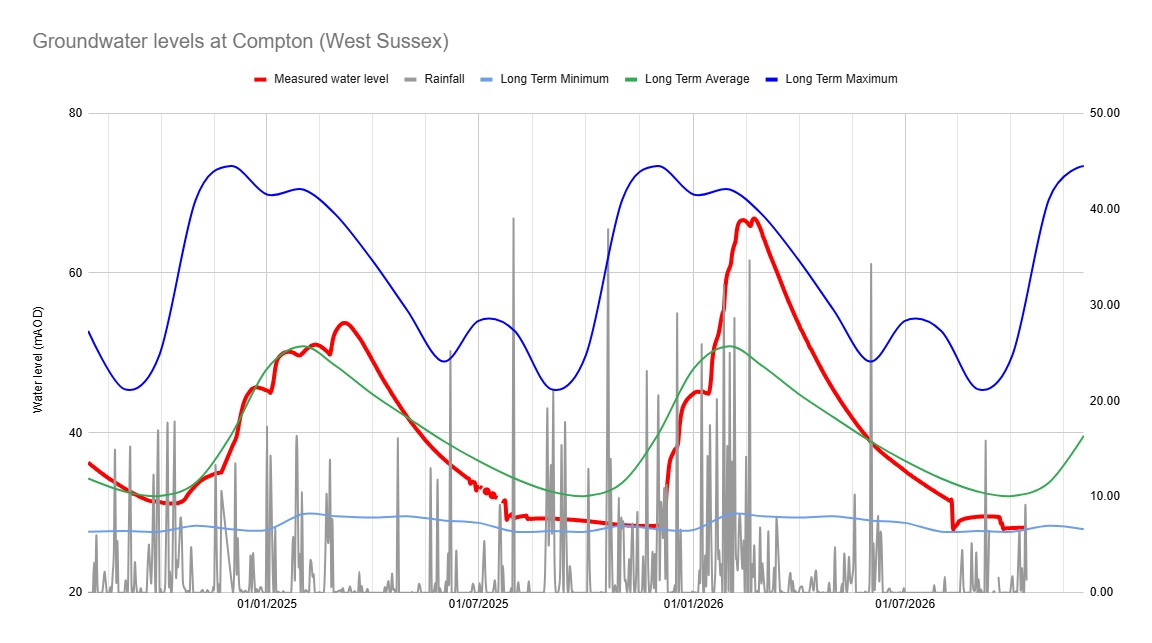
Graph showing changes in groundwater levels in Compton Borehole in West Sussex from August 2024 to October 2026. The graph shows that groundwater levels are currently below average for the time of year and currently stable.
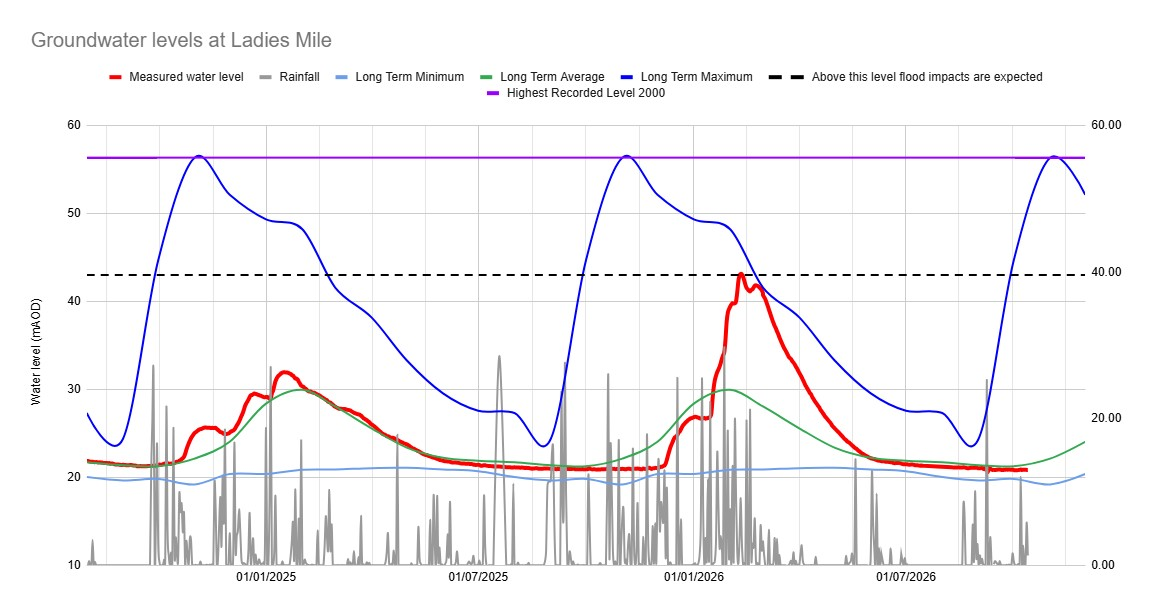
Graph showing changes in groundwater levels in Ladies Mile Borehole near Brighton from August 2024 to October 2026. The graph shows that groundwater levels are currently average for the time of year and currently stable.
Weather forecast
High pressure is predicted to bring settled weather, over the next five days to Tuesday 20 October 2026. Albeit with a few showers possible at times.
Longer term weather forecasting is very difficult. A transition to more changeable or unsettled weather patterns is expected by the start of November with showers or longer spells of rain becoming more likely. All forecasts come with uncertainty, and predictions may change over time.
Forecast risk of flooding
It is very difficult to accurately predict the weather weeks or months ahead, and the forecast will likely change over time. The exact groundwater response will depend on the amount, intensity and distribution of any rainfall that occurs.
Groundwater is expected to initially continue to slowly fall in boreholes, through the remainder of October 2026. No groundwater flood impacts are expected imminently.
On average, groundwater rises in Sussex between November and February, and falls through spring.
If more persistent, or significant, rainfall occurs in November 2026, groundwater could begin to rise. Perhaps from mid November 2026. Although any rise will be dependent on amounts and locations of rain.
Because groundwater is starting from a very low position, groundwater flooding in Sussex this winter is currently thought unlikely.
However, at the start of last winter (2025/2026), groundwater was also very low - and flood impacts were eventually observed. Therefore groundwater flooding could be technically possible this winter, but would require a significant amount of rain.
Next update
We will update this groundwater situation document by Friday 20 November 2026, or sooner if the risk of flooding significantly increases.
When in force, groundwater flood alerts are updated with information more frequently.
What we are doing
We continue to monitor groundwater levels and their response to rainfall.
Throughout autumn and winter, we will update this groundwater situation and our groundwater briefing notes.
We will issue and update flood alerts when there is risk of flooding affecting property.
We liaise with the local authority and other responding partners to ensure they are aware of the situation.
Our operational staff will remove blockages from main rivers, to ensure they flow freely.
Actions and advice
Think and prepare now for what you’ll do if flooding occurs where you live, don’t wait until flooding happens.
Call Floodline on 0345 988 118 or visit check for flooding to find out if you can register to receive free flood alerts for flooding from groundwater.
Look for data in your area:
There is practical advice on what to do before, during and after groundwater flooding, and further guidance about groundwater flooding, how it might affect you and what to do.
Prepare a personal flood plan or community flood plan to help you and your community decide what practical actions to take before and during a flood, which will help reduce the damage flooding could cause.
Check pumps and any other flood protection equipment you have. Ensure valuables are moved from basements and other low parts of properties.
Where safe to do so, communities may wish to check and ensure there are no blockages in local watercourses and ditches.
Further information
You can view:
- daily groundwater levels compared to average and maximum, with indicative impact thresholds
- sub daily groundwater levels on Gaugemap
- the latest flood alert information
- water situation reports
More detailed groundwater briefing notes are emailed as part of the flood alert service. See contacts section below to register your email address.
Contacts
For more information on the flood alert service and to find out what messages you are registered to receive, call Floodline on 0345 988 118.
Alternatively, you can contact the following for additional information:
- Environment Agency Customers and Engagement: ssdenquiries@environment-agency.gov.uk
- Environment Agency Incident Reporting Hotline: 0800 807060
- Environment Agency National Customer Contact Centre: 03708 506 506