STI Prioritisation Framework: Monitoring and Evaluation Plan
Published 28 May 2026
Applies to England

© Crown copyright 2026
This publication is licensed under the terms of the Open Government Licence v3.0 except where otherwise stated. To view this licence, visit nationalarchives.gov.uk/doc/open-government-licence/version/3 or write to the Information Policy Team, The National Archives, Kew, London TW9 4DU, or email: psi@nationalarchives.gov.uk.
Where we have identified any third party copyright information you will need to obtain permission from the copyright holders concerned.
This publication is available at https://www.gov.uk/government/publications/sti-prioritisation-framework-monitoring-and-evaluation-plan/sti-prioritisation-framework-monitoring-and-evaluation-plan
Introduction
Aim
In October 2024, the UK Health Security Agency (UKHSA) published the STI (sexually transmitted infection) Prioritisation Framework (STI-PF), an evidence-based framework that provides stakeholders responsible for all aspects of sexual health service (SHS) planning with a clear process for prioritisation within existing resource and commissioning arrangements. The aim of this Monitoring and Evaluation Plan (MEP) is to track progress towards achieving the intended impacts outlined in the STI-PF. These impacts are to prevent adverse health outcomes and address health inequalities.
Scope
This MEP sits alongside other relevant priorities and frameworks across sexual health (see STI Prioritisation Framework). HIV outcomes are out of scope of this MEP and are addressed separately through the HIV Action Plan and associated monitoring and evaluation framework.
Plan for data publication
Subject to further development and approval, UKHSA intends for outputs informed by this MEP to be produced on an annual basis. However, decisions regarding the timing, format and level of access (for example, national summaries and/or restricted access outputs to support local use) have yet to be finalised. Initial outputs are expected to focus on providing a descriptive overview of the selected indicators, with inclusion of historic trends where feasible to aid interpretation.
Supporting implementation
This MEP forms part of a wider approach to implementing the STI‑PF. A dedicated Implementation Workstream, facilitated by the regional UKHSA Sexual Health Facilitator (SHF) team, provides support to local areas to apply the framework within existing SHS planning and commissioning arrangements. Outputs from this MEP may be used alongside this support to inform local prioritisation and reprioritisation decisions where appropriate. Intervention‑specific monitoring and evaluation templates are also available to support local areas in the assessment of individual activities and interventions (see STI Prioritisation Framework Appendix 5).
Approach to indicator selection
The most direct way to measure progress is to assess the intended impacts themselves. Therefore, the first section of this document sets out a series of impact indicators designed to do exactly that. Achieving these impacts depends on a series of upstream steps or pre-requisites. Monitoring these pre-requisites helps us understand why we are or are not achieving the intended impacts.
The STI-PF logic model identifies 4 broad pre-requisites:
- prevent new infections
- diagnose existing infections
- manage diagnosed infections
- alert, detect and respond
Each is underpinned by a set of intervention domains: broad categories of interventions that, when implemented effectively, form part of the process of achieving the pre-requisites and, ultimately, the intended impacts. To monitor these upstream factors, we have identified a set of process indicators mapped to each intervention domain. These process indicators are outlined in the second part of this document.
STIs represent a broad and complex topic area. To comprehensively capture every intervention for every STI would require an extensive set of indicators. Monitoring such a large and detailed list would be impractical, resource-intensive, and unlikely to provide actionable insights. Thus, indicators have been chosen not to be comprehensive, but to be representative and selective, enabling us to monitor trends spanning the different areas of the STI-PF. This does not mean other measures are unimportant; rather, we have focused on a small set that we judge will act as early flags or proxies for wider system progress towards achieving our intended impacts. This approach ensures feasibility while still providing meaningful insights into progress.
Summary of indicators
The indicators have been aligned with the logic model in Appendix 5 of the STI-PF and are grouped into:
- impact measures (adverse health outcomes and health inequalities)
- process measures (spanning each intervention domain set out in the STI-PF)
- context and interpretation (C) measures (provide necessary context to interpret impact and process indicators)
For each indicator, this plan sets out:
- rationale
- technical definition
- numerator
- denominator
- calculation method
- breakdown
- desired direction of travel
- data source
Data sources
Many of the indicators are derived from existing STI surveillance systems and other data sets and are intended to be interpreted alongside these sources. This includes, but are not limited to, routinely published STI annual data and Fingertips Sexual and Reproductive Health Profiles which remain the primary sources of detailed epidemiological information.
Level of breakdown
The level of breakdown is determined in most cases by the volume and availability of data. Where numbers are small, higher level or national figures may be presented.
Indicators under development or not currently feasible
Some indicators are not currently reported to national surveillance systems (time to treatment, partner notification (PN)) and will require new analyses of secondary data sources (education and empowerment, condom use, access to SHS).
While we have endeavoured to include an indicator for every intervention domain, this has not been fully possible due to current data limitations (as outlined above). These indicators remain desirable for future inclusion but cannot yet be measured using available data. These indicators and their current status are:
- condom use: this is currently in development and we are exploring appropriate and sustainable data sources (see Indicator 2.1.2)
- time to treatment: this is not currently measurable within existing national surveillance systems (see Indicator 2.3.1)
- PN: this is not currently measurable using current national surveillance systems (see Indicator 2.3.2)
Indicator level data specification
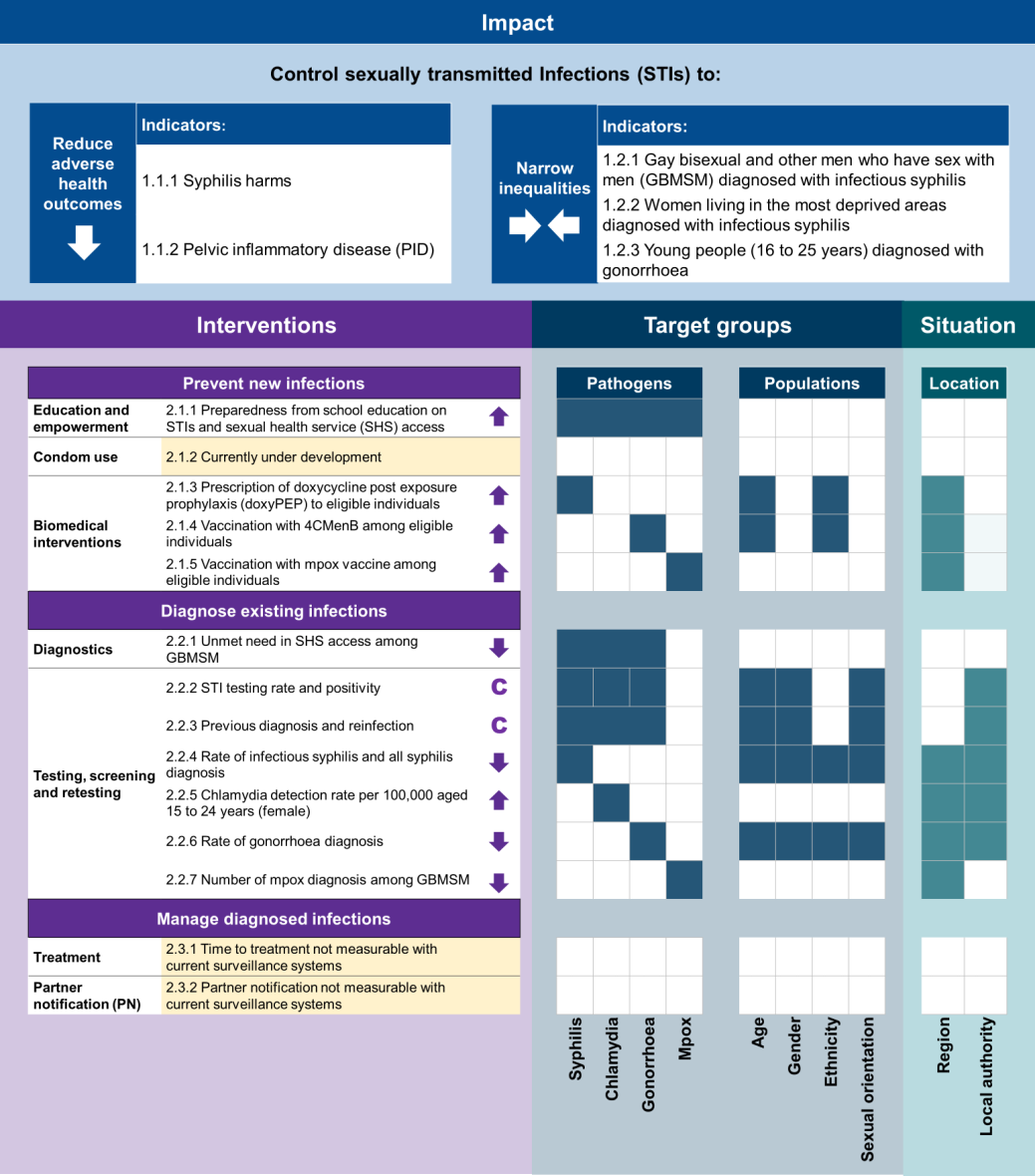
Figure 1 provides an overview of indicators outlined in this MEP and demonstrates how they correspond to the different components of the ‘S.T.I.’ (‘S’ (situation), ‘T’ (target groups) and ‘I’ (interventions)) logic model presented in the STI-PF Appendix 5. The information presented in the figure is summarised below and is detailed more comprehensively in subsequent indicator tables.
Impact indicators, focused on reducing adverse health outcomes and narrowing inequalities
Reduce adverse health outcomes:
- 1.1.1 Syphilis harms
- 1.1.2 Pelvic inflammatory disease (PID)
Narrow inequalities:
- 1.2.1 Gay, bisexual and other men who have sex with men (GBMSM) diagnosed with infectious syphilis
- 1.2.2 Women living in the most deprived areas diagnosed with infectious syphilis
- 1.2.3 Young people (aged 16 to 25 years) diagnosed with gonorrhoea
Process indicators, spanning each intervention domain of the STI-PF
Prevent new infections:
- 2.1.1 Preparedness from school education on STIs and SHS access
- 2.1.2 Condom use (currently under development)
- 2.1.3 Prescription of doxycycline post exposure prophylaxis (doxyPEP) among eligible individuals
- 2.1.4 Vaccination with 4 component meningococcal group B vaccine (4CMenB) among eligible individuals
- 2.1.5 Vaccination with mpox vaccine among eligible individuals
Diagnose existing infections:
- 2.2.1 Unmet need in SHS access among GBMSM
- 2.2.2 Testing rate and positivity
- 2.2.3 Previous diagnosis and reinfection
- 2.2.4 Rate of infectious syphilis and all syphilis diagnosis
- 2.2.5 Chlamydia detection rate per 100,000 population aged 15 to 24 years (female)
- 2.2.6 Rate of gonorrhoea diagnoses
- 2.2.7 Number of mpox diagnoses among GBMSM
Manage diagnosed infections:
- 2.3.1 Time to treatment (not measurable with current surveillance systems)
- 2.3.2 PN (not measurable with current surveillance systems)
Figure 1, all the arrows indicate desired direction of travel. The letter ‘C’ indicates that the corresponding indicator is included for context and interpretation of other indicators and thus does not have a desired direction of travel. Shading of boxes underneath the headings of ‘Target groups’ and ‘Situation’ show possible data breakdowns. Where boxes are merged under the ‘Pathogen’ subheading, this indicates that a single value would be given across all pathogens indicated, rather than individual breakdowns by pathogen.
Figure 1. An overview of MEP indicators and their correspondence to the different components of the ‘S.T. I .’ logic model in the STI-PF
1. Impact indicators
1.1 Indicators to monitor progress towards reducing adverse health outcomes
1.1.1 Syphilis harms
Quantifying syphilis harms will draw on a range of different sources to collate the available evidence and data from diagnoses and management both within and outside of SHS. Many syphilis harms will be detected or managed outside of SHS as they affect a range of body organs including the eyes, heart and brain. Babies and infants affected by congenital syphilis are managed by paediatric services. Some syphilis harms can be irreversible and severe. Improving understanding of the extent of these harms is important but challenging due to the range of presentations and the diversity of services that manage them.
Indicator 1.1.1. Syphilis harms: technical details
| Details | |
|---|---|
| Technical definition | Data and evidence concerning the occurrence and burden of untreated syphilis: - congenital syphilis - hospital admissions related to complications of secondary and late syphilis - outpatient diagnoses of complications of secondary and late syphilis |
| Numerator | Not applicable |
| Denominator | Not applicable |
| Calculation method | Not applicable |
| Breakdowns | National level trends over time |
| Desired direction | Decreasing |
| Data source | Hospital Episode Statistics; GUMCAD, published studies, grey literature; Integrated Screening Outcomes Surveillance Service (congenital syphilis) |
1.1.2 PID
Bacterial STIs (chlamydia, gonorrhoea, mycoplasma) are a recognised cause of PID. This syndrome causes substantial morbidity and is on the causal pathway to ectopic pregnancy and tubal factor infertility. Effective targeted control of bacterial STIs can and is intended to reduce these harms. The measure chosen focuses on PID that is most likely to be a consequence of a bacterial STI.
Indicator 1.1.2. PID: technical details
| Details | |
|---|---|
| Technical definition | Diagnosis rate of PID in women aged 15 to 44 years old attending SHS ÷ 100,000 population |
| Numerator | Diagnoses of PID in women aged 15 to 44 years attending SHS |
| Denominator | Female population aged 15 to 44 years |
| Calculation method | Numerator ÷ denominator × 100,000 |
| Breakdowns | National level trends over time |
| Desired direction | Decreasing |
| Data source | GUMCAD, Office for National Statistics (ONS) |
1.2 Indicators to monitor progress towards narrowing inequalities
This section sets out a series of indicators designed to measure whether disparities in STI burden are reducing over time. Our goal for reducing inequalities is to reduce rates in those populations experiencing the greatest burden of adverse health outcomes from STIs. Evidence consistently shows that certain population groups disproportionately experience higher STI diagnosis rates, including GBMSM, young people and people living in the most deprived areas including some Black ethnic populations.
Below you will find three indicators for measuring inequalities, one for GBMSM, young people and people living in the most deprived areas. These indicators will highlight details within the overall epidemiology of STIs that may be hidden by looking at the total trends.
1.2.1 GBMSM diagnosed with infectious syphilis
GBMSM experience disproportionately high rates of syphilis infection compared with other population groups, accounting for approximately two thirds of cases. Rates of syphilis have been increasing for over 2 decades and diagnoses of early stage (infectious) syphilis in GBMSM have exceeded 5,000 each year since 2017. Over this period there have also been over 800 late-stage diagnoses every year in GBMSM and an increasing number of complications such as ocular and otosyphilis made in SHS. The rationale for including an indicator on syphilis in GBMSM thus rests on its ability to highlight inequalities in a group experiencing a disproportionate burden of infection both in terms of rates and clinical outcomes. Furthermore, syphilis prevention measures, frequent testing and doxyPEP, are targeted at GBMSM. Reduction in the rate of new diagnoses of infectious syphilis (with sustained testing rates) may indicate that prevention measures are having an impact.
Indicator 1.2.1. GBMSM diagnosed with infectious syphilis: technical details
| Details | |
|---|---|
| Technical definition | Rate difference between GBMSM diagnosed with infectious syphilis vs rest of those diagnosed with infectious syphilis among population attending SHS |
| Numerator | Numerator for inequality group: GBMSM diagnosed with infectious syphilis in SHS Numerator for comparator group: Rest of those diagnosed with infectious syphilis in SHS |
| Denominator | Denominator for inequality group: population of GBMSM attending SHS Denominator for comparator group: rest of population attending SHS |
| Calculation method | (Numerator for inequality group ÷ denominator for inequality group × 100,000) − (numerator for comparator group ÷ denominator for comparator group × 100,000) |
| Breakdowns | Trends over time, geography (region) |
| Desired direction | Rate difference decreasing AND rate in comparator group decreasing |
| Data source | GUMCAD, ONS |
1.2.2 Women living in the most deprived areas diagnosed with infectious syphilis
Diagnosis rates of syphilis are consistently highest among people living in more deprived areas. The distribution of diagnoses towards areas of highest index of multiple deprivation (IMD) for women diagnosed in SHSs is more evident for syphilis than it is for other STIs. In addition to the adverse health outcomes listed in the section above, in women and other people with a womb or ovaries, there is also the potential for the vertical transmission of Treponema pallidum (the bacteria that causes syphilis) during pregnancy or birth. This can lead to major health impacts including miscarriage, stillbirth and congenital syphilis.
Syphilis diagnoses in heterosexual women have been increasing, and so have diagnoses of congenital syphilis. Investigation of localised increases have identified instances of multiple social and economic disadvantages including financial difficulties, housing concerns and incarceration among those affected. Prevention actions have included focussing on women in prison and case finding has used outreach to vulnerable populations. The rationale for including an indicator on syphilis in women living in deprived areas thus rests on its ability to highlight inequalities in a group experiencing a disproportionate burden of infection both in terms of rates and clinical outcomes and to also indicate whether prevention measures are having an impact.
Indicator 1.2.2. Women living in the most deprived areas diagnosed with infectious syphilis: technical details
| Details | |
|---|---|
| Technical definition | Rate difference between women living in the most deprived 40% of the country with infectious syphilis vs rest of those diagnosed with infectious syphilis |
| Numerator | Numerator for inequality group: women living in the most deprived 40% of the country (areas categorised as IMD quintiles 1 and 2) diagnosed with infectious syphilis Numerator for comparator group: rest of those diagnosed with infectious syphilis |
| Denominator | Denominator for inequality group: population of women living in the most deprived 40% of the country (areas categorised as IMD quintiles 1 and 2) Denominator for comparator group: rest of general population |
| Calculation method | (Numerator for inequality group ÷ denominator for inequality group × 100,000) − (numerator for comparator group ÷ denominator for comparator group × 100,000) |
| Breakdowns | Trends over time, geography (region) |
| Desired direction | Rate difference decreasing AND rate in comparator group decreasing |
| Data source | GUMCAD, ONS |
1.2.3 Young people (aged 15 to 24 years) diagnosed with gonorrhoea
Gonorrhoea can lead to a range of adverse health outcomes when left undiagnosed and untreated, including reproductive health harms such as PID, infertility, and complications in future pregnancies. These harms are especially significant for adolescents and young adults because they occur at a life stage when future fertility is most relevant. At the same time, the burden of disease in this age group is disproportionately high. Although 15 to 24 year olds make up only around 12% of the population, they account for around one third of all gonorrhoea cases. In women (52% of gonorrhoea diagnoses are 15 to 24 years old).
Together, these factors provide a strong rationale for including an inequalities indicator for gonorrhoea in young people: they experience disproportionately high infection rates and uniquely significant, lifelong reproductive health consequences if infections are missed or untreated. Furthermore, rates of gonorrhoea are a good marker of the burden of STIs more generally in a local area. Reduction in the rate of gonorrhoea in young people will indicate that prevention measures (condom schemes, education and empowerment and young person specific services) are having an impact.
Indicator 1.2.3. Young people (aged 15 to 24 years) diagnosed with gonorrhoea: technical details
| Details | |
|---|---|
| Technical definition | Rate difference between 15 to 24 year olds diagnosed with gonorrhoea vs rest of those diagnosed with gonorrhoea |
| Numerator | Numerator for inequality group: 15 to 24 year olds diagnosed with gonorrhoea Numerator for comparator group: rest of those diagnosed with gonorrhoea |
| Denominator | Denominator for inequality group: population aged 15 to 24 years Denominator for comparator group: rest of general population |
| Calculation method | (Numerator for inequality group ÷ denominator for inequality group × 100,000) − (numerator for comparator group ÷ denominator for comparator group × 100,000) |
| Breakdowns | Trends over time, sex and/or gender, geography (region) |
| Desired direction | Rate difference decreasing AND rate in comparator group decreasing |
| Data source | GUMCAD, ONS |
2. Process indicators
2.1 Indicators to monitor progress towards preventing new infections
2.1.1 Preparedness from school education on STIs and SHS access
Evidence consistently shows that high-quality sex education delivers positive health outcomes. Research among HIV-negative GBMSM also shows that individuals with poorer STI knowledge are less likely to test for STIs. Education and empowerment are difficult to measure quantitatively because they are broad domains and there is no gold-standard metric. Relationships and Sex Education (RSE) in schools is a key early intervention.
The Sex Education Forum conducts an annual poll of approximately 1,000 young people aged 16 to 17 years, recruited through established commercial online panel providers. The poll assesses young people’s experiences of school-based RSE and includes the following 2 questions of relevance to this indicator: ‘At school, did you learn everything you feel you needed to know about the following:
-
STIs?
-
How to access local SHSs?
Available responses are as follows:
- ‘Yes (I learnt all I needed to about this)’
- ‘Some but not enough’
- ‘I didn’t learn about this at all’
Whilst acknowledging that this is quite a broad question and limited to 16 to 17 year olds, the above questions do provide some measure of education on STIs. Thus, in the absence of national surveillance data, we will use findings from this poll as a proxy measure.
Indicator 2.1.1. Preparedness from school education on STIs and SHS access: technical details
| Details | |
|---|---|
| Technical definition | Proportion of respondents indicating that at school they learnt all they needed to about STIs and about how to access local SHS |
| Numerator | Number of survey respondents who answered ‘yes (I learnt all I needed to about this)’ to the following questions: ‘At school, did you learn everything you feel you needed to know about the following: 1. STIs? 2. How to access local SHSs? |
| Denominator | Number of survey respondents who answered the following questions: ‘At school did you learn everything you needed to know about the following: 1. STIs? 2. How to access local SHS? |
| Calculation method | Numerator ÷ denominator × 100 (%) |
| Breakdowns | Trends over time |
| Desired direction | Increasing |
| Data source | Sex Education Forum Young People’s RSE Poll |
2.1.2 Condom use: indicator currently under development
Condoms, when used correctly and consistently, are effective at preventing transmission of STIs spread through bodily fluids, including chlamydia, gonorrhoea and trichomoniasis. Condoms reduce but do not eliminate the risk of transmission of STIs spread through skin-to-skin contact and via sores, cuts or uncovered skin, including human papillomavirus (HPV), genital herpes and syphilis. Data on condom use is difficult to measure, because it relies upon self-reported data, with inconsistent reporting across different populations and contexts. UKHSA is currently assessing the most appropriate measure for this indicator.
2.1.3 Prescription of doxyPEP to eligible individuals
Prescribable by SHSs since mid-2025, doxyPEP is potentially highly effective against syphilis and recommended for eligible GBMSM and transgender women. Monitoring the uptake, effectiveness and impact of doxyPEP is an important part of evaluation and for advocating its use for public health. Understanding the uptake of doxyPEP is important to interpret trends in syphilis diagnoses, and syphilis harms.
Indicator 2.1.3. Prescription of doxyPEP to eligible individuals: technical details
| Details | |
|---|---|
| Technical definition | Number of people and/or attendances where doxyPEP prescribed |
| Numerator | Number of people and/or attendances where doxyPEP prescribed |
| Denominator | Not applicable |
| Calculation method | Count |
| Breakdowns | Trends over time, age, ethnicity, geography (region) |
| Desired direction | Increasing initially following implementation, thereafter sustained at benchmark with equitable coverage (benchmark to be determined) |
| Data source | GUMCAD |
2.1.4 Vaccination with 4CMenB among eligible individuals
4CMenB vaccine is potentially moderately effective against gonorrhoea and recommended for GBMSM at highest risk of infection. A routine national programme delivered in SHSs was introduced in August 2025 for eligible individuals, primarily GBMSM at highest risk of infection. Monitoring uptake, effectiveness and impact is important for any vaccination programme. Understanding the uptake of 4CMenB vaccine is important to interpret trends in gonorrhoea diagnoses and gonorrhoea harms.
Indicator 2.1.4. Vaccination with 4CMenB among eligible individuals: technical details
| Details | |
|---|---|
| Technical definition | Cumulative number of 4CMenB vaccines given |
| Numerator | Number of people vaccinated with 4CMenB dose 1 Number of people vaccinated with 4CMenB dose 2 |
| Denominator | Not applicable |
| Calculation method | Count |
| Breakdowns | Trends over time, age, ethnicity, geography (region) |
| Desired direction | Increasing initially following implementation, thereafter sustained at benchmark with equitable coverage (benchmark to be determined) |
| Data source | GUMCAD |
2.1.5 Vaccination with mpox vaccine among eligible individuals
Following targeted vaccination of GBMSM at higher risk of mpox in response to the global outbreak of mpox in 2022, a routine national mpox immunisation programme delivered in SHSs for GBMSM at highest risk of infection was introduced in 2025. Monitoring uptake, effectiveness (including durability of protection) and impact is important for any vaccination programme. Understanding the uptake of mpox vaccine is important to interpret trends in mpox infections.
Indicator 2.1.5. Vaccination with mpox vaccine among eligible individuals: technical details
| Details | |
|---|---|
| Technical definition | Cumulative number of mpox vaccines |
| Numerator | Number of people vaccinated with mpox vaccine dose 1 Number of people vaccinated with mpox vaccine, dose 2 |
| Denominator | Not applicable |
| Calculation method | Cumulative count of vaccine doses over time |
| Breakdowns | Trends over time, geography (region) |
| Desired direction | Sustained at benchmark with equitable coverage (benchmark to be determined) |
| Data source | GUMCAD |
2.2 Indicators to measure progress towards diagnosing existing infections
2.2.1 Unmet need in SHS access among GBMSM
Access to SHSs for STI diagnosis and treatment is a key determinant in preventing onward transmission of STIs. Delays in access allow pathogens to persist longer, increasing the likelihood of exposing partners to infection and onwards transmission.
Data for this indicator will be sourced from the Reducing Inequalities in Sexual Health (RiiSH) surveys. RiiSH is a programme of serial, online, anonymous, cross‑sectional surveys focused on understanding and addressing sexual health inequalities among GBMSM living in the UK. Participants are recruited via social networking and/or dating platforms. The RiiSH surveys collect information on sexual health, sexual behaviour, wellbeing, and access to HIV and STI prevention and care among GBMSM living in the UK. They aim to generate timely, community-informed evidence to support equitable access to SHSs and interventions for STIs and HIV, including HIV and STI testing, mpox vaccination, HIV PrEP and doxyPEP. The first RiiSH survey was conducted in 2017, and since 2020 has been conducted regularly, with 9 survey rounds completed by end 2025.
Indicator 2.2.1. Unmet need in SHS access among GBMSM: technical details
| Details | |
|---|---|
| Technical definition | Unmet need: proportion of GBMSM who tried but failed to access in-person care at SHSs in the past year |
| Numerator | Number of GBMSM who tried but failed to access in-person SHSs in the year preceding the survey |
| Denominator | Number of GBMSM who tried to access in-person care at SHSs in the year preceding the survey |
| Calculation method | Numerator ÷ denominator × 100 (%) |
| Breakdowns | Trends over time, geography (London vs outside London) |
| Desired direction | Benchmark: British Association for Sexual Health and HIV (BASHH) Standards for STI Management |
| Data source | RiiSH online survey of GBMSM |
2.2.2a STI testing rate and 2.2.2b STI testing positivity
a) STI testing rate and b) STI testing positivity provide complementary information to interpret trends in STI diagnoses rates. They can be used together to help examine changes in STI diagnoses over time, differences between geographic areas or between different population groups. Such differences are influenced both by the relative burden of infection and the extent and targeting of STI testing.
Test positivity can be indicative of whether testing is reaching and finding ‘the right’ people in terms of case-finding, infection control and harm prevention. For example, testing online, in person, or linked to PN show a gradient (higher to lower for numbers tested; lower to higher for positivity). Positivity also varies according to the mix of symptomatic and asymptomatic individuals who are testing.
Gender, sexual orientation and pathogen variations are important to understand alongside different testing policies, different epidemiology and other interventions available. Positivity is a measure that can, in context, help to optimise prevention by testing the right people for the right infection at the right time and inversely help assure that testing is not being used inappropriately or ineffectively.
STI testing rate and STI testing positivity are composite indicators combining tests for chlamydia, syphilis, gonorrhoea and HIV, which are the standard STI tests recommended for individuals attending for a new episode of STI related care if indicated by the sexual history. The indicators exclude chlamydia testing and positivity in women aged 24 years and under as this is measured as part of the national chlamydia screening programme (and published as part of the STI annual data publications) and testing is opportunistically offered to this population.
Indicator 2.2.2a. Testing rate: technical details
| Details | |
|---|---|
| Technical definition 2.2.2a | Tests for syphilis, HIV, gonorrhoea and chlamydia (individuals aged 25 years and over) among people accessing SHSs in England |
| Numerator | Total number of people tested for one or more of syphilis, HIV, gonorrhoea and chlamydia infections [note 1] at a new consultation |
| Denominator | Population all ages |
| Calculation method | Numerator ÷ denominator × 100,000 (rate) |
| Breakdowns | Age, gender, sexual orientation groups, geography (local authority area of residence) |
| Desired direction | Not applicable: context and interpretation only |
| Data source | GUMCAD |
Note 1: except for chlamydia in women aged 24 years and under.
Indicator 2.2.2b. STI testing positivity: technical details
| Details | |
|---|---|
| Technical definition 2.2.2b | New STI diagnoses (excluding chlamydia in aged 24 years and under) among people accessing SHSs in England, expressed as a percentage of people who have had one or more tests for any of chlamydia, gonorrhoea, syphilis or HIV infections among the population |
| Numerator | The sum of all positive diagnoses of gonorrhoea, syphilis, HIV and chlamydia [note 2] |
| Denominator | Total number of people tested for one or more infections for syphilis, HIV, gonorrhoea and chlamydia [note 2] at a new consultation |
| Calculation method | Numerator ÷ denominator × 100 (%) |
| Breakdowns | Age, gender, sexual orientation groups, geography (local authority area of residence) |
| Desired direction | Not applicable: context and interpretation only |
| Data source | GUMCAD |
Note 2: except for chlamydia in women aged 24 years and under.
2.2.3 Previous diagnosis and reinfection
Re-infection and/or repeat infection can identify a key group who may account for a high proportion of overall STIs diagnosed and may consequently experience a disproportionate burden of harms (including from multiple episodes of antibiotic treatment). Reinfection with an STI suggests ongoing contact with undiagnosed or untreated partners or a high burden of infection within a population. A recent previous diagnosis of a bacterial STI is used as a proxy to define eligibility for targeted interventions (mpox vaccine, doxyPEP, 4CMenB etc). Repeat infections with chlamydia and/or gonorrhoea increase the likelihood of complications including development of PID. Geographical or demographic variation may indicate issues with knowledge of or access to services.
Indicator 2.2.3. Previous diagnosis and reinfection: technical details
| Details | |
|---|---|
| Technical definition | Percentage of individuals previously diagnosed with an STI within 12 months |
| Numerator | Number of people with a further STI diagnoses within 12 months of a previous diagnoses made in a 5-year window period (current year − 6 years to current year − 1 year) |
| Denominator | Number of people with an STI diagnosis within a set 5-year window period (current year − 6 years to current year − 1 year) |
| Calculation method | Numerator ÷ denominator × 100 (%) |
| Breakdowns | Age, gender, sexual orientation groups, geography (local authority area of residence) |
| Desired direction | Not applicable: context and interpretation only |
| Data source | GUMCAD |
2.2.4 Rate of infectious syphilis and all syphilis diagnoses
Syphilis is a serious infection which has been increasing, intensifying and becoming more widespread for over 2 decades. It will not resolve without treatment and untreated can lead to irreversible harm to organs (including eyes, brain and heart). Syphilis requires concerted and sustained prevention efforts. Symptoms may be unrecognised, inapparent or disappear over time: thus screening (including antenatal screening) needs to be sustained and regular among those at increased risk.
Syphilis is the primary target for prescription of doxyPEP: thus rate of diagnoses is a key measure of the impact of this new intervention. DoxyPEP is primarily targeted at GBMSM and transgender women and if effective may change the demography of syphilis in England. Monitoring the epidemiology of syphilis will be important to understand the contribution of doxyPEP to syphilis control alongside uptake and effectiveness of testing.
Indicator 2.2.4. Rate of infectious syphilis and all syphilis diagnoses: technical details
| Details | |
|---|---|
| Technical definition | Rate of infectious syphilis and rate of all syphilis diagnoses per 100,000 |
| Numerator | Number of infectious syphilis diagnoses and number of total syphilis diagnoses |
| Denominator | Population all ages |
| Calculation method | Numerator ÷ denominator × 100,000 |
| Breakdowns | Trends over time, age, gender, ethnicity, sexual orientation, geography (region, local authority area of residence) |
| Desired direction | Decreasing (in the context of continued testing and prevention) |
| Data source | GUMCAD |
2.2.5 Chlamydia detection rate per 100,000 aged 15 to 24 years (female)
Chlamydia remains the most commonly diagnosed STI and is associated with PID and other reproductive harms in women. The national chlamydia screening programme is focussed on detecting infection in young women (aged 15 to 24 years) and other people with a womb or ovaries by offering opportunistic screening. The desired direction for the measure is ‘increasing’ as higher rates of detection indicate more effective delivery of screening.
Indicator 2.2.5. Chlamydia detection rate per 100,000 aged 15 to 24 years (female): technical details
| Details | |
|---|---|
| Technical definition | Chlamydia detection rate per 100,000 aged 15 to 24 years (female) |
| Numerator | Number of chlamydia diagnoses (females aged 15 to 24 years) |
| Denominator | Female population aged 15 to 24 years |
| Calculation method | Numerator ÷ denominator × 100,000 |
| Breakdowns | Trends over time, geography (region, local authority area of residence) |
| Desired direction | Increasing |
| Data source | GUMCAD, CTAD |
2.2.6 Rate of gonorrhoea diagnosis
Diagnoses of gonorrhoea are a good indicator of burden of STI infection locally and trends in STIs more generally. Rising rates increase the likelihood of harms from untreated infections and occurrence of rarer serious sequelae (Disseminated Gonococcal Infection (DGI), Gonococcal keratoconjunctivitis (GKD) and ophthalmia neonatorum). Gonorrhoea is a cause of PID and other reproductive harms. It is a major concern for antimicrobial resistance.
The infection is symptomatic in 90% of men and 50% of women with genital infection and is mostly asymptomatic at other sites. Current epidemiological distribution is approximately 50% among GBMSM and 50% among heterosexual men and women. Interventions include testing and treatment (according to guidelines) and from 2025 4CMenB vaccination targeted at GBMSM with the highest risk of infection. Gonorrhoea has also proven sensitive to wider system changes (such as improvements in test-treatment turnaround time) and service disruptions (such as COVID-19 lockdowns).
Indicator 2.2.6. Rate of gonorrhoea diagnosis: technical details
| Details | |
|---|---|
| Technical definition | Rate of gonorrhoea diagnoses per 100,000 |
| Numerator | Number of gonorrhoea diagnoses |
| Denominator | Population all ages |
| Calculation method | Numerator ÷ denominator × 100,000 |
| Breakdowns | Trends over time, age, gender, ethnicity, sexual orientation, geography (region, local authority area of residence) |
| Desired direction | Decreasing (in the context of continued testing and prevention) |
| Data source | GUMCAD |
2.2.7 Number of mpox diagnosis among GBMSM
Monitoring the number of mpox diagnoses is an important indicator of the level of control being achieved and the coverage of vaccination among those targeted as eligible.
Indicator 2.2.7. Number of mpox diagnosis among GBMSM: technical details
| Details | |
|---|---|
| Technical definition | Count of mpox diagnoses among GBMSM |
| Numerator | Number of mpox diagnoses |
| Denominator | Not applicable |
| Calculation method | Count |
| Breakdowns | Trends over time, geography (region) |
| Desired direction | Decreasing (in the context of continued testing and prevention) |
| Data source | Mpox surveillance system, GUMCAD |
2.3 Indicators to measure progress towards managing diagnosed infections
2.3.1 Time to treatment
Prompt testing and treatment for STIs in those at risk is a key determinant in preventing onward transmission of STIs. Delays in testing and treatment allow pathogens to persist longer, increasing the likelihood of exposing partners to infection and onwards transmission. Conversely, shortening the interval between infection, diagnosis and treatment is a highly effective strategy to interrupt and limit STI transmission, as it shortens the infectious period and thus reduces the window in which infection can be transmitted. Timely diagnosis and treatment are central to reducing acquisition and spread, particularly in groups at higher risk where transmission dynamics are accelerated. BASHH carried out relevant audits in 2011 and 2019 and reported challenges in interpreting data submitted by clinics. No more recent data on this indicator are available at the current time.
2.3.2 Partner notification (PN)
PN was ranked highly as an intervention by all expert contributors to the Delphi process within the STI prioritisation framework. PN is recommended for most bacterial infections as well as HIV and hepatitis A and B. It contributes to STI control by case finding among those known to have been exposed to infection. It thus prevents onward transmission, re-infection and potential harms from untreated infection. The PN process has additional benefits of health promotion and offer of other sexual and reproductive healthcare as appropriate. While BASHH standards for PN have been defined and published it is difficult to define an indicator that works well and is interpretable to measure impact, implementation or success of PN at a national level using routinely collected data. Thus, while acknowledging that it would be desirable to be able to monitor this important activity, we have not included a specific PN indicator at this time.