Sector Skills Needs Assessment – Defence
Updated 6 October 2026

© Crown copyright 2026
This publication is licensed under the terms of the Open Government Licence v3.0 except where otherwise stated. To view this licence, visit nationalarchives.gov.uk/doc/open-government-licence/version/3 or write to the Information Policy Team, The National Archives, Kew, London TW9 4DU, or email: psi@nationalarchives.gov.uk.
Where we have identified any third party copyright information you will need to obtain permission from the copyright holders concerned.
This publication is available at https://www.gov.uk/government/publications/skills-england-annual-skills-report-and-sectoral-skills-needs-assessments-2026/sector-skills-needs-assessment-defence
1. Handling notes
The SNAs use occupations, as defined by Standard Occupation Classification (SOC) codes, to provide an indication of the skills needs for the sectors. These allow for a consistent approach and cross-sector comparison. However, they are an approximation and do not work for all types of employment, particularly in highly specialised and emerging roles. As such, we have expanded our methods by using the newly developed UK Standard Skills Classification to identify the skill areas relevant for priority occupations.
This is the first step for assessing the future demand for skills across key sectors in terms of both occupations and specific skills areas. All estimates of future employment and skills are highly uncertain and their inclusion here is not for making precise forecasts of employment levels. Rather, the aim is to provide information about the general nature of changing employment patterns and their implications for skill requirements. The projections should be regarded as indicative of general trends and orders of magnitude, given the assumptions set out in section 5 below.
The data and methodology used to create the Skills Needs Assessments are set out in the accompanying tables and technical annex published alongside this report.
2. Executive summary
According to analysis by Skills England and the Ministry of Defence, employment demand is set to rise sharply for the 14 priority occupations identified in the defence sector. They are projected to grow by 53,000 workers (58%) between 2025 and 2035. This is in addition to the estimated 29,000 workers expected to leave these priority occupations over that period that need to be replaced, bringing total demand to around 82,000 workers.
Defence’s priority occupations typically require higher than average proficiency in digital literacy, numeracy, learning and investigating, and creating as well as high proficiency in problem solving and decision making, and the majority (87%) of projected additional employment in priority occupations requires workers with qualifications at level 4 and above.
Most of these occupations (12 out of 14) also face demand from other priority sectors, particularly in digital and engineering roles, intensifying the difficulty to attract and retain people in these occupations. There is considerable uncertainty about how AI adoption will affect the demand for roles in the future, particularly in digital roles which are projected to increase the most proportionally.
Priority occupations are already showing signs of high demand, with half of the occupations in critical or elevated demand across the whole economy, and 14% in critical demand, indicating that demand pressures are already acute.
AI is changing some aspects of defence jobs. Skills in demand include the technical skills needed to develop and apply AI systems as well as skills to oversee the responsible and secure adoption of new technologies.
Historically, the education pathways most important to the priority occupations are higher education courses at level 6+, supported by apprenticeships across levels 2 to 5, particularly in digital technology (practitioners). The level 6+ routes split between routes in computing and routes in engineering. The historic data does not capture all training routes: there are now 52 apprenticeships standards aligned to a priority occupation, and skills bootcamps that will also support these occupations.
The growth in training is most heavily concentrated in the digital pathways that support the projected demand in these roles. Important training routes in Digital and Computing saw strong growth in achievements of 40% to 82% between the 2021 to 2022 and 2023 to 2024. Engineering routes have seen lower single digit growth over the same period.
3. Workforce overview and demographics
We define the defence sector as all elements of operations within an organisation that benefit significantly from domestic and/or export defence sales of military industrial capabilities. This definition was developed at the JEDHub Delivery Working Group with cross-government and trade body experts. JEDHub is a sector body which aims to improve understanding of the defence sector’s contribution to the UK economy.
In 2025, it was estimated that the defence sector directly employed 181,500 people across the UK. There is a substantial overlap in the sector with occupations in other sectors, such as the advanced manufacturing sector and the digital and technologies sector.
The government is focused on building stronger pipelines into defence, partly through the introduction of Defence Technical Excellence Colleges, which will specialise in technical education for post-16 learnings in priority subsectors.
The government plans to increase defence spending over the next few years. Nevertheless, the sector is operating with a large degree of uncertainty and we note that projections may change as spending is aligned with the Defence Investment Plan, which will be published in the summer of 2026. Furthermore, the defence sector is particularly sensitive to geopolitical developments and to changes in digital technology, both of which may affect the type and number of roles in the sector.
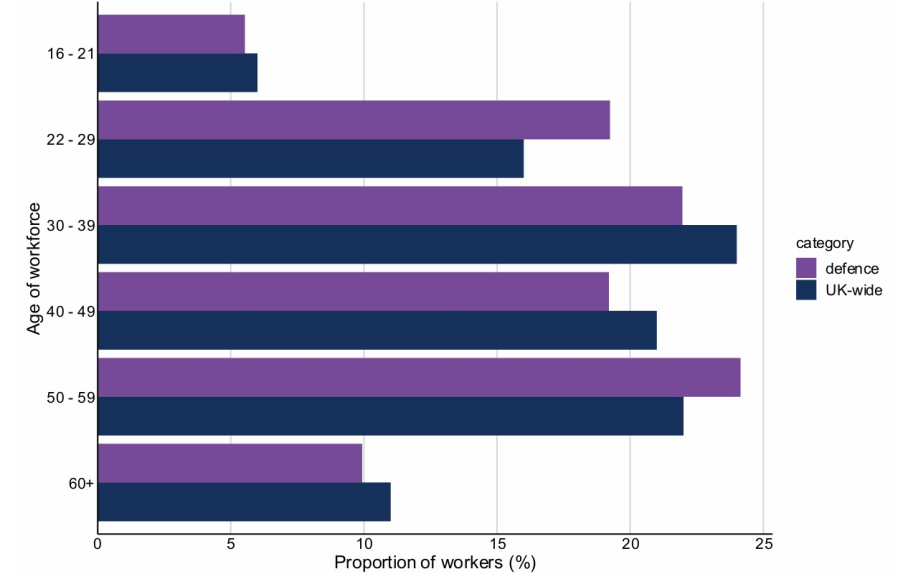
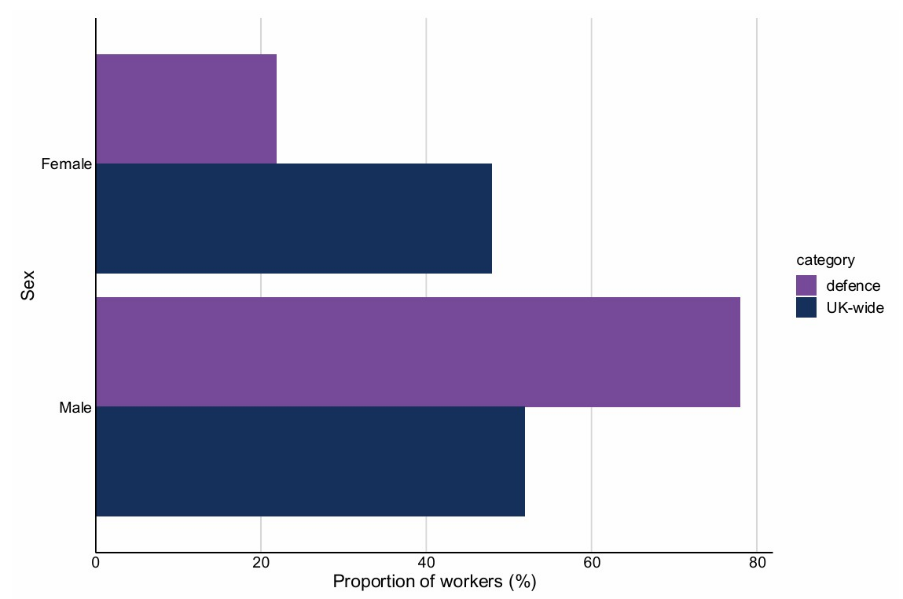
The workforce is male-dominated and the age profile differs to wider UK trends. As seen in Figure 1, based on 2023 data, the number of 30 to 39 year olds and 40 to 49 year olds is notably lower than the UK average, whilst the number of 22 to 29 and 50 to 59 year olds is higher. The largest age group in defence was 50 to 59 (24.1%) in 2023, which was 2.1 percentage points higher the UK average (22.0%). As seen in Figure 2, the workforce in defence was 78% male in 2023, compared to 52% across the UK.
Figure 1: Age distribution for defence compared to UK-wide employment in 2023
Source: JEDHub Annual Economic Report 2025 for Defence, data for the year 2023. Annual Population Survey 2023 for UK average.
Figure 2: Sex distribution for defence workforce compared to UK-wide employment in 2023
Source: JEDHub Annual Economic Report 2025 for Defence, data for the year 2023. Annual Population Survey 2023 for UK average.
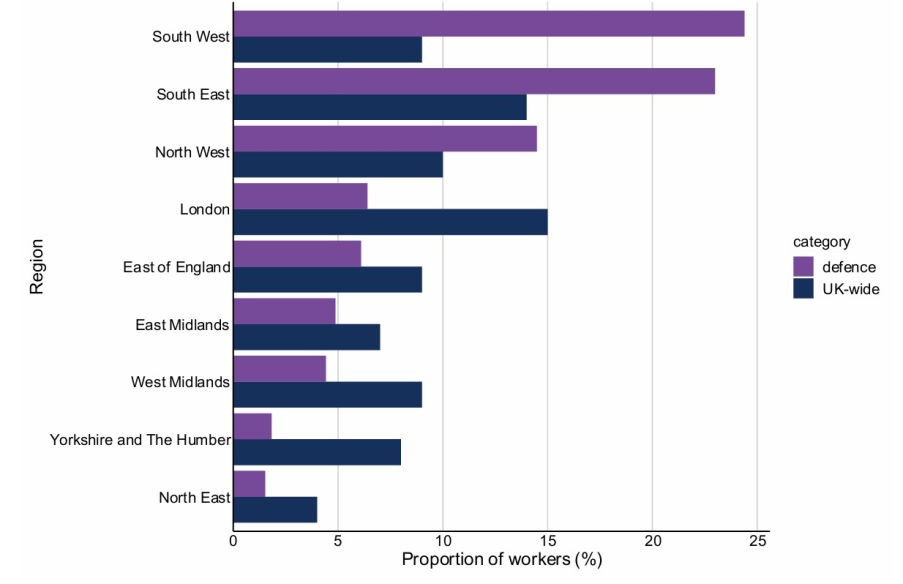
Note: The JEDHub demographics data was collected by UKDSC on 16 companies through the 2024 JEDHub Industry Survey. The demographics data is for the year 2023 and is reported as a proportion of the surveyed Full-Time Equivalent (FTE) people per question. The data might therefore not represent the full survey sample of FTEs and is also not directly comparable with the 181,500 direct employees figure for the sector. Regionally, as shown in Figure 3, the defence workforce in 2023 was most concentrated in the South West (24.4%), 15.4 percentage points higher than the UK average (9.0%).
Figure 3: Regional distribution for defence compared to UK-wide employment in 2023
Source: ADS Defence Sector UK Outlook 2024 - ADS Group for Defence, data for the year 2023. Annual Population Survey 2023 for UK average.
Based on MOD supported employment estimates for 2023/24, MOD-supported employment linked to the defence sector is concentrated in a small number of regions. In 2023/24, the South East and South West recorded the highest numbers of direct jobs supported by MOD expenditure with industry, at around 38,700 and 37,300 respectively. The North West also accounts for a sizeable share (20,100), while the East of England has a smaller but still notable total of 8,200; all other regions each recorded fewer than 10,000 direct roles.
A similar distribution is seen when considering total MOD-supported employment (including civilian and military roles). The South West (96,600) and South East (86,300) again have the largest totals, while the North East (23,200) and East of England (25,100) stand out as important hubs of defence-related employment. All remaining regions fall below 20,000 jobs.
Note: These figures reflect jobs supported as a result of MOD spending, rather than employment within the defence sector itself. Some roles included in these estimates would not be classified as ‘defence’ jobs, and this distinction should be considered when interpreting the figures.
4. Priority occupations
4.1 Priority occupations
Skills England has been working with the Ministry of Defence (MOD) to identify occupations of importance to the defence sector. The priority occupations for defence have been selected as they contain important skills for defence capabilities now and in the future. In some cases, their inclusion responds to specific sub-sector demand or where the MOD has identified evidence of workforce shortages.
There are 14 priority occupations for defence, 12 of which overlap with at least one other sector. In terms of priority occupations, defence overlaps the most with advanced manufacturing, which shares 9 priority occupations.
The sector shares common engineering occupations with other sectors such as advanced manufacturing, clean energy, and digital and technologies. Physical scientists were uniquely identified as a priority occupation in defence, meaning that there is no overlap with priority occupations identified for other priority sectors.
Table 1: Defence priority occupations appearing in at least 2 other sectors
| Occupation | Number of sectors including defence |
|---|---|
| Programmers and software development professionals | 7 |
| IT business analysts, architects and systems designers | 6 |
| Civil engineers | 4 |
| Electrical engineers | 4 |
| Electronics engineers | 4 |
| Production and process engineers | 4 |
| Engineering technicians | 4 |
| Mechanical engineers | 3 |
| Welding trades | 3 |
Of the priority occupations in defence, 14% are in critical demand (substantially higher demand than usual) and 50% are in either critical or elevated demand (above average) This is based on Skills England’s Occupations in demand analysis, published in 2025, and shows that the current demand for these priority occupations is high.
4.2 Demand for skills
The UK’s first Standard Skills Classification (SSC) provides a mapping of relevant skill areas to occupations. Using an initial prototype of the SSC, experimental analysis was conducted to identify the skill areas which are relevant to priority occupations. Across the priority occupations in the defence sector, the top 3 technical skill areas are:
- developing and deploying applications
- designing technical solutions and prototypes
- determining project requirements and plans
Core Skills
The SSC also sets out 13 ‘Core Skills’, which are fundamental abilities that contribute to the capability to carry out the tasks associated with a specific job, such as numeracy, reading, and writing. They are often transferable, meaning they can be applied across different sectors of activity and roles. The SSC provides proficiency scores for core skills by occupation, on a 1 to 5 scale from minimal proficiency to expert proficiency.
The 13 Core Skills defined in the UK Standard Skills Classification (SSC) are listed below. These are foundational, transferable abilities required across occupations, and they are listed explicitly in the SSC Core Skills Explorer.
- planning and organising – setting goals, prioritising tasks, structuring approaches
- adapting – adjusting strategies or behaviour to new or changing situations
- working with others – collaborating effectively with teams or groups
- listening – understanding spoken communication, including non-verbal cues
- speaking – communicating clearly and confidently through speech
- leadership – motivating, guiding, and inspiring others
- learning and investigating – searching for, gathering, and understanding new information
- creating – developing original ideas, innovations, or solutions
- problem-solving and decision-making – identifying issues, analysing information, selecting solutions
- numeracy – applying mathematical techniques and interpreting numerical data
- digital literacy – using digital tools and technologies effectively (including AI)
- reading – interpreting written information accurately
- writing – communicating ideas clearly and persuasively in written form
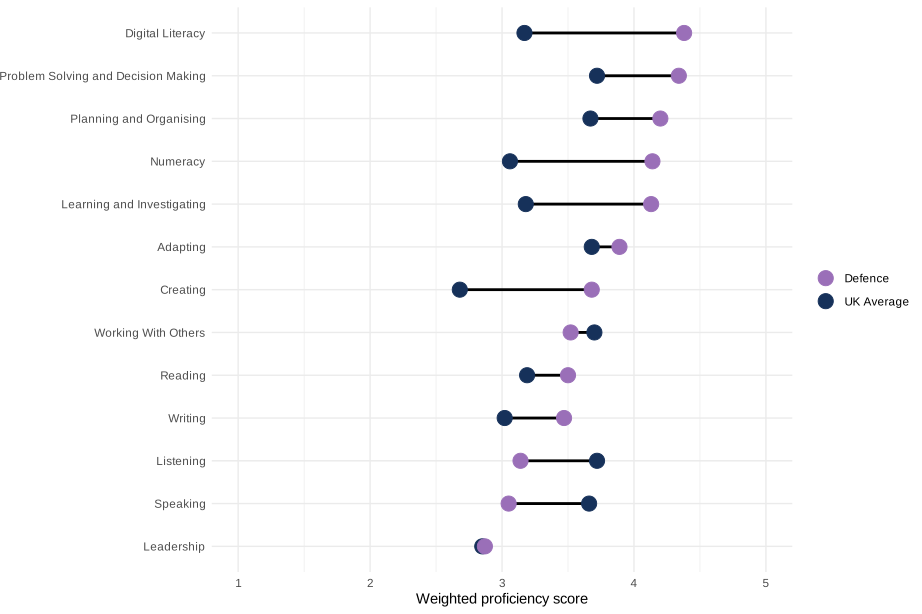
The required proficiency in core skills for priority occupations in defence has been compared to the average across the economy. Where core skills have a higher required proficiency in priority occupations, this suggests that these skills are particularly important for these occupations. The graph below shows which core skills are important for the defence sector compared to the wider UK.
Defence requires notably higher proficiency in the core skills:
- digital literacy (4.4 versus 3.2)
- numeracy (4.1 versus 3.1)
- creating (3.7 versus 2.7)
Figure 4: Core skills proficiency for priority occupations in the defence sector compared to the economy average
Source: Internal analysis using the UK Standard Skills Classification
5. Future demand for priority occupations
Within the defence sector, employment demand for priority occupations is projected to grow by 53,000 (58%) between 2025 and 2035.
Demand was projected using demand estimates from the Assessment of Priority Skills and extrapolating these forward for the period 2030-2035 using compound annual growth rates. The projections included in this publication are provisional as they do not reflect the effect of the forthcoming Defence Investment Plan which will likely change the current pattern of defence spending. We note that the projections may change with the publication of the Defence Investment Plan.
5.1 Top occupations by employment growth to 2035
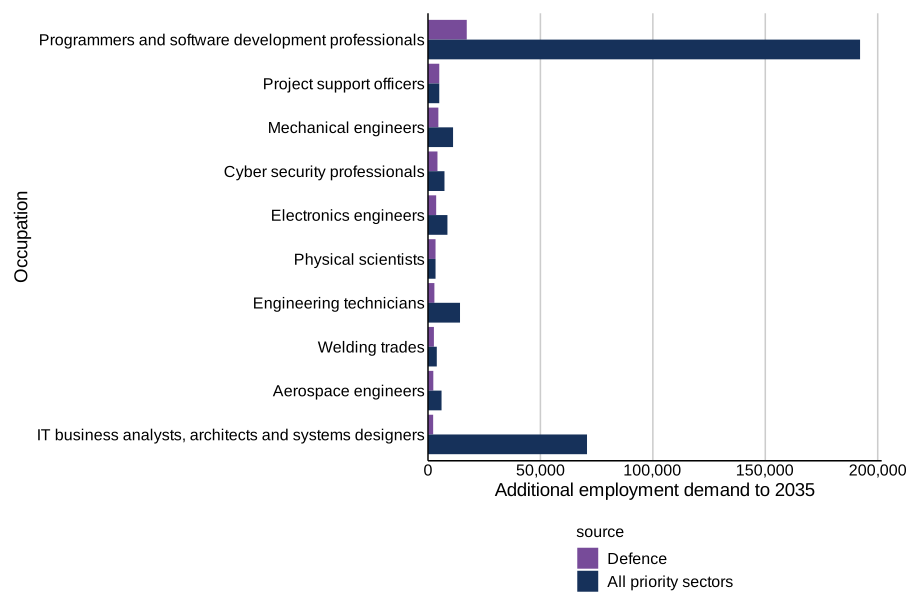
As seen in Figure 5, the occupation with the highest projected employment demand is programmers and software development professionals, with approximately 17,200 additional workers currently estimated to be needed in defence between 2025 and 2035. This occupation also faces demand from other priority sectors. The total projected employment demand for programmers and software development professionals across all priority sectors, including defence, is estimated as 192,200 workers.
Figure 5: Top 10 priority occupations in the defence sector by additional employment to 2035
Source: Demand projections provided by Ministry of Defence
5.2 Expected qualification levels
The majority (87%) of projected additional employment in priority occupations requires workers with qualifications at level 4 and above. As shown in Table 2, this is far higher than across all priority occupations for the 10 priority sectors, where 62% of projected additional employment in priority occupations required workers qualified at level 4 and above.
Table 2: Expected qualification level of workers needed to meet demand to 2035 in priority occupations
| Priority occupations | Level 2 or 3 | Level 4 or above |
|---|---|---|
| Defence priority occupations | 13% | 87% |
| All priority occupations | 38% | 62% |
Source: Skills England planning scenarios based on sector-level projections
5.3 Alternative scenarios
Any future projection of how the economy will evolve is inherently uncertain. This uncertainty increases the further forward the projection extends. To improve the understanding of the uncertainty in the skills assessment projections, Skills England asked the sponsoring department to provide an alternative scenario. The total job growth in the 2 scenarios are shown in Table 3 below.
In the alternative scenario, demand was projected using the 2024 workforce size from the Assessment of Priority Skills and extrapolating this forward based on growth rates drawn from The Skills Imperative economy-wide projections. These economy-wide projections do not capture the planned increase in defence spending, and as such the alternative scenario for defence could be significantly underestimating the future demand for workers.
In the alternative scenario, growth in priority occupations is lower by 44,800 compared to the central scenario. The growth rate in the alternative scenario is 9%, which is 49 percentage points lower than the central scenario.
Table 3: Central and alternative demand scenarios for defence
| Scenario | Increase in employment demand from 2025 to 2035 | Percentage change in employment demand from 2025 to 2035 |
|---|---|---|
| Central | 52,700 | 58% |
| Alternative | 7,900 | 9% |
Numbers rounded to nearest 100
Source: Demand projections from Ministry of Defence
The uncertainty in many of the projections is much greater currently due to the accelerated adopting of AI technology. Such technology will increase the productivity of many jobs and possibly reduce the demand for new workers in affected occupations. The speed of these changes will be uneven across the economy and very uncertain.
The uncertainty caused by AI has been a particular issue for the assessment of the defence sector, not least as digital occupations have seen some of the highest projected growth rates and these occupations are seeing some of the greatest AI-related changes. For the purposes of this assessment, we have not adjusted the projections provided by sector experts to take account of AI adoption as the evidence for changes is not currently strong. Furthermore, the growth in digital occupations is as much to do with the broad digitalisation of many sectors which is well established, as opposed to just a narrow growth in demand. However, it needs to be recognised that there is a heightened risk that projections of AI-exposed occupations including digital occupations are too high. Skills England intends to conduct some further work over the next year to understand the risks more fully.
5.4 Replacement demand
In addition to expansion demand, where we consider the additional workers needed due to expected future sector growth, there is also demand for workers required to replace existing workers in the labour market. This is known as replacement demand. This is a broad estimate, based on applying rates from The Skills Imperative economy-wide projections.
Our analysis focusses on expansion demand, and assumes current supply is sufficient to maintain the existing size of the workforce. In practice, this will not be the case for some occupations.
Each year we estimate an average of 2,900 workers needing to be replaced within priority occupations in defence. Over the 10-year period of 2026 to 2035, the total estimated replacement demand is 29,000 workers.
This increases the total demand for workers. When combining this with total additional employment demand to 2035 (53,000), the total demand for workers in defence is 82,000.
6. Influence of AI on the defence sector
AI is reshaping the defence sector by transforming both operational capabilities and workforce skill requirements (Defence Committee, 2024-25; and The Defence AI Playbook, 2024). AI is increasingly embedded across logistics, intelligence analysis, autonomous systems, threat detection, and simulation based training, enabling faster, more data driven decision-making and more realistic operational preparation (The Defence AI Playbook, 2024, AI and data science: defence science and technology capability - GOV.UK, updated 2024, and deep-dive workshops with sector leads, 2026). This shift broadens the sector’s skills landscape; while traditional defence expertise remains essential.
Work in the sector is becoming more data-driven, model-supported, and digitally integrated. Decision-making is increasingly informed by predictive analytics, simulation environments, secure document interrogation tools, and real-time operational data. Routine monitoring and analysis tasks are being augmented by AI systems, while greater emphasis is placed on interpreting outputs, validating models, and exercising human judgement in high-stakes environments. As AI systems become embedded within defence ecosystems, professionals must operate within hybrid human–AI environments that combine technical systems with strategic oversight. This shift is creating new roles centred on assurance, verification, data stewardship and secure human-machine collaboration (deep-dive workshops with stakeholders, 2026).
Skills England commissioned Dr Nisreen Ameen to develop an AI Skills tools package. As part of this, evidence from deep-dive workshops with sector leads and Skills England’s research and analysis report on AI skills for the UK workforce found that:
- defence staff must interrogate AI outputs, govern small and on-premises systems, safeguard sensitive data, and ensure ethical use as autonomy expands
- adoption remains constrained by stringent security requirements, fragmented pilots, data quality challenges and a limited cleared talent
- responsible AI skills, governance, and leadership-led upskilling are vital for safe, strategic adoption
- demand for AI-literate leaders and assurance specialists far exceeds current capability - targeted upskilling is crucial for national security
AI is increasingly vital to UK military capability, with defence emphasising the need to rapidly scale AI solutions to maintain credibility. The MOD is running over 400 AI projects, highlighting rising demand for AI-skilled personnel. The Defence Committee noted widespread benefits for many functions but stressed the need to improve AI and digital skills.
Dr Ameen’s research also shows that the AI skills in demand can be mapped to three broad domains:
Technical skills
- ability to develop AI systems in mission critical environments
- building reliable data pipelines for AI systems
- using approved prompt engineering methods
- developing and testing AI models in synthetic settings.
Non-technical skills
- leading AI adoption programmes
- integrating procurement and innovation management skills to embed AI into supply chains
- understanding human-machine teaming dynamics.
Responsible and ethical skills
- exercising judgement to assess when/how AI should be applied
- implementing governance, ethics and security-by-design principles
- maintaining audit trails including biases testing
- applying knowledge of data protection and defence-specific regulations
- promoting ethical leadership; ensuring robust assurance, verification/validation throughout deployment.
7. Education supply
As part of this assessment, we have considered the supply of workers in priority occupations relevant to the defence sector. Employment in the sector is influenced by a range of joiners (inflows) and leavers (outflows), as illustrated in Figure 6. This analysis focuses on one component of supply: inflows from education.
Education inflows capture individuals who move from education into employment in priority occupations. This group is predominantly made up of career starters, while also including a smaller number of job switchers and individuals returning to work. Taken together, these flows provide a robust and consistent indicator of the pipeline of new talent entering priority occupations and form a reliable basis for understanding the contribution of the education system to workforce supply.
Figure 6: Stock and flow of joiners and leavers into the defence sector
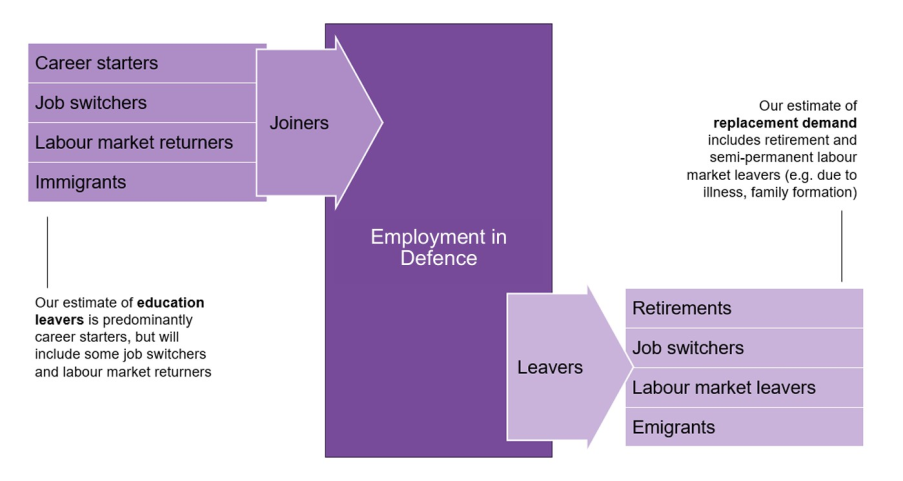
Figure 6 is a stock and flow diagram showing how people join the defence sector, listed as career starters, job switchers, returners, immigrants. It then shows what makes them leave: retirements, job switchers, labour market leavers, emigrants. For joiners, the diagram states that Skills England’s estimate of education leavers is predominantly career starters, but will include some job switchers and labour market returners. For leavers, the diagram outlines that Skills England’s estimate of replacement demand includes retirement and semi-permanent labour market leavers (for example, due to illness, family formation).
7.1 Important training routes
There are multiple routes by which people enter employment in a given occupation. Using information on historic pathways into these occupations and the Skills England Occupational Maps, we have identified the most prominent routes that provide direct supply into priority occupations identified for the defence sector. The routes relate to entry into the occupation but cover all industries and are not specific to employment in the defence sector. These routes are summarised in Table 4.
Training routes are listed below by the proportion of education leavers in employment that enter a priority occupation. The volume of education leavers is also listed for a particular route.
Key training routes broadly split into 3 types of courses:
- well-aligned routes, often technical in nature, where a high proportion of leavers progress into priority occupations, but sometimes with small cohorts
- balanced routes, where a reasonable proportion of leavers progress into priority occupations from a larger cohort
- high-volume routes, where a smaller proportion of leavers progress to priority occupations but contribute a large share of employment
Not all 3 course types are present in all sectors. For well-aligned routes, increasing the supply into priority occupations will likely require an increase in enrolments. Whereas for other routes that are less well-aligned, increasing the progression rates to priority occupations may be more effective.
Table 4: Key routes related to priority occupations for the defence sector
| Pathway | Subject area | Level group | Number of education leavers entering priority occupations | Percentage of employed education leavers entering priority occupations |
|---|---|---|---|---|
| Higher Education | Computing | Level 6+ | 4,830 | 39% |
| Apprenticeship | Digital technology (practitioners) | Level 4/5 | 450 | 26% |
| Higher Education | Engineering | Level 6+ | 3,080 | 23% |
| Apprenticeship | Digital technology (practitioners) | Level 2/3 | 690 | 18% |
Source: Skills England estimates based on employment in 2022 to 2023 tax year
Note: The routes relate to entry into the priority occupations identified by MOD but, as these occupations can span multiple sectors beyond defence, this analysis is not strictly specific to employment in the defence sector.
The four routes in Table 4 account for 51% of education leavers entering priority occupations for the sector. This includes courses in computing and engineering for level 6+ higher education and in digital technology apprenticeships.
Apprenticeships cover a range of levels in digital subject areas. Alongside computing higher education courses, this shows the importance of digital skills for defence priority occupations. Apprenticeships cover general software development and specifically cyber security. These apprenticeship standards in cybersecurity support the development of digital skills needed for some priority occupations in defence.
Some newer training routes are not included in the historic data, including newer apprenticeship standards and Skills Bootcamps. Overall, based on the Skills England Occupational Maps, there are 52 apprenticeship standards linked to priority occupations in the sector. In the 2024 to 2025 data, achievements in live standards were mainly distributed across a mix of engineering, digital technology, and business management.
There have been 3 newly introduced apprenticeship standards since August 2022 in established roles, such as data engineer, and in new emerging roles and technologies, with an AI focused apprenticeship standard.
7.2 Trends in training routes
We can get a sense of how supply into priority occupations is changing by looking at the number of learners successfully completing a course (defined as ‘achievements’) that is aligned with these occupations.
Where courses have grown in achievement numbers, this could suggest that these courses will continue to be key pathways into priority occupations in the sector. Table 5 gives an overview of the change in achievement figures for the key routes over the 2 years between 2021 to 2022 and 2023 to 2024.
Table 5: Growth in achievements for key routes related to priority occupations
| Pathway | Subject area | Level group | Achievements in 2023 to 2024 | Growth in achievements since 2021 to 2022 |
|---|---|---|---|---|
| Apprenticeship | Digital technology (practitioners) | Level 4/5 | 4,190 | +82% |
| Apprenticeship | Digital technology (practitioners) | Level 2/3 | 6,960 | +49% |
| Higher Education | Computing | Level 6+ | 50,280 | +40% |
| Higher Education | Engineering | Level 6+ | 43,080 | +7% |
Source: Figures supplied by Department for Education
There has been strong growth across the digital and computing routes across both apprenticeships and higher education. Growth has been strongest in digital technology apprenticeships, especially at levels 4 and 5, followed by levels 2 and 3. While overall achievement volumes for apprenticeships remain far lower than level 6+ higher education courses, growth has been faster, indicating that apprenticeships are becoming an increasingly important pathway for supplying priority occupations. Engineering has also grown, but at a more modest rate.