Shingles vaccine coverage in England: annual report September 2024 to August 2025 (updated version 2)
Updated 28 May 2026
Applies to England

© Crown copyright 2026
This publication is licensed under the terms of the Open Government Licence v3.0 except where otherwise stated. To view this licence, visit nationalarchives.gov.uk/doc/open-government-licence/version/3 or write to the Information Policy Team, The National Archives, Kew, London TW9 4DU, or email: psi@nationalarchives.gov.uk.
Where we have identified any third party copyright information you will need to obtain permission from the copyright holders concerned.
This publication is available at https://www.gov.uk/government/publications/shingles-immunisation-programme-shingrix-evaluation-reports/shingles-vaccine-coverage-in-england-annual-report-september-2024-to-august-2025
Main points
This annual report presents vaccine coverage and uptake for the Shingrix vaccine (excluding any Zostavax vaccinations) during the 2024 to 2025 academic year.
The Shingrix for All immunisation programme began on 1 September 2023. The programme offers 2 doses of the Shingrix® vaccine to all immunocompetent individuals turning 65 and 70 and severely immunosuppressed individuals turning 50 and over.
Coverage and uptake by age group was assessed from 1 September 2024 to 31 August 2025, measured on 23 October 2025.
The main findings for the academic year 2024 to 2025 were that:
- coverage of Shingrix dose 1 was 30.0% in those who turned 65
- coverage of Shingrix dose 1 was 41.1% in those who turned 70
- coverage of Shingrix dose 1 was 43.7%, and dose 2 was 30.3%, in those who turned 66 [Note 1]
- coverage of Shingrix dose 1 was 54.9% and dose 2 was 40.4% in those who turned 71 [Note 1]
- coverage of Shingrix dose 1 was 26.4%, and dose 2 was 18.2%, in those who turned 50 and over with severe immunosuppression
Note 1. This report has been republished to include data from both GP IT suppliers. Data for only 57.9% of GPs was published in the original release due to data quality concerns, which have now been rectified. As a result of the later extraction date for the corrected data, uptake and coverage figures may be slightly higher than previous reports as individuals have had longer to be vaccinated. Consequently, comparisons with previous years have been excluded.
Introduction
The aim of the routine shingles (herpes zoster) vaccination programme is to prevent severe morbidity from shingles in groups at the highest risk.
A routine shingles vaccination programme began on 1 September 2013, offering one dose of shingles vaccine (Zostavax®) to all 70 year olds, together with a catch-up programme for older cohorts (1 to 3). Adults became eligible at 70 years old and remained eligible until their 80th birthday (see Appendix).
From 1 September 2021 to 31 August 2023, GPs were able to offer the non-live shingles vaccine Shingrix® to all those who were eligible for shingles vaccination but clinically contraindicated to receive the live vaccine Zostavax® due to their immunocompromised status. The vaccine was offered via a proactive call to those becoming eligible at 70 years old and offered opportunistically or if requested for those over 70 years until the age of 80.
From 1 September 2023, these 2 programmes ceased, being replaced with a new programme offering 2 doses of Shingrix vaccine to:
- immunocompetent individuals turning 65 and 70
- all those severely immunosuppressed and turning 50 or over (eligibility as defined in the Green Book Shingles chapter 28a)
Immunocompetent individuals will remain eligible for the Shingrix vaccine until their 80th birthday and vaccines will be offered in a phased implementation over 10 years. For full details on eligibility and the phased programme are available see Shingles immunisation programme: information for healthcare practitioners
Methods
Data sources
The data presented in this report was collected at the GP practice level and was automatically uploaded via participating GP IT suppliers to ImmForm. Data was then validated and analysed by UKHSA to check data completeness, query any anomalous results and describe epidemiological trends.
Uptake methodology
Vaccine uptake was defined as the number of patients in each birth cohort, who received the first dose of the Shingrix vaccine (numerator) since 1 September 2024, as a proportion of the total number of registered patients in that birth cohort (denominator).
Quarter 1 vaccine uptake in the 65 and 70 year old cohorts was defined as the proportion of patients turning 65 or 70 in quarter 1 (1 September 2024 to 30 November 2024) who received the Shingrix vaccine between 1 September 2024 and 23 October 2025. By collecting the data in late October, those becoming eligible in quarter 1 had between 10 and 13 months to receive the vaccine, depending on their date of birth.
Quarter 2 vaccine uptake in the 65 and 70 year old cohorts was defined as the proportion of patients turning 65 or 70 in quarter 2 (1 December 2024 to 28 February 2025) who received the Shingrix vaccine between 1 September 2024 and 23 October 2025. By collecting the data in late October, those becoming eligible in quarter 2 had between 7 and 10 months to receive the vaccine, depending on their date of birth.
Quarter 3 vaccine uptake in the 65 and 70 year old cohorts was defined as the proportion of patients turning 65 or 70 in quarter 3 (1 March 2025 to 31 May 2025) who received the Shingrix vaccine between 1 September 2024 and 23 October 2025. By collecting the data in late October, those becoming eligible in quarter 3 had between 4 and 7 months to receive the vaccine, depending on their date of birth.
Quarter 4 vaccine uptake in the 65 and 70 year old cohorts was defined as the proportion of patients turning 65 or 70 in quarter 4 (1 June 2025 to 31 August 2025) who received the Shingrix vaccine between 1 September 2024 and 23 October 2025. By collecting the data in late October, those becoming eligible in quarter 4 had between 1 and 4 months to receive the vaccine, depending on their date of birth.
A more detailed breakdown of the different cohorts can be found in Table 1.
Table 1. Eligibility table for those who turned 65 and 70 in quarters 1, 2, 3 and 4 of the 2024 to 2025 academic year
| Eligibility | Birth date range | Period turning eligible |
|---|---|---|
| Turning 65 in Q1 | 1 September 1959 to 30 November 1959 | 1 September 2024 to 30 November 2024 |
| Turning 65 in Q2 | 1 December 1959 to 28 February 1960 | 1 December 2024 to 28 February 2025 |
| Turning 65 in Q3 | 1 March 1960 to 31 May 1960 | 1 March 2025 to 31 May 2025 |
| Turning 65 in Q4 | 1 June 1960 to 31 August 1960 | 1 June 2025 to 31 August 2025 |
| Turning 70 in Q1 | 1 September 1954 to 30 November 1954 | 1 September 2024 to 30 November 2024 |
| Turning 70 in Q2 | 1 December 1954 to 28 February 1955 | 1 December 2024 to 28 February 2025 |
| Turning 70 in Q3 | 1 March 1955 to 31 May 1955 | 1 March 2025 to 31 May 2025 |
| Turning 70 in Q4 | 1 June 1955 to 31 August 1955 | 1 June 2025 to 31 August 2025 |
Coverage methodology
Vaccine coverage was defined as the number of patients in each birth cohort, who received the first dose of the Shingrix vaccine (numerator) at any time as a proportion of the total number of registered patients in that birth cohort (denominator).
Annual vaccine coverage in the routine cohorts was defined as the proportion of patients turning 66 or 71 in the 2024/25 academic year (1 September 2024 to 31 August 2025) who received the Shingrix vaccine by 23 October 2025.
Annual vaccine coverage in the immunosuppressed cohort was defined as the proportion of patients turning 50 years and over in the 2024/25 academic year (1 September 2024 to 31 August 2025) with severe immunosuppression who received the Shingrix vaccine by 23 October 2025.
Annual vaccine coverage by ethnicity was defined as the proportion of patients turning 66 or 71 in the 2024/25 academic year (1 September 2024 to 31 August 2025) in each ethnic group who received the Shingrix vaccine by 31 August 2025.
A more detailed breakdown of the different cohorts can be found in Table 2.
Table 2. Eligibility table for those turning 66 and 71 and those turning 50 and over with severe immunosuppression
| Age turned from September 2024 to August 2025 | Birth date range of cohort | Period first eligible for Shingrix vaccine |
|---|---|---|
| 50 and over (immunosuppressed) | Born before 1 September 1974 | 1 September 2024 onwards |
| 66 | 1 September 1958 to 31 August 1959 | 1 September 2023 to 31 August 2024 |
| 71 | 1 September 1953 to 31 August 1954 | 1 September 2023 to 31 August 2024 |
Results
Data completeness
The percentage of GP practices providing coverage and uptake figures was:
- 98.9% (6,169 out of 6,235) when measured on 23 January 2025
- 98.9% (6,146 out of 6,217) when measured on 23 April 2025
- 98.5% (6,104 out of 6,200) when measured on 23 July 2025
- 98.9% (6,129 out of 6,200) when measured on 23 October 2025
Shingrix uptake
This section reports vaccine uptake, which measures the proportion of the eligible population who received the Shingrix vaccine since 1 September 2024. Uptake provides an indicator of recent vaccination activity and is measured at multiple timepoints for each cohort. This means it can be used to estimate how soon after becoming eligible individuals take up the vaccine.
The main findings were that:
- uptake was highest in the first 4 months of a cohort becoming eligible, with some opportunistic vaccinations given later
- uptake of the Shingrix vaccine was similar across all cohorts measured
- uptake was higher in those turning 70 compared to those turning 65
Uptake in those turning 65
For those turning 65 in the 2024/25 academic year:
- uptake was 16.2% when measured in January, 23.2% in April, 27.8% in July and 35.1% in October, for those becoming eligible in quarter 1
- uptake was 15.9% when measured in April, 22.9% in July and 31.5% in October, for those becoming eligible in quarter 2
- uptake was 16.9% when measured in July and 28.6% in October, for those becoming eligible in quarter 3
- uptake was 22.5% when measured in October, for those becoming eligible in quarter 4
- uptake was the lowest in London (11.9%), and highest in the South West (27.7%), for those becoming eligible in quarter 4 (Table 3)
- uptake was 21.5% in men, and 23.5% in women, for those becoming eligible in quarter 4
Shingrix dose 1 uptake for those turning 65 in quarters 1, 2, 3 and 4
Figure 1(a). Uptake by cohort, measured up until October
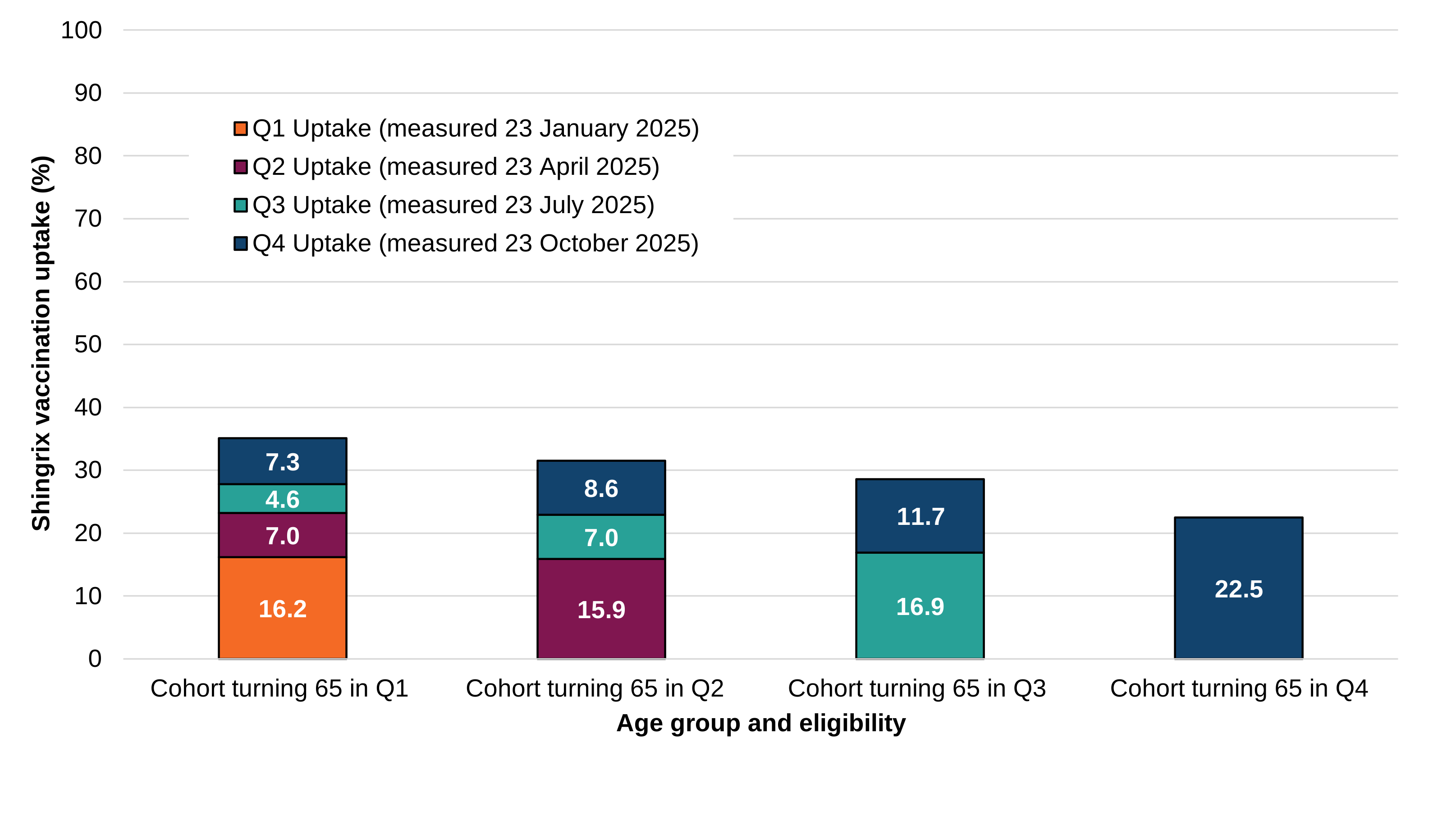
Figure 1(b). Uptake by cohort, measured in January, April, July and October
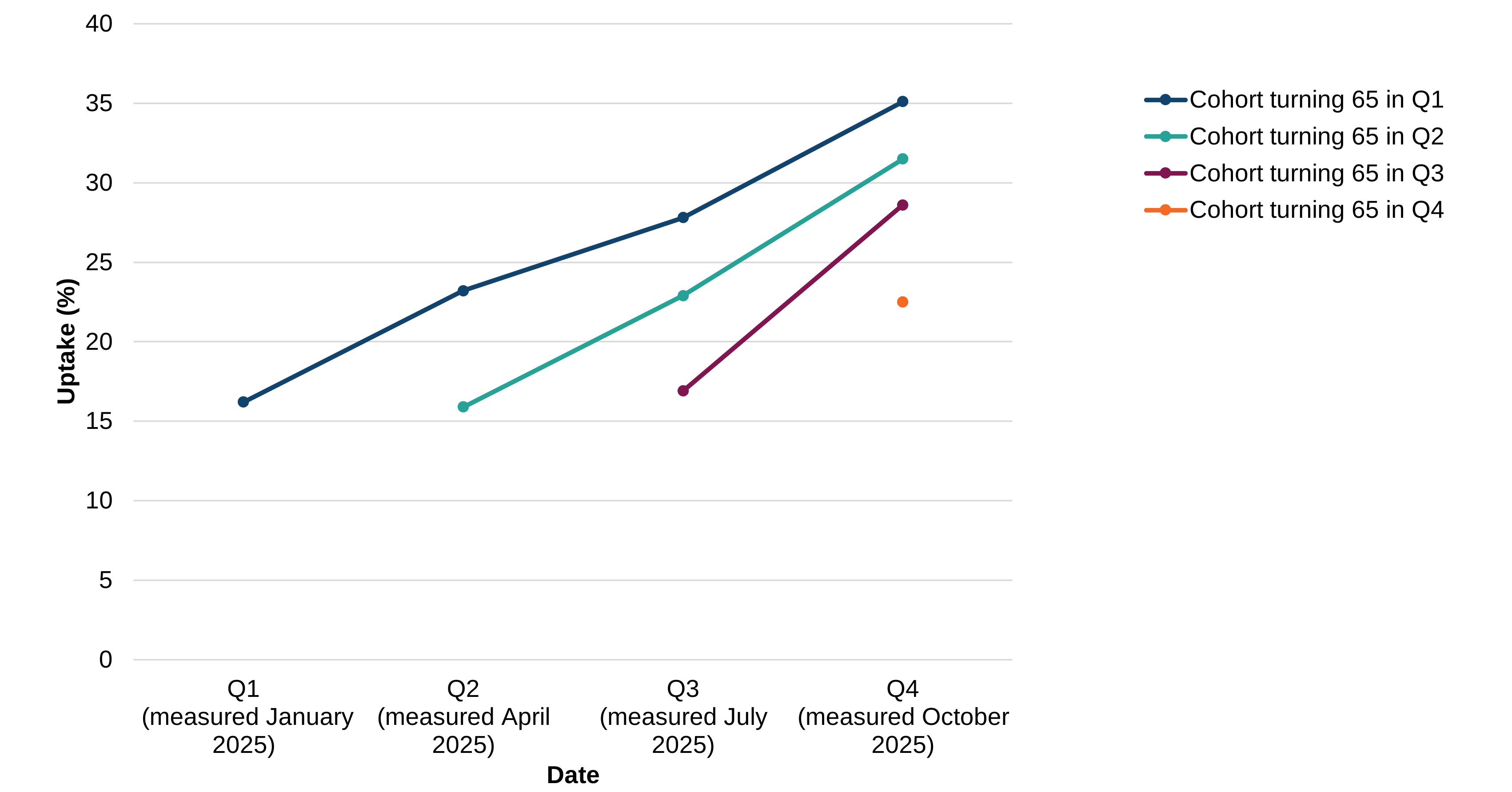
Table 3. Shingrix dose 1 uptake for those turning 65 in quarter 4, measured on 23 October 2025, by commissioning region
| Commissioning region | Shingrix dose 1 uptake for those turning 65 years old in quarter 4 |
|---|---|
| London | 11.9 |
| North West | 16.4 |
| Midlands | 23.1 |
| South East | 24.2 |
| North East and Yorkshire | 26.8 |
| East of England | 27.5 |
| South West | 27.7 |
| England | 22.5 |
Uptake in those turning 70
For those turning 70 in the 2024/25 academic year:
- uptake was 25.0% when measured in January, 33.7% in April, 39.2% in July and 46.3% in October for those becoming eligible in quarter 1
- uptake was 24.2% when measured in April, 32.9% in July, and 42.1% in October, for those becoming eligible in quarter 2
- uptake was 24.8% when measured in July, and 38.5% in October, for those becoming eligible in quarter 3
- uptake was 31.7% when measured in October for those becoming eligible in quarter 4
- uptake was the lowest in London (18.6%), and highest in the South West (37.9%), for those becoming eligible in quarter 4 (Table 4)
- uptake was 30.8% in men, and 32.5% in women, for those becoming eligible in quarter 4
Shingrix dose 1 uptake for those turning 70 in quarters 1, 2, 3 and 4
Figure 2(a). Uptake by cohort, measured up until October
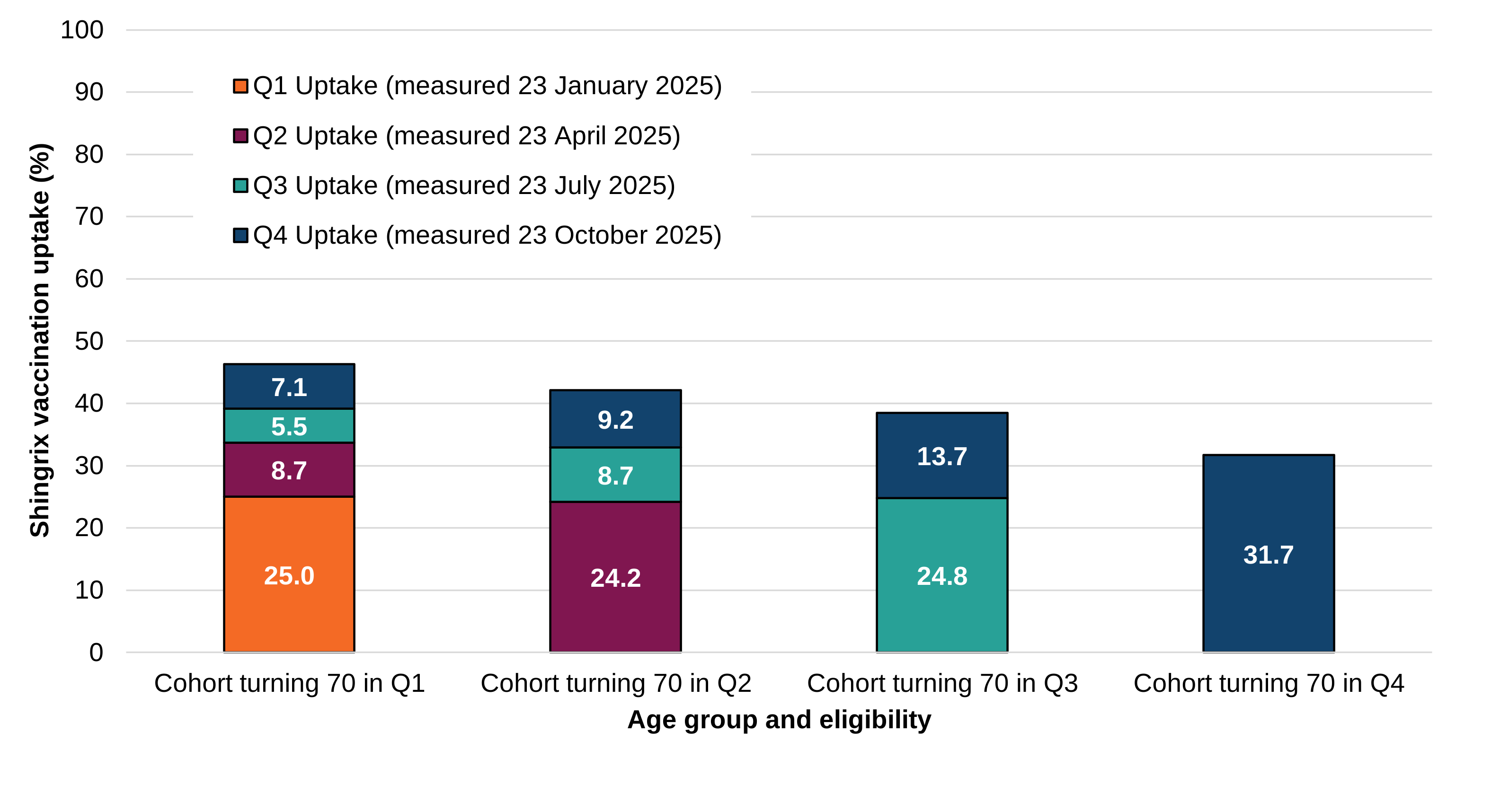
Figure 2(b). Uptake by cohort, measured in January, April, July and October
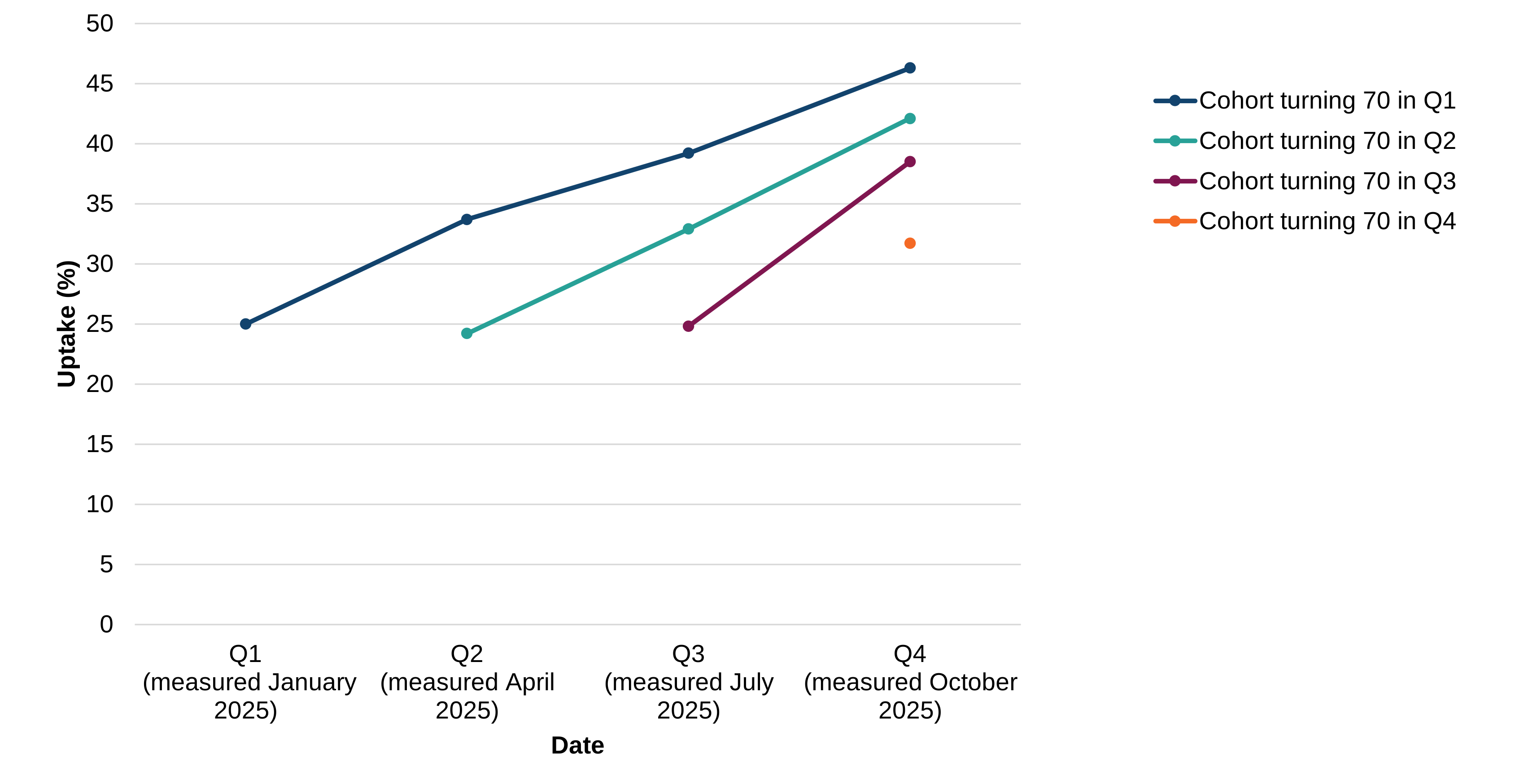
Table 4. Shingrix dose 1 uptake for those turning 70 in quarter 4, measured on 23 October 2025, by commissioning region
| Commissioning region | Shingrix dose 1 uptake for those turning 70 years old in quarter 4 |
|---|---|
| London | 18.6 |
| North West | 24.1 |
| Midlands | 32.1 |
| South East | 32.7 |
| North East and Yorkshire | 36.9 |
| East of England | 37.8 |
| South West | 37.9 |
| England | 31.7 |
Shingrix coverage
This section reports vaccine coverage, which measures the proportion of the eligible populations who have received the Shingrix vaccine at any time. Coverage provides an indicator of the overall levels of protection in the population.
The main findings were that:
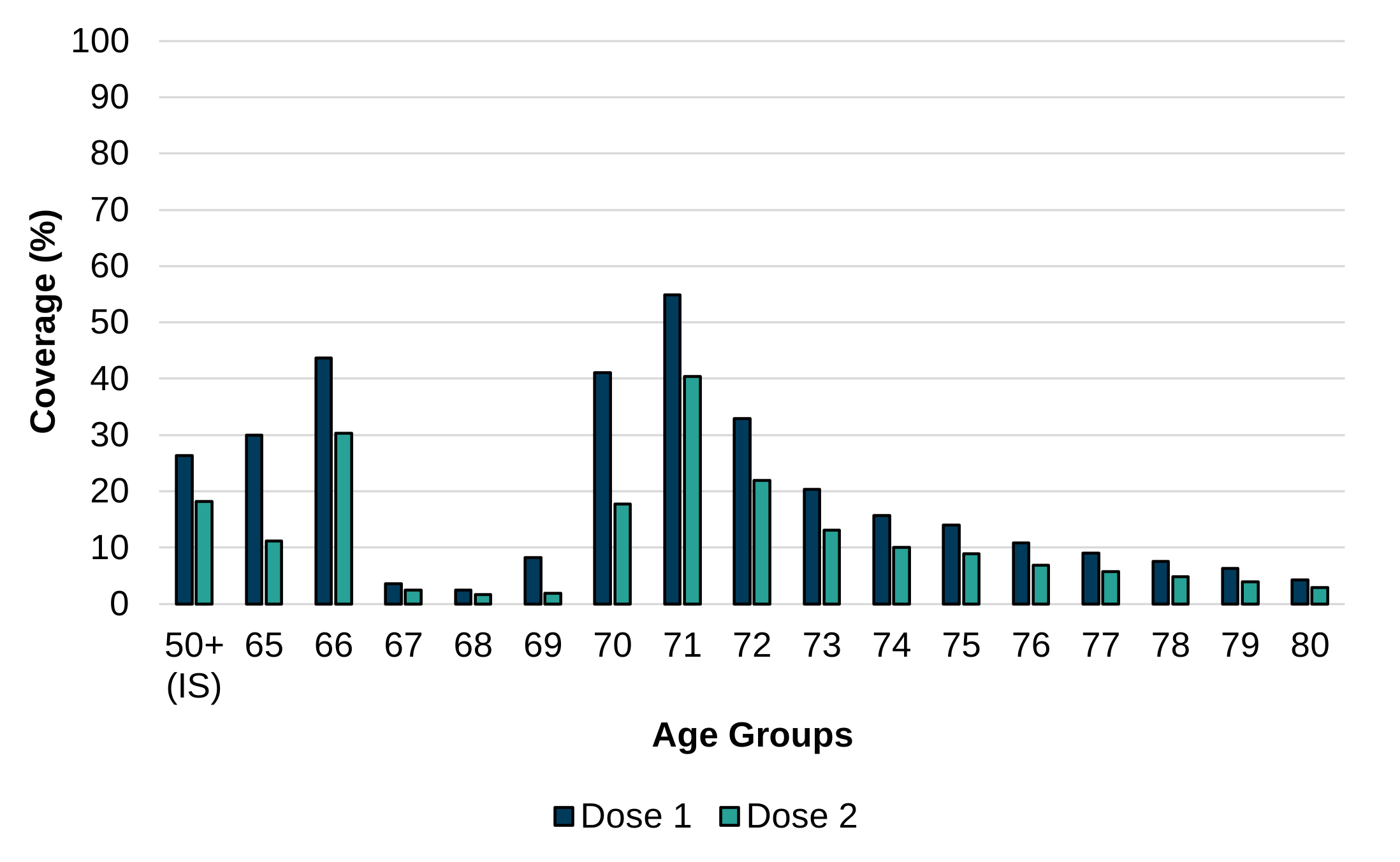
- coverage was highest in those aged 66 (43.7%) and 71 (54.9%), who became eligible in 2023/24, the first year of the programme
- coverage of Shingrix in the non-routine cohorts decreased with age; these older cohorts are more likely to have received Zostavax, data for which is not presented in this report
- coverage of dose 2 remains lower than dose 1, but is increasing over time
Figure 3. Coverage of Shingrix doses 1 and 2 in individuals turning 65 to 80, and immunocompromised individuals turning 50 and over, from 1 September 2024 to 31 August 2025, measured on 23 October 2025
Coverage in those turning 66
These individuals are part of last year’s routine cohort and became eligible in academic year 2023/24
For those turning 66 in the 2024/25 and measured at 23 October:
- coverage of Shingrix dose 1 was 43.7%
- coverage of Shingrix dose 2 was 30.3%
- coverage of Shingrix dose 1 was lowest in London (31.7%) and highest in the South West (49.4%) (Table 4)
Coverage in those turning 71
These individuals are part of last year’s routine cohort and became eligible in academic year 2023/24
For those turning 71 in the 2024/25 and measured at 23 October:
- coverage of Shingrix dose 1 was 54.9%
- coverage of Shingrix dose 2 was 40.4%
- coverage of Shingrix dose 1 was lowest in London (42.1%) and highest in the South West (60.1%) (Table 5)
Coverage in individuals turning 50 and over with severe immunosuppression
For those turning 50 and over in the 2024/25 academic year with severe immunosuppression, measured at 23 October:
- coverage of Shingrix dose 1 was 26.4% and dose 2 was 18.2%
- coverage of Shingrix dose 1 has increased by 2.6 percentage points since July 2025
- coverage of Shingrix dose 1 was lowest in London (22.0%) and highest in the South East (28.7%) (Table 5)
- coverage of Shingrix dose 2 was lowest in London (13.2%) and highest in the South East (19.9%) (Table 5)
Table 5. Shingrix dose 1 coverage for those turning 66 and 71, and those turning 50 and over, with severe immunosuppression, measured on 23 October 2025, by commissioning region
| Commissioning region | Shingrix dose 1 uptake for those turning 66 | Shingrix dose 2 uptake for those turning 66 | Shingrix dose 1 uptake for those turning 71 | Shingrix dose 2 uptake for those turning 71 | Shingrix dose 1 uptake for those turning 50 and over with severe immunosuppression | Shingrix dose 2 uptake for those turning 50 and over with severe immunosuppression |
|---|---|---|---|---|---|---|
| London | 31.7 | 19.1 | 42.1 | 26.7 | 22.0 | 13.2 |
| South West | 49.4 | 35.5 | 60.1 | 45.9 | 27.8 | 19.8 |
| South East | 48.3 | 33.1 | 58.4 | 43.1 | 28.7 | 19.9 |
| Midlands | 43.3 | 30.3 | 54.9 | 40.7 | 26.3 | 18.4 |
| East of England | 47.6 | 34.4 | 58.2 | 44.1 | 25.6 | 18.2 |
| North West | 39.3 | 26.2 | 51.4 | 36.4 | 26.0 | 17.4 |
| North East and Yorkshire | 45.8 | 33.1 | 57.0 | 43.6 | 27.8 | 19.8 |
| England | 43.7 | 30.3 | 54.9 | 40.4 | 26.4 | 18.2 |
Coverage in additional age cohorts
Coverage in additional age cohorts was as follows:
- coverage in those aged 65 and 70 is slightly higher than uptake: this is likely because immunosuppressed individuals in this cohort would have become eligible for the vaccine last year
- coverage in those aged 67 and 69 remains very low as only immunosuppressed individuals in this group would have been eligible for the Shingrix vaccine
- coverage of Shingrix dose 1 in the older age cohorts falls from 32.9% in those aged 72 to 4.3% in those aged 80
- immunocompetent individuals in these age groups would previously have been eligible for Zostavax and were only offered Shingrix after Zostavax supplies were depleted: over time, coverage is expected to increase as individuals have had more opportunity to be vaccinated; when Zostavax doses are taken into account, overall shingles vaccine coverage would therefore be anticipated to increase with age (this increase in cumulative shingles coverage is not shown in this report as Zostavax data has been excluded due to data limitations)
- immunosuppressed individuals in those older age cohorts would have become eligible during the previous Shingrix programme.
Shingrix coverage by ethnicity
This section reports vaccine coverage by ethnicity, which measures the proportion of the eligible population in each ethnic group who received the Shingrix vaccine at any time. Coverage by ethnicity provides an indicator of inequalities in coverage.
Coverage in those aged 66 by ethnic group
For those turning 66 in the 2024/25 academic year and measured at 23 August 2025:
- dose 1 coverage was highest in those of White – British ethnicity (45.3%) and lowest in those of Black or Black British – Caribbean ethnicity (15.9%)
- dose 2 coverage was highest in those of White – British ethnicity (30.7%) and lowest in those of Asian or Asian British – Pakistani ethnicity (7.5%)
Table 6. Shingrix coverage for those turning 66, measured on 23 August 2025, by ethnic group
| Ethnicity | Shingrix dose 1 coverage (%) | Shingrix dose 2 coverage (%) |
|---|---|---|
| Asian or Asian British – Any other Asian background | 29.8 | 16.1 |
| Asian or Asian British – Bangladeshi | 21.3 | 8.7 |
| Asian or Asian British – Indian | 33.9 | 19.6 |
| Asian or Asian British – Pakistani | 17.4 | 7.5 |
| Black or Black British – African | 19.6 | 8.4 |
| Black or Black British – Any other Black background | 21.4 | 11.7 |
| Black or Black British – Caribbean | 15.9 | 8.1 |
| Ethnicity not stated | 31.8 | 20.3 |
| Mixed - Any other mixed background | 30.0 | 17.6 |
| Mixed - White and Asian | 35.1 | 19.7 |
| Mixed - White and Black African | 22.6 | 11.9 |
| Mixed - White and Black Caribbean | 22.5 | 13.3 |
| Other ethnic groups – Any other ethnic group | 25.0 | 14.5 |
| Other ethnic groups – Chinese | 32.4 | 19.4 |
| Patients with any other ethnicity code | 28.4 | 16.9 |
| White – British | 45.3 | 30.7 |
| White – Irish | 39.5 | 24.6 |
| White – Other | 24.9 | 15.3 |
| Total | 40.6 | 27.0 |
Coverage in those aged 71 by ethnic group
Table 7. Shingrix coverage for those turning 71, measured on 23 August 2025, by ethnic group
For those turning 71 in the 2024/25 academic year and measured at 23 August 2025:
The main findings were that:
- dose 1 coverage was highest in those of White – British ethnicity (57.0%) and lowest in those of Black or Black British – Caribbean ethnicity (21.4%)
- dose 2 coverage was highest in those of White – British ethnicity (40.9%) and lowest in those of Asian or Asian British – Bangladeshi (9.4%)
| Ethnicity | Shingrix dose 1 coverage (%) | Shingrix dose 2 coverage (%) |
|---|---|---|
| Asian or Asian British – Any other Asian background | 37.8 | 21.1 |
| Asian or Asian British – Bangladeshi | 21.7 | 9.4 |
| Asian or Asian British – Indian | 43.0 | 25.8 |
| Asian or Asian British – Pakistani | 22.1 | 9.9 |
| Black or Black British – African | 24.1 | 10.8 |
| Black or Black British – Any other Black background | 25.9 | 16.1 |
| Black or Black British – Caribbean | 21.4 | 11.5 |
| Ethnicity not stated | 42.4 | 29.0 |
| Mixed – Any other mixed background | 38.4 | 22.6 |
| Mixed – White and Asian | 41.6 | 27.1 |
| Mixed – White and Black African | 26.7 | 14.9 |
| Mixed – White and Black Caribbean | 29.0 | 18.1 |
| Other ethnic groups – Any other ethnic group | 32.6 | 19.2 |
| Other ethnic groups – Chinese | 39.6 | 26.0 |
| Patients with any other ethnicity code | 35.5 | 23.3 |
| White – British | 57.0 | 40.9 |
| White – Irish | 49.9 | 32.8 |
| White – Other | 35.1 | 22.8 |
| Total | 52.3 | 36.8 |
Discussion
Uptake for those becoming eligible for Shingrix in quarter 4 of the 2024/25 academic year was 22.5% for those turning 65 and 31.7% for those turning 70. These individuals would have been eligible for between 1 and 4 months when coverage was measured in October 2025. Uptake in those who turned 65 in quarter 1 increased by 18.9 percentage points, from 16.2% in January 2025 to 35.1% in October 2025, as individuals had more time to be vaccinated. For both routine cohorts, uptake by gender was slightly lower in men compared to women.
In 2024/25, coverage for dose 1 was 43.7% for those turning 66 and 54.9% for those turning 71. These individuals would have been eligible for between 13 and 25 months when coverage was measured in October 2025. Dose 1 coverage in these individuals is expected to continue increasing as individuals have more time to be vaccinated. Coverage of dose 2 was lower for all age groups, as individuals only became eligible for the second dose 12 months after receiving their initial dose.
This report focuses on individuals who have become eligible for the Shingrix vaccine since the ‘Shingrix for All’ programme began in September 2023. Individuals aged 72 to 80 became eligible for the shingles vaccine during the Zostavax immunisation programme, although they may have also received the Shingrix vaccine if stocks of Zostavax were depleted. Some individuals may also have received Shingrix during the previous immunisation programme, which targeted immunosuppressed individuals.
Appendix
Date and eligibility criteria for the shingles vaccination (Zostavax) programme since 1 September 2023
1 September 2023
The new Shingrix vaccination programme was introduced in September 2023. The new programme offers 2 doses of Shingrix vaccine to all severely immunosuppressed individuals from 50 years of age and immunocompetent individuals turning 65 and 70 years of age.
1 September 2020
As of 1 September 2020, all individuals in the catch-up cohorts (born 2 September 1933 to 1 September 1942) have been offered the shingles vaccine (Zostavax) when they turned 78 years old, thus completing the catch-up programme which started on 1 September 2013.
1 April 2017
The eligibility criteria for receiving the shingles vaccine (Zostavax) was simplified so that individuals become eligible on their 70th birthday (routine cohort) or their 78th birthday (catch-up cohort).
1 September 2016
In the fourth year of the programme (1 September 2016 to 31 August 2017), the vaccine was routinely offered to adults aged 70 years on 1 September 2016 (born between 2 September 1945 and 1 September 1946). The fourth year of the programme also included a catch-up cohort of adults aged 78 on 1 September 2016 (born between 2 September 1937 and 1 September 1938). In addition, patients who became eligible in the first 3 years of the programme but have not been vaccinated against shingles remain eligible until their 80th birthday (patients aged 71, 72, 73 and 79 on 1 September 2016).
1 September 2015
In the third year of the programme (1 September 2015 to 31 August 2016), the vaccine was routinely offered to adults aged 70 years on 1 September 2015 (born between 2 September 1944 and 1 September 1945). The third year of the programme also included a catch-up cohort of adults aged 78 on 1 September 2015 (born between 2 September 1936 and 1 September 1937). In addition, patients who became eligible in the first 2 years of the programme but have not been vaccinated against shingles (Zostavax) remain eligible until their 80th birthday (patients aged 71, 72 and 79 on 1 September 2015).
1 September 2014
In the second year of the programme (1 September 2014 to 31 August 2015), the vaccine was routinely offered to adults aged 70 years on 1 September 2014 (born between 2 September 1943 and 1 September 1944). The second year of the programme also included 2 catch-up cohorts comprised of adults aged 78 on 1 September 2014 (born between 2 September 1935 and 1 September 1936), and adults aged 79 on 1 September 2014 (born between 2 September 1934 and 1 September 1935). In addition, those who became eligible as 70 year olds from 1 September 2013 but had not yet been immunised were also eligible.
1 September 2013
In the first year of the programme (2013 to 2014), the vaccine was routinely offered to adults aged 70 years on 1 September 2013 (born between 2 September 1942 and 1 September 1943) and to adults aged 79 on 1 September 2013 (born between 2 September 1933 and 1 September 1934) as part of the catch-up campaign.
References
- NHS Choices website (2021). Who can have the shingles vaccine?
- UKHSA (2022). Vaccination against shingles: information for healthcare professionals
- UKHSA (2022). Shingles: guidance and vaccination programme
- UKHSA. Shingles (herpes zoster): the Green Book, chapter 28a