Service Modernisation Customer Experience Survey: Annex A - Survey of multiple service line users
Updated 9 April 2026
Applies to England, Scotland and Wales

© Crown copyright 2026
This publication is licensed under the terms of the Open Government Licence v3.0 except where otherwise stated. To view this licence, visit nationalarchives.gov.uk/doc/open-government-licence/version/3 or write to the Information Policy Team, The National Archives, Kew, London TW9 4DU, or email: psi@nationalarchives.gov.uk.
Where we have identified any third party copyright information you will need to obtain permission from the copyright holders concerned.
This publication is available at https://www.gov.uk/government/publications/service-modernisation-customer-experience-survey/service-modernisation-customer-experience-survey-annex-a-survey-of-multiple-service-line-users
DWP research report no. 1120
A report of research carried out by IFF Research on behalf of the Department for Work and Pensions. We would like to thank Lucy Groves, Kristina Freeman, and Tom Maher who have provided the key point of contact and support for this work.
Our thanks go to all those who gave up their time to take part in this study.
Crown copyright 2026.
You may re-use this information (not including logos) free of charge in any format or medium, under the terms of the Open Government Licence. View this licence or write to:
Information Policy Team
The National Archives
Kew
London
TW9 4DU
or email psi@nationalarchives.gov.uk.
This document/publication is also available on the GOV.UK website
If you would like to know more about DWP research email socialresearch@dwp.gov.uk.
First published January 2026.
ISBN 978-1-78659-935-3
Views expressed in this report are not necessarily those of the Department for Work and Pensions or any other government department.
Glossary
This glossary defines the key terms used throughout this report. The definitions ensure consistent use of terminology across all sections and are aligned with DWP’s standard language and reporting conventions.
| Term | Explanation |
|---|---|
| Appointee | A person formally authorised to act on behalf of a customer in dealings with DWP, often used when the customer is unable to manage their own affairs due to age, disability, or health condition. |
| Benefits | Financial support or allowances provided by DWP to eligible individuals, such as State Pension. Lowercase ’benefits’ is sometimes used generically and interchangeably with service line or claim; capitalised Benefit is reserved for official scheme names. |
| Chatbot | An automated online messaging service that would use Artificial Intelligence (AI) to provide answers to customer queries and guide them through processes without direct human involvement. Distinct from webchat, which would involve a live DWP staff member. |
| Claim | A formal request made by a customer to receive a specific benefit. Claims usually require eligibility checks, documentation, and verification. Claim is sometimes used interchangeably with the terms ‘benefit’ and ‘service lines’. |
| Cluster | A grouping of related service lines used for analysis and reporting purposes (the clusters used here are Later Life, Care, Children, Irregular Payments). |
| Customer | An individual who interacts with DWP to access benefits or services. |
| Joined up and automated services | A coordinated approach to DWP services that ensures customers receive clear, consistent, and consolidated information across channels, which may be supported by automation. |
| Mode of contact | The channel through which a customer interacts with DWP, such as post, telephone, email, or online portal. |
| Modernisation | The process of making DWP services more accessible and responsive to customer’s needs, with higher quality, joined up and more efficient service delivery. This includes an increase in self-service and online channels alongside improving the person to person offer to those that need to engage with DWP directly. This also involves removing reliance on outdated processes and IT and building in greater flexibility and ability to meet changes in demand. |
| Modernised Communications Only | An analysis category of customers who reported having contact with DWP via video call, email, and webchat, or choosing the way they dealt with DWP to suit their preferences. To be allocated to this group, customers must not have experienced any other forms of modernisation. The term ‘modernised communications’ may also refer to a set of modernisation ideas. |
| Online Services | An analysis category of customers who reported experiencing an interaction via online services, such as contact via an online portal or chatbot, managing and making changes to a claim or dispute online, or receiving updates about a claim or dispute without having to speak to someone at DWP. This group may also have experienced the statements which make up Modernised Communications Only. The term ‘online services’ may also refer to a set of ideas that signal a transition to online channels. |
| Multiple service line users | Customers who interact with more than one DWP service line. |
| No Modernisation | An analysis category of customers who did not report using any of the services included in the Online Services or Modernised Communications Only categories. |
| Respondent | A customer who has taken part in a survey or research activity. Not all customers are respondents, but respondents are drawn from the customer population and as such are often referred to as customers throughout. |
| Service lines | The distinct areas of DWP operations that deliver specific benefits or services, such as Attendance Allowance, Maternity Allowance, State Pension, or Pension Credit. Service line is sometimes used interchangeably with the terms ‘benefit’ and ‘claim.’ |
| Services | The full range of assistance, benefits, and support provided by DWP to meet the needs of customers. |
| Webchat | A real-time online messaging service between customers and DWP staff via DWP website. Distinct from a chatbot, which would be automated using AI. |
Summary
Background
The purpose of this survey (conducted in addition to the Service Modernisation Customer Experience Survey: Wave 1 and Wave 2) was to explore the experiences of customers who manage claims across more than one service line with the Department for Work and Pensions (DWP). Customers were asked about different elements of managing multiple claims with DWP, as well as their perceptions and experiences of modernised services.
The customer sample, made up entirely of those using 2 or more DWP service lines, was grouped into four mutually exclusive clusters based on the service lines they used:
-
Later Life (either State Pension and/or Pension Credit)
-
Care (any of Disability Living Allowance for children, Carer’s Allowance, Attendance Allowance)
-
Children (both Maternity Allowance and Universal Credit)
-
Irregular Payments (any of Cold Weather Payment, Winter Fuel Payment, Funeral Expenses Payment)
Across all clusters, customers may have also claimed additional benefits from their local authority or DWP services such as Personal Independence Payment (PIP) or Universal Credit (UC). These services contributed towards the total count of service lines a customer used but did not affect which clusters they were allocated into. Additionally, although UC was not in scope for Service Modernisation, all Children cluster customers also claimed UC, alongside Maternity Allowance.
Customer experience of managing multiple claims
This report presents findings on overall customer experience and DWP Customer Experience Drivers. These provide standards against which customer service delivery can be measured. Please note, findings presented in this report are independent and different to those of the Customer Experience Survey which provide the Department’s key measure of customer satisfaction. Further information can be found on DWP Customer Experience Survey: Benefit customers 2024 to 2025. Although not one of the five Drivers, timeliness is also reported as a key element of customer experience.
Overall customer experience
Most multiple service line users (81%) were positive about their overall customer experience of DWP services.
Make it Easy
Around six in ten customers (62%) agreed DWP made it easy to manage more than one claim. Over two-thirds (69%) found the time spent managing their claims reasonable, and a similar proportion (66%) felt they could contact DWP at a time that suited them across their claims.
Get it Right
While around seven in ten (72%) agreed DWP took the right action about their claims first time, over half (54%) reported experiencing at least one issue when managing multiple claims. The most common issue was providing the same information to DWP for each different claim (40%), followed by DWP processes being different for each claim (26%).
Around six in ten who experienced an issue agreed that DWP took responsibility for resolving issues (63%), that DWP teams responsible for their different claims worked well together to resolve their issues (59%), and that they were satisfied with the time this took (62%).
Trusted
Around seven in ten (69%) multiple service line users overall agreed that staff did what they said they would.
Communicate Clearly
Around seven in ten customers agreed that DWP clearly explained the reasons for their decisions (71%), that they found it easy to understand which benefits they were entitled to (70%), and that it was clear how to contact DWP for each claim (69%). Around three-quarters of customers felt that DWP made it clear what changes in circumstances they had to report (77%) and how these changes would impact their benefits (75%). A slightly smaller proportion agreed that DWP made the next steps clear across their claims (65%).
Professional and Supportive
Most customers agreed DWP staff handled their case professionally and treated them with respect (73%) and felt that DWP listened to them and treated them as an individual (70%). Agreement was somewhat lower that DWP staff were knowledgeable about their different claims (59%).
Timeliness
Overall, 69% of customers agreed that they were satisfied with the time taken to progress their case, across their claims; while just under two-thirds of customers (63%) agreed that they were satisfied with the amount of time DWP took to update their entitlement based on a change of circumstances.
Perceptions of modernisation
Most (83%) felt positive about being able to choose the way they deal with DWP. There was more mixed sentiment (though on balance, more positive than negative) towards DWP staff accessing information across multiple claims (72%), DWP updating claims based on information given by the customer to other government services (67%), making a claim online (61%), receiving updates from DWP via email (64%), and receiving updates from DWP online without speaking to someone (57%).
Experience of modernisation
Customers were grouped into three mutually exclusive groups by extent of modernisation they reported having experienced through prompted responses to survey questions. These groups were No Modernisation, Modernised Communications Only, and Online Services, defined in the glossary of terms. Around two-fifths of customers (41%) had experienced No Modernisation. Just over half (54%) had reported using Online Services. Only a minority (6%) had experienced Modernised Communications Only but had not interacted with DWP services online.
Online Services customers
Among Later Life customers, those who reported experiencing Online Services consistently reported more positive experiences than those who experienced No Modernisation. Later Life were more likely than other clusters to report these differences in experience. For instance, Online Services customers in Later Life were more likely to be positive about their overall customer experience (88% vs 78%), to agree that DWP took the right action first time (82% vs 62%), that DWP did what they said they would (78% vs 54%), and that they were satisfied with the time it took to progress their case (80% vs 59%) than those with No Modernisation experience.
1. Introduction
Background and context
In addition to the Wave 1 and Wave 2 Service Modernisation Customer Experience Survey conducted for DWP’s Service Modernisation Programme, an additional, smaller survey was conducted to focus on the experiences of customers who had contact with more than one service line (‘multiple service line users’). While Wave 1 and Wave 2 captured the experience of customers across nine individual service lines, asking them to focus on one service line in particular, this additional survey examined the experience of managing more than one service line with DWP. The purpose of this survey was to gain insight into the experience and expectations of how services could be improved for customers claiming multiple services.
This report presents findings on overall customer experience and the DWP Customer Experience Drivers. These provide standards against which customer service delivery can be measured. Please note, findings presented in this report are independent and different to those of the Customer Experience Survey which provide the department’s key measure of customer satisfaction. Further information can be found on DWP Customer Experience Survey: Benefit customers 2024 to 2025.
Methodology
Development
The design of the questionnaire for multiple service line users followed on from the design of the Wave 1 and 2 questionnaire described in Chapter 1 of the main report. The questionnaire was designed in close collaboration with DWP. The overall structure and questions were intended to mirror the Wave 1 and Wave 2 Service Modernisation Customer Experience Survey but with more focus on the experience of managing multiple claims. The questionnaire was cognitively tested and piloted amongst samples of relevant DWP customers, with refinements made at each stage. Ten cognitive interviews were carried out, and 46 pilot interviews.
Some surveys were conducted with appointees, who manage contact with DWP on behalf of the main customer. Due to the age of Disability Living Allowance for children (DLAc) customers in this research (all DLAc claimants are aged 0 to 15), all surveys for this service line were conducted with appointees.
Sampling and fieldwork
The survey drew a sample of customers from 4 mutually exclusive service line clusters, all of whom were claiming at least 2 (with a maximum of 8) service lines or entitlements. Each cluster is defined in Table 1. All customers were asked at the beginning of the survey which service lines they had contact with DWP about. Based on their responses, customers were allocated to service line clusters according to the definitions in Table 1 below.
Table 1 - Definition of Service line clusters:
| Service line cluster | Definition | Unweighted base | Weighted base |
|---|---|---|---|
| Later Life | Customers claiming at least one of State Pension (SP) or Pension Credit (PC) | 389 | 705 |
| Care | Customers claiming at least one of Disability Living Allowance for children (DLAc), Carer’s Allowance (CA), or Attendance Allowance (AA) and not in the Later Life or Children clusters | 350 | 293 |
| Children | Customers claiming both Maternity Allowance (MA) and Universal Credit (UC) | 312 | 5 |
| Irregular Payments | Customers claiming one of Funeral Expenses Payment (FEP), Winter Fuel Payment (WFP) or Cold Weather Payment (CWP) and not in the Later Life, Care or Children clusters | 72 | 119 |
Customers could also have claimed other benefits such as PIP or UC. Whilst they were not directly in scope for this research, these benefits were counted as part of the number of service lines used by a customer but did not affect which clusters they were allocated into. Additionally, although UC was not directly in scope for this research, customers sampled for the Children clusters also claimed UC at the time of sampling.
Fieldwork took place between 26 March and 29 April 2025, a total of 1,123 customers took part. The survey was mixed mode, with 225 online completes through a web-based survey and 898 Computer Assisted Telephone Interview (CATI) completes, where a professional interviewer collects responses by asking questions over the phone.
Customer responses to the survey were weighted to be representative of the population of multiple service line users. As a result, Children cluster responses in particular were heavily down weighted, as shown in Table 1. This is because the Children cluster make up a smaller proportion of the overall customer population. The weighting variables included the proportion of customers with an email vs those without, as well as age, gender, and region.
The full technical and methodological details for this survey (as well as the Service Modernisation Customer Experience Survey: Wave 1 and Wave 2) are provided in the technical report which is included as an annex.
About this report
Findings from the survey are reported at several levels of analysis in the following order:
overall findings across all customers, e.g. most multiple service line customers (81%) were satisfied with their overall customer experience
findings at cluster level, e.g. ratings on overall customer experience were mostly consistent by cluster, with over eight in ten customers in the Later Life, (82%), Children (83%) and Irregular Payments (83%) clusters scoring positively, whilst Care customers (76%) were less likely to be positive about this
findings by subgroups within clusters, e.g. for customers in the Later Life cluster, those who reported they had used Online Services were more likely to be positive about their overall DWP experience when compared to those with No Modernisation experience (88% vs 78%)
Subgroup analysis was performed by filtering data by cluster because many of the differences observed between factors of interest (contact modes, extent of modernisation, digital propensity, help managing contact) were highly correlated with the clusters at an overall level, making it less clear which variables were explanatory. For example, differences by confidence in using digital services at the overall level are likely to be driven by Later Life customers, where digital confidence is particularly low, as seen in the section on ‘Digital access and competency’ in Chapter 2. The base size for the Irregular Payments cluster was too small to allow for within cluster analysis.
The data was also analysed by the number of service lines customers claimed. However, findings on this are not included as results indicated the combination of service lines was a more important factor than the absolute number of service lines claimed.
Charts in this report use notation to display significant differences between the customer clusters: ‘+’ indicates that a finding is significantly higher than the average of the other clusters, while ‘-‘ indicates that a finding is significantly lower than the average of the other clusters. Significance is tested at the 95% confidence level.
Unweighted base sizes are reported throughout. Differences between subgroups with an unweighted base size of less than 50 are not reported, or are reported as indicative, and flagged as such. Base sizes between 50 and 100 are reported but should be treated with caution. Responses for subgroups with larger base sizes will be more robust and have a lower margin of error than subgroups with smaller base sizes. Responses that are under 1% are not included and are only displayed as ‘<1%’.
2. Customer profiles and contact with DWP
Each service line cluster had a distinct customer profile. Below, the age, gender, ethnicity, and presence of long-term health conditions of each service line cluster is discussed at a high level.
Customer profiles
Later Life cluster
Due to the nature of the service lines in this cluster, that require customers to be of State Pension age, all customers were over the age of 65. Just under a third (29%) of this group were aged 65 to 74, 42% were aged 75 to 84 and 28% were aged 85 and above. This cluster were more commonly women (60%) than men (40%). The majority of customers were White (92%), and 6% were from ethnic minority backgrounds. Over two-thirds of customers had a long-term physical or mental health condition (67%), and seven in ten of those with a health condition (70%) said their condition impacts their ability to carry out day to day activities a lot.
Care cluster
The majority (59%) of customers in this cluster were in the 35 to 54 age bracket, 19% were aged 25 to 34 and 15% were aged 55 to 64. This cluster was made up of more women (77%) than men (23%). Over four-fifths (83%) of this group were White, with Asian or Asian British being the next largest ethnicity group (7%). Half of this group (50%) had a long-term physical or mental health condition, and over half (52%) of those with a health condition said their condition impacts their ability to carry out day to day activities a lot.
Children cluster
This cluster tended to be younger, due to the nature of the service lines within this cluster, with 65% of these customers being aged 25 to 34 years and 21% aged 16 to 24 years. Almost half of customers in this group were from ethnic minorities (47%), with most of this being made up of Black, African, Caribbean, or Black British customers (39%). All customers in this cluster were women, as expected for Maternity Allowance, and just 17% had a disability or long-term physical or mental health condition.
Irregular Payments cluster
Customers in this cluster were most likely to be aged 35 to 54 (36%), followed by 25 to 34 (31%). Most customers in this group were White (74%), followed by Asian and Asian British (16%). This cluster was majority women (58%), and a high proportion of this cluster had a disability or long-term physical or mental health condition (78%). Three-quarters (75%) of customers with a disability or long-term health condition said this impacted their ability to carry out their day-to-day activities a lot.
Digital access and competency
Customers were asked whether they had access to the internet at home and whether they could use online government services without help.
As seen in Figure 1, over eight in ten customers (83%) had access to the internet at home. Later Life customers had lower access than the other clusters (77%), with proportions in the other clusters over 90%.
There was also a large difference between clusters in customers’ ability to use government services online without help. Again, a smaller proportion of Later Life customers said this (30%) than the other clusters. Customers in the Children cluster were most commonly able to use online services without help (88%), followed by Care customers (63%), and then Irregular Payments customers (54%).
Figure 1 - Access and ease of use of online services:

Base: All customers (1,123). + indicates that a finding is significantly higher than the average of the other clusters. - indicates that a finding is significantly lower than the average of the other clusters.
Customers who could access government services online with help were asked what specific types of support would be most useful to them if DWP were to move services online. The most common choice of support type was telephone help (84%), followed by online help pages (45%), and use of online help or support (43%). To note, online help refers to all forms of digital assistance, whereas online help pages are specific websites dedicated to explaining certain processes or answering frequently asked questions (FAQs). Online videos or webinars was selected by 37% of customers as a supported option, and 24% said automated instructions, e.g. a chatbot, would be helpful. Options that scored lower include in-person support (8%), followed by printed guidance (4%), and email (1%).
Help managing DWP contact
All customers, except appointees, were asked if they received any help managing their contact with DWP across their claims in the last 12 months prior to the survey. Overall, two-fifths of multiple service line users (40%) said they had usually received help managing their contact with DWP. This was more common among Later Life customers (45%) and less common among Care customers (28%) and Children customers (7%).
Among those who received help managing their contact with DWP, the most common form of help was with understanding communications from DWP (82%), followed by understanding what to do next to get their entitlement (81%), and understanding which benefits they were entitled to (79%). Around six in ten said this help was with keeping track of things when managing more than one claim (62%) and contacting DWP to chase or submit information (61%). One in ten (10%) said it was assistance with the process of applying for or managing their claims, such as completing forms.
Manageability of different modes of contact
Customers were also asked whether it would be manageable to deal with DWP via certain modernised communications and online services (Figure 2), these being email, text, video call, chatbot, webchat, and a single online platform where customers can manage all their claims and contact with DWP.
Figure 2 - Whether dealing with DWP via different modes of contact would be manageable:

Base: All customers (1,123).
The mode of contact that customers felt was the most manageable was text message (62%), followed by email (52%). Lower proportions of customers felt contacting DWP via a single online platform (40%), video call (39%), webchat (37%) and chatbot (33%) were manageable. Customers within the Later Life group were less likely to say that they could use all contact methods without help (text 50%; email 40%; single online platform 25%; video call 24%; webchat 22%).
Modes of contact with DWP in the last 12 months
Customers were asked about the modes of contact that they used to contact DWP in the past 12 months, with responses prompted by a list. Customers could select as many options as were applicable. As this was self-reported this may not accurately represent actual contact customers had with DWP or reflect channels that are actually available for service lines.
As seen in Table 2, overall, post was by far the most common mode of contact reported by multiple service line users (73%). This was followed by telephone (25%), online portal (21%), text message (17%), and email (15%) and in person contact (6%). Across all service lines, contact via video call, webchat and chatbot were the least used modes of contact, at around 1% each, which aligns with the availability of these channels in DWP.
Mode of contact varied substantially for different clusters. Post was by far the most common form of contact for Later Life customers (79%). They were less likely than other clusters to report having used text (5%). Children customers most commonly reported using an online portal (64%) and were more likely to report using this than the other clusters. Although MA does not currently have an online platform, UC uses an online account. Children customers also more commonly reported contact via telephone (62%), in person (17%) and via video call (4%). Care customers were more likely to report contact via email (24%) than other clusters.
Table 2 - Modes of contact with DWP by cluster:
| Mode of contact | Total | Later Life | Care | Children | Irregular Payments |
|---|---|---|---|---|---|
| Online portal | 21% | 6% | 48% | 64% | 46% |
| 15% | 11% | 24% | 16% | 19% | |
| Telephone | 25% | 16% | 42% | 62% | 39% |
| Text message | 17% | 5% | 35% | 24% | 47% |
| Post | 73% | 79% | 71% | 69% | 40% |
| Video call | 1% | 1% | 3% | 4% | 3% |
| In person | 6% | 2% | 12% | 17% | 15% |
| Chatbot | 1% | 0% | 1% | 0% | 3% |
| Webchat | 1% | 0% | 2% | 3% | 5% |
Base: All customers (1,123).
Extent of modernisation experienced
Customers were divided into groups based on responses to mode of contact within the 12 months prior to the survey and modernisation experience questions (as seen in Chapter 5). These are used throughout the report for subgroup analysis. This was based on customers self-reporting and may not accurately represent channels available across service lines. Customers were grouped into three categories, as described below.
No Modernisation
As shown in Figure 3, two-fifths of customers (41%) reported that they had not experienced any of the types of modernised services they were asked about. This was more common among Later Life customers (56%), with the other clusters all less likely to be in this group (18% of Irregular Payments customers, 15% of Care customers, and 2% of Children customers).
Modernised Communications Only
The Modernised Communications Only group were those who reported they had contact with DWP via video call, email, and webchat, or reported that they were able to choose the way they dealt with DWP to suit their preferences. To be in this group, customers must not have reported experiencing any other forms of modernisation.
The Modernised Communications Only group made up just 6% of all customers. Children cluster customers were significantly less likely to be in this group (1%).
Online Services
The Online Services group included customers who reported experiencing one or more of the following: using a single online platform to manage all claims, contact via an online portal, contact via a chatbot, managing and making changes to a claim online, or receiving updates about a claim online without having to speak to someone at DWP. Customers in this group may also have experienced the forms of contact in the Modernised Communications Only group.
This group accounted for just over half (54%) of all customers, with Children (97%), Care (80%) and Irregular Payments (80%) being more likely than average to report using Online Services.
Figure 3 - Extent of modernisation experienced:
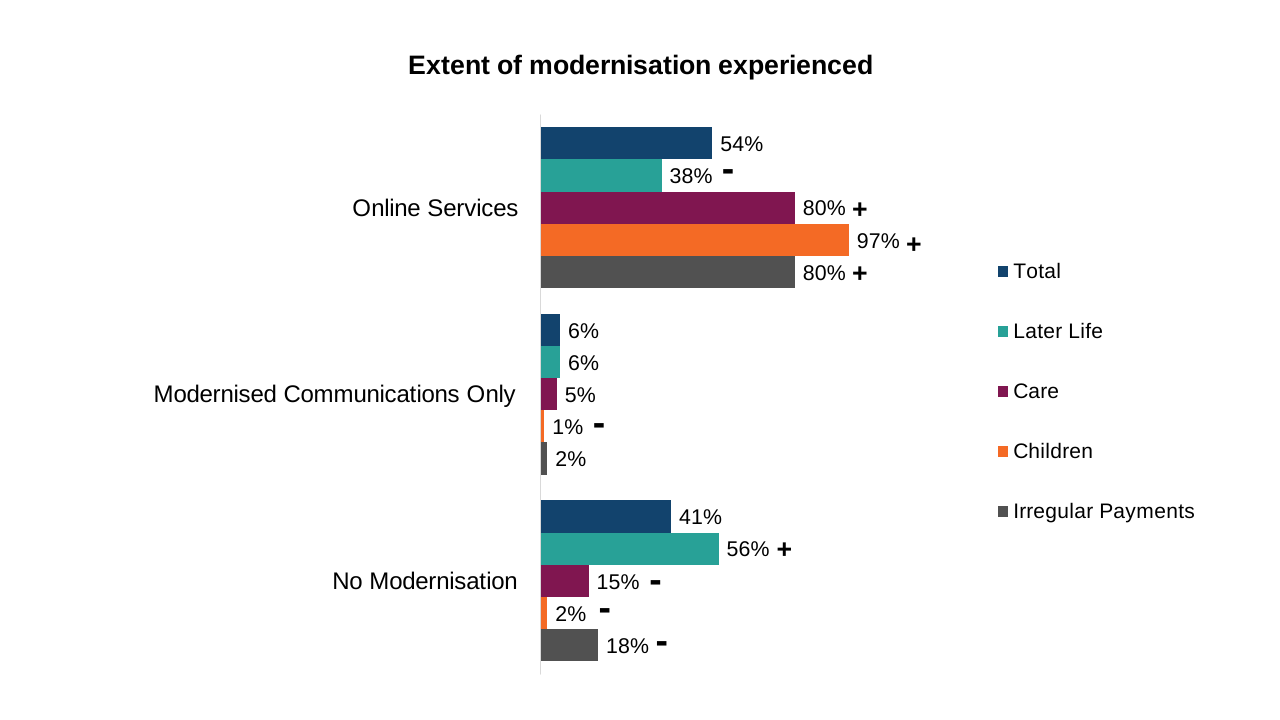
Base: All customers (1,123). + indicates that a finding is significantly higher than the average of the other clusters. - indicates that a finding is significantly lower than the average of the other clusters.
3. Customer experience of managing multiple claims
This chapter presents findings on overall customer experience and DWP Customer Experience Drivers. These provide standards against which customer service delivery can be measured. Please note, findings presented in this report are independent and different to those of the Customer Experience Survey which provide the department’s key measure of customer satisfaction. Further information can be found on DWP Customer Experience Survey: Benefit customers 2024 to 2025. This chapter includes findings relating to the following five Drivers:
- Make it Easy
- Get it Right
- Trusted
- Communicate Clearly
- Professional and Supportive
The theme of ‘timeliness’ is also covered in this chapter despite not being one of the five Drivers, as it is a key element of the customer experience.
As mentioned in the introduction, findings are reported for multiple service line users at three levels. This includes overall findings, findings at a cluster level, then findings within subgroups of each cluster. Within-cluster analysis is only present where there were pertinent and statistically significant findings. The base for Irregular Payments customers was too low for within-cluster analysis. The analysis also explores how customer experiences vary depending on the degree of modernisation they have experienced, the mode of contact they had with DWP, whether they needed support and whether they experienced any issues.
For conciseness and readability, only the key statements for each Driver are reported here. The statements selected were the most relevant to the specific Drivers and asked to the broadest base of customers. Additional questions that were asked in the survey, but are not analysed in this section, can be found in the annex of additional findings within this report.
Overall customer experience
Thinking about the 12 months prior to the survey, customers were asked to rate their overall customer experience with their service line on a scale of 1 to 10, with 1 meaning extremely dissatisfied and 10 meaning extremely satisfied. Customers who were considered to be ‘satisfied’ with or ‘positive’ about their overall customer experience were those who gave a score between 7 and 10.
As shown in Figure 4, most multiple service line users (81%) were positive about their overall customer experience with DWP. Overall customer experience was mostly consistent by cluster, with over eight in ten customers in the Later Life, (82%), Children (83%) and Irregular Payments (83%) clusters reporting positive overall customer experience scores. However, Care customers (76%) were less likely to do so.
Figure 4 - Overall customer experience with services:
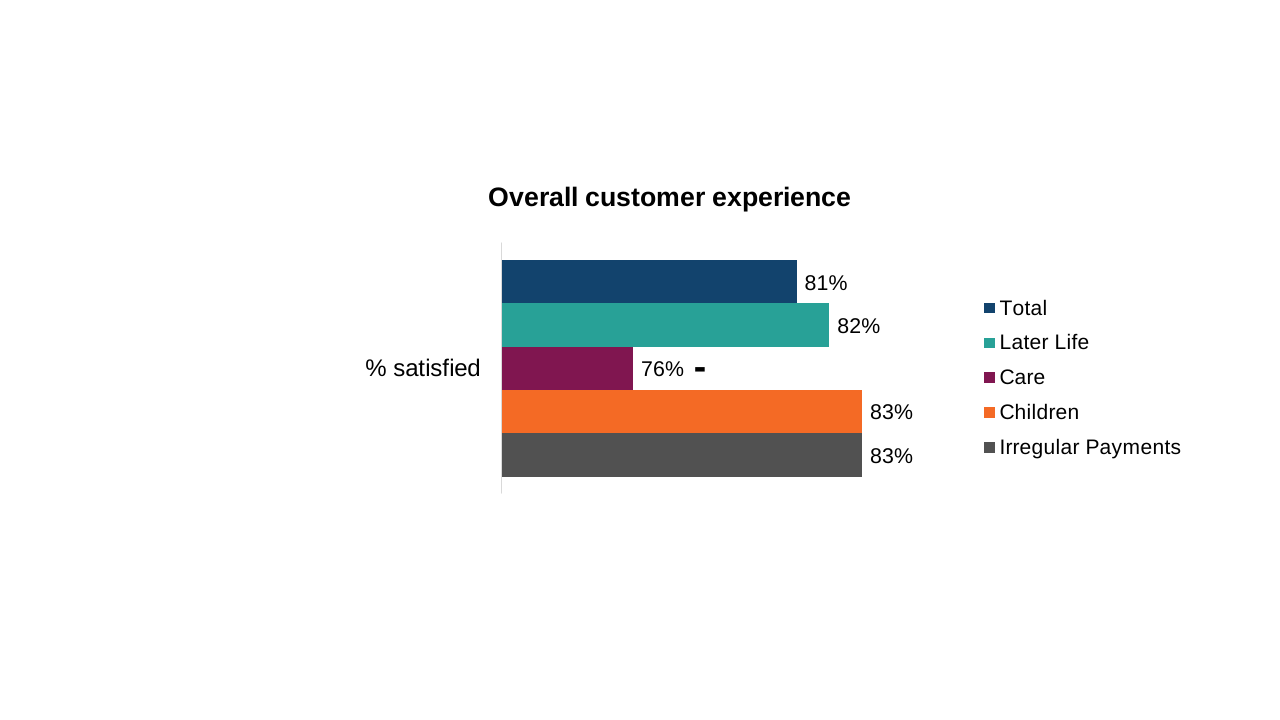
Base: All customers (1,123). + indicates that a finding is significantly higher than the average of the other clusters. - indicates that a finding is significantly lower than the average of the other clusters.
The following groups of customers were less likely to be positive about their overall customer experience: those who had contact via telephone (77%); those who could not access government services online without help (74%); and those with a long-term health condition or disability (79%). Customers who experienced an issue with managing multiple claims were more likely to be dissatisfied overall compared to those who did not experience any issues managing multiple claims (7% vs 2%).
There were some subgroup differences within clusters, as follows.
Later Life cluster
For customers in the Later Life cluster, Online Services customers were more likely to be positive about their overall customer experience when compared to those with No Modernisation experience (88% vs 78%). Later Life customers who could use online services with help were more positive than those who could not use them at all (86% vs 75%).
Care cluster
Among customers in the Care cluster, those who needed help managing their contact were less likely to be positive about their overall customer experience than those who did not need help (67% vs 81%). Care customers who experienced no issues were more likely to be positive than those who experienced issues (88% vs 73%).
Children cluster
Among customers in the Children cluster, those who reported contact with DWP via post (90%) and online portal (87%) were more likely to be positive about their overall customer experience. Customers who needed help managing their contact were less likely to be positive (67% vs 86% of those who did not need help), as were those aged 16 to 24 (72%).
Reasons for overall customer experience ratings
Customers who gave an overall customer experience rating of between 7 and 10, were asked why they had scored the service highly. The most common reason given was general satisfaction with how the service operated (34%), with Later Life customers (37%) slightly more likely to give this reason.
Customers also said that staff were helpful and knowledgeable (18%), that communication was good (16%), and that the process was smooth and easy (11%). Care customers (23%) were more likely to say that staff were helpful or knowledgeable.
Customers in the Children cluster (41%) were more likely than other clusters to say that online systems were easy to use.
Customers who gave an overall customer experience rating of between 1 and 4 were asked why they had scored the service poorly. While this was a relatively low base size, the most common reasons were that they were unhappy with the outcome of their contact (38%), communication was poor (38%), staff were unhelpful (27%), and the process was complicated or confusing (26%).
Make it Easy
Multiple service line users were asked about their level of agreement with four key statements related to the Make it Easy Driver.
As seen in Figure 5, around six in ten customers (62%) agreed that DWP made it easy to manage more than one benefit claim, and that DWP remembered information they had previously provided (61%). Over two-thirds (69%) found the time spent managing their claims reasonable, and a similar proportion (66%) felt that they could contact DWP at a time that suited them across their claims.
Figure 5 - Customer Experience Drivers: Make it Easy:
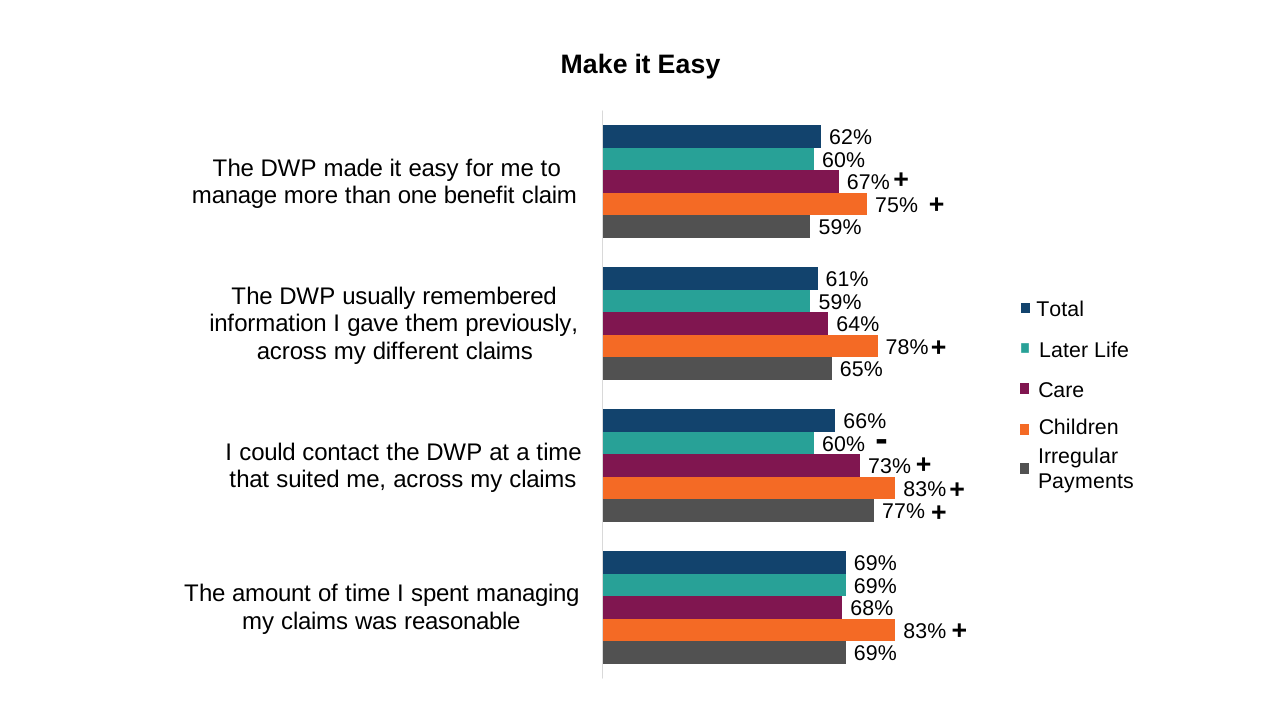
Base: All customers (1,123). + indicates that a finding is significantly higher than the average of the other clusters. - indicates that a finding is significantly lower than the average of the other clusters.
Children customers (75%) and Care customers (67%) were more likely to agree that it was easy to manage more than one claim. Children customers were also more likely to agree that DWP usually remembered their information across claims (78%), and that the amount of time they spent managing claims was reasonable (83%). Children (83%), Irregular Payments (77%), and Care (73%) customers were more likely to agree that they could contact DWP at a time that suited them, compared with Later Life customers (60%).
There were some subgroup differences within clusters, as follows.
Later Life cluster
For customers in the Later Life cluster, experiences were better for those who reported that they had engaged with modernised services and were more digitally capable.
Those who reported using Online Services were more likely than those with No Modernisation experience to agree that DWP remembered previously given information (70% vs 52%), made it easy to manage multiple claims (71% vs 53%), that the time spent managing claims was reasonable (81% vs 60%), and that they could contact DWP at a convenient time (75% vs 51%).
Digital competency was also a factor. Customers who could use online services without help were more positive than those who could not use online services at all, about DWP remembering previously given information (72% vs 48%) and making it easy to manage multiple claims (70% vs 57%). Those who managed their claims independently were also more likely than those who needed help to agree that DWP remembered information they had previously provided (64% vs 54%) and that DWP made it easy to manage multiple claims (65% vs 56%).
Care cluster
Among customers in the Care cluster, those who managed their contact with DWP independently were more likely than those who received help to agree that DWP made it easy to manage multiple claims (73% vs 59%) and that the time they spent managing claims was reasonable (74% vs 57%).
Customers who experienced no issues were more likely to have positive views on statements about ease than those who experienced any issues: DWP made it easy for them to manage multiple claims (79% vs 62%), DWP usually remembered information they gave them previously (79% vs 59%), they could contact DWP at a time that suited them (86% vs 69%), and the amount of time they spent managing their claims was reasonable (88% vs 60%).
Children cluster
Customers in the Children cluster who experienced no issues were more likely to agree that the amount of time they spent managing their claims was reasonable, than those who experienced any issues (92% vs 82%).
Get it Right
As part of the Get it Right Driver, customers were asked if DWP took the right action about their claim, first time.
As shown in Figure 6, over seven in ten (72%) customers agreed that DWP took the right action about their claims, first time.
Figure 6 - Customer Experience Drivers: Get it Right:
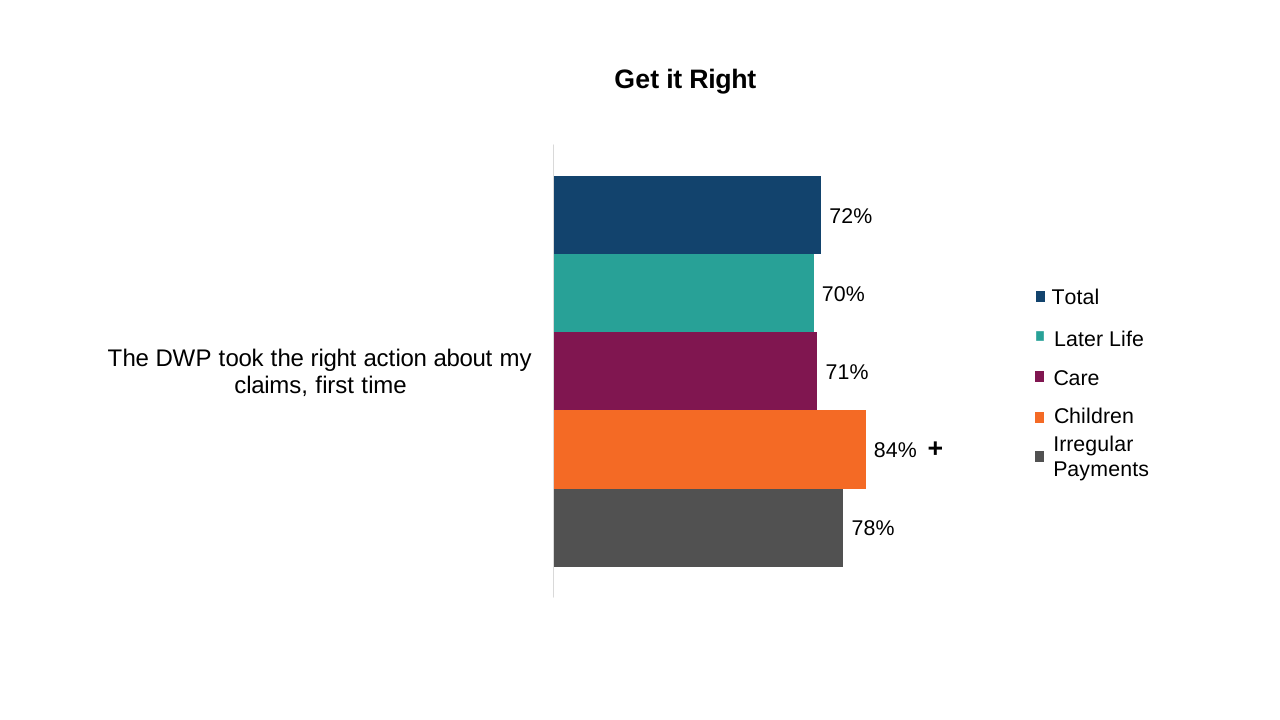
Base: All customers (1,123). + indicates that a finding is significantly higher than the average of the other clusters. - indicates that a finding is significantly lower than the average of the other clusters.
All clusters scored 70% or higher on this driver. Customers in the Children cluster were more likely to agree with this statement (84%).
There were some subgroup differences within clusters, as follows.
Later Life cluster
For customers in the Later Life cluster, reported experience of modernisation was associated with more positive views. Those who reported using Online Services were more likely to agree that DWP took the right action first time (82%) compared to those who experienced no modernisation (62%).
Care cluster
Among customers in the Care cluster, those who managed their DWP contact without help were more likely than those who had help to agree that DWP took the right action first time (79% vs 60%). Furthermore, Care customers who reported not experiencing any issues were more likely to have a positive view than those who had experienced any issues (89% vs 65%).
Children cluster
Customers in the Children cluster who reported that they had experienced no issues were more likely than those who had reported experiencing any issues to agree that DWP took the right action first time (94% vs 81%).
Experiencing and resolving issues
Customers were asked about a list of issues they might have experienced when handling multiple claims. This was a prepopulated list that all customers were asked to choose from and may not reflect issues formally reported to DWP.
Over half of all customers (54%) reported experiencing at least one of the suggested issues in their DWP experience over the last 12 months (Figure 7). Customers in the Children cluster (78%) and Care customers (69%) were more likely to have experienced one of these issues, whereas Later Life customers were less likely to have done so (48%).
Figure 7 - Customers who reported experiencing any issue in the last 12 months:
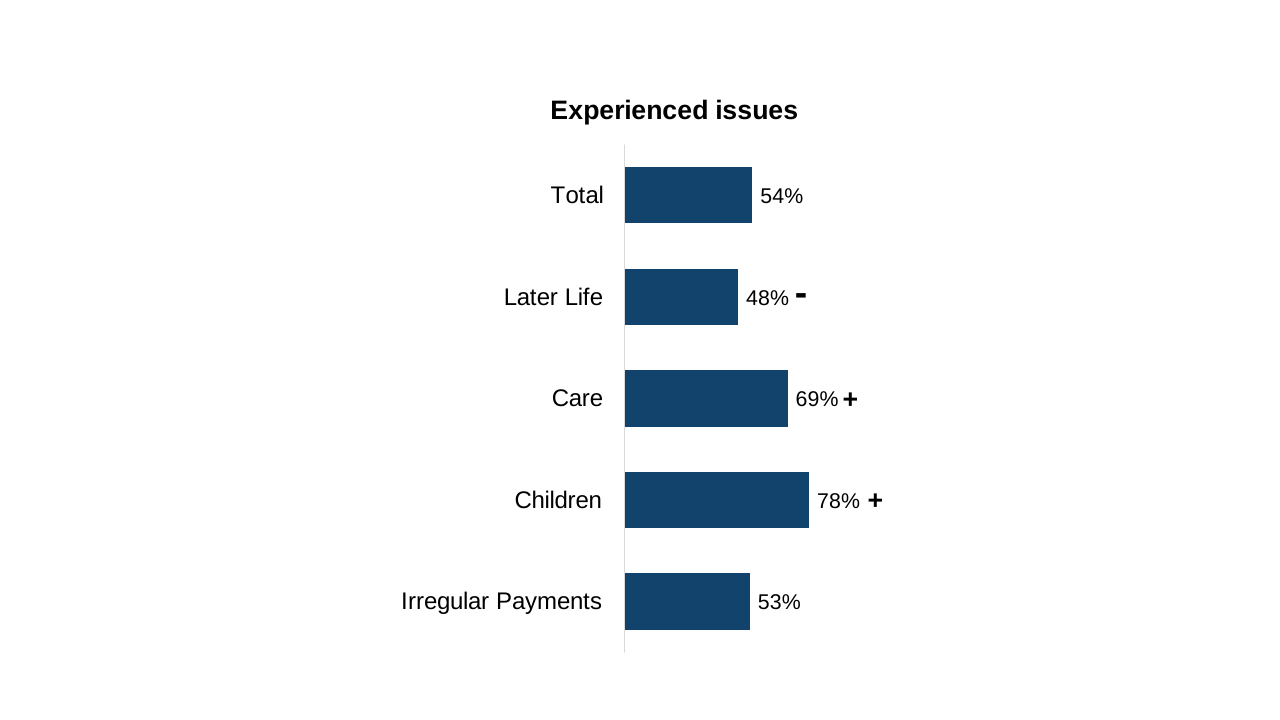
Base: All customers (1,123). + indicates that a finding is significantly higher than the average of the other clusters. - indicates that a finding is significantly lower than the average of the other clusters.
Table 3 below highlights the most common issues multiple service line users reported experiencing. The top issue was having to give the same information to DWP for each of their different claims (40%). Customers in the Children cluster (59%) were more likely to mention this issue.
The next most common issue overall, mentioned by just over a quarter (26%) was that DWP processes were very different from each other for each of their claims. Care customers (38%) and Irregular Payments customers (32%) were more likely to mention this issue than Later Life (20%) and Children customers (14%).
Table 3 - Types of issues experienced by customers:
| Types of issues | Total | Later Life | Care | Children | Irregular Payments |
|---|---|---|---|---|---|
| I had to give the same information to DWP for each of my different benefit claims | 40% | 36% | 49% | 59% | 39% |
| DWP processes were very different for each claim | 26% | 20% | 38% | 14% | 32% |
| I received conflicting information or advice from DWP | 16% | 11% | 23% | 12% | 25% |
| I could not always use my preferred method of communication with DWP | 14% | 10% | 22% | 11% | 17% |
| DWP did not account for my other claims when working out how much to pay me | 7% | 5% | 13% | 14% | 6% |
| There was a problem with one of my claims because of another claim I made | 6% | 4% | 11% | 15% | 6% |
| I forgot, or did not know that I had to tell DWP about a change in my circumstances for all my claims | 5% | 4% | 6% | 37% | 9% |
| I had problems when moving from one benefit to another with DWP | 4% | 2% | 10% | 6% | 6% |
Base: All customers (1,123).
Support from DWP to resolve issues
Customers who reported experiencing issues were asked about how DWP handled these. 63% agreed that DWP took responsibility for resolving their issues, 62% agreed they were satisfied with the time taken by DWP to resolve their issues, and 59% agreed that DWP teams from different benefits worked well together to resolve the issues. Customers in the Children cluster were more likely to agree with all of these statements (over 70% for all).
Trusted
As part of the Trusted Driver, customers were asked whether they agreed that DWP staff did what they said they would across their claims. As shown in Figure 8, around seven in ten multiple service line customers overall agreed that staff did what they said they would (69%).
Figure 8 - Customer Experience Drivers: Trusted:
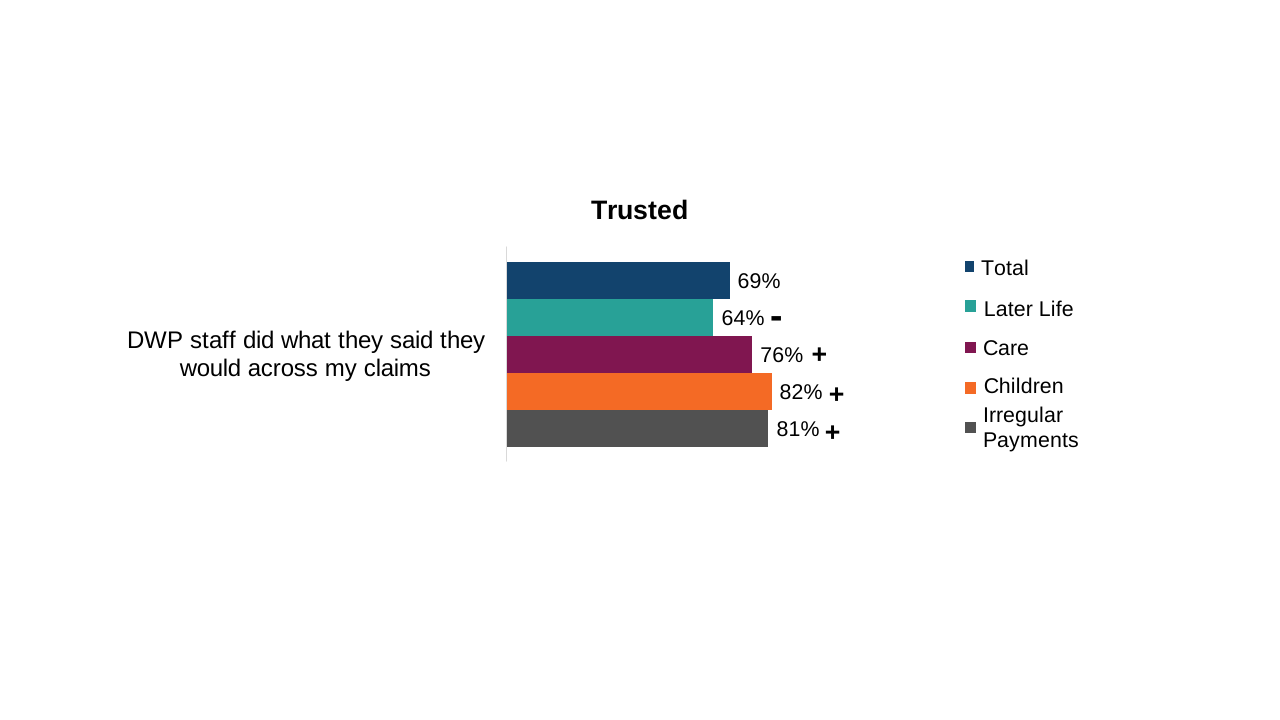
Base: All customers (1,123). + indicates that a finding is significantly higher than the average of the other clusters. - indicates that a finding is significantly lower than the average of the other clusters.
Agreement that DWP staff did what they said they would was higher among Children (82%), Irregular Payments (81%), and Care customers (76%), and lower among Later Life customers (64%).
There were some subgroup differences within clusters, as follows.
Later Life Cluster
For customers in the Later Life cluster, reported experience of modernisation was associated with more positive views. Those who reported using Online Services were more likely to agree that DWP staff did what they said they would (78%).
Care Cluster
Among customers in the Care cluster, digital competency, and independence in managing DWP contact were associated with more positive views.
Those who could use online government services without help were more likely to agree that staff did what they said they would (81% vs 68% for those who need help). Similarly, those who managed their DWP contact without help were more likely than those who had help to agree that staff did what they said they would (84% vs 63%). Care customers who experienced no issues were more likely to agree with this than those who experienced any issues (86% vs 72%).
Communicate Clearly
Customers were asked about agreement with three statements related to the Communicate Clearly Driver.
As seen in Figure 9, around seven in ten multiple service line users agreed that DWP explained the reasons for their decisions clearly (71%), that they found it easy to understand which benefits they were entitled to (70%) and that it was clear how to contact DWP for each of their claims (69%).
Figure 9 - Customer Experience Drivers: Communicate Clearly:
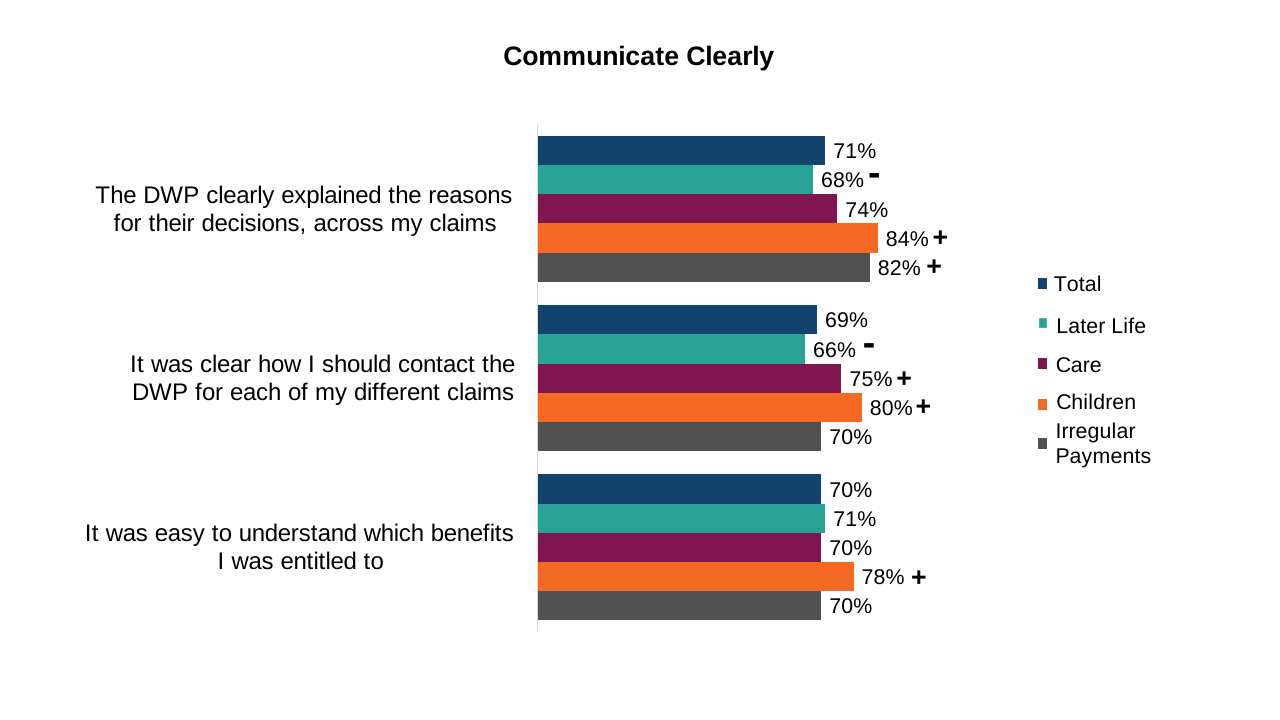
Base: All customers (1,123). + indicates that a finding is significantly higher than the average of the other clusters. - indicates that a finding is significantly lower than the average of the other clusters.
There were some notable differences between clusters. Looking at clarity around how to contact DWP for each claim, Children (80%) and Care (75%) customers were more likely to agree than Later Life (66%) customers. For DWP clearly explaining the reasons for their decisions, Children (84%) and Irregular Payments (82%) customers were more likely to agree than Later Life customers (68%). Children customers were relatively more likely to agree that it was easy to understand which benefits they were entitled to (78%).
There were some subgroup differences within clusters, as follows.
Later Life cluster
Among Later Life customers, those who reported they had encountered modernised services and those with higher digital competency reported clearer communication with DWP. Customers in the Online Services group were more likely than those in the No Modernisation category to say it was clear how they should contact DWP (74% vs 61%) and that DWP explained its decisions clearly (82% vs 57%). Those who could use online services without help found it clearer how to contact DWP (72% vs 58%) and thought that DWP explained their decisions more clearly (72% vs 60%) than those who could not use online services.
Care cluster
For Care customers, managing DWP contact independently was associated with more positive views. Those who did not need help were more likely than those who did to agree that it was easy to understand their benefit entitlements (77% vs 58%), that it was clear how to contact DWP for each of their claims (80% vs 65%), and that DWP clearly explained the reasons for its decisions (83% vs 62%).
Care customers who experienced no issues were more positive about statements related to Communicate Clearly than those who experienced any issues: DWP clearly explained the reasons for their decisions (89% vs 69%), it was clear how they should contact DWP for each of their different claims (84% vs 73%), and it was easy to understand which benefits they were entitled to (83% vs 65%).
Children cluster
Customers in the Children cluster who reported experiencing no issues were more positive about DWP communicating clearly than those who experienced issues, across all three statements: it was clear how they should contact DWP for each of their different claims (90% vs 78%), DWP clearly explained the reasons for their decisions (92% vs 82%), and it was easy to understand which benefits they were entitled to (88% vs 76%).
Understanding changes of circumstances and next steps
As part of the Communicate Clearly Driver, customers were also asked how clear communication with DWP was around any changes to circumstances, as well as next steps.
Overall, as seen in Figure 10, around three-quarters of multiple service line customers felt that DWP made it clear what changes of circumstances they had to report (77%) and how any changes of circumstances would impact customers’ benefits (75%). A smaller proportion, around two-thirds (65%), agreed that DWP made the next steps clear, across their claims.
Figure 10 - Customer Experience Drivers: Communicate Clearly – Change of circumstances and next steps:

Base: All customers (1,123). + indicates that a finding is significantly higher than the average of the other clusters. - indicates that a finding is significantly lower than the average of the other clusters.
Children customers were more likely to agree to all three statements (85% clear about the impact of changes of circumstances on benefits; 90% clear about what changes of circumstances to report; 79% clear about next steps). In addition, Care customers were also relatively more likely to agree that DWP made it clear what changes of circumstances to report (81%) and that DWP made next steps clear (73%); while Irregular Payments customers were relatively more likely to agree that DWP made it clear how changes of circumstances would impact benefits (84%) and that DWP made next steps clear (80%). Conversely, Later Life customers were less likely to agree all three statements (72% that DWP made it clear how changes of circumstances would impact their benefits; 74% that DWP made it clear what changes of circumstances customers needed to tell them about; 59% that DWP made it clear what next steps would be).
There were some subgroup differences within clusters, as follows.
Later Life cluster:
For Later Life customers, modernisation and digital competency were associated with more positive views on communication. Those who reported they had used Online Services were more likely than those who had not to agree that DWP made the next steps clear, across their claims (74% vs 48%).
Those who managed their claims without help were more likely to agree that DWP made it clear what changes of circumstances to report (78% vs 70%). Customers who could use online services without help were more likely to feel that DWP made clear the impact of changes of circumstances on benefits than those who could not (76% vs 67%).
Care cluster:
Customers in the Care cluster who managed their claims independently were more likely to agree that DWP made the next steps clear than those who received help (80% vs 63%).
Customers in the Care cluster who reported experiencing no issues were more likely than those who experienced any issues to agree that DWP made it clear what changes to their circumstances they had to tell them about (92% vs 77%), how any changes to circumstances would impact the benefits they receive (91% vs 73%), and made it clear what the next steps would be, across their claims (88% vs 68%).
Children cluster:
Customers in the Children cluster who reported experiencing no issues were more likely than those who experienced any issues to agree that DWP made it clear what changes to their circumstances they had to tell them about (96% vs 89%).
Professional and Supportive
As part of the Professional and Supportive Driver, customers were asked about how professional, knowledgeable, and supportive they felt DWP staff were across all their different claims. At least seven in ten multiple service line users overall agreed that DWP staff handled their case professionally and treated them with respect (73%) and that DWP listened and treated them as an individual (70%), as seen in Figure 11. There was a lower level of agreement that DWP staff were knowledgeable about their different claims (59%).
Figure 11 - Customer Experience Drivers: Professional and Supportive:
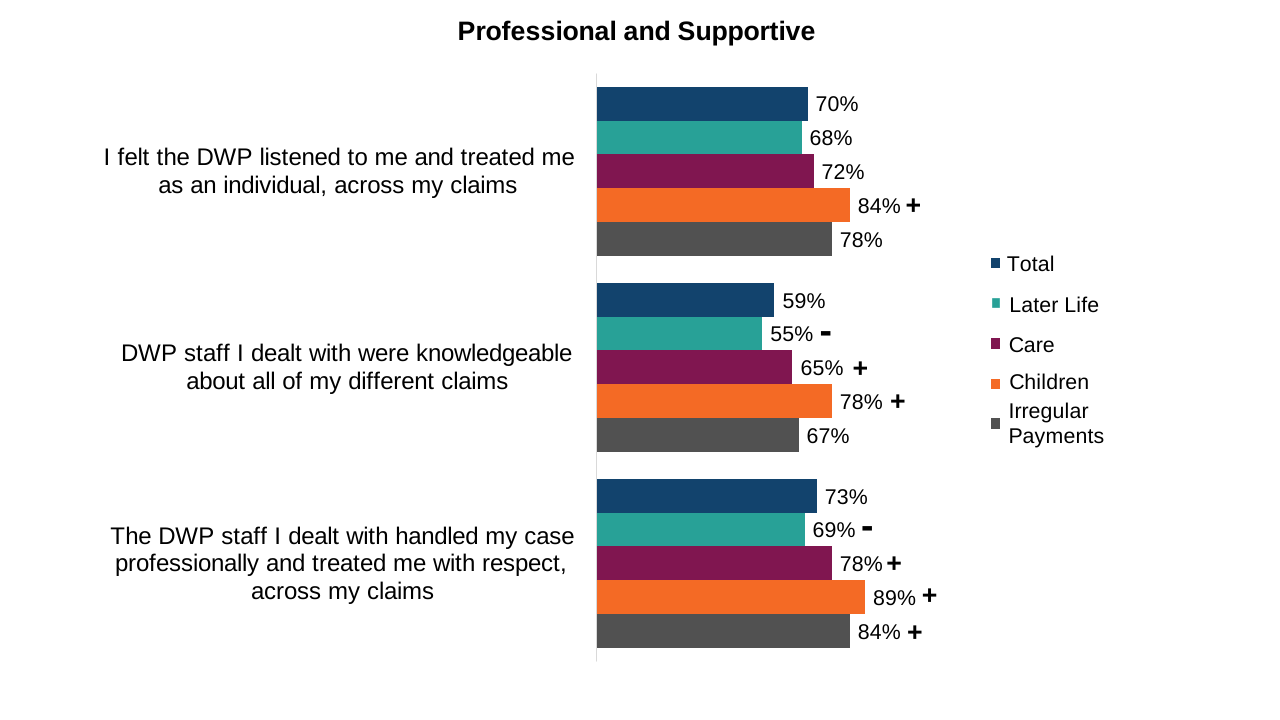
Base: All customers (1,123). + indicates that a finding is significantly higher than the average of the other clusters. - indicates that a finding is significantly lower than the average of the other clusters.
Customers from the Children cluster were relatively more likely to agree that DWP staff handled their case professionally and treated them with respect (89%), that DWP listened to them and treated them as an individual (84%) and that DWP staff were knowledgeable across their different claims (78%). Care customers were also relatively more likely to agree that DWP staff handled their case professionally and treated them with respect (78%) and were knowledgeable across their different claims (65%). Irregular Payments customers were also more likely to agree that their case was handled professionally (84%). Conversely, Later Life customers were less likely to agree that DWP staff handled their case professionally and treated them with respect (69%) and were knowledgeable across their different claims (55%).
There were some subgroup differences within clusters, as follows.
Later Life cluster
Among Later Life customers, reported experience of modernisation was associated with more positive views of DWP staff. Customers in the Online Services group were more likely than those who reported No Modernisation experience to agree that staff handled their case professionally and treated them with respect (82% vs 58%), that they felt listened to and treated as an individual (82% vs 58%), and that DWP staff were knowledgeable about all of their different claims (68% vs 48%).
Care cluster
For customers in the Care cluster, needing help with their claim was associated with differing views on DWP staff. Those who managed their DWP contact independently were more likely than those who received help to agree that DWP staff were professional and treated them with respect (85% vs 72%) and that they felt listened to and treated as an individual by DWP (78% vs 63%).
There was also a difference by degree of reported modernisation encountered. Those who reported that they had used Online Services were more likely to find DWP staff knowledgeable about their different claims than those with No Modernisation experience (68% vs 53%).
Customers in the Care cluster who reported experiencing no issues were more likely than those who experienced any issues to agree that: DWP listened to them and treated them as an individual (83% vs 68%), DWP staff they dealt with were knowledgeable about all of their different claims (76% vs 61%), and DWP staff they dealt with handled their case professionally and treated them with respect (89% vs 75%).
Children cluster
Customers in the Children cluster who reported experiencing no issues were more likely than those who experienced any issues to agree that DWP listened to them and treated them as an individual (92% vs 82%).
Timeliness
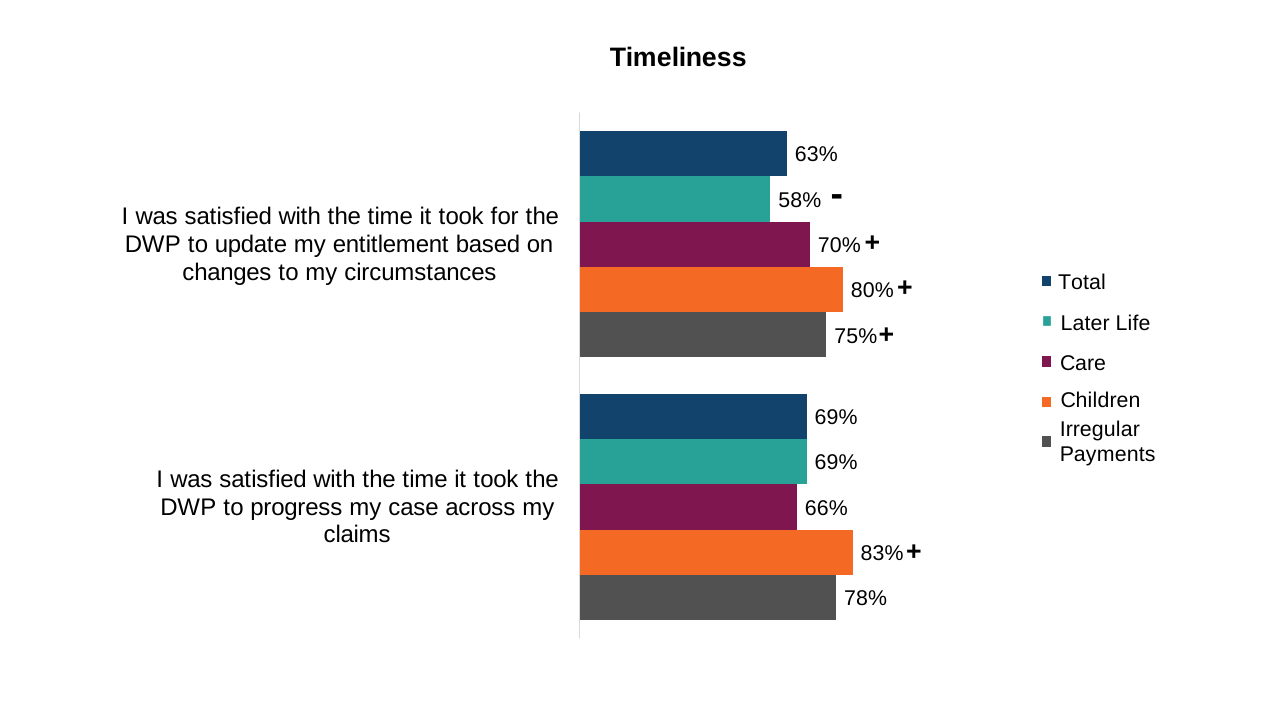
Customers were asked about their level of agreement with two key statements related to timeliness as seen in Figure 12. Around seven in ten multiple service line users overall (69%) agreed that they were satisfied with the time taken to progress their case, across their claims; while just under two-thirds of customers (63%) agreed they were satisfied with the amount of time DWP took to update their entitlement based on a change of circumstances.
Figure 12 - Satisfaction with time taken to update entitlement based on change of circumstances and progress a case:
Base: All customers (1,123). + indicates that a finding is significantly higher than the average of the other clusters. - indicates that a finding is significantly lower than the average of the other clusters.
Customers in the Children cluster were more likely to agree with these statements (83% satisfied with the time taken to progress their case and 80% satisfied with the time taken to update their entitlement). Later Life customers were less likely to agree they were satisfied with the time it took for DWP to update their entitlement based on a change of circumstances (58%).
There were some subgroup differences within clusters, as follows.
Later Life cluster
For customers in the Later Life cluster, reported experience of modernisation was associated with more positive views. Those who reported using Online Services were more likely to agree that they were satisfied with the time it took to progress their case when compared to those with No Modernisation experience (80% vs 59%). Satisfaction with the time it took to update an entitlement was also higher among those who reported using Online Services, compared to those with No Modernisation experience (69% vs 50%).
Care cluster
Among customers in the Care cluster, those who managed their DWP contact without help were more likely than those who had help to agree that they were satisfied with the time taken to progress their case (72% vs 56%).
Care customers who reported that they had not experienced any issues were also more likely to have a positive view on these statements than those who had experienced any issues: satisfaction with time taken to update their entitlement (82% vs 65%) and satisfaction with time taken to progress their case (84% vs 59%).
Children cluster
Customers in the Children cluster who reported that they had experienced no issues were more likely than those who had experienced any issues to agree that they were satisfied with the time it took for DWP to progress their case (93% vs 80%).
4. Perceptions of modernisation
This chapter covers multiple service line users’ responses to being presented with the concept of certain modernised DWP services. The different elements of modernised services are split into 3 groups: modernised communications, online services, and joined up and automated services. These differ slightly from the modernisation groups detailed in the ‘Extent of modernisation experienced’ section in Chapter 2, as there were fewer experience questions available to develop a joined up and automated services group (see Chapter 5). Finally, this chapter also looks at whether these customers had any concerns about using modernised DWP services.
Perceptions of modernised communications
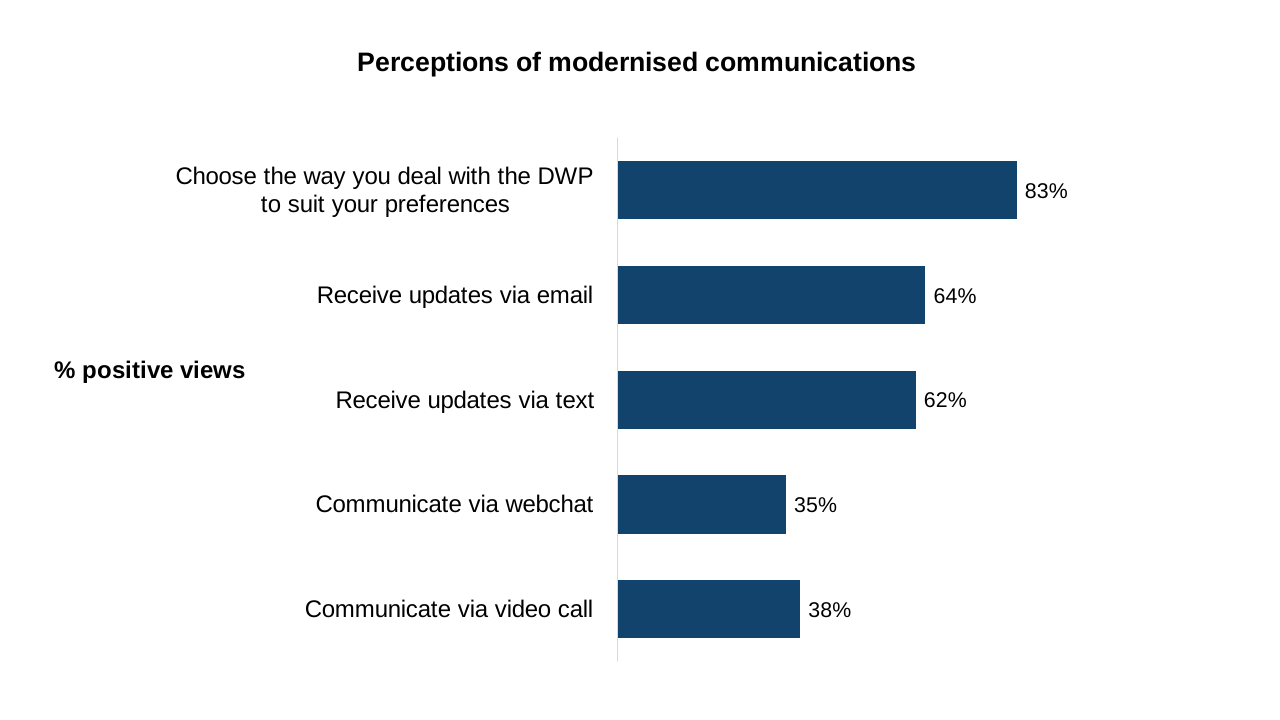
Multiple service line users were asked how they would feel about the idea of DWP offering certain modernised communications (Figure 13).
Figure 13 - Perceptions of modernised communications:
Base: All customers (1,123).
The form of modernised communications that customers were most positive about was the idea of being able to choose the way that they deal with DWP to suit their preferences. Eight in ten (83%) customers had a positive perception of this idea, and this was higher amongst Care (88%), Children (94%), and Irregular Payments (95%) customers.
The forms of modernised communications that customers were next most positive about the idea of, was receiving updates from DWP via email or via text. Close to two-thirds (64% and 62% respectively) of customers were positive about these ideas. For email, positive views were more common amongst Children (88%), Irregular Payments (81%), and Care (76%) customers. For text, positive views were also more common amongst Children (91%), Irregular Payments (87%), and Care (82%) customers.
Smaller proportions had positive perceptions of communicating via video call (38%) and via webchat (35%).
Perceptions of online services
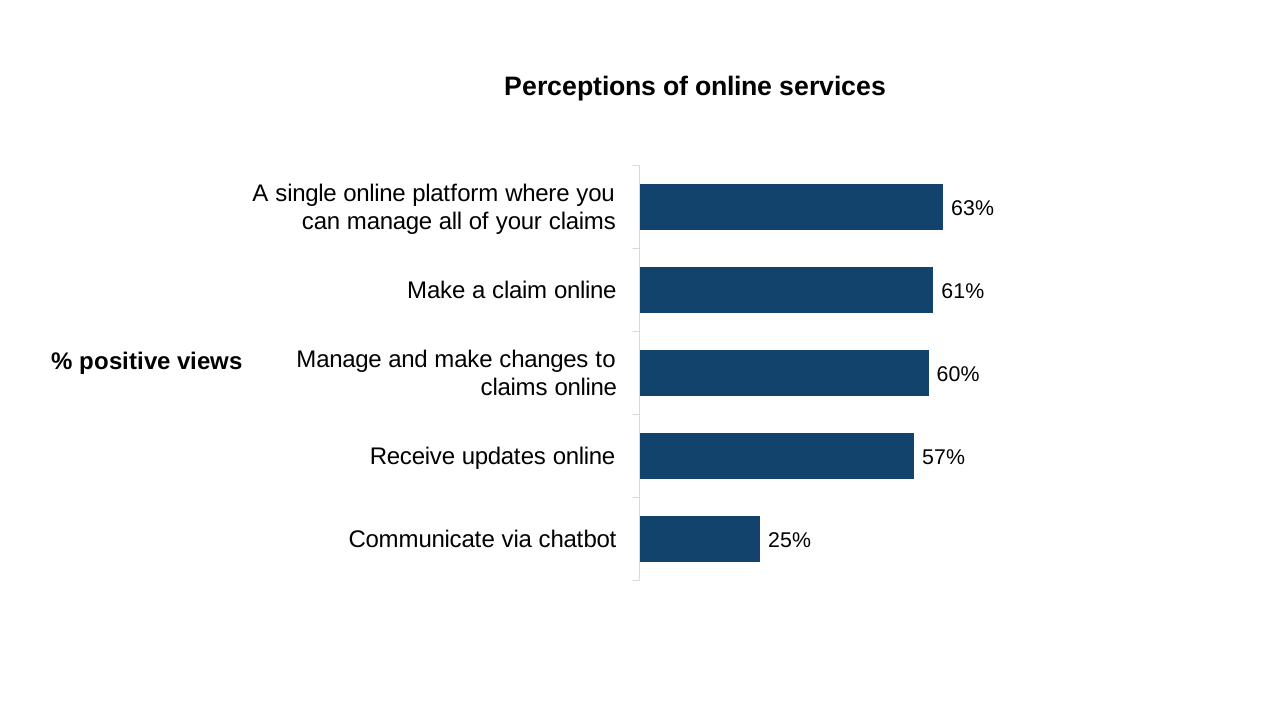
Multiple service line users were asked how they would feel about the idea of DWP enabling them to interact with DWP services online in various ways (Figure 14).
Figure 14 - Perceptions of online services:
Base: All customers (1,123).
Overall, the most positively received of these ideas was the idea of a single online platform where customers can manage all their claims with DWP, to which 63% of customers responded positively. Children (90%), Care (85%), and Irregular Payments (83%) customers were more likely to give positive scores for this idea.
The three next most positively received forms of online service ideas were:
-
making a claim online (61% overall; 92% Children cluster; 80% Care cluster; 77% Irregular Payments cluster; 49% Later Life cluster)
-
managing and making changes to a claim online (60% overall; 93% Children cluster; 79% Care cluster; 85% Irregular Payments cluster; 47% Later Life cluster)
-
receiving updates online (57% overall; 88% Children cluster; 77% Care cluster; 81% Irregular Payments cluster; 45% Later Life cluster)
Finally, a much lower proportion, one in four (25%) customers, had a positive view of the idea of communicating with DWP via chatbot.
Perceptions of joined up and automated services
Multiple service line users were also asked about how they would feel about the idea of DWP offering more joined up and automated services (Figure 15).
Figure 15 - Perceptions of joined up and automated services:

Base: All customers (1,123).
The majority of customers responded positively to all three statements here, with around seven in ten being positive about the idea of DWP staff accessing information across their claims (72%), and DWP updating claims based on information customers gave to other government services (67%). Slightly lower levels gave positive ratings to the idea of DWP automating some processes (59%). Levels of positive responses to these ideas were higher amongst Children (89%, 88%, 83%) and Care (86%, 77%, 68%) customers, respectively.
Reasons for views of modernisation
When customers were asked to rate different modernisation ideas, they were then asked a follow-up question on why they gave either a negative or positive score for a particular modernisation idea. The most commonly raised concerns across different modernisation ideas were grouped around the following themes:
- difficulties using online services or lack of digital capabilities
- a desire for human or face to face interaction
- concerns modernisation is not accurate or advanced enough
- for joined up and automated services, there were concerns that this would negatively impact their claim
- lack of support
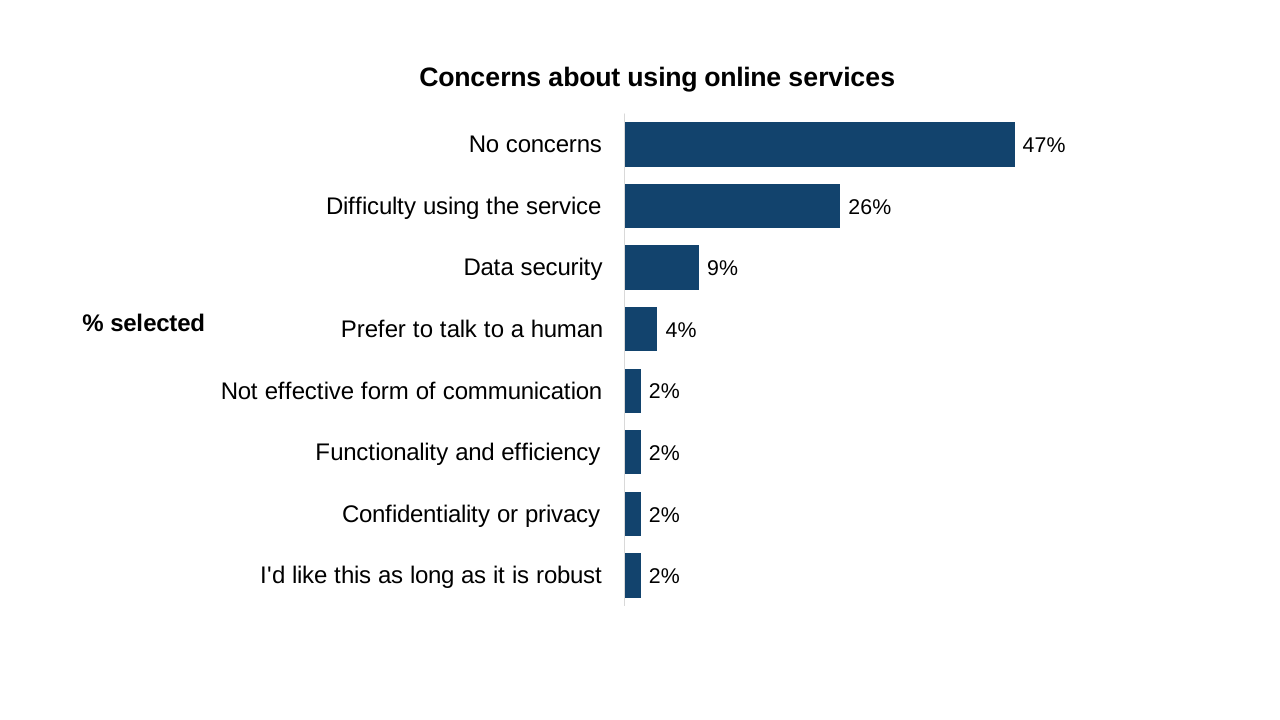
Customers were also asked whether there was anything that would concern them about interacting with DWP via an online service. This was a free-text question, enabling customers to say whatever they wished to, with responses then being coded to the themes shown in Figure 16. Just under half (47%) said they would have no concerns. Children (71%), Irregular Payments (59%), and Care (52%) customers were more likely to report having no concerns; Later Life customers were less likely to report having no concerns (43%).
Figure 16 - Concerns about using online services:
Base: All customers (1,123). Don’t know (10%) and prefer not to say (2%) not shown.
The most common concern given was that there may be a difficulty using the service (26%), which was higher amongst Later Life customers (35%), and those not confident using the internet (37%).
No other concern was stated by more than 10% of customers, but the second most common concern was about data security (9%), followed by preferring to talk to a human (4%).
5. Experiences of modernisation
This chapter covers multiple service line users’ reported experiences of modernisation. The different elements of modernised services are split into different groups: modernised communications, online services, and joined up and automated services, as seen in Chapter 4. Alongside general modes of contact with DWP, responses in this chapter were used to develop proxy groups for analysis throughout the report (see ‘Extent of modernisation experienced’ in Chapter 2). As there was only one statement related to joined up services that customers could report that they had experienced, this was not aggregated into a modernisation proxy variable. As previously mentioned, these were self-reported and may not reflect channels available across service lines.
Experiences of modernised communications
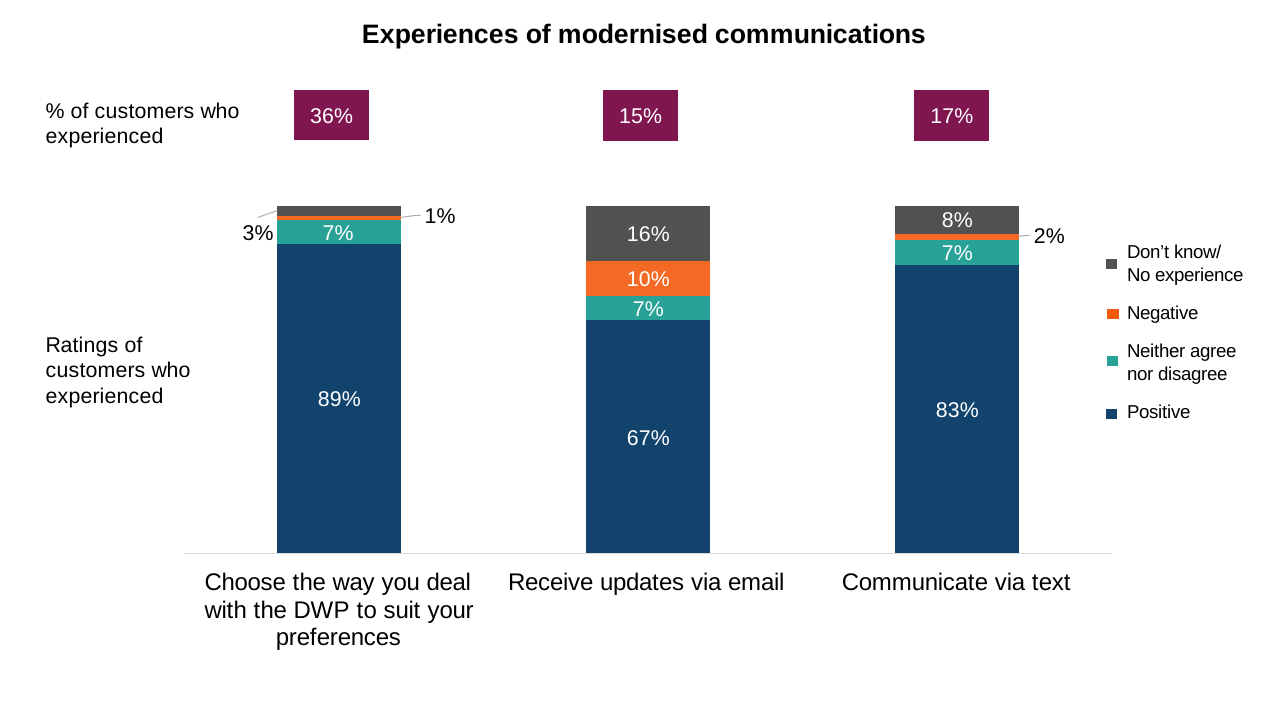
Multiple service line users were asked whether they had experienced modernised communications, and if so, whether they had positive or negative experiences of them (Figure 17).
Figure 17 - Experiences of modernised communications:
Base: All customers (1,123). Communicating via webchat and video call not shown due to low base sizes.
The form of modernised communications that customers were the most likely to report that they had experienced, and to have had positive experiences of, was being able to choose the way that they dealt with DWP to suit their preferences. Just over one in three (36%) customers reported that they had experienced this and, of these customers, nine in ten (89%) reported positive experiences of it. This was higher amongst Later Life customers (93%). The most common reason given for having had a positive experience of choosing how to deal with DWP was that it made access and contact with the service easy (43%).
The next most common form of modernised communications customers reported experiencing was receiving updates via text (17%). Of the customers that reported experiencing this, 83% reported positive experiences. The most common reason given for having had a positive experience of receiving texts was that it makes access and contact with the service easy (61%).
The next most commonly reported form of modernised communications customers experienced was receiving updates via email. Overall, 15% reported experiencing this, and of these, 67% of customers reported positive experiences. Customers in the Children cluster who reported receiving updates via email were more likely to have had positive experiences (84%). The most common reason given for having had a positive experience was that customers were able to get the information they needed (40%).
For the remaining forms of modernised communications, communicating with DWP via webchat and via video call, very small proportions of customers reported they had experienced these forms of modernised communications (1% in each case), with base sizes too low for further analysis. This aligns with availability of these channels in DWP.
Experiences of online services
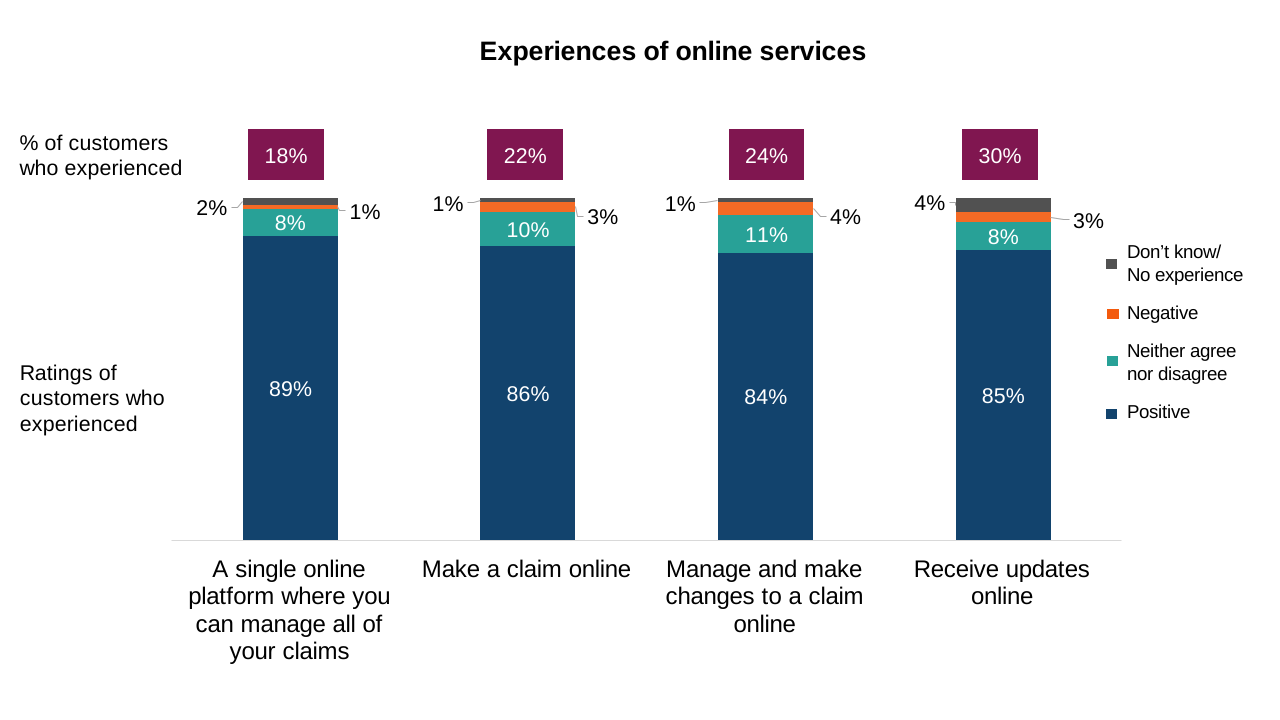
Multiple service line users were asked whether they had experienced interaction with DWP services online in various ways, and if so, whether they had positive or negative experiences of this (Figure 18).
Figure 18 - Experience of online services:
Base: All customers (1,123). Communicating via chatbot not shown due to low base size.
The most common form of online services customers reported experiencing was receiving updates online, which was reported by 30% of multiple service line users. Of those who reported that they had experienced this, 85% had a positive experience. Overall, this was the form that most customers had a positive experience of. The most common reason behind a positive experience was customers were able to get the information they needed or able to do what they needed (30%).
Around a quarter of respondents (24%) reported experiencing managing or making changes to a claim online, to which 84% stated they had positive experiences. This was more positive amongst customers in the Children cluster (92%). The most common reason overall for positive experiences of managing or making changes to a claim online was customers being able to do what they needed (63%).
Just over a fifth reported that they experienced making a claim online (22%) and, of those who reported this, 86% had a positive experience. Care customers were more likely to report a positive experience of making a claim online (91%). The most common reason given for a positive experience was that customers were able to get the information that they needed (61%).
Finally, just under one in five (18%) of all customers reported experiencing a single online platform where they could manage their claims and contact with DWP and, of these customers, 89% reported a positive experience of this. The most common reason given for a positive experience was that it makes the process more streamlined (50%).
Experiences of joined up and automated services
Multiple service line users were asked about their experiences of DWP offering more joined up and automated services. Specifically, they were asked about DWP staff accessing information across their claims (Figure 19). Just over a fifth (22%) reported that they experienced this. Of these customers, 84% reported positive experiences of this in practice.
This was the only question asked as part of this section as for the other statements (DWP updating your claim based on information you have given to other government services, and DWP automating some processes to reach a decision on your claim quickly), customers were less likely to know whether they had actually experienced this or not.
Figure 19 - Experience of joined up and automated services:

Base: All customers (1,123).
6. Conclusions for multiple service line users
This research provided a detailed look into the experiences of customers who manage more than one claim with DWP, and their expectations of how services could be improved. This report presents findings on overall customer experience and the DWP Customer Experience Drivers. These provide standards against which customer service delivery can be measured. Please note, findings presented in this report are independent and different to those of the Customer Experience Survey which provide the department’s key measure of customer satisfaction. Further information can be found on DWP Customer Experience Survey: Benefit customers 2024 to 2025. While overall customer experience was high (81%), further analysis of the data shows clear differences in how these customers experience DWP services, according to their digital confidence, the degree to which they have encountered modernised DWP services, and whether they manage their own contact with DWP.
Impact of modernisation
Across several elements of DWP services, customers who had reported experiencing Online Services were more likely to report positive experiences than those who experienced No Modernisation. Online Services customers in the Later Life cluster were more likely to report positive experiences compared to other service line clusters. Later Life customers who reported using Online Services were more likely to say that DWP took the right action first time (82%), to be satisfied with the time taken to progress their case (80%), and to find it easy to contact DWP at a time that suited them (75%).
Impact of digital competency
Customers who were able to use online government services without help reported more positive experiences across several areas. Later Life customers who could use online government services without help were more likely to feel that DWP made clear the impact of changes of circumstances on benefits than those who could not (76% vs 67%). Furthermore, Later Life customers who could use online government services with help gave higher overall customer experience scores compared to those who could not use them at all (86% vs 75%). Additionally, Care customers who could use government services online without help were more likely to agree that staff did what they said they would (81% vs 68% for those who could only do this with help).
Impact of whether the customer manages their own contact with DWP
Just under half (48%) of all customers managed their DWP contact independently. Among those who did not have a formal appointee managing their contact, 40% said someone else usually helped manage their contact. This factor also impacted customers’ reported experiences. This was most notable for the Care and Children clusters. In both groups, those who needed help with their contact were less likely to be positive about their overall customer experience (67% for both clusters).
Within the Care cluster, those managing contact with DWP independently consistently reported more positive interactions more often than those who received help, particularly in finding it easier to understand their entitlements (77%), agreeing that staff were professional and supportive (85%), and feeling that DWP took the right action first time (79%).
Considerations for modernisation
Issues related to managing multiple claims were relatively common, with 40% saying they needed to supply the same information twice for different claims and 26% saying DWP processes were very different for each claim. This suggests that there is work to be done around the joined up aspects of modernising DWP services, to better support multiple service line users.
Furthermore, despite being the cluster that benefited most from reported experiences of modernisation, over half of Later Life customers (56%) reported that they had not experienced any modernisation, which is to be expected at this stage of the modernisation journey. 32% of Later Life customers said they could not use government services online without help, and only 43% had no concerns about using government services online. This suggests there is scope to further improve the customer experience, particularly amongst Later Life customers, through wider modernisation; though this will need to be accompanied by appropriate support, such as digital options being complemented by accessible alternatives, and help being available for those who need it.
The majority of customers are positive about most modernisation ideas. For example, choosing the way they deal with DWP to suit their preferences and DWP staff accessing information that helps them deal with multiple issues scored high (83% and 72% respectively). Reported experiences of these also scored positively (89% and 84% positive, respectively). Some modernised communication channels were viewed less positively (chatbot, webchat, and video call), and experience of these was also less common. This could be important to consider for any future channel strategies.
Less than half of all customers (47%) had no concerns about using government services online. The most common concern expressed about modernised services was difficulty using them (26%). Almost one in ten customers also raised concerns about data security (9%). This points towards a need to ensure that modernised services are genuinely intuitive to use and secure; and providing reassurance to multiple service line users throughout their customer journey.
7. Annex of additional findings
As referenced in Chapter 3, these are additional questions from the survey that were not reported in the main body of this report for conciseness.
Throughout these tables, “Don’t know”, “Prefer not to say”, and “Not applicable” responses are not included and therefore percentages in the tables may not add up to 100%.
It was easy to get an update on the progress of my claims
Table 1 - Customer agreement that it was easy to get an update on the progress of their claims:
| Total | Later Life | Care | Children | Irregular Payments | |
|---|---|---|---|---|---|
| Agree | 54% | 47% | 64% | 78% | 69% |
| Neither disagree nor agree | 8% | 4% | 14% | 7% | 12% |
| Disagree | 9% | 6% | 17% | 12% | 7% |
Base: All customers (1,123).
It was easy to get through to someone who could help with my issue
Table 2 - The ease of which customers were able to get through to someone who could help them with their issue:
| Total | Later Life | Care | Children | Irregular Payments | |
|---|---|---|---|---|---|
| Easy | 58% | 56% | 54% | 83% | Base < 50 |
| Difficult | 35% | 29% | 43% | 15% | Base < 50 |
Base: All customers who had contact via telephone (284).
I often had to call more than one phone number to sort my query with DWP
Table 3 - Customer agreement that they often had to call more than one phone number to sort their query with DWP:
| Total | Later Life | Care | Children | Irregular Payments | |
|---|---|---|---|---|---|
| Agree | 39% | 33% | 46% | 17% | Base < 50 |
| Neither disagree nor agree | 10% | 13% | 5% | 5% | Base < 50 |
| Disagree | 41% | 39% | 44% | 77% | Base < 50 |
Base: All customers who had contact via telephone (284).