Serious Violence Reduction Orders independent evaluation report
Published 10 April 2026
Applies to England

© Crown copyright 2026
This publication is licensed under the terms of the Open Government Licence v3.0 except where otherwise stated. To view this licence, visit nationalarchives.gov.uk/doc/open-government-licence/version/3 or write to the Information Policy Team, The National Archives, Kew, London TW9 4DU, or email: psi@nationalarchives.gov.uk.
Where we have identified any third party copyright information you will need to obtain permission from the copyright holders concerned.
This publication is available at https://www.gov.uk/government/publications/serious-violence-reduction-orders-independent-evaluation-report/serious-violence-reduction-orders-independent-evaluation-report
Executive summary
SVRO policy background
Serious Violence Reduction Orders (SVROs) were a civil order introduced under the Police, Crime, Sentencing and Courts Act 2022 as a targeted response to habitual knife and offensive weapon carrying. Piloted between April 2023 and April 2025 across 4 police forces – Merseyside, Sussex, Thames Valley and West Midlands – SVROs grant police the automatic right to stop and search individuals subject to an order. The policy aimed to deter weapon carrying, disrupt cycles of re-offending and enhance public safety.
Evaluation methodology
The Home Office commissioned Ecorys, alongside academic collaborators Professor Iain Brennan and Professor Mark Kelson, to conduct an independent evaluation comprising 3 strands:
- Quantitative Impact Evaluation (QIE): a quasi-experimental design (QED) comparing re-offending outcomes between individuals issued with an SVRO and statistically matched comparator groups of individuals who committed an SVRO-eligible offence but ultimately did not receive the order
- Implementation and Process Evaluation (IPE): qualitative research with 59 stakeholders – including police, Crown prosecutors, members of the judiciary and scrutiny panel members – as well as a survey of SVRO recipients, to explore delivery, perceptions and operational challenges
- Analysis of potential disproportionality: using both quantitative and qualitative evidence, potential disproportionality (focusing on ethnicity) in the SVRO process was explored
A triangulation workshop was held to synthesise findings across both evaluation strands before reporting.
Overview of SVRO pilot delivery
Analysis of quantitative monitoring data on the delivery of the SVRO pilot found:
Volume and progression of SVRO cases: 6,453 eligible individuals were considered for an SVRO during the pilot. Of the eligible individuals, 2,016 (31.2%) SVRO applications were progressed by the police during the pilot. Of the SVRO applications made, 1,823 (90.4%) were sought in court by the Crown Prosecution Service (CPS) during the pilot. Of the SVRO applications sought in court, 468 (25.7%) were issued.
Characteristics of eligible individuals: 2,275 (35.3%) individuals from the pool of eligible individuals (6,453) had sufficient data to be included in the quantitative analysis of individual and case characteristics (and the QIE). The individuals excluded from the analytical sample at this stage were largely those where an SVRO application was not progressed by the police (and not eligible for inclusion in the QIE) – among included individuals, the mean age of individuals was 35.1 and the majority were: Male (87.9%; 2,000 individuals) and from the aggregated White ethnic group (79.4%; 1,807 individuals).
SVRO-eligible offence types: most eligible individuals were considered for an SVRO due to a possession of weapons offence (56.4%; 1,283 individuals), followed by violence against the person (26.9%; 612 individuals).
Stop and search volumes: 5,304 stop and searches across 933 individuals were undertaken during the SVRO pilot, which included 3,196 (60.3%) among individuals without an SVRO and 2,108 (39.7%) stop and searches among individuals with an SVRO (before they were issued with one). In total, 315 stop and searches were undertaken using the SVRO legal power, representing 34% of the 927 stop and search incidents involving individuals with an SVRO during the period in which the orders were in effect.
Stop and search frequency: on average, individuals with an SVRO were stopped and searched 2.5 times before the SVRO-eligible offence took place and 2 times after. This was lower among individuals without an SVRO before and after the SVRO-eligible offence took place (1.3 and 0.5, respectively).
Weapon find rates: across 497 individuals with sufficient data, 42 (8.4%) individuals who were stopped and searched in the period that SVROs were in effect were found with a weapon, a slightly higher find rate among individuals with an SVRO (9.3%, 19 out of 205 individuals) relative to those without an SVRO (7.9%, 23 out of 292). During the period in which SVROs were in effect, a weapon was found using the SVRO legal power in one stop and search out of 315 incidents, yielding a find rate of 0.3%, which was lower than the recorded rate during this same period when the Misuse of Drugs Act 1971 (1.3%, 13 out of 990 incidents) and the PACE 1984 Act (7.5%, 31 out of 411 incidents) were the legal powers used.
Quantitative impact evaluation results
The QIE found that individuals who were issued with an SVRO (the treatment group) were more likely to re-offend after the SVRO-eligible offence took place (the follow-up period) relative to the comparator group. However, there was no statistically significant difference between groups when the analysis focused on just violent re-offending, and the increased likelihood of stop and search for the treatment group suggests the increased likelihood of other re-offending could be through increased detection.
More specifically, the QIE found that:
SVRO impact on any re-offending: individuals who were issued with an SVRO were 16.7% more likely to re-offend, relative to the comparator group. This statistically significant result remained consistent when adjusting for custodial sentencing (16.4%) and SVRO duration (17.7% where the SVRO was 24 months, 15.5% where the SVRO was less than 24 months). The impact largely disappeared when adjusting for stop and search frequency in the follow-up period, although a significant increase remained where one to 2 follow-up stop and searches took place (16.1%).
SVRO impact on possession of weapons re-offending: SVROs were associated with a statistically significant increase in possession of weapons re-offending, although the size of the effect was smaller (4.5%). Results from analyses with additional adjustments were more mixed, likely owing to this type of offending being less frequent (in general) – the impact largely disappeared when adjusting for stop and search frequency in the follow-up period, although a significant increase with a larger effect size was found when 3 or more stop and searches took place (13.5%).
SVRO impact on violent re-offending: SVROs did not have a statistically significant impact on violent re-offending. This result remained consistent when adjusting for custodial sentencing, SVRO duration, and stop and search frequency in the follow-up period.
SVRO impact on stop and search activity: SVROs were associated with a statistically significant increase in the likelihood of being stopped and searched in the follow-up period (20.9%). This result remained consistent when adjusting for custodial sentencing (27.1%) and SVRO duration (19.4% where the SVRO was 24 months, 22.4% where the SVRO was less than 24 months).
Implementation and process evaluation results
The IPE found:
Need and value of the legislation: SVROs were generally viewed as a useful tool for proactive policing to safeguard the public from harm.
Training and preparedness: while national training for police was provided, localised ongoing training, support, and guidance were critical. Members of the judiciary and CPS prosecutors received limited formal training.
The SVRO process: the evaluation identified variability in how forces interpreted eligibility and applied for SVROs. While some forces encouraged widespread applications, others emphasised professional judgement and the importance of considering proportionality and necessity. CPS prosecutors and the judiciary highlighted challenges with the quality and appropriateness of applications.
Operational delivery: officers enforcing SVROs varied in their use of SVRO powers, with some conducting frequent searches and others deterred by workload or concerns about scrutiny (both from the public and internally).
Perceived effectiveness of SVROs: stakeholders expressed mixed views on the effectiveness of SVROs for reducing re-offending. While some thought that SVROs could be an effective deterrent against future offending, others were less certain about the deterrent effect, especially among the most high-risk offenders. The absence of a rehabilitative element to the order was seen as a limitation to behaviour change.
Results from analysis of potential disproportionality in the SVRO process
Analysis of the quantitative data did not show any robust evidence of ethnic disproportionality across the SVRO process. The qualitative data showed that the potential for disproportionality in the application and enforcement of SVROs was recognised across the range of participant groups. As a result, SVRO applications and stop and searches were closely monitored for disproportionality by police.
Conclusions
Key conclusions emerging from the evaluation are:
Preparing for and delivering the SVRO pilot
National training was provided to pilot forces, but ongoing local training, support and guidance were critical for effective implementation. CPS prosecutors and the judiciary received limited formal training, highlighting the need for more practical, scenario-based training in any future rollout.
Although 6,453 individuals were eligible for an SVRO during the pilot, only 468 individuals were issued with an order in court. While 3,997 of those eligible were not progressed by the police for an SVRO application (demonstrating professional judgement), the most common reason for eligible individuals not receiving an SVRO where an application was made was rejection in court by the judiciary, often due to insufficient evidence or lack of necessity/proportionality.
There was variability in how forces interpreted and applied SVRO eligibility criteria, with some encouraging widespread applications and others emphasising professional judgement.
Operational use of SVROs and disproportionality
SVROs enabled police to stop and search recipients without additional reasonable grounds, resulting in an increase in stop and search activity among SVRO recipients.
The SVRO legal power was used in 315 stop and search incidents, with a weapon found in one case (0.3% find rate), lower than for other legal powers used during the pilot.
Forces used proactive methods (such as briefings, Police National Computer (PNC), CCTV) to identify SVRO recipients, leading to higher visibility and frequency of stops.
Monitoring and scrutiny of SVROs were in place, but concerns about disproportionality (particularly regarding ethnicity and homelessness) were raised. Quantitative analysis found no strong evidence of ethnic disproportionality, but qualitative data suggested individuals experiencing homelessness may be disproportionately affected.
Outcomes and impacts of SVROs
SVROs had no conclusive impact on violent re-offending, so the intended deterrent effect of SVROs on serious violence was therefore not observed during the pilot period. While some police officers reported anecdotal evidence of behaviour change, the absence of a rehabilitative element was widely seen as a barrier to deterrence and sustained behaviour change. Stakeholders mentioned that it may also be too early to determine the full impact of SVROs on serious violence and a longer-term follow-up is recommended.
SVROs were associated with a significant increase in any re-offending and possession of weapons re-offending. The available evidence suggests that this increase is likely due to heightened enforcement and surveillance of SVRO recipients, rather than a change in underlying behaviour.
The pilot fostered generally positive relationships between the police, CPS and the judiciary, but highlighted the need for improved feedback loops and a shared understanding of SVRO processes.
1. Introduction
1.1 Policy background
Knife crime continues to be a major problem across England and Wales, with data from the Office for National Statistics (ONS) indicating that there were over 50,000 knife-enabled offences (where a knife or sharp object was used to injure or threaten victims) in the year ending 31 March 2025. SVROs were piloted as a measure to tackle this issue by providing the police with additional powers to deter and change behaviours towards habitual knife or offensive weapon carrying. SVROs were intended to reduce serious violence by deterring weapon carrying and encouraging behaviour change to break the cycle of re-offending.
Following a public consultation, SVROs were a civil order introduced in the Police, Crime, Sentencing and Courts Act 2022 (HM Government, 2022). The statutory guidance was released in March 2023 (Home Office, 2023a). The pilot lasted 2 years, starting on 19 April 2023 and ending on 18 April 2025. SVROs were piloted in 4 police forces: Merseyside, Sussex, Thames Valley and West Midlands. Guidance provided to pilot forces stated that the police were to apply to the CPS requesting that an SVRO be sought in court where:
- an offender is aged 18 or over
- a bladed article or offensive weapon was used or present by the offender during an offence
or
- a bladed article or offensive weapon was used by another person in the commission of the offence and the offender knew or ought to have known and/or another person had the bladed article/offensive weapon with them when the offence was committed, and the offender knew or ought to have known
While it was anticipated that an SVRO would be sought in all (or most) cases meeting these criteria, there was a recognition that professional judgement should also be used. The guidance provided to pilot forces included considerations to support these judgements and a template for the application.
The Police, Crime, Sentencing and Courts Act 2022 stated that the Magistrates’ or Crown Court (the court) could issue an SVRO if, based on the balance of probabilities, the following conditions were met:
- the offender either used a bladed article or offensive weapon or had one during the offence, or they knew or should have known that another person involved in the offence used or had such a weapon
- the court believed it was necessary to issue the order to protect the public, protect specific members of the public (including the offender), or to prevent the offender from committing future offences with a bladed article or offensive weapon
An order could be issued for a minimum of 6 months and a maximum of 2 years. Where the offender was remanded in custody or serving a custodial sentence, the order was to start upon their release.
SVROs provided police with the legal power to stop and search recipients of the order in a public place, which was intended to deter the carrying of bladed articles or offensive weapons. While the power does not require reasonable grounds to suspect that the individual to be searched is in possession of a bladed article or offensive weapon (Home Office, 2023b), the SVRO statutory guidance stated that police forces were responsible for monitoring the SVRO stop and search power, and police officers must have regard to Police and Criminal Evidence Act 1984 (PACE) Code A, the statutory code of practice governing the use of stop and search.
In addition, those issued with an SVRO would also commit a criminal offence or breach their order if they:
- failed to do anything they were required to do by the order without a reasonable excuse, including the offender notifying a local police station they were subject to an SVRO within 3 days of it being issued
- did anything they were prohibited from doing by the order without reasonable excuse
- provided false information to the police
- falsely told a police officer they were not subject to the order
- intentionally obstructed a police officer in exercising their powers
Where a potential SVRO breach has been identified, the police may charge the individual with an existing criminal offence relating to possession of a bladed article or offensive weapon. If found guilty of a breach or associated criminal offence, or both, following a summary trial in a Magistrates’ Court, the offender would face up to one year in prison, a fine, or both. If convicted on indictment in a Crown Court, the offender would face up to 2 years in prison, a fine, or both. The court in which the case is heard will depend on the seriousness of the breach / offence.
1.2 The SVRO process
Implementation of SVROs follows a specified process, as set out in Figure 1. The process begins with the police identifying an eligible offender who has committed a qualifying offence. Following identification, the police complete an SVRO application form in which evidence to support the need for an SVRO is collated. The application form is then presented to the CPS, who decides whether to submit the application to the court. If the SVRO application is submitted to the court, the court decides whether to grant the order. Where an SVRO is issued by the court, the police are then responsible for enforcing the order. Where the police carry out a stop and search using the SVRO powers, they must record data on the stop and search, which can then be subject to external scrutiny.
Figure 1: SVRO process

Notes:
- Adapted from SVRO process figure in the 2023 statutory guidance.
1.3 Evaluation aims
The Home Office commissioned Ecorys and academic collaborators, Professor Iain Brennan and Professor Mark Kelson (the evaluation team), to independently evaluate the SVRO pilot. Findings from the evaluation will inform future policy decisions about SVROs. There were 3 aims of the evaluation, including understanding:
- The impact of SVROs on re-offending in pilot areas using quantitative and qualitative data, and a QIE.
- How the pilot was implemented, and the effectiveness of (and any barriers to) the implementation of the pilot through an IPE.
- Potential disproportionality in the application for granting and enforcing of SVROs using quantitative and qualitative monitoring and evaluation data.
A triangulation workshop was held in the analysis phase to synthesise evidence and findings from the evaluation, particularly the QIE and IPE. The discussion covered both areas of alignment and areas of possible divergence between the 2 strands of evidence, ensuring the evaluation would produce a contextualised and coherent narrative and conclusion.
1.4 Theory of change
The Theory of Change (ToC) for SVROs, which served as a foundation for the evaluation design, is presented in Figure 2. The ToC was designed prior to pilot start and informed by the SVRO statutory guidance. It can therefore be considered as a ToC capturing Home Office policy intent prior to pilot rollout. The ToC sets out the key inputs and activities for SVROs and expected outputs, outcomes and, ultimately impacts, resulting from these. Elements of the ToC have been grouped to make the causal pathways between different types of activities and outcomes clearer. The rationale for and assumptions/risks associated with SVROs are also included in the ToC.
Figure 2: SVROs Theory of Change

For an accessible version see Serious Violence Reduction Orders independent evaluation report: Theory of Change (accessible version).
1.5 Summary of evaluation methodology
This section summarises the QIE and IPE methodologies. A more detailed outline of the design and methodology of the QIE and IPE can be found in Sections 3.1 and 4.1, respectively.
The QIE was implemented using a QED comparing re-offending outcomes between individuals issued with an SVRO (treatment group) and 2 comparator groups: (1) those for whom an SVRO application was made but not issued, and (2) a subset of the first group who were also convicted of the SVRO-eligible offence. Propensity score analysis using inverse probability weighting (IPW) was employed to adjust for confounding variables including age, gender, ethnicity, police force area, date of the SVRO-eligible offence, and prior offending history. Stop and search frequency was considered (and tested) as a weighting covariate but excluded due to data limitations.
The impact analysis focused on 3 primary outcomes: any re-offending, violent re-offending and possession of weapons re-offending. The follow-up (or observation) period for re-offending was from the date of the SVRO-eligible offence to the end of the pilot[footnote 1]. Additional analysis assessed the impact of SVROs on stop and search activity in the follow-up period as an outcome measure to help contextualise findings related to re-offending outcomes. The analysis was structured into 3 tiers: an intention-to-treat (ITT) analysis where all eligible individuals were included (Tier 1); a community re-offending analysis where those with a (likely) custodial sentence were excluded (Tier 2); and an exploration of how SVRO duration and stop and search frequency might explain differences in re-offending between the treatment and comparator groups (Tier 3).
The IPE strand complements the QIE by providing contextual insights into how SVROs were understood and enforced in practice. The IPE used qualitative methods to explore how SVROs were delivered and experienced by key stakeholders, including the perceived effectiveness of the legislation. In-depth and small group discussions were conducted with 59 participants across 2 waves of data collection (early and late 2024 into early 2025). Participants included police force SVRO leads, police officers, CPS prosecutors, members of the judiciary (judges and magistrates), and stop and search scrutiny and fair use panel members. Recruitment was facilitated through gatekeepers and ethical protocols were followed, including informed consent and confidentiality assurances.
To capture the views and experiences of individuals who are subject to an SVRO (SVRO recipients), a short online survey was also disseminated via police to those subject to an SVRO across the 4 pilot area sites between November 2024 and May 2025. Questions were designed to capture an understanding of SVRO conditions; awareness and attitudes around the risks and consequences of carrying a weapon; and changes in behaviour intentions as a result of being subject to an SVRO. Responses to the survey were very low, with only 3 respondents submitting data.
Interview data was recorded, transcribed and analysed thematically using a case and theme-based analytical framework, which aligned with the evaluation framework and ToC. The analysis aimed to capture the range of views on SVRO implementation, including perceptions of the legislation’s value, training and guidance, operational delivery, ethical considerations, and the overall effectiveness of the pilot in achieving the intended outcomes and impacts. Due to the low number of survey responses, only a description of the responses is provided.
1.6 Report scope and structure
Section 2 presents an overview of the SVRO pilot delivery. This includes an overview of the volumes of eligible individuals through to issued SVROs, descriptive analysis of individuals eligible for an SVRO, and the analysis of potential disproportionality.
Section 3 outlines the QIE in more detail, including the study design, sample and main results.
Section 4 provides the findings from the IPE. This covers a range of themes, including the need and value of SVRO legislation, training and preparedness to implement SVROs, views on the eligibility criteria for SVROs, the application process, enforcement, and perceived outcomes and effectiveness of SVROs.
Section 5 triangulates findings from the 2 evaluation strands and forms overarching conclusions linked to the original evaluation aims.
Finally, the report contains 4 Annexes. The full QIE methodology and additional impact results are provided in Annex A. The full methodology for the quantitative analysis of potential disproportionality in the SVRO process is presented in Annex B. A summary of the themes and sub-themes (by participant group) covered in the IPE is presented in Annex C. The questionnaires used in the survey of SVRO recipients is presented in Annex D.
2. Overview of SVRO pilot delivery
This section outlines the delivery of the SVRO pilot. This includes a summary of volumes during the pilot (from eligible individuals through to issued SVROs), descriptive analysis of the sample of individuals included in the QIE (including demographics, offending behaviour, and stop and search activity) and analysis of potential disproportionality by ethnic group in the SVRO process.
SVRO pilot delivery key findings
Volume and progression of SVRO cases: 6,453 eligible individuals were considered for an SVRO during the pilot. Of the eligible individuals, 2,016 (31.2%) SVRO applications were progressed by the police during the pilot. Of the SVRO applications made, 1,823 (90.4%) were sought in court by the Crown Prosecution Service (CPS) during the pilot. Of the SVRO applications sought in court, 468 (25.7%) were issued.
Characteristics of eligible individuals: 2,275 (35.3%) individuals from the wider pool of individuals (6,453) had sufficient data to be included in the quantitative analysis of individual and case characteristics (and the QIE). The individuals excluded from the analytical sample at this stage were largely those where an SVRO application was not progressed by the police (and not eligible for inclusion in the QIE). Among included individuals, the mean age of individuals was 35.1, and the majority were: Male (87.9%; 2,000 individuals) and from the aggregated White ethnic group (79.4%; 1,807 individuals).
SVRO-eligible offence types: most eligible individuals were considered for an SVRO due to a possession of weapons offence (56.4%; 1,283 individuals), followed by violence against the person (26.9%; 612 individuals).
Stop and search volumes: 5,304 stop and searches across 933 individuals were undertaken during the SVRO pilot, including 3,196 (60.3%) among individuals without an SVRO and 2,108 (39.7%) stop and searches among individuals with an SVRO. In total, 315 stop and searches were undertaken using the SVRO legal power, representing 34% of the 927 stop and search incidents involving individuals with an SVRO during the period in which the orders were in effect.
Stop and search frequency: on average, individuals with an SVRO were stopped and searched 2.5 times before the SVRO-eligible offence, and 2 times after. This was lower among individuals without an SVRO at both time points (1.3 and 0.5, respectively).
Weapon find rates: across 497 individuals with sufficient data, 42 (8.4%) individuals stopped and searched in the period that SVROs were in effect were found with a weapon, a similar find rate among individuals with an SVRO (9.3%; 19 out of 205 individuals) relative to those without an SVRO (7.9%; 23 out of 292). During the period in which SVROs were in effect, a weapon was found using the SVRO legal power in one stop and search out of 315 incidents, yielding a find rate of 0.3%, which was lower than the recorded rate during this same period when the Misuse of Drugs Act 1971 (1.3%; 13 out of 990 incidents) and the PACE 1984 Act (7.5%; 31 out of 411 incidents) were the legal powers used.
2.1 Volumes during the SVRO pilot
Figure 3 summarises the total volume of individuals involved in the SVRO pilot based on the monitoring data provided by each force. The monitoring data template provided to forces asked explicitly about case progression (with dates) but where there was missing data, the progress was, as far as reliably possible, inferred from other variables. For example, where data on whether the CPS progressed an SVRO application to court was missing, if it was known that the SVRO was issued or rejected at court, then missing data around CPS progression was reverted to ‘Yes’ (as an SVRO must have been progressed by the CPS to be heard in court). Similar logic was used to populate missing data retrospectively across variables related to the SVRO process. Where case progression could not be determined, these were left as to be determined (TBD) or not known. Figure 3 utilises these retrospectively populated variables to provide as much information as possible about volumes progressed during the SVRO pilot.
Figure 3: Volumes of individuals progressed through the SVRO process during the pilot
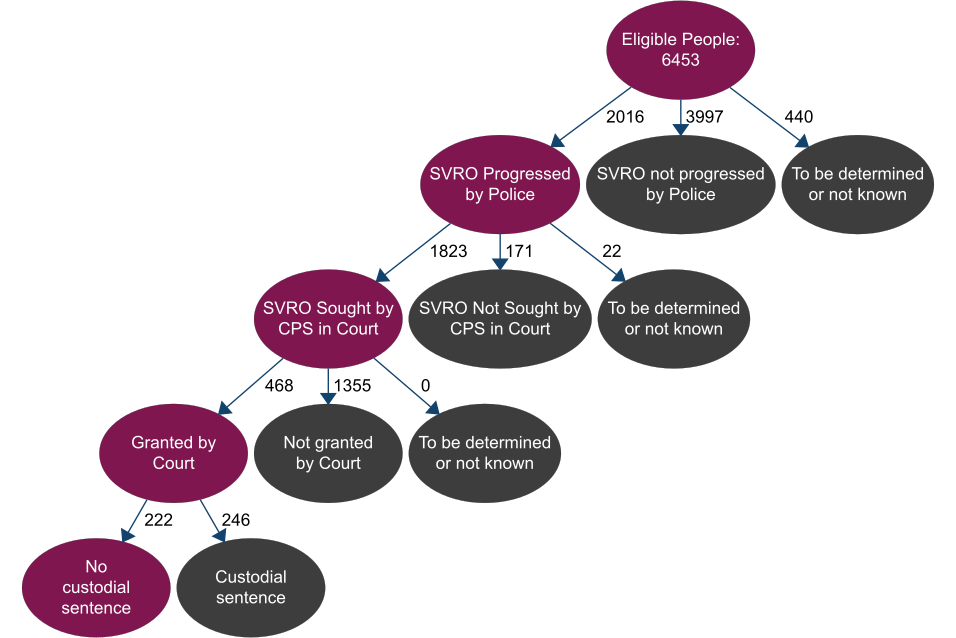
In total, 6,453 individuals were eligible for an SVRO across the 4 pilot forces. Of these, 2,016 (31.2%) had an SVRO application being progressed. Among this subset of individuals, 1,823 (90.4%) had their application progressed to court. Finally, 468 (25.7%) of these individuals had their SVRO issued at court, of which 246 (52.6%) received a custodial sentence for the SVRO-eligible offence.
It is worth noting that the final sample of eligible individuals with enough usable data for possible inclusion in the impact analysis was 2,275 (468 treatment; 1,807 comparator). The loss of sample relative to the pool of eligible individuals shown in Figure 3 (6,453) was primarily driven by missing data for the entire comparator group in one force due to primary data collection issues, and sampling of comparator group individuals in another to manage primary data collection burden (see Annex A for the sampling rationale and methodology). Given that the number of SVROs issued was relatively low compared to the number of applications made, and that data used to monitor SVRO pilot delivery were also used to implement the QIE, loss of sample and missingness was less problematic in the treatment group. Adjusting for police force area was therefore critical, given that missing data was primarily driven at the force level (see Section 3.1 and Annex A). In both of these forces, the most common drop-off point from the SVRO process among these individuals that could not be included in the analytical sample was at the application stage, that is, they were eligible for an SVRO but the police did not make an application.
2.2 Descriptive analysis of individuals eligible for an SVRO
This section describes the sample of eligible individuals that could be included in the analysis (2,275), overall and according to whether they ultimately received an SVRO (‘With SVRO’) or not (‘Without SVRO’). It is important to note that this assessment is based on the data prior to weighting the data as part of the QED, which was used to improve the comparability of the treatment and comparator – a key step to reliably estimating the impact of SVROs. Conclusions on the outcomes of the programme should therefore not be drawn from this analysis.
2.2.1 Demographic characteristics
Table 1 summarises the demographic characteristics of eligible individuals by SVRO status. The mean age overall was 35.1 and was slightly lower among those with an SVRO, although the difference was minor. A histogram showing the distribution of ages in this sample is displayed in Figure 4. In the samples of individuals with and without an SVRO, a bimodal distribution is displayed, with 2 key peaks around the late teens/early 20s and the mid-30s.
Figure 4: Histogram showing the age distribution of individuals without and with an SVRO (2,275)
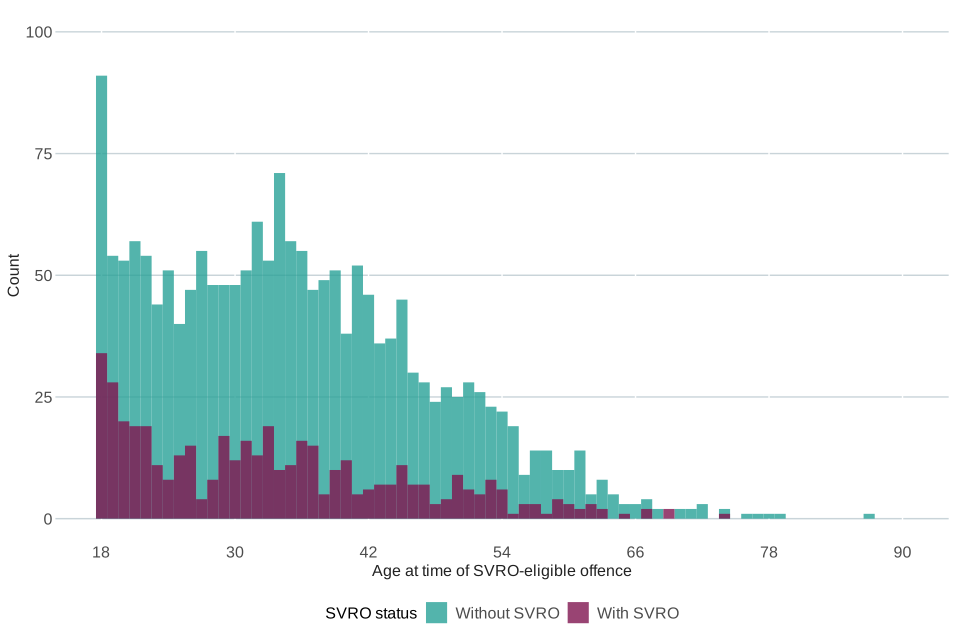
Most individuals were male (87.9%), with a slightly higher proportion of males among those with an SVRO. Recognising that some ethnic groups had consistently very small numbers, which would have made analysis unreliable, aggregated groups were formed and used for all quantitative analysis. In both groups, most individuals fell into the aggregated White ethnic group (79.4%), with the proportion slightly lower among those with an SVRO. The proportion of individuals in the aggregated Black ethnic group was slightly higher among those with SVROs (although not substantially), while the proportion of individuals in other aggregated ethnic groups was largely balanced (similar) by SVRO status. As a benchmark, according to 2021 census data, the population of the 4 pilot areas in 2021 were proportionally from the aggregated White (78%), Asian (13%), Black (4%), Mixed (3%), and Other (2%) ethnic groups (ONS, 2023)[footnote 2].
Table 1: Demographic characteristics by SVRO status
| Balance indicator | Level | Overall | Without SVRO | With SVRO |
|---|---|---|---|---|
| Total individuals | 2,275 | 1,807 | 468 | |
| Age at time of SVRO-eligible offence (Mean, SD) | 35.1 (12.2) | 35.5 (12.2) | 33.5 (12.5) | |
| Gender | Female | 271 (11.9%) | 235 (13%) | 36 (7.7%) |
| Male | 2,000 (87.9%) | 1,568 (86.8%) | 432 (92.3%) | |
| Other | 4 (0.2%) | 4 (0.3%) | 0 | |
| Aggregated ethnic group | Asian/Asian British | 111 (4.9%) | 86 (4.8%) | 25 (5.3%) |
| Black/African/Caribbean/Black British | 221 (9.7%) | 159 (8.8%) | 62 (13.2%) | |
| Mixed/Multiple | 44 (1.9%) | 23 (1.3%) | 21 (4.5%) | |
| Not known | 50 (2.2%) | 36 (2%) | 14 (3%) | |
| Other | 37 (1.6%) | 28 (1.5%) | 9 (1.9%) | |
| White | 1,807 (79.4%) | 1,470 (81.4%) | 337 (72%) | |
| Not known | 5 (0.2%) | 5 (0.3%) | 0 |
Notes:
- Column percentages are used to support comparison of proportions across individuals without and with SVROs.
- SD = standard deviation.
2.2.2 Information about the SVRO-eligible offence
Table 2 presents key characteristics of the SVRO-eligible offence by SVRO status. Most offences took place between March 2023 (start of quarter 2, April to June, 2023) to September 2024 (end of quarter 3, July to September, 2024) and were generally well balanced across those with and without SVROs[footnote 3]. By primary offence group, the majority of SVRO-eligible offences were possession of weapons (56.4%) followed by violence against the person (26.9%). The proportion of possession of weapons offences was higher among those with an SVRO, while the proportion that were violence against the person was lower in this group. Other primary offence groups were less common and relatively well balanced across groups. The majority of individuals were considered eligible for an SVRO as a result of possessing a bladed article (76.2%), rather than using it (21.5%). This was the case across those with SVROs and those without SVROs, where the proportions were similar.
For data related to court outcomes for the SVRO-eligible offence, there was a higher proportion of missing data in relation to whether the SVRO-eligible offence was heard in the Crown or Magistrates’ Court, and whether the individual was ultimately convicted and received a custodial sentence for the offence. This was especially the case for those without an SVRO. Nonetheless, for both groups it was more common for the offence to be heard in the Magistrates’ Court (38.5% compared to 26.4% in the Crown Court). By definition, all individuals with an SVRO were convicted for the SVRO-eligible offence where data was available[footnote 4]. When accounting for missing data, most individuals without an SVRO were convicted for the SVRO-eligible offence (93.3%; 943 out of 1,011 individuals with sufficient data). When accounting for missing data, the proportion of individuals that received a custodial sentence for the SVRO-eligible offence was substantially higher among those with an SVRO (52.6%) relative to those without an SVRO (35%; 346 out of 989 individuals with sufficient data).
Table 2: Characteristics of the SVRO-eligible offence by SVRO status
| Balance indicator | Level | Overall | Without SVRO | With SVRO |
|---|---|---|---|---|
| Total individuals | 2,275 | 1,807 | 468 | |
| SVRO-eligible offence quarter | 2022 quarter 1 (January to March) |
1 (0%) | 0 | 1 (0.2%) |
| 2023 quarter 1 (January to March) |
2 (0.1%) | 0 | 1 (0.2%) | |
| 2023 quarter 2 (April to June) |
307 (13.5%) | 252 (13.9%) | 55 (11.8%) | |
| 2023 quarter 3 (July to September) |
473 (20.8%) | 392 (21.7%) | 81 (17.3%) | |
| 2023 quarter 4 (October to December) |
327 (14.4%) | 263 (14.6%) | 64 (13.7%) | |
| 2024 quarter 1 (January to March) |
401 (17.6%) | 320 (17.7%) | 81 (17.3%) | |
| 2024 quarter 2 (April to June) |
363 (16%) | 291 (16.1%) | 72 (15.4%) | |
| 2024 quarter 3 (July to September) |
246 (10.8%) | 186 (10.3%) | 60 (12.8%) | |
| 2024 quarter 4 (October to December) |
106 (4.7%) | 70 (3.9%) | 36 (7.7%) | |
| 2025 quarter 1 (January to March) |
43 (1.9%) | 29 (1.6%) | 14 (3%) | |
| 2025 quarter 2 (April to June) |
4 (0.2%) | 2 (0.1%) | 2 (0.4%) | |
| Not known | 2 (0.1%) | 2 (0.1%) | 0 | |
| SVRO-eligible offence primary offence group | Arson / Criminal damage | 34 (1.5%) | 26 (1.4%) | 8 (1.7%) |
| Burglary | 19 (0.8%) | 13 (0.7%) | 6 (1.3%) | |
| Drug offences | 89 (3.9%) | 69 (3.8%) | 20 (4.3%) | |
| Miscellaneous crimes against society | 4 (0.2%) | 1 (0.1%) | 3 (0.6%) | |
| Possession of weapons | 1,283 (56.4%) | 986 (54.6%) | 297 (63.5%) | |
| Public order offences | 25 (1.1%) | 19 (1.1%) | 6 (1.3%) | |
| Robbery | 112 (4.9%) | 88 (4.9%) | 24 (5.1%) | |
| Sexual offences | 6 (0.3%) | 6 (0.3%) | 0 | |
| Theft | 39 (1.7%) | 21 (1.2%) | 18 (3.8%) | |
| Vehicle offences | 51 (2.2%) | 45 (2.5%) | 6 (1.3%) | |
| Violence against the person | 612 (26.9%) | 532 (29.4%) | 80 (17.1%) | |
| Not known | 1 (0%) | 1 (0.1%) | 0 | |
| Weapon used or possessed in SVRO-eligible offence | Possessed | 1,734 (76.2%) | 1,365 (75.5%) | 369 (78.8%) |
| Used | 489 (21.5%) | 390 (21.6%) | 99 (21.2%) | |
| Not known | 52 (2.3%) | 52 (2.9%) | 0 | |
| SVRO-eligible offence heard in Magistrates’ or Crown Court | Crown Court | 601 (26.4%) | 412 (22.8%) | 189 (40.4%) |
| Magistrates’ Court | 877 (38.5%) | 603 (33.4%) | 274 (58.5%) | |
| Not known | 797 (35%) | 792 (43.8%) | 5 (1.1%) | |
| Convicted of SVRO-eligible offence | No | 66 (2.9%) | 66 (3.7%) | 0 |
| TBD | 2 (0.1%) | 2 (0.1%) | 0 | |
| Yes | 1,410 (62%) | 943 (52.2%) | 467 (99.8%) | |
| Not known | 797 (35%) | 796 (44.1%) | 1 (0.2%) | |
| Custodial sentence received for SVRO-eligible offence | No | 864 (38%) | 643 (35.6%) | 221 (47.2%) |
| Not known | 819 (36%) | 818 (45.3%) | 1 (0.2%) | |
| Yes | 592 (26%) | 346 (19.1%) | 246 (52.6%) |
Notes:
- Column percentages are used to support comparison of proportions across individuals without and with SVROs.
2.2.3 Progression of cases through SVRO process and breaches
Of the 2,275 eligible individuals where usable data for the quantitative analysis/QIE was provided, 1,289 (56.7%) were progressed by the police. At the next stage, it was estimated (see Section 2.1 for an explanation on how the progression of cases was estimated where data was missing) that the CPS progressed 1,264 (98.1%) applications that were made by the police to court. Finally, of those cases where it was assumed the SVRO was presented at court, 468 (37%) were ultimately issued. Applications rejected at court were the most common reason why an individual eligible and considered for an SVRO ultimately did not get issued with the order. This is aligned with IPE findings around challenges or barriers to granting SVROs in court (see Section 4.6.4 for more information).
Where issued, the most common SVRO duration was 24 months, with 260 (55.6%) of SVROs being of this length. By comparison, 207 (44.2%) were less than 24 months. The SVRO duration was unknown for one individual issued with an order.
The majority of individuals (67.1%; 314 out of 468) with SVROs did not breach the order. There were 158 breaches of SVROs across 154 individuals (32.9%) with an order. Most of these breaches were because “the offender fails without reasonable excuse to do anything the offender is required to do by the order”. In a minority of breaches, the reason was a “failure to register new address” or “the offender notifies to the police, in purported compliance with the order, any information which the offender knows to be false”. For 87 breaches (55.1% of all SVRO breaches), the outcome of the breach was recorded. Of these, 63 (72.4% of all breaches with a recorded outcome) resulted in the individual being charged, while 14 (16.1%) were marked as ‘No Further Action’, 7 (8.1%) were investigated but did not result in a charge, and 3 (3.4%) were released under investigation. Stakeholder insights on SVRO breaches from the IPE can be found in Section 4.6.6.
2.2.4 Offending behaviour of eligible individuals
Table 3 summarises the offending behaviour of eligible individuals by SVRO status. This includes prior offending behaviour (which are offences that took place prior to the SVRO-eligible offence, which was used as a consistent proxy for the time when an SVRO was issued across both groups) and re-offending behaviour (which are offences that took place after the SVRO-eligible offence). A more detailed explanation of how the prior and re-offending windows were defined and measured can be found in Annex A.
Prior to the SVRO-eligible offence (and the key step of re-weighting data for the impact analysis), eligible individuals committed 1.1 offences on average. SVRO recipients had a slightly higher mean number of offences (1.3) relative to the non-recipients (1.0). Across all eligible individuals, the mean number of re-offences was slightly lower (0.8), with SVRO recipients again having a higher mean re-offending rate (1.1) relative to those without an SVRO (0.7).
The mean number of violent prior offences was 0.3 overall. There was little difference among SVRO recipients (0.4) and those without an SVRO (0.3). In the follow-up period, the mean number of violent re-offences was slightly lower (0.2) and balanced by SVRO status.
Finally, the mean number of prior possession of weapon offences was 0.1 overall. It was slightly higher among SVRO recipients (0.2) than those without an SVRO (0.1). The mean number of possession of weapon re-offences remained 0.1 and balanced by SVRO status.
Table 3: Offending behaviour by SVRO status
| Balance indicator | Overall | Without SVRO | With SVRO |
|---|---|---|---|
| Total individuals | 2,275 | 1,807 | 468 |
| Any prior offences (Mean, SD) | 1.1 (2.5) | 1.0 (2.5) | 1.3 (2.5) |
| Violent prior offences (Mean, SD) | 0.3 (0.8) | 0.3 (0.8) | 0.4 (0.9) |
| Possession of weapon prior offences (Mean, SD) | 0.1 (0.4) | 0.1 (0.3) | 0.2 (0.5) |
| Any re-offences (Mean, SD) | 0.8 (2.5) | 0.7 (2.5) | 1.1 (2.6) |
| Violent re-offences (Mean, SD) | 0.2 (0.6) | 0.2 (0.6) | 0.2 (0.5) |
| Possession of weapon re-offences (Mean, SD) | 0.1 (0.3) | 0.1 (0.2) | 0.1 (0.3) |
2.2.5 Stop and search activity
Table 4 summarises the number of stop and searches undertaken during the SVRO pilot according to whether the individual had an SVRO or not, and whether the stop and search took place (up to 2 years) before the SVRO-eligible offence or after the offence (the length of this period after the SVRO-eligible offence varied depending on whether the offence took place earlier or later in the pilot (see Annex A for a more detailed explanation))[footnote 5]. In total, 5,304 stop and search incidents across 933 individuals took place during the SVRO pilot. The majority of incidents were carried out on individuals without an SVRO (3,196; 60.3% of all stop and search incidents). This was expected, given that those without an SVRO form the majority of the sample (79.4%; 1,807 out of 2,275) upon which the analysis of stop and search data is based.
In the period prior to the SVRO-eligible offence, 3,435 stop and search incidents took place across 835 individuals. Of these incidents, 2,254 (65.6%) were undertaken on individuals without an SVRO and 1,181 (34.4%) on individuals with an SVRO. By legal power, the majority of stop and searches in this period were undertaken using the Misuse of Drugs Act 1971 (HM Government, 1971). In total, 2,366 (68.9%) stop and searches were undertaken using this legal power in this period. This included 1,650 among those without an SVRO (73.2% of all incidents involving individuals without an SVRO in this period) and 716 incidents undertaken with individuals with an SVRO (60.6% of all incidents involving individuals with an SVRO during this period). This was followed by the PACE 1984 Act (HM Government, 2026), which accounted for 859 (25%) of stop and search incidents in this period. This included 531 among those without an SVRO (23.6% of all incidents involving individuals without an SVRO in this period) and 328 among individuals with an SVRO (27.8% of all incidents involving individuals with an SVRO in this period). Finally, there were an additional 210 (6.1% of all incidents in this period) stop and search incidents in the period before the SVRO-eligible offence using other or unknown legal powers. This included 73 among those without an SVRO (3.2% of all incidents involving individuals without an SVRO in this period) and 137 among individuals with an SVRO (11.6% of all incidents involving individuals with an SVRO in this period).
In the period after the SVRO-eligible offence, 1,869 stop and search incidents took place across 496 individuals. The incidents were split almost evenly between those involving individuals without an SVRO (942; 50.4% of all incidents in this period) and those with an SVRO (927; 49.6%). In this period, a total of 315 stop and search incidents were made under the SVRO legal power (34% of all incidents involving individuals with an SVRO in this period). An additional 990 (53% of all incidents in this period) stop and searches were undertaken using the Misuse of Drugs Act 1971, including 692 among those without an SVRO (73.5% of all incidents involving individuals without an SVRO in this period) and 298 among individuals with an SVRO (32.1% of all incidents involving individuals with an SVRO in this period). This was again followed by the PACE 1984 Act, which accounted for 411 (22% of all incidents in this period) of stop and search incidents in this period, including 211 among those without an SVRO (22.4% of all incidents involving individuals without an SVRO in this period) and 200 among individuals with an SVRO (21.6% of all incidents involving individuals with an SVRO in this period). Finally, there were an additional 153 stop and search incidents (8.2% of all incidents in this period) in the period after the SVRO-eligible offence using other or unknown legal powers. This included 39 among those without an SVRO (4.1% of all incidents involving individuals without an SVRO in this period) and 114 among individuals with an SVRO (12.3% of all incidents involving individuals with an SVRO in this period).
Table 4: Number of stop and search incidents by time period and SVRO status
| Timepoint | Overall | Without SVRO | With SVRO | |
|---|---|---|---|---|
| Before SVRO-eligible offence | N incidents (%) | 3,435 (100) | 2,254 (65.6) | 1,181 (34.4) |
| N individuals (%) | 835 (100) | 537 (64.3) | 298 (35.7) | |
| After SVRO-eligible offence | N incidents (%) | 1,869 (100) | 942 (50.4) | 927 (49.6) |
| N individuals (%) | 496 (100) | 291 (58.7) | 205 (41.3) | |
| Total | N incidents (%) | 5,304 (100) | 3,196 (60.3) | 2,108 (39.7) |
| N individuals (%) | 933 (100) | 528 (63.2) | 308 (36.8) |
Table 5 provides the mean number of stop and search incidents per eligible individual prior to the SVRO-eligible offence and in the follow-up period, along with the standard deviation (SD), overall and by whether an SVRO was received during the pilot. It also provides the mean number (and SD) of stop and search incidents per individual where a weapon was found, overall and by whether an SVRO was received during the pilot. These metrics provide a useful initial insight into the frequency of stop and search incidents at an individual level.
In the period prior to the SVRO-eligible offence, the mean number of stop and search incidents overall was 1.52. In other words, individuals were stopped and searched on average 1.52 times. This was higher among SVRO recipients (2.54) relative to those without an SVRO (1.26). The mean number of stop and search incidents resulting in a weapon being found in this period was 0.08. In other words, on average in this period an individual was found with a weapon via stop and search 0.08 times. This was slightly higher among those with an SVRO (0.18) relative to those without an SVRO (0.05).
The mean number of stop and search incidents per individual fell to 0.83 in the follow-up period. This remained higher for SVRO recipients (2.01) relative to those without an SVRO (0.53), although the means fell relative to the prior period in both groups. The overall mean number of stop and search incidents resulting in a weapon being found remained 0.08 in the follow-up period. This remained higher among SVRO recipients (0.28) relative to individuals without an SVRO (0.02).
Table 5: Mean number of stop and search incidents by SVRO status and time point
| Timepoint | Balance indicator | Overall | Without SVRO | With SVRO |
|---|---|---|---|---|
| Total individuals | 2,275 | 1,807 | 468 | |
| Before SVRO-eligible offence | Stop and searches (Mean, SD) | 1.52 (4.20) | 1.26 (3.88) | 2.54 (5.11) |
| Stop and searches where a weapon was found (Mean, SD) | 0.08 (0.34) | 0.05 (0.25) | 0.18 (0.55) | |
| After SVRO-eligible offence | Stop and searches (Mean, SD) | 0.83 (2.66) | 0.53 (1.99) | 2.01 (4.16) |
| Stop and searches where a weapon was found (Mean, SD) | 0.08 (0.62) | 0.02 (0.16) | 0.28 (1.31) |
Table 6 provides the number and proportion of individuals where weapons were found during stop and search incidents in the period prior to the SVRO-eligible offence, overall and by whether an SVRO was received during the pilot. It also contains information on the number of times individuals were found with a weapon during this period. Across 835 individuals with sufficient data, 345 (41.3%) individuals who were stopped and searched were found with a weapon at least once (across 373 stop and search incidents where weapons were found in total). Among individuals without an SVRO with sufficient data (537), 181 were found with a weapon at least once (across 195 incidents where weapons were found in total), yielding a find rate of 33.7%. Among SVRO recipients with sufficient data (298), 164 were found with a weapon at least once (across 178 incidents where weapons were found in total), yielding a find rate of 55%. Overall, the weapon find rate among individuals who were stopped and searched in the prior period was substantially higher among those with an SVRO. However, some police forces reported issues in comprehensively capturing stop and search activity, which may at least partly explain this difference.
Table 6: Stop and search incidents where a weapon was found by SVRO status (prior period)
| Number of times an individual was found with a weapon | Overall (% of sub-total) | Without SVRO (% of sub-total) | With SVRO (% of sub-total) |
|---|---|---|---|
| 0 | 490 (58.7) | 356 (66.3) | 134 (45) |
| 1 | 321 (38.4) | 170 (31.7) | 151 (50.7) |
| 2 | 20 (2.4) | 8 (1.4) | 12 (4) |
| 3 | 4 (0.5) | 3 (0.6) | 1 (0.3) |
| Sub-total of individuals | 835 (100) | 537 (100) | 298 (100) |
| Individual not stopped and searched | 1,440 | 1,270 | 170 |
| Total number of individuals | 2,275 | 1,807 | 468 |
Table 7 provides equivalent information on the number and proportion of individuals where weapons were found during stop and search incidents in the follow-up period, overall and by whether an SVRO was received during the pilot. Across 497 individuals with sufficient data, 42 (8.4%) individuals that were stopped and searched were found with a weapon at least once (across 47 incidents where weapons were found in total). Among individuals without an SVRO with sufficient data (292), 23 were found with a weapon at least once (across 25 incidents where weapons were found in total), yielding a find rate of 7.9%. Among SVRO recipients with sufficient data (205), 19 were found with a weapon at least once (across 22 incidents where weapons were found in total), yielding a find rate of 9.3%.
Table 7: Stop and search incidents where a weapon was found by SVRO status (follow-up period)
| Number of times an individual was found with a weapon | Overall (% of sub-total) | Without SVRO (% of sub-total) | With SVRO (% of sub-total) |
|---|---|---|---|
| 0 | 455 (91.6) | 269 (92.1) | 186 (90.7) |
| 1 | 37 (7.4) | 21 (7.2) | 16 (7.8) |
| 2 | 5 (1) | 2 (0.7) | 3 (1.5) |
| Sub-total of individuals | 497 (100) | 292 (100) | 205 (100) |
| Individual not stopped and searched | 1,778 | 1,515 | 263 |
| Total number of individuals | 2,275 | 1,807 | 468 |
By legal power used, the 47 stop and search incidents in the follow-up period where a weapon was found included:
- SVRO: one out of 315 stop and search incidents, a find rate of 0.3%
- Misuse of Drugs Act 1971: 13 out of 990 stop and search incidents, a find rate of 1.3%, which includes 6 out of 692 stop and search incidents among individuals without an SVRO (a find rate of 0.9%), and 7 out of 298 stop and search incidents among individuals with an SVRO (a find rate of 2.3%)
- PACE 1984 Act: 31 out of 411 stop and search incidents, a find rate of 7.5%, which includes 19 out of 211 stop and search incidents among individuals without an SVRO (a find rate of 9%), and 12 out of 200 stop and search incidents among individuals with an SVRO (a find rate of 6%)
- other/unknown legal powers: 2 out of 153 stop and search incidents, a find rate of 1.3%; no weapons were found across the 39 stop and search incidents among individuals without an SVRO using other/unknown legal powers, which includes 2 out of 114 stop and search incidents among individuals with an SVRO (a find rate of 1.8%)
Overall, the substantial difference in the weapon find rate observed in the prior period was largely balanced in the follow-up period, although it remained slightly higher among SVRO recipients in this period.
2.2.6 Analysis of potential disproportionality
This section presents an analysis of potential disproportionality in the SVRO process by ethnic group. A detailed descriptive analysis of rates of case progression at each key stage (police making an application; CPS progressing applications to court; applications being issued/refused in court) by ethnic group is first presented. Then, a statistical analysis of potential disproportionality, combining Chi-square testing and logistic regression modelling, is used. A full explanation of the methodology can be found in Annex B.
Descriptive analysis of the SVRO process by ethnicity
Among individuals eligible for an SVRO from the aggregated White ethnic group, 55.6% (1,005 out of 1,807) had an application progressed by the police. Where sample sizes were reasonable in other aggregated ethnicity groups, progression rates were similar – 54.3% (120 out of 221) among individuals from the aggregated Black ethnic group, and 50.5% (56 out of 111) among individuals from the aggregated Asian ethnic group. Rates of progression were higher among individuals from the aggregated Mixed/Multiple ethnic group (86.4%; 38 out of 44); and the Other ethnic group (73%; 27 out of 37) had higher rates of progression, but this is not reliable or conclusive evidence of disproportionality as sample sizes are smaller in these aggregated ethnic groups.
When filtered first to only include individuals where an SVRO application was progressed by the police, the rate at which applications were estimated to be progressed by the CPS to court was high across aggregated ethnic groups, with little variation. Among individuals from the aggregated White ethnic group, 98.7% (992 out of 1,005) were progressed to court. Similar rates were observed across other aggregated ethnic groups with reasonable sample sizes, including those from the aggregated Black ethnic group (94.2%; 113 out of 120) and the aggregated Asian ethnic group (92.8%; 52 out of 56). Similar rates of progression were observed among individuals in the aggregated Mixed/Multiple ethnic group (100%; 38) and Other ethnic group (100%; 27).
Finally, when filtering for all individuals where an SVRO application was made by the police and estimated to be progressed by the CPS to court, there were some descriptive differences in the proportion issued in court by ethnic group. Among individuals from the aggregated White ethnic group, 34% (337 out of 992) had an SVRO issued in court. This rate was higher among individuals from the aggregated Black ethnic group (54.9%; 62 out of 113) and the aggregated Asian ethnic group (48.1%; 25 out of 52). Similar rates of progression were observed among individuals in the aggregated Mixed/Multiple ethnic group (55%; 21 out of 38) and Other ethnic group (33%; 9 out of 27).
Taken together, the descriptive analysis does not provide conclusive evidence of disproportionality in the SVRO process. While some descriptive differences in the rates of progression between aggregated ethnic groups were identified, they may be driven or at least inflated by smaller sample sizes in subgroup categories. The above analysis was replicated at a force level and similarly found no conclusive evidence of disproportionality. However, this could not be presented in the report owing to low sample sizes, particularly when analysing progression rates at later stages in the SVRO process.
Statistical analysis
The statistical analysis of potential disproportionality aimed to examine whether ethnic disparities exist in the likelihood of individuals being progressed through the SVRO process by police (whether an application was made), then by the CPS (whether the application was progressed to court), then finally at court (whether the SVRO was issued). This was achieved using logistic regression modelling to explore the likelihood of progression through the SVRO process by aggregated ethnic group while adjusting for other relevant factors. A binary outcome measure was created for each of the 3 stages of the SVRO process – whether an SVRO application was progressed by the police, whether the application was progressed to court and whether the SVRO was issued in court – and demographic, geographic and offending factors were adjusted for. The full methodology can be found in Annex B.
Across all 3 logistic regression models, no statistically significant differences by aggregated ethnic group in the likelihood of (1) an SVRO application being made by the police, (2) the SVRO application being progressed by the CPS to court and (3) the SVRO being issued in court, were identified in the results. This remained consistent when the statistical analysis was applied at a force level. As with the descriptive analysis, owing to small sample sizes, force-level statistical analysis of potential disproportionality could not be included in the report.
On balance, the results in this section do not show any robust evidence of ethnic disproportionality in the SVRO process. This aligns with the IPE findings around the ethical and proportionate use of SVROs (see Section 4.7), which did not find evidence of disproportionate use by ethnicity.
3. Quantitative impact evaluation
This section first outlines the QIE methodology, including the analytical approach and outcome focus. Then, quantitative estimates of the impact of SVROs on re-offending behaviour and stop and search activity in the follow-up period are presented. The full QIE methodology and additional impact results are in Annex A.
QIE key findings:
SVRO impact on any re-offending: SVROs were associated with a statistically significant increase in any re-offending (16.7%). This result remained consistent when adjusting for custodial sentencing (16.4%) and SVRO duration (17.7% where the SVRO was 24 months, 15.5% where the SVRO was less than 24 months). The impact largely disappeared when adjusting for stop and search frequency in the follow-up period, although a significant increase remained where one to 2 follow-up stop and searches took place (16.1%).
SVRO impact on possession of weapons re-offending: SVROs were associated with a statistically significant increase in possession of weapons re-offending, although the size of the effect was smaller (4.5%). When adjusting for custodial sentencing, however, SVROs did not have a significant impact on possession of weapons re-offending. When the SVRO duration was adjusted for, orders that were 24 months in length were associated with a statistically significant increase in this type of offending (4.7%). Where the SVRO duration was less than 24 months, no significant impact was identified (although the results were close to the significance threshold). The impact largely disappeared when adjusting for stop and search frequency in the follow-up period, although a significant increase with a larger effect size was found when 3 or more stop and searches took place (13.5%).
SVRO impact on violent re-offending: SVROs did not have a significant impact on violent re-offending. This result remained consistent when adjusting for custodial sentencing, SVRO duration, and stop and search frequency in the follow-up period.
SVRO impact on stop and search activity: SVROs were associated with a statistically significant increase in the likelihood of being stopped and searched in the follow-up period (20.9%). This result remained consistent when adjusting for custodial sentencing (27.1%) and SVRO duration (19.4% where the SVRO was 24 months, 22.4% where the SVRO was less than 24 months).
3.1 QIE design
The QIE aimed to assess the impact of SVROs on re-offending, including serious violence and possession of weapons. An initial feasibility study (conducted in March 2022) considered a randomised controlled trial (RCT) but ruled it out due to ethical and logistical challenges. Instead, a QED was adopted, comparing individuals issued an SVRO (treatment group) with similar individuals who were eligible but did not receive an SVRO (comparator group). Ultimately, 2 comparator groups were defined:
- Individuals where an SVRO application was made by the police but not issued in court
- A subset of the above who were convicted of the SVRO-eligible offence (to ensure comparability).
The QED used propensity score analysis with inverse probability weighting (IPW) to balance observed differences between groups. This modern approach is conceptually similar to propensity score matching (PSM) but more efficient and reliable. Propensity scores were estimated using logistic regression based on:
- age at the time of offence
- gender
- ethnicity
- police force area
- follow-up period length
- prior offending history
Stop and search history (prior to the SVRO-eligible offence) was considered as a weighting variable but excluded due to missing data. Balance checks confirmed strong similarity between groups after weighting (see Annex A).
Three primary outcomes (binary) were assessed in the impact analysis:
- any re-offending
- violent re-offending (violence against the person or robbery)
- possession of weapons re-offending (possession of weapons)
Additional analysis examined stop and search in the follow-up period as an additional outcome to contextualise the main impact findings.
To ensure a comprehensive impact analysis taking the entire SVRO process into account, 3 analytical tiers were designed and implemented:
- Tier 1: ITT analysis estimating the overall impact of SVRO availability and issuance
- Tier 2: Impact analysis adjusting for whether a custodial sentence was received for the SVRO-eligible offence
- Tier 3: Impact analysis adjusting for variation in SVRO duration (24 months; less than 24 months) and stop and search frequency in the follow-up period (0; one to 2 incidents; 3 or more incidents)
Detailed analytical sample sizes for each tier are provided in Annex A. While all sample sizes were considered sufficient for the analysis they were intended for, it is useful to note that sample sizes were smaller when split for the Tier 3 analysis. It is also important to note that a large proportion of the sample (both treatment and comparator group) resided in Merseyside.
Impact estimates were expressed as percentage point differences in re-offending/stop and search likelihood, with 95% confidence intervals (CI) and p-values reported alongside. Non-significant results (where the CI includes 0) indicated no significant impact. Descriptive statistics and visualisations (such as balance tables, Love plots) provided context on individual, case, offending, and stop and search characteristics of the analytical sample by treatment allocation.
Annex A provides more details on the data underpinning the QIE including: the analytical samples, method and testing; limitations; and additional results.
3.2 Impact analysis
Figure 5 summarises the estimated impact of SVROs on any possession of weapons and violent re-offending, based on the analytical framework outlined in Section 3.1. This figure is based on a sample of individuals where an SVRO application was progressed. The full results, including standard errors, 95% CI and p-values, can be found in Table 8 below. Annex A includes additional impact analysis results based on a sample of individuals where an SVRO application was progressed and the individual was convicted of the SVRO-eligible offence (see Table A-5).
The circle dots in Figure 5 represent the main estimate of the marginal difference, which is the difference in the likelihood of re-offending between the treatment and comparator groups. These differences have been converted to percentages to make them easier to understand. The horizontal lines extending from either side of each circle dot represent the 95% CI.
Figure 5: Summary of main impact results where an SVRO application was progressed
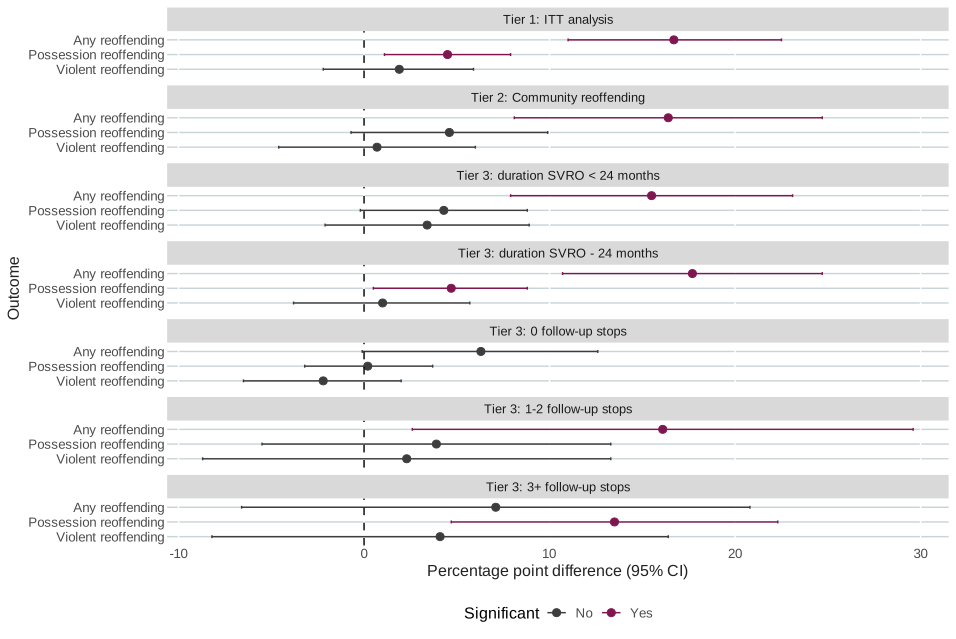
Using the first result in Figure 5 as an example, which is the estimated impact of SVROs on any re-offending in the Tier 1 analysis, the main estimate (the dot) for the marginal difference was 0.167, meaning there was a 16.7% increase in the likelihood of re-offending for the group with SVROs compared to the comparator group. The 95% CI for this estimate ranged from 0.110 (an 11% increase) to 0.225 (a 22.5% increase). This means that if we were to repeat this study many times, 95% of the CI we calculated would contain the true, unobserved causal effect of SVROs on re-offending. In simpler terms, based on this single study, our best estimate is a 16.7% increase, and we are 95% confident that the actual impact of SVROs on re-offending falls somewhere between an 11% and 22.5% increase (and is considered statistically significant because this range does not include 0).
In Tier 1, being issued with an SVRO was associated with a statistically significant increase in any re-offending and possession of weapons re-offending, while no statistically significant effects were observed for violent re-offending.
In the Tier 2 analysis adjusting for custodial sentencing, the statistically significant increase in any re-offending remained, while no significant impact was identified for possession of weapons or violent re-offending. Results from Tier 3, which explored potential moderators of SVRO impact – namely, the duration of the SVRO and the frequency of stop and search activity in the follow-up period – had a greater level of statistical uncertainty (likely owing to small sample sizes or just more variability). Statistically significant increases in any re-offending were observed for individuals with SVROs of both shorter (less than 24 months) and longer (24 months) durations, as well as possession of weapons re-offending for those with longer SVROs (but not those less than 24 months in duration, although the results were close to the significance threshold), while no significant effects were observed for violent re-offending in either treatment subgroup. When disaggregated by stop and search frequency in the follow-up period, no statistically significant effects were identified among those not stopped and searched (although the results for any re-offending were close to the significance threshold). A statistically significant increase in any re-offending was observed among those stopped and searched once or twice in the follow-up period. Additionally, a statistically significant increase in possession of weapons re-offending was observed among those stopped and searched 3 or more times. All other results indicated no significant change in re-offending as a result of being issued with an SVRO when interacted with stop and search frequency in the follow-up period.
Table 8: Main impact analysis results on the sample where an SVRO application was progressed – re-offending
| Tier | Offence type | Marginal difference | Std. error | Lower CI | Upper CI | P-value |
|---|---|---|---|---|---|---|
| 1: ITT analysis | Any | 0.167 | 0.029 | 0.110 | 0.225 | <0.001 |
| 1: ITT analysis | Possession | 0.045 | 0.017 | 0.011 | 0.079 | 0.010 |
| 1: ITT analysis | Violent | 0.019 | 0.021 | -0.022 | 0.059 | 0.365 |
| 2: Community re-offending | Any | 0.164 | 0.042 | 0.081 | 0.247 | <0.001 |
| 2: Community re-offending | Possession | 0.046 | 0.027 | -0.007 | 0.099 | 0.087 |
| 2: Community re-offending | Violent | 0.007 | 0.027 | -0.046 | 0.060 | 0.796 |
| 3: 24-month SVROs | Any | 0.177 | 0.036 | 0.107 | 0.247 | <0.001 |
| 3: 24-month SVROs | Possession | 0.047 | 0.021 | 0.005 | 0.088 | 0.028 |
| 3: 24-month SVROs | Violent | 0.010 | 0.024 | -0.038 | 0.057 | 0.681 |
| 3: Less than 24-month SVROs | Any | 0.155 | 0.039 | 0.079 | 0.231 | <0.001 |
| 3: Less than 24-month SVROs | Possession | 0.043 | 0.023 | -0.002 | 0.088 | 0.063 |
| 3: Less than 24-month SVROs | Violent | 0.034 | 0.028 | -0.021 | 0.089 | 0.232 |
| 3: 0 follow-up period stop and searches | Any | 0.063 | 0.032 | -0.001 | 0.126 | 0.053 |
| 3: 0 follow-up period stop and searches | Possession | 0.002 | 0.018 | -0.032 | 0.037 | 0.888 |
| 3: 0 follow-up period stop and searches | Violent | -0.022 | 0.022 | -0.065 | 0.020 | 0.301 |
| 3: 1 to 2 follow-up period stop and searches | Any | 0.161 | 0.069 | 0.026 | 0.296 | 0.020 |
| 3: 1 to 2 follow-up period stop and searches | Possession | 0.039 | 0.048 | -0.055 | 0.133 | 0.419 |
| 3: 1 to 2 follow-up period stop and searches | Violent | 0.023 | 0.056 | -0.087 | 0.133 | 0.682 |
| 3: 3+ follow-up period stop and searches | Any | 0.071 | 0.070 | -0.066 | 0.208 | 0.312 |
| 3: 3+ follow-up period stop and searches | Possession | 0.135 | 0.045 | 0.047 | 0.223 | 0.003 |
| 3: 3+ follow-up period stop and searches | Violent | 0.041 | 0.063 | -0.082 | 0.164 | 0.511 |
Aligned to the SVRO ToC (see Section 1.4), which has increased stop and search as a key output of SVROs, an additional component of the QIE sought to test the impact of SVROs on stop and search activity in the follow-up period. Understanding whether being issued with an SVRO has any impact on the likelihood of being stopped and searched in the follow-up period is therefore useful in understanding and contextualising the impact results on the re-offending outcomes. The results of this analysis are presented in Figure 6 and Table 9 below. Annex A contains additional impact analysis on a sample where an additional filter was applied based on whether the individual was convicted for the SVRO-eligible offence. This is different from the Tier 3 analysis presented so far as the likelihood of stop and search in the follow-up period is the outcome in these models, rather than being interacted with treatment allocation to test for mediation or moderation effects.
Figure 6: Summary of impact results on follow-up period stop and search likelihood among individuals where an SVRO application was progressed
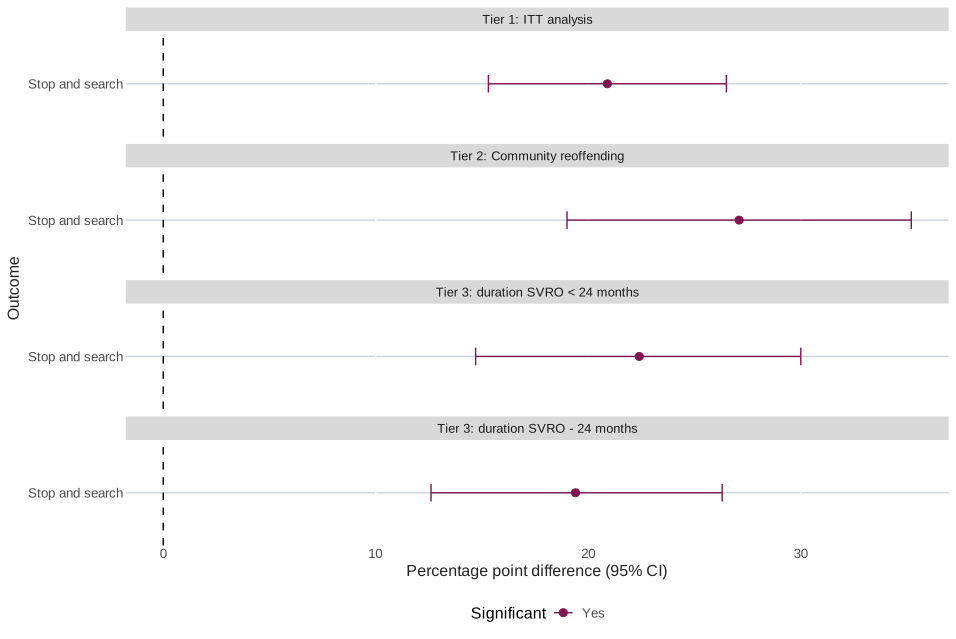
Figure 6 shows that, across analytical tiers, being issued with an SVRO is associated with a statistically significant increase in the likelihood of being stopped and searched in the follow-up period. The size of this increase ranges from 19.4% where the SVRO duration is 24 months (Tier 3) to 27.1% among individuals that did not receive a custodial sentence for their SVRO-eligible offence (Tier 2).
Table 9: Main impact analysis results on the sample where an SVRO application was progressed – follow-up stop and search activity
| Tier | Marginal difference | Std. Error | Lower CI | Upper CI | P-value |
|---|---|---|---|---|---|
| 1 | 0.209 | 0.028 | 0.153 | 0.265 | <0.001 |
| 2 | 0.271 | 0.041 | 0.190 | 0.352 | <0.001 |
| 3: 24-month SVROs | 0.194 | 0.035 | 0.126 | 0.263 | <0.001 |
| 3: Less than 24-month SVROs | 0.224 | 0.039 | 0.147 | 0.300 | <0.001 |
Overall, Figure 5 highlights the consistently null findings on the impact of SVROs on violent re-offending and the largely significant increases in any re-offending and possession of weapons re-offending. Figure 6 clearly shows a large, consistent and significant increase in the likelihood of being stopped and searched in the follow-up period associated with being issued with an SVRO. Taken together, these results indicate a pattern consistent with the interpretation that SVROs may increase exposure to enforcement (via increased stop and search activity) leading to an increased detection of offending behaviour more strongly linked to stop and search, without demonstrating a clear deterrent effect on serious violence. This is discussed further in Sections 4 and 5.
4. Implementation and process evaluation
This section provides an overview of the IPE design and approach to data management and analysis, before presenting findings based on 2 waves of qualitative data collected via interviews and small group discussions with stakeholders involved in all stages of the SVRO process (see Figure 1).
IPE key findings
Need and value of the legislation: SVROs were generally viewed as a useful tool for proactive policing to safeguard the public from harm.
Training and preparedness: while national training for police was provided, localised ongoing training, support and guidance were critical. Members of the judiciary and CPS prosecutors received limited formal training.
The SVRO process: the evaluation identified variability in how forces interpreted eligibility and applied for SVROs. While some forces encouraged widespread applications, others emphasised professional judgement and the importance of considering proportionality and necessity. CPS prosecutors and the judiciary highlighted challenges with the quality and appropriateness of applications.
Operational delivery: officers varied in their use of SVRO powers, with some conducting frequent searches and others deterred by workload or concerns about scrutiny (both from the public and internally).
Perceived effectiveness of SVROs: stakeholders expressed mixed views on the effectiveness of SVROs for reducing re-offending. While some thought that SVROs could be an effective deterrent against future offending, others were less certain about the deterrent effect, especially among the most high-risk offenders. The absence of a rehabilitative element to the order was seen as a limitation to behaviour change.
4.1 IPE design
The aim of the IPE strand was to understand the implementation and perceived effectiveness of SVROs from a range of perspectives. As such, the IPE provides critical contextual depth to the evaluation and aids interpretation of the findings from the QIE.
To address the aims of the IPE, qualitative methods (in-depth one-to-one interviews and small group discussions) were used to gather insights from 59 stakeholders involved in the SVRO process. The sample comprised police force SVRO leads, police officers, CPS prosecutors, members of the judiciary (judges and magistrates) and members of stop and search scrutiny and fair use panels[footnote 7]. Data collection took place at 2 time points (early 2024 and late 2024/early 2025)[footnote 8] to capture views and experiences of the SVRO process over the course of the pilot period. Topic guides were developed to ensure consistent coverage of core topics of relevance to the IPE across participant groups, while allowing for a flexible approach to data collection that could be adapted to the range of stakeholders involved in the SVRO process. Please see Annex C for the themes and sub-themes covered in the interviews and small group discussions with the participants.
To capture the views and experiences of SVRO recipients, a short online survey was disseminated via police to individuals subject to an SVRO across the 4 pilot area sites between November 2024 and May 2025[footnote 9]. The survey comprised 10 questions: 7 closed/numeric and 3 open text questions (see Annex D for the survey questions). Questions were designed to capture an understanding of SVRO conditions/requirements; awareness and attitudes around the risks and consequences of carrying a weapon; and changes in behaviour intentions as a result of being subject to an SVRO. Responses to the survey were very low, with only 3 respondents submitting data.
4.1.1 Recruitment and sampling for qualitative data collection
Participants were recruited through gatekeepers who shared information about the evaluation, and interested individuals were invited to arrange interviews or group discussions with the Ecorys evaluation team. Participants were provided with an information sheet and privacy information notice to allow them to make an informed decision about whether to participate. In total, 59 individuals took part in an interview or group discussion. Table 10 provides a breakdown by participant group and wave of data collection. The breakdown does not include pilot area to preserve the anonymity of participants.
Table 10: Number of participants by participant group
| Total number of participants across both waves | Total number at wave 1 | Total number at wave 2 | Number who took part at both waves | |
|---|---|---|---|---|
| Force leads | 10 | 9 | 6 | 5 |
| Officers / operational staff | 21 | 8 | 15 | 2 |
| CPS prosecutors | 13 | 9 | 8 | 4 |
| Scrutiny & fair use panel members | 9 | 7 | 5 | 3 |
| Judiciary | 6 | N/A | N/A | N/A |
Participants were informed about the discussion topics at the recruitment stage, both in writing through the information sheet and verbally before the interview or group discussion. At the beginning of each interview /discussion group, it was made clear to participants that taking part was voluntary and their identity would be kept anonymous. The Ecorys disclosure policy was also explained, including the circumstances in which confidentiality may be breached. Additional permissions and approvals were required to interview members of the judiciary and CPS prosecutors, which were granted by the Senior Presiding Judge and the Strategy and Policy Directorate of the CPS, respectively.
4.2 Data management and analysis
With participants’ permission, interviews and discussion groups were recorded and transcribed verbatim for analysis. The data was managed and analysed thematically using a case and theme-based analytical framework, which aligned with the evaluation framework and ToC. Analysis involved working through the data to draw out the range of views and experiences reported by participants to understand how the SVRO pilot had been implemented.
Due to the small number of survey responses, data from the survey is reported descriptively within Section 4.8.2.
4.3 Presentation of findings
Findings are organised thematically. The section begins with an overview of participants’ views on the need and value of the SVRO legislation, followed by their experiences of the training and guidance provided to prepare them for pilot delivery. Next, participants’ views and experiences of SVRO implementation are described, from identifying eligible offenders through to enforcement of SVROs. Views on the ethical and proportionate use of SVROs are then presented, before the section closes by synthesising participants’ views on the success of the pilot in achieving the intended outcomes and impacts set out in the ToC.
Please note:
- the findings of the qualitative research contained in the report are based on the views of those who took part in the research only
- the value of qualitative research is in the range of views rather than the number of views and the number of people who expressed a certain view; therefore, participants’ views and experiences are not quantified
- to preserve the anonymity of participants, we have not presented findings by pilot area
4.4 Need and value of the SVRO legislation
This section summarises participants’ views on the need for, and value of, the SVRO legislation. Findings centre on the gaps that SVROs fill in existing legislation and police legitimacy and appropriate use of SVROs.
Within the context of an increased prevalence of crimes involving weapons across the pilot force areas, there was overall agreement across participant groups that introducing SVRO legislation was needed to provide police with additional powers to safeguard the public from harm. In particular, SVRO police leads and officers considered SVROs a powerful tool for proactive policing and deterrence. However, there was also some concern expressed by force leads around the potential for the SVRO legislation to contribute to displacement effects, whereby older knife carriers push younger people to carry a knife for them.
4.4.1 Gaps that SVROs fill in existing stop and search legislation
For force leads and officers, a key gap that SVROs fill in the existing stop and search legislation is the ability to stop and search an individual who is subject to an SVRO without needing reasonable grounds for suspicion. As part of this, force leads explained that SVROs provide a more targeted and proactive approach than existing stop and search legislation by focusing on individuals with a known history of weapon carrying. Force leads suggested that this proactive approach helps address serious violence more effectively and ensures that officers can intervene before potential threats escalate.
While CPS prosecutors also noted the utility of SVROs for police to be able to stop and search people known to carry weapons, some also expressed scepticism around the benefit that SVROs would add to existing stop and search legislation. For example, because SVROs do not include requirements such as engagement in a behaviour change programme, they were initially viewed as a ‘register’ of knife orders rather than a civil order.
“[My] immediate question was … are these actually orders or are we simply putting knife offenders on a register at this at this point?”
CPS prosecutor
Similarly, scrutiny panel members expressed the view that without a rehabilitative or educational element, it is not clear how SVROs will change behaviour to impact offending.
4.4.2 Police legitimacy and appropriate use
Force leads suggested that SVROs can improve officers’ confidence in conducting searches because the orders provide clear grounds for officers to search individuals who have been proven to carry weapons. Force leads expressed the view that SVROs may improve public perceptions of police stop and search, enhancing the legitimacy and transparency of police actions by ensuring that officers have a clear and specific mandate to stop and search individuals who are subject to these orders.
However, force leads and officers also agreed that SVRO powers must be used appropriately. Officers must apply for and enforce SVROs carefully to avoid any abuse of power, such as repeatedly searching the same person without just cause (see also Sections 4.5.4 and 4.7)
“They can be a force for good if they’re managed properly.”
Force lead
Similarly, judges emphasised the importance of ensuring that SVROs are appropriate for each case, while CPS prosecutors expressed the view that SVRO applications should be carefully considered and limited to individuals where there is a risk of further serious violence.
4.5 Training and preparedness
This section presents participants’ views and experiences of the training and guidance provided to prepare them to implement the SVRO pilot.
4.5.1 Police
To prepare for the SVRO pilot, police were provided with an E-Learning training package by the College of Policing (CoP). Overall, force leads and officers thought the training was informative and adequately delivered the necessary messages and information on the legislation. However, force leads emphasised that local forces complemented the CoP training with additional context-specific information and processes to ensure its effectiveness. Similarly, officers reported that while the CoP training contributed to their awareness of the SVRO eligibility criteria, they did not feel confident completing applications as a result of the training. Instead, confidence to complete SVRO applications came from local force-level support and guidance. Similarly, officers reported that their confidence to enforce SVROs was primarily a function of their experience of enforcing existing stop and search legislation, rather than as a result of the SVRO training.
The importance of ongoing local force-level training, guidance and support was emphasised by force leads. Across pilot areas, force leads described a range of additional training sessions, communications and resources that have been provided to officers. Examples include:
- regular communications to remind officers about SVRO eligibility criteria and the SVRO application process
- delivering presentations and training sessions on SVROs to new police recruits and as part of continuous professional development events
- creating resource libraries to provide officers with examples of applications, step-by-step guidance and checklists
However, when asked about additional training and resources, some officers were unaware of these extra resources and/or did not recall engaging in any (original or additional) training sessions.
If SVROs are rolled out nationally, there may be an opportunity to update the training offer. The following recommendations were made by force leads and officers:
Provide practical examples: include practical examples and scenarios in the training to help officers understand when and how to apply for SVROs, which will help officers make informed decisions about whether to submit applications and encourage applications that are proportionate and necessary.
Clarify post-order responsibilities: training should cover what happens after an SVRO is issued, including the responsibilities of different agencies and the ongoing management of individuals subject to SVROs.
Consider different training modalities: there was a consensus that in-person training is preferred over online training as it allows for a more innovative, creative and engaging environment for learning.
Include training for civilian staff: while in some forces, the CoP training was also disseminated to civilian staff, this was not the case across all pilot forces. This resulted in civilian staff completing SVRO applications with only a very vague knowledge and understanding of the legislation.
4.5.2 The judiciary
Based on the experiences of judges and magistrates who participated in the evaluation, there was no central, structured and formal SVRO training offer provided to the judiciary across the pilot areas. Judges reported they received information about the pilot, the legislation and the powers associated with it via email. It was explained that this approach to training and guidance when new legislation is introduced is quite typical. By contrast, in one pilot area, participants described how magistrates received training sessions about SVROs from senior legal managers and judges, which magistrates found to be helpful.
4.5.3 CPS prosecutors
Similar to the judiciary, CPS prosecutors did not receive formal training about SVROs. However, CPS prosecutors across pilot areas described a variety of local-level informal training opportunities (such as discussions, meetings, presentations and guidance documents).
CSP staff expressed a range of views on whether the training they had received was sufficient. Some expressed the view that there is a gap in the formal SVRO training provision for CPS prosecutors, and that more training would be beneficial to support implementation. However, a contrasting opinion was that the legislation is “straightforward”, the SVRO application form is “self-explanatory”, and formal training is not required for prosecutors.
4.5.4 Scrutiny and fair use panels
Members of scrutiny and fair use panels did not report receiving any formal training about SVROs. However, some scrutiny panel members reported they had received a presentation from the police at the beginning of the first SVRO scrutiny panel. Others were informed of the legislation and the statutory guidance. Overall, while no formal training was provided, scrutiny panel members reported that the level of information provided to them was sufficient to prepare them for their role.
4.6 The SVRO process
This section presents findings on implementing the SVRO process (see Figure 1) from the perspectives of force leads, police officers, CPS prosecutors, the judiciary and scrutiny panel members.
4.6.1 Identify: Eligibility criteria for submitting an SVRO
The first stage of the SVRO process involves the police identifying if an SVRO is required and if the offence and the offender meet the criteria for an SVRO.
Clarity of criteria and consistency in interpretation
There was a consensus among police force leads that the criteria for identifying individuals who are eligible for an SVRO are clear and straightforward. Similarly, overall, officers reported that the SVRO eligibility criteria are clear. However, evidence from interviews with police officers indicates misunderstanding exists among some officers in relation to the type of weapons covered by the SVRO legislation. While the legislation specifies that an SVRO may be applied for where an offender is convicted of an offence involving a bladed article or offensive weapon, a view among officers was that SVROs should be expanded to include offensive weapons (for example, batons – see below) as well as knives.
“I think it should probably expand … to offensive weapons as well, otherwise that could be a simple loophole that if they have half a brain they could … think, well, I just won’t carry a knife. I’ll carry an extendable baton or something like that. Then they wouldn’t be eligible for one.”
Officer
Inconsistency in the factors considered when deciding if an SVRO is appropriate for an eligible offence or offender, or both, was also reported between pilot areas. In some pilot areas, officers have been encouraged to submit an SVRO application for any offence or incident where a knife or offensive weapon is present, regardless of mitigating factors (such as offending history or mental health factors). By contrast, force leads and officers in other pilot areas described several factors that are considered when assessing the risk posed by an individual and the appropriateness of applying for an SVRO:
Offending history: the individual’s past convictions, particularly for weapons offences, are reviewed. However, the timing and context of these convictions is also important – for example, a conviction from many years ago may be less relevant than recent behaviour.
Current risk and circumstances: the immediate risk posed by the individual is a critical factor, which includes their recent behaviour and the context of their current offence.
Intelligence and associations: information about the individual’s associations, such as involvement with exploited young people or known criminal groups, is considered. This helps in assessing the broader risk they may pose to the public.
Broader factors: additional factors such as involvement in domestic abuse, county lines activities, and other risk indicators are also considered these factors help in building a comprehensive risk profile.
Hotspot policing areas: the location of the individual’s offending, particularly if it occurs in designated hotspot areas for serious violence, is considered.
Force leads emphasised the importance of considering proportionality and necessity when applying for an SVRO. They highlighted that while the presence of a knife (or other weapon) in an incident is a key factor, it is crucial to assess the context and ongoing threat, harm and risk associated with the situation.
However, where officers are encouraged to consider a range of factors before applying for an SVRO, force leads have also reported some variability in how officers interpret and apply the criteria, as well as uncertainty about whether an SVRO is appropriate. For example, in situations where an individual has a weapon to harm themselves rather than a member of the public. However, officers also consistently reported that they can seek support from a senior officer or SVRO single point of contact (SPOC) if unsure whether the criteria are met and if an SVRO is appropriate.
The age threshold
When asked about the SVRO criteria, a core theme within police force lead and officer accounts was the SVRO age threshold. The view among the police participants was that, to have the biggest impact on serious violence, the minimum age for an SVRO should be lowered. Police explained that habitual knife carrying is prevalent among those aged 17 and under, and described how they have encountered many young individuals, including 12- and 13-year-olds, carrying dangerous weapons. Similarly, some CPS prosecutors suggested that younger people would benefit from being subject to SVROs. They expressed the view that because weapons offences are prevalent among younger people, the minimum age for an SVRO should be lowered.
“[Y]ouths are actually one of the worst for carrying knives and offensive weapons. Some of the most serious offences are being committed by the youths, and yet they’re the ones that it [SVRO legislation] doesn’t apply to.”
CPS prosecutor
Views on what the age threshold should be lowered to varied, with some police participants suggesting that it should be lowered to the age of criminal responsibility (10 years old), while other suggestions included 14, 15 or 16 years of age. A further suggestion was to have SVROs for 12- or 13-year-olds but combined with support from Youth Offending Teams or children’s services, or both.
Over the course of the pilot, some scrutiny panel members also expressed the view that the age threshold for SVROs should be lowered. However, others expressed concerns about lowering the age due to the potential negative impact that being subject to an SVRO may have on a young person, especially without any added wraparound care and support.
4.6.2 Prepare: Completing the SVRO application form
Following identification of a qualifying offence and offender or offenders, the police prepare evidence (an application form) to support the request for an SVRO, which is presented to the CPS.
While some force leads and officers expressed the view that the SVRO application form is simple and easy for officers to complete, it was also noted that some officers had difficulty completing the application form at the beginning of the pilot, typically due to lack of experience.
“With the applications, some people might say they struggle with them, but I suppose it’s probably with anything new – you just need to get your head around it. And I suppose the more you do, the better you get at it. But the actual doing of them is relatively straightforward – it’s nothing too complex or taxing.”
Officer
To address this, forces created guidance and examples (see Section 4.5.1). In addition, some pilot forces drafted standard text for certain sections of the application, such as the community impact statement, to make the application process more straightforward for officers. Similarly, some pilot forces created step-by-step instructions on how to follow the SVRO application process, as well as guidance specifying what needs to be included for each section of the application form. In addition, force leads and officers reported that SVRO SPOCs are available to review applications and provide support where needed.
4.6.3 Apply: Progressing applications to court
When the CPS receives an SVRO application, the CPS must consider the evidence presented by the police and decide whether to apply to the court. CPS participants explained that a prosecutor reviews the police application to determine whether, if based on the facts of the case, it is necessary and proportionate to apply for an order. It was explained that this is the same as the process followed for other orders, such as Criminal Behaviour Orders (CBO) – the prosecutor makes a judgement as to whether the evidence supports the application and whether it is in the public interest to apply.
CPS prosecutors reported that they progress most SVRO applications they receive. However, applications have been rejected where an SVRO has not been considered necessary and proportionate. CPS prosecutors in some pilot areas noted that when the pilot was launched, they found the police were submitting large numbers of SVRO applications for cases where, in their view, it was not proportionate, necessary, and in the public interest to do so. However, over time, some CPS prosecutors reported that applications made by the police have become more appropriate.
To this point, a view among officers was that there has been a difference in the police and CPS understanding of which cases meet the threshold for an SVRO application, with the police tending to submit SVRO applications more readily than the CPS is willing to progress them.
“[O]ur idea of what […] passed that [threshold] test was definitely lower than what CPS believed.”
Officer
Interviews with police and CPS participants illustrated a clear difference in views and experiences of the SVRO application process. Force leads and officers expressed the view that there has been a lack of awareness of the SVRO legislation among CPS prosecutors and courts, which they believe has contributed to processing delays and rejected applications. By contrast, CPS prosecutors reported that one of the key challenges of working with the police had been the police’s lack of awareness of the SVRO application requirements, resulting in applications for SVROs in almost all cases involving a bladed article or offensive weapon.
CPS prosecutors are reliant on the quality of the evidence submitted as part of the SVRO application when deciding whether to apply to the court. CPS prosecutors explained that in addition to an offence not meeting the criteria (the legal test), lack of sufficient evidence provided by police to support SVRO applications and police officers submitting forms that are not tailored to the specifics of the case, are reasons they have decided not to apply to the court. However, it was also noted that applications had improved and become more detailed over time.
“All they do is just regurgitate, you can see sometimes almost a cut and paste job … that’s been one of the judicial criticisms.”
CPS prosecutor
When asked whether feedback on applications was provided to the police to improve quality, while acknowledging the value of the feedback process, CPS prosecutors explained that this has been difficult to implement due to the workload of prosecutors. Force leads recognised the need to avoid additional burden and workload; however, they also emphasised the need for the police to receive feedback from the CPS on the reasons why SVRO applications are not progressed to court. Without this feedback, they explained, it is difficult to make improvements to quality.
Within some pilot areas, the force leads and CPS participants reported that they have formed working groups or have regular meetings, or both, which has resulted in positive outcomes in governing the SVRO application process. Some force leads suggested that if SVROs are rolled out nationally, implementing regular panel meetings between local police and the CPS to discuss applications would be helpful for improving and monitoring quality, but noted the time burden that this would present.
4.6.4 Decide: Granting SVROs in court
Where the CPS decides to apply to court, the court considers the application and decides whether to grant the SVRO. Members of the judiciary interviewed for the evaluation explained that their role as a judge or magistrate is to apply the legal test to the facts of the case and to consider whether they are satisfied that an SVRO would be proportionate, appropriate and necessary to prevent re-offending and protect the public. They explained that judges and magistrates consider factors such as the individual’s previous convictions, the circumstances of the offence, and any underlying issues such as drug or alcohol problems. However, to consider these factors, the judiciary must be presented with an SVRO application form that contains the necessary evidence.
A view expressed among CPS prosecutors is that the SVRO application form itself is not adequate to be sent to court because it does not allow for sufficient detail on the evidence to be presented. CPS prosecutors reported experiences of the judiciary expressing irritation at the lack of evidence supporting SVRO applications. It was suggested the SVRO form be updated similar to the forms used to apply for CBOs, which allow for more detailed evidence to be submitted.
CPS prosecutors reported applications had been rejected by judges and magistrates because an SVRO was not considered necessary or proportionate, based on the evidence presented. For example, where the individual has no previous convictions, the possession of the knife was incidental or unintentional, or there is no history of violence or public order offences, or both. Similarly, a view among the judiciary was that SVRO applications have lacked sufficient information to justify the SVRO.
“[The] information is not, in my view, sufficient for me to impose the order in the vast majority of cases.”
Judiciary
However, some police and CPS prosecutors expressed the view that some judges, magistrates and legal advisors are not familiar with SVROs, which has resulted in misunderstanding and rejection of applications. It was also noted that it can take time for courts to see the value of new legislation. It was suggested this may be the case with SVROs, which may have impacted the likelihood of SVROs being issued.
“There’s a new order now and it’s how to explain how the order works, what the impacts are of it. And then trying to get the courts on board.”
CPS prosecutor
Despite the challenges that have been noted, some judges and magistrates reported that SVRO applications have been of good quality and have met the relevant criteria to demonstrate that an SVRO is necessary and proportionate. Where SVROs have been issued in court, CPS prosecutors noted that the offenders have tended to have been involved in a serious offence involving a weapon, such as using a weapon to cause harm to another person. Others have had an extensive criminal history of offences involving knives and other weapons and therefore demonstrate a clear risk of carrying weapons in the future. CPS prosecutors suggested that, moving forward, more engagement between the CPS and the judiciary would be helpful for developing a better understanding of the factors that influence granting decisions so that applications can be improved.
Finally, CPS prosecutors reported confusion among the judiciary around how the duration of the pilot would influence the duration of the SVROs that they could grant, with some members of the judiciary expressing reluctance to impose orders that would go beyond the pilot period.
4.6.5 Enforce and record: Carrying out stop and search
Once an SVRO has been issued in court, the offender must report to a police station within 72 hours. During the course of an SVRO, the police can carry out a stop and search of an individual who is subject to an SVRO to ascertain if they are in possession of a bladed article or offensive weapon. The stop and search must be in a public place. This section presents findings on implementing the enforce and record elements of the SVRO process.
Identifying SVRO recipients
Across pilot areas, force leads and officers explained that the principal method for ensuring officers are able to identify SVRO recipients is via daily briefings and briefing systems. As part of these briefings, officers are provided with photos and details of the SVRO recipients in the local area. Force leads and officers reported that officers are expected to use this information to proactively stop and search SVRO recipients.
Other methods described by force leads and officers include the use of PNC checks to identify whether an individual is subject to an SVRO and working with CCTV operators to identify known individuals in public areas.
Stop and search frequency
Officers reported stopping and searching SVRO recipients with varying levels of frequency. Some officers described stopping and searching SVRO recipients quite regularly (including every time they encounter the individual), while others reported doing so less frequently. For some officers, their frequency of stopping and searching specific SVRO recipients has evolved over time – transitioning from a stop and search each time they encountered the individual to occasional searches and a greater focus on offender wellbeing.
Differences in the frequency of stop and search based on the officers’ roles and the areas they work in were also reported. Some officers stop and search SVRO recipients often because they are well known within their team and are frequently encountered. Others may only search one or 2 SVRO recipients a month, especially if they work in units that handle “999 jobs” (responding to emergency calls).
Additionally, officers explained that SVRO stop and search frequency can vary depending on the officers’ motivation and workload. Some officers were described as highly motivated and passionate about using stop and search, while it was noted others may avoid conducting a stop and search due to excessive workloads and paperwork, or fear of scrutiny (both from the public and internally), which can deter officers from using their stop and search powers.
Carrying out SVRO stop and search
Once an individual has been identified and confirmed as being subject to an SVRO, an officer can perform a search based on the additional powers provided by the SVRO legislation. Officers explained they follow the same ‘GO WISELY principles’ that are followed for all stop and search activity[footnote 10].
Overall, officers reported that the SVRO recipients they had stopped and searched had an understanding of the stop and search process and the implications of their orders. Officers noted that they try to perform searches discreetly to respect the SVRO recipient and maintain a positive public perception of policing. Officers are mindful of the impact of stop and search on individuals, especially in public areas, and often take subjects out of view of the public to conduct searches.
“I’m quite mindful about what it looks like. So, I’ll normally take them round the corner or somewhere a bit more discreet. Obviously, I’ll, you know, we let them know that our cameras are running. They’re protected that way; we’re not going to do anything horrible to them. But yeah, I’m really mindful about what, what it looks like to them and other members of public, you know, that are walking around.”
Officer
The officers interviewed reported that they are confident carrying out SVRO stop and searches. One view was that the SVRO legislation has simplified the stop and search process because the grounds for conducting the stop and search are built into the order.
“I always treat like the SVRO … the same as any other stop and search power. Obviously, you know we don’t have to have the grounds as in you’ve seen something … But I would still treat them the same as any other stop search.”
Officer
However, some challenges were also identified. It was noted that less experienced officers often lack confidence and understanding of the SVRO legislation surrounding stop and search.
Scrutiny and fair use
Scrutiny and fair use panel members were asked about police enforcement of SVROs based on the stop and search footage they have viewed. Panel members noted that while, overall, officers seem to have sufficient understanding to enforce their powers, they have also observed instances where it seems that officers did not have full knowledge and understanding of SVROs (such as phoning the police station for clarification and guidance) when carrying out the stop and search. In addition, it was noted by some panel members that while most of the SVRO stop and searches that they had reviewed appeared to have been fair and effective, some of the stop and searches carried out on homeless people had been concerning. It was explained that, based on the information that they were provided (such as body-worn camera footage), some homeless individuals had been subjected to multiple stop and searches. Moreover, it was noted that from the body-worn camera footage, it did not appear that the searches were thorough, nor did the officers appear to expect to find a weapon. It was suggested that homeless individuals are more vulnerable to multiple stop and searches because officers can easily locate them in a public place (see also Section 4.7).
Too many orders to police
A view among scrutiny and fair use panel members was that the number of SVROs that are being applied for and issued in some pilot areas has been too large to be policed effectively. That is, police cannot carry out stop and searches on all the people who are subject to an SVRO. A view among scrutiny panel members was that for SVROs to be effective, there needs to be a move away from a blanket approach and a move towards prioritising applications for high-risk individuals on whom the police can focus their stop and search powers.
“I actually think it can be counterproductive more than effective […] if we’re going to put this power and then not utilise it or have the capacity to utilise it.”
Scrutiny and fair use panel member
Related to this point, concern was expressed by panel members about how SVROs will be effectively policed if they are rolled out nationally. Similarly, a view from officers was that they would struggle to enforce higher numbers of SVROs while balancing a heavy workload and the associated pressures.
“Unfortunately, the way policing is at the moment in terms of the, we haven’t got many officers, we’ve got calls through the roof. I think in terms of any proactive policing … I think they would just be, I need to get to my next … job that I’m assigned to rather than divert to someone [SVRO recipient] I may have seen.”
Officer
To this point, a view expressed by force leads was that if SVROs are rolled out nationally, there needs to be consideration of the resourcing that will be required to manage the orders effectively.
Cases where SVROs recipients moved out of area
Police officers had limited awareness of the number of SVRO recipients who had moved out of the area or the process that is followed in these cases; however, force leads could provide some insights. According to force leads, the number of SVRO recipients who have moved out of or between SVRO pilot areas has been low; where this has occurred, force leads explained they had notified the receiving police force via email to the control room or contact centre. The notification included sharing relevant details about the individual’s history and the conditions of their SVRO. The receiving force is then responsible for monitoring the individual and ensuring that the SVRO conditions are adhered to. Force leads reported that some receiving areas have responded and been to visit the offender at the relevant address; other forces have not responded.
4.6.6 Compliance and actioning breaches of SVROs
An individual who is subject to an SVRO can breach the order for several reasons, including (Home Office, 2023a; page 13):
- failure, without reasonable excuse, to do anything they are required to do by the order or do anything they are prohibited from doing by the order
- knowingly notify the police with false information in purported compliance with the order
- tell a constable that they are not subject to an order
- intentionally obstruct a constable in the exercise of the stop and search power
This section presents findings on the key reasons that SVRO recipients have breached their orders over the course of the pilot.
Failure to provide notification of home address
Force leads and officers across the pilot areas, as well as CPS prosecutors, reported that the most common reason for an SVRO breach has been where individuals have failed to notify the police of their home address within 72 hours of the order being served. Force leads explained that this can be for a range of reasons: some SVRO recipients are not aware of the requirement (especially if leaving prison and the order has not been explained to them upon their release); some have very chaotic lives and forget that they need to register their address with the police; and others are homeless or do not have a permanent address.
To address issues around the notification requirement, some pilot forces reported that they have taken steps to mitigate the number of SVRO breaches due to offenders not attending a police station to provide their address. In these areas, if an individual does not attend the police station to provide their address, a local neighbourhood officer will be asked to attend the known address (provided in court) and confirm the individual lives there and remind them of the requirements of the SVRO. If this can be done, the individual will not be breached. Force leads explained that this approach helps build rapport and focuses on support and rehabilitation rather than immediate arrests for not attending a police station to provide an address.
A view among force leads was that failure to report to a police station to provide an address should not be a breach offence. Some force leads expressed the view that the requirement has no benefit for SVROs and creates additional unnecessary work for the police. Instead, force leads suggested that being found with an offensive weapon when subject to an SVRO should be a breach in addition to a further offence.
Administrative errors
CPS prosecutors described a gap in an administrative process earlier on in the pilot, which resulted in breaches not being upheld. CPS prosecutors explained that the issue arose where SVROs had been issued alongside custodial sentences. In this situation, it was typical for the offender to leave the court and be transported to prison before the SVRO was drafted and served. Where this happened, there were cases where the offender was later released from custody without being served with the SVRO. As a result, where these offenders received a breach (for example, they were asked if they were subject to an SVRO and reported that they were not) these breaches have not been upheld because there was no evidence that the offender had seen the order or knew about it upon their release from prison. This gap in the process has now been remedied, and the court now emails the SVRO to the relevant prison so it can be served to the offender in person.
4.7 Ethical and proportionate use of SVROs
The potential for disproportionality in the application and enforcement of SVROs was recognised across the range of participant groups. Despite this, police force leads did not express concern around the disproportionate use of SVROs during the pilot. It was acknowledged that the police must be aware of the potential for disproportionality at all stages of the SVRO process, as well as how disproportionate use of SVROs could negatively impact community perceptions and confidence in the police. To mitigate these concerns, in the early stages of the pilot, one pilot area implemented an internal review panel, which was responsible for ensuring proportionality of applications. However, over the course of the pilot, it was agreed that the panel was no longer necessary as no issues regarding disproportionality of applications had been raised. Instead, focus was re-directed to the SVRO data, which were monitored for any potential issues of disproportionality. Similarly, across other pilot areas, lead officers reported that data on SVRO applications and stop and searches have been closely monitored for potential disproportionality. None of the force leads reported disproportionate use of SVROs based on their monitoring of the data.
While stop and search disproportionately primarily relates to the overrepresentation of people from ethnic minority groups, particularly Black people, in police stop and search data (HMICFRS, 2021), scrutiny and fair use panel members noted some “unexpected disproportionality” from their review of SVRO stop and searches to date. One view, based on the information they were provided (such as via body-worn camera footage), was that homeless individuals who are subject to an SVRO are disproportionately stopped and searched because the local neighbourhood officers know where to locate these individuals to carry out repeated searches.
4.8 Perceived outcomes and effectiveness
The ToC (see Section 1.4) sets out several intended outcomes and impacts of the SVRO pilot. In this section, participants’ views on progress towards achieving these outcomes and impacts are presented.
4.8.1 Effective systems, processes, and partnership working
Overall, force leads expressed the view that the relationship between police and CPS over the course of the pilot had been positive. Nonetheless, the lack of feedback from the CPS was noted as a significant challenge that had limited the effectiveness of their partnership, as well as the ability of the police to improve the quality of SVRO applications. However, force leads acknowledged that court backlogs and a lack of resources in the police, CPS and courts are likely the main issues underlying challenges in communication and partnership working. Similarly, CPS prosecutors described generally positive and successful partnerships with the police and courts. Areas of improvement centred on ensuring a clearly agreed and streamlined administrative SVRO process between the police, CPS and courts, as well as improving the application form to ensure that police provide the required quality of evidence for SVRO applications.
A key challenge for partnership working noted across participant groups was the different views held by the police, CPS and judiciary on whether an SVRO was necessary and proportionate for certain offenders and offences. It follows that a core part of effective partnership working discussed across participant groups was the need to develop a shared understanding of the SVRO legislation and how the police, CPS and courts each play a role in its effective implementation.
As part of considering where systems and processes could be improved, CPS prosecutors noted that a system for courts to provide information on granting decisions would be beneficial to improving the quality of applications and the proportion of applications that are issued. However, a view among the judiciary was that there is a gap in communication between the CPS and the police regarding the outcomes of applications. It was noted that, in many cases, the police are not aware of the outcomes of applications, whether they had been refused or adjourned, and if refused, the reasons for the refusal. In their view, this lack of feedback from the CPS to the police created challenges in understanding and improving the application process.
The judiciary also described a lack of communication or feedback about how the orders are being implemented in practice by the police. They explained that they would value understanding whether the orders being issued are being applied proactively and effectively by the police.
“If we don’t really have the understanding about them, what happens and whether they’re actually utilised or not, so it’s whether there’s … a great deal of purpose in making all these orders.”
Judiciary
4.8.2 Reductions in serious violence and changes in behaviour
A key mechanism by which SVROs are intended to reduce serious violence and offending is deterrence. Namely, it is intended that individuals who are subject to an SVRO are deterred from future offending (weapons carrying and offences involving weapons) because of the increased risk of detection of weapon carrying (Home Office, 2023a). However, there was an overall consensus among participants that it is too early to tell if the SVRO pilot has contributed to any reduction in violent offending (offences involving weapons).
Force leads agreed that SVROs could be an effective deterrent against future offending. However, they voiced caution when asked about how effective they thought SVROs had been in reducing weapons carrying among recipients during the pilot, suggesting that the pilot would need to be extended to capture the true impact of the legislation. By contrast, officers expressed a variety of views on the impact of the SVRO legislation on re-offending. While some expressed doubts about the deterrent effect of SVROs, others considered SVROs to be a good deterrent to further offending. Similar to force leads, some officers were more cautious about expressing a view and suggested that more time would be needed to understand the impact of SVROs.
CPS prosecutors reported feeling unsure of the deterrent effect of SVROs, especially among offenders who pose the highest risk to the public. Similarly, while some of the judiciary interviewed did not feel able to offer an opinion on how effective SVROs are or would be for reducing weapons carrying, some expressed reservations about their potential to have a clear deterrent or rehabilitative effect.
The absence of a rehabilitative requirement as part of SVROs was noted across the range of participant groups. Participants expressed the view that for SVROs to achieve positive behaviour change (that is, reductions in (re)offending behaviour), the inclusion of rehabilitative support would be required.
“[I]f … intervention [was] attached to the SVRO, it [would] actually make it more effective.”
Scrutiny and fair use panel member
The impacts of SVROs on offenders’ lives and behaviour: police accounts
Based on their interactions with SVRO recipients, police officers provided some anecdotal evidence of how being subject to an SVRO had impacted the lives and behaviours of offenders. However, because these data are based on third-party accounts of police officers and not SVRO recipients themselves, it should be read and interpreted with caution.
According to police accounts, being subject to an SVRO has impacted offenders in a variety of ways:
Deterrence and behaviour change: some offenders have reported to police that they have stopped carrying weapons because they know they can be searched by police at any time, making it “pointless” to carry a knife. Other offenders have told officers that receiving an SVRO had been the “wake-up call” that they needed to stop carrying a weapon and change their behaviour.
Support and protection: police reported that, for some offenders, regular contact with police officers as a result of having an SVRO has provided emotional and practical support, as well as helping them feel protected from further violence.
Reclusiveness and persistent issues: in some cases, police reported that offenders have become reclusive, avoiding public spaces to prevent being stopped and searched. For others, while the SVRO has contributed to them no longer carrying a weapon, some offenders continue to face other problems such as drug use, homelessness and associating with known offenders.
The impacts of SVROs on recipients’ lives and behaviour: SVRO recipient accounts
A commitment to gathering the views of SVRO recipients is part of the legislation. Therefore, to capture the views and experiences of SVRO recipients, a short online survey was also disseminated to SVRO recipients across the 4 pilot areas to capture an understanding of SVRO conditions; awareness and attitudes around the risks and consequences of carrying a weapon; and changes in behaviour intentions as a result of being subject to an SVRO.
The findings of the survey are reported here, although some caveats should be noted:
- with only 3 responses, these insights are not generalisable to other SVRO recipients
- due to the low number of responses, the findings have been reported qualitatively rather than focusing quantitative breakdowns of responses, which would be inappropriate with such small sample sizes
- the findings should be treated as indicative rather than conclusive
4.9 Summary of findings
SVRO status and duration
Respondents reported their SVROs were active at the time of the survey, with durations typically between 18 and 24 months.
Understanding of SVRO conditions
Some respondents reported that the conditions of their SVRO were explained to them and that the SVRO conditions were clear. However, others reported the conditions were not explained and did not provide a rating for how clear the conditions were.
Awareness and attitudes
All respondents agreed or strongly agreed that the SVRO made them more aware of the risks and consequences of carrying a weapon.
Behavioural intentions
Likelihood of stopping carrying a weapon:
Respondents provided a range of answers regarding the likelihood that they would stop carrying a weapon as a result of having an SVRO, ranging from ‘Unlikely’ to ‘Very likely’.
Likelihood of stopping associating with people who carry weapons:
Respondents provided a range of answers regarding the likelihood that they would stop associating with people who carry weapons as a result of having an SVRO, ranging from ‘Very unlikely’ to ‘Very likely’.
4.10 Community views and response
The statutory guidance states that the police should communicate they are using or intending to use SVROs in the local area and why they are used. In addition, an aim of SVROs is that communities view SVROs positively and feel safer as a result of their implementation.
While the police and CPS in some pilot areas reported they had worked to publicise SVROs (such as via social media and local news), the overall level of police communication with local communities to publicise and raise awareness about SVROs (including the criteria) appears to have been limited. Police officers, CPS prosecutors and scrutiny panel members questioned whether members of the public were aware of SVROs, with some noting that they themselves were not aware of any local communications about SVROs.
“I think communities aren’t probably going to be aware what an SVRO is and what it does and what it means and what we can do.”
Officer
Despite the perception of low community awareness of SVROs, some police leads and officers reported positive responses to social media posts about SVRO-related achievements and case studies.
5. Conclusions
This section presents the conclusions drawn from the QIE, IPE and analysis of potential disproportionality.
5.1 Preparing for and delivering the SVRO pilot
National training to deliver SVROs was provided to the pilot forces by the CoP, but ongoing local training, support and guidance were critical for the effective implementation of the pilot. CPS prosecutors and the judiciary received limited formal training, relying more on informal or ad hoc guidance. There was consensus that any future rollout of SVROs would benefit from more practical, scenario-based training.
The IPE revealed variability in how forces interpreted and applied SVRO eligibility criteria. Some forces encouraged widespread applications, while others emphasised professional judgement in individual cases. The IPE further highlighted differences in how these stakeholders interpreted what constituted an eligible and proportionate application for an SVRO. While most stakeholders agreed on the clarity of the criteria, inconsistencies arose in decision-making regarding SVRO applications as a result. This aligns with the requirement for the police, CPS and courts to apply their professional judgement and scrutiny.
Ultimately, many individuals were eligible for an SVRO during the pilot (6,453), but not all were progressed with an SVRO application from the police. In total, 468 SVROs were issued in court. The most common reason for SVRO applications that progressed to court not being issued was a rejection by the judiciary. The IPE found that 2 key barriers to granting SVROs in court were cases where the order was not considered necessary or proportionate, based on the evidence presented, or where insufficient evidence was provided to the courts within applications. This reflects the layered decision-making and scrutiny by police, CPS and courts, each applying their own interpretation of eligibility, proportionality and necessity.
5.2 Operational use of SVROs and disproportionality concerns
SVROs enabled police to stop and search recipients without the need for additional reasonable grounds, leading to a significant increase in stop and search activity among those with an SVRO, as shown in the QIE results. In total, the SVRO legal power was used in 315 stop and search incidents during the pilot. This was lower when compared to the other legal powers used during the same period, which included the Misuse of Drugs Act 1971 (991) and the PACE 1984 Act (411), although these powers were available to the police for all eligible individuals, not just SVRO recipients. There was one stop and search incident where the SVRO legal power was used and a weapon was found, yielding a find rate of 0.3%. This was comparable to the find rate where the Misuse of Drugs Act 1971 was used during the same period (1.3%), but lower than where the PACE 1984 Act (7.5%) was used.
The IPE revealed pilot police forces used a range of proactive methods (for example, daily briefings, use of PNC, CCTV) to identify SVRO recipients, resulting in higher visibility and frequency of stops for these individuals. Officers reported varying but sometimes frequent use of stop and search powers, with some conducting searches every time they encountered an SVRO recipient.
Forces quantitatively monitored SVRO use and stop and search activity more broadly (including any potential issues of disproportionality) among eligible individuals during the pilot (and provided these data for the evaluation), as required by the statutory guidance. There was some evidence from the IPE that scrutiny and fair use panels in some pilot forces reviewed body-worn camera footage. Concerns about disproportionality, particularly in relation to ethnicity and homelessness, were raised in the IPE. The quantitative analysis found no strong evidence of ethnic disproportionality, although qualitative data suggested that homeless individuals may be disproportionately affected by SVROs due to their increased visibility and vulnerability. This raises important ethical questions about the proportionate use of SVROs and their potential for unintended consequences.
5.3 Outcomes and impacts of SVROs
5.3.1 Impact on re-offending and mechanisms of change
As shown in the SVRO ToC, a key mechanism by which SVROs are intended to reduce serious violence and offending is deterrence. Namely, it is intended that individuals who are subject to an SVRO are deterred from future offending (weapons carrying and offences involving weapons) because of the increased risk of detection of weapon carrying. However, the QIE found that SVROs had no conclusive impact on violent re-offending, while being associated with a significant increase in any re-offending and possession of weapons re-offending. This indicates that the intended deterrent effect of SVROs may not have materialised in practice or perhaps required more time to unfold and be capturable in quantitative and qualitative data collection. IPE stakeholders expressed mixed views on the effectiveness of SVROs for reducing re-offending via the deterrent effect. While some thought that SVROs could be an effective deterrent against future offending, others were less certain about the deterrent effect, especially among the most high-risk offenders. The absence of a rehabilitative element to the order was also seen as a barrier to deterrence and behaviour change as a result of being issued with an SVRO.
IPE stakeholders also expressed that it may be too early to determine whether SVROs have been effective in reducing serious violence. The inconclusive results around the impact of SVROs on violent re-offending suggest this could be the case, and a longer-term follow-up in the future would be beneficial. Indeed, the CI for this outcome include possibilities of both reduction and increase associated with SVROs. This finding could be viewed as positive, especially when considering the increase in any possession of weapons re-offending. However, it is crucial to acknowledge that violent re-offending is a lower-count outcome, meaning it occurs less frequently, and therefore, a longer observation period might be needed to fully understand any effect. This could be achieved, for example, using the Ministry of Justice’s (MoJ) Data First initiative or the Justice Data Lab. This aligns with stakeholder views, including those from the police, suggesting the pilot would benefit from an extension.
The statistically significant increases in any re-offending and possession of weapons offending identified in the QIE may instead reflect an enforcement/surveillance effect of SVROs. Indeed, the QIE also found that SVROs were consistently associated with a significant increase in the likelihood of being stopped and searched in the follow-up period. The IPE offers plausible explanations for this hypothesis; as mentioned above, police officers reported that individuals with SVROs became highly visible due to briefings and surveillance. This may have potentially led to increased stop and search activity and a higher likelihood of detected offences. This increased likelihood of detected offences may therefore reflect the heightened visibility of SVRO recipients to police officers, who are routinely briefed with photos and details to proactively identify and stop these individuals in public places. This proactive enforcement approach, enabled by the SVRO legislation, may have increased the chances of detecting offences that might otherwise have gone undetected. This suggests that the observed rise in any re-offending and possession of weapons re-offending may be a reflection of increased police attention and detection, rather than a change in the underlying offending behaviour of SVRO recipients.
The role of stop and search emerged as a central mechanism in both the QIE and IPE. The QIE showed that those with an SVRO were indeed more likely to be stopped and searched in the follow-up period. The IPE supported this, detailing how SVROs empower police to conduct searches without needing reasonable grounds and how forces proactively locate individuals with SVROs through various methods. This operational emphasis on stop and search underscores its importance in interpreting the impact findings.
Linking back to the SVRO ToC, the deterrence mechanism central to the SVRO programme theory (that is, SVRO recipients have increased awareness of the risks and consequences of carrying offensive weapons and are deterred from doing so again), was not strongly evidenced in the evaluation. However, the statistically significant increases in stop and search activity and some re-offending outcomes for those issued an SVRO relative to the comparator group suggest that the central mechanism is an increased risk of detection of weapon carrying through heightened enforcement and surveillance of SVRO recipients. This finding may require revisiting the SVRO ToC to more explicitly reflect this mechanism should the orders be progressed for national rollout.
5.3.2 Partnership working
The pilot fostered generally positive relationships between the police, CPS and the judiciary, although areas for improvement were highlighted in the IPE. A critical part of effective partnership working discussed across participant groups was the need to develop a shared understanding of the SVRO legislation and how the police, CPS and courts each play a role in its effective implementation.
Stakeholders also mentioned the need for improved feedback loops. Police forces mentioned the need for feedback from the CPS to improve the quality of SVRO applications. The CPS also noted that a system for courts to provide information on granting decisions would be beneficial to improving the quality of applications. The judiciary also explained that they would value understanding whether the orders being issued are being applied proactively and effectively by the police. However, force leads acknowledged that court backlogs and a lack of resources in the police, CPS and courts were likely key issues underlying challenges in communication and partnership working.
In summary, while the findings from the evaluation of the SVRO pilot indicate the orders increase police enforcement and the potential for police detection, their deterrent effect on serious violence remains unproven. The evaluation highlights the importance of ongoing training, clear eligibility criteria, robust partnership working, and careful monitoring for disproportionality and unintended consequences. Further research and longer-term follow-up are recommended to fully assess the impact of SVROs on serious violence and behaviour change.
References
College of Policing (2024) ‘Professional’ (viewed on 29 Jan 2026).
Cornish R, Tilling K and Brennan I (2022) ‘Ministry of Justice – Department for Education linked data set: Feasibility of evaluating early interventions for violence prevention: Generating matched control groups’. ADR UK (Administrative Data Research UK) on behalf of the Home Office (viewed on 29 Jan 2026).
HM Government (1971) ‘Misuse of Drugs Act 1971’ [online] (viewed on 29 Jan 2026).
HM Government (2022) ‘Police, Crime, Sentencing and Courts Act 2022’ [online] (viewed on 29 Jan 2026).
HM Government (2026) ‘Police and Criminal Evidence Act 1984’ [online] (viewed on 29 Jan 2026).
HMICFRS (2021) ‘Disproportionate use of police powers: A spotlight on stop and search and the use of force’. His Majesty’s Inspectorate of Constabulary and Fire & Rescue Services (viewed on 29 Jan 2026).
Home Office (2023a) ‘Statutory guidance: Serious violence reduction orders (SVROs)’ (viewed on 29 Jan 2026).
Home Office (2023b) ‘PACE Code A 2023’ (viewed on 29 Jan 2026).
Ministry of Justice (2016) ‘Proven Reoffending Statistics: Definitions and Measurement’ (viewed on 29 Jan 2026).
IOPC (2025) ‘Most Similar Force (MSF) groups’ (viewed on 29 Jan 2026).
ONS (2023) ‘Census 2021 – Ethnic Group’. Office for National Statistics (viewed on 29 Jan 2026).
Annex A: Detailed QED method and additional results
Data
A comprehensive data collection template was developed for and completed by the pilot police forces. The standardised template covered (pseudonymised) individual-level data about:
- demographics of individuals eligible for an SVRO (such as age, gender, ethnicity)
- SVRO-eligible offences and the progression of cases through to court
- offence-level data, covering 2 years prior to the SVRO-eligible offence and any offending after the SVRO-eligible offence
- stop and search data, also covering 2 years prior to the SVRO-eligible offence and any stop and searches undertaken after the SVRO-eligible offence
- details of the SVRO duration and any recorded breaches (for SVRO recipients only)
The template was designed to align as far as possible with police systems so that data (such as offending) could be extracted and input into the template in bulk, but some manual completion was necessary. Regular check-ins and support offered to the police forces helped ensure data consistency and quality.
The evaluation team worked with the pilot forces to use the template to collect rich individual and case-level data on the entire population eligible for an SVRO to support a high-quality QED with large sample sizes. To manage the burden of the data collection task on pilot forces, the evaluation team used propensity score matching (PSM)[footnote 11] to identify the most similar comparator group individuals for each force’s treatment group individuals, based on age at the time of offence, ethnic group, gender and the quarter within which the SVRO-eligible offence took place (to ensure comparator group individuals were sampled from across the pilot period). Data collection was then focused on minimising data gaps for the entire treatment group and the sampled subset of the comparator group. Due to the different treatment group sample sizes by force (see Section 0), a different sampling approach was adopted in each force:
- Merseyside: a sampling approach was not applied and data on all comparator group individuals was provided
- Sussex: the comparator group sample size was based on a 1:3 treatment-to-comparator group sampling ratio; Sussex providing offending data for all individuals in the comparator group, while stop and search data were provided for sampled comparator group individuals only
- Thames Valley: due to resource challenges in the force, the required data for a sampled comparator group could not be collected; a comparator group for this force could therefore not be constructed and included in the QIE
- West Midlands: the comparator group sample size was based on a 1:2 treatment-to-comparator group sampling ratio; West Midlands provided offending and stop and search data for sampled comparator group individuals
In addition to the comparator group sampling, key stages of data cleaning to prepare the data for the impact analysis included:
- removing unusable records, including those where the court date for the SVRO-eligible offence was after the pilot/evaluation end, where the SVRO issued status was not known, or where the offender was aged 17 and under (2 cases, no SVRO applications progressed for either individual)
- retaining only one eligible-SVRO offence per individual where there were multiple considered for an SVRO during the pilot; here, a rules-based approach was applied to retain the offence that was most progressed in the SVRO process – for example, if there was an eligible offence early in the pilot where an application was not progressed by the police, and there was a separate more recent eligible offence where an SVRO was issued, the latter was retained
- removing cases where complete information on offending (prior and re-offending) could not be provided – this only applied to the West Midlands where a sampling approach was agreed to help manage the data collection for the comparator group
Following the loss of samples due to comparator group sampling, removal of unusable records, data de-duplication and missing data, the final sample size retained for the impact analysis was 2,275.
In addition to the above steps, data from across pilot forces was standardised (for example, different combinations of ethnic groups or primary offence types). Where there was missing case information, this was backfilled where possible using information from other related variables. For example, where custodial sentence status for the SVRO-eligible offence (yes/no) was blank, but a custodial sentence start date was provided in the data, the custodial sentence status could reliably be inferred as “yes”.
Analytical approach and limitations
An initial impact evaluation feasibility assessment was undertaken in March 2022 to identify the most appropriate methodology to implement a QIE. An RCT and various QEDs were considered. An RCT was deemed infeasible due to ethical concerns (for example, the risk of individuals randomly assigned to not receive an SVRO subsequently committing a knife-related offence) and logistical issues around random assignment (for example, the additional burden placed on police forces by the random allocation process). One pilot force was initially planning an RCT but subsequently decided not to go ahead with this.
The feasibility assessment recommended a QED comparing re-offending between those issued an SVRO at court (the treatment group) and a group (or groups) of (statistically) similar individuals within the same police force areas that had been charged with an SVRO-eligible offence but for whom this was not sought or issued in court (the comparator group)[footnote 12].
Following testing, 2 comparator groups were defined for the impact analysis:
- Individuals where an SVRO application was made by the police, but either not sought by the CPS in court or not authorised in court. The rationale for excluding individuals where an SVRO application was not made by the police is both based on limited data availability and lower level of similarity/relevance in terms of case characteristics and outcome in relation to the treatment group.
- Individuals meeting the above criteria and convicted for the SVRO-eligible offence. The rationale for the additional criteria is that all treatment group individuals were convicted for the SVRO-eligible offence, and those in the comparator group where the case did not progress to court or were ultimately not convicted for the offence are potentially less comparable.
The QIE was based on a propensity score analysis, using IPW based on propensity scores to adjust for observable differences between the treatment and the comparator groups. The IPWs were calculated based on the probability of being assigned to treatment using observed confounding factors (outlined below)[footnote 13]. These probabilities were extracted from a logistic regression model. Based on the SVRO decision-making process and relevant studies (Cornish and others, 2022), the following observed confounding factors were used as variables to estimate propensity scores and subsequent IPWs:
- age at time of offence
- gender
- ethnicity group
- police force area
- length of the follow-up period (taken as the number of days between the SVRO-eligible offence and the end of the SVRO pilot)
- number of prior offences
The number of prior stop and search incidents was also considered as a weighting variable, but the level of missingness in these data was too high to include in the propensity score estimation process where offending outcomes were used. Indeed, some police forces reported issues in comprehensively capturing stop and search activity. However, given its relevance for the additional impact analysis using stop and search in the follow-up period as an outcome measure, it was included as a weighting variable for this component of the analysis only.
Propensity scores were estimated using the ‘WeightIt’ package in R . A consistent propensity score model was specified across all analyses, using the weighting variables listed above. To account for variation in sample size and missingness across the outcome measures (any, violent and possession of weapons re-offending as well as stop and search in the follow-up period), the propensity score model was re-estimated for each analysis using the same covariate structure, with the only difference being the prior offending or stop and search measure used. For example, where the outcome was violent re-offending, the prior offending measure was the number of prior violent offences. In all analytical tiers, weights derived from the propensity score models were capped (at 10, a commonly used upper limit) to improve model stability while maintaining covariate balance. Propensity scores were assessed for common support using histograms and descriptive statistics, while the IPW derived from propensity scores were assessed for balance using standardised mean differences, balance tables and Love plots (see below). Given the absence of comparator group data for Thames Valley, treatment group individuals from this area were grouped with Sussex (a Most Similar Forces (MSF), see ‘Analytical sample sizes’ in this Annex). Overall, the approach outlined above was successful in constructing a comparator group very similar to the treatment group (see balance testing below).
Following testing of multiple method and estimand configurations, the Average Treatment Effect on the Treated (ATT) was estimated using Covariate Balancing Propensity Score Weighting (CBPS). This approach estimates the average difference in re-offending between the treatment group and comparator group. This ATT estimation using CBPS was applied across all tiers of analysis.
Three primary outcome measures were utilised in the impact analysis:
- Any re-offending: defined as a binary measure (0=‘Did not re-offend’; 1=‘Did re-offend’) indicating whether an individual committed any offence during the follow-up period (see below for a definition of the follow-up period).
- Violent re-offending: constructed in the same way as the first re-offending measure but restricted to violent offences committed in the follow-up period. Since the primary aim of SVROs is to reduce serious violence, tracking violent re-offending was crucial to determine whether the orders effectively deter high-harm behaviours. Violent offences were those codified as ‘Violence against the person’ or ‘Robbery’ in the data provided by forces.
- Possession of weapons re-offending: constructed in the same way as the first re-offending measure but restricted to possession of weapons offences committed in the follow-up period. Focusing on re-offending involving possession of weapons focuses more explicitly on the effectiveness of the deterrent effect of SVROs. This is considered important given that SVROs are intended to have a deterrent effect on weapons carrying and use by granting police an automatic right to stop and search individuals subject to the order – these offences were those codified as ‘Possession of weapons’ in the data provided by forces.
Analysis was also undertaken with a binary outcome measuring whether individuals were stopped and searched in the follow-up period (0=‘Not stopped and searched in the follow-up period’; 1=’Stopped and searched in the follow-up period’) to understand if SVROs were leading to more individuals being stopped, relative to the comparator group. This was to help provide context for the results of the primary outcome listed above.
An additional outcome measure focusing on stop and searches resulting in a weapon being found was listed in the impact analysis plan, but ultimately not taken forward due to the number of occurrences being so rare across both groups. However, the descriptive analysis presented in Section 2.2.5 includes a breakdown of the number of individuals that were stopped and searched in the prior and follow-up periods (including whether a weapon was found) across the treatment and comparator groups.
The length of the follow-up (observation) period for outcomes varied at an individual level, depending on when the individual committed the SVRO-eligible offence and progressed through the SVRO process. Given that this could have confounded the causal effect of SVROs on all outcomes, the length of the follow-up period was included as a variable in the propensity score estimation and IPW construction. Two approaches to defining the follow-up period were tested: (i) the period between the date of the SVRO-eligible offence and end of the SVRO pilot; and (ii) the period between the SVRO start date (treatment group) and an estimated SVRO start date for the comparator group and the end of the SVRO pilot[footnote 14]. There were limited difference in the impact results using each approach to construct the length of the observed follow-up period, so only those where the follow-up period started after the date of the SVRO-eligible offence were reported as this approach involved fewer assumptions. The mean length of the follow-up period in the overall analytical sample was 15.2 months. This was slightly longer in the comparator group (15.4 months) than the treatment group (14.3 months), although the difference was not substantial. This is in line with the MoJ proven re-offending follow-up period definition, which is 12 months from prison release (for custodial sentences), court conviction (for non-custodial sentences), or the date of receipt for a caution, reprimand or final warning (Ministry of Justice, 2016).
There were 3 ‘tiers’ of analysis structured as follows:
Tier 1:
- ITT analysis, which analysed all individuals with sufficient data according to the group that they were allocated by the SVRO process, regardless of post-treatment allocation events (for example, custodial sentences for the SVRO-eligible offence, appeals, breaches)
- the ITT analysis provided an overall, ‘real-world’ estimate of the impact of making SVROs available and issuing them in court across eligible individuals; however, by including the effect of these post-treatment allocation factors, the ITT analysis may have provided a biased estimate of the impact of SVROs by failing to adjust for factors that may confound the relationship between SVROs and re-offending
- the Tier 2 and Tier 3 analysis sought to further explore and address these possible limitations (see below)
Tier 2:
- analysis focusing on community re-offending, by testing whether the impact of SVROs on re-offending differs depended on whether a custodial sentence was received for the SVRO-eligible offence, implemented by introducing an interaction term between treatment status and custodial sentence
- the treatment effect was estimated among individuals that did not receive a custodial sentence for the SVRO-eligible offence
- this analysis provided a clearer view of the effectiveness of the deterrent effect of SVROs on re-offending by isolating the impact independent of custodial sentencing, which may otherwise have confounded the effect (a potential limitation of Tier 1 analysis)
Tier 3 (SVRO duration):
- analysis exploring causal mechanisms by testing whether the impact of SVROs on re-offending varied according to the duration of the SVRO
- multiple approaches to grouping SVRO durations (which could be between 6 months and 2 years, see Section 1.1) were tested
- to maintain reasonable sample sizes across treatment subgroups, SVRO duration was grouped into: 24 months; Less than 24 months (see Table 13 for sample sizes in each treatment subgroup)
- to implement this analysis, the binary treatment indicator used in Tier 1 and Tier 2 was replaced with a categorical variable distinguishing treatment groups based on the duration of the SVRO as above
- the analysis compared all outcomes between each treatment subgroup relative to the comparator group
- this analytical tier would explore whether longer SVROs may have had differential effects on re-offending relative to shorter ones; however, the analysis was anticipated to be exploratory as it would not be statistically powered to detect differences by treatment subgroups
Tier 3 (follow-up stop and search frequency):
- analysis exploring causal mechanisms by testing whether the impact of SVROs on re-offending varied according to stop and search frequency in the follow-up period
- multiple approaches to defining stop and search frequency were tested – initially an interaction term between treatment status and the number of stop and search incidents in the follow-up period was used; however, model results were more stable when stop and search frequency in the follow-up period was aggregated as follows: 0; 1-2; 3+
- this categorical indicator was interacted with treatment status, and the analysis compared rates of re-offending between the treatment and comparator group at each level of stop and search frequency
- as with the Tier 3 analysis focused on SVRO duration, this analysis was anticipated to be exploratory as it would not be statistically powered to detect differences by treatment subgroups
Marginal differences in the predicted probabilities of the outcomes in the follow-up period were calculated using post-estimation techniques to provide interpretable effect sizes; specifically, percentage point differences in the likelihood of re-offending/being stopped and searched between the treatment and comparator groups. The estimates calculated included point estimates, standard errors, 95% CIs and p-values. In any statistics model, there is some uncertainty around the (impact) estimates due to variability in the measured outcome. The CIs provided a range of plausible values for the estimated marginal difference that were consistent with the observed data. If the CI range included 0 (including scenarios where SVROs increase and decrease the re-offending or stop and search outcomes, or both), the impact estimate is not considered statistically significant (at the 5% level). Statistically significant estimates are highlighted in plots presenting point estimates with the CI. Results can be interpreted as a percentage point increase or decrease in the outcome associated with being issued with an SVRO.
By triangulating the findings from each tier – considering the strengths and limitations of each – the QED provided a more comprehensive, robust and nuanced view of the impact of the orders. By comparing findings across these tiers, the results could be cross-validated, ensuring a more reliable and robust evaluation of the impact of SVROs.
In support of a rich and detailed impact evaluation, detailed descriptive analysis was provided alongside the impact analysis. This included cross-tabulations, balance tables (by treatment allocation) and data visualisations. This analysis described the characteristics of the overall sample as well as the treatment and comparator groups in detail, enriching the interpretation of results from the impact analysis.
It is worth noting that the QIE is subject to limitations that should be considered when interpreting the results. The offending data are police recorded and therefore may not fully capture prior and post-SVRO offending and stop and search during the pilot. However, missing data was mitigated by working with police forces to fill in as many gaps as possible (with a subset of the comparator group where required – see above for comparator group sampling rationale and approach), and distinguish ‘true zeros’ (which are individuals that had not committed offences in the prior or post-SVRO period, or both) from missing information. A more comprehensive overview of the offending history and within-pilot offending behaviour might be achieved, such as using the MoJ’s Data First initiative or the Justice Data Lab. Linked to this, the observed follow-up period was limited by the limited alignment of the evaluation timeline to the pilot period. To maximise the follow-up period at an individual level, rather than define a consistent period for all individuals (such as 6 or 12 months), this was allowed to vary (depending on when the SVRO-eligible offence took place (see above for an explanation on how the follow-up period was defined)) and was adjusted for as a weighting variable. However, this means that for individuals who were considered for an SVRO later in the pilot, the observed follow-up period was shorter. Therefore, a longer observation period might be needed to fully understand the impact of SVROs on all individuals who were considered. As above, this could be achieved using the MoJ’s Data First initiative or the Justice Data Lab.
Police forces also reported difficulties obtaining comprehensive stop and search data at an individual level. As with the offending data, information on stop and search may not fully capture prior and post-SVRO activity for all individuals. However, missing data was mitigated by working with police forces towards the end of the data collection period to fill in as many gaps as possible and distinguish true zeros from missing information.
Another key limitation of the data collected for the impact analysis was the inability to fully capture (and therefore adjust for) subsequent custody, either as a result of an SVRO breach (treatment group only, if convicted and given a custodial sentence), offences detected via subsequent stop and search activity, or other offences committed in the follow-up period (treatment and comparator group, if convicted and given a custodial sentence). It was therefore unknown if and when individuals were no longer ‘live’ in the community due to custody. This may have artificially reduced the observed rates of re-offending in both groups. The effect of this on the analysis was to some extent mitigated by:
- modelling re-offending as a binary outcome, which reduces the effect of differential exposure time (similar in principle to a time-to-first-offence approach)
- the inclusion of the Tier 2 analysis, which adjusted for custody as a result of the SVRO-eligible offence
- the inclusion of the Tier 3 analysis, which explored the influence of follow-up stop and search frequency on subsequent likelihood of re-offending
- the use of a comparator group, where this attrition effect should be partly balanced out across the groups (even if unobserved), although this is not necessarily guaranteed
Information around custodial sentencing for the SVRO-eligible offence was unknown among 36% (819 out of 2,275) of individuals in the analytical sample. In all but one case, this lack of information affected the comparator group only. This is important as custodial sentences delay the introduction of the SVRO as the individual is not in the community. Not knowing whether an individual received a custodial sentence meant they had to be excluded from the Tier 2 analysis, reducing the sample size and statistical power. While they were included in the Tier 1 analysis, the inability to confirm whether they received a custodial sentence is a source of potential confounding and should be considered when interpreting the results from this analytical tier.
Finally, a limitation of the QIE (and evaluation more broadly) is that it did not capture comprehensive data and evidence on broader potential deterrence (which are individuals deterred from carrying offensive weapons as a result of being associated with an SVRO recipient) or displacement effects (that is, other individuals carrying offensive weapons on behalf of an SVRO recipient). While the IPE did seek to explore broader community views on SVROs (see Section 4.8.3), any conclusive evidence around these potential effects would require longer-term evaluation (perhaps as part of any future potential national rollout) using quantitative and qualitative data.
Analytical sample sizes
Table A-1 provides the final sample sizes for Tier 1 (ITT) of the analysis by treatment and comparator groups (SVRO progressed by the police and convicted of SVRO offence), by police force. Note, that while police force was included as a weighting variable in the analysis, it is the overall sample sizes that are of most importance when estimating impact.
Table A-1: Sample sizes for Tier 1 analysis
| Police force | Progressed by police | Convicted of SVRO offence | ||||
|---|---|---|---|---|---|---|
| Treatment | Comparator | Total | Treatment | Comparator | Total | |
| Merseyside | 269 | 656 | 925 | 269 | 481 | 750 |
| Sussex | 40 | 116 | 156 | 40 | 100 | 140 |
| Thames Valley | 55 | 0 | 55 | 55 | 0 | 55 |
| West Midlands | 104 | 49 | 153 | 104 | 47 | 151 |
| Total | 468 | 821 | 1,289 | 468 | 628 | 1,096 |
Notes:
- Treatment = individuals issued an SVRO at court; Comparators = (1) police progressed an SVRO but CPS did not seek it or court did not grant it; (2) subset of (1) later convicted for the SVRO-eligible offence.
Table A-2 shows the sample sizes for Tier 2 (community re-offending) of the analysis by treatment and comparator groups, by police force. While this table only includes individuals within the analytical sample who did not receive a custodial sentence, in the analysis itself, an interaction term was used rather than restricting the sample to only include these individuals. This ensured that the impact analysis still compared outcomes between the treatment and comparator group among those that did not receive a custodial sentence (the subgroup of interest) but retained the rest of the sample to boost statistical power.
Table A-2: Sample sizes for Tier 2 analysis
| Police force | Progressed by police and in community | Convicted and in community | ||||
|---|---|---|---|---|---|---|
| Treatment | Comparator | Total | Treatment | Comparator | Total | |
| Merseyside | 149 | 302 | 451 | 149 | 302 | 451 |
| Sussex | 18 | 54 | 72 | 18 | 49 | 67 |
| Thames Valley | 13 | 0 | 13 | 13 | 0 | 13 |
| West Midlands | 41 | 19 | 60 | 41 | 18 | 59 |
| Total | 221 | 375 | 596 | 221 | 369 | 590 |
Table A-1 and Table A-2 highlight key implications for the impact analysis, including:
- most of the treatment and comparator group data came from individuals residing in Merseyside – the impact results were therefore more influenced by Merseyside
- given that Thames Valley could not provide data for a comparator group, an adapted police force variable was used for the analysis; Sussex is one of Thames Valley’s MSF, which “have been found to be the most similar to each other based on an analysis of demographic, social and economic characteristics relating to crime” (IOPC, 2025; page 1) – on this basis, treatment group individuals from Thames Valley were matched to comparator group individuals from Sussex
For the analysis exploring SVRO duration, Table A-3 provides the sample sizes for the treatment group only (the comparator groups did not have an SVRO duration, so all were retained for analysis). The SVRO duration was missing for 1 individual issued with an SVRO. Nonetheless, the totals in each group were sufficient for analysis.
Table A-3: Sample sizes for Tier 3 SVRO duration analysis (treatment group only)
| Police force | SVRO duration: < 24 months | SVRO duration: 24 months | SVRO duration: unknown |
|---|---|---|---|
| Merseyside | 103 | 166 | 0 |
| Sussex | 17 | 22 | 1 |
| Thames Valley | 33 | 22 | 0 |
| West Midlands | 54 | 50 | 0 |
| Total | 207 | 260 | 1 |
Finally, Table A-4 provides totals of the samples for the treatment and comparator groups based on the (aggregated) stop and search frequency post-SVRO offence. Again, these are still sufficient for the more exploratory analysis for which they were intended.
Table A-4: Sample sizes for Tier 3 stop and search frequency impact analysis
| Stop and searches post-SVRO | Treatment | Comparator |
|---|---|---|
| None recorded | 263 | 1,515 |
| 1 to 2 | 107 | 183 |
| 3 or more | 98 | 109 |
| Total | 468 | 1,807 |
Balance testing
Figure A-1 shows the distribution of any offences around the date of the SVRO-eligible offence by treatment allocation. Note that the SVRO-eligible offence is not included in Figure A-1. In general, the offending behaviour of individuals in both groups follows a roughly normal distribution. Prior offending was most prevalent closer to the SVRO-eligible offence (suggesting newer offenders). Similarly, re-offending occurred relatively soon after the SVRO-eligible offence, but this is influenced by not all individuals having a longer follow-up (observation) period. The spike around time zero reflects other recorded offences close to the SVRO-eligible offence date. In general, the volume of offences is higher in the comparator group, which was anticipated given the larger sample size in this group.
Figure A-1: Histogram of any prior offending and re-offending by treatment allocation
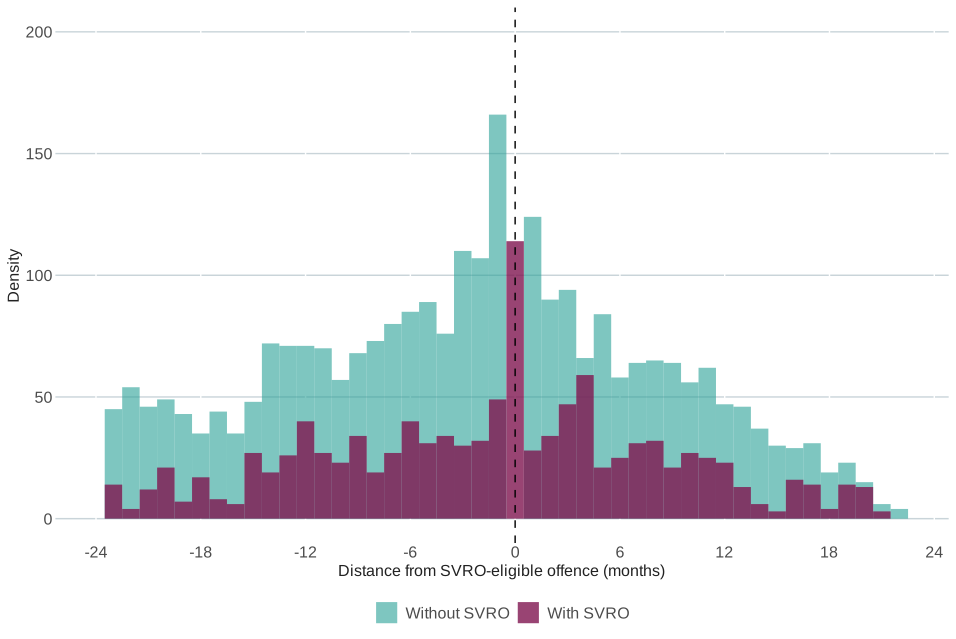
Notes:
- The histogram is based on data for 2,275 individuals (468 in the treatment group, 1,807 in the comparator group).
Figure A-2 shows the distribution of stop and search activity around the date of the SVRO-eligible offence. Stop and search incidents that took place on the same date as the SVRO-eligible offence have been excluded from Figure A-2. As with Figure A-1, stop and search incidents largely follow a normal distribution, particularly in the treatment group. The comparator group had a noticeably higher volume of stop and search incidents prior to the date of the SVRO-eligible offence. This was again expected, given the larger sample size in this group. However, a similar volume and distribution of stop and search incidents were observed across both groups in the follow-up period.
Figure A-2: Histogram of prior and post-SVRO offence stop and searches by treatment allocation
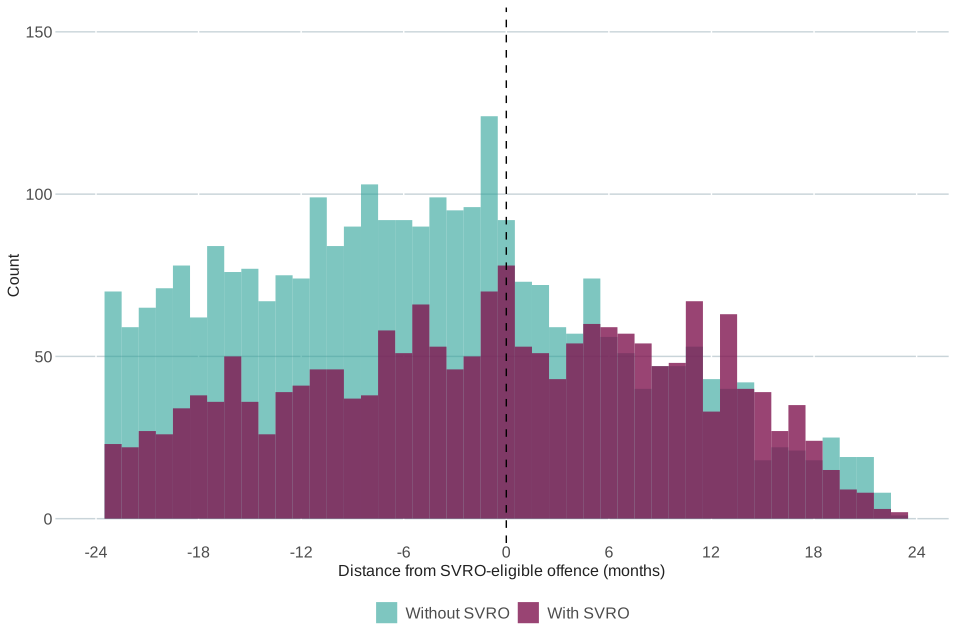
Notes:
- The histogram is based on data for 2,275 individuals (468 in the treatment group, 1,807 in the comparator group).
Figure A-3 to Figure A-6 (known as Love plots) show the covariate balance between the treatment and comparator groups before (black dots) and after (purple dots) applying IPW based on propensity scores in the Tier 1 models for any re-offending (Figure A-3), possession of weapons re-offending (Figure A-4), violent re-offending (Figure A-5) and stop and search in the follow-up period (Figure A-6). These plots display the absolute standardised mean differences for each covariate between the treatment and comparator groups, where values closer to 0 indicate better balance between groups.
In all plots, the application of IPW achieves a substantial improvement in covariate balance across all variables. Post-adjustment values are tightly clustered near 0, indicating that the treatment and comparator groups were well balanced after weighting. This supports the credibility of the estimated treatment effects in the Tier 1 models, by reducing potential bias due to observed confounding.
Importantly, similar levels of covariate balance were achieved across Tier 2 and Tier 3 for all outcome measures. This consistency in balance enhances confidence in the treatment’s comparability and comparator groups across all analytical tiers.
Figure A-3: Adjusted and unadjusted covariate balance: Tier 1 any re-offending
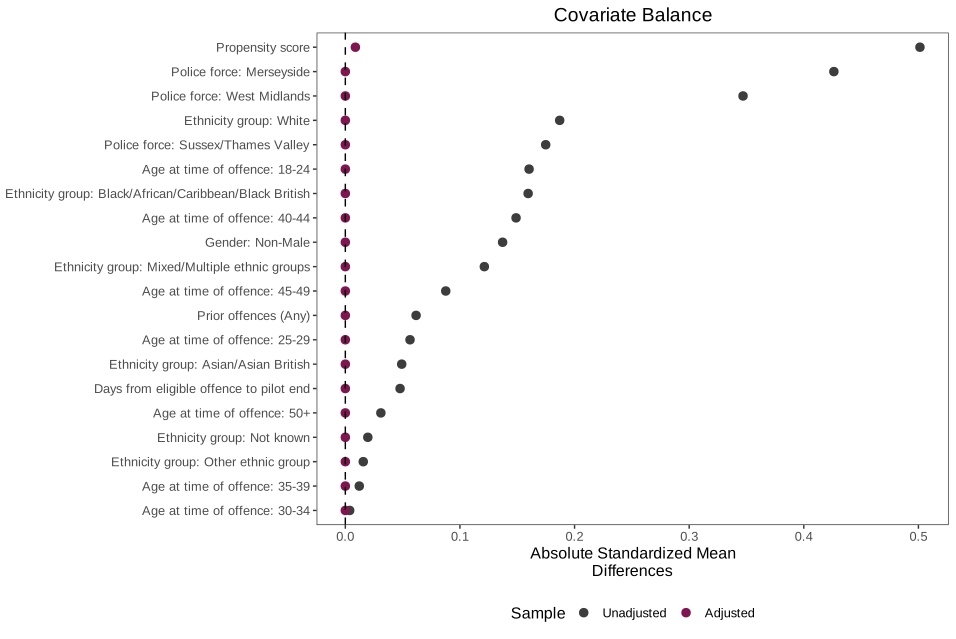
Figure A-4: Adjusted and unadjusted covariate balance: Tier 1 possession of weapons re-offending
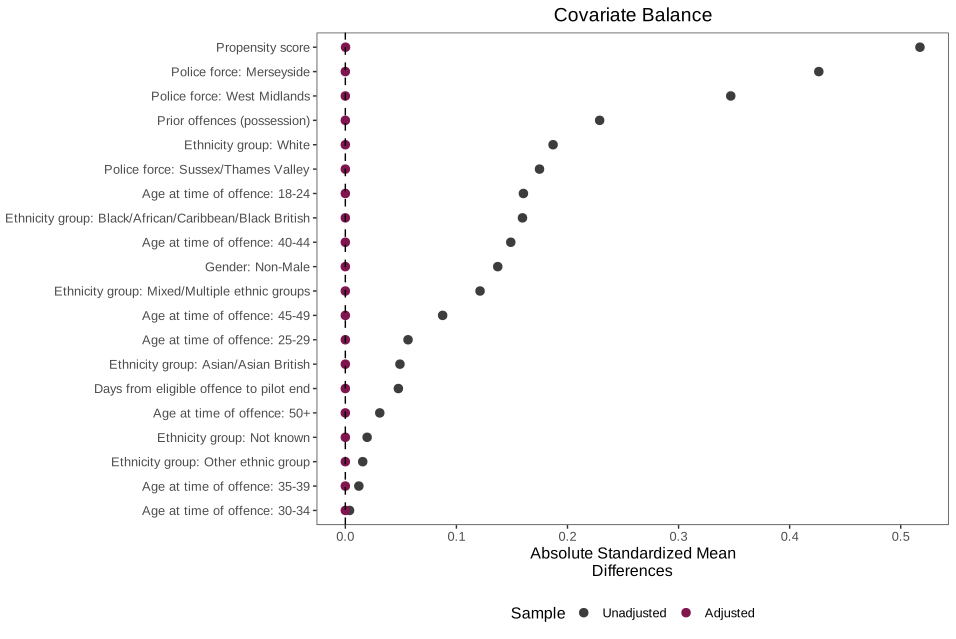
Figure A-5: Adjusted and unadjusted covariate balance: Tier 1 violent re-offending
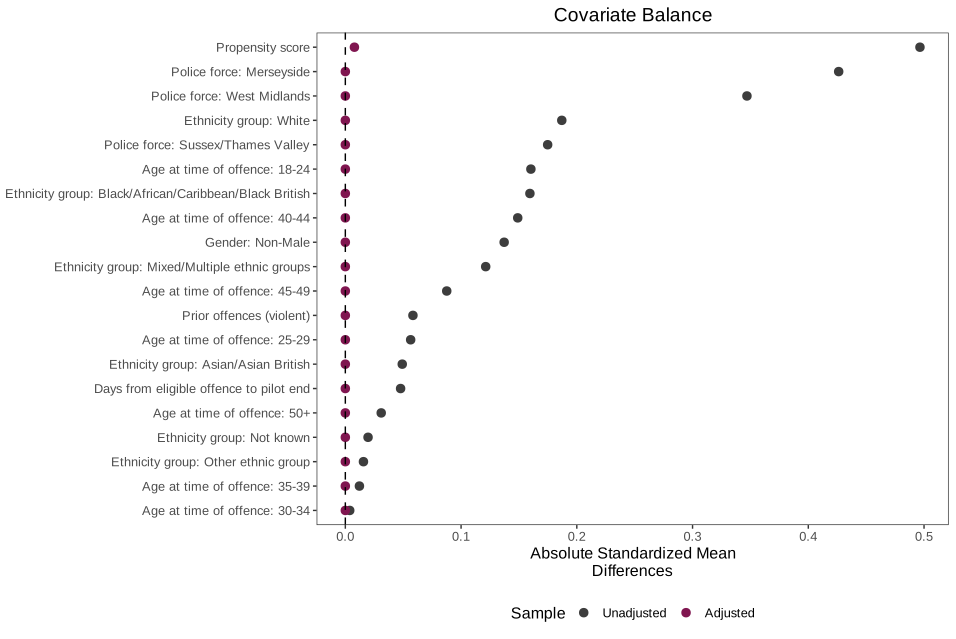
Figure A-6: Adjusted and unadjusted covariate balance: Tier 1 follow up stop and search
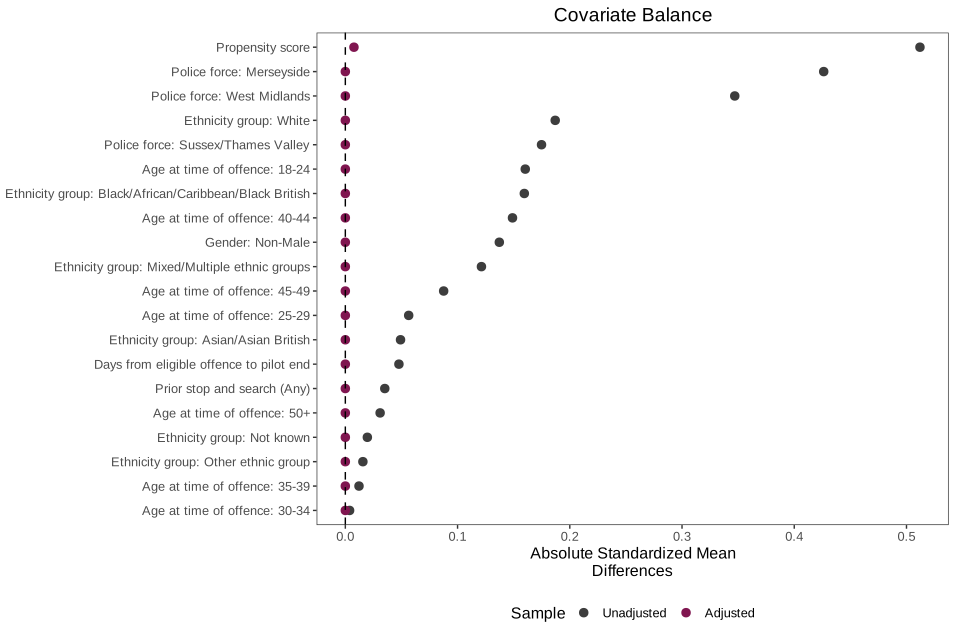
Additional impact analysis results
Impact on re-offending behaviour
This section presents additional results from the impact analysis focusing on re-offending outcomes, focusing on the sample of individuals where an SVRO application was progressed and the individual was convicted for the SVRO-eligible offence. Detailed results, including standard errors, 95% CI and p-values, can be found in Table A-5. Overall, the impact results for this sample are similar to the main results presented in Section 3.2.
In Tier 1, being issued with an SVRO was associated with a statistically significant increase in any re-offending and possession of weapons re-offending, while no statistically significant effects were observed for violent re-offending. Similar results were observed across these outcome measures in the Tier 2 analysis adjusting for custodial sentencing, although the increase in possession of weapons re-offending was just outside the threshold for statistical significance in this analytical tier.
In Tier 3, statistically significant increases in any re-offending and possession of weapons re-offending were observed for individuals with shorter (less than 24 months) and longer (24 months) SVRO durations. Consistent with the main impact results, no significant effects were observed for violent re-offending in either treatment subgroup. When focusing on stop and search frequency in the follow-up period, a statistically significant increase in any re-offending was observed where individuals were not stopped and searched, or stopped and searched once or twice. A statistically significant increase in possession of weapons re-offending was observed among those stopped and searched 3 or more times in the follow-up period. All other results, including all results where violent re-offending was used as the outcome measure, indicated no significant change in re-offending associated with being issued with an SVRO when interacted with stop and search frequency in the follow-up period.
Table A-5. Main impact analysis results on the sample where an SVRO application was progressed and the individual was convicted for the SVRO-eligible offence – re-offending
| Tier | Re-offending | Marginal difference | Std. Error | Lower CI | Upper CI | P-value |
|---|---|---|---|---|---|---|
| 1 | Any | 0.177 | 0.030 | 0.118 | 0.235 | <0.001 |
| Possession | 0.049 | 0.017 | 0.015 | 0.083 | 0.004 | |
| Violent | 0.027 | 0.021 | -0.014 | 0.067 | 0.192 | |
| 2 | Any | 0.165 | 0.042 | 0.082 | 0.248 | <0.001 |
| Possession | 0.051 | 0.027 | -0.001 | 0.103 | 0.054 | |
| Violent | 0.010 | 0.027 | -0.043 | 0.063 | 0.704 | |
| 3: 24-month SVROs | Any | 0.186 | 0.036 | 0.116 | 0.257 | <0.001 |
| Possession | 0.051 | 0.021 | 0.010 | 0.093 | 0.015 | |
| Violent | 0.018 | 0.024 | -0.029 | 0.066 | 0.455 | |
| 3: Less than 24-month SVROs | Any | 0.164 | 0.039 | 0.087 | 0.241 | <0.001 |
| Possession | 0.047 | 0.023 | 0.002 | 0.092 | 0.039 | |
| Violent | 0.042 | 0.028 | -0.013 | 0.097 | 0.138 | |
| 3: 0 follow-up stop and searches | Any | 0.070 | 0.033 | 0.006 | 0.134 | 0.031 |
| Possession | 0.006 | 0.017 | -0.028 | 0.041 | 0.712 | |
| Violent | -0.016 | 0.022 | -0.059 | 0.027 | 0.453 | |
| 3: 1 to 2 follow-up stop and searches | Any | 0.164 | 0.072 | 0.022 | 0.306 | 0.024 |
| Possession | 0.049 | 0.049 | -0.047 | 0.144 | 0.322 | |
| Violent | 0.036 | 0.059 | -0.080 | 0.152 | 0.540 | |
| 3: 3+ follow-up stop and searches | Any | 0.109 | 0.076 | -0.041 | 0.259 | 0.154 |
| Possession | 0.136 | 0.046 | 0.045 | 0.226 | 0.003 | |
| Violent | 0.062 | 0.063 | -0.061 | 0.185 | 0.324 |
Impact on follow-up stop and search activity
This section presents additional results from the impact analysis focusing on stop and search activity in the follow-up period as an outcome. Again, the sample of individuals where an SVRO application was progressed and the individual was convicted for the SVRO-eligible offence was used for this additional analysis. Detailed results, including standard errors, 95% CI and p-values, can be found in Table A-6.
Consistent with the main impact results focused on this outcome measure, across analytical tiers, being issued with an SVRO was associated with a statistically significant increase in the likelihood of being stopped and searched in the follow-up period. The size of this increase in likelihood ranged from 19.7% when the treatment group was restricted to individuals with a 24-month SVRO (Tier 3) to 26.7% among individuals that did not receive a custodial sentence for their SVRO-eligible offence (Tier 2).
Table A-6. Main impact analysis results on the sample where an SVRO application was progressed and the individual was convicted for the SVRO-eligible offence – follow-up stop and search activity
| Tier | Marginal difference | Std. Error | Lower CI | Upper CI | P-value |
|---|---|---|---|---|---|
| 1 | 0.211 | 0.029 | 0.154 | 0.268 | <0.001 |
| 2 | 0.267 | 0.041 | 0.185 | 0.348 | <0.001 |
| 3: 24-month SVROs | 0.197 | 0.036 | 0.127 | 0.267 | <0.001 |
| 3: Less than 24-month SVROs | 0.226 | 0.039 | 0.149 | 0.303 | <0.001 |
Annex B: Statistical disproportionality analysis method
This statistical analysis aimed to examine whether ethnic disparities exist in the likelihood of individuals being progressed through the SVRO process by police (whether an application was made), then by the CPS (whether the application was progressed to court), then finally at court (whether the SVRO was issued). This was achieved using logistic regression modelling to explore the likelihood of progression through the SVRO process by aggregated ethnic group while adjusting for other relevant factors.
The first step was to conduct a comparative analysis of the sample using Chi-square testing to assess whether there were any statistically significant differences in the likelihood of progression at each stage by aggregated ethnic group. This testing identified statistically significant differences in the rate of progression through the SVRO process by aggregated ethnic group. As a result, logistic regression modelling was used to further explore these differences while adjusting for other relevant factors. A binary outcome measure was created for each of the three stages of the SVRO process. These were then used as an outcome measure in logistic regression models, which adjusted for:
- aggregated ethnic group, the target model parameter: the ‘Mixed / Multiple ethnic groups’ and ‘Other ethnic groups’ were further aggregated into ‘Mixed/Other’ due to small sample sizes in these subgroups; the final aggregated ethnic groups used in this analysis were: White, Black/African/Caribbean/Black British, Asian/Asian British, Mixed/Other
- age at the time of the SVRO-eligible offence (in years)
- gender (Male, Female)
- police force area: Thames Valley data were excluded entirely due to missing data for the comparator group (see Annex A), as the lack of variation at each stage of the SVRO process in this force (due to only having data for the treatment group) introduced perfect separation into the logistic regression model, biasing model estimates
- prior offending history
The first model where the outcome was whether an SVRO application was progressed by the police included the entire analytical sample of eligible individuals, minus treatment group individuals from Thames Valley and individuals for whom no ethnicity data were available (2,168). The second model where the outcome was whether the application was progressed to court by the CPS included only individuals where an SVRO application was made by the police, minus treatment group individuals from Thames Valley and individuals for whom no ethnicity data were available (1,194). The third model, where the outcome was whether the SVRO was issued in court, included only individuals where the SVRO application was progressed to court by the CPS, minus treatment group individuals from Thames Valley and individuals for whom no ethnicity data were available (1,170).
Odds ratios (OR) were extracted from each logistic regression model, using the aggregated White ethnic group as the reference category. ORs are an intuitive way of comparing the likelihood of progression through the SVRO process between the aggregated White ethnic group and other aggregated ethnic groups. An OR of 1 means there was no difference between the 2 aggregated ethnic groups being compared; values above 1 suggest that progression was more likely in the aggregated ethnic group being compared to the aggregated White ethnic group, while values below 1 suggest it is less likely relative to the aggregated White ethnic group. For example, an OR of 2 means that progression at that stage was twice as likely for the aggregated ethnic group being compared to the aggregated White ethnic group, while an OR of 0.5 means it was half as likely for that aggregated ethnic group relative to the aggregated White ethnic group. P-values were also analysed to examine statistical uncertainty in the results. Results were considered statistically significant where the p-value was 0.05 or lower.
Annex C: Topic guide themes and sub-themes
Table C-1: Themes and sub-themes covered in topic guides across data collection waves by participant group (excluding scrutiny and fair use panel members)
| Theme | Sub-themes | Participant group(s) |
|---|---|---|
| Role and context | Current role and involvement in the SVRO pilot | Force leads Police officers CPS prosecutors Judiciary |
| Weapons carrying / crimes involving weapons in the pilot area | Police officers CPS prosecutors |
|
| Need and usefulness of SVRO legislation | Views on the need and usefulness of SVROs (including challenges) | Force leads Police officers CPS prosecutors Judiciary |
| Benefits of SVRO legislation compared to existing stop and search legislation | Force leads | |
| Training | Training / guidance provided | Force leads Police officers CPS prosecutors Judiciary |
| Views / experiences of training / guidance (what was useful / less useful / what could be improved) | Force leads Police officers CPS prosecutors Judiciary |
|
| Effectiveness of training to prepare for pilot delivery | Force leads Police officers CPS prosecutors Judiciary |
|
| Eligibility for SVROs | Clarity of SVRO eligibility criteria / identifying individuals eligible for an SVRO | Force leads Police officers |
| Factors considered when deciding whether or not to put forward an application | Force leads Police officers |
|
| SVRO application process | Experience of preparing and submitting SVRO applications / what the process involves (including challenges) | Force leads Police officers |
| Adaptations made to the application process | Force leads | |
| Working / engaging with the CPS | Police officers | |
| Process of reviewing applications | CPS prosecutors | |
| Feedback/reasons from CPS as to why some applications have not progressed | Force leads Police officers |
|
| Proportion of SVRO applications that are progressed to court | CPS prosecutors | |
| Reasons for not progression SVRO applications to court | CPS prosecutors | |
| Providing feedback to police | CPS prosecutors | |
| Reviewing and issuing SVRO applications in court | Process of reviewing applications | Judiciary |
| Volume of SVRO applications | Judiciary | |
| Proportion of SVRO applications that are issued / not issued | CPS prosecutors | |
| Typical reasons SVROs are not being issued |
CPS prosecutors Judiciary |
|
| Enforcing SVROs | Characteristics of individuals who are typically subject to an SVRO is the pilot area (whether known to police; types of offending history; demographics) | Police officers CPS prosecutors |
| Identifying individuals subject to an SVRO, including any barriers / challenges to identification | Force leads Police officers |
|
| Frequency of carrying out an SVRO stop and search | Police officers | |
| Carrying out a stop and search using the SVRO power, including any barriers / challenges to enforcement | Force leads Police officers |
|
| Perceptions of SVRO recipients’ understanding of why they are being stopped and searched | Police officers | |
| Feedback or comments to officers from SVRO recipients about their experience of being subject to an order (that is, impact of the SVRO on their behaviour) | Force leads Police officers |
|
| Cases where an individual subject to an SVRO has moved out of the area and how information was shared between forces | Force leads Police officers |
|
| Partnership working | Experience of working with the police over the course of the pilot | CPS prosecutors |
| Experience of working with / engaging with the CPS over the course of the pilot | Judiciary | |
| Experience of working with the courts over the course of the pilot | CPS prosecutors | |
| Disproportionality | Concerns about disproportionate use of SVROs | Force leads |
| How the potential for SVROs to be used disproportionality has been addressed / mitigated within the application process | Force leads | |
| How the potential for SVROs to be used disproportionality has been addressed / mitigated within the enforcement / stop and search process | Force leads | |
| Outcomes of the SVRO pilot | How effective the systems and processes between the police, CPS, and courts in implementing SVROs are / have been | Force leads Police officers CPS prosecutors Judiciary |
| How well individuals are complying with the conditions of SVROs (numbers of breaches / reasons for breaches) | Force leads Police officers CPS prosecutors |
|
| How effective SVROs have been to date in reducing weapon carrying / offences involving weapons in the pilot area | Force leads Police officers CPS prosecutors Judiciary |
|
| How local communities / community groups have responded to the implementation of the SVRO pilot in the pilot area | Force leads Police officers CPS prosecutors |
Table C-2: Themes and sub-themes covered in topic guides across data collection waves with scrutiny and fair use panel members
| Theme | Sub-themes |
|---|---|
| SVRO context | Weapons carrying / crimes involving weapons in the local area |
| Community feeling about knife / weapons crimes | |
| SVRO awareness and views | How they became aware of SVROs |
| Thoughts about need and usefulness of SVROs | |
| Training and guidance | Training and guidance provided |
| Views / experiences of training / guidance (what was useful / less useful / what could be improved) | |
| Police communication with local communities | Views on effectiveness of police communication with local communities about the SVRO pilot |
| Views on how well SVRO criteria have been communicated to local communities | |
| Police enforcement / use of SVROs | The individuals who are typically subject to an SVRO in the local area (whether known to police; types of offending history; demographics) |
| How often those who are subject to an SVRO are stopped and searched in the local area | |
| Views on how well officers are enforcing SVROs in the local area | |
| Community views and perceived outcomes | How local communities / community groups have responded to the implementation of the SVRO pilot in the pilot area |
| How effective SVROs have been to date in reducing weapon carrying / offences involving weapons in the pilot area |
Annex D: Survey questions for SVRO recipients
Respondents were provided with an information sheet and privacy notice before giving their consent to complete the survey.
Start of questions:
1) Is your Serious Violence Reduction Order (SVRO) still active?
- Yes
- No
- Don’t know
2) What is/was the length of your Serious Violence Reduction Order (SVRO)? Please provide your answer in months.
[NUMERIC RESPONSE]
3) When you were given the Serious Violence Reduction Order (SVRO), were the conditions of your order explained to you?
- Yes
- No
4) How clear are/were the conditions of your Serious Violence Reduction Order (SVRO)?
- Very clear
- Clear
- Neutral
- Unclear
- Very unclear
5) How strongly do you agree or disagree with the following statement:
‘As a result of having a Serious Violence Reduction Order (SVRO), I am more aware of the risks and consequences of carrying a weapon’
- Strongly agree
- Agree
- Neutral
- Disagree
- Strongly disagree
6) As a result of having a Serious Violence Reduction Order (SVRO), how likely are you to stop carrying a weapon?
- Very likely
- Likely
- Neutral
- Unlikely
- Very unlikely
7) Please briefly explain the reasons for your response to the previous question:
[OPEN TEXT]
8) As a result of having a Serious Violence Reduction Order (SVRO), how likely are you to stop spending time with people who carry weapons
- Very likely
- Likely
- Neutral
- Unlikely
- Very unlikely
9) Please briefly explain the reasons for your response to the previous question:
[OPEN TEXT]
10) Please use the space below to describe any other positive or negative impacts of having a Serious Violence Reduction Order (SVRO)?
[OPEN TEXT]
-
Testing was also carried out from the date that the SVRO was issued (for the treatment group) and a simulated SVRO issue date for the comparator group. Differences in results between the 2 approaches were limited. ↩
-
Percentages were calculated by summing the total population of individuals of each ethnicity across all the local authorities that make up each of the police force areas and dividing by the total population all these local authorities. ↩
-
One SVRO-eligible offence was recorded as taking place in quarter 1 (January to March) 2022 – one year before the start of the pilot. This was subsequently checked with the relevant force and confirmed to be correct. ↩
-
This was unknown for one individual due to missing data. ↩
-
This analysis excludes stop and search incidents that occurred on the same day as the SVRO-eligible offence. This is to provide a clearer analysis of stop and search activity before and after the eligible offence. ↩
-
Stop and search scrutiny panels review stop and search data and police body worn camera footage to ensure correct, proportionate, and appropriate use of police stop and search powers. Scrutiny panels are comprised of members of the public. Our sample includes both community members of scrutiny panels and professionals involved in ensuring the police are fair and effective in the use of their powers. ↩
-
The exception to this was the judiciary, who were interviewed during the summer and autumn of 2024 subject to their availability. ↩
-
Although information about the survey was disseminated by police, the information provided to respondents made clear that the survey was part of the evaluation by Ecorys and not connected to the police. Assurances around anonymity and confidentiality were provided, as well as an explanation regarding the voluntary nature of participation. ↩
-
The GO WISELY principles refer to a mnemonic that police officers can use to ensure that they communicate effectively when conducting a stop and search; see College of Policing (2024). ↩
-
More specifically, PSM utilising nearest-neighbour matching. ↩
-
A secondary approach was also explored to validate the above QED method. This anticipated method involved matching individuals issued with an SVRO to a comparator group of similar individuals in non-pilot forces using MoJ data. However, owing to data lags, the data available during the evaluation would not have covered the pilot period. However, this could be considered for a longer-term assessment of the SVRO pilot. ↩
-
A prognostic score approach, where the IPWs are calculated based on the likelihood of re-offending rather than allocation to the treatment group, was explored but ultimately not taken forward as estimated weights were not as stable as the approach using propensity scores. ↩
-
Comparator group start dates were estimated using data on the average time between the SVRO-eligible offence date and SVRO start date in the treatment group, disaggregated by police force and court (Crown or Magistrates’). On average, there were 143 days between the SVRO-eligible offence and the start date of the SVRO in the treatment group. ↩