Rough sleeping data framework, April to June 2026 - release
Published 27 August 2026
Applies to England

© Crown copyright 2026
This publication is licensed under the terms of the Open Government Licence v3.0 except where otherwise stated. To view this licence, visit nationalarchives.gov.uk/doc/open-government-licence/version/3 or write to the Information Policy Team, The National Archives, Kew, London TW9 4DU, or email: psi@nationalarchives.gov.uk.
Where we have identified any third party copyright information you will need to obtain permission from the copyright holders concerned.
This publication is available at https://www.gov.uk/government/publications/rough-sleeping-data-framework-april-to-june-2026/rough-sleeping-data-framework-april-to-june-2026-release
1. Main findings
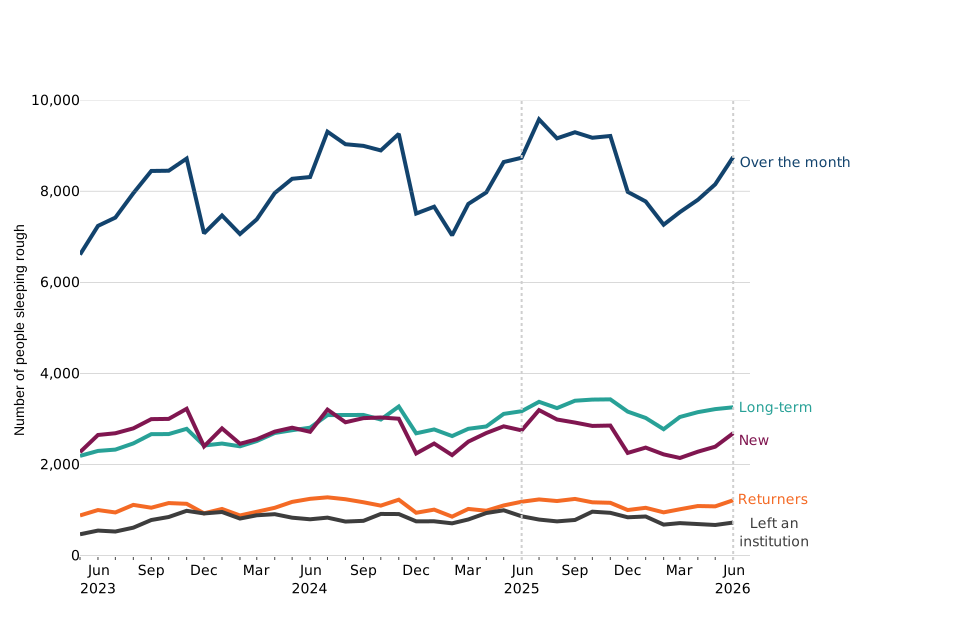
The number of people sleeping rough over the month in June 2026 was at a record high for this time of year. An estimated 8,748 people were sleeping rough over the month, 16 more people than in June 2025, an increase of 0.2%. Of these:
-
31% were new to sleeping rough
-
37% had been sleeping rough long-term
-
15% were accommodated
-
14% were returning to sleeping rough and of these, 27% had moved into settled accommodation in the previous year
-
8% had left an institution which includes 5% that had recently left prison, and 1% that had recently left asylum support
-
4% were under 25 years old
-
79% were male, 18% were female
-
Where nationality was known, 79% were from the UK, 10% were from the European Economic Area (EEA) and 11% were from outside the EEA
-
Where nationality was known, 90% had access to public funds, either due to being a UK national or from their immigration status
People sleeping rough long-term is at a record high for this time of year, increasing year-on-year and remains the largest group of people sleeping rough over the month. In June 2026, 3,253 people (37% of the total) were estimated to be sleeping rough long-term, up 3% compared to June 2025. Despite this rise, levels remained below the peak recorded in November 2025.
Compared with June 2025, the number of new people sleeping rough decreased by 2%, while the number of people returning to rough sleeping increased by 2%. The number of returners reached its highest level since September 2025. The number of people sleeping rough after recently leaving an institution decreased by 16% compared with June 2025 and reached its lowest monthly level in May 2026 since August 2023.
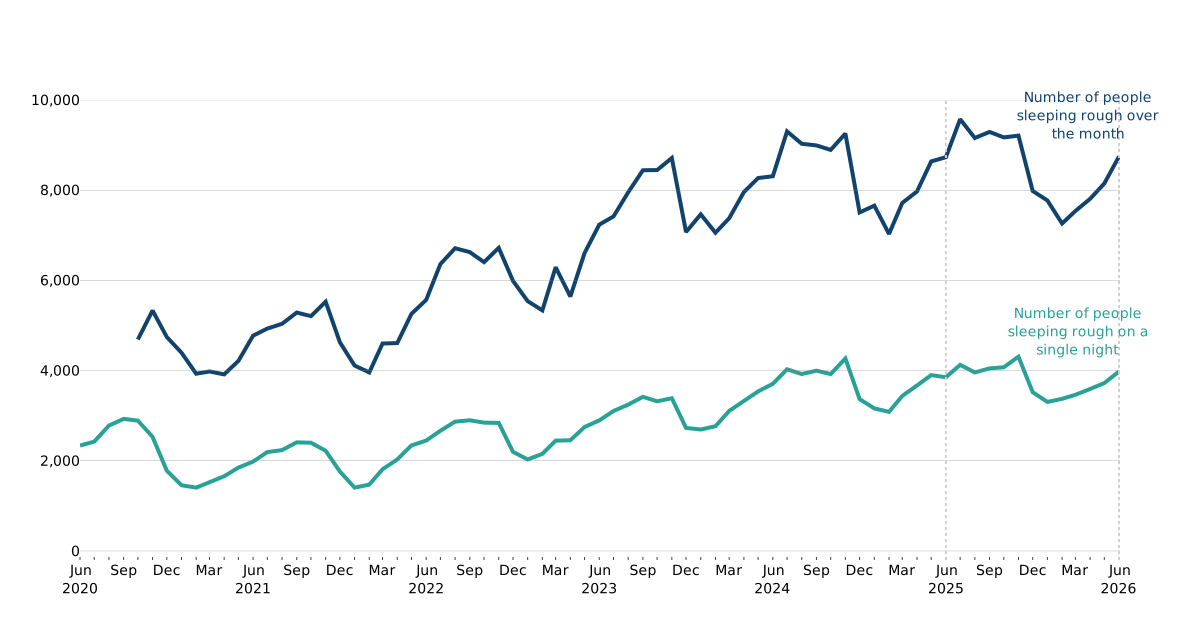
There has been an increase in the number of people sleeping rough on a single night, which is at a record high for this time of year. In June 2026, 3,980 people were estimated to be sleeping rough on a single night, up 3% on the same time last year. Despite this rise, levels remained below the peak recorded in November 2025, reflecting the seasonal pattern typically seen in rough sleeping. There were 2.2 times more people sleeping rough over the month compared to a single night, illustrating that the flow of people onto and off the street over the course of a month is significantly higher than those seen on any given night due to the dynamic nature of rough sleeping.
London continues to have the highest levels of rough sleeping. However, both over the month and on a single night levels have decreased compared to the same time last year, continuing a downward trend seen over the past six months.
Date of next publication: It is expected that the next quarterly publication of monthly data (up to September 2026) will be published on 26 November 2026.
2. Introduction
Since May 2023, the Ministry of Housing, Communities and Local Government has been collecting data on metrics as part of a framework to better understand how far rough sleeping is prevented wherever possible, and where it does occur, whether it is rare, brief, and non-recurring.
This data is relevant to people working locally to reduce rough sleeping and is an important step towards driving better outcomes for vulnerable people.
There are eight indicators included in the framework, these are:
Rare
-
The number of people sleeping rough (on a single night and over the course of the month).
-
The number of people sleeping rough over the course of the month who have moved into accommodation over the course of the month.
Prevented
-
The number of new people sleeping rough over the course of the month.
-
The number of people sleeping rough over the month who have been discharged from institutions.
Brief
-
The number of people sleeping rough over the course of the month who have been sleeping rough long-term.
-
The number of nights on which people were seen sleeping rough.
Non-recurring
-
The number of people sleeping rough over the course of the month who are returning to sleeping rough.
-
The number of people sleeping rough over the course of the month who are returning to sleeping rough, who had previously moved into settled accommodation.
There are a range of factors that can affect the number of people who sleep rough on any given night, for example, the availability of night shelters, the weather, and where people choose to sleep.
The number of people sleeping rough tends to be higher in the summer months when it is warmer, and lower in the winter months, reflecting the seasonality of rough sleeping, because of these comparisons we typically compare against previous year’s figures rather than the previous quarter.
The management information is largely gathered by outreach workers as part of their regular outreach activity and may also be gathered from referrals from partner agencies to help identify people that may not engage with services. This means the quality of the information is linked to the coverage and frequency of outreach activity as well as the local data systems in place to accurately track and record this information.
The figures in this release are therefore subject to some uncertainty and should be treated as estimates.
2.1 Uses and limitations
These statistics can be used:
-
To estimate the number of people of sleeping rough on a single night and over the month
-
To assess changes in the number of people sleeping rough over time
-
To compare local authorities and regions
-
To understand flows from institutions to sleeping rough
-
To understand the number of people who are new, returning or long-term rough sleepers and the number of people who have been accommodated
-
To understand some basic demographics about people who sleep rough across the month e.g. gender and nationality
These statistics are not suitable:
-
To estimate the total number of people sleeping rough across the year
-
To understand the reasons why people sleep rough or the causes
-
To make direct comparisons with other UK countries are difficult, because different definitions and approaches to measuring rough sleeping are used across the UK
-
To estimate the number of homeless people, hidden homeless or people with nowhere safe to stay
3. Overall trends
People sleeping rough over the month, long-term rough sleepers and people returning to rough sleeping have all increased compared to the same time last year. However, the number of new people sleeping rough and those who had recently left an institution has decreased.
Figure 1: Estimated number of people sleeping rough over the month, sleeping rough long-term, new to sleeping rough, returning to sleeping rough and sleeping rough having left an institution, May 2023 to June 2026
Source: MHCLG
Of those sleeping rough over the month, the largest group were people who had been sleeping rough long-term, followed by those who were new to sleeping rough and those returning to sleeping rough[footnote 1].
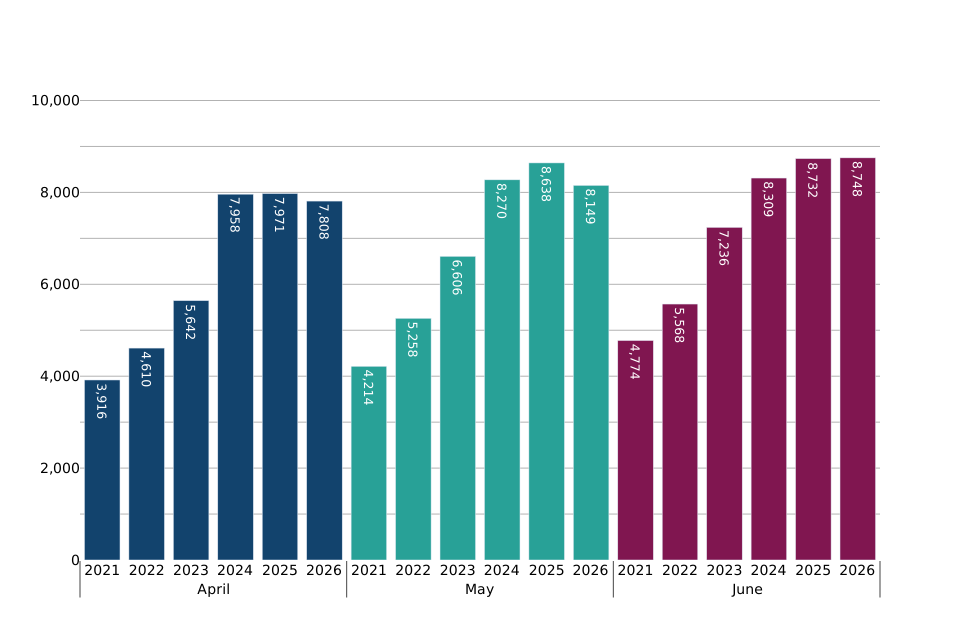
In April and May, the number of people sleeping rough over the month decreased compared with the same time last year. However, in June there was a very small increase.
Figure 2: Estimated number of people sleeping rough over the month April to June, 2021 to 2026
Source: MHCLG
4. Making rough sleeping rare
The number of people sleeping rough over the month and on a single night has increased compared with the same time last year, reaching a record high for this time of year.
Figure 3: Estimated number of people sleeping rough on a single night (June 2020 to June 2026) and over the month (October 2020 to June 2026)
Source: MHCLG
Estimated number of people sleeping rough over the month
There were 8,748 people estimated to be sleeping rough over the month in June 2026. This is a 0.2% increase since last year (June 2025).
The rate of people sleeping rough over the month of June 2026 in England was 14.9 people per 100,000, compared to 14.8 people per 100,000 in the same period last year[footnote 2].
Westminster remains the local authority with the highest number of people sleeping rough over the month, with a total nearly twice that of the authority with the second highest rough sleeping population. Westminster City Council published its Homelessness and Rough Sleeping Strategy and Action Plan 2025-2030. This suggests that Westminster has the highest number of people sleeping rough due to its central London location, which draws people from other parts of the UK and other countries.
Camden recorded the second-highest number of people sleeping rough over the month, rising from 103 people in May 2026 to 240 in June 2026, an increase of 133%. The remaining local authorities in the top 10 are a mix of large cities and coastal areas. Overall, the top 10 local authorities account for 23% of all people sleeping rough over the month.
The number of people sleeping rough over the month in June was 2.2 times higher than the number of people seen sleeping rough on a single night, illustrating that the flow of people onto and off the street over the course of a month is significantly higher than those seen on any given night due to the dynamic nature of rough sleeping.
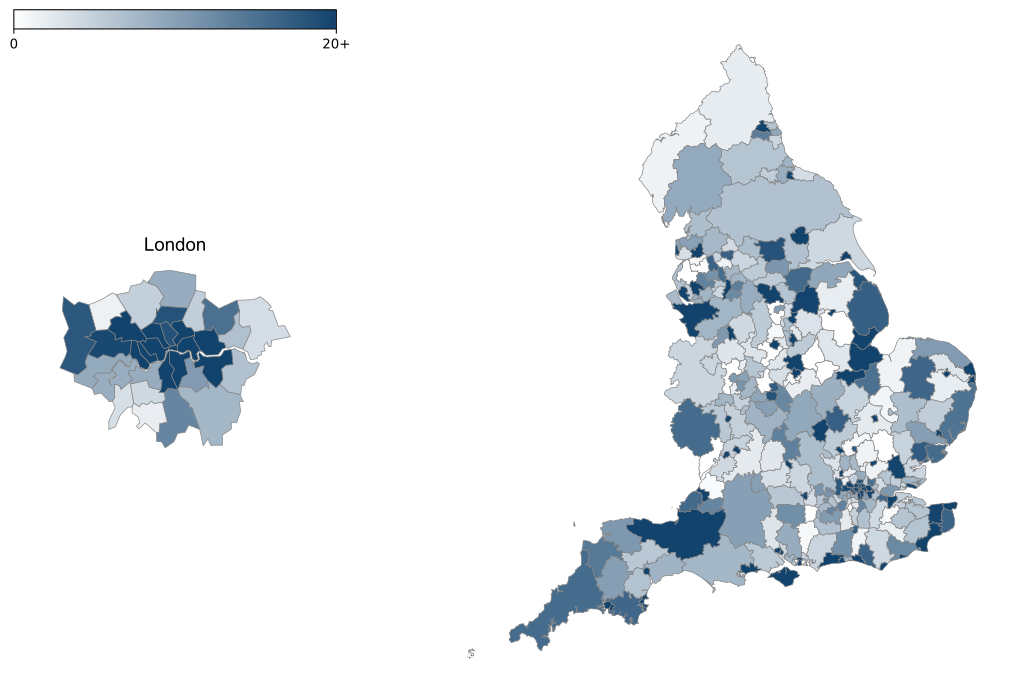
The highest rates of sleeping rough over the month are mainly in London, other major cities and coastal areas in the South of England.
Figure 4: Estimated number of people sleeping rough over the month per 100,000 people in the population, June 2026
Source: MHCLG
Estimated number of people sleeping rough on a single night
There were 3,980 people estimated to be sleeping rough on a single night in June 2026, up 3% since last year (June 2025). In April and May, the number of people sleeping rough over the month decreased compared with the same time last year, by 5% and 2% respectively.
The rate of people estimated to be sleeping rough on a single night in June 2026 in England was 6.8 people per 100,000, compared to 6.5 per 100,000 in the same period last year[footnote 2].
London continues to have the highest levels of rough sleeping. However, both over the month and on a single night levels have decreased compared to the same time last year, continuing a downward trend seen over the past six months. Along with London, East Midlands and West Midlands had a decrease in rough sleeping over the month and on a single night in June 2026.
Estimated number of people who were sleeping rough who have now moved into accommodation
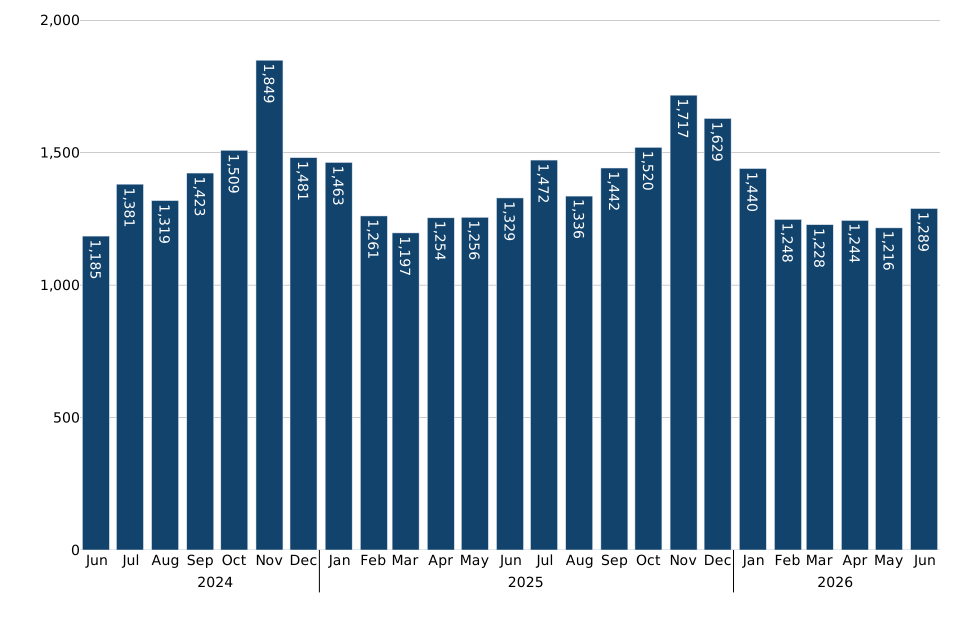
The number of people who were rough sleeping and then provided with accommodation has decreased when compared with the previous year in each of April, May and June 2026, accounting for an average of 15% of the total.
Figure 5: Estimated number of people sleeping rough who have moved into accommodation, June 2024 to June 2026
Source: MHCLG
In June 2026 there were 1,289 people who were accommodated over the course of the month, 15% of those sleeping rough over the month. This is a 3% decrease since last year (June 2025). The proportion of people being accommodated was the same as last year and since being collected this has ranged between 15% and 20%, with a higher proportion of people accommodated during the winter months. [footnote 3]
5. Preventing people sleeping rough
Estimated number of new people sleeping rough
There were 2,684 new people estimated to be sleeping rough over the month in June 2026 (31% of total people sleeping rough over the month), down 2% since June 2025. Over the past 12 months, the number of new people sleeping rough over the month have decreased in 9 months compared to the same time last year.
Estimated number of people sleeping rough who have left an institution
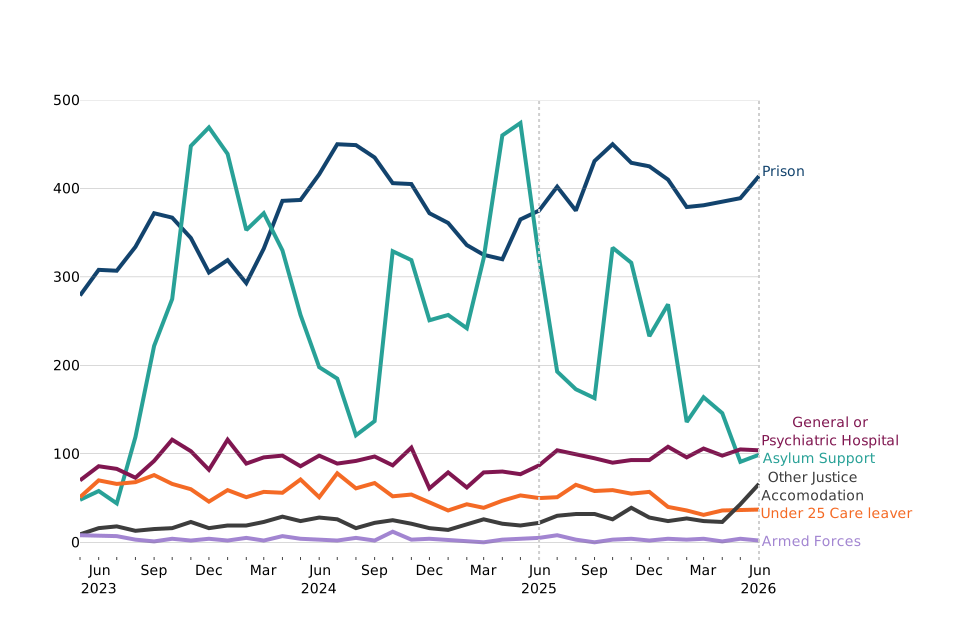
People leaving prison remain the largest group of recent institution leavers sleeping rough, but this is now followed by people leaving hospital, rather than those leaving asylum support given the large decrease.
Figure 6: Estimated number of people sleeping rough over the course of the month who have left an institution, May 2023 to June 2026
Source: MHCLG
There were 724 people estimated to be sleeping rough over the month in June 2026 who had left an institution, 8% of the total number of people sleeping rough over the month.
The majority of people sleeping rough who had recently left an institution had left prison in the last 85 days. In June 2026, 413 people had left prison, 5% of total people sleeping rough over the month. The number of people sleeping rough who had recently left prison had been steadily falling monthly since the peak of 450 people in October 2025 to a low of 379 in February 2026, after which it has been consistently increasing.
In June 2026, there were 99 people sleeping rough who had recently left asylum support, accounting for 1% of all people sleeping rough over the month. This is 69% lower than this time last year and a 79% decrease since the peak of 474 people in May 2025.
The number of people sleeping rough after recently leaving asylum support may be affected by a range of operational factors including asylum applications volumes, refusal rates and tribunal activity, as well as seasonal variation in rough sleeping which means the overall numbers of people sleeping rough may increase or decrease substantially each month.
The number of people sleeping rough who had recently left hospital has remained relatively stable. However, due to the fall in the number of people recently leaving asylum support, hospital leavers are now the second largest institution group for the first time since August 2023. In June 2026, 106 people sleeping rough had left a general or psychiatric hospital in the last 85 days.
The number of people sleeping rough who had recently left other institutions has also remained relatively stable and continues to be lower than the numbers for prison, hospital and asylum support leavers. In June 2026, 38 people were care leavers under the age of 25, 66 people had left other justice accommodation in the last 85 days and 2 people had left the UK Armed Forces in the last 85 days[footnote 4].
6. Making rough sleeping brief
Estimated number of people sleeping rough long-term
There were 3,253 (37%) people estimated to be sleeping rough over the month in June 2026 who had been sleeping rough long-term. This is up by 3% compared to the same time last year (June 2025). People sleeping rough long-term have been the largest group since November 2024. However, Yorkshire and the Humber and London both saw decreases in the number of people sleeping rough long-term, both decreasing by 6% compared with the same time last year.
Westminster remains the local authority with the largest number of long-term rough sleepers, recording more than 2.7 times the number seen in the authority with the second highest total, and more than the North East, East Midlands, West Midlands and Yorkshire and the Humber as a whole. Liverpool, Bristol and Manchester make up the next three authorities with the highest numbers of long-term rough sleepers, highlighting concentrations across parts of the North West and South West. Collectively, the top 10 local authorities account for 29% of all long-term rough sleepers in England.
Estimated number of nights people seen sleeping rough over the previous six months
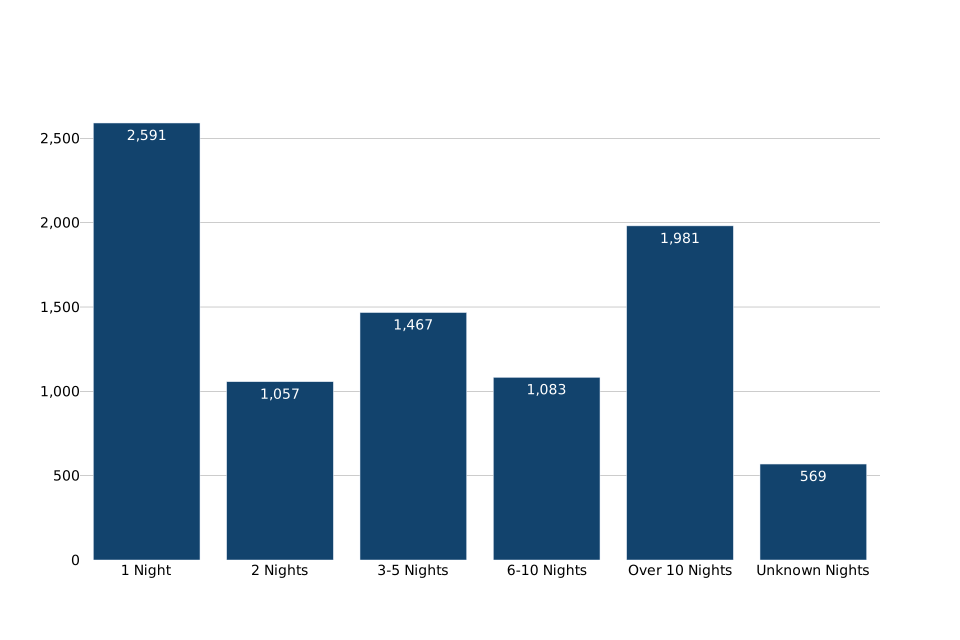
The estimated number of nights people were seen sleeping rough over the previous six months in June was similar to previous months. 30% of people sleeping rough over the month in June 2026 were seen sleeping rough for one night over the last six months. This is the largest group and has been the case since this was first collected in June 2024.
The largest group of people are only seen sleeping rough on one night.
Figure 7: Number of nights people estimated to have been seen sleeping rough over the last six months, June 2026
Source: MHCLG
7. Making rough sleeping a non-recurring experience
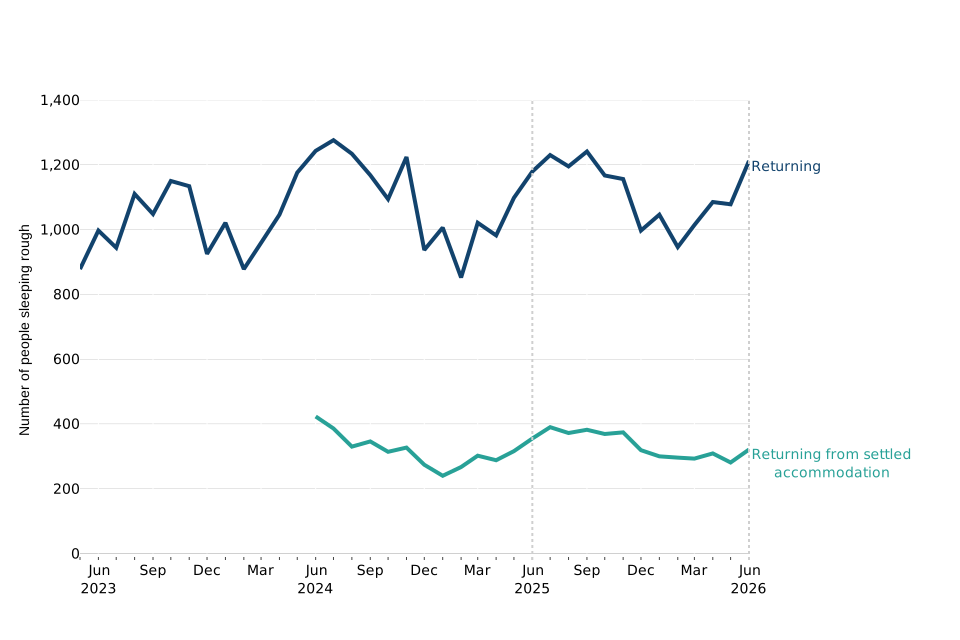
People returning to sleeping rough has increased compared to last year, in 2 out of the 3 previous months.
Figure 8: Estimated number of people returning to sleeping rough, May 2023 to June 2026, including those returning to sleeping rough after moving into settled accommodation, June 2024 to June 2026
Source: MHCLG
There were 1,208 people estimated to be returning to sleeping rough over the month in June 2026, 14% of the total number of people seen sleeping rough over the month. This is an increase of 2% since the same time last year (June 2025).
Of these, 321 people were returning to sleeping rough after moving into settled accommodation in the preceding 12 months, down 10% since June 2025. These account for 27% of all those returning to sleeping rough. Across each month so far of 2026, the proportion of people returning to sleeping rough after moving into settled accommodation ranged from 26% to 31%.
8. Demographics
We collect basic demographic information on people sleeping rough, including age and gender monthly, and nationality and immigration status on a quarterly basis.
If a person refused to give, or did not want to share, their personal information, they would still be recorded as sleeping rough and their gender, nationality and immigration information would be recorded as ‘not known’. It may not be possible to record demographic information, due to an individual being asleep when they were approached for example. A person’s demographic information may also be unknown if they had only been sleeping rough for a short period of time, and outreach teams were unable to collect this information. This information relies primarily on self-disclosure, either through direct engagement with individuals or existing knowledge held by services. Consequently, collecting more detailed demographic information can take time.
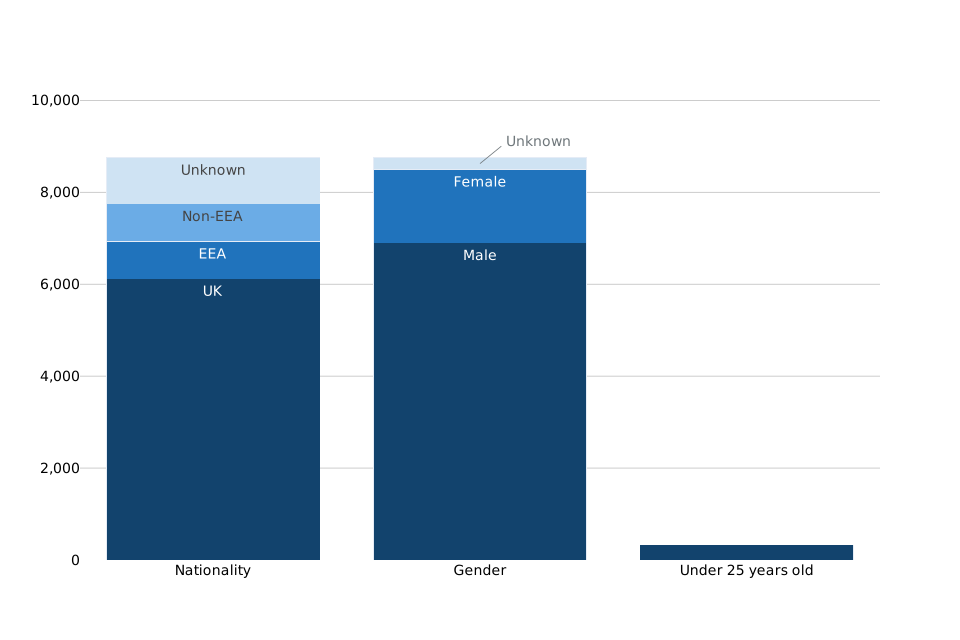
Most people sleeping rough over the month are male, over the age of 25 and UK nationals.
Figure 9: Estimated number of people sleeping rough over the course of the month by nationality, gender and under 25 years old, June 2026 [footnote 5]
Source: MHCLG
Information on the gender of over the month rough sleepers has been collected quarterly since June 2025. The majority of people sleeping rough over the month in June were male, with 6,889 men (79%) and 1,599 women (18%) sleeping rough. Gender was unknown, other or prefer not to say for 260 people (3%). The gender breakdown of people sleeping rough is similar across all months in all regions in England and is similar to the breakdown in the annual rough sleeping snapshot.
Sleeping patterns of females experiencing rough sleeping are more hidden, transient and intermittent and therefore may not be fully captured by the management information.
In June 2026, 323 people (4% of total) sleeping rough over the month were aged under 25. The proportion of total people sleeping rough over the month aged under 25 is similar each month throughout 2026 so far.
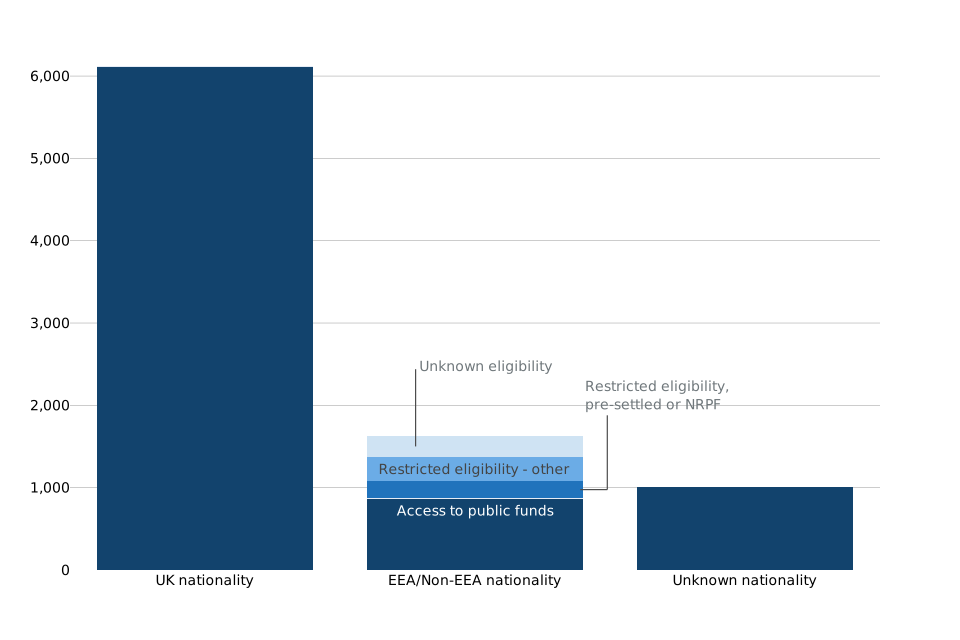
Most people sleeping rough over the month are from the UK and most people sleeping rough have access to public funds.
Figure 10: Estimated number of people sleeping rough over the course of the month, by nationality and immigration status, June 2026
Source: MHCLG
Information on the nationality and the immigration status of those sleeping rough has been collected on a quarterly basis, four snapshots throughout the year for the months of March, June, September and December, since June 2024.
In June 2026, of those where nationality was known 6,059 people (79%) of the people sleeping rough over the month) were from the UK. This is the highest proportion since June 2024 when this data was first collected, with the lowest being 73%. There were 806 (10%) European Economic Area (EEA) nationals in June 2026, and 817 people (12%) were non-EEA nationals. The nationality of 1,066 people was unknown.
People sleeping rough who are from the UK are the largest group and had the only increase, up 1% compared to June 2025, whereas EEA nationals had decreased 9% and Non-EEA nationals had decreased 26%.
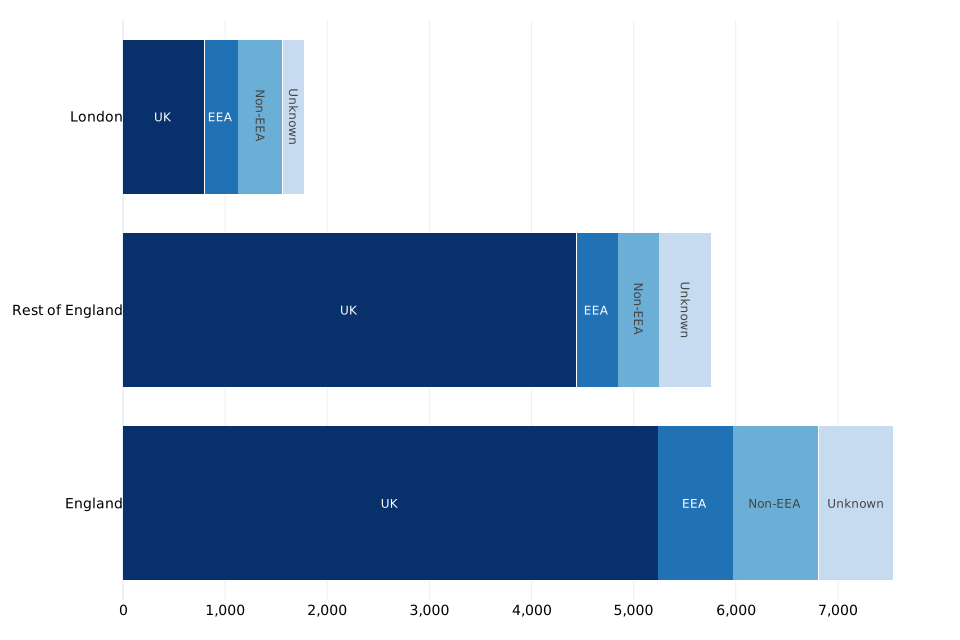
The nationality breakdown of people sleeping rough is similar across all regions in England except for London.
In London, of those where nationality was known, 976 people (54%) were from the UK, 404 (22%) were EEA nationals and 444 (24%) were non EEA nationals. The nationality of 277 people was unknown.
In London, just under half of people sleeping rough are non-UK nationals.
Figure 11: Estimated number of people sleeping rough over the course of the month, by nationality, by region, June 2026
Source: MHCLG
Across England, the proportion of non-UK nationals who have either access to public funds, leave to enter/remain, restricted eligibility than neither grants access or falls under restricted access, or unknown immigration status is broadly similar each quarter. See definitions for further explanation of these statuses.
Of the 1,623 people sleeping rough over the month who were EEA or non-EEA nationals, 869 people (54%) had access to public funds, 213 (13%) had leave to enter/remain with restricted eligibility to public funds, of these 120 (7% of non-UK nationals) had no recourse to public funds, and 93 (6% of non-UK nationals) had pre-settled status.
288 people (18% of non-UK nationals) had restricted eligibility that neither grants access to public funds or falls under stated categories for restricted access e.g. No Recourse to Public Funds (NRPF) and 253 people (16%) had an unknown immigration status.
9. Definitions
New people sleeping rough
A person is considered ‘new’ if they have not been seen sleeping rough in the local authority in the 5 calendar years (60 months) preceding the date they were seen sleeping rough during the current reporting period. If a person was seen more than 5 years previously, they are to be counted as ‘New’. If there is no historical data available for the last 5 years, people seen sleeping rough for the first time should be counted as ‘New’ whilst a historical database is compiled.
Prior to May 2023, the definition was less specific in terms of time period, and a person was considered new if they were not known to local authority outreach teams and other support services.
People sleeping rough who have been discharged from an institution
A person is counted as having left an institution recently if they report having been discharged from any of the below within the last 85 days (12 weeks + 1 day):
-
Prisons (adult and youth)
-
Other justice accommodation e.g. accommodation provided by the National Probation Service (i.e. Approved Premises)
-
General and psychiatric hospitals
-
Discharged from the UK Armed Forces
-
Asylum support (previously ‘National Asylum Support Services Accommodation’)
The 85 day period is based on Community Accommodation Service Tier 3 (CAS3) which provides temporary accommodation for up to 84 nights for homeless prison leavers and those moving on from Approved Premises to help them move into settled accommodation. This is designed to improve partnership working between homelessness and rough sleeping services and institutions to ensure people recently leaving institutions have suitable accommodation pathways. People under 25 who are care leavers are also included but the 85 day timeframe does not apply.
People sleeping rough
People sleeping rough are defined as:
-
People sleeping, about to bed down (sitting on/in or standing next to their bedding) or bedded down in the open air (such as on the street, in tents, doorways, parks, bus shelters or encampments).
-
People in buildings or other places not designed to for habitation (such as stairwells, barns, sheds, car parks, cars, derelict boats, stations or “bashes” which are makeshift shelters often comprised of cardboard boxes).
The definition does not include:
-
People in hostels or shelters
-
People in campsites or other sites used for recreational purposes or organised protest
-
Squatters
-
Travellers
Bedded down is taken to mean either lying down or sleeping.
About to bed down includes those who are sitting in/on or near a sleeping bag or other bedding.
This is the same definition as is used for the annual rough sleeping snapshot statistics.
The number of people sleeping rough on a single night is an estimated figure determined from outreach contacts, or from a ‘Point-in-Time’ snapshot.
The number of people sleeping rough over the course of the month is an estimated figure based on outreach contacts.
Number of people sleeping rough who have moved into accommodation
This is an estimate of the number of people seen sleeping rough over the month who have moved into accommodation over the course of the month, not including those accommodated under severe weather emergency protocols (SWEP).
People sleeping rough long-term
Long-term rough sleeping is defined as the number of people seen recently (within the reporting month) who have been seen sleeping rough in 3 or more months out of the last 12 months (1 year).
Number of nights seen sleeping rough
For each person seen sleeping rough over the month, the number of nights over the last 6 months (180 days) on which each person was seen sleeping rough is categorised as follows:
-
1 night
-
2 nights
-
3-5 nights
-
6-10 nights
-
More than 10 nights
-
An unknown number of nights
People returning to sleeping rough
A person is considered a ‘returner’ if they are seen sleeping rough again after no contact for 2 or more quarters (180 days), whichever is shorter, measured from the last date the person was seen.
Number of people sleeping rough who had previously moved into settled accommodation
For a person to be counted under this indicator, they should be returning to sleeping rough after no contact of 2 or more quarters (180 days) (as in NR1), they should have been seen in the previous 5 years (i.e., they don’t meet the criteria for P1), and they should have been moved into settled accommodation, defined as accommodation intended to last for an extended period of time and including the following categories:
-
Social rented sector (including council tenancy, registered providers)
-
Supported Accommodation (including Housing First, care homes, and other supported accommodation pathways)
-
Hostels (including reception centres, emergency units and refuges) with accommodation for longer than 6 months
-
Private rented sector (with an Assured Shorthold Tenancy Agreement)
-
Staying with family or friends
-
Owner-occupier
-
Returned to home country
Potential overlaps in groups
There is the potential for some overlap between new people sleeping rough over the month and people returning to sleeping rough if a person found sleeping rough returns to sleeping rough after not being seen for more than five years. There is also potential for some overlap between the long-term and returner indicators if a person has not been seen sleeping rough for the last 6 months, but in the 6 months previous was seen 2 further times, this would mean this person is both a long-term rough sleeper and a returner. Not all people seen sleeping rough over the month, are included in new people sleeping rough over the month, people sleeping rough long-term or people returning to sleeping rough. People who have left an institution may also overlap all of those categories.
No Recourse to Public Funds
No Recourse to Public Funds (NRPF) is a standard condition applied to most categories of temporary immigration permission to protect public funds. NRPF is also applied to illegal migrants.
Examples of public funds for immigration purposes are Universal Credit, Child Benefit and Housing Benefit.
Non-UK nationals with status that allows for access to public funds
Refers to non-UK national individuals who have been granted status in the UK which allows for access to public funds. Types of status these individuals may have, but are not limited to, include Indefinite Leave to Remain (including Settled Status under the EU Settlement Scheme) and Refugee Status. For further information on what constitutes public funds, see Home Office guidance.
Non-UK nationals with leave to enter/remain with restricted eligibility to public funds
Refers to non-UK national individuals who have been granted the following types of status which restricts their eligibility to public funds:
People with pre-settled status (arrivals pre-December 31, 2020) if they are not exercising a qualifying right to reside (includes those with a pending EUSS application).
This individual has pre-settled status granted under the EUSS but has limited access to public funds as they are not exercising a qualifying right to reside. This also includes individuals who have a pending EUSS application. For example, an individual has a qualifying right to reside if they meet any of the following criteria:
-
are a worker
-
are self-employed
-
are self-sufficient
-
are a jobseeker
-
are a student
People with limited leave to remain subject to a no recourse to public funds (NRPF) condition (arrivals post-December 31, 2020).
This individual has arrived in the UK after December 31st 2020 and has been granted limited leave to remain subject to an NRPF condition.
People with limited leave to remain subject to a no recourse to public funds (NRPF) condition.
This individual has been granted limited leave to remain subject to an NRPF condition.
Non-UK nationals with restricted eligibility that neither grants access to public funds or falls under stated categories for restricted access e.g. NRPF.
This category refers to those non-UK national individuals who have restricted eligibility for public funds however, this restriction falls outside of the sub-categories set out above.
Non-UK nationals with unknown status.
This category refers to those non-UK national individuals whose status is unknown to the local authority.
10. Things you need to know
On average, over the last 12 months 98% of areas provide a response each month and for those areas that do not provide data, imputed figures based on previous management information are used.
This monthly management information, provided by local authorities, includes a more frequent although less robust estimate of people sleeping rough on a single night, compared to the annual official rough sleeping snapshot statistics. Both the management information and the official statistics are collated by local authorities, outreach workers, local charities and community groups, but the official statistics are independently quality assured by Homeless Link.
The management information also provides an estimate of the number of people sleeping rough over the course of the month in each local authority to better understand the flow of people sleeping rough. This figure is based on casework done by outreach teams and other service providers.
11. MHCLG related statistics
The Ministry of Housing, Communities and Local Government have been collecting monthly management information from all local authorities in England about the support for people sleeping rough and those at risk of sleeping rough, since May 2020, alongside the annual rough sleeping snapshot statistics.
Annual rough sleeping snapshot
The MHCLG’s official annual rough sleeping snapshot statistics, provide a way of estimating the number of people sleeping rough across England on a single night in autumn and assess change over time. These statistics provide information about the estimated number of people sleeping rough on a single night between 1 October and 30 November each year and some basic demographic details (i.e. age, gender, nationality).
Statutory homelessness
MHCLG also collect and publish quarterly and annual statistics on the broad characteristics and circumstances of households owed a statutory homelessness duty. This includes households who are rough sleeping at the time of local authority approach.
12. Enquiries
Media
Telephone: 0303 444 1209
Email: newsdesk@communities.gov.uk
Statistical enquiries
Telephone: 0303 444 2623
Email: roughsleepingstatistics@communities.gov.uk
Responsible analysts
Rachel Worledge, Katie Hodgson
Information on Official Statistics is available via the UK Statistics Authority website.
Information about statistics at MHCLG is available via the department’s website.
-
These indicators are not mutually exclusive, and some overlaps can occur between the different indicators. Please refer to definitions ↩
-
Based on ONS mid-2025 population estimates. ↩ ↩2
-
This refers to anyone seen sleeping rough over the month who at some point in the month was placed into accommodation, whether that was short-term or long-term. This should not include placements into accommodation due to Severe Weather Emergency Protocol (SWEP), which provides support for individuals during extreme weather. A person is only counted once even if they have moved into accommodation multiple times over the same month. ↩
-
The 85 day period is based on Community Accommodation Service Tier 3 (CAS3) which provides temporary accommodation for up to 84 nights for homeless prison leavers and those moving on from Approved Premises to help them move into settled accommodation. This is designed to improve partnership working between homelessness and rough sleeping services and institutions to ensure people recently leaving institutions have suitable accommodation pathways. People under 25 who are care leavers are also included but the 85 day timeframe does not apply. ↩
-
Information on the number of people sleeping rough who are under 25 years old is mainly collected as part of the prevention indicator to understand the number of care leavers who are under 25 years old who are sleeping rough. This indicator is designed to highlight recent inflows on the streets from institutions to take action to reduce rough sleeping. We do not collect data on other age categories as the main aim is the focus on young people care leavers. ↩