Rigged bids, real costs: a case for urgent action on bid rigging in UK public procurement
Published 8 September 2026

© Crown copyright 2026
This publication is licensed under the terms of the Open Government Licence v3.0 except where otherwise stated. To view this licence, visit nationalarchives.gov.uk/doc/open-government-licence/version/3 or write to the Information Policy Team, The National Archives, Kew, London TW9 4DU, or email: psi@nationalarchives.gov.uk.
Where we have identified any third party copyright information you will need to obtain permission from the copyright holders concerned.
This publication is available at https://www.gov.uk/government/publications/procurement-in-the-national-interest/rigged-bids-real-costs-a-case-for-urgent-action-on-bid-rigging-in-uk-public-procurement
1. Executive summary
Procurement and bid rigging: key stats
- Circa £400 billion is spent on UK public procurement annually[footnote 1]
- Bid rigging has the potential to increase prices by 20% or more[footnote 2]
- Bid rigging has a possible impact of £1 billion to over £3 billion on the UK economy[footnote 3]
Public procurement only delivers value for money if competition is genuine. Bid rigging occurs when suppliers collude during a procurement process, making procurements appear competitive while producing outcomes that are not. It allows suppliers to inflate prices, reduce quality and weaken incentives to innovate. Ultimately, this illegal activity diverts taxpayer funds for vital public services into the pockets of colluding firms while disadvantaging fair-dealing firms who play by the rules.
The Competition and Markets Authority (CMA) is the UK’s primary competition enforcement authority. This paper sets out our assessment of the case for stronger action against bid rigging in UK public procurement, through harnessing data to detect wrongdoing. It draws on CMA casework, the structural characteristics of procurement markets, academic research, evidence gathered by the Organisation for Economic Co-operation and Development (OECD) and national competition authorities, international enforcement experience, and recent reforms in comparator jurisdictions.
Research cited by the OECD indicates that bid rigging can increase public procurement prices by 20% or more, at the taxpayer’s expense - money which goes directly from the public purse into the pockets of suppliers. It can also have wider harmful impacts on quality, innovation and choice.[footnote 4] At the same time, bid rigging is becoming a larger focus of competition enforcement internationally.[footnote 5] OECD data shows that the share of cartel decisions involving bid rigging rose from 34% to 47% between 2021 and 2024.[footnote 6]
The precise scale of bid rigging in public procurement is difficult to quantify because cartels operate secretly – only a subset (fewer than one fifth, research suggests) are ever detected by competition authorities.[footnote 7] However, a substantial body of evidence from the UK and abroad – including the CMA’s recent enforcement record – supports serious concern. For example, a recent academic study, which used machine learning to analyse millions of contracts from across 7 European countries, found patterns consistent with collusive behaviour in around one third of contracts.[footnote 8]
Not all UK public procurement spend will be susceptible to bid rigging – for example, direct award contracts, or intra-government transfers. However, a high proportion of government spend is competed – and occurs in markets susceptible to bid rigging.[footnote 9] Much of the £400 billion in taxpayer funds spent annually on public procurement[footnote 10] from the private sector occurs in markets with recognised risk factors for collusion, including repeated interactions between suppliers, predictable demand, barriers to entry and recurring competitions. Even a relatively low incidence of collusion could impose significant costs on taxpayers at a time when public finances are under enormous pressure.
Because bid rigging happens in secret, hidden from buyers, it is difficult to provide a precise figure of prevalence. However, a substantial body of evidence from the UK and abroad – including the CMA’s recent enforcement record – supports serious concern. Adopting what is likely to be a conservative assumption that 2% of UK public procurement is affected by bid rigging, the CMA estimates that taxpayers could be overpaying suppliers by £1 billion annually[footnote 11] – although this figure could rise as high as £3.5 billion while still using conservative prevalence estimates.[footnote 12]
The CMA’s own enforcement experience demonstrates that the risks are not theoretical. Since 2014, we have completed 7 bid-rigging cases, imposing more than £129 million in fines on 31 companies, alongside director disqualifications and criminal sanctions. More than half of these cases involved public procurement. This figure is comparable with similar data from developed countries globally.
The benefits of tackling bid rigging extend beyond the cases that are ultimately detected. Substantial deterrent effects flow from competition enforcement. Previous CMA work notes surveys estimating that between 5 and 28 cartels are deterred for each one that is caught and research suggesting that good cartel enforcement might deter more than 50% of the potential harm from cartels.[footnote 13]
Detection remains the key challenge. Until recently, competition agencies have mostly relied on traditional ‘human’ intelligence sources, like whistleblowers, complainants and leniency applications, to detect cartels.
Now, advances in technology and research have enabled new, proactive detection methods which screen public procurement data for patterns of suspicious conduct that can signal potential bid rigging. However, to realise the full benefits of these screening tools, competition authorities need access to the right data at scale.[footnote 14]
The policy response internationally reinforces the importance of data screening and strengthens the case for action. To support the fight against bid rigging, the OECD recommends keeping comprehensive procurement databases, including data about successful and unsuccessful bids, contracts (including amendments and subcontracts) and firm identifiers.[footnote 15] A growing number of jurisdictions including Spain, Portugal, Korea and Brazil have mandated collecting and retaining essential public procurement data (including unsuccessful bid data, which is critical for bid rigging detection) and have developed analytical systems to screen this data for suspicious patterns. Other countries including Germany and Ireland are now proposing legislation to give powers to their competition authorities to access public procurement data for screening.
Many countries are also taking steps to strengthen cooperation between competition authorities and procurement departments to enhance bid-rigging detection. For example, the United States has established a dedicated Procurement Collusion Strike Force, an interagency initiative led by the Department of Justice’s Antitrust Division.
The UK has begun to build some of the necessary capabilities and foundations. The CMA has invested substantially in this area over recent years, combining deep cartel enforcement expertise with advanced data science capability. Our in-house Bid Rigging Intelligence Tool (BRIT) is at the cutting edge of best practice. We have been running screening pilots with government departments which have begun to generate live enforcement leads.
However, progress is necessarily slow and partial because the data needed for systematic screening across the public sector is not routinely collected in a consistent, centralised and shareable form. In particular, losing bid data, which is critical to bid rigging detection, is not routinely collected or available in a consistent, machine-readable format.[footnote 16] This severely limits the UK’s ability to undertake systematic screening and means potentially valuable intelligence remains fragmented across departments and contracting authorities. In the meantime, departments strain to find savings and deliver critical policy priorities – from public infrastructure and services to national security.
Additionally, although government departments have individually indicated a willingness to work with the CMA and make the most of our expertise and digital capability, there has not been centralised cross-government commitment to underpin this – in contrast to the experience in many other jurisdictions internationally.
Detecting bid rigging at scale is now demonstrably possible and being deployed in multiple jurisdictions. The potential gains to the public purse are sizeable and much needed to support critical priorities – from public services to national security. The CMA has developed best in class tools for the UK and, with the right data and cross-government support, stands ready to deliver.
We recommend prompt action including:
-
making tackling bid rigging an explicit public procurement priority: include a clear commitment to preventing, detecting and deterring bid rigging in the National Procurement Policy Statement and related procurement guidance
-
scaling cross-public sector bid-rigging screening capability: build on the CMA’s departmental pilots and establish a route for screening data across central government and the wider public sector; this includes mandating collection and retention of all bid-level information in a machine-readable format that can be analysed at scale
-
evaluating implementation transparently: monitor coverage, analytical leads, referrals, investigations and demonstrable savings (while avoiding sharing methods or other evaluation data that could help firms evade screening)
2. Bid rigging in the UK: what’s the harm?
The risk factors for bid rigging are present in the UK
Certain conditions present in public procurement can make illegal coordination easier to organise and sustain. They can also make collusive bidding difficult for an individual contracting authority to distinguish from ordinary commercial behaviour.
The OECD identifies both supply-side and demand-side characteristics that can increase the risks.[footnote 17] These factors apply to a wide range of public procurement sectors in the UK.
Supply-side risk factors common to public procurement
- High market concentration: Bid rigging is more likely where a few suppliers compete repeatedly, making it easier to reach, monitor and enforce a collusive understanding
- Similarities between suppliers and stable market positions: Where firms have comparable costs, capacity, market shares or capabilities, coordination may be easier to sustain
- Homogeneous or standardised goods and services: Where bids are principally differentiated by price, firms may find it easier to coordinate on price, customers or the intended winner
- High barriers to entry: Licensing, accreditation, technical requirements, capital needs and established delivery records can limit the threat of entry by firms outside a collusive group
- Economic shocks and declining markets: Economic shocks and declining markets may create incentives for suppliers to rig bids to replace lost revenue or earnings with collusive gains
- Trade association and industry contact: Legitimate forums can create opportunities for commercially sensitive exchanges if safeguards are weak
- Few substitutes: When buyers have limited alternatives, or when tender requirements are defined too narrowly, suppliers may be more confident that inflated prices will not lead purchasers to switch elsewhere
- Little or no innovation: Limited innovation can make goods, works or services more similar, helping firms reach and maintain a collusive agreement
- Social homogeneity and shared attributes: Shared social or professional backgrounds within a sector can make cartel formation and maintenance easier by increasing familiarity and trust among participants
Demand-side risk factors common to public procurement
- Predictable demand: A steady flow of recurring tenders can make it easier for firms to allocate opportunities over time
- Repetitive bidding: Regular framework renewals, recurring lots and similar specifications create repeated interactions and may facilitate bid rotation or market allocation
- Strong focus on price: Where quality, specification or delivery requirements are standardised, price may become the main variable on which firms coordinate
Enforcement action in the UK: the CMA’s experience
The CMA has a long track record of enforcement action against bid rigging in the UK, with 7 cases since 2014. These led to total fines of over £129 million on 31 companies, as well as 14 director disqualifications and 2 criminal convictions. Over half of the cases involved collusion for public procurements.
The cases concerned covered various markets, including galvanised steel water-storage tanks, products supplied to the furniture industry, and solid fuel supplies. Most cases involved the construction sector,[footnote 18] as did those conducted by the Office of Fair Trading, one of the CMA’s predecessor bodies.[footnote 19] This sector alone accounts for £41 billion of public spending annually.[footnote 20]
The 2 case studies both drawn from construction, illustrate how bid rigging operates in practice and some of the consequences it can have for public procurement outcomes. The cases also demonstrate that the effects can extend beyond procurement processes, affecting the cost and delivery of projects that support public services, infrastructure and local communities.
Case study 1: Cover bidding and compensation payments in demolition and asbestos removal
In 2023, 10 UK-based construction firms (including larger contractors like Erith Contractors and Keltbray) were found to have broken the law by entering into illegal arrangements to rig bids for demolition and asbestos removal contracts. The 10 businesses were fined over £60 million in total, and 4 individuals were disqualified from acting as company directors for nearly 25 years in total.
The wrongdoing took place between January 2013 and June 2018. It related to 19 contracts together worth over £150 million and affected both public sector and private sector clients, with sites at the Metropolitan Police training college, the former Bow Street Magistrates Court, Selfridges (London) and Oxford University, among others.
The firms colluded to submit proposals deliberately designed to lose, for example by pricing significantly above the intended winner or offering a less attractive proposal. This is a serious form of illegal activity known as ‘cover bidding’ and is intended to give the impression of a genuine competitive process when, in reality, the outcome has been pre-agreed. Because the designated winner faces no genuine competitive constraint, it has less incentive to offer the best price or deliver value for money, so cover bidding can result in customers paying higher prices and/or receiving lower quality services or slower delivery. By manipulating the tender process in this way, participating firms undermine competition at the expense of the client and, in the case of public sector projects, the taxpayer.
One example involved a firm providing a rival with a copy of its tender pricing document, and instructing it to “go some 8% to 10% above this…” and “go longer on your program – ours is 44 wks.” The same firm provided a different rival with its pricing document but with similar instructions, namely that it “go some 10% to 12% above this.”
5 of the firms were involved in arrangements by which the designated ‘losers’ were set to be compensated by the winner. The value of this compensation, and how it was implemented, varied but was higher than £500,000 in one instance – an indication of how valuable the cover bid was to the winning firm. Some firms produced false invoices to hide this part of the illegal behaviour.
Case study 2: A cartel in the supply of water tanks
Galvanised steel tanks are used for water storage in large buildings, such as schools and hospitals, and supply the water used in fire sprinkler systems. In 2016, a number of water tank suppliers were fined over £2.6 million for breaking competition law, with another business fined £130,000 for sharing commercially sensitive information at a cartel meeting that was secretly recorded by the CMA.
In the UK, there were only 4 main suppliers of a particular type of water tank. From 2005 to 2012, the firms held secret meetings where they agreed to fix prices of tanks, divide up customers and rig bids for contracts.
Their intention was to avoid customers trying to negotiate cheaper prices through ‘playing’ the suppliers off against each other. One witness statement said: “We agreed that we all supplied fairly identical products and therefore should be able to charge a respectable price without the necessity to fight each other for each and every contract.”
The suppliers drew up a list of customers and marked them each A, B or C depending on who would ‘have’ that customer. At first, suppliers agreed what discounts they would offer but over time this turned into agreeing fixed price lists, using the rising price of steel as a cover.
As a witness described: “We all agreed that, whatever the pressure from the various contractors, we would only discount our prices to a maximum predetermined level. However […] We concluded that we had to come up with a specific price agreement. Something that harmonised prices between us all.”
The ABC list and the price guide were both used when it came to rigging bids for contracts. To win the bid, the designated company was allowed to discount the price of a tank to an ‘A’ allocated contractor by an agreed percentage off the guide price. If the other companies were asked to submit a bid for the same job, they would only provide the price as dictated by the guide, less a smaller percentage, giving the impression of competition. The smaller percentage was never enough to win the work.
Current activity
Protecting public procurement from bid rigging is a key strategic priority for the CMA and evident in some of the CMA’s current work:
-
Schools and other public buildings: In December 2024, the CMA opened an investigation into suspected bid rigging in the supply of roofing and other construction services to schools eligible for the Department for Education’s Condition Improvement Fund. In January 2026, the investigation was expanded to include additional parties and the scope was updated to include the supply of roofing and other construction services to other public and private sector bodies. The investigation remains ongoing, and no assumption should be made that competition law has been infringed
-
Defence: The CMA is exploring the potential to use Ministry of Defence procurement data to reduce exposure to bid rigging in defence supply chains. There have been several international enforcement cases against bid rigging in defence supply chains, including: hand grenade procurement across the EU, vehicle maintenance contracts in Spain, military base maintenance contracts in the USA and uniform materials procurement in Japan.[footnote 21]
-
Outreach and training for public procurers: The CMA’s cartel enforcement specialists, together with our compliance communications team, run regular outreach and training sessions to educate procurement officials and other public sector workers about the risks of bid rigging. Advice includes key red flags to look out for and how to report suspicious activity. The CMA also regularly creates and updates free online resources to help procurement officials prevent, detect and report wrongdoing such as our Cheating or Competing campaign.[footnote 22] These activities have reached an estimated 80,500 public sector officials over the last 6 years. In 2025 alone, the CMA delivered 35 presentations and teach-ins, supported by an e-learning module with 1,673 sign-ups
3. Evidence on the impact and prevalence of bid rigging
Challenges in bid rigging detection
Bid rigging is, by its very nature, difficult to detect because it is designed to deceive customers and increase suppliers’ profits by weakening or removing competition. For example, a cover bid may be complete, professionally presented and carefully priced above the intended winning bid. A single public procurement team assessing competition for one contract may have no reason to regard the bids as connected. Patterns may only become visible when information is examined across tenders, contracting authorities and time.
The risks associated with being caught create a further incentive for participants to conceal their conduct. Companies face fines of up to 10% of annual global turnover, director disqualification (up to 15 years), possible exclusion or debarment from public sector contracts (up to 5 years) and, in the most serious criminal cases, imprisonment for up to 5 years and/or an unlimited fine.
Historically, competition authorities have been reliant on traditional investigative and intelligence methods, such as leniency applications, whistleblowers and complainants, to identify and enforce against cartels. These methods have successfully detected and stopped a great deal of problematic conduct and still have a vital role to play. Now, however, new technology-enabled techniques are available which could deliver a step change in detection capability (read Chapter 4).
Understanding impact: the potential scale of harm
The covert nature of cartels and the limitations of traditional detection methods mean that no robust study has been able to provide a definitive estimate of the impact of bid rigging in UK public procurement.[footnote 23]
Nonetheless, academic economists, the OECD, the European Commission and national competition authorities have extensively examined the impact caused by cartels, how prevalent they are and how many of them are detected by competition authorities. As set out below, their work provides robust evidence about real harm where collusion is found, and the increasingly prominent place of public procurement in cartel enforcement.
Expert views are consistent that bid rigging can significantly increase the costs of public procurement, with money flowing directly from taxpayers into the pockets of colluding firms. However, estimates on overcharge vary, as do ranges in individual cases. Research cited by the OECD estimates that while cartels may typically overcharge 10% to 20%, bid rigging can increase prices by up to 60%. These figures do not include additional negative impacts on quality, innovation and the range of goods and services offered.[footnote 24] Further research by competition authorities and academics have suggested artificial price rises of between 6% and 48% above the competitive level,[footnote 25] with some cartel overcharges in excess of 80%.[footnote 26]
Collusion also weakens incentives to improve quality, delivery and innovation, disadvantages fair dealing suppliers and can damage confidence in procurement institutions.[footnote 27]
Recent research has associated procurement collusion and related bidding practices with a range of other adverse outcomes, including road-safety concerns linked to poorer infrastructure outcomes and, in some settings, higher hospital mortality rates.[footnote 28]
Understanding the scale of the problem: estimating prevalence
Estimates of prevalence face similar challenges to estimates of impact. Studies have pointed to the limitations of existing datasets, which cannot capture the ‘vast majority’ of cartels that remain undetected and may therefore ‘considerably undercount the number and dimensions of cartel characteristics’.[footnote 29] However, a body of academic literature and empirical research provides clear indications of the potential scale of the problem using various proxies or risk factors.
Firstly (as explained in Chapter 2) it is well established that government contracts are prime targets for bid rigging.[footnote 30] The design of government procurement systems, combined with the value, volume and frequency of public purchasing activity, make them particularly vulnerable to distortion.[footnote 31]
Secondly, a growing body of empirical research has used procurement datasets and screening methods to estimate the prevalence of potentially collusive behaviour. One recent study assembled and linked data on 73 proven public procurement cartels across 7 European countries[footnote 32] to test machine learning screening methods against known cartel and post-cartel activity. Applying the resulting model to approximately 3.3 million procurement contracts, the authors estimated that around one third displayed patterns associated with potentially collusive behaviour.[footnote 33]
Thirdly, bid-rigging cases account for a large proportion of total cartel investigations, and that proportion has been rising steadily over recent years. As illustrated in Figure 1, the OECD has reported that 47% of all cartel infringement decisions were bid-rigging cases, showing a consistent upward trend from 34% in 2021.[footnote 34]
Figure 1: Data based on the 60 jurisdictions in the OECD CompStats database that provided data on the number of cartel infringement decisions and the proportion of these that related to bid rigging for the years 2015 to 2024
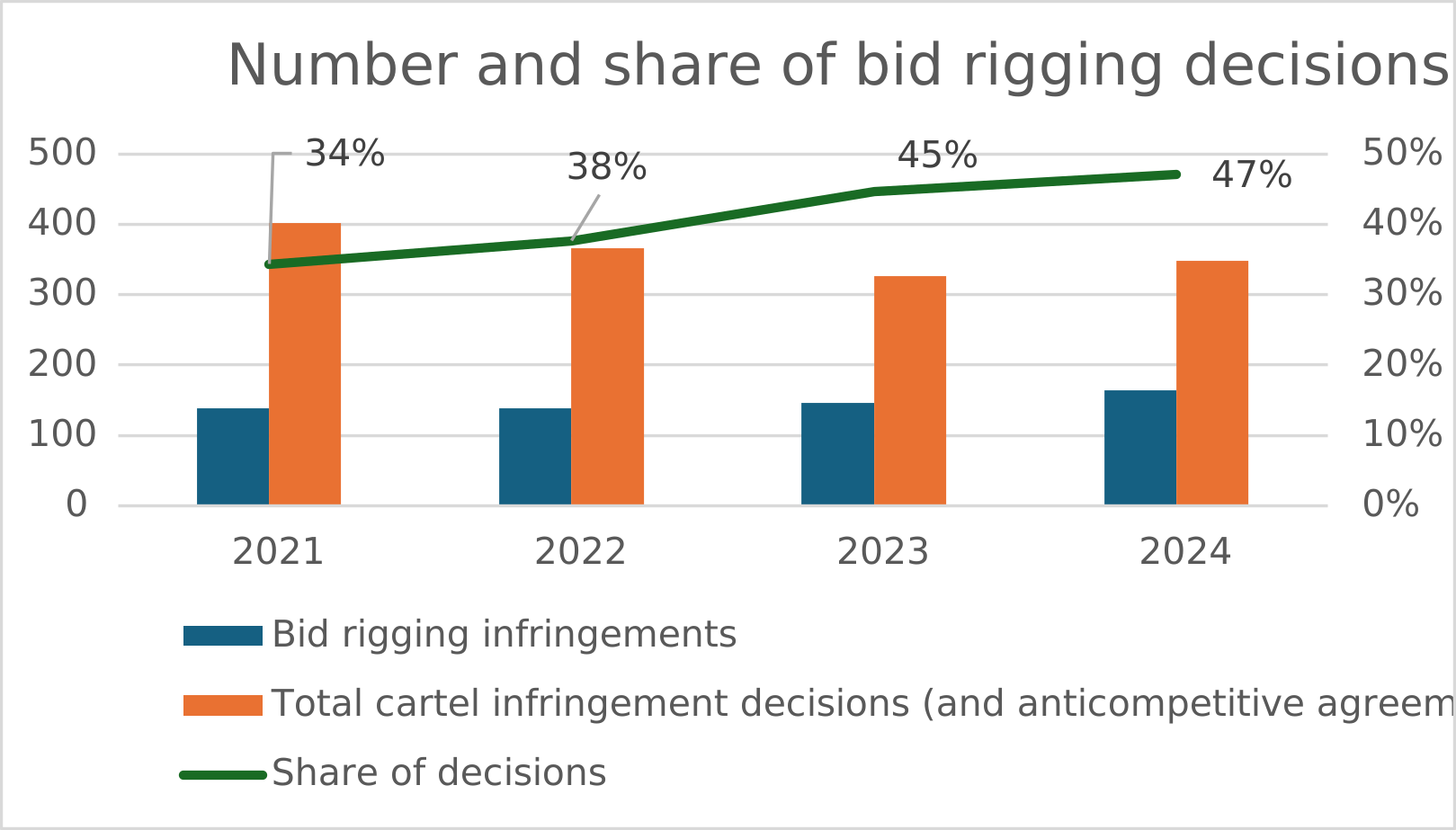
Image description: Data on the number of cartel infringement decisions and the proportion of these that related to bid rigging for the years 2015 to 2024, as described in the paragraphs above.
Finally, and importantly, academic analysis suggests that fewer than one fifth of cartels are discovered,[footnote 35] with some studies citing annual percentage probabilities of getting caught in the low teens.[footnote 36] Observed cases are highly likely to provide a lower bound on known conduct, not a definitive number.
Conclusion
In sum, even if impact and prevalence cannot be precisely estimated, it is possible to say with confidence that the likely harm to the public purse caused by bid rigging is significant, at a time of enormous pressure on public finances.
Adopting what is likely to be a conservative assumption that 2% of UK public procurement is affected by bid rigging, the CMA estimates that taxpayers could be overpaying suppliers by £1 billion annually – although this figure could rise as high as £3.5 billion while still using conservative prevalence estimates.
4. New approaches for a data-driven step-change
As referenced in the paragraph above, data screening has emerged as an effective method of detecting suspicious patterns in procurement data. New screening tools, applied to large datasets, now offer competition authorities an indication of firms, tenders, sectors or geographic areas where bid rigging might be occurring and where further investigation may be required.
Screening methods are typically described as falling into 2 broad categories: structural indicators (which highlight markets at higher risk of collusion) and behavioural indicators (which seek to identify suspicious patterns in bidding behaviour and outcomes). In practice, both are usually considered together as part of a screening programme.
Academic research has increasingly reinforced that bid-rigging cartels can leave detectable patterns in procurement data.[footnote 37] This is borne out by the CMA’s own experience that public procurement data contains patterns and anomalies which can help identify suspicious conduct when considered alongside other evidence and risk factors (read Chapter 2), as well as that of other competition authorities internationally (read Chapter 5).
The key challenge is that, in practice, data is often incomplete, fragmented or inaccessible, meaning competition authorities cannot systematically screen at scale. In the UK, central and departmental data architecture is not designed with this purpose in mind. Crucially, although award data is collected and published using the Central Digital Platform, losing bid data – which is key to effective screening – is not centrally collected at all. Even within contracting authorities, it may not always be stored in a systematised form that is easy to extract and analyse at scale.
Procurement officials themselves frequently lack the time, data access or analytical tools needed to compare bidder behaviour across contracts. In addition, where suppliers work – and collude – across more than one contracting authority, officials in each authority see only part of the picture, making it much more difficult to identify problematic behaviour and suspicious patterns.
The CMA has been working through these challenges over the last 2 years. Combining our deep cartel-enforcement expertise with advanced data science, we have developed an in-house bid rigging intelligence tool (BRIT), which represents best practice capability in scanning tender information for suspicious patterns. We have been running pilots with public bodies, including the Department for Work and Pensions, the Department for Education and the Ministry of Justice. These have begun to generate live enforcement opportunities. However, the model remains dependent on bilateral engagement and the data each department holds.
Centralised data collection, in a consistent machine-readable format and extractable at scale, would materially improve the CMA’s capacity to effectively screen for and identify cartels. Combining authorities’ datasets could provide benefits of scale to maximise the insights of screening, ensuring that data from smaller buyers (who may, on their own, have insufficient data for meaningful analysis) is also optimised. A centralised, cross-cutting database would also enable the CMA to better identify cartel activity operating across buyers and market sectors – something that is generally not visible when data is available only on a department-by-department basis.[footnote 38]
It is important to note that commercially sensitive information does not need to be published openly – it should be retained securely and made available only to relevant authorities under appropriate legal and governance arrangements.
There will necessarily be some costs in transitioning from today’s procurement data landscape to data infrastructure of the sort used in jurisdictions which conduct bid-rigging screening across public procurement spend today. Any such costs would be more than justified by the total expected benefits from this investment, given the scale and recurring nature of expected savings. This transition could be designed to leverage other initiatives and investments underway, or planned, to create more visibility and intelligence around public procurement, such that any additional costs may be modest.
We have engaged widely across government and encountered much support for these proposals. However, while several government departments have individually indicated a willingness to work with the CMA to make the most of this digital capability, there has not been centralised cross-government commitment to underpin achieving the scale required to deliver real impact. This is in contrast to the experience in many other jurisdictions internationally, as explored in Chapter 5.
The CMA believes the time to act is now and recommends urgent steps to deliver a more coordinated and systematic approach (read Chapter 6).
5. International action: governments are building dedicated capability
The OECD has worked on bid rigging in public procurement for more than fifteen years. In 2023, it updated its Recommendation on Bid Rigging to take into account developments in competition law enforcement and incorporate new global practices.[footnote 39] The updated Recommendation now encourages the collection of successful and unsuccessful bids, contracts (including amendments and subcontracts) and firm identifiers.[footnote 40] It has also been exploring the use of data-screening tools for the detection of bid rigging, through discussions with authorities around the world.[footnote 41]
Governments and competition authorities internationally have also responded individually to the digital opportunity with specific actions, including:
- competition authorities developing practical screening tools, like BRIT, to process public procurement data and flag potential instances of bid rigging
- governments mandating data collection (including losing bids) in a confidential procurement database and sharing that database with the competition authorities (including new legislative proposals)
- capacity building and interagency cooperation enabling procurement bodies and competition authorities to work closely together and develop expertise and tools to detect bid rigging
Some countries already have legislation mandating the collection of essential procurement data, including unsuccessful bids, in databases that are accessible by national competition agencies. In turn, agencies have begun developing tools to analyse this data to detect bid rigging.
Spain
Spain requires the collection of specified information about participating tenderers and bid assessments.[footnote 42] Using data from the national procurement platform and contracting bodies, including losing bids, the Comisión Nacional de los Mercados y la Competencia (CNMC) has built its own public procurement database and tool to screen this data – BRAVA (Bid Rigging Algorithm for Vigilance in Antitrust).[footnote 43] The CNMC has a reported classification success rate of at least 90% when using these models,[footnote 44] which have helped to uncover bid rigging in public tenders.[footnote 45] The CNMC has now begun development of ATENEA, an agentic reasoning system, that will analyse and interpret data flagged by BRAVA.[footnote 46] In Spain, regional competition authorities, for example in the Basque Country and Catalonia, also have access to procurement databases and have developed tools to detect collusion in public procurement.[footnote 47]
Portugal
In Portugal, electronic public procurement has been mandatory since 2008.[footnote 48] Information relating to tenders is submitted, recorded and processed in a centralised procurement platform (the BASE portal).[footnote 49] A large number of variables are recorded for each contract, including contracting agencies, invited bidders and competitors, bids (including price, products or services).[footnote 50]
The Portuguese Competition Authority (AdC) has had access to this national procurement database since 2018[footnote 51] and has since uncovered bid rigging activities in public procurement procedures concerning the provision of security services[footnote 52] and the supply of High Voltage cables.[footnote 53] The AdC is now in the final development phase of Screen-IT, a platform designed to allow staff, including those without programming knowledge, to monitor public procurement data collected from the BASE portal and flag potentially collusive behaviour.[footnote 54]
Korea
Korea has an established electronic procurement system (Korea On-line E-Procurement System) for public contracts that collects bid details, expected prices, winning prices, failed bids and changes to projected prices.[footnote 55] Since 2006, the Korea Fair Trade Commission (KFTC) has operated the Bid Rigging Indicator Analysis System (BRIAS) which is connected to 16 electronic procurement platforms, and collects data from 1,042 awarding authorities.[footnote 56] BRIAS is being upgraded to cover round-by-round data, failed and repeated bidding, product-group analysis, bid-rate trends, joint bidding and inter-firm networks.[footnote 57] Over the past 8 years, it has helped identify 10 bid-rigging cases, including a manhole cover procurement case that led to remedies and over £1 million in penalties.[footnote 58]
Brazil
In Brazil, the competition authority (CADE) is provided with procurement data directly by public bodies, which, along with information obtained from public databases, allows it to apply AI screens to detect cartels.[footnote 59] This is done mainly through Cérebro (‘the brain’) which uses the data to look for bid suppression, cover bidding, bid rotation, superfluous losing bidders, stable market shares, pricing similarities, textual overlaps and file metadata.[footnote 60]
In 2018, information generated by Cérebro led CADE to launch an investigation into suspicious conduct by 14 companies across more than 500 public firefighter tenders.[footnote 61] In 2025, CADE opened proceedings against 16 companies and 15 individuals in connection with bid rigging in the public procurement of engineering works and services, with an estimated $2.2 billion in affected tenders between 2016 and 2024.[footnote 62] The investigation used Cérebro and other screening tools to map bidding patterns and flag anomalies consistent with cover bidding and bid suppression.[footnote 63]
In other jurisdictions, governments are bringing in new legislation to enable competition authorities to make use of new tools:
Germany
In Germany, the Federal Ministry for Economic Affairs and Energy (the BMWE) has set out public procurement as a priority for data-driven enforcement, including stating that winning-bidder data alone does not provide a reliable basis for detecting collusion.[footnote 64] In June 2026, the BMWE adopted a draft amendment to German competition laws that will allow the Federal Cartel Office (BKA) to screen public procurement data systematically, and without prior suspicion, for bid rigging indicators.[footnote 65] The amendment will also allow the BKA to request and analyse public procurement data from the Public Procurement Data Service. The draft will now undergo inter-ministerial consultation before it is adopted as a government bill and introduced to the German Bundestag.
Ireland
Ireland is preparing a new bill that will give the Irish Competition and Consumer Protection Commission (CCPC) the power to access public procurement data to help identify potential bid rigging cartel practices.[footnote 66] The CCPC had previously advised a review body for the Irish government[footnote 67] that bid rigging accounted for the majority of files it sends to the public prosecutor and cases subsequently heard in court. The proposed bill is intended to strengthen the ability of the CCPC to act quickly and proactively against bid rigging through the enhanced screening of public procurement data.[footnote 68]
Other nations have explicitly recognised the importance of capacity building and interagency cooperation – an element also highlighted by the OECD.[footnote 69]
United States
The US Department of Justice established the interagency Procurement Collusion Strike Force in November 2019, comprising the Antitrust Division of the Department of Justice (DOJ), US Attorneys’ Offices, the Federal Bureau of Investigation (FBI) and the Inspectors General for multiple Federal agencies. By its fifth anniversary it reported training more than 39,000 people, opening more than 145 criminal investigations and securing more than 60 guilty pleas and convictions involving contracts worth more than USD $575 million.[footnote 70]
6. Conclusion: the case for action in the UK
At a time of immense pressure on taxpayers and on departmental budgets, every pound counts. Taken together, the evidence supports a clear case for action: UK public procurement displays many of the characteristics associated with an elevated risk of collusion; enforcement cases demonstrate that the harm where bid rigging occurs can be substantial; OECD and academic research, as well as enforcement activity around the world, suggest high and potentially rising prevalence; and a growing number of governments are investing in procurement datasets, screening tools and enforcement capability in response.
While the evidence cannot provide a precise estimate of the prevalence of bid rigging in the UK, it more than justifies proportionate measures to protect public spending and strengthen deterrence. The Procurement Act 2023 and the CMA’s screening pilots provide a strong foundation, but the current fragmented approach will not deliver systematic coverage or impact at scale.
Bringing the UK into line with comparable jurisdictions around the world by addressing this issue could make a meaningful difference to the funding available for infrastructure, public services and national security by protecting public procurement from bid rigging, including through deterrent impact (if the screening programme is given sufficient public prominence)[footnote 71] and ensuring value for money in public spend.
Achieving these benefits requires explicit cross-government commitment, common data standards and clear arrangements for lawful, secure and effective data sharing between procurers and enforcers. A coordinated programme with a clear political mandate would save substantial taxpayer funds, strengthen deterrence, improve the identification of suspicious conduct and support fair competition.
Recommendations for policymakers
The CMA recommends the following actions:
-
Make tackling bid rigging an explicit public procurement priority: include a clear commitment to preventing, detecting and deterring bid rigging in the National Procurement Policy Statement and related procurement guidance
-
Scale cross-public sector bid-rigging screening capability: build on the CMA’s departmental pilots and establish a route for screening data across central government and the wider public sector; this includes mandating collection and retention of all bid-level information in a machine-readable format that can be analysed at scale
-
Evaluate implementation transparently: monitor coverage, analytical leads, referrals, investigations and demonstrable savings (while avoiding sharing methods or other evaluation data that could help firms evade screening)
7. Find out more and how to report
Find out more
You can find out more about bid rigging, including an advice page and free e-learning module for public procurers, at the CMA’s Cheating or Competing webpages.
Reporting a cartel to the CMA
If you have any concerns about bid rigging or other forms of anticompetitive collusion in a procurement exercise, you can report these to the CMA by:
- making an online report[footnote 72]
- calling the Cartels Hotline on 0800 085 1664 or 020 3738 6888
- emailing cartelshotline@cma.gov.uk
If you have concerns, please don’t discuss them with suppliers – this can tip them off and make it much harder for the CMA to investigate. Instead report them directly to the CMA.
Explore data screening with the CMA
If your public sector organisation is interested in working with the CMA to explore whether a data screening pilot might be possible, email cma_procurementsupport@cma.gov.uk.
Debarment and exclusion support
The Procurement Act 2023 introduced new exclusion and debarment provisions that mean suppliers involved in bid rigging and other illegal cartel activity risk mandatory exclusion from individual public procurements and being added to a central debarment list, resulting in automatic exclusion from all public procurement contracts for up to 5 years.
Contracting authorities can contact the CMA at cma_procurementsupport@cma.gov.uk for information that may be relevant to exclusion and self-cleaning assessments.
Information on the exclusion and debarment regime is set out in Cabinet Office Guidance: Exclusions and Cabinet Office Guidance: Debarment. More information can be found in the CMA’s Information note on exclusion and debarment on competition grounds.
Training offer
The CMA regularly provides outreach and training sessions on bid rigging risk for commercial and policy teams. These sessions, led by CMA enforcement experts, will help attendees:
- identify bid rigging behaviours and red flags
- recognise suspicious or unusual bidding patterns
- understand how and when to report concerns to the CMA
CMA teach-in sessions provide a valuable opportunity for you and your team to discuss concerns directly with CMA investigators. Book an in-person or virtual session by emailing cma_procurementsupport@cma.gov.uk.
-
Gross spending on public sector procurement from the private sector was £395 billion in 2024 to 2025 across the UK, read House of Commons Library 2026 Procurement statistics: a short guide. ↩
-
Public Sector Fraud Authority (2024) Bid-Rigging Risk in all Procurement Practice Note. ↩
-
For assumptions underpinning this calculation, read this paragraph. ↩
-
OECD Secretariat (2022), Director Disqualification and Bidder Exclusion in Competition Enforcement – Background Note, paragraph 4. ↩
-
Bid-rigging occurs all over the globe and in all kinds of markets. Recent high-profile international action against bid rigging cartels includes (i) Germany’s competition authority fining 7 road repair companies a combined €10.5 million in May 2025 for extensive bid rigging and customer allocation; (ii) a 2023 case in which the French competition authority fined 6 companies a combined €31.2 million for rigging bids, sharing contracts, and exchanging sensitive data regarding nuclear maintenance and construction work; (iii) a 2026 US Department of Justice investigation which secured multiple guilty pleas targeting systemic bid rigging on military contracts; (iv) a Japan Fair Trade Commission investigation into massive collusion in test-events and planning contracts for the Tokyo 2020 Olympic Games which, in 2025, resulted in guilty verdicts, heavy corporate fines and suspended prison sentences for executives; and (v) the Spanish competition authority imposing a €203.6 million fine in 2022 against 6 of Spain’s largest construction conglomerates, as well as debarring them from taking on public sector contracts. ↩
-
OECD (2025) Competition Trends 2025. ↩
-
Ormosi, P L (2014) ‘A Tip of the Iceberg? The Probability of Catching Cartels Journal of Applied Econometrics, Vol. 29(4)’, pp.549–566. ↩
-
Fazekas, M, Tóth, B, Wachs, J and Abdou, A (2026), ‘Public procurement cartels: A large-sample testing of screens using machine learning’, International Journal of Industrial Organization, volume 104, article 103228 ↩
-
The National Audit Office estimated that, of around £100 billion awarded by major government departments in 2021-22, approximately 2-thirds of spend was subject to competition in some form; read National Audit Office (2023) Lessons learned: competition in public procurement, paragraph 4. Open Contracting Partnership analysis following the first year of data collected under the Procurement Act 2023 suggests potentially similar proportions of competitive procurement. Their data shows that 52% of procurement by value was tendered openly – an understatement of the total proportion of competed spend as this figure excludes cross-government frameworks: read Open Contracting Partnership (2026) The UK Procurement Act one year on: what does the data tell us? – Open Contracting Partnership. ↩
-
House of Commons Library (2026) Procurement statistics: a short guide. This guide notes that £395 billion was spent on procurement in 2024/2025, and that procurement spending is expected to increase by around 10% in 2026/27. ↩
-
This calculation is based on an estimated public procurement spend from the private sector of £400 billion, a conservative prevalence estimate of 2% and an estimated overcharge of 20%. Different aspects of public spend will carry different risks and vulnerabilities for bid rigging, with risk and impact likely to be higher in some areas than in others. In addition, as explained in the paragraph above, not all public spend will be competed and therefore vulnerable to collusion. ↩
-
Calculated using the same assumptions as above in footnote 11 but using a higher – albeit still conservative – prevalence rate of 5%. ↩
-
Read: CMA (2017) The deterrent effect of competition authorities’ work: a brief summary, paragraph 9, and CMA (2017) The deterrent effect of competition authorities’ work: literature review, paragraphs 4.20-4.24. ↩
-
International experience suggests that collecting the data needed to spot bid rigging can also help countries identify other improvements in procurement practices. For example, the Spanish competition authority, the Comisión Nacional de los Mercados y la Competencia (CNMC) has recently recommended broad changes to the public procurement system in Spain: The CNMC proposes strengthening competition as a key tool to prevent corruption. ↩
-
OECD Legal Instruments (2025), Recommendation of the Council on Fighting Bid Rigging in Public Procurement, paragraph 10. ↩
-
The Central Digital Platform is the online system referenced in the Procurement Act 2023. It enables contracting authorities to publish notices and suppliers to submit and store certain core organisational information to participate in a procurement. The platform also allows anyone to view the notices and access related public procurement data but does not include data on losing bids. ↩
-
OECD (2025) Guidelines for Fighting Bid Rigging in Public Procurement, paragraph 1.4. ↩
-
In addition, OECD data shows that construction was the industry with the highest number of cartel decisions in 2023, read OECD (2025) Competition Trends 2025, page 7. ↩
-
The OFT built a substantial enforcement record against bid rigging, particularly in public procurement. 7 enforcement cases were taken, leading to total fines of over £130 million being imposed by the OFT. 6 of these cases involved public procurement. ↩
-
The Office for National Statistics (ONS) places the value of public sector construction output in 2024 (the latest year for which statistics are published) at £41.1 billion. Read ONS (2024) Construction statistics. ↩
-
European Commission (2023), EC fines defence company 1.2 million Euros; National Markets and Competition Commission (CNMC) (2023) Spanish National Markets and Competition Commission: defence bid-rigging fines, United States Department of Justice (2023) U.S. v. J & J Korea, Inc., United States Department of Justice (2026) Executive Pleads Guilty to Multi-Million Dollar Bid-Rigging Conspiracy; and Japan Fair Trade Commission (2017) Japan Fair Trade Commission issues order and surcharge in uniform textile case. ↩
-
Read https://cheatingorcompeting.campaign.gov.uk/advice-for-public-procurers/. ↩
-
Read Anderson, R D, Jones, A, and Kovacic, W E (2024) Combatting Corruption and Collusion in Public Procurement: A Challenge for Governments Worldwide at page 155: ‘A number of surveys and Government reports suggest that concerns (including Government concerns) about unlawful behaviour in this sphere do exist and that deeper diagnosis in the UK is required.’ Also read pages 157–158, 140, 150, 177–178. ↩
-
OECD Secretariat (2022), Director Disqualification and Bidder Exclusion in Competition Enforcement – Background Note, paragraph 4. ↩
-
Giosa, P (2025) Competition Law and Collusion in Public Procurement p183, footnote 4., Read also Anderson, R D, Jones, A, and Kovacic, W E (2024) Combatting Corruption and Collusion in Public Procurement: A Challenge for Governments Worldwide page 40 and footnote 119, which refer to additional empirical studies suggesting that cartels can lead to prices significantly above 10%, and sometimes in excess of 20% more than competitive levels. ↩
-
Veljanovski, C (2025), ‘Do Cartels Overcharge?’, Cartel Damages: Principles, Measurement, and Economics, for example at Table 3.1 and para 3.14. ↩
-
Read Anderson, R D, Jones, A, and Kovacic, W E (2024) Combatting Corruption and Collusion in Public Procurement: A Challenge for Governments Worldwide, p39: ‘…bid rigging in public procurement wastes public funds; diminishes public confidence in, and the benefits of, the competitive process; and denies citizens, especially the disadvantaged, the benefits of improvements in social services. It may also be ‘detrimental for democracy and for sound public governance’. (Internal citations omitted). Recent work has also highlighted that incentives to engage in cover might include not only the softening of competition within the tender in question but also raising barriers to entry or expansion of competition in other tenders, including through enabling firms to misleadingly improve their reputation and establish reciprocal cover bidding arrangements which can enable market sharing. Read Haydock, J and Rutt, J (2026) ‘Insights from incentives: an economic analysis of cover bidding’ in Journal of European Competition Law & Practice, 2026, 00, 1–4. ↩
-
Fazio, D and Zaldokas, A (2026) Kamikazes in Public Procurements: Bid-rigging and Real Non-Market Outcomes, European Corporate Governance Institute Working Papers Series. ↩
-
Connor and Lande note that the ‘Private International Cartels’ dataset, which they describe as the ‘most comprehensive data set on cartels’, spanning 30 years and containing information on 1423 suspected or convicted cartels represents just ‘the tip of the cartel iceberg, because it excludes public, domestic, and undiscovered cartels.’ Connor, JM. and Lande, RH, Chapter 2: The prevalence and injuriousness of cartels worldwide in Research Handbook on Cartels (2023) ed Peter Whelan. P.2. Electronic copy available at: https://ssrn.com/abstract=4319572. Read also Bryant, P, G, Woodrow Eckard, E (1991) Price Fixing: The Probability of Getting Caught, Review of Economics and Statistics, pp. 531; 535; Combe, E, Monnier, C and Legal, R (2008) Cartels: the Probability of Getting Caught in the European Union, p.2. ↩
-
Giosa, P (2025) Competition Law and Collusion in Public Procurement. At p 1-2 Giosa suggests that bid rigging ‘…is an anticompetitive activity that is significantly widespread in public procurement markets.’ ↩
-
Jones, A; Kovacic, W E (2019) CPI Antitrust Chronicle, Fighting supplier collusion in public procurement: some proposals for strengthening competition law enforcement. ↩
-
Bulgaria, France, Hungary, Latvia, Portugal, Spain, and Sweden. ↩
-
Fazekas, M, Tóth, B, Wachs, J and Abdou, A (2026), Public procurement cartels: A large-sample testing of screens using machine learning, International Journal of Industrial Organization, volume 104, article 103228. ↩
-
Figures based on data provided independently by OECD CompStats. ↩
-
Ormosi, P L (2014) A Tip of the Iceberg? The Probability of Catching Cartels, Journal of Applied Econometrics, Vol. 29(4), pp. 549–566. The one fifth estimate is based on a subsection of potential cartels, namely those that have already been found to have cartelised vs the number of potential cartels that are never discovered. ↩
-
Bryant, P, G, Woodrow Eckard, E (1991) Price Fixing: The Probability of Getting Caught, Review of Economics and Statistics who estimated detection in a given year between 13-17%; Combe, E, Monnier, C and Legal, R (2008) Cartels: the Probability of Getting Caught in the European Union who estimated annual probability of 12.9% and 13.3% for the period between 1969 and 2007. These estimates are not specific to UK public procurement and should be treated as indicative. As above, these estimates are based on a subsection of potential cartels, namely those that have already been found to have cartelised vs the number of potential cartels that are never discovered. ↩
-
For example, one study of a proven Swiss bid rigging cartel found identifiable changes in bidding behaviour and bid distributions: read Imhof, D. (2017), Simple Statistical Screens to Detect Bid Rigging, Working Paper SES 484, University of Fribourg. Another example led the Swiss Competition Commission to open an investigation that ultimately resulted in sanctions for bid rigging read Imhof, D., Karagök, Y. and Rutz, S. (2017), Screening for Bid-Rigging: Does It Work?, CRESE Working Paper No. 2017-09. Read also: Harrington, J E. (2006) Behavioural Screening and the Detection of Cartels. In: Ehlermann C. D. and I. Atanasiu (eds) European Competition Law Annual 2006; Harrington, J.E. and Imhof, D. (2022), Cartel Screening and Machine Learning, Stanford Computational Antitrust, Vol. 11, pp. 134-188. and Fazekas, M, Tóth, B, Wachs, J and Abdou, A (2026), Public procurement cartels: A large-sample testing of screens using machine learning, International Journal of Industrial Organization, volume 104, article 103228. ↩
-
Anderson, R D, Jones, A, and Kovacic, W E (2024) Combatting Corruption and Collusion in Public Procurement: A Challenge for Governments Worldwide pp.125–126. ↩
-
OECD Legal Instruments (2023), Recommendation of the Council on Fighting Bid Rigging in Public Procurement. ↩
-
OECD Legal Instruments (2023), Recommendation of the Council on Fighting Bid Rigging in Public Procurement, paragraph 10. ↩
-
OECD Secretariat (2022), Data Screening Tools in Competition Investigations – Background note by the Secretariat, paragraphs 67-76 and OECD Secretariat (2026), Competition and Corruption in Public Procurement Issues Paper by the Secretariat, paragraph 29. ↩
-
Spain: Law 9/2017, of 8 November, on Public Sector Contracts. ↩
-
OECD (2024), Latin American and Caribbean Competition Forum - Contribution from Spain, paragraph 12. ↩
-
OECD (2024), Latin American and Caribbean Competition Forum - Contribution from Spain, paragraph 28. ↩
-
OECD (2024), Annual Report on Competition Policy Developments in Spain, paragraph 3. ↩
-
CNMC (2025), Annual Report 2025, page 16. ↩
-
Schrepel, Thibault and Ribera Martínez, Alba (2026), Computational Antitrust Worldwide: Fifth Cross-Agency Report, Stanford Computational Antitrust 167, Vol. 5, pp. 176-178 and 195-197. ↩
-
Portugal: Public Contracts Code - CCP, Decree-Law No. 18/2008. ↩
-
OECD (2016), Latin America and Caribbean Competition Forum: Session III: Promoting effective competition in public procurement - Contribution from Portugal, paragraph 23. ↩
-
Autoridade de concorrência (2017), AdC signs Memorandum of Understanding with IMPIC for access to public procurement data. ↩
-
Autoridade de concorrência (2022), AdC sanctions bid-rigging cartel in the security sector. ↩
-
OECD (2023), Annual Report on Competition Policy Developments in Portugal, paragraphs 34-36. ↩
-
Schrepel, Thibault and Ribera Martínez, Alba (2026), Computational Antitrust Worldwide: Fifth Cross-Agency Report, Stanford Computational Antitrust 167, Vol. 5, p. 263. ↩
-
OECD (2026), Competition and Corruption in Public Procurement - Note by Korea, paragraph 7. ↩
-
OECD (2026), Competition and Corruption in Public Procurement - Note by Korea, paragraph 13. ↩
-
OECD (2026), Competition and Corruption in Public Procurement - Note by Korea, paragraph 17. ↩
-
OECD (2026), Competition and Corruption in Public Procurement - Note by Korea, paragraph 15. The penalty imposed by the KFTC was reported as KRW 2.1 billion, converted to GBP as at the time of its reporting (26 June 2026). ↩
-
OECD (2021), Fighting Bid Rigging in Brazil: A Review of Federal Public Procurement, page 94. ↩
-
OECD Secretariat (2022), Data Screening Tools in Competition Investigations - Background note by the Secretariat, paragraph 23. ↩
-
OECD (2021), Fighting Bid Rigging in Brazil: A Review of Federal Public Procurement, page 28. ↩
-
Ministry of Justice and Public Security (Brazil), CADE investigates bid rigging in public works, 24 December 2025. ↩
-
Schrepel, Thibault and Ribera Martínez, Alba (2026), Computational Antitrust Worldwide: Fifth Cross-Agency Report, Stanford Computational Antitrust 167, Vol. 5, pp. 179-180. ↩
-
BMWE (2026), Draft of a 12th Act Amending the Act Against Restraints of Competition (12th GWB Amendment). ↩
-
BMWE (2026), Draft of a 12th Act Amending the Act Against Restraints of Competition (12th GWB Amendment). ↩
-
Department of Enterprise, Tourism and Employment (2025), Public consultation on enhancing consumer protection, competition and enforcement of consumer law. ↩
-
Department of Justice for Ireland (2020), Review of structures and strategies to prevent, investigate and penalise economic crime and corruption. ↩
-
Irish Minister of State at the Department of Enterprise, Tourism and Employment, Written answer, 28 April 2026. ↩
-
OECD (2026), Competition and Corruption in Public Procurement - Note by BIAC, paragraphs 25–34. ↩
-
US Department of Justice (2024), Justice Department’s Procurement Collusion Strike Force Commemorates Fifth Anniversary with Law Enforcement Partners, Press Release. ↩
-
Read CMA (2017) The deterrent effect of competition authorities’ work: literature review, paragraphs 1.4 and 1.8 - which finds that although deterrent impact is difficult to estimate, between 5 and 28 cartels are deterred for each one that is caught; and CMA (2023) Wider benefits of competition policy and enforcement, at for example paragraphs 1.11-1.12, 2.4-2.6, and 3.4. ↩
-
You can access the CMA’s online reporting portal and find further information about reporting anticompetitive behaviour to the CMA on GOV.UK. ↩