Police use of facial recognition technology: a public dialogue (accessible)
Updated 10 November 2026

© Crown copyright 2026
This publication is licensed under the terms of the Open Government Licence v3.0 except where otherwise stated. To view this licence, visit nationalarchives.gov.uk/doc/open-government-licence/version/3 or write to the Information Policy Team, The National Archives, Kew, London TW9 4DU, or email: psi@nationalarchives.gov.uk.
Where we have identified any third party copyright information you will need to obtain permission from the copyright holders concerned.
This publication is available at https://www.gov.uk/government/publications/police-use-of-facial-recognition-technology-a-public-dialogue/police-use-of-facial-recognition-technology-a-public-dialogue-accessible
Published November 2026
1. Executive Summary
1.1 Background
The use of Facial Recognition Technology (FRT) by police and law enforcement is increasing across England and Wales. The technology has the potential to be a valuable tool for modern policing, supporting the detection and prevention of serious criminal activity. However, its use has prompted significant public concern about proportionality, privacy rights, and the risk of racial bias and discrimination.
At the end of 2025, the Government launched a public consultation to develop a clearer and more consistent legal framework for the use of FRT by law enforcement.[footnote 1] To ensure that the voices of racially minoritised communities and those cautious or opposed to police use of FRT were meaningfully included, the Home Office commissioned Thinks Insight & Strategy to conduct a small-scale deliberative dialogue.
1.2 Key Objectives
The objectives of this dialogue were to:
-
Build a picture of minority groups’ views and concerns regarding the use of FRT in the context of lower trust in policing and law enforcement.
-
Identify participants’ perspectives on acceptable deployment of FRT, including the boundaries of acceptability and how they assess trade-offs when judging how and when FRT is used.
-
Deliberate the implications of the proposed new legal framework with participants and identify what accountability mechanisms they feel need to be in place to mitigate against concerns around four key areas: privacy and surveillance, use of other government databases, accountability and fairness, and bias and discrimination.
-
Understand participant views on appropriate governance and oversight of facial recognition, including roles, responsibilities and transparency mechanisms.
1.3 Methodology
A public dialogue was used to meet the objectives of this research. This approach ensured participants were first provided with balanced, accessible information about the technology and its context, and were given sufficient time and space to engage in informed deliberation.
56 participants who were cautious or opposed, including those from racially minoritised backgrounds, took part in the dialogue. The process consisted of one online workshop and one in-person workshop in London and Manchester. Figure 1 shows how participants moved through this structured process of learning, deliberating and deciding.
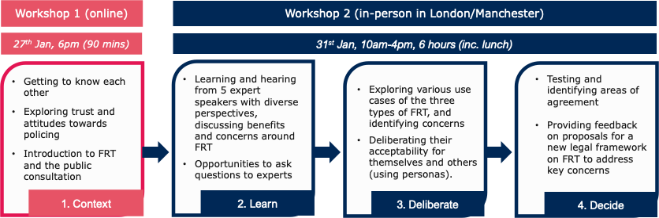
Figure 1: Structure of the dialogue
To enable informed discussion, a range of materials were used to support learning and deliberation including an animation introducing the three types of FRT, nine case studies exploring different use cases of each type of FRT, and five expert speaker presentations representing a range of views on the benefits and concerns on the use of facial recognition.
1.4 Key findings
Trust as the starting point
Participants’ views towards the police were shaped by three main influences: personal experiences, police presence in public spaces, and high-profile media coverage. While some participants believed that policing is largely undertaken by well-intentioned officers whose work is undermined by a minority of ‘bad apples’, others, particularly participants from Black African, Black Caribbean and Mixed Black backgrounds, described experiences of discriminatory treatment that had significantly impacted their confidence and trust in the police.
This context is critical. Participants consistently assessed police and law enforcement use of facial recognition technology through the lens of whether they trust the police to use their powers fairly and proportionately.
However, participants were clear that trust can be built. They identified communication and outcomes as central markers of trust. Non-confrontational engagement, clear communication, providing regular updates and visible follow through, were seen as examples of good communication. Good outcomes from interactions with the police included feeling listened to and taken seriously, receiving follow up communications, and aftercare for victims of crime.
Key concerns about facial recognition technology
While many participants hoped facial recognition technology could help the police to improve public safety, they also voiced a range of concerns about negative consequences of its use. Participant concerns centred around six key themes:
Inaccuracy and misidentification
-
Participants were concerned about the potential for facial recognition technology to generate false matches, leading to negative impact for individuals. Some felt that even where officers follow correct procedures, inaccurate readings could lead to innocent individuals being treated as suspects or genuine criminals being missed.
-
Many were unconvinced by assurances that facial recognition would not be used as a single point of evidence, expressing doubt that this safeguard would be applied consistently in practice.
Deliberate misuse
- Participants expressed concern that individual officers could deliberately misuse facial recognition. High profile cases of police misconduct were frequently cited as evidence that existing systems do not always prevent abuse of power.
Bias and discrimination
-
Participants were concerned that facial recognition could have a disproportionate impact on racially minoritised communities.
-
Concerns related to potential bias in both the functioning of the technology itself at a technical level, and to patterns of deployment. Taken together, these concerns led some participants to fear that the use of facial recognition technology could further entrench existing inequalities and discrimination.
Stifling freedom of expression of Black communities
-
There were concerns that facial recognition technology could further marginalise racially minoritised groups in public spaces. Specifically, participants were concerned about the impact on Black communities.
-
Participants were concerned that facial recognition technology could be used to over police events or gatherings that celebrated Black heritage and culture such as the Notting Hill Carnival, potentially restricting freedom of expression.
Disproportionate use
-
Participants were concerned that facial recognition could be deployed in ways that are not necessary or not proportionate in terms of the potential benefits outweighing the level of intrusion on privacy. This included:
-
Detecting individuals suspected of minor or petty crimes
-
Widespread deployment in public spaces without clear justification
-
Scope creep
-
Participants expressed an overarching concern that the ways in which facial recognition is used, and the purposes it is used for, could keep expanding.
-
Given low levels of trust in police, participants feared that once normalised, safeguards around facial recognition technology use could gradually weaken. This raised concerns that these technologies could be used beyond their original, intended purposes as outlined in any new legal framework.
Acceptability of the three types of facial recognition technology
Participant views on the acceptability of facial recognition use by the police varied depending on the type of technology:
-
Retrospective Facial Recognition: was viewed as the most acceptable. Minimal collection of new biometric data meant that participants broadly considered its use to be proportionate, providing it is limited to serious crimes such as violent assault.
-
Live Facial Recognition: While some participants accepted that the use of this technology could be justified to improve public safety, particularly during high-risk events, they were clear that its use should not become routine and commonplace. It was not seen as an appropriate firsthand response. Instead, participants felt it should be used in a targeted and time limited manner and for its use to be clearly justified.
-
Operator-initiated facial recognition was viewed as the least acceptable type. Participant concerns centred on the level of discretion granted to individual officers and the risk of inconsistent or inappropriate use. Participants felt this technology type would require particularly strong safeguards to prevent misuse and negative impact on individuals.
1.5 Participants’ advice to the Home Office
Participants’ proposals for rules and safeguards needed
After learning about the different types of facial recognition and deliberating on the implications, participants produced advice for policymakers at the Home Office and police forces to consider. These were designed to address each of their six key areas of concern:
1. Inaccuracy and misidentification
-
There must be regular audits of FRT to ensure the technology is working correctly and identify errors.
-
Sensitivity training for users of FRT for handling misidentification cases.
-
There must be support in place for victims of misidentification.
2. Deliberate misuse
- There must be consequences for individuals found to have misused FRT deliberately.
3. Bias and discrimination
- There must be formal standards for preventing discrimination in the use of FRT, and training for users in how to implement these.
4. Stifling freedom of expression
-
FRT can only be deployed in locations where there are “appropriate” reasons for doing so (e.g. reason to believe serious crime may occur, or presence of suspects of serious crime)
-
Guidance on how to avoid discrimination in choosing locations for deployment.
5. Disproportionate use of FRT at an institutional level
-
FRT can only be deployed when it can clearly be shown to be necessary and proportionate.
-
The police can only access databases where necessary and proportionate.
6. Scope creep
-
The public must be kept informed about how and when FRT is allowed to be used.
-
There must be independent oversight to ensure scope creep is avoided.
Accountability and oversight
Participants did not believe that policing alone could be relied upon to ensure that its use of facial recognition technology is consistent, responsible, and in line with any new legal framework. They supported the creation of an independent oversight body that had real enforcement power rather than advisory status.
Their recommendations for the oversight body were:
-
A new, independent oversight body should oversee the use of FRT by police.
-
The oversight body should have the power to:
-
Accept/reject applications to use FRT
-
Enforce consequences for misuse
-
Conduct audits
-
-
The oversight body must be well-placed to firmly challenge the police on their use of FRT.
-
The oversight body should be a centralised body with local input into decisions, and its membership should include:
-
Diversity in terms of members from different backgrounds
-
Public representation
-
Academic representation
-
2. Objectives and Methodology
2.1 Background to the work
Facial recognition technology (FRT) is used by police and some law enforcement agencies in the UK in a variety of ways, from locating vulnerable individuals to identifying suspects in a criminal investigation. Many believe FRT has the potential to be a valuable tool for modern policing particularly to help speed up investigations and free up police time and resources for other police work.
Consequently, its deployment is increasing across England and Wales, and the Government is working to enable police forces to expand its use safely.
There are, however, concerns about the use of this technology. These relate primarily to the state’s power to process biometric data, impact on individual rights including the right to privacy, public confidence in the police to act proportionately, and the potential for the technology to introduce or amplify racial bias and discrimination. Furthermore, there is no specific legal framework for the regulation of this technology – instead, police and law enforcement rely on a patchwork of common law powers, human rights, equality and data protection laws, national guidance and policing policies. This creates a complex and fragmented landscape that is difficult to understand and inflexible to rapid technological developments.
As a result of these concerns, at the end of 2025 the Government launched a public consultation on its efforts to develop a clearer, more consistent legal framework for police and law enforcement use of FRT.[footnote 2] The proposed framework is designed to be ‘fit for the 21st Century’, meaning that it is ‘future-proofed’ to remain effective as technology develops. The public consultation was open between December 2025 and February 2026. It asked for responses to a series of questions created specifically to inform the design of the planned new legislation. This consultation is expected to surface the views and concerns of a diverse range of social groups as well as civil society actors.
To make sure the views and voices of minority groups and particularly cautious or opposed segments of the public are captured, the Home Office also commissioned Thinks Insight & Strategy to carry out a small-scale deliberative dialogue exercise. Complementing the results of the survey and public consultation, the purpose of this research was to understand the views of racially minoritised groups and those cautious or opposed to police use of FRT (as identified by the previous segmentation) on what a regulatory framework should look like. A secondary objective was to inform and build understanding of police use of FRT. Supplementing the outcome of the public consultation, the insights from this research will inform the design of new legislation to regulate the use of facial recognition by police and law enforcement.
2.2 Objectives of the dialogue
This dialogue set out to inform the development of a proposed new legal framework for the use of facial recognition technologies (FRT) by understanding the views of those cautious or opposed to police use of FRT including racially minoritised groups and those who are less likely to take part in public consultations.
Specifically, the objectives of this dialogue were to:
-
Build a picture of minority groups’ views and concerns regarding the use of FRT in the context of lower trust in policing and law enforcement.
-
Identify participants’ perspectives on acceptable deployment of FRT, including the boundaries of acceptability and how they assess trade-offs when judging how and when FRT is used.
-
Deliberate the implications of the proposed new legal framework with participants and identify what accountability mechanisms they feel need to be in place to mitigate against concerns around four key areas: privacy and surveillance, use of other government databases, accountability and fairness, and bias and discrimination.
-
Understand participant views on appropriate governance and oversight of facial recognition, including roles, responsibilities and transparency mechanisms.
The use of facial recognition by private companies, and the use of other biometric technologies which may be covered by the framework (e.g. inferential technologies) were excluded from the primary scope of the discussions due to time constraints and the need to preserve analytical depth. However, during fieldwork facilitators remained attentive to any references to these topics, and where relevant, are acknowledged and incorporated into this report.
Why a deliberative public dialogue?
This project took the form of a deliberative public dialogue as it is a particularly suitable approach for exploring complex or contentious topics.
Deliberation is an approach to decision-making that allows participants to consider relevant information from multiple points of view. It enables participants to discuss issues and develop their thinking together before coming to a view.
Policing, and the use of surveillance techniques within policing, can be highly sensitive topics for some participants, particularly those who feel racially minoritised or feel a sense of mistrust towards police and law enforcement. The research also took place at a time where there was widespread news coverage on the rollout of FRT in the UK, potentially heightening this sensitivity. It was therefore important to employ a research method which would account for participants’ different levels of awareness of FRT and their diverse experiences of policing. Using deliberative approaches, participants were provided with information and balanced perspectives on FRT in a safe and carefully facilitated space.
Deliberative approaches provide deeper insight into how and why people form or shift opinions when exposed to new information or perspectives. Unlike quantitative surveys, which capture static snapshots of views, or qualitative focus groups that explore surface-level attitudes, deliberative methods reveal the evolution of participants’ thinking. Participants engage in structured dialogue, consider trade-offs, and grapple with complexity mirroring real-world scenarios and decision-making. This approach uncovers more considered, informed views, helping to understand not just what people think, but how they arrive there.
Fieldwork was structured around the learning-deliberation-feedback process across two separate sessions of engagement outlined in more detail in the ‘Structure of the dialogue’ section below.
2.3 Our approach
Scoping phase
The project began with a scoping phase to build a clearer picture of the background to the consultation, and understand the priorities of key stakeholders, and build contextual knowledge in the research team.
The Thinks research team consulted a range of the latest evidence around the use of FRT by police in the UK, and ongoing public debates around this, as a means of immersing themselves in the context and building knowledge (see appendix 8.1 for a list of materials and reports consulted).
Informal conversations were conducted with experts from the Science and Technology Ethics Advisory Committee (STEAC) and the Equality and Human Rights Commission (EHRC). These aimed to ensure that research materials were based on accurate information and avoided perpetuation of any misconceptions.
Design session
A two-hour collaborative design session with the Home Office policy team was held to agree on core elements of the deliberation design. This included refining objectives, agreeing on appropriate content and structure (e.g. expert speakers, flow of information sharing), and finalising the sampling specification and workshop locations.
Rationale for sampling approach
The Home Office commissioned this deliberative dialogue with the objective of engaging two sub-sections of the general public:
-
People who are cautious or opposed to the use of technologies like FRT in policing also have lower levels of trust towards the police. To understand public attitudes towards police use of FRT, the Home Office commissioned a survey on ‘Attitudes to facial recognition technology in policing’, based on a nationally representative sample of c.4,000 members of the public.[footnote 3] A segmentation derived from the survey was used to inform the sampling approach for this dialogue. The segmentation reflected the range of public attitudes towards FRT, from those who were cautious or opposed to those who were supportive or in favour of its use. As part of this segmentation, a series of ‘golden questions’ were identified from the questionnaire as a means of quickly classifying further respondents into the appropriate segment. The number of golden questions was too high for these to be used directly in the screening survey for deliberative session recruitment. Thinks therefore developed a shorter ‘proxy’ list of questions (see appendix 8.2.) to recruit a sample that broadly reflected the views of the people who are ‘cautious or opposed’ to the use of technologies such as FRT.
-
Racially minoritised groups. We used interlocking quotas to ensure strong representation of ethnic minorities across the sample and within each segment. We also set quotas to ensure good representation across the sample – and within each segment – in terms of age, gender, sexuality, and socio-economic grade (SEG) (see appendix 8.3 for a detailed breakdown of the quotas in the final sample).
Recruitment approach
We took a purposive approach to recruitment, which was appropriate given the study was not designed to be a representative sample of the public as a whole, and ensured we met the criteria across the ‘cautious or opposed’ segments while achieving a diverse mix of participants. We used free-find recruitment methods to reach participants through a range of routes including:
-
Local community organisations/hubs
-
Youth workers
-
Location connections from recruitment partners
-
Word of mouth and snowballing
-
Recruiter databases
We offered a payment of £175 to thank participants for their time and encourage participation (£75 for online Workshop 1, and £100 for the in-person session).
We also set aside an inclusion budget of £750 to ensure those with particular needs in terms of accessibility were not excluded. An additional travel expenses budget of £25 was provided on an as-needed basis for Manchester participants to cover parking on the day of the in-person workshop.
Locations
56 members of the public were engaged across two locations - Manchester (for residents of Bury/Oldham) and London (for residents of Southeast London). The overarching aim was to have two distinct contexts in terms of policing practices and demographic makeup:
-
Croydon and Southeast London offered an urban location and a specific policing context as the Metropolitan Police Service, the largest force in the UK, have jurisdiction for London. Croydon was chosen as it is the site of a recent large-scale deployment of Live Facial Recognition. It is also a racially diverse area of London.
-
Bury/Oldham and Greater Manchester offered a somewhat more rural/small town context where racially minoritised groups are distinctly in the minority, and where the population may have less direct experience with police use of facial recognition.
Structure of the dialogue
Using a combination of one online workshop and one 6-hour in-person workshop (across two locations), participants worked through a process of learning, deliberating and deciding, as outlined in the diagram below:
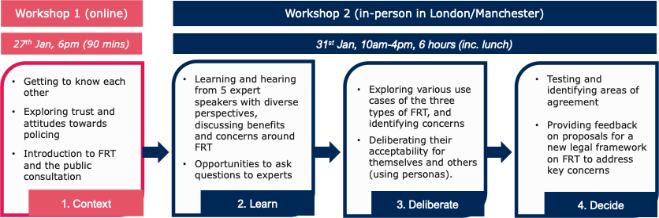
Figure 1: Structure of the dialogue (reproduced for ease of reference)
Workshop 1
The primary purpose of Workshop 1 was to create an inviting space for participants to share their opinions on and experiences with the police and explore the nature of trust in law enforcement in general. This was accompanied by light-touch information sharing to set a consistent baseline of understanding on how FRT is currently used by law enforcement and why the deliberation was being carried out alongside the public consultation.
The following provides a brief overview of the information provided to participants in Workshop 1:
-
FRT in the news: Participants were shown some headlines on facial recognition published in the last 6 months - some positive and some negative - to explore initial reactions to police use of the technology
-
Animation - ‘What is Facial Recognition?’: Participants watched a 6-minute narrated animation (produced by Thinks) explaining the three types of facial recognition (Live, Operator-Initiated, and Retrospective), providing real-life examples of how it is used by law enforcement and a brief overview of benefits and concerns
-
Presentation from Home Office representative: Participants received an introductory presentation from Lucy Bradshaw-Murrow on the public consultation, the proposed new legal framework, and the purpose of this deliberative dialogue.
Participants were split into groups of 6-7 people to discuss initial reactions to the above information. These were broadly grouped by ethnicity and age with participants and facilitators paired accordingly, intended to reflect broad characteristics rather than exact matches.
Workshop 2
Four days after the online workshop, participants took part in a 6-hour in-person workshop in their local area, with c. 28 participants in each location (London and Manchester). This longer session was designed to allow time to hear from different perspectives and facilitate an in-depth exploration of different use cases of FRT before working together to generate proposals for the proposed new legal framework. A variety of activities were used including a future mapping exercise, case study ranking, and rating other groups proposals for an oversight body.
The following provides a brief overview of the information provided to participants in Workshop 2:
-
Expert speaker presentations: Five speakers were chosen to create a balance of diverse views around the benefits and the risks of police use of FRT. This included two academics, a representative from the Home Office, and a representative of the Met Police. Participants were given multiple opportunities to ask questions to the experts (including a video link between the two sessions for in-person speakers). The final list of speakers and the contents of their presentations are available in Appendix 8.4.
-
Case studies: We developed nine case studies (three for each type of FRT). Each explored a different use case, including variation in location, purpose, and intended impact. Participants discussed one case study from each technology type in their table groups and were also presented with ‘personas’ to help them consider the potential concerns, benefits and impacts from different perspectives (for the complete list of case studies see Appendix 8.6).
-
Public consultation proposals: We presented the key proposals from the public consultation under 4 themes: privacy and surveillance, use of other government databases, accountability and oversight, and bias and discrimination. This structure helped participants engage with the main consultation questions and develop their own proposals in response. To aid brainstorming and decision-making, participants also received handouts with relevant information and examples.
Addressing power dynamics
We (Thinks) recognised that this project was commissioned by the Home Office and that this context could create a power imbalance in how participants perceived and took part in the research. We recognised that many of the participants may have experiences of feeling disempowered by the police. We therefore took active steps to emphasise that participant contributions would remain confidential, their personal identifiable information would not be shared with the Home Office, and contributions would not be used in ways that could negatively impact participants.
As we were covering topics related to policing, trust, and the criminal justice system, we recognised the potential for discussions to surface experiences of institutional racism and discrimination. This awareness informed our design and delivery approach, including:
-
Providing extra reassurances around anonymity and participants’ identifiable data being protected.
-
Developing a dedicated participant protection and safeguarding policy. This included a clearly identified safeguarding lead in each location, quiet spaces for anyone feeling overwhelmed by the discussion, and an escalation policy for any sensitive disclosures.
-
Holding a facilitator briefing and peer learning session focused on best practice in facilitating sensitive discussions and explaining the safeguarding policy. This included checking in with participants who shared any difficult personal experiences between the two sessions.
-
Characteristic matching was used during Workshop 1 to help create a safer and more comfortable environment for participation and help to reduce perceived power imbalances within the discussions particularly in conversations relating to policing, trust and discrimination.
-
Home Office representatives did not observe the online breakout groups. At the in-person workshop lead facilitators determined whether Home Office and Met representatives could observe discussions at each table.
2.4 Structure of this report
The report begins by exploring where participants started from – their levels of trust and confidence in policing, knowledge and previous experiences of FRT, and initial views on the use of FRT in policing.
It then provides a summary of key concerns raised by participants, before going on to provide an overview of participants’ feelings about the acceptability (or otherwise) of the three different types of FRT (e.g. Live, Retrospective and Operator-Initiated) and the factors underpinning these.
It then outlines participant views on the accountability and oversight arrangements required around the use of FRT by the police.
Finally, the report summarises the key proposals and conclusions from participants to advise the Home Office on what the proposed new legal framework should look like.
3. Trust in police and law enforcement
In this chapter we will identify key markers of trust for participants and explore how initial views about the police informed their attitudes towards Facial Recognition Technology (FRT). This will contextualise participants’ views on FRT, which inform perceptions of acceptability explored in Chapter 4.
Given that this dialogue involved people who were cautious or opposed to the use of facial recognition technology (FRT) in policing, and/or belonged to racially minoritised groups, a key objective of Workshop 1 was to provide a safe and comfortable space to share existing views and experiences. We asked participants about their associations with police and policing, with space to share experiences if they chose to do so. We then explored key markers of trust and confidence in policing as a means of supporting them to identify what might need to be in place for FRT to be trustworthy later in the dialogue.
While there were a range of views and points of reference regarding the police, trust in police and law enforcement was low across groups. Views mostly fell into one of two camps:
-
Some started with slightly lower levels of mistrust, feeling that a few ‘bad apples’ had undermined their ability to trust a service they suspect is mostly comprised of good public servants. This group had mixed experiences with the police but mostly felt that those who ‘have nothing to hide’ don’t have to worry much about the police.
-
For others (particularly those from racially minoritised groups), strongly negative experiences of interacting with the police meant they had much lower levels of trust. Many participants from Black African, Black Caribbean and Mixed Black backgrounds attributed this to their experiences of discriminatory behaviour (e.g. over policing, stop and search).
3.1 How participants view police and law enforcement
As expected from the composition of our sample (see Appendix 8.3), we found low levels of trust in the police and an overall lack of confidence in policing across the sample. When prompted to reflect on their interactions with and exposure to the police, participants centred on three main points of reference. These are important in allowing us to contextualise participants’ starting points when being introduced to the use of FRT by police and law enforcement.
Police presence in public spaces
Participants expressed mixed views on the extent to which police presence in public spaces made them feel safer. Some, particularly women, said that seeing more police in public spaces would make them feel safer and reassured.
“There’s just no police around. I’m constantly talking about that. We don’t want to see people get in trouble, but there needs to be some policing. You want to go to the shops and feel safe, but we don’t feel safe in my area.” – Female, Workshop 1, London
However, many associated a higher police presence with inefficiencies, recalling examples such as seeing several police cars and officers attending a minor crime and feeling resources could be used more appropriately. This often led to a lack of confidence in policing to be efficient and effective in protecting public safety. Some participants who had experiences of negative interactions with police (such as being stopped and searched, or living in an over policed community), said that a larger, more visible police presence could feel more intimidating than reassuring.
“They put the resources in the wrong places in my opinion…every time I’ve needed the police I’ve felt let down. There’s a big difference between on the beat police to detective work.” – Female, Workshop 1, Manchester
Personal interactions with police
Participants who had negative experiences with the police often had negative perceptions of, and low trust in, the police. Bad experiences were typically felt to have had a long-lasting impact on confidence in the police to keep them safe. Across racially minoritised groups (particularly participants from Black African and Black Caribbean groups), experiences of racial profiling and over policing were key points of reference. In their experience, police were more likely to act inappropriately or unfairly towards them because of racial bias. For White participants, experiences with police were often disappointing in a practical sense, with many recalling instances where reports they had made to the police were not followed up or concluded satisfactorily. These instances created a sense for them that the police are unreliable and can’t be counted on to be there when they are needed.
“When I think about policing, I think about racial profiling because I live in Croydon. Another thing that’s always on my mind is that I’ve got a brother, and I never know if he’s going to be arrested or stopped on the street for anything just because he looks like someone else.” – Female, Workshop 1, London
High profile news stories highlighting misconduct and institutional or cultural issues with the police
Participants often referred to high profile news stories as the source of their negative perceptions of the police. Many recalled examples such as the Sarah Everard and Stephen Lawrence cases to show where trust in police conduct has been broken. These examples often made participants question how individual officers can be trusted to comply with policing standards and act in a fair and proportionate way. Participants from Black Caribbean, Black African and Mixed Black groups raised specific concerns about institutional racism in the Metropolitan Police (with some mentioning the BBC Panorama episode around Charing Cross police station) and how this affects the way they are treated by police.
“You read a lot of horror stories with what goes on in the police force, especially in the Metropolitan Police and when that report came about institutionalised racism, and rather than say we’re gonna rub it out, it’s more making excuses.” -Male, Workshop 1, Manchester
3.2 Markers of trust
Despite low levels of trust, even the most sceptical participants were able to identify specific things they would like to see change; to rebuild trust and confidence in the police.
“I think confidence. For someone to have positivity and trust in someone, you need confidence with them, and I think as from what we’re all saying, we don’t have confidence in the police yet.” – Female, Workshop 1, Manchester
Communication
Many reflected on positive experiences where the police had communicated with them well, providing frequent updates about their situation, and listening carefully during conversations. These were pointed to as examples of trustworthy policing that built confidence. For participants who recalled mixed experiences, the more positive interactions worked to rebuild a sense that there are ‘good’ individual officers they can trust. This sat alongside a perception that ‘bad apples’ undermine trust in an otherwise trustworthy service. Examples of good communication from the police were typically characterised by the following:
-
Non-confrontational manner
-
Proactivity, providing regular updates or ‘next steps’ on a report
-
Clear and direct communication on what to expect from the process.
“If it was myself, I would want to feel listened to and that takes time… For me it’s about being listened to and kept in touch with.” – Male, Workshop 1, Manchester
On the other hand, experiences of bad communication led to a lack of confidence in the police. These appeared to have created uncertainty about how officers might behave in any future interactions, and whether they can be relied upon to handle a difficult situation. Participants characterised bad communication as:
-
Aggressive or intimidating
-
Dismissive or unempathetic
-
Lacking updates or follow ups, leaving uncertainty about next steps.
“I feel like they can be quite arrogant at times as well. For example, if something’s happened to someone you know that’s close and you’re there with them, sometimes the police will be arrogant. They will ask you questions but they’re not answering you.”
Male, Workshop 1, Manchester
Outcomes of interactions
Participants expressed how good outcomes from interactions with the police can positively impact levels of trust and confidence, as well as expectations for future interactions. Even for participants with mixed experiences, there was a clear indication of what good outcomes should look like, including:
-
Feeling listened to and taken seriously
-
Receiving a follow-up explaining what will happen next, including an explanation of why the investigation has been concluded if necessary
-
Aftercare for victims of crime to prevent them feeling left behind or forgotten
“So, when I’ve had to contact them, the response has been really quick, which I’ve been happy with, but then it’s the end results
I’ve not been happy with in some instances. They’ve responded quickly but didn’t carry on with the investigation, that was really disappointing.” – Female, Workshop 1, Manchester
Participants were also clear that bad outcomes have a negative impact on their confidence in the police to meet their expectations. Some participants, particularly those from Chinese and White backgrounds, felt bad outcomes were often caused by a lack of funding and understaffing. Racially minoritised groups, particularly participants from Black African, Black Caribbean, and Mixed Black groups, associated bad outcomes with experiences of discrimination by individual officers. Examples of bad outcomes include:
-
No conclusion to the report, interaction, or situation with the police
-
‘Ghosting’ – people feeling left behind with no explanation or answers
-
Negative experience of being discriminated against or marginalised due to racial bias held by officers
“Something that gives me less confidence is when you hear stories of police not acting on reported crimes when the person who’s reporting has given as much info as they can, but the police still don’t do anything.” - Male, Workshop 1, London
3.3 Associations with Facial Recognition Technology
After obtaining an initial understanding of participant starting points, Workshop 1 proceeded to capture initial views on FRT use by the police. We then explored if, and how, this changed once further information was provided. An animation was shown to help participants to understand:
-
How the technology works
-
The three types of FRT used by law enforcement (Live, Retrospective and Operator Initiated)
-
Potential benefits of and concerns around FRT being used by law enforcement
Participants were then asked to discuss four different news headlines about FRT (see Appendix 8.5) in breakout groups to explore initial reactions on FRT use by law enforcement. This was followed by a Q&A session for participants to raise any questions they had with a Home Office representative. Four key themes emerged in participants’ initial reactions to the use of FRT by law enforcement:
- The potential to prevent serious crime by arresting criminals: Many participants felt that if FRT was used appropriately by the police, it could make a meaningful difference in terms of reducing and preventing serious crime, and helping to identify those suspected of serious crimes.
“I would hope that people would be better behaved with the facial recognition. There might be a bit less … I would imagine people would behave better and then commit less crimes cos they know their face could be traced.” – Female, Workshop 1, London
-
Increased arrests from FRT overpopulating prisons: Many felt that prisons are already overcrowded, and an increase in arrests due to police use of FRT could worsen this problem. Some felt that FRT ought to be introduced alongside reforms to expand prison capacity or lower the prison population.
-
Surveillance and further intrusion into privacy: FRT was quickly associated with increasing surveillance and monitoring of the public. Many saw it as a tool for expanding surveillance, fearing a broader shift toward authoritarianism and a ‘Big Brother’ state.
-
Inaccuracy of the technology: Many were sceptical of the claims around accuracy made in one news article, which reported that Live FRT is 100% accurate. This was felt to undermine the credibility of the technology on the basis that no technology – let alone a new one – is perfect.
“When is there ever anything that is 100%? It might be 98% or 99%, or police are really confident, but saying it’s 100% accurate automatically creates distrust in what they’re saying.”
Female, Workshop 1, Manchester
4. Acceptability and key concerns around the three types of Facial Recognition Technology
This chapter outlines the key concerns participants had about FRT being used by law enforcement. It then explores the acceptability of Live, Retrospective, and Operator-Initiated FRT specifically, before setting out the roles played by type of technology, purpose, and location as participants formed their perceptions of different use cases.
Participants identified a wide range of concerns related to the use of the three FRT types in different purposes and locations. These can broadly be sorted into the following overarching themes, which will be explored in more detail in this chapter:
-
Inaccuracy and misidentification
-
Deliberate misuse
-
Bias and discrimination
-
Stifling freedom of expression
-
Disproportionate use
-
Scope creep
4.1 Risks and concerns identified by participants
While many participants hoped FRT could help the police to improve public safety, they also voiced a range of concerns about negative consequences of its use. These concerns – which broadly applied across the three technology types, different purposes for use, and use in different locations - are outlined below:
Inaccuracy & misidentification
Participants expressed concern about the potential for FRT to make mistakes when used incorrectly, and what the implications of these would be.
Some participants felt that even if FRT is used correctly by officers, technological inaccuracies leading to misidentification could be used as evidence against innocent people or lead to genuine criminals being missed. Many were unconvinced by the argument that FRT would not be used as a single point of evidence, feeling that they could not trust this would be applied consistently.
“What made me a bit nervous is that it’s nearly 100% accurate, but what about the cases when people are wrongly recognised and facial recognition goes wrong? What happens there? Because it’s not 100% foolproof.” – Female, Workshop 1, London
Deliberate misuse
Participants expressed concern that FRT could be deliberately misused by individual officers. This was a particular concern for Operator-Initiated FRT,
which was felt to involve the most input by individual officers. Participants often referred to high-profile cases of misconduct (such as the Sarah Everard case). Citing these as examples of policing standards failing to protect the public from individual officers abusing their power. This drove concerns that FRT could be used inappropriately by ‘bad apples’ even if written safeguards or procedures are in place to prevent this.
“I’d probably ask how it would be handled by the police. I’d be concerned that there’ll be biased people who obviously have access to it. Not every cop is super clean, so I’d be concerned in that area.” – Male, Workshop 1, London
Bias and discrimination
Participants were concerned about the potential for the use of FRT by police to have a disproportionate impact on racially minoritised communities. They were concerned to hear that cases of misidentification were disproportionately likely to impact Black African or Caribbean people and women.
In discussing this issue, participants from Black and Asian groups referred to the sense of bias and discrimination that they already felt from their previous experiences with police, as well as high-profile reports of such issues in the media (e.g. reports of institutionalised racism at Charing Cross police station).
Taken together, all of this information led to fear that police use of FRT could mean institutionalised entrenchment of existing bias against minoritised communities.
“I’m not necessarily that concerned for my privacy … but it makes me incredibly anxious about the way it [FRT] will be used. If we already know racial profiling is going to be an issue, we’re letting it happen on a larger scale.” – Female, Workshop 1, London
Stifling freedom of expression of Black communities
There was concern that FRT could further marginalise Black communities in public spaces. Some participants, particularly from Black African, Black Caribbean and Mixed Black backgrounds, felt that the deployment of Live FRT has already been focused disproportionately on events for their communities.
For example, some pointed to the decision to deploy Live FRT at the Notting Hill Carnival, and not at far-right protests of a similar scale in London.
For many participants, this led them to conclude that FRT could be used to over police cultural events attended by Black communities. They felt this would restrict their ability to celebrate Black culture and even be able to comfortably move around in public spaces such as these. Therefore, some participants felt this risked further marginalising racially minoritised communities.
“That freedom of expression is really important…if it’s a cultural event that impedes on some people’s form of expression. If that leads to declining numbers of people attending and shuts down, what does that say about your capacity to be a Black British person in the UK.” - Male, Workshop 2, London
Disproportionate use
Participants felt that the use of FRT – specifically the collection and retention of biometric data - constituted an intrusion into their privacy. They felt this is only acceptable – or ‘proportionate’ - where the associated downsides are clearly outweighed by the potential benefits to public safety.
Participants feared that the police would not follow this principle, and that the technology would be used in ways that are disproportionate – this included:
-
Use of FRT for detecting those suspected of minor or ‘petty’ crimes
-
Widespread use of FRT without justification or concern for proportionality – this may even mean that people start to feel uncomfortable in public spaces due to a sense of being monitored and seek to avoid these to protect their privacy.
“The argument about, well, just don’t walk that way if you don’t want to be scanned is a dangerous slippery slope. This is my city and town centre. I don’t want to feel like I can’t walk somewhere because I don’t agree with police.” – Male, Workshop 2, Manchester
Scope creep
Participants expressed an overarching concern that the ways in which FRT is used, or the purposes for which it is used, would keep expanding. They had low levels of trust in the police at an institutional level, and in public bodies more widely. This led participants to fear that if the use of FRT is accepted now and normalised, safeguards could gradually be eroded to the point that the use of FRT goes beyond its original purpose.
“I think the big thing is that they might be trying to start this with noble intentions, but later down the line, they change.” – Male, Workshop 1, London
4.2 Retrospective Facial Recognition Technology
Participants viewed retrospective FRT as the most acceptable form of the technology overall. Some felt that as the amount of new biometric data captured is minimal, the risk to privacy in identifying suspects of crime is outweighed by the potential benefit. This was particularly true for the most serious crimes, such as those involving violence (e.g. identifying someone suspected of attacking their bus driver).
Retrospective FRT was also the most familiar to participants - many assumed that it was part of standard police practice already.
Despite this being seen as the most acceptable form of FRT, participants nonetheless identified links with the following concerns:
-
Disproportionate use: Despite the lower risks to privacy compared to the other forms of FRT, participants still broadly felt the technology should only be used for serious crimes (e.g. violent crimes). As opposed to minor crimes (e.g. throwing eggs at a protest).
-
Bias and discrimination: Broadly, participants agreed that using the technology after a crime has happened reduces the risk of profiling. However, some more sceptical participants still felt that it could be used in a way that is biased or discriminatory. For example, it was felt that it could be used to identify instances where individuals have associated with known criminals, producing suspicion of guilt by association. This was a practice they felt to be associated with cases brought against young Black men in particular.
“It can be used to pin you as being someone worth profiling. There’s been times where people who are being vocal but not actually hitting anyone. You could be profiled for doing this kind of thing because you’re being annoying to police, it could stop people from sharing their views.” – Male, Workshop 1, London
4.3 Operator-Initiated Facial Recognition Technology
Participants recognised that Operator-Initiated FRT had some unique benefits in relation to its ability to identify missing, vulnerable, or intoxicated people, as well as suspects refusing to provide their identity.
“If they’re following all the safeguarding protocols then it’s good. It’s positive because they’ve identified someone who’s really vulnerable and taken her home.” Male, Workshop 2, Manchester
Despite this, however, it was broadly felt to be the least acceptable of the three technology types. This was partly due to the small proportion who were familiar with it compared to Live and Retrospective FRT.
Participants felt that the following concerns were particularly relevant to OIFRT:
-
Deliberate misuse: Across case studies for Operator-Initiated, there was an underlying discomfort with individual officers having the discretion to use Operator-Initiated FRT on their personal device. Some were concerned that this provided space for ‘bad apples’ to misuse their power. There was also a degree of concern around limited scope for rules and oversight on use by individual officers.
-
Disproportionate use: Many participants questioned whether shoplifting (e.g. identifying a shoplifter refusing to give their identity) was a serious enough crime to warrant the use of Operator-Initiated FRT. This was linked to the overarching concern that FRT could be used disproportionately for minor crimes and become a surveillance tool. Some also doubted that the need to identify missing/vulnerable/intoxicated people was a proportionate justification for forcing people to have their picture taken. Even when it was explained that police would require consent to take photos, participants believed the power imbalance between police and citizen still made consent a grey area in this instance.
“The issue is more around the actual stop of the person … the process that leads up to using the technology, if they’re just stopping people and checking them a lot of the time, it starts to feel invasive.” - Male, Workshop 2, London
4.4 Live Facial Recognition Technology
There was an acceptance that the use of live FRT in some places – particularly town centres in high crime areas – could help to make neighbourhoods safer. It was also felt to be well-suited for improving public safety at particularly high-risk events (e.g. concert venues where a risk of a terrorist attack has been identified).
However, participants identified particularly strong links between Live FRT and the following concerns:
• Disproportionate use: For many this felt like the most intrusive form of FRT. They feared that if it started to be used on a widespread basis (like CCTV) or for less serious crimes, this would feel like ‘mass surveillance’ and a disproportionate invasion of privacy.
• Stifling freedom of expression: Participants feared that if the use of Live FRT were to become the ‘default’ at protests and/or cultural events, it could stifle the public’s willingness to express their views at such events or even discourage attendance.
• Bias and discrimination: Some also identified a risk that its selective use could create opportunities for bias and discrimination. For example, some anticipated a situation where it would be used at events attended primarily by ethnic minority groups (e.g. Notting Hill Carnival) and less often for events with primarily white attendees (e.g. anti-immigration demonstrations, far-right protests).
• Inaccuracy & misidentification: There was some concern that the technology would be rendered useless if criminals knew it were in place and therefore wore masks to cover their faces.
“The benefits are that you can potentially catch someone but if they can walk the other way then it might reduce the benefits of it. If you walk through with a mask on, they can’t stop you.” – Female, Workshop 2, Manchester
5. Rules and protections needed
Relevant public consultation questions:
- How should the framework protect people’s privacy?
- How should the framework protect other rights?
- How should the new framework guard against bias and discrimination?
- Should law enforcement organisations be allowed to search other public records with this technology? If yes, what safeguards should be in place?
This chapter explores the rules and protections participants felt were needed in order to address the concerns they identified (as outlined in Chapter 4) around the use of FRT by police and law enforcement.
5.1 Inaccuracy and misidentification
As explored in Chapter 4, participants were concerned about the accuracy of the technology, the risk for misidentification, and how officers might handle it when this happens. They were particularly concerned with findings that misidentification is disproportionately likely to affect minoritised groups.
Participants wanted to see their concerns addressed with three safeguards:
-
Auditing the technology
-
Sensitivity training for police officers
-
Support for those misidentified
Auditing the technology
Participants wanted regular audits of FRT to check for errors that had previously happened, or defects that could lead to misidentification in the future. They recognised that FRT (and particularly OIFRT) is a newer technology and were concerned that it is being rolled out while inaccuracies were still present, meaning that it needs to be monitored closely.
“It’s also important to have a report annually of what the data is picking up, to be able to audit the effectiveness of the technology so we can see what’s actually being done. Transparency is important, who uses the data how is collected, how, when, things like that.” – Male, Workshop 2, London
Participants felt that any system of audit should be underpinned by three principles:
-
Random selection and scheduling: participants specified that the audits should be random and conducted without advance notice to ensure that users do not have the opportunity to cover up suspected errors. This feeling was underpinned by low levels of trust in the police to be transparent.
-
Real consequences for failure: for example, pausing implementation of a deployment where an inaccuracy is found until the cause has been resolved.
-
Independence: audits should come from an independent party, not the police, to ensure neutrality.
“If you know they’re getting audited, you make sure everything is in place. So again, it almost seems biased because if they get a tick off that they are [being] audited next week, they can make sure everything’s correct, and they’ll get rid of things that are not.” – Female, Workshop 2, Manchester
“The independent body should just audit… if they see fit, they should override the police, like issue warnings, fines etc.” – Female, Workshop 2, London
Sensitivity training for users
Participants suggested users of FRT should undergo training around handling misidentification cases sensitively. Based on participants’ own experiences of stop and search, they suggested that instances of a false match could result in trauma for the victim. Introducing sensitivity training on this would help to mitigate these worries. For this to be effective in alleviating concerns, participants wanted this training to be delivered regularly (e.g. annually, with shorter versions before a new deployment) by a body outside of the police.
“Depends how the officer is trained, how they are themselves. Are they going to have compassion and know how to speak to people?” – Male, Workshop 2, Manchester
Support for victims of misidentification
As noted above, participants were concerned that those misidentified by FRT would be subject to police aggression or discrimination, and potentially trauma. They therefore felt it was important for support to be in place for people who are misidentified (and subsequently questioned or even arrested). Participants did not have a clear sense of what this support should look like but nonetheless considered it to be very important.
“Even if it is 200 people, the impact of being apprehended potentially arrested questioned by the police is a violent experience, it’s traumatic, it can impact across people’s lives in a way that extends across years.” – Male, Workshop 2, London
5.2 Deliberate misuse
As explored in Chapter 4, participants’ baseline distrust in police gave them concern that officers would misuse FRT, resulting in mistreatment of the public and invasions of privacy. They wanted safeguards in place that are suitably strong to protect against “bad apples” within a police force seeking to abuse their power.
For most, this was felt to mean significant consequences for individuals found to have misused the technology deliberately.
Participants felt that if a police officer were to be found to have misused FRT, they ought to be penalised, banned from using FRT, or fired, depending on the severity of the misuse. They also suggested that any police officer with a previous accusation of misuse of power should not be allowed to use FRT at all, even if this accusation hadn’t been proven.
“When food hygiene people go to cafes, if there are any mistakes, they shut it down. They have real teeth. We need to have that kind of power with judging policing” – Male, Workshop 2, Manchester
“There should be consequences for the abuse of power, not just a slap on the knuckles but severe consequences.” – Female, Workshop 2, London
Participants wanted consequences to be administered by an independent oversight body, which is explored further in Chapter 6.
5.3 Bias and discrimination
As highlighted in Chapter 4, participants (particularly those with previous experiences of discrimination by the police) were concerned about institutional bias within the police. They worried that the use of a new technology would create new opportunities for bias and discrimination and wanted safeguards in place to address this.
Participants suggested this could be addressed by the development of formal standards for preventing discrimination, and training for users in how to implement these.
They wanted to see these standards developed by organisations with expertise in bias and discrimination, with suggestions including charities or academics focused on tackling racism. Developing the standards with organisations outside of the police was felt to help alleviate concerns of perpetuating institutional racism.
“Appropriate training for all officers… Could get anti-racism organisations involved.” – Female, Workshop 2, London
Participants were less concerned about the risk for bias in the use of Retrospective FRT on the basis that this would be used after a crime had happened, which was felt to reduce the risk of profiling. They wanted the standards developed with Live FRT and OIFRT in mind, as these types (particularly OIFRT) were more likely to require decisions to be made at the user’s own discretion.
“Is it left to the police officer’s discretion? What if [a missing person] doesn’t want to be found?” – Female, Workshop 2, Manchester
Participants wanted all users to be trained in these bias standards before being permitted to use FRT. This was partly driven by a sense that the current level of general training (a 1-hour session) seemed insufficient, although some of this concern was driven by a misunderstanding of whether this training happened just once or with every deployment of FRT. As with the proposed sensitivity training, participants suggested it should be implemented by an organisation outside of the police, and that any officers with a history of bias or discrimination should not be allowed to use FRT.
“I’d like officers to have more than 1 hour of training. It’s a bit poor and they should have days of it.” – Male, Workshop 2, Manchester
Participants also stipulated that where the use of FRT is being approved, applications would need to uphold these bias standards. They wanted to ensure FRT would not introduce systematic bias. When applying to use FRT, applications would also need to consider how and when users are trained in this. Participants expected these standards to be upheld by an oversight body, which is explored further in Chapter 6.
5.4 Stifling freedom of expression
As explored in Chapter 4, participants were concerned that the normalisation of FRT (and particularly Live FRT) would result in increased societal surveillance and therefore interfere with the public’s right to freedom of expression.
In order to safeguard against this, participants wanted measures in place to ensure that FRT is deployed in “appropriate” locations.
Participants stipulated that for FRT to be deployed in any location, there must be a clear and appropriate reason for doing so. Police would not be able to deploy Live FRT in any public space they wanted to. For example, participants didn’t want to see it used in town centres, where the public are going about their usual business, without an appropriate reason.
“I have a concern about whether [Live FRT] would impede and further exacerbate perception that these [cultural community events] aren’t safe, when really they’re an opportunity for cultural expression.” – Male, Workshop 2, London
Participants specified that appropriate reasons for deploying Live FRT would be if police had reason to believe relevant perpetrators of serious crime would be in the area. They also felt it was acceptable to use in locations where there is a particularly severe risk of serious criminal activity (e.g. big events/concerts) as a preventative measure. This came out particularly strongly in the Manchester workshop due to associations with the 2017 Manchester Arena bombing.
“As selfish as it sounds, if that’s protecting me, then I don’t mind. I would happily scan my face to drop any danger happening to me.” – Male, Workshop 2, London
Participants felt these standards could help to ensure that locations for preventative Live FRT are chosen without bias, ensuring that it cannot be deployed without a concrete justification beyond an officer’s assumptions about members of the public who frequent the area.
They also felt this could be bolstered by rules or guidance around the types of events where deployment might be considered discriminatory. Participants from Black African, Black Caribbean and Mixed Black groups particularly emphasised this, citing their concerns around over policing at community events.
“When I see a sign saying you’re being scanned, I don’t really want to engage in that. It’s a show of control, them showing these massive vans reminds us we are being policed.” – Male, Workshop 2, London
5.5 Disproportionate use of FRT at an institutional level
In Chapter 4, we outlined participants’ concerns regarding disproportionate use of FRT. They feared the use of FRT becoming normalised and leading to an intrusive ramping up of public surveillance.
Participants identified two ways to alleviate their concerns about this:
-
Necessary and proportionate use of FRT and biometric data
-
Necessary and proportionate access to other government databases
For participants to feel less concerned about this, they wanted the use of FRT and biometric data to be limited to only when it was absolutely necessary and proportionate to the purpose. This was seen as contradicting with the way the police currently use Live FRT to identify people with outstanding warrants in public places.
They also, when prompted about police use of existing databases, wanted rules regarding access to these. This would make participants feel like there were appropriate safeguards against surveillance.
Rules around necessary and proportionate use
Participants wanted rules in place to ensure FRT, and biometric data generally, wasn’t used for what they considered less serious crimes. Despite the consensus that Retrospective FRT was the least invasive of the three technologies, participants wanted all three types to be used only for serious crimes.
“It’s got to be justifiable. It’s got to have a good reason and have a purpose. Like in town centres I don’t see why it’s there, you’ve got families there. You do have criminals but it’s mostly petty crime.” – Male, Workshop 2, Manchester
In exploring cases where someone had committed a less serious crime, participants felt the positives of catching that criminal did not outweigh the level of intrusion into privacy, or the risks of misidentification or over-surveillance. For Live FRT, this meant that those on the watchlists should only be those who have committed, or are suspected to have committed, “serious crimes.”
“Didn’t he say that most affected people at error are minorities for petty crimes?” – Male, Workshop 2, Manchester
Participants roughly categorised crimes as follows:
-
More serious (justifying FRT): National security threats, terrorism, violent crimes, domestic abuse, violence against women and girls (VAWG), large-scale drug crimes, serious financial crimes/fraud
-
Less serious (not justifying FRT): Theft, drug possession, non-violent crimes, warrant or bail-related offences
“Just for throwing eggs you’re gonna be put on a database?
…The negatives against [using Live FRT at protests] are far higher [than the benefits].” – Female, Workshop 2, London
“Gang related, drug related. Petty crimes in my mind are things like antisocial behaviour, shoplifting, things like that are all low-level crimes.” – Female, Workshop 2, Manchester
Participants recognised that special considerations may be needed for OIFRT. They felt comfortable with it being used for non-criminal applications related to a person’s welfare, such as identifying a missing or vulnerable person (as long as sensitivity and bias training – covered in Chapter 4 – has been delivered).
“This [Missing person example] is better, that could be a good use. But at the same time, it’s the way [the police] approach the situation.” – Male, Workshop 2, London
Participants also emphasised that FRT should be used only in cases where other means of solving the crime would not be effective. They did not consider FRT, and particularly Live FRT, to be a first line measure. Instead, it should only be used if a wanted criminal had not been caught through other means, and this criminal was a threat to public safety. They also highlighted that it may be necessary where police are searching for a missing or vulnerable person and other means have not yielded results.
“I agree they should be doing what they can to catch these people who are committing serious offences. A home robbery isn’t as serious as causing serious harm to someone else.” –
Female, Workshop 2, London
Rules governing access to other government databases
Participants’ discussions regarding proportionate use also explored what this looked like in terms of the police accessing other government databases.
Participants had some confusion around how this works in practice, and as this was an exploratory question, the level of clarity they could be given was limited. Participants had differing views on whether they perceived this as normal, useful police activity, or an encroachment of public privacy.
“I’m not happy about it but if it’s effective in them finding people that go under the radar that they definitely need to convict it’s a good thing in that sense, but for the general public I’m never happy about that.” – Female, Workshop 2, London
To tackle this concern, participants decided there needed to be a clear justification for access. Whether they can be accessed should depend on the case and justification of it, rather than a blanket set of rules. A justified use would be for more serious crime, as defined in Chapter 3.3, and in instances where it’s used as a last resort.
“There should be an evidence threshold. They couldn’t just say ‘I want to know who that person is so I can search that database’, that’s not a justification to look it up. So, we need that justification, there’s got to be some level and not just we need to know who that is.” – Male, Workshop 2, London
Participants suggested that this rule could be relaxed in cases where the police are searching for vulnerable or missing people. They could more easily understand the necessity of using the database, and why it would be important to speed up the process.
“It should be used; you should use all the tools. It’s important if it’s a vulnerable person.” – Female, Workshop 2, Manchester
5.6 Scope creep
As explored in Chapter 4, participants were concerned that if the use of FRT is accepted now and gradually normalised, safeguards could gradually be eroded to the point that the use of FRT goes beyond its original purpose.
They therefore argued that ‘future proof’ principles are needed to prevent scope creep. They felt these should be centred around the following:
-
Transparency
-
Independent oversight from an oversight body (explored in Chapter 6)
Transparency
Participants wanted the new legislative framework to include a requirement that the public is kept informed about when and how FRT is allowed to be used. They felt this would:
-
Hold police services accountable for maintaining the principle of “only necessary and proportionate use” for FRT.
-
Build trust with the public, reassuring them that the use of FRT was not going outside of its initial scope.
“There needs to be clarification on who’s being monitored, who’s getting into the database, and be clearly justified was to why we’re being watched and how long. To have a clear understanding and more trust.” – Male, Workshop 2, London
There were suggestions that something similar to existing Freedom of Information legislation should be in place for FRT use – this might include a publicly available list of deployments and their status.
“Is there any way to implement the system where you could search a name in a database and see if it comes up, almost like a Freedom of Information request; why am I on there, I’ve never done anything wrong. Where it’s being deployed…” – Male, Workshop 2, London
As noted in Chapter 4, participants were concerned about the extent to which they could trust police to delete images after they have been captured on FRT. In their terms for acceptable transparency, they wanted communications with the public about how data is used, stored and deleted. This would help to assuage concerns about whether police could be trusted to store data appropriately. Participants didn’t specify which channels and messengers these communications should come from.
“I literally thought when they said, ‘the data gets deleted’, I just thought does it actually do that? Or are you just saying that it does that?” – Female, Workshop 1, Online
6. Accountability and oversight
Relevant public consultation questions:
- Who should decide when law enforcement organisations can use technologies like facial recognition?
- Who should make sure law enforcement organisations are using this technology responsibly?
This chapter will explore participants’ views on how we can ensure the rules and protections outlined in Chapter 5 are followed or implemented correctly.
This includes their suggestions on:
-
Who should oversee the use of FRT?
-
Should it be a new or existing body?
-
What should they be responsible for doing?
-
What powers should they have?
6.1 Initial thoughts on accountability and oversight
The need for independent regulation of FRT was brought up by participants, without prompting, from the beginning of the engagement. There was a sense that the police cannot be trusted to consistently use new technologies in a responsible way without some form of oversight.
“Who’s policing the police? Who’s policing the College of Policing?” – Female, Workshop 2, Manchester
Participants showed a lack of trust in the police to hold themselves accountable for their actions. It was therefore key to participants that oversight should be provided by a body independent of the police.
“I’ve heard so many things recently where something has gone wrong and [the police have] swept [it] under the rug.” – Male, Workshop 1, Online
Participants also felt that by enshrining formal oversight of police use of FRT in new legislation, the risk of ‘scope creep’ – i.e. the use of FRT going beyond its original purpose and scope – would be reduced. This was felt to be particularly relevant for OIFRT – as the newest technology, they wanted to ensure there was strong regulation and oversight of its use as this evolved.
“[On the need for oversight] The other side of facial recognition [operator-initiated] is a bit more problematic because it relies on individual officers and judgement.” – Male, Workshop 2, Manchester
6.2 Independent Oversight Body
We presented participants with the suggestion from the consultation that a single, independent oversight body could oversee use of biometrics and FRT by police forces. Participants felt positively about this idea, particularly about the oversight body being independent. Ensuring the body was independent made participants feel more comfortable, as their concerns about accountability stemmed from their view that the police do not currently hold themselves accountable.
“I think we need to make a new independent body, people who are trained correctly, with no affiliation or link to the police” – Female, Workshop 2, Manchester
Participants deliberated about whether this should be an already existing body or a brand new one for biometrics and FRT specifically. On one hand, they argued that an existing body should be used, as they would already have the expertise to do the role immediately, without extra costs.
“For me, I think if there’s a body that already exists and it does a good job why would you create a new one? It would cost a lot of money to train everyone.” – Male, Workshop 2, London
On the other hand, participants were not particularly familiar with existing regulatory bodies, and in being introduced to them were not always impressed with the powers they wielded. They suggested regulators, such as the Biometrics and Surveillance Camera Commissioner, didn’t have sufficient power to make a difference. Participants wanted a body that had more power than the existing ones, this is explored further below in section 6.3.
“This one is interesting. They’ve got no power, the biometrics [commissioner’s office]. Yeah, giving advice, that’s fantastic, but no repercussions for ignoring the advice. Yeah, they might acknowledge it, but do they put that into practice?” – Female, Workshop 2, Manchester
Participants also suggested a new body had the best chance of being fully independent, without influence from the police or politicians. They felt an independent body would ensure decisions are handled fairly, without bias in favour of police or policies. They were concerned that existing bodies have relationships with the police already, which could lead to decisions in favour of the police.
“The police policing themselves doesn’t work, they just suspend them with pay. If you’re found guilty you still get to keep your pensions, there should be an extra body to oversees that. If they are found guilty then you should be sacked not suspended.” – Female, Workshop 2, London
Participants wanted a new independent oversight body which they could trust to report on police use of FRT. Participants consistently reflected that the police were not transparent enough with the public, alongside their doubt about the truthfulness when police did share with the public. Participants saw value in that oversight body enabling trust to be built between the police and the public. They expected them to publish results from police use of FRT, both where it had been successful and any instances where it went wrong, and why.
“Transparency in publishing the results because when we don’t just hear how successful it is, we want to hear when it’s not successful when it has made mistakes.” – Female, Workshop 2, London
6.3 What powers should the oversight body have?
Accepting/rejecting applications to use FRT
Participants deliberated on whether the oversight body should have the power to accept and reject applications from the police to use FRT.
Some participants felt the police should have to apply for approval from the oversight body every time they want to use FRT. These applications would need to include the justifications specified in Chapter 5. These included the location they planned to use FRT, the necessity in proportion to the crime, and where relevant training would happen for the FRT users. Participants saw Live FRT and OIFRT as requiring strict approval, whereas they felt more permissive of Retrospective FRT.
“It should be done on a case-by-case basis, and the oversight body should be overseeing that” – Female, Workshop 2, London
Some participants argued that an approval process would delay (or have negative impact) on the effectiveness of FRT. They suggested there should therefore be a higher threshold for requiring approval from the oversight body – for example, when a new use case or technology is being trialled. Alternatively, the oversight group should have to adhere to time limits for approval to prevent any unnecessary delay.
“If the guidance is clear there is no grey area to exploit or be found out on, then it can be used without permission” – Male, Workshop 2, Manchester
“It’ll take too long to ask for permission every time” – Female, Workshop 2, Manchester
Participants also suggested that some simpler or lower risk use cases could be approved automatically, in line with a clear procedure set out by the oversight body. Participants did not detail which use cases could be approved automatically, feeling that this should be determined by the oversight body.
They also suggested that in cases of national security risks where time was a key factor (e.g., terrorist attacks), the approvals process could be skipped. These cases were also the only indication participants made of where the oversight body could be overruled.
“They should have guidance, they should all have the same centralised standards, but they must do it on a case-by-case where necessary.” – Female, Workshop 2, London
Enforcing consequences for misuse
Participants were keen for the body to have strong powers to enforce consequences for misuse of FRT such as discriminatory use, invasion of privacy, or use to justify a wrongful arrest. For some this stemmed from a sense that other regulators tend to lack this power.
“I think if the independent body see fit then they should override the police, like issue warnings, fines etc. I think they should override the Home Office if they need to.” – Female, Workshop 2, London
Participants wanted to see the new regulator have powers of punishment similar to the ICO. They suggested punishments could range from warnings and fines for less serious offences, to officers being dismissed or forces being banned from using FRT for a temporary period as a consequence for more serious offences.
“I think these regulatory bodies only have a capacity to suggest. Like river pollution watchdogs can only say please stop polluting, it shouldn’t just be financial accountability it should be legislative power as well.” – Male, Workshop 2, London
During the engagement, we presented participants with the consultation suggestion that the oversight body could also play a role in upholding standards around bias and discrimination. On hearing this, participants agreed that this would be an appropriate role for the oversight body. They felt this could address their concerns regarding how police are currently held accountable. Participants felt that current regulation was ineffectual due to either being police affiliated or not having what they considered strong enough powers. This emphasised their desire for an independent body with real power, which could impactfully uphold bias standards.
“If they don’t do it who else will? I rather they do it than individual police force on their own.” – Female, Workshop 2,
Auditing
Participants wanted the oversight body to conduct audits. This included regular audits of the technology to ensure it is working effectively and identify
any errors or misuse, and audits of users or police forces to check for any deliberate misconduct or mistakes.
“I think [the oversight body] can be proactive as well, we should learn from mistakes but also there should be checks and balances [throughout FRT deployment] prior to what could go wrong.” – Male, Workshop 2, London
Participants also suggested there could be rules in place to ensure the police must submit information and/or data for audit upon request by the oversight body. They wanted the checks and requests to be random, so that police could not prepare in advance to hide any misuse. They thought that this would ensure potential mistakes are caught before they can be ‘covered up’, and police who may intentionally misuse the technology are deterred.
6.4 Composition of the oversight body
Single, centralised body vs local bodies
Participants were asked whether the oversight body should be a single, centralised body or a series of local bodies. Some participants argued that there needed to be representation from local councils or community members inputting their local knowledge into the oversight body. They had doubts that a centralised, national body would understand the nuance of local areas, and where FRT might do more harm than good. They therefore wanted local representation to be able to feed in with their insight into local issues. This could, for example, ensure Live FRT wouldn’t be deployed in areas that would aggravate tensions around discrimination.
“I think it should be an independent body with involvement from the police and the local community. Mayors, councillors, community members…” – Male, Workshop 2, London
Other participants argued that one national body would ensure fairness in decision-making.
“To say Greater London can do that, Manchester can do that, I wouldn’t be comfortable. They all need to be singing from the same sheet, and they need to be held accountable.” – Female, Workshop 2, Manchester
In making their proposals for what accountability and fairness should look like, participants settled on local input needing to be a part of decisions that impact them. If Live FRT was being proposed, someone with local knowledge of the area should be asked to input into the decision. This would ensure FRT isn’t deployed without consideration of the impact it would have on local areas, and what this might mean for the communities within them.
“Needs knowledge of local community to apply FRT. FRT and combined local knowledge.” – Proposal written in Workshop 2, Manchester
Diversity in the oversight body
To be able to uphold anti-bias standards effectively, participants also wanted the oversight body to be a diverse group, from a variety of different backgrounds.
They suggested this would ensure the body had an understanding of bias and discrimination and would therefore uphold standards.
“I think a public body should be diverse to represent as many ethnic groups as possible, split per communities” – Male, Workshop 2, London
They also thought ensuring diversity would divert from the institutional issue they currently perceive. They felt that current groups in positions of power were homogenous, and therefore only making decisions in favour of particular groups in society, as opposed to those most impacted by bias in the police.
“If we’re also asking to make rules about bias and discrimination changes, who needs to be on the body? Representatives… who know about over-policing of certain communities, or you get loads of posh white people in the room” – Male, Workshop 2, Manchester
Home Office and police representation
Some participants felt it was important to have some sort of representation from the police and/or Home Office on the oversight body. They argued this would ensure there was policing and policy knowledge on the body, and an understanding of why police might be using FRT, which would improve the quality of decisions made.
“I think it needs some involvement from the police… Or the Home Office as a higher authority.” – Female, Workshop 2, Manchester
Other participants instead argued that the body should be fully independent from the police and the Home Office. As noted in Chapter 6.2, the independence of this body was particularly important to many participants.
Participants’ baseline of distrust in the police meant that they were cautious about them having any involvement in decisions regarding FRT, fearing this could mean oversight was skewed in favour of the police.
Overall, the most important thing for participants – and a clear area of consensus, despite the areas of disagreement outlined above – was that the body must be well-placed to firmly challenge the police on their use of FRT when needed. They did not reach a consensus on whether or not having police representation within that body would negate that.
“I personally wouldn’t have either [police or Home Office] on [the oversight body]. For it to work properly and have teeth, when we’ve talked about ability, trust. If any police or government official were involved, I wouldn’t trust it.” – Male, Workshop 2, Manchester
Public representation
Participants were broadly in favour of public involvement in the oversight body. In their opinion, the fact that the public are the ones most impacted by decisions made regarding FRT means that consultation with the general public is a necessity in oversight. Many felt an underlying sense that the public are not given sufficient opportunity to be involved in decisions relating to policing in other areas, and this would help to address that. There were suggestions that this involvement could be scheduled on a revolving basis, like a jury service.
“I agree consulting the public in everything is so important because we’re the ones being affected. I would get them to consult, like how we are now, asking questions and also reviewing what’s going on in the ground” – Female, Workshop 2, London
Academic representation
Participants wanted to see academic representation on the oversight body, feeling that the input of experts in FRT is vital to making the right decisions about its use. They saw value in the presence of experts on issues such privacy and racial bias in particular. Some also argued that independent academic representation would ensure decisions made by the body are based on research and expertise and not biased in favour of the police. This view emerged particularly strongly following presentations by our academic speakers.
“We need people who work in the community, academics who know their stuff, so it’s not bias[ed]” – Female, Workshop 2, Manchester
7. Conclusion
Participants adopted a cautious and conditional position on police use of facial recognition technology. While many recognised that facial recognition technology may have value in addressing serious crime and enhancing public safety, they were clear that it should not become a routine or firsthand policing tool. Instead, participants felt it should be used only where demonstrably necessary and proportionate, in clearly defined circumstances and subject to time limits and targeted deployment.
Trust emerged as a central theme. Participants consistently assessed facial recognition technology through the lens of their existing confidence in policing and public institutions. In this context, participants saw safeguards and independent oversight as necessary conditions to build trust and increase confidence in police use of these technologies.
Participants emphasised the need for:
-
Clear legal limits on how and when facial recognition technology can be used, with a focus on proportionality
-
Strong safeguards to prevent misidentification and racial bias and discrimination
-
Transparency about where, how, and why facial recognition is deployed, and what the outcomes are
-
Independent oversight with real powers to enforce the rules, and meaningful consequences in cases of misuse
In summary, participants did not reject the use of facial recognition technology outright. However, they made clear that confidence in facial recognition will depend on its deployment having clear limits, fair use, strong accountability and independent oversight.
8. Appendix
8.1 Materials and reports consulted during immersion stage
The Thinks team reviewed various published reports and materials alongside the Public Attitudes Survey and Public Consultation Document prepared by the Home Office. This included but was not limited to:
-
‘Eye on the Future’ report published by the Ada Lovelace Institute[footnote 4]
-
Metropolitan Police’s annual report on Live Facial Recognition[footnote 5] (LFR)
-
College of Policing Authorised Professional Practice guidance on LFR[footnote 6]
-
Alan Turing Institute’s Centre for Emerging Technology and Security report ‘The Future of Biometric Technology for Policing and Law Enforcement: Informing UK Regulation[footnote 7]
8.2 Proxy questions used for sampling priority segments
Adapted from the ‘golden questions’ used in nationally representative segmentation carried out by the Home Office.
-
Please tell me on a score of 1-5 how much you personally trust each of the following institutions: the government; the police; large tech companies
-
Overall, to what extent do you support or oppose the use of facial recognition technology in policing?
-
(Following a brief explanation of an LFR scenario) For which of the following offences do you think this would be acceptable? Possession of weapons; stalking harassment, intimidation, threats
-
(Following a brief explanation of an LFR scenario) How acceptable or unacceptable do you think it is to use technology in this way to locate someone who is…a missing child; a missing adult; a person presenting a risk of harm to themselves
8.3 Breakdown of key quotas and sample profiles
This table outlines the key demographic and segment-related quotas we screened for during recruitment and how these were distributed across the two locations in the final sample.
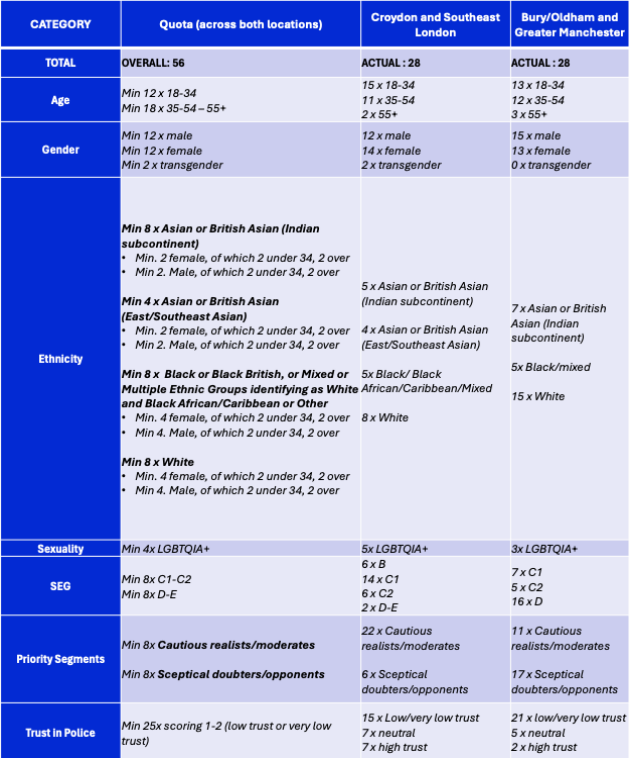
8.4 Summary of expert speaker presentations
Each speaker had a c. 5-minute slot to present. Some presentations were delivered in person while others were played as pre-recorded videos developed in collaboration with the Thinks team.
-
Alex Macdonald (representative from the Home Office): Alex’s presentation explained that the police already use facial recognition, but the rules are fragmented and difficult to understand, making it hard to know what powers they have and how data is protected. He outlined how the public consultation will help the Government establish clearer laws and stronger safeguards to make sure the technology is used fairly and safely.
-
James Sweetland (Consultant for Leapwise): James’ presentation discussed the increasing centralisation of FRT, explaining how it is shifting from local police trials to a national system and why this change has generated debate around privacy. He also presented the potential benefits of central oversight like improved coordination, more consistent safeguards, and potentially being less intrusive than long-term CCTV storage.
-
Lindsey Chiswick (Lead on FRT for the Metropolitan Police and nationally): Lindsey’s presentation highlighted some of the benefits of police use of FRT using real-world examples of its use for serious crime. She also outlined some of the safeguards that are already in place like careful controls on police watchlists, immediate removal of data for non-matches, human checks, and independent testing of the system for bias and accuracy.
-
Darragh Murray (Reader in International Law and Human Rights at Queen Mary University): Darragh gave two shorter talks first outlining concerns around privacy and surveillance and then around bias and discrimination. His key points included the implications for privacy if FRT is extended to less serious crimes, and how high accuracy statistics can gloss over the harm of incorrect matches which have been found to disproportionately impact certain ethnic minorities and women.
-
Dr Yusef Bakkali (Research Fellow at Stephen Lawrence Research Centre): Yusef’s presentation offered broader reflections on the use of technology as evidence in policing, particularly in relation to minoritised communities that experience higher levels of police activity, such as stop and search. Using the example of the increased use of social media and rap videos as evidence, he considered whether facial recognition technology could pose a disproportionate impact on Black young people.
8.5 News headlines shown to participants during Workshop 1
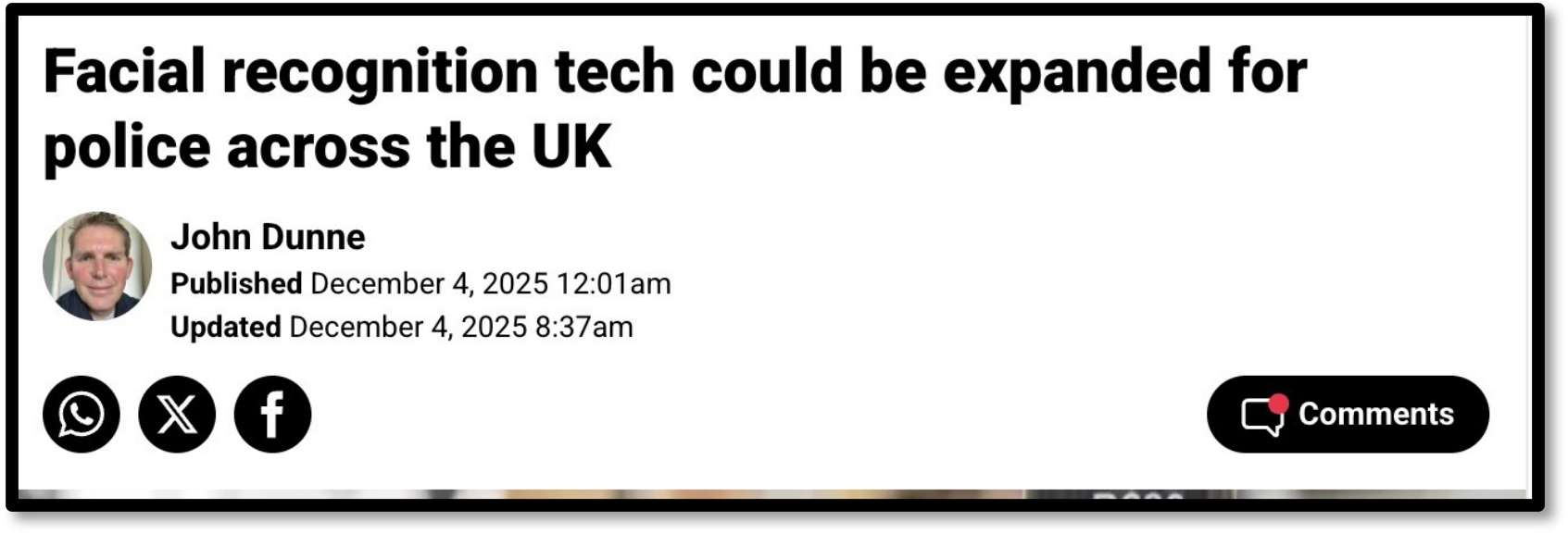
Facial recognition tech could be expanded for police across the UK
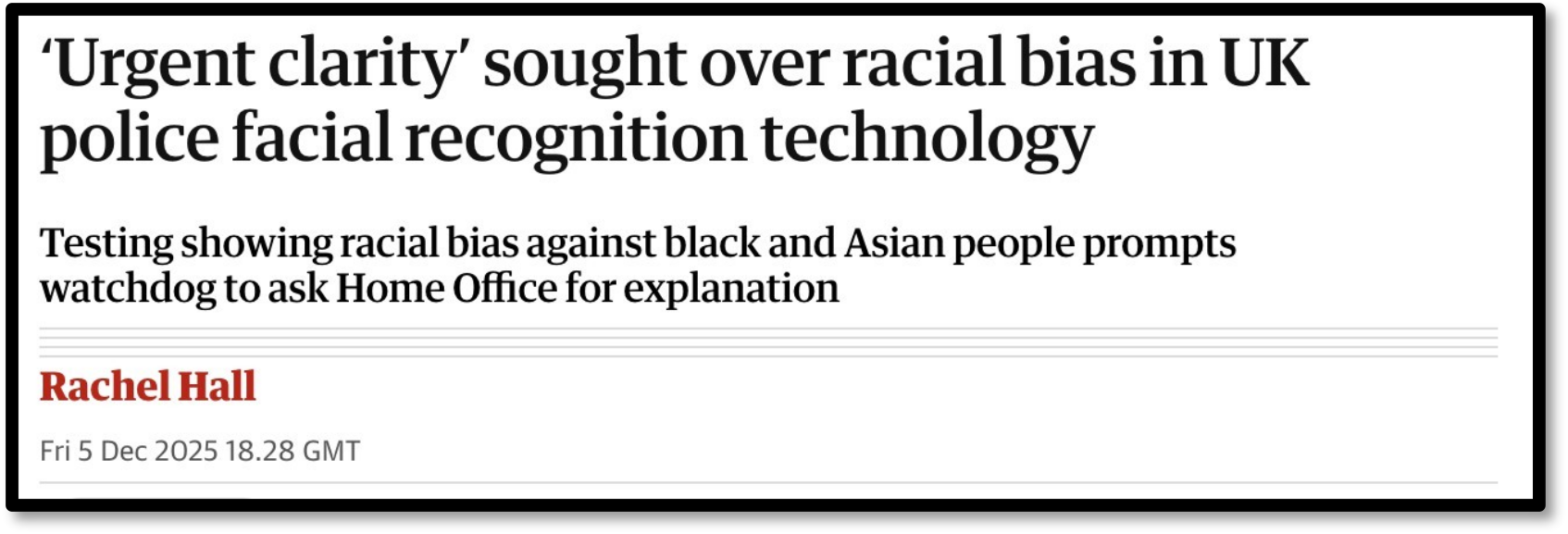
Urgent clarity sought over racial bias in UK police facial recognition technology
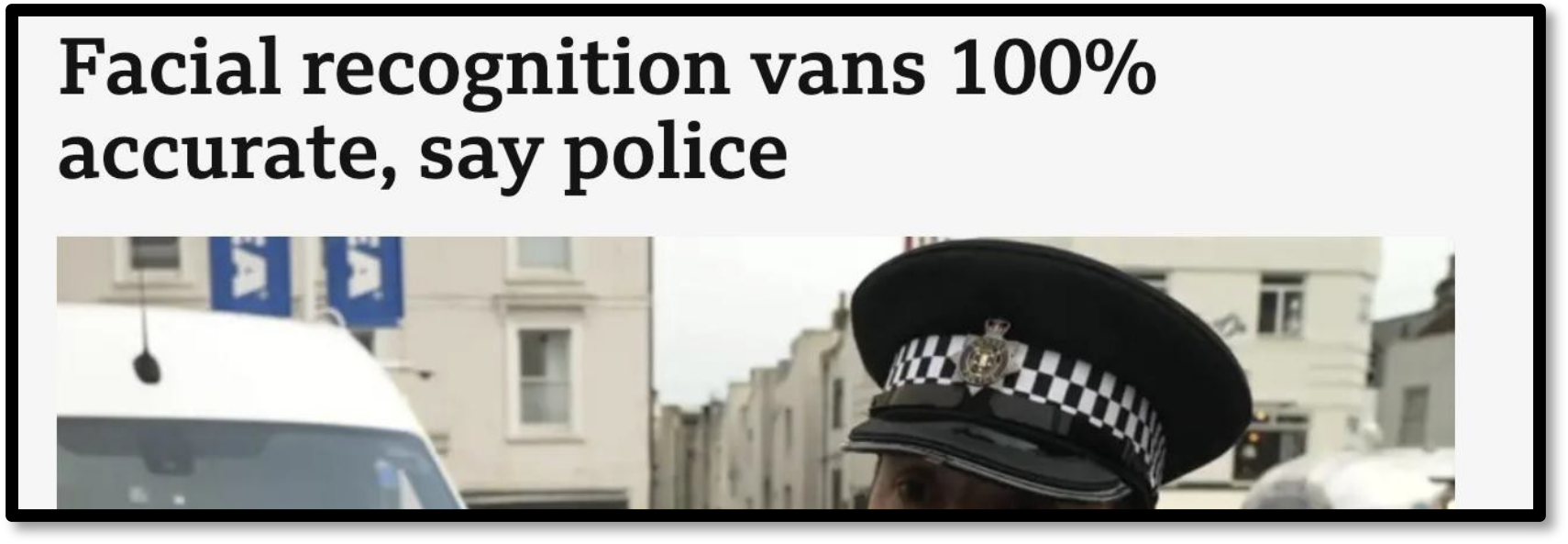
Facial recognition vans 100% accurate, say police
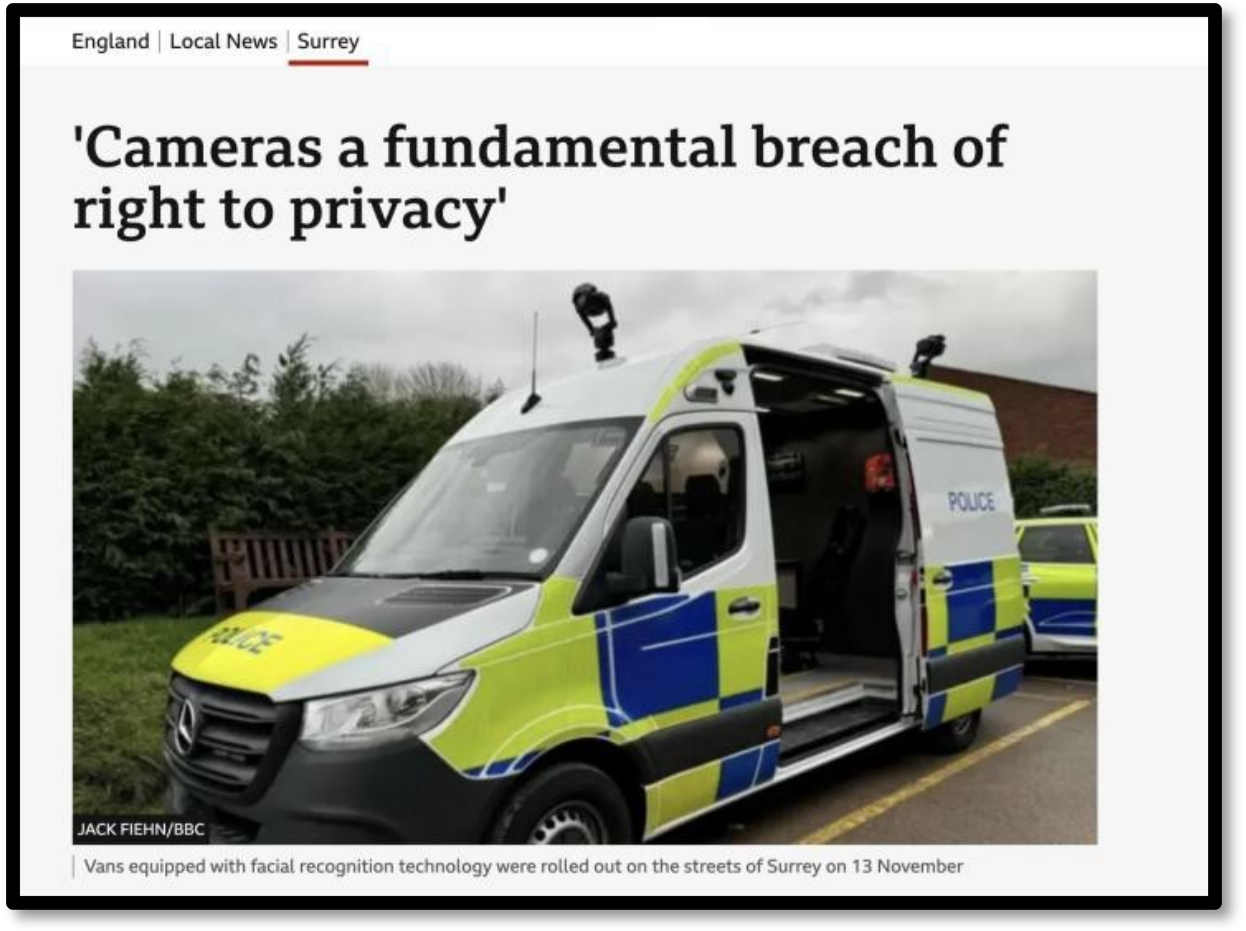
Cameras a fundamental breach of right to privacy
8.6 Descriptions of the 9 case studies participants engaged with in Workshop 2
Type of FRT: Live Facial Recognition (LFR)
-
LFR deployed in the town centre
-
LFR deployed outside a concert venue
-
LFR used at a street carnival
Type of FRT: Operator-initiated facial recognition (OIFRT)
-
Identifying a missing person using OIFRT
-
Identifying an intoxicated person using OIFRT
-
OIFRT used on shoplifter who provides false identity
Types of FRT: Retrospective Facial Recognition (RFR)
-
RFR used to identify suspects after disorder at a protest
-
RFR used after a violent attack on bus driver
-
RFR using video footage to identify suspect of a hate crime
-
https://www.gov.uk/government/consultations/legal-framework-for-using-facial-recognition-in-law-enforcement/consultation-on-a-new-legal-framework-for-law-enforcement-use-of-biometrics-facial-recognition-and-similar-technologies-accessible ↩
-
https://www.gov.uk/government/consultations/legal-framework-for-using-facial-recognition-in-law-enforcement/consultation-on-a-new-legal-framework-for-law-enforcement-use-of-biometrics-facial-recognition-and-similar-technologies-accessible ↩
-
https://www.gov.uk/government/publications/public-attitudes-to-police-use-of-facial-recognition-technology/public-attitudes-to-police-use-of-facial-recognition-technology ↩
-
https://www.adalovelaceinstitute.org/report/an-eye-on-the-future/ ↩
-
Live Facial Recognition Annual Report 2025.pdf, Metropolitan Police ↩
-
The Future of Biometric Technology for Policing and Law Enforcement: Informing UK Regulation ↩