Public attitudes to police use of facial recognition technology
Published 4 December 2025
Applies to England and Wales

© Crown copyright 2025
This publication is licensed under the terms of the Open Government Licence v3.0 except where otherwise stated. To view this licence, visit nationalarchives.gov.uk/doc/open-government-licence/version/3 or write to the Information Policy Team, The National Archives, Kew, London TW9 4DU, or email: psi@nationalarchives.gov.uk.
Where we have identified any third party copyright information you will need to obtain permission from the copyright holders concerned.
This publication is available at https://www.gov.uk/government/publications/public-attitudes-to-police-use-of-facial-recognition-technology/public-attitudes-to-police-use-of-facial-recognition-technology
1. Background
Facial recognition technology (FRT) is an artificial intelligence (AI) tool that aims to help the police solve and prevent crime, bring offenders to justice and keep people safe. The ‘Police use of facial recognition factsheet’ (Home Office, 2023) provides more details on the 3 types of FRT that police in England and Wales can currently use:
- retrospective facial recognition (RFR)
- live facial recognition (LFR)
- operator-initiated facial recognition (OIFR)
Of these, RFR is the most widely used, with all police forces in England and Wales being able to conduct RFR searches through the Police National Database (PND). RFR analyses images of unknown individuals (for example, images taken from CCTV or mobile phone footage) after an event or incident has occurred and compares them to custody images held by the police. LFR is less widely used in policing in England and Wales. LFR analyses live video footage of people passing a camera and compares this to a bespoke watchlist of police images to quickly locate wanted criminals or vulnerable people who may need police assistance. OIFR is the newest FRT capability. It allows officers, after engaging with a person of interest, to photograph them on a mobile phone and help check their identity against a police database of images without the need to take them into custody first.
Policing in the UK is rooted in the concept of policing by consent. It is therefore important to understand public attitudes towards the use of FRT in policing to ensure that the use of this technology is appropriate, and confidence is not eroded. Several previous surveys have indicated high levels of public support for the use of FRT in policing, with around 70% of the UK population being supportive of its use by the police in criminal investigations (Ada Lovelace Institute, 2019). In a recent survey, 91% of the UK public thought the use of FRT was beneficial for policing (Ada Lovelace Institute and Alan Turing Institute, 2025).
Given the rapid and continuous evolution of AI and this technology, it is likely that public attitudes could change over time as the public becomes more aware of FRT and new applications emerge. Consequently, there is a need for up-to-date research that allows shifts in public perceptions to be identified and understood. Additionally, previous surveys could not capture how public attitudes towards police use of FRT might differ depending on the specific FRT capability in question. Finally, there is also a need to understand whether different groups vary in their attitudes towards police use of FRT, so that specific concerns can be identified and addressed where possible.
To understand public attitudes towards the use of FRT in policing, the Home Office commissioned a survey on ‘Attitudes to facial recognition technology in policing’ in January 2025 to residents in England and Wales.
The primary aims of the survey were:
- to understand public attitudes towards police use of FRT in general, and in relation to the different types, contexts and uses of FRT
- to identify the perceived benefits and concerns with the use of FRT in policing
- to understand whether attitudes towards police use of FRT differ between sociodemographic groups
This publication reports the survey’s headline findings but does not include an analysis of all questions posed to participants. Further analysis of the entire dataset is ongoing, and a fuller publication will follow.
This report includes any preliminary analysis indicating statistically significant differences between sociodemographic groups in the main body of text. However, note that any descriptive differences reported here do not suggest that certain demographic characteristics determine or cause attitudes. Instead, other variables may better explain the reported differences between sociodemographic groups.
2. Methodology
To support these objectives, the Home Office commissioned the ‘Attitudes to facial recognition technology in policing’ survey. Commissioning was necessary to provide access to a representative random sample of adults aged 16 and over, living in England and Wales. These participants responded to the survey online in January 2025.
This publication reports the survey’s headline findings. It includes descriptive statistics that summarise responses to key questions and notes statistically significant differences between sociodemographic groups in the main text[footnote 1].
2.1 Eligibility and sampling
The survey used a high-quality, representative sample from the Public Voice panel, which included 22,029 members recruited via the Address-Based Online Surveying (ABOS) method. The sample was drawn from 19,314 eligible panel members in England and Wales, aged 16 and over, who remained active on the panel. The survey was conducted from 6 to 24 January 2025.
To ensure robust and unbiased findings, the researchers used a random probability sampling approach. They stratified participants by ethnicity, gender, age and regional geography, applying targeted boosts to ethnic minority groups and South Wales residents to enhance representation[footnote 2]. The team invited 9,676 individuals to participate, achieving a 40% response rate, with a final sample of 3,920 respondents aged 16 to 99 who passed quality control checks.
2.2 Questionnaire design and scripting
Researchers from the Home Office (HO) and their contracted supplier jointly designed the survey questionnaire. Stakeholders from the HO, National Police Chief’s Council (NPCC), College of Policing, and the Biometrics and Forensic Ethics Group (BFEG)[footnote 3] were consulted throughout the development process. The questionnaire took approximately 15 minutes to complete to minimise participant burden and reduce the likelihood of survey fatigue, which could affect the data quality or result in dropouts.
The researchers designed the survey to cross-reference certain questions with those in previous surveys. Including questions on topics such as the acceptability of using FRT for specific crime types and locations, as well as its potential impact on behaviours, allows the findings to speak to key areas of practice in policing.
The researchers scripted the questionnaire into a short online survey. The contracted supplier tested the script thoroughly and conducted a soft launch ahead of the full survey launch to ensure accuracy in the setup.
This report presents the survey results on topics including:
- awareness of FRT (and awareness of FRT in policing)
- support for police use of FRT
- perceived benefits and concerns with FRT in policing
- acceptability of the specific FRT capabilities in policing
- acceptability of police use of FRT for specific crime types and locations
- the effect of police use of FRT on willingness to enter public spaces
Standard demographic variables were collected, and statistically significant differences are reported.
2.3 Survey weighting
After design weighting, the team calibrated the respondent sample to the weighted Office for National Statistics (ONS) Annual Population Survey January to December 2023 (the latest available at the time) with respect to interlocking gender and age categories, and region (ONS, 2024). The overall weighting efficiency was 69%, equivalent to a design effect of 1.45 and an effective sample size of 2,706 (3,920*69%). Completed questionnaires that did not pass the quality control tests were excluded from the weights.
Table 1. Gender and age group weights
| % of sample | Male | Female | Identify in another way | Total | ||||
|---|---|---|---|---|---|---|---|---|
| Age group | Unweighted | Weighted | Unweighted | Weighted | Unweighted | Weighted | Unweighted | Weighted |
| 16-24 | 4.4% | 7.6% | 6.2% | 7.3% | 0.2% | 0.3% | 10.8% | 15.2% |
| 25-34 | 6.3% | 8.1% | 8.5% | 7.8% | 0.1% | 0.0% | 14.8% | 15.9% |
| 35-44 | 8.0% | 7.7% | 10.2% | 8.1% | 0.1% | 0.1% | 18.3% | 15.8% |
| 45-54 | 8.5% | 8.5% | 9.1% | 8.4% | 0.1% | 0.1% | 17.8% | 17.0% |
| 55-64 | 7.9% | 7.3% | 8.2% | 7.5% | 0.1% | 0.0% | 16.2% | 14.8% |
| 65-74 | 7.3% | 6.0% | 6.5% | 6.8% | 0.0% | 0.0% | 13.9% | 12.9% |
| 75 and over | 4.3% | 3.8% | 3.9% | 4.7% | 0.0% | 0.0% | 8.2% | 8.5% |
| Total | 46.8% | 48.9% | 52.6% | 50.5% | 0.6% | 0.5% | 100% | 100% |
Table 2. Region weights
| Region | Unweighted % of sample | Weighted % of sample |
|---|---|---|
| North East | 5.5% | 4.5% |
| North West | 11.0% | 12.2% |
| Yorkshire and The Humber | 7.6% | 9.2% |
| East Midlands | 7.3% | 8.1% |
| West Midlands | 8.5% | 9.9% |
| East of England | 9.8% | 10.5% |
| London | 20.1% | 15.1% |
| South East | 15.1% | 15.4% |
| South West | 7.6% | 9.6% |
| Wales | 7.4% | 5.4% |
3. Headline findings
Awareness of FRT
Most respondents were aware of facial recognition technology (FRT) in general, but less were aware of its use in policing. Of the different types of FRT used in policing, respondents were most aware of retrospective facial recognition (RFR) and least aware of operator-initiated facial recognition (OIFR).
General attitudes
Overall, 2 in 3 supported the use of FRT in policing, while one in 10 were opposed. Respondents recognised benefits such as helping the police to catch criminals, enhance public safety, and locate missing or vulnerable individuals. However, concerns included the potential for misuse or hacking, risk of false identification, and issues around data privacy. Those with low levels of trust in the police were less likely to support the use of FRT in policing.
Different uses of FRT
The different types of FRT used in policing received different levels of acceptance; RFR received the highest level of acceptability (97%), while OIFR received the lowest (84%). Live facial recognition (LFR) acceptability depended on the purpose of its use, and there was generally more acceptance when deployed for locating vulnerable individuals (91%) compared to locating suspected criminals (88%). Another aspect that seemed to affect public acceptability relates to the location of its use and the crime being investigated. Acceptability of FRT was highest when its use was clearly linked to tackling the most severe offences. For LFR specifically, there was more acceptance for deployments in higher-risk locations, such as airports, but less for community-level policing, such as around residential streets. For OIFR, there was more acceptance of its use for a person presenting a risk of harm or suspected of committing a crime.
4. Awareness of FRT
This section presents findings on public awareness of FRT, focusing on general awareness, its use in policing, and awareness of the different FRT capabilities used in policing. Additionally, respondents were asked where they had encountered information about police use of FRT in their local area.
Awareness of FRT in policing was lower than awareness of its use in other sectors.
Most respondents reported some level of awareness of FRT, with 50% stating they had heard ‘a lot’ or ‘a fair amount’ about it. A further 37% reported having heard ‘a little’, while 11% had only heard of it in passing. Only 2% of respondents had never heard of FRT (see Figure 1).
Awareness of FRT, specifically in the context of policing, was lower. Just 25% of respondents had heard ‘a lot’ or ‘a fair amount’ about its use by police, compared to 50% for FRT in general. The largest proportion (41%) reported having heard ‘a little’, while 22% had heard of it but knew ‘hardly anything’. Notably, 11% had never heard of FRT in policing, a substantially higher proportion than those unaware of FRT in general.
These findings suggest that while public awareness of FRT is relatively high, knowledge of its use in policing is more limited.
Figure 1. Awareness of FRT in general vs awareness of FRT use in policing
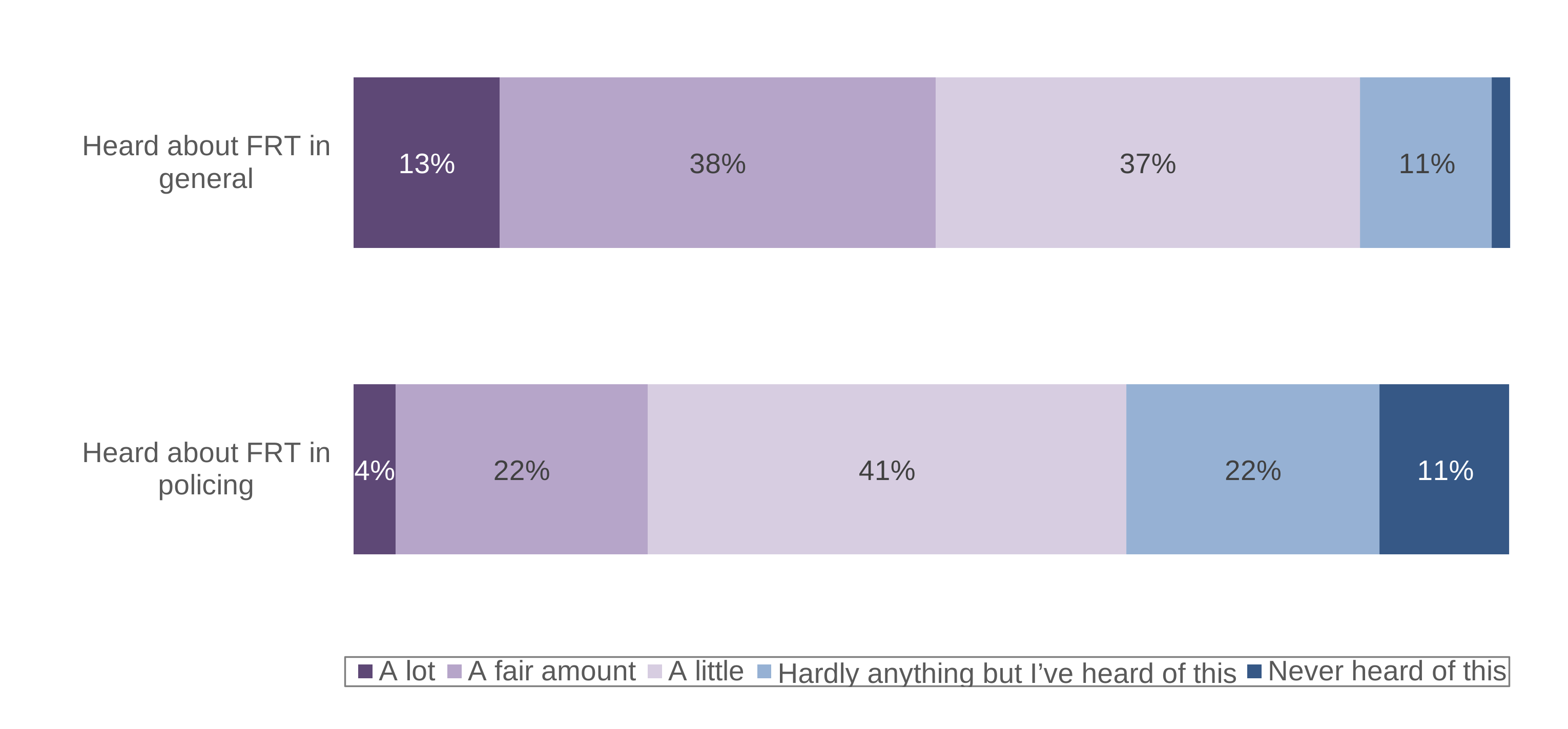
Question 1: Before today, how much, if anything, have you heard or read about facial recognition technology?
Question 2: Before today, how much, if anything, have you heard or read about facial recognition technology in policing?
Respondents: N=3,920; unweighted base.
Awareness of FRT in policing varied by gender, age, ethnicity, sexuality and education. Respondents who were male, aged 55 and over, Black, LGB+ or educated to degree level or above were significantly more likely to have heard ‘a lot’ or ‘a fair amount’ about FRT being used by the police (see Figure 2). Those who were female, aged 35 to 54, Asian or without any educational qualifications were significantly more likely to have never heard of FRT being used by the police.
Figure 2. Sociodemographic differences between those who have heard ‘a lot’ or ‘a fair amount’ about FRT in policing
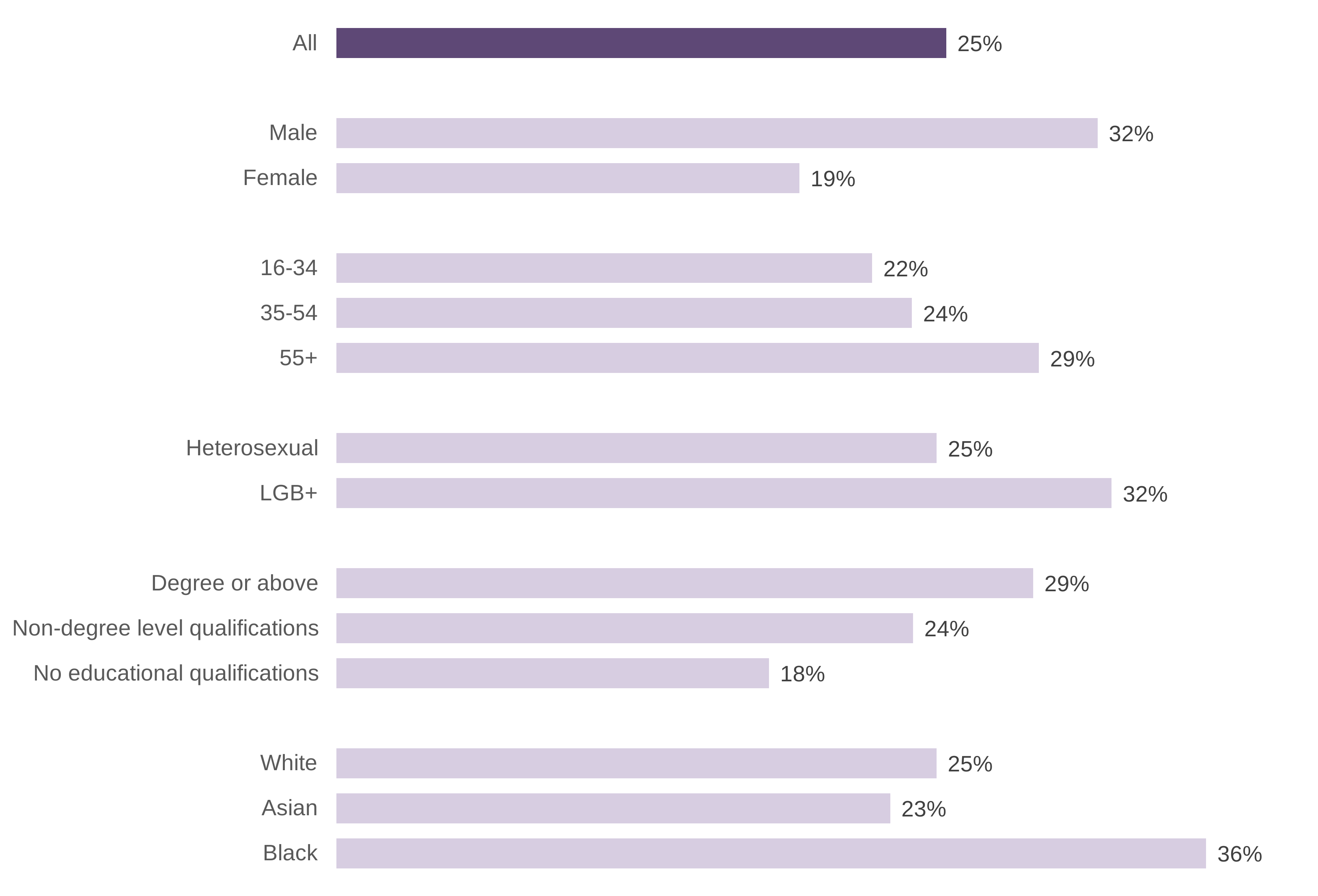
Question: Before today, how much, if anything, have you heard or read about facial recognition technology in policing?
Respondents: N=3,920; unweighted base, Male (n=1,836), Female (n=2,061); 16 to 34 (n=1,005), 35 to 54 (n=1,413), 55 and over (n=1,502); Heterosexual (n=3,423), LGB+ (n=233); Degree or above (n=1,713), Non-degree-level qualifications (n=1,722), No educational qualifications (n=138); White (n=2,960), Asian (n=497), Black (n=207).
Awareness of the use of FRT in policing was highest for RFR and lowest for OIFR.
Awareness varied across the different types of FRT used in policing. RFR was the most familiar, with 26% of respondents having heard ‘a lot’ or ‘a fair amount’ about it, while only 9% had ‘never heard of this’ (see Figure 3).
Awareness of LFR for locating criminals was higher than awareness of its use for locating vulnerable people who may need police support. For LFR used to locate criminal suspects, 22% indicated that they had heard ‘a lot’ or ‘a fair amount’, while 14% had ‘never heard of this’. Whereas for LFR used to locate vulnerable people, only 14% knew ‘a lot’ or ‘a fair amount’, while 28% had ‘never heard of this’.
Respondents were least aware of the use of OIFR in policing, with just 12% having heard ‘a lot’ or ‘a fair amount’ about its use, while 34% of respondents had ‘never heard of this’.
These findings suggest that the public are more aware of RFR and crime-focused LFR than other forms of FRT in policing.
Figure 3. Awareness of the different types of FRT used in policing
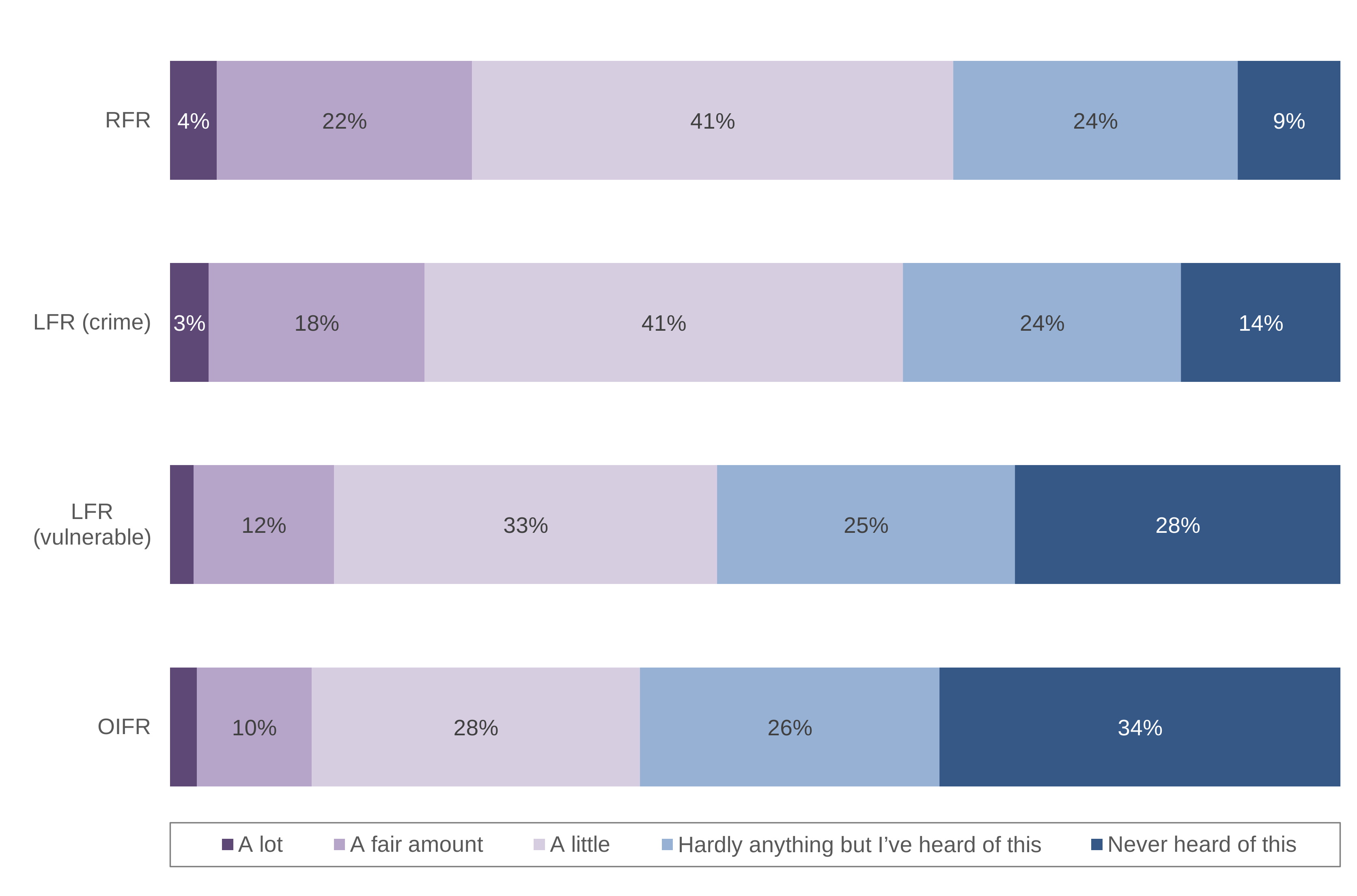
Question: How much, if anything, have you heard or read about each of the following?[footnote 4]
Respondents: N=3,920; unweighted base.
People who had heard of local police using FRT were most likely to hear about this through social media.
Of those aware of the use of FRT in policing, only 11% had seen or heard about it being used by the police in their local area (see Figure 4).
Among those who had heard about FRT being used by the police in their local area, social media was the most common source of exposure, reported by 49% of respondents. To a lesser extent, respondents had also heard about FRT being used by police in their local area through TV/radio news (36%), police vans (29%) and newspaper articles (29%).
Figure 4. Where individuals who are aware of the police’s use of FRT in their local area report having seen it
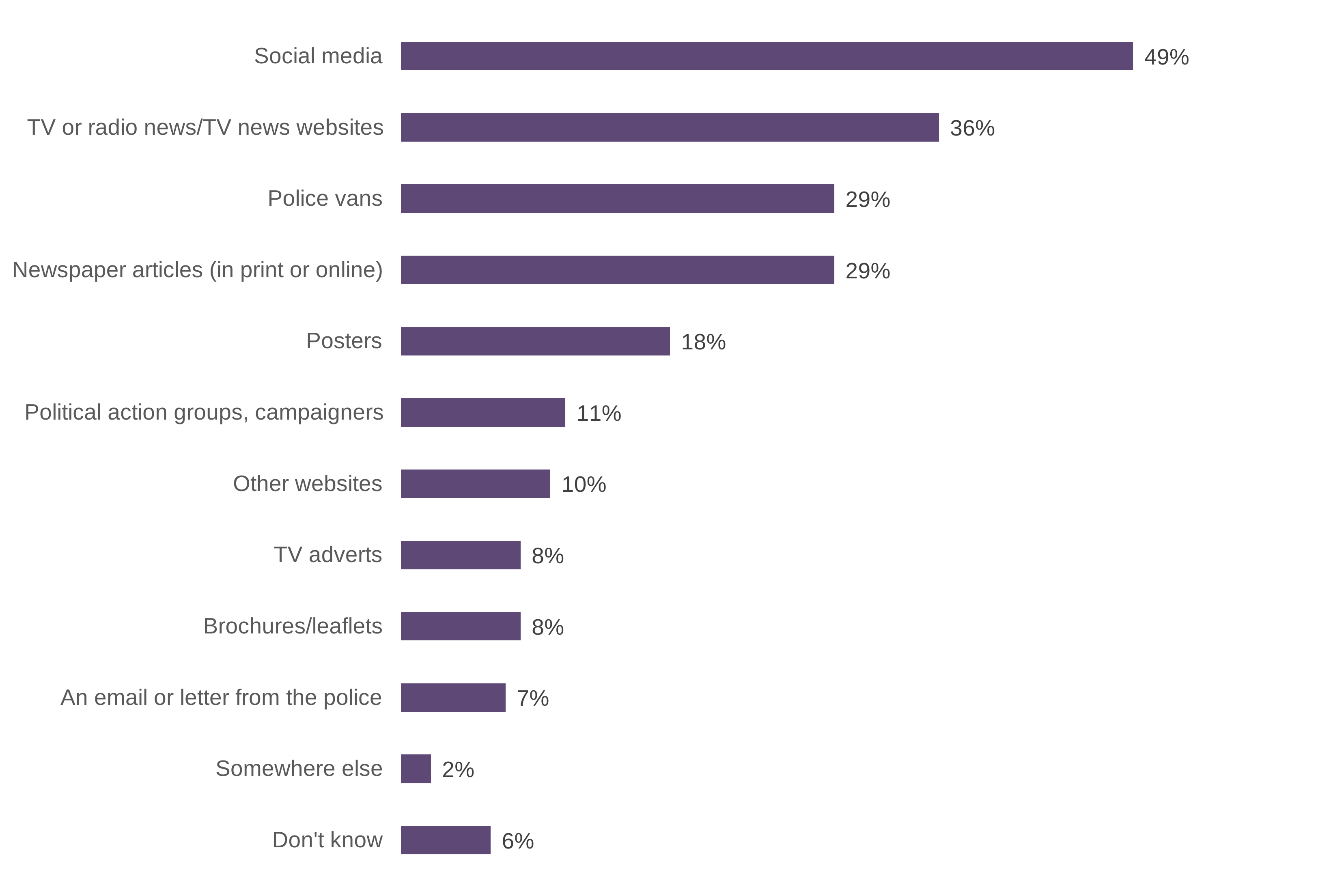
Question: Where have you seen or heard about facial recognition technology being used by police in your local area?
Respondents: N=422 (those who had seen or heard about FRT being used by police in their local area).
5. General attitudes towards the use of FRT in policing
This section explores public perceptions of FRT in policing, including overall levels of support or opposition, the role of trust in the police, and the perceived benefits and concerns associated with its use. The findings provide insight into the balance between the potential advantages of FRT, such as crime prevention and enhanced security, and concerns about risks of technology misuse or hacking, false identification and data privacy.
5.1 Support
Two in 3 respondents supported the use of FRT in policing.
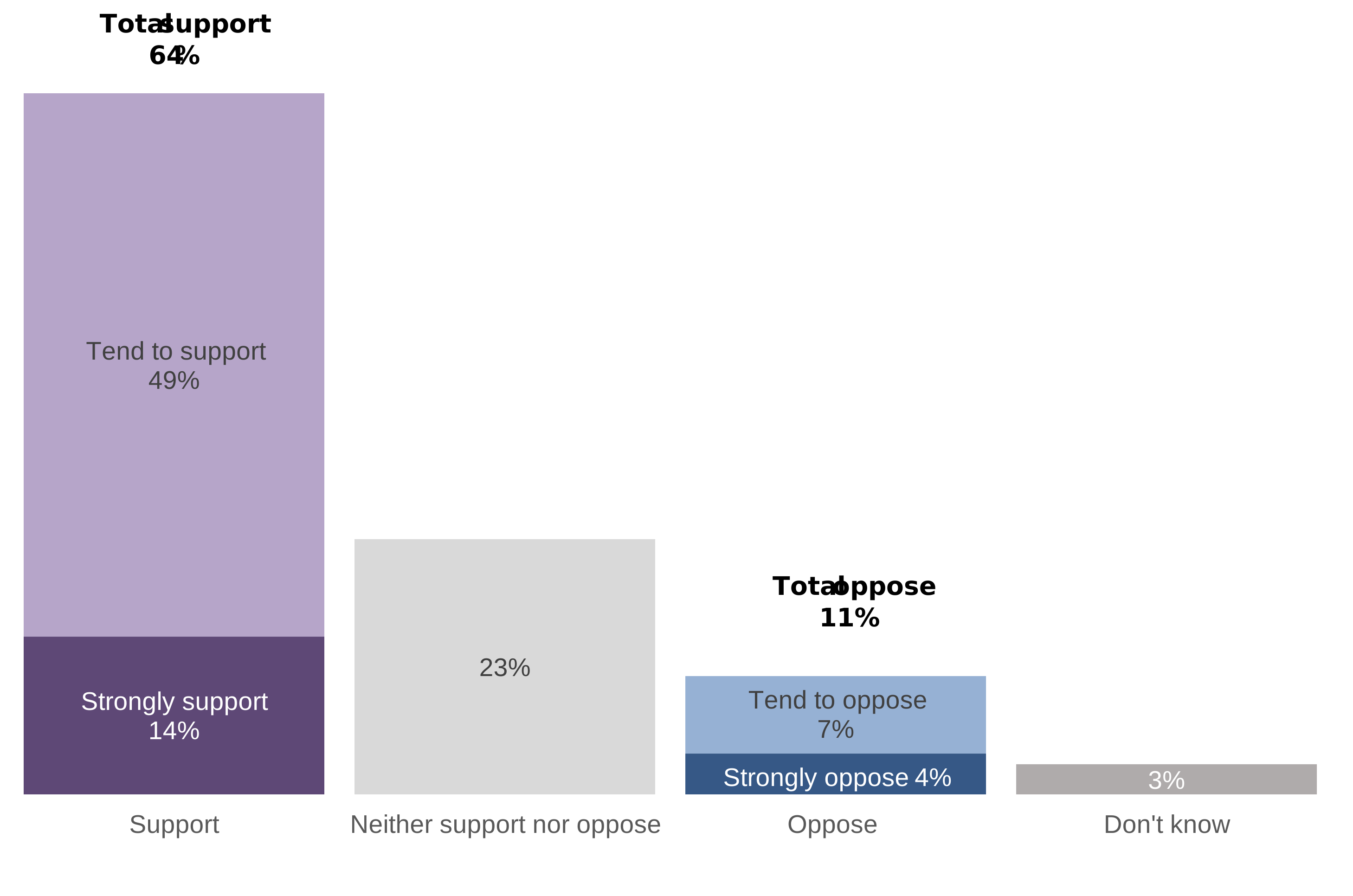
Overall, 64% of the population support police use of FRT to some degree, with 14% strongly supporting its use and 49% tending to support its use. Only 11% were opposed to its use, with 4% strongly opposed and 7% tending to oppose (see Figure 5).
Figure 5. Overall support for police use of FRT
Question: Overall, to what extent do you support or oppose the use of facial recognition technology in policing?
Respondents: N=3,920; unweighted base.
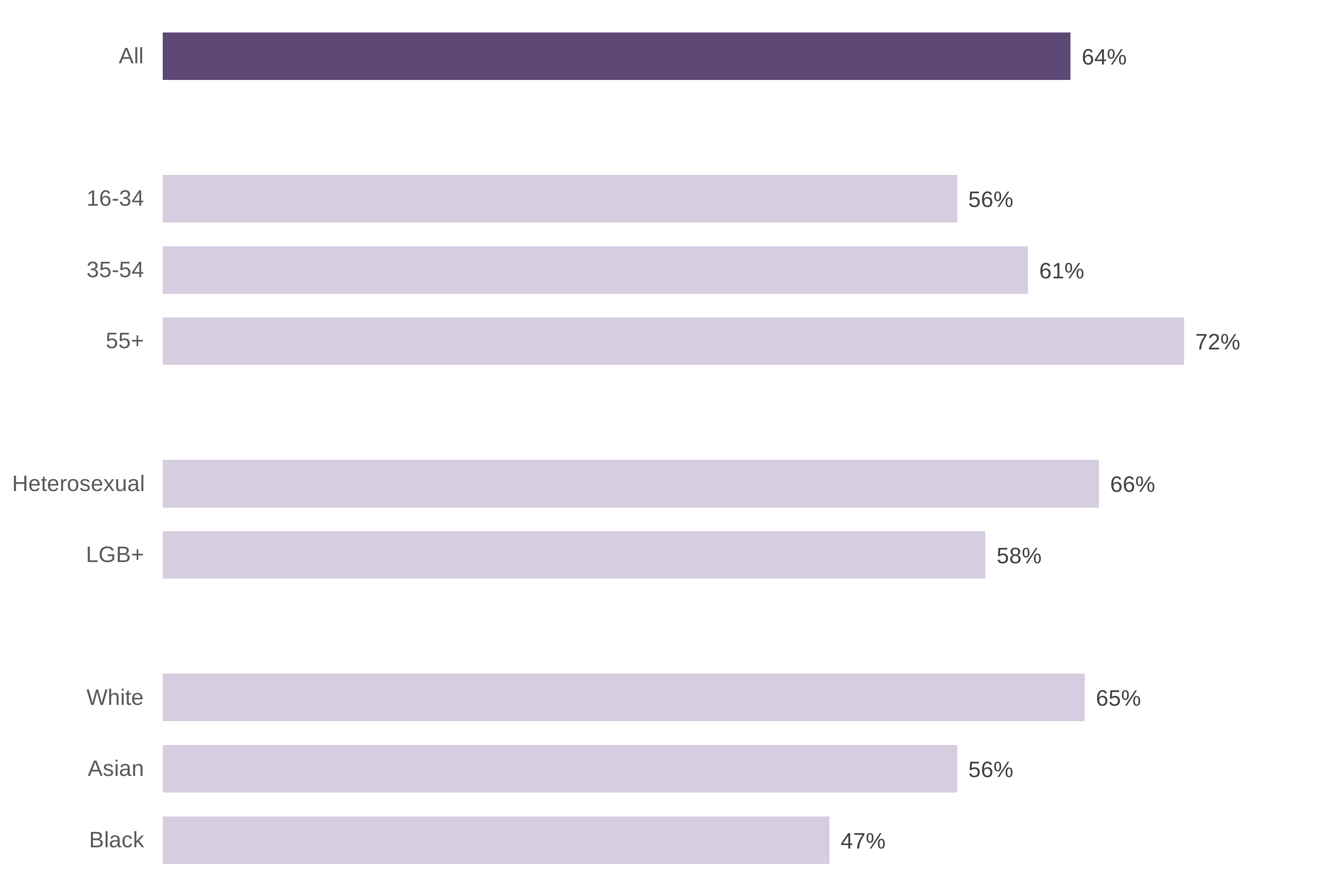
Support for the use of FRT in policing varied across some sociodemographic groups. Those who were aged 55 and over, heterosexual and White were significantly more likely to support police use of FRT (see Figure 6). Respondents who were male, aged 16 to 34, Black, LGB+ or educated to degree level or above were significantly more likely to oppose police use of FRT.
Figure 6. Sociodemographic differences in overall support for police use of FRT
Respondents: N=3,920; unweighted base, 16 to 34 (n=1,005), 35 to 54 (n=1,413), 55 and over (n=1,502); Heterosexual (n=3,423), LGB+ (n=233); White (n=2,960), Asian (n=497), Black (n=207).
Those who trust the police are more likely to support the use of FRT in policing.
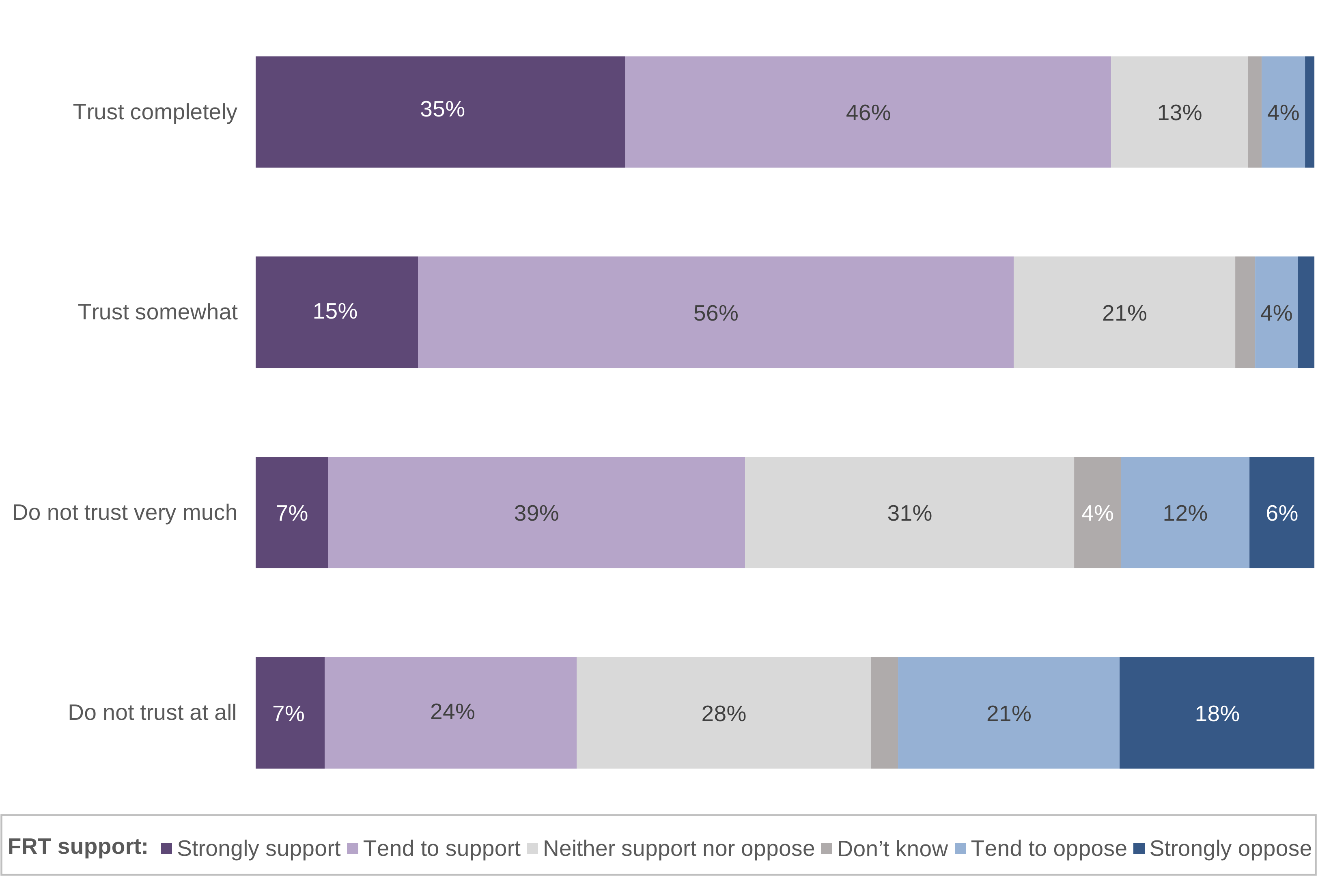
Levels of support for the use of FRT in policing varied substantially by the extent to which respondents trusted the police (see Figure 7). The majority of respondents who indicated that they either trust the police completely (81%) or trust the police somewhat (72%) also supported the use of FRT in policing. Overall support for police use of FRT was lower amongst respondents who indicated that they do not trust the police very much (46%) or do not trust the police at all (30%).
Yet, even in those who indicated that they did not trust the police at all, a minority (39%) were opposed to the use of FRT.
Figure 7. Support for police use of FRT by extent of trust in the police
Question: How much do you trust the following institutions in England and Wales? … The police
Respondents: N=3,920; ‘Trust in the police’ unweighted base: trust completely (n=298), trust somewhat (n=2,386), do not trust very much (n=900), do not trust at all (n=306).
5.2 Benefits
Benefits of police use of FRT most frequently identified by the public related to making it easier for the police to catch criminals and locate people who may need police assistance. Respondents were less likely to feel it improves their personal safety or enhances the efficiency and accuracy of policing.
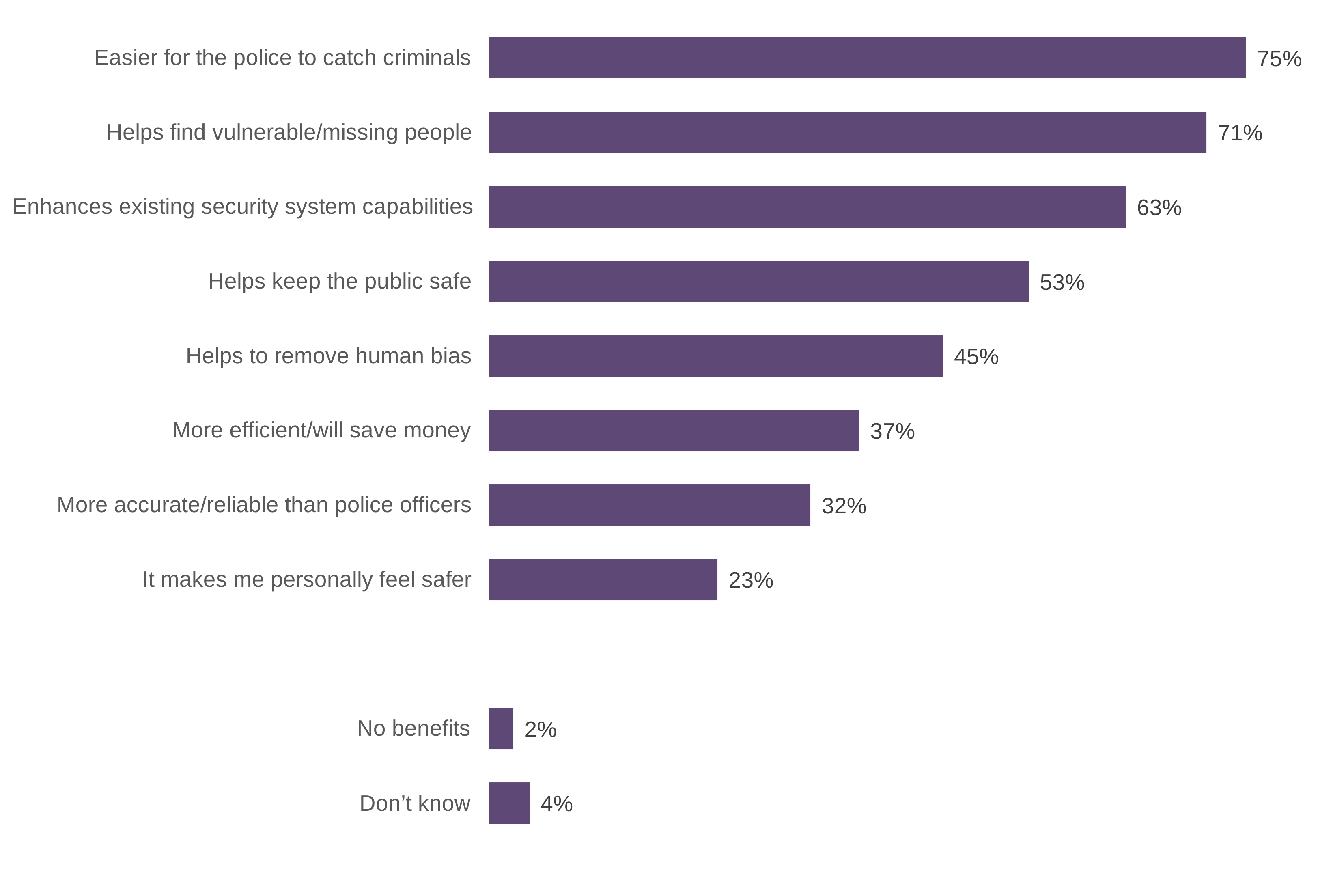
When presented with a list of potential benefits, the most widely acknowledged benefit was that FRT makes it easier for the police to catch criminals, with 75% of respondents selecting this as an advantage (see Figure 8). Similarly, 71% believed the technology can help find vulnerable or missing individuals who may need support. FRT was also seen as enhancing overall security infrastructure, with 63% of respondents stating that it strengthens existing security systems such as CCTV.
Of the options presented, respondents were least likely to feel that police use of FRT makes them feel personally safer, with only 23% selecting this as an advantage. Respondents were also less likely to select that the technology is more accurate/reliable than police officers (32%), or that it is more efficient/cost saving (37%). A small proportion of respondents (2%) saw no benefits to the use of FRT in policing, while 4% were uncertain.
Figure 8. Perceived benefits of the use of FRT in policing
Question: What do you think are the benefits, if any, of the use of facial recognition technology in policing?
Respondents: N=3,920; unweighted base.
5.3 Concerns
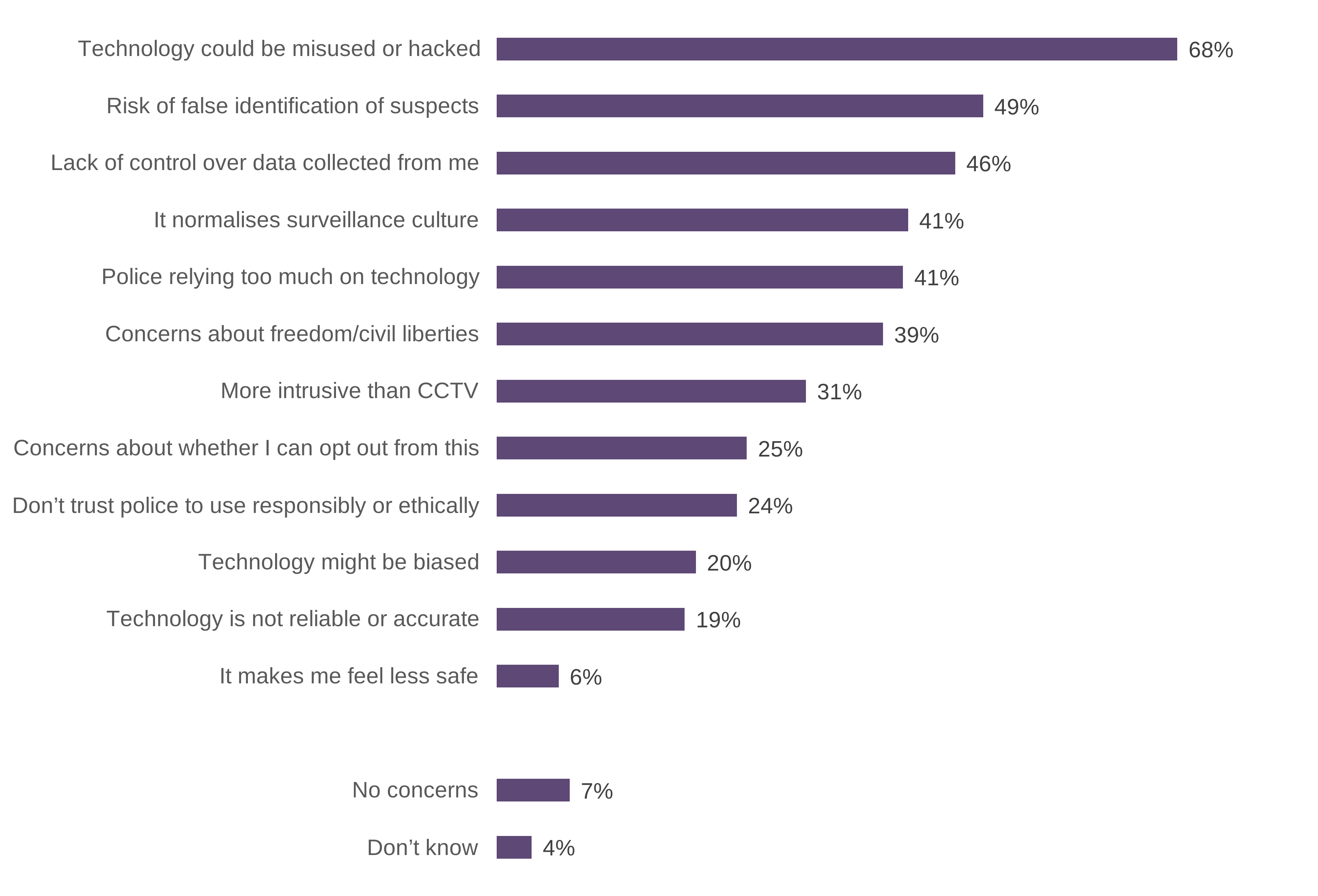
Concerns with police use of FRT most frequently identified by the public related to the risk of technology misuse and hacking, false identification, and data privacy. Fewer are concerned with it making them feel less safe.
When presented with a list of potential concerns, the most prevalent concern, selected by 68% of respondents, is the risk that FRT could be misused or hacked. Additionally, 49% expressed concerns about the risk of false identification of suspects, while 46% of respondents were concerned about a lack of control over what data police can collect.
Of the list of potential concerns presented, respondents were least likely to feel that police use of FRT makes them feel less safe, with just 6% selecting this as a concern. Respondents were also less likely to be concerned that the technology is not reliable or accurate (19%), or that it could be biased (20%). A small proportion of respondents (7%) selected none of the potential concerns, while 4% indicated that they were unsure. Overall, while most people held some concerns about the use of FRT in policing, concerns were largely centred around the technology being misused or hacked.
Figure 9. Concerns expressed on the use of FRT in policing
Question: What concerns do you have, if any, about the use of facial recognition technology in policing?
Respondents: N=3,920; unweighted base.
6. Different uses of facial recognition technology
This section examines public acceptability of different uses of FRT in policing, based on various scenarios presented to respondents. The scenarios cover both RFR, where technology is used to identify individuals after a crime has occurred, and LFR, where cameras scan faces in real time to match individuals against a police watchlist. Additionally, this section explores attitudes toward LFR when used to locate vulnerable individuals, and OIFR, where officers use mobile devices to help check a person’s identity.
Acceptability was analysed in relation to different factors, where relevant, such as the purpose of use (crime detection or safeguarding), the type of crime involved, the location of its use, and potential changes in behaviour due to the presence of FRT in public spaces.
The following scenarios for use of different types of FRT were presented:
Scenario 1. Retrospective facial recognition
The police are investigating a crime. They have received a picture of a suspect from the scene of the crime. The police use FRT to help identify the suspect in the picture by comparing their face against a police database of images. The technology then alerts the police officer to a potential match with an image in the database.
Scenario 2. Live facial recognition
A police van is situated in a public place. A camera on this van is scanning the faces of people as they pass by. The camera uses FRT to compare people’s faces against a unique list of police images (a ‘watchlist’). The technology alerts a police officer on the ground of a potential match to a suspect on the watchlist. A police officer then reviews the match and approaches the individual.
Scenario 3. Live facial recognition technology for vulnerable people
A police van using FRT is scanning the faces of people in a public place to help locate individuals on a unique list of police images. However, in this scenario, the person is not suspected of committing a crime; rather, they are known to be vulnerable and there is concern for their welfare. FRT identifies a potential match to a vulnerable person on the list and alerts the police at the scene. The police officers approach the vulnerable individual and check their wellbeing.
Scenario 4. Operator-initiated facial recognition technology
A police officer is on patrol and comes across a person in the street. The officer has reasonable grounds to stop or approach the person and verify their identity. The officer takes a photo of the person on their mobile phone and uses FRT to compare the picture with images contained in a police database to help identify the person.
6.1 Acceptability of different technologies
Respondents perceived RFR as most acceptable and OIFR as least acceptable.
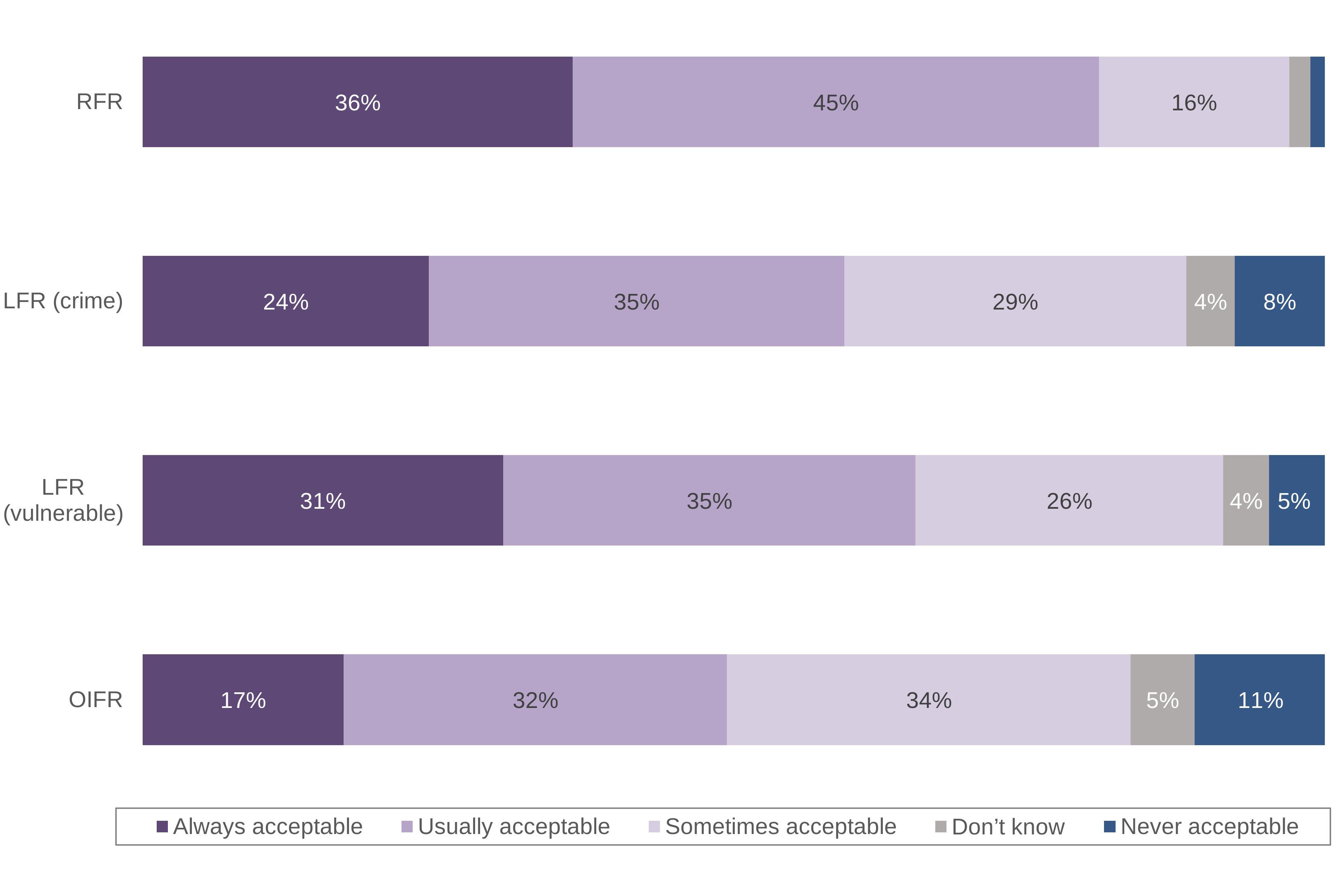
Overall acceptability of FRT was high but varies depending on the specific capability in question (see Figure 10). RFR (scenario 1) was seen as most acceptable, with 97% of respondents indicating that it is at least sometimes acceptable for the police to use this FRT capability. LFR specifically used to locate vulnerable people (scenario 3) had 91% overall acceptability, LFR used for locating criminal suspects (scenario 2) was acceptable to some extent by 88% of respondents, and the use of OIFR (scenario 4) was seen as acceptable at least sometimes by 84% of respondents.
Despite high levels of acceptance across all the police FRT capabilities, most did not find their use to be always acceptable. RFR had the highest rate of unconditional acceptance, with 36% believing it is always acceptable for police to use RFR.
LFR was deemed more acceptable for locating vulnerable people than it was for locating criminal suspects; 31% thought its use was always acceptable for locating vulnerable people, compared to 24% who thought it was always acceptable to use LFR for locating criminal suspects.
OIFR had the lowest level of unconditional acceptance, with only 17% viewing its use by police as always acceptable and a higher proportion (11%) stating it should never be used.
Figure 10. Acceptability of each FRT capability used in policing
Question: How acceptable or unacceptable do you think it is for the police to use facial recognition technology in this way? See Table 3 for a detailed description of the scenarios.
Respondents: N=3,920; unweighted base.
The police use of RFR and LFR was considered most acceptable for the most severe crimes.
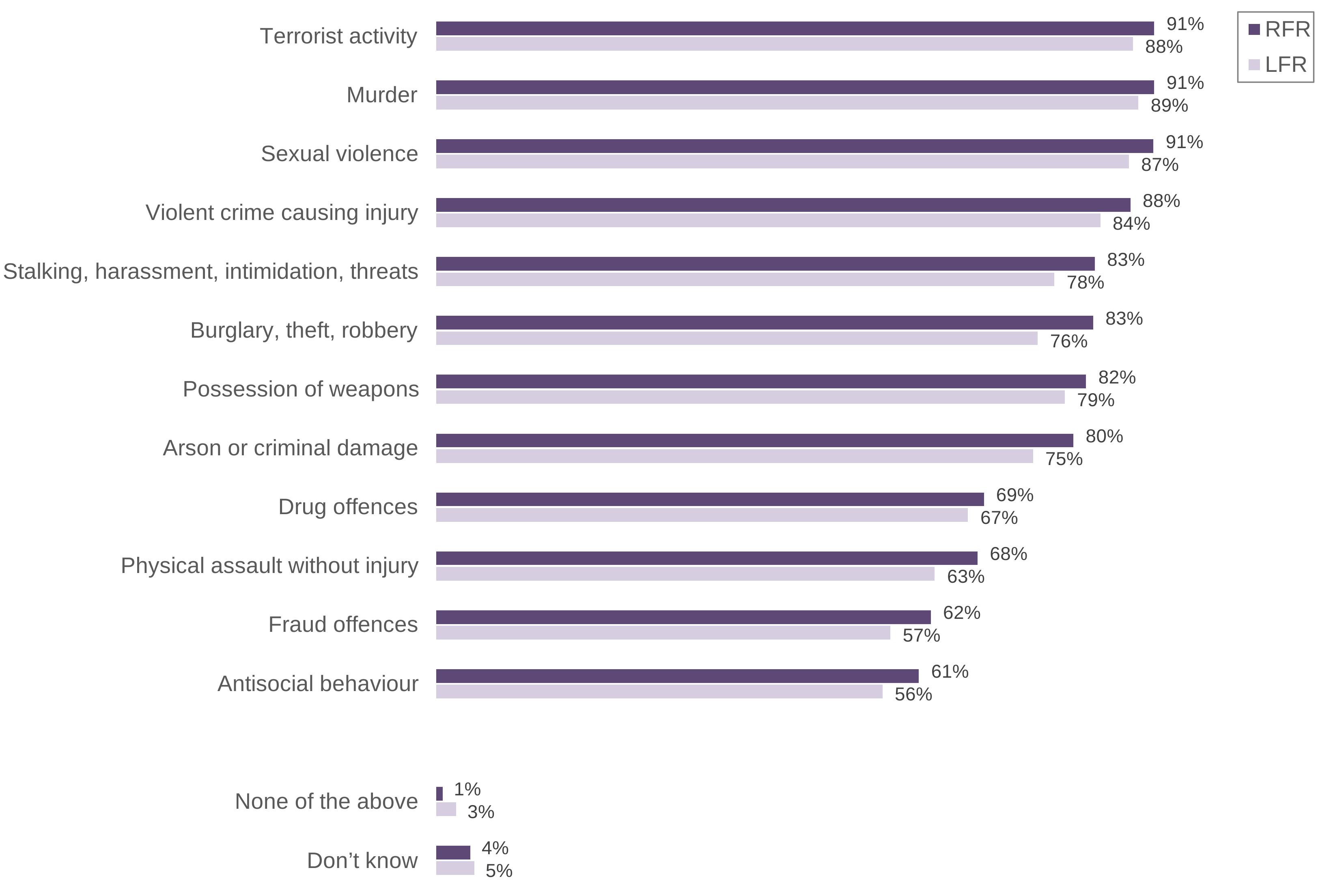
The data indicate broad public support for the use of both RFR and LFR in tackling severe offences, with the highest levels of acceptability for crimes such as terrorist activity, murder and sexual violence (see Figure 11).
Acceptability decreased for less severe offences, such as antisocial behaviour and fraud, although the majority still thought that both RFR and LFR are acceptable to use for these offences.
RFR was generally viewed as more acceptable than LFR across all crime types, although differences in acceptability between RFR and LFR are small. A small minority was opposed to the use of RFR (1%) and LFR (3%) for any crime.
Figure 11. Acceptability of RFR vs LFR by offence type
Question: For which offences do you think this would be acceptable? Select all the options you think apply.
Respondents: N=3,920; unweighted base.
6.2 Retrospective facial recognition technology (RFR)
Eight in 10 felt RFR was always or usually acceptable, while only 1% thought it was never acceptable.
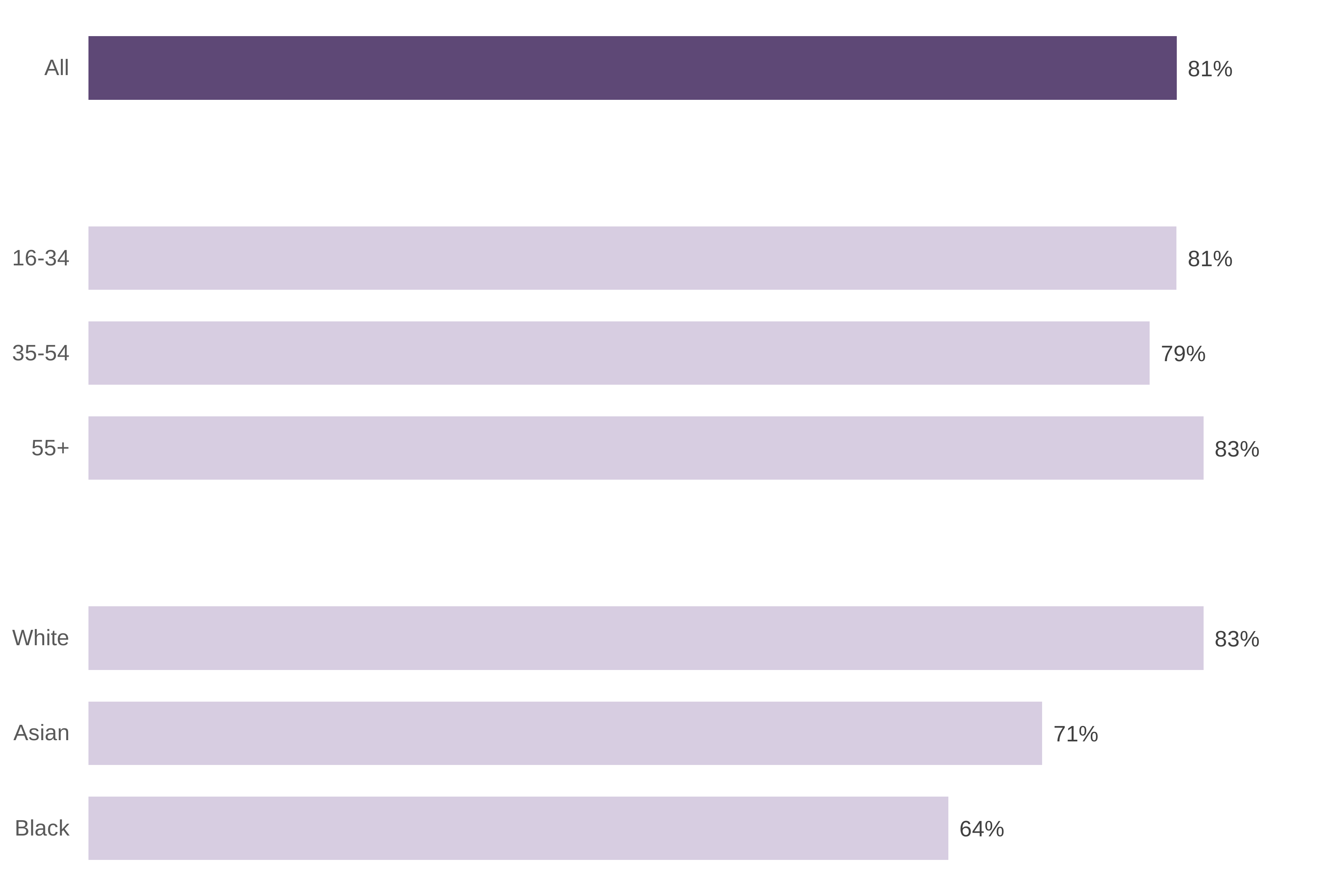
Most respondents felt police use of RFR is acceptable, with 36% considering it ‘always acceptable’ and 45% considering it ‘usually acceptable’ (not graphed). An additional 16% deemed it ‘sometimes acceptable’, while only a small minority were ‘unsure’ (2%) or ‘outright opposed’ (1%).
Acceptability of RFR in policing varied by age and ethnicity (see Figure 12). Those aged 55 and over and White were more likely to indicate that it is ‘always’ or ‘usually’ acceptable for police to use RFR. Respondents who were younger than 55 and Asian were more likely to feel that the use of RFR by police is never acceptable.
Figure 12. Sociodemographic differences in those who indicated it was ‘always’ or ‘usually’ acceptable for the police to use RFR
Respondents: N=3,920; unweighted base, 16 to 34 (n=1,005), 35 to 54 (n=1,413), 55 and (n=1,502); White (n=2,960), Asian (n=497), Black (n=207).
6.3 Live facial recognition technology (LFR)
Six in 10 felt it is ‘always’ or ‘usually’ acceptable for the police to use LFR to locate wanted criminals, while just 8% thought this is never acceptable.
Overall, 59% of respondents thought it is either ‘always’ (24%) or ‘usually’ acceptable (35%) for the police to use LFR to locate criminal suspects (not graphed). A further 29% felt it is sometimes acceptable, while 8% thought it is never acceptable and 4% were uncertain.
The acceptability of LFR for locating criminal suspects varied between sociodemographic groups (see Figure 13). Those aged 55 and over, heterosexual, White or without degree-level qualifications were more likely think it was at least ‘usually’ acceptable. Respondents who were male, aged 16 to 34, Asian or educated to degree level or above were more likely to indicate that the use of LFR for locating criminal suspects is never acceptable.
Figure 13. Sociodemographic differences in those who indicated that it was ‘always’ or ‘usually’ acceptable for the police to use LFR to locate people suspected of committing an offence
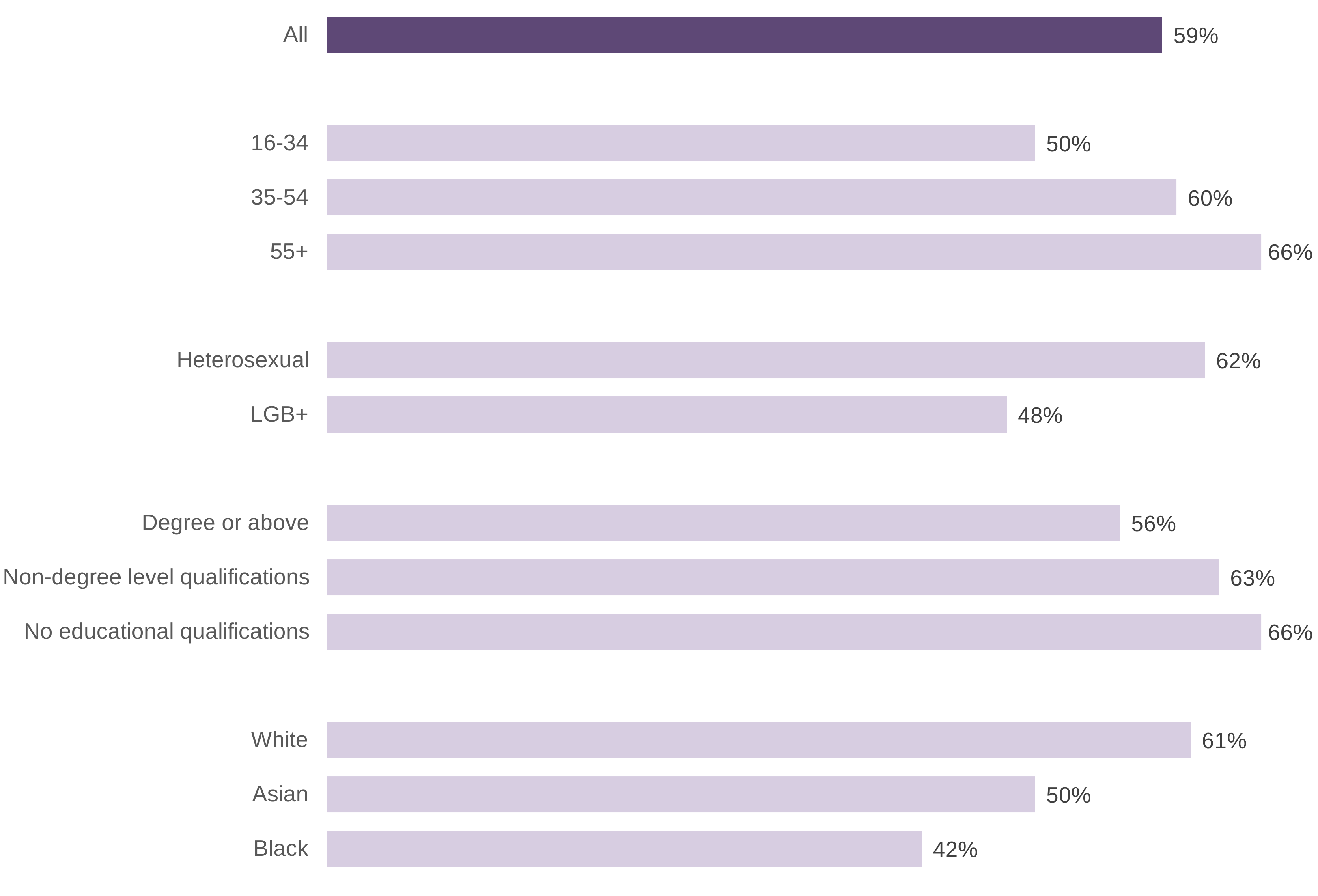
Respondents: N=3,920; unweighted base, 16 to 34 (n=1,005), 35 to 54 (n=1,413), 55 and over (n=1,502); Heterosexual (n=3,423), LGB+ (n=233); Degree or above (n=1,713), Non-degree-level qualifications (n=1,722), No educational qualifications (n=138); White (n=2,960), Asian (n=497), Black (n=207).
Using LFR for locating vulnerable people was seen as slightly more acceptable than for locating criminals.
The acceptability of using LFR to locate vulnerable people who may need police assistance was slightly higher compared to its use to locate criminal suspects. Specifically, 65% of respondents considered it either ‘always acceptable’ (31%) or ‘usually acceptable’ (35%) (not graphed). A further 26% believed it was ‘sometimes acceptable’, with 5% indicating that it was ‘never acceptable’ and 4% uncertain.
Acceptability varied across sociodemographic groups (see Figure 14). Those aged 55 and over, heterosexual, White and without degree-level qualifications were significantly more likely to find it acceptable for the police to use LFR to locate vulnerable people. Respondents aged 16 to 34, LGB+ and educated to degree level or above were more likely to indicate it was never acceptable for police to use LFR in this way.
Figure 14. Sociodemographic differences in those who indicated that it was ‘always’ or ‘usually’ acceptable for the police to use LFR to locate vulnerable people who may need police assistance
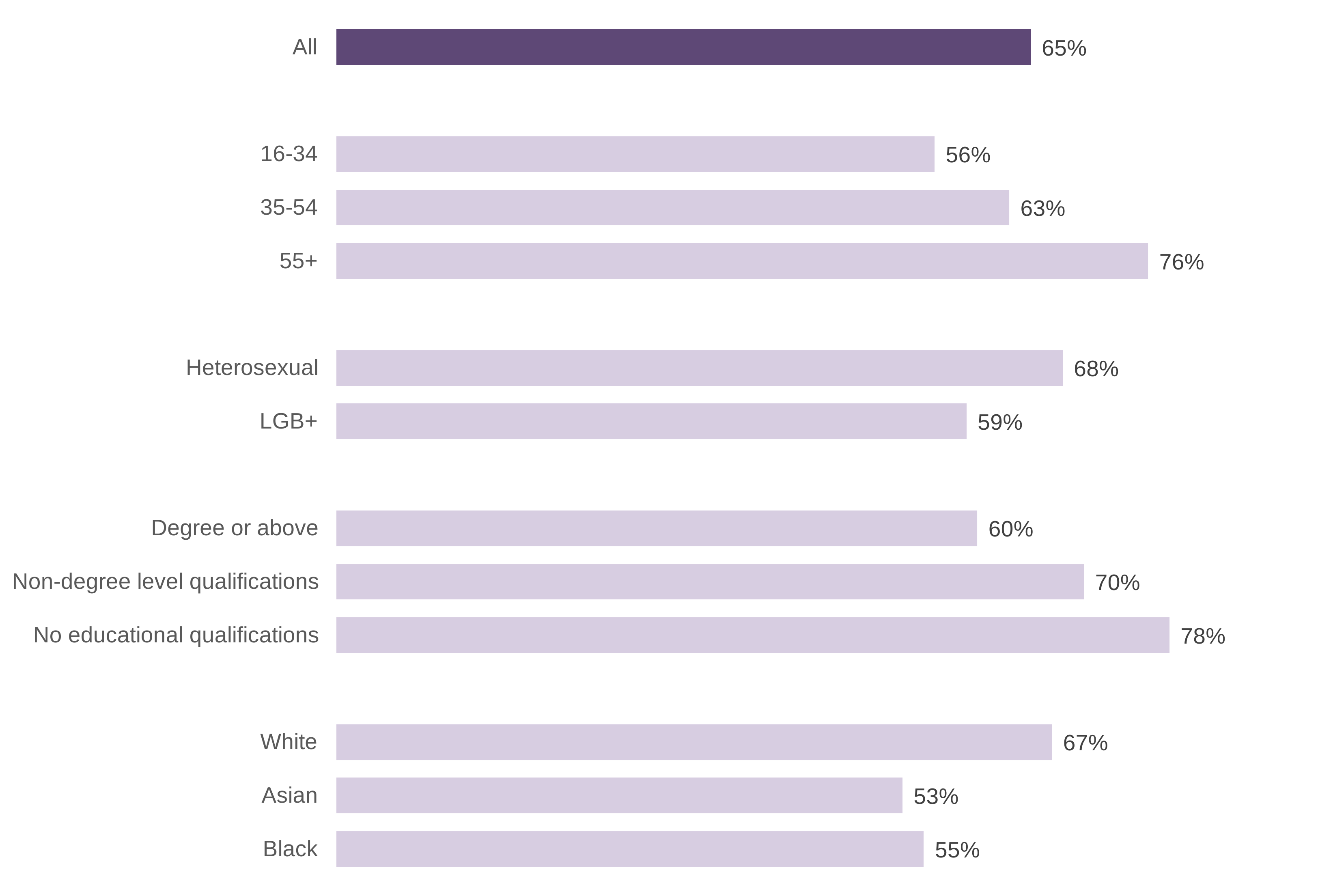
Respondents: N=3,920; unweighted base, 16 to 34 (n=1,005), 35 to 54 (n=1,413), 55 and over (n=1,502); Heterosexual (n=3,423), LGB+ (n=233); Degree or above (n=1,713), Non-degree-level qualifications (n=1,722), No educational qualifications (n=138); White (n=2,960), Asian (n=497), Black (n=207).
Even those who oppose LFR in principle can still see the value in using LFR for more severe crimes.
Although 8% of respondents indicated that police use of LFR is never acceptable in response to a general question, some of them agreed it could be justified for specific crimes when asked directly about those offences (see Figure 15). The most cited offence where LFR might be deemed acceptable was murder, with 54% of these respondents agreeing that it could be used in such cases. Terrorist activity (52%) and sexual violence offences (49%) were also deemed as acceptable uses of LFR by most who initially stated that police use of LFR is never acceptable.
Violent crime causing injury (39%) and possession of weapons (35%) were also seen by a substantial portion of this group as situations where LFR could be acceptable. Stalking, harassment and similar offences were considered acceptable by 34% of respondents.
Only 30% of those who were opposed to the use of LFR in principle maintained that it is never acceptable for any offence, with an additional 7% of these respondents indicating that they were unsure. This breakdown highlights that while there was some resistance to the use of LFR in general, a considerable number of those opposed still saw it as an acceptable tool for addressing more severe crimes, especially murder, sexual violence and terrorism.
Figure 15. Offences where the use of LFR was acceptable to respondents who were in principle not in favour of its use
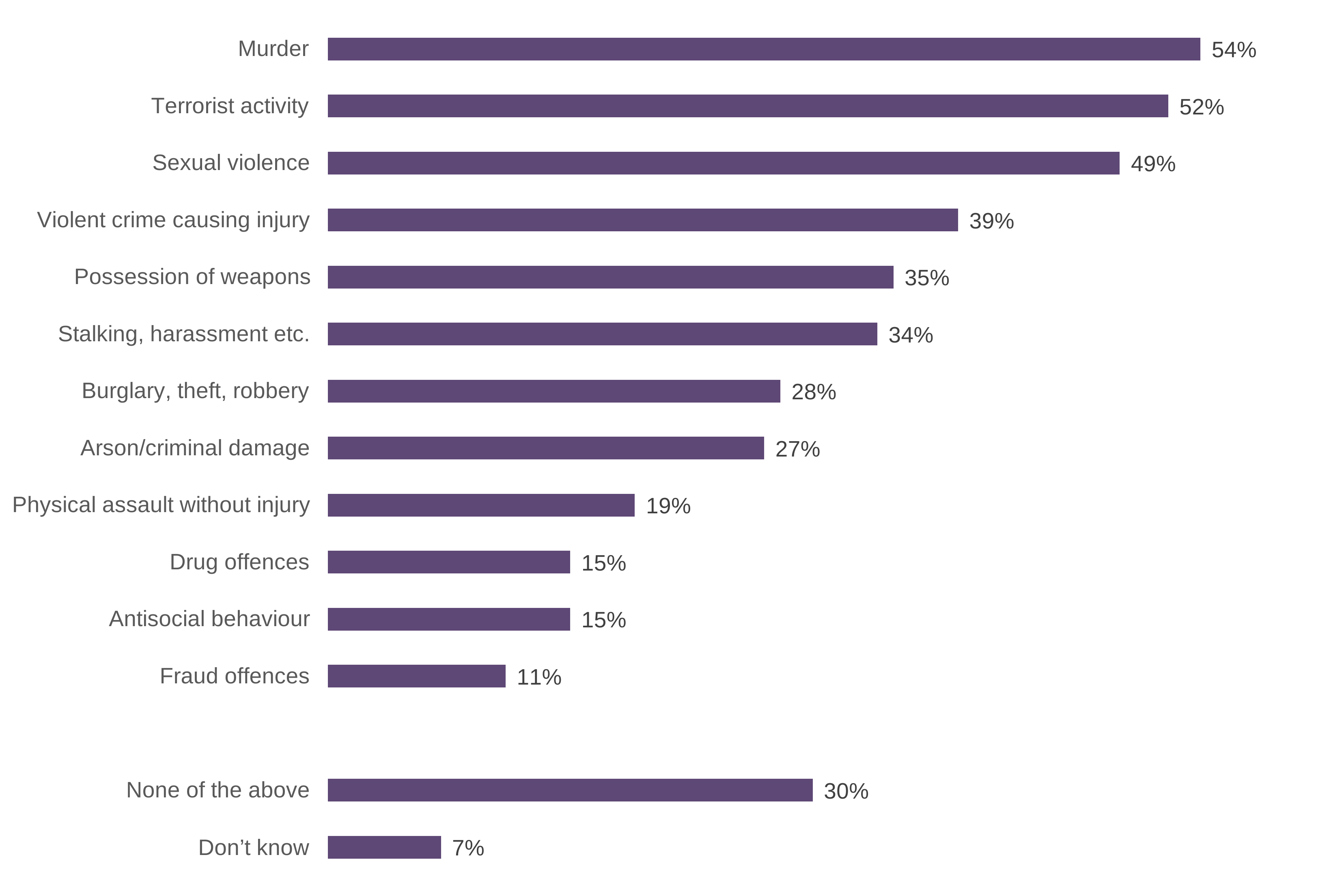
Question: For which offences do you think this would be acceptable?
Respondents: N=306 (those who previously indicated that police use of LFR for locating criminal suspects is never acceptable).
Police use of LFR was deemed more acceptable in higher-risk locations and busy public places, but less acceptable for community-level locations, such as residential streets.
Acceptability of police use of LFR varied substantially across different potential locations for its use (see Figure 16). Most respondents believed airports (81%) and riot situations (79%) are appropriate settings for the use of this technology. Train and bus stations (70%) and large sporting events (68%) were also frequently selected as acceptable locations. Large performance events (66%) and protests or public demonstrations (64%) follow closely behind, suggesting that places with large crowds were generally viewed as acceptable environments for the use of LFR.
Shopping centres and high streets were considered acceptable locations by 61% of respondents, while festivals and carnivals received a slightly lower level of acceptance (55%). Public parks (45%) and hospitals (44%) were less frequently seen as acceptable places for FRT.
Locations where police use of LFR was deemed least acceptable were private, everyday settings such as residential streets (37%), schools (38%) and areas around places of worship (38%). A small minority (3%) indicated than none of the locations were acceptable places to use LFR, while 6% of respondents were uncertain.
This breakdown demonstrates a general tendency to view police use of LFR as acceptable in busy or high-risk locations such as airports and riots, and less so in places such as schools, places of worship and residential streets.
Figure 16. Acceptability of police use of LFR in different locations
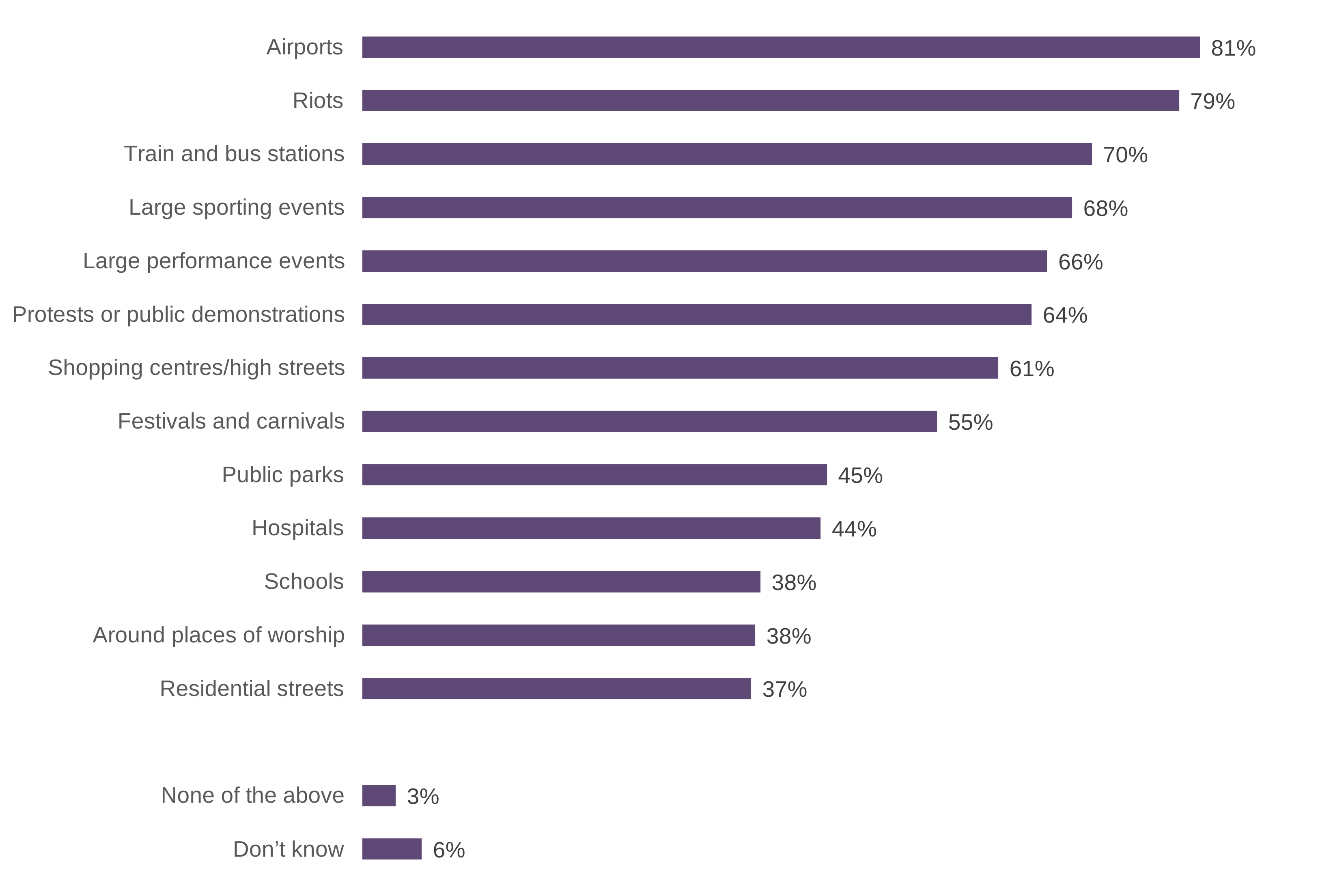
Question: For which locations do you think this would be acceptable?
Respondents: N=3,920; unweighted base
Acceptability of the potential locations for LFR use varied by sociodemographic factors and followed similar trends as before. Those aged 16 to 34 found LFR less acceptable across all locations, while those aged 55 and over were more likely to find it acceptable in every location except festivals and public parks. White respondents were also more likely to select every location as being acceptable places to use LFR. Those identifying as LGB+ were less likely to select that riots, protests and public demonstrations are acceptable locations for LFR. Respondents with a degree-level education were less likely to find it acceptable to use LFR in more private, everyday settings or at protests and public demonstrations.
Higher crime areas were also seen as more acceptable places for LFR.
Public opinion on the acceptability of LFR shifted considerably based on the crime level in an area. In areas with low levels of crime, only 14% of respondents found its use ‘always acceptable’, 22% felt it is ‘usually acceptable’, while 45% believed it is ‘sometimes acceptable’ and 15% considered it ‘never acceptable’.
In contrast, the acceptability of using LFR was substantially higher in areas with high levels of crime. In high-crime locations, 45% of respondents believed the use of LFR is ‘always acceptable’, with 34% considering it ‘usually acceptable,’ 15% indicating that it is ‘sometimes acceptable’, and just 3% think its use is ‘never acceptable’ in such areas.
These findings indicate that public acceptability of police use of LFR depends largely on the perceived crime rate in an area, with greater acceptance in high-crime locations and more scepticism in low-crime areas. Yet, even in areas of low crime, the vast majority (80%) could foresee circumstances where its use would be at least sometimes acceptable.
Figure 17. Acceptability of police use of LFR in areas of high vs low crime
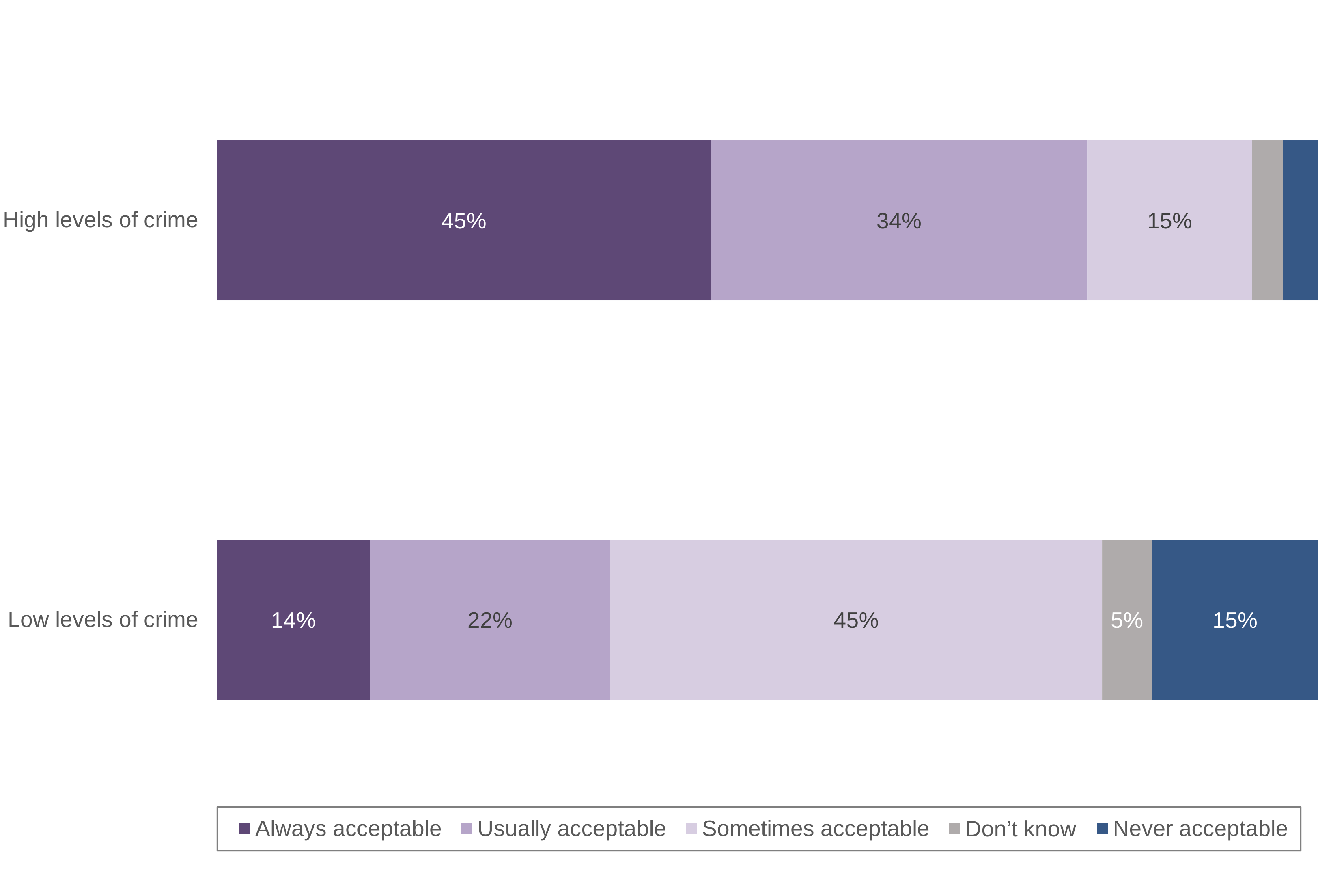
Question: How acceptable or unacceptable do you think it is for the police to use facial recognition technology in this way in areas where there is…
Respondents: N=3,920; unweighted base
Two-thirds of respondents would not change whether they entered an area where LFR was in use.
Most respondents (67%) indicated that awareness of LFR being used in a public area would not affect their decision to enter the space (see Figure 18). A smaller proportion (17%) stated they would consider avoiding the area or minimising their time spent there, while 4% reported they would completely avoid it. Conversely, 8% expressed that they would be more willing to enter the area and 5% were uncertain. These findings suggest that, while most individuals would not alter their behaviour, a notable minority may be deterred by the presence of this technology.
Figure 18. LFR and the use of public spaces
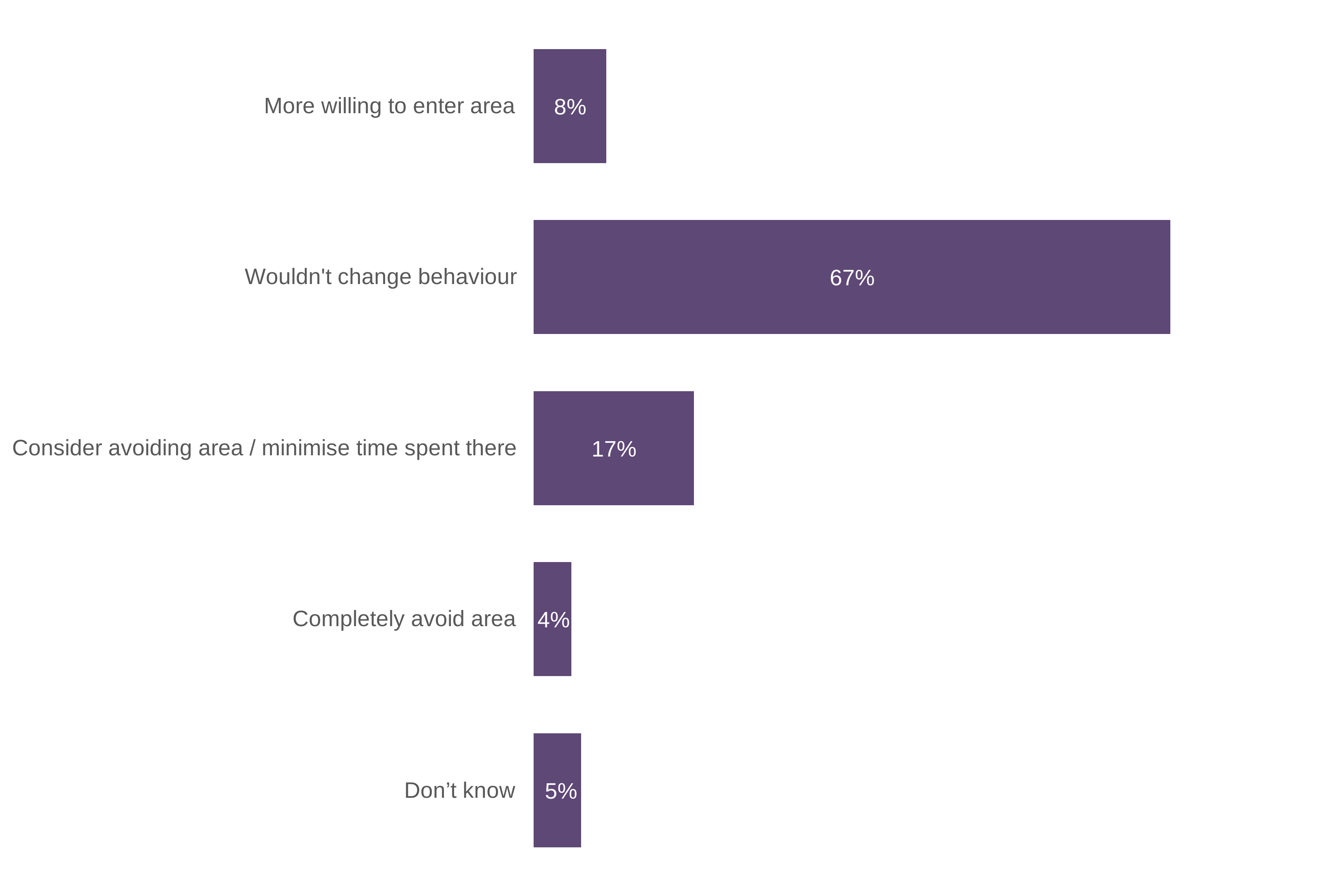
Question: Now suppose you were aware that live facial recognition was being used by the police in a particular public area. Would this affect whether or not you entered the area?
Respondents: N=3,920; unweighted base
Willingness to enter public spaces where LFR is in use varied across sociodemographic groups. Ethnic minority groups were more likely to indicate that they would either completely avoid or consider avoiding an area where LFR was being used. Respondents who were male, aged 16 to 34, LGB+ or educated to degree level or above were more likely to consider avoiding the area or minimise the time they spent there. Whereas those aged 55 and over or without educational qualifications were more likely to indicate that they would be more willing to enter public spaces where LFR was in use.
6.4 Operator-initiated facial recognition (OIFR)
Half of people felt OIFR is ‘always’ or ‘usually’ acceptable.
Compared to other FRT capabilities, police use of OIFR was deemed less acceptable, with a majority expressing conditional acceptance (not graphed). Overall, 50% of respondents believed it was either ‘always’ (17%) or ‘usually’ acceptable (32%). A further 34% felt it was ‘sometimes’ acceptable, while 11% indicated that it was ‘never’ acceptable and 5% were uncertain.
Similar sociodemographic trends were evident as in previous scenarios. Respondents who were male, aged 55 and over, heterosexual, White or without degree-level qualifications were more likely to find police use of OIFR at least ‘usually’ acceptable (see Figure 19). Those who were age 16 to 34, from an ethnic minority or educated to degree level or above were more likely to feel that police use of OIFR is ‘never’ acceptable.
Figure 19. Sociodemographic differences in those who indicated that it was ‘always’ or ‘usually’ acceptable for the police to use OIFR
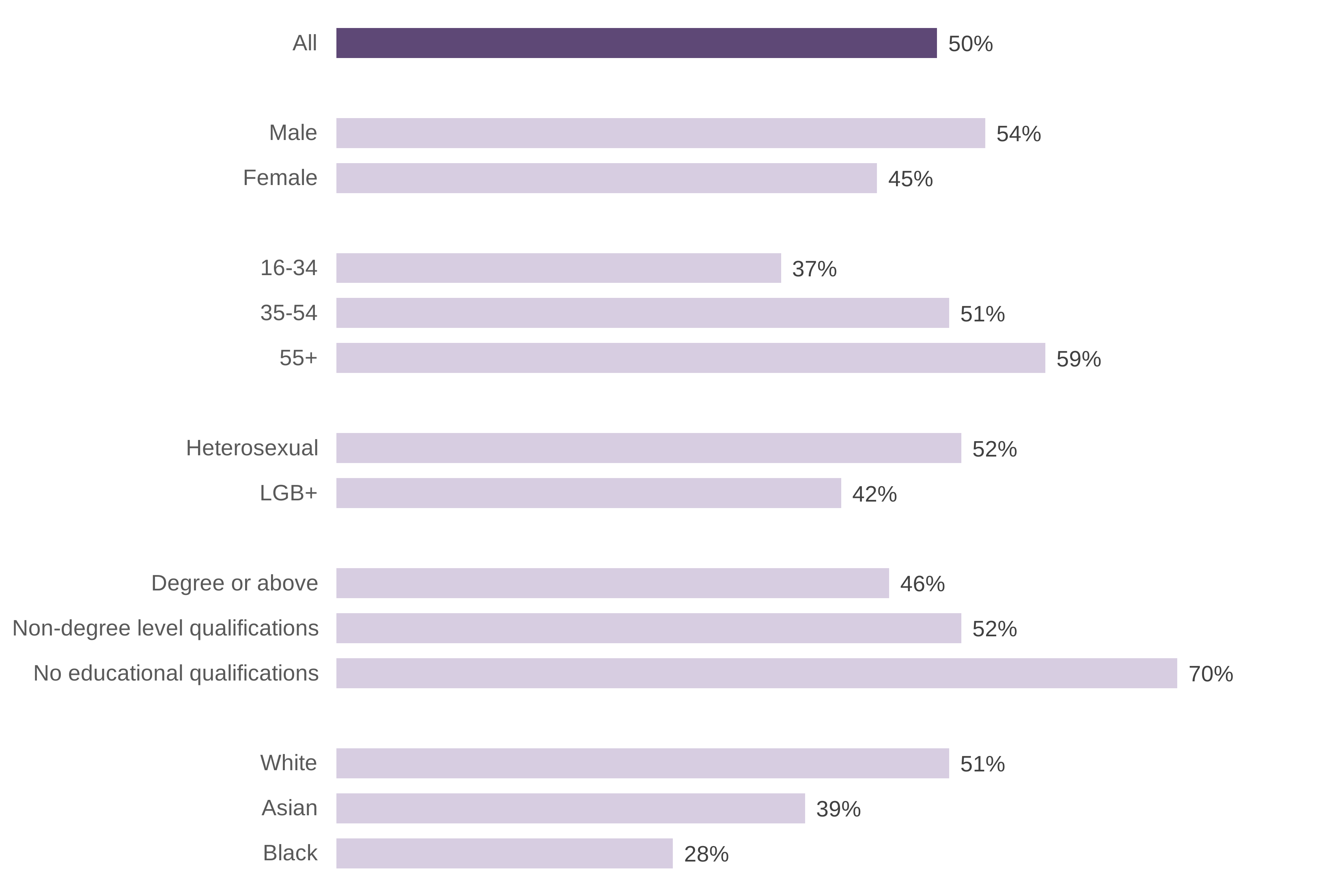
Respondents: N=3,920; unweighted base, Male (n=1,836), Female (n=2,061); 16 to 34 (n=1,005), 35 to 54 (n=1,413), 55 and over (n=1,502); Heterosexual (n=3,423), LGB+ (n=233); Degree or above (n=1,713), Non-degree-level qualifications (n=1,722), No educational qualifications (n=138); White (n=2,960), Asian (n=497), Black (n=207).
OIFR was most accepted for a person presenting a risk of harm or suspected of committing a crime.
The acceptability of police use of OIFR varies across different scenarios, with levels of support largely contingent on perceived necessity and risk (see Figure 20). The highest level of acceptance, including responses ‘always’ or ‘usually’ acceptable was for cases where an individual presents a risk of harm to themselves or others (73%), followed closely by scenarios involving suspected criminal activity, such as committing an offence (72%) or breaching court conditions (71%). There was also substantial support for its use in identifying individuals suspected of being wanted by the courts (70%) or reported missing (67%).
Support was lower in scenarios where individuals were unable or unwilling to provide their details, such as cases involving mental health or communication difficulties (64%), suspected provision of false details (63%), intoxication (62%) or unconsciousness (61%). Notably, acceptance was lowest in circumstances where individuals refuse to provide their details voluntarily (57%).
Figure 20. Use of OIFR in different circumstances
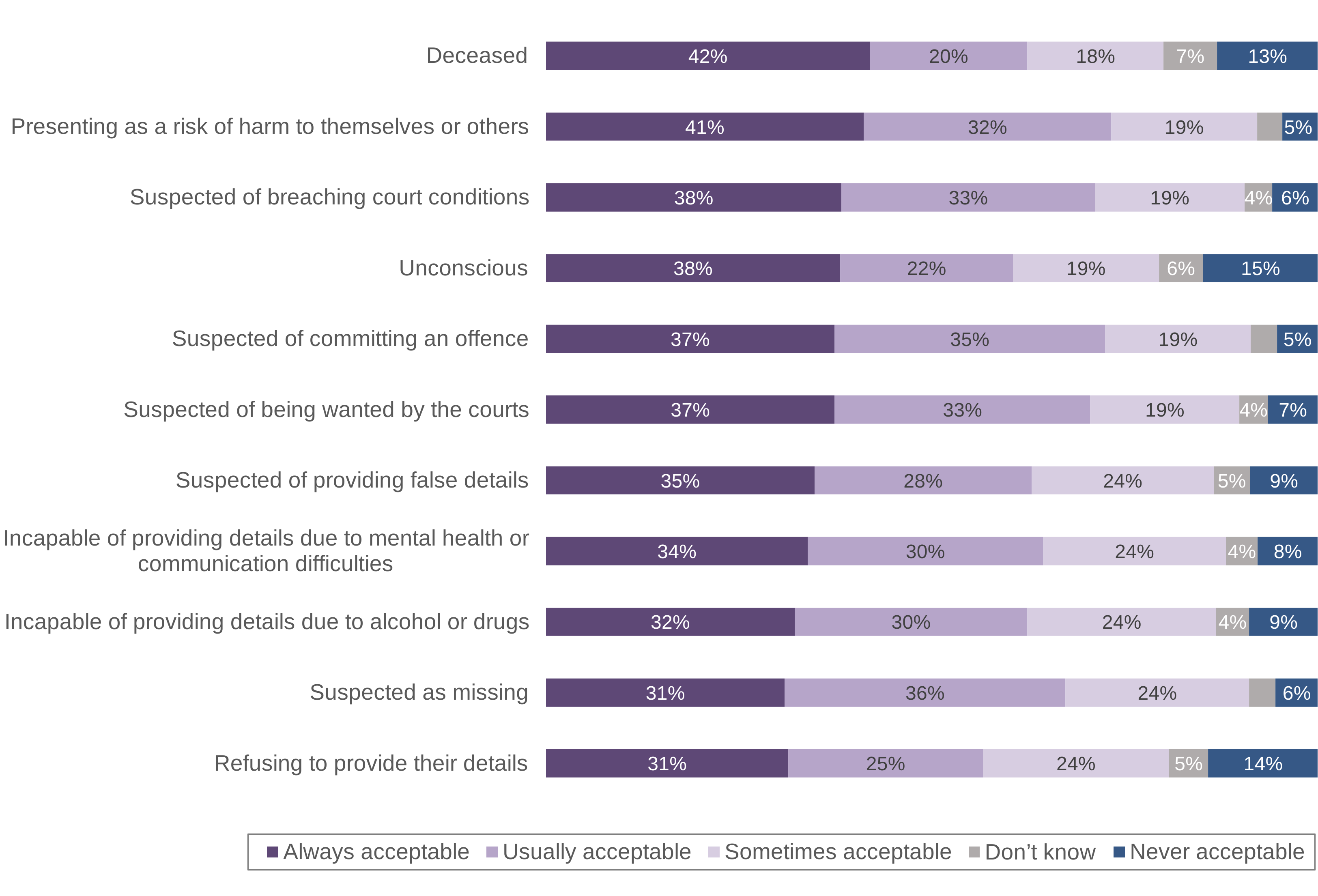
Question: How acceptable or unacceptable do you think it is to use technology in this way if the person is…
Respondents: N=3,920; unweighted base
References
Ada Lovelace Institute (2019) ‘Beyond face value: public attitudes to facial recognition technology’. Ada Lovelace Institute (viewed on 19 May 2025)
Ada Lovelace Institute (2025) ‘How do people feel about AI? – Benefits and concerns’ [online]. Ada Lovelace Institute and The Alan Turing Institute (viewed on 19 May 2025)
Home Office (2023) ‘Police use of facial recognition factsheet’ (viewed on 19 May 2025)
ONS (2024) ‘Annual Population Survey, January - December, 2023 data collection, 2nd Edition’. Office for National Statistics, available from UK Data Service, SN: 9248 (viewed on 19 May 2025)
-
Percentages are calculated using a weighted sample and are rounded to the nearest whole number. Total percentages were calculated to 2 decimal places and then rounded to the nearest whole number. ↩
-
To enhance representation and ensure sufficient responses for analysis, targeted sample boosts were applied for adults from ethnic minority backgrounds and for residents in South Wales. Responses from these demographic groups were of particular interest since previous research has indicated that support for the use of FRT in policing varies by ethnicity, and because South Wales Police are a leading force in the use of FRT. ↩
-
BFEG is a non-departmental public body that provides independent ethical advice to the Home Office and its ministers on matters related to the collection, use and retention of biometric and forensic material. ↩
-
Respondents were presented with the following descriptions of the FRT capabilities: (i) Technology that analyses images of suspects (such as though CCTV, mobile phone footage) after an event or incident, and then compares these to a police database of images to help identify a suspect (RFR). (ii) Technology that analyses live video footage of people passing a camera and compares this to a unique list of police images to quickly locate wanted criminals (LFR) (crime). (iii)Technology that analyses live video footage of people passing a camera and compares this to a unique list of police images to quickly locate vulnerable people who may need police assistance (LFR) (vulnerable). (iv) Technology via a mobile phone that allows officers, after engaging with a person of interest, to photograph them and help check their identity against a police database of images (OIFR). ↩