PIP Mandatory Reconsiderations: Customer Research Findings
Published 26 March 2026

© Crown copyright 2026
This publication is licensed under the terms of the Open Government Licence v3.0 except where otherwise stated. To view this licence, visit nationalarchives.gov.uk/doc/open-government-licence/version/3 or write to the Information Policy Team, The National Archives, Kew, London TW9 4DU, or email: psi@nationalarchives.gov.uk.
Where we have identified any third party copyright information you will need to obtain permission from the copyright holders concerned.
This publication is available at https://www.gov.uk/government/publications/pip-mandatory-reconsiderations-customer-research-findings/pip-mandatory-reconsiderations-customer-research-findings
Key findings from research with PIP customers about mandatory reconsiderations.
March 2026
DWP research report no. 125
A report of research carried out on behalf of the Department for Work and Pensions.
Crown copyright 2026.
You may re-use this information (not including logos) free of charge in any format or medium, under the terms of the Open Government Licence. To view this licence, visit www.nationalarchives.gov.uk
or write to:
Information Policy Team
The National Archives
Kew
London
TW9 4DU
or email: psi@nationalarchives.gov.uk.
This document/publication is also available on our website
If you would like to know more about DWP research, email socialresearch@dwp.gov.uk
First published March 2026.
ISBN 978-1-78659-970-4
Views expressed in this report are not necessarily those of the Department for Work and Pensions or any other government department.
Executive summary
This research was conducted as part of the Department for Work and Pensions’ (DWP) Evaluation Strategy[footnote 1] for the Health Transformation Programme (HTP). HTP aims to modernise the delivery of health and disability benefits.
The transformed Personal Independence Payment (PIP) service under the HTP will provide an improved customer experience that is better tailored to customers’ needs. This has included the introduction of a PIP Digital Self-Serve (DSS) application route which has been available in a select number of postcodes since July 2023.
The evaluation was designed around key stages of the PIP customer journey, conducted from 2023 to 2025. The evaluation has included both an impact evaluation and a process evaluation. This research addressed an evidence gap about the customer experiences at the mandatory reconsideration (MR) stage of the PIP journey. The evaluation findings, from the impact and process evaluations, can be found in the accompanying report (see Apply for PIP Digital Self-Serve: Evaluation Findings).
This research explored how PIP customers responded to their initial award decision, what motivated them to challenge it, any barriers they faced and how they decided what evidence to submit at the MR stage. The study included 37 qualitative interviews with customers across both digital and Business as Usual (BAU) application routes, including those who did and did not register an MR. The aim was to inform future service transformation by identifying opportunities to improve the MR process.
Findings showed that customers were most motivated to request an MR when they disagreed with the points awarded, particularly when they received no points across any descriptor (zero points outcome) or felt their assessment did not reflect their lived experience. Emotional responses such as frustration, disappointment or feeling invalidated were significant drivers of requesting an MR. Conversely, those who did not challenge their decision were often either satisfied with their award, emotionally fatigued or believed an MR would not alter the outcome. That said, other customers reported using the MR process to complain rather than change the outcome. Language barriers and interpreter issues also influenced decisions to raise a dispute.
Some customers found the MR process manageable and valued guidance from PIP agents. Others reported challenges including unclear communication, long wait times, lack of updates and practical difficulties such as printing and posting evidence. Misconceptions that DWP would contact GPs during the initial health assessment caused frustration and technical issues with the digital portal were noted. Emotional stress from registering their MR by telephone was highlighted, particularly by customers with anxiety, who felt an online option would reduce feelings of vulnerability. Many customers had no clear expectations of the MR process, and some anticipated another assessment.
Customers suggested improvements to make the MR stage more accessible and supportive. Key recommendations included offering an online option for registering an MR, maintaining channel choice for those who prefer telephone, quicker decisions, clearer communication, inclusion of the MR form with the decision letter, and face-to-face reassessments where appropriate. Overall, customers emphasised the importance of empathetic communication, flexibility and practical support to meet diverse needs. These insights will inform ongoing transformation of the PIP service.
Glossary
| Term | Definition |
|---|---|
| Appeal | An appeal refers to the process where a PIP customer disagrees with their decision following the mandatory reconsideration and requests the claim to be reviewed by an independent tribunal. |
| Assessment provider | Contracted Healthcare Professionals who work on behalf of the DWP, who assess PIP applications and recommend awards to Case Managers using clinical knowledge. |
| Assessment provider report | A report written by a Healthcare Professional from a contracted Assessment Provider that summarises the assessment and recommends which descriptor applies for each PIP activity to inform the Case Manager’s decision. |
| Awarded | In the context of PIP, awarded refers to a customer who has scored enough points (at least eight in either the daily living or mobility component, or both) to qualify for the standard or enhanced rates of PIP. |
| Business-as-usual | The traditional route to applying for PIP, which consists of telephoning DWP to register an application. |
| Case Manager | A DWP staff member who makes decisions on PIP claims using the assessment report and any evidence provided. |
| CRMR1 form | If a customer thinks a decision about their PIP is wrong, they can use a form called a CRMR1 to ask DWP to look at it again. This is called ‘mandatory reconsideration’. |
| Daily living component | This element of PIP assesses customer needs relating to everyday tasks. It focuses on difficulties with activities such as preparing food, eating and drinking, managing medication, washing and engaging with others. |
| Digital Self-Serve | The fully digital route to applying for PIP where customers complete their application via GOV.UK. |
| Disallowance | Most disallowances occur following an assessment when a claim does not score enough points to be awarded PIP. Disallowed claims also include those that do not progress through the application process due to failing to return PIP2 within the timeframe or failure to attend a health assessment. |
| Enhanced award rate | The enhanced weekly rate for the daily living component of PIP is £114.60 and £80.00 for the mobility component (2026/27 rates). This is the highest weekly rate available for this component. To qualify for the enhanced rate, a customer needs to score twelve points or more on the PIP assessment for daily living activities or mobility. An enhanced, enhanced outcome is one whereby a customer receives an enhanced award rate both for the daily living and mobility components, this is the maximum award amount for PIP. |
| Further medical evidence | Additional information from the customer or a medical professional that helps DWP understand how a health condition affects daily living or mobility. |
| Healthcare Professional | Staff with a medical professional background who work for or on behalf of the DWP on PIP claims. |
| Health Transformation Programme | A DWP programme that is transforming the Personal Independence Payment service by introducing a simpler application process, including an option to apply online, improved evidence gathers, faster journey times and a more tailored journey for customers. |
| Mandatory reconsideration | Customers can request a mandatory reconsideration if they think that the DWP has made an error or missed important evidence, disagree with the decision or would like to have the decision looked at again. |
| Mobility component | This is an element of PIP that assesses difficulties with physical movement, such as walking or moving around, as well as difficulties with planning, working out or following a route. It also includes challenges with leaving the home. A person does not need a physical disability to qualify, as cognitive, sensory or mental health conditions, such as anxiety, may also impact mobility and be taken into account. |
| Nil-nil award | A nil-nil case refers to a PIP claim that has scored less than eight points in either the daily living or mobility components, resulting in no-award. |
| Personal Independence Payment | A welfare benefit offered by the DWP to help citizens with extra living costs if they have both a long-term physical or mental health condition or disability and have difficulty doing certain everyday tasks or getting around because of their condition. |
| PIP agent | An individual who works on behalf of the DWP and handles different aspects of a PIP, such as telephony queries. PIP agents may be employed internally by the DWP or by one of the department’s contractors. |
| PIP decision letter | This refers to the letter that customers receive after they are initially assessed for PIP. The letter consists of a customer’s award decision, a breakdown of their scores for each PIP activity and information regarding how to dispute the decision if they disagree. |
| PIP activities | PIP Activities are included in the health questionnaire, PIP2, and ask customers to explain how their health condition or disability affects their ability to carry out everyday activities. The activities cover two areas: daily living and mobility. |
| PIP descriptors | PIP descriptors are used to assess and score eligibility for PIP. These are standard statements that describe levels of ability to perform specific daily living and mobility activities. |
| PIP1 | PIP1 is the first stage of a PIP application whereby customers are asked to provide basic personal information to register a claim. |
| PIP2 | The PIP2 is the health questionnaire in the second stage of the application process. The questionnaire asks customers to provide information about how their health condition(s) impact them. |
| Private beta | Private beta is a controlled release of a service with a limited number of people using it, to enable feedback and iteration. During private beta of Digital Self-Serve, a small number of eligible PIP customers were invited to complete their application using it when they called DWP to register their application. This was not mandatory, those invited could continue to apply via alternative routes if preferred. |
| Standard award rate | The standard weekly rate for the daily living component of PIP is £76.70, while the standard weekly rate for the mobility component is £30.30 (2026/27 rates). The standard rate is awarded for customers who scored between eight and eleven points on either the daily living or mobility components of PIP. |
| Zero points | Zero points (0,0) outcome refers to a customer who was not awarded any points against any descriptor across both the daily living and mobility components. |
Abbreviations
AP: Assessment Provider
AP Report: Assessment Provider Report
BAU: Business-As-Usual
CES: Customer Experience Survey
CRMR1: Mandatory Reconsideration Request Form
DLA: Disability Living Allowance
DSS: Digital Self‑Serve
DWP: Department for Work and Pensions
GP: General Practitioner
HTP: Health Transformation Programme
MR: Mandatory Reconsideration
PIP: Personal Independence Payment
PIP1: PIP Initial Registration Form
PIP2: PIP Health Questionnaire
Background
The Health Transformation Programme (HTP) is modernising benefit services to improve customer experience, build trust in DWP services and decisions, and create a more efficient service for taxpayers. The Programme is developing a new Health Assessment Service and transforming the Personal Independence Payment (PIP) service over the long term.
The Programme’s key strategic outcomes are:
-
increased trust in services and decisions
-
a more efficient service with reduced demand for health assessments
-
increased take up of wider support and employment
-
improved customer experience with shorter journey times
-
transformed in-house data and IT infrastructure that is secure
The transformed PIP service will provide an improved customer experience that is better tailored to customers’ needs, including introducing applying online.
On 27 July 2023, following small-scale private beta[footnote 2] testing, HTP made a new fully online service on GOV.UK, henceforth referred to as Digital Self-Serve (DSS), available to customers in a limited number of postcodes to enable robust evaluation. At the time of reporting, the service is available to postcodes that account for approximately 8% of registration volume in England and Wales[footnote 3]. In the treatment areas, the availability of DSS is currently restricted to specific types of applications[footnote 4]. Other application channels are available as normal.
The areas of focus for the evaluation were:
-
impacts on demand for PIP at application stage
-
customer insight on application channel choice and experience (decision-making, application experience, pain points)
-
staff experience and judgement of application quality, including qualitative staff insight on zero points claims
-
impacts on award outcomes and benefit expenditure
-
impacts on mandatory reconsideration (MRs) registration demand and customer research to understand expectations and experiences
-
impacts on award outcomes post-MR, and appeal registrations
-
impacts on customer journey times
The full process and impact evaluation findings have been published separately in accompanying reports; see ‘Apply for PIP Digital Self-Serve: Evaluation Findings’ and ‘Apply for PIP Digital Self-Serve: Impact Evaluation Findings’ for further details.
While the primary focus of this phase of the evaluation was to understand how customer decision‑making at the MR stage may differ between DSS and Business-As-Usual (BAU) customers, the early scoping stages of the research highlighted an evidence gap regarding MRs more broadly. These insights offer valuable perspectives on customer experiences, perceptions of the MR process and potential areas for improvement. This report explores these findings to inform future policy and operational decisions.
The research provides insight into customers’ experiences of the MR process. The findings are presented in the conclusion using the department’s Customer Experience Drivers, which are the standards against which customer service delivery can be measured. The Drivers are: Get it Right, Ease of Use, Communicate Clearly and Professional and Supportive.
The PIP application process
The PIP application consists of two application forms, firstly the ‘PIP1’, which gathers basic personal information about a customer. For DSS applications, this is completed online, whereas for non-DSS applications the PIP1 is completed over the telephone.
After claim registration, the health questionnaire (PIP2) is issued either digitally via an interactive form or paper form. The second form, ‘How your disability affects you’, requires customers to provide details on how their health condition affects daily living and specific activities, with the option to include supporting medical evidence.
Figure 1 demonstrates how DSS differs from the traditional PIP application route. Some customers who begin their journey by telephone are invited to complete their application online from the second part of their application using an interactive form; however, these customers are not the focus of this report. For reporting purposes, they are grouped under ‘Non-Digital Self-Serve’ (Non-DSS), along with customers who complete their application through paper or telephone channels.
Figure 1: PIP application channels
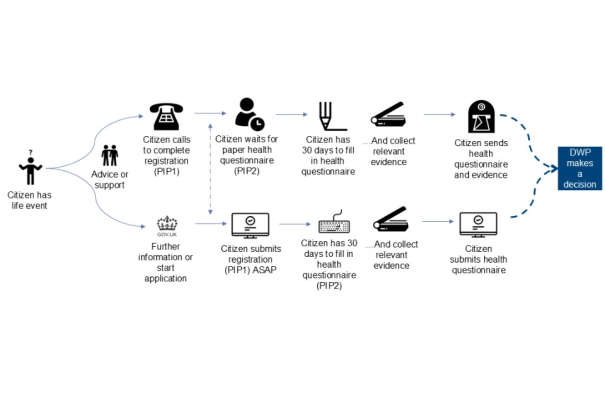
Description: A flowchart illustrating a citizen’s journey through PIP registration and the DWP decision making process. It shows two main routes: one for telephone based registration followed by a paper health questionnaire, and another that mirrors these stages but for the digital application process. Both routes are depicted using icons and directional arrows.
After a customer submits their application, a Healthcare Professional from an Assessment Provider (AP) on behalf of DWP reviews the application and any evidence provided. Claims are triaged to determine the appropriate type of health assessment, based on how the customer’s condition affects their daily living or mobility. Where necessary, Healthcare Professionals can request further medical evidence from the customer before progressing the application to assessment. Once the most appropriate type of assessment has been decided, a health assessment is conducted.
Following the health assessment, the Healthcare Professional produces an Assessment Provider report (AP report) recommending a score based on the PIP descriptors. Finally, the application, medical evidence and AP report is sent to a Case Manager at DWP who makes an initial decision on the award outcome.
Registering a mandatory reconsideration
If a customer disagrees with a PIP decision, they can request an MR within one month of the decision date, though late requests may be accepted if good cause is shown. MR requests can be made by telephone or by post using the CRMR1 form available on GOV.UK. Customers may request an MR if they believe DWP made an error, overlooked evidence or if they want the decision reviewed in light of new or existing information.
Once an MR is received, DWP reviews the case in full, including the Assessment Provider (AP) report and any additional evidence submitted. Customers may be contacted for further information before a revised decision is made. The MR outcome may uphold, amend or overturn the original decision.
If a customer disagrees with the outcome of an MR, they may appeal the decision. Appeals are heard by His Majesty’s Courts and Tribunals Service, which is independent of DWP. Appeals were not in scope for this research.
Methodology
This research involved 37 qualitative interviews with PIP customers who had reached the MR stage of the PIP process. The sample, summarised in Table 1, included customers from both DSS and BAU application channels, with a range of award rates. The sample was also split by those who did and did not choose to challenge the initial decision through a MR.
Table 1: Application route, award rate and number of interviews completed
| Award rate | Registered an MR (Awarded) | Did not register an MR (Awarded) | Registered an MR (Nil award) | Did not register an MR (Nil award) |
|---|---|---|---|---|
| DSS | 4 | 3 | 4 (all zero points) | 6 (2 zero points) |
| BAU | 4 | 4 | 5 (3 zero points) | 7(4 zero points) |
The award rate included customers who had received a score of zero points and excluded those who had received the enhanced rate. A score of enhanced, enhanced on PIP represents the maximum award, so customers are not typically expected to challenge the decision.
The research questions were:
1. What factors motivate customers to request a mandatory reconsideration, or not to?
2. How do customers perceive the process of requesting a mandatory reconsideration?
3. How do customers decide what further evidence to submit at the mandatory reconsideration stage?
We did not follow up with research participants who had registered an MR to find out their outcome; the evidence gathered in this report is focused on experiences relating to the registration stage of the MR process.
Findings
This section presents findings from the research, covering motivations to and expectations for the MR process.
Receiving an initial PIP decision and awareness of MR
The research found a range of reactions from customers on receiving their PIP initial award outcome. Customers’ experiences and emotional reactions to receiving a PIP decision letter strongly influenced whether they chose to request an MR.
Several customers who chose to submit an MR reported feeling that the tone of the PIP decision letter was ‘direct’ and that they reacted negatively as a result. Customers felt that decision letters did not include enough details from their assessment conversation with the Healthcare Professional.
I was anxious about reading what they’d written. When I read it, it undermined my experiences.
DSS, zero points, registered an MR
Customers who were awarded PIP often felt happy and satisfied, particularly when the decision matched their expectations and the letter’s justification seemed fair. Many also appreciated that the decision letter was broken down into clear, easy-to-understand sections.
They [DWP] did it in sections [in the decision letter] which was easy to read and understand.
DSS, awarded, did not register an MR
Disappointment was a common emotion experienced by customers, either because they were not awarded PIP or because the award was lower than expected. This disappointment was often compounded by a perception that the decision did not fully reflect the challenges they faced in daily life, leading to feelings of frustration.
Final thing I saw [looking at the letter, after discussing with a PIP advisor over the telephone] was ‘you are not taking many medications for your blood pressure’, so you realise I’ve got a problem, but not enough to get PIP. It doesn’t make sense.
DSS, nil award, did not register an MR
Anger was another emotion that customers reported when they received their decision, often due to long delays or negative experiences during the process, such as feeling that the assessment was incomplete. They frequently felt let down by what they perceived as a lack of transparency and poor communication throughout.
I don’t understand why it takes 12 weeks for someone to call me back, that doesn’t make sense.
BAU, nil award, did not register an MR
Customers learned about the MR process from various sources, with the initial decision letter being the most cited. Opinions on the letter’s clarity were mixed. Some customers felt it explained how to dispute a claim clearly and informatively.
Customers who found the letter clear relied on their support networks such as friends, family and charity services to help them understand the content and next steps.
It was clear you had to get in touch within a month. I was aware of what I needed to do [to register an MR].
BAU, zero points, did not register an MR
In contrast, some customers found the decision letter unclear and could not recall any information on how to dispute a claim; these customers did not submit an MR. This lack of recall may have contributed to their decision not to proceed. Others said they only understood the process for registering an MR after seeking support or re-reading the letter several times.
I don’t remember seeing anything written on the letter saying you could challenge.
BAU, nil award, did not register an MR
Some customers learned about the MR process online through GOV.UK, social media or websites such as forums and charity services. Support networks including friends, family or professionals were also mentioned as sources of awareness and support. These customers often sought advice about their decision and the disputes process from the same networks they had relied on during the application stage.
I was aware of it because there is a Facebook group I am a part of and there is lot on there about people doing mandatory reconsiderations.
BAU, nil award, registered an MR
Receiving an initial PIP decision and awareness of MR: Summary
Customer reactions to their initial PIP decision varied widely. Those who were awarded PIP often felt satisfied, particularly when the decision aligned with their expectations and the justification seemed fair. Many found that the decision letter was broken down into clear, easy-to-understand sections.
Others expressed negative emotional responses, including anxiety, disappointment or anger, especially when the tone felt inconsistent with their assessment experience. Some felt the decision did not reflect their daily challenges or lacked details from their assessment conversation with the Healthcare Professional. Frustration was also linked to delays, perceived unfairness in scoring and lack of transparency. These emotional reactions sometimes affected how well customers processed the content of the letter.
Awareness of the MR process came mainly from the decision letter, though opinions on its clarity were mixed. Some customers found the instructions straightforward, often with help from support networks, while others struggled to recall any information about disputing a claim or only understood the process after re-reading the letter several times or seeking support. Additional sources of MR awareness included GOV.UK, social media and charity websites. Customers frequently relied on the same support networks they had used during the application stage, highlighting the importance of clear communication and accessible information throughout the PIP process.
Deciding to register an MR: Motivations and barriers
Existing support networks from the application stage sometimes encouraged customers to request an MR. Although these networks were more influential during the initial application stage, they still played a role in validating concerns and guiding customers through the MR process.
Firstly, I sent an email, after that they made an appointment for me, I went there, and they guided me through how I submit a mandatory reconsideration.
DSS, awarded, registered an MR
Customers’ perceptions of their eligibility before applying varied, irrespective of initial application channel. Some did not expect to be awarded PIP. Those who believed they were ineligible generally did not request an MR after receiving their decision.
I didn’t think I would be eligible, it’s only because of a change in my health circumstances that I decided to apply.
BAU, awarded, did not register an MR
Some customers had low expectations of their eligibility for PIP and were unsure whether they would be awarded. They often had a limited understanding of the application process and were sometimes encouraged by someone in their support network to apply. Among those who were unsure of their eligibility, decisions to request an MR varied.
When my counsellor said I should apply, I thought ‘well if the professional thinks I should as well’. I had a few friends mention PIP, but I didn’t really know how it works, and I didn’t think I’d be able to claim it.
BAU, zero points, registered an MR
Those who believed they were eligible but were not awarded were more likely to request an MR. Some customers were confident in their eligibility for PIP, often noting that they had researched the criteria before applying.
I honestly thought I would get it, so I didn’t think I’d have to challenge.
BAU, zero points, registered an MR
Some customers, whether awarded or not, did not explicitly state they were satisfied with the outcome but accepted the decision. These customers generally felt neutral about the PIP process and saw no need to dispute their decision. Many customers who were awarded PIP did not request an MR, as they felt content with their award rate. They reflected that the decision was clear, justified and that the score breakdown was fair.
I didn’t challenge it because the decision they gave me was very good and it was a good breakdown of what I told them about my health issues and the breakdown they gave me was reasonable I thought.
DSS, awarded, did not register MR
Customers who registered an MR felt there were barriers that made the process more difficult. These challenges contributed to negative perceptions of the disputes service and sometimes deterred customers from proceeding.
Customers highlighted that printing and posting evidence was physically demanding and that making telephone calls could be stressful, particularly for those with anxiety or neurodivergent conditions. Many felt that a digital disputes service could help reduce these difficulties. Long phone wait times and short deadlines also added pressure, although some customers were able to request deadline extensions.
I suppose the time on hold that I had to get to talk to an adviser, I think I was on the phone for about an hour and 45 minutes trying to get through.
DSS, zero points, registered an MR
Emotional responses such as feeling invalidated, frustrated or upset also influenced some customers to challenge the decision. A few who felt angry saw the MR process to express dissatisfaction with the service rather than to change their award. These customers perceived disputing the decision as a form of complaint to the DWP and used the process to vent frustration and share their experiences. Many explicitly stated that their reaction to the decision was anger.
I was not aware that I was able to complain, which is what I did, I just sent it to the address on the letter, I didn’t know what I had to do I just wrote the letter to get it off my chest. If they come back with the same decision, then so be it.
DSS, nil award, registered an MR
Problems with interpreters and language barriers sometimes led these customers to dispute their decision, as they felt the assessment was incomplete and did not fairly represent their experiences. Some customers in this research relied on DWP’s translation service during their assessment and reported issues such as delayed appointments and technical difficulties with the assessment provider and interpreter on the telephone line.
Customers with English as a second language also needed support to understand the decision letter and register an MR, often using smartphone translation apps or help from family members to interpret the text and telephone calls.
At the assessment, after 20 minutes the interpreter disconnected, I was waiting for 30 minutes. The doctor [Healthcare Professional at assessment] did not have enough time to ask me the questions, I couldn’t explain it completely for him.
DSS, awarded, registered an MR
Deciding to register an MR: Summary
Support networks were more influential at the application stage but still guided some customers through the MR process. Those confident in their eligibility but not awarded were more likely to register an MR while those who expected ineligibility generally did not. Not all customers chose to challenge their decision. Some were satisfied with their award and accepted the outcome. Others felt emotionally exhausted or believed submitting an MR would not change the result.
Practical barriers such as printing and posting evidence, long telephone waits and short deadlines also deterred some customers from registering an MR although some suggested that a digital service could reduce these difficulties. Emotional responses such as frustration, invalidation or anger strongly shaped decision-making. A few customers viewed the MR as an opportunity to complain rather than change the outcome.
Language barriers and interpreter issues also motivated some to dispute decisions as these customers felt their assessment was incomplete and relied on translation support to navigate the process.
Customer understanding and expectations of MRs
Many customers said they had no expectations of what the MR process would involve. Some explained that they had not given the MR much thought until they received the decision letter or were informed about the disputes process by their existing support networks.
No, not until I got the decision and read through the process, I wasn’t really aware of how it worked.
DSS, zero points, did not register an MR.
Some customers incorrectly believed there was an online option for challenging their decision. Many expected to register an MR through the same channel they had used to apply, although some who applied by telephone anticipated being able to register an MR online.
I expected it to be online, because you can send documents and things much easier.
BAU, awarded, did register an MR
Some customers felt that challenging their decision would be even more difficult than applying for PIP, which they had already found emotionally draining. This perception was often linked to fatigue after completing the application process.
I expected the process to challenge would be more difficult than applying. If you challenge something, it’s a fight.
BAU, zero points, did not register an MR
Several individuals who registered an MR expected another assessment at this stage and later expressed that the process did not align with their expectations.
I expected it to be similar; I expected it to be another call assessment process. I expected it to be like that, but it wasn’t like that at all.
BAU, zero points, registered an MR
Customers had varied expectations of the PIP MR process, but there were no differences between subgroups. Some feedback indicated that the MR process was a positive experience. Several individuals reported finding the process of submitting an MR straightforward and manageable. Telephone interactions were often highlighted as beneficial, with verbal explanations of the initial decision helping customers gain a clearer understanding. Many noted that the PIP advisor they spoke with at the start of the MR process was helpful, providing clear guidance on next steps and advising on the types of evidence that could support their reconsideration.
They [PIP agent] pointed me towards what evidence I needed to provide; I wasn’t aware of what they actually wanted in the first place [when applying for PIP].
DSS, zero points, registered an MR
While some customers reported positive experiences, others described challenges and dissatisfaction with the process of requesting an MR. For example, customers recalled feeling rushed during the initial telephone interaction with PIP agents, which contributed to perceptions that the agents lacked empathy.
I had [the telephone call] again. The lady [PIP agent] asked questions, and I answered, but she didn’t go into depth. She kept asking questions and saying ‘next, next, next.’
BAU, awarded, registered an MR
The length of the MR process was a concern for some customers, particularly after already experiencing long waits for their initial award decision. This contributed to the sentiment that DWP should be able to ‘get it right the first time’, reporting emotional fatigue and a sense of hopelessness as a result.
It needs to be right the first time; I still haven’t had a decision from the MR and they’re not going to tell me until May when I originally put the application in back in October. It could have been dealt with a lot faster.
DSS, zero points, registered an MR
Customers often felt that communication after challenging their decision was less frequent than expected, and many wanted more regular updates on the status of their claim while waiting for the MR outcome. This perceived lack of communication was linked to feelings that their challenge had not been acknowledged, sometimes resulting in frustration.
Also, we haven’t heard anything since we challenged the decision, it would be nice to receive a text message or something to acknowledge they [DWP] have received it.
BAU, nil award, registered an MR
Customer understanding and expectations of MRs: Summary
Although customers differed in their understanding and expectations of the PIP MR process, these differences were not linked to any subgroups within the research. Awareness of the MR process primarily came from the decision letter, though there were mixed views as to whether the content was clear or confusing. Many lacked an understanding of what the MR process involved, including being unaware that there was no digital option to submit a challenge and mistakenly expecting that the MR stage would include another assessment. Others expected to challenge through the same channel they applied and felt that disputing a decision would be harder than applying, often due to emotional fatigue.
Experiences of the MR registration process were mixed. Some customers described the process as straightforward and valued telephone interactions, particularly when advisors provided clear guidance and explained decisions. Others reported feeling rushed during calls, which contributed to perceptions of limited empathy. Concerns about delays and limited communication after registering an MR were common, leading to frustration and feelings that challenges were not acknowledged.
Submitting evidence at MR
Customers gave consistent reasons for submitting additional evidence at the MR stage. A common misconception was that DWP would contact their GP or other healthcare professionals to gather evidence on their behalf at the health assessment stage. When customers realised this was not the case, it often led to frustration and prompted them to submit more evidence during the MR process.
It’s not gone to the GP or specialist; I think I did send more information.
DSS, nil award, did not register an MR
I gave them my GP’s details to contact them. Gave them the heart specialist contact as well, but it seems they never contacted them.
DSS, zero points, registered an MR
Some customers said they were unaware they could submit evidence at the application stage, which led them to provide supporting documents during the disputes stage once they had a better understanding of the PIP process.
In addition, customers were sometimes unaware that they could submit further evidence at the MR stage. Some customers felt they had not been informed, while others admitted they had not researched whether this was possible.
Many customers reported acquiring new evidence since the application stage, which prompted them to submit additional documents during the MR process. The types of evidence provided were like those submitted at the application stage and included GP or hospital letters.
Customers were sometimes advised by external professionals to challenge a decision with new evidence. Some reported that charity organisations had guided them on what evidence to provide and, in some cases, offered practical support such as printing, copying, and posting documents.
They [Citizen’s Advice] took care of additional paperwork with all of the hospital forms, they made copies and made sure we sent copies not originals.
BAU, nil award, did not register an MR
Customers who did not submit further evidence at the MR stage often felt they had already provided all relevant documents to support their claim. They also believed that sending additional evidence at this point was unlikely to change the outcome.
In the rejection letter, they said they’ve been through all my medical letters to date, so I thought well you’ve seen it all then.
DSS, zero points, registered an MR
Additionally, some customers felt they would not be able to obtain additional evidence within the MR registration deadline. Customers also highlighted the barrier of needing access to a printer to submit evidence, sometimes relying on technology in public spaces or at work. In some cases, customers were granted an extension to provide evidence, either because they were waiting for an appointment or struggling to access a printer. Those who did not register an MR suggested they might have submitted doctors’ or hospital letters if they had continued with the claim.
The wait list is so long, I haven’t had an appointment with a specialist. It’s hard to send information when you haven’t seen a specialist.
BAU, zero points, did not register an MR
Because the medical evidence was rather a lot to put in, it took us ages to submit, I had to ring up and ask for an extension because it was taking ages to print them out.
BAU, awarded, registered an MR
A few DSS customers discussed that they found it easy to submit additional evidence at the MR stage digitally. At the time of the research, this is not an advised method of submitting additional evidence at the disputes stage as it is only designed to be reviewed during the application stage. However, it is unclear whether this recollection pertains to the MR stage or possibly to the initial application process or another DWP benefit as their recall maybe limited due to the time elapsed between the PIP application and the research interview. Furthermore, some digital customers shared that they were unaware they could upload evidence at the application stage, leading them to upload supporting documents at the MR stage as they had a better understanding of the PIP process.
I took a photo on my phone, converted it into a PDF, sent to my laptop and uploaded [to GOV.UK].
DSS, zero points, registered an MR
Submitting evidence at MR: Summary
Customers often submitted further evidence at the MR stage because they had a clearer understanding of the process or had obtained new documentation since their initial application. Some were unaware they could provide evidence during the initial application, leading them to submit it later during the MR stage. A common misconception was that DWP would contact healthcare professionals directly to gather further evidence. When this did not happen, customers sometimes collected and submitted additional evidence themselves. Evidence provided at this stage was typically like that submitted earlier, such as GP or hospital letters.
External organisations, including charities, frequently advised customers on what evidence to provide and sometimes offered practical support, such as printing, copying and posting documents. Customers who did not submit further evidence often felt they had already provided all relevant information and believed additional evidence would not change the outcome. Practical barriers also limited submissions, including difficulties accessing printers and delays in obtaining medical appointments. Extensions were occasionally granted to accommodate these challenges, particularly when customers were waiting for appointments or struggling to access evidence.
A few DSS customers reported uploading evidence digitally at the MR stage, although this is not currently an advised route. This suggested some confusion about the appropriate channels for submitting evidence and highlights the need for clearer guidance about when to use the digital portal during the PIP process. Overall, the findings indicate that while many customers are willing to provide additional evidence, clearer communication and more accessible submission options could improve the experience.
Suggestions to improve the MR process
Customers suggested various improvements to make registering an MR easier. Suggestions were diverse and not specific to any one subgroup in this research. Those who had registered an MR based their ideas on personal experience, while those who had not, offered hypothetical suggestions about what might have helped them dispute a claim.
Some customers felt that decisions should be communicated by phone rather than by letter, as they believed this would feel more personal and empathetic. This preference was linked to a desire for the opportunity to ask clarifying questions about how the decision was made.
Maybe if I’d have got an actual phone call describing the whole reason why I’d been rejected that might have helped quite a bit. Might have helped me to understand it a bit more.
DSS, nil award, did not register an MR
One suggestion was to send out the form to register an MR with the decision letter, to make the process of submitting a dispute quicker as well as remove the barrier of needing to access a printer for some customers.
I think sending the questionnaire. I had to go and print it out and I was able to, but it was difficult because I had to go into work when I was sick. That maybe would make it easier.
DSS, zero points, registered an MR
It was also suggested that the deadline for submitting an MR should be extended to allow more time to gather additional evidence to support their dispute. Many appeared unaware that they could request an extension to obtain the necessary evidence.
I think maybe there should be something on there for people who are waiting for tests and appointments, you might not have a lot to send if you’re still waiting on seeing a specialist.
DSS, zero points, registered an MR
Customers sometimes suggested that they should be reassessed by a Healthcare Professional face-to-face at the MR stage. This was often linked to concerns about incomplete or poor initial assessments, which motivated them to submit an MR. Some customers who had received a telephone or paper-based assessment expressed a preference for a face-to-face reassessment during the MR stage.
It would be for someone to come out and see you. You can’t assess someone for disability unless you see them in their everyday.
DSS, awarded, registered an MR
Customers also expressed a desire for quicker decisions about their disputes. They noted that long wait times could be particularly stressful for individuals living with a disability, as their need for support was often urgent.
Faster decision, if I’m waiting until May and I put an MR in January, seems like a longer time for someone who is suffering with a disability.
DSS, zero points, registered an MR
Some customers suggested that an online option for registering an MR would have required less effort, although this channel was not available at the time of the research. They felt that being able to maintain a digital record of their submissions would have made the process easier. Customers also noted that removing the need to post forms and evidence would have reduced stress.
Online I can keep a paper record for me, and if I had it in writing it would have supported me better.
DSS, zero points, did not register an MR
Customers also felt that registering an MR online could have been less emotionally challenging. Customers explained that discussing their personal circumstances over the telephone when registering an MR often made them feel vulnerable and stressed. They believed that having the option to register an MR online would have helped them cope better with the process. Customers living with anxiety also shared that removing the telephone call would have made the MR process feel less overwhelming.
I feel vulnerable when speaking to someone. When I do it online, I cannot trivialise it.
DSS, zero points, registered an MR
Although many customers recognised the benefits of an online route for registering an MR, they also highlighted the importance of having a choice of channels at the MR stage. Some customers found it easier to express themselves verbally over the telephone. They also felt that the telephone option was more accessible for certain disabilities, such as cognitive disorders. In some cases, customers believed their situation would be easier for a PIP agent to understand during a telephone call rather than through an online form.
For me, you can say things on the phone that you might not have necessarily been able to explain by writing down.
BAU, zero points, registered an MR
Over the phone, it would be easier, it seems weird to say but when you have cognitive issues it can be difficult to type, so it would be easier to speak to someone about it.
BAU, awarded, did not register an MR
Some customers who accessed their digital portal from the application stage to upload evidence at the MR stage reported experiencing technical difficulties. Issues included problems uploading photos and documents.
I found it very complicated. Ended up doing it through my phone, doing it on anything else. If it wasn’t a JPEG or anything else, it was disregarded. I’m not techy, getting it from one format to another was very difficult.
DSS, zero points, registered an MR
Suggestions to improve the MR Process: Summary
Customers suggested improvements to the MR process around accessibility, communication and support. Common themes included extending deadlines to allow time for gathering evidence, quicker decisions to reduce stress and including the MR form with the decision letter to remove practical barriers.
Preferences for communication varied: some wanted decisions by telephone for empathy and clarification, while others suggested face-to-face reassessments for accuracy. Positive experiences at the PIP application stage were seen as a model for improving tone and support.
Digital options were widely welcomed for convenience, record-keeping and reducing emotional stress, particularly for those with anxiety. However, customers reported technical issues with the portal. While online routes were valued, telephone options remained important for those with cognitive difficulties. Overall, customers emphasised the need for multiple channels to meet diverse needs.
Conclusion
This research provides valuable insight into PIP customers’ experiences of the MR stage. While the research was originally structured around the journey, analysis showed that customer experiences were shaped less by the sequence of events and more by a set of recurring themes that cut across the journey and align closely with the DWP Customer Experience Drivers.
The drivers inform the Customer Experience Survey which is designed to monitor customer satisfaction with the services offered by the DWP and to inform improvements to service delivery. The drivers are Get it Right, Ease of Use, Communicate Clearly and Professional and Supportive. These drivers overlap with HTP’s strategic outcomes particularly ‘Increased customer trust in decisions’ and ‘Improved customer experience with shorter journey times’.
Get it Right
Many customers who registered an MR did so because they felt the decision did not reflect their circumstances or the evidence they had provided. This was particularly common among those who received zero points and who felt their assessment conversation had not been fully represented in the decision letter. Difficulties during assessments such as interpreter problems or incomplete discussions also contributed to perceptions that the decision was not correct. Others accepted their award when they felt the decision was justified and aligned with their expectations.
Some customers also used the MR stage to express dissatisfaction with their broader experience of the service rather than to change their award outcome. Emotional fatigue following the application process also prevented some customers from pursuing an MR even when they disagreed with the decision. These experiences illustrate how perceptions of accuracy and fairness shaped whether customers felt the service met their needs which links to the Get it Right driver.
Ease of Use
Experiences of the MR process varied widely. Some customers found it straightforward while many encountered practical barriers that made participation difficult. Customers described challenges with printing and posting evidence spending long periods on hold or managing deadlines while coping with fluctuating health conditions. These issues affected those with anxiety, neurodivergent conditions or limited mobility. Customers with anxiety reported that registering an MR by telephone increased emotional strain and many felt that a digital option would offer a less stressful way to dispute their decision. Some digital customers also experienced technical difficulties or confusion about whether they could upload evidence at the MR stage. The findings illustrate the level of effort required to take part in the process and link to the Ease of Use driver. Although the absence of a digital MR route did not prevent most customers from disputing their decision, many felt an online option would have reduced stress by removing the need to post documents and by allowing them to keep a record of their submissions. At the same time customers highlighted the importance of channel choice as some preferred to speak on the telephone and found it easier to explain their circumstances verbally.
Communicate Clearly
Customers’ understanding of the MR process varied widely and was strongly influenced by the decision letter. Some found the letter clear and easy to follow while others reported that it was unclear how their decision had been reached or did not recall seeing information about how to challenge the outcome. Emotional reactions to the tone of the letter also shaped how well customers were able to absorb the content. Misconceptions about the MR process were common and included expectations of another assessment or assumptions that DWP would contact GPs on their behalf. Customers also wanted more regular updates after submitting an MR and clearer guidance on what evidence to provide. This reflects how communication shaped customers’ experiences in ways that relate to the Communicate Clearly driver.
Professional and Supportive
Many customers described positive experiences where staff explained the process clearly and provided helpful guidance on the types of evidence to submit. These interactions helped customers understand their decision and navigate the MR stage with greater confidence. Others reported feeling rushed or unsupported during calls which contributed to frustration or a sense of being dismissed. Customers consistently valued interactions where staff showed patience and understanding and felt these made the process more manageable at what was often an emotionally difficult time. These findings highlight the importance of quality interactions and service delivery linking to the Professional and Supportive driver.
Framed through the Customer Experience Drivers this evidence provides valuable insight into how suggestions from both those who did and did not register an MR can provide key insights about the customer experience. These findings will be used to consider future changes at the MR stage of the PIP journey.
-
Health Transformation Programme Evaluation and Monitoring Strategy 2026 ↩
-
Private beta is a controlled release of a service with a limited number of people using it, to enable feedback and iteration. During private beta of Digital Self-Serve, a small number of eligible PIP customers were invited to complete their application on it when they called DWP to register their application. This was not mandatory, those invited could continue to apply via alternative routes if preferred. ↩
-
Scotland and Northern Ireland are not in scope of this evaluation. PIP was replaced by Adult Disability Payment in Scotland in 2022. In Northern Ireland, PIP is the responsibility of the Department for Communities. ↩
-
At the time of publishing, groups excluded from applying via Digital Self-Serve are appointees, unofficial 3rd parties, customers with no mobile or email, those with an existing DLA/PIP claim, those applying under Special Rules for End of Life (SREL), those needing assisted digital, those with no National Insurance number, a GY or JY National Insurance number, a Welsh postcode, a Northern Irish postcode, or an interpreter is required. ↩